
For families in our service areas
For families in our service areas, this guide explains in-home care and how non-medical in-home caregiving can support care planning in East Idaho, Treasure Valley & Magic Valley, Northern Wasatch, North Central West Virginia, and Northeast Ohio.
The Importance of 10 In-Home Care Services to Support
Caring for aging loved ones presents a complex web of challenges that can leave families feeling overwhelmed and anxious. Many seniors yearn for independence but require support to maintain their well-being. This situation creates a pressing need for effective in-home care services.
Families often struggle to navigate this intricate landscape. The emotional toll can be significant, as caregivers may feel guilty or uncertain about the best ways to provide care. How can families ensure their loved ones receive the personalized care they deserve?
This article explores ten essential in-home care services that empower family caregivers. These services not only enhance the quality of life for seniors but also offer practical solutions to common caregiving dilemmas. By understanding these options, families can make informed decisions that support their loved ones' independence and well-being.
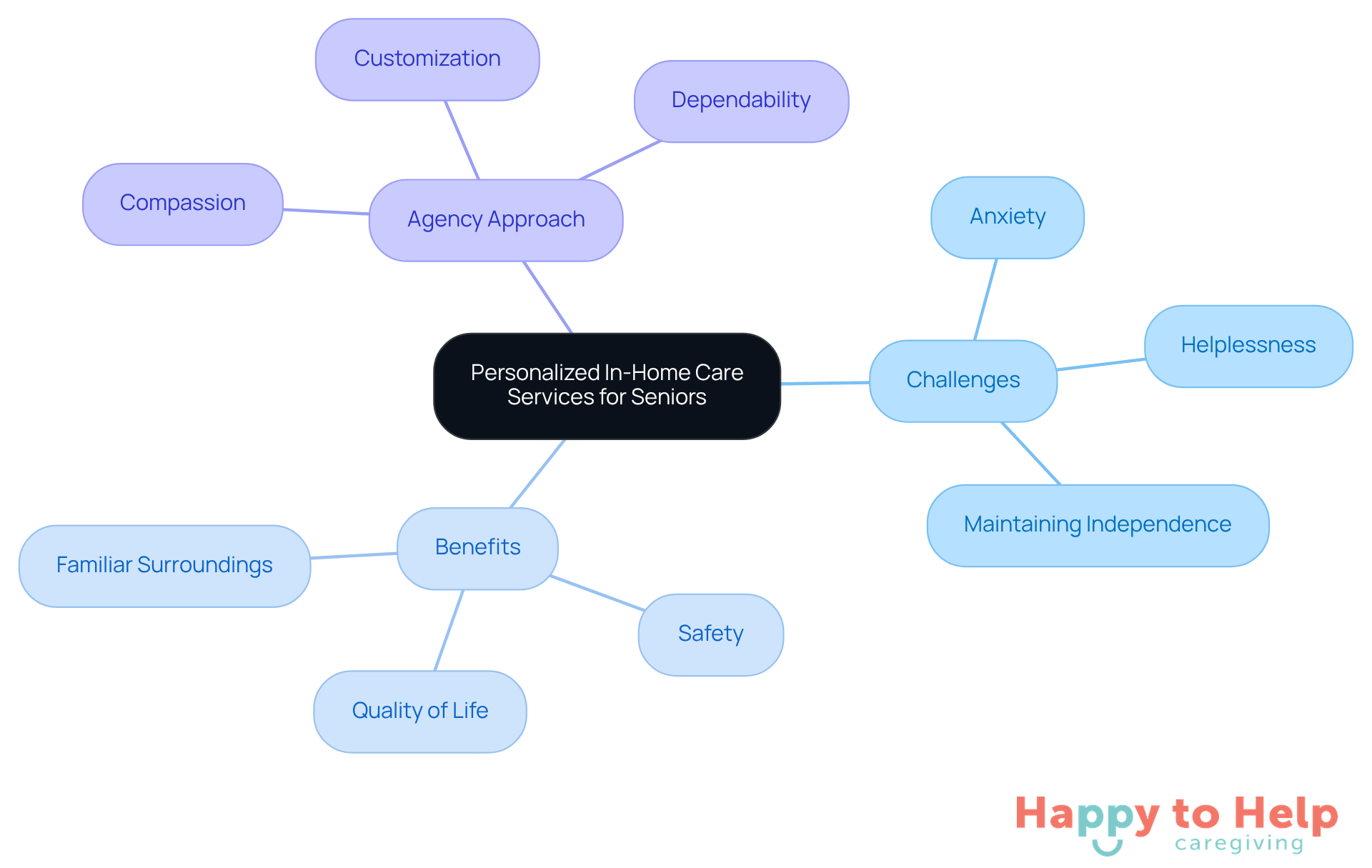
Happy to Help Caregiving: Personalized In-Home Care Services for Seniors
Caring for older adults can be challenging, especially when it comes to providing the right support at home. Many families struggle with ensuring their loved ones maintain independence and well-being in a safe environment. This lack of adequate in-home support can lead to feelings of anxiety and helplessness for both caregivers and seniors.
Happy to Help Caregiving addresses these challenges by offering customized in-home care services designed to enhance the quality of life for older adults. With a focus on compassion and individual needs, the agency provides a range of services that promote independence and well-being. This approach not only fosters a sense of safety but also allows older adults to thrive in familiar surroundings.
By choosing Happy to Help Caregiving, families can find dependable in-home care services that ensure their loved ones receive the care they need in the comfort of their own homes. This solution empowers seniors to flourish while giving families peace of mind.
Companionship Care: Alleviating Loneliness and Providing Emotional Support
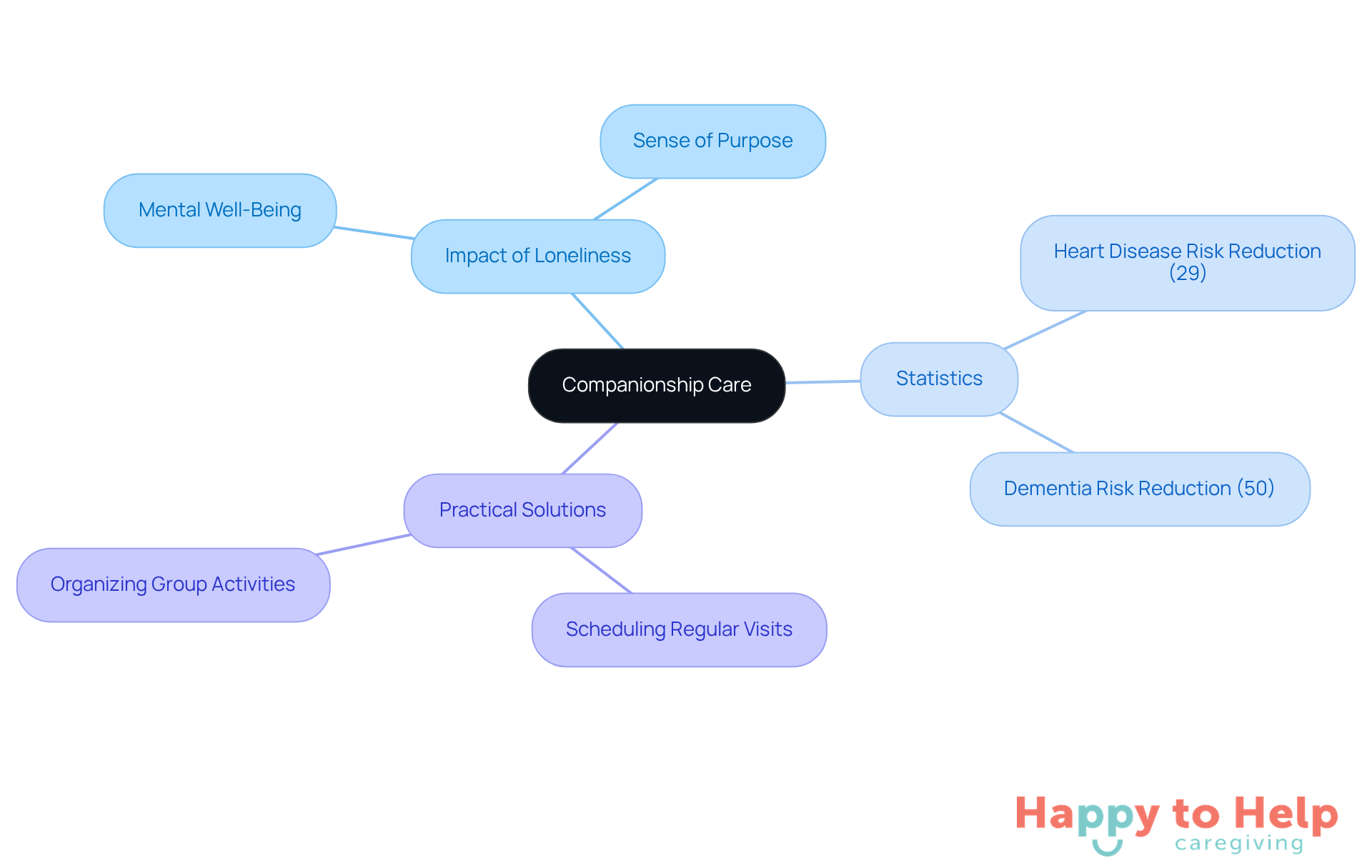
Loneliness and isolation among older adults is a significant issue that can severely impact their mental well-being. Without regular social interaction, many seniors may struggle to find a sense of purpose and belonging, leading to detrimental effects on their health.
Research shows that regular social contact can lower the risk of heart disease by 29% and reduce the likelihood of developing dementia by 50%. These statistics highlight the urgent need for effective in-home care services to address these challenges.
Happy to Help Caregiving addresses this problem by actively engaging clients in meaningful conversations and enjoyable activities. This approach fosters emotional connections that significantly enhance overall well-being. By prioritizing companionship, caregivers help older adults feel valued and supported in their daily lives.
Incorporating in-home care services not only provides vital social engagement but also enhances emotional resilience and quality of life. Caregivers can implement practical solutions, such as:
- Scheduling regular visits
- Organizing group activities
to ensure that their clients maintain a strong social network.
Post-Hospital Recovery Assistance: Supporting Smooth Transitions Home
Post-hospital recovery assistance addresses a critical issue: elderly individuals often struggle when returning home after a hospital stay. This transition can be fraught with challenges, including the risk of readmissions due to inadequate support. Without proper assistance, seniors may find it difficult to manage their medications or perform daily activities, which can hinder their recovery.
To mitigate these risks, caregivers play a vital role by providing tailored support during this crucial period. Services such as:
- Medication management
- Help with daily tasks
- Coordination of follow-up appointments
are essential. By implementing a structured recovery plan that considers both physical and emotional needs, caregivers can significantly enhance the recovery experience for seniors.
Pleased to Assist Caregiving emphasizes the importance of this approach. By ensuring that elderly individuals receive the necessary support at home through in-home care services, caregivers help reduce the likelihood of readmissions and promote a safer and more comfortable recovery environment.
Respite Care: Providing Relief for Family Caregivers
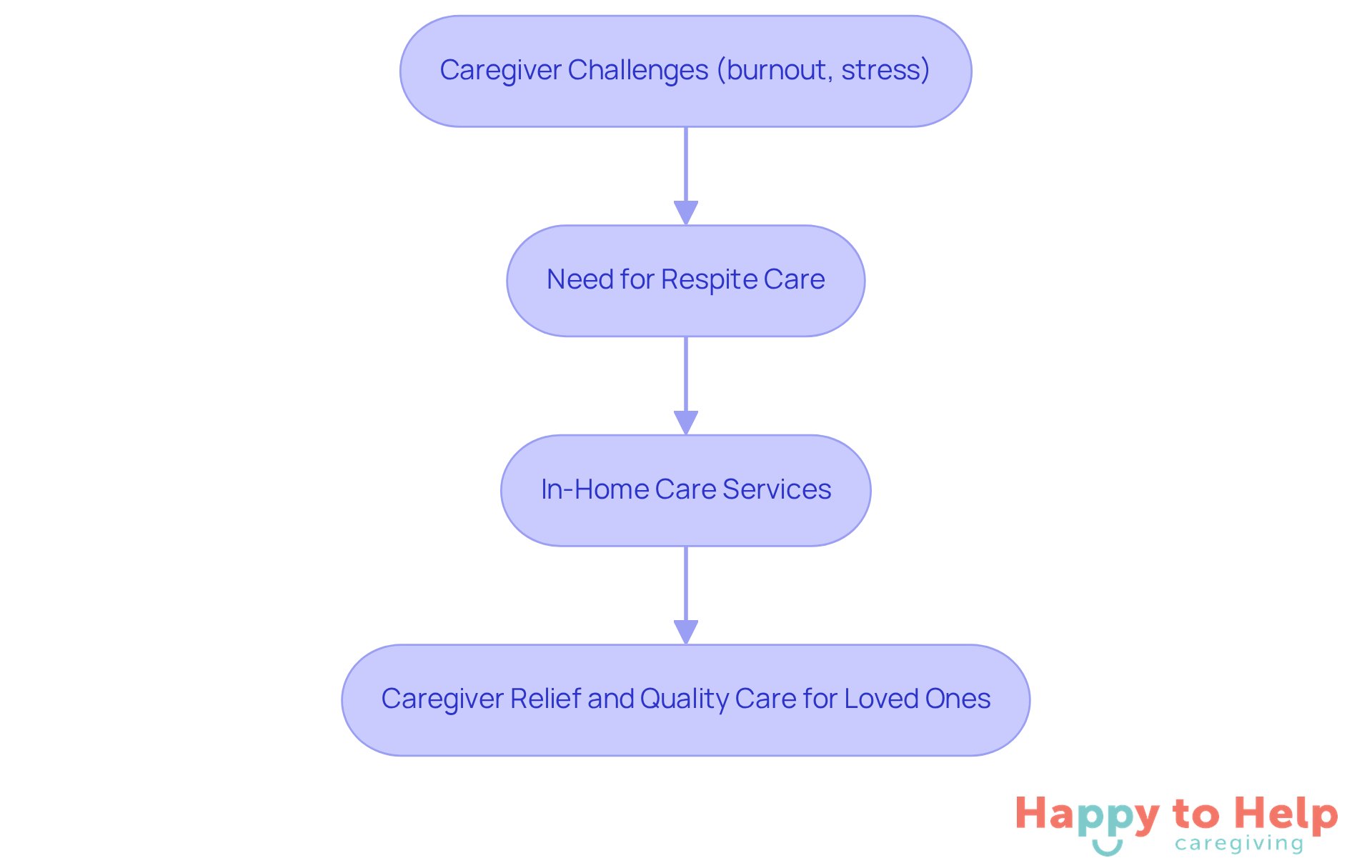
Caregivers often face significant challenges, including the risk of burnout. This exhaustion can lead to decreased effectiveness in their roles and increased stress levels, ultimately affecting both the caregiver and their loved ones.
Respite support through in-home care services is essential in addressing this issue, providing short-term relief for caregivers. In-home care services allow them to take necessary breaks while ensuring that their loved ones continue to receive quality assistance.
Happy to Help Caregiving offers flexible respite options, enabling family members to recharge and prioritize their health. With this support, caregivers can rest easy knowing their loved ones are in capable hands.
Palliative Support Care: Enhancing Comfort for Seniors with Serious Illnesses
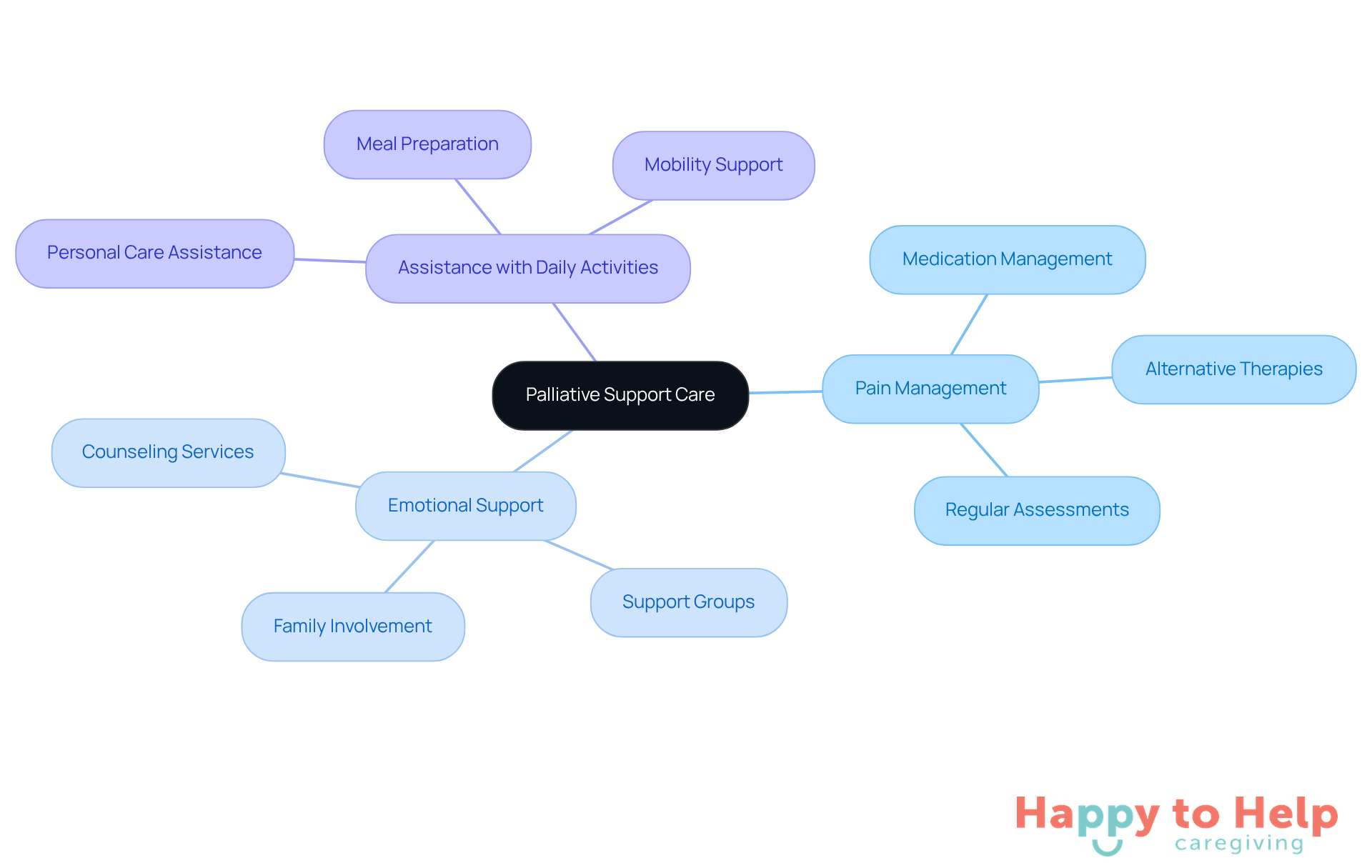
Caring for older adults with severe illnesses presents significant challenges for caregivers. Many struggle to provide the necessary support that enhances comfort and quality of life. This lack of comprehensive care can lead to increased stress for both caregivers and their clients, making it crucial to address these issues effectively.
Glad to Assist Caregiving offers a tailored palliative support service that focuses on:
- Pain management
- Emotional support
- Assistance with daily activities
This approach ensures that clients receive the care they need, addressing their unique requirements while promoting dignity and respect. By enabling older adults to manage their health challenges with the necessary support, caregivers can alleviate some of the burdens they face.
Implementing such a palliative method not only improves the quality of life for older adults but also provides caregivers with practical solutions to enhance their caregiving experience. With the right support, caregivers can feel more equipped to handle the complexities of their roles.
24/7 Availability: Ensuring Constant Support for Seniors
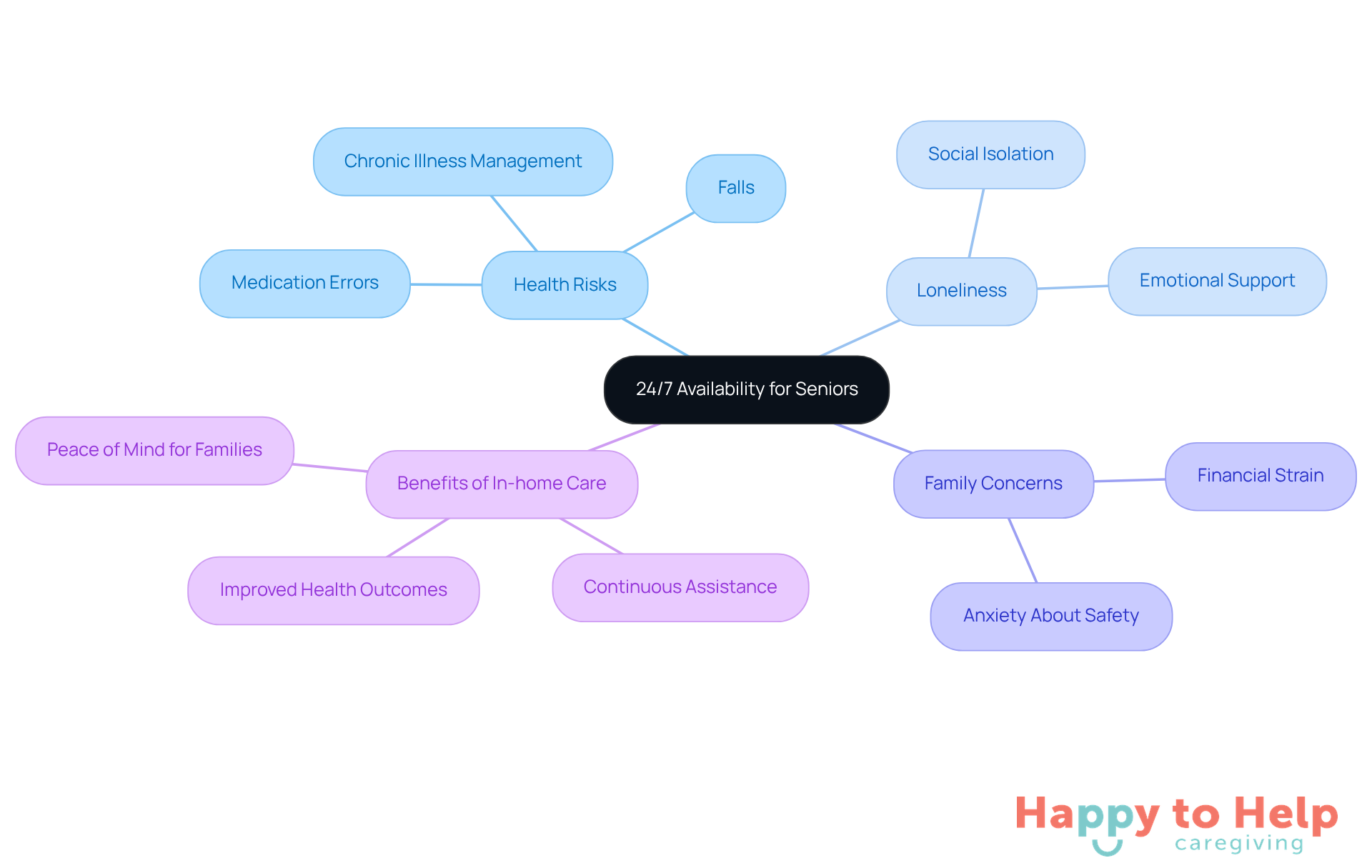
Caring for the elderly presents significant challenges, particularly when it comes to ensuring they receive the inhome care services necessary for their assistance. Many seniors face complex health issues and may require immediate help at any hour. This situation can lead to serious risks, such as falls and medication errors, which are critical concerns for their well-being.
Moreover, nearly 30% of the elderly population in the U.S. lives alone, making companionship and constant support essential in combating loneliness and its associated health risks. Families often worry about their loved ones being alone, which can add to their anxiety.
Fortunately, Happy to Help Caregiving offers a solution with its 24/7 inhome care services. This inhome care services ensures that elderly individuals receive continuous assistance whenever they require it, providing peace of mind for families. With trained caregivers accessible at all times, the emotional support gained not only alleviates anxiety for relatives but also enhances the overall health outcomes for seniors, fostering a higher quality of life.
The rising demand for inhome care services highlights the importance of 24/7 assistance. Families can rest assured knowing that help is always just a call away, making this a crucial choice for households looking to effectively support their aging relatives.
Flexible Scheduling: Tailoring Care to Individual Needs
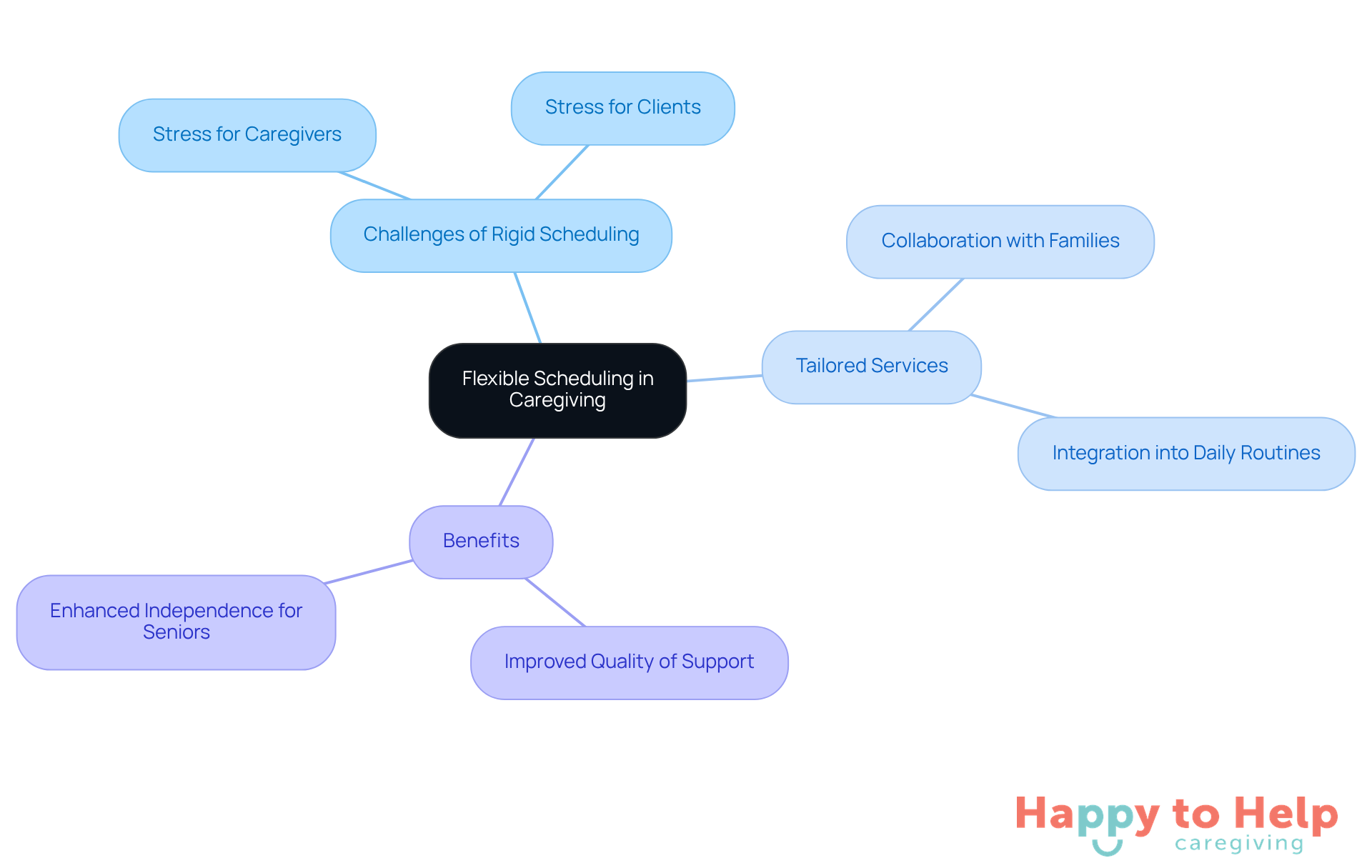
Caregivers often face the challenge of rigid scheduling, which can hinder the quality of support provided to seniors. This inflexibility can lead to stress for both caregivers and clients, as it may not align with the daily routines and needs of those receiving care.
Flexible scheduling emerges as a practical solution to this problem. At Happy to Help Caregiving, services are tailored to meet the individual needs of each client. Support providers work closely with families to create timetables that seamlessly integrate into their loved ones' daily activities. This ensures that assistance is available when it is most essential.
The benefits of this adaptability are significant. Not only does it enhance the quality of support, but it also fosters a sense of independence for seniors, allowing them to maintain their preferred lifestyles. By prioritizing flexible scheduling, caregivers can provide more effective and compassionate care.
Technology Integration: Enhancing Communication and Care Monitoring
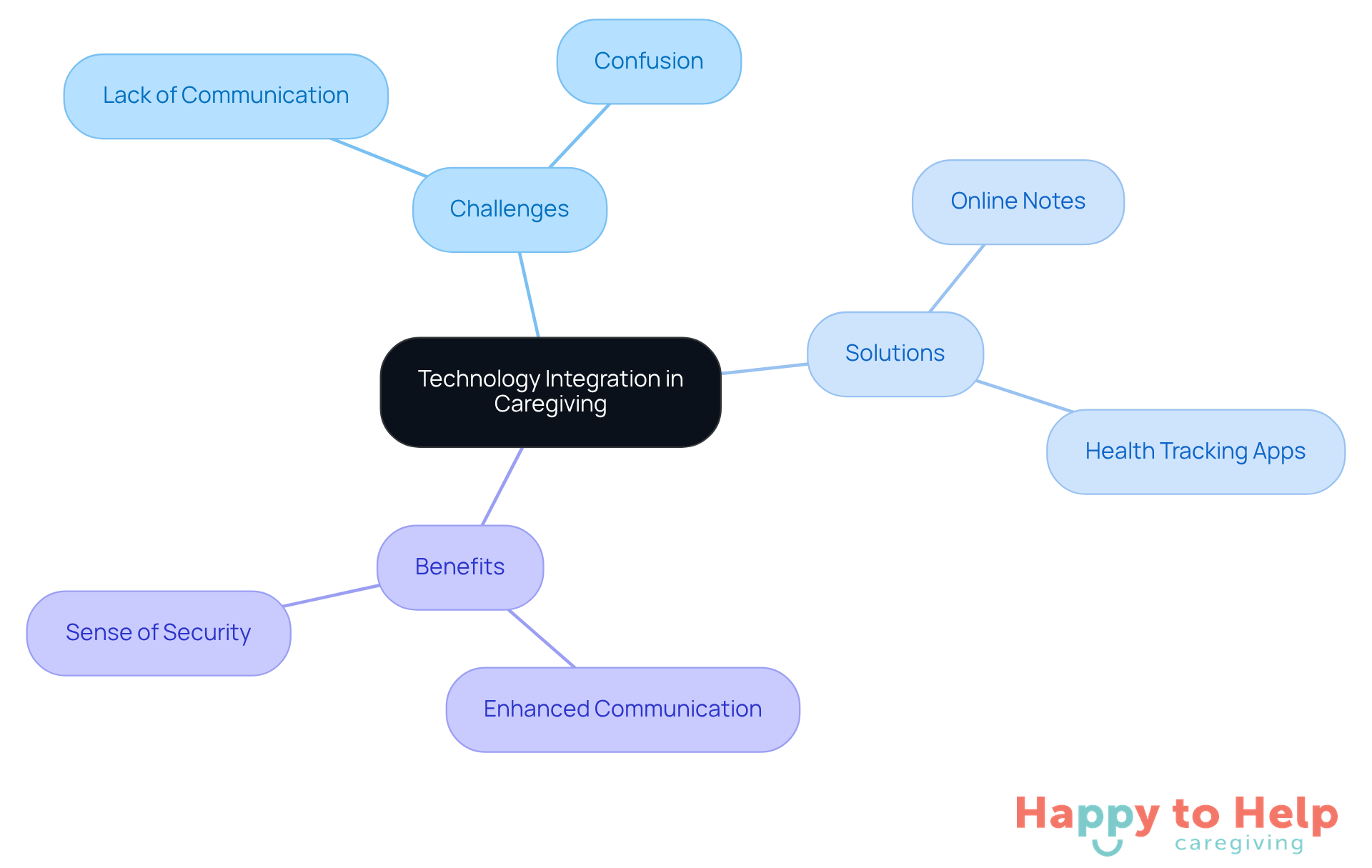
Effective communication and support monitoring are significant challenges faced by caregivers today. Without proper tools, families may struggle to stay informed about their loved ones' care, leading to confusion and frustration. This lack of transparency can hinder the cooperative atmosphere essential for effective caregiving.
Fortunately, technology integration offers a practical solution. Tools like online notes for relatives and health tracking applications facilitate seamless updates and coordination among caregivers and households. By utilizing these resources, families can remain informed about their loved ones' support from in-home care services, fostering a collaborative caregiving environment.
Incorporating technology not only enhances communication but also promotes a sense of security for families. By embracing these tools, caregivers can improve their support systems, ensuring that everyone involved is on the same page.
Personalized Care Plans: Tailoring Services to Individual Needs
Caregivers often face the challenge of meeting the diverse needs of their clients. This can lead to feelings of frustration and inadequacy when services do not align with individual requirements.
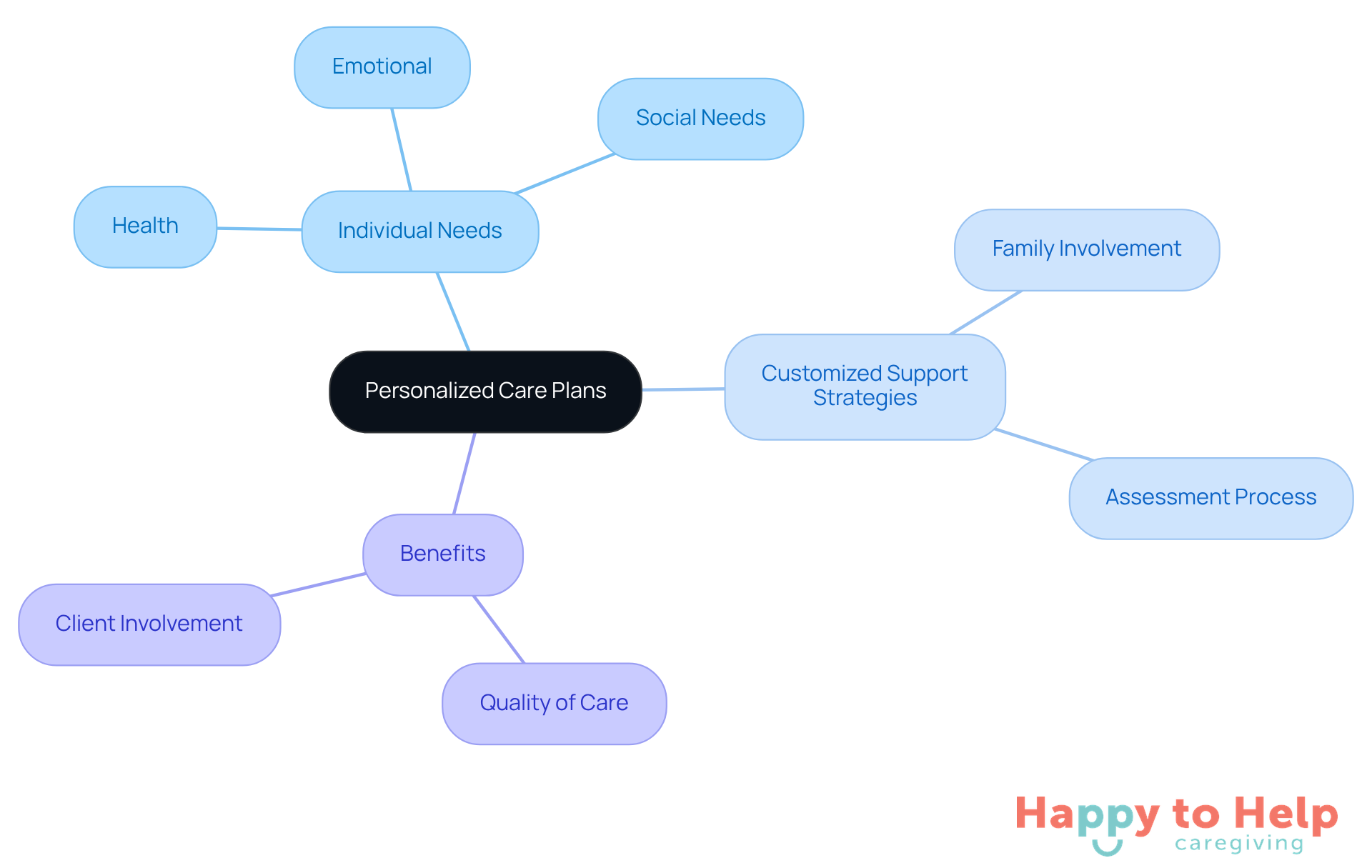
Happy to Help Caregiving addresses this issue through customized support strategies, ensuring that services are tailored to meet the unique needs of each client. Caregivers work closely with families to assess individual preferences and requirements, creating comprehensive plans that encompass health, emotional, and social needs.
This personalized approach not only enhances the quality of care but also fosters a sense of ownership and involvement for clients and their families. By implementing these strategies, caregivers can significantly improve the caregiving experience, making it more effective and fulfilling.
Compassionate Caregivers: Building Trust and Rapport with Seniors
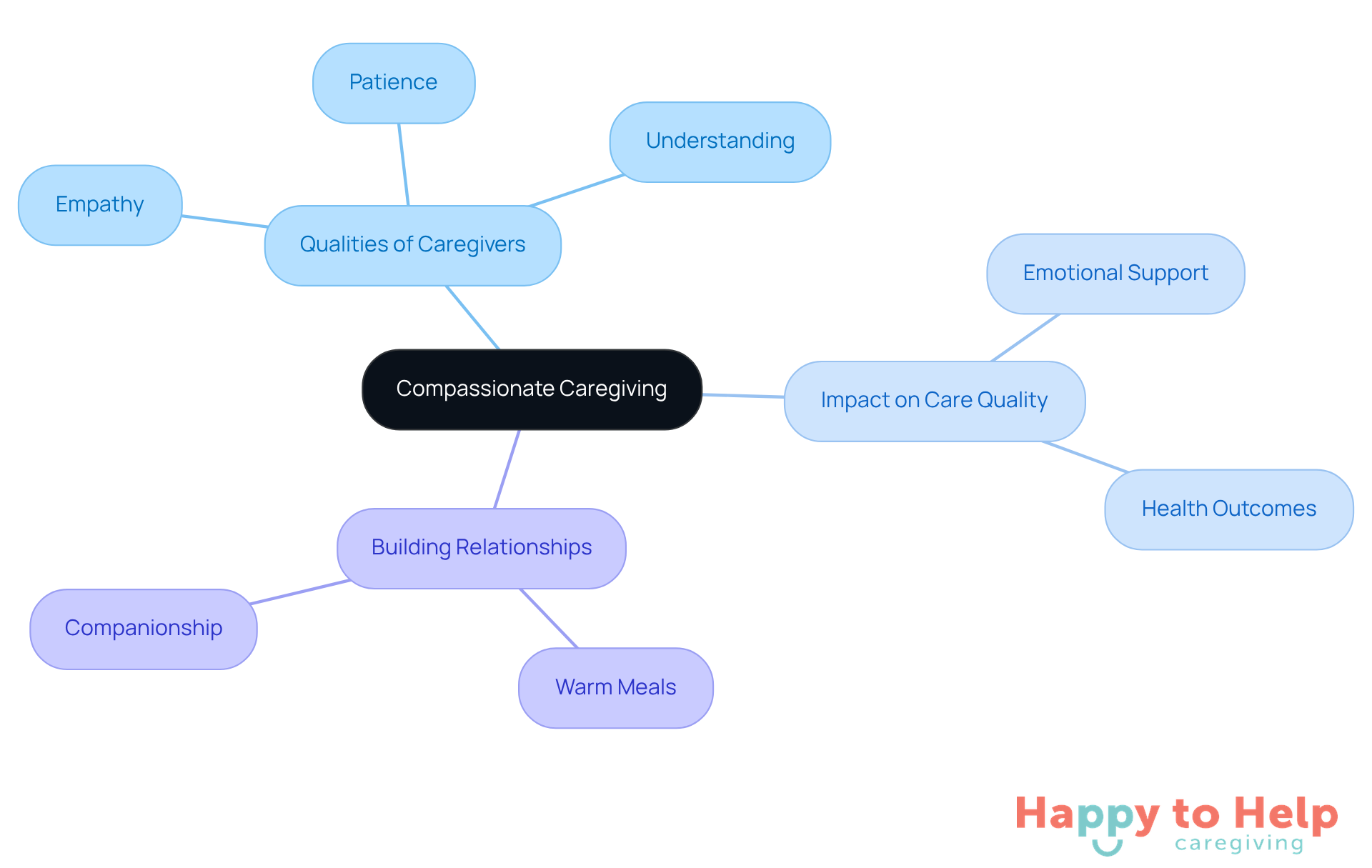
Compassionate caregivers face a significant challenge: building trust and rapport with older adults. This connection is essential for effective caregiving, as it directly impacts the quality of care provided. When caregivers embody empathy, patience, and understanding, they create a supportive environment where clients feel secure and valued.
To address this issue, Happy to Help Caregiving emphasizes the careful selection and training of caregivers who exemplify these crucial traits. This approach ensures that clients receive not only physical assistance but also emotional support through inhome care services, significantly enhancing their quality of life. Recent research from 2025 highlights that caregivers who prioritize empathy can improve trust levels among elderly individuals, leading to better health outcomes and greater satisfaction with the support they receive.
As noted by Angel Care Inc., 'Inhome care services exemplify love in action: the patiently prepared warm meal, holding a hand in quietness, and the gentle remark that says - you are not alone.' This commitment to building strong relationships empowers seniors and enriches the caregiving experience, making it more effective and fulfilling for both parties.
Your Path Forward
In-home care services address a significant problem faced by family caregivers: the overwhelming demands of providing care for seniors. These caregivers often struggle with balancing their responsibilities, leading to stress and burnout. The implications of this challenge are profound, affecting not only the caregivers' well-being but also the quality of care provided to their loved ones.
To alleviate these pressures, in-home care services offer tailored support that meets the individual needs of seniors. By empowering older adults to maintain their independence, these services provide peace of mind for families. Agencies like Happy to Help Caregiving exemplify this compassionate approach, ensuring that seniors receive both the physical assistance they require and the emotional support that fosters a sense of belonging and security.
Key aspects of in-home care services include:
- Companionship care
- Post-hospital recovery assistance
- Respite care
Each of these services addresses specific challenges faced by seniors and their caregivers, highlighting the importance of personalized care plans and flexible scheduling. Compassionate caregivers build trust and rapport, emphasizing the significance of emotional connections in the caregiving process.
As the demand for in-home care services continues to rise, families are encouraged to view these solutions as vital resources. Investing in personalized in-home care not only enhances the well-being of seniors but also alleviates the burden on family caregivers. This fosters a healthier and more supportive environment for everyone involved.
https://iframe.tely.ai/cta/eyJhcnRpY2xlX2lkIjogIjY5MjUxM2VkY2Q1NjY3YWUxYjQzNTc4ZSIsICJjb21wYW55X2lkIjogIjY4ZWU1ZGNhNzMxNzYyNTU3ZjNjOTVjMSIsICJpbmRleCI6IG51bGwsICJ0eXBlIjogImFydGljbGUifQ==Frequently Asked Questions
What services does Happy to Help Caregiving provide for seniors?
Happy to Help Caregiving offers customized in-home care services designed to enhance the quality of life for older adults, focusing on compassion and individual needs to promote independence and well-being.
How does Happy to Help Caregiving address feelings of loneliness among seniors?
The agency engages clients in meaningful conversations and enjoyable activities, fostering emotional connections that enhance overall well-being and help seniors feel valued and supported.
What are the benefits of companionship care for older adults?
Companionship care can lower the risk of heart disease by 29% and reduce the likelihood of developing dementia by 50%, highlighting the importance of regular social interaction for seniors' mental and emotional health.
What challenges do seniors face when returning home after a hospital stay?
Seniors often struggle with managing medications and performing daily activities, which can hinder their recovery and increase the risk of readmissions due to inadequate support.
What types of support does Happy to Help Caregiving provide for post-hospital recovery?
Caregivers provide tailored support that includes medication management, assistance with daily tasks, and coordination of follow-up appointments to enhance the recovery experience for seniors.
How does Happy to Help Caregiving ensure a safe recovery environment for seniors?
By implementing a structured recovery plan that considers both physical and emotional needs, caregivers help reduce the likelihood of readmissions and promote a safer, more comfortable recovery at home.
List of Sources
- Happy to Help Caregiving: Personalized In-Home Care Services for Seniors
- Top key trends shaping the future of caregiving (https://learn2care.us/blog/caregiving-future-trends)
- 13 Home Care Trends To Watch For in 2024 (And Thoughts From 11 Experts) | CareAcademy (https://careacademy.com/blog/home-care-trends)
- A Place for Mom Releases Dual Reports on the Future of Family Caregiving, Including a New Talkspace Collaboration Highlighting Caregiver Mental Health (https://businesswire.com/news/home/20251124760580/en/A-Place-for-Mom-Releases-Dual-Reports-on-the-Future-of-Family-Caregiving-Including-a-New-Talkspace-Collaboration-Highlighting-Caregiver-Mental-Health)
- Tech-enabled caregiving can help dementia patients stay at home — perhaps for too long (https://statnews.com/2025/11/24/dementia-caregiving-technology-assistance)
- Trends and Innovations in Senior Care | Amada Blog (https://amadaseniorcare.com/2025/01/trends-and-innovations-in-senior-care)
- Companionship Care: Alleviating Loneliness and Providing Emotional Support
- Pandemic Isolation and the Elderly: A Doctor Reflects on the Impacts (https://nationalacademies.org/news/2022/01/pandemic-isolation-and-the-elderly-a-doctor-reflects-on-the-impacts)
- 1 in 3 older adults still experience loneliness and isolation (https://michiganmedicine.org/health-lab/1-3-older-adults-still-experience-loneliness-and-isolation)
- Companion Care Linked To Lower Health Care Costs, Positive Health Outcomes (https://homehealthcarenews.com/2022/11/companion-care-linked-to-lower-health-care-costs-positive-health-outcomes)
- The Power of Companionship for Seniors: A Key Ingredient to Quality Aging (https://homecarepgh.com/blog-posts/companionship-in-old-age)
- Older adults find support through health care companions (https://news-medical.net/news/20250924/Older-adults-find-support-through-health-care-companions.aspx)
- Post-Hospital Recovery Assistance: Supporting Smooth Transitions Home
- Post-Hospital Home Care: The Key to a Smoother, Safer Recovery (https://heavenathomecare.com/how-post-hospital-home-care-helps-seniors-recover)
- Smart Homes and Post-Hospital Care: Supporting Seniors Aging in Place (https://hcprosonline.com/smart-homes-and-post-hospital-care-supporting-seniors-aging-in-place)
- Helping seniors recover after a hospital stay through meal delivery (https://uhc.com/news-articles/community/senior-resources)
- Sent Home To Heal, Patients Avoid Wait for Rehab Home Beds - KFF Health News (https://kffhealthnews.org/news/article/patients-rehab-at-home-unclog-hospital-bed-nursing-home-waiting-list)
- Post-Hospital Care for Seniors Supports Healing (https://picseniorcare.com/how-post-hospital-care-for-seniors-makes-recovery-easier)
- Respite Care: Providing Relief for Family Caregivers
- Funding Opportunity: National Lifespan Respite Care Program State Program Enhancement Grants | ACL Administration for Community Living (https://acl.gov/news-and-events/announcements/national-lifespan-respite-care-program-state-program-enhancement)
- New Mexico awarded $1.2M federal grant to expand respite care - New Mexico Aging and Long-Term Services Department - ALTSD (https://aging.nm.gov/2025/10/14/new-mexico-awarded-1-2m-federal-grant-to-expand-respite-care)
- A bill in Congress would return $5,000 to millions of family caregivers every year, but will it pass? (https://cbsnews.com/newyork/news/credit-for-caring-act-family-caregiver-tax-credit)
- Family Caregivers Struggling In Some States More Than Others (https://disabilityscoop.com/2025/10/31/family-caregivers-struggling-in-some-states-more-than-others/31710)
- News & Success Stories | Live Well San Diego (https://livewellsd.org/Home/Components/News/News/513/153)
- Palliative Support Care: Enhancing Comfort for Seniors with Serious Illnesses
- Hospice and Palliative Care (https://nia.nih.gov/news/topics/hospice-and-palliative-care)
- Palliative Care: Providing Support for Members With Serious Illnesses (https://news.blueshieldca.com/2024/11/20/palliative-care-providing-support-for-members-with-serious-illnesses)
- Palliative care and hospice poll reveals major gaps (https://ihpi.umich.edu/news-events/news/palliative-care-and-hospice-poll-reveals-major-gaps)
- Importance of Palliative Care - A PBS News Hour “Brief but Spectacular” Series (https://cambiahealthfoundation.org/posts/blog/2021-05-11/importance-of-palliative-care---a-pbs-news-hour-brief-b.html)
- ‘A good death’: How compassionate care helps people navigate the end of life (https://news.yale.edu/2025/10/13/good-death-how-compassionate-care-helps-people-navigate-end-life)
- 24/7 Availability: Ensuring Constant Support for Seniors
- Discover the Advantages of Round-the-Clock Care » LifeWorx Home Care (https://lifeworx.com/resources/articles/discover-the-advantages-of-round-the-clock-care)
- Caregiving Crisis: 45% Increase in Americans Providing Care (https://aarp.org/caregiving/basics/caregiving-in-us-survey-2025)
- 10 Benefits of Care Around the Clock for Your Loved Ones - Happy To Help (https://happytohelpcaregiving.com/10-benefits-of-care-around-the-clock-for-your-loved-ones)
- 24/7 Home Care Services in Greater Boston, MA | HouseWorks (https://house-works.com/24-hour-home-care)
- Statistics that Highlight the Growing Need for Senior Home Care (https://lifestarhomecare.com/numbers-showing-the-increasing-need-for-in-home-care-for-aging-adults)
- Flexible Scheduling: Tailoring Care to Individual Needs
- Industry leaders: Offering work flexibility is the secret to attracting, retaining home care talent (https://mcknightshomecare.com/news/industry-leaders-offering-work-flexibility-is-the-secret-to-attracting-retaining-home-care-talent)
- The need for caregiving benefits may have reached a fever pitch (https://hrdive.com/news/sandwich-generation-needs-caregiving-benefits/802864)
- The Future of Senior Care: What to Expect in 2025 and Beyond (https://arhomecare.com/the-future-of-senior-care-what-to-expect-in-2025-and-beyond)
- Caregiving While Working Calls for Workplace Flexibility (https://aarp.org/pri/topics/work-finances-retirement/employers-workforce/employer-caregiving-survey)
- Technology Integration: Enhancing Communication and Care Monitoring
- HHS Launches New Caregiving AI Initiative to 'Spark Innovative Support' (https://hospicenews.com/2025/11/18/hhs-launches-new-caregiving-ai-initiative-to-spark-innovative-support)
- How Technology Can Ease the Caregiver Burden (https://connectamerica.com/insights/how-technology-can-ease-the-caregiver-burden)
- How AI Could Change Family Caregiving (https://aarp.org/caregiving/basics/how-ai-can-help-caregivers)
- ‘Perfect storm’ hitting assisted living requires leveraging technology to improve outcomes (https://mcknightsseniorliving.com/news/perfect-storm-hitting-assisted-living-requires-leveraging-technology-to-improve-outcomes)
- Technology and interventions are changing care for older adults (https://fastcompany.com/91414509/technology-and-interventions-are-changing-care-for-older-adults)
- Personalized Care Plans: Tailoring Services to Individual Needs
- Trusted Physician Megan J. Engelen on Bringing Personalized Care to Salt Lake City (https://prnewswire.com/news-releases/trusted-physician-megan-j-engelen-on-bringing-personalized-care-to-salt-lake-city-302624771.html)
- Novel Care Model May Improve Outcomes for Older Adults With Multiple Chronic Conditions (https://consultqd.clevelandclinic.org/novel-care-model-may-improve-outcomes-for-older-adults-with-multiple-chronic-conditions)
- Importance of Personalized Senior Home Care in Burlington NC (https://wisdomseniorcare.com/the-importance-of-personalized-care-plans-for-seniors)
- CenterWell Bringing Convenient, Personalized Health Care to Seniors at Gladstone Walmart (https://policy.humana.com/issue-area/news-and-resources/news-press/2025/centerwell-bringing-convenient--personalized-health-care-to)
- ‘We’re Back, Baby’: 6 Senior Living Leaders Predict Memory Care’s Future (https://seniorhousingnews.com/2025/10/17/were-back-baby-6-senior-living-leaders-predict-memory-cares-future)
- Compassionate Caregivers: Building Trust and Rapport with Seniors
- Why it’s important to recognize the work of our caregivers (https://dailynews.com/2025/02/23/why-its-important-to-recognize-the-work-of-our-caregivers)
- Home Care Is About Love: Why Compassion Is More Important Now | Home Care agency in New York (https://angelcareny.com/home-care-is-about-love-why-compassion-is-more-important-now)
- Trust, Comfort, and Care in Assisted Living: How Senior Living Caregivers Bring Peace of Mind – Front Porch (https://frontporch.net/community/friends-house/blog/trust-comfort-and-care-in-assisted-living-how-senior-living-caregivers-bring-peace-of-mind)
- The Importance of Compassionate Care: Enhancing Quality of Life for Seniors (https://bryanskilledhomecare.com/2024/07/31/the-importance-of-compassionate-care-for-seniors-i-bryan-skilled-home-care)
- HHS Backs AI Innovation for America’s Caregivers | HHS.gov (https://hhs.gov/press-room/hhs-backs-ai-innovation-for-americas-caregivers.html)