For families in our service areas
For families in our service areas, this guide explains caregiver support and how non-medical in-home caregiving can support care planning in East Idaho, Treasure Valley & Magic Valley, Northern Wasatch, North Central West Virginia, and Northeast Ohio.
What You Need to Know About 10 Inspiring Aging Well Quotes
Aging is often viewed through a lens of decline, presenting a challenge for family caregivers who support the elderly. This perception can lead to feelings of frustration and helplessness, overshadowing the growth, wisdom, and resilience that come with age. Caregivers may struggle to find encouragement amidst these challenges, which can impact their emotional well-being and the quality of care they provide.
However, a wealth of inspiring quotes and insights reveals a different narrative-one that highlights the beauty and potential of aging. By embracing this perspective, caregivers can foster emotional well-being and meaningful connections with the elderly. To transform their approach, caregivers can implement several strategies:
- Seek Inspiration: Regularly read quotes and stories that celebrate aging, reminding themselves of the positive aspects of this life stage.
- Build Connections: Engage in activities that promote interaction and understanding between caregivers and the elderly, enhancing relationships.
- Prioritize Self-Care: Caregivers should take time for themselves to recharge, ensuring they can provide the best support possible.
By harnessing these insights, caregivers can enhance the quality of life for those they care for, turning challenges into opportunities for growth and connection.
Happy to Help Caregiving: Personalized Support for Aging Gracefully
Caregiving can be a daunting challenge for many families. The emotional and physical demands of caring for seniors or individuals with special needs can lead to stress and burnout. This is where Happy to Help Caregiving steps in, offering a solution that prioritizes compassionate, personalized care.
Happy to Help Caregiving specializes in providing services like:
- Companionship care
- Post-hospital recovery assistance
These services are designed to improve the quality of life for clients, allowing them to age gracefully, as reflected in many aging well quotes, in the comfort of their own homes. By promoting independence, they also foster a sense of security and well-being, which is crucial for both clients and their families.
Families navigating the complexities of caregiving can find peace of mind knowing that support is available. With Happy to Help Caregiving, caregivers can access the assistance they need, making the journey smoother and more manageable.
Walt Disney: 'Laughter is timeless. Imagination has no age.'
Engaging older adults in creative pursuits can be a challenge for caregivers. Many may struggle to motivate them to participate in activities that foster laughter and imagination. This lack of engagement can lead to diminished mental well-being and a less optimistic outlook on life.
However, encouraging creativity is essential for enhancing the quality of life for older adults. Research shows that laughter and imaginative activities can significantly improve mental health, leading to a more fulfilling experience for both caregivers and those they care for.
To address this issue, caregivers can implement several practical strategies:
- Introduce creative activities: Offer options like painting, storytelling, or music that can spark interest.
- Create a supportive environment: Foster a space where older adults feel comfortable expressing themselves.
- Encourage social interaction: Organize group activities that promote connection and shared experiences.
By focusing on these solutions, caregivers can transform their approach, making the caregiving journey more rewarding for everyone involved.
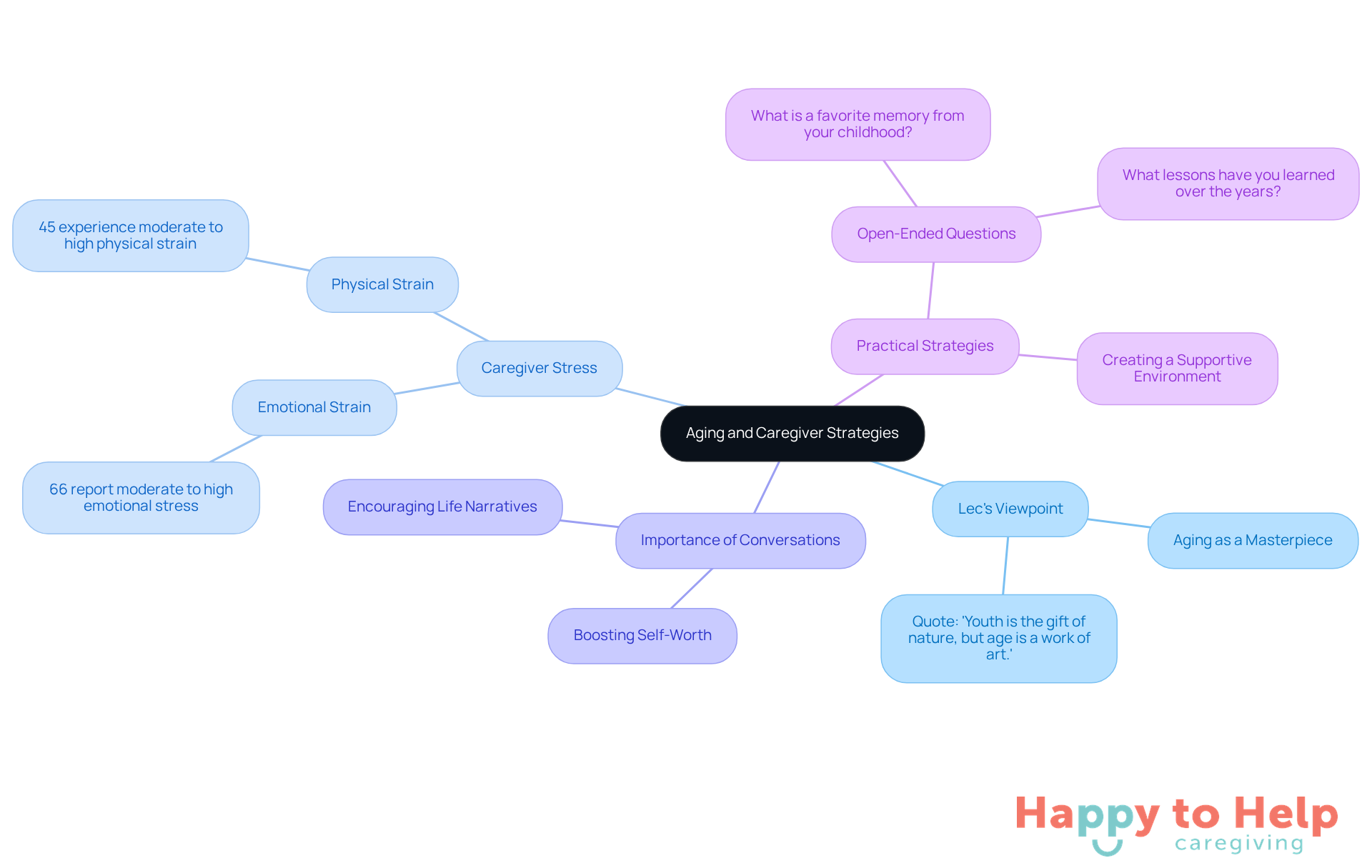
Stanislaw Jerzy Lec: 'Youth is the gift of nature, but age is a work of art.'
Stanislaw Jerzy Lec's viewpoint, which aligns with many aging well quotes, encourages us to view aging as a masterpiece shaped by experiences. However, caregivers often face significant emotional stress, with nearly two-thirds reporting moderate to high levels of strain. This stress can hinder their ability to assist elderly individuals in valuing their life journeys.
To address this issue, caregivers can foster a sense of pride and achievement in older adults by encouraging conversations about their past. Engaging them in discussions about their life narratives not only boosts their self-worth but also provides valuable insights into their values and beliefs. As Betty Friedan noted, 'Aging is not lost youth but a new stage of opportunity and strength,' a sentiment echoed in various aging well quotes that emphasize the potential for growth in later years.
Caregivers can implement practical strategies to spark these meaningful discussions. Asking open-ended questions like:
- "What is a favorite memory from your childhood?"
- "What lessons have you learned over the years?"
can lead to enriching conversations. By creating an environment where elderly individuals feel appreciated and understood, caregivers play a vital role in enhancing their overall well-being.
Proverbs 16:31: 'Gray hair is a crown of glory; it is gained by living a godly life.'
Aging presents unique challenges, particularly in maintaining emotional well-being among older adults. Many struggle with feelings of isolation and a diminished sense of purpose as they reflect on their lives. This can lead to a lack of engagement with their personal histories, which are rich with lessons and experiences.
Encouraging older adults to share their personal narratives can significantly address these issues. By reflecting on their journeys, they not only appreciate the significance of their experiences but also nurture a sense of belonging and purpose. Case studies, such as those found in 'Strategies for Aging in Place Well,' illustrate that storytelling can enhance mental well-being and foster a stronger connection with caregivers and family members.
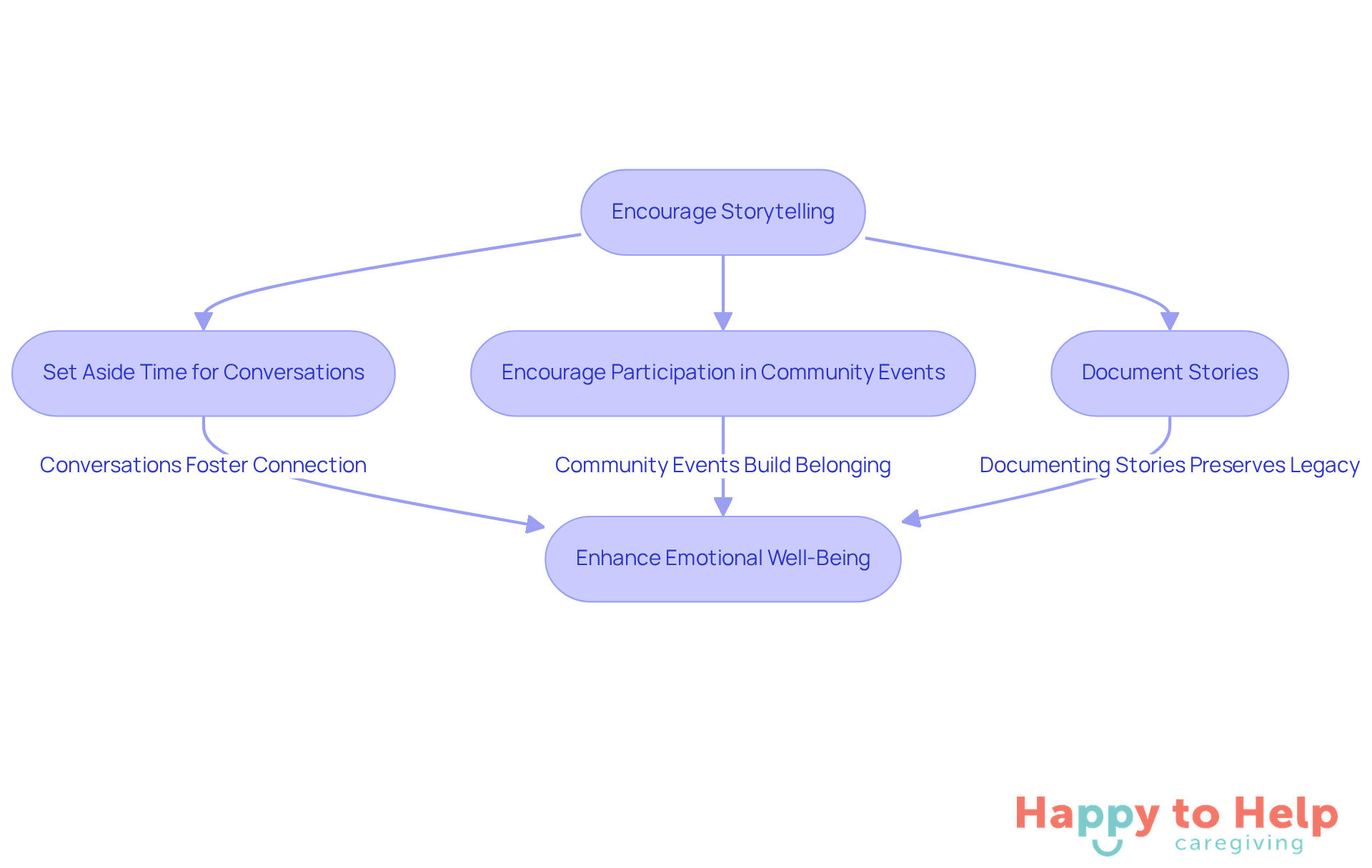
To implement this solution, caregivers can create opportunities for storytelling. This could involve:
- Setting aside time for conversations
- Encouraging participation in community storytelling events
- Documenting their stories through writing or video
Such practices not only enrich the lives of older adults but also strengthen familial bonds, creating a supportive environment that celebrates the beauty of aging, as highlighted by aging well quotes.
Anonymous: 'The heart never grows old; it just learns to love deeper.'
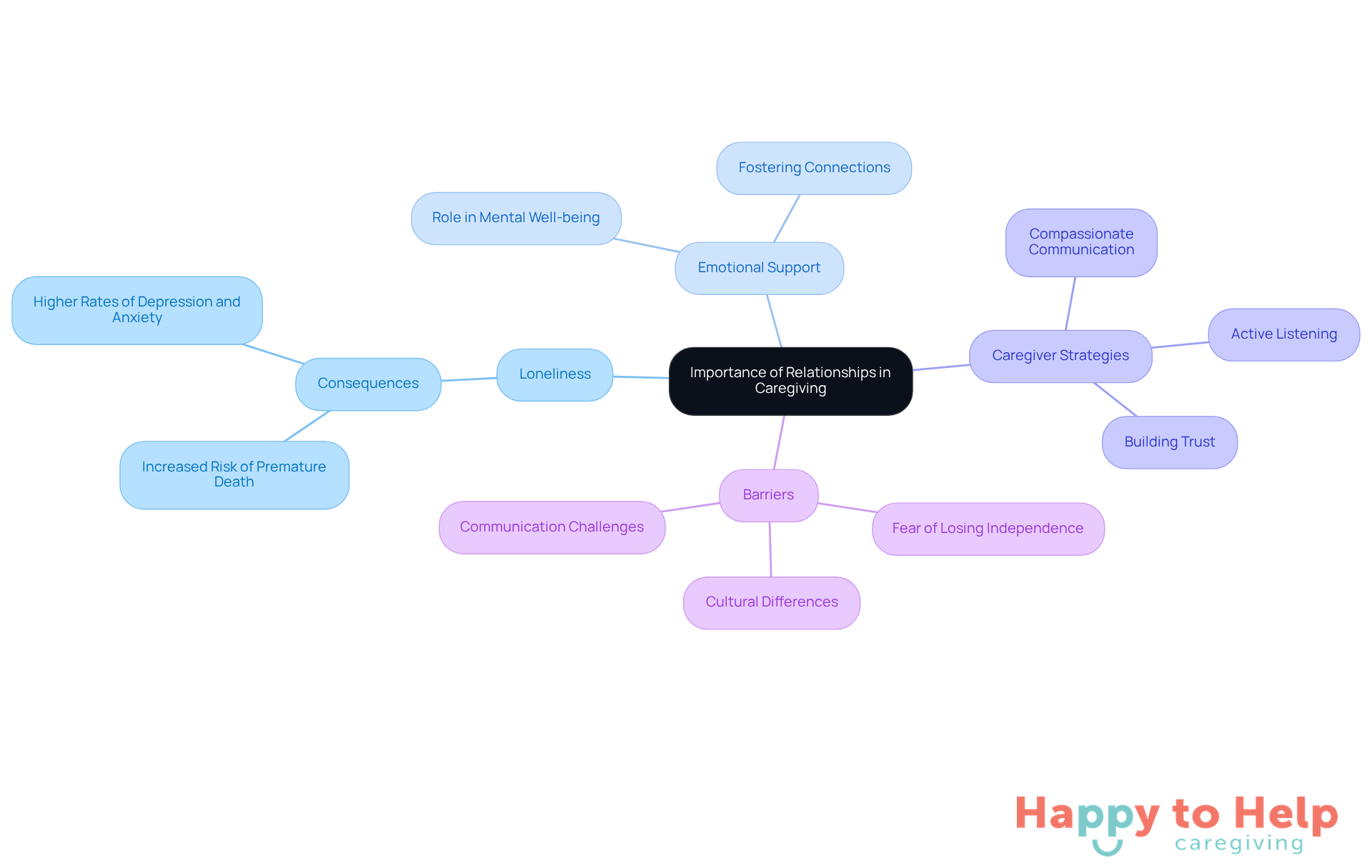
As we age, our capacity for love and connection often deepens, highlighting a significant problem: loneliness and social isolation among elderly individuals. These issues can lead to severe consequences, including an increased risk of premature death by 26% and 29%, respectively. Caregivers must recognize the importance of strong relationships in caregiving, as emotional support plays a crucial role in older adults' mental well-being.
To address this challenge, caregivers should prioritize fostering connections with their clients. Meaningful interactions can alleviate feelings of loneliness, depression, and anxiety. Regular, compassionate communication creates an environment where seniors feel secure and appreciated. Dr. Jennifer Wong emphasizes that forming meaningful connections enhances both physical and mental well-being.
By actively listening and addressing the needs of elderly individuals, support providers can establish trust and connection, enriching the caregiving experience for both parties. However, caregivers should also be aware of potential barriers, such as older adults' fears of losing independence, which may lead to resistance to care.
Ultimately, nurturing these relationships is essential for effective in-home care. It fosters a sense of belonging and emotional stability, which is vital for aging well. Caregivers can implement these strategies to enhance the quality of life for elderly clients and promote better health outcomes.
Unknown: 'Life is about growing, not just growing old.'
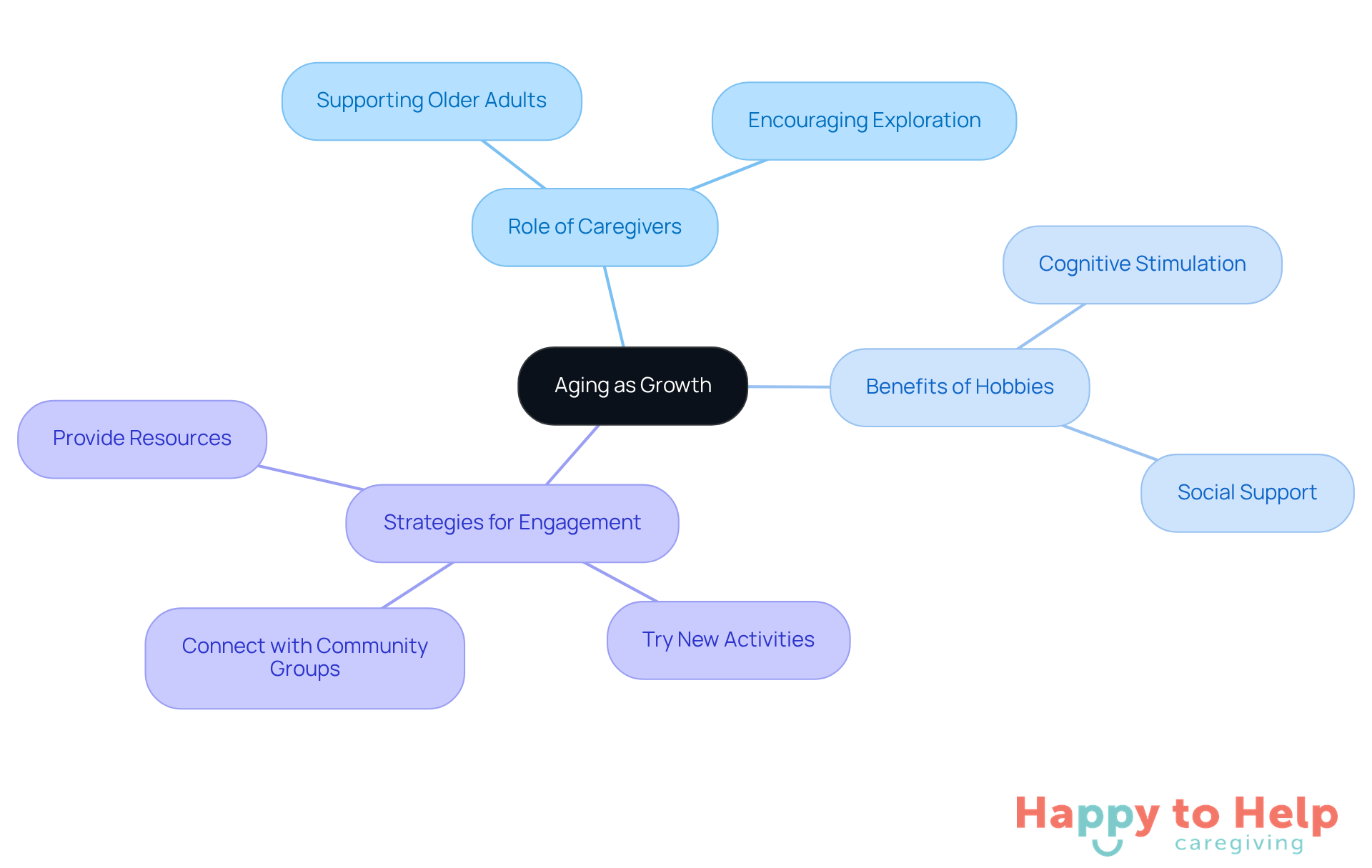
Aging is often viewed as a decline, but aging well quotes suggest that it should be embraced as an opportunity for growth. This mindset presents a challenge for caregivers, who play a crucial role in supporting older adults. By encouraging them to explore new hobbies, acquire new skills, and participate in community activities, caregivers can help shift this perspective.
Research shows that engaging in hobbies significantly enhances mental well-being among older adults. For instance, studies indicate that those who actively pursue leisure activities experience a positive feedback loop that boosts their overall health. This engagement not only fosters cognitive stimulation but also provides essential social support, which is vital for emotional resilience. As George Bernard Shaw wisely noted in his aging well quotes, 'We don't stop playing because we grow old; we grow old because we stop playing.'
Moreover, there is a universal link between hobby involvement and mental well-being in older individuals. Greater engagement in hobbies correlates with increased satisfaction and happiness. To foster a culture of lifelong learning and community engagement, caregivers can implement the following strategies:
- Encourage older adults to try new activities that interest them.
- Facilitate connections with community groups or clubs that align with their hobbies.
- Provide resources or information about local events and classes.
By reinforcing the notion that age is a chance for growth and enrichment, caregivers can assist older adults in maintaining a vibrant and fulfilling lifestyle.
Anonymous: 'The longer you live, the more stories you have to share.'
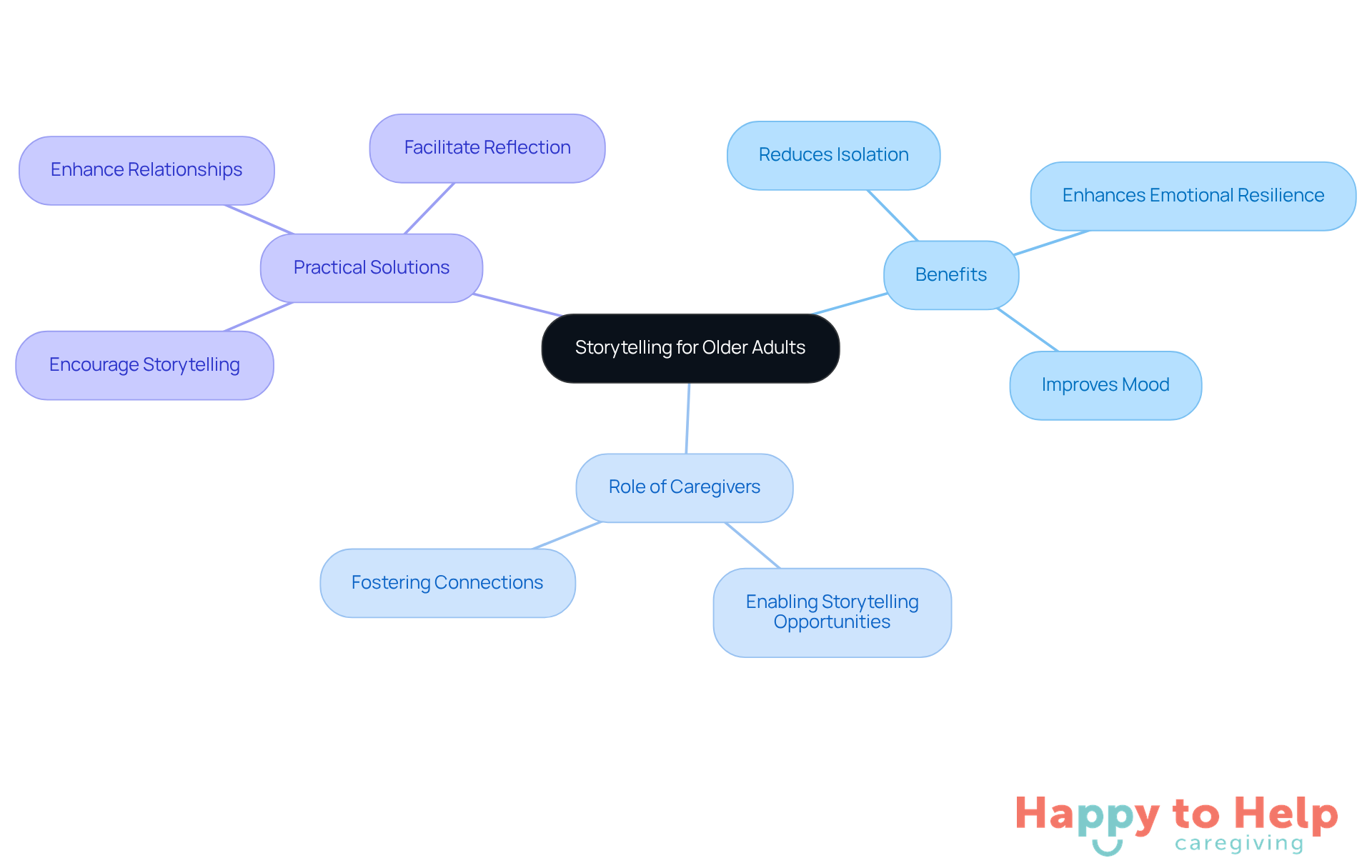
Motivating older individuals to share their experiences addresses a significant problem: the isolation many face in their later years. This isolation can lead to detrimental effects on mental health, leaving older adults feeling disconnected and without purpose. Caregivers play a crucial role in alleviating this issue by enabling storytelling opportunities that foster connection and improve emotional well-being.
Research shows that sharing personal narratives can significantly enhance mental health outcomes for the elderly. It reduces feelings of isolation and promotes emotional resilience. For instance, initiatives that create platforms for older adults to share their stories have demonstrated positive effects on their overall mood and cognitive function. As Maya Angelou poignantly stated, "There is no greater agony than bearing an untold story inside you." This underscores the emotional relief that comes from sharing one's narrative.
To combat isolation and nurture a sense of purpose, caregivers can implement several practical solutions:
- Encourage older adults to express their experiences through storytelling.
- Enhance relationships through shared narratives.
- Allow older adults to reflect on their lives, ultimately discovering greater significance in their existence.
By emphasizing storytelling, caregivers can assist older adults in fostering connections that enrich their lives.
Ingrid Bergman: 'Getting old is like climbing a mountain; you get a little out of breath, but the view is much better!'
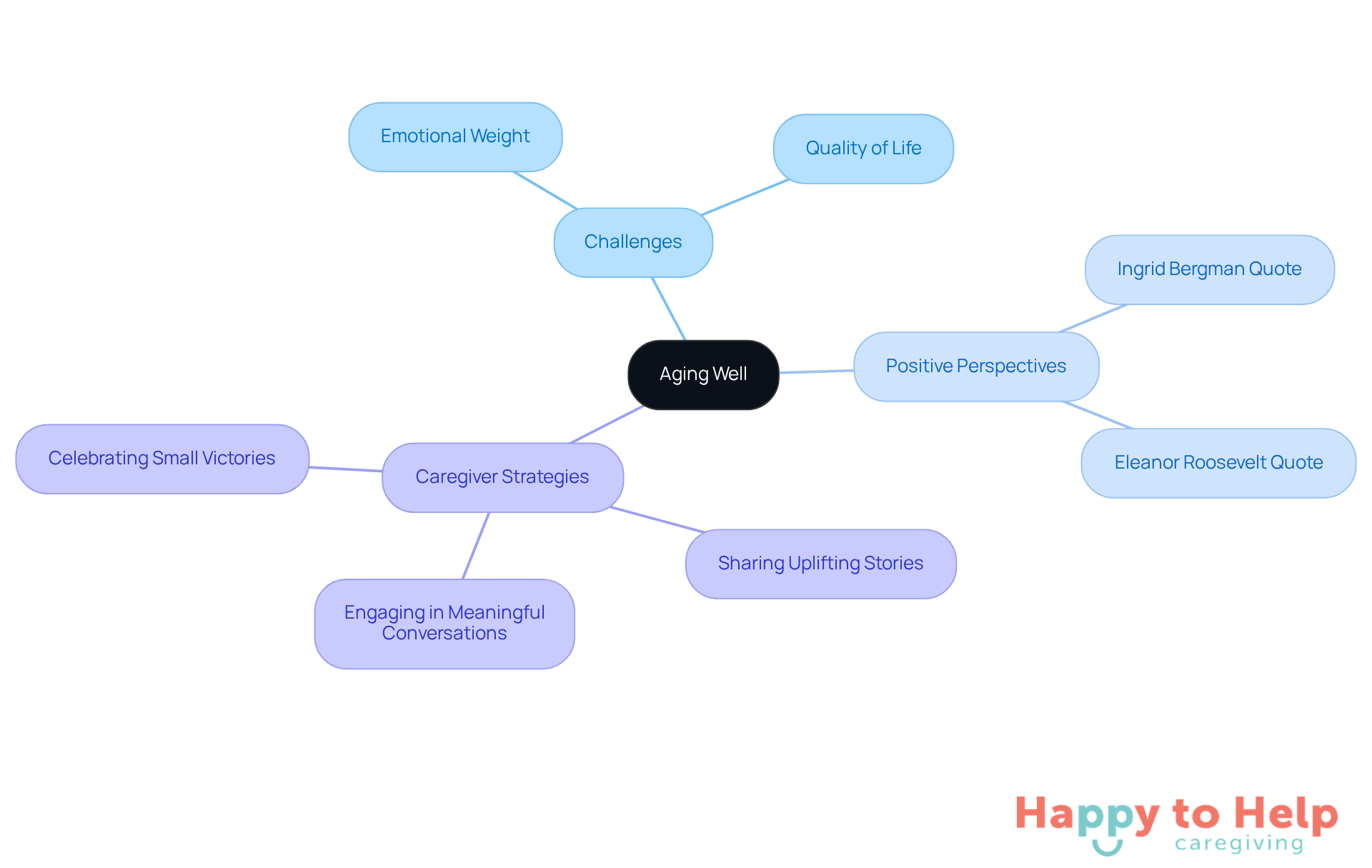
Aging presents unique challenges, both for older adults and their caregivers. Many older individuals struggle with the emotional weight of aging, often feeling a sense of loss or regret. This can lead to a diminished quality of life, making it essential for caregivers to address these feelings head-on.
Ingrid Bergman’s metaphor beautifully embodies aging well quotes: 'Getting old is like climbing a mountain; you get a little out of breath, but the view is much better!' This perspective encourages caregivers to help older adults focus on the positive aspects of their lives. By nurturing an appreciation for the wisdom gained over the years, caregivers can assist older adults in recognizing the beauty in their journey.
Studies show that maintaining a positive outlook significantly enhances life satisfaction, particularly for those aged 65-74, who report a satisfaction score of 3.6 compared to 3.4 for individuals 75 and older. Encouraging older adults to reflect on their experiences can foster a deeper appreciation for the present, transforming the challenges of aging into opportunities for joy and fulfillment.
As Eleanor Roosevelt wisely stated, one of the notable aging well quotes is, 'Today is the oldest you've ever been and the youngest you'll ever be again.' This reminder highlights the beauty found in every stage of life. Caregivers can implement strategies such as:
- Sharing uplifting stories
- Engaging in meaningful conversations
- Celebrating small victories
to promote a positive mindset among older adults.
Anonymous: 'An old soul can still have a young heart.'
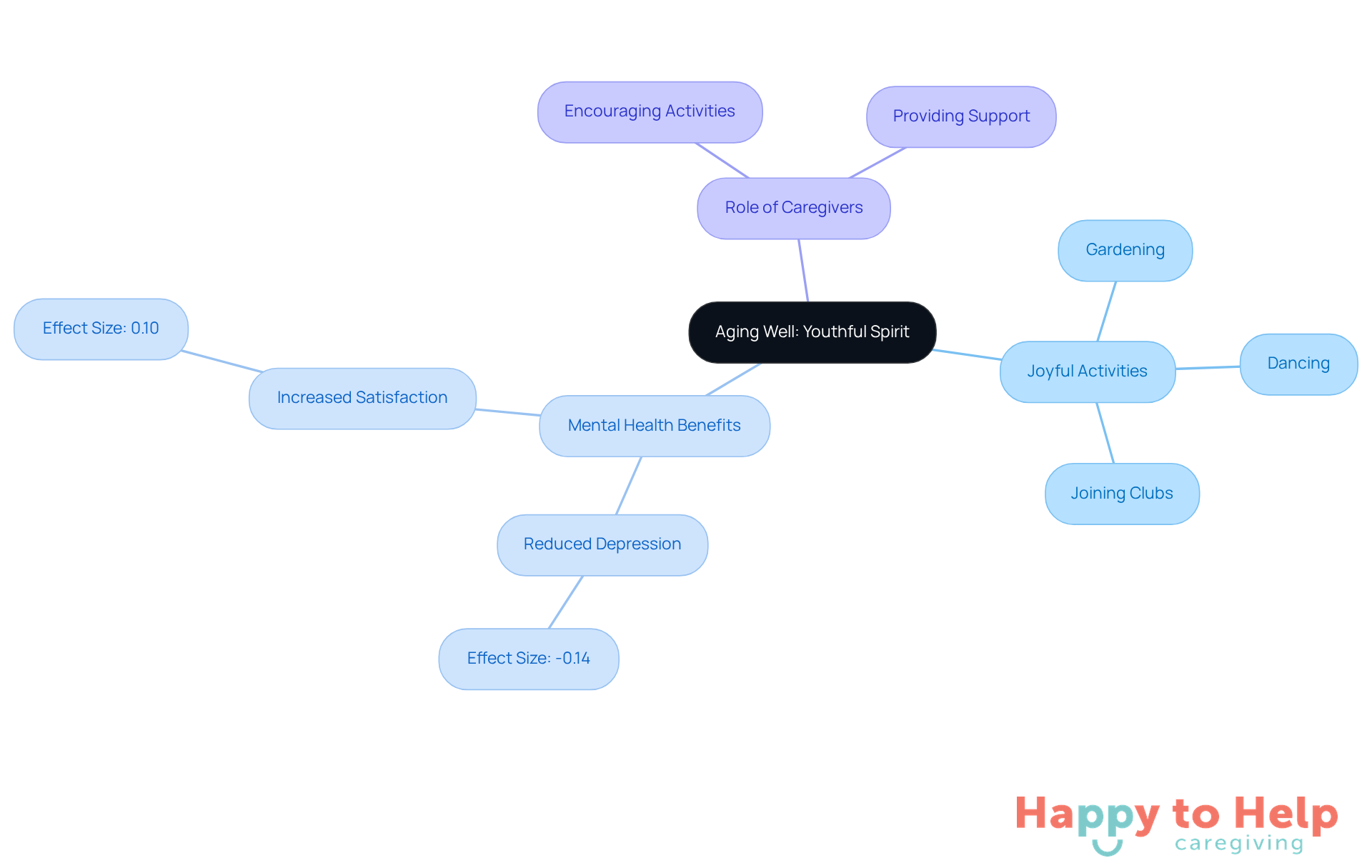
This quote serves as a powerful reminder that one's spirit can remain vibrant regardless of age, highlighting the essence of aging well quotes. However, many older adults face the challenge of loneliness and depression, which can significantly impact their mental well-being. Studies indicate that participating in joyful activities is essential for improving mental health. For instance, a meta-analysis shows that hobby engagement is negatively associated with depressive symptoms, with a pooled effect size of -0.14. This highlights the protective benefits of such activities.
Moreover, elderly individuals who actively participate in community activities or engage in hobbies report greater satisfaction with their lives. The combined coefficient of 0.10 for satisfaction associated with hobby involvement underscores this point. Caregivers play a vital role in addressing these challenges by encouraging older adults to partake in activities that bring them joy and fulfillment, such as:
- Gardening
- Dancing
- Joining clubs
These activities not only foster a youthful perspective but also nurture a sense of purpose and belonging, which is crucial for sustaining emotional resilience as they age, a sentiment echoed in various aging well quotes. By enabling these joyful moments, caregivers can assist older adults in embracing their inner vitality. Ultimately, this demonstrates that age is merely a figure when it comes to living fully.
Anonymous: 'In the tapestry of life, the golden threads are woven with age.'
Aging presents unique challenges for caregivers, particularly in helping elderly individuals reflect on their life experiences. This reflection is crucial, as it allows seniors to recognize the 'golden threads' that contribute to their rich narratives. Without this support, many may struggle with feelings of loss or depression, impacting their emotional well-being.
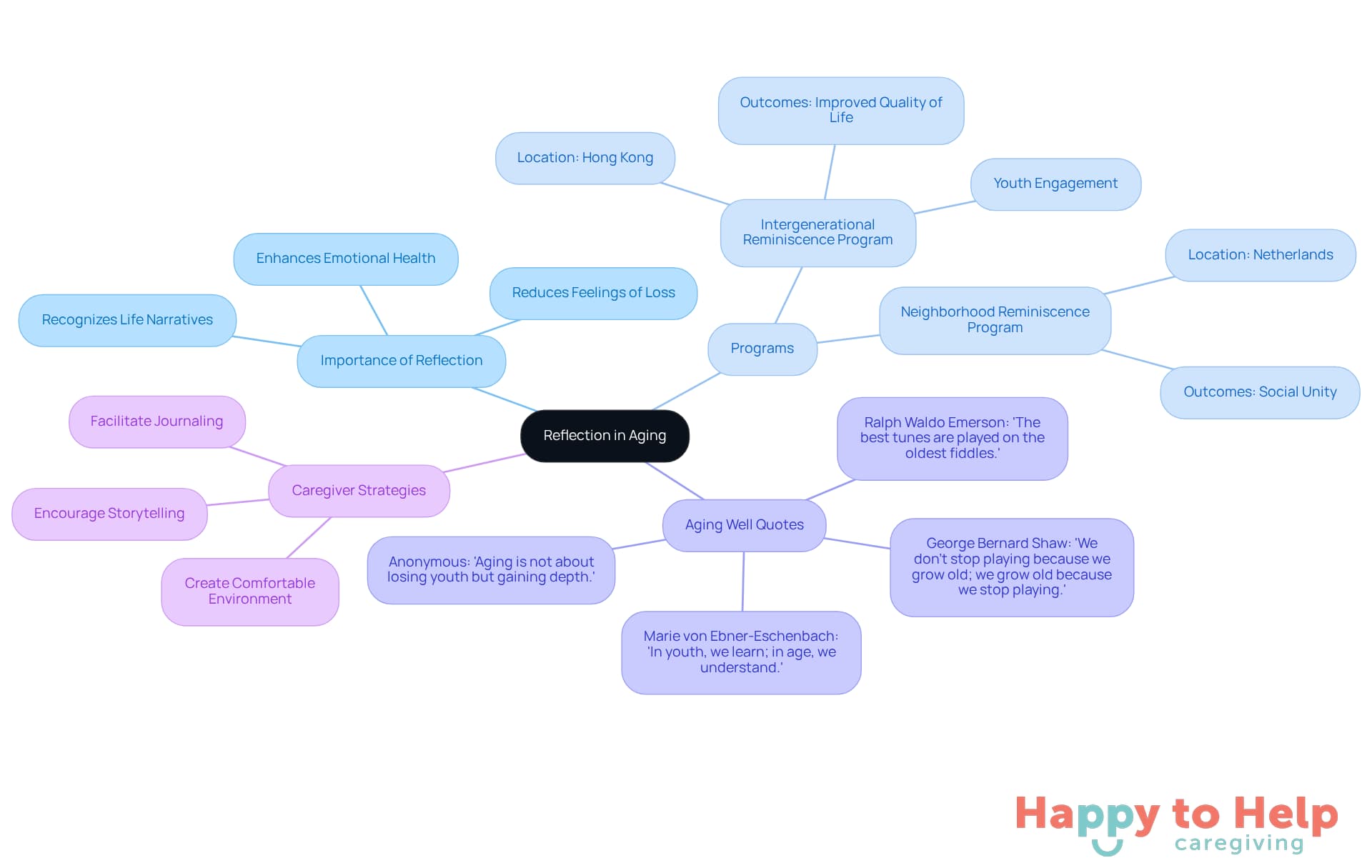
Engaging in reflective practices can significantly enhance emotional health. For instance, the Intergenerational Reminiscence Program in Hong Kong demonstrated statistically significant improvements in quality of existence and reductions in depressive symptoms among older adult participants. Additionally, it increased dementia knowledge among youth volunteers. Similarly, the Neighborhood Reminiscence Program in the Netherlands encouraged older adults to share their experiences, fostering social unity and a sense of belonging.
Aging well quotes from notable figures emphasize this perspective:
- 'Aging is not about losing youth but gaining depth.'
- 'Every wrinkle is a story, every gray hair a badge of courage.'
These reflections celebrate the wisdom gained through age and include aging well quotes that affirm the value of personal history. By facilitating these discussions, caregivers can help elderly individuals accept their past, nurturing pride and satisfaction in their lives.
To support this process, caregivers can encourage seniors to share their life stories through journaling or storytelling sessions. This not only enhances emotional connection but also promotes social engagement, creating a more fulfilling experience for both caregivers and the elderly.
Moving Forward with 10 Inspiring Aging Well Quotes
Aging is often viewed through a lens of decline, which can overshadow the potential for growth and enrichment. This perception poses a significant challenge for caregivers, who play a crucial role in creating a positive environment where older adults can thrive. By recognizing and embracing the wisdom that comes with age, caregivers can help seniors appreciate their unique narratives and the beauty of their life journeys.
To combat the negative implications of this perception, caregivers can implement key strategies that enhance the well-being of the elderly:
- Engaging in creative pursuits
- Encouraging storytelling
- Nurturing meaningful relationships
These are essential components in combating loneliness and promoting emotional resilience. Remember, age is not merely a number; it’s a tapestry woven with rich experiences and opportunities for connection.
The importance of supporting older adults in their journey cannot be overstated. Caregivers are encouraged to embrace their vital role in this process, facilitating an environment where aging is celebrated as a time of growth, reflection, and joy. By prioritizing compassionate care and fostering connections, caregivers can help older individuals navigate the complexities of aging, ensuring that their later years are filled with purpose and fulfillment.
https://iframe.tely.ai/cta/eyJhcnRpY2xlX2lkIjogIjY5MjRmMWQxZWM0Y2FiOGU3NGVjMDBjMSIsICJjb21wYW55X2lkIjogIjY4ZWU1ZGNhNzMxNzYyNTU3ZjNjOTVjMSIsICJpbmRleCI6IG51bGwsICJ0eXBlIjogImFydGljbGUifQ==Frequently Asked Questions
What services does Happy to Help Caregiving provide?
Happy to Help Caregiving offers companionship care and post-hospital recovery assistance, focusing on improving the quality of life for clients.
How does Happy to Help Caregiving support aging individuals?
The organization promotes independence and fosters a sense of security and well-being, allowing clients to age gracefully in the comfort of their own homes.
What challenges do caregivers face when caring for older adults?
Caregivers often experience emotional and physical demands that can lead to stress and burnout, making the caregiving journey challenging.
Why is encouraging creativity important for older adults?
Engaging older adults in creative pursuits enhances their mental health and overall quality of life, leading to a more fulfilling experience for both caregivers and those they care for.
What practical strategies can caregivers use to encourage creativity in older adults?
Caregivers can introduce creative activities, create a supportive environment, and encourage social interaction through group activities to spark interest and engagement.
How can caregivers help older adults reflect on their life experiences?
Caregivers can foster a sense of pride by encouraging conversations about past experiences, using open-ended questions to stimulate meaningful discussions.
What impact does emotional stress have on caregivers?
Nearly two-thirds of caregivers report moderate to high levels of emotional strain, which can hinder their ability to assist elderly individuals effectively.
How can caregivers enhance the well-being of the elderly they care for?
By creating an environment where older adults feel appreciated and understood, caregivers can improve their self-worth and overall well-being through meaningful conversations.
List of Sources
- Happy to Help Caregiving: Personalized Support for Aging Gracefully
- National Alliance for Caregiving: Caregiving in the US 2025 Report (https://johnahartford.org/resources/view/national-alliance-for-caregiving-caregiving-in-the-us-2025-report)
- 28 Senior Care Statistics: In-Home & Assisted Living | Shortlister (https://myshortlister.com/insights/senior-care-statistics)
- 2025 Home Care Statistics: Trends & Insights To Know (https://premierhcinc.com/blog/home-care-statistics)
- Warning From Older Adults: Care for Aging in America Needs Urgent Rethinking (https://johnahartford.org/newsroom/view/warning-from-older-adults-care-for-aging-in-america-needs-urgent-rethinking)
- New Study Finds That While Aging Seniors Prefer In-Home Care, Most Are Critically Underprepared for Future Healthcare Needs | Cross Country Healthcare, Inc. (https://ir.crosscountry.com/news-releases/news-release-details/new-study-finds-while-aging-seniors-prefer-home-care-most-are)
- Walt Disney: 'Laughter is timeless. Imagination has no age.'
- 16 positive quotes about ageing | Brightwater (https://brightwatergroup.com/news-media/16-positive-quotes-about-ageing)
- The Health Benefits of Laughter for Seniors (https://seniorlifestyle.com/resources/blog/health-benefits-of-laughter)
- Evaluation of the ‘Ladder to the Moon, Culture Change Studio Engagement Programme’ staff training: Two quasi-experimental case studies | Request PDF (https://researchgate.net/publication/313538369\_Evaluation\_of\_the\_'Ladder\_to\_the\_Moon\_Culture\_Change\_Studio\_Engagement\_Programme'\_staff\_training\_Two\_quasi-experimental\_case\_studies)
- Why older adults benefit from regular doses of humor (https://ama-assn.org/public-health/population-health/why-older-adults-benefit-regular-doses-humor)
- Participating in the arts creates paths to healthy aging (https://nia.nih.gov/news/participating-arts-creates-paths-healthy-aging)
- Stanislaw Jerzy Lec: 'Youth is the gift of nature, but age is a work of art.'
- Caregiver Statistics: One in Four Americans Are Now Caregivers, According to New Report (https://caregivingkinetics.com/caregiver-statistics)
- Top 51 Quotes About the Beauty of Aging (https://7dayhomecare.com/top-51-quotes-about-the-beauty-of-aging)
- Number of Family Caregivers Supporting Older Adults Increased Nearly One-Third Between 2011 and 2022 | Johns Hopkins Bloomberg School of Public Health (https://publichealth.jhu.edu/2025/number-of-family-caregivers-supporting-older-adults-increased-nearly-one-third-between-2011-and-2022)
- 2023 Caregiver Statistics (https://ourparents.com/senior-health/2023-caregiver-statistics)
- New Statistics Could Reshape the Meaning of Aging in Place (https://mylifesite.net/blog/post/new-statistics-could-reshape-the-meaning-of-aging-in-place)
- Proverbs 16:31: 'Gray hair is a crown of glory; it is gained by living a godly life.'
- 15 inspirational quotes about aging and lifelong learning | Blog | Tea & Toast (https://teaandtoast.ca/blog/15-quotes-aging-learning)
- Top 51 Quotes About the Beauty of Aging (https://7dayhomecare.com/top-51-quotes-about-the-beauty-of-aging)
- Quotes on Aging: 200+ Wise, Funny & Beautiful Sayings About Growing Older (https://vlcc.com/blogs/read/beautiful-wise-funny-aging-quotes-turning-older-gracefully)
- 14 of the Best Quotes About Aging - Senior Planet from AARP (https://seniorplanet.org/14-of-the-best-quotes-about-aging)
- 100 Quotes to Make You Think Differently About Aging in Place - Minute Women Home Care % (https://mwhomecare.com/aging-in-place-100-quotes-to-make-you-think-differently)
- Anonymous: 'The heart never grows old; it just learns to love deeper.'
- The Importance of Caregiver-Client Relationships in Senior Well-Being (https://homeinstead.com/home-care/usa/in/goshen/588/news-and-media/the-importance-of-caregiver-client-relationships-in-senior-well-being)
- The importance of connections: Ways to live a longer, healthier life | Harvard T.H. Chan School of Public Health (https://hsph.harvard.edu/news/the-importance-of-connections-ways-to-live-a-longer-healthier-life)
- The Value of Friendships as We Age (https://ihpi.umich.edu/national-poll-healthy-aging/reports-and-resources/value-friendships-we-age)
- 10 Essential Companions for Seniors at Home to Enhance Care - Happy To Help (https://happytohelpcaregiving.com/10-essential-companions-for-seniors-at-home-to-enhance-care)
- Unknown: 'Life is about growing, not just growing old.'
- 15 inspirational quotes about aging and lifelong learning | Blog | Tea & Toast (https://teaandtoast.ca/blog/15-quotes-aging-learning)
- Top 51 Quotes About the Beauty of Aging (https://7dayhomecare.com/top-51-quotes-about-the-beauty-of-aging)
- Engaging in hobbies boosts mental well-being for seniors, study finds (https://news-medical.net/news/20230913/Engaging-in-hobbies-boosts-mental-well-being-for-seniors-study-finds.aspx)
- Older Adults Embrace Lifelong Learning for Personal Growth (https://aarp.org/pri/topics/social-leisure/activities-interests/lifelong-learning-older-adults)
- Continuing Education for Seniors: Facts and Statistics (https://theseniorlist.com/research/seniors-higher-education-study)
- Anonymous: 'The longer you live, the more stories you have to share.'
- 20 Quotes about Sharing Your Story, Baring Your Heart & Healing Hurts (https://healingbrave.com/blogs/all/quotes-about-sharing-your-story)
- Inspiring Story Telling Quotes You Need To Know About (https://kapable.club/blog/story-telling/story-telling-quotes)
- MARCS | NTT Dementia (https://westernsydney.edu.au/marcs/impact/case\_studies/ntt\_dementia)
- Dunblane dementia friendly group brings hope and friendship during COVID-19 - Health and Social Care Alliance Scotland (https://alliance-scotland.org.uk/blog/case\_studies/dunblane-dementia-friendly-group-brings-hope-and-friendship-during-covid-19)
- 50 Best Quotes for Storytelling — The Storyteller Agency (https://thestorytelleragency.com/goodreads/50-best-quotes-for-storytelling)
- Ingrid Bergman: 'Getting old is like climbing a mountain; you get a little out of breath, but the view is much better!'
- The Surprising Advantages of Aging - Grand River Hospital District (https://grandriverhealth.org/the-surprising-advantages-of-aging)
- Social Interaction and Life Satisfaction among Older Adults by Age Group - PMC (https://pmc.ncbi.nlm.nih.gov/articles/PMC10671417)
- 15 Good Quotes for Seniors That Will Brighten Your Day in 2025 (https://arhomecare.com/15-good-quotes-for-seniors-that-will-brighten-your-day-in-2025)
- Anonymous: 'An old soul can still have a young heart.'
- Top 51 Quotes About the Beauty of Aging (https://7dayhomecare.com/top-51-quotes-about-the-beauty-of-aging)
- The Impact of Regular Social Activities on Seniors' Mental Health (https://thehighpointresidence.com/blog/the-impact-of-regular-social-activities-on-seniors-mental-health)
- (https://belleviecare.co.uk/support-advice/60-elderly-care-quotes-to-lift-your-spirits)
- Hobby engagement and mental wellbeing among people aged 65 years and older in 16 countries - PMC (https://pmc.ncbi.nlm.nih.gov/articles/PMC10504079)
- 15 Good Quotes for Seniors That Will Brighten Your Day in 2025 (https://arhomecare.com/15-good-quotes-for-seniors-that-will-brighten-your-day-in-2025)
- Anonymous: 'In the tapestry of life, the golden threads are woven with age.'
- 15 Wise and Inspiring Quotes About Aging (https://psychologytoday.com/us/blog/fulfillment-at-any-age/201201/15-wise-and-inspiring-quotes-about-aging)
- 100 Quotes to Make You Think Differently About Aging in Place - Minute Women Home Care % (https://mwhomecare.com/aging-in-place-100-quotes-to-make-you-think-differently)
- Elders' Life Stories: Impact on the Next Generation of Health Professionals - PMC (https://pmc.ncbi.nlm.nih.gov/articles/PMC3763594)
- 50 Of The Best Positive Aging Quotes I Could Find (https://smartliving365.com/50-best-positive-aging-quotes-find)
- Reflections: Helping Seniors Look Back on the Past Year (https://seniorhelpers.com/ct/stamford/resources/blogs/2024-12-20)