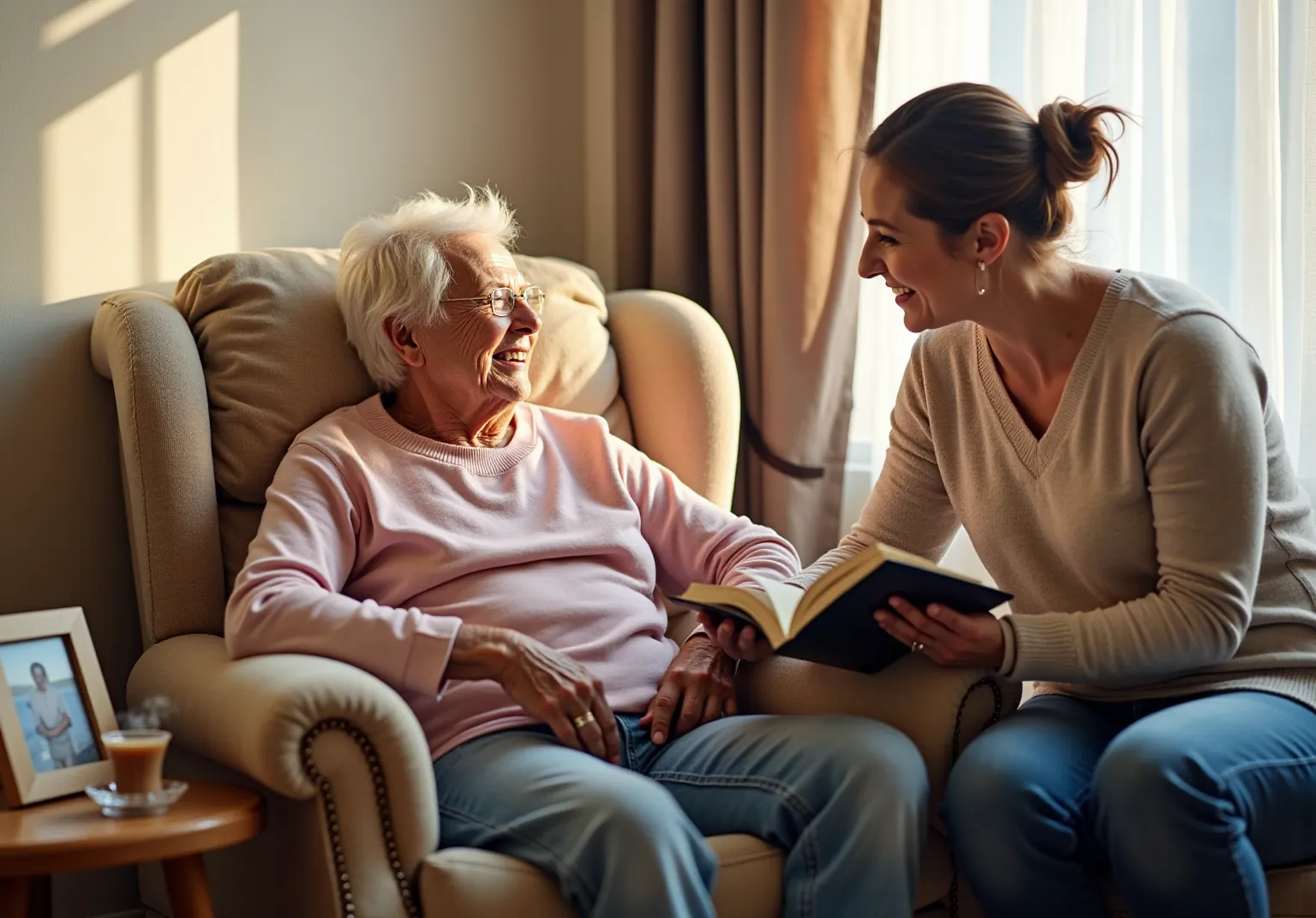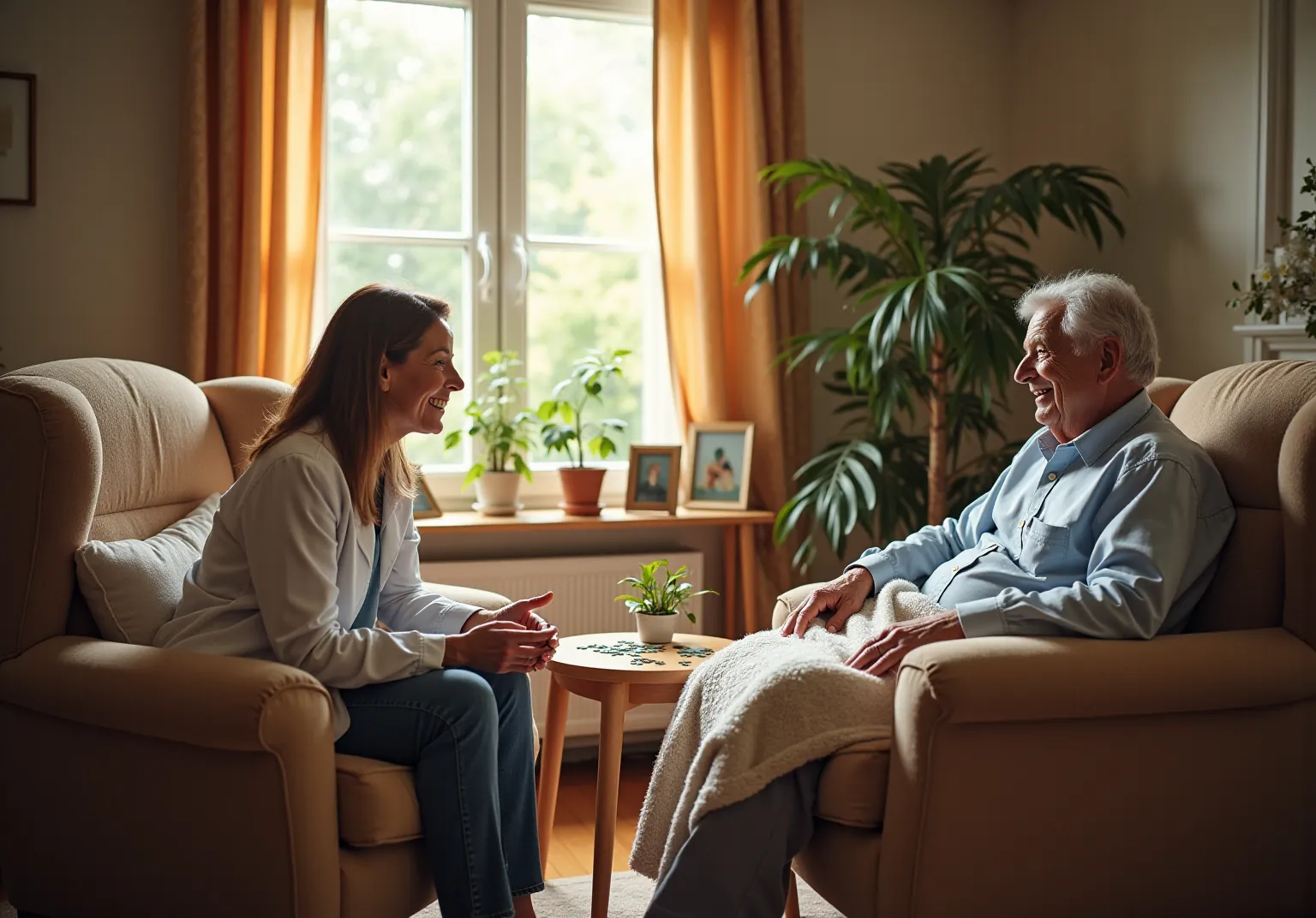
The Importance of Benefits of Colorado Springs Home
In a society where the elderly frequently encounter isolation and health challenges, the importance of home health care services is paramount. These services not only address medical needs but also significantly enhance emotional well-being through companionship and personalized support. Families often grapple with the complexities of caregiving, raising an essential question: how can these services genuinely transform the lives of seniors and their loved ones?
This article explores ten key benefits of home health care services in Colorado Springs, illustrating their profound impact on fostering independence, improving quality of life, and providing crucial support for families.
Happy to Help Caregiving: Compassionate Companionship for Seniors
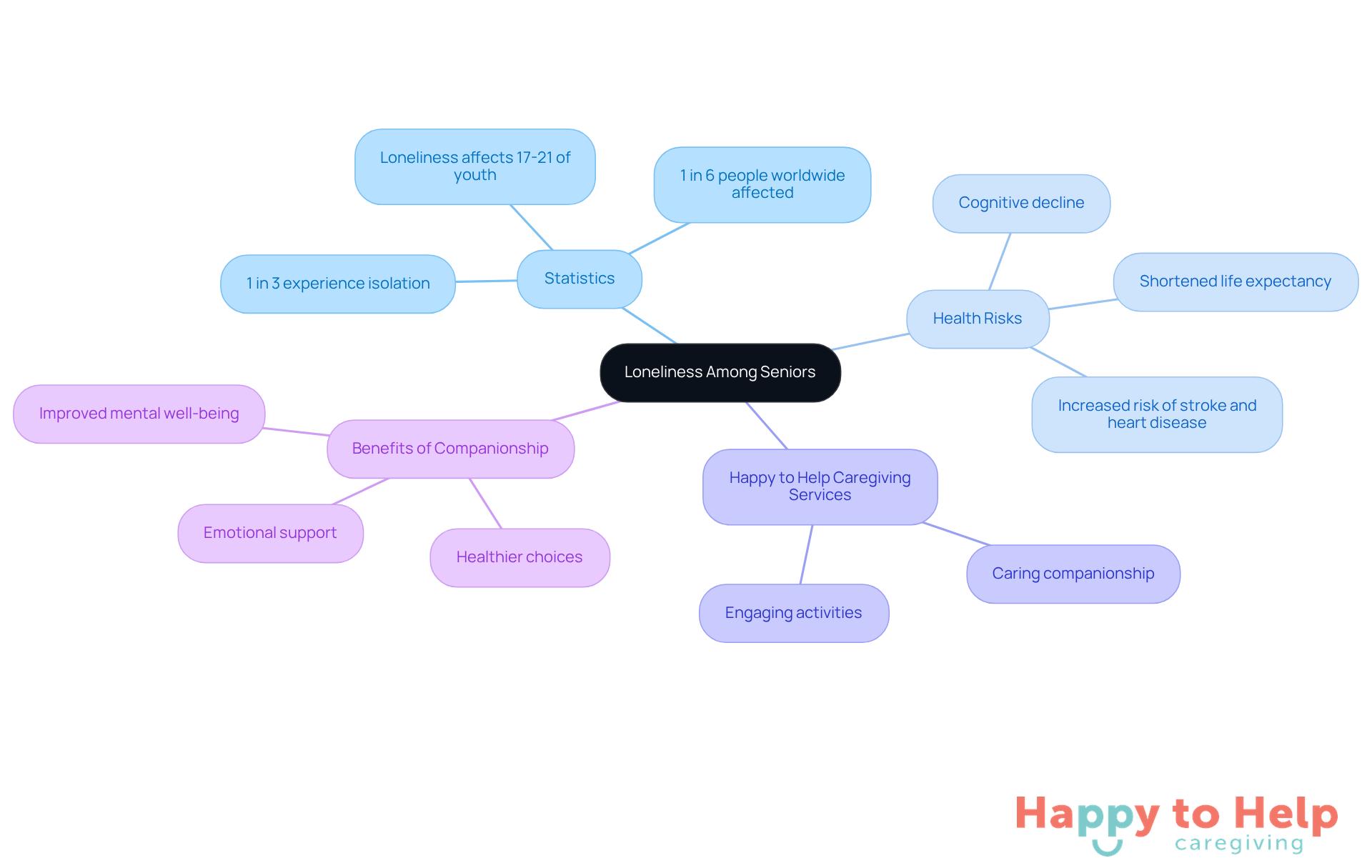
Loneliness among older adults is a pressing issue that significantly impacts their mental wellness and emotional well-being. According to the University of Michigan’s National Poll on Healthy Aging, up to one in three elderly adults experience feelings of isolation. This loneliness is not just a feeling; it’s associated with serious health risks, including cognitive decline and early death. In fact, research suggests that chronic loneliness may shorten life expectancy even more than being overweight or sedentary.
Happy to Help Caregiving addresses this critical challenge by offering caring companionship as part of their Colorado Springs home health care services, which fosters a sense of belonging. Caregivers engage clients in meaningful conversations and enjoyable activities, which are essential for reducing feelings of isolation. By ensuring that seniors maintain vibrant and fulfilling lives at home, this Colorado Springs home health care service plays a vital role in combating loneliness.
Strong social connections encourage healthier choices and offer essential emotional support. As Dr. Vivek Murthy emphasizes, the significance of companionship in supporting the elderly cannot be overstated; it enhances lives and leads to improved health outcomes. With a focus on individualized support, Happy to Help Caregiving enables seniors to flourish in their familiar environments, reinforcing their dignity and autonomy.
Families are encouraged to consider companion support services for their loved ones. By doing so, they can effectively combat loneliness and promote a healthier, happier life for seniors.
Post-Hospital Recovery Assistance: Smooth Transitions for Seniors
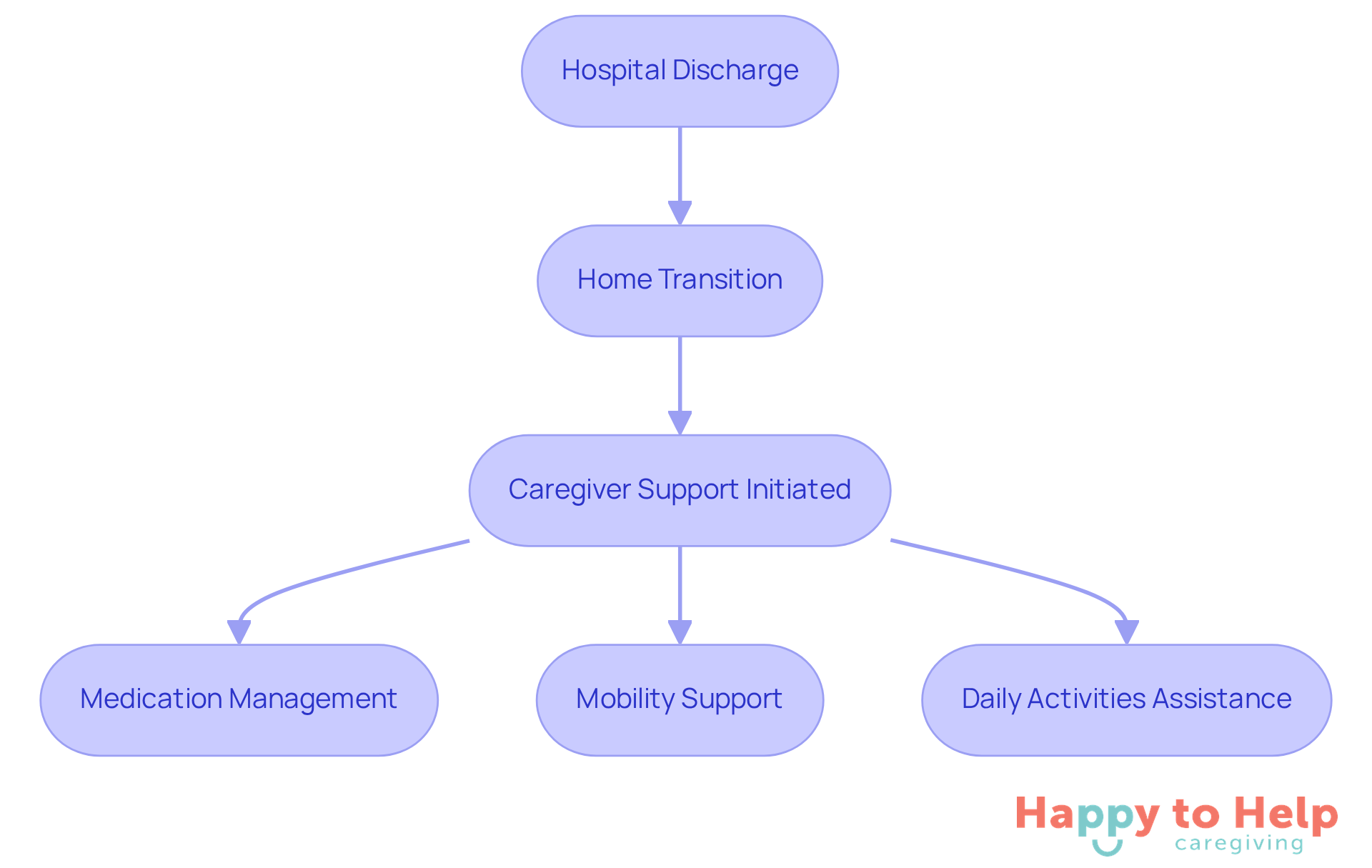
Transitioning from hospital to Colorado Springs home health care can be a challenging time for seniors and their caregivers. Without proper support, complications can arise, jeopardizing recovery and overall health.
Happy to Help Caregiving addresses this issue with personalized care plans designed for Colorado Springs home health care to facilitate a smooth transition. Caregivers provide essential assistance with medication management, mobility support, and daily activities, ensuring that seniors can recover comfortably and safely in their familiar environment.
This support is crucial for preventing complications and promoting overall health during recovery. By implementing these tailored care strategies, caregivers can significantly enhance the recovery experience for seniors.
Respite Care: Essential Support for Family Caregivers
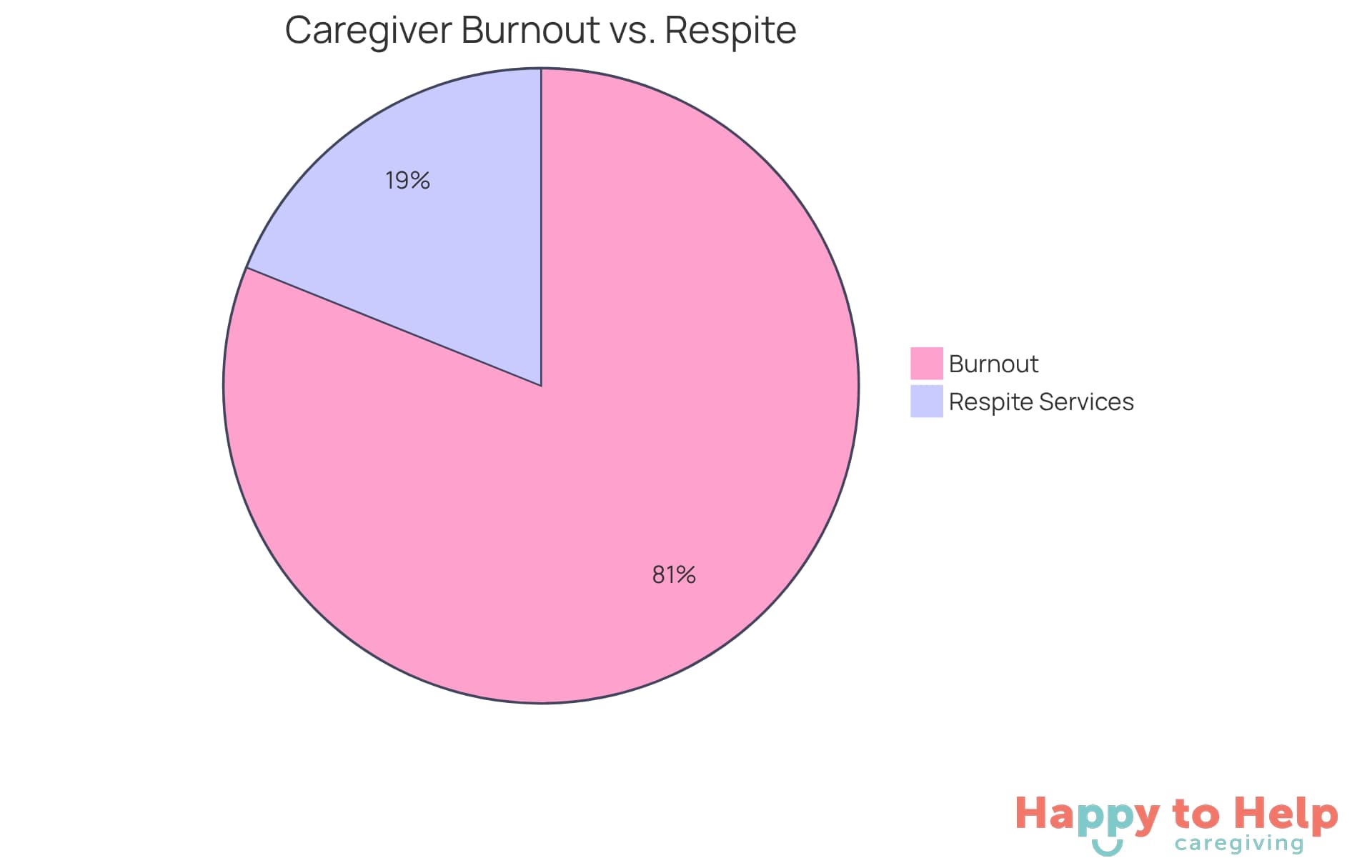
Caregiving can be an incredibly demanding role, often leading to significant stress and burnout for family supporters. Research indicates that over 60% of caregivers experience signs of burnout, yet only 14% of those seeking respite services actually obtain them. This gap highlights a critical problem: caregivers need relief to maintain their well-being and continue providing quality support.
The implications of caregiver burnout are profound. When caregivers are overwhelmed, their ability to provide compassionate care diminishes, which can strain relationships with those they support. Studies show that taking breaks can lead to lower distress levels and improved health outcomes for caregivers. This temporary relief not only strengthens the bond with the care recipient but also enhances the caregiver's emotional resilience.
Respite care services, like those offered by Happy to Help Caregiving, provide a practical solution. These services allow caregivers to take essential breaks, whether for a few hours or several days, ensuring they can recharge and reconnect with friends and family. With skilled experts in charge, family members can trust that their loved ones receive customized attention tailored to their needs. According to the National Institute on Aging, "Respite assistance offers temporary relief for primary support providers, allowing them time to relax, travel, or spend moments with other family and friends."
Ultimately, respite support is not just a luxury; it is a vital component of sustainable caregiving. By prioritizing their own wellness, caregivers can continue to offer high-quality assistance without jeopardizing their health. Taking advantage of respite services is a crucial step toward maintaining balance and ensuring long-term success in caregiving.
Palliative Support Care: Enhancing Quality of Life for Seniors
Seniors facing significant medical challenges often struggle with inadequate support, leading to distress and diminished quality of life. Caregivers frequently find themselves overwhelmed, unable to provide the necessary emotional and physical assistance. This situation not only affects the seniors but also places a heavy burden on their families.
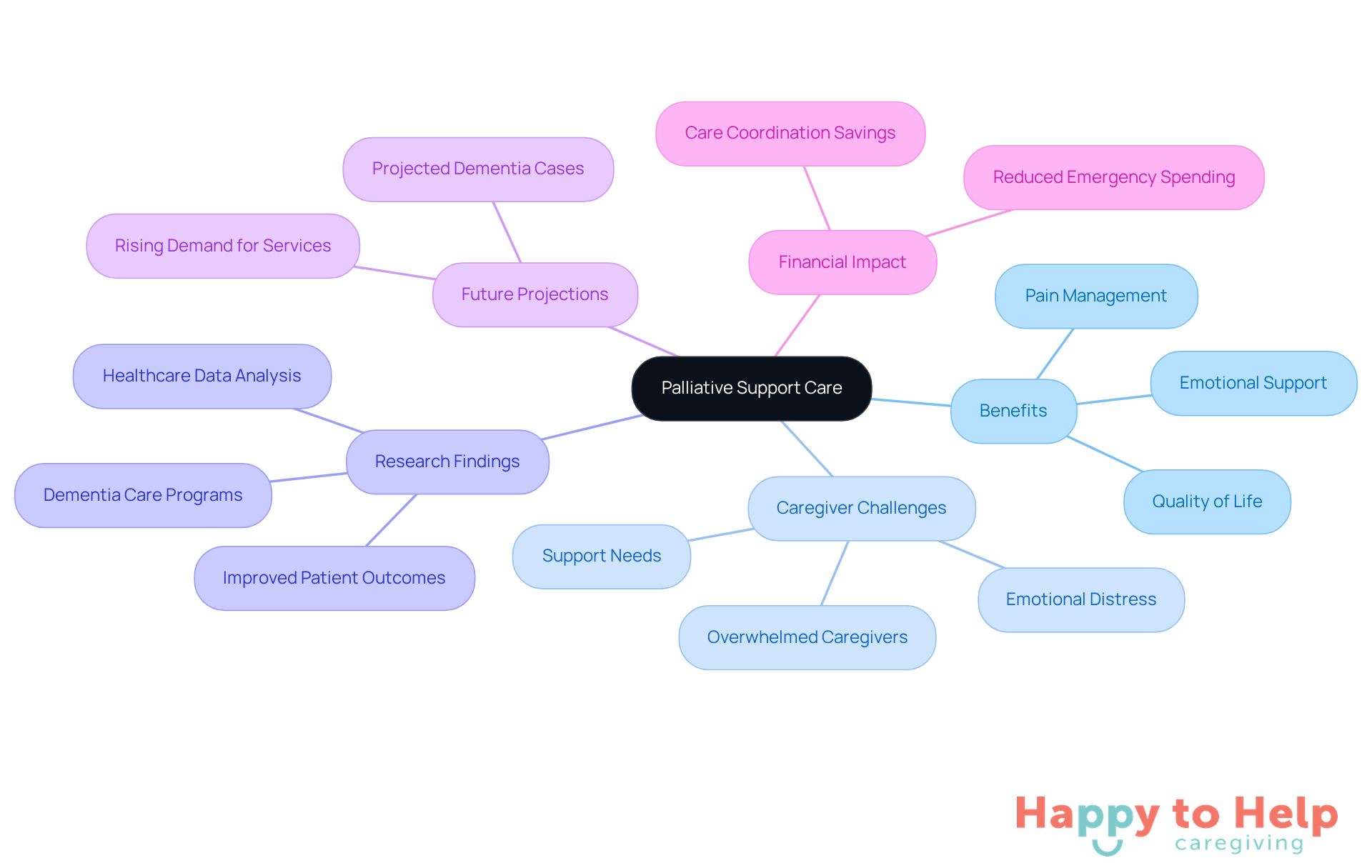
Palliative support from Happy to Help Caregiving addresses these challenges head-on. This service focuses on effective pain management and emotional support, allowing seniors to maintain their dignity and comfort while receiving help with daily activities. Trained support providers offer empathetic assistance that tackles both physical symptoms and emotional wellness, promoting a holistic approach to health.
Research shows that palliative assistance significantly enhances quality of life. Studies indicate that patients receiving such support experience reduced symptoms and improved emotional resilience. Effective pain management strategies within palliative care have also been linked to greater overall satisfaction and well-being among elderly clients.
By addressing both emotional and physical needs, palliative support not only alleviates distress but also empowers seniors to navigate their health journeys with confidence and peace. Notably, nearly 400 healthcare organizations are developing Dementia Support Programs (DCPs) that include palliative services, highlighting the growing recognition of their importance.
Additionally, the GUIDE model, an eight-year payment demonstration, aims to enhance the quality of life for dementia patients and their caregivers. With projections indicating that by 2060, around 14 million individuals will face some form of dementia-related illness, the demand for palliative support services is expected to rise.
Moreover, palliative care services have been shown to reduce emergency department spending, easing financial pressures for families while improving care coordination. This comprehensive approach not only benefits seniors but also supports caregivers in their vital roles.
24/7 Availability: Continuous Support for Seniors
Problem: Many elderly individuals face challenges in receiving consistent care, which can lead to serious health risks and increased stress for their families.
Agitate: Without ongoing assistance, those with complex medical conditions or who are vulnerable to sudden health changes may experience deteriorating health outcomes. Research indicates that elderly individuals who receive regular care see a 30% reduction in hospital visits and improved overall well-being. Families often worry about their loved ones, feeling the weight of caregiving responsibilities that can strain relationships.
Happy to Help Caregiving provides Colorado Springs home health care with 24/7 availability, ensuring that elderly individuals receive tailored assistance to meet their specific wellness needs. The presence of skilled support providers not only enhances safety but also fosters a sense of security, allowing older adults to thrive in their familiar environments. Ongoing assistance is vital for maintaining dignity and autonomy, as caregivers are equipped to manage daily tasks and respond swiftly to emergencies. This ultimately improves the quality of life for both elderly individuals and their families. As healthcare experts emphasize, "Ongoing support is essential for handling intricate health requirements and guaranteeing that seniors obtain the assistance they merit." Families can rest easy knowing that help is just a call away, allowing them to focus on nurturing their relationships.
Flexible Scheduling: Tailored Care for Individual Needs
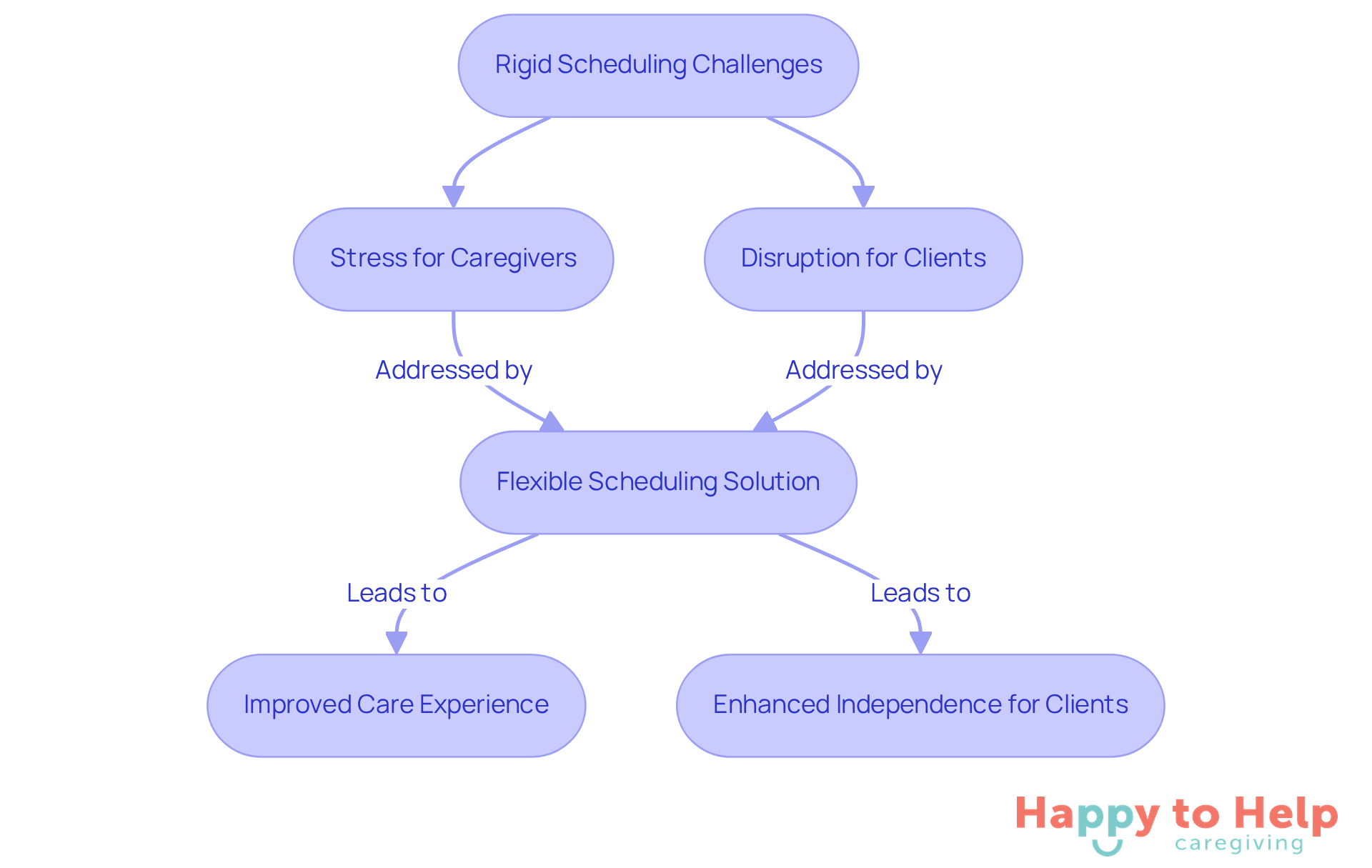
Problem: Rigid scheduling can create significant challenges for caregivers and their clients. When care is not tailored to individual needs, it can lead to stress and dissatisfaction for both parties.
Agitate: This lack of flexibility can disrupt the daily routines of elderly individuals, making them feel less independent and more reliant on others. It can also strain relationships between caregivers and families, as they struggle to find suitable times for care.
Flexible scheduling is a hallmark of Colorado Springs home health care at Happy to Help Caregiving, allowing caregivers to tailor their services to fit the individual needs of each client. Whether it's daily visits, weekly check-ins, or around-the-clock care, the agency ensures that care is provided at times that are most convenient for the client and their family. This flexibility not only improves the caregiving experience but also fosters a sense of normality for elderly individuals.
Emotional Support: Combating Loneliness in Seniors
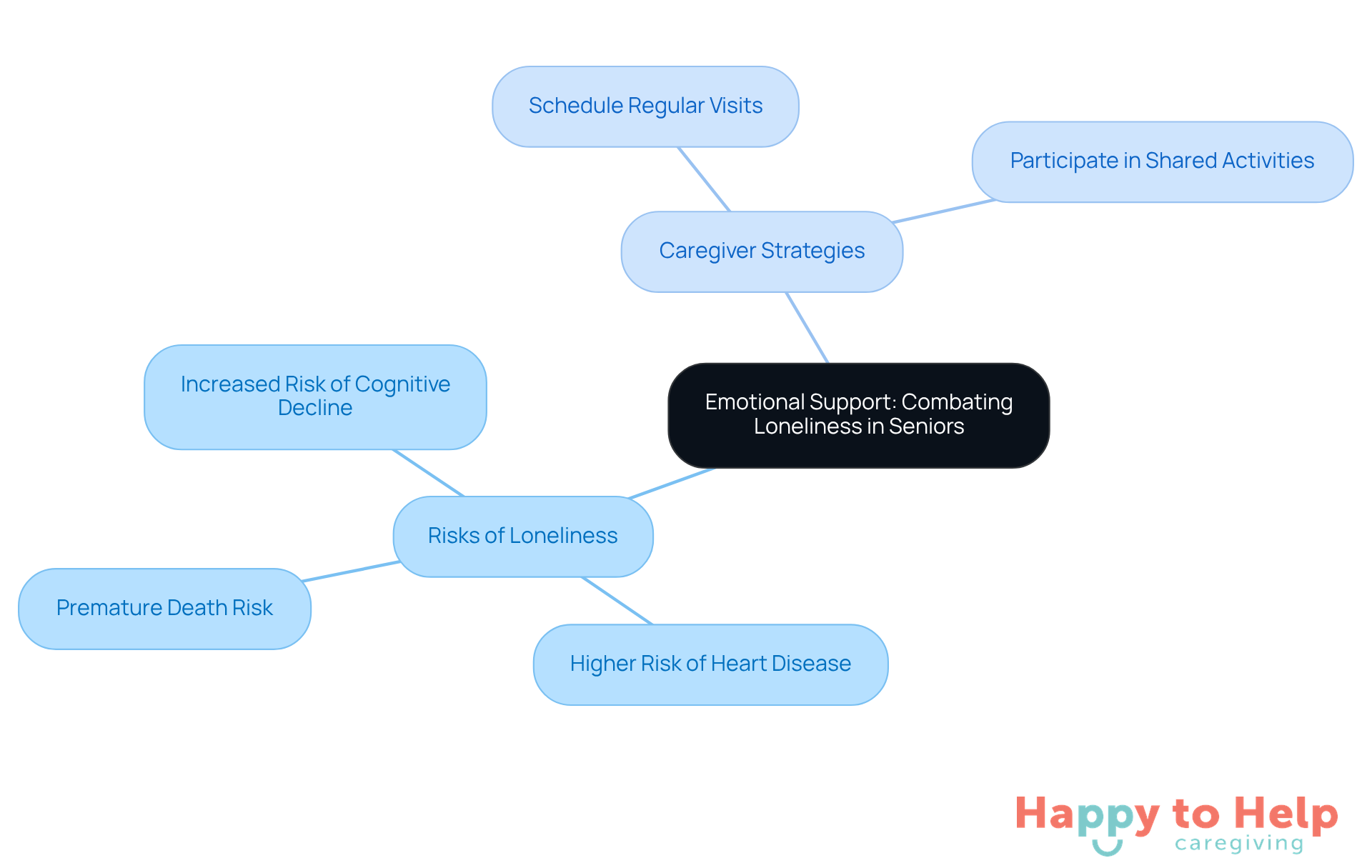
Emotional support is a critical issue in caregiving services, particularly at Happy to Help Caregiving. Many older adults experience loneliness and depression, which can manifest as withdrawal from social activities or noticeable mood changes. This loneliness is not just a feeling; it poses serious health risks. Studies indicate that older adults facing loneliness are at a significantly increased risk for various medical problems, including cognitive decline and heart disease. In fact, chronic loneliness can raise the risk of premature death by 26% and reduce life expectancy by five years. Additionally, it increases the risk of heart disease by 29% and dementia by 50%.
To combat these challenges, caregivers can play a vital role by offering companionship and engaging clients in enjoyable activities. By fostering social interaction, caregivers not only alleviate feelings of loneliness but also promote mental well-being. Implementing emotional support strategies can be straightforward. Family caregivers can:
- Schedule regular visits
- Participate in shared activities with seniors
By nurturing a positive atmosphere at home and preserving independence, caregivers help create an environment where older adults can thrive. This highlights the importance of social connections in enhancing mental health. Ultimately, the emotional support provided by caregivers contributes significantly to the happiness and overall health of their clients.
Technology Integration: Enhancing Care Management and Communication
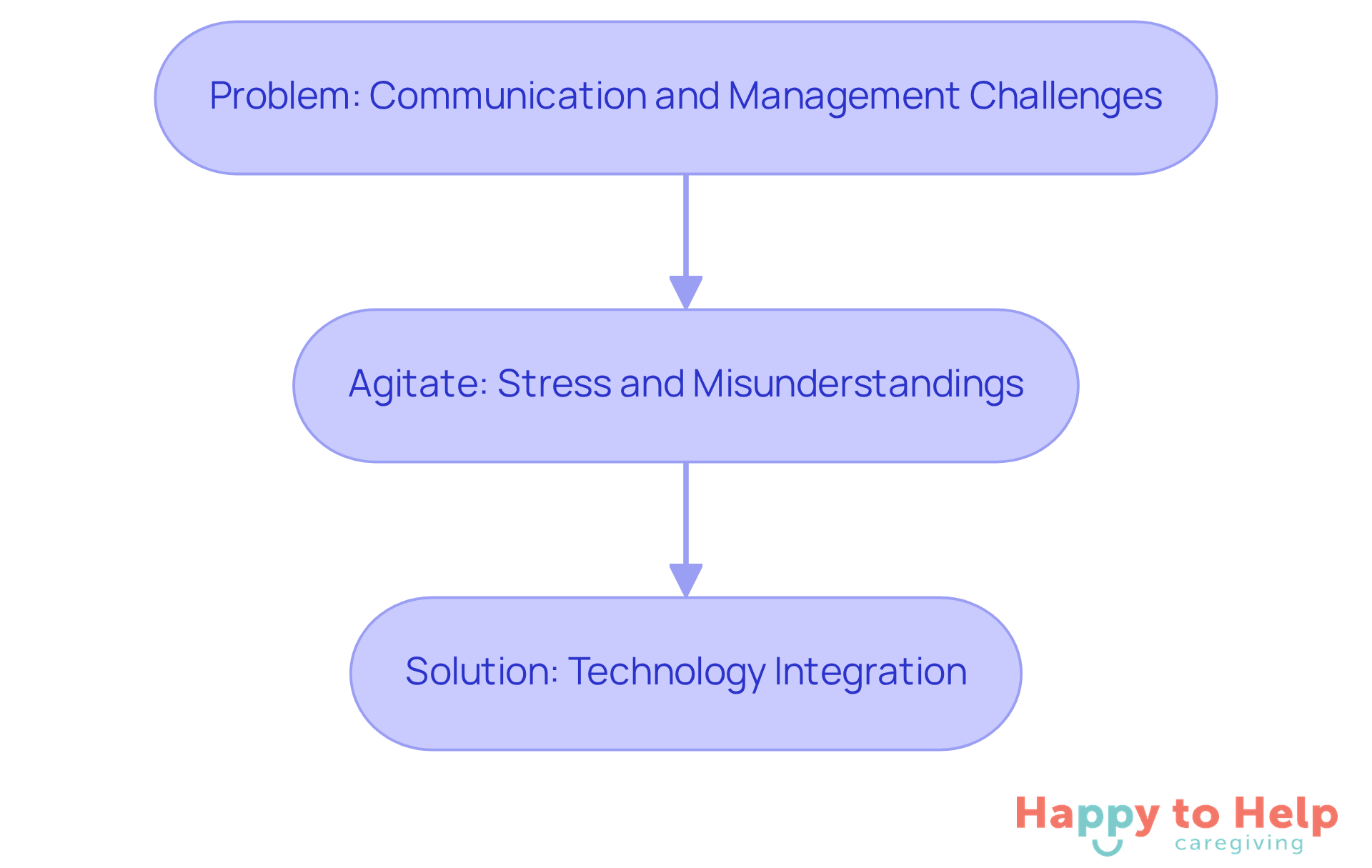
Problem: Caregivers often face challenges in communication and management, which can lead to misunderstandings about a client's needs.
Agitate: These gaps in communication can create stress for both caregivers and families, making it difficult to ensure that everyone is aligned on treatment plans and preferences. This lack of transparency can erode trust and hinder effective collaboration.
Solution: Happy to Help Caregiving addresses these issues by incorporating technology into its services. Tools like online health notes and scheduling applications empower families to stay informed about their loved one's treatment. This transparency fosters trust and collaboration, ensuring that everyone is well-informed and engaged in the caregiving process.
Personalized Care Plans: Tailoring Support to Individual Needs
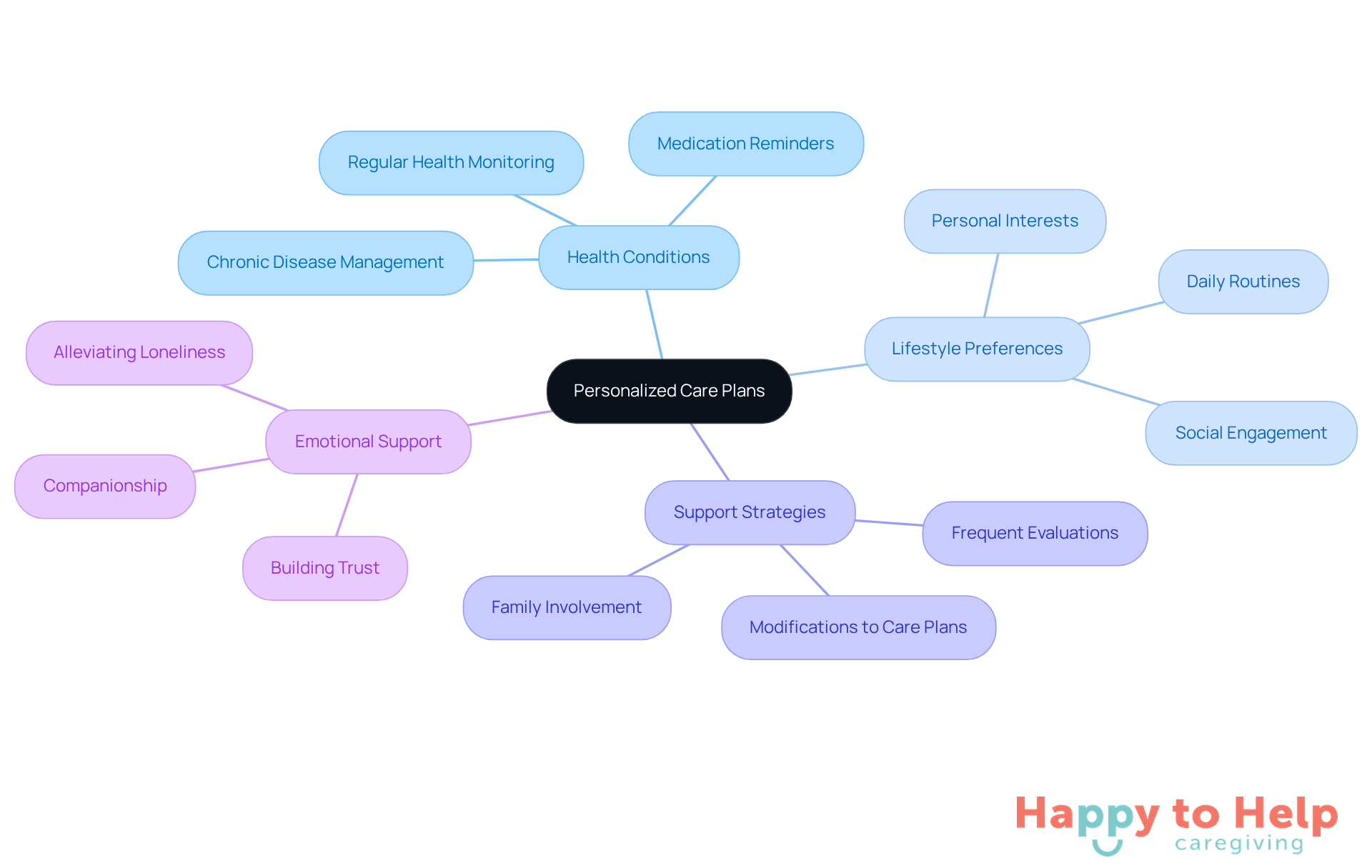
Caregivers often face the challenge of providing personalized support for seniors, who have unique health conditions and lifestyle preferences. Without tailored assistance, seniors may struggle to maintain their independence and well-being, leading to increased reliance on caregivers.
At Happy to Help Assistance, we address this issue by creating personalized support plans for each client. Our approach considers specific health conditions, preferences, and lifestyle, ensuring that seniors receive the most relevant and effective support. This tailored strategy not only promotes independence but also enhances overall well-being.
To further improve the effectiveness of our support, we conduct frequent evaluations and modifications to the treatment plan. This adaptability ensures that the support evolves alongside the client's changing needs, providing caregivers with actionable solutions to enhance their care.
Family Testimonials: Real Impact of Home Health Care Services
Families often face the challenge of finding quality caregiving services for their loved ones. This can lead to significant stress and uncertainty about the emotional and physical well-being of those they care for.
Happy to Help Caregiving addresses this concern through the heartfelt testimonials of families who have experienced their services. Many express gratitude for the compassionate support their loved ones receive, noting marked improvements in both emotional and physical health.
These testimonials not only reflect the agency's commitment to quality care but also serve as a reassuring solution for families considering in-home care. By sharing these positive experiences, Happy to Help Caregiving provides valuable insights that can guide families in making informed decisions.
Making the Right Choice
The challenges faced by caregivers and seniors are significant, particularly in combating loneliness and managing the demands of caregiving. Loneliness can severely impact the emotional well-being of elderly individuals, while family caregivers often experience burnout due to the constant demands of their role. This situation not only affects the caregivers but also the quality of care provided to seniors.
To address these issues, Colorado Springs home health care services offer a vital solution. By providing compassionate companionship, personalized care plans, and essential support during transitions, these services enhance the quality of life for elderly individuals. The focus on emotional well-being, alongside practical assistance, allows seniors to maintain their independence and dignity in the comfort of their homes.
Key insights reveal:
- The importance of companionship in alleviating feelings of isolation
- The critical role of respite care for family caregivers
- The necessity of 24/7 availability for continuous support
Furthermore, integrating technology in care management fosters better communication between caregivers and families, ensuring everyone is aligned in providing the best possible care. Personalization of care plans underscores the commitment to meeting individual needs, enhancing both emotional and physical well-being.
As the demand for home health care services continues to rise, families must recognize the importance of these supportive options. Engaging with services like Happy to Help Caregiving not only alleviates the burdens of caregiving but also enriches the lives of seniors, allowing them to thrive in their familiar environments. Embracing these solutions can lead to healthier, happier lives for both seniors and their families, reinforcing the value of compassionate care in the community.
https://iframe.tely.ai/cta/eyJhcnRpY2xlX2lkIjogIjY5MjNhMGEzZTUyZmU2NjM2Njg4NjcyMSIsICJjb21wYW55X2lkIjogIjY4ZWU1ZGNhNzMxNzYyNTU3ZjNjOTVjMSIsICJpbmRleCI6IG51bGwsICJ0eXBlIjogImFydGljbGUifQ==Frequently Asked Questions
What is the significance of companionship for seniors?
Companionship is crucial for seniors as it helps combat loneliness, which is associated with serious health risks such as cognitive decline and early death. Strong social connections enhance emotional support and encourage healthier choices.
How does Happy to Help Caregiving address loneliness among older adults?
Happy to Help Caregiving offers caring companionship through their home health care services in Colorado Springs, engaging clients in meaningful conversations and enjoyable activities to reduce feelings of isolation and promote vibrant lives at home.
What are the benefits of personalized care plans during post-hospital recovery?
Personalized care plans help facilitate smooth transitions from hospital to home by providing essential support with medication management, mobility assistance, and daily activities, ensuring seniors recover comfortably and safely in familiar environments.
What challenges do family caregivers face?
Family caregivers often experience significant stress and burnout, with over 60% showing signs of burnout. This can strain their ability to provide compassionate care and negatively impact their relationships with care recipients.
What is respite care and why is it important for caregivers?
Respite care provides temporary relief for family caregivers, allowing them to take essential breaks to recharge. This support is vital for maintaining their well-being, improving their emotional resilience, and ensuring they can continue providing quality care.
How can respite care services benefit both caregivers and care recipients?
Respite care services allow caregivers to relax and reconnect with friends and family while ensuring that their loved ones receive customized attention from skilled experts. This ultimately strengthens the bond between caregivers and care recipients and supports sustainable caregiving.
List of Sources
- Happy to Help Caregiving: Compassionate Companionship for Seniors
- Social connection linked to improved health and reduced risk of early death (https://who.int/news/item/30-06-2025-social-connection-linked-to-improved-heath-and-reduced-risk-of-early-death)
- Why Home Care Providers Are Increasingly Offering Companion Care Services for Seniors | Aaniie, formerly Smartcare Software (https://aaniie.com/news/why-home-care-providers-are-increasingly-offering-companion-care-services-for-seniors)
- Lonely Seniors Are Turning To AI Bots For Companionship (https://forbes.com/sites/rashishrivastava/2025/10/18/lonely-seniors-are-turning-to-ai-bots-for-companionship)
- Friendships Are Especially Powerful Late in Life, Poll Says (https://usnews.com/news/health-news/articles/2024-12-16/friendships-are-especially-powerful-late-in-life-poll-says)
- | Catholic Charities Serving Central Washington (https://catholiccharitiescw.org/news/companionship-can-counter-the-impacts-of-loneliness-and-isolation)
- Post-Hospital Recovery Assistance: Smooth Transitions for Seniors
- Home Care Impact on Recovery of Patient (A Statistics Report) (https://lovinghomecareinc.com/home-care-recovery-statistics)
- Sent Home To Heal, Patients Avoid Wait for Rehab Home Beds - KFF Health News (https://kffhealthnews.org/news/article/patients-rehab-at-home-unclog-hospital-bed-nursing-home-waiting-list)
- 10 Essential Post-Hospital Recovery Assistance Services for Caregivers - Happy To Help (https://happytohelpcaregiving.com/10-essential-post-hospital-recovery-assistance-services-for-caregivers)
- 52 Eye-Opening Home Health Statistics: Insights for 2025 (https://boosthomehealth.com/home-health-statistics)
- Post-Hospital Care for Seniors Supports Healing (https://picseniorcare.com/how-post-hospital-care-for-seniors-makes-recovery-easier)
- Respite Care: Essential Support for Family Caregivers
- Caregivers and the Importance of Respite Care (https://benedictineliving.org/resources/news/caregivers-and-the-importance-of-respite-care)
- Respite Services: A Critical Support for Family Caregivers (https://ltsschoices.aarp.org/resources-and-practices/respite-services-critical-support-for-family-caregivers)
- Preventing Caregiver Burnout with Respite Care | The Herrick House (https://theherrickhouse.org/news-stories/all-news-stories/stories/2025/04/preventing-caregiver-burnout-with-respite-care)
- Palliative Support Care: Enhancing Quality of Life for Seniors
- Hospice & Palliative Care Benefits | Council on Aging (https://help4seniors.org/news/how-hospice-and-palliative-care-services-make-a-difference)
- 2024’s Most Read Palliative Care News Stories (https://hospicenews.com/2024/12/20/2024s-most-read-palliative-care-news-stories)
- Study: Few With Advanced Cancer Receive Palliative Care (https://breastcancer.org/news/study-palliative-care-underused-end-of-life)
- Can palliative care consults in hospitals improve end-of-life care? (https://nia.nih.gov/news/can-palliative-care-consults-hospitals-improve-end-life-care)
- Palliative Care News | Living with Serious Illness | Get Palliative Care (https://getpalliativecare.org/news)
- 24/7 Availability: Continuous Support for Seniors
- 24/7 Long-Term Senior Care: What to Expect | Heisinger Bluffs (https://hbrhc.com/blog/what-to-expect-from-24-7-long-term-senior-care)
- Why 24/7 Senior Care Works: Safety, Comfort, and Constant Support - With A Little Help (https://withalittlehelp.com/24-7-senior-care-works)
- 24-Hour Home Care | BrightStar Care | BrightStar Care (https://brightstarcare.com/about-brightstar-care/resources/benefits-of-24-hour-home-care)
- The Benefits of 24-Hour Home Care for Seniors Living Alone (https://lifesathomecare.com/the-benefits-of-24-hour-home-care-for-seniors-living-alone)
- The 10-Benefits of 24-Hour Home Care » LifeWorx Home Care (https://lifeworx.com/resources/articles/the-10-benefits-of-24-hour-home-care)
- Flexible Scheduling: Tailored Care for Individual Needs
- A Better Solution Home Care (https://abs.care/Home-Care-Staffing-Shortages-How-They-Impact-Home-Care-Services)
- Flexible Care Models Give Home Care Clients ‘What They Want When They Want It’ (https://homehealthcarenews.com/2025/10/flexible-care-models-give-home-care-clients-what-they-want-when-they-want-it)
- Flexible scheduling in healthcare: Top strategies from CNOs and HR leaders (https://go.beckershospitalreview.com/hr/flexible-scheduling-in-healthcare-top-strategies-from-cnos-and-hr-leaders)
- Transforming Aging with Flexible and Human-Centered Care (https://eldercarereview.com/news/transforming-aging-with-flexible-and-humancentered-care-nwid-720.html)
- Emotional Support: Combating Loneliness in Seniors
- 1 in 3 older adults still experience loneliness and isolation (https://michiganmedicine.org/health-lab/1-3-older-adults-still-experience-loneliness-and-isolation)
- The Silent Epidemic of Senior Loneliness (https://honorcare.com/news/silent-epidemic-of-senior-loneliness)
- U.S. News Survey Finds Senior Living Reduces Loneliness (https://sunriseseniorliving.com/resources/caregivers-and-families/senior-living-reduces-loneliness)
- Summary - Social Isolation and Loneliness in Older Adults - NCBI Bookshelf (https://ncbi.nlm.nih.gov/books/NBK557972)
- Trends in Loneliness Among Older Adults from 2018-2023 (https://ihpi.umich.edu/national-poll-healthy-aging/reports-and-resources/trends-loneliness-among-older-adults-2018-2023)
- Technology Integration: Enhancing Care Management and Communication
- How New Technology Is Elevating Home Care | Baptist Health (https://baptisthealth.com/blog/home-care/how-new-technology-is-elevating-home-care)
- How Technology is Reshaping Home-Based Care - THL (https://thl.com/articles/how-technology-is-reshaping-home-based-care)
- How Technology Enhances Communication in Senior Care (https://business.seminolebusiness.org/news/details/how-technology-enhances-communication-in-senior-care)
- How Technology Improves Communication Between Families And Care Staff (https://thehighpointresidence.com/blog/how-technology-improves-communication-between-families-and-care-staff)
- The Rise and Promise of Technology in Home Health (https://healthrecoverysolutions.com/blog/the-rise-and-promise-of-technology-in-home-health)
- Personalized Care Plans: Tailoring Support to Individual Needs
- Importance of Personalized Senior Home Care in Burlington NC (https://wisdomseniorcare.com/the-importance-of-personalized-care-plans-for-seniors)
- The Incredible Benefits of Home Care, in 7 Amazing Stats - Companions For Seniors (https://companionsforseniors.com/2019/08/benefits-home-care-amazing-stats-trends-reports)
- Personalized Mobile Health for Elderly Home Care: A Systematic Review of Benefits and Challenges - PMC (https://pmc.ncbi.nlm.nih.gov/articles/PMC9871396)
- Novel Care Model May Improve Outcomes for Older Adults With Multiple Chronic Conditions (https://consultqd.clevelandclinic.org/novel-care-model-may-improve-outcomes-for-older-adults-with-multiple-chronic-conditions)
- Warning From Older Adults: Care for Aging in America Needs Urgent Rethinking (https://johnahartford.org/newsroom/view/warning-from-older-adults-care-for-aging-in-america-needs-urgent-rethinking)
- Family Testimonials: Real Impact of Home Health Care Services
- Inspiring stories of person- and family-centred care during a global pandemic. (https://hospitalnews.com/inspiring-stories-of-person-and-family-centred-care-during-a-global-pandemic)
- Family Caregivers Deserve to be a Valued Part of the Healthcare Continuum - MedCity News (https://medcitynews.com/2024/11/family-caregivers-deserve-to-be-a-valued-part-of-the-healthcare-continuum)
- 52 Eye-Opening Home Health Statistics: Insights for 2025 (https://boosthomehealth.com/home-health-statistics)
- Client & Caregiver Testimonials | Family Resource Home Care (https://familyresourcehomecare.com/about/awards-reviews-testimonials/testimonials)
- Family Caregivers Share Both Positive And Challenging Experiences In New Study (https://hopkinsmedicine.org/news/articles/2022/10/family-caregivers-share-both-positive-and-challenging-experiences-in-new-study)