10 Key Benefits of Private Pay Home Care Agencies for Families

For families in our service areas
For families in our service areas, this guide explains home care and how non-medical in-home caregiving can support care planning in East Idaho, Treasure Valley & Magic Valley, Northern Wasatch, North Central West Virginia, and Northeast Ohio.
Understanding Benefits of Private Pay Home Care
Navigating the complex landscape of home care can be overwhelming for families seeking the best support for their loved ones. This challenge often leaves caregivers feeling lost amid a myriad of options, which can lead to stress and uncertainty about the quality of care their loved ones will receive.
Private pay home care agencies offer a range of benefits that can significantly enhance the caregiving experience. From personalized care plans to flexible scheduling options, these agencies provide tailored solutions that meet the unique needs of each family. However, understanding how to choose the right agency amidst a sea of choices can be daunting.
What factors should families prioritize to ensure their loved ones receive the highest quality of care? This article delves into the ten key benefits of private pay home care agencies, providing essential insights to help families make informed decisions and enhance their loved ones' well-being.
Happy to Help Caregiving: Personalized Care Plans Tailored to Individual Needs
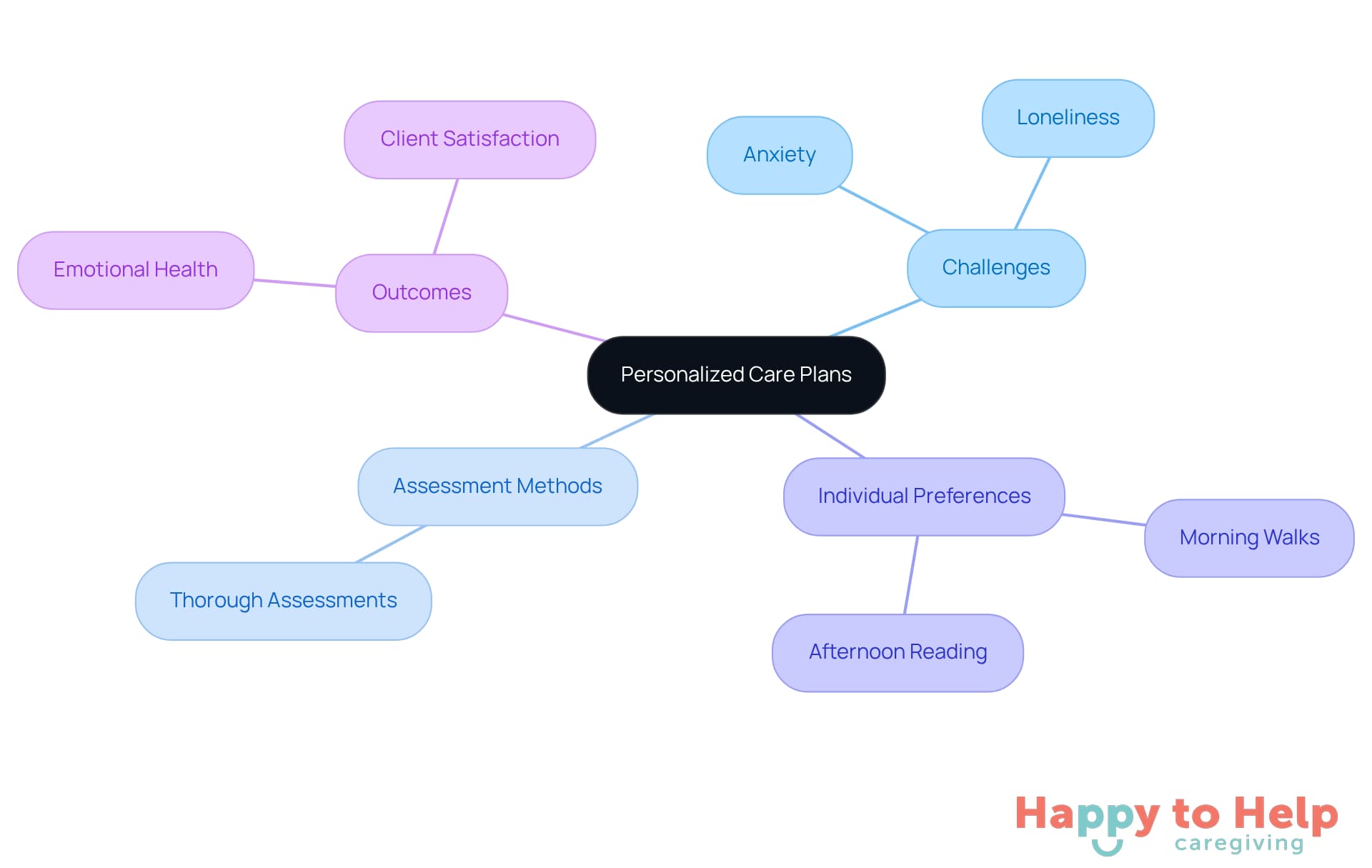
Caregivers often face the challenge of providing personalized care that truly meets the unique needs of each individual. Without tailored approaches, individuals may feel overlooked, leading to increased anxiety and loneliness. This can significantly impact their emotional health and overall satisfaction with care services.
To address this issue, Happy to Help Caregiving excels in creating personalized care plans. By conducting thorough assessments, caregivers can identify individual preferences, medical requirements, and lifestyle choices. This customized method not only encourages independence but also nurtures a sense of security and comfort, enabling individuals to flourish in their familiar surroundings.
For instance, an elderly patron may favor a routine that includes morning walks and afternoon reading sessions. These preferences can be effortlessly incorporated into their treatment plan. Such routines are crucial as they contribute to emotional health by alleviating feelings of anxiety and loneliness, significantly improving overall client satisfaction.
In fact, studies indicate that 89% of patients expressed satisfaction with home healthcare offerings. This statistic highlights the effectiveness of personalized assistance in enhancing the quality of life for seniors. By focusing on individual needs, caregivers can create a supportive environment that fosters well-being.
Caregiver Qualifications: Assessing Experience and Training Levels
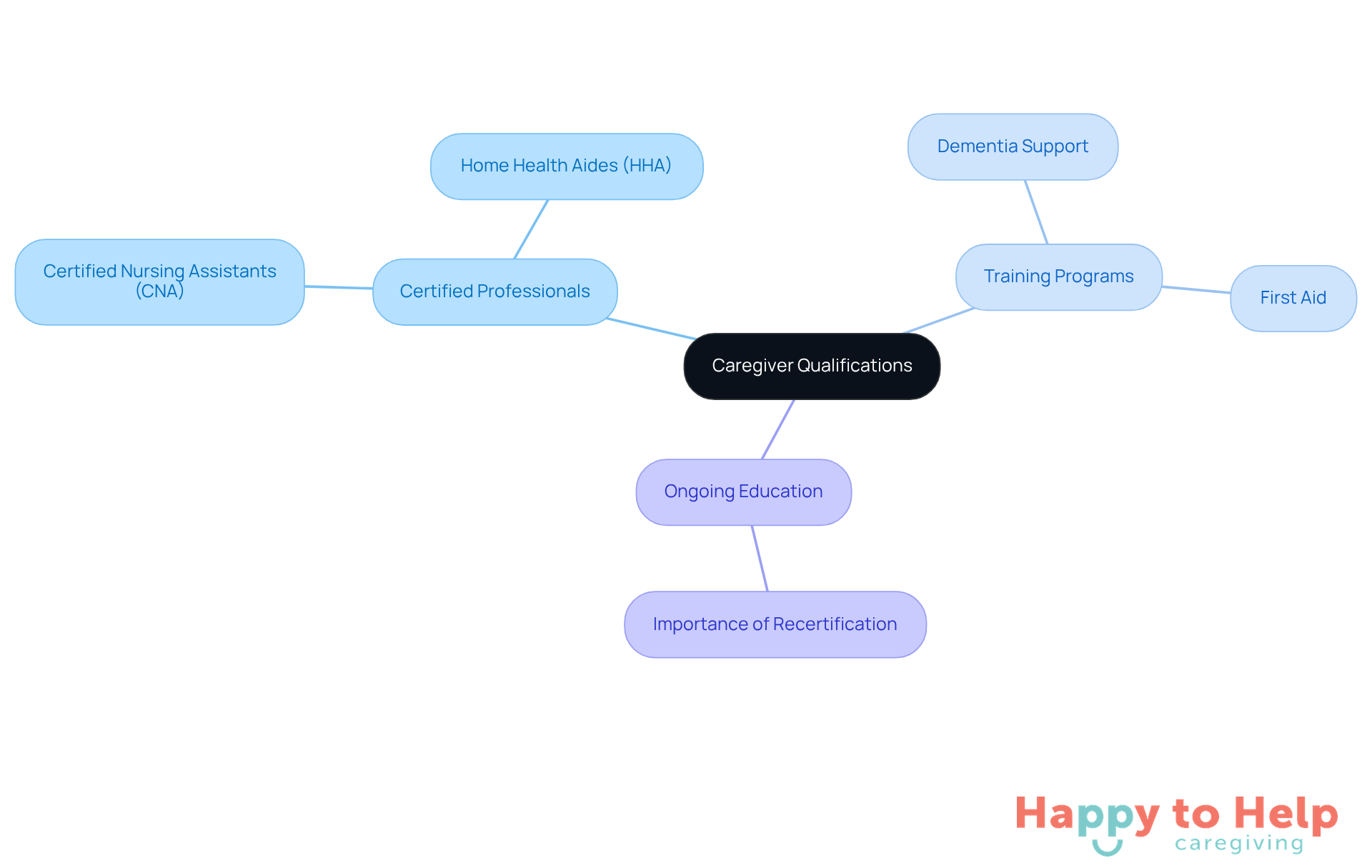
When families choose private pay home care agencies, they often face a significant problem: the qualifications of the staff. Without proper credentials, caregivers may not provide the level of care needed. Research indicates that clients experience better physical and mental well-being when supported by certified professionals, such as Certified Nursing Assistants (CNA) or Home Health Aides (HHA), compared to those assisted by non-certified individuals.
To address this issue, families should thoroughly assess the employment practices of private pay home care agencies and the training programs that their staff members undergo. Continuous education in specialized fields, like dementia support and first aid, is crucial. This ongoing training prepares caregivers to handle various situations effectively, ensuring high standards of service. Families are encouraged to inquire about the commitment to ongoing education and recertification of private pay home care agencies, as these elements are vital for maintaining knowledgeable and skilled caregivers.
Service Flexibility: Options for Scheduling and Care Types
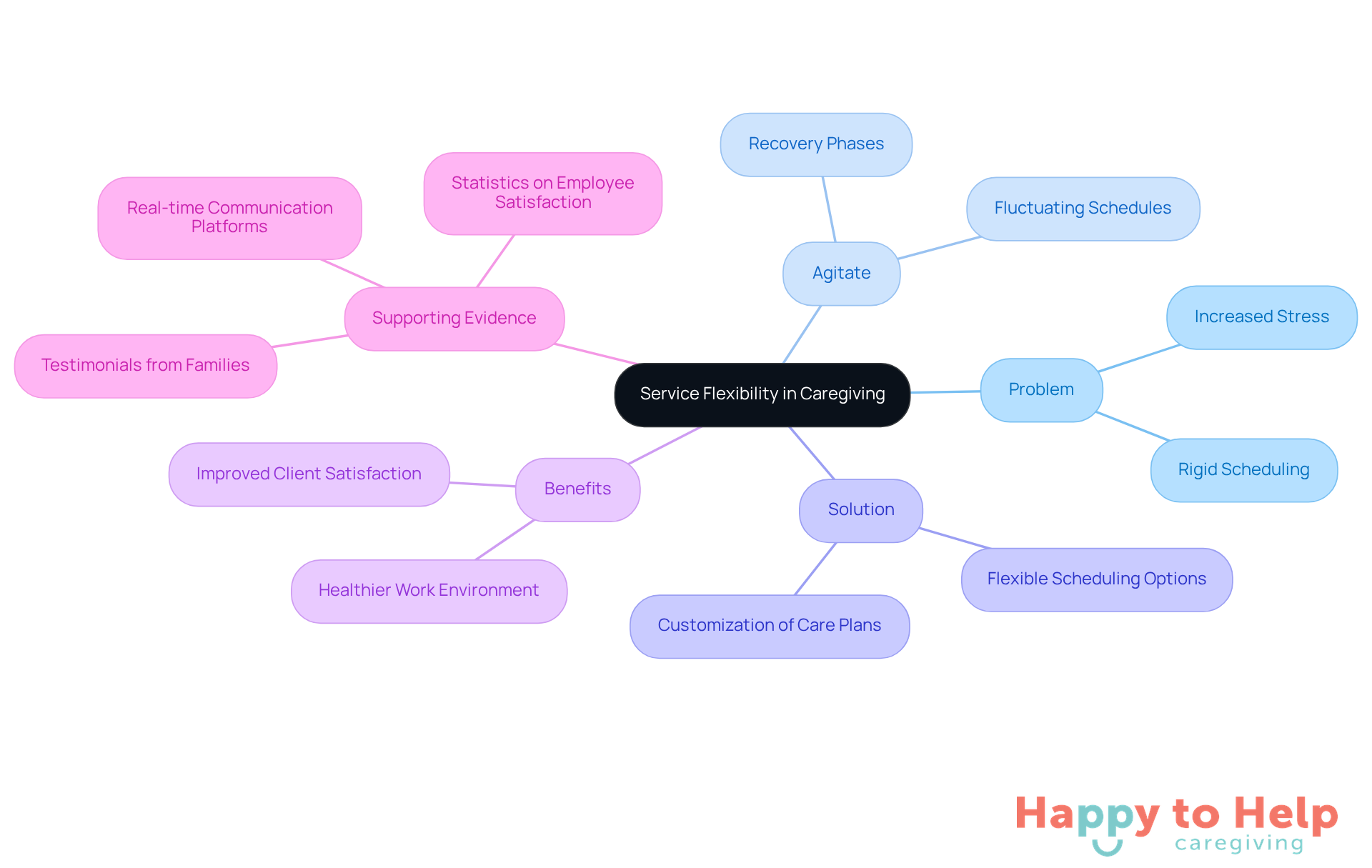
Problem: Caregivers often face the challenge of rigid scheduling, which can create stress and hinder the quality of care provided to loved ones.
Agitate: This inflexibility can be particularly problematic for families dealing with fluctuating schedules or those needing temporary support during recovery phases. For instance, during a loved one's post-hospital recovery, families may struggle to find the right support at the right time, leading to added pressure and anxiety.
Solution: Fortunately, flexible scheduling options, like those offered by Happy to Help Caregiving, can alleviate these concerns. They provide a range of choices, from part-time to full-time assistance, and are adept at managing last-minute adjustments. This adaptability not only enhances the quality of support but also fosters a sense of security for families, allowing them to focus on their loved ones' well-being without the burden of strict scheduling.
Moreover, the ability to customize care plans based on individual health conditions and preferences significantly boosts client satisfaction. Families appreciate the personalized attention and responsiveness to their unique circumstances.
Statistics indicate that flexible scheduling contributes to a healthier work environment for staff, which in turn improves overall service quality. Testimonials from families highlight the importance of this flexibility, with many expressing gratitude for the peace of mind it brings during challenging times.
Additionally, real-time communication platforms facilitate seamless coordination among support providers, patients, and healthcare organizations, further enhancing the caregiving experience.
Geographical Coverage: Ensuring Local Availability of Services
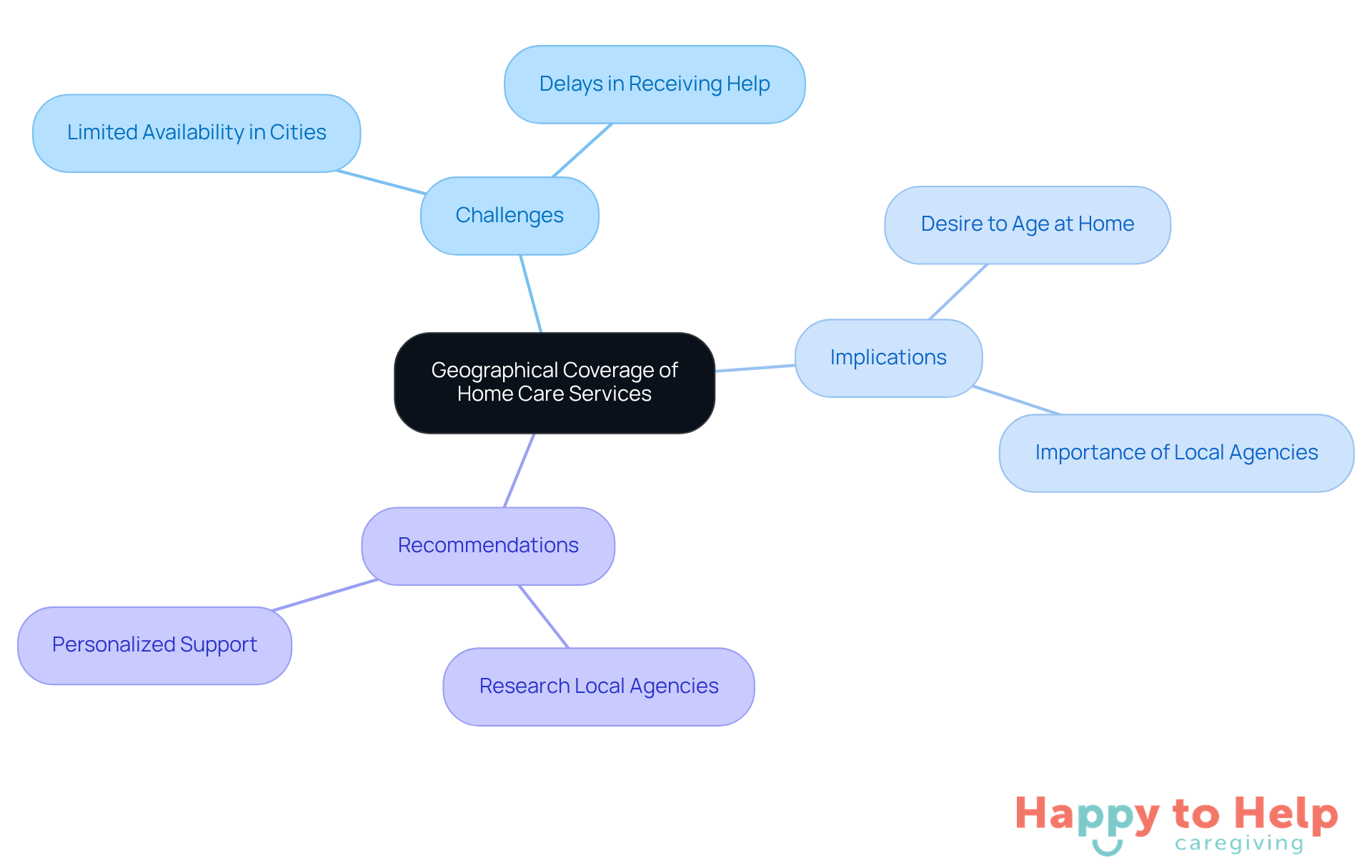
Access to trustworthy private pay home care agencies is a significant challenge for many households, especially those with older adults. With caregiving functions operating in only 20 cities, many families may struggle to find reliable assistance in their local areas. This lack of geographical coverage can lead to delays in receiving help, which is critical for those who need prompt support or prefer caregivers familiar with their community.
The implications of this issue are profound. According to a survey, 88% of adults aged 50 and older want to remain at home as long as possible, highlighting the importance of private pay home care agencies. This highlights the necessity for local private pay home care agencies that support aging in place. When families select nearby agencies, they benefit from faster response times and the chance to meet caregivers face-to-face before care begins. This personal connection can significantly enhance the caregiving experience.
To address these challenges, families are encouraged to thoroughly research private pay home care agencies. By finding caregivers who understand their community, they can ensure personalized support that aligns with their expectations and lifestyle. Local support not only improves household satisfaction but also allows providers to tailor their services to the unique characteristics of the community.
In summary, prioritizing local caregiving services is essential for families seeking reliable in-home support. By leveraging local resources, households can enhance their care experience and better support their loved ones in aging at home.
Cost Transparency: Understanding Pricing Structures and Payment Options
Understanding the expenses associated with private pay home care agencies is a significant challenge for families considering caregiving options. The lack of clarity around costs can lead to stress and financial strain, making it essential for families to grasp these expenses fully.
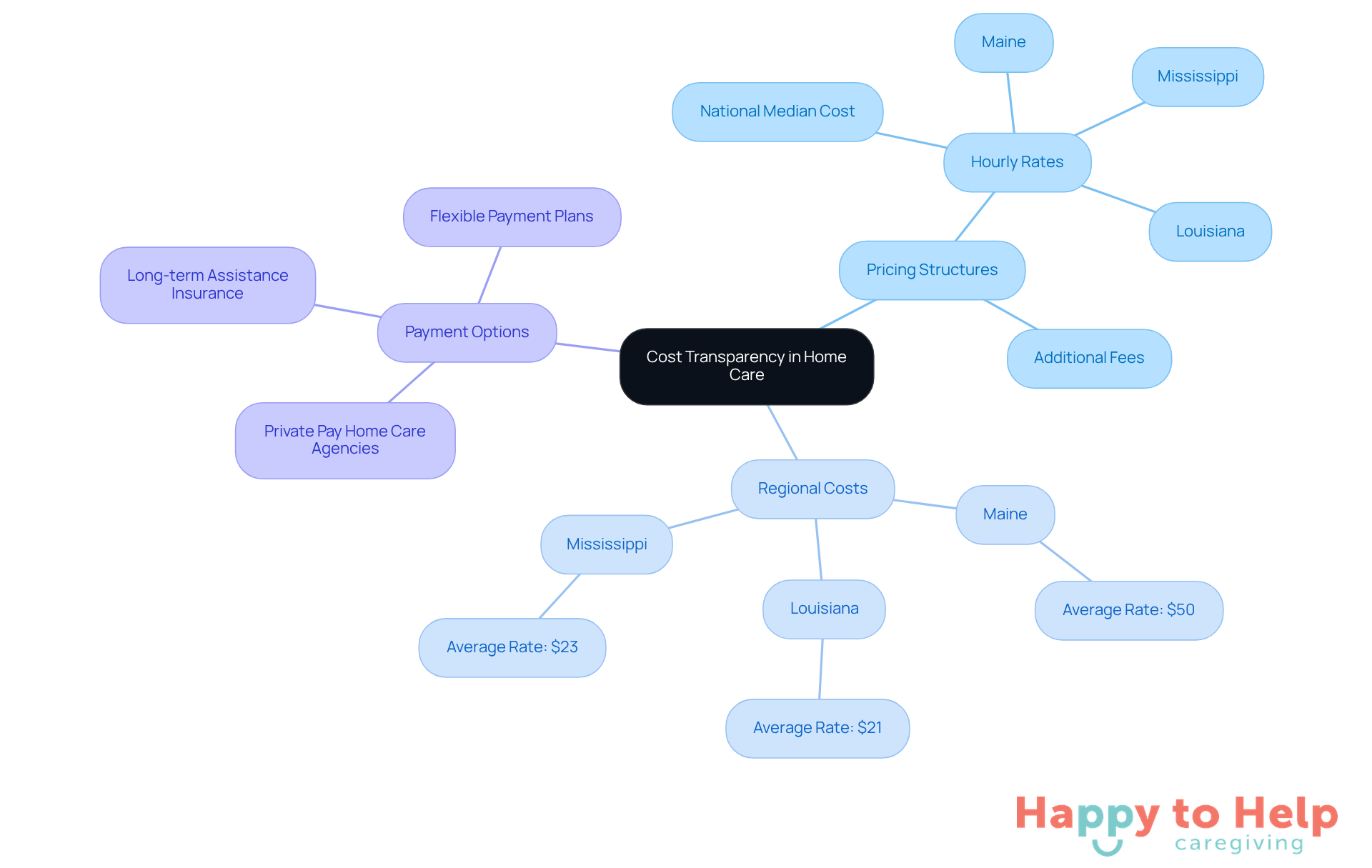
Happy to Help Caregiving addresses this issue by providing transparent pricing structures. They outline hourly rates and any additional fees for specialized services, which is crucial for effective budgeting. For example, in 2025, the national median cost for in-home assistance is about $33 per hour. However, rates can vary widely by region - Maine has the highest average at $50 per hour, while Louisiana offers some of the lowest at $21 per hour, and Mississippi averages around $23 per hour.
Families have several payment options to consider, including:
- Private pay home care agencies
- Long-term assistance insurance
- Flexible payment plans
These alternatives can help manage expenses effectively and alleviate the stress associated with unexpected costs. As financial consultants emphasize, effective budgeting is vital for households to provide necessary support without compromising their financial stability.
Moreover, starting July 2026, states will be required to report payment rates for home support services, which will enhance transparency in the sector. By understanding these pricing structures and the importance of cost transparency, families can make informed decisions that best meet their loved ones' needs.
Communication Practices: Keeping Families Informed and Engaged
Effective communication is a significant challenge in caregiving. Families often feel left in the dark about their loved one's support, which can lead to frustration and mistrust. Without regular updates and clear information, relatives may struggle to engage in the caregiving process, impacting the overall quality of care.
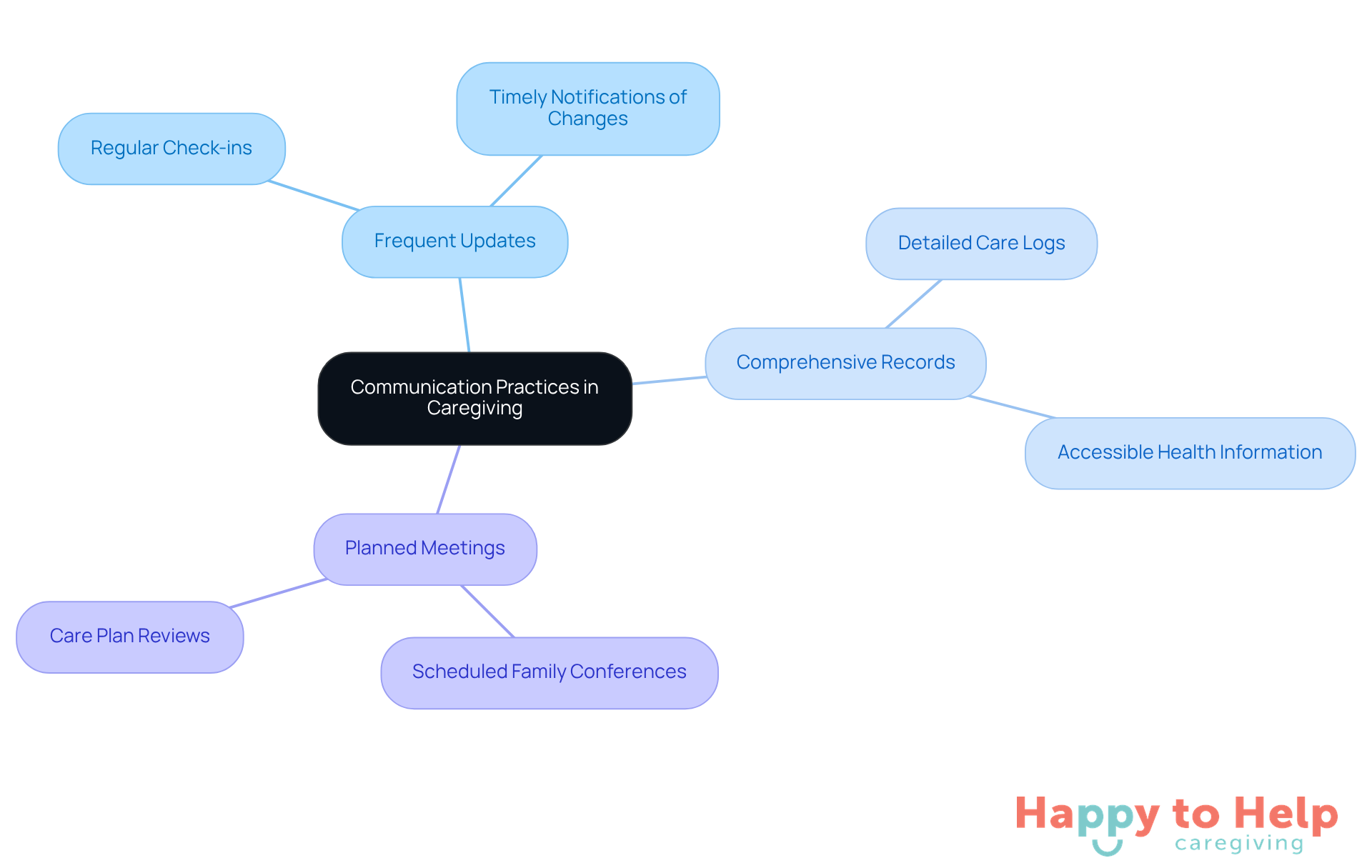
Happy to Help Caregiving addresses this issue head-on. They prioritize communication with relatives, ensuring they are consistently informed about their loved one's support. This includes:
- Frequent updates
- Comprehensive records
- Planned meetings
Caregivers are specifically trained to communicate effectively, providing timely information about any changes in their loved one's condition or care requirements.
This proactive approach nurtures trust and encourages families to participate more thoroughly in caregiving. As one caregiver noted, "Effective communication is a human right," underscoring the importance of clear dialogue in enhancing satisfaction among relatives. By prioritizing open lines of communication, Happy to Help Caregiving fosters a more cooperative and supportive environment for assistance.
Technology Integration: Utilizing Tools for Better Care Coordination
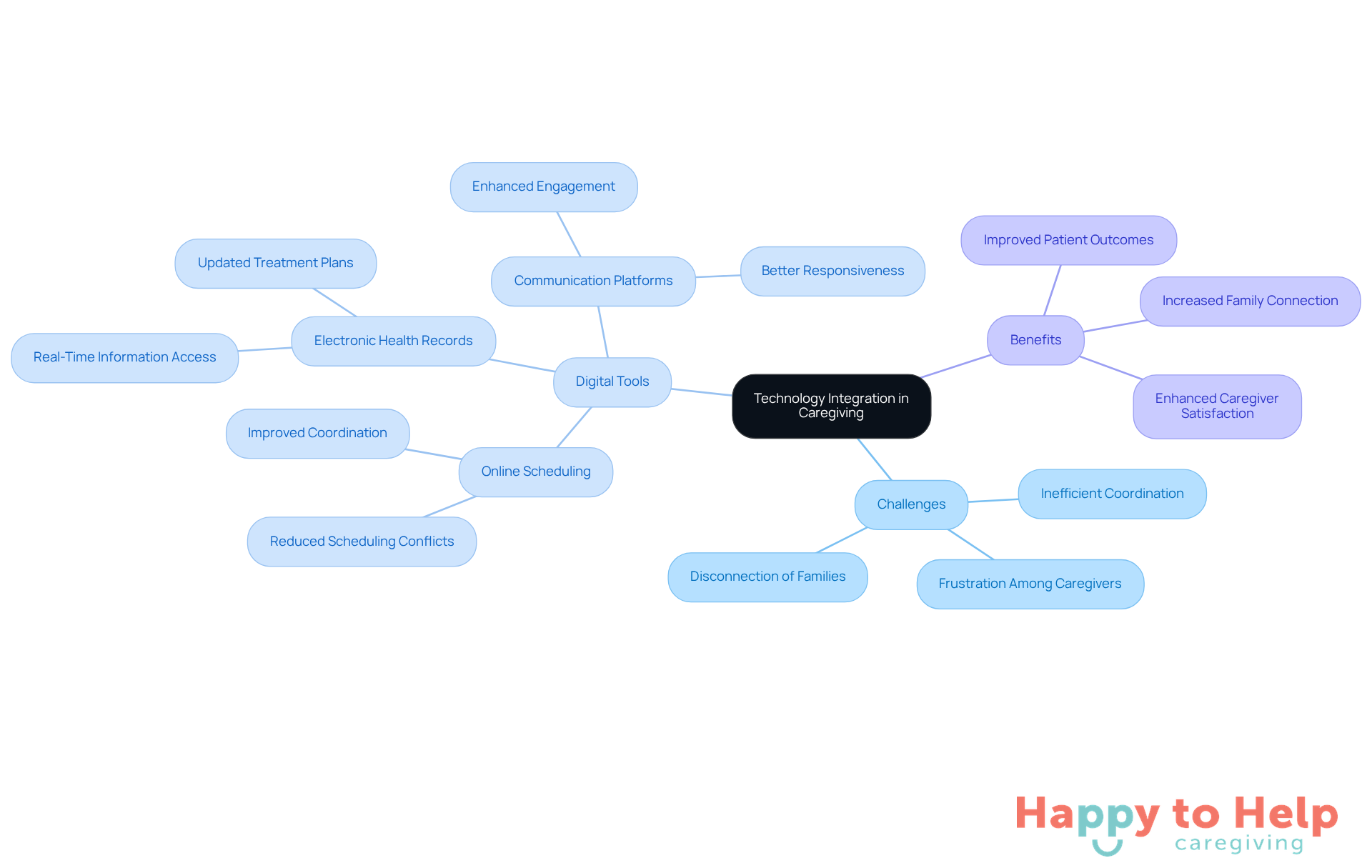
The incorporation of technology in domestic assistance services presents a significant challenge for caregivers. Many struggle with inefficient coordination of support, leading to frustration and gaps in care. This issue can leave families feeling disconnected and unsure about their loved ones' needs.
However, Happy to Help Caregiving is addressing this problem head-on. By utilizing a range of digital tools, such as online scheduling systems, electronic health records, and communication platforms, they enhance service delivery. These technologies improve operational efficiency, allowing providers to access real-time information about their clients' needs. For instance, 84.6% of caregivers use communication functions, which fosters better engagement and responsiveness in support.
Moreover, the use of digital tools has shown to enhance patient outcomes by optimizing processes and ensuring that treatment plans are regularly updated and communicated. As technology continues to advance, its role in improving the quality of support and coordination in home environments becomes increasingly vital. This allows relatives to feel more connected and informed about their loved ones' assistance.
Reputation and Reviews: Evaluating Client Feedback and Testimonials
Choosing a private pay home care agency can be challenging. The problem lies in the overwhelming number of options available, making it difficult for families to determine which agency is trustworthy. A poor choice can lead to inadequate care, impacting the well-being of loved ones.
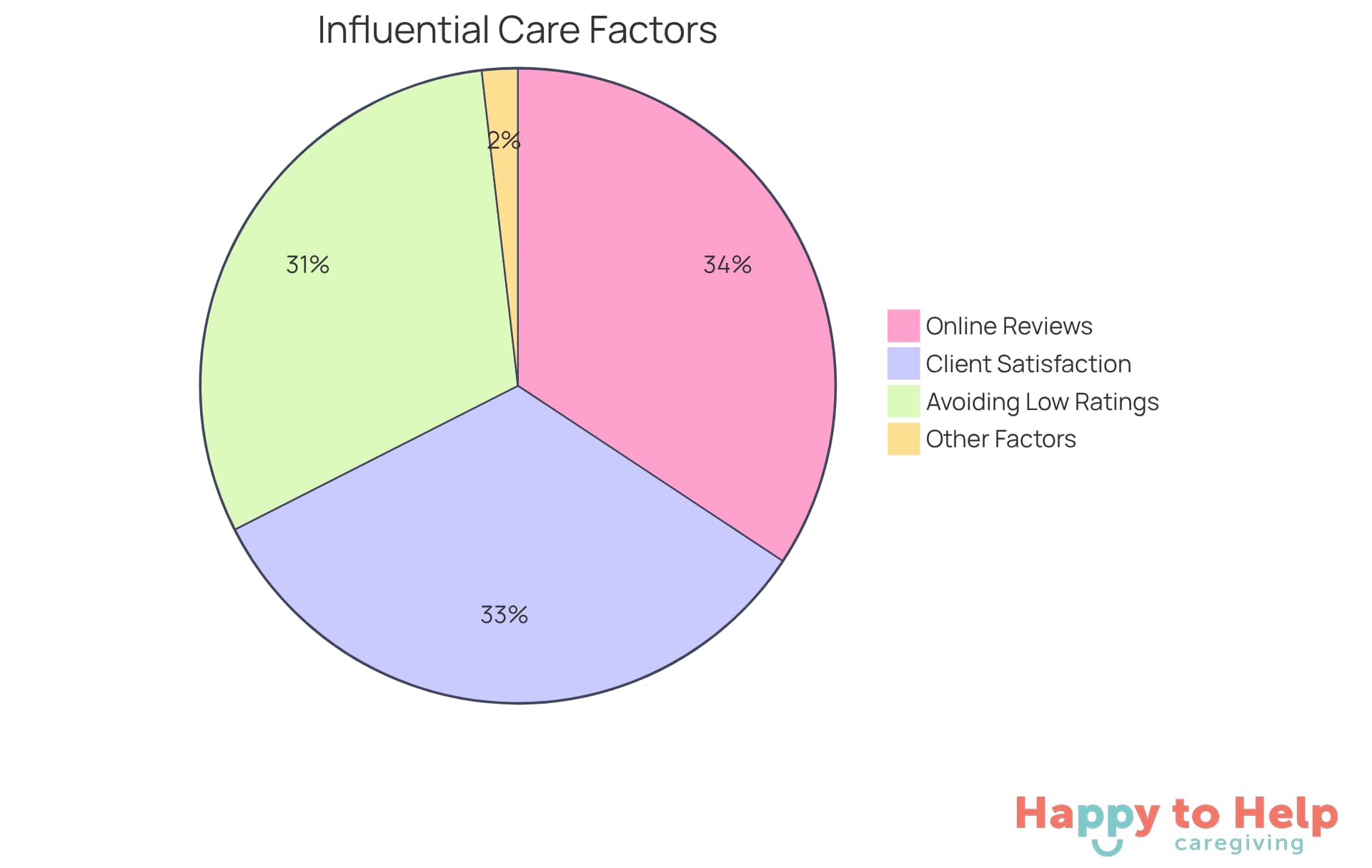
The implications of this issue are significant. Research indicates that 94% of patients rely on online reviews to evaluate healthcare providers. This statistic underscores the necessity for potential customers to thoroughly explore online feedback, seek references, and engage with other families. Testimonials not only enhance an agency's reputation but also play a crucial role in building trust within the home assistance sector, where personal referrals may be limited.
To effectively navigate this landscape, families should prioritize private pay home care agencies that have a proven track record of positive client interactions. Look for organizations that demonstrate clear communication and a commitment to resolving any issues that arise. Additionally, consider that 91% of home support clients express satisfaction with their caregivers, highlighting the importance of personalized attention in maintaining client relationships and enhancing agency reputation.
Moreover, it's worth noting that 84% of patients would avoid a recommended physician if rated four stars or lower. This statistic illustrates the risks associated with selecting a provider without adequate research. As industry analysts point out, the personalization of support is vital, especially when inviting caregivers into one's home.
In summary, families should take the time to investigate potential agencies thoroughly. By focusing on those with favorable reviews and a commitment to quality service, they can ensure a positive caregiving experience for their loved ones.
Emergency Preparedness: Assessing Agency Protocols for Crisis Situations
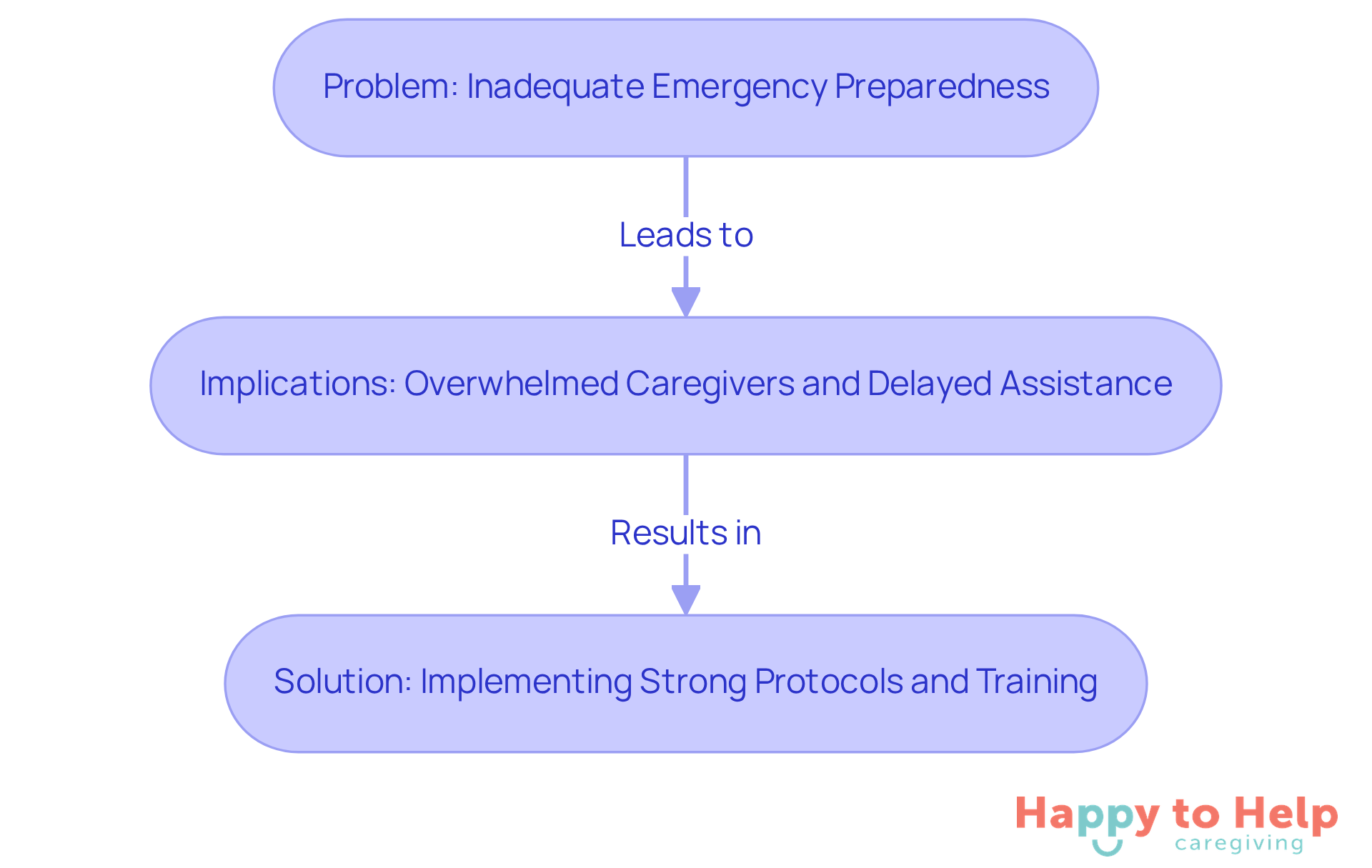
Problem: Emergency preparedness is a critical concern in caregiving. Without robust protocols, caregivers may struggle to manage crises effectively, putting clients at risk.
Agitate: The implications of inadequate emergency preparedness can be severe. Caregivers who are untrained in emergency response may feel overwhelmed during unexpected situations, leading to delays in assistance and increased anxiety for families. This lack of readiness can directly affect the quality of care provided during emergencies.
Solution: Happy to Help Caregiving addresses these challenges by implementing strong emergency preparedness protocols. Caregivers undergo specialized training in emergency response procedures, equipping them to handle crises with confidence. Regular safety drills reinforce these skills, ensuring that caregivers are always ready to act. Additionally, updated emergency contact lists facilitate swift communication when needed.
This proactive strategy not only enhances the readiness of support providers but also reassures families, knowing their loved ones are supported by a team that prioritizes safety. Experts in safety and crisis management emphasize that well-trained attendants are essential in mitigating risks and ensuring the well-being of clients in their homes.
Ongoing Caregiver Support: Ensuring Continuous Training and Development
Caregiving can be a demanding role, often leading to stress and burnout among providers. Many caregivers report feeling overwhelmed, which can negatively impact both their well-being and the quality of care they deliver. This is a significant issue, as it not only affects the caregivers but also the clients who rely on their support.
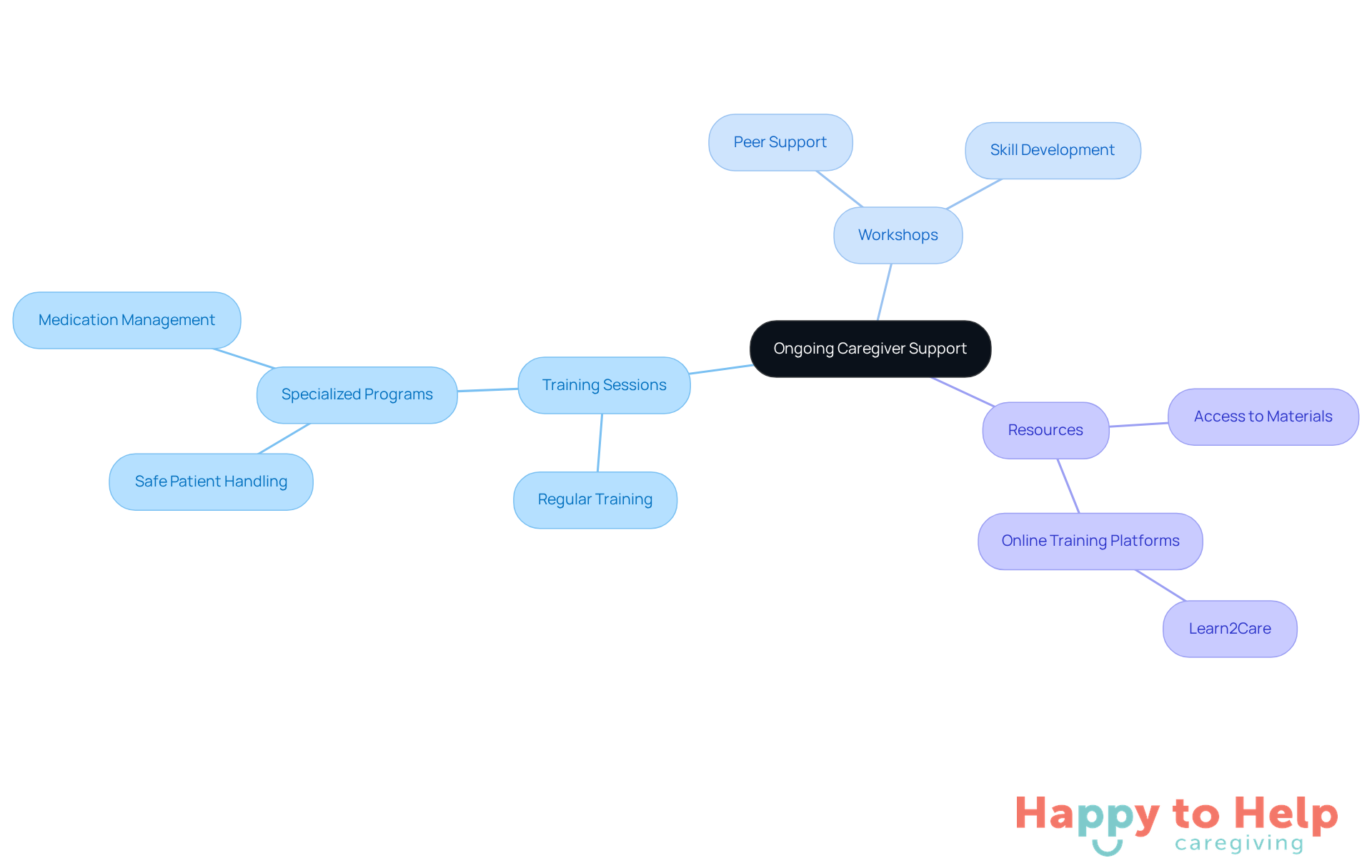
To address these challenges, Happy to Help Caregiving prioritizes the ongoing support and development of its caregivers through:
- Regular training sessions
- Workshops
- Access to essential resources
Research shows that 96% of caregivers who received training felt well-prepared for their tasks, leading to higher retention rates and improved client satisfaction. Specialized training programs, such as safe patient handling and medication management, empower caregivers to perform their roles with confidence and competence.
Moreover, investing in caregiver development is crucial. By addressing the emotional and physical health risks faced by caregivers, organizations can help mitigate stress and burnout. This commitment to continuous education not only elevates the quality of care provided but also fosters a positive work environment, ultimately benefiting both caregivers and the clients they serve.
Taking the Next Steps
The challenges families face in securing quality home care can be daunting. Many struggle with finding agencies that offer personalized care, transparent pricing, and qualified caregivers. This can lead to stress and uncertainty, impacting both clients and their families.
To address these issues, families should prioritize agencies that focus on individualized care plans and ongoing caregiver support. By ensuring that caregivers are well-trained and prepared for emergencies, families can feel more secure about the care their loved ones receive. Additionally, local availability and effective communication are crucial for a positive caregiving experience.
Families are encouraged to actively evaluate their options when it comes to private pay home care. Look for agencies that emphasize transparency in pricing and a commitment to quality care. By doing so, families can enhance their loved ones' quality of life while also alleviating their own stress.
In conclusion, the journey toward securing quality home care is vital for both clients and their families. Informed decision-making plays a key role in this process, ensuring that families can find the right support for their unique needs.
https://iframe.tely.ai/cta/eyJhcnRpY2xlX2lkIjogIjY5MjBmZDZiYzQ4NjU1NjRkNDliYzZhZCIsICJjb21wYW55X2lkIjogIjY4ZWU1ZGNhNzMxNzYyNTU3ZjNjOTVjMSIsICJpbmRleCI6IG51bGwsICJ0eXBlIjogImFydGljbGUifQ==Frequently Asked Questions
Why is personalized care important in caregiving?
Personalized care is crucial because it addresses the unique needs of each individual, reducing feelings of anxiety and loneliness, and significantly improving emotional health and overall satisfaction with care services.
How does Happy to Help Caregiving create personalized care plans?
Happy to Help Caregiving creates personalized care plans by conducting thorough assessments to identify individual preferences, medical requirements, and lifestyle choices, which encourages independence and nurtures security and comfort.
Can you provide an example of a personalized care plan?
An example of a personalized care plan could include an elderly patron's preference for morning walks and afternoon reading sessions, which can be incorporated into their treatment plan to enhance emotional health.
What percentage of patients express satisfaction with home healthcare offerings?
Studies indicate that 89% of patients expressed satisfaction with home healthcare offerings, highlighting the effectiveness of personalized assistance in enhancing the quality of life for seniors.
What qualifications should families look for in caregivers?
Families should look for caregivers with proper credentials, such as Certified Nursing Assistants (CNA) or Home Health Aides (HHA), as research shows that clients experience better physical and mental well-being with certified professionals.
Why is ongoing education important for caregivers?
Ongoing education is important because it prepares caregivers to handle various situations effectively, ensuring high standards of service, especially in specialized fields like dementia support and first aid.
What scheduling options does Happy to Help Caregiving offer?
Happy to Help Caregiving offers flexible scheduling options, including part-time and full-time assistance, and can manage last-minute adjustments to accommodate families' fluctuating schedules.
How does flexible scheduling benefit families?
Flexible scheduling alleviates stress for families, allowing them to focus on their loved ones' well-being without the burden of strict scheduling, especially during recovery phases or other challenging times.
How does real-time communication enhance the caregiving experience?
Real-time communication platforms facilitate seamless coordination among support providers, patients, and healthcare organizations, further enhancing the overall caregiving experience.
List of Sources
- Happy to Help Caregiving: Personalized Care Plans Tailored to Individual Needs
- Home Care Statistics In 2025: Key Insights In Home Care (https://sagapixel.com/marketing/home-care-statistics)
- Confused about Medicare? Education and dedicated care for seniors is here | News (https://news.llu.edu/patient-care/confused-about-medicare-education-and-dedicated-care-seniors-here)
- 10 Benefits of Private Pay Home Care: Enhancing Lives with Personalized Support - Andwell Health Partners (https://andwell.org/10-benefits-of-private-pay-home-care-enhancing-lives-with-personalized-support)
- Customized Care at Home: The Benefits of Personalized Care Plans - VNA Health Group (https://vnahg.org/customized-care-at-home-the-benefits-of-personalized-care-plans)
- Importance of Personalized Senior Home Care in Burlington NC (https://wisdomseniorcare.com/the-importance-of-personalized-care-plans-for-seniors)
- Caregiver Qualifications: Assessing Experience and Training Levels
- Home-Based Care Companies Improve Outcomes By Training Family Caregivers (https://homehealthcarenews.com/2025/10/home-based-care-companies-improve-outcomes-by-training-family-caregivers)
- Trusted Senior Care in Richmond - Assisting Hands (https://assistinghandsrichmond.com/the-importance-of-caregiver-certification-in-home-care-2024)
- Caregiver Statistics: Demographics (https://caregiver.org/resource/caregiver-statistics-demographics)
- US News & World Report Highlights CCA's Caregiver Training (https://advancecaregivers.org/report-us-news-world-report-highlights-ccas-caregiver-training)
- 39 Caregiver Statistics, Facts & Trends (https://humancareny.com/blog/39-caregiver-statistics-facts-trends)
- Service Flexibility: Options for Scheduling and Care Types
- The Benefits of Flexible Scheduling in Home Care Plans (https://regencyhcs.com/blog/the-benefits-of-flexible-scheduling-in-home-care-plans)
- Flexible Care Models Give Home Care Clients ‘What They Want When They Want It’ (https://homehealthcarenews.com/2025/10/flexible-care-models-give-home-care-clients-what-they-want-when-they-want-it)
- Industry leaders: Offering work flexibility is the secret to attracting, retaining home care talent (https://mcknightshomecare.com/news/industry-leaders-offering-work-flexibility-is-the-secret-to-attracting-retaining-home-care-talent)
- Flexible scheduling, enhanced communication, technology can help address workforce challenges (https://mcknightsseniorliving.com/news/flexible-scheduling-enhanced-communication-technology-can-help-address-workforce-challenges)
- 9 Ways to Find Caregivers With Flexible Scheduling Options - MedCity News (https://medcitynews.com/2025/05/9-ways-to-find-caregivers-with-flexible-scheduling-options)
- Geographical Coverage: Ensuring Local Availability of Services
- North Carolina's aging population drives demand for in-home caregivers - Triangle Business Journal (https://bizjournals.com/triangle/news/2025/11/07/north-carolina-inhome-healthcare-aging-population.html)
- FastStats (https://cdc.gov/nchs/fastats/home-health-care.htm)
- 10 Must-Know U.S. Home Care Industry Stats for 2025 - North American Community Hub (https://nchstats.com/us-home-care-industry-stats)
- 52 Eye-Opening Home Health Statistics: Insights for 2025 (https://boosthomehealth.com/home-health-statistics)
- Geography Matters: Location plays key role in long-term care cost (https://insurancenewsnet.com/innarticle/geography-matters-location-plays-key-role-in-long-term-care-cost)
- Cost Transparency: Understanding Pricing Structures and Payment Options
- Private Pay Home Care Rates (https://regencyhcs.com/blog/private-pay-home-care-rates)
- Understanding the Cost of Home Care Services (https://h2hhc.com/blog/understanding-the-cost-of-home-care-services)
- Top 150 Financial Planning Quotes [2025] (https://digitaldefynd.com/IQ/financial-planning-quotes)
- Home Care Costs in 2025: A State-by-State Guide (https://aplaceformom.com/caregiver-resources/articles/in-home-care-costs)
- 12 Financial Planning Quotes for Building Wealth Wisely — Phillip James Financial (https://phillipjamesfinancial.com/blog/12-financial-planning-quotes-for-building-wealth-wisely)
- Communication Practices: Keeping Families Informed and Engaged
- Communication Breakdowns Take Toll on Family Caregivers, Especially for Older Adults with Chronic Illness (https://ltcnews.com/articles/communication-breakdowns-toll-family-caregivers-older-adults-chronic-illness)
- 30 Inspirational Quotes for Caregivers (https://agingcare.com/articles/caregivers-quotes-inspiration-141133.htm)
- 20 Caregiver Quotes for Inspiration - Home Helpers Bradenton (https://homehelpershomecare.com/bradenton/community-blog/2017/june/20-inspirational-caregiver-quotes)
- Care managers say ED program improves communication for assisted living residents with dementia (https://mcknights.com/news/care-managers-say-ed-program-improves-communication-for-assisted-living-residents-with-dementia)
- 27 Inspirational Quotes for Caregivers (https://ultimatecareny.com/resources/27-quotes-for-caregivers)
- Technology Integration: Utilizing Tools for Better Care Coordination
- AI must optimize home care, continuity, and early detection for older adults (https://news-medical.net/news/20251007/AI-must-optimize-home-care-continuity-and-early-detection-for-older-adults.aspx)
- The Rise and Promise of Technology in Home Health (https://healthrecoverysolutions.com/blog/the-rise-and-promise-of-technology-in-home-health)
- How enabling technology is transforming home-based care | UnitedHealthcare Community & State (https://uhccommunityandstate.com/content/blog-post/blogs/how-enabling-technology-is-transforming-home-based-care)
- Technology Use Among Older Adults and Their Caregivers: Cross-Sectional Survey Study - PMC (https://pmc.ncbi.nlm.nih.gov/articles/PMC11084119)
- How Technology is Reshaping Home-Based Care - THL (https://thl.com/articles/how-technology-is-reshaping-home-based-care)
- Reputation and Reviews: Evaluating Client Feedback and Testimonials
- Online reviews are becoming more important to patients in choosing their care: How to manage your online reputation in health care | Medical Economics (https://medicaleconomics.com/view/online-reviews-are-becoming-more-important-to-patients-in-choosing-their-care-how-to-manage-your-online-reputation-in-health-care)
- Home Care Statistics In 2025: Key Insights In Home Care (https://sagapixel.com/marketing/home-care-statistics)
- Home Care Clients Like Their Caregivers More Than Their Provider, Data Shows (https://homehealthcarenews.com/2024/08/home-care-clients-like-their-caregivers-more-than-their-provider-data-shows)
- Reasons Reviews Matter for Home Care Agencies (https://rosemarksystem.com/blog/three-reasons-reviews-matter-marketing-tips-for-home-care-agencies)
- Why Home-Based Care Providers Can’t Ignore Their Online Reputation (https://homehealthcarenews.com/2025/07/why-home-based-care-providers-cant-ignore-their-online-reputation)
- Emergency Preparedness: Assessing Agency Protocols for Crisis Situations
- CCA Disaster Training for Caregivers Highlighted in CalMatters News Story (https://advancecaregivers.org/cca-disaster-training-for-caregivers-highlighted-in-calmatters-news-story)
- COVID-19 Preparedness in US Home Health Care Agencies - PMC (https://pmc.ncbi.nlm.nih.gov/articles/PMC7269929)
- Effect of Emergency Scenario-Based Training Program on Knowledge, Self-confidence, and Competency of Elderly Caregiver Volunteers in a Rural Thai Community: A Quasi-Experimental Study - PMC (https://pmc.ncbi.nlm.nih.gov/articles/PMC11472123)
- 70 Quotes About Crisis Management and Leadership (https://deliberatedirections.com/crisis-management-quotes)
- Nursing Homes Reported Wide-Ranging Challenges Preparing for Public Health Emergencies and Natural Disasters (https://oig.hhs.gov/reports/all/2023/nursing-homes-reported-wide-ranging-challenges-preparing-for-public-health-emergencies-and-natural-disasters)
- Ongoing Caregiver Support: Ensuring Continuous Training and Development
- The Essential Role of Continuing Education for Modern Caregivers (https://learn2care.us/blog/role-of-continuing-training-for-caregivers)
- Enhancing Caregiver Skills Through Specialized Training (https://ltcnews.com/articles/enhancing-caregiver-skills-specialized-training)
- Family Caregiver Support, Education Needs Growing (https://hospicenews.com/2025/11/11/family-caregiver-support-education-needs-growing)
- HHS Launches $2M AI Initiative To ‘Transform’ Caregiving, Address Staffing Challenges (https://homehealthcarenews.com/2025/11/hhs-launches-2m-ai-initiative-to-transform-caregiving-address-staffing-challenges)
- Booker Introduces Legislation to Support Unpaid Family Caregivers | U.S. Senator Cory Booker of New Jersey (https://booker.senate.gov/news/press/-booker-introduces-legislation-to-support-unpaid-family-caregivers)