10 Key Factors Influencing Senior Care Costs You Should Know

For families in our service areas
For families in our service areas, this guide explains caregiving and how non-medical in-home caregiving can support care planning in East Idaho, Treasure Valley & Magic Valley, Northern Wasatch, North Central West Virginia, and Northeast Ohio.
Understanding Factors Influencing Senior Care Costs
Understanding the financial landscape of senior care presents a significant challenge for families. With costs often exceeding $50,000 annually and projected increases of 20-30% by 2025, many find themselves grappling with the complexities of providing support for their loved ones. This daunting reality can lead to stress and uncertainty about how to balance quality care with financial sustainability.
This article will explore ten critical factors that influence senior care costs. From geographical variations to the impact of caregiver qualifications and the integration of technology, these elements play a crucial role in shaping expenses. As families seek effective strategies for planning their future, they must consider how to ensure their loved ones receive the best possible support.
Happy to Help Caregiving: Personalized In-Home Care Services
Caring for seniors and individuals with special needs often presents significant challenges, particularly regarding feelings of loneliness and isolation. These emotional struggles can lead to a decline in mental health and overall well-being, making it crucial for caregivers to address these issues effectively.
Happy to Help Caregiving recognizes these challenges and offers personalized in-home support tailored to meet the unique needs of their clients. Their primary services include:
- Companionship
- Post-hospital recovery assistance
- Respite support
- Palliative assistance
Each service is designed to enhance the quality of life for clients, ensuring they receive the support they need to thrive in their familiar surroundings.
By focusing on maintaining independence, caregivers are trained to provide emotional support and engage clients in enjoyable activities. This approach not only alleviates feelings of loneliness but also fosters a sense of community and connection. With the right support, caregivers can significantly improve the emotional and social well-being of those they care for.
Geographical Location: Variations in Senior Care Costs
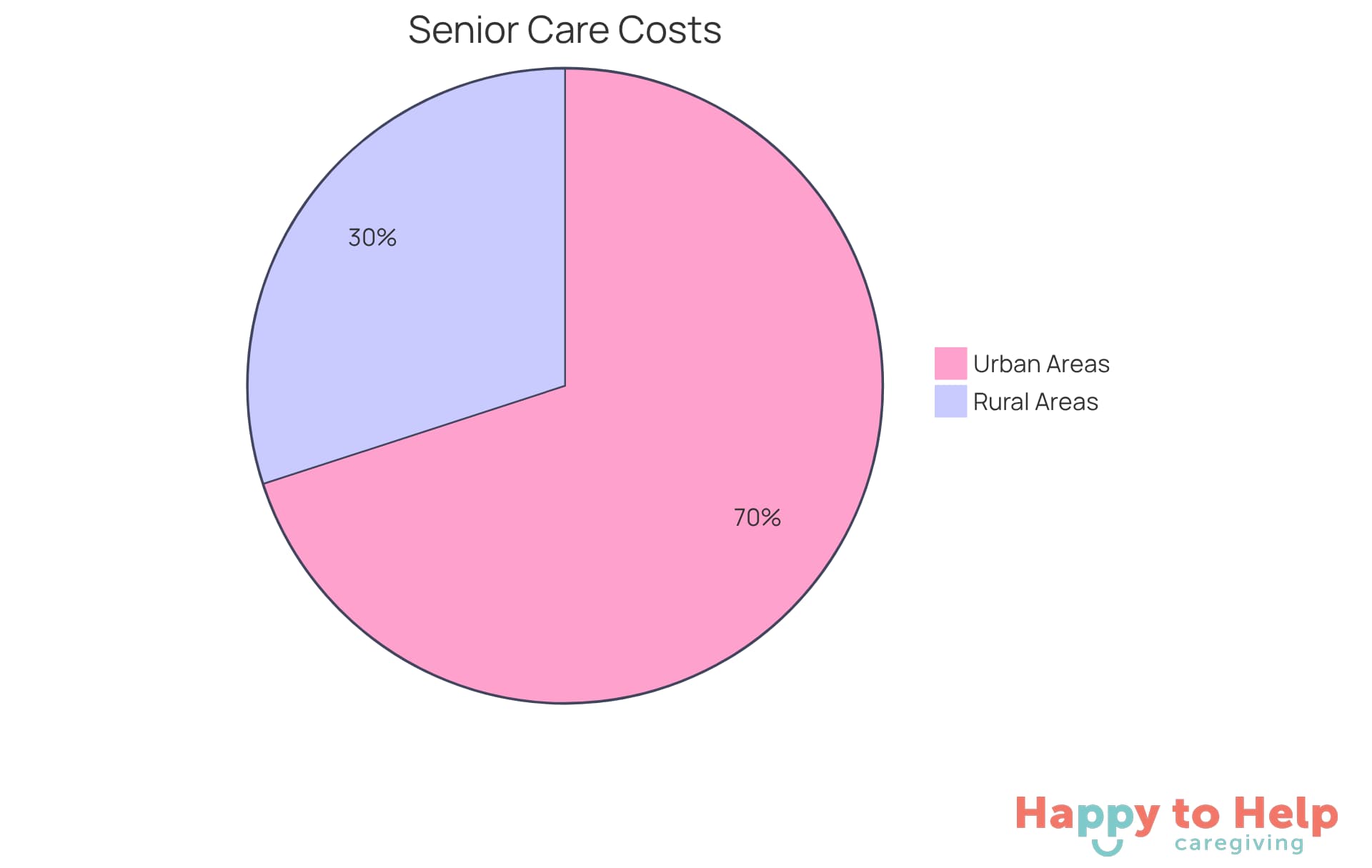
The senior care cost presents a significant challenge for families, as it varies greatly depending on geographical area. Urban regions typically face higher costs due to increased demand and living expenses, while rural areas may offer more budget-friendly options. This disparity can create a financial strain, as the typical yearly senior care cost often exceeds $50,000.
As of December 2025, the national median expense for nonmedical in-home assistance is around $33 per hour, with state prices ranging from $24 to $43 per hour. Families must consider local market conditions and the senior care cost when planning for elder support, as these factors can greatly influence their financial strategies. Moreover, forecasts indicate that senior care costs could rise by 20-30% by 2025, underscoring the need for proactive financial planning.
Seniors in urban environments currently struggle to find affordable assistance, while those in rural regions face limited options. Understanding these regional differences in senior care cost is crucial for families navigating elder support. By staying informed and planning ahead, caregivers can better manage the financial implications of elder care.
Specific Care Needs: Tailoring Services to Individual Requirements
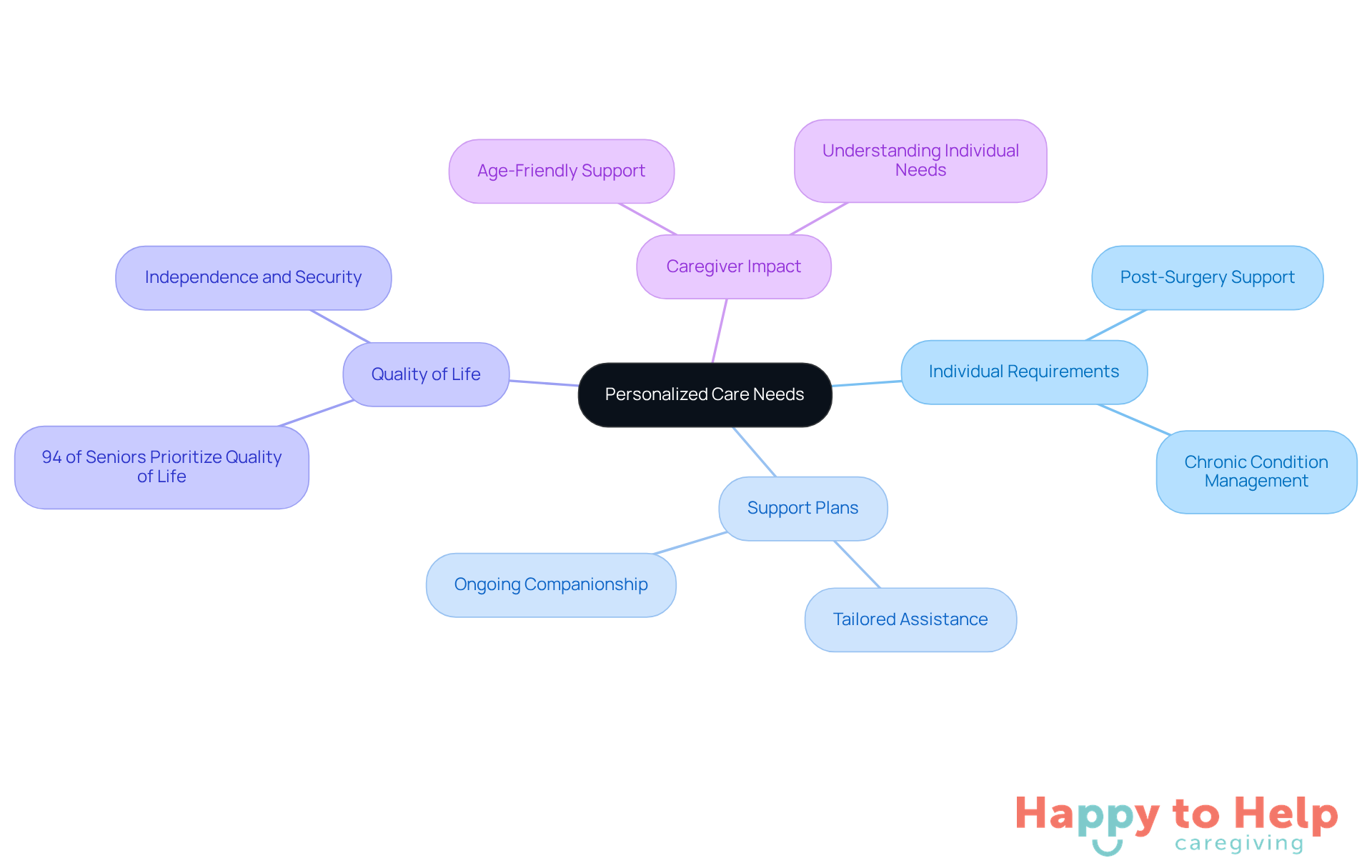
Every individual has distinct care needs that must be meticulously addressed to ensure effective support. The challenge arises when these specific requirements are overlooked, leading to inadequate care and diminished quality of life. For instance, individuals recovering from surgery often require more intensive support during their initial recovery phase, while those managing chronic conditions may benefit from ongoing companionship and assistance with daily activities.
Research indicates that personalized support plans significantly enhance the quality of life for seniors, aligning with their health goals and preferences. A survey reveals that 94% of seniors prioritize preserving their quality of life over mere lifespan, underscoring the importance of tailored support. Happy to Help Caregiving excels in creating these personalized plans, adapting to the evolving needs of clients to ensure each individual receives the appropriate level of assistance.
This approach not only fosters independence but also promotes a sense of security and comfort in familiar surroundings. As Terry Fulmer, president of The John A. Hartford Foundation, states, "It is not too late to shift to age-friendly support, which prioritizes the needs and desires of older adults in their plan." By focusing on personalized care, caregivers can significantly improve the lives of those they support.
Duration and Scope of Service: Cost Implications for Senior Care
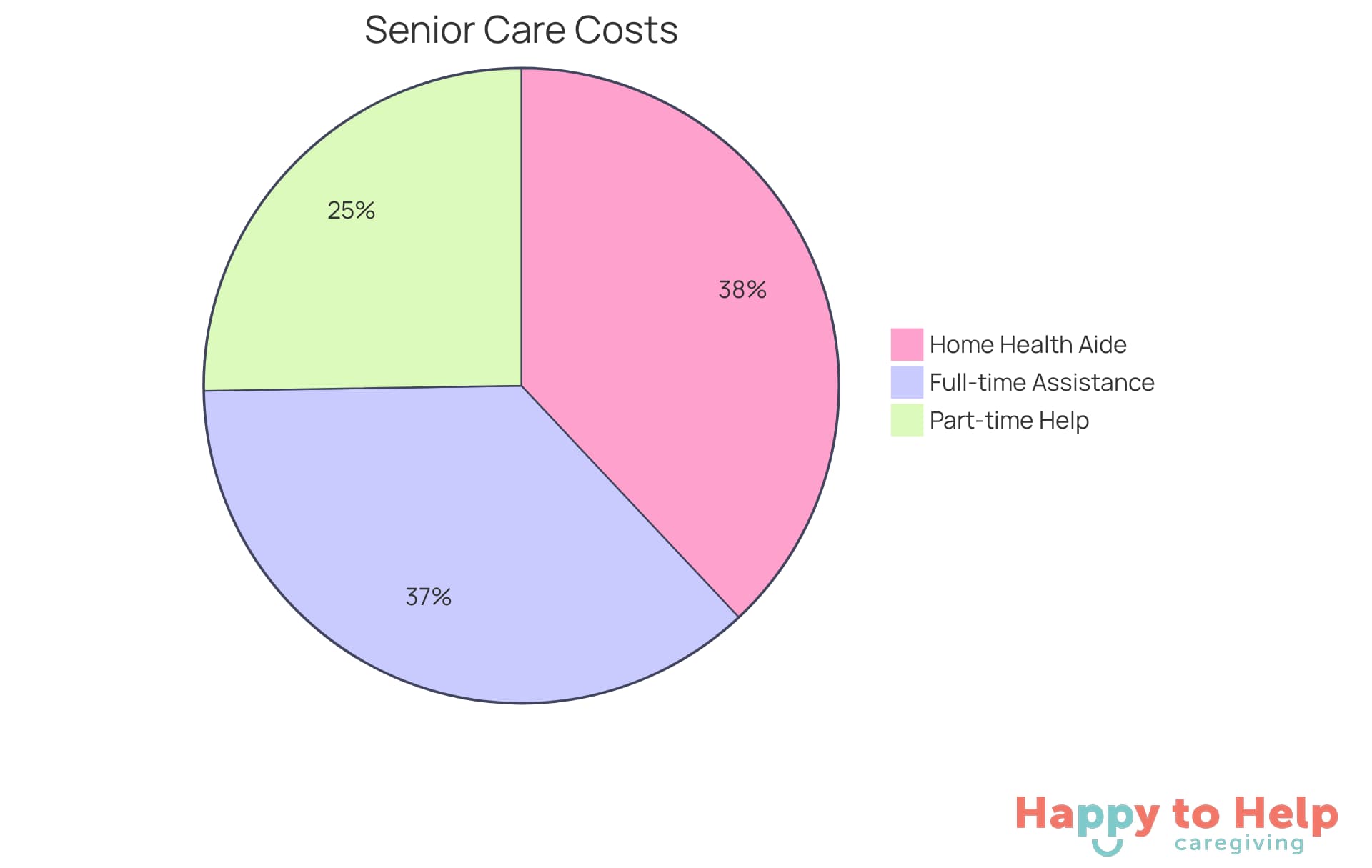
The rising senior care cost of assistance services poses a significant challenge for families. The duration and scope of these services can greatly impact the overall senior care cost. For example, hourly assistance may be more budget-friendly for short-term needs, while the senior care cost of 24/7 support can lead to higher expenses. Families must carefully assess how long they expect to need assistance and the level of support required.
In 2025, the average monthly senior care cost for full-time in-home assistance was projected to be around $21,823, while home health aide services were estimated at $22,568. A client needing full-time support may face expenses exceeding $19,656 each month, whereas those requiring part-time help may spend considerably less. This financial burden can be overwhelming, particularly when considering senior care cost, making it essential for families to evaluate their expected support duration and level of assistance needed.
To develop a practical budget, families should consider consulting financial advisors. This step ensures they are prepared for the financial implications of their decisions. Additionally, geographical location plays a crucial role in determining senior care cost, with urban areas typically facing higher rates than rural regions. By understanding these factors, families can make informed choices that align with their financial capabilities.
Self-Payment Options: Financial Planning for Home Care
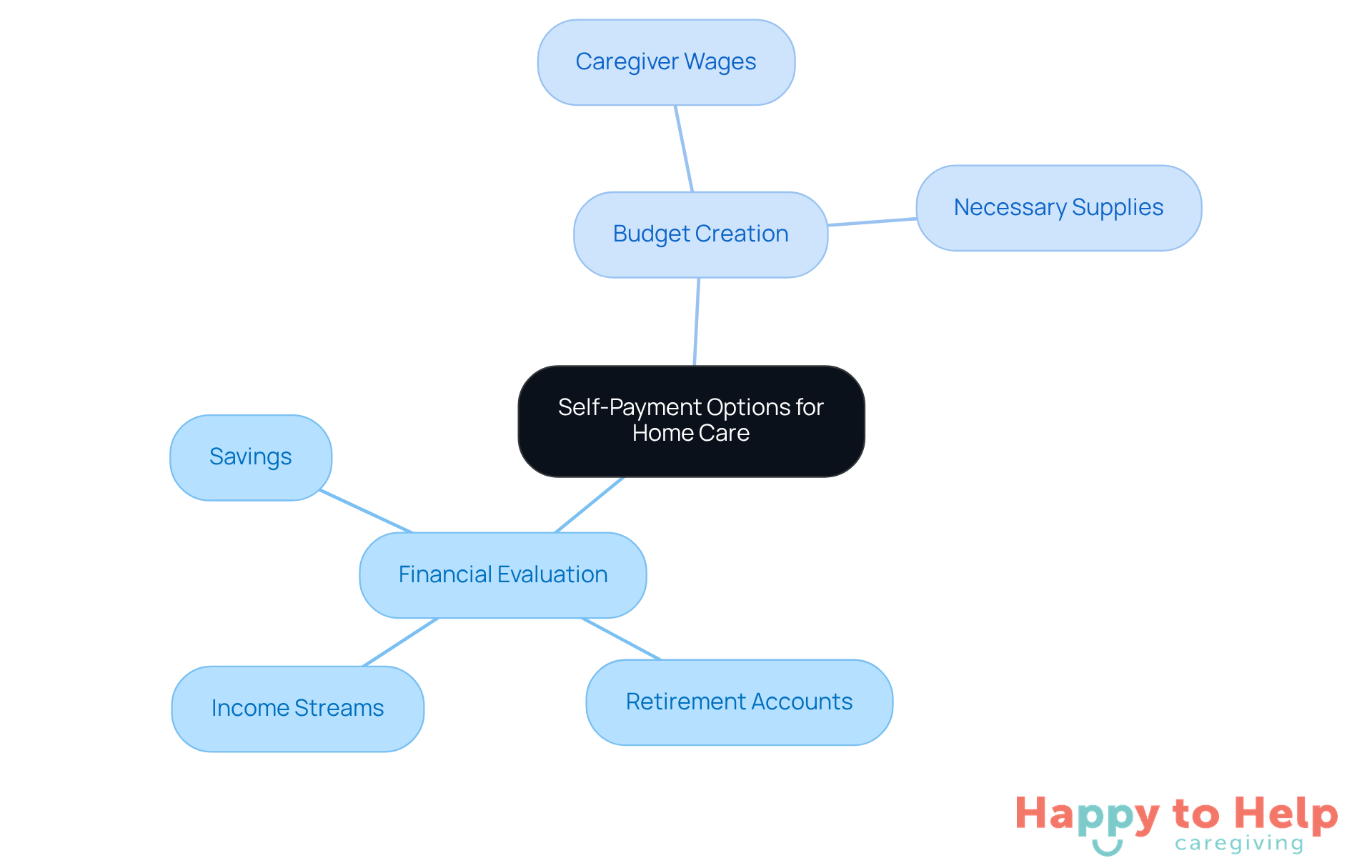
Many families face the challenge of funding in-home assistance services. This can lead to stress and uncertainty about how to manage care for loved ones. Self-funding offers a solution, providing enhanced flexibility and control over treatment options. However, families must carefully evaluate their financial situation, including savings, retirement accounts, and potential income streams, to determine how much they can allocate for support.
Creating a detailed budget is crucial for effective financial planning. This budget should encompass all potential expenses, such as:
- Caregiver wages
- Necessary supplies
By taking these steps, families can ensure they are prepared to meet their caregiving needs without compromising their financial stability.
Government Programs: Financial Assistance for Senior Care
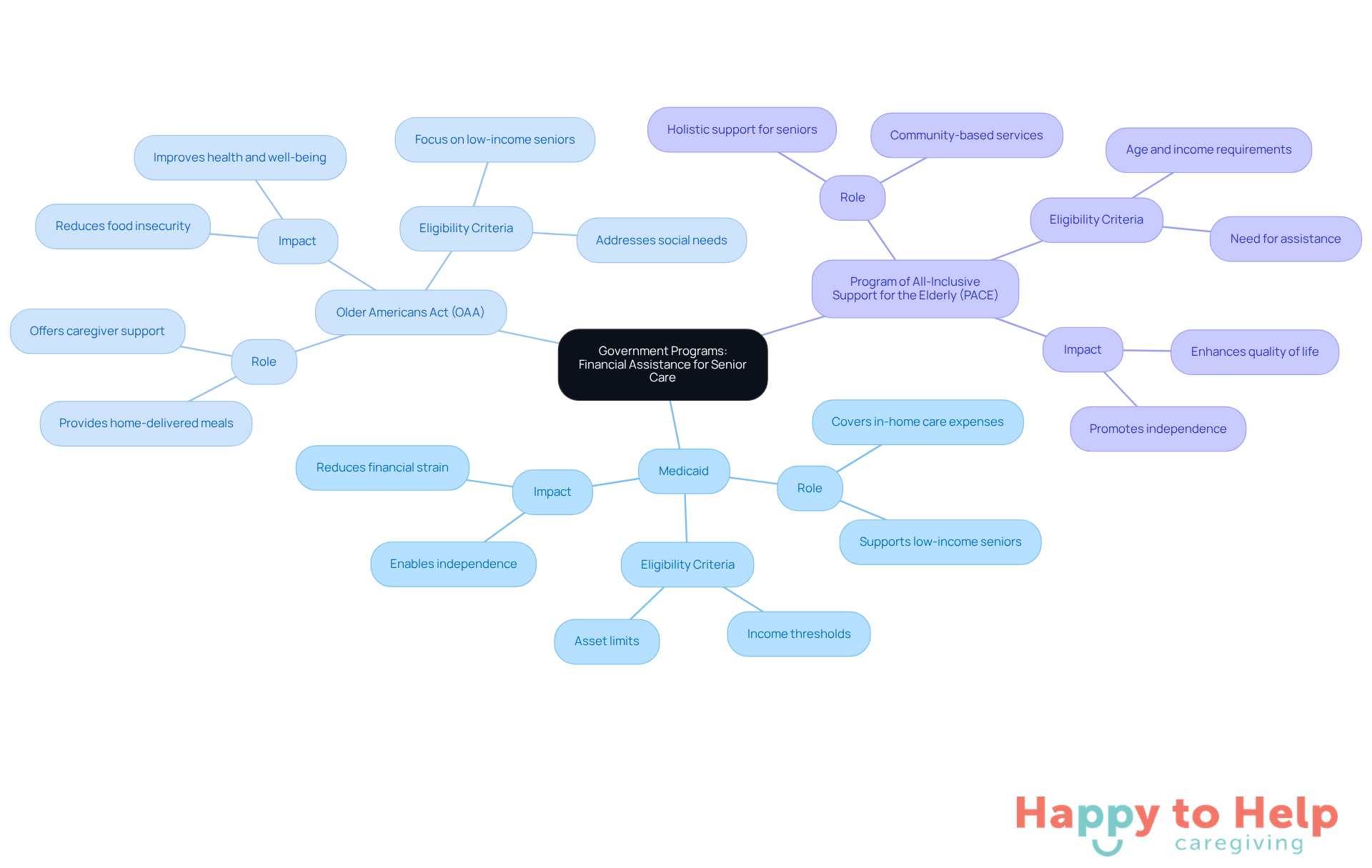
Government initiatives are crucial in alleviating the financial burden of senior care cost for families supporting the elderly. However, many families face significant challenges in accessing resources due to senior care cost. Medicaid and the Older Americans Act (OAA) serve as primary support systems for low-income seniors, covering various in-home care expenses. Despite the substantial eligibility rates for Medicaid in 2025, with millions of older adults qualifying based on income and asset thresholds, a staggering 86% of low-income, food-insecure older adults do not receive home-delivered meals. This highlights a critical gap in support that these programs aim to address.
Families can explore the Program of All-Inclusive Support for the Elderly (PACE), which offers extensive assistance tailored for eligible individuals, ensuring they receive holistic support while remaining in their communities. Successful examples abound, with many families utilizing Medicaid to secure in-home assistance, allowing elderly individuals to maintain their independence and quality of life. For instance, a qualitative study involving 54 participants revealed that home-delivered meals significantly improved health and well-being, underscoring the importance of these services.
Understanding the eligibility criteria for programs related to senior care cost is essential for families. For Medicaid, elderly individuals typically need to meet specific income thresholds, while the OAA focuses on providing support to those with the most pressing economic and social needs. By effectively navigating these resources, families can maximize available support and enhance their loved ones' well-being. As the NCOA states, "The OAA is the backbone of American aging policy and helps ensure millions of Americans can age well.
Insurance Coverage: Navigating Medicare and Medicaid for Care Costs
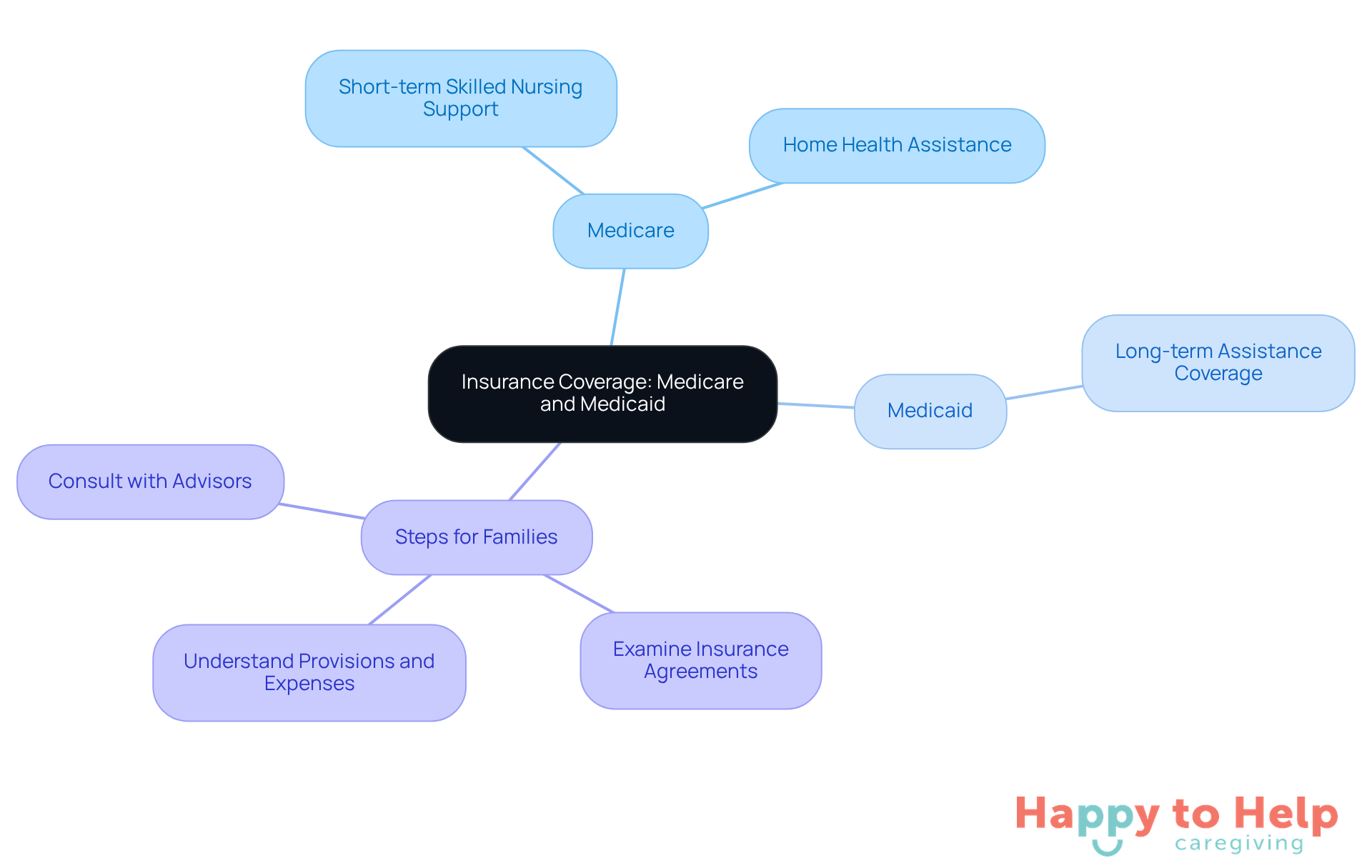
Navigating insurance coverage for senior support can be a significant challenge for families. The complexity of understanding what is covered under Medicare and Medicaid can lead to confusion and potential gaps in care. Medicare typically includes short-term skilled nursing support and certain home health assistance, but it may not cover all long-term needs. On the other hand, Medicaid offers more extensive coverage for those requiring long-term assistance.
To effectively manage these challenges, families should:
- Carefully examine their loved one's insurance agreements.
- Comprehend the specific provisions included and any potential out-of-pocket expenses.
- Consult with a financial advisor or insurance specialist for valuable insights and guidance tailored to their unique situation.
By taking these steps, caregivers can ensure they are making informed decisions about their loved one's care.
Growing Demand: Market Forces Affecting Senior Care Pricing
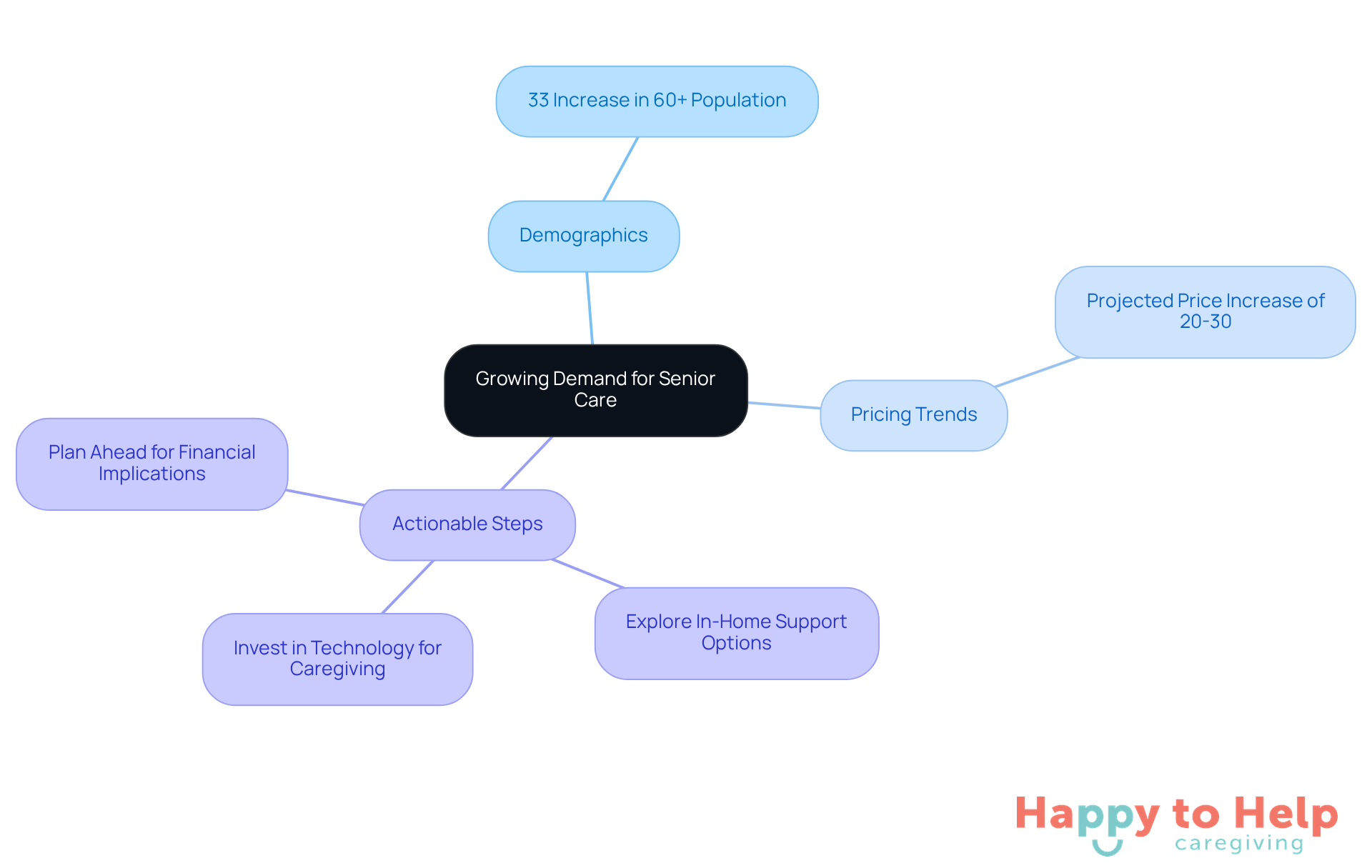
The growing need for elder assistance options presents a significant challenge for families. With the U.S. population aged 60 and older increasing by 33% from 2010 to 2020, now reaching 76.5 million, the demand for in-home support has become critical. This surge in demand is expected to drive prices higher, with projections indicating potential increases of 20-30% in the coming years.
Families must prepare for the rising senior care costs when budgeting for assistance. The escalating expenses reflect not only higher demand but also the necessity for improved offerings and the integration of technology in service delivery. Analysts emphasize that the aging population will greatly influence senior care costs, urging families to consider these factors in their financial planning.
To navigate this evolving landscape, families can take proactive steps:
- They should explore various in-home support options and compare services to find the best fit for their needs.
- Investing in technology that enhances caregiving can lead to better outcomes and potentially lower costs in the long run.
- By staying informed and planning ahead, families can better manage the financial implications of senior care costs.
Caregiver Qualifications: How Experience Influences Care Costs
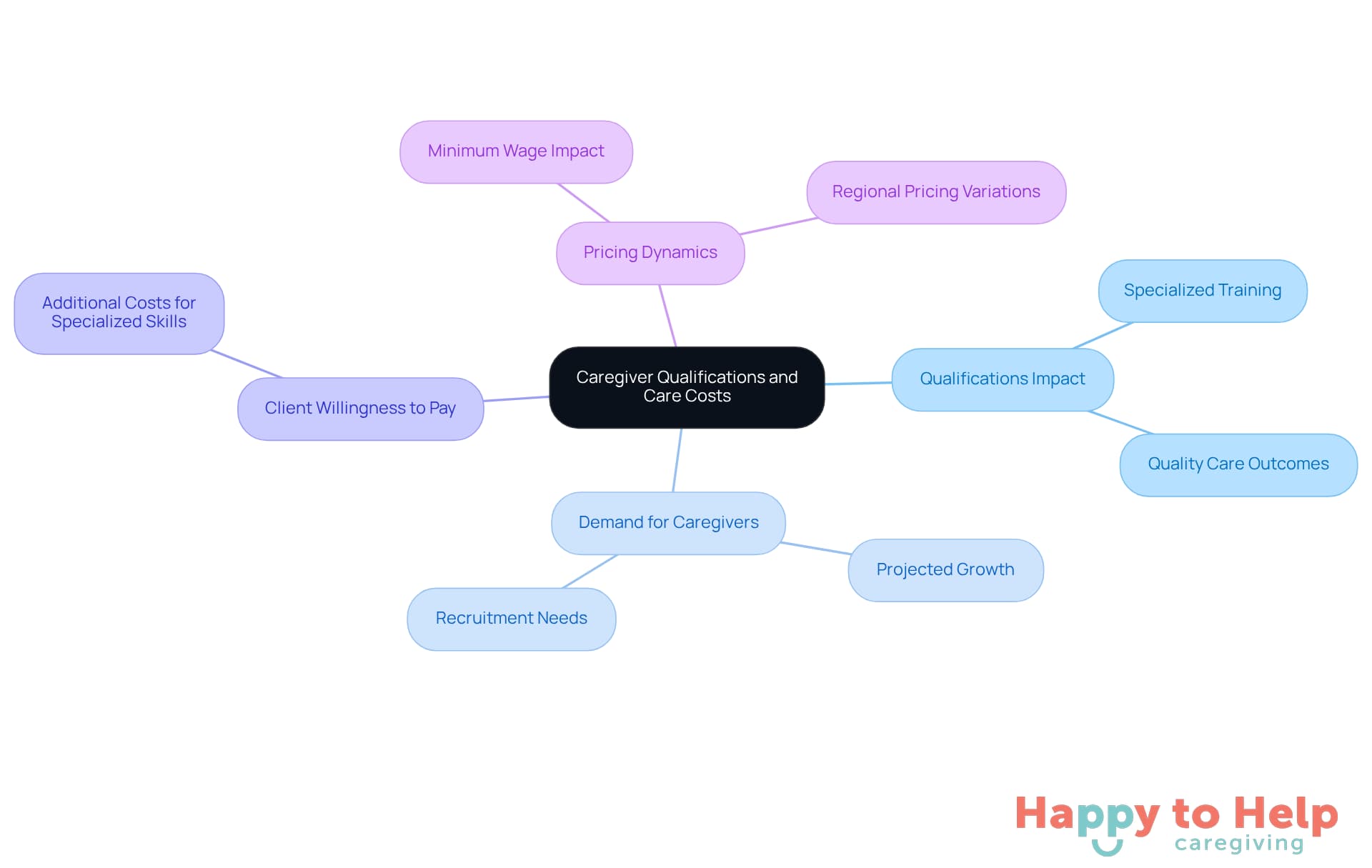
The qualifications of caregivers significantly influence the senior care cost of in-home assistance services. Families face a challenge: the senior care cost is often higher for skilled caregivers with specialized training due to their expertise and ability to provide quality care. This situation can lead to increased senior care costs, but investing in qualified professionals can yield better health outcomes and greater satisfaction for clients.
As the number of Americans aged 65 and older is projected to double by 2030, the demand for skilled caregivers is expected to rise. This surge necessitates the recruitment of 200,000 new direct-care workers annually. Families should consider the qualifications of potential caregivers when making hiring decisions. For instance, caregivers with certifications in geriatric support or specialized training in dementia care are often more effective in meeting the unique needs of their clients.
Moreover, data indicates that clients are typically willing to pay an additional $10 to $15 per hour for caregivers with specialized skills, which affects the overall senior care cost. This highlights the prevalent demand for quality assistance, especially as 43.5 million caregivers currently support their loved ones in the U.S. Additionally, as noted by Benjamin Chernow, the primary factor driving up senior care costs is minimum wage, which complicates the pricing dynamics in the caregiving sector.
To navigate these challenges, families should prioritize hiring caregivers with the right qualifications. By doing so, they not only ensure better care for their loved ones but also contribute to the overall improvement of the caregiving landscape.
Technology Integration: Enhancing Care While Influencing Costs
The incorporation of technology in elder support presents a significant challenge for caregivers, who often struggle to manage the complexities of care. This burden can lead to stress and burnout, impacting both the caregiver and the elderly individual they support.
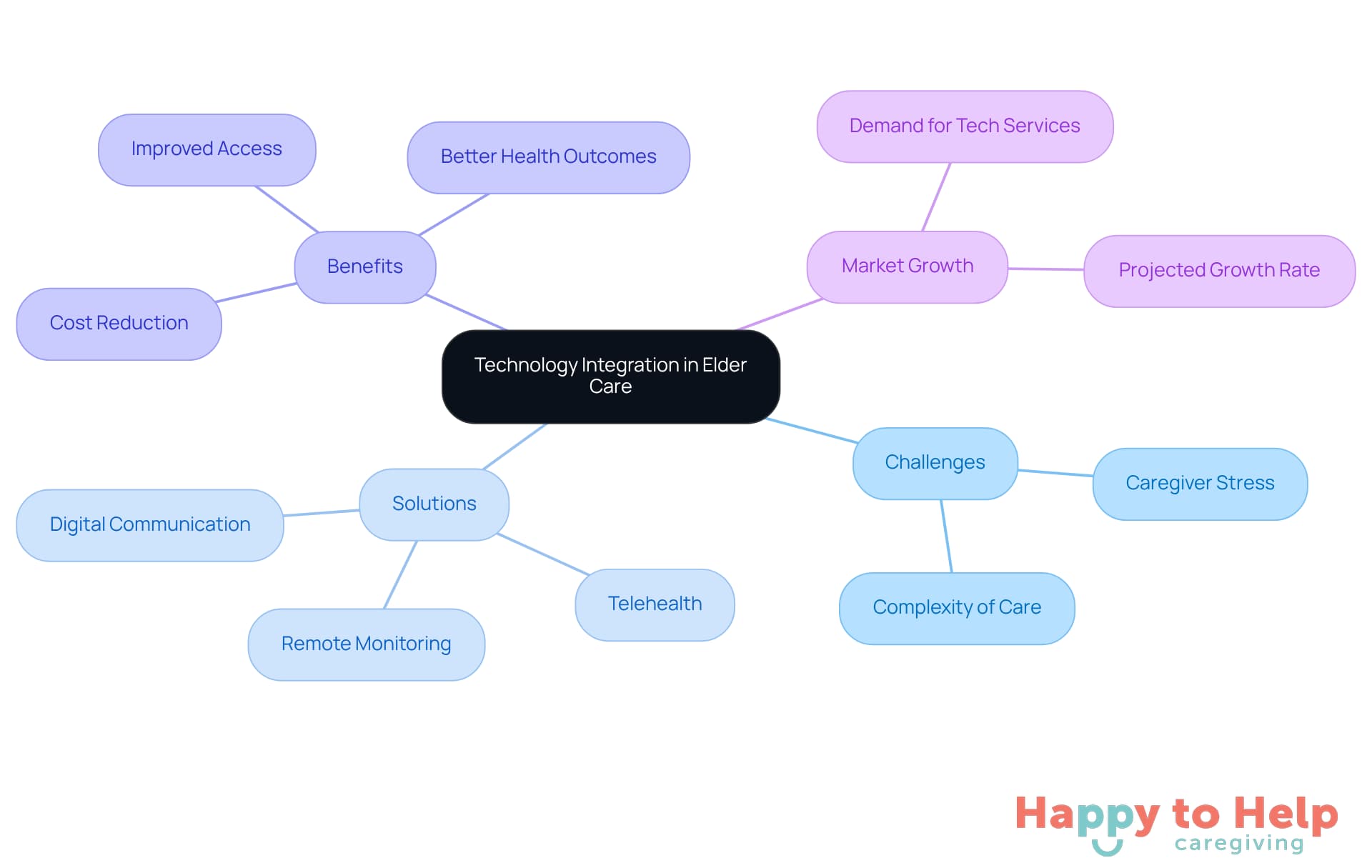
However, technology offers a solution that can alleviate these pressures. Telehealth, remote monitoring, and digital communication platforms are transforming service provision, optimizing processes, and significantly lowering senior care costs associated with in-person visits. For instance, virtual consultations allow older adults to connect with healthcare providers from the comfort of their homes, improving access to services while reducing travel-related costs. This shift not only eases the burden on family caregivers but also fosters timely interventions, ultimately leading to better health outcomes.
Moreover, remote monitoring systems enable continuous oversight of seniors' vital signs, alerting healthcare providers to concerning changes in real time. This proactive strategy can prevent costly hospital stays and emergency measures, enhancing treatment efficiency and reducing senior care costs. With the Senior Tech Services Market projected to grow at an 11.5% CAGR between 2025 and 2035, the demand for these innovative solutions is evident.
While the initial investment in technology may seem daunting, the long-term savings and improved quality of service often outweigh the senior care cost. Experts emphasize that adopting telehealth and remote monitoring not only enhances the caregiving experience but also provides families with peace of mind, knowing their loved ones are receiving timely and effective support. As the landscape of senior care continues to evolve, leveraging technology will be essential in meeting the growing needs of the aging population.
Your Path Forward
Understanding the multifaceted factors influencing senior care costs is essential for families navigating the complexities of elder support. These costs are shaped not only by geographical location and specific care needs but also by the duration and scope of services required. Families face the challenge of managing these expenses, which can vary significantly based on their unique circumstances.
Urban areas typically experience higher costs due to increased demand, making it crucial for families to recognize this trend. Personalized care plans can significantly enhance the quality of life for seniors, but they often come at a premium. Additionally, the rising demand for skilled caregivers and the integration of technology in care provision further impact pricing. Families should explore self-payment options and government programs to alleviate financial burdens while ensuring their loved ones receive the necessary support.
Proactive financial planning and informed decision-making are vital. By staying informed about the evolving landscape of senior care costs, families can better manage their resources. Embracing these strategies will not only enhance the well-being of seniors but also foster a more sustainable approach to elder support in the years to come.
Key Takeaways:
- Understand the Costs: Recognize how location and care needs affect pricing.
- Explore Options: Look into self-payment and government assistance programs.
- Plan Ahead: Stay informed to manage resources effectively.
Frequently Asked Questions
What services does Happy to Help Caregiving offer?
Happy to Help Caregiving offers personalized in-home support services including companionship, post-hospital recovery assistance, respite support, and palliative assistance.
How does Happy to Help Caregiving address feelings of loneliness and isolation in clients?
Caregivers provide emotional support and engage clients in enjoyable activities, which helps alleviate feelings of loneliness and fosters a sense of community and connection.
What factors influence the cost of senior care?
The cost of senior care varies significantly based on geographical location, with urban areas typically facing higher costs due to increased demand and living expenses, while rural areas may offer more affordable options.
What is the national median expense for nonmedical in-home assistance as of December 2025?
The national median expense for nonmedical in-home assistance is approximately $33 per hour, with state prices ranging from $24 to $43 per hour.
Why is it important to tailor care services to individual requirements?
Tailoring care services to individual requirements is crucial to ensure effective support, as overlooking specific needs can lead to inadequate care and a diminished quality of life.
What percentage of seniors prioritize preserving their quality of life over lifespan?
A survey indicates that 94% of seniors prioritize preserving their quality of life over merely extending their lifespan.
How does Happy to Help Caregiving create personalized support plans?
Happy to Help Caregiving excels in creating personalized support plans by adapting to the evolving needs of clients to ensure they receive the appropriate level of assistance.
What is the predicted trend for senior care costs by 2025?
Forecasts indicate that senior care costs could rise by 20-30% by 2025, highlighting the importance of proactive financial planning for families.
List of Sources
- Happy to Help Caregiving: Personalized In-Home Care Services
- The Future of Home Health Care: Trends to Watch in 2025 (https://synchronyfl.com/the-future-of-home-health-care-trends-to-watch-in-2025)
- Growing Trend of Private Pay Home Care for Elderly (https://regencyhcs.com/blog/growing-trend-of-private-pay-home-care-for-elderly)
- A Look Into the Future of Home Care (https://seniorhelpers.com/ca/montclair/resources/blogs/2025-11-15)
- Home Care Industry Trends to Watch in 2025 (https://firstlighthomecare.com/blog/home-care-industry-trends)
- 13 Home Care Trends To Watch For in 2024 (And Thoughts From 11 Experts) | CareAcademy (https://careacademy.com/blog/home-care-trends)
- Geographical Location: Variations in Senior Care Costs
- Will Senior Care Costs Rise in 2025? - Stillinger Investigations, Inc. (https://investigatesc.com/senior-care)
- How Much Senior Living Costs in Each State | Frontier Senior Living (https://frontiermgmt.com/blog/which-state-is-most-and-least-expensive-for-senior-living)
- Geography Matters: Location plays key role in long-term care cost (https://insurancenewsnet.com/innarticle/geography-matters-location-plays-key-role-in-long-term-care-cost)
- Home Care Costs in 2025: A State-by-State Guide (https://aplaceformom.com/caregiver-resources/articles/in-home-care-costs)
- Navigating Home Care Amidst the Tide of Rising Costs | Amada (https://amadaseniorcare.com/2024/03/navigating-home-care-amidst-the-tide-of-rising-costs)
- Specific Care Needs: Tailoring Services to Individual Requirements
- Warning From Older Adults: Care for Aging in America Needs Urgent Rethinking (https://johnahartford.org/newsroom/view/warning-from-older-adults-care-for-aging-in-america-needs-urgent-rethinking)
- Older adults prioritize social activities, inclusiveness in massive survey assessing what matters most to them (https://mcknights.com/news/older-adults-prioritize-social-activities-inclusiveness-in-massive-survey-assessing-what-matters-most-to-them)
- Bridging the Gap in Elderly Care: The Case for Comprehensive In-Home Assessment (https://reachmd.com/news/bridging-the-gap-in-elderly-care-the-case-for-comprehensive-in-home-assessment/2474101)
- How Personalized Health Care Is Changing The Role Of Home Care Providers (https://homehealthcarenews.com/2024/03/how-personalized-health-care-is-changing-the-role-of-home-care-providers)
- Duration and Scope of Service: Cost Implications for Senior Care
- 24/7 In-Home Care Costs in 2025 - Assisted Living Magazine (https://assistedlivingmagazine.com/24-7-in-home-care-costs-in-2025)
- The Cost of Dignity: A Guide to In-Home Care Costs and Happier Aging in 2025 | Nurse Next Door (https://nursenextdoor.com/blog/how-much-does-senior-home-care-cost)
- Long-term care costs can be a 'huge problem,' experts say. Here's why (https://cnbc.com/2025/05/17/why-long-term-care-costs-can-be-a-huge-problem.html)
- Elder care costs are outpacing inflation. Americans want a lifeline. (https://nbcnews.com/politics/2024-election/elder-care-costs-are-outpacing-inflation-americans-want-lifeline-rcna172950)
- Self-Payment Options: Financial Planning for Home Care
- The Cost of Dignity: A Guide to In-Home Care Costs and Happier Aging in 2025 | Nurse Next Door (https://nursenextdoor.com/blog/how-much-does-senior-home-care-cost)
- The Staggering Financial Toll of Family Caregiving (https://aarp.org/caregiving/financial-legal/financial-impact-caregiving)
- 150 Quotes on Saving, Investing, and Financial Wellness (https://deliberatedirections.com/quotes-financial-wellness)
- Understanding Private Pay for Home Care: Costs, Services, and Benefits - Happy To Help (https://happytohelpcaregiving.com/understanding-private-pay-for-home-care-costs-services-and-benefits)
- How hospitals are tackling the surge of self-pay patients (https://modernhealthcare.com/providers/mh-rush-university-cook-county-health-self-pay-patients)
- Government Programs: Financial Assistance for Senior Care
- Cutting Older Americans Act funding could cost older Americans their independence (https://sph.brown.edu/news/2025-10-16/older-americans-act)
- Inspiring Caregiver Quotes for Everyday Heroes (https://humancareny.com/blog/inspiring-caregiver-quotes-for-everyday-heroes)
- Six Decades Strong, Older Americans Act Faces Funding Uncertainty (https://aarp.org/advocacy/older-americans-act-anniversary)
- Older Americans Act: Keeping Older Adults Healthy and Independent (https://ncoa.org/page/the-older-americans-act)
- 20 Inspirational Senior Care Quotes (https://1plus1cares.com/20-inspirational-senior-care-quotes)
- Insurance Coverage: Navigating Medicare and Medicaid for Care Costs
- Just The Facts: Medicaid is a Critical Component of the Long Term Care System (https://ahcancal.org/News-and-Communications/Press-Releases/Pages/Just-The-Facts-Medicaid-Critical-Component-Long-Term-Care-System.aspx)
- Navigating Medicare and Medicaid - Nursing home Partners (https://nursinghomepartners.com/book-medicare-medicaid-ltc)
- Long-term care statistics 2025 (https://singlecare.com/blog/news/long-term-care-statistics)
- Seniors & Medicare and Medicaid Enrollees | Medicaid (https://medicaid.gov/medicaid/eligibility/seniors-medicare-and-medicaid-enrollees)
- Medicare Advantage in 2025: Enrollment Update and Key Trends | KFF (https://kff.org/medicare/medicare-advantage-enrollment-update-and-key-trends)
- Growing Demand: Market Forces Affecting Senior Care Pricing
- Senior living and care market sees resurgence, increased demand (https://mcknightsseniorliving.com/news/senior-living-and-care-market-sees-resurgence-increased-demand)
- 2024 Aging in Place Statistics: A Lucrative Opportunity for the Home Care Industry - People Care (https://peoplecare.com/2024-aging-in-place-statistics-a-lucrative-opportunity-for-the-home-care-industry)
- What has 2025 got in store for Senior Care? - Compass Associates (https://compass-associates.com/us/what-has-2025-got-in-store-for-senior-care)
- 2025 Home Care Statistics: Trends & Insights To Know (https://premierhcinc.com/blog/home-care-statistics)
- The senior living market can't keep up with demand as boomers age (https://cnbc.com/2025/08/19/senior-living-housing-market-cant-keep-up-with-demand.html)
- Caregiver Qualifications: How Experience Influences Care Costs
- CaringBridge (https://caringbridge.org/resources/inspirational-quotes-on-caregiving)
- 20 Caregiver Quotes That Will Inspire You - MD Home Health (https://mdhomehealth.com/2018/06/10/20-caregiver-quotes-that-will-inspire-you)
- Why Skill-Based Billing Is Growing In Home Care – And Why Some Say No (https://homehealthcarenews.com/2025/09/why-skill-based-billing-is-growing-in-home-care-and-why-some-say-no)
- At Home Care Pricing: Essential Industry Statistics for 2025 - Assisting Hands Rockford (https://assistinghands.com/100/illinois/rockford/blog/at-home-care-pricing-essential-industry-statistics-for-2025)
- How Much Do In-Home Caregivers Cost? - WTOP News (https://wtop.com/news/2025/11/how-much-do-in-home-caregivers-cost)
- Technology Integration: Enhancing Care While Influencing Costs
- Senior Tech Services Market (https://futuremarketinsights.com/reports/senior-tech-services-market)
- 30 Quotes About the Future of Healthcare: Expert Takes (https://deliberatedirections.com/quotes-future-of-healthcare)
- How Senior Living is Embracing Technology Innovation - Argentum (https://argentum.org/how-senior-living-is-embracing-technology-innovation)
- Elderly Care Technology: 6 Trends Shaping Home Health in 2025 (https://mindbowser.com/elderly-care-technology-in-home-health-care)
- How Technology will Transform Senior Care in 2025 (https://thecareconcierges.com/how-technology-will-transform-senior-care-in-2025)