
For families in our service areas
For families in our service areas, this guide explains home care and how non-medical in-home caregiving can support care planning in East Idaho, Treasure Valley & Magic Valley, Northern Wasatch, North Central West Virginia, and Northeast Ohio.
The Importance of Factors to Evaluate Local Home Care
The landscape of home care is evolving rapidly, driven by an aging population and increasing demand for personalized support. Families are often faced with the daunting task of navigating numerous local home care agencies to ensure the best possible care for their loved ones. This challenge can lead to confusion and uncertainty, making it crucial for caregivers to understand what to look for in a home care provider.
To help families make informed decisions, this article delves into ten essential factors to evaluate when selecting a home care provider:
- Verifying credentials
- Understanding pricing transparency
- Assessing the quality of care
- Evaluating caregiver qualifications
- Considering agency reputation
- Reviewing service options
- Checking for flexibility in care plans
- Understanding communication protocols
- Assessing emergency response procedures
- Evaluating ongoing support and resources
By focusing on these key elements, families can confidently choose an agency that meets their needs and provides the quality care they seek.
Happy to Help Caregiving: Prioritize Personalized Care Plans
The growing demand for personalized caregiving services presents a significant challenge. With forecasts indicating that by 2029, approximately 71.4 million Americans aged 65 and older will require support, the urgency for tailored home assistance is clear. Failing to address the unique needs of individuals can lead to inadequate care and diminished quality of life.
To tackle this issue, Happy to Help Caregiving excels in developing customized support plans that cater to the distinct requirements of each individual. This approach not only meets medical and physical needs but also considers emotional and social dimensions, fostering a holistic support environment. By involving individuals and their families in the planning process, caregivers can ensure that services align with lifestyles and preferences, ultimately promoting independence and well-being.
Effective case studies illustrate the impact of personalized treatment plans in chronic management, showcasing how these approaches significantly enhance patient involvement and satisfaction. As Lance A. Slatton, Senior Case Manager, notes, "Personalized treatment plans are crucial for addressing the unique needs of each client." This highlights the importance of implementing tailored support plans to create a nurturing and effective caregiving experience.
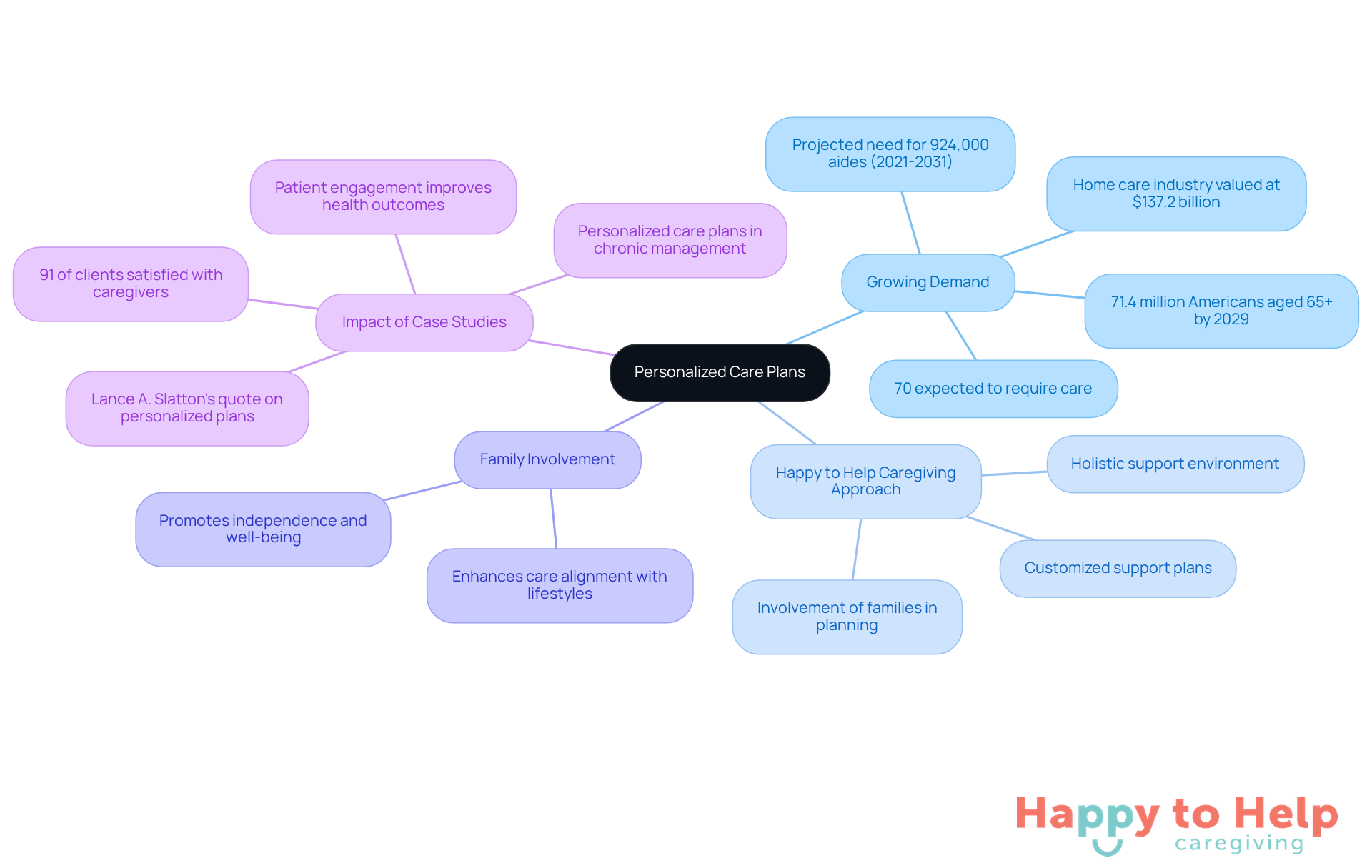
Verify Credentials: Ensure Agency Qualifications and Licensing
When assessing nearby home support organizations, caregivers face a significant challenge: confirming the qualifications of these providers. Without proper licensing and accreditation, the safety and well-being of clients can be at risk. Each state has specific criteria for home support providers, making it essential for families to ensure that a provider meets these standards.
To address this issue, agencies should provide proof of their qualifications. Caregivers can take proactive steps by:
- Checking with state health departments
- Verifying with regulatory bodies to confirm compliance
This not only safeguards clients but also provides peace of mind for families seeking reliable support.
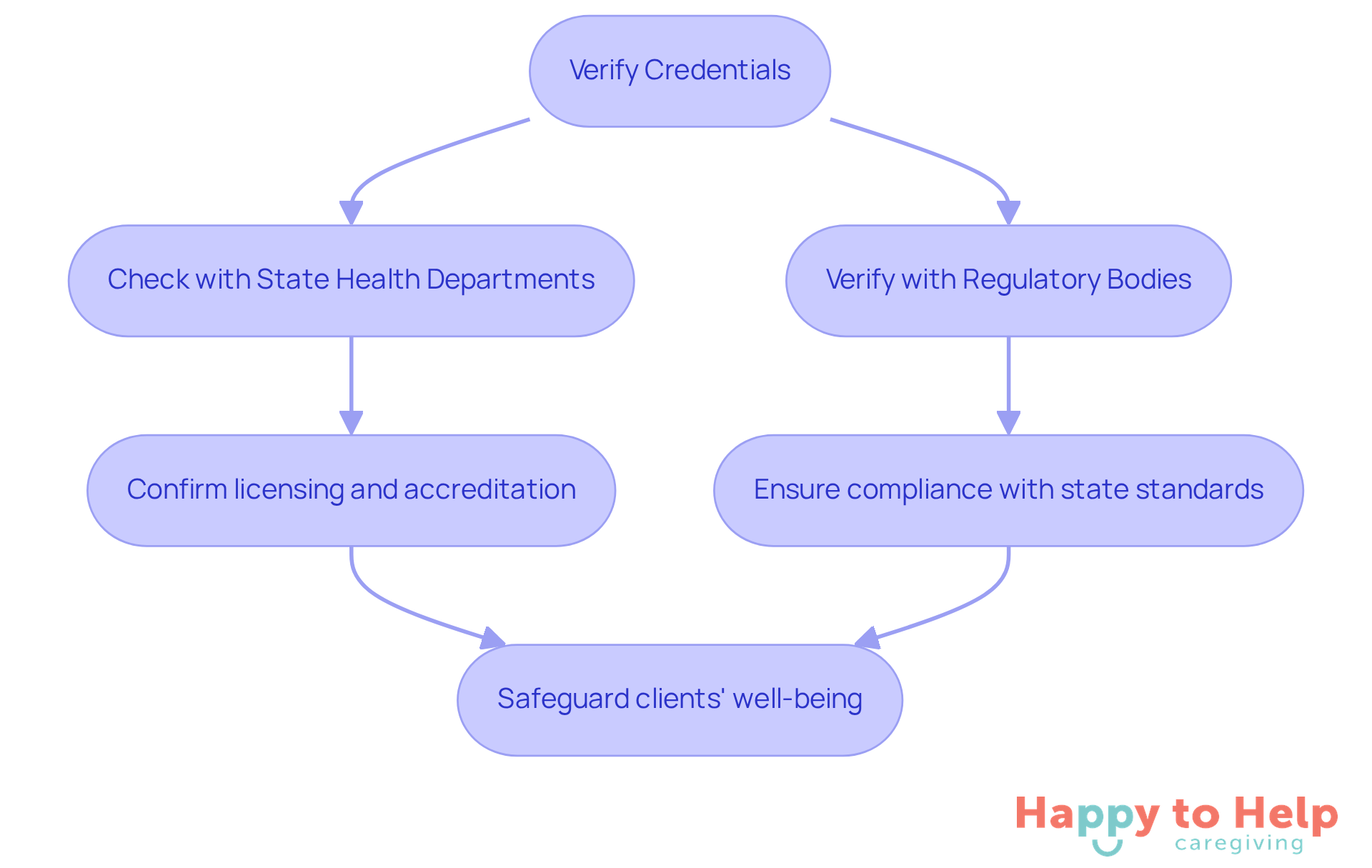
Assess Caregiver Training: Evaluate Experience and Specializations
Evaluating caregiver training is a significant challenge when selecting a home support agency. Families often face uncertainty about the qualifications of caregivers, which can lead to inadequate support for their loved ones. Without proper training, caregivers may struggle to meet specific needs, such as dementia support or mobility assistance.
To address this issue, families should actively inquire about the training programs caregivers complete. Ask about any specializations that are relevant to your loved one's requirements. Skilled caregivers, who have undergone comprehensive training, are more likely to deliver high-quality support. Understanding their background and training can empower families to make informed choices.
Here are some actionable tips:
- Ask about training programs: Inquire about the specific training caregivers have completed.
- Look for specializations: Ensure caregivers have expertise in areas relevant to your loved one’s needs.
- Request references: Speak with other families who have used the agency’s services to gauge caregiver effectiveness.
By taking these steps, families can enhance the quality of care their loved ones receive, ensuring they are supported by well-trained professionals.
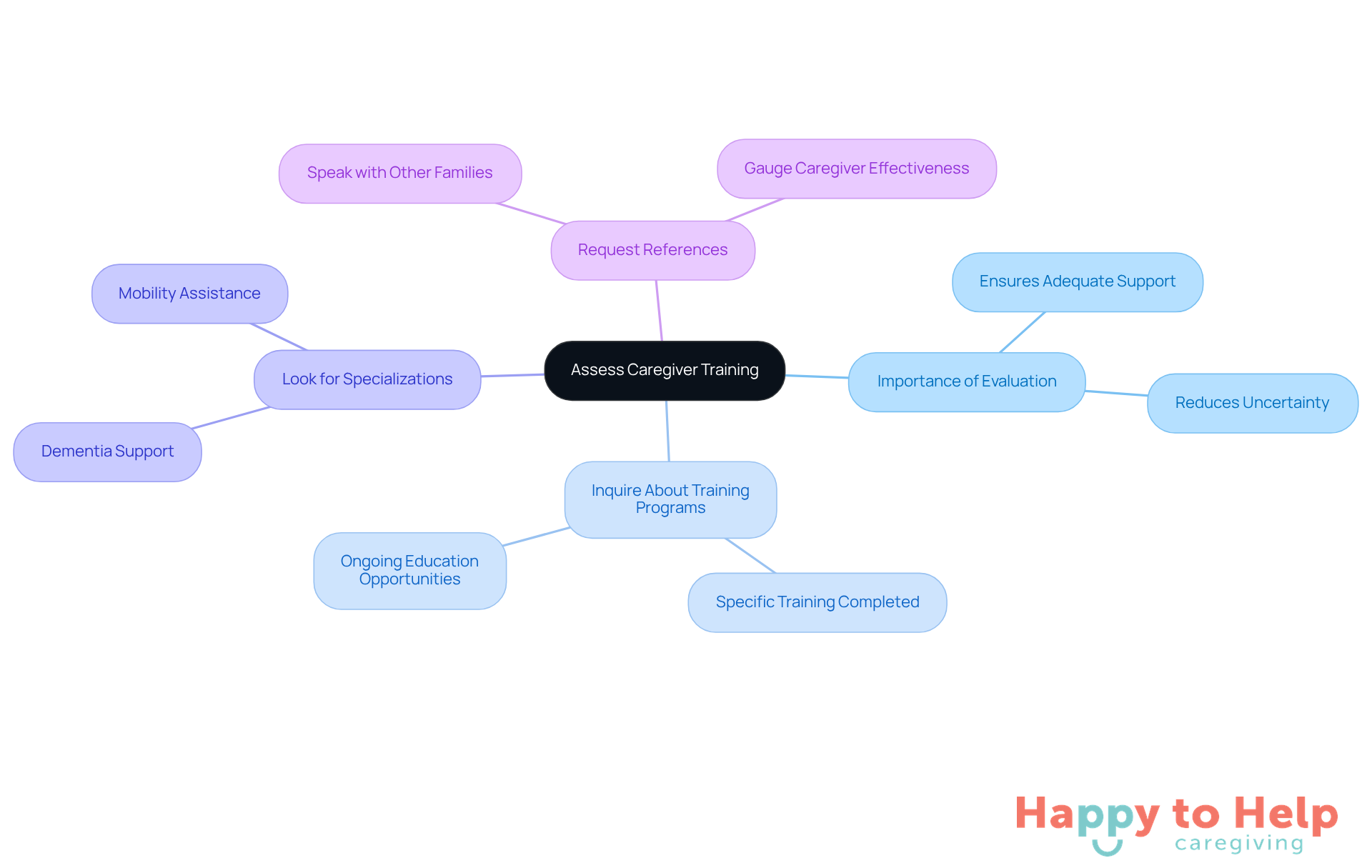
Consider Flexibility: Look for Adaptable Scheduling Options
When assessing home support organizations, one major problem caregivers face is inflexible scheduling. This rigidity can lead to significant challenges, especially for those with fluctuating health conditions who require timely assistance. Without adaptable options, clients may struggle to receive the care they need when they need it most.
To address this issue, look for agencies that offer flexible scheduling options. Seek out organizations that provide varying hours or on-call services. This adaptability can greatly enhance the caregiving experience, ensuring that clients receive support tailored to their changing needs. By prioritizing flexibility, caregivers can improve their ability to respond to the unique demands of their clients.
Encourage Open Communication: Foster Family-Caregiver Interaction
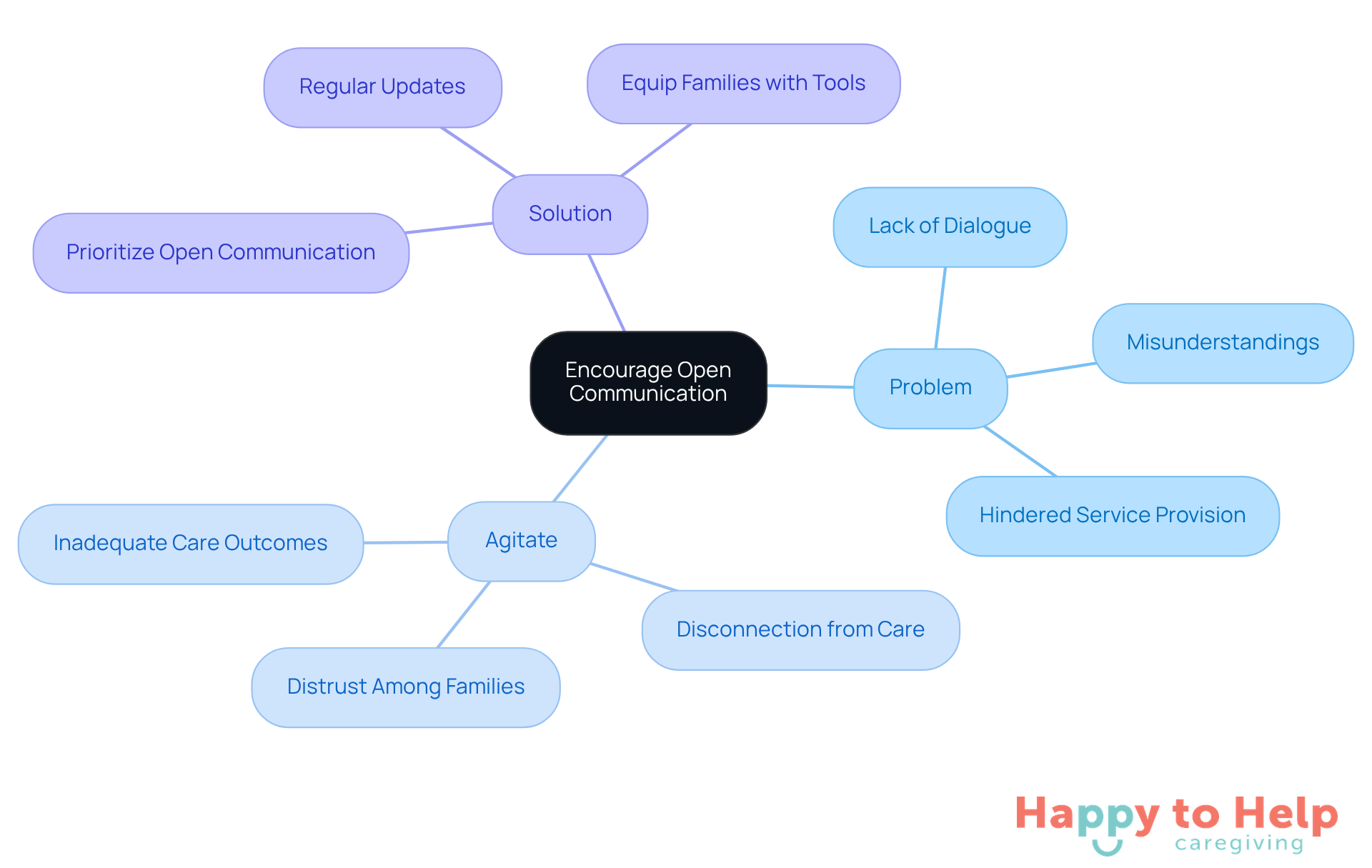
Problem: Transparent dialogue between households and caregivers is often lacking, which can hinder effective service provision. Families may feel hesitant to discuss their loved one's needs and preferences, leading to misunderstandings and inadequate care.
Agitate: This lack of communication can create an environment of distrust, where caregivers are unable to adjust support plans to meet the evolving needs of their clients. Without frequent updates and check-ins, families may feel disconnected from their loved one's well-being, which is crucial for improving care outcomes.
Solution: To combat these challenges, caregivers should prioritize open communication. Regular updates not only uphold transparency but also foster trust. As one caregiver noted, "You make the relatives feel that they can manage a lot on their own, as long as they know where to turn or how to do things; you provide them with tools." This highlights the importance of equipping families with the knowledge and resources they need to actively participate in the caregiving process.
Statistics show that 91% of caregivers recommend seeking a specialist for assistance, underscoring the role of effective communication in enhancing outcomes. Case studies reveal that caregivers who engage in empathetic dialogue create a sense of safety and value among clients, strengthening the caregiver-client relationship. Continuous discussions between caregivers and relatives lead to shared insights, resulting in informed choices regarding support strategies. Involved families are essential in support plans, contributing to improved patient results and stronger caregiver-family connections.
Ultimately, effective communication is a cornerstone of the quality home support offered by local home care agencies. It promotes collaboration and ensures that the unique needs of each client are addressed with compassion and understanding.
Explore Service Offerings: Ensure Comprehensive Care Solutions
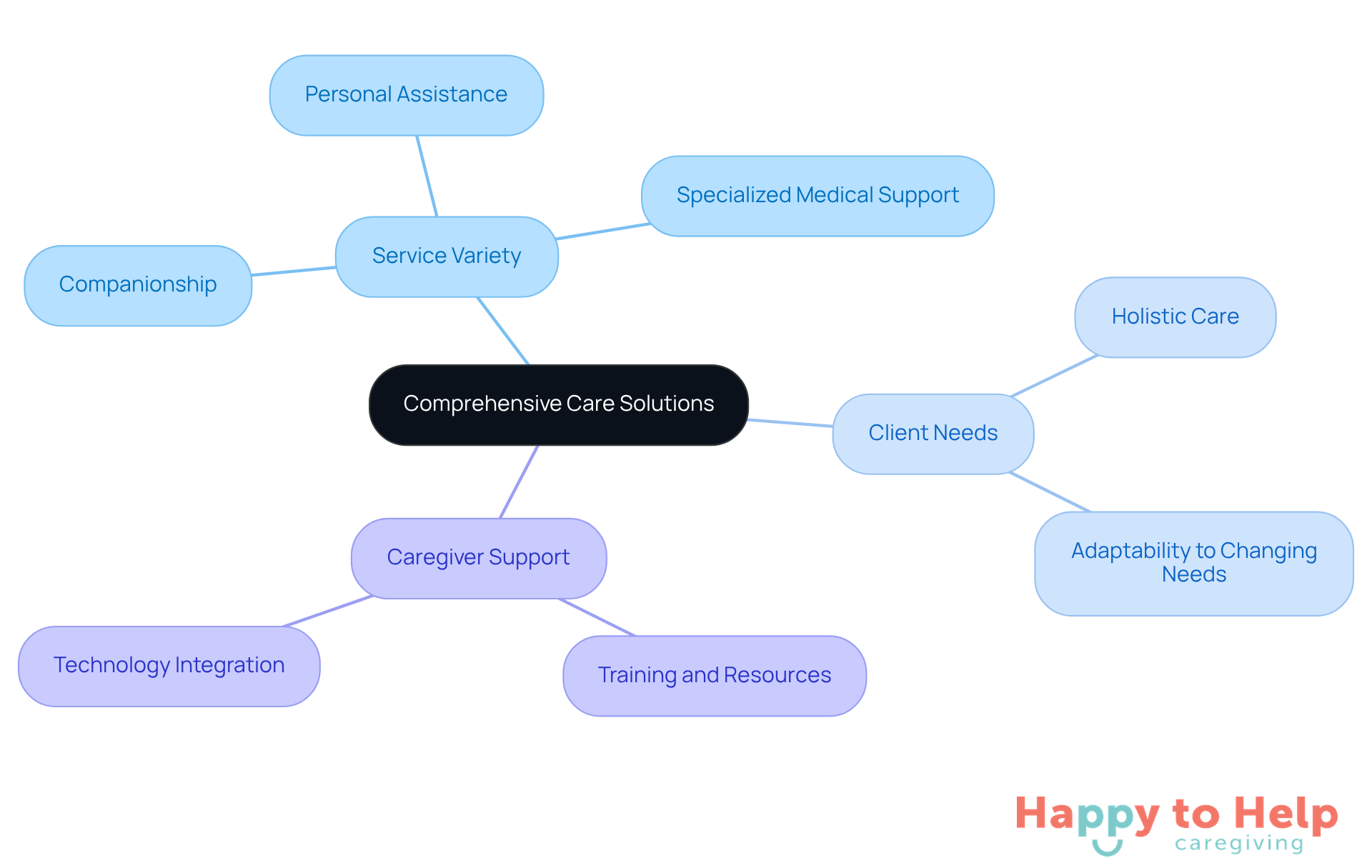
When assessing home support providers, a significant problem arises: many do not offer a comprehensive range of services. This limitation can leave caregivers struggling to meet the diverse needs of their clients. Without options like companionship, personal assistance, and specialized medical support, caregivers may find it challenging to provide holistic care that adapts as client needs evolve.
To address this issue, it’s essential to choose a well-organized provider that offers a variety of services. This variety not only ensures that all aspects of a client's requirements are met but also fosters a more cohesive approach to support. By selecting a provider with a broad service spectrum, caregivers can ensure they are equipped to adjust to changing needs over time.
Read Reviews: Gather Insights from Client Experiences
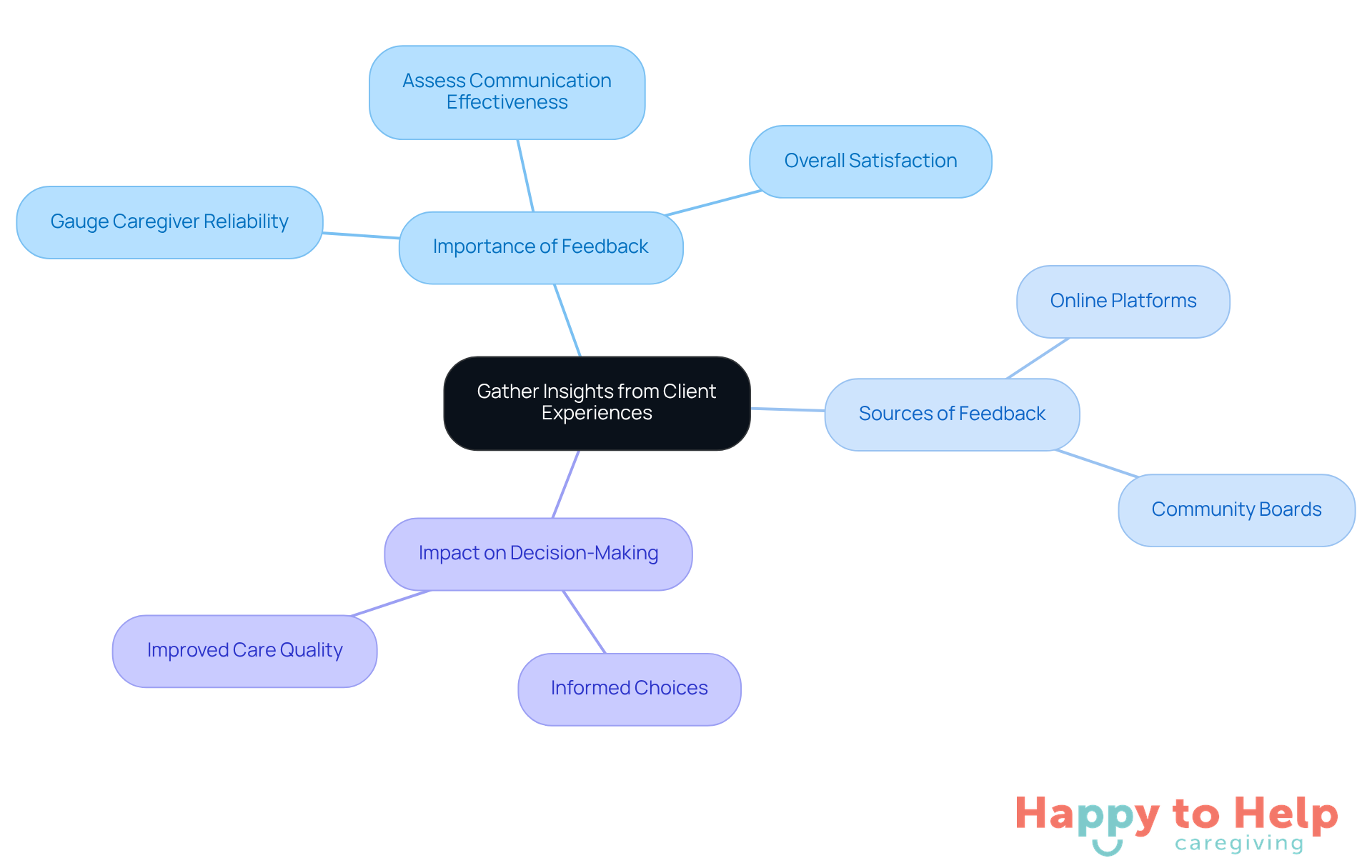
Assessing the quality of assistance from local home care agencies can be challenging for families. Without reliable feedback, it’s difficult to gauge caregiver reliability, communication effectiveness, and overall satisfaction. This uncertainty can lead to poor choices that affect the well-being of loved ones.
To address this issue, families should actively seek out feedback from both current and former customers. Patterns in this feedback can reveal crucial insights into the service's performance. Online platforms and local community boards serve as excellent resources for gathering this information, allowing families to make informed decisions based on real experiences. By prioritizing feedback, families can ensure they choose a service that meets their needs effectively.
Evaluate Emergency Protocols: Ensure Safety Measures Are in Place
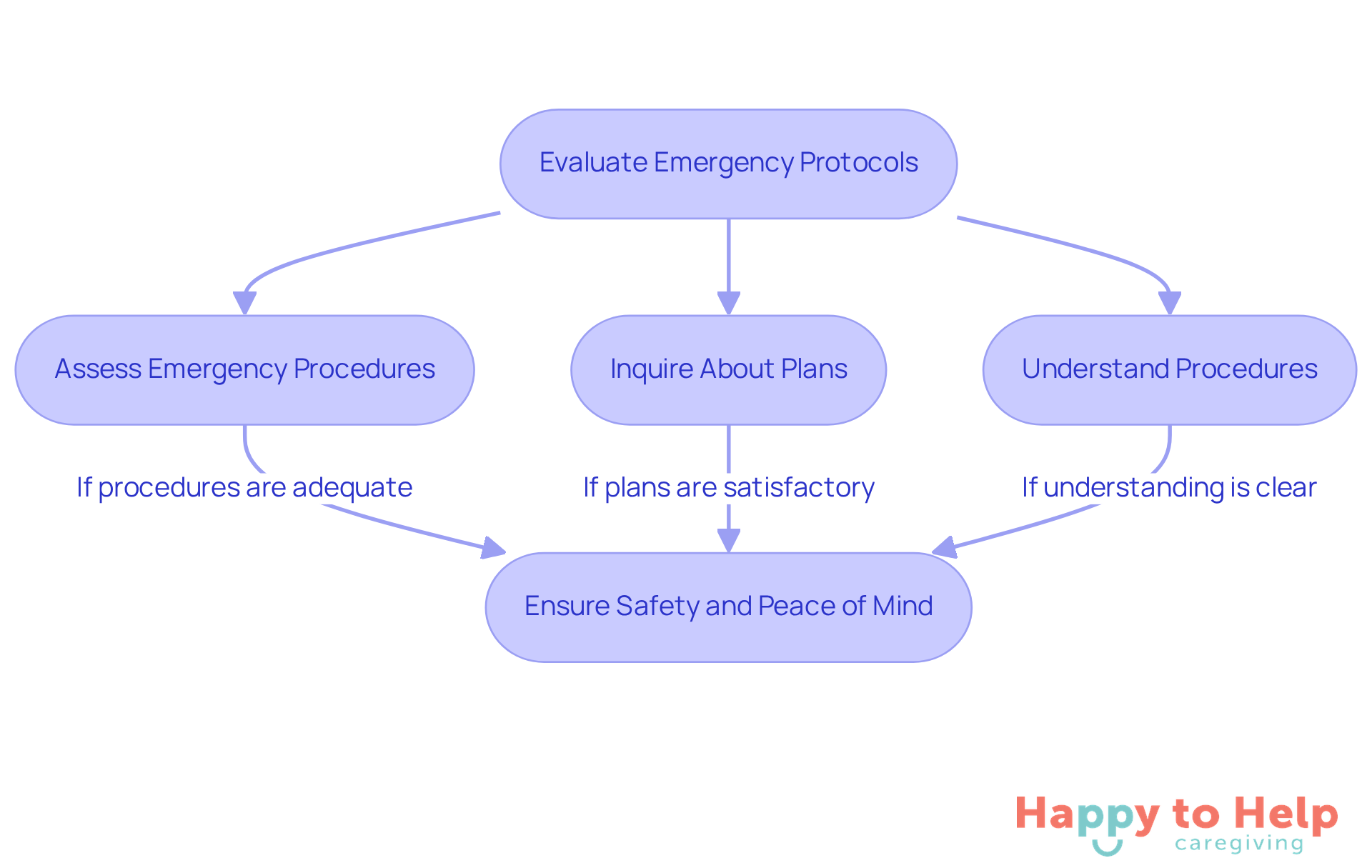
Assessing the emergency procedures of a home support service is crucial for ensuring the safety of individuals. Without proper protocols, families may face significant risks during medical crises or natural disasters.
Families should actively inquire about the organization's plans for managing emergencies. A trustworthy organization will have established clear protocols, including staff training and effective communication strategies. This ensures that clients receive timely and efficient support when it matters most.
By understanding these emergency procedures, families can make informed decisions about the care their loved ones receive, ultimately enhancing safety and peace of mind.
Check Pricing Transparency: Understand Costs and Services Clearly
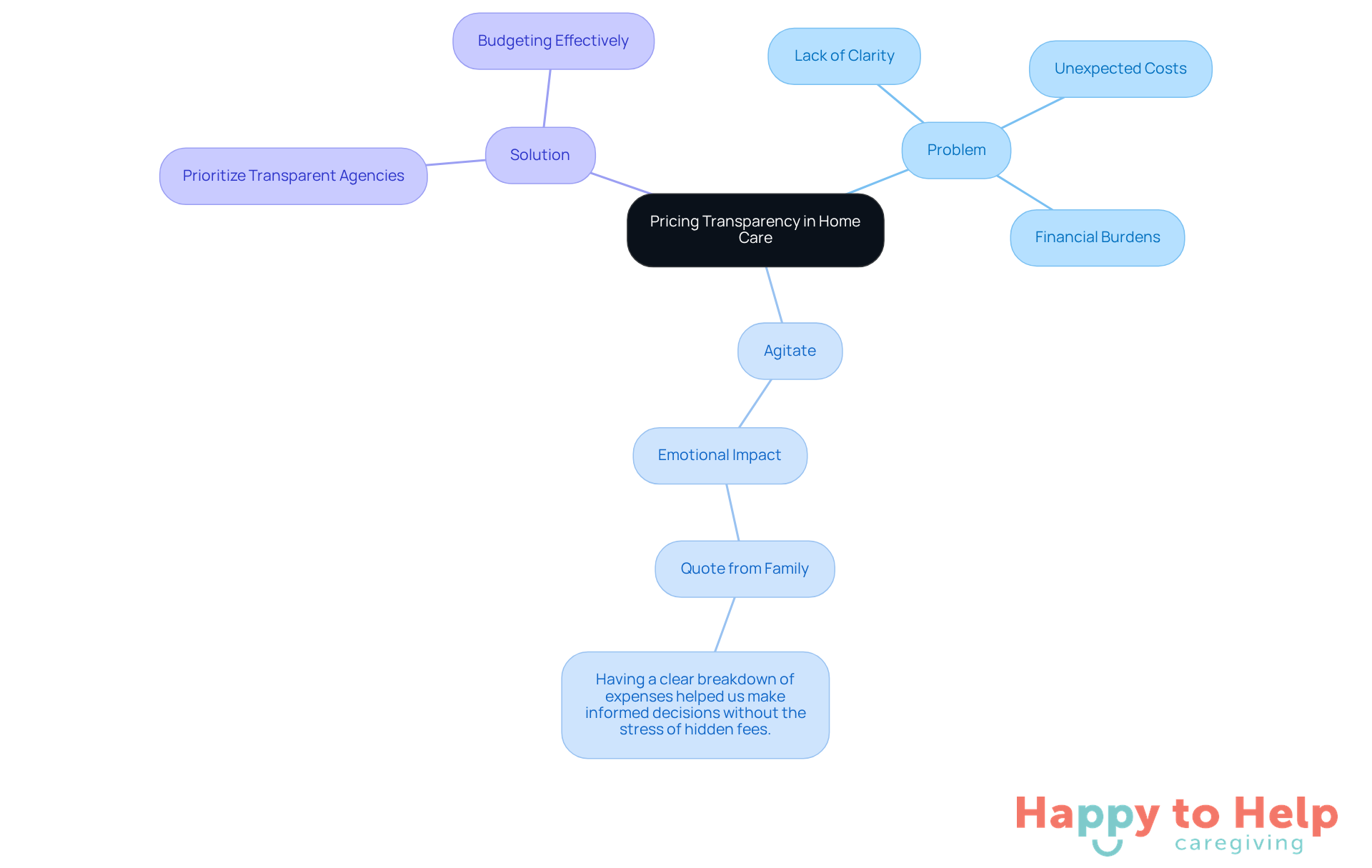
Problem: Ensuring pricing transparency is crucial when choosing a home care provider. Families often struggle with agencies that do not clearly outline their pricing structures, including hourly rates, service fees, and any additional costs. This lack of clarity can lead to unexpected financial burdens during the caregiving journey.
Agitate: Without upfront transparency, households may find themselves unprepared for the total costs involved. As one family noted, "Having a clear breakdown of expenses helped us make informed decisions without the stress of hidden fees." This highlights the relief families experience when they understand their financial commitments.
Solution: To navigate these challenges, families should prioritize agencies that emphasize pricing transparency. Understanding these financial details early on is essential for effective budgeting and ensuring that loved ones receive the necessary support without compromising family finances. Case studies indicate that households interacting with transparent organizations report higher satisfaction levels, as they feel empowered to select care options that align with their financial means.
Ensure Caregiver Compatibility: Match Personalities for Better Care
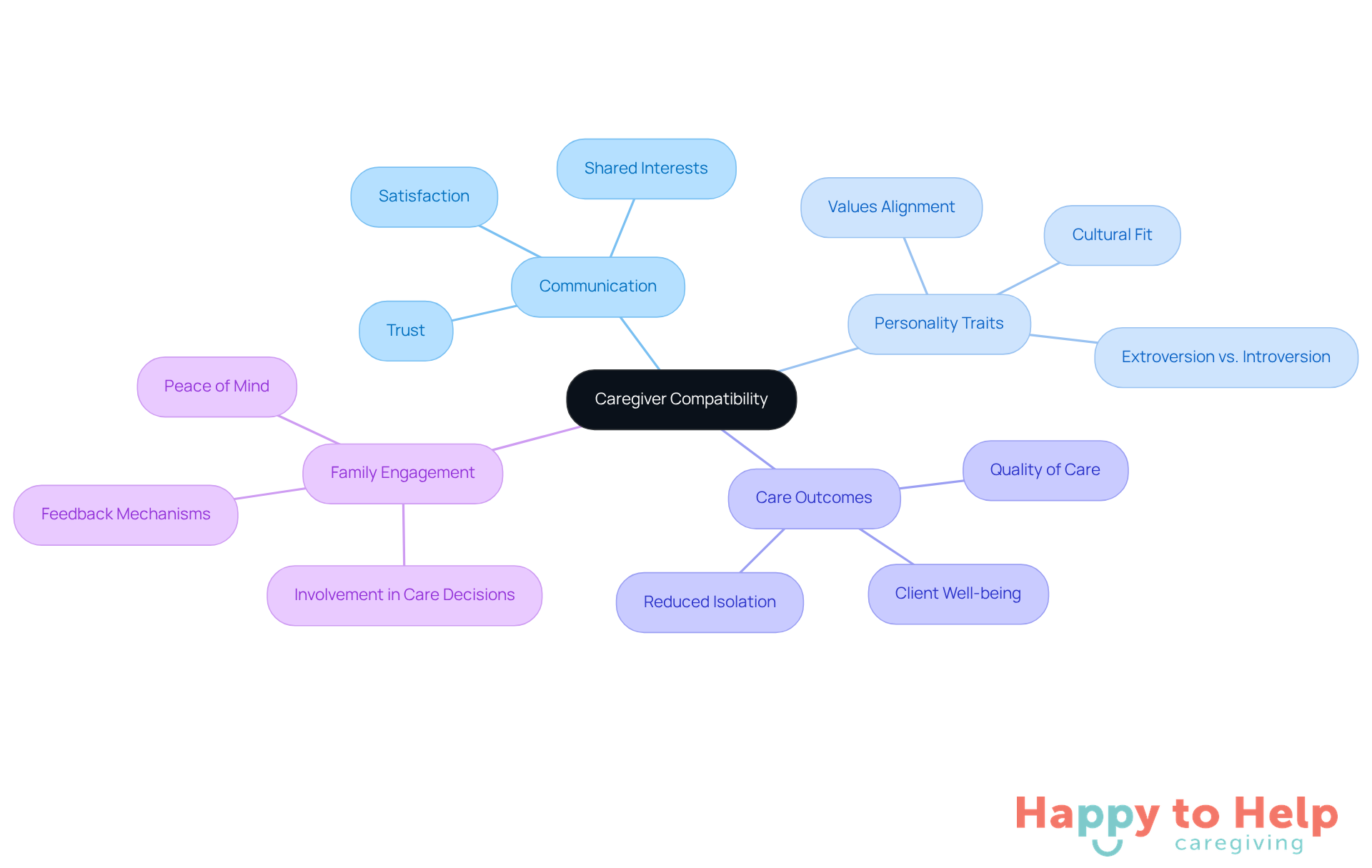
Ensuring caregiver compatibility is a significant challenge that can impact the quality of care. When families fail to discuss their loved one's personality and preferences with local home care agencies, it can lead to mismatches that hinder effective communication and trust. This lack of alignment can ultimately affect care outcomes, leaving both clients and caregivers dissatisfied.
To address this issue, families should actively engage in conversations with local home care agencies regarding their loved one's unique traits and needs. By sharing these insights, they can help match their loved one with a caregiver who shares similar values and communication styles. A good match not only enhances trust and comfort but also leads to better care outcomes and a more satisfying experience for everyone involved.
Taking the Next Steps
Selecting the right local home care agency is crucial for ensuring quality support for loved ones. Families often face the challenge of navigating various options, which can lead to confusion and uncertainty. Without proper guidance, they may struggle to find an agency that meets their specific needs, potentially compromising the care their loved ones receive.
To address this issue, it’s essential to evaluate several key factors. First, personalized care plans should be tailored not only to medical needs but also to emotional and social aspects of care. This holistic approach ensures that individuals receive comprehensive support. Additionally, verifying the credentials of agencies and assessing caregiver training and specializations are vital steps. Families should also consider flexible scheduling options to accommodate their loved ones' routines.
Open communication is another critical element. Gathering feedback from existing clients can provide valuable insights into the agency's effectiveness. Understanding emergency protocols and ensuring pricing transparency further contribute to making a safe and financially sound choice.
In conclusion, choosing a home care agency requires careful consideration and diligence. Families are encouraged to actively engage in evaluating these key factors to ensure their loved ones receive the highest quality of care possible. By prioritizing personalized, flexible, and communicative care, families can foster an environment that supports not only the physical well-being of their loved ones but also enhances their overall quality of life.
https://iframe.tely.ai/cta/eyJhcnRpY2xlX2lkIjogIjY5MjNhMGQ2MjcyNDliYTNkMmMzZTYyNSIsICJjb21wYW55X2lkIjogIjY4ZWU1ZGNhNzMxNzYyNTU3ZjNjOTVjMSIsICJpbmRleCI6IG51bGwsICJ0eXBlIjogImFydGljbGUifQ==Frequently Asked Questions
What is the significance of personalized caregiving services?
Personalized caregiving services are crucial because they address the unique needs of individuals, which can lead to improved care quality and enhanced quality of life. With a significant increase in the aging population, the demand for tailored home assistance is growing.
How does Happy to Help Caregiving develop personalized support plans?
Happy to Help Caregiving creates customized support plans by considering the medical, physical, emotional, and social needs of individuals. They involve the individuals and their families in the planning process to ensure that services align with lifestyles and preferences.
What are the benefits of personalized treatment plans in caregiving?
Personalized treatment plans enhance patient involvement and satisfaction, leading to better management of chronic conditions. They are essential for addressing the unique needs of each client, fostering a nurturing caregiving experience.
Why is it important to verify the qualifications of home support providers?
Verifying the qualifications of home support providers is essential to ensure the safety and well-being of clients. Providers must meet specific licensing and accreditation standards set by each state to deliver reliable care.
What steps can caregivers take to confirm the qualifications of home support agencies?
Caregivers can confirm qualifications by checking with state health departments and verifying compliance with regulatory bodies. This process helps safeguard clients and provides peace of mind for families.
Why is evaluating caregiver training important when selecting a home support agency?
Evaluating caregiver training is important because it ensures that caregivers have the necessary skills and knowledge to meet specific needs, such as dementia support or mobility assistance. Inadequate training can lead to insufficient support for loved ones.
What should families inquire about regarding caregiver training?
Families should ask about the specific training programs caregivers have completed, look for specializations relevant to their loved one's needs, and request references from other families who have used the agency's services.
How can families enhance the quality of care for their loved ones?
Families can enhance care quality by ensuring that caregivers are well-trained and have relevant expertise. By actively inquiring about training and seeking references, families can make informed choices about the support their loved ones receive.
List of Sources
- Happy to Help Caregiving: Prioritize Personalized Care Plans
- State of home care in 2025 (https://mcknightshomecare.com/state-of-home-care-in-2025)
- Home Care Statistics In 2025: Key Insights In Home Care (https://sagapixel.com/marketing/home-care-statistics)
- The Importance of Personalized Care Plans in Home Health Services (https://regencyhcs.com/blog/the-importance-of-personalized-care-plans-in-home-health-services)
- The Importance of Personalized Care Plans in Home Care (https://anodyne-services.com/2025/01/14/the-importance-of-personalized-care-plans-in-home-care)
- The Future of Private Home Care: What to Expect in 2025 (https://anodyne-services.com/2024/08/14/the-future-of-private-home-care-what-to-expect-in-2025)
- Verify Credentials: Ensure Agency Qualifications and Licensing
- ‘No Two States Are Alike’: The Home Care Industry’s Road To Standardization (https://homehealthcarenews.com/2023/10/no-two-states-are-alike-the-home-care-industrys-road-to-standardization)
- FastStats (https://cdc.gov/nchs/fastats/home-health-care.htm)
- Home Health: The Importance of Verifying Personnel Credentials (https://achc.org/home-health-personnel-credentials)
- Healthcare Case Studies (https://hsa.ie/eng/your\_industry/health\_and\_social\_care\_sector/healthcare\_case\_studies)
- House Passes Home Care Bill Establishing a Licensure Process for Home Care Agencies – Chelsea Record (https://chelsearecord.com/2025/11/20/house-passes-home-care-bill-establishing-a-licensure-process-for-home-care-agencies)
- Assess Caregiver Training: Evaluate Experience and Specializations
- 2025 home care trends include tightened EVV oversight, investments in caregiver training (https://mcknightshomecare.com/2025-home-care-trends-include-tightened-evv-oversight-investments-in-caregiver-training)
- Home-Based Care Companies Improve Outcomes By Training Family Caregivers (https://homehealthcarenews.com/2025/10/home-based-care-companies-improve-outcomes-by-training-family-caregivers)
- US News & World Report Highlights CCA's Caregiver Training (https://advancecaregivers.org/report-us-news-world-report-highlights-ccas-caregiver-training)
- Caregiver Statistics: Health, Technology, and Caregiving Resources (https://caregiver.org/resource/caregiver-statistics-health-technology-and-caregiving-resources)
- Medicare 2025 Initiatives Driving Change in Caregiver Training (https://learn2care.us/blog/how-medicare-2025-initiatives-will-shape-caregiver-training)
- Consider Flexibility: Look for Adaptable Scheduling Options
- Top Home Care Trends for 2025: What Families Need to Know (https://alliedhomehealthhouston.com/top-home-care-trends-2025-what-families-need-to-know)
- 9 Ways to Find Caregivers With Flexible Scheduling Options - MedCity News (https://medcitynews.com/2025/05/9-ways-to-find-caregivers-with-flexible-scheduling-options)
- Flexible scheduling (https://countyhealthrankings.org/strategies-and-solutions/what-works-for-health/strategies/flexible-scheduling)
- Exploring the Rising Demand for Flexible Work in Healthcare (https://healthecareers.com/career-resources/nurse-career/rising-demand-for-flexible-work-in-healthcare)
- Flexible Care Models Give Home Care Clients ‘What They Want When They Want It’ (https://homehealthcarenews.com/2025/10/flexible-care-models-give-home-care-clients-what-they-want-when-they-want-it)
- Encourage Open Communication: Foster Family-Caregiver Interaction
- Communication Breakdowns Take Toll on Family Caregivers, Especially for Older Adults with Chronic Illness (https://ltcnews.com/articles/communication-breakdowns-toll-family-caregivers-older-adults-chronic-illness)
- Nurses' Experiences of Communicating With Families in Municipal Home Health Care - PMC (https://pmc.ncbi.nlm.nih.gov/articles/PMC11623226)
- The Importance of Effective Communication in Caregiving (https://familycaregiversonline.net/the-importance-of-effective-communication-in-caregiving)
- The Importance of Communication Between Home Care Providers and Families (https://ultimatecareny.com/resources/the-importance-of-communication-between-home-care-providers-and-families)
- The Importance of Effective Communication in Home Care (https://blog.nevvon.com/the-importance-of-effective-communication-in-home-care)
- Explore Service Offerings: Ensure Comprehensive Care Solutions
- State of home care in 2025 (https://mcknightshomecare.com/state-of-home-care-in-2025)
- How Diversifying Your Range of Home Care Services Can be the Key to Sustainable Growth in Your Senior Living Community | Aaniie, formerly Smartcare Software (https://aaniie.com/news/how-diversifying-home-care-services-can-be-key-to-sustainable-growth-in-senior-living-community)
- Home Care Industry Trends to Watch in 2025 (https://firstlighthomecare.com/blog/home-care-industry-trends)
- The Future of Private Home Care: What to Expect in 2025 (https://anodyne-services.com/2024/08/14/the-future-of-private-home-care-what-to-expect-in-2025)
- White Paper: The Future of Home Care: A 2025 Survey of the Home Care Industry & Future Trends (https://axiscare.com/white-papers/access-home-care-industry-survey-and-trends-report)
- Read Reviews: Gather Insights from Client Experiences
- Home Healthcare Statistics and Facts (2025) (https://media.market.us/home-healthcare-statistics)
- Home Care Statistics In 2025: Key Insights In Home Care (https://sagapixel.com/marketing/home-care-statistics)
- How online reviews are reshaping patient-provider relationships in 2025 (https://consumeraffairs.com/news/how-online-reviews-are-reshaping-patient-provider-relationships-in-2025-110725.html)
- Home Care Clients Like Their Caregivers More Than Their Provider, Data Shows (https://homehealthcarenews.com/2024/08/home-care-clients-like-their-caregivers-more-than-their-provider-data-shows)
- 72% of Patients View Online Reviews When Selecting a New Provider | TechTarget (https://techtarget.com/patientengagement/news/366584933/72-of-Patients-View-Online-Reviews-When-Selecting-a-New-Provider)
- Evaluate Emergency Protocols: Ensure Safety Measures Are in Place
- 6 Uplifting and Inspiring Quotes for Caregivers - All Heart Homecare agency (https://allheartcare.com/6-uplifting-and-inspiring-quotes-for-caregivers)
- 42 inspirational quotes for caregivers (https://care.com/c/40-inspirational-caregiver-quotes)
- COVID-19 Preparedness in US Home Health Care Agencies - PMC (https://pmc.ncbi.nlm.nih.gov/articles/PMC7269929)
- CaringBridge (https://caringbridge.org/resources/inspirational-quotes-on-caregiving)
- 27 Inspirational Quotes for Caregivers (https://ultimatecareny.com/resources/27-quotes-for-caregivers)
- Check Pricing Transparency: Understand Costs and Services Clearly
- The Cost of In-Home Caregivers May Surprise You (https://health.usnews.com/senior-care/caregiving/articles/how-much-do-in-home-caregivers-cost)
- A New Era of Price Transparency (https://mathematica.org/blogs/a-new-era-of-price-transparency)
- New analysis: CMS vastly overestimates hospital price transparency efforts (https://statnews.com/2023/03/02/cms-vastly-overestimates-transparency-hospital-prices)
- Breaking Down the Cost of In-Home Care: What Families Need to Know (https://seniorlivingnearme.com/resources/breaking-down-the-cost-of-in-home-care-what-families-need-to-know)
- Ensure Caregiver Compatibility: Match Personalities for Better Care
- Perfect Pairings: Creating Personalized, Highly Compatible Caregiver-Client Matches to Boost Your Bottom Line | Aaniie, formerly Smartcare Software (https://aaniie.com/news/creating-personalized-highly-compatible-caregiver-client-matches-to-boost-bottom-line)
- Finding the Right Caregiver Match | Active Day (https://activeday.com/news/finding-the-right-caregiver-match)
- Caregiver Statistics: Demographics (https://caregiver.org/resource/caregiver-statistics-demographics)
- MCG Care Match Formula: The Secret To Successful Home Care (https://meetcaregivers.com/mcg-care-match-formula-successful-home-care)
- The Evolution Of Caregiver-Client Matching In Home Care (https://homehealthcarenews.com/2023/08/the-evolution-of-caregiver-client-matching-in-home-care)