

For families in our service areas
For families in our service areas, this guide explains caregiver support and how non-medical in-home caregiving can support care planning in East Idaho, Treasure Valley & Magic Valley, Northern Wasatch, North Central West Virginia, and Northeast Ohio.
The Importance of Insights on 24 Hour Caregiver Cost for
The rising costs associated with 24-hour caregiver services present a significant challenge for families striving to support their loved ones. With the national average for in-home care hovering around $33 per hour, understanding this financial commitment is essential for navigating the complexities of caregiving. Families often find themselves grappling with critical questions about affordability, quality of care, and the best available options.
To address these concerns, families can adopt several strategies to manage costs while ensuring their seniors receive the compassionate and personalized care they deserve:
- Exploring alternative care options, such as shared caregiving arrangements or utilizing community resources, can alleviate some financial pressure.
- Researching financial assistance programs and insurance coverage can provide further support in managing these expenses.
Happy to Help Caregiving: Comprehensive 24/7 In-Home Care Services
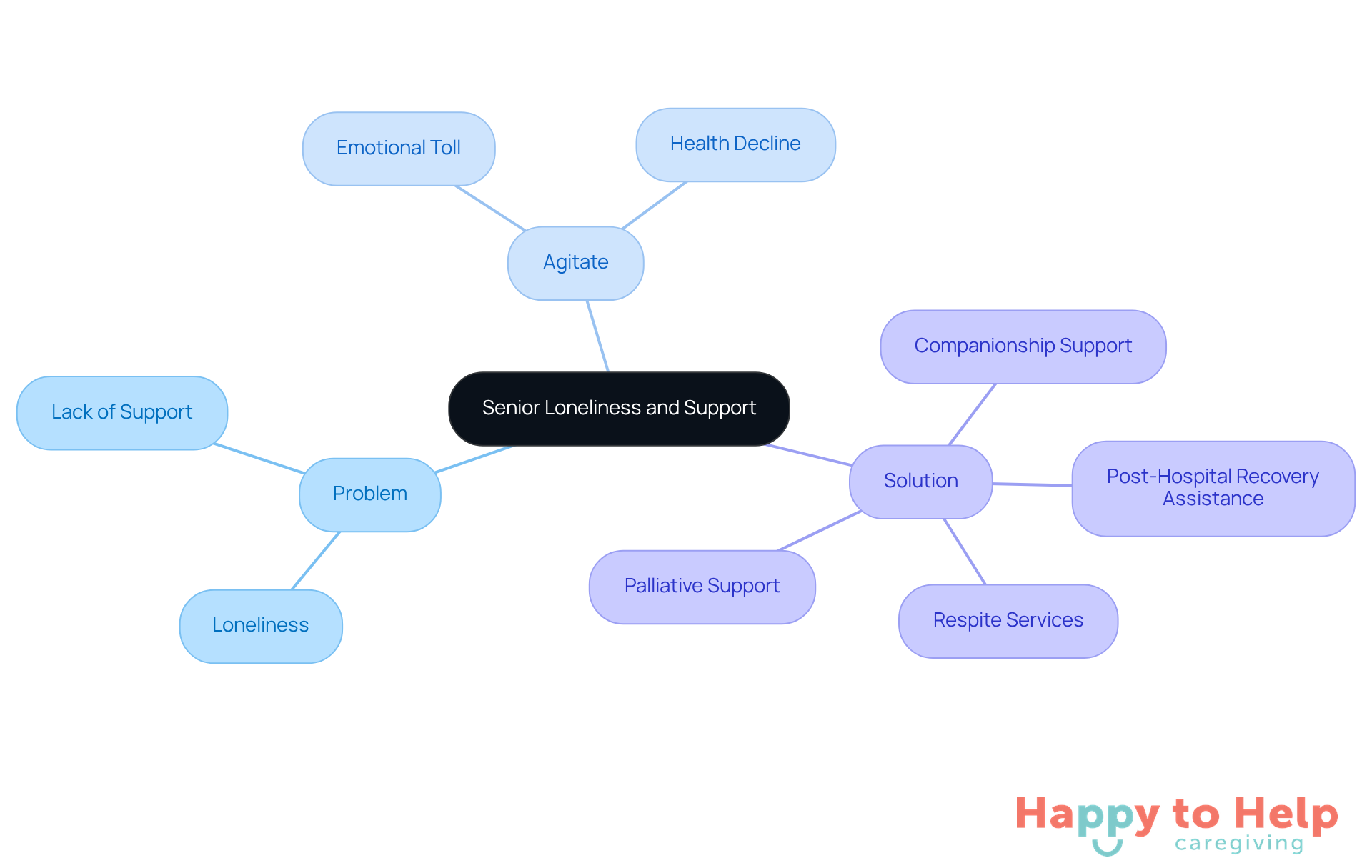
Problem: Many seniors face loneliness and a lack of support, which can significantly impact their mental and emotional well-being. Without proper assistance, they may struggle with daily tasks and feel isolated in their own homes.
Agitate: This situation can lead to a decline in health and quality of life. Seniors often find themselves unable to engage in activities they once enjoyed, exacerbating feelings of loneliness and helplessness. The emotional toll of such isolation can be profound, affecting not only the individual but also their families who worry about their loved ones.
Solution: Happy to Help Caregiving offers a range of in-home assistance services tailored to meet the unique needs of each client. Their services include:
- Companionship support
- Post-hospital recovery assistance
- Respite services
- Palliative support
All designed to enhance independence and well-being. With 24/7 availability and flexible scheduling, families can rest assured that their loved ones receive expert assistance at all times.
Caregivers provide not just physical help but also emotional support, fostering meaningful relationships that combat loneliness. For example, support providers engage clients in enjoyable activities, significantly enhancing their quality of life. This personalized approach is especially crucial for seniors with chronic health conditions or those recovering from medical procedures, allowing them to maintain routines in familiar surroundings.
The commitment to tailored support is evident in how providers adapt to each person's needs. A caregiver might assist a senior in organizing their medication schedule while also providing companionship during meals, addressing both health and emotional needs. This holistic approach promotes safety and empowers seniors to live fulfilling lives at home.
Additionally, caregivers outline daily priorities such as meals, medication times, exercise, and leisure activities, which are vital for effective 24 hour caregiver cost. Families should inquire about caregiver training and backup staffing plans to ensure comprehensive support. The emotional and psychological benefits of remaining at home, including a sense of belonging and identity, further highlight the advantages of domestic support.
National Average Cost of 24/7 In-Home Care: Understanding the Financial Commitment
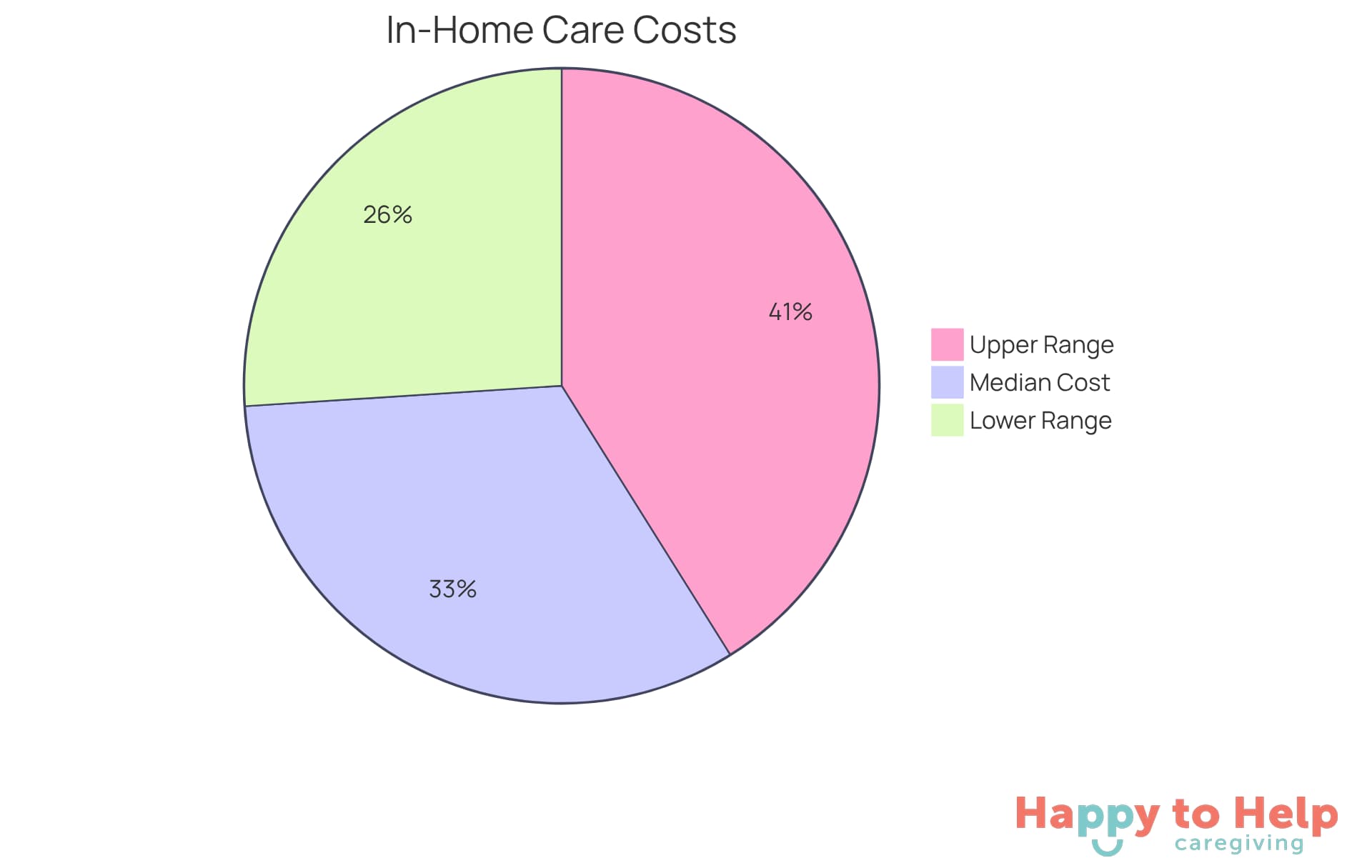
As of 2025, families face a significant challenge: the national median expense for round-the-clock personal assistance, known as the 24 hour caregiver cost, is approximately $33 per hour, which translates to about $24,006 monthly. This financial burden can vary widely based on location, the level of assistance required, and the specific services provided.
The implications of these costs are substantial. Families should be prepared for a considerable financial commitment, as the 24 hour caregiver cost can range from $19,000 to $30,000 per month depending on various factors. This reality can create stress and uncertainty for caregivers trying to provide the best support for their loved ones.
To navigate these challenges, caregivers can take several practical steps:
- Researching local service providers can help identify more affordable options.
- Exploring financial assistance programs or insurance coverage may alleviate some of the financial strain.
By being proactive and informed, families can better manage the 24 hour caregiver cost associated with personal assistance.
Flexible Payment Options for 24/7 In-Home Care: Navigating Financial Solutions
Families seeking round-the-clock assistance often face a significant problem: the financial strain associated with the 24 hour caregiver cost. This challenge can lead to anxiety and stress, making it difficult for families to focus on their loved ones.
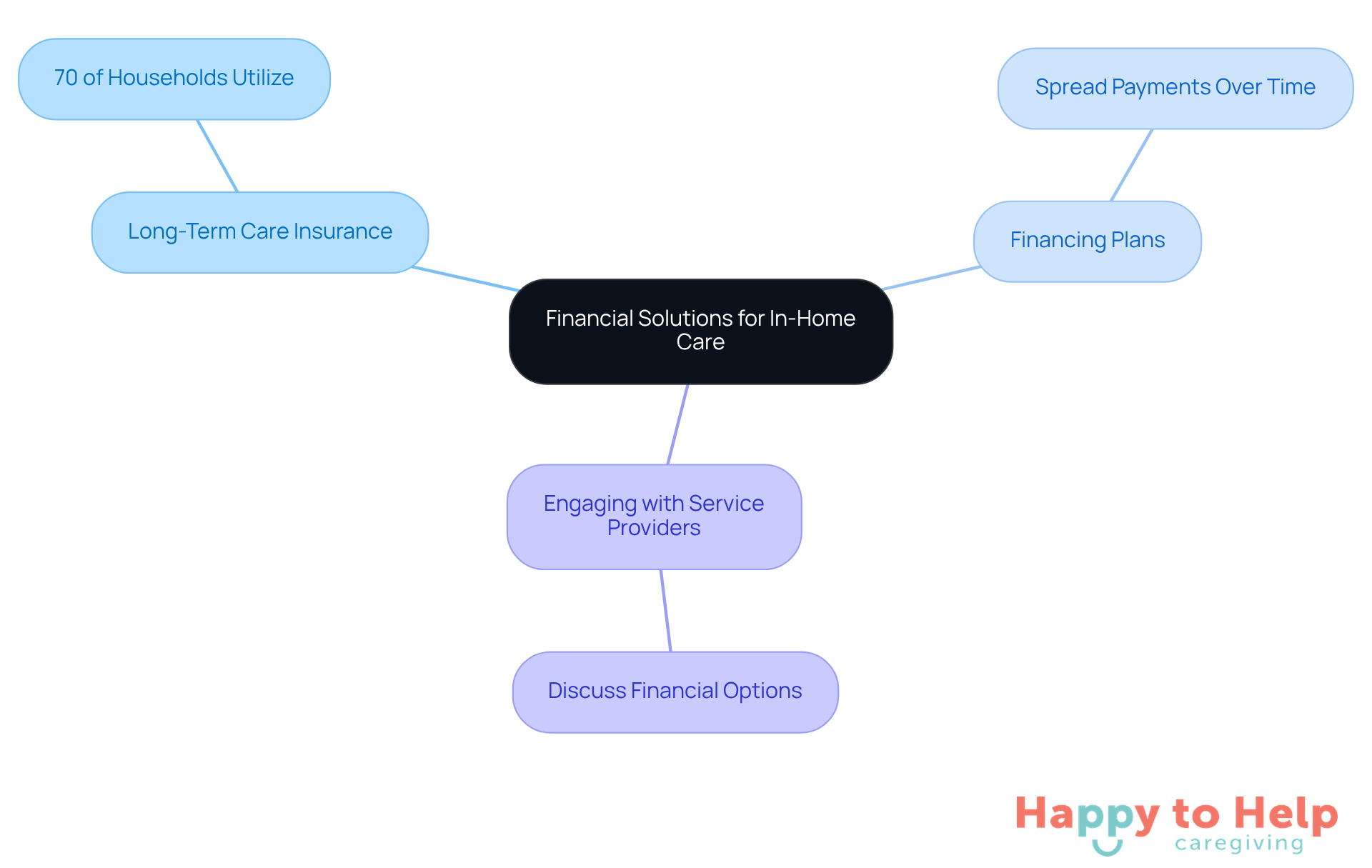
One effective solution is long-term care insurance, which approximately 70% of households utilize to help cover in-home support costs. Financial advisors, like Alice Burns, emphasize its importance, stating, "Possessing a long-term support policy can greatly alleviate the anxiety of caregiving expenses, enabling families to concentrate on their loved ones instead of finances."
In addition to insurance, some agencies provide financing plans that allow families to spread payments over time, making it easier to manage ongoing support costs, such as the 24 hour caregiver cost. It's crucial for families to engage in discussions with their service providers about these financial options to find the best fit for their unique situations.
By exploring all available alternatives, families can better navigate the challenges of caregiving expenses and ensure their loved ones receive the necessary support.
Comparative Analysis: 24/7 In-Home Care vs. Assisted Living and Nursing Homes
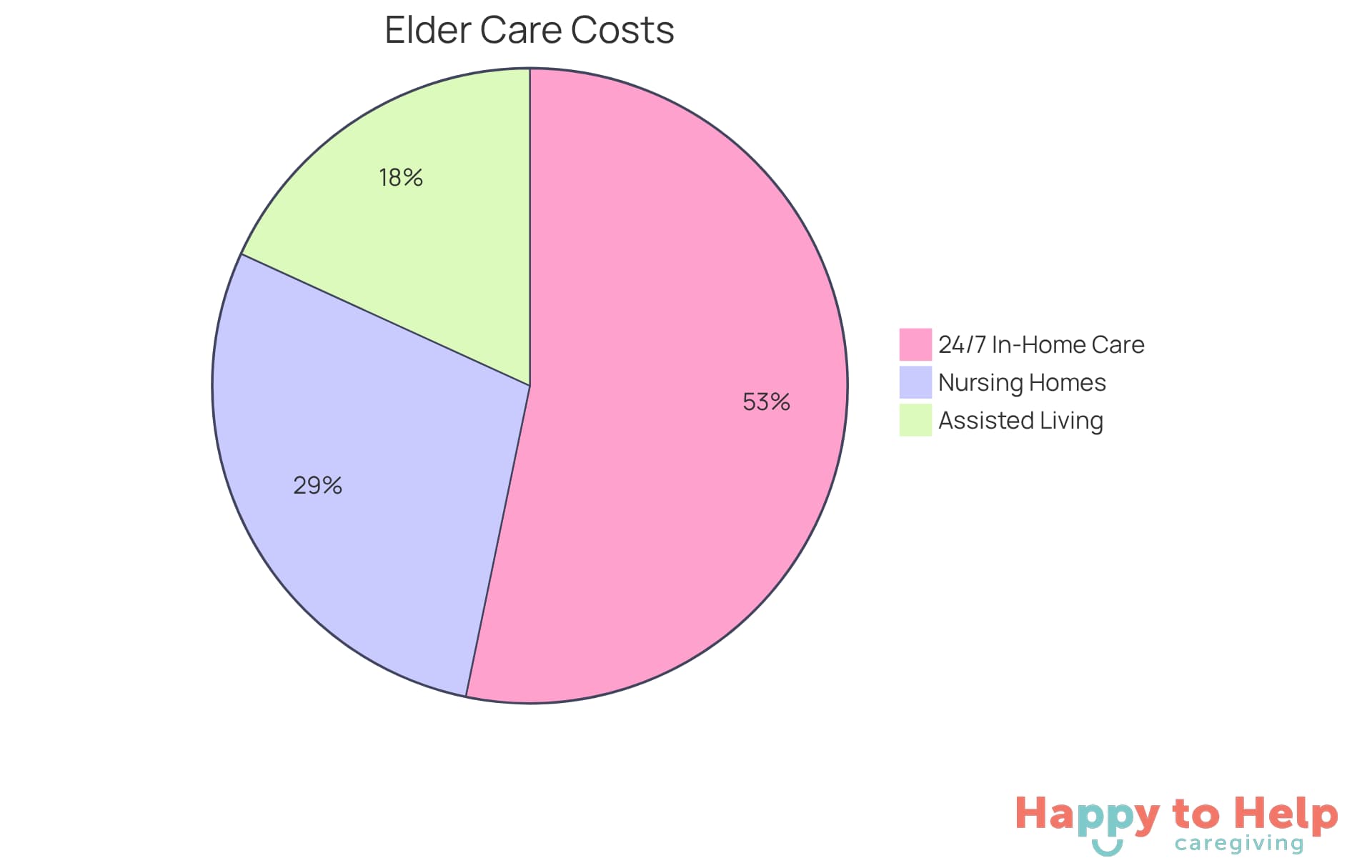
When families evaluate round-the-clock domestic assistance against assisted living and nursing facilities, they encounter a significant challenge: comprehending the 24 hour caregiver cost and the financial implications of each option. Currently, the average monthly cost for 24/7 domestic support, also known as the 24 hour caregiver cost, is approximately $17,280, which starkly contrasts with the average $5,900 for assisted living centers. This difference raises important questions about affordability and care quality.
In-home assistance presents unique advantages, such as personalized attention and the comfort of familiar surroundings. This can greatly enhance seniors' quality of life, allowing them to maintain their routines and independence. On the other hand, assisted living facilities provide structured environments with social opportunities, which can be beneficial for emotional well-being.
For families evaluating these options, understanding the details of the 24 hour caregiver cost and associated benefits is crucial. For instance, while nursing homes may offer extensive medical services, they often come with higher costs, averaging around $9,277 monthly for a semi-private room. In contrast, at-home support offers flexibility in service hours and can be tailored to individual needs, making it a potentially more affordable choice for those requiring lighter assistance.
Ultimately, the decision should align with the senior's health needs, lifestyle preferences, and financial capacity. By weighing these factors carefully, families can ensure a supportive and fulfilling living arrangement.
Included Services in 24-Hour Care: What Families Should Expect
Families often face challenges when it comes to providing adequate care for their loved ones. Many seniors struggle with daily activities, which can lead to feelings of isolation and decreased emotional health. This is where Happy to Help Caregiving steps in to make a difference.
Happy to Help Caregiving offers a comprehensive range of services that reflect the 24 hour caregiver cost, designed to meet the diverse needs of families. Services include:
- Personal support such as bathing, grooming, and dressing
- Medication management
- Meal preparation
- Mobility assistance
- Companionship
Caregivers are trained not just to assist physically but also to provide emotional support, engaging clients in enjoyable activities that foster a sense of well-being.
This holistic approach addresses both physical and emotional needs, which is crucial for seniors. Research shows that patients receiving home health services experience an 80.2% improvement in daily living activities compared to those without assistance. This statistic highlights the significant role emotional support plays in enhancing overall health and happiness.
By choosing Happy to Help Caregiving, families can ensure their loved ones receive the support they need to thrive. This not only improves the quality of life for seniors but also alleviates the burden on family caregivers, allowing them to focus on spending quality time with their loved ones.
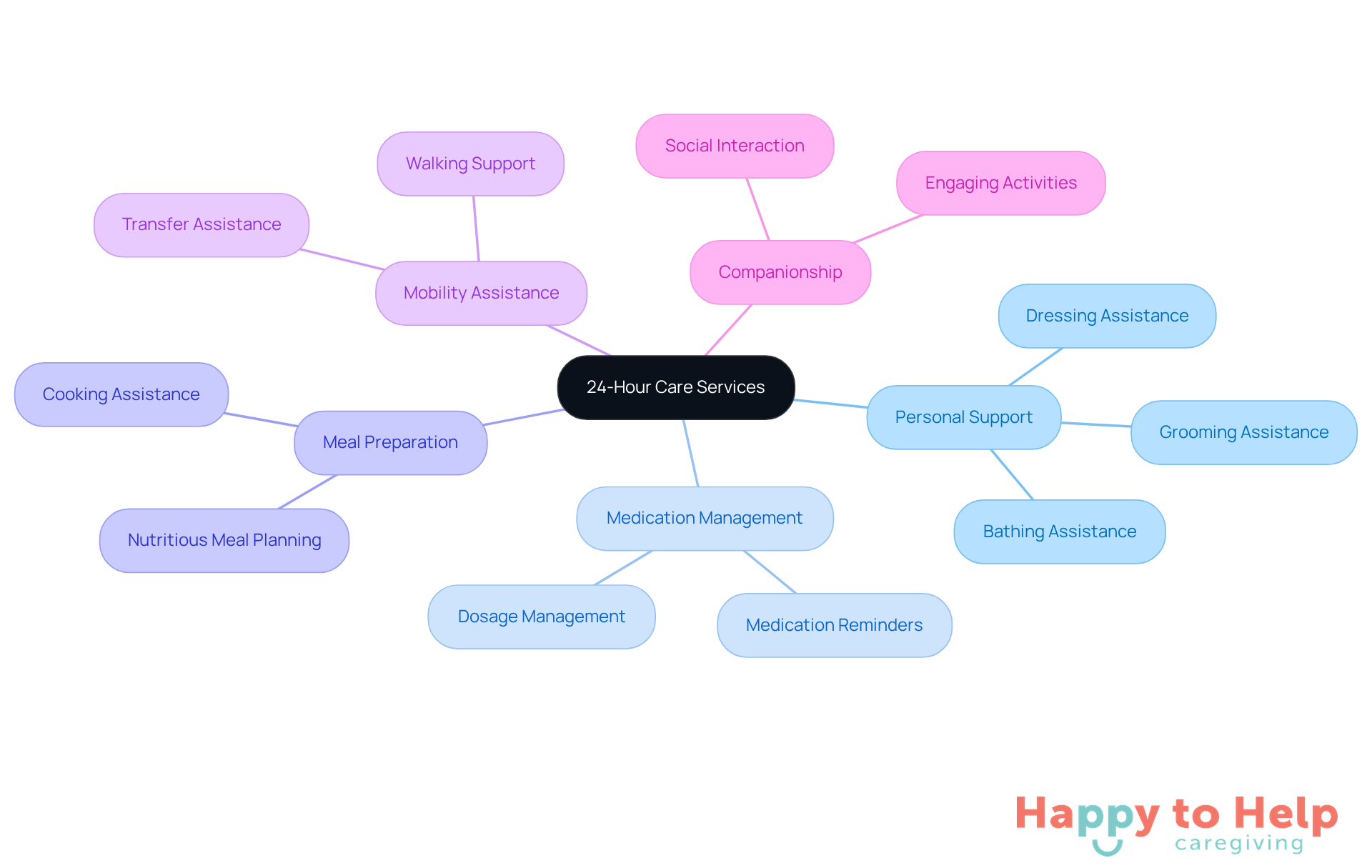
Regional Cost Variations: How Location Affects 24-Hour Caregiver Expenses
The 24 hour caregiver cost for at-home assistance can vary significantly depending on the area. This fluctuation presents a challenge for families trying to budget for care. Urban areas often experience higher rates, including the 24 hour caregiver cost, due to increased demand and a higher cost of living. For example, the 24 hour caregiver cost in states like California and New York may soar to $40 per hour, while rural areas might offer more affordable options, closer to $25 per hour.
Understanding these differences is crucial for families. Without proper research, they may find themselves unprepared for the financial implications of caregiving. To navigate this issue effectively, families should take the time to research local rates. This proactive approach will provide a clearer picture of what to expect in their area, allowing for better financial planning and peace of mind.
Insurance Coverage for 24/7 In-Home Care: What Families Need to Know
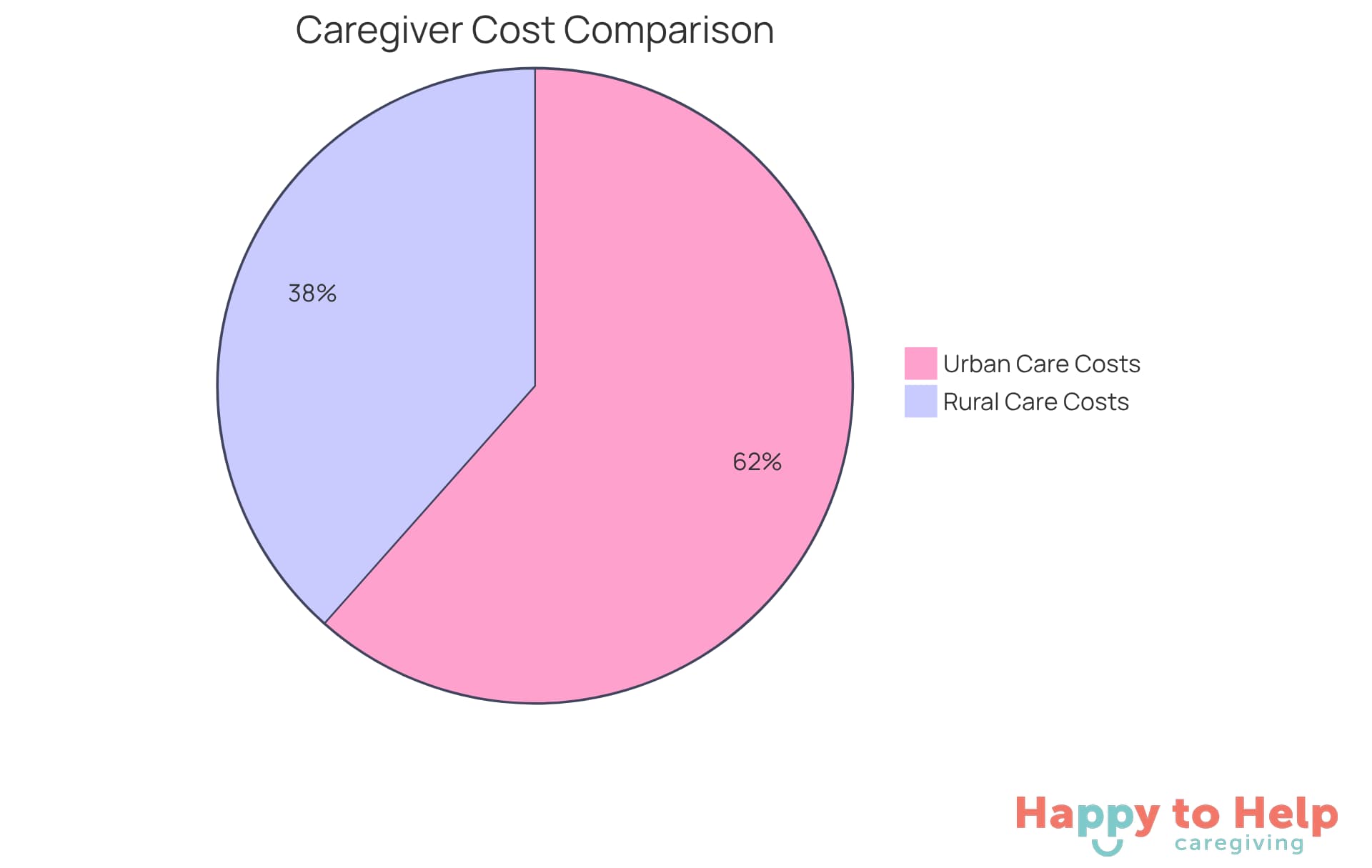
Navigating insurance coverage for the 24 hour caregiver cost can be challenging for families. The problem lies in the fact that Medicare typically does not cover long-term at-home support, leaving many caregivers uncertain about their options. This lack of clarity about the 24 hour caregiver cost can lead to unexpected out-of-pocket expenses, adding stress to an already demanding situation.
To address this issue, it's essential for families to understand their coverage options. Medicaid may provide assistance for qualified individuals, which can alleviate some financial burdens. Additionally, certain long-term assistance insurance policies might cover a portion of the expenses.
To ensure comprehensive care, families should take the time to carefully review their insurance policies. Consulting with insurance providers can clarify what is covered and help identify any potential out-of-pocket costs. By being proactive and informed, caregivers can better navigate the complexities of insurance coverage and understand the 24 hour caregiver cost to secure the support they need.
Personalized Care Plans: Tailoring 24-Hour Care to Individual Needs
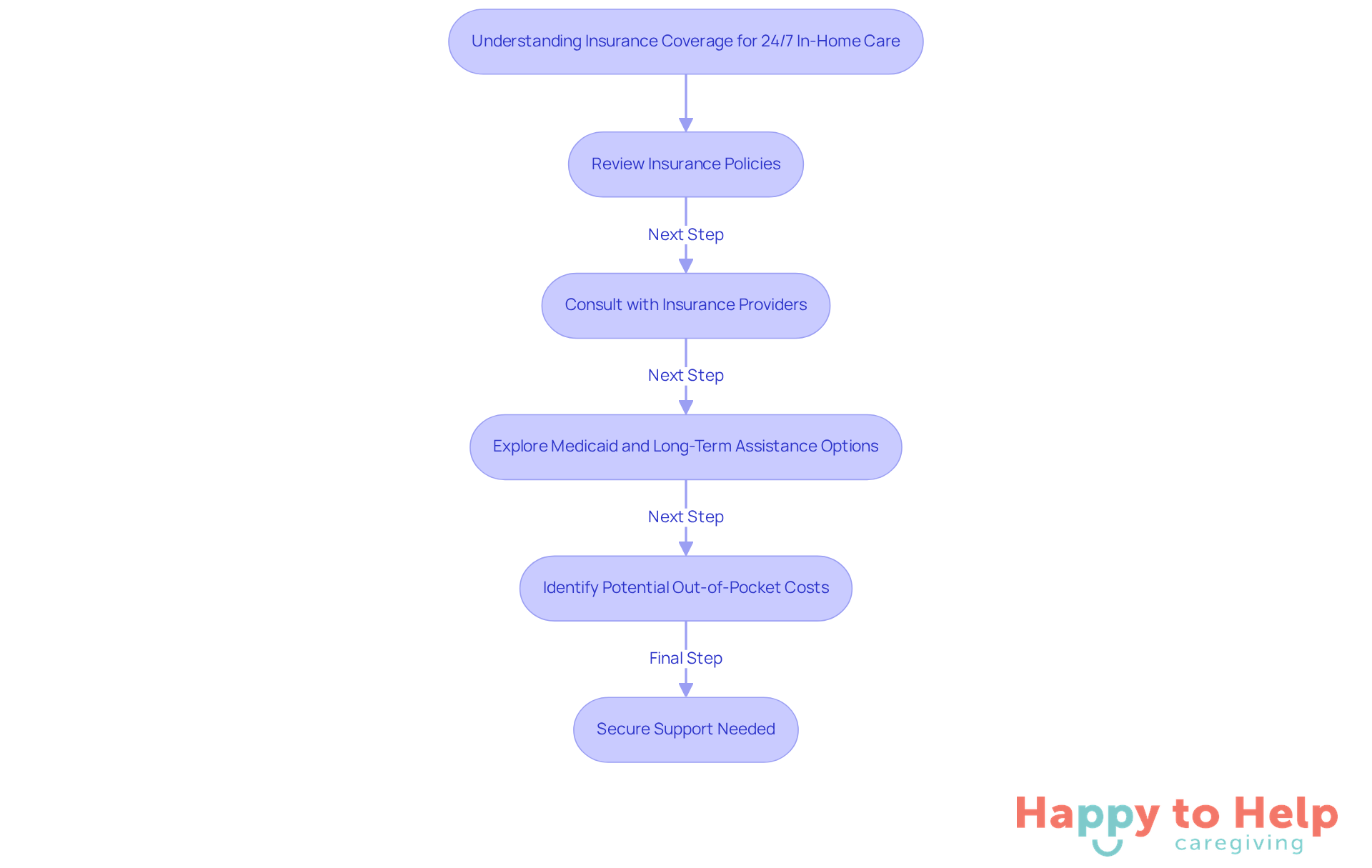
Customized support plans are crucial for providing efficient 24-hour in-home assistance to seniors while considering the 24 hour caregiver cost. Without these tailored plans, caregivers face significant challenges in meeting the unique needs of their clients, which can lead to increased anxiety and feelings of loneliness among residents.
The implications of inadequate support are profound. Seniors may struggle with daily routines and feel isolated, impacting their emotional health. Statistics indicate that personalized support plans can enhance satisfaction and improve quality of life by addressing these emotional needs. For instance, a well-crafted evaluation might include discussions about a senior's preferred activities, dietary restrictions, and social interaction preferences, ensuring that support is not only appropriate but also enriching.
To tackle these challenges, caregivers should prioritize flexibility in support plans. Care coordinators stress that these plans must adapt to the evolving needs and preferences of seniors. By actively involving families in the planning process, providers can create a supportive environment that respects personal choices and fosters a sense of control over daily life.
Ultimately, effective support plans are customized to the individual needs of each senior, taking into account the 24 hour caregiver cost. This tailored approach leads to improved health outcomes and a higher quality of life, making it essential for caregivers to implement these strategies.
Caregiver Experience and Training: Impact on Cost and Quality of Care
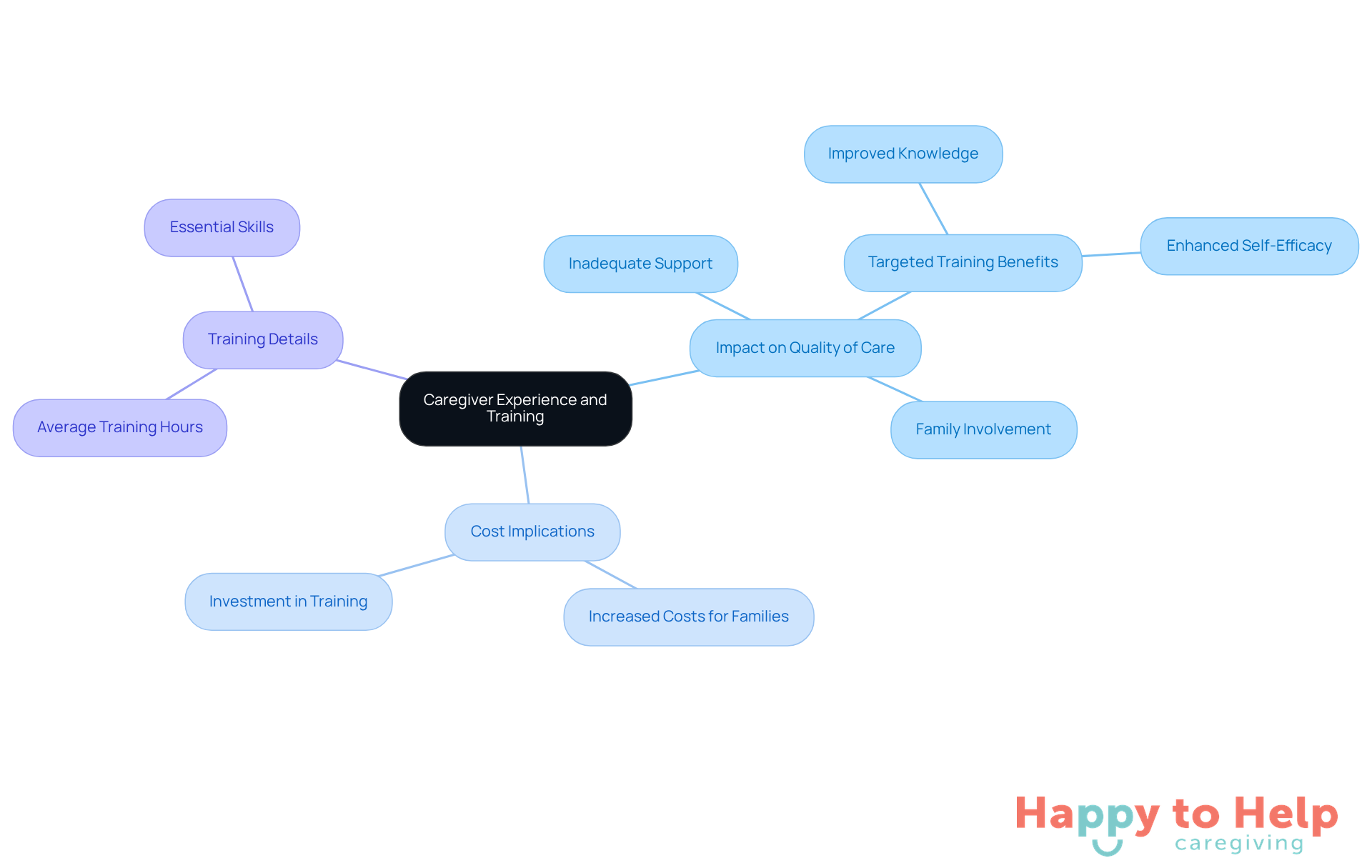
The experience and training of support providers present a significant challenge in ensuring quality assistance. Many caregivers lack specialized training, which can lead to inadequate support for individuals with complex conditions like dementia. This gap in training not only affects the quality of care but can also lead to increased 24 hour caregiver costs for families seeking effective help.
Studies show that caregivers who undergo targeted training, particularly in areas such as dementia support or palliative care, demonstrate notable improvements in their knowledge and self-efficacy. For instance, trained providers are better equipped to manage the complexities of dementia, leading to more effective care. Families should actively inquire about the qualifications of support workers and the specific training programs they have completed. This proactive approach ensures that they select services that prioritize quality support.
On average, attendants in residential support environments receive about 35 hours of training, focusing on essential skills that enhance their ability to assist clients effectively. Investing in training not only improves the quality of assistance but also leads to better outcomes for both providers and recipients. By prioritizing trained support, families can significantly enhance the care experience for their loved ones.
Exploring Alternative Care Options: Cheaper Alternatives to 24-Hour In-Home Care
For families facing the high costs of 24 hour caregiver cost, the challenge is clear: finding affordable alternatives. This situation can lead to stress and burnout for primary caregivers, who often struggle to balance their responsibilities with the 24 hour caregiver cost.
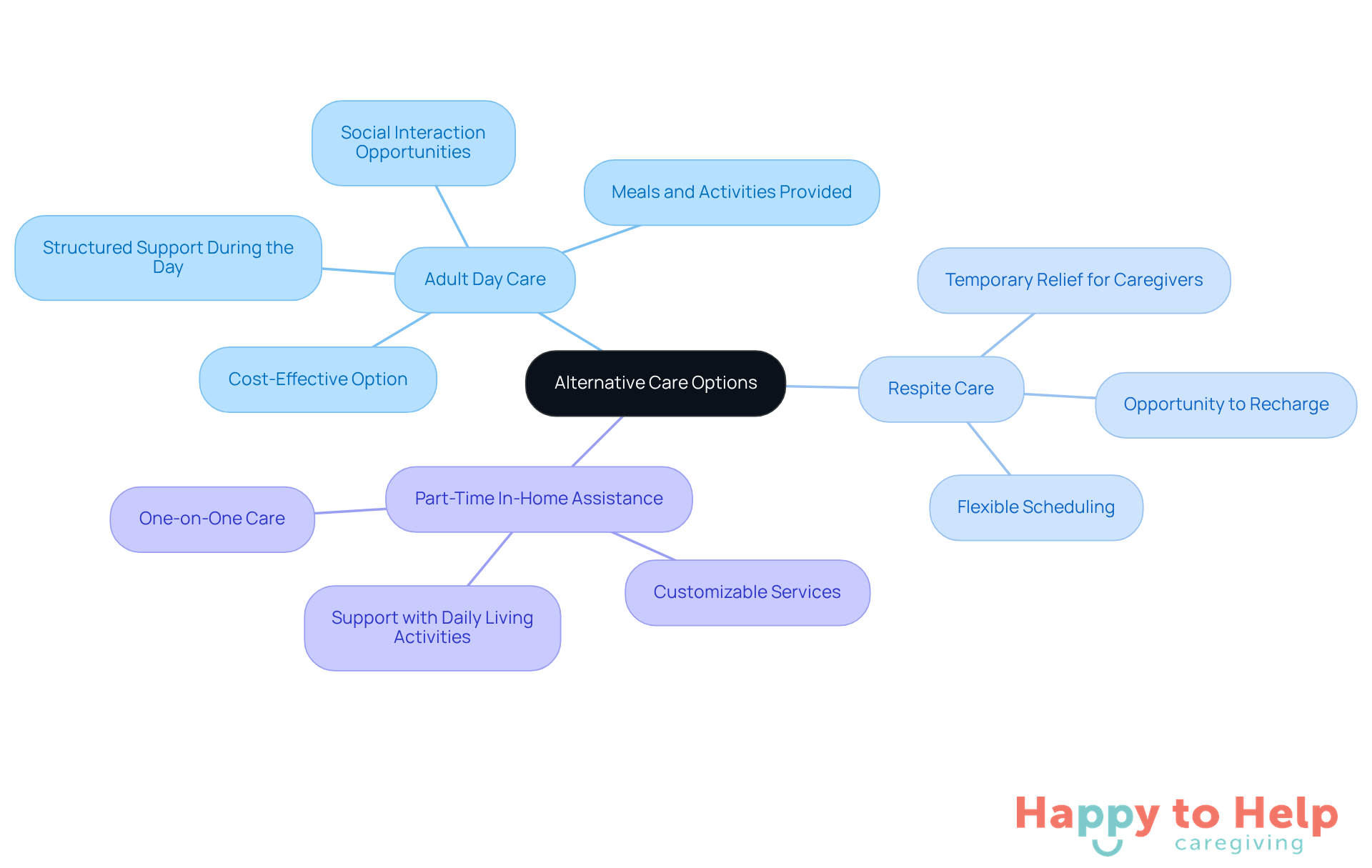
Fortunately, there are viable solutions available. Options like adult day programs, respite services, and part-time in-home assistance can significantly alleviate these pressures.
- Adult day care offers structured support during the day, allowing caregivers to work or take necessary breaks.
- Respite care provides temporary relief, giving primary caregivers a much-needed chance to recharge.
By exploring these alternatives, families can reduce costs while ensuring that their loved ones receive the necessary support. These options not only help manage expenses but also enhance the quality of care for those in need.
Moving Forward with Insights on 24 Hour Caregiver Cost for
Understanding the complexities of 24-hour caregiver costs is essential for families facing the challenges of providing care for their loved ones. The significant financial commitment involved is highlighted by median costs reaching approximately $33 per hour or about $24,006 monthly. This reality emphasizes the need for families to be informed about various factors influencing these costs, such as:
- Location
- Level of care required
- Available financial solutions
The multifaceted nature of in-home care services presents a problem for many families. The emotional and psychological benefits of personalized support are crucial, yet the necessity of tailored care plans can add to the financial burden. Exploring alternative care options and understanding insurance coverage can alleviate some of these costs, providing families with a broader range of choices to ensure their loved ones receive the necessary support.
To tackle these challenges, proactive engagement in the caregiving process is vital. Families should:
- Research local rates
- Understand available financial assistance
- Evaluate care options
By doing so, they can make informed decisions that prioritize both the well-being of their loved ones and their own peace of mind. Embracing these insights empowers families to navigate the complexities of caregiving, ensuring that seniors receive compassionate and effective support while managing associated costs effectively.
https://iframe.tely.ai/cta/eyJhcnRpY2xlX2lkIjogIjY5MmY5MWFkNWE2YzBkMzU2MDcwMDMwNiIsICJjb21wYW55X2lkIjogIjY4ZWU1ZGNhNzMxNzYyNTU3ZjNjOTVjMSIsICJpbmRleCI6IG51bGwsICJ0eXBlIjogImFydGljbGUifQ==Frequently Asked Questions
What challenges do seniors face that Happy to Help Caregiving addresses?
Seniors often experience loneliness and a lack of support, which can lead to a decline in health and quality of life. This isolation can prevent them from engaging in activities they once enjoyed, affecting their mental and emotional well-being.
What services does Happy to Help Caregiving offer?
Happy to Help Caregiving offers a range of in-home assistance services, including companionship support, post-hospital recovery assistance, respite services, and palliative support, all designed to enhance independence and well-being.
How does Happy to Help Caregiving ensure support is available?
The service is available 24/7 with flexible scheduling, allowing families to be assured that their loved ones receive expert assistance at all times.
How do caregivers at Happy to Help Caregiving support seniors emotionally?
Caregivers provide emotional support by fostering meaningful relationships and engaging clients in enjoyable activities, which helps combat feelings of loneliness.
What is the national average cost of 24/7 in-home care as of 2025?
The national median expense for round-the-clock personal assistance is approximately $33 per hour, translating to about $24,006 monthly.
What factors influence the cost of 24/7 in-home care?
The cost can vary based on location, the level of assistance required, and the specific services provided, with monthly expenses ranging from $19,000 to $30,000.
What financial strategies can families use to manage caregiving costs?
Families can research local service providers for more affordable options and explore financial assistance programs or insurance coverage to alleviate some financial strain.
How can long-term care insurance help families with caregiving expenses?
Long-term care insurance can cover in-home support costs, helping to alleviate anxiety about caregiving expenses and allowing families to focus more on their loved ones.
Are there payment options available for families needing 24/7 in-home care?
Yes, some agencies provide financing plans that allow families to spread payments over time, making it easier to manage ongoing support costs.
What should families discuss with service providers regarding financial options?
Families should engage in discussions with their service providers about available financial options to find the best fit for their unique situations.
List of Sources
- Happy to Help Caregiving: Comprehensive 24/7 In-Home Care Services
- Home (https://homehealthcarenews.com)
- The Benefits of 24-Hour Home Care for Seniors Living Alone (https://lifesathomecare.com/the-benefits-of-24-hour-home-care-for-seniors-living-alone)
- FastStats (https://cdc.gov/nchs/fastats/home-health-care.htm)
- Around-the-Clock Support: The Benefits of 24-Hour Home Care for Seniors (https://afcsnc.com/around-the-clock-support-the-benefits-of-24-hour-home-care-for-seniors)
- Family caregivers prefer in-home care over senior living, new industry report finds (https://mcknightshomecare.com/news/family-caregivers-prefer-in-home-care-over-senior-living-new-industry-report-finds)
- National Average Cost of 24/7 In-Home Care: Understanding the Financial Commitment
- Medicare Guidance Simplified | Chapter (https://askchapter.org/magazine/senior-health-wellness/home/how-much-does-24-7-in-home-care-cost)
- Home Care Costs in 2025: A State-by-State Guide (https://aplaceformom.com/caregiver-resources/articles/in-home-care-costs)
- How Much Does 24/7 In-Home Care Cost? | The Senior List (https://theseniorlist.com/caregiving/24-7-in-home-care)
- 24/7 In-Home Care Costs in 2025 - Assisted Living Magazine (https://assistedlivingmagazine.com/24-7-in-home-care-costs-in-2025)
- 24-hour In-home Care Cost In The US (2025)? - Home Care Agency | Global One Home Care Boston (https://globalonehomecare.com/24-7-in-home-care-cost)
- Flexible Payment Options for 24/7 In-Home Care: Navigating Financial Solutions
- 24/7 In-Home Care Costs in 2025 - Assisted Living Magazine (https://assistedlivingmagazine.com/24-7-in-home-care-costs-in-2025)
- How to Pay for a Home Care Worker (https://aarp.org/caregiving/financial-legal/afford-a-homecare-worker)
- How to Finance Home Care Services - Home Matters (https://homematters.com/paying-for-home-care)
- Paying for 24-Hour Care | How Much Is It & How Do I Pay? (https://corewoodcare.com/news/paying-for-247-care)
- Payment Rates for Medicaid Home Care: States’ Responses to Workforce Challenges | KFF (https://kff.org/medicaid/payment-rates-for-medicaid-home-care-states-responses-to-workforce-challenges)
- Comparative Analysis: 24/7 In-Home Care vs. Assisted Living and Nursing Homes
- The Cost of Assisted Living vs In-Home Care (https://courtyardsl.com/resources/blog/cost-assisted-living-vs-in-home-care)
- Cost of Assisted Living vs. In-Home Care: Key Considerations (https://carescout.com/resources/cost-of-assisted-living-vs-in-home-care-key-considerations)
- The Cost of Assisted Living vs. In-Home Care: What to Consider (https://thehighpointresidence.com/blog/the-cost-of-assisted-living-vs-in-home-care-what-to-consider)
- What Is the Cost of Assisted Living vs. Home Care? - Cappella of Grand Junction (https://cappellagrandjunction.com/blog/what-is-the-cost-of-assisted-living-vs-home-care)
- Cost of Long Term Care by State | Cost of Care Report | Carescout (https://carescout.com/cost-of-care)
- Included Services in 24-Hour Care: What Families Should Expect
- 52 Eye-Opening Home Health Statistics: Insights for 2025 (https://boosthomehealth.com/home-health-statistics)
- FastStats (https://cdc.gov/nchs/fastats/home-health-care.htm)
- How to Know When 24/7 In-Home Care is Right For You (https://corewoodcare.com/news/when-to-consider-247-care)
- 24-Hour Home Care | BrightStar Care | BrightStar Care (https://brightstarcare.com/about-brightstar-care/resources/benefits-of-24-hour-home-care)
- 10 Key Factors Affecting the Cost of 24-Hour Nursing Care at Home - Happy To Help (https://happytohelpcaregiving.com/blog/10-key-factors-affecting-the-cost-of-24-hour-nursing-care-at-home)
- Regional Cost Variations: How Location Affects 24-Hour Caregiver Expenses
- Geography Matters: Location plays key role in long-term care cost (https://insurancenewsnet.com/innarticle/geography-matters-location-plays-key-role-in-long-term-care-cost)
- 9 Key Factors Influencing 24-Hour Home Health Care Cost | Best Care Nurses Registry (https://bestcare.net/9-key-factors-influencing-24-hour-home-health-care-cost)
- Home Care Costs in 2025: A State-by-State Guide (https://aplaceformom.com/caregiver-resources/articles/in-home-care-costs)
- 24/7 In-Home Care Costs in 2025 - Assisted Living Magazine (https://assistedlivingmagazine.com/24-7-in-home-care-costs-in-2025)
- Insurance Coverage for 24/7 In-Home Care: What Families Need to Know
- House Passes Bill That Would Devastate Health Coverage for Millions in Medicaid and Medicare - Medicare Rights Center (https://medicarerights.org/medicare-watch/2025/05/22/house-passes-bill-that-would-devastate-health-coverage-for-millions-in-medicaid-and-medicare)
- How cutting Medicaid would affect long-term care and family caregivers (https://npr.org/2025/04/14/g-s1-59261/medicaid-cuts-long-term-care-caregivers)
- The Changes Coming to the ACA, Medicaid, and Medicare | Johns Hopkins Bloomberg School of Public Health (https://publichealth.jhu.edu/2025/the-changes-coming-to-the-aca-medicaid-and-medicare)
- Long-term care statistics 2025 (https://singlecare.com/blog/news/long-term-care-statistics)
- Medicaid cuts threaten home and community-based care (https://naco.org/news/medicaid-cuts-threaten-home-and-community-based-care)
- Personalized Care Plans: Tailoring 24-Hour Care to Individual Needs
- The Importance of Personalized Care Plans in Home Care (https://anodyne-services.com/2025/01/14/the-importance-of-personalized-care-plans-in-home-care)
- Personalizing Care Plans for Seniors: Why One Size Doesn't Fit All (https://promedcareinc.com/personalizing-care-plans-for-seniors-why-one-size-doesnt-fit-all)
- The Importance of Personalized Care Plans in Home Health Services (https://regencyhcs.com/blog/the-importance-of-personalized-care-plans-in-home-health-services)
- The Importance of Personalized Care Plans when Aging in Place (https://kendalathome.org/blog/the-importance-of-personalized-care-plans-when-aging-in-place)
- Importance of Personalized Senior Home Care in Burlington NC (https://wisdomseniorcare.com/the-importance-of-personalized-care-plans-for-seniors)
- Caregiver Experience and Training: Impact on Cost and Quality of Care
- CareAcademy Announces Innovative Research Initiative with the Center for Community Health & Evaluation of Kaiser Permanente Washington to Evaluate Impact of Caregiver Training on Health Outcomes (https://businesswire.com/news/home/20250506036771/en/CareAcademy-Announces-Innovative-Research-Initiative-with-the-Center-for-Community-Health-Evaluation-of-Kaiser-Permanente-Washington-to-Evaluate-Impact-of-Caregiver-Training-on-Health-Outcomes)
- The ROI of Caregiver Training (https://homehealthcarenews.com/2024/01/the-roi-of-caregiver-training)
- 2023 Caregiver Statistics (https://ourparents.com/senior-health/2023-caregiver-statistics)
- Competency‐based training boosts dementia knowledge and skills in home care workers - PMC (https://pmc.ncbi.nlm.nih.gov/articles/PMC12179336)
- The Ripple Effect of Family Caregiver Education on Healthcare Costs (https://ageucate.com/blog/the-ripple-effect-of-family-caregiver-education-on-healthcare-costs)
- Exploring Alternative Care Options: Cheaper Alternatives to 24-Hour In-Home Care
- Adult Day Care vs. Private-Duty Home Care (https://caringseniorservice.com/blog/adult-day-care-vs-private-duty-home-care)
- The care crisis: Eldercare collides with childcare (https://kpmg.com/us/en/articles/2025/february-2024-the-care-crisis-eldercare.html)
- Adult Day Care Costs: Average Cost Data for 2025 (https://seniorliving.org/adult-day-care/costs)
- Adult day care can benefit older adults and their caregivers - Harvard Health (https://health.harvard.edu/staying-healthy/adult-day-care-can-benefit-older-adults-and-their-caregivers)