
What You Need to Know About Insights on Live-In 24 Hour Care
Caregiving presents a complex web of challenges, often leaving families feeling overwhelmed and uncertain about how to provide the best support for their loved ones. This situation is particularly pressing as the need for reliable assistance grows, especially for those requiring live-in, 24-hour care. Families must understand the options available to them.
The implications of these challenges can be significant. Families may struggle with stress, anxiety, and the fear of not being able to meet their loved ones' needs. This uncertainty can lead to poor decision-making, which ultimately affects the quality of care provided.
To navigate these choices effectively, this article delves into ten key insights that illuminate the benefits and considerations of live-in care services. By understanding these insights, families can make informed decisions that enhance the quality of life for their loved ones while alleviating the stress on caregivers. How can families ensure they are making choices that truly support their loved ones? The answers lie in exploring the available options and understanding the nuances of live-in care.
Happy to Help Caregiving: Comprehensive Live-In Care Services
Caregiving can be a challenging experience, often leaving families feeling overwhelmed and uncertain about how to provide the best support for their loved ones. The emotional and physical demands of caregiving can lead to stress and burnout, making it crucial to find reliable assistance.
Happy to Help Caregiving addresses these challenges by offering a range of services for individuals who live in 24 hour care, tailored to meet their unique needs. These services include:
- Companionship support
- Post-hospital recovery assistance
- Respite services
- Palliative support
Each service is designed to promote independence and well-being, ensuring clients receive the support they need in the comfort of their own homes. With a commitment to ensuring that loved ones live in 24 hour care and flexible scheduling options, families can feel secure knowing they are well cared for at all times. This comprehensive approach not only alleviates the burden on caregivers but also enhances the quality of life for those receiving care.
24-Hour Care: Continuous Support for Critical Needs
The problem is that individuals who require constant supervision due to chronic health conditions or recovery from surgery often need to live in 24 hour care. Without this support, the risks increase significantly. For instance, one in four adults over 65 experiences a fall each year, leading to 3 million older adults visiting the emergency room annually for fall-related injuries. This alarming statistic underscores the need for dedicated support to enhance safety at home.
The Implications: The absence of continuous support not only jeopardizes the safety of seniors but also heightens family concerns. Families often worry about their loved ones being alone, which can lead to stress and anxiety. Knowing that a support provider is always available to respond to emergencies, manage medications, and assist with daily activities can provide much-needed peace of mind.
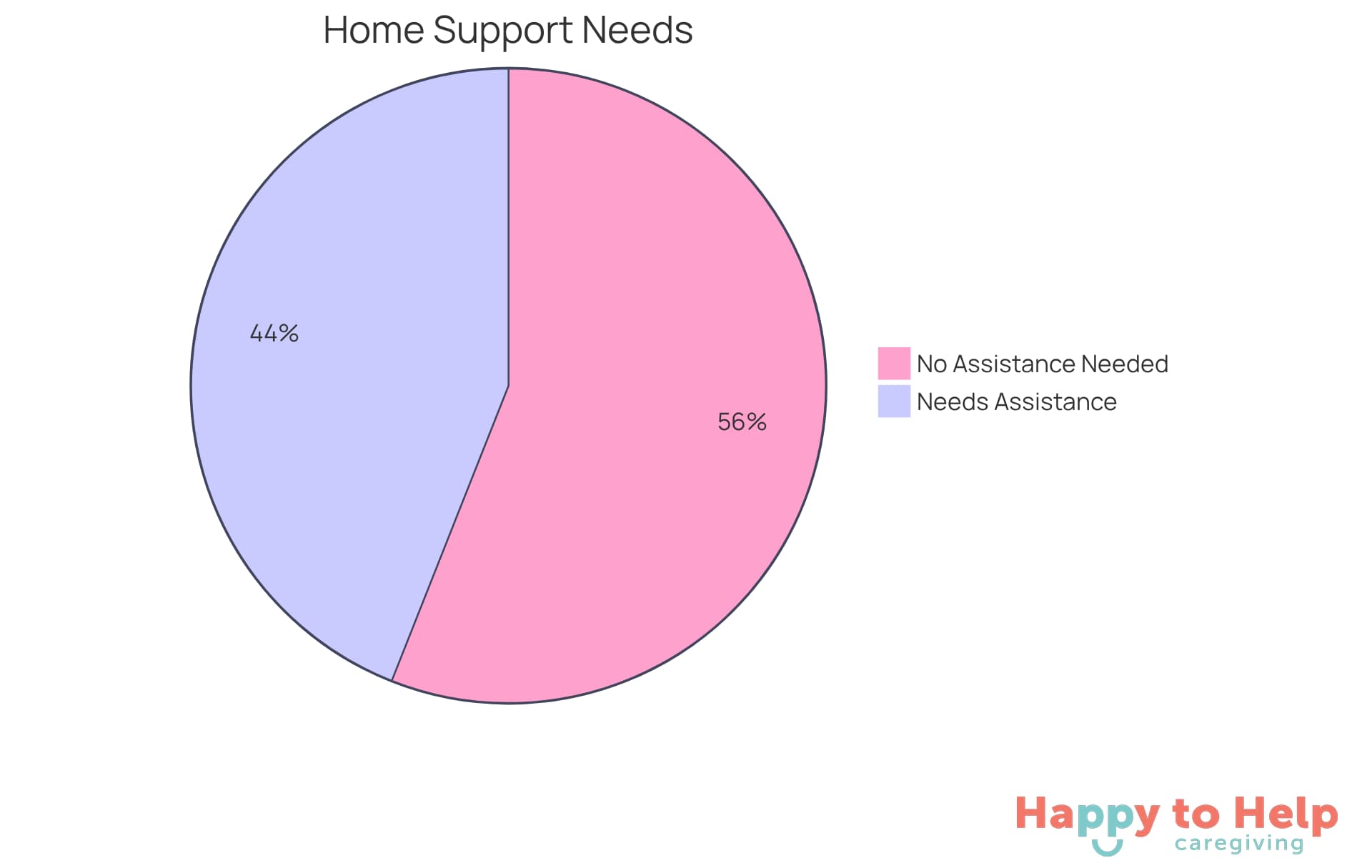
The Solution: Real-world examples demonstrate the effectiveness of services that allow individuals to live in 24 hour care. Seniors recovering from procedures like hip replacements often report faster recovery times and higher satisfaction levels when assisted by in-home support. Caregivers are crucial in managing chronic health conditions, ensuring adherence to medication regimens, and facilitating daily tasks such as bathing and meal preparation. In fact, 44% of home support recipients require assistance with at least one daily activity. This comprehensive support system fosters a sense of security and independence, allowing seniors to thrive in their familiar surroundings.
Overnight Care: Temporary Assistance for Nighttime Needs
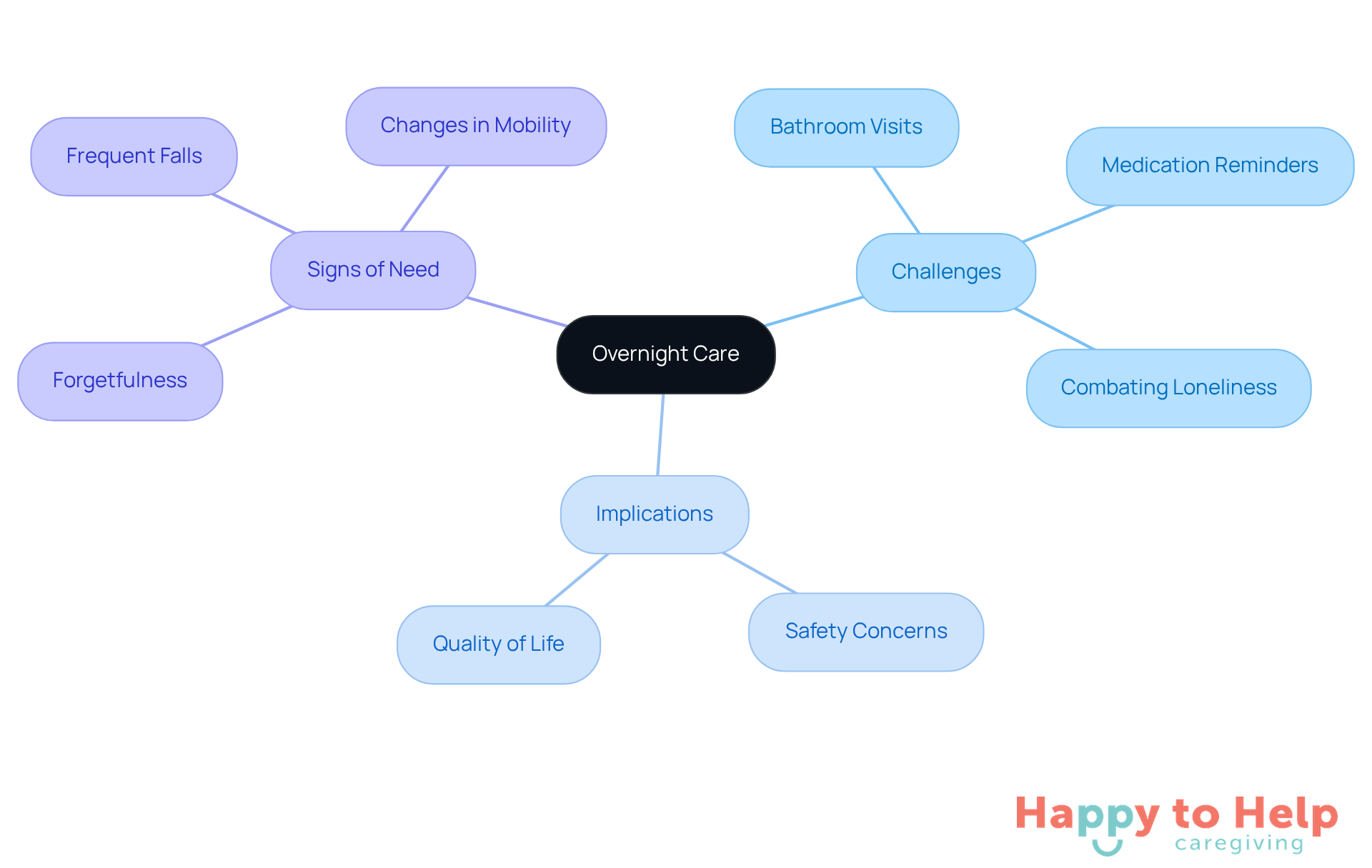
Overnight care presents a significant challenge for seniors who need assistance during the night. Many elderly individuals struggle with activities like bathroom visits, medication reminders, and combating loneliness. This issue is particularly pressing for those with mobility challenges, who may require immediate help at night.
The implications of inadequate overnight support can be severe. Families often worry about their loved ones' safety and comfort, especially when a trained attendant is not available to address nighttime concerns. Caregivers highlight that their presence not only meets practical needs but also fosters a sense of security for seniors. The companionship offered during these hours can greatly enhance the quality of life, reducing anxiety and promoting restful sleep.
To address these challenges, families should consider professional overnight assistance. This service not only supports the elderly but also alleviates pressure on family caregivers, allowing them to recharge and focus on their own well-being. Statistics indicate that 40% to 70% of seniors experience sleep issues, underscoring the necessity of overnight care. Additionally, caregivers juggling multiple responsibilities may find themselves exhausted, making overnight support even more crucial.
Signs that an elder might need overnight assistance include:
- Forgetfulness
- Frequent falls
- Changes in mobility
Recognizing these indicators can prompt families to seek professional help, ensuring their loved ones receive the care they need.
Live-In Care vs. 24-Hour Care: Key Operational Differences
Choosing the right type of care for a loved one can be challenging. Families often face the dilemma of selecting between live-in support and live in 24 hour care. This decision is crucial, as it directly impacts the quality of care and the individual's well-being.
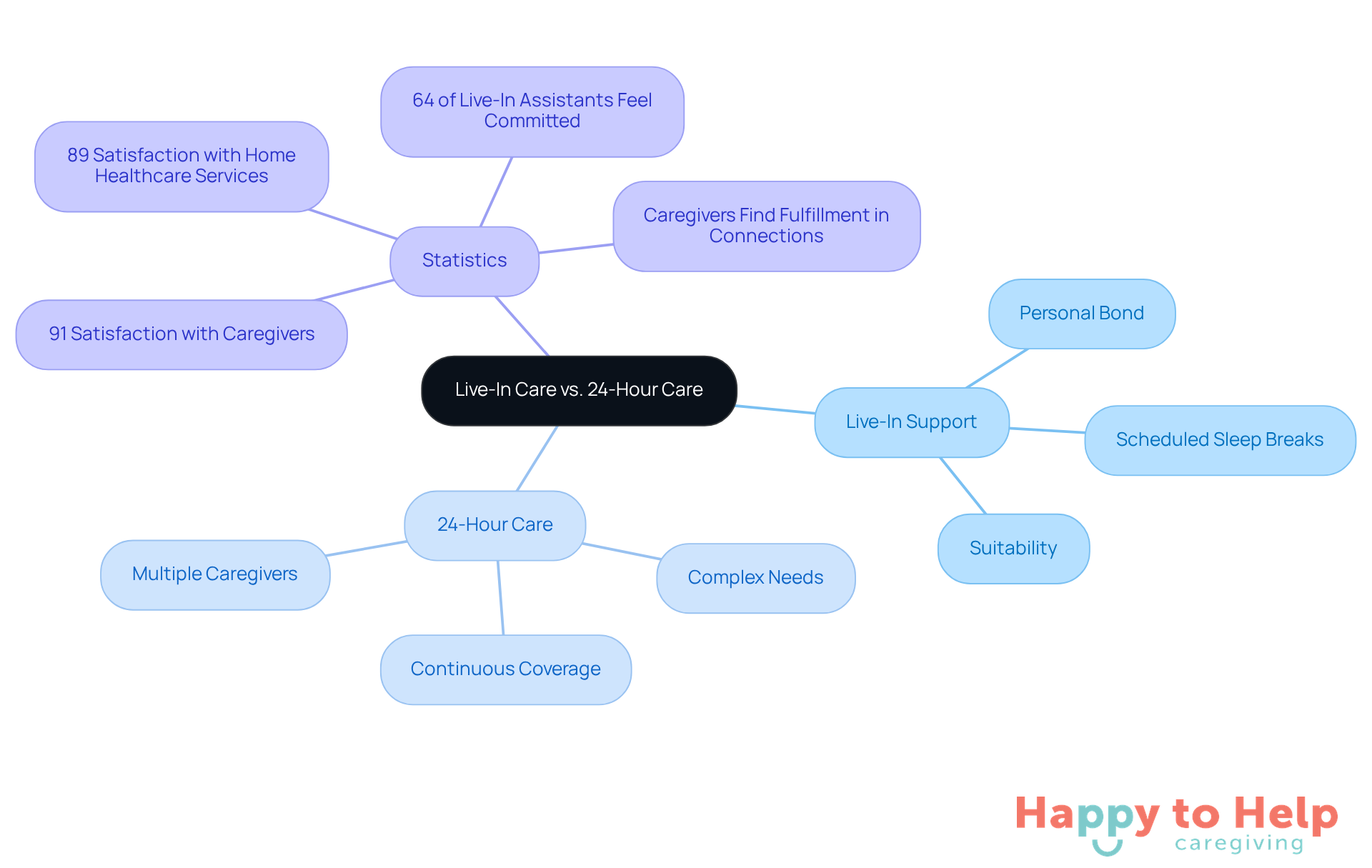
Live-in support is a form of care where a caregiver provides live in 24 hour care by residing in the home and assisting day and night while taking scheduled sleep breaks. This arrangement fosters a personal bond, allowing the caregiver to develop a deeper understanding of the individual's needs and preferences. However, it may not be suitable for everyone, especially those requiring constant supervision.
On the other hand, 24-hour assistance employs multiple caregivers who work in shifts, ensuring continuous coverage without sleep breaks. This model is particularly beneficial for clients with complex medical needs or those who require ongoing supervision. Families must assess the level of attention their loved one needs to make an informed choice.
Statistics reveal that:
- 91% of individuals receiving home care are satisfied with their caregivers, underscoring the quality of personalized attention in both care models.
- 89% of patients reported satisfaction with home healthcare services in 2022, highlighting positive experiences across the board.
- Caregivers who provide support in live in 24 hour care settings often find fulfillment in building meaningful connections with those they assist, enhancing the caregiving experience.
- Notably, 64% of live-in assistants feel a strong commitment to supporting their clients' well-being.
When deciding between live-in assistance and 24-hour support, families should carefully evaluate their loved one's specific needs and preferences. This thoughtful consideration will help ensure the best possible care and support.
Caregiver Support: Emotional and Physical Assistance Across Care Types
Caregivers face significant challenges that can impact their emotional and physical well-being, ultimately affecting the quality of care they provide. High levels of stress and emotional strain are common among those who support others, highlighting the urgent need for comprehensive support systems.
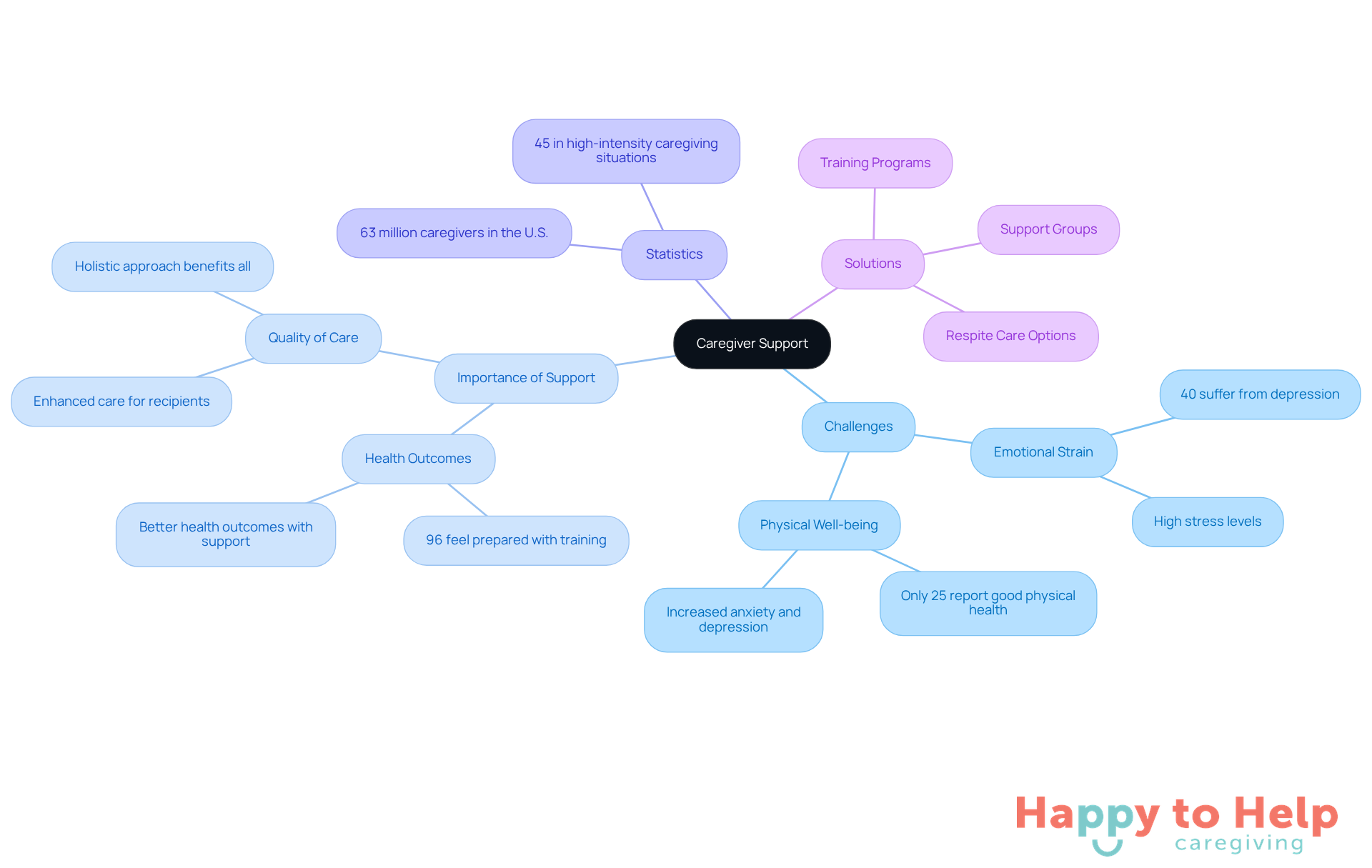
Without adequate assistance, caregivers may struggle to manage their responsibilities effectively. Research shows that individuals providing care who receive proper support report better health outcomes and perform more effectively in their roles. For instance, 96% of caregivers who underwent training felt well-prepared for their tasks, while those lacking formal training often experience difficulties with their emotional and physical health.
Given that 63 million Americans are providing continuous assistance, the demand for robust support systems is clear. Organizations like Happy to Help Caregiving recognize the importance of supporting caregivers, understanding that when they are well-supported, the recipients of care benefit as well. This holistic approach not only fosters a healthier caregiving environment but also significantly enhances the overall quality of assistance provided to clients.
It's crucial to acknowledge the emotional challenges caregivers face. For example, 40% of family supporters of individuals with dementia suffer from depression, illustrating the toll of high-stress situations. Rita Choula emphasizes that recognizing support providers as integral members of the support team is vital for effective assistance and training.
Moreover, 30% of caregivers report needing help managing their emotional or physical stress, underscoring the importance of thorough support systems. By implementing training programs, support groups, and respite care options, caregivers can recharge and better manage their responsibilities.
Cost Breakdown: Comparing Expenses of Care Options
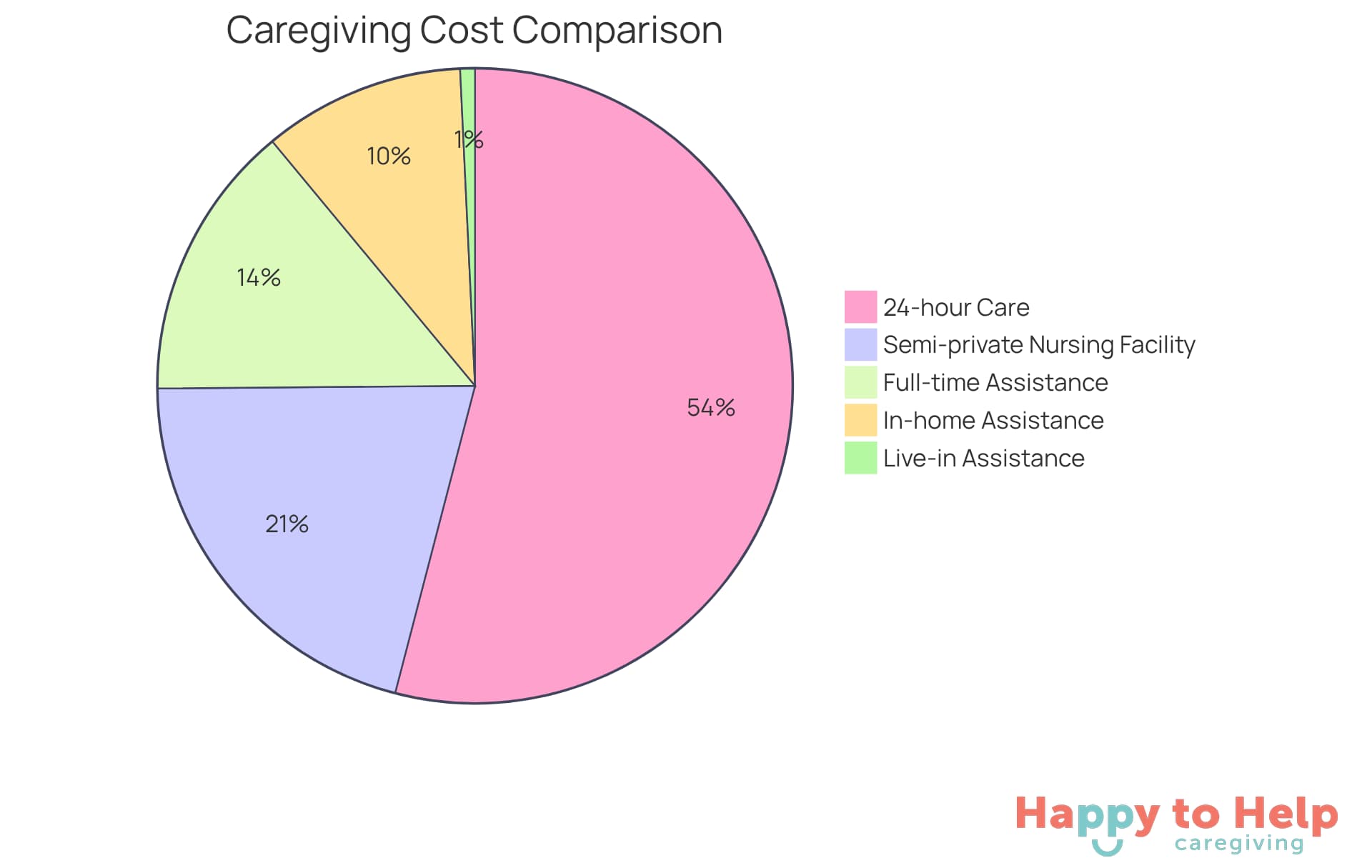
When it comes to support options, understanding the costs involved is crucial. Many families face the challenge of high caregiving expenses, particularly when considering the costs of live-in assistance compared to live in 24 hour care. Live-in care often emerges as a more budget-friendly choice, as it typically requires payment for just one caregiver instead of multiple caregivers working shifts. For instance, the average daily rate for live-in assistance is about $335, while hourly support can escalate to around $768 per day. This stark difference makes live-in arrangements significantly more economical for families needing continuous help. Moreover, the financial strain of live in 24 hour care can reach up to $24,090 per month, underscoring the cost of around-the-clock assistance.
Families should also factor in additional costs like:
- Transportation
- Medical supplies
- Any specialized services that may be required
The national median expense for full-time assistance is roughly $6,292 each month for 44 hours of support weekly, which is notably lower than the average monthly fee of $9,277 for a semi-private room in a nursing facility. In contrast, the typical monthly cost for 44 hours of in-home assistance is around $4,576, providing a broader context for families planning their finances. By thoroughly understanding these financial aspects, families can budget more effectively and make informed decisions that align with their loved ones' needs and preferences. As Kayla Van Erdewyk points out, "24-hour assistance will cost approximately $768/day," emphasizing the importance of evaluating all financial factors in the decision-making process.
Personalized Care Plans: Tailoring Support to Individual Needs
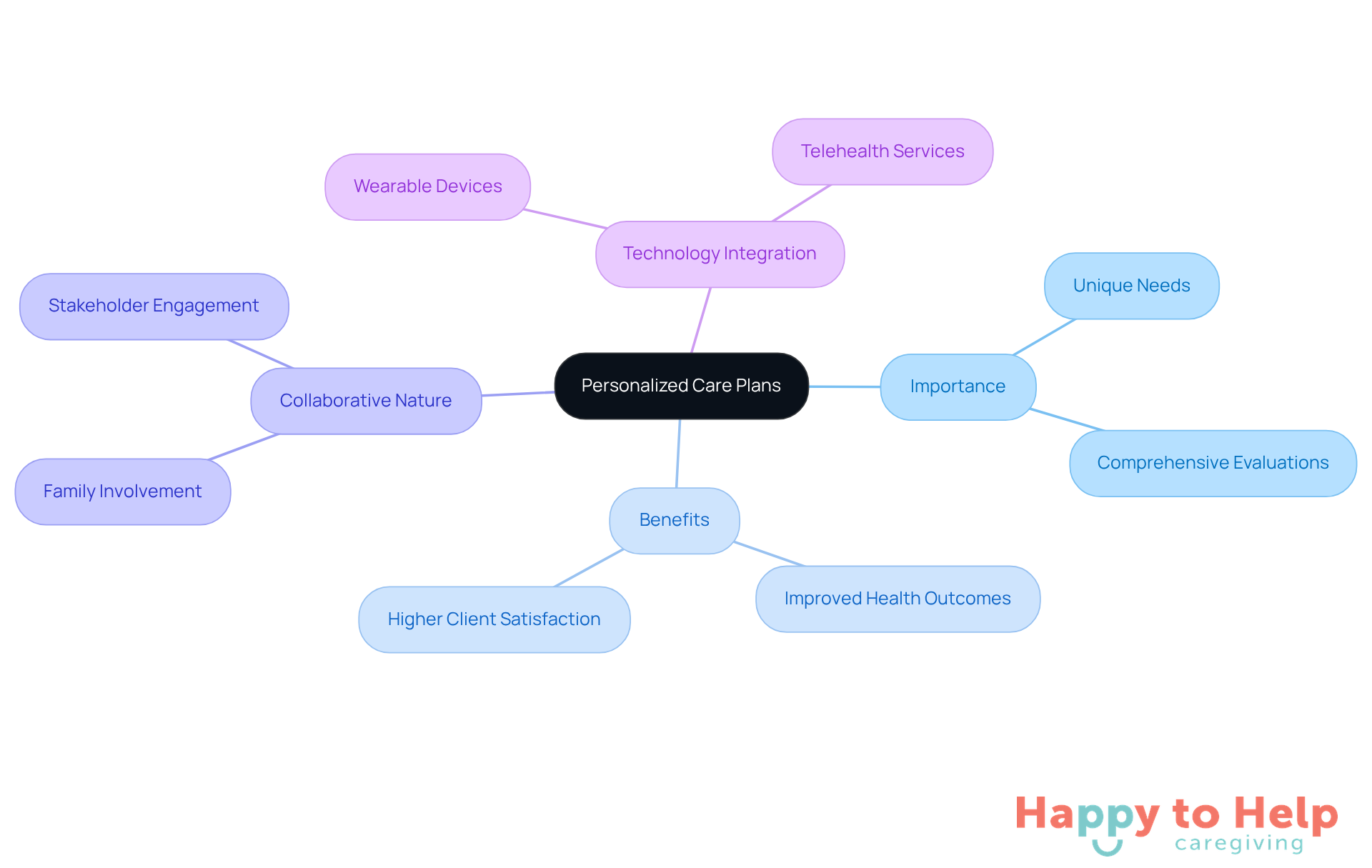
Customized support strategies are crucial for addressing the unique needs and preferences of individuals in caregiving. Without these tailored plans, caregivers may struggle to provide the appropriate level of assistance, which can hinder the independence and well-being of those they care for. Comprehensive evaluations that consider medical history, daily routines, and personal interests are essential in developing these individualized support plans.
By creating a personalized support plan, caregivers can significantly enhance the quality of care. This approach not only fosters a sense of control for individuals but also reflects the commitment to quality support that defines Happy to Help Caregiving. Studies indicate that tailored treatment plans lead to improved health outcomes and higher client satisfaction, as they empower seniors to actively engage in their wellness.
Moreover, the collaborative nature of this process involves family members, alleviating emotional burdens and reinforcing a supportive environment. As Michael Slupecki, CEO of Griswold Home Assistance, states, "Quality service is not only about what is done, but also about the manner in which those things are accomplished."
Ultimately, individualized support plans go beyond merely meeting basic needs; they aim to enrich the lives of seniors, helping them thrive in their own homes. The integration of technology, such as telehealth and wearable devices, further enhances the monitoring and adjustment of these plans, ensuring they remain relevant to the evolving needs of individuals.
Flexible Scheduling: Adapting Care to Family Needs
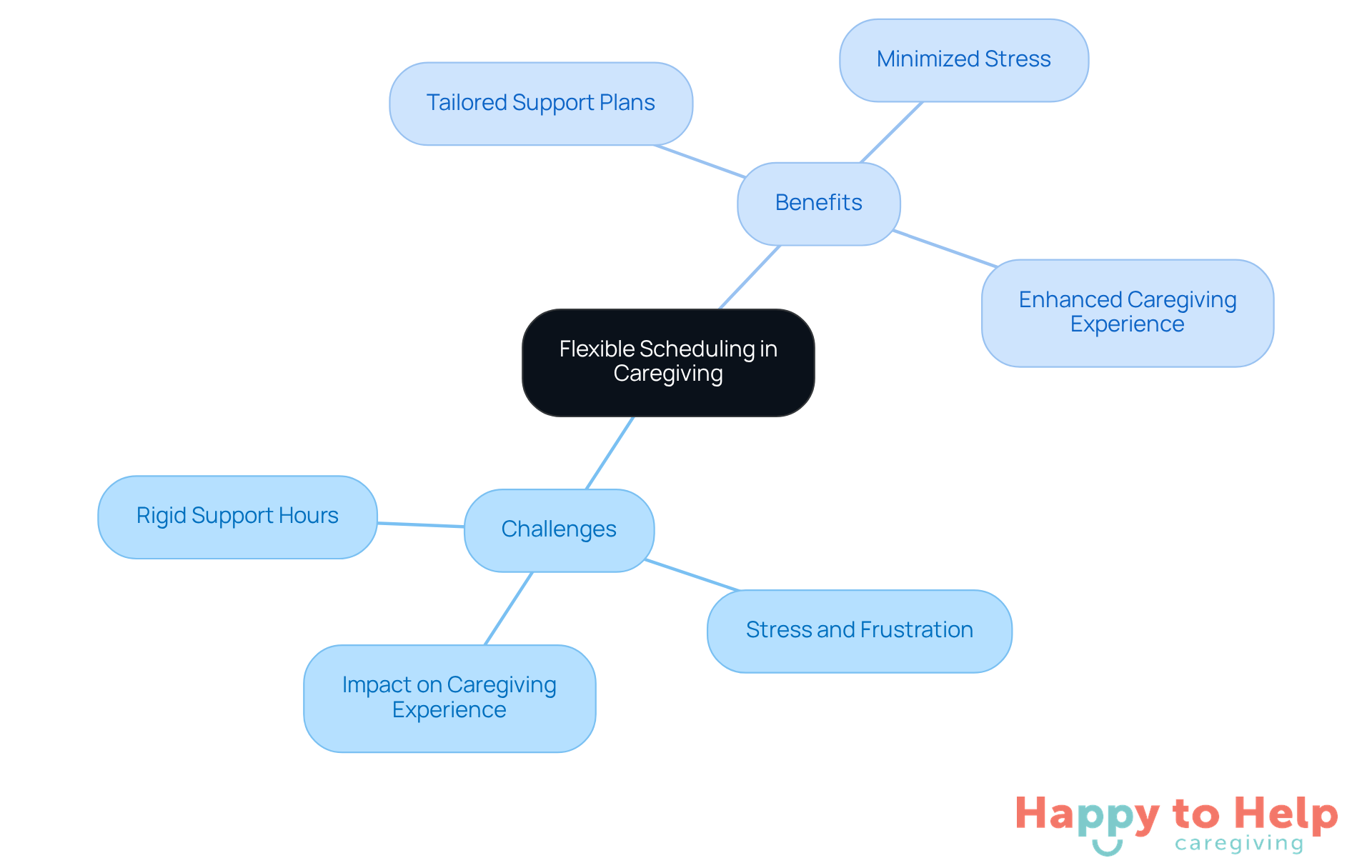
Flexible scheduling poses a significant challenge for families relying on in-home assistance. Rigid support hours can lead to stress and frustration, especially when family visits or busy periods arise. Caregivers often struggle to provide the necessary support when it’s needed most, impacting the overall caregiving experience.
Happy to Help Caregiving addresses this issue by offering multiple scheduling options. Families can tailor their support plans to fit seamlessly into their daily routines, ensuring that assistance is available during critical times. This adaptability not only minimizes stress but also enhances the overall caregiving experience, allowing families to focus on what truly matters.
Technology Integration: Enhancing the Caregiving Experience
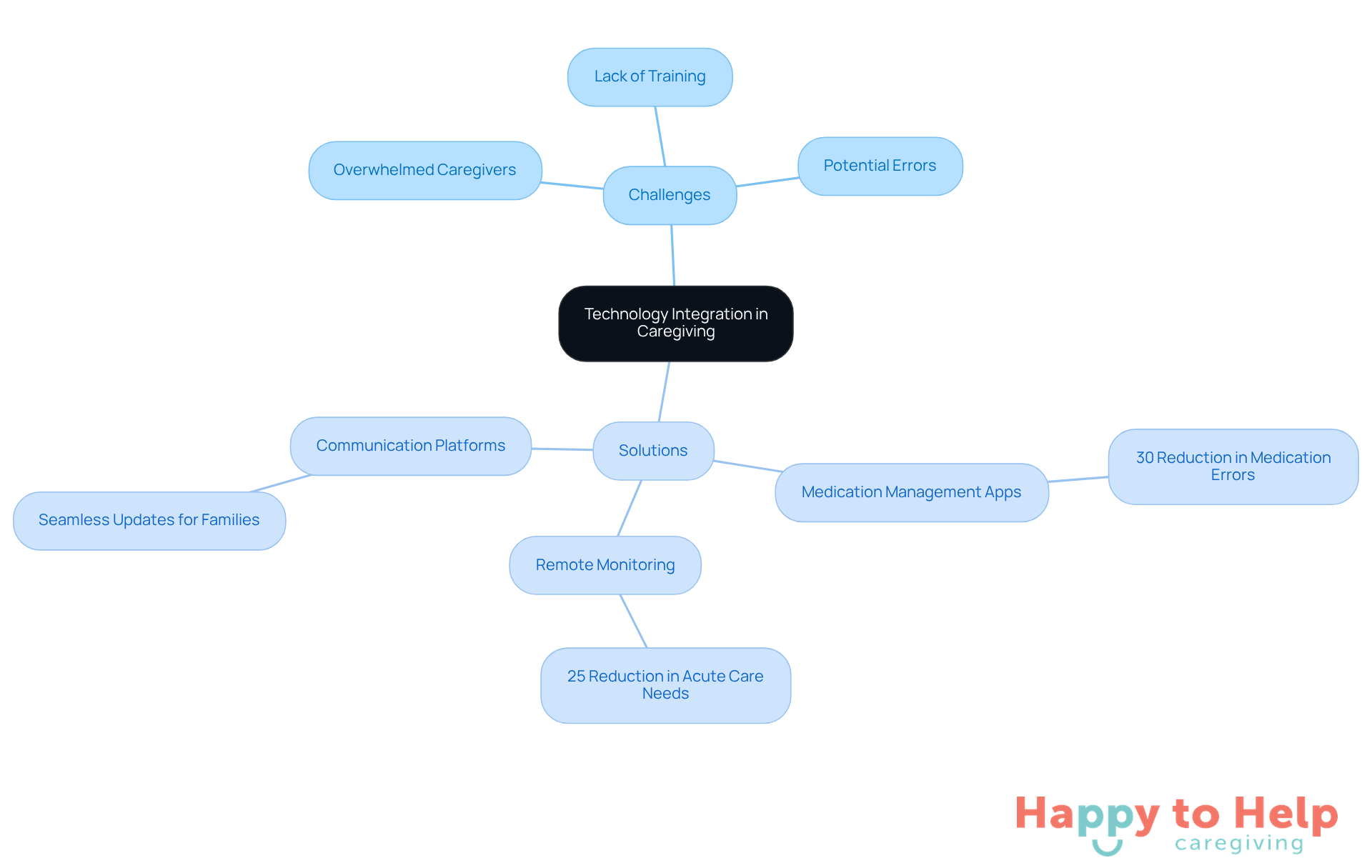
Technology is reshaping the caregiving landscape, presenting significant challenges for caregivers. Many family caregivers struggle with managing care effectively, often feeling overwhelmed and lacking formal training. This can lead to increased stress and potential errors in care delivery.
However, technology offers practical solutions to these challenges. Tools like medication management applications and remote monitoring systems empower caregivers to provide more efficient and effective support. For instance, medication management apps have been shown to improve adherence rates, with studies indicating a 30% reduction in medication errors. Additionally, remote monitoring technologies enable families to keep a close watch on their loved ones' health, reducing the need for acute care by up to 25%. This not only alleviates stress for caregivers but also reassures families, knowing they can track health conditions in real-time.
Moreover, communication platforms facilitate seamless updates between caregivers and families, fostering transparency and trust. Families can access online platforms to review health notes and updates, ensuring they stay informed about their loved one's well-being. As one support worker noted, "Utilizing these tools has simplified my management of my patient's medications and kept their family updated, which has greatly enhanced our overall experience in providing assistance."
This integration of technology streamlines support processes and enhances the overall quality of life for clients, allowing them to maintain independence in the comfort of their homes. However, it is crucial to recognize that many family caregivers face challenges, such as a lack of formal training, which can hinder their ability to utilize these technologies effectively. Organizations like Happy to Help Caregiving are implementing these innovative solutions, establishing new benchmarks for personalized support that emphasizes both efficiency and compassion.
Informed Decision-Making: Choosing the Right Care Option
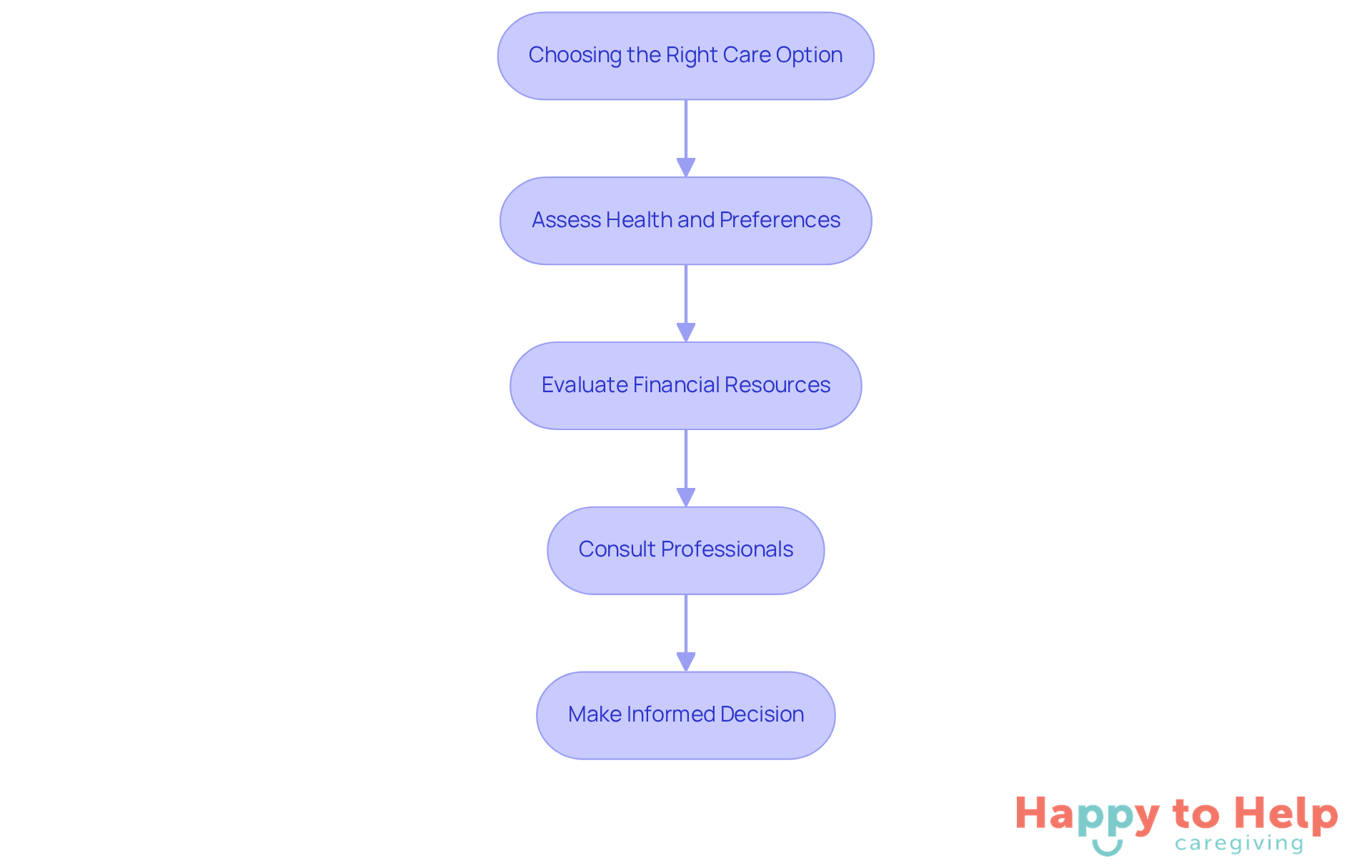
Choosing the right support option for a loved one can be a daunting task. Caregivers often face the challenge of making informed decisions that impact their loved one's well-being. Factors such as health status, personal preferences, and financial resources must be carefully considered.
The implications of not making an informed choice can be significant. Families may struggle with options that do not align with their loved one's needs, potentially diminishing their quality of life. This is where professional guidance becomes invaluable.
Engaging with experts, like a Senior Care Advisor, can provide essential insights and support throughout the decision-making process. These professionals can help families navigate the complexities of available options, ensuring that they choose a care solution that truly enhances their loved one's life.
To make the best choice, families should:
- Assess the individual's health and personal preferences.
- Evaluate financial resources available for care.
- Consult with professionals for tailored advice.
By understanding the available options and their implications, families can confidently select a care solution that meets their loved one's unique needs.
Moving Forward with Insights on Live-In 24 Hour Care
The complexities of caregiving, especially in live-in 24-hour care, present a significant challenge. Families often struggle to find tailored support systems that meet the needs of both care recipients and caregivers. Without proper assistance, the emotional and physical strain on caregivers can become overwhelming.
Statistics reveal that a substantial percentage of seniors require help with daily activities, underscoring the urgency of addressing safety concerns. Continuous support is not merely a luxury; it is a necessity for those needing constant supervision. The financial implications of various care options, coupled with the emotional challenges faced by caregivers, highlight the critical need for comprehensive support systems that promote well-being for everyone involved.
To navigate the journey of selecting the right care option, families must carefully consider individual needs, preferences, and available resources. Engaging with professionals and leveraging technology can significantly enhance the caregiving experience. By prioritizing informed decision-making and embracing flexible, personalized care plans, families can ensure their loved ones receive the compassionate support they deserve. This approach fosters a nurturing environment that promotes independence and dignity.
https://iframe.tely.ai/cta/eyJhcnRpY2xlX2lkIjogIjY5MjNhMGM2YzVlZWQyYmRiNTU3YmYzMSIsICJjb21wYW55X2lkIjogIjY4ZWU1ZGNhNzMxNzYyNTU3ZjNjOTVjMSIsICJpbmRleCI6IG51bGwsICJ0eXBlIjogImFydGljbGUifQ==Frequently Asked Questions
What services does Happy to Help Caregiving offer for live-in care?
Happy to Help Caregiving offers a range of services including companionship support, post-hospital recovery assistance, respite services, and palliative support, all tailored to meet the unique needs of individuals requiring 24-hour care.
How does 24-hour care benefit individuals with chronic health conditions?
24-hour care provides constant supervision, enhancing safety at home and reducing the risks associated with chronic health conditions. It allows for immediate response to emergencies, medication management, and assistance with daily activities, fostering a sense of security and independence.
What are the implications of not having overnight care for seniors?
Without overnight care, seniors may struggle with nighttime activities such as bathroom visits and medication reminders, leading to safety concerns and anxiety for both them and their families. The absence of trained assistance can negatively impact their comfort and quality of life.
What are some signs that an elder might need overnight assistance?
Signs that an elder may need overnight assistance include forgetfulness, frequent falls, and changes in mobility. Recognizing these indicators can help families seek professional help.
How does overnight care support both seniors and family caregivers?
Overnight care provides essential support to seniors, addressing their nighttime needs and enhancing their sense of security. It also alleviates pressure on family caregivers, allowing them to recharge and focus on their own well-being.
What is the importance of companionship during overnight care?
Companionship during overnight care not only meets practical needs but also reduces anxiety and promotes restful sleep for seniors, significantly enhancing their quality of life.
List of Sources
- Happy to Help Caregiving: Comprehensive Live-In Care Services
- Top 5 Home Care Trends of 2025 - Family & Nursing Care (https://familynursingcare.com/top-5-home-care-trends-of-2025)
- 5 Benefits of Senior In-Home Care in 2025 | Valley Home Care (https://valleyhca.com/the-top-5-benefits-of-in-home-senior-care-for-aging-loved-ones-in-2025)
- The Evolution of Home Care Services: Trends in the USA - Cottage Home Care (https://cottagehomecare.com/blog/trends-in-home-care-new-york)
- The Benefits of In-Home Care for Seniors - Consumer Directed Choices (https://cdchoices.org/2023/11/27/the-benefits-of-in-home-care-for-seniors)
- Home Care Industry Trends to Watch in 2025 (https://firstlighthomecare.com/blog/home-care-industry-trends)
- 24-Hour Care: Continuous Support for Critical Needs
- InnovAge PACE provides 24/7 nursing support to keep Pueblo seniors safe at home (https://fox21news.com/living-local/innovage-pace-provides-24-7-nursing-support-to-keep-pueblo-seniors-safe-at-home)
- 2025 Home Care Statistics: Trends & Insights To Know (https://premierhcinc.com/blog/home-care-statistics)
- The Growing Burden of Chronic Diseases (https://nihcm.org/publications/the-growing-burden-of-chronic-diseases)
- 28 Senior Care Statistics: In-Home & Assisted Living | Shortlister (https://myshortlister.com/insights/senior-care-statistics)
- Why 24/7 Senior Care Works: Safety, Comfort, and Constant Support - With A Little Help (https://withalittlehelp.com/24-7-senior-care-works)
- Overnight Care: Temporary Assistance for Nighttime Needs
- Safety & Restorative Benefits of Overnight Care for Seniors & Families (https://homeinstead.ca/location/3025/news-and-media/the-safety-and-restorative-benefits-of-overnight-care-for-seniors-and-their-families-in-calgary)
- What Is the Lifetime Risk of Needing and Receiving Long-Term Services and Supports? (https://aspe.hhs.gov/reports/what-lifetime-risk-needing-receiving-long-term-services-supports-0)
- Stats, Facts and Things to Know About Respite Care (https://bethesdaseniorliving.com/senior-resources/stats-facts-and-things-to-know-about-respite-care)
- How Does Overnight Home Care Benefit Seniors? (https://visitingangels.com/eastside/articles/protecting-seniors-at-night-the-value-of-professional-overnight-home-care/25286)
- Top Reasons to use Overnight Care (https://elderlycaregivers.org/24-hour-home-care-top-reasons-overnight-care)
- Live-In Care vs. 24-Hour Care: Key Operational Differences
- Home Care Statistics In 2025: Key Insights In Home Care (https://sagapixel.com/marketing/home-care-statistics)
- 52 Eye-Opening Home Health Statistics: Insights for 2025 (https://boosthomehealth.com/home-health-statistics)
- Caregiver Statistics: Work and Caregiving (https://caregiver.org/resource/caregiver-statistics-work-and-caregiving)
- The Difference Between 24-Hour Care & Live-In Care (https://corewoodcare.com/news/24-hour-vs-live-in-care)
- Home Care Impact on Recovery of Patient (A Statistics Report) (https://lovinghomecareinc.com/home-care-recovery-statistics)
- Caregiver Support: Emotional and Physical Assistance Across Care Types
- Family Caregiver Support, Education Needs Growing (https://hospicenews.com/2025/11/11/family-caregiver-support-education-needs-growing)
- Caregiver Statistics: Health, Technology, and Caregiving Resources (https://caregiver.org/resource/caregiver-statistics-health-technology-and-caregiving-resources)
- New Report Reveals Crisis Point for America’s 63 million Family Caregivers (https://press.aarp.org/2025-07-24-New-Report-Reveals-Crisis-Point-for-Americas-63-million-Family-Caregivers)
- 2023 Study — Caregiving in America, Statistics on Family Caregivers and Beyond | Guardian (https://guardianlife.com/reports/caregiving-in-america)
- HHS Backs AI Innovation for America’s Caregivers | HHS.gov (https://hhs.gov/press-room/hhs-backs-ai-innovation-for-americas-caregivers.html)
- Cost Breakdown: Comparing Expenses of Care Options
- The Difference Between 24-Hour Care & Live-In Care (https://corewoodcare.com/news/24-hour-vs-live-in-care)
- How Much Does 24/7 Home Care Cost? (https://aplaceformom.com/caregiver-resources/articles/24-hour-in-home-care)
- How Much Does 24/7 In-Home Care Cost? | The Senior List (https://theseniorlist.com/caregiving/24-7-in-home-care)
- Cost of Home Care vs. Nursing Homes (https://aplaceformom.com/caregiver-resources/articles/home-care-vs-nursing-home-costs)
- Live In and Hourly Care - What is the Difference in Cost? (https://hometostayhc.com/video-13-is-there-a-difference-in-cost-between-live-in-and-hourly-care)
- Personalized Care Plans: Tailoring Support to Individual Needs
- The Importance of Personalized Care Plans in Home Health Services (https://regencyhcs.com/blog/the-importance-of-personalized-care-plans-in-home-health-services)
- How Personalized Health Care Is Changing The Role Of Home Care Providers (https://homehealthcarenews.com/2024/03/how-personalized-health-care-is-changing-the-role-of-home-care-providers)
- How Personalized Support Plans Improve Quality of Life (https://heartwisesupport.org/post/how-personalized-support-plans-improve-quality-of-life)
- The Importance of Personalized Care Plans in Home Care (https://anodyne-services.com/2025/01/14/the-importance-of-personalized-care-plans-in-home-care)
- Importance of Personalized Senior Home Care in Burlington NC (https://wisdomseniorcare.com/the-importance-of-personalized-care-plans-for-seniors)
- Flexible Scheduling: Adapting Care to Family Needs
- The Future of Flexibility: Supporting Caregivers in Deskless Roles (https://shrm.org/enterprise-solutions/insights/future-of-flexibility-supporting-caregivers-deskless-roles)
- The Benefits of Flexible Scheduling in Home Care Plans (https://regencyhcs.com/blog/the-benefits-of-flexible-scheduling-in-home-care-plans)
- Flexible Scheduling In Healthcare: Benefits For Staff, Patients, And Providers (https://wheniwork.com/blog/flexible-scheduling-in-healthcare)
- The need for caregiving benefits may have reached a fever pitch (https://hrdive.com/news/sandwich-generation-needs-caregiving-benefits/802864)
- Workplace flexibility is the most used, wanted benefit among caregivers: AARP (https://thehill.com/homenews/4668936-aarp-workplace-flexibility-most-used-wanted-benefit-caregivers)
- Technology Integration: Enhancing the Caregiving Experience
- New NIA grant advances tools for dementia caregiving (https://news-medical.net/news/20251015/New-NIA-grant-advances-tools-for-dementia-caregiving.aspx)
- Technology Use Among Older Adults and Their Caregivers: Cross-Sectional Survey Study - PMC (https://pmc.ncbi.nlm.nih.gov/articles/PMC11084119)
- HHS Launches New Caregiving AI Initiative to 'Spark Innovative Support' (https://hospicenews.com/2025/11/18/hhs-launches-new-caregiving-ai-initiative-to-spark-innovative-support)
- From ‘Simple Things’ To AI: What Innovation Means For 3 At-Home Care Providers (https://homehealthcarenews.com/2025/08/from-simple-things-to-ai-what-innovation-means-for-3-at-home-care-providers)
- Informed Decision-Making: Choosing the Right Care Option
- Shared Decision Making and Informed Choice in Healthcare | Envision (https://envisionhealth.com/news/2024/shared-decision-making-in-healthcare)
- Understanding the Different Eldercare Options (https://health.usnews.com/senior-care/articles/understanding-the-different-senior-care-options)
- Factors influencing family involvement in treatment decision-making for older patients with cancer: A scoping review (https://sciencedirect.com/science/article/pii/S1879406821002496)
- 27 Inspirational Quotes for Caregivers (https://ultimatecareny.com/resources/27-quotes-for-caregivers)
- 30 Inspirational Quotes for Caregivers (https://agingcare.com/articles/caregivers-quotes-inspiration-141133.htm)