

For families in our service areas
For families in our service areas, this guide explains alzheimer's care and how non-medical in-home caregiving can support care planning in East Idaho, Treasure Valley & Magic Valley, Northern Wasatch, North Central West Virginia, and Northeast Ohio.
The Importance of 10 Local Alzheimer Support Groups
Caring for a loved one with Alzheimer's can be both isolating and overwhelming. Nearly 12 million individuals in the U.S. provide unpaid support to those with dementia, and the emotional toll on caregivers is significant. This often leads to feelings of loneliness and stress, making the caregiving journey even more challenging.
To address these issues, this article explores ten local Alzheimer support groups that offer invaluable resources, emotional support, and community connections for family caregivers. These groups can transform the caregiving experience by fostering resilience and providing a sense of belonging amidst the challenges.
Happy to Help Caregiving: Companionship Care for Alzheimer's Patients
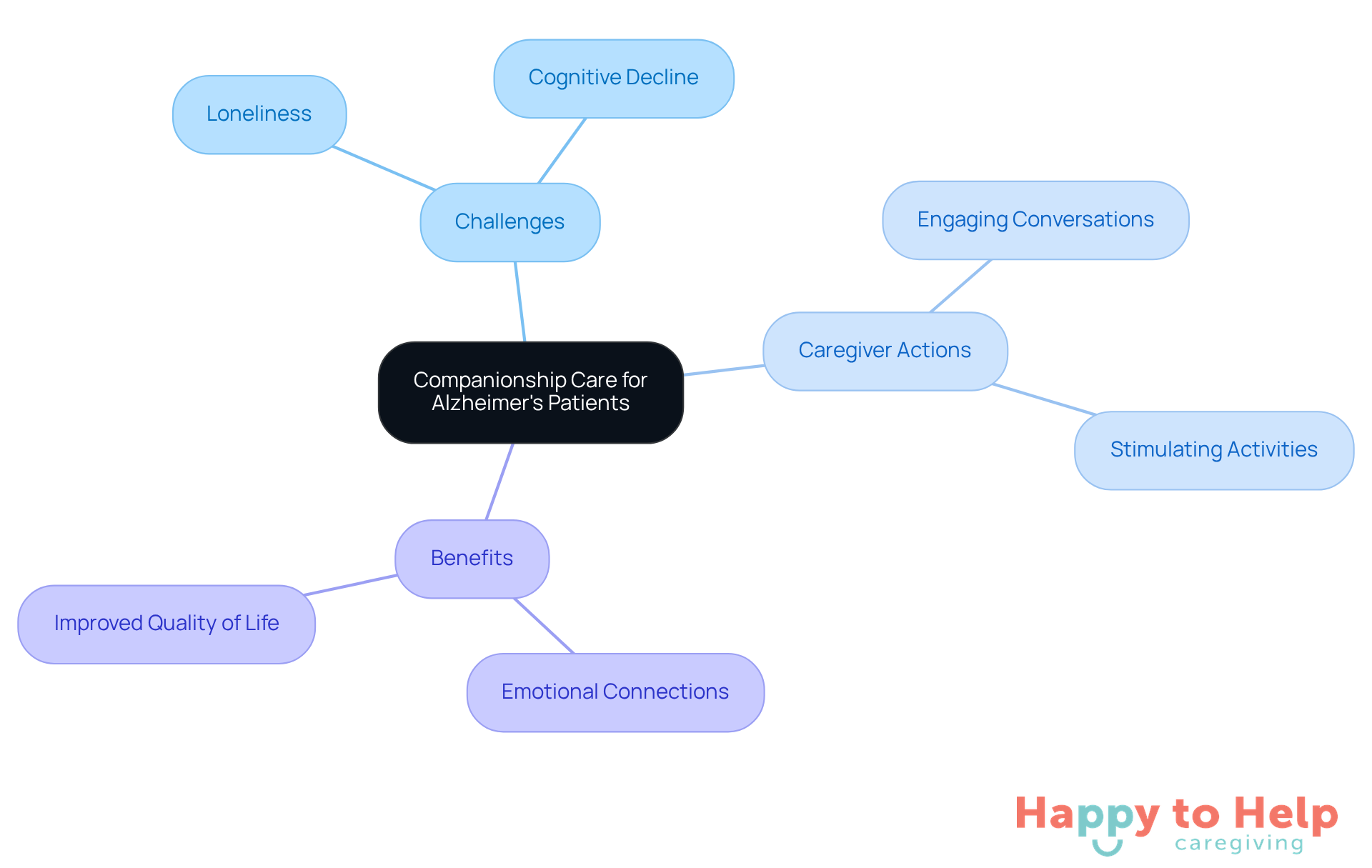
Loneliness and cognitive decline are significant challenges faced by individuals with Alzheimer's. These issues can lead to feelings of isolation and insecurity, making it crucial for caregivers to provide meaningful support.
Happy to Help Caregiving addresses these challenges through specialized companionship care. Caregivers engage clients in stimulating conversations and activities that not only enhance cognitive function but also foster emotional connections. This approach alleviates loneliness and creates a sense of security in familiar surroundings, which is vital for those experiencing cognitive decline.
By focusing on the unique preferences of clients, caregivers can create a supportive environment that significantly improves quality of life. This tailored care not only meets the emotional needs of individuals but also promotes their overall well-being.
Emotional Support: Connecting with Others Who Understand
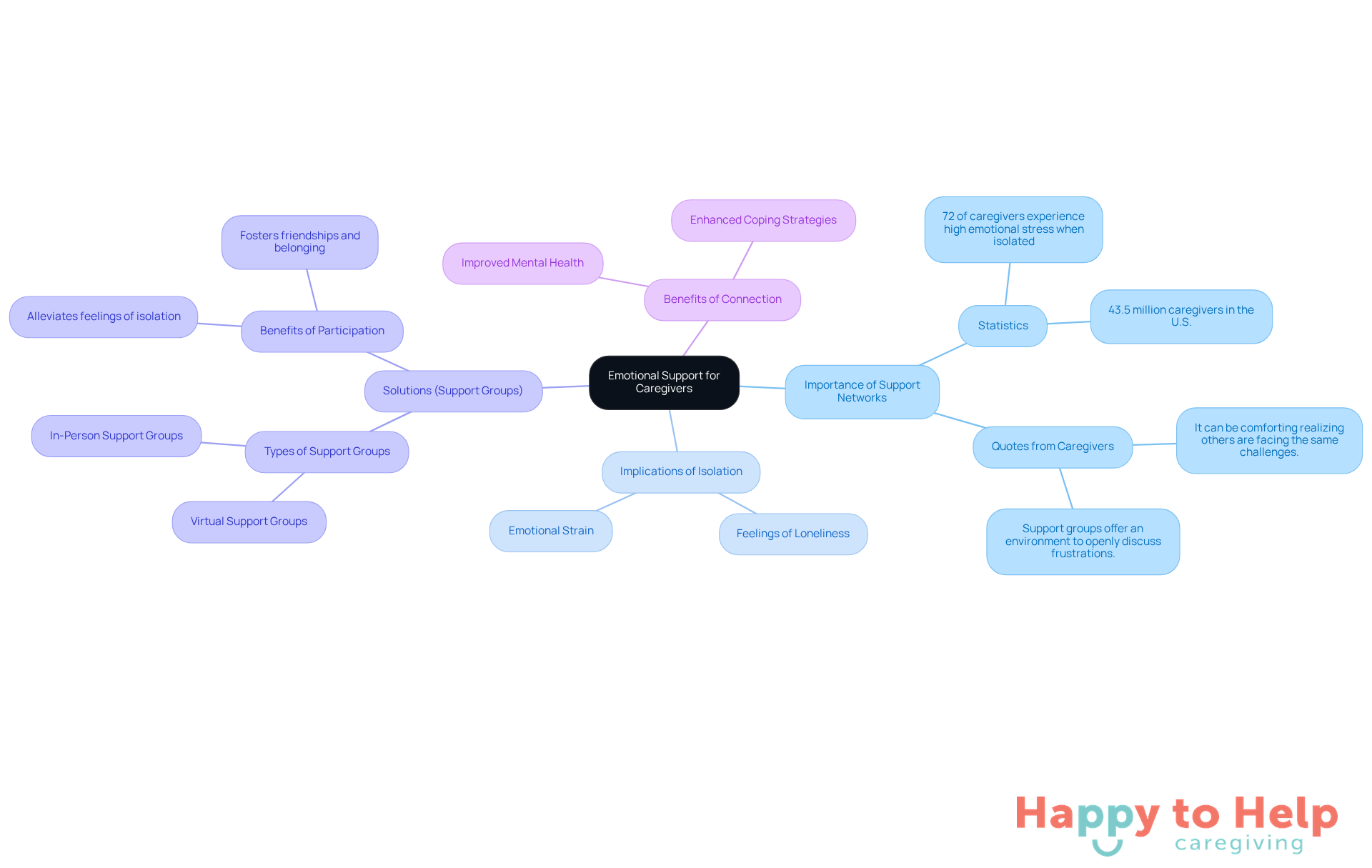
Support networks play a crucial role for caregivers, providing a vital space to share experiences and emotions with those who understand their challenges. The problem is significant: research shows that 72% of caregivers experience high emotional stress when feeling isolated. This highlights the urgent need for these connections.
The implications of isolation can be profound, leading to feelings of loneliness and emotional strain. Caregivers often face overwhelming responsibilities, and without support, their mental health can suffer. Involvement in assistance networks not only fosters lasting friendships but also cultivates a sense of belonging, which is essential for emotional well-being.
The solution lies in actively participating in an alzheimer support group near me. Happy to Help Caregiving encourages caregivers to seek comfort and guidance from others on similar journeys, such as joining an alzheimer support group near me. Testimonials from family supporters underscore the impact of these communities. One caregiver noted, "It can be comforting realizing others are facing the same challenges you are, to understand you’re not alone."
By sharing experiences and learning from one another, caregivers can develop coping strategies that enhance their overall quality of life, making the caregiving journey more manageable and rewarding. Furthermore, support groups help reduce feelings of loneliness and isolation, which are common among caregivers. With over 43.5 million individuals in the U.S. providing unpaid assistance, the demand for such support is more essential than ever.
Resource Sharing: Accessing Valuable Information and Tools
Caregivers often face significant challenges due to a lack of access to shared resources. This can lead to increased stress and feelings of isolation, making it difficult to provide the best support for their loved ones.
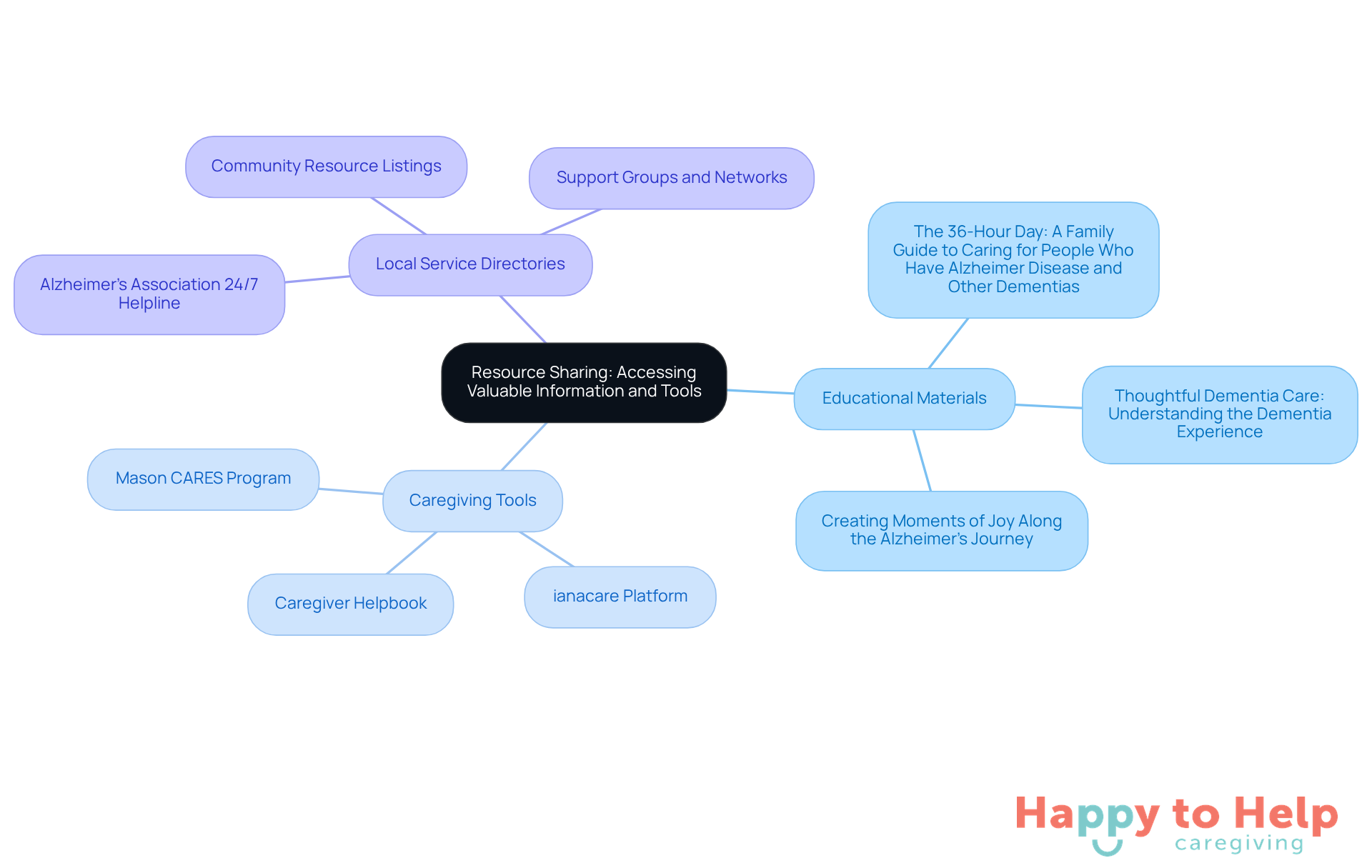
To address these issues, Happy to Help Caregiving offers a comprehensive array of resources, including:
- Educational materials
- Caregiving tools
- Local service directories
By providing best practices for daily care, safety tips, and connections to community resources, caregivers can make informed decisions that enhance their effectiveness.
For instance, educational resources like 'The 36-Hour Day: A Family Guide to Caring for People Who Have Alzheimer Disease and Other Dementias' by Nancy L. Mace and Peter V. Rabins, released in September 2025, are crucial for those supporting individuals facing dementia. Continuous education and flexibility are vital in managing the emotional and physical demands of caregiving.
Additionally, programs such as Mason CARES have demonstrated effectiveness, leading to a 15% decrease in stress levels among caregivers. The Association for Dementia also provides numerous resources, including a 24/7 Helpline, to assist those navigating their responsibilities.
By utilizing these resources, caregivers can foster a more supportive environment for their loved ones, ultimately improving their overall well-being.
Social Interaction: Combating Loneliness Through Community
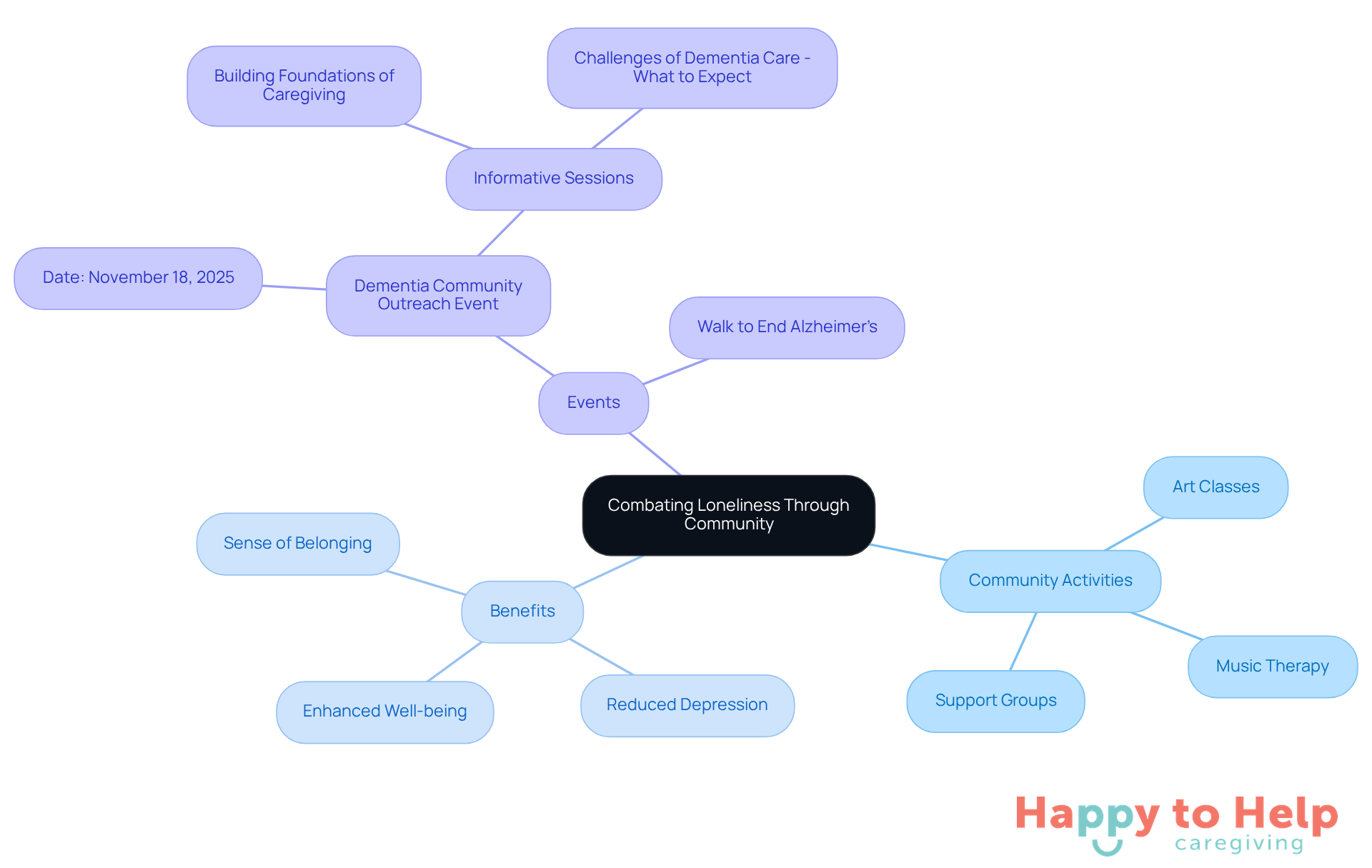
Participating in community events and activities is crucial for addressing the isolation faced by both caregivers and individuals with Alzheimer's, and joining an alzheimer support group near me can be beneficial. This isolation can lead to increased feelings of loneliness and depression among those providing care.
Happy to Help Caregiving encourages families to explore local opportunities such as:
- Art classes
- Music therapy sessions
- Finding an alzheimer support group near me
These activities not only enrich the lives of clients but also foster connections among support providers, significantly reducing feelings of isolation.
Studies indicate that greater involvement in social activities correlates with lower levels of depression and negative moods among caregivers, while also nurturing a sense of belonging and support. For example, the MYHAT study revealed that individuals with mild cognitive impairment who engaged in social activities had a reduced risk of progressing to severe cognitive impairment.
Community events, like the Dementia Community Outreach event on November 18, 2025, provide valuable resources and connections, enabling supporters to find an alzheimer support group near me to navigate their challenges more effectively. By participating in these enriching experiences, caregivers and patients can combat loneliness and enhance their overall well-being.
November is also recognized as National Family Caregivers Month, underscoring the importance of community support for those caring for loved ones with dementia.
Education: Gaining Knowledge About Alzheimer's Disease
Understanding dementia is crucial for effective caregiving. Caregivers face significant challenges, as nearly 12 million individuals in the U.S. provide unpaid support for relatives with dementia. This highlights the urgent need for education and resources to empower those who assist.
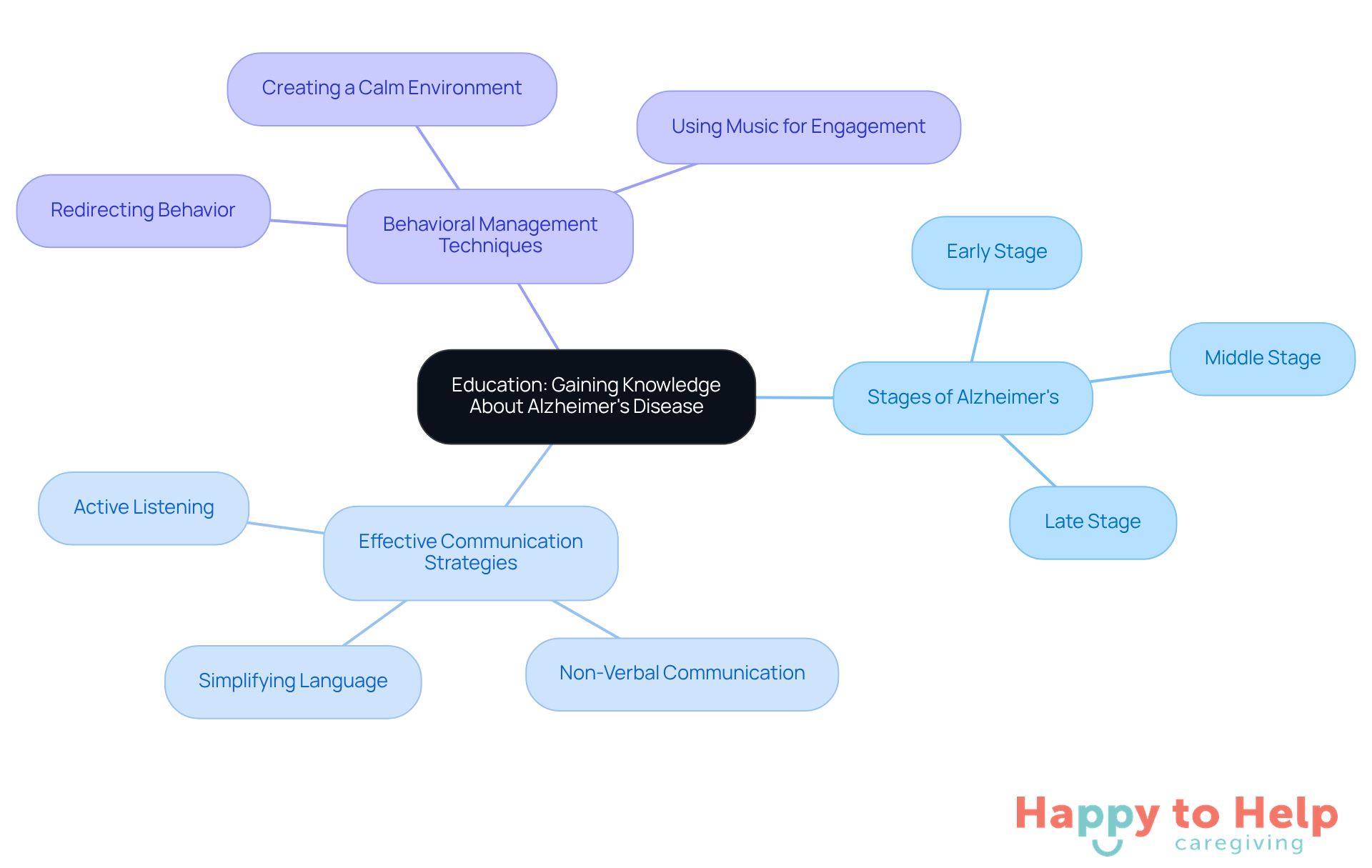
Happy to Help Caregiving addresses this issue by offering educational workshops that cover essential topics, including:
- The stages of Alzheimer's
- Effective communication strategies
- Behavioral management techniques
Research shows that well-informed caregivers experience increased confidence, which directly enhances the quality of care they provide.
As Thais Guimaraes, PhD, noted, these comprehensive workshops equip caregivers with the knowledge needed to navigate challenges with greater compassion and skill. Upcoming educational opportunities, such as the regional meeting on December 12, 2025, will further support caregivers in improving their knowledge and assistance for individuals living with dementia.
Coping Strategies: Learning to Manage Caregiver Stress
Caring for someone with dementia presents significant emotional and physical challenges for caregivers. This demanding role can lead to stress and burnout, making it crucial for caregivers to recognize the importance of self-care.
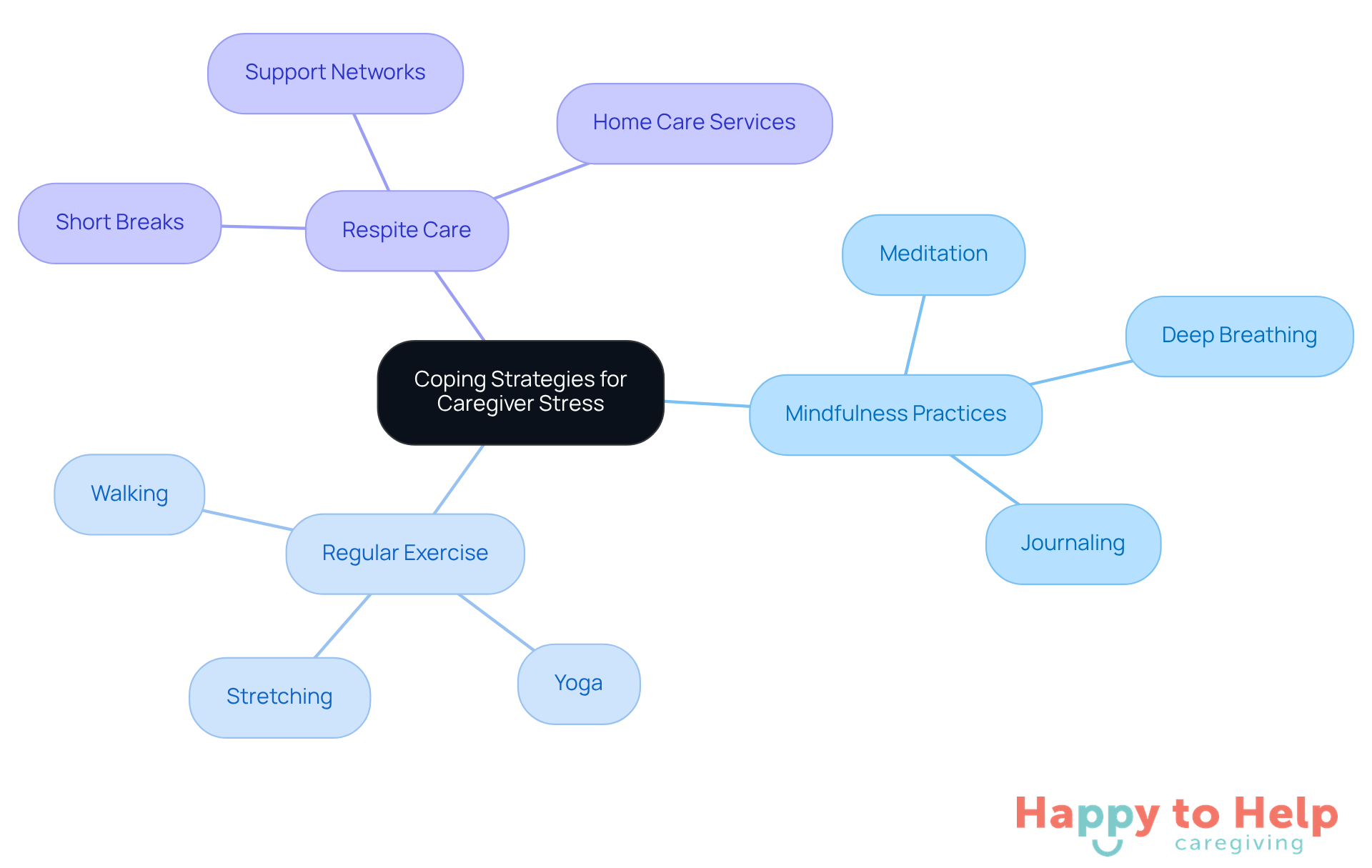
To address this issue, Happy to Help Caregiving emphasizes several effective strategies for managing stress. These include:
- Mindfulness practices to promote mental well-being.
- Regular exercise to boost physical health and reduce anxiety.
- Seeking respite care when needed, allowing caregivers to recharge.
By prioritizing their own health, caregivers can sustain their ability to provide compassionate care. Implementing these strategies not only benefits the caregiver but also enhances the quality of care provided to those with dementia.
Advocacy: Raising Awareness and Promoting Change
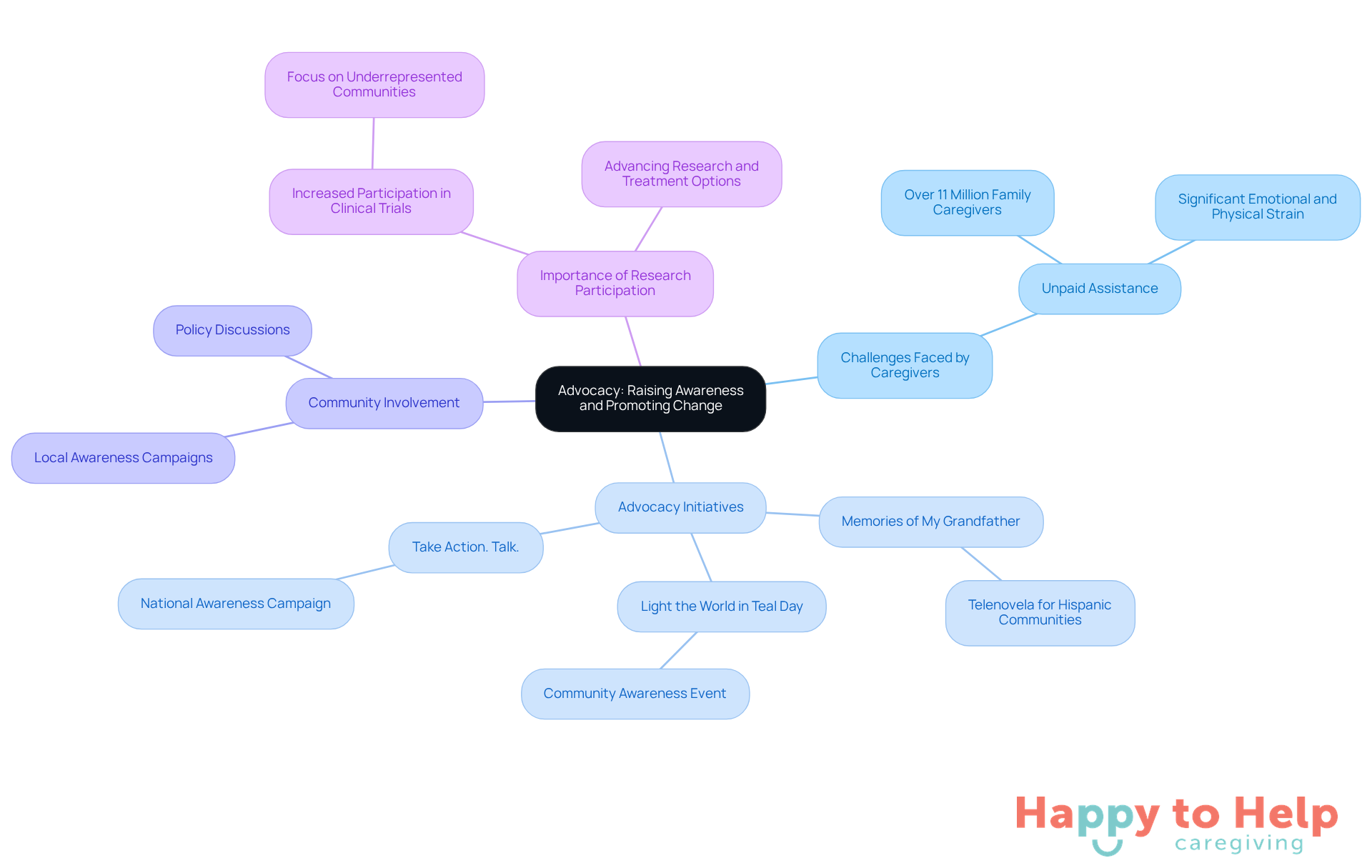
Advocacy plays a crucial role in improving the lives of those impacted by dementia. Caregivers face significant challenges, especially with over 11 million family members providing unpaid assistance to individuals with memory loss. This situation highlights the need for effective advocacy initiatives that can lead to meaningful change.
Happy to Help Caregiving encourages caregivers to participate in advocacy efforts, such as local awareness campaigns and policy discussions. By raising their voices, providers can contribute to significant changes that enhance resources and support for families managing dementia care. Caregiver advocacy is vital for obtaining funding and resources necessary for effective support services.
One notable initiative is the mini telenovela 'Memories of My Grandfather,' which fosters conversations about memory loss within Hispanic communities, emphasizing the importance of community involvement. Additionally, campaigns like 'Light the World in Teal Day' and 'Take Action. Talk.' inform the public about dementia warning signs and the importance of early diagnosis.
Moreover, advocacy efforts can lead to increased participation in clinical trials, particularly among underrepresented communities. This participation is essential for advancing research and treatment options. As Emily Kaltenbach, ALTSD Cabinet Secretary, emphasizes, recognizing dementia as a significant public health concern is crucial for mobilizing community resources and assistance.
Through united advocacy, caregivers can facilitate substantial advancements in Alzheimer's treatment and support, including the importance of locating an alzheimer support group near me to ensure families receive the help they need during difficult times.
Accountability: Staying Committed to Self-Care
Caregivers face a significant challenge: the risk of burnout and stress. This issue can lead to decreased effectiveness in their roles, impacting both their well-being and the quality of care they provide.
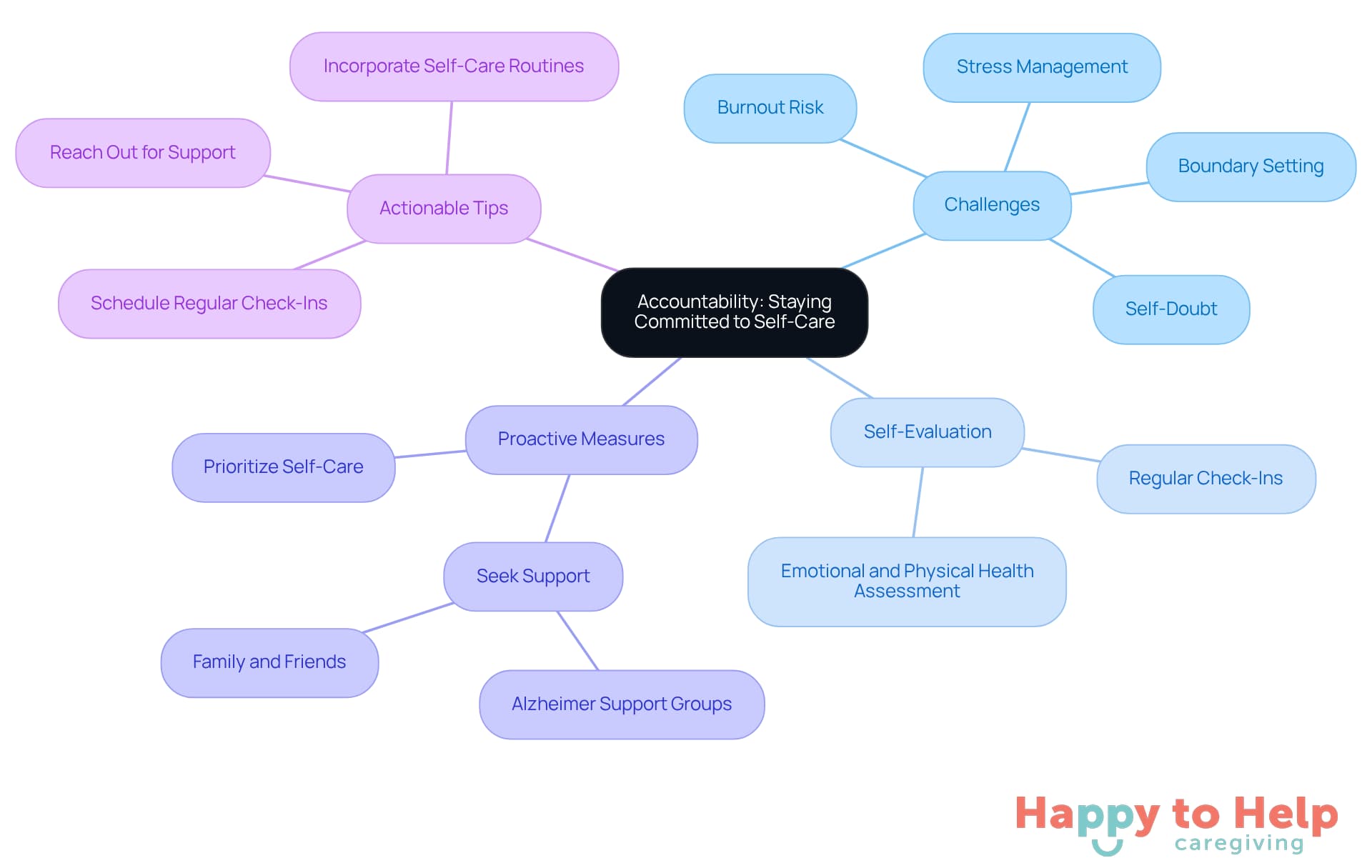
To combat this, Happy to Help Caregiving encourages caregivers to engage in regular self-evaluation practices. By reflecting on their emotional and physical health, caregivers can identify early signs of burnout.
Taking proactive measures is essential. Seeking assistance from an alzheimer support group near me and prioritizing self-care not only helps caregivers maintain their well-being but also ensures they remain effective in their responsibilities. Here are some actionable tips:
- Schedule regular check-ins with yourself to assess your emotional state.
- Reach out for support when you notice signs of stress.
- Incorporate self-care routines into your daily schedule.
By implementing these strategies, caregivers can foster a healthier balance in their lives, ultimately enhancing their ability to provide care.
Safe Space: Sharing Experiences and Feelings Openly
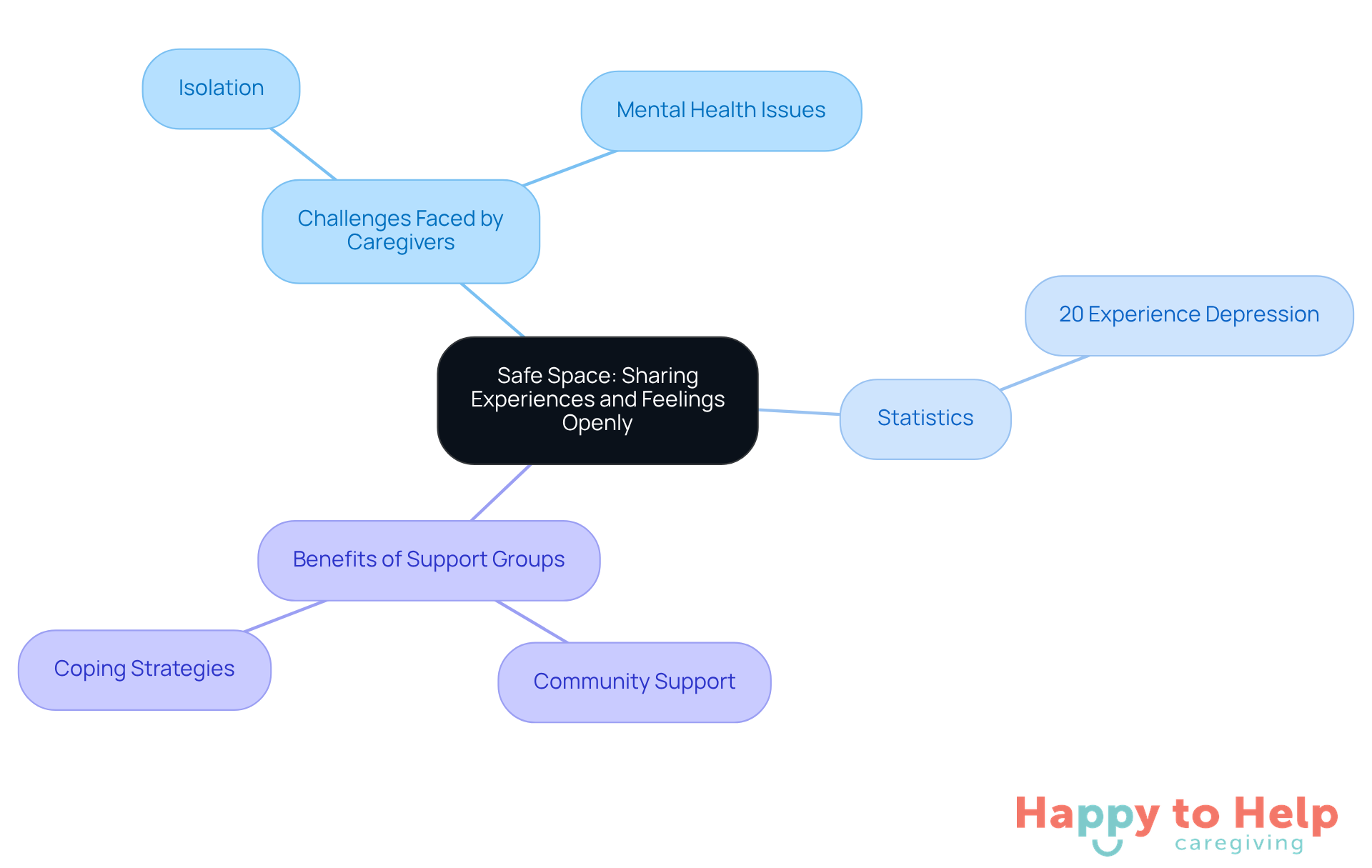
Caregivers often face significant challenges, including feelings of isolation and mental health issues. According to the Family Caregiver Alliance, 20% of family members who provide care experience depression, which is double the rate of the general population. This highlights the urgent need for an alzheimer support group near me that can alleviate stress and foster a sense of community among caregivers.
Support networks, such as an alzheimer support group near me, create a secure environment where caregivers can share their experiences and feelings without fear of criticism. Happy to Help Caregiving actively encourages participation in these gatherings, allowing caregivers to discuss their challenges and successes openly. This open dialogue not only nurtures community but also significantly reduces feelings of isolation, empowering caregivers to navigate their journeys with greater confidence and support.
The collective experiences within these communities can lead to valuable insights and coping strategies, enhancing the overall well-being of caregivers. As Jessica Patay, founder of We Are Brave Together, emphasizes, "Whether we are those who provide care ourselves or know someone who does, there are concrete ways to offer assistance." By engaging in these support networks, caregivers can find the help they need to thrive, such as an alzheimer support group near me.
Long-Term Connections: Building Lasting Friendships in Support Groups
Caregivers face significant emotional challenges, especially when caring for individuals with Alzheimer's. These challenges can lead to feelings of isolation and increased anxiety. Without proper support, caregivers may struggle to manage the complexities of their roles, making it important to find an alzheimer support group near me.
Assistance networks serve as essential resources for emotional aid, helping caregivers nurture lasting connections. Happy to Help Caregiving emphasizes the importance of these relationships, which provide ongoing encouragement and understanding. Caregivers often refer to these connections as lifelines, enabling them to navigate the intricacies of their responsibilities with a strong support system.
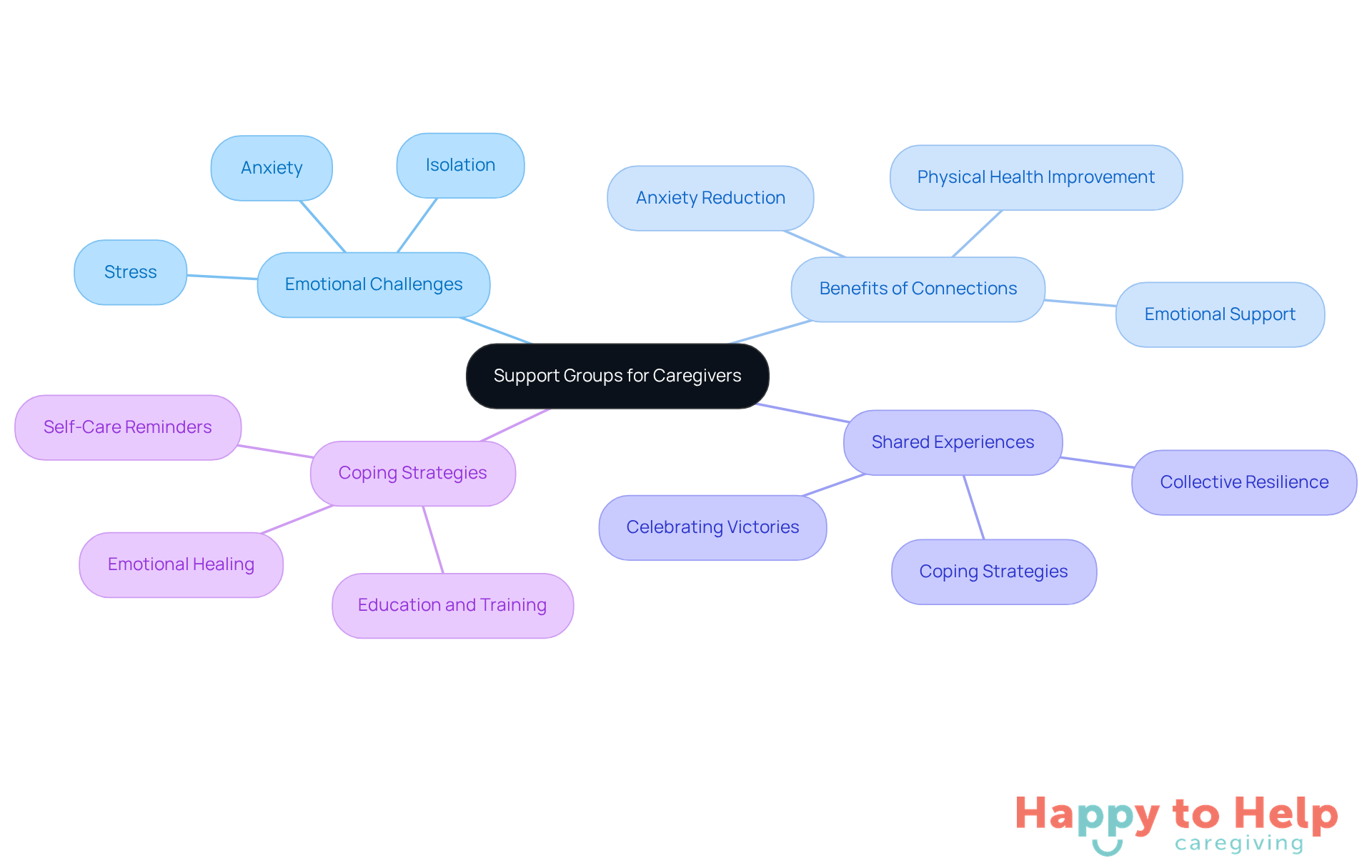
Statistics show that those who attend an alzheimer support group near me regularly report reduced levels of anxiety and depression. This highlights the emotional advantages of these gatherings. The collective experiences shared within these circles not only alleviate feelings of isolation but also strengthen resilience. When caregivers feel supported by an alzheimer support group near me, they can manage the emotional and physical challenges of their roles more effectively.
By fostering a nurturing community, caregivers can celebrate small victories together, share coping strategies, and find comfort in knowing they are not alone in their journey. As one provider noted, "Support gatherings are not merely meetings; they are lifelines." This sentiment underscores the profound impact of these connections, reinforcing the idea that support groups help caregivers discover moments of joy, even amidst the challenges of dementia.
Making the Right Choice
Finding local Alzheimer support groups for family caregivers addresses a significant problem: the isolation that often accompanies caregiving. This journey can feel lonely, making it crucial for caregivers to connect with others who understand their challenges. Such connections are vital for emotional well-being, as they help alleviate feelings of loneliness and provide a platform for sharing experiences and coping strategies.
The article highlights several key aspects of support for caregivers:
- The importance of companionship care to combat cognitive decline.
- The value of emotional support through shared experiences.
- The necessity of educational resources to empower caregivers.
Additionally, it emphasizes the role of advocacy and community involvement in driving meaningful change for those affected by Alzheimer’s. Each of these elements plays a crucial role in enhancing the quality of life for both caregivers and their loved ones.
Engaging with local Alzheimer support groups can significantly improve the caregiving experience. By participating in these communities, caregivers not only gain access to vital resources but also build lasting friendships that provide ongoing encouragement and understanding. It is essential for caregivers to prioritize their own well-being and seek out these connections, as they are invaluable in navigating the complexities of dementia care. Joining a support group may be one of the most impactful actions a caregiver can take to ensure they do not face their journey alone.
https://iframe.tely.ai/cta/eyJhcnRpY2xlX2lkIjogIjY5MjY2NjE3YWFmZGI2YmE4OTcyMjk0YSIsICJjb21wYW55X2lkIjogIjY4ZWU1ZGNhNzMxNzYyNTU3ZjNjOTVjMSIsICJpbmRleCI6IG51bGwsICJ0eXBlIjogImFydGljbGUifQ==Frequently Asked Questions
What challenges do individuals with Alzheimer's face?
Individuals with Alzheimer's face significant challenges such as loneliness and cognitive decline, which can lead to feelings of isolation and insecurity.
How does Happy to Help Caregiving support Alzheimer's patients?
Happy to Help Caregiving provides specialized companionship care, engaging clients in stimulating conversations and activities that enhance cognitive function and foster emotional connections, thereby alleviating loneliness and creating a sense of security.
Why is emotional support important for caregivers?
Emotional support is crucial for caregivers as it helps them share experiences and emotions with others who understand their challenges, reducing feelings of loneliness and emotional strain.
What percentage of caregivers experience high emotional stress due to isolation?
Research shows that 72% of caregivers experience high emotional stress when feeling isolated.
How can caregivers find support?
Caregivers are encouraged to seek comfort and guidance by actively participating in Alzheimer support groups, which can help them connect with others facing similar challenges.
What resources does Happy to Help Caregiving offer to caregivers?
Happy to Help Caregiving offers a comprehensive array of resources, including educational materials, caregiving tools, and local service directories to help caregivers make informed decisions.
What is an example of an educational resource provided for caregivers?
One example is 'The 36-Hour Day: A Family Guide to Caring for People Who Have Alzheimer Disease and Other Dementias' by Nancy L. Mace and Peter V. Rabins.
How do support groups benefit caregivers?
Support groups help caregivers develop coping strategies, reduce feelings of loneliness, and create a sense of belonging, enhancing their overall quality of life and making the caregiving journey more manageable.
What impact has the Mason CARES program shown for caregivers?
The Mason CARES program has demonstrated effectiveness, leading to a 15% decrease in stress levels among caregivers.
What types of resources are available through the Association for Dementia?
The Association for Dementia provides numerous resources, including a 24/7 Helpline to assist caregivers in navigating their responsibilities.
List of Sources
- Happy to Help Caregiving: Companionship Care for Alzheimer's Patients
- Alzheimer’s Research Advances: What Families Need to Know Now | HWR (https://hospicewr.org/News/July-2025/Alzheimer’s-Research-Advances-What-Families-Need-to-Know-Now)
- How Companion Care Helps Reduce Cognitive Decline (https://humancareny.com/blog/how-companion-care-helps-reduce-cognitive-decline)
- Caregiver Statistics: Demographics (https://caregiver.org/resource/caregiver-statistics-demographics)
- Companionship and happiness; high fevers in children; promise of an Alzheimer’s pill; plus other news stories with VUMC sources. (https://news.vumc.org/2025/11/07/companionship-and-happiness-high-fevers-in-children-promise-of-an-alzheimers-pill-plus-other-news-stories-with-vumc-sources)
- Could Dementia Patients Benefit from an A.I. Companion? (https://nytimes.com/2025/07/31/well/mind/dementia-ai-companions.html)
- Emotional Support: Connecting with Others Who Understand
- Benefits Of Caregiver Support Groups (https://trualta.com/resources/blog/benefits-of-caregiver-support-groups)
- The Benefits of a Caregiving Support Group - The Kensington Sierra Madre (https://thekensingtonsierramadre.com/the-benefits-of-a-caregiving-support-group)
- The Benefits of Support Groups for Older Adults and Caregivers (https://watermarkcommunities.com/resources/in-the-news/the-benefits-of-support-groups-for-older-adults-and-caregivers)
- The Power of Support: Why Support Groups Matter for Families of Those Living with Dementia - James L. West (https://jameslwest.org/the-power-of-support-why-support-groups-matter-for-families-of-those-living-with-dementia)
- Reimagining Support for Family Caregivers and Their Loved Ones (https://medschool.duke.edu/news/reimagining-support-family-caregivers-and-their-loved-ones)
- Resource Sharing: Accessing Valuable Information and Tools
- Caregivers: the invisible backbone of dementia care (https://publichealth.gmu.edu/news/2025-11/caregivers-invisible-backbone-dementia-care)
- Building a lifeline for family caregivers across the US (https://news.mit.edu/2025/ianacare-builds-lifeline-for-family-caregivers-across-us-0811)
- Dementia Caregiver Resources Stanford PD Community Blog (https://parkinsonsblog.stanford.edu/2025/09/dementia-caregiver-resources)
- Caregiver Statistics: Demographics (https://caregiver.org/resource/caregiver-statistics-demographics)
- Alzheimer’s Association Honors the Nearly 12 Million Americans Who Serve as Dementia Caregivers and Shares New Resources to Help Them Thrive (https://alz.org/news/2025/november-national-family-caregivers-alzheimers-disease-awareness-month)
- Social Interaction: Combating Loneliness Through Community
- Walk to End Alzheimer’s Happening Saturday (https://news3lv.com/news/arc/walk-to-end-alzheimers-happening-saturday)
- Facing Dementia Together: Free Community Event Offers Support for Caregivers | Stillwater Medical (https://stillwater-medical.org/facing-dementia-together-free-community-event-offers-support-for-caregivers)
- Events | Alzheimer's Association (https://alz.org/events)
- Engagement in Social Activities and Progression from Mild to Severe Cognitive Impairment: The MYHAT Study - PMC (https://pmc.ncbi.nlm.nih.gov/articles/PMC3578022)
- Events | Alzheimer's Association (https://alz.org/event-search)
- Education: Gaining Knowledge About Alzheimer's Disease
- New Analysis Finds Dementia Caregivers More Likely to Report Modifiable Risk Factors that Increase Their Own Risk for Dementia (https://alz.org/news/2025/dementia-caregivers-modifiable-risk-factor-analysis)
- Caregivers: the invisible backbone of dementia care (https://publichealth.gmu.edu/news/2025-11/caregivers-invisible-backbone-dementia-care)
- Educational Events and Engagement Opportunities | ALZ-NET (https://alz-net.org/alz-net-news-and-events/alz-net-educational-events-and-engagement-opportunities)
- 4 Takeaways from Alzheimer’s Fast Track 2025 (https://brightfocus.org/news/4-takeaways-from-alzheimers-fast-track-2025)
- Martin Family Alzheimer's Disease Caregiver Symposium Agenda | Indiana Alzheimer's Disease Research Center (https://medicine.iu.edu/research-centers/alzheimers/news-events/martin-family-symposium)
- Coping Strategies: Learning to Manage Caregiver Stress
- Why is self-care so important for family caregivers? – Senior Transitions of Central Ohio (https://seniortransitionsohio.com/2025/10/22/why-is-self-care-so-important-for-family-caregivers)
- Facebook (https://newsroom.clevelandclinic.org/2025/11/19/importance-of-self-care-for-family-caregivers)
- Tips for Family Caregivers: Balancing Care and Self-Care - Bryan Skilled Home Care (https://bryanskilledhomecare.com/2025/11/20/tips-for-family-caregivers-balancing-care-and-self-care)
- New Alzheimer’s Association Report Reveals Top Stressors for Caregivers and Lack of Care Navigation Support and Resources (https://alz.org/news/2024/new-alzheimers-association-report-reveals-top-stressors-caregivers)
- Advocacy: Raising Awareness and Promoting Change
- Aging Department and Alzheimer’s Association launch groundbreaking awareness campaign - New Mexico Aging and Long-Term Services Department - ALTSD (https://aging.nm.gov/2025/03/12/aging-department-and-alzheimers-association-launch-groundbreaking-awareness-campaign)
- Sacramento skyline shines teal to raise awareness for Alzheimer's disease (https://cbsnews.com/sacramento/news/sacramento-skyline-shines-teal-to-raise-awareness-for-alzheimers-disease)
- Awareness Initiatives | Alzheimer's Association (https://alz.org/about/awareness-initiatives)
- 2025 AIM Advocacy Forum | Alzheimer’s Association (https://alz.org/forum/highlight-2025-tuesday)
- Accountability: Staying Committed to Self-Care
- Caregivers: the invisible backbone of dementia care (https://publichealth.gmu.edu/news/2025-11/caregivers-invisible-backbone-dementia-care)
- National Caregiver’s Month: How to take care of yourself while you are caring for someone else - Altais: Shaping the Future of Healthcare (https://altais.com/blog/national-caregivers-month-how-to-take-care-of-yourself-while-you-are-caring-for-someone-else)
- Caring for Caregivers: Why They Need to Protect Their Own Mental Health (https://behavioralhealthnews.org/caring-for-caregivers-why-they-need-to-protect-their-own-mental-health)
- Honoring America’s Family Caregivers, the Unseen Workforce Behind Our Health System - Medicare Rights Center (https://medicarerights.org/medicare-watch/2025/11/25/honoring-americas-family-caregivers-the-unseen-workforce-behind-our-health-system)
- Opinion | America’s Caregivers Are in Crisis (https://nytimes.com/2025/11/24/opinion/caregiving-crisis.html)
- Safe Space: Sharing Experiences and Feelings Openly
- The Alarming Statistics About Caregiving Stress And Burnout (https://rightaccordhealth.com/blog/caregiving-stress-and-burnout-statistics)
- The Power of Community in Supporting Family Caregivers (https://acadia.com/en-us/media/perspectives/acadia-stories/the-power-of-community-in-supporting-family-caregivers)
- Establishing New Safety Nets for Caregivers | UNC Greensboro (https://uncg.edu/news/establishing-new-safety-nets-for-caregivers)
- Dementia Café offers safe space for people with Alzheimer's (https://desertsun.com/story/life/entertainment/people/2025/08/29/dementia-cafe-offers-safe-space-for-people-with-alzheimers-palm-springs-area/85763591007)
- Long-Term Connections: Building Lasting Friendships in Support Groups
- The Power of Support: Why Support Groups Matter for Families of Those Living with Dementia - James L. West (https://jameslwest.org/the-power-of-support-why-support-groups-matter-for-families-of-those-living-with-dementia)
- The Value of Friendships as We Age (https://ihpi.umich.edu/national-poll-healthy-aging/reports-and-resources/value-friendships-we-age)
- The Power of Connection in Dementia Care - Memory and Brain Wellness Center (https://depts.washington.edu/mbwc/news/article/the-power-of-connection-in-dementia-care)
- Care beyond kin: U-M study urges rethink as nontraditional caregivers step up in dementia care (https://news.umich.edu/care-beyond-kin-u-m-study-urges-rethink-as-nontraditional-caregivers-step-up-in-dementia-care)