

For families in our service areas
For families in our service areas, this guide explains caregiving and how non-medical in-home caregiving can support care planning in East Idaho, Treasure Valley & Magic Valley, Northern Wasatch, North Central West Virginia, and Northeast Ohio.
The Importance of 10 Online Games
Seniors often grapple with feelings of isolation, which can significantly affect their mental health and cognitive abilities. This issue poses a serious challenge for caregivers who strive to improve the quality of life for older adults. The implications of loneliness are profound, leading to increased risks of depression and cognitive decline.
As caregivers seek effective methods to address this problem, online games emerge as a powerful solution. These digital pastimes not only entertain but also foster cognitive engagement and social interaction. By incorporating online games into their routines, caregivers can help combat loneliness while stimulating the minds of seniors.
This article explores ten online games specifically designed for seniors, revealing how they serve as vital resources for maintaining mental sharpness and building community connections. With the right tools, caregivers can enhance the lives of older adults, making a meaningful difference in their daily experiences.
Happy to Help Caregiving: Personalized In-Home Support for Cognitive Engagement
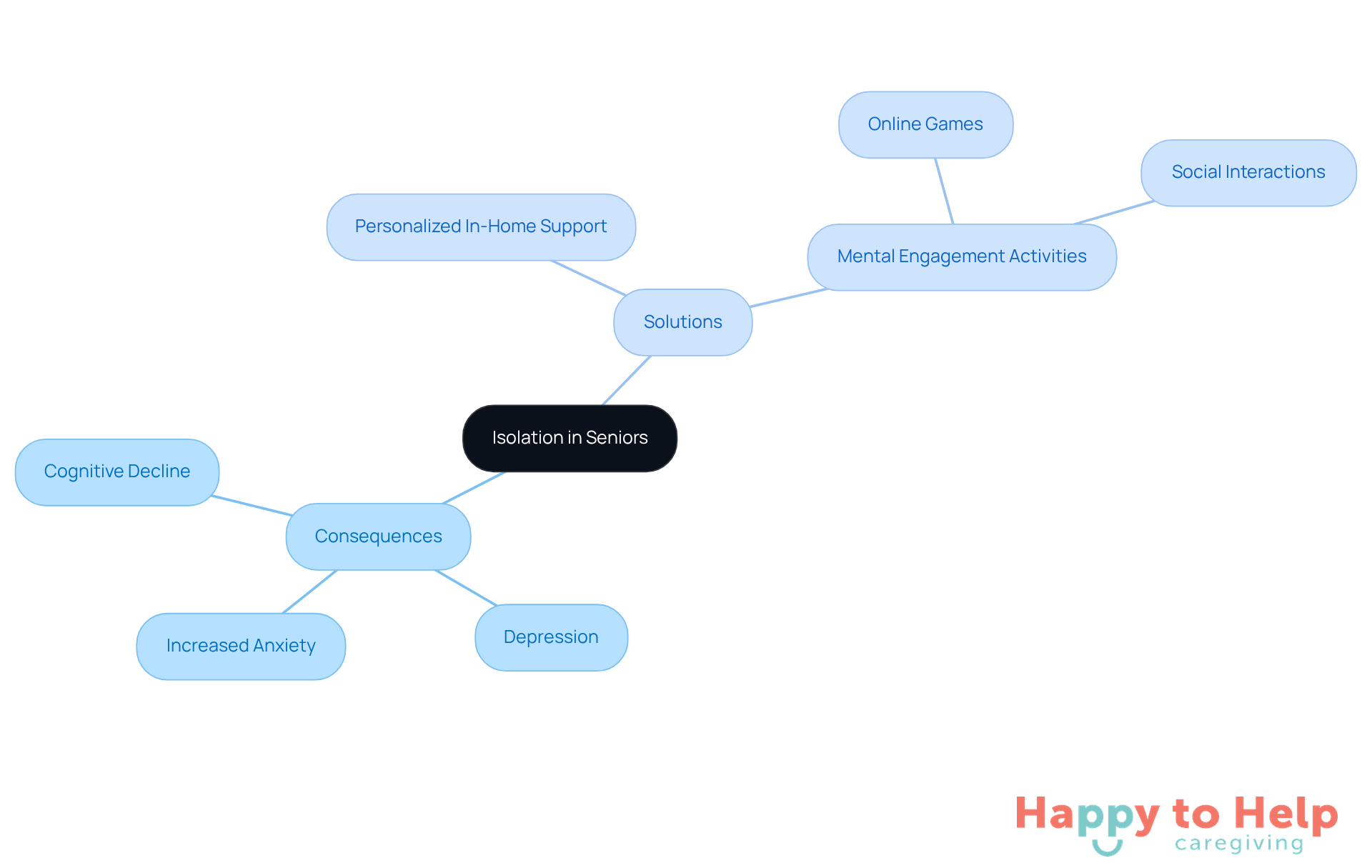
Problem: Seniors often face feelings of isolation, which can significantly impact their mental health and overall quality of life. This isolation not only affects their emotional well-being but can also lead to a decline in mental functions.
Agitate: The consequences of isolation are profound. It can lead to increased anxiety, depression, and a deterioration of cognitive abilities. Caregivers must recognize that addressing these feelings is crucial for the well-being of those they support.
One effective solution to combat isolation is through personalized in-home support that includes mental engagement activities, particularly online games for seniors. By incorporating online games for seniors and social interactions, caregivers can promote mental stimulation. This approach not only helps preserve mental functions but also fosters a sense of community and connection among seniors.
By implementing these strategies, caregivers can enhance the quality of life for seniors, making a significant difference in their daily experiences.
AARP Games: A Diverse Selection of Online Games for Seniors
Cognitive decline is a significant concern for many seniors, impacting their quality of life and independence. Caregivers often face the challenge of finding effective ways to keep their clients mentally sharp and socially engaged.
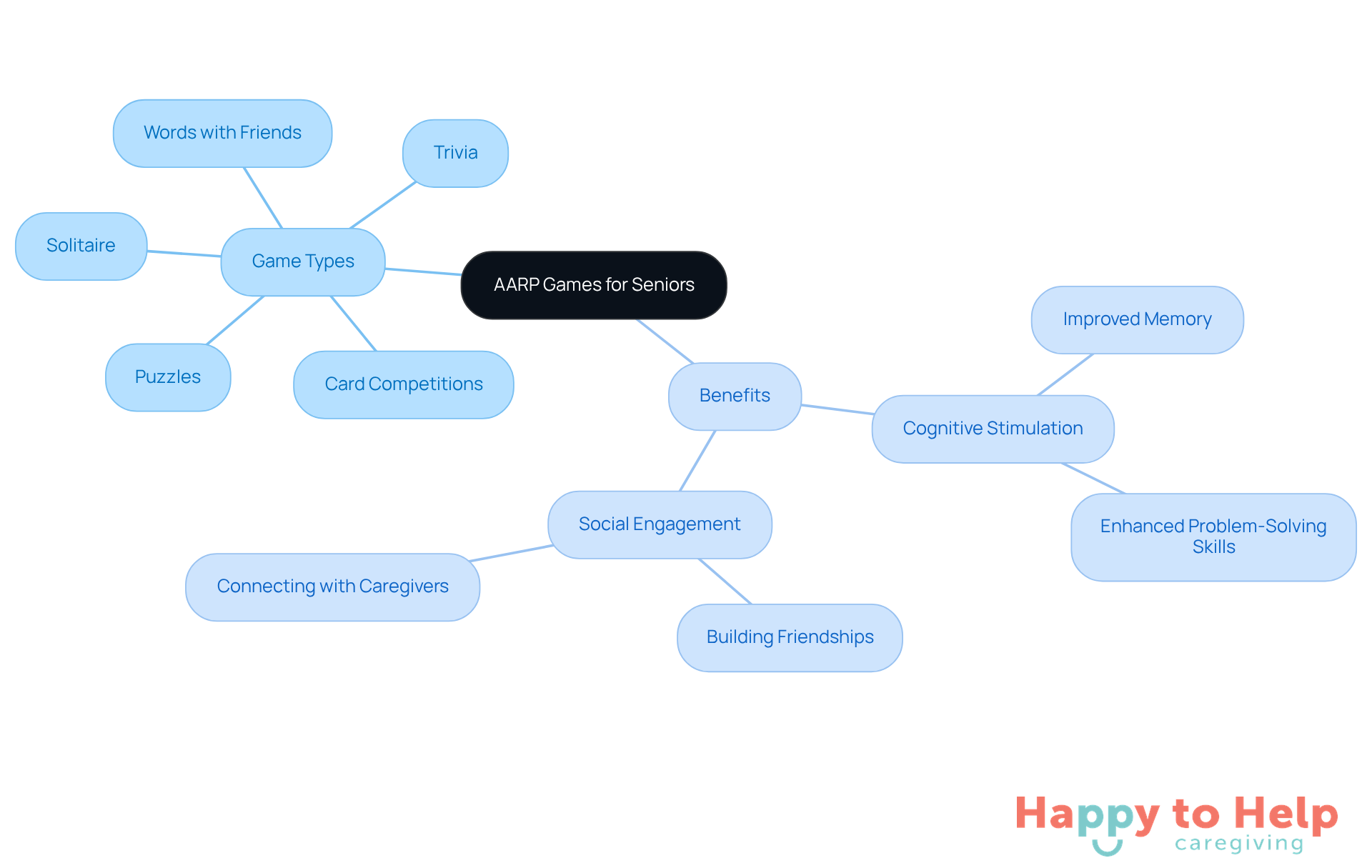
AARP offers a wide selection of online games for seniors, which includes popular choices like:
- Words with Friends
- Solitaire
- Puzzles
- Card competitions
- Trivia
These activities not only entertain but also serve as valuable tools for cognitive stimulation. Research indicates that engaging in such activities can significantly improve memory and enhance problem-solving skills among older adults. In fact, 67% of older adults participate in activities to remain mentally sharp, and studies show that players excel over non-players in attention and mental flexibility.
Moreover, these activities promote social bonds, enabling older adults to connect with peers and caregivers alike. Jo Ann Jenkins, AARP Chief Executive, emphasizes that "a key part of living well as you age is staying mentally engaged and relaxing through play and staying socially connected."
Integrating online games for seniors into daily routines can be an excellent strategy for caregivers seeking to enhance mental agility and social engagement in their clients. By doing so, they can ultimately enrich their clients' quality of life.
Online Chess: Enhance Strategic Thinking and Memory Skills
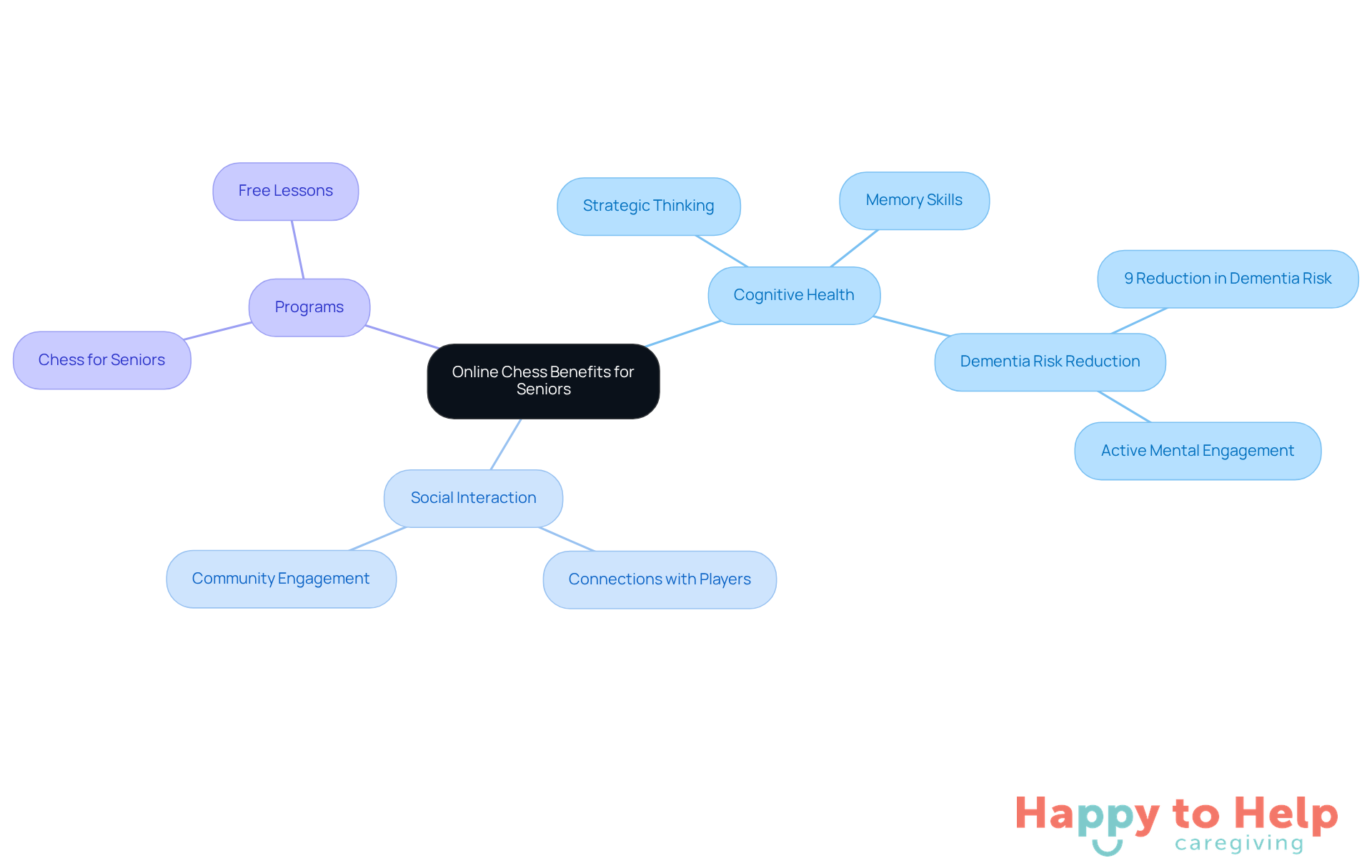
Cognitive decline is a significant concern for seniors, impacting their quality of life and independence. Engaging in online games for seniors, such as chess, offers a valuable opportunity to combat this issue by sharpening strategic thinking and memory skills. The game requires foresight, as players must plan their moves, anticipate opponents' strategies, and recall past games, all of which contribute to cognitive health.
Research shows that active participation in chess can lead to a 9% reduction in the risk of dementia. This statistic highlights chess's effectiveness in promoting mental acuity among older adults. As Zimu Wu, Ph.D., notes, "Playing chess - a mentally stimulating pursuit - is linked to a decreased dementia risk among older adults who have attained age 70 years in relatively good health."
Moreover, online games for seniors facilitate connections with fellow players, enhancing social interaction while engaging in this mentally stimulating activity. Chess is inherently social, promoting gatherings and interactions, making it an ideal option for older adults looking to preserve their mental acuity and strengthen community ties.
Programs like 'Chess for Seniors' provide free lessons, further enhancing involvement and mental well-being among older adults. By participating in chess, seniors can not only improve their cognitive skills but also foster meaningful connections with others.
Online Puzzles: Boost Problem-Solving Skills and Memory
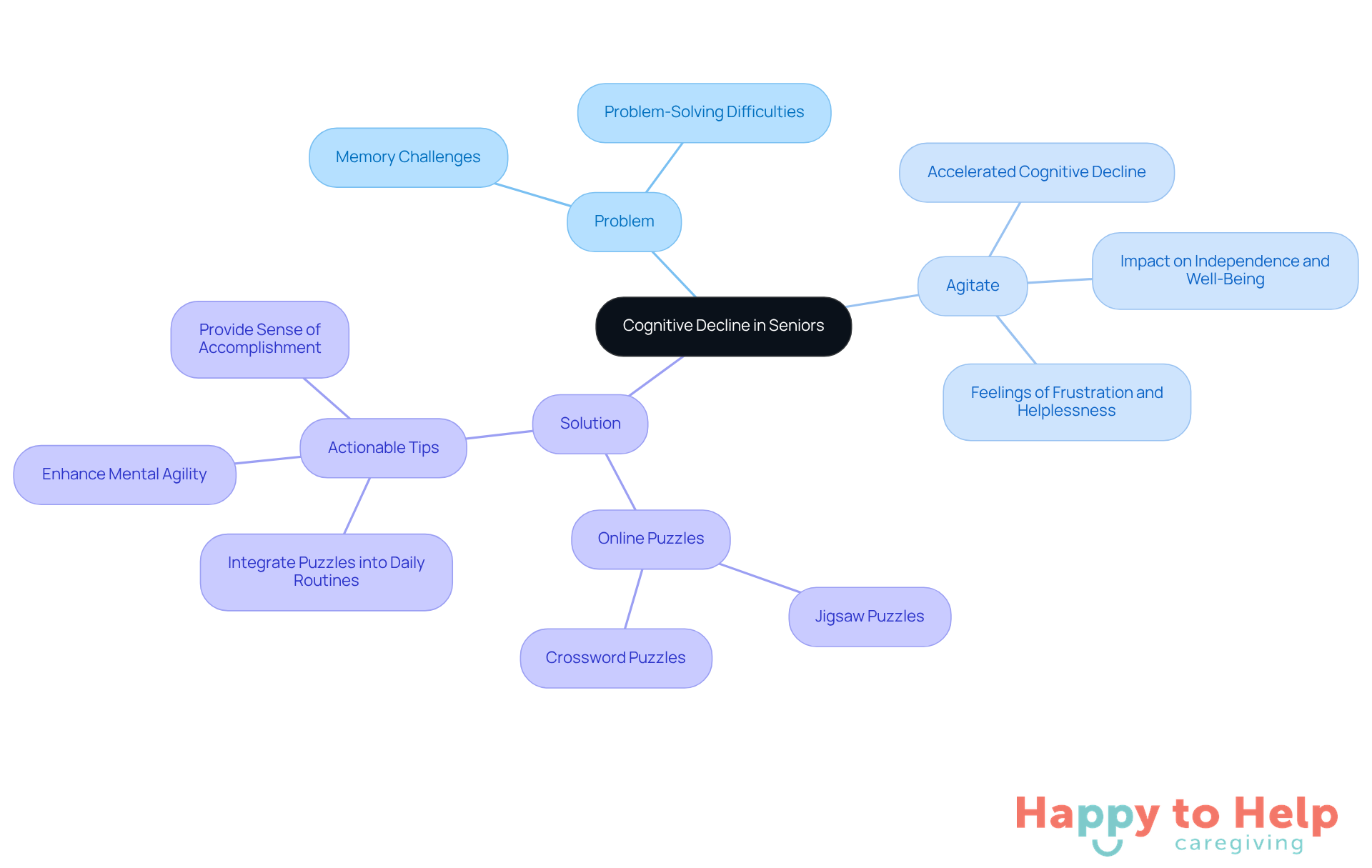
Problem: Cognitive decline is a significant concern for seniors, impacting their memory and problem-solving abilities. As caregivers, it’s crucial to address these challenges to enhance the quality of life for older adults.
Agitate: Research indicates that older adults who do not engage in stimulating activities may experience accelerated cognitive decline. This can lead to feelings of frustration and helplessness, both for seniors and their caregivers. The implications are serious, as maintaining mental agility is vital for independence and overall well-being.
Online games for seniors, including jigsaw puzzles and crosswords, offer an effective strategy for cognitive enhancement. Engaging in these activities not only boosts problem-solving skills but also improves memory. Studies show that seniors who regularly participate in digital puzzle games exhibit memory skills akin to those in their 20s.
- Actionable Tip: Caregivers should integrate these puzzles into daily routines. This not only enhances mental agility but also provides seniors with a sense of accomplishment and enjoyment.
Occupational therapists emphasize the importance of problem-solving activities in elderly care, highlighting their role in fostering independence. By incorporating online games for seniors, caregivers can significantly contribute to the mental well-being of older adults.
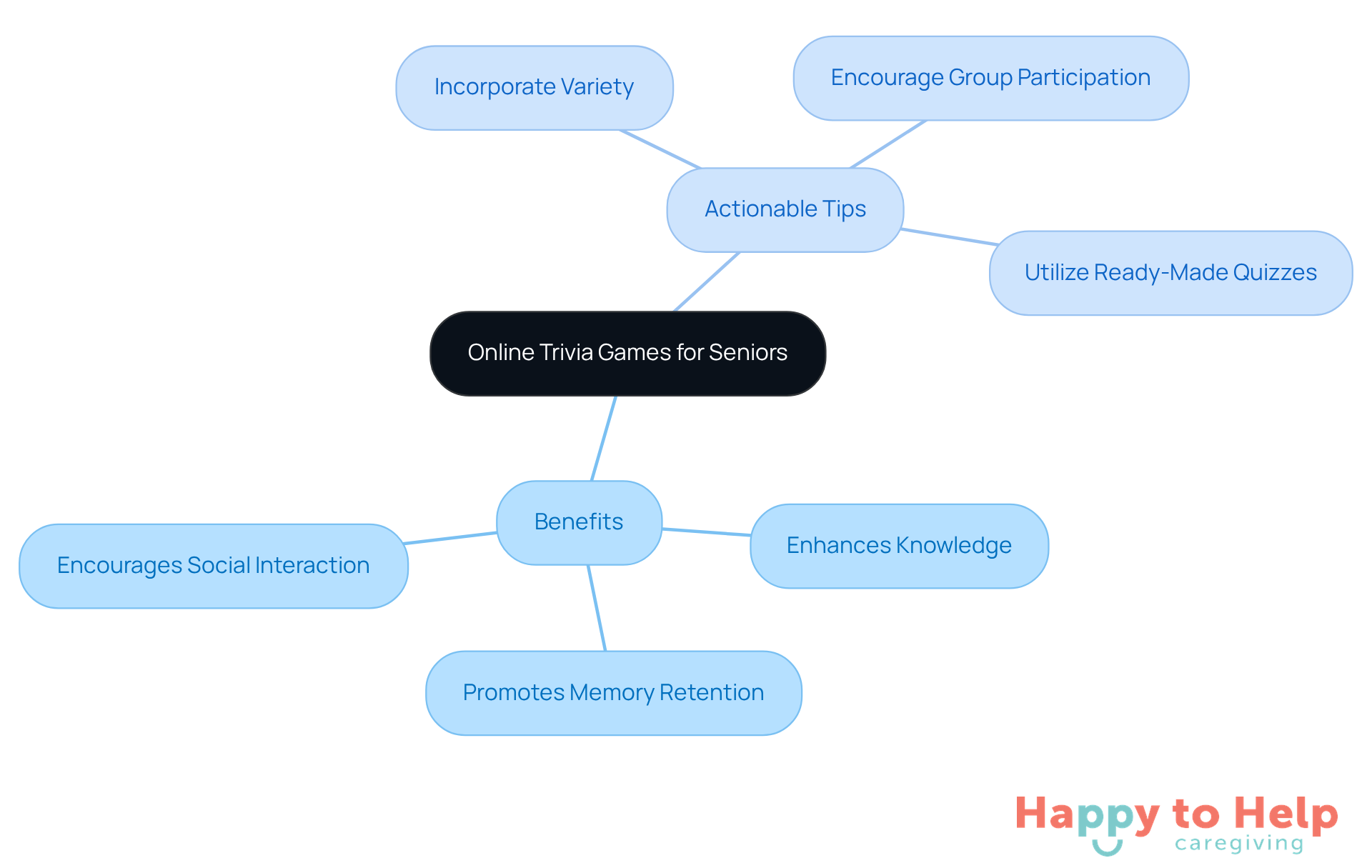
Online Trivia Games: Sharpen Knowledge and Cognitive Agility
Cognitive decline is a significant concern for many seniors, impacting their quality of life and independence. Caregivers often face the challenge of finding effective online games for seniors to engage them both mentally and socially. This is where online games for seniors are utilized.
These activities, such as online games for seniors, not only provide enjoyment but also serve as a valuable tool for enhancing knowledge and mental agility. By challenging participants to recall information and answer questions across various subjects, quizzes promote memory retention and analytical thinking. This dual benefit addresses the cognitive challenges seniors may face.
Caregivers can easily organize online games for seniors, such as trivia sessions, whether individually or in groups, to foster social interaction and mental engagement. Here are some actionable tips:
- Incorporate a variety of topics to keep the quizzes interesting and relevant.
- Encourage group participation to enhance social bonds and create a supportive environment.
- Utilize online games for seniors that offer ready-made quizzes to save time and effort.
By implementing these strategies, caregivers can effectively support seniors in maintaining their cognitive health while also enriching their social experiences.
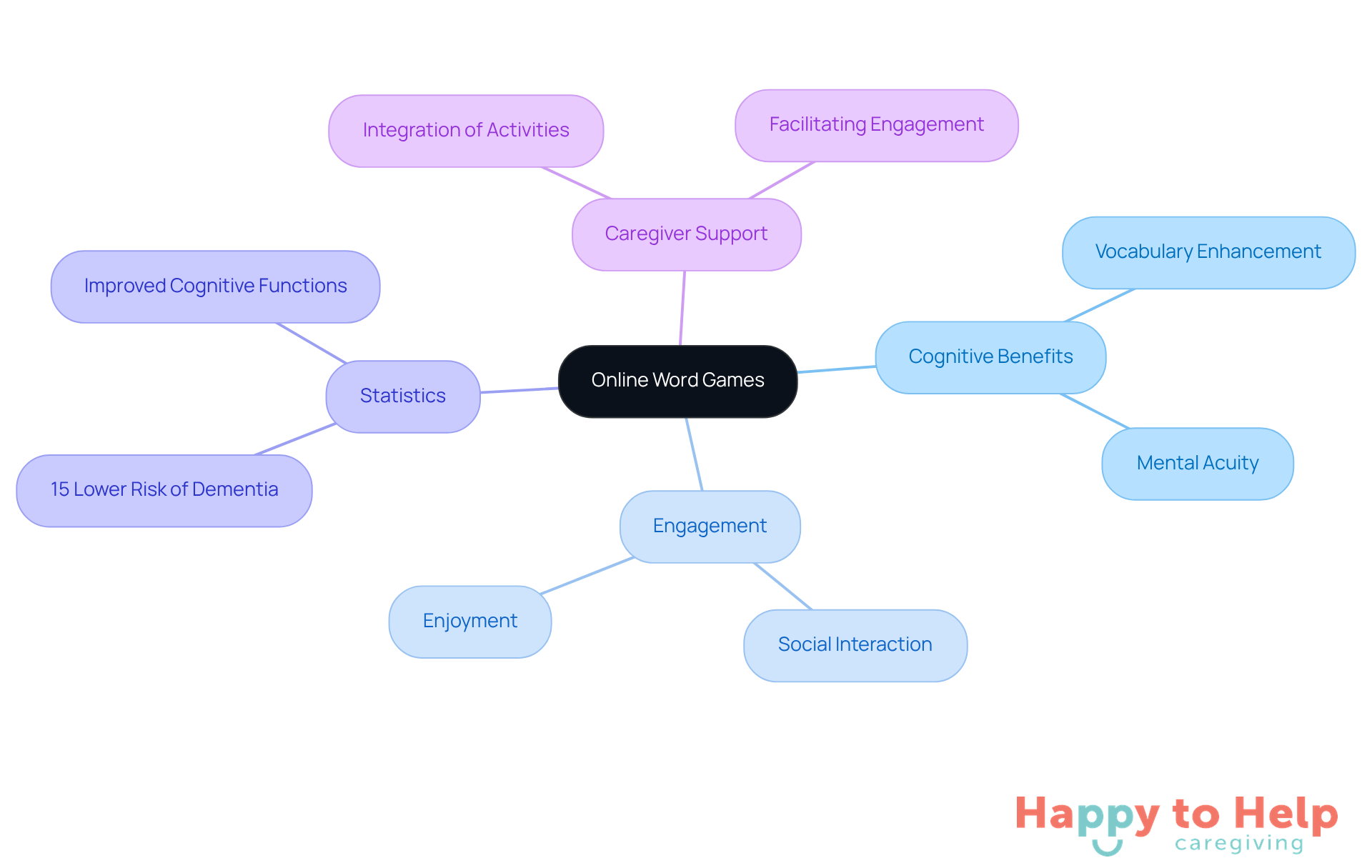
Online Word Games: Enhance Vocabulary and Cognitive Function
Cognitive decline is a significant concern for seniors, often leading to conditions like dementia. This decline can impact their quality of life and independence. Engaging in stimulating activities, including online games for seniors, is crucial for maintaining mental acuity, yet many caregivers struggle to find effective ways to support their loved ones.
Word puzzles, such as Scrabble and Wordle, offer a practical solution. Research indicates that regular participation in these activities can enhance vocabulary and mental ability among seniors. In fact, studies show that individuals who frequently engage in board games have a 15% lower risk of developing dementia compared to those who do not participate. This statistic underscores the importance of incorporating such activities into daily routines.
Caregivers can easily integrate word puzzles into their loved ones' lives, providing both mental stimulation and enjoyment. These interactive platforms, such as online games for seniors, not only promote critical and creative thinking but also facilitate social engagement, enriching the overall experience for elderly players. As language experts note, activities like Scrabble improve vocabulary and deepen comprehension, making them essential tools for preserving mental well-being.
In summary, caregivers can combat cognitive decline by incorporating online games for seniors, including word puzzles, into daily activities. This approach not only supports mental health but also fosters a sense of community and enjoyment among seniors.
Online Sudoku: Foster Logical Thinking and Concentration
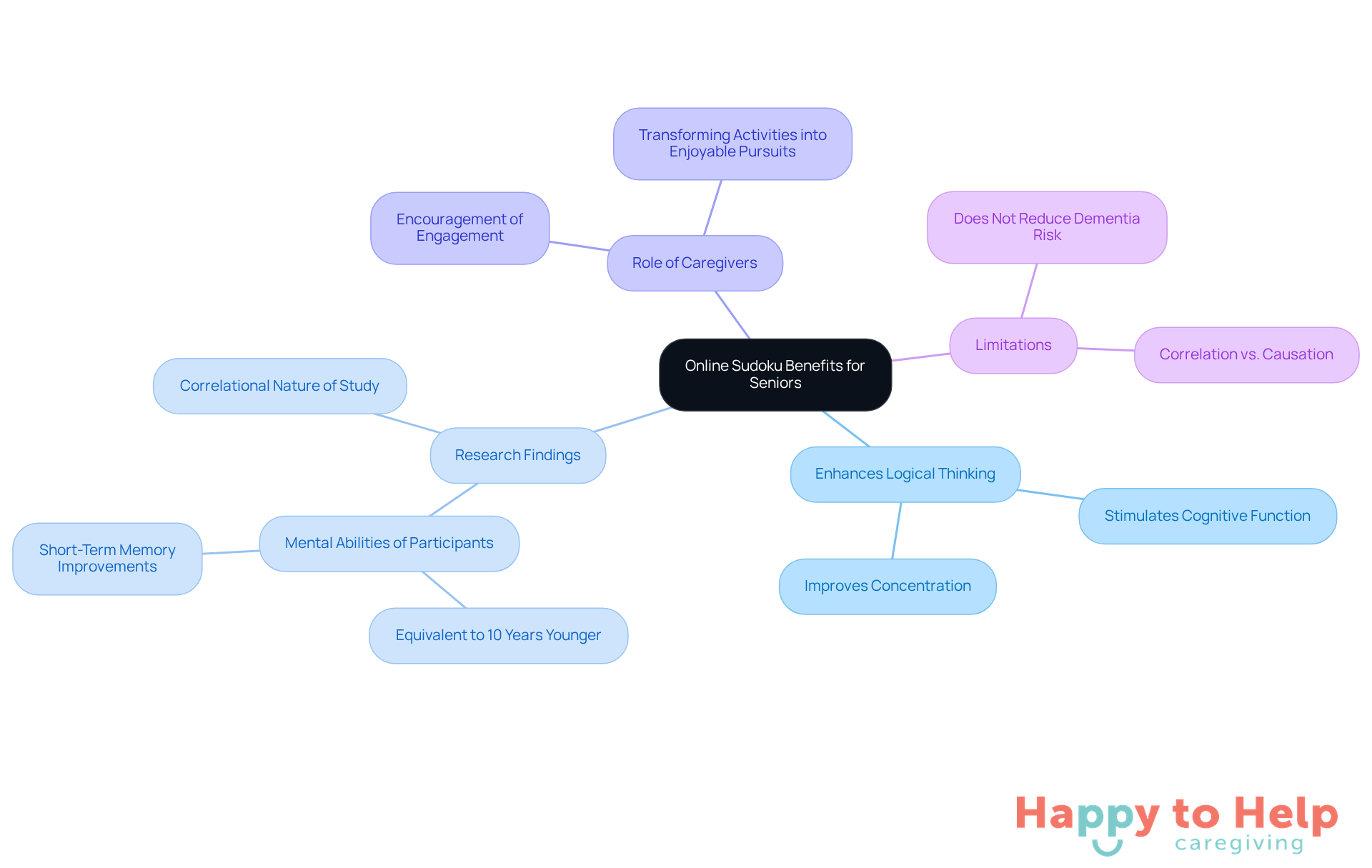
Online games for seniors, like Sudoku, present a significant opportunity for enhancing logical thinking and concentration, addressing a critical problem: mental decline. As individuals age, maintaining cognitive function becomes increasingly important. Engaging in online games for seniors that stimulate the mind can help mitigate these challenges.
Research involving around 19,100 participants reveals that those who regularly engage in puzzles like Sudoku exhibit mental abilities akin to being ten years younger, particularly in areas such as attention and memory. This statistic underscores the potential benefits of incorporating such activities into daily routines.
Caregivers can play a pivotal role in this process. By encouraging seniors to include online games for seniors, such as Sudoku, in their daily activities, they can transform it into an enjoyable and stimulating pursuit that sharpens mental acuity. Dr. Gayatri Devi, a noted researcher in mind studies, emphasizes that online games for seniors and other problem-solving activities not only foster logical thinking but also serve as a safeguard against cognitive decline.
However, it’s essential to recognize the limitations of these activities. As Dr. Anne Corbett points out, while puzzles like Sudoku may help preserve mental function, they do not necessarily reduce the risk of dementia. Caregivers should be aware of this distinction and approach mental exercises as part of a broader strategy for cognitive health.
Online Bingo: Combine Social Engagement with Cognitive Stimulation
Problem: Social isolation and cognitive decline are significant challenges faced by older adults. Many struggle with maintaining social connections and mental sharpness, which can lead to feelings of loneliness and increased risk of mental health issues.
Agitate: Research indicates that these challenges can severely impact daily functioning and overall well-being. Without engaging activities, older adults may find it difficult to stay mentally active, which can exacerbate feelings of depression and anxiety. This situation highlights the urgent need for effective solutions that foster social interaction and cognitive engagement.
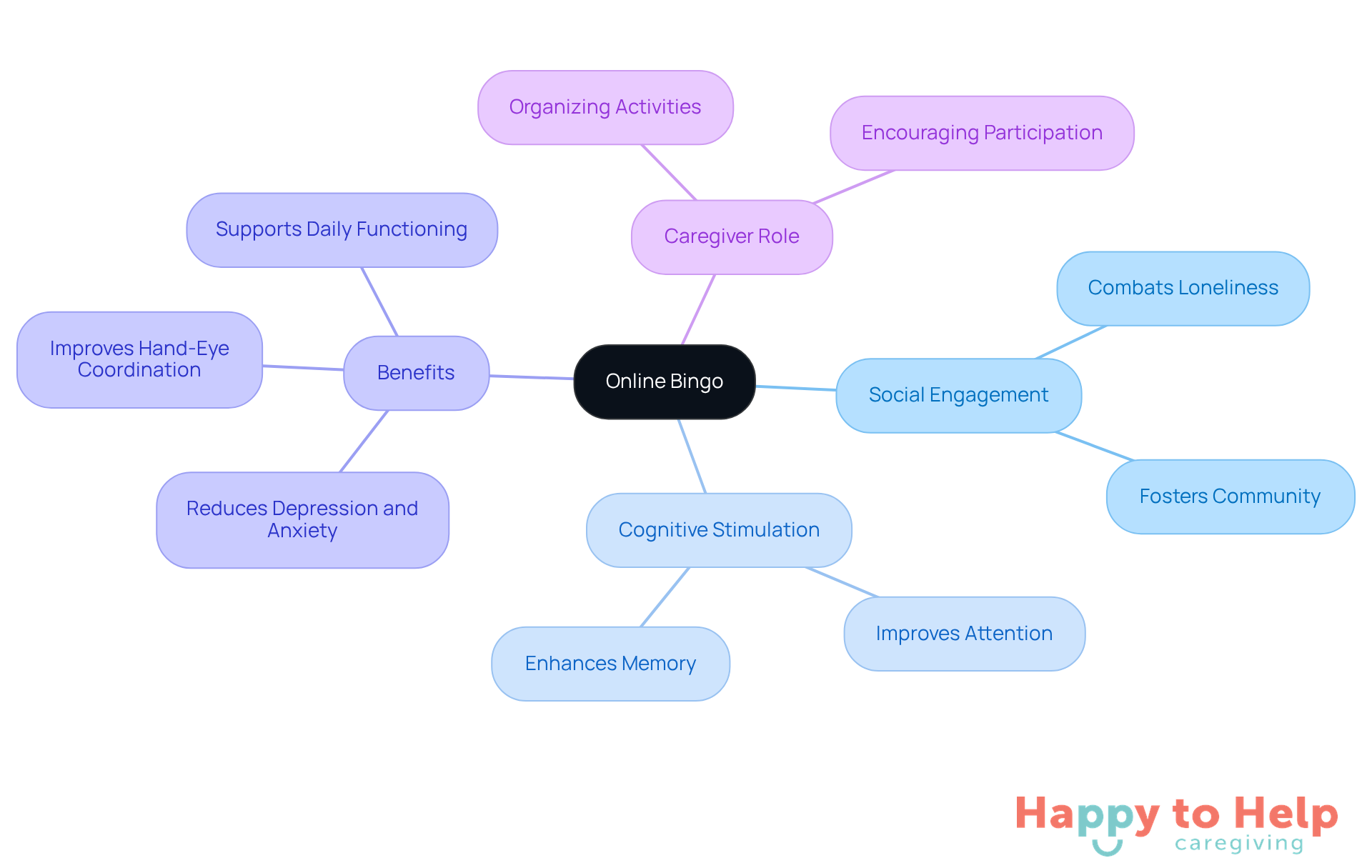
One effective solution is online games for seniors, including Bingo, which serves as a fantastic platform for older adults to enhance both social interaction and mental stimulation. The game requires players to concentrate and listen attentively, significantly boosting attention and memory retention. According to research from the University of Southampton, participating in pastimes like Bingo can enhance cognitive abilities, helping older adults stay sharp and manage daily tasks more efficiently.
Additionally, regular participation in Bingo can decrease the risk of mental illnesses such as depression and anxiety, making it a vital activity for combating loneliness and fostering a sense of community. Caregivers play a crucial role in organizing online games for seniors, creating opportunities for older adults to connect with peers in a fun and interactive environment.
Furthermore, the rapid movements required in Bingo improve hand-eye coordination, aiding older adults in their daily activities. By incorporating these sessions into their schedules, older adults can enjoy the cognitive challenge of the activity while reaping the social benefits of interacting with others.
Online Card Games: Improve Strategic Thinking and Memory
Cognitive decline is a significant concern for many seniors, impacting their quality of life and independence. Engaging in activities that stimulate the mind is crucial for maintaining mental sharpness. Online games for seniors, including card games like Solitaire and Bridge, can be particularly beneficial, as they require strategic thinking and memory recall.
These games not only challenge players to strategize their moves but also encourage them to remember previous actions, which can enhance cognitive abilities. Caregivers can play a vital role in this process by incorporating these activities into the daily routine of seniors. This approach not only provides mental stimulation but also adds an element of enjoyment to their day.
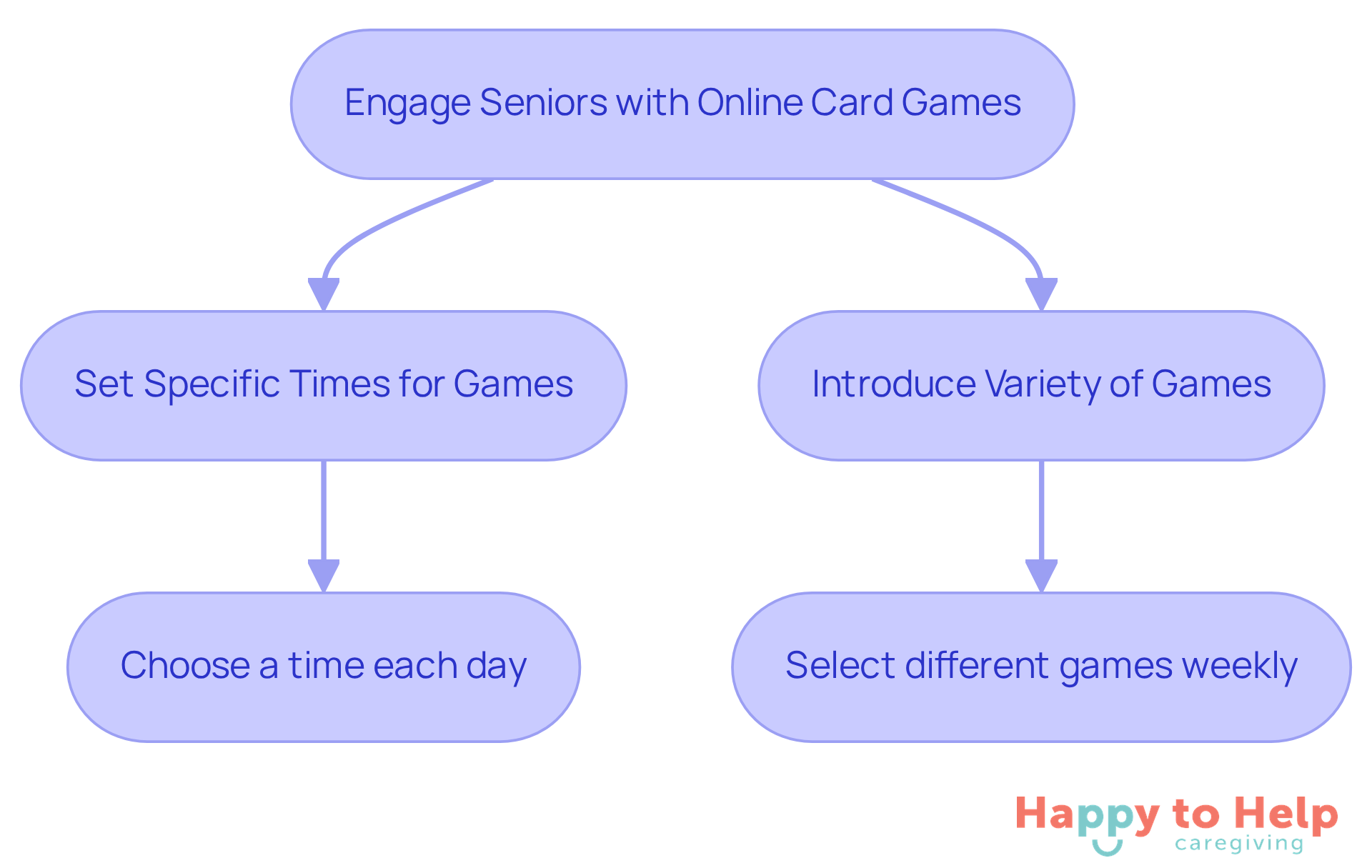
To effectively implement this solution, caregivers can:
- Set aside specific times for card games, ensuring that seniors have a consistent opportunity to engage in these activities.
- Introduce a variety of games to keep the experience fresh and exciting.
By prioritizing online games for seniors as engaging activities, caregivers can help seniors improve their mental agility while fostering a sense of connection and fun.
Multiplayer Online Games: Encourage Social Interaction and Cognitive Engagement
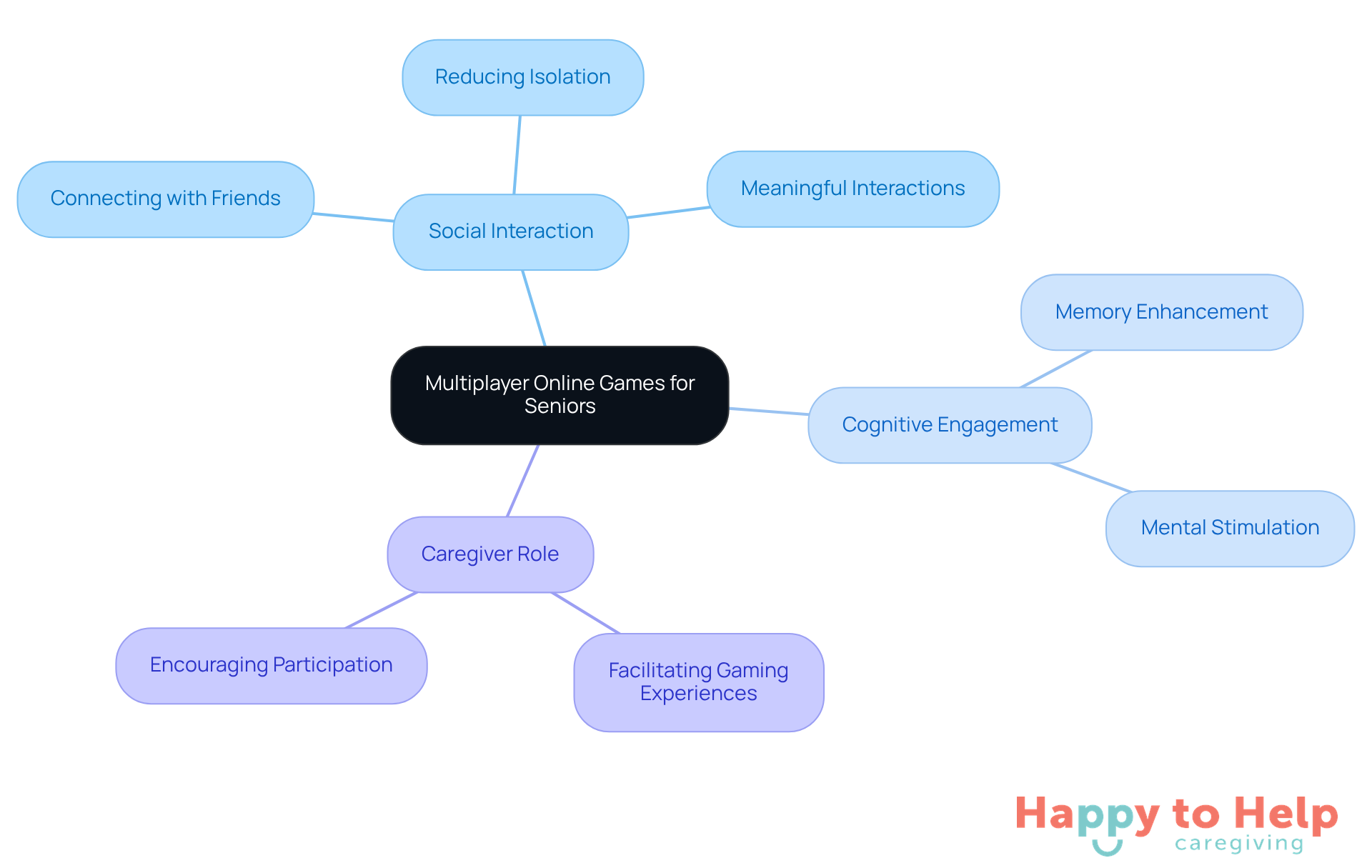
Multiplayer online activities present a significant challenge for older adults who often face feelings of isolation. This isolation can lead to decreased mental engagement and overall well-being. However, caregivers can play a crucial role in addressing this issue by facilitating social interactions through online games for seniors.
Games like Scrabble, Words With Friends 2, and online games for seniors not only connect players with friends and family but also encourage meaningful interactions. Studies indicate that 59% of seniors engage in activities to remain mentally alert. Regular participation in online games for seniors can enhance memory and brain function, making them an excellent option for mental stimulation.
Caregivers can create opportunities for shared gaming experiences, significantly improving the overall well-being of older adults. By promoting involvement in online games for seniors, caregivers help them maintain social connections and cognitive sharpness, ultimately enhancing their quality of life. As the number of older gamers increases, the inclusivity of gaming becomes more relevant, providing a valuable platform for engagement and connection.
Moving Forward with 10 Online Games
Engaging seniors in online games addresses a significant problem: isolation and cognitive decline. These issues can severely impact their mental health and overall quality of life. As the elderly population continues to grow, the need for effective strategies to combat these challenges becomes increasingly vital.
Online games offer a practical solution. By integrating these games into daily routines, caregivers can foster social connections and stimulate cognitive functions. This not only enriches the lives of older adults but also helps maintain their mental agility. Research shows that activities like chess, puzzles, and trivia not only entertain but also enhance mental sharpness, leading to improved problem-solving abilities and memory retention.
Caregivers are encouraged to explore various online games for their unique benefits. From word games that boost vocabulary to multiplayer activities that promote social interaction, each game serves a specific purpose. Implementing these engaging activities can play a crucial role in ensuring that seniors remain mentally active and socially connected.
In conclusion, caregivers can significantly enhance the quality of life for older adults by providing opportunities for joy, connection, and cognitive stimulation through online games. This proactive approach not only combats isolation but also supports mental health, making it an essential strategy in caregiving.
https://iframe.tely.ai/cta/eyJhcnRpY2xlX2lkIjogIjY5M2Y1MDllYjk3NTAxMmE2YWRmZmQxYSIsICJjb21wYW55X2lkIjogIjY4ZWU1ZGNhNzMxNzYyNTU3ZjNjOTVjMSIsICJpbmRleCI6IG51bGwsICJ0eXBlIjogImFydGljbGUifQ==Frequently Asked Questions
What problem do seniors face that affects their mental health?
Seniors often experience feelings of isolation, which can significantly impact their mental health and overall quality of life, leading to increased anxiety, depression, and a decline in cognitive functions.
How can personalized in-home support help seniors?
Personalized in-home support that includes mental engagement activities, such as online games, can combat isolation, promote mental stimulation, and foster a sense of community and connection among seniors.
What types of online games does AARP offer for seniors?
AARP offers a diverse selection of online games for seniors, including Words with Friends, Solitaire, puzzles, card competitions, and trivia.
What benefits do online games provide for seniors?
Online games serve as valuable tools for cognitive stimulation, improving memory and problem-solving skills, while also promoting social bonds among older adults.
How effective are games in maintaining cognitive function in seniors?
Research indicates that engaging in activities like online games can significantly improve cognitive functions, with studies showing that players excel in attention and mental flexibility compared to non-players.
What is the impact of playing chess on seniors' cognitive health?
Engaging in online chess can sharpen strategic thinking and memory skills, and research shows it can lead to a 9% reduction in the risk of dementia among older adults.
How does chess promote social interaction among seniors?
Chess is inherently social, facilitating connections with fellow players, and promoting gatherings and interactions, which helps strengthen community ties while engaging in a mentally stimulating activity.
Are there resources available for seniors to learn chess?
Yes, programs like 'Chess for Seniors' provide free lessons to enhance involvement and mental well-being among older adults.
List of Sources
- Happy to Help Caregiving: Personalized In-Home Support for Cognitive Engagement
- Are Video Games Beneficial for Seniors? - Miami Jewish Health (https://miamijewishhealth.org/blog/senior-health-wellness/are-video-games-beneficial-for-seniors)
- The relationship between cognitive engagement and better memory in midlife (https://alz-journals.onlinelibrary.wiley.com/doi/10.1002/dad2.12278)
- Cognitive stimulation and cognitive results in older adults: A systematic review and meta-analysis (https://sciencedirect.com/science/article/pii/S0167494322001947)
- Understanding Games for Seniors Online: Benefits and Features - Happy To Help (https://happytohelpcaregiving.com/understanding-games-for-seniors-online-benefits-and-features)
- Benefits Of Games For Seniors' Mental Health (https://westmontliving.com/blog/westmont-of-riverside/activities/the-benefits-of-playing-games-for-seniors-mental-health)
- AARP Games: A Diverse Selection of Online Games for Seniors
- Why Video Games Click With People 50-Plus (https://aarp.org/personal-technology/50-plus-gamers)
- U.S. seniors online gaming time 2022| Statista (https://statista.com/statistics/556810/online-gaming-seniors-usa?srsltid=AfmBOopYXh9MP\_WJwZmYr79zk6auLBnI8XjlkijsB19U5YsRqcA2R-n4)
- Over-50 gamers feel overlooked, study finds (https://axios.com/2023/04/20/over-50-gamers-study-aarp)
- Does a game per day keep the doctor away? (https://aarp.org/games/articles/does-a-game-per-day-keep-the-doctor-away)
- Online Chess: Enhance Strategic Thinking and Memory Skills
- Checkmating Alzheimer’s: Birmingham VAMC uses ‘brain games’ to promote sharp minds in older Veterans - VA News (https://news.va.gov/35121/checkmating-alzheimers-birmingham-vamc-uses-brain-games-promote-sharp-minds-in-older-veterans)
- Seniors and Chess: A Great Match (https://new.uschess.org/seniors-and-chess-great-match)
- Why Playing Chess Reduces Risk Of Dementia (https://chess.com/blog/raync910/playing-chess-reduces-dementia-risk)
- The effect of the leisure activities based on chess and cards for improving cognition of older adults: study protocol for a cluster randomized controlled trial - PMC (https://pmc.ncbi.nlm.nih.gov/articles/PMC10386780)
- AOL is part of the Yahoo family of brands. (https://aol.com/articles/study-chess-helps-brain-health-172118586.html)
- Online Puzzles: Boost Problem-Solving Skills and Memory
- An unforgettable experience: Some puzzle games could help maintain high-level memory for seniors, study shows (https://mcknights.com/news/an-unforgettable-experience-some-puzzle-games-could-help-maintain-high-level-memory-for-seniors-study-shows)
- Games, Puzzles And Reading Can Slow Cognitive Decline In The Elderly — Even In Those With Mild Cognitive Impairment (https://stories.tamu.edu/news/2024/09/10/games-puzzles-and-reading-can-slow-cognitive-decline-in-the-elderly-even-in-those-with-mild-cognitive-impairment)
- Digital Puzzle Games Could Be Good For Memory In Older Adults, Study Shows - International Council on Active Aging® (https://icaa.cc/industrynews/2023-09/Digital-puzzle-games-could-be-good-for-memory-in-older-adults-study-shows.htm)
- Can Playing Crossword Puzzles Improve Cognitive Function? (https://columbiapsychiatry.org/news/crossword-puzzles-superior-computer-video-games-slowing-memory-loss-older-adults-mild-cognitive-impairment)
- Study Shows Crossword Puzzles Beat Computer Games in Slowing Memory Loss (https://medschool.duke.edu/news/study-shows-crossword-puzzles-beat-computer-games-slowing-memory-loss)
- Online Trivia Games: Sharpen Knowledge and Cognitive Agility
- Trivia Quotes (43 quotes) (https://goodreads.com/quotes/tag/trivia)
- 10 Best Online Games for Seniors to Boost Brain Health - Happy To Help (https://happytohelpcaregiving.com/10-best-online-games-for-seniors-to-boost-brain-health)
- The Surprising Health Benefits of Trivia for Older Adults with Dementia | Juniper Senior Living (https://junipercommunities.com/the-surprising-health-benefits-of-trivia-for-older-adults-with-dementia)
- Use of an interactive trivia game to increase knowledge and awareness of appropriate antibiotic use in community-dwelling older adults: a pilot survey - PubMed (https://pubmed.ncbi.nlm.nih.gov/25369187)
- Online Word Games: Enhance Vocabulary and Cognitive Function
- Seniors keep minds sharp with word games (https://lifeloop.com/newsroom/seniors-keep-minds-sharp-with-word-games)
- The brain-boosting benefits of word games (https://theoaklandpress.com/2024/08/28/the-brain-boosting-benefits-of-word-games-2)
- Word Puzzles and Board Games Boost Brain Health (https://psychologytoday.com/us/blog/the-full-picture/202412/word-puzzles-and-board-games-boost-brain-health)
- Age-Associated Capacity to Progress When Playing Cognitive Mobile Games: Ecological Retrospective Observational Study - PMC (https://pmc.ncbi.nlm.nih.gov/articles/PMC7320308)
- Online Sudoku: Foster Logical Thinking and Concentration
- Sudoku May Keep Your Brain Younger (https://healthline.com/health-news/can-sudoku-actually-keep-your-mind-sharp)
- Word and number puzzles improve adult cognitive function (https://alzheimers.org.uk/news/2025-10-08/word-and-number-puzzles-improve-adult-cognitive-function)
- Sudoku and Puzzles Won’t Slow Mental Decline, Study Finds (https://usnews.com/news/health-news/articles/2018-12-11/study-sudoku-wont-slow-mental-decline-in-old-age)
- Does Sudoku Improve Brain Health? (https://dulyhealthandcare.com/health-topic/does-sudoku-actually-keep-your-brain-young)
- Online Bingo: Combine Social Engagement with Cognitive Stimulation
- Gambling Addiction among Older Adults: Senior Citizens at Risk - Birches Health (https://bircheshealth.com/resources/gambling-addiction-senior-citizens)
- Benefits of playing bingo for the elderly — Commonwise Home Care (https://commonwisecare.com/resources/benefits-of-playing-bingo-for-the-elderly)
- Learn How Bingo Benefits Both Body and Mind for Seniors | Mayflower (https://mayflower.org.au/news/latest-stories/bingo-benefits-seniors)
- How playing group games like bingo supports health and longevity in older adults | - The Times of India (https://timesofindia.indiatimes.com/etimes/trending/how-playing-group-games-like-bingo-supports-health-and-longevity-in-older-adults/articleshow/124762108.cms)
- Online Card Games: Improve Strategic Thinking and Memory
- The Effectiveness of Serious Games in Improving Memory Among Older Adults With Cognitive Impairment: Systematic Review and Meta-analysis - PMC (https://pmc.ncbi.nlm.nih.gov/articles/PMC9399845)
- Playing Analog Games Is Associated With Reduced Declines in Cognitive Function: A 68-Year Longitudinal Cohort Study (https://academic.oup.com/psychsocgerontology/article/75/3/474/5628188)
- Cognitive Benefits of Card Games for Older Adults - 247 Solitaire (https://247solitaire.com/news/cognitive-benefits-of-card-games-for-older-adults)
- Jared Tendler Quotes (Author of The Mental Game of Poker) (https://goodreads.com/author/quotes/4963764.Jared\_Tendler)
- Multiplayer Online Games: Encourage Social Interaction and Cognitive Engagement
- Multiplayer Games Help Keep You Cozy and Well Connected (https://aarp.org/personal-technology/online-games-when-stuck-inside)
- Gaming in their golden years: why millions of seniors are playing video games (https://theguardian.com/wellness/ng-interactive/2025/jul/14/video-games-older-adults-data)
- 9 Engaging Seniors Online Games for Family Caregivers to Explore - Happy To Help (https://happytohelpcaregiving.com/9-engaging-seniors-online-games-for-family-caregivers-to-explore)
- Game On! Seniors and Online Gaming - Senior Planet from AARP (https://seniorplanet.org/articles-seniors-online-gaming)
- U.S. seniors online gaming time 2022| Statista (https://statista.com/statistics/556810/online-gaming-seniors-usa?srsltid=AfmBOoqiedtjdyurwzF0vG13iBAtGqSK0Vk7mQtyQTDzNkdGy6a6eEnm)