

For families in our service areas
For families in our service areas, this guide explains caregiver support and how non-medical in-home caregiving can support care planning in East Idaho, Treasure Valley & Magic Valley, Northern Wasatch, North Central West Virginia, and Northeast Ohio.
What You Need to Know About 10 Private Duty Services to Support
Caregiving can be both rewarding and overwhelming, particularly for family members who support seniors and individuals with special needs. The increasing demand for personalized in-home care services highlights a pressing issue: caregivers often face significant emotional and physical burdens. This situation not only affects their well-being but also impacts the quality of care provided to those they support.
As the challenges of caregiving grow, so does the urgency for effective solutions. Family caregivers need resources that can alleviate their stress and enhance the lives of their loved ones. This article explores ten vital private duty services designed to address these needs. By implementing these tailored services, caregivers can transform their experience, ensuring that both they and their clients thrive in their respective roles.
Happy to Help Caregiving: Personalized In-Home Care Services
Caregivers often face the challenge of providing adequate support for seniors and individuals with special needs, which can lead to feelings of overwhelm and frustration. The implications of insufficient assistance can significantly impact the quality of life for these individuals, making it crucial to find effective solutions.
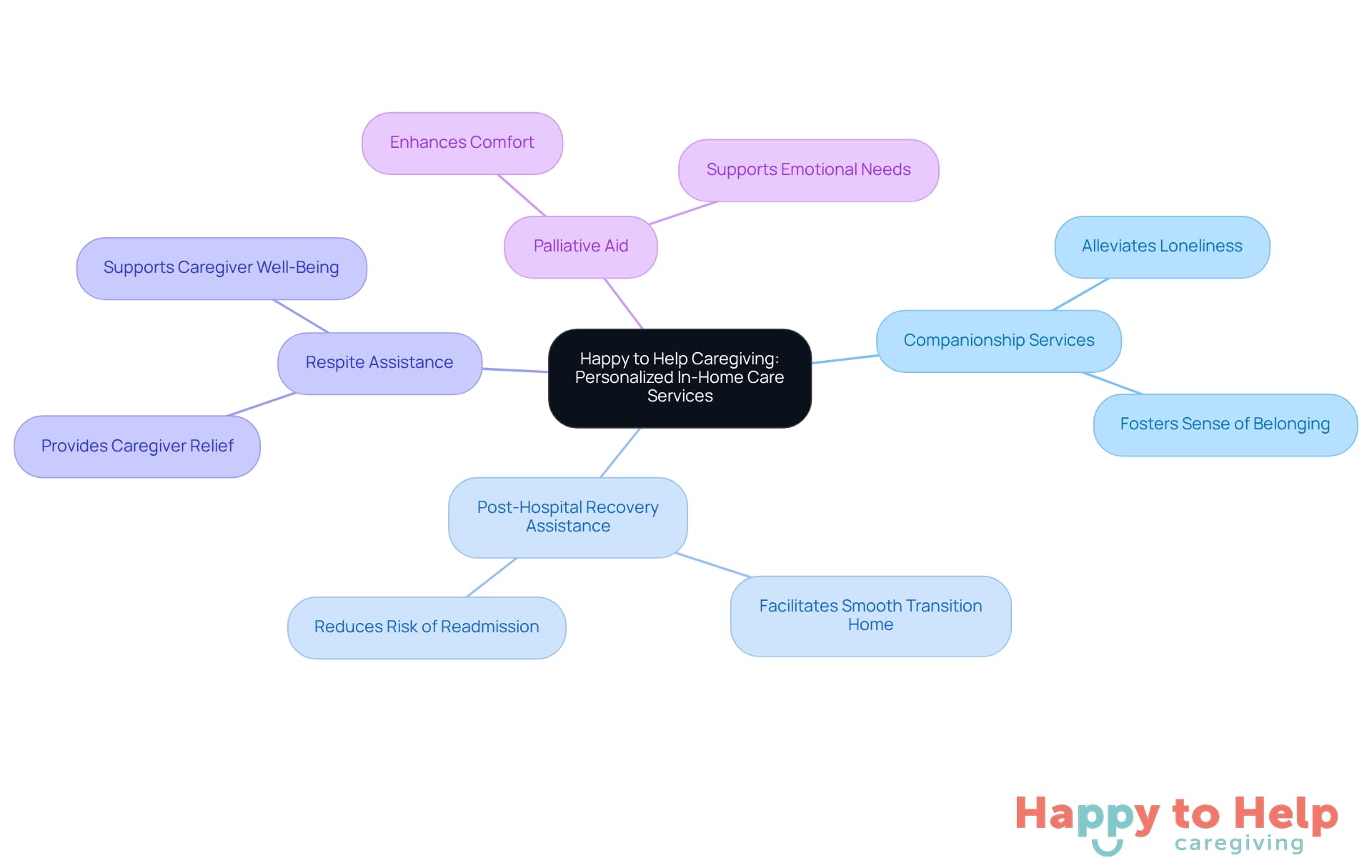
Happy to Help Caregiving addresses this issue by offering tailored in-home private duty services designed to meet the unique needs of each client. Their services include:
- Companionship services
- Post-hospital recovery assistance
- Respite assistance
- Palliative aid
Each service is crafted to encourage independence and enhance the quality of life for seniors and individuals with special needs. By ensuring that clients receive the necessary support in the comfort of their own homes, Happy to Help Caregiving provides vital private duty services for caregivers seeking to improve their loved ones' well-being.
Companionship Care: Alleviating Loneliness and Isolation
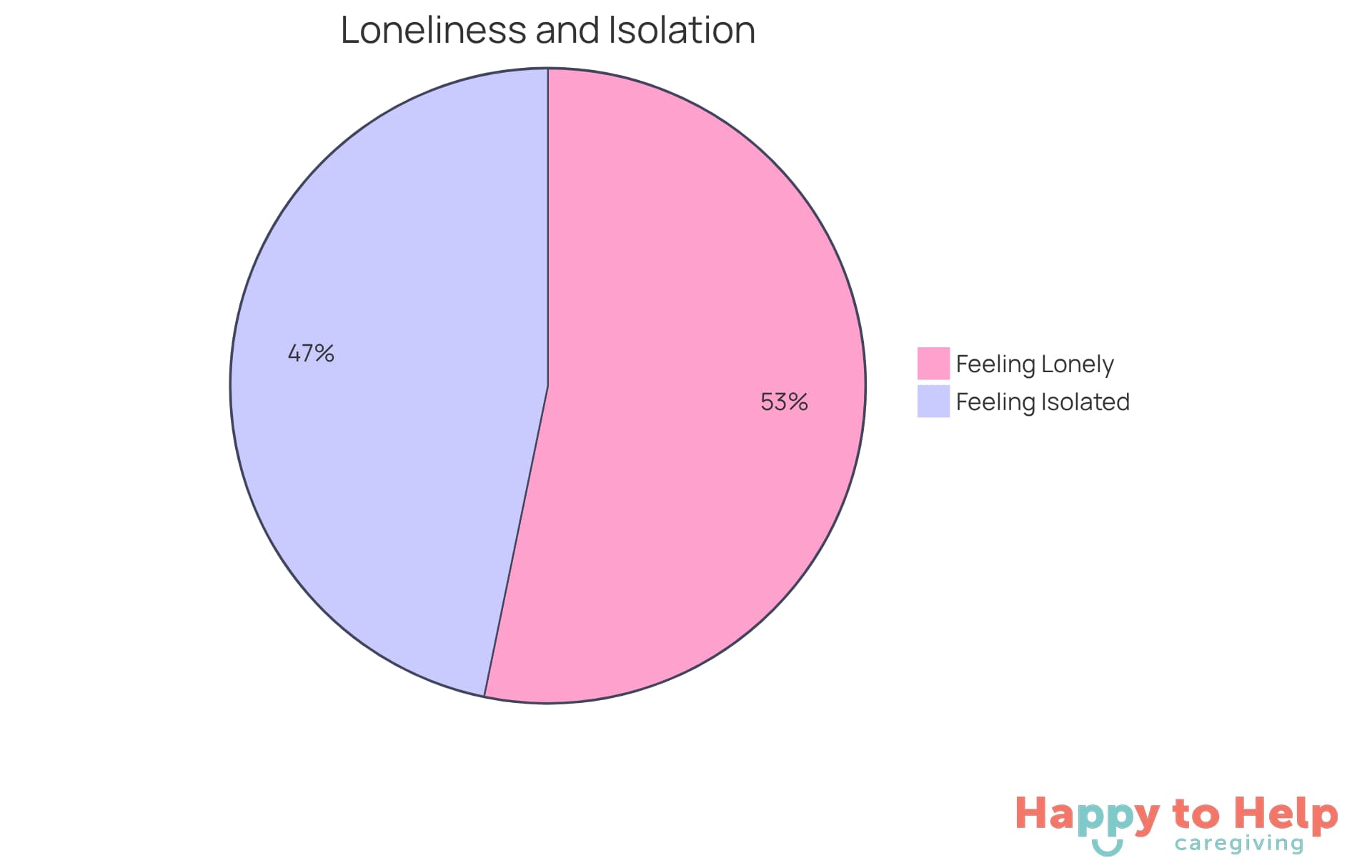
Companionship care addresses a significant problem: loneliness and isolation among seniors. Research shows that in 2024, 33% of older adults aged 50 to 80 reported feeling lonely some of the time or often, while 29% felt isolated. These feelings can severely impact mental health, making companionship essential for fostering a sense of belonging and connection.
The implications of loneliness are profound. Consistent social engagement has been linked to a reduced risk of depression and anxiety in older adults. For instance, 75% of older individuals with fair or poor mental health reported experiencing loneliness in 2024. This highlights the urgent need for effective companionship support to improve mental health outcomes.
So, what can caregivers do? Engaging seniors in meaningful conversations, participating in enjoyable activities, and providing emotional support are key strategies. By addressing feelings of loneliness, companionship care not only enriches the lives of seniors but also enhances their overall mental and physical well-being, allowing them to thrive in familiar surroundings.
Family members also play a crucial role in this process. Their involvement can significantly enhance the efforts of caregivers, creating a comprehensive support network for seniors. Additionally, matching caregivers to seniors based on personality and interests is vital for establishing successful caregiving relationships.
Post-Hospital Recovery Assistance: Ensuring Safe Transitions
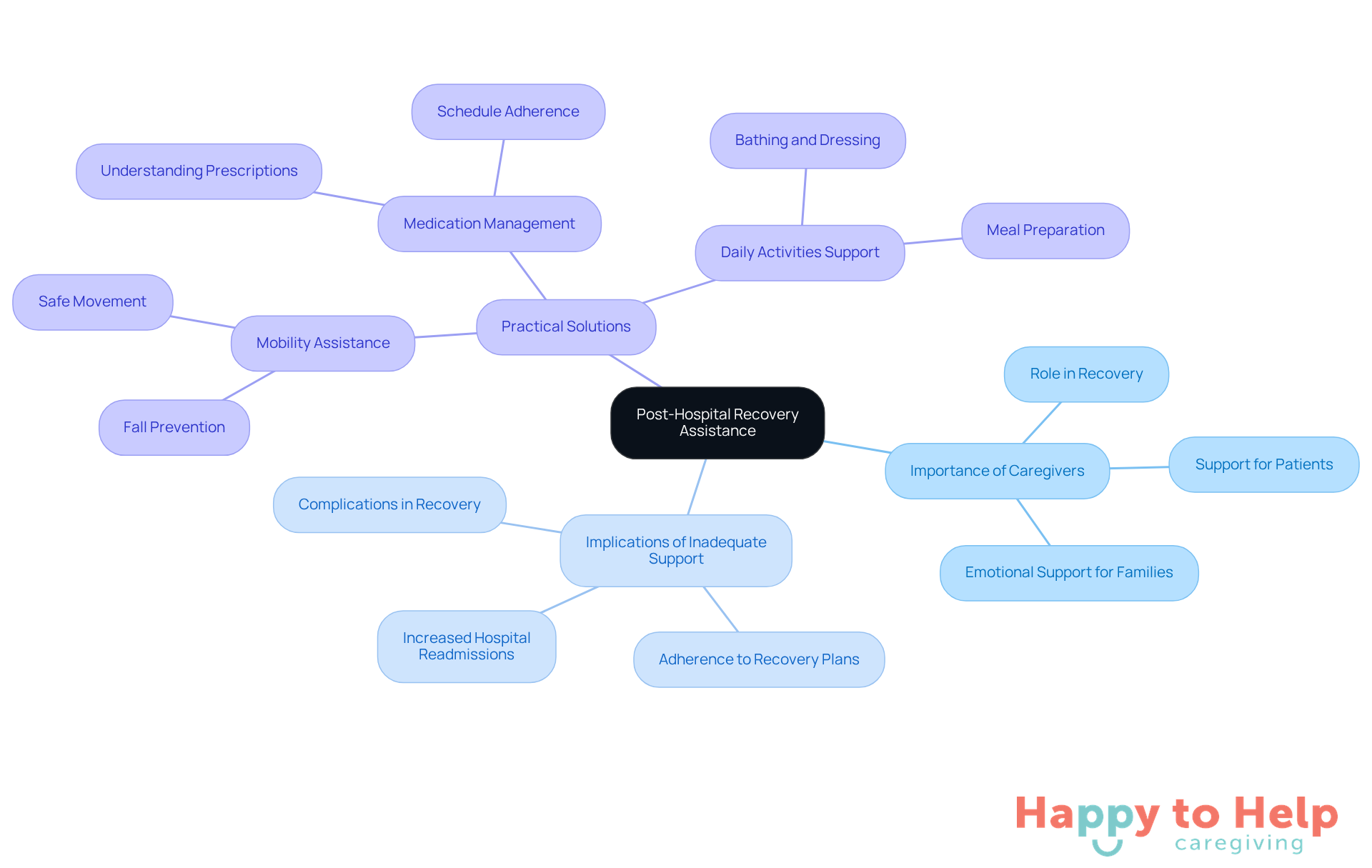
Post-hospital recovery assistance addresses a critical issue: ensuring safe transitions for individuals returning home after a hospital stay. Without proper support, patients may face complications that hinder their recovery. Caregivers play a vital role in this process by providing essential private duty services, including medication management, mobility assistance, and help with daily activities.
The implications of inadequate post-hospital support can be severe. Patients may struggle to adhere to their recovery plans, leading to setbacks in their health. This is where caregivers can make a significant difference. By providing private duty services, they help clients navigate their recovery journey more effectively, ultimately leading to better health outcomes.
To enhance recovery, caregivers can implement several practical solutions:
- Medication Management: Ensure patients understand their prescriptions and schedules.
- Mobility Assistance: Help clients move safely around their homes to prevent falls.
- Daily Activities Support: Assist with tasks like bathing, dressing, and meal preparation.
By focusing on these areas, caregivers offering private duty services can significantly improve the recovery experience for their clients, fostering a smoother transition back to home life.
Respite Care: Supporting Family Caregivers
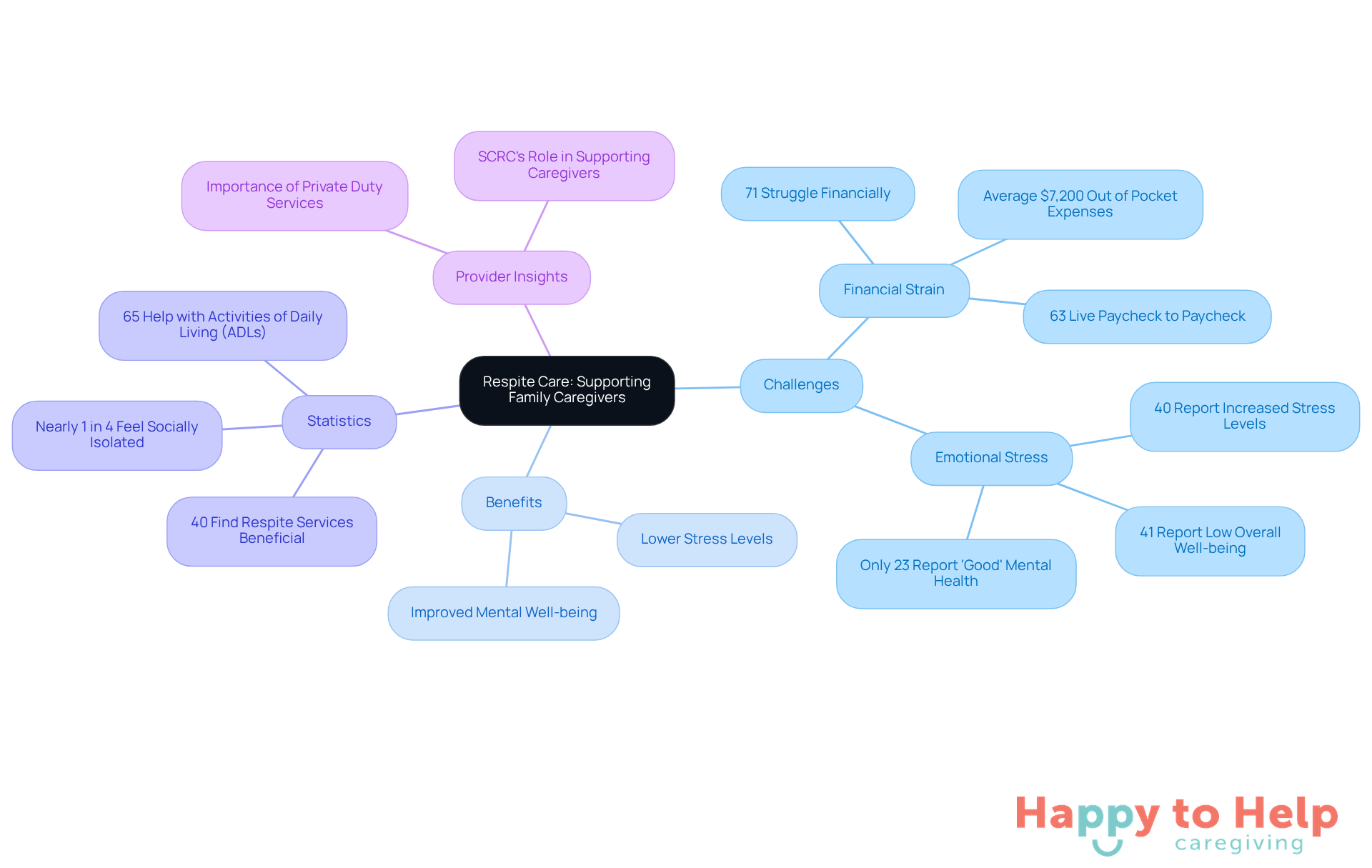
Respite support addresses a significant problem for family caregivers: the need for short-term relief from their demanding responsibilities. Many caregivers face emotional and physical strain, particularly when caring for individuals with chronic conditions like Alzheimer’s disease. Research indicates that nearly 40% of caregivers find respite services beneficial, yet 71% struggle financially, adding to their stress.
The implications of this situation are profound. Caregivers who utilize respite services report lower stress levels and improved mental well-being. However, only 23% of them describe their mental health as 'good.' Additionally, 41% of caregivers report low overall well-being, which is 32% higher than those who do not provide care. This stark contrast underscores the critical need for support and highlights the importance of taking breaks to maintain both caregiver health and the quality of care provided.
Family caregivers often express the necessity of these breaks. One provider noted, "It’s essential to take a break and attend to my needs; otherwise, I can’t support her as she requires." Such insights emphasize the vital role of private duty services in enabling caregivers to provide compassionate and effective assistance. By alleviating stress and preventing burnout, private duty services enhance the experience for both caregivers and their clients.
Initiatives like those from the Southern Caregiver Resource Center (SCRC) are crucial in providing essential resources and support for caregivers. These programs not only offer relief but also reinforce the significance of private duty services in sustaining caregiver well-being.
Palliative Support Care: Enhancing Quality of Life
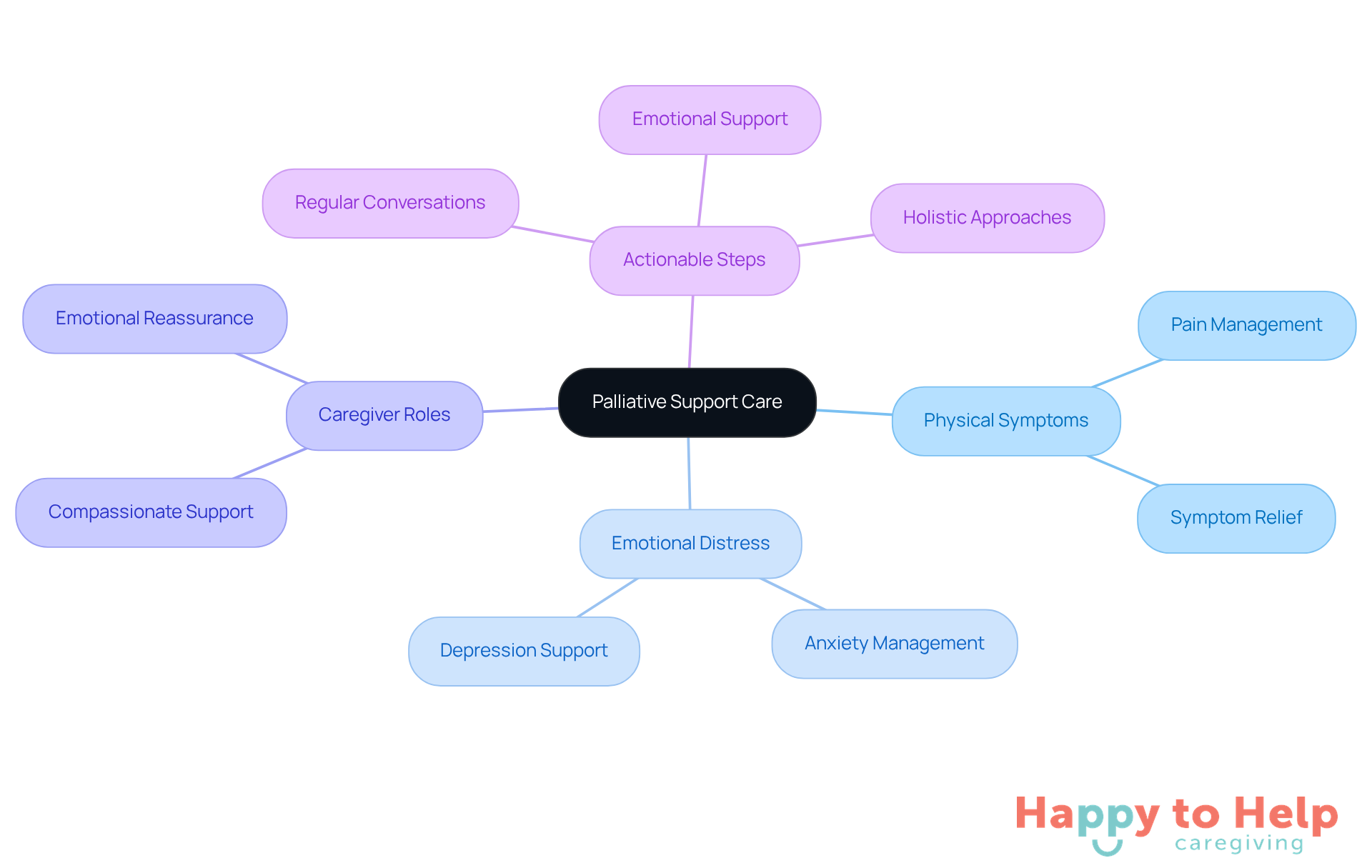
Palliative assistance addresses a significant problem: individuals facing serious illnesses often struggle with both physical symptoms and emotional distress. This dual challenge can lead to heightened anxiety and depression, impacting their overall quality of life. Caregivers are essential in this context, providing the compassionate support needed to help clients manage pain while also offering emotional reassurance to both patients and their families.
Research shows that effective palliative support can significantly enhance patients' quality of life. For example, studies reveal that patients receiving integrated palliative care report improved well-being and a greater sense of comfort throughout their treatment journey. This highlights the urgent need for caregivers to focus on both physical and emotional needs.
Successful palliative support programs emphasize the importance of addressing emotional needs through tailored interventions. These programs often involve regular discussions about patients' preferences and concerns, creating an environment where individuals feel heard and valued. Experts stress that understanding and addressing these emotional aspects is crucial, as it not only enhances the patient's experience but also supports their families during challenging times.
To implement effective palliative care, caregivers can take actionable steps:
- Engage in regular conversations with patients about their feelings and preferences.
- Provide emotional support to both patients and their families, fostering a sense of comfort.
- Utilize holistic treatment approaches that respect individual preferences and enhance dignity.
By concentrating on these strategies, private duty services provide comprehensive support that respects patients' needs and enhances their dignity during treatment.
24/7 Availability: Ensuring Continuous Support
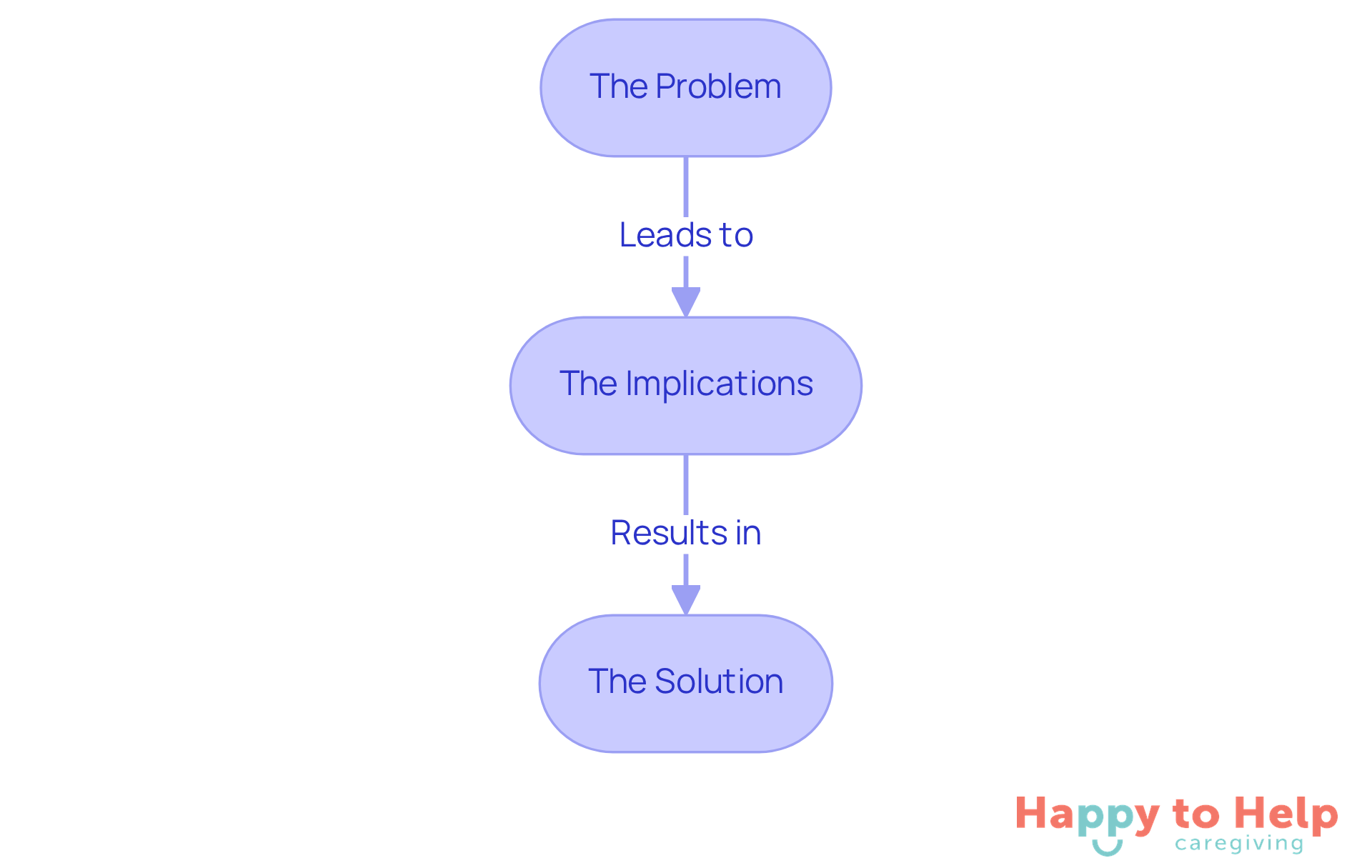
The Problem: Many individuals, especially seniors recovering from surgery or managing chronic conditions, face significant challenges when it comes to receiving adequate support. Without ongoing assistance, their recovery and quality of life can suffer.
The Implications: Research indicates that continuous support greatly enhances outcomes for seniors. The national median expense for round-the-clock home assistance is approximately $30 per hour, which can often be more economical than hospital treatment. Families often worry about their loved ones' safety and well-being, leading to stress and uncertainty.
The Solution: Happy to Help Caregiving offers 24/7 availability, ensuring clients receive tailored assistance whenever they need it. This round-the-clock service not only provides immediate help but also fosters a sense of security and comfort for families. Testimonials from families highlight this peace of mind, with many expressing gratitude for the reliable support that allows their loved ones to maintain independence. One family shared, "Having support available around the clock has made all the difference; we know our loved one is safe and well looked after."
The presence of support providers around the clock contributes to a stable and nurturing environment, ultimately enhancing the quality of life for seniors.
Flexible Scheduling: Tailoring Care to Individual Needs
Flexible scheduling poses a significant challenge in caregiving. Many caregivers struggle to meet the diverse needs of individuals due to rigid time constraints. This can lead to inadequate support, leaving individuals without the care they require when they need it most.
However, Happy to Help Caregiving offers a solution through its flexible scheduling options. Caregivers can tailor their availability to fit the unique preferences and requirements of each individual. Whether someone needs assistance for just a few hours a week or requires full-time care, caregivers can adjust their schedules accordingly.
This adaptability ensures that individuals receive the right level of care at the right time, significantly enhancing their overall experience. By prioritizing flexibility, caregivers can provide more personalized support, ultimately leading to better outcomes for those they assist.
Emotional Support: Building Trust and Connection
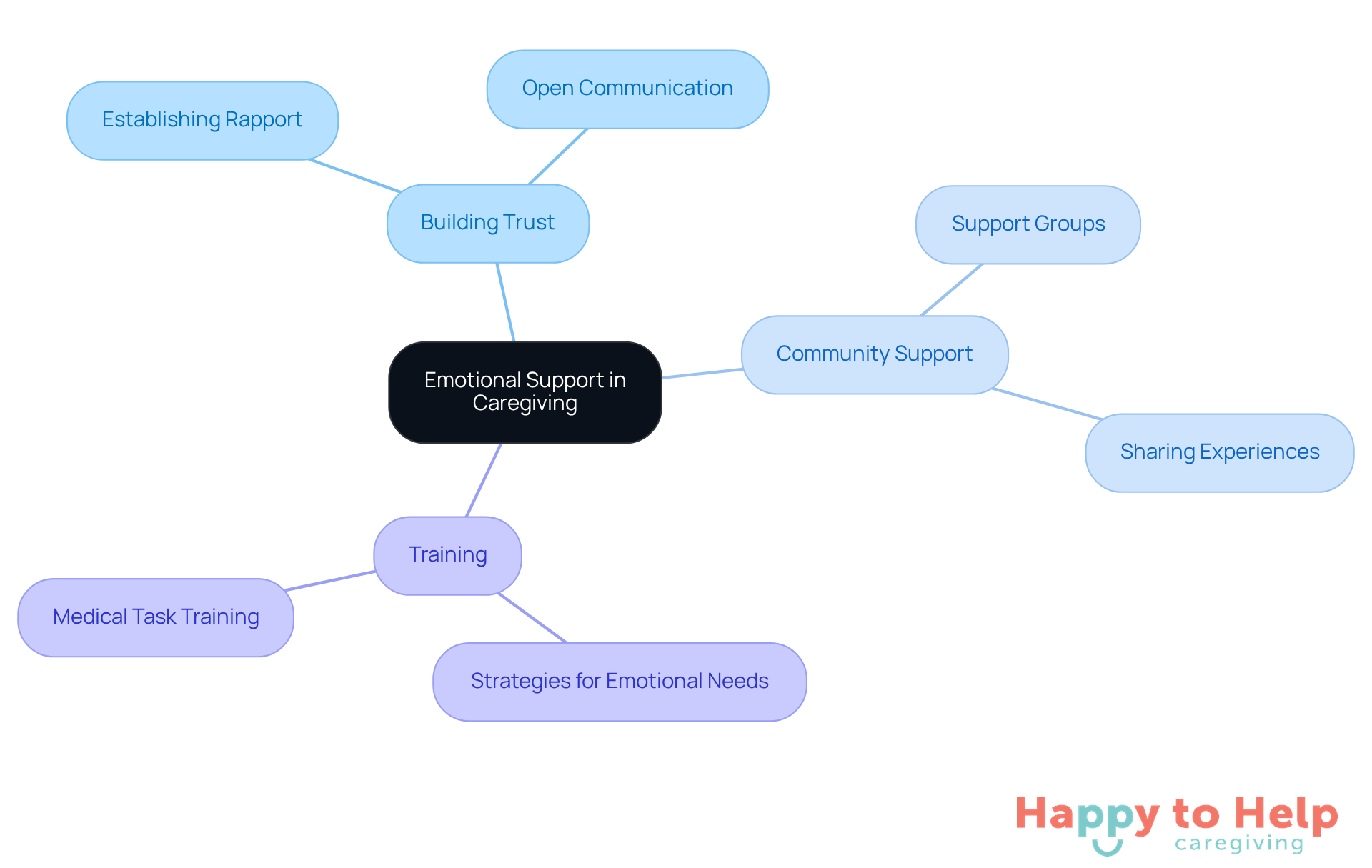
Emotional support is a cornerstone of effective caregiving. Caregivers often face the problem of social isolation, with studies showing that nearly 1 in 4 individuals providing care report feeling disconnected. This isolation can lead to burnout and hinder the quality of care provided.
At Happy to Help Caregiving, caregivers are trained to establish trust and rapport with individuals, creating a safe and nurturing environment. This emotional bond not only improves the client's comfort but also promotes open communication. By fostering these connections, support providers can better comprehend and fulfill their clients' needs.
To combat feelings of isolation, support groups play a crucial role. They provide a community for caregivers to share practical advice and experiences, which can alleviate feelings of burnout. Prioritizing these relationships not only enhances the quality of support but also fosters a sense of belonging and well-being for clients.
In summary, addressing the emotional needs of caregivers through training and community support is essential. By implementing these strategies, caregivers can improve their own well-being while providing better care.
Technology Integration: Enhancing Care Management
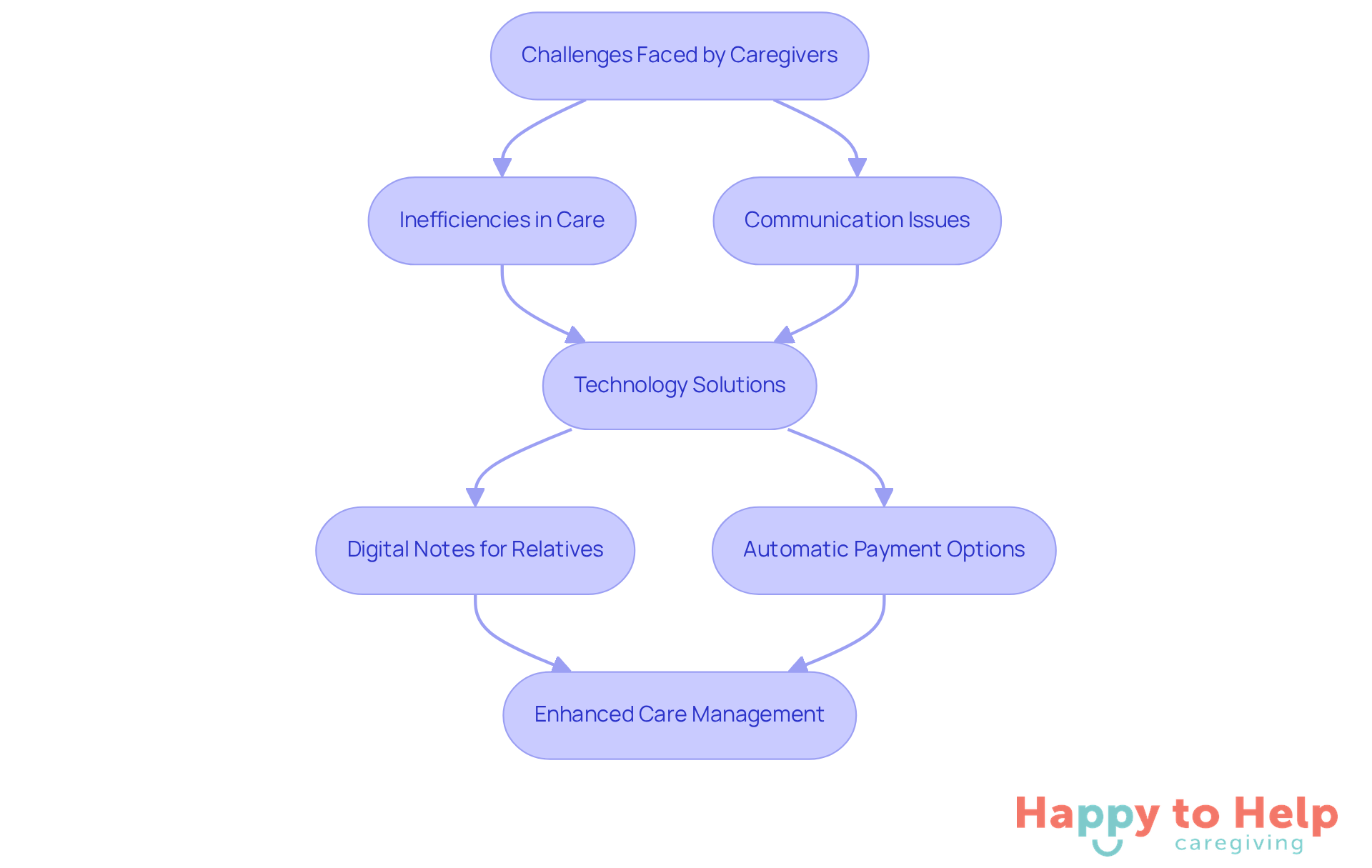
Caregivers often face significant challenges in managing their responsibilities and communicating effectively with families. These issues can lead to inefficiencies that detract from the quality of care provided. When administrative tasks become overwhelming, caregivers may struggle to focus on what truly matters: delivering high-quality assistance to those in need.
To address these challenges, technology offers practical solutions that can streamline management and enhance communication. Tools such as:
- Digital notes for relatives
- Automatic payment options
simplify administrative duties. By implementing these technologies, support providers can reduce their workload and foster better transparency and cooperation with families.
This integration not only enhances efficiency but also allows caregivers to dedicate more time to their clients. Embracing these technological advancements can significantly improve the caregiving experience for both providers and families.
Partnering for Well-Being: The Impact of In-Home Care Services
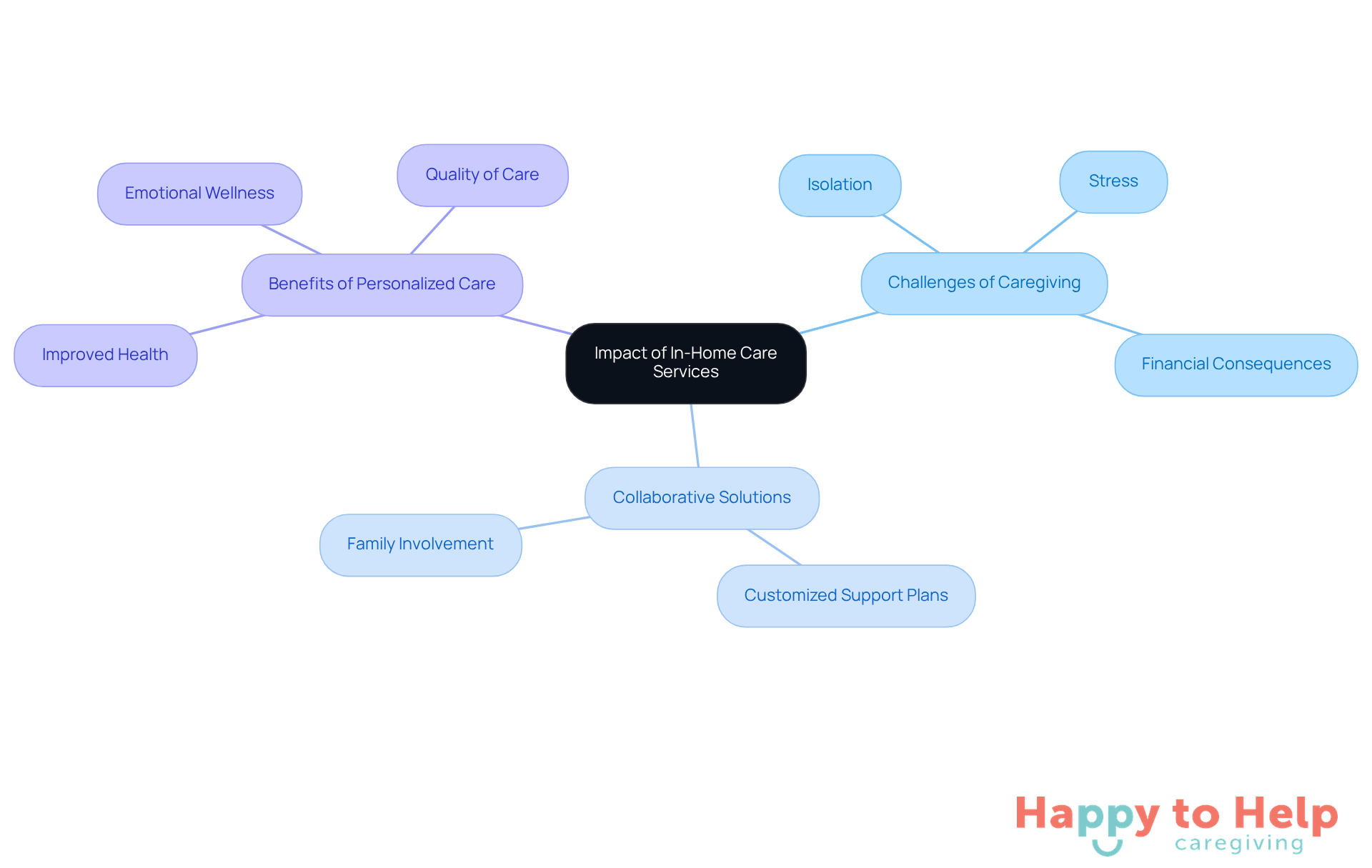
Caregiving presents significant challenges for many families. Currently, around 63 million Americans are caring for elderly or unwell family members, highlighting the extensive nature of caregiving. This responsibility can lead to feelings of isolation and stress, as well as major financial consequences for nearly half of caregivers.
To address these issues, private duty services from Happy to Help Caregiving promote collaboration between providers and families. This model allows caregivers and family members to create customized support plans tailored to the unique needs of each individual. Studies indicate that personalized treatment plans greatly enhance patient outcomes, leading to improved health and emotional wellness.
Care coordinators stress that these plans not only meet medical needs but also consider personal preferences and lifestyle choices, promoting a sense of autonomy for clients. Dr. Myechia Minter-Jordan, CEO of AARP, emphasizes the importance of recognizing and supporting caregivers, stating, "We need systems that recognize caregivers, appreciate them and assist them - because they are not just aiding families, they are sustaining our entire health system."
By actively involving families in the caregiving process, they gain confidence and encouragement throughout their journey. This partnership approach not only enhances the quality of care through private duty services but also alleviates feelings of isolation and stress among family members, ultimately creating a more positive caregiving experience.
To support caregivers effectively, it is crucial to implement strategies that acknowledge their challenges and provide the necessary resources.
Key Takeaways for Caregivers
Happy to Help Caregiving highlights a significant issue: the challenges faced by family caregivers in providing support to seniors and individuals with special needs. These caregivers often experience stress and burnout, which can impact their ability to care effectively. The need for private duty services becomes evident as a solution to alleviate these pressures and enhance the quality of life for both caregivers and their loved ones.
Companionship is crucial in combating loneliness, especially for seniors. Safe transitions during post-hospital recovery are essential to prevent complications, while respite care is vital for preventing caregiver burnout. These services not only provide immediate relief but also foster a sustainable caregiving environment.
Moreover, the benefits of 24/7 availability, flexible scheduling, emotional support, and technology integration cannot be overlooked. These elements are vital in enhancing the caregiving experience for clients and their families, ensuring that caregivers have the necessary support to thrive.
In conclusion, the importance of private duty services is clear. They improve the well-being of those receiving care and empower family caregivers by reducing stress and creating a collaborative support network. As the demand for personalized in-home care continues to rise, exploring available support options is crucial for a fulfilling caregiving journey. Taking action now can lead to a more balanced and effective caregiving experience for everyone involved.
https://iframe.tely.ai/cta/eyJhcnRpY2xlX2lkIjogIjY5MjRmMWMwZWM0Y2FiOGU3NGVjMDBhMCIsICJjb21wYW55X2lkIjogIjY4ZWU1ZGNhNzMxNzYyNTU3ZjNjOTVjMSIsICJpbmRleCI6IG51bGwsICJ0eXBlIjogImFydGljbGUifQ==Frequently Asked Questions
What challenges do caregivers face when supporting seniors and individuals with special needs?
Caregivers often experience feelings of overwhelm and frustration due to the difficulty of providing adequate support, which can significantly impact the quality of life for those they care for.
What services does Happy to Help Caregiving offer?
Happy to Help Caregiving offers tailored in-home private duty services, including companionship services, post-hospital recovery assistance, respite assistance, and palliative aid.
How does companionship care benefit seniors?
Companionship care alleviates loneliness and isolation among seniors, which can improve mental health and reduce the risk of depression and anxiety by fostering social engagement and providing emotional support.
What statistics indicate the prevalence of loneliness among older adults?
In 2024, 33% of older adults aged 50 to 80 reported feeling lonely some of the time or often, while 29% felt isolated, highlighting the need for effective companionship support.
What role do family members play in the caregiving process?
Family members enhance the efforts of caregivers by creating a comprehensive support network for seniors, which can improve the overall caregiving experience.
What is the importance of matching caregivers to seniors based on personality and interests?
Matching caregivers to seniors based on personality and interests is vital for establishing successful caregiving relationships, which can lead to better outcomes for the seniors.
What is the purpose of post-hospital recovery assistance?
Post-hospital recovery assistance ensures safe transitions for individuals returning home after a hospital stay, helping to prevent complications that could hinder their recovery.
What key services are included in post-hospital recovery assistance?
Key services include medication management, mobility assistance, and support with daily activities such as bathing, dressing, and meal preparation.
How can caregivers improve the recovery experience for clients returning home?
Caregivers can improve the recovery experience by ensuring patients understand their medications, helping them move safely around their homes, and assisting with daily activities to facilitate a smoother transition back to home life.
List of Sources
- Happy to Help Caregiving: Personalized In-Home Care Services
- State of home care in 2025 (https://mcknightshomecare.com/state-of-home-care-in-2025)
- Homecare 2025 Trends to Watch (https://rockawayhc.com/homecare-2025-trends-to-watch)
- How Personalized In-Home Care can Improve Seniors Quality of Life - Freedom Home Care (https://freedomhomecare.net/2024/11/21/how-personalized-in-home-care-can-improve-seniors-quality-of-life)
- Home Care Industry Trends to Watch in 2025 (https://firstlighthomecare.com/blog/home-care-industry-trends)
- Compassion in Action: How Personalized Senior Care Enhances Quality of Life - Miss Bell (https://missbellcares.com/compassion-in-action-personalized-senior-care)
- Companionship Care: Alleviating Loneliness and Isolation
- Combat Loneliness: The Benefits of Companion Care for Seniors (https://allheartcare.com/more-than-just-company-the-vital-role-of-companion-care-for-seniors)
- How Companion Care Can Help Combat Senior Isolation and Loneliness | HealthMax Home Health Care (https://healthmaxmn.com/blog/how-companion-care-can-help-combat-senior-isolation-and-loneliness)
- The Emotional Benefits of Companion Care for Seniors (https://comfortkeepers.com/offices/texas/round-rock/resources/news/the-emotional-benefits-of-companion-care-for-seniors)
- The Unbeatable Benefits of Companion Care for Seniors (https://comforcare.com/massachusetts/canton/resources/blog/the-unbeatable-benefits-of-companion-care-for-seniors)
- Loneliness and isolation: Back to pre-pandemic levels, but still high, for older adults (https://ihpi.umich.edu/news-events/news/loneliness-and-isolation-back-pre-pandemic-levels-still-high-older-adults)
- Post-Hospital Recovery Assistance: Ensuring Safe Transitions
- How Healing at Home Helps Unclog the Hospital Bed Logjam (https://usnews.com/news/health-news/articles/2025-03-03/how-healing-at-home-helps-unclog-the-hospital-bed-logjam)
- Post Hospital Care: Why it is Critical for Recovery ? 2025 (https://safehandshhc.com/2025/01/10/post-hospital-care)
- Home Care Impact on Recovery of Patient (A Statistics Report) (https://lovinghomecareinc.com/home-care-recovery-statistics)
- Reducing Medication Errors at Hospital Discharge (https://cedars-sinai.org/newsroom/new-law-to-help-patients-avoid-medication-errors)
- A Safer Transition from Hospital to Home: Pharmacy Program Helps Discharged Patients with Medications-ASHP (https://news.ashp.org/News/ashp-news/2025/09/09/a-safer-transition-from-hospital-to-home-pharmacy-program-helps-discharged-patients-with-medications)
- Respite Care: Supporting Family Caregivers
- New Report Reveals Crisis Point for America’s 63 million Family Caregivers (https://press.aarp.org/2025-07-24-New-Report-Reveals-Crisis-Point-for-Americas-63-million-Family-Caregivers)
- The Caregiving Landscape: Data & Insights on the Caregiver Experience in the U.S. (https://caregiveraction.org/caregiver-statistics)
- News & Success Stories | Live Well San Diego (https://livewellsd.org/Home/Components/News/News/513/153)
- A bill in Congress would return $5,000 to millions of family caregivers every year, but will it pass? (https://cbsnews.com/newyork/news/credit-for-caring-act-family-caregiver-tax-credit)
- Palliative Support Care: Enhancing Quality of Life
- ‘A good death’: How compassionate care helps people navigate the end of life (https://news.yale.edu/2025/10/13/good-death-how-compassionate-care-helps-people-navigate-end-life)
- Exploring Hospice Care Innovations - Top News Stories, August 2025 (https://teleioscn.org/tcntalkspodcast/exploring-hospice-care-innovations-top-news-stories-august-2025)
- Trends in State Palliative Care Legislation Across the U.S. - CAPC - News Bites (https://capc.org/blog/trends-in-state-palliative-care-legislation-across-the-us)
- Palliative care improves quality of life for patients with advanced blood cancer (https://massgeneral.org/news/press-release/palliative-care-improves-quality-of-life-for-patients-with-advanced-blood-cancer)
- 24/7 Availability: Ensuring Continuous Support
- 24/7 In-Home Care Costs in 2025 - Assisted Living Magazine (https://assistedlivingmagazine.com/24-7-in-home-care-costs-in-2025)
- Next Avenue Special Report: Caregiving in America - The 24/7 Caregiver (https://johnahartford.org/resources/view/next-avenue-special-report-caregiving-in-america-the-24-7-caregiver-1)
- Why 24/7 Senior Care Works: Safety, Comfort, and Constant Support - With A Little Help (https://withalittlehelp.com/24-7-senior-care-works)
- The 10-Benefits of 24-Hour Home Care » LifeWorx Home Care (https://lifeworx.com/resources/articles/the-10-benefits-of-24-hour-home-care)
- Cost of 24-Hour Home Care (https://ultimatecareny.com/resources/cost-of-24-hour-home-care)
- Flexible Scheduling: Tailoring Care to Individual Needs
- 9 Ways to Find Caregivers With Flexible Scheduling Options - MedCity News (https://medcitynews.com/2025/05/9-ways-to-find-caregivers-with-flexible-scheduling-options)
- New U.S. Workforce Report: Nearly 70% of Family Caregivers Report Difficulty Balancing Career and Caregiving Responsibilities, Spurring Long-Term Impacts to U.S. Economy (https://press.aarp.org/2024-5-16-US-Workforce-Report-70-Caregivers-Difficulty-Balancing-Career-Caregiving-Responsibilities)
- Flexible Care Models Transform Home Care Services - Pulivarthi Group (https://pulivarthigroup.com/flexible-care-models-transform-home-care-services)
- Flexible Care Models Give Home Care Clients ‘What They Want When They Want It’ (https://homehealthcarenews.com/2025/10/flexible-care-models-give-home-care-clients-what-they-want-when-they-want-it)
- How flexible care models boost private-pay growth in home care | Gabrielle Pumpian posted on the topic | LinkedIn (https://linkedin.com/posts/gpumpian\_flexible-care-models-give-home-care-clients-activity-7392960362586890240-Dzq8)
- Emotional Support: Building Trust and Connection
- New Report Reveals Crisis Point for America’s 63 million Family Caregivers - Massachusetts Healthy Aging Collaborative (https://mahealthyagingcollaborative.org/new-report-reveals-crisis-point-for-americas-63-million-family-caregivers)
- Family Caregiver Support, Education Needs Growing (https://hospicenews.com/2025/11/11/family-caregiver-support-education-needs-growing)
- How Caregiver Support Groups Improve Mental Health (https://trualta.com/resources/blog/how-caregiver-support-groups-improve-mental-health)
- As Family Caregiving Grows, So Does the Need for Reform - Medicare Rights Center (https://medicarerights.org/medicare-watch/2025/08/14/as-family-caregiving-grows-so-does-the-need-for-reform)
- Caregiving in the US 2025: Caring Across States (https://aarp.org/pri/topics/ltss/family-caregiving/caregiving-in-the-us-2025-caring-across-states)
- Technology Integration: Enhancing Care Management
- HHS Launches New Caregiving AI Initiative to 'Spark Innovative Support' (https://hospicenews.com/2025/11/18/hhs-launches-new-caregiving-ai-initiative-to-spark-innovative-support)
- Tech-enabled caregiving can help dementia patients stay at home — perhaps for too long (https://statnews.com/2025/11/24/dementia-caregiving-technology-assistance)
- Technology and interventions are changing care for older adults (https://fastcompany.com/91414509/technology-and-interventions-are-changing-care-for-older-adults)
- HHS Launches $2M AI Initiative To ‘Transform’ Caregiving, Address Staffing Challenges (https://homehealthcarenews.com/2025/11/hhs-launches-2m-ai-initiative-to-transform-caregiving-address-staffing-challenges)
- HHS Backs AI Innovation for America’s Caregivers | HHS.gov (https://hhs.gov/press-room/hhs-backs-ai-innovation-for-americas-caregivers.html)
- Partnering for Well-Being: The Impact of In-Home Care Services
- The number of family caregivers is surging (https://19thnews.org/2025/07/family-caregivers-surging-aarp)
- Number Of Family Caregivers Has Skyrocketed in The U.S. (https://usnews.com/news/health-news/articles/2025-07-25/number-of-family-caregivers-has-skyrocketed-in-the-u-s)
- Caregiver Statistics: Demographics (https://caregiver.org/resource/caregiver-statistics-demographics)
- Caregiving Crisis: 45% Increase in Americans Providing Care (https://aarp.org/caregiving/basics/caregiving-in-us-survey-2025)
- Supporting Family Caregivers: How In- Home Senior Care Can Make the Difference - Arlington & Alexandria (https://aplaceathome.com/arlington-alexandria/2025/11/11/supporting-family-caregivers-how-in-home-senior-care-can-make-the-difference)