
For families in our service areas
For families in our service areas, this guide explains home care and how non-medical in-home caregiving can support care planning in East Idaho, Treasure Valley & Magic Valley, Northern Wasatch, North Central West Virginia, and Northeast Ohio.
Understanding 10 Qualities of Compassionate Home
Compassionate home caregiving is more than just a service; it’s a lifeline for many seniors and individuals with special needs who face the challenges of isolation and inadequate support. This problem not only affects their daily lives but also their overall well-being. The qualities of a truly effective caregiver can significantly enhance the quality of life for those they assist, fostering a sense of security and belonging.
Yet, what exactly distinguishes a compassionate caregiver from the rest? This article delves into ten essential qualities that not only define compassionate home caregivers but also explore how these traits can transform the caregiving experience. By addressing the pressing needs of clients and their families alike, we aim to provide actionable solutions that caregivers can implement to improve their practice.
Happy to Help Caregiving: Compassionate In-Home Support
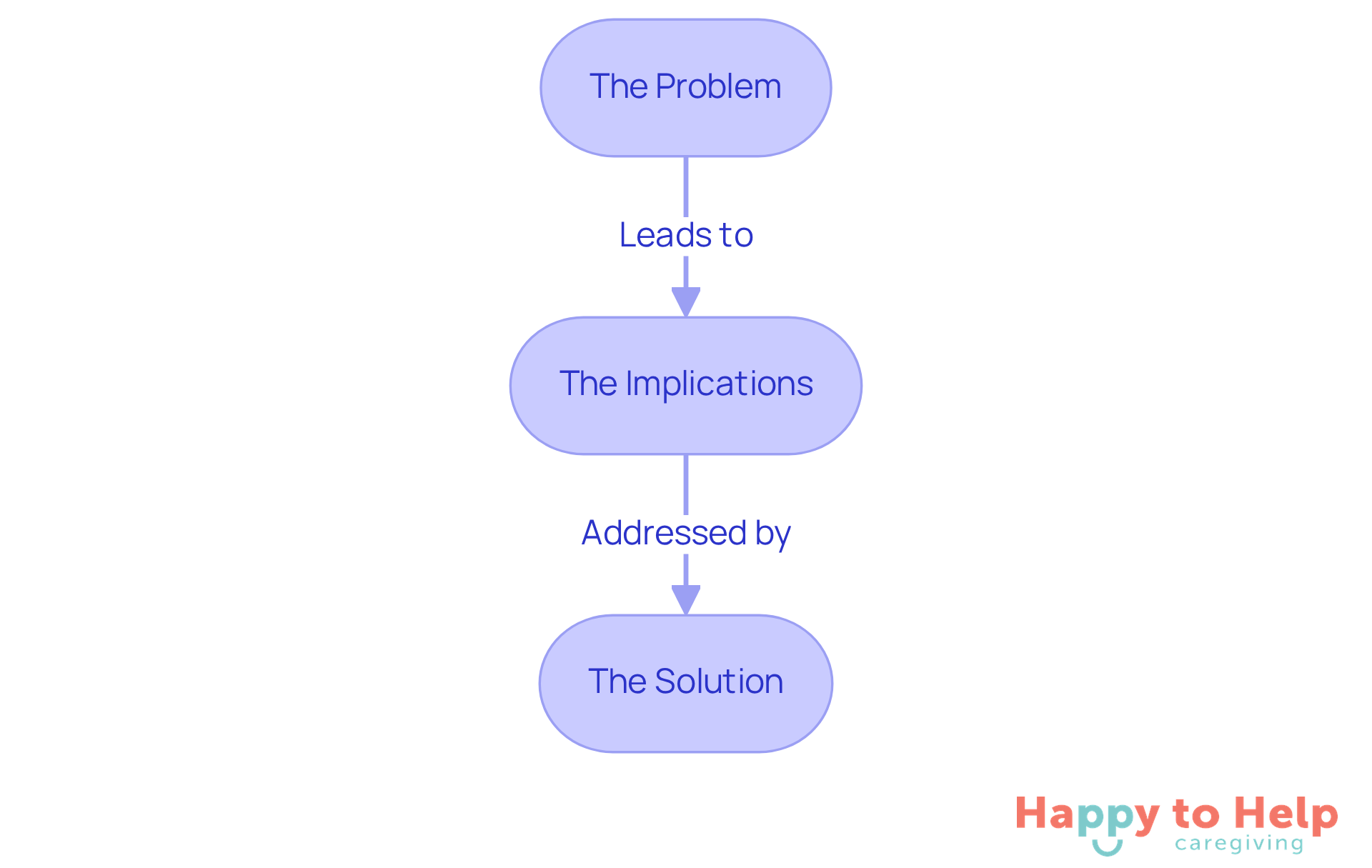
The Problem: Many seniors and individuals with special needs face challenges in receiving personalized care that truly meets their unique preferences. This lack of tailored assistance can lead to feelings of insecurity and undervaluation in their own homes.
The Implications: When care is not customized, it can significantly impact the quality of life for these individuals. They may feel isolated or unsupported, which can exacerbate health issues and diminish their overall well-being.
The Solution: Happy to Help Caregiving is dedicated to addressing these challenges by offering compassionate home caregivers tailored to each person's needs. Their services range from companionship to palliative care, ensuring that every individual receives the personalized attention they deserve. The caregiving philosophy of compassionate home caregivers is fundamentally based on a commitment to empathy and understanding, allowing individuals to feel secure and valued in their own homes.
Empathy: The Heart of Effective Caregiving
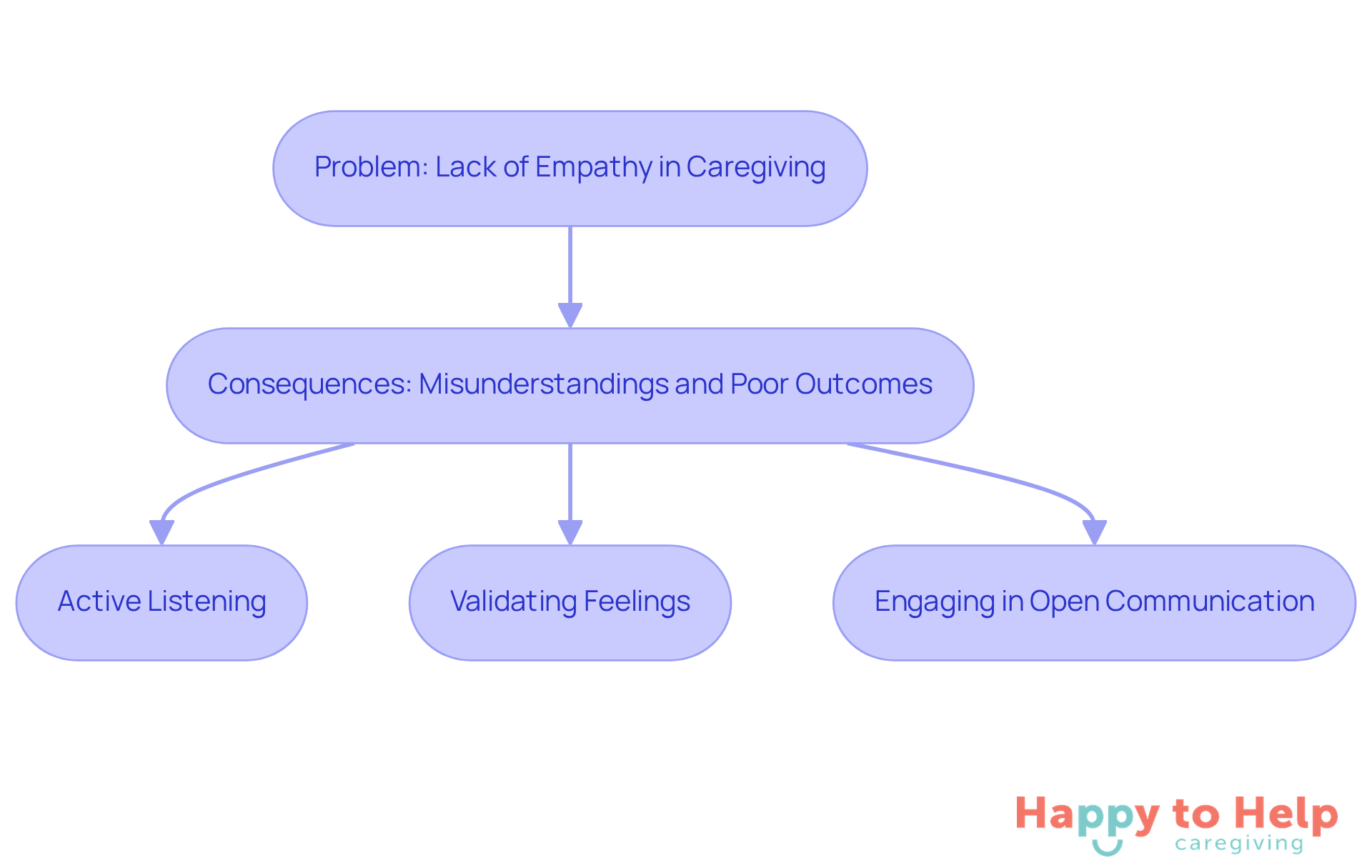
Many compassionate home caregivers struggle with demonstrating empathy, which is crucial for effective caregiving. Without the ability to understand and express the emotions of those they assist, caregivers may create an environment that feels unwelcoming and dismissive.
Agitate: This lack of empathy can lead to misunderstandings and unmet emotional and physical needs. When individuals feel overlooked, it can result in decreased satisfaction and poorer outcomes in their care.
Solution: To enhance caregiving, caregivers should actively practice empathy. This can be achieved through techniques such as:
- Active listening
- Validating feelings
- Engaging in open communication
By fostering a nurturing atmosphere, caregivers can better predict the needs of those they assist, ultimately leading to improved satisfaction and outcomes.
Effective Communication: Building Trust with Clients
Effective communication poses a significant challenge for compassionate home caregivers in establishing trust within home care settings. Caregivers often struggle to convey information clearly, which can lead to misunderstandings and a lack of trust. This issue is particularly concerning as it affects individuals' comfort in expressing their needs and preferences, ultimately impacting their care experience.
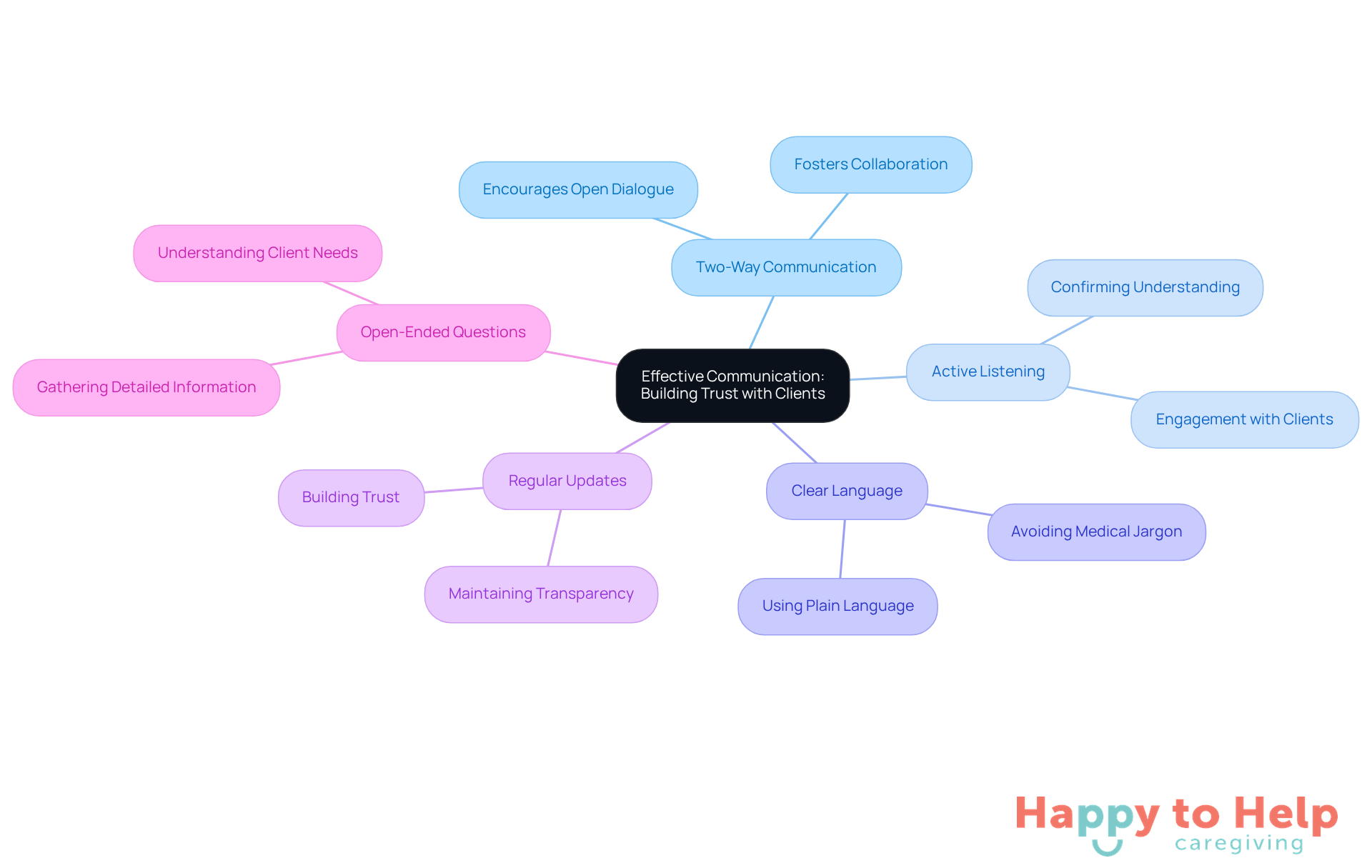
To address this problem, caregivers must prioritize two-way communication. Techniques such as active listening are essential; this involves fully engaging with individuals and confirming understanding. By doing so, caregivers foster a collaborative atmosphere that encourages open dialogue. Additionally, using clear language and avoiding medical jargon ensures that individuals comprehend their treatment plans, which in turn boosts their trust in caregivers' skills.
Regular updates about care progress and changes are also vital. These updates maintain transparency and further solidify trust between caregivers and individuals. Research indicates that effective communication not only enhances patient satisfaction but also leads to improved health outcomes, especially among older individuals who may struggle with complex information. In fact, 86% of family supporters believe regular communication with healthcare providers is critical.
By implementing these communication strategies, caregivers can significantly improve their relationships with individuals, fostering a more supportive and trusting care environment. Moreover, utilizing open-ended questions can provide caregivers with a more comprehensive understanding of individuals' requirements, highlighting the importance of effective communication.
Adaptability: Responding to Individual Client Needs
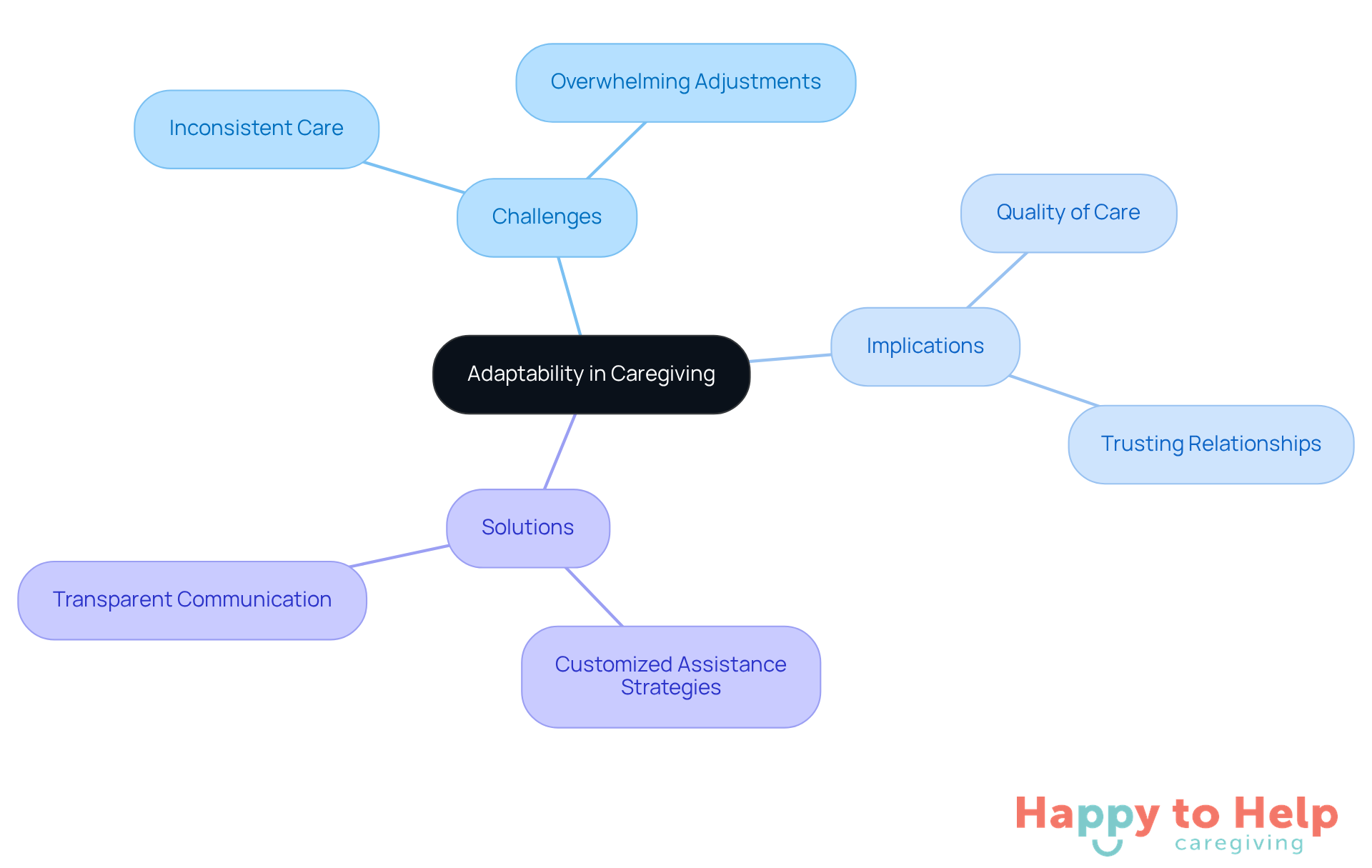
Adaptability is a significant challenge for caregivers, as they must respond to the ever-changing needs of those they support. This issue can lead to difficulties in providing consistent care, which is essential for fostering a supportive environment. Caregivers often find themselves needing to adjust treatment plans due to health changes or individual preferences, which can be overwhelming.
The implications of this challenge are profound. Compassionate home caregivers who demonstrate adaptability not only enhance the quality of care but also build trusting relationships with those they serve. In fact, nearly 50% of caregivers report that their roles require frequent adjustments to their approaches, highlighting the dynamic nature of caregiving. This adaptability is crucial for customer satisfaction, as individuals feel more understood and valued when their caregivers can meet their evolving needs.
To address these challenges, caregivers can implement several practical solutions:
- Customized Assistance Strategies: Develop support methods that evolve alongside the client's situation.
- Transparent Communication: Establish clear pathways for communication that allow for immediate modifications in care.
Experts in the field emphasize that the ability to adjust is not just beneficial; it is essential for creating a sense of security and comfort in home environments. By embracing adaptability, caregivers can significantly improve their effectiveness and the overall experience for those they support.
Problem-Solving Skills: Overcoming Care Challenges
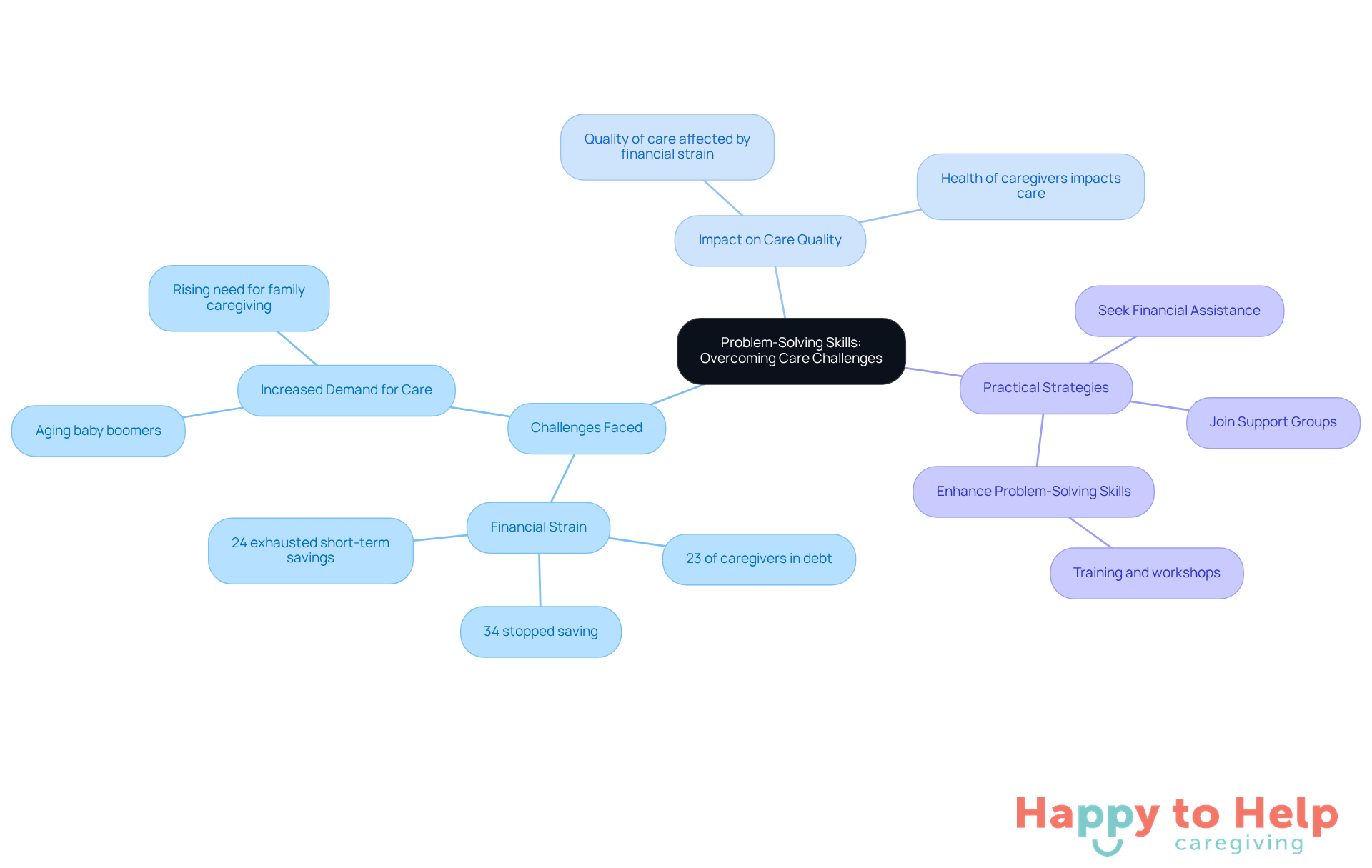
Problem-solving abilities are crucial for support providers. They must quickly assess situations, identify potential solutions, and implement effective strategies to address challenges as they arise. Unfortunately, nearly half of compassionate home caregivers face significant adverse financial effects due to their responsibilities, which complicates their ability to provide assistance.
This financial strain not only impacts the personal lives of compassionate home caregivers but also affects the quality of care they can offer. As the oldest baby boomers approach 80 next year, the demand for family caregiving is set to rise, making effective problem-solving skills even more essential. Compassionate home caregivers who adeptly navigate these challenges foster a safer and more supportive environment for those they care for.
Lindsey Copeland emphasizes the importance of this issue, stating, "these findings serve as a springboard for action-for families, policymakers, and all who participate in creating systems to support and sustain the vital contributions of family supporters."
To mitigate these challenges, caregivers can adopt several practical strategies:
- Seek Financial Assistance: Explore local and national resources that offer financial support for caregivers.
- Join Support Groups: Connect with other caregivers to share experiences and solutions.
- Enhance Problem-Solving Skills: Engage in training or workshops focused on developing effective problem-solving techniques.
By taking these steps, compassionate home caregivers can enhance their situation and continue to provide essential support to their loved ones.
Companionship: Fostering Connection and Reducing Isolation
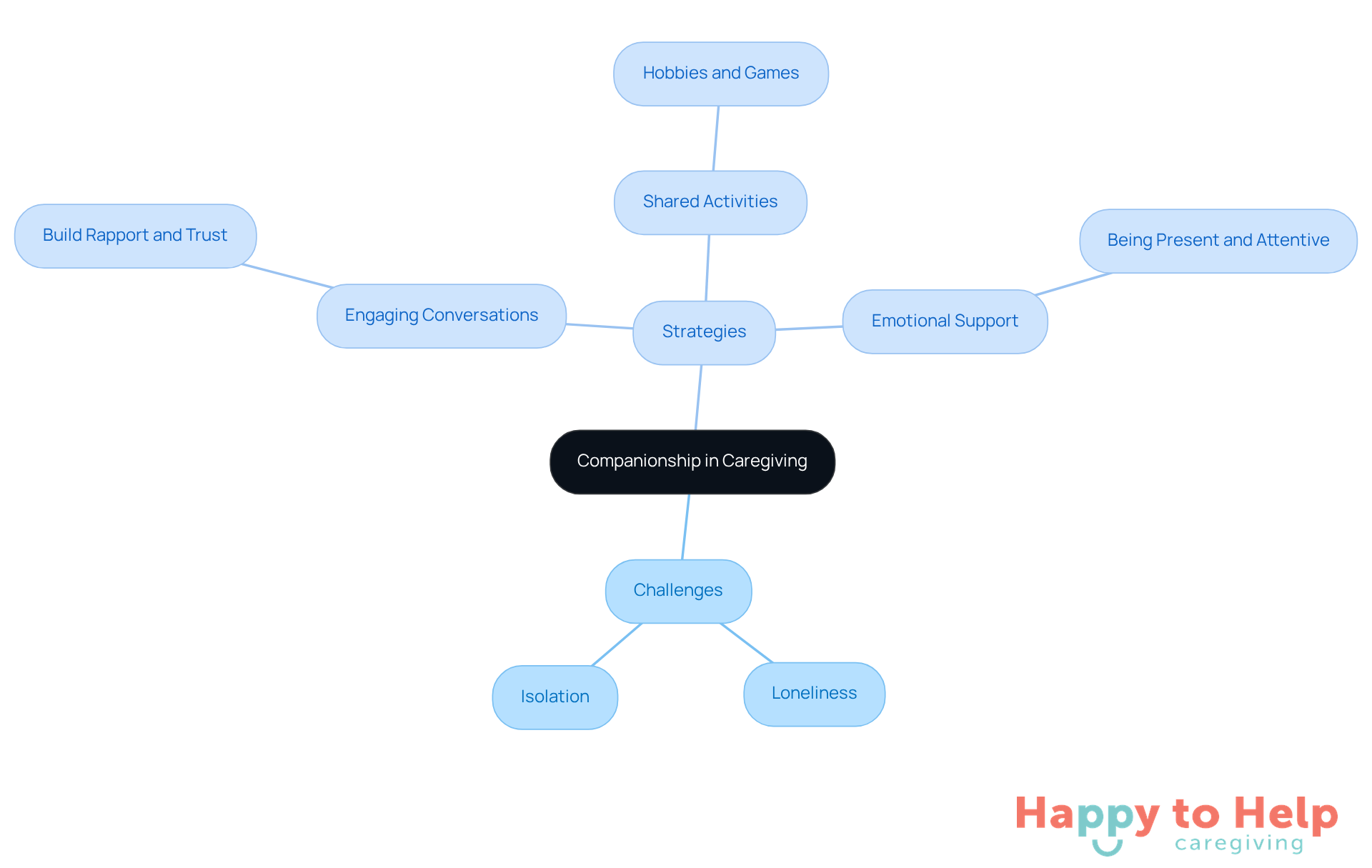
Companionship is a significant challenge in caregiving, especially for seniors who often face loneliness and isolation. This issue can lead to deteriorating mental health and a reluctance to engage in social activities, further exacerbating feelings of disconnect.
To combat this, compassionate home caregivers can play a crucial role by fostering meaningful connections. Engaging in conversations, sharing activities, and providing emotional support can create a sense of belonging for seniors. These actions not only improve mental health but also encourage clients to participate in social activities, enhancing their overall well-being.
Here are some actionable tips for caregivers:
- Engage in regular conversations to build rapport and trust.
- Share activities that interest the senior, such as hobbies or games.
- Provide emotional support by being present and attentive to their needs.
By implementing these strategies, compassionate home caregivers can significantly enhance the quality of life for seniors, helping them feel more connected and valued.
Training and Education: Equipping Caregivers for Success
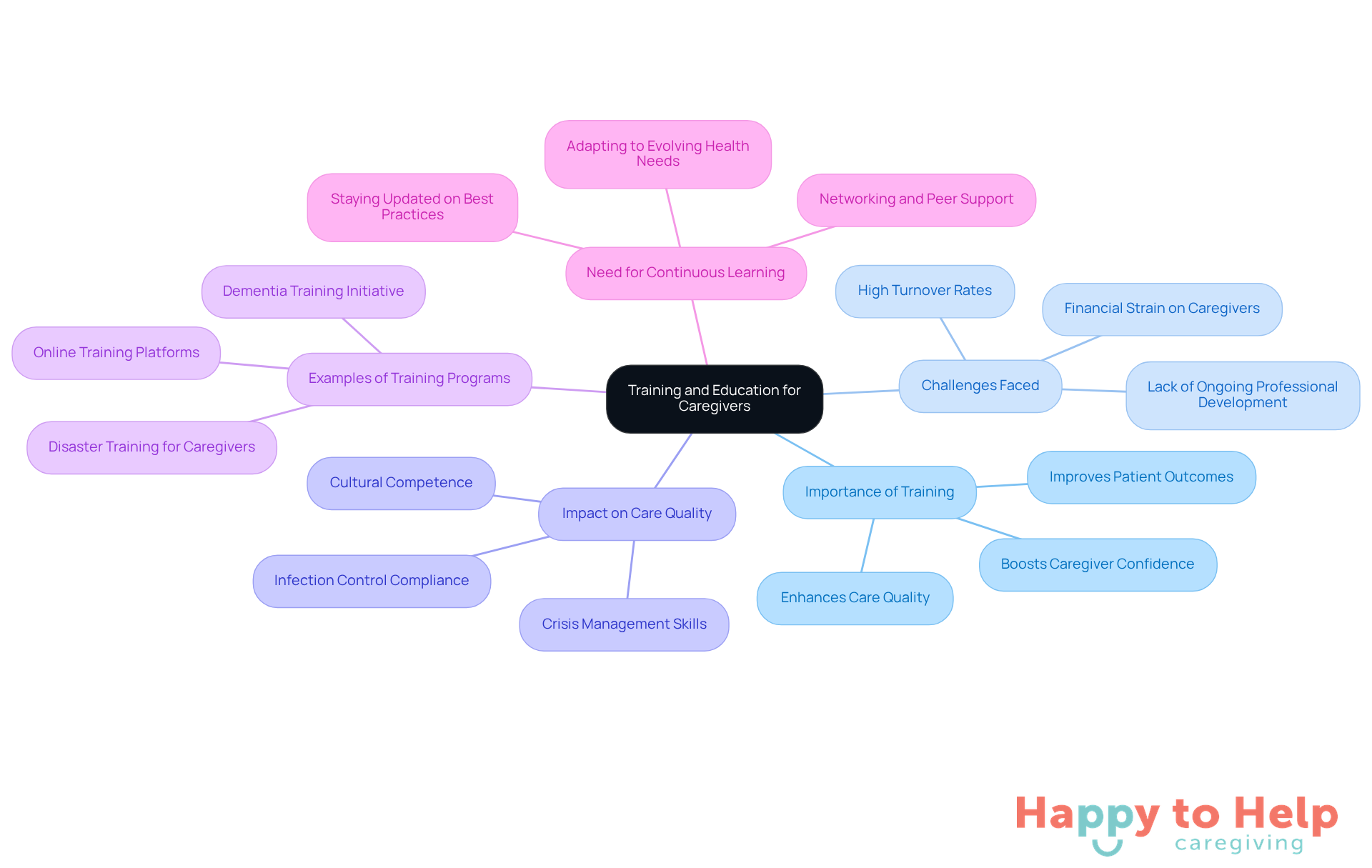
Training and education are crucial for caregivers, as they equip individuals with the skills needed to provide exceptional support. However, many caregivers face challenges due to a lack of ongoing professional development, which can leave them uninformed about the latest support techniques and safety protocols. In 2025, 63 million individuals in the U.S. provided assistance to adults or children, underscoring the pressing need for well-trained attendants in our society.
This gap in training not only affects caregivers' confidence but also impacts the quality of care they deliver. For instance, caregivers trained in infection control protocols are better prepared to comply with current regulations, ensuring a safer environment for those they assist. To address these challenges, specialized training programs, such as the dementia training initiative launched by UC Irvine and the Center for Caregiver Advancement, can significantly enhance caregivers' ability to manage complex needs effectively.
As the caregiving landscape evolves, it is essential for providers to stay informed about best practices and emerging technologies. Continuous learning is not just beneficial; it is vital for upholding high standards of service and promoting positive outcomes for individuals in their care. By committing to ongoing education, caregivers can ensure they are equipped to meet the demands of their roles and provide the best possible support.
Consistency: Providing Reliable and Familiar Support
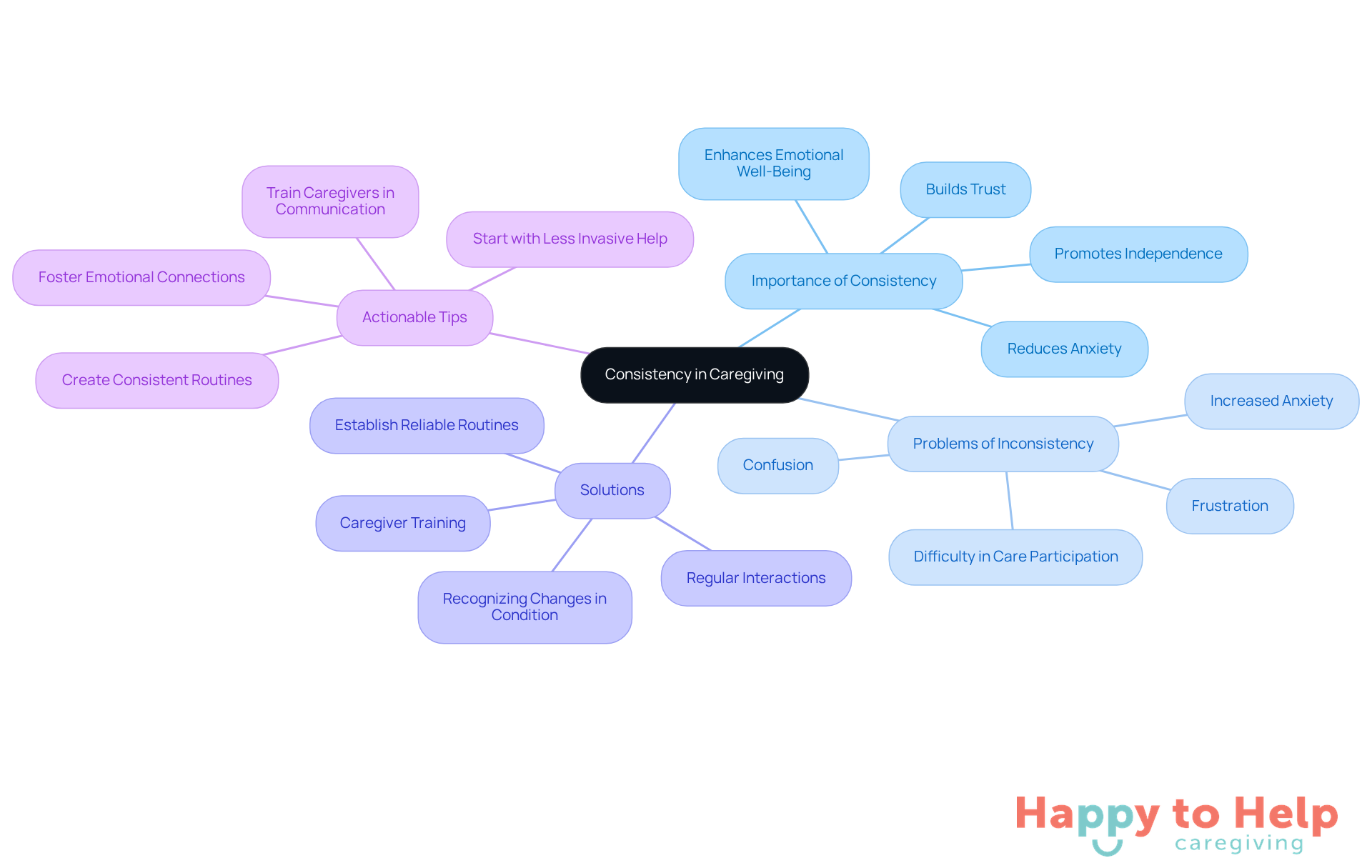
For compassionate home caregivers, consistency in caregiving is crucial for building trust and ensuring individuals feel secure in their care. Without compassionate home caregivers, establishing a familiar setting may be difficult, which can hinder comfort and assistance.
Agitate: When trust is lacking, individuals may find it difficult to participate freely in their care. This inconsistency can lead to confusion and frustration, particularly among older adults. Research indicates that those with compassionate home caregivers experience less anxiety and improved emotional well-being. For instance, seniors with strong social ties tend to live longer and face fewer health issues.
Solution: To address these challenges, caregivers should focus on establishing reliable routines. Compassionate home caregivers can notice subtle changes in a person's condition, allowing for timely interventions that significantly impact health. Gwendolyn Villanueva, Manager of Support Professionals, emphasizes that "consistent support is essential for families and providers." This highlights the importance of reliability in caregiving.
Actionable Tips:
- Foster regular interactions to build emotional connections.
- Create consistent routines that enhance stability.
- Train caregivers to recognize and respond to changes in individuals' conditions.
By prioritizing consistency, compassionate home caregivers can enhance the quality of support and foster a sense of belonging and safety for individuals, ultimately improving care outcomes.
Emotional Support: Nurturing Mental Well-Being
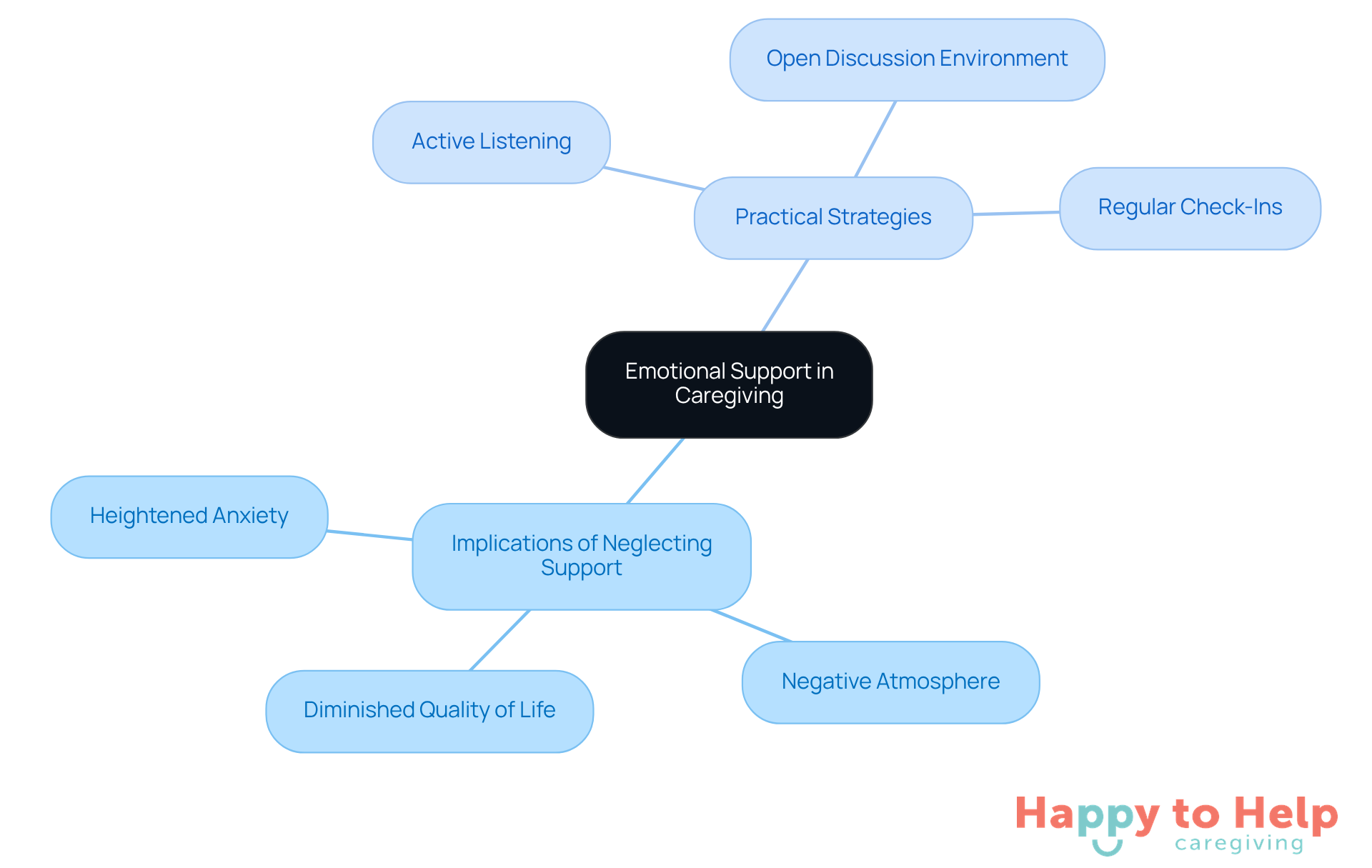
Emotional support is a critical issue in caregiving. Compassionate home caregivers often encounter the challenge of providing not just physical assistance but also emotional reassurance. Without this support, individuals may experience heightened anxiety and depression, which can severely impact their overall well-being.
The implications of neglecting emotional support are significant. When caregivers fail to acknowledge emotions or provide a listening ear, it can lead to a negative atmosphere that affects both the caregiver and the individual receiving care. This emotional disconnect can diminish the quality of life for those involved, creating a cycle of distress.
To address this issue, compassionate home caregivers can implement several practical strategies:
- Actively listen to the individuals they assist, validating their feelings and concerns.
- Create an environment where emotions can be openly discussed, fostering trust and connection.
- Consider incorporating regular check-ins to assess emotional well-being, ensuring that support is consistently offered.
By prioritizing emotional support, compassionate home caregivers can significantly enhance the mental health of those they assist, resulting in a more positive caregiving experience for everyone involved.
Positive Outcomes: The Impact of Compassionate Care
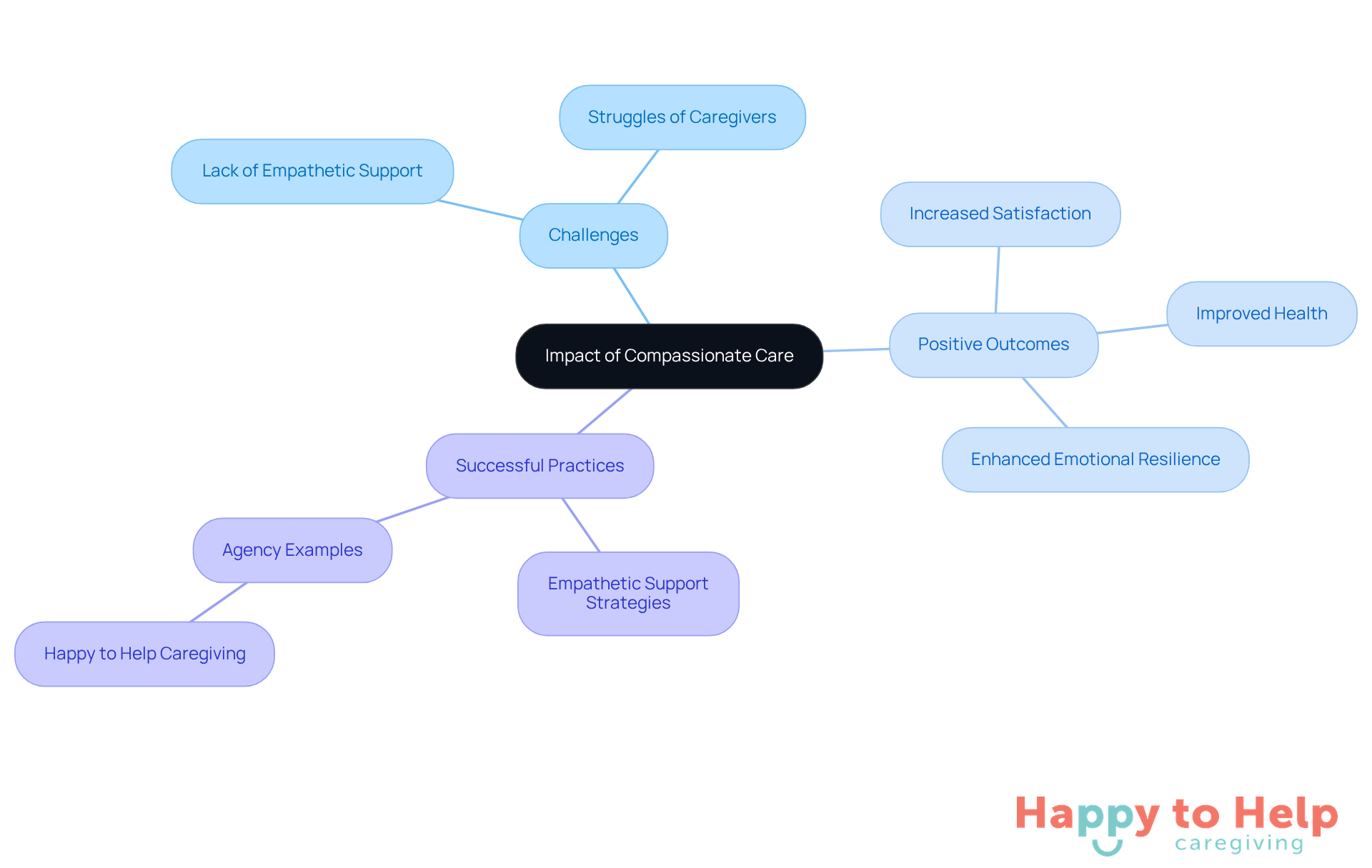
The lack of empathetic support poses a significant challenge in caregiving. Caregivers often struggle to provide the compassionate home caregivers that are essential for the well-being of their clients. This gap can lead to poorer health outcomes, decreased satisfaction, and diminished emotional resilience for those receiving care.
Research shows that individuals who receive care from compassionate home caregivers experience notable improvements in their health and overall satisfaction. By prioritizing empathy in their approach, caregivers can not only enhance the quality of life for their clients but also create a more rewarding caregiving experience for themselves.
Agencies like Happy to Help Caregiving exemplify how prioritizing compassionate home caregivers can transform the caregiving experience. By implementing strategies that focus on empathetic support, they foster an environment where both caregivers and clients thrive. This approach not only addresses the immediate needs of clients but also contributes to a more fulfilling caregiving journey.
Moving Forward with 10 Qualities of Compassionate Home
Compassionate home caregiving presents a significant challenge in enhancing the quality of life for seniors and individuals with special needs. Many caregivers struggle with essential qualities such as empathy, adaptability, effective communication, and emotional support. Without these traits, the caregiving experience can lack trust and connection, leaving clients feeling undervalued and insecure.
The implications of inadequate caregiving are profound. Caregivers who do not actively practice empathy or maintain open lines of communication may inadvertently diminish the quality of care. This can lead to a lack of responsiveness to changing needs, eroding trust and familiarity. Moreover, neglecting emotional support can adversely affect clients' mental well-being, ultimately impacting their health outcomes.
To address these challenges, caregivers must prioritize the development of key qualities. Here are some actionable solutions:
- Practice Empathy: Engage with clients on a personal level to understand their feelings and needs.
- Maintain Open Communication: Regularly check in with clients and their families to ensure everyone is on the same page.
- Be Adaptable: Stay flexible and ready to adjust care plans as clients' needs evolve.
- Provide Emotional Support: Foster a nurturing environment that encourages clients to express their feelings.
In conclusion, the importance of compassionate caregiving cannot be overstated. As the demand for in-home support continues to grow, embracing these qualities will enhance the lives of those receiving care and create a more fulfilling experience for caregivers. By prioritizing empathy, communication, adaptability, and emotional support, caregivers can cultivate a culture of compassion that benefits everyone involved, ultimately transforming the caregiving landscape for the better.
https://iframe.tely.ai/cta/eyJhcnRpY2xlX2lkIjogIjY5MjNhMGJkMWRmODM1M2QyMjg0NTk2NCIsICJjb21wYW55X2lkIjogIjY4ZWU1ZGNhNzMxNzYyNTU3ZjNjOTVjMSIsICJpbmRleCI6IG51bGwsICJ0eXBlIjogImFydGljbGUifQ==Frequently Asked Questions
What challenges do seniors and individuals with special needs face in receiving care?
Many seniors and individuals with special needs struggle to receive personalized care that meets their unique preferences, leading to feelings of insecurity and undervaluation in their own homes.
How does the lack of customized care impact individuals?
When care is not customized, it can significantly affect the quality of life, resulting in feelings of isolation or being unsupported, which may exacerbate health issues and diminish overall well-being.
What services does Happy to Help Caregiving provide?
Happy to Help Caregiving offers a range of services, including companionship and palliative care, tailored to each person's needs to ensure they receive the personalized attention they deserve.
What is the caregiving philosophy of Happy to Help Caregiving?
The caregiving philosophy is based on empathy and understanding, allowing individuals to feel secure and valued in their own homes.
Why is empathy important in caregiving?
Empathy is crucial for effective caregiving as it helps caregivers understand and express the emotions of those they assist, creating a welcoming environment and improving care outcomes.
What techniques can caregivers use to enhance empathy?
Caregivers can enhance empathy by practicing active listening, validating feelings, and engaging in open communication.
What communication challenges do caregivers face?
Caregivers often struggle to convey information clearly, which can lead to misunderstandings and a lack of trust, affecting individuals' comfort in expressing their needs and preferences.
How can caregivers improve communication with clients?
Caregivers can improve communication by prioritizing two-way communication, actively listening, using clear language, avoiding medical jargon, and providing regular updates about care progress.
What are the benefits of effective communication in caregiving?
Effective communication enhances patient satisfaction, improves health outcomes, and fosters a supportive and trusting care environment.
How can caregivers better understand individuals' requirements?
Caregivers can gain a comprehensive understanding of individuals' needs by utilizing open-ended questions during conversations.
List of Sources
- Happy to Help Caregiving: Compassionate In-Home Support
- Senior Care in Philadelphia, PA: Key Trends for 2025 and Beyond - AmeriBest Home Care (https://ameribesthomecare.com/recent-news/senior-care-in-philadelphia-pa-key-trends-for-2025-and-beyond)
- Importance of Personalized Senior Home Care in Burlington NC (https://wisdomseniorcare.com/the-importance-of-personalized-care-plans-for-seniors)
- Home Care Industry Trends to Watch in 2025 (https://firstlighthomecare.com/blog/home-care-industry-trends)
- State of home care in 2025 (https://mcknightshomecare.com/state-of-home-care-in-2025)
- Customized Care at Home: The Benefits of Personalized Care Plans - VNA Health Group (https://vnahg.org/customized-care-at-home-the-benefits-of-personalized-care-plans)
- Empathy: The Heart of Effective Caregiving
- Enhancing and examining the empathy skills of healthcare students and clinicians | University of Technology Sydney (https://uts.edu.au/case-studies/enhancing-and-examining-empathy-skills-healthcare-students-and-clinicians)
- Why Empathy is Important in Healthcare | Innovare Medical Media (https://innovaremedia.com/2024/12/why-empathy-is-important-in-healthcare)
- Empathy in Action: Marie's Dedication to Caregivers | United Way Worldwide (https://unitedway.org/news/empathy-in-action-maries-dedication-to-caregivers)
- The Importance of Empathy and Compassion in Bedside Care (https://breezehospiceservices.com/resources/the-importance-of-empathy-and-compassion-in-bedside-care)
- Conference shows how empathy can help patients and healthcare professionals — Global Empathy in Healthcare Network (https://global-empathy-in-healthcare.com/news/conference-shows-how-empathy-can-help-patients-and-healthcare-professionals)
- Effective Communication: Building Trust with Clients
- Effective Communication Strategies for Older Adults: Evidence-Based Approaches that Improve Care (https://medtigo.com/news/effective-communication-strategies-for-older-adults-evidence-based-approaches-that-improve-care)
- AI in Elder Care: Building Trust, Not Just Speed | Honor (https://honorcare.com/news/ai-powers-senior-care-trust)
- Effective communication with caregivers to prevent unintentional injuries in children under seven years. A systematic review (https://sciencedirect.com/science/article/pii/S0738399122001896)
- Communication in Elderly Care | River Garden Home Care (https://rivergardenhomecare.co.uk/effective-communication-in-elderly-care)
- Adaptability: Responding to Individual Client Needs
- Disruption Redefines Home-Based Care: Providers Confront Challenges, Seize New Opportunities (https://homehealthcarenews.com/2025/10/disruption-redefines-home-based-care-providers-confront-challenges-seize-new-opportunities)
- Caregiving Statistics US 2025: Insights for Family Caregivers (https://zencaregiving.org/caregiving-statistics-us-2025)
- Caregiving in the COVID‐19 pandemic: Family adaptations following an intensive care unit hospitalisation - PMC (https://pmc.ncbi.nlm.nih.gov/articles/PMC9874809)
- Caregiver Statistics: Demographics (https://caregiver.org/resource/caregiver-statistics-demographics)
- Care planning model allows for more flexibility in the event of serious illness (https://mcknights.com/news/care-planning-model-allows-for-more-flexibility-in-the-event-of-serious-illness)
- Problem-Solving Skills: Overcoming Care Challenges
- Disruption Redefines Home-Based Care: Providers Confront Challenges, Seize New Opportunities (https://homehealthcarenews.com/2025/10/disruption-redefines-home-based-care-providers-confront-challenges-seize-new-opportunities)
- Top Challenges Facing Home Health Care in 2025 (https://axiscare.com/blog/challenges-in-home-health-care)
- Caregiving Crisis: 45% Increase in Americans Providing Care (https://aarp.org/caregiving/basics/caregiving-in-us-survey-2025)
- As Family Caregiving Grows, So Does the Need for Reform - Medicare Rights Center (https://medicarerights.org/medicare-watch/2025/08/14/as-family-caregiving-grows-so-does-the-need-for-reform)
- The senior population is booming. Caregiving is struggling to keep up (https://cnbc.com/2025/11/21/senior-caregiving-labor.html)
- Companionship: Fostering Connection and Reducing Isolation
- Creating Safe Living Environment for Seniors: Tips & Practices (https://peacevillage.org/news/why-companionship-is-key-to-happy-aging-elderly-well-being)
- Lonely Seniors Are Turning To AI Bots For Companionship (https://forbes.com/sites/rashishrivastava/2025/10/18/lonely-seniors-are-turning-to-ai-bots-for-companionship)
- 1 in 3 older adults still experience loneliness and isolation (https://michiganmedicine.org/health-lab/1-3-older-adults-still-experience-loneliness-and-isolation)
- | Catholic Charities Serving Central Washington (https://catholiccharitiescw.org/news/companionship-can-counter-the-impacts-of-loneliness-and-isolation)
- Trends in Loneliness Among Older Adults from 2018-2023 (https://ihpi.umich.edu/national-poll-healthy-aging/reports-and-resources/trends-loneliness-among-older-adults-2018-2023)
- Training and Education: Equipping Caregivers for Success
- Home-Based Care Companies Improve Outcomes By Training Family Caregivers (https://homehealthcarenews.com/2025/10/home-based-care-companies-improve-outcomes-by-training-family-caregivers)
- The Essential Role of Continuing Education for Modern Caregivers (https://learn2care.us/blog/role-of-continuing-training-for-caregivers)
- WHO launches new online course to support informal caregivers across Europe (https://who.int/europe/news/item/27-10-2025-who-launches-new-online-course-to-support-informal-caregivers-across-europe)
- CCA Announces Free Online Caregiver Training Program for IHSS Workers (https://advancecaregivers.org/cca-announces-free-online-caregiver-training-program-for-ihss-workers)
- Family Caregiver Support, Education Needs Growing (https://hospicenews.com/2025/11/11/family-caregiver-support-education-needs-growing)
- Consistency: Providing Reliable and Familiar Support
- The Importance of Caregiver-Client Relationships in Senior Well-Being (https://homeinstead.com/home-care/usa/in/goshen/588/news-and-media/the-importance-of-caregiver-client-relationships-in-senior-well-being)
- The Importance of Consistency in Senior Caregiving (https://malamamaikai.com/importance-of-consistency-in-senior-caregiving)
- The Benefits of Having a Consistent Caregiver in Home Care (https://humancareny.com/blog/the-benefits-of-having-a-consistent-caregiver-in-home-care)
- The Importance of Consistency in Alzheimer's Care at Home (https://touchinghearts.com/aurora/blog/the-importance-of-consistency-in-alzheimers-care-at-home)
- Emotional Support: Nurturing Mental Well-Being
- Caregivers Face Mental, Physical Health Risks (https://usnews.com/news/health-news/articles/2025-01-07/caregivers-face-mental-physical-health-risks)
- I Can’t Talk to My Ill Spouse. How Can I Get Support? (https://aarp.org/caregiving/basics/caregiver-find-emotional-support)
- Caregiving’s Mental Health Crisis (https://forbes.com/sites/otsuka/2025/10/02/caregivings-mental-health-crisis)
- Caregiver Statistics: Demographics (https://caregiver.org/resource/caregiver-statistics-demographics)
- Caregiving can be a tough, lonely mission. One daughter found ways to reconnect (https://npr.org/sections/shots-health-news/2024/10/31/nx-s1-5172517/caregiver-caregiving-isolation-burnout-resources)
- Positive Outcomes: The Impact of Compassionate Care
- AI Discovers Physician Actions Linked to Patient Compassion (https://bioengineer.org/ai-discovers-physician-actions-linked-to-patient-compassion)
- Measuring the Benefits of Compassion in Healthcare | Harvard Medical School Professional, Corporate, and Continuing Education (https://learn.hms.harvard.edu/insights/all-insights/measuring-benefits-compassion-healthcare)
- THE IMPACT OF COMPASSIONATE CARE ON PATIENT SATISFACTION WITH THE CARE PROVIDED | Request PDF (https://researchgate.net/publication/386268432\_THE\_IMPACT\_OF\_COMPASSIONATE\_CARE\_ON\_PATIENT\_SATISFACTION\_WITH\_THE\_CARE\_PROVIDED)
- Inspirational Quotes for Compassionate Caregivers (https://humancareny.com/blog/inspirational-quotes-for-caregivers)