
Why In-Home Care Beats a Private Nursing Matters
In a society where the golden years can often feel isolating and challenging, families face a pressing problem: traditional nursing homes may not provide the emotional support their loved ones need. This situation can lead to feelings of loneliness and a loss of dignity for seniors. As families seek alternatives, in-home care emerges as a compelling solution, offering personalized support that addresses both physical needs and emotional well-being.
In-home care not only fosters a sense of independence but also enhances the quality of life for seniors. However, with numerous options available, families may wonder if in-home care truly offers a superior solution. This article explores ten compelling reasons why in-home care surpasses private nursing homes, revealing the profound benefits that tailored caregiving can bring to seniors and their families alike.
Happy to Help Caregiving: Personalized In-Home Care for Your Loved Ones
Caregiving can be a challenging journey, especially when it comes to providing adequate support for seniors. Many families struggle to find the right in-home assistance that caters to the unique needs of their loved ones. This lack of tailored support can lead to feelings of insecurity and discomfort for seniors, impacting their overall quality of life.
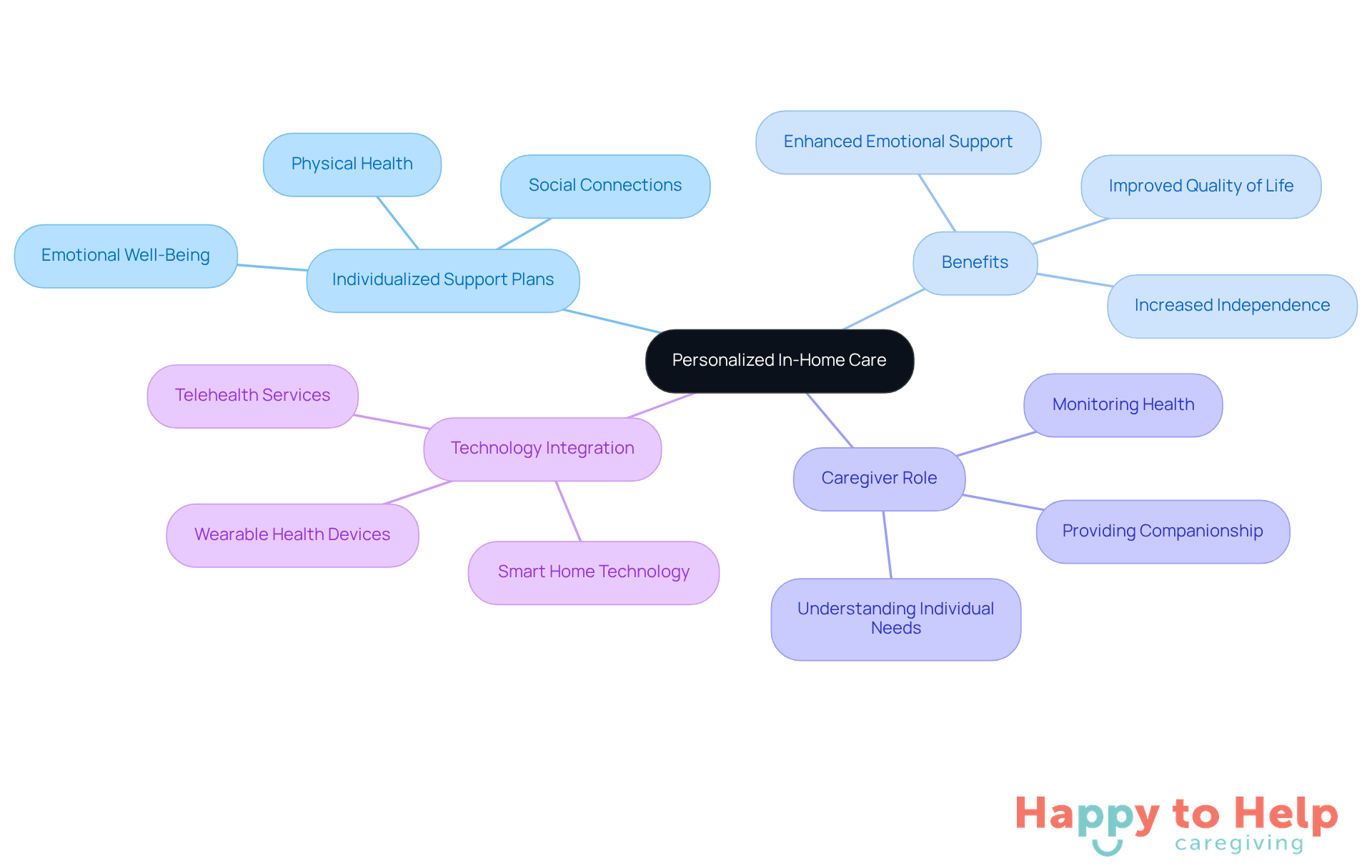
To address these challenges, Happy to Help Caregiving excels in offering personalized in-home support that meets the specific requirements of each client. By prioritizing individualized support plans, families can trust that their loved ones receive optimal assistance tailored to their unique circumstances. These plans not only focus on physical health but also emphasize emotional well-being, social connections, and independence, ultimately enriching the lives of seniors.
For instance, Mary, an 82-year-old woman, experienced a significant improvement in her quality of life through a personalized support plan. This plan included daily help with household tasks and companionship during her favorite activities, such as gardening. Caregivers play a crucial role in this process, often noting that understanding and adapting to each senior's individual needs is vital for fostering a nurturing environment. As one caregiver remarked, "The personalized approach allowed Mary to regain her confidence and continue doing what she loves."
The dedication to individualized support ensures that seniors can maintain their dignity and independence while engaging in activities that bring them joy. This makes in-home assistance a preferred option over institutional environments. Furthermore, technology, including wearable health devices and telehealth services, enhances the effectiveness of these personalized health plans, ensuring that seniors receive prompt assistance and monitoring.
Companionship Care: Alleviate Loneliness and Enhance Quality of Life
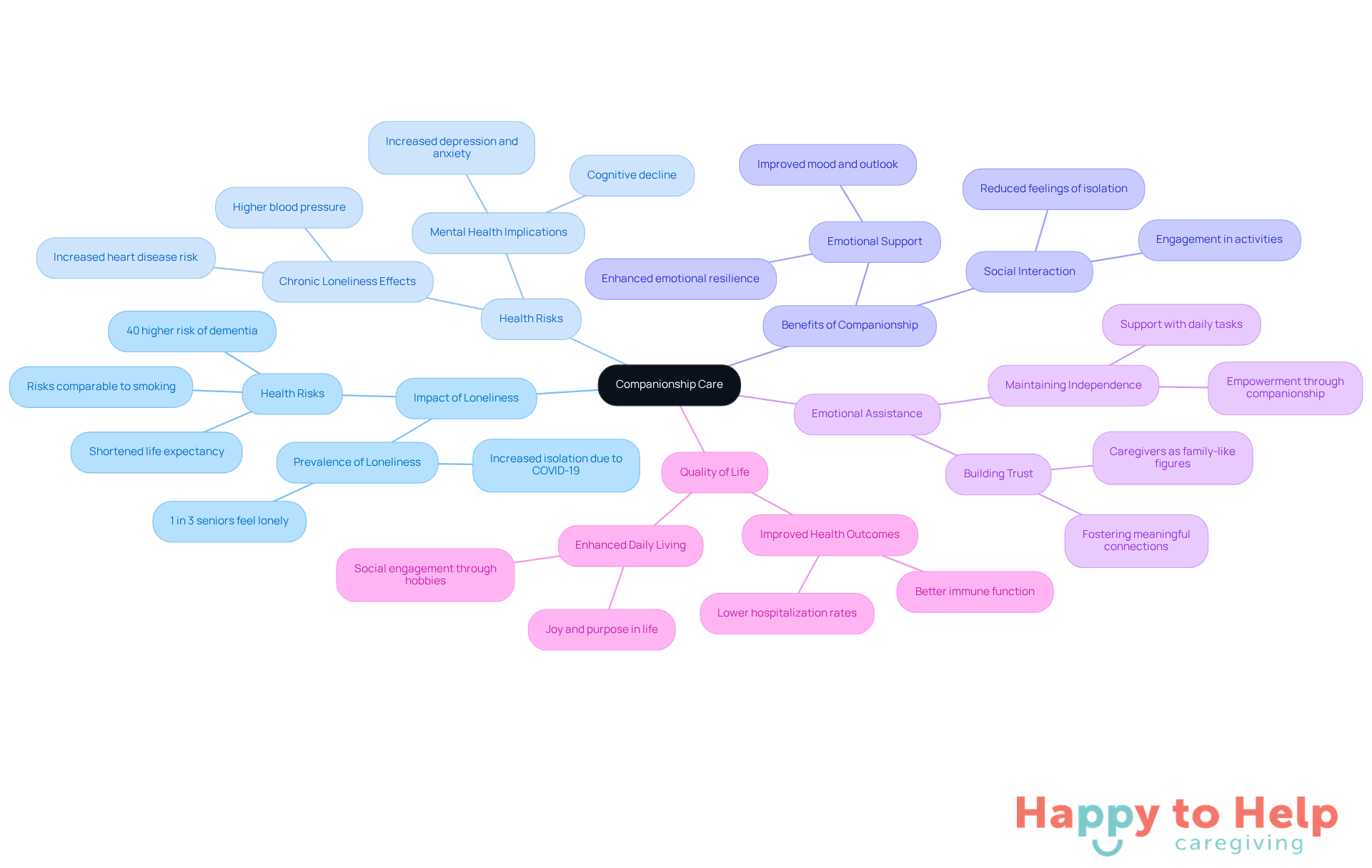
Loneliness is a significant issue affecting one in three seniors, leading to serious implications for their health and well-being. Chronic loneliness can shorten life expectancy even more than being overweight or sedentary, and it poses risks comparable to smoking. This highlights the urgent need for effective companionship support in caregiving.
Companionship support provided by Happy to Help Caregiving addresses this problem by fostering meaningful connections between caregivers and clients. By promoting social interaction through engaging activities, caregivers help alleviate feelings of isolation. Research shows that seniors who enjoy regular companionship are less likely to experience depression and anxiety, while also benefiting from improved cognitive function and emotional resilience.
The emotional assistance offered by caregivers not only enhances the overall quality of life for seniors but also empowers them to maintain their independence and dignity. This support enables seniors to flourish in their own homes, reinforcing their sense of value and connection. Furthermore, studies indicate that strong social connections can lead to better health outcomes, including lower risks of heart disease and improved immune function.
As one expert notes, "Companionship plays a crucial role in ensuring that seniors stay mentally, emotionally, and physically healthy." In essence, companionship care is not merely about assistance; it enriches the lives of seniors, ensuring they experience joy, purpose, and a sense of belonging.
Post-Hospital Recovery Assistance: Support for a Smooth Transition Home
Problem: Transitioning from hospital to home can be a daunting challenge for many clients. Without proper support, individuals may struggle with recovery, leading to complications and even readmissions.
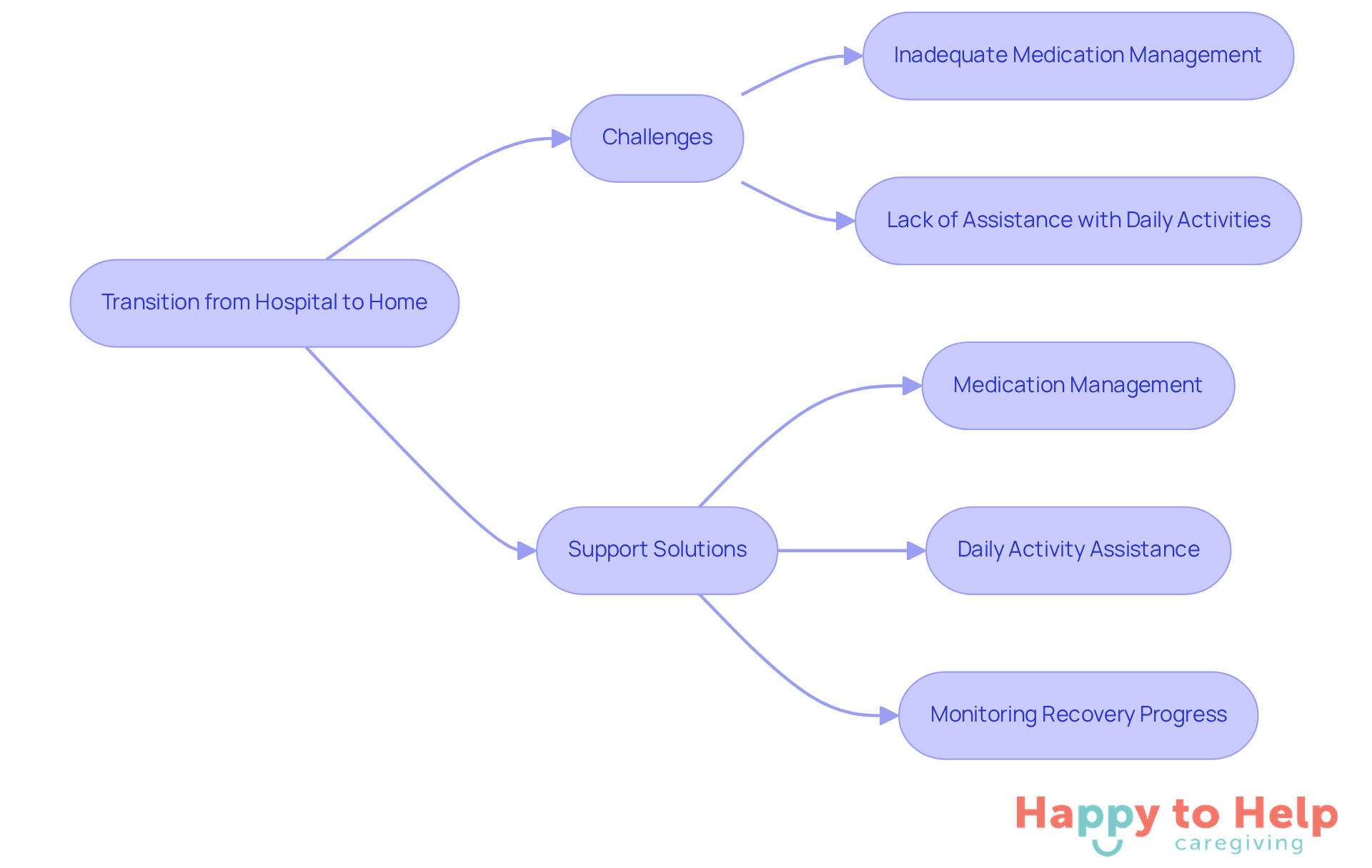
Agitate: Caregivers often face the pressure of ensuring their loved ones receive the right care during this critical time. Inadequate medication management and lack of assistance with daily activities can hinder recovery, leaving clients feeling vulnerable and anxious. Research indicates that home assistance can reduce hospital readmissions by up to 25% for those with chronic conditions, highlighting the urgent need for effective support.
Solution: Happy to Help Caregiving specializes in post-hospital recovery assistance, providing essential services that promote both physical healing and emotional comfort. Our caregivers offer medication management, help with daily activities, and monitor recovery progress, ensuring a smooth transition back home. By addressing both physical and emotional needs, we enhance the recovery experience, allowing clients to regain their independence in a familiar and comforting environment.
Respite Care: Essential Breaks for Family Caregivers
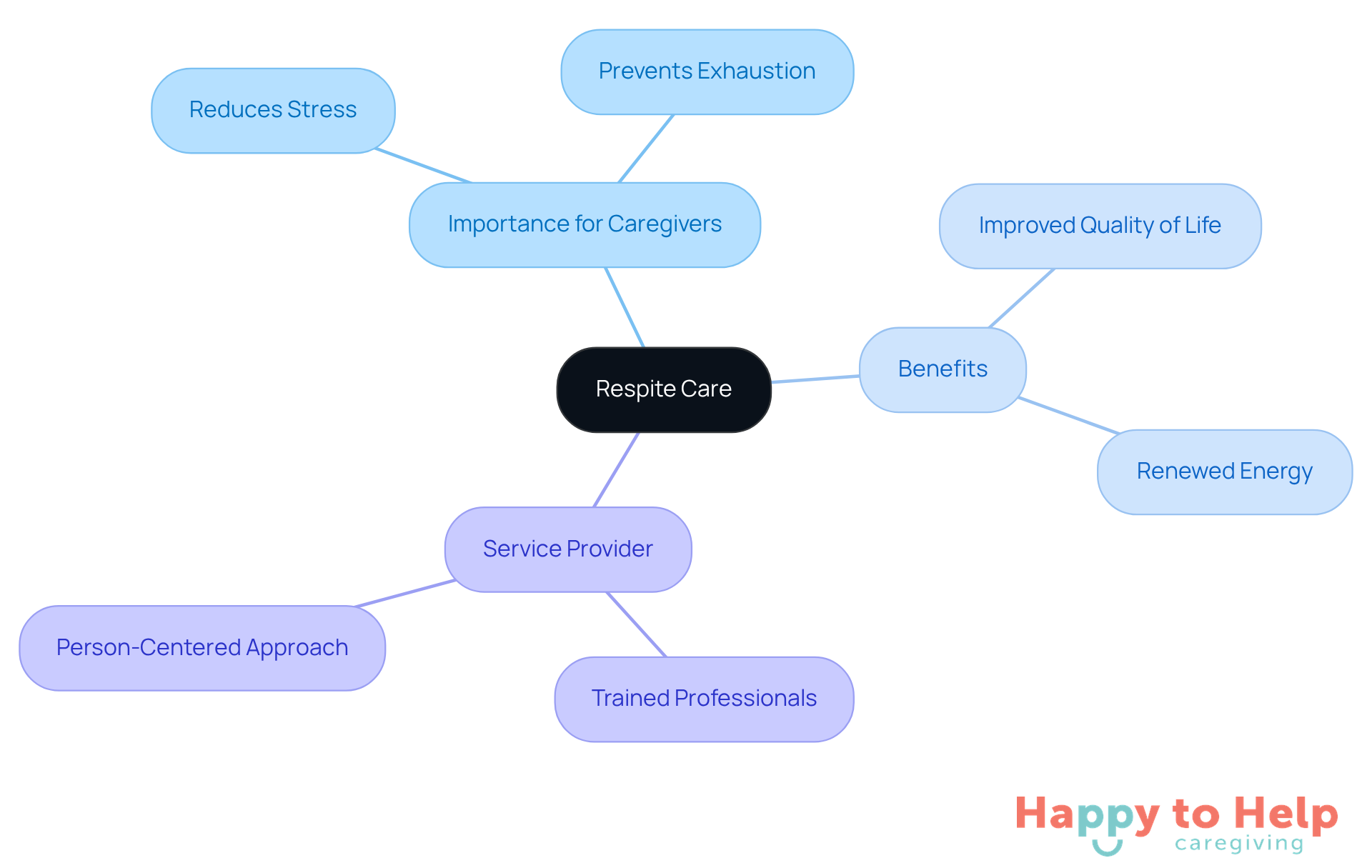
Caregiving can be incredibly demanding, often leading to significant stress and physical exhaustion for family members. This burden can take a toll on their personal well-being, making it essential for caregivers to find ways to recharge.
Respite assistance from Happy to Help Caregiving addresses this issue by offering informal caregivers the essential breaks they need. This service ensures that loved ones continue to receive quality support while caregivers take the time to rejuvenate. By alleviating the pressures associated with caregiving, it promotes a healthier balance between responsibilities and personal health.
Incorporating respite care into a caregiver's routine can significantly improve their quality of life. It allows them to step back, recharge, and return to their caregiving role with renewed energy and focus.
Palliative Support Care: Ensuring Comfort and Dignity at Home
Palliative assistance from Happy to Help Caregiving addresses a significant problem: clients facing serious health challenges often struggle with both physical and emotional needs. This situation can lead to discomfort and a loss of dignity, impacting their overall quality of life. Families may feel helpless, unsure of how to provide the necessary support during these difficult times.
The implications of these challenges are profound. Clients may experience increased anxiety and discomfort, while families can feel overwhelmed by the demands of caregiving. This is where Happy to Help Caregiving steps in with a solution. Their specially trained caregivers deliver compassionate support tailored to meet the unique needs of each client, ensuring they experience comfort and dignity in their own homes.
By creating a supportive environment, caregivers not only alleviate discomfort but also foster a sense of safety. This enables families to remain actively engaged in their loved ones' care, promoting independence and dignity during challenging moments. The focus on home-based support allows individuals to navigate their health journeys surrounded by familiar faces and cherished memories, ultimately enhancing their quality of life.
With an estimated 56.8 million individuals requiring palliative support each year, the importance of such services is increasingly recognized. As Melissa Sullivan, CEO of Community Care of WNY Home Care and Hospice, states, "Hospice is a type of end-of-life support in which the patient selects his or her environment to depart with dignity and respect." This trend of individuals choosing to support dying relatives at home underscores the critical role of Happy to Help Caregiving's services.
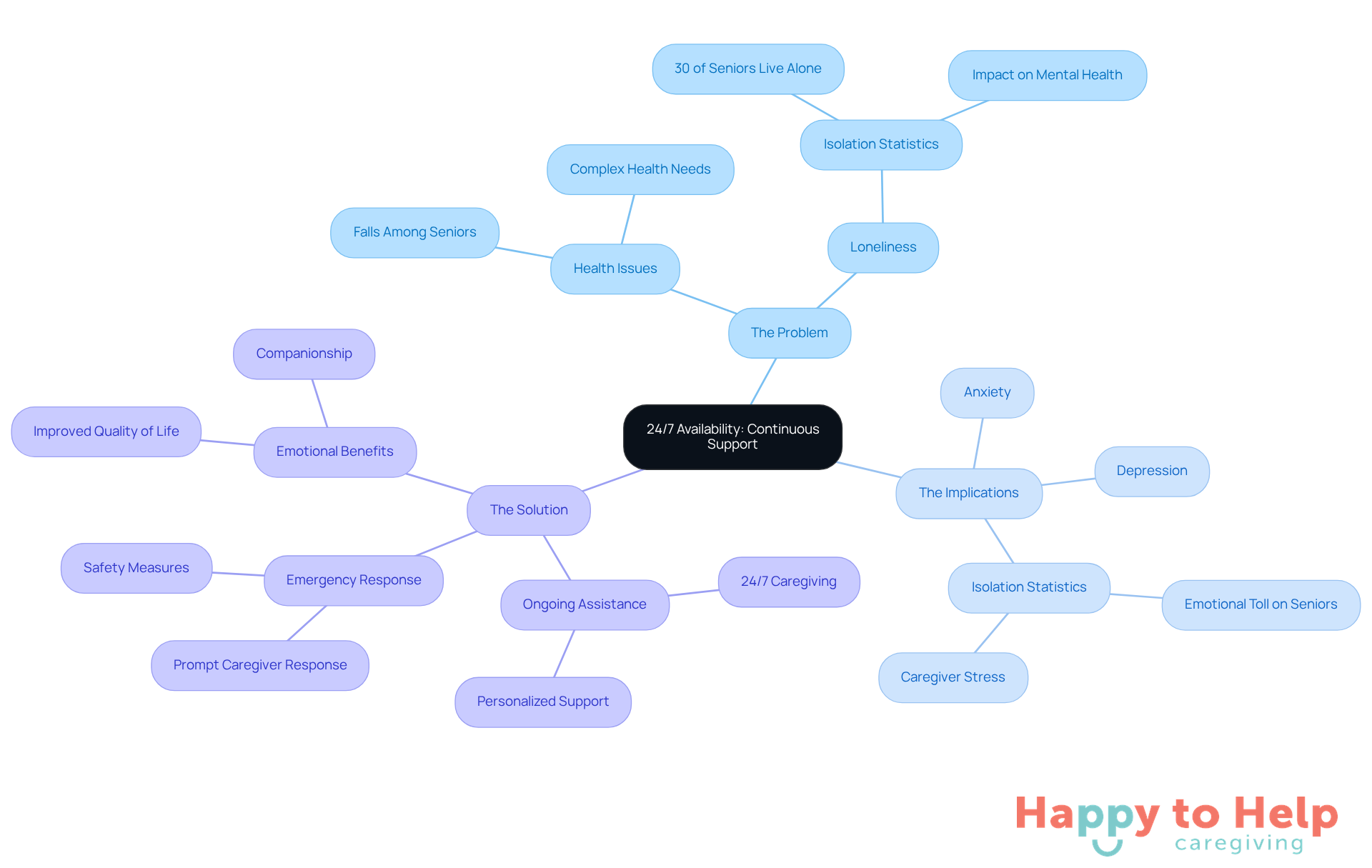
24/7 Availability: Continuous Support for Peace of Mind
The Problem: Many seniors face the challenge of living alone, which can lead to significant health issues and feelings of loneliness. With one out of every three seniors experiencing a fall each year, the risks are alarming.
The Implications: This isolation not only affects physical health but also contributes to anxiety and depression. In fact, almost 30% of the U.S. elderly population resides alone, making companionship support crucial for alleviating loneliness and enhancing overall well-being.
The Solution: Happy to Help Caregiving offers 24/7 availability, providing ongoing assistance that is essential for households. This constant support allows families to relax, knowing their loved ones are never alone and help is always just a call away. Such accessibility is vital for seniors with complex health needs, significantly reducing the risk of emergencies going unaddressed.
Research shows that patients receiving home treatment experience a 20% lower readmission rate compared to those relying solely on hospital services, underscoring the effectiveness of continuous support in managing health conditions. Furthermore, seniors using in-home care report 25% fewer doctor visits each year, highlighting the positive impact of ongoing care on their health.
Caregivers are trained to respond promptly to emergencies, enhancing safety and fostering a sense of security for both seniors and their families. The emotional benefits of this support are profound; effective communication and companionship can alleviate feelings of anxiety and depression among seniors, contributing to a better quality of life.
Flexible Scheduling: Tailored Care That Fits Your Family's Needs
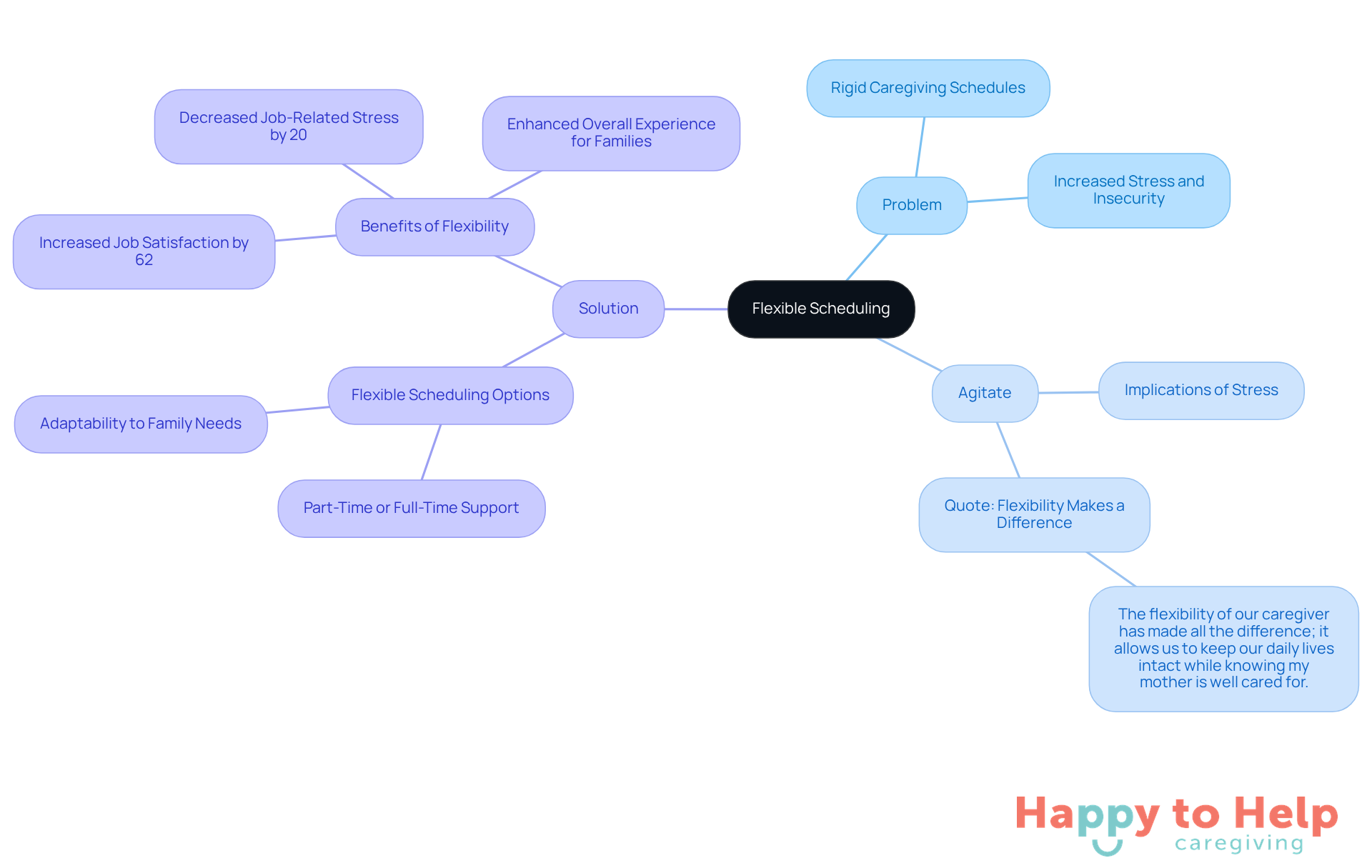
Problem: Many families face the challenge of rigid caregiving schedules that do not align with their unique needs. This can lead to increased stress and insecurity, making it difficult for families to maintain their daily routines while ensuring their loved ones receive the necessary support.
Agitate: The implications of this issue are significant. Families often feel overwhelmed, struggling to balance their responsibilities while worrying about the care of their loved ones. As one household observed, "The flexibility of our caregiver has made all the difference; it allows us to keep our daily lives intact while knowing my mother is well cared for."
Solution: Happy to Help Caregiving addresses this problem by providing flexible scheduling options. Whether clients require just a few hours of support each week or full-time aid, caregivers can adjust their availability to seamlessly fit into the family's daily schedule. This adaptability not only ensures that clients receive appropriate care when they need it but also significantly enhances their overall experience. Families have expressed how this tailored approach alleviates stress and fosters a sense of security.
Research shows that introducing a flexible schedule can increase job satisfaction by 62 percent and decrease job-related stress by 20 percent, underscoring the importance of this approach in today's healthcare landscape. By prioritizing flexibility, Happy to Help Caregiving empowers families to create a care plan that truly fits their lifestyle, ultimately leading to higher satisfaction and improved well-being for clients.
Trained Caregivers: Providing Emotional Support and Engagement
Loneliness is a significant issue for many older adults, impacting their mental well-being and overall quality of life. Research shows that emotional engagement is essential for alleviating feelings of isolation, which can lead to improved mood and cognitive function. For instance, regular social interaction has been linked to slower memory loss and reduced stress levels.
Caregivers play a crucial role in addressing this problem. By providing both physical assistance and emotional guidance, they actively engage clients in meaningful activities. This fosters connections that significantly enhance mental well-being. Caregivers not only facilitate daily living but also cultivate a sense of belonging and purpose.
Testimonials from families highlight the transformative effect of caregiver engagement. One household noted that their loved one, who initially felt isolated, thrived with the companionship and support provided by their caregiver. This demonstrates the profound impact emotional involvement can have on an individual’s life.
To ensure clients flourish in their familiar environments, caregivers should prioritize emotional support. By emphasizing emotional bonds, they create a positive atmosphere that nurtures joy and diminishes feelings of loneliness. This comprehensive approach underscores the importance of emotional engagement in elderly assistance.
Technology Integration: Enhancing Care Through Modern Solutions
Caregiving often presents significant challenges, particularly in communication and administrative tasks. Families frequently struggle to stay informed about their loved ones' care, leading to feelings of anxiety and disconnection. This lack of transparency can hinder the overall caregiving experience, making it difficult for relatives to engage fully in their loved ones' support.
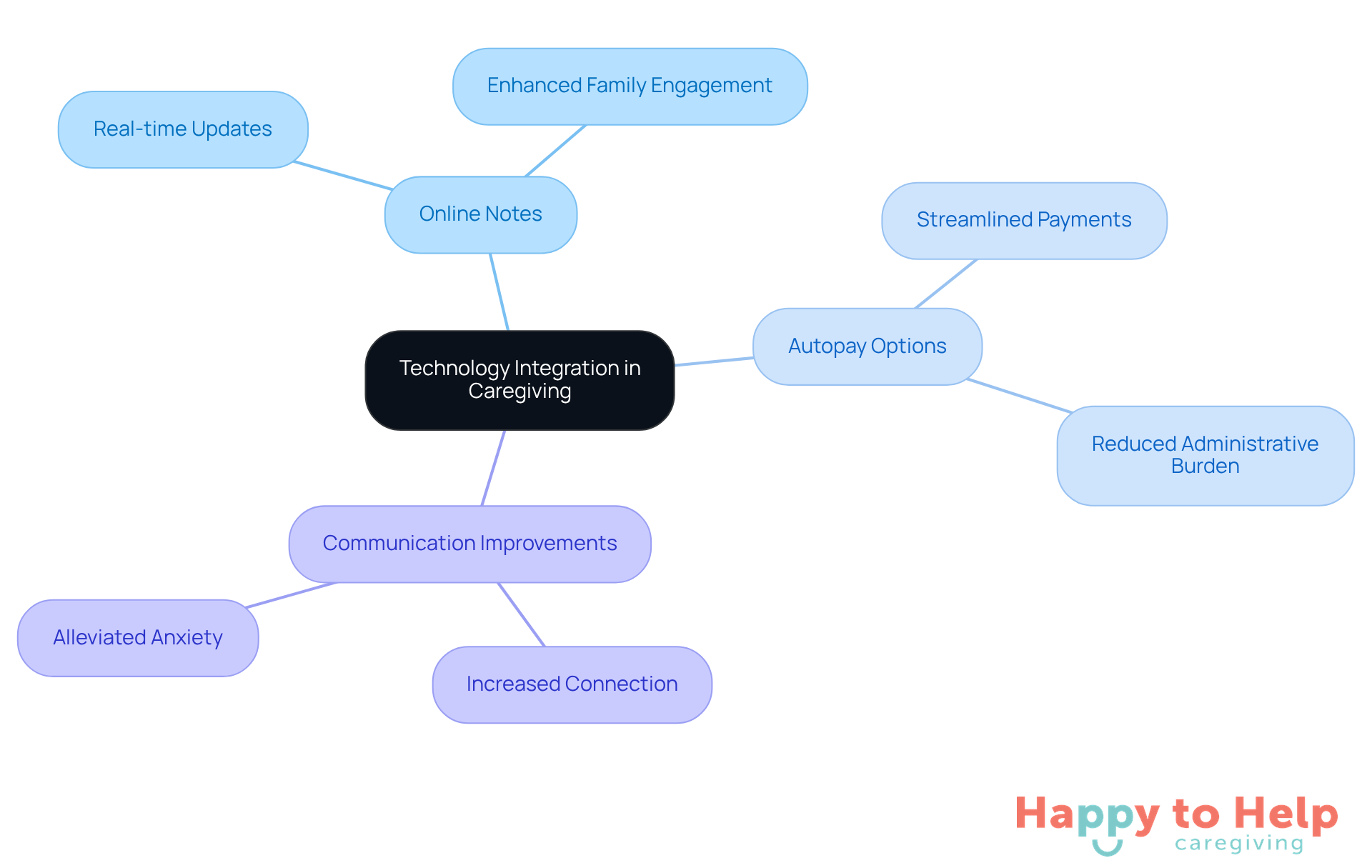
To address these issues, Happy to Help Caregiving leverages technology to enhance the caregiving experience. Features like online notes allow family members to stay updated on their loved ones' care, fostering openness and collaboration. This real-time communication tool simplifies information sharing and strengthens the bond between caregivers and families, ensuring everyone is aligned on support plans and progress.
Moreover, the integration of autopay options streamlines administrative tasks, enabling families to concentrate on what truly matters - the well-being of their loved ones. Statistics indicate that nearly 99% of U.S. health system leaders view digital transformation as essential for improving healthcare, underscoring the importance of these innovations in home support services.
Recent advancements in caregiving technology have also positively impacted communication. Families report feeling more connected and informed, which alleviates anxiety and enhances overall satisfaction with the support they receive. Testimonials highlight how these technological solutions have made a significant difference in their caregiving journey, emphasizing the value of active engagement in their loved ones' care. By adopting these modern solutions, Happy to Help Caregiving not only boosts operational efficiency but also enriches the emotional support provided to clients and their families.
Family Testimonials: Real Stories of Impact and Satisfaction
Families often face the challenge of finding reliable caregiving services for their loved ones. This situation can lead to stress and uncertainty, as they worry about the quality of care their relatives receive.
Happy to Help Caregiving addresses this problem by providing empathetic assistance that families can trust. Testimonials from families highlight the positive impact of these services, emphasizing the reassurance they feel knowing their loved ones are in capable hands.
These heartfelt stories serve as powerful endorsements of the effectiveness and quality of in-home care. They illustrate the numerous advantages of choosing in-home support over traditional nursing homes, making it clear that families can find peace of mind through Happy to Help Caregiving.
Making the Right Choice
In-home care presents a significant challenge for families navigating the complexities of caregiving. Many caregivers struggle with the emotional and physical demands of providing support to their loved ones, often feeling overwhelmed and isolated. This situation can lead to increased stress and burnout, impacting both the caregiver's and the senior's well-being.
However, in-home care offers a compassionate and effective alternative to private nursing homes. By choosing personalized support, families can ensure their loved ones receive tailored care in a familiar environment. This approach not only enhances the quality of life for seniors but also maintains their dignity and independence.
Key advantages of in-home care include:
- Personalized care plans that cater to individual needs.
- Companionship that alleviates loneliness.
- Post-hospital recovery support that facilitates a smoother transition home.
- Respite care providing essential breaks for family caregivers.
- 24/7 availability ensuring continuous support.
- The integration of technology enhancing communication and care management.
Ultimately, embracing in-home care can lead to profound improvements in the lives of seniors. By fostering connections, ensuring comfort, and promoting independence, this approach stands out as a vital solution for families seeking the best for their loved ones. Engaging in this care journey not only enriches the lives of seniors but also empowers families to participate meaningfully in their loved ones' care.
https://iframe.tely.ai/cta/eyJhcnRpY2xlX2lkIjogIjY5Mjc5NGRiMWE3YzlhYWNlNmI1NGZhMiIsICJjb21wYW55X2lkIjogIjY4ZWU1ZGNhNzMxNzYyNTU3ZjNjOTVjMSIsICJpbmRleCI6IG51bGwsICJ0eXBlIjogImFydGljbGUifQ==Frequently Asked Questions
What is Happy to Help Caregiving?
Happy to Help Caregiving is a service that provides personalized in-home care for seniors, focusing on individualized support plans that cater to their unique needs and circumstances.
Why is personalized in-home care important for seniors?
Personalized in-home care is important because it addresses the specific needs of each senior, improving their quality of life by focusing on physical health, emotional well-being, social connections, and independence.
How does Happy to Help Caregiving enhance the quality of life for seniors?
The service enhances quality of life by creating tailored support plans that include daily assistance with household tasks, companionship, and activities that seniors enjoy, thereby fostering confidence and engagement.
What role do caregivers play in the personalized support plans?
Caregivers play a crucial role by understanding and adapting to each senior's individual needs, providing a nurturing environment that helps seniors maintain dignity and independence.
What impact does companionship care have on seniors?
Companionship care helps alleviate loneliness, which is a significant issue for many seniors. It promotes social interaction, reduces feelings of isolation, and is associated with better mental health and cognitive function.
What are the health implications of chronic loneliness in seniors?
Chronic loneliness can lead to serious health issues, including increased risks of depression, anxiety, heart disease, and even shorter life expectancy, making companionship support vital.
How does Happy to Help Caregiving assist with post-hospital recovery?
Happy to Help Caregiving provides essential services for post-hospital recovery, including medication management, assistance with daily activities, and monitoring recovery progress to ensure a smooth transition home.
What are the benefits of home assistance after hospitalization?
Home assistance can significantly reduce hospital readmissions by up to 25% for individuals with chronic conditions, enhancing recovery by addressing both physical and emotional needs in a familiar environment.
List of Sources
- Happy to Help Caregiving: Personalized In-Home Care for Your Loved Ones
- Senior Care in Philadelphia, PA: Key Trends for 2025 and Beyond - AmeriBest Home Care (https://ameribesthomecare.com/recent-news/senior-care-in-philadelphia-pa-key-trends-for-2025-and-beyond)
- How Personalized Care Plans Improve Quality of Life for Seniors (https://seniorcarecompanions.com/personalized-care-plans-quality-of-life-for-seniors)
- The Future of Home Health Care: Trends to Watch in 2025 (https://synchronyfl.com/the-future-of-home-health-care-trends-to-watch-in-2025)
- Customized Care at Home: The Benefits of Personalized Care Plans - VNA Health Group (https://vnahg.org/customized-care-at-home-the-benefits-of-personalized-care-plans)
- Caring Senior Service Banks Growth Goals On New House-Made Technology (https://homehealthcarenews.com/2025/10/caring-senior-service-banks-growth-goals-on-new-house-made-technology)
- Companionship Care: Alleviate Loneliness and Enhance Quality of Life
- Why Home Care Providers Are Increasingly Offering Companion Care Services for Seniors | Aaniie, formerly Smartcare Software (https://aaniie.com/news/why-home-care-providers-are-increasingly-offering-companion-care-services-for-seniors)
- The Hidden Benefits of Companionship Care for Seniors (https://safehomecare.com/post/the-hidden-benefits-of-companionship-care-for-seniors)
- The Power of Companionship for Seniors: A Key Ingredient to Quality Aging (https://homecarepgh.com/blog-posts/companionship-in-old-age)
- The Unbeatable Benefits of Companion Care for Seniors (https://comforcare.com/massachusetts/canton/resources/blog/the-unbeatable-benefits-of-companion-care-for-seniors)
- The Importance of Companionship for Seniors and How It Improves Well-being | Luxe Homecare (https://luxehomecare.com/the-importance-of-companionship-for-seniors-and-how-it-improves-well-being)
- Post-Hospital Recovery Assistance: Support for a Smooth Transition Home
- Post-Hospital Home Care: The Key to a Smoother, Safer Recovery (https://heavenathomecare.com/how-post-hospital-home-care-helps-seniors-recover)
- Post-Hospital Discharge: Why In-Home Care Improves Recovery for Florida Seniors (https://visitingangels.com/pasco/news-info/post-hospital-discharge-why-in-home-care-improves-recovery/26199)
- Home Care Impact on Recovery of Patient (A Statistics Report) (https://lovinghomecareinc.com/home-care-recovery-statistics)
- After the hospital, support to help patients thrive at home | Penn Medicine (https://pennmedicine.org/news/after-the-hospital-support-to-help-patients-thrive-at-home)
- Why Families Should Choose Home Care After Hospital Discharge (https://homewatchcaregivers.com/huntington-newport-beach/about-us/blog/why-families-should-choose-home-care-after-hospi)
- Respite Care: Essential Breaks for Family Caregivers
- Why Does Every Family Caregiver Need Respite Time? (https://homeinstead.com/home-care/usa/ut/salt-lake-city/119/news-and-media/why-does-every-family-caregiver-need-respite-time2)
- Respite Services: A Critical Support for Family Caregivers (https://ltsschoices.aarp.org/resources-and-practices/respite-services-critical-support-for-family-caregivers)
- Caregivers and the Importance of Respite Care (https://benedictineliving.org/resources/news/caregivers-and-the-importance-of-respite-care)
- Respite Care Services: Essential Support for Caregivers (https://esoregon.com/the-benefits-of-respite-care-services-for-caregiver-relief)
- Palliative Support Care: Ensuring Comfort and Dignity at Home
- Palliative care (https://who.int/news-room/fact-sheets/detail/palliative-care)
- More People Are Caring for Dying Loved Ones at Home. A New Orleans Nonprofit Is Showing Them How. - KFF Health News (https://kffhealthnews.org/news/article/end-of-life-home-hospice-care-dying-new-orleans-louisiana)
- Palliative Care Statistics (https://rosewood-nursing.com/post/palliative-care-statistics)
- When Approaching Death, Hospice Offers Dignity, Peace (https://deathwithdignity.org/news/2024/04/hospice-offers-dignity-and-peace)
- 24/7 Availability: Continuous Support for Peace of Mind
- 10 Benefits of Care Around the Clock for Your Loved Ones - Happy To Help (https://happytohelpcaregiving.com/10-benefits-of-care-around-the-clock-for-your-loved-ones)
- Caregiving Crisis: 45% Increase in Americans Providing Care (https://aarp.org/caregiving/basics/caregiving-in-us-survey-2025)
- 24-Hour Home Care | BrightStar Care | BrightStar Care (https://brightstarcare.com/about-brightstar-care/resources/benefits-of-24-hour-home-care)
- Caregiver Statistics: Demographics (https://caregiver.org/resource/caregiver-statistics-demographics)
- The 10-Benefits of 24-Hour Home Care » LifeWorx Home Care (https://lifeworx.com/resources/articles/the-10-benefits-of-24-hour-home-care)
- Flexible Scheduling: Tailored Care That Fits Your Family's Needs
- 9 Ways to Find Caregivers With Flexible Scheduling Options - MedCity News (https://medcitynews.com/2025/05/9-ways-to-find-caregivers-with-flexible-scheduling-options)
- Exploring the Rising Demand for Flexible Work in Healthcare (https://healthecareers.com/career-resources/nurse-career/rising-demand-for-flexible-work-in-healthcare)
- Nurses are fleeing the workforce – can scheduling tech help? (https://healthcareitnews.com/news/nurses-are-fleeing-workforce-can-scheduling-tech-help)
- Flexible scheduling in healthcare: Top strategies from CNOs and HR leaders (https://go.beckershospitalreview.com/hr/flexible-scheduling-in-healthcare-top-strategies-from-cnos-and-hr-leaders)
- A Better Solution Home Care (https://abs.care/Home-Care-Staffing-Shortages-How-They-Impact-Home-Care-Services)
- Trained Caregivers: Providing Emotional Support and Engagement
- WHO launches new online course to support informal caregivers across Europe (https://who.int/europe/news/item/27-10-2025-who-launches-new-online-course-to-support-informal-caregivers-across-europe)
- The Power of Emotional Connection in Healthy Aging (https://mynorth.com/stories/emotional-connection-healthy-aging)
- Caregiver Statistics: Demographics (https://caregiver.org/resource/caregiver-statistics-demographics)
- The Power of Connection: Social Engagement and Mental Health – In Home Senior Care Northeast Florida (https://agingtrue.org/the-power-of-connection-social-engagement-and-mental-health)
- Technology Integration: Enhancing Care Through Modern Solutions
- HHS Backs AI Innovation for America’s Caregivers | HHS.gov (https://hhs.gov/press-room/hhs-backs-ai-innovation-for-americas-caregivers.html)
- Home care caregivers more at ease with technology, industry survey finds (https://mcknightshomecare.com/news/home-care-caregivers-more-at-ease-with-technology-industry-survey-finds)
- HHS Launches New Caregiving AI Initiative to 'Spark Innovative Support' (https://hospicenews.com/2025/11/18/hhs-launches-new-caregiving-ai-initiative-to-spark-innovative-support)
- The Rise and Promise of Technology in Home Health (https://healthrecoverysolutions.com/blog/the-rise-and-promise-of-technology-in-home-health)
- How enabling technology is transforming home-based care | UnitedHealthcare Community & State (https://uhccommunityandstate.com/content/blog-post/blogs/how-enabling-technology-is-transforming-home-based-care)
- Family Testimonials: Real Stories of Impact and Satisfaction
- Home (https://homehealthcarenews.com)
- Home Care Impact on Recovery of Patient (A Statistics Report) (https://lovinghomecareinc.com/home-care-recovery-statistics)
- An Assessment of Patient Satisfaction With Home Care Services in an Eastern City of Turkey - PMC (https://pmc.ncbi.nlm.nih.gov/articles/PMC12056709)
- Home Healthcare Statistics and Facts (2025) (https://media.market.us/home-healthcare-statistics)
- Home Care Testimonials From Real Clients (https://thehomeaides.com/home-care-reviews)