
Understanding Choose a Home Care Provider in Victoria
Choosing a home care provider can feel overwhelming for families striving to find the best support for their loved ones. This challenge is particularly pronounced in Victoria, where the caregiving landscape is rapidly changing. Families face the pressing issue of ensuring their loved ones receive the care they need while navigating a myriad of options.
The implications of this decision are significant. Families often worry about the quality of care, the emotional well-being of their loved ones, and the overall impact on their lives. As the demand for personalized services grows, it becomes crucial to understand how these options can serve as a lifeline for those in need.
This article outlines ten compelling reasons to consider a home care provider in Victoria. From tailored support and companionship to flexible scheduling, these services can significantly enhance the quality of life for clients. By addressing the unique challenges families face today, we can explore how home care services stand out as a viable solution.
Happy to Help Caregiving: Personalized In-Home Support for Your Loved Ones
Caregivers often face the challenge of providing personalized support to seniors and individuals with special needs. Many traditional caregiving methods fail to address the unique needs of each client, leading to a decline in quality of life and emotional well-being. This lack of tailored care can result in feelings of isolation and insecurity for both clients and their families.
Happy to Help Caregiving, a home care provider in Victoria, addresses these issues by offering personalized in-home support that prioritizes the improvement of quality of life. By delivering care in a familiar and comforting environment, the agency fosters independence and enhances emotional wellness. Personalized support plans are designed to reflect individual preferences and routines, which can significantly improve mental health and create a greater sense of security at home.
The agency's commitment to understanding each client's unique circumstances allows caregivers to build meaningful relationships, ultimately enhancing the overall caregiving experience. As noted by experts in the field, "Everything that makes us unique is your individuality. We comprehend this on a personal level and that is why our support is customized to meet your needs."
Moreover, with 90% of the home assistance sector still adhering to conventional techniques from three decades ago, Happy to Help Caregiving's contemporary, customized strategy as a home care provider in Victoria is essential. This approach not only meets urgent requirements but also promotes long-term health outcomes, such as reducing the risk of falls and hospital admissions. By choosing personalized care, families can ensure their loved ones receive the support they truly need.
Companionship Care: Alleviating Loneliness and Enhancing Quality of Life
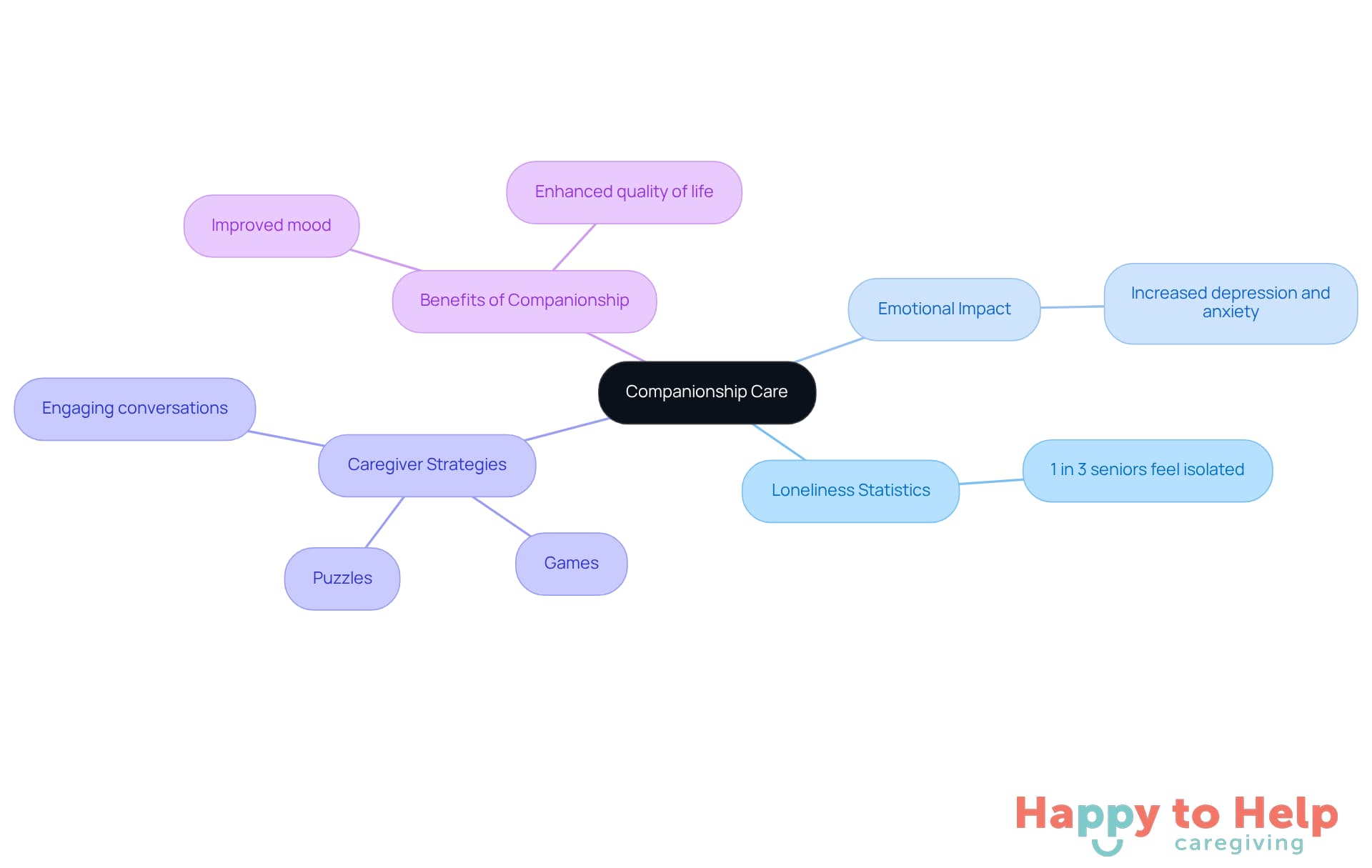
Loneliness among seniors is a significant issue that can severely impact their emotional well-being. Research shows that one in three seniors experiences feelings of isolation, which underscores the importance of companionship in their lives. This emotional disconnect can lead to increased symptoms of depression and anxiety, making it crucial for caregivers to address this problem effectively.
To combat loneliness, caregivers can foster meaningful interactions through engaging conversations and enjoyable activities, such as games and puzzles. These activities not only help maintain social connections but also support cognitive abilities. Regular companionship has been linked to improved mood and overall quality of life, making it a vital component of senior care.
Engaging with a compassionate provider can alleviate feelings of isolation and promote mental health. For seniors living independently, this emotional support is particularly essential, as it helps them feel valued and connected to their community. Additionally, companionship support can provide a much-needed break for relatives who assist seniors, easing their burdens while ensuring their loved ones receive the attention they require.
Home care provider Victoria offers in-home services that prioritize companionship support and can significantly enhance the quality of life for seniors. By implementing these strategies, caregivers can create a more supportive environment that addresses the emotional needs of their loved ones.
Post-Hospital Recovery Assistance: Ensuring Safe Transitions and Continued Care
Post-hospital recovery assistance presents a significant challenge for caregivers, as ensuring a smooth transition from hospital to home is crucial. Without adequate support, patients may face increased risks of readmission and complications during recovery. This situation can lead to heightened stress for both patients and their families, making the recovery process more daunting.
Caregivers can alleviate these concerns by providing essential support, including medication management, mobility assistance, and help with daily activities. Research from the National Institutes of Health indicates that older adults receiving services from a home care provider in Victoria experience notably lower readmission rates. This highlights the importance of having skilled individuals, such as a home care provider in Victoria, who can oversee health conditions and assist with follow-up appointments.
To foster a safe recovery environment, caregivers should prioritize secure transitions and ongoing support. By doing so, families can feel assured that their loved ones are in competent hands, promoting both physical and emotional wellness during the recovery process. Here are some actionable tips for caregivers:
- Medication Management: Keep a detailed schedule of medications to ensure timely administration.
- Mobility Assistance: Encourage gentle exercises to enhance mobility and prevent falls.
- Daily Activities: Assist with meal preparation and personal care to ease the burden on patients.
By implementing these strategies, caregivers can significantly improve the recovery experience for their loved ones.

Respite Care: Supporting Family Caregivers and Preventing Burnout
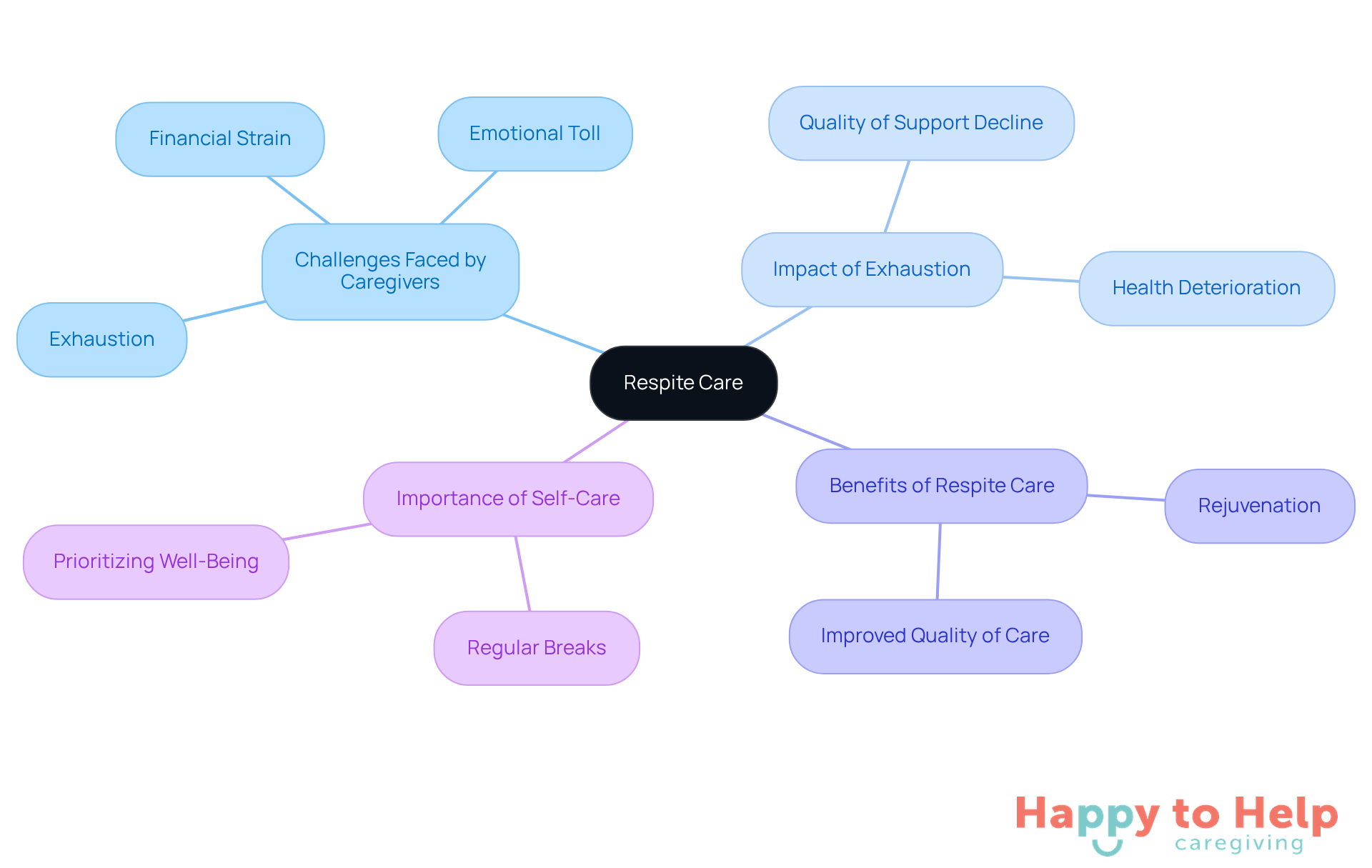
Caregivers often face significant challenges, including exhaustion from their demanding roles. This fatigue can lead to a decline in the quality of support they provide to their loved ones. When caregivers are overwhelmed, both their health and the well-being of those they care for can suffer.
Respite assistance offers a practical solution by providing short-term relief for family supporters. This service allows caregivers to rejuvenate while ensuring their loved ones continue to receive quality support. By taking a break, caregivers can recharge, ultimately preserving their health and enhancing the quality of care they provide.
Incorporating respite services is essential for preventing provider exhaustion. Caregivers should consider scheduling regular breaks to maintain their well-being and effectiveness. By prioritizing self-care, they can ensure that both they and their loved ones thrive.
Flexible Scheduling: Tailoring Care to Fit Family Needs
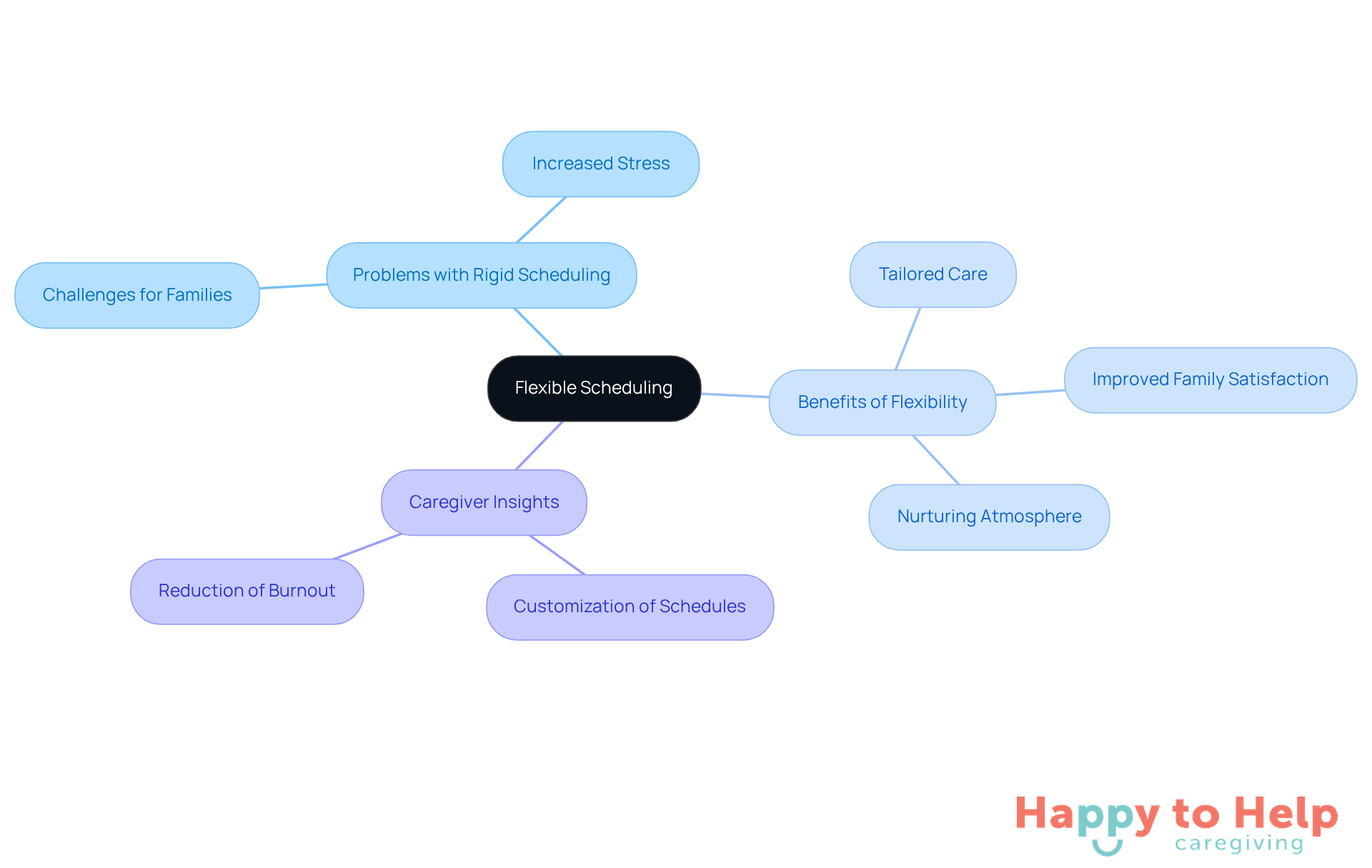
Problem: Rigid scheduling can create significant challenges for caregivers and the families they assist. Many households struggle to find care that aligns with their unique routines and preferences, leading to frustration and dissatisfaction.
Agitate: This lack of flexibility can hinder the quality of care provided, making it difficult for families to feel secure and supported. Caregivers often find themselves unable to meet the specific needs of those they assist, which can lead to increased stress for both parties. For instance, with 75% of care requests being for morning hours, the inability to adjust schedules can leave families without the support they need when they need it most.
Flexible scheduling is a cornerstone of our services as a home care provider in Victoria, allowing households to tailor assistance according to their unique needs. This adaptability enables caregivers to adjust their availability, whether for part-time or full-time assistance, ensuring alignment with household routines and preferences. Such flexibility not only enhances the quality of assistance provided by a home care provider in Victoria but also significantly improves family satisfaction.
Care providers frequently convey that as a home care provider Victoria, having the capability to modify their schedules promotes a more nurturing atmosphere, enabling them to deliver the appropriate level of support exactly when it is required. As one caregiver mentioned, "Having the ability to customize my timetable allows me to be present for those I assist when they require me the most." This method reduces stress for households and fosters a sense of security and comfort for individuals, emphasizing the significance of customized support schedules in improving overall well-being.
24/7 Availability: Ensuring Continuous Support for Your Loved Ones
Problem: Caregivers often face the challenge of ensuring their loved ones receive continuous support, especially during critical times.
Agitate: This need is particularly pressing for individuals with chronic conditions or those recovering from surgery. The uncertainty of whether help is available can weigh heavily on both the caregiver and the family, leading to stress and anxiety.
Solution: Happy to Help Caregiving addresses this issue with its 24/7 availability. Clients can rest assured that assistance is just a call away at any hour, providing peace of mind for families. This continuous support not only helps in daily care but also reassures loved ones that they are never alone in their journey.

Technology Integration: Enhancing Communication and Care Management
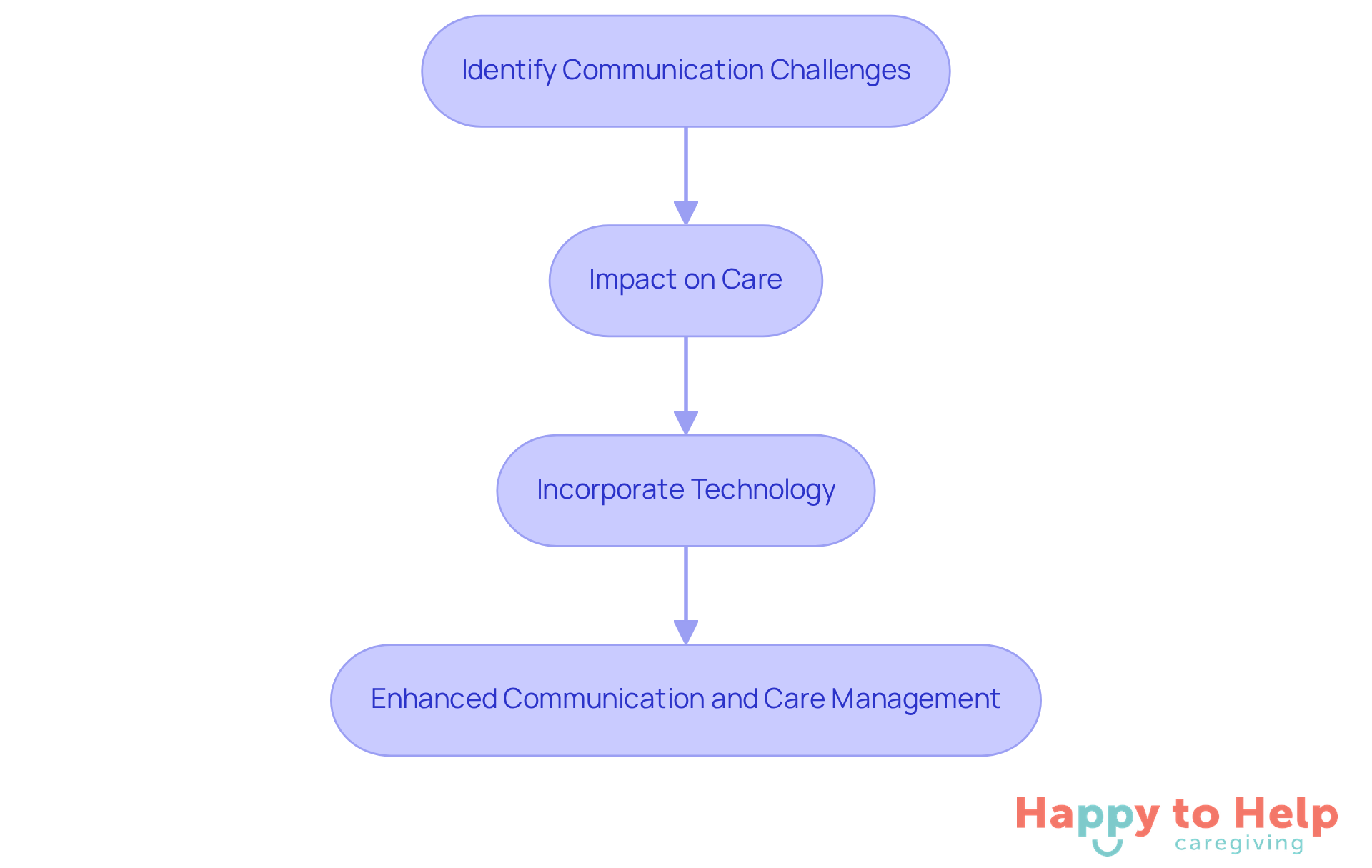
Caregivers often face significant challenges in communication and management when they work as a home care provider in Victoria while providing home support services. This can lead to misunderstandings and a lack of coordination in care.
- Agitate: When families are not kept informed about their loved one's treatment, it can create anxiety and uncertainty. Caregivers may struggle to provide the best support without real-time updates and effective communication tools.
Incorporating technology into services offered by a home care provider in Victoria can greatly improve this situation. Resources like online notes for family members and telehealth options enable real-time updates and consultations. This ensures that families remain informed about their loved one's treatment, enhancing efficiency and promoting a collaborative environment for assistance.
Personalized Care Plans: Tailoring Support to Individual Needs
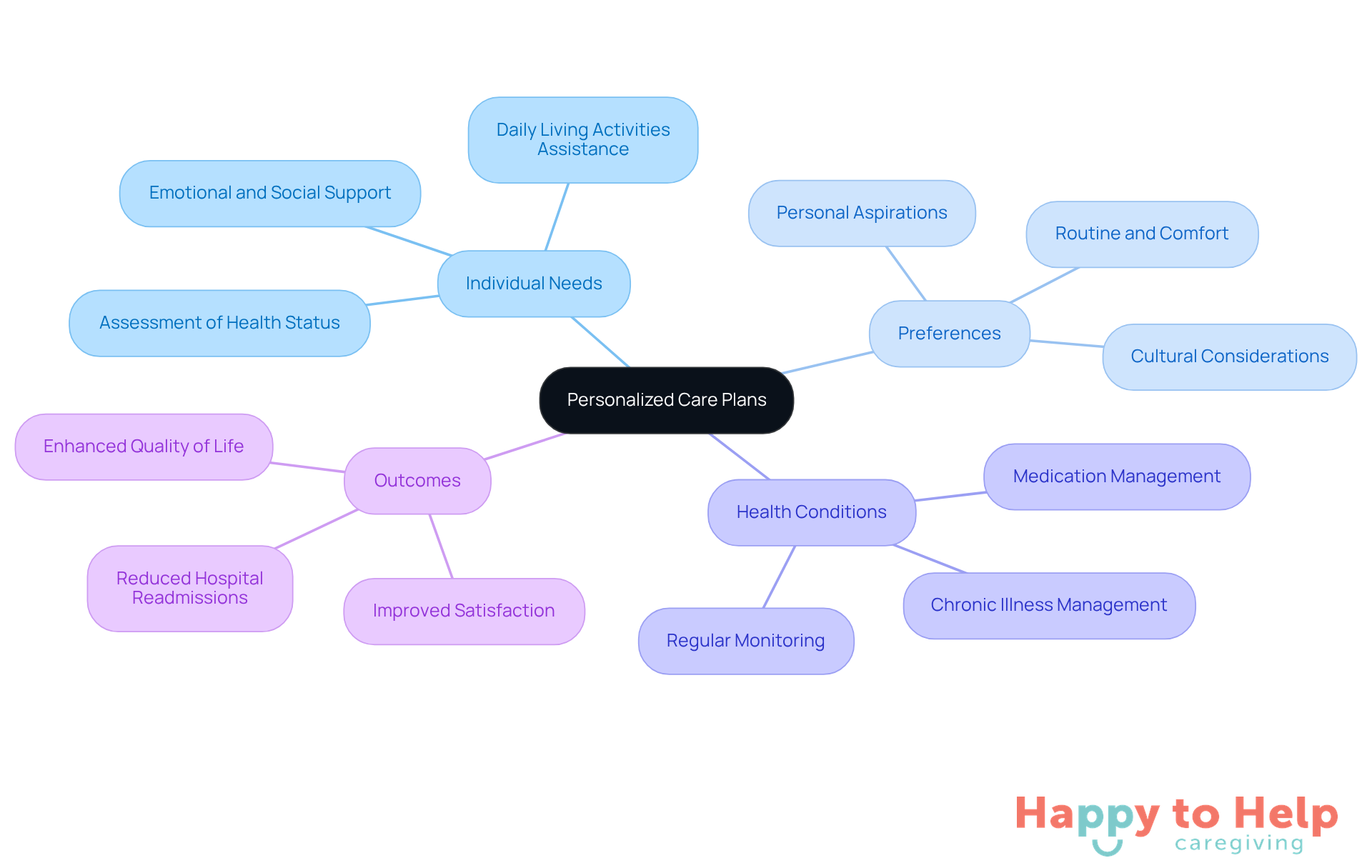
Caregivers often face the challenge of providing adequate support tailored to the unique needs of individuals. Without customized plans, many may struggle to deliver the appropriate care, leading to dissatisfaction and poor health outcomes.
Happy to Help Caregiving addresses this issue by offering customized support plans that are central to their strategy. Each plan is designed according to the individual's specific needs, preferences, and health conditions. This tailored approach ensures that individuals receive the most suitable care, ultimately improving their overall well-being and satisfaction with the services offered.
Compassionate Caregivers: The Heart of Quality Home Care Services
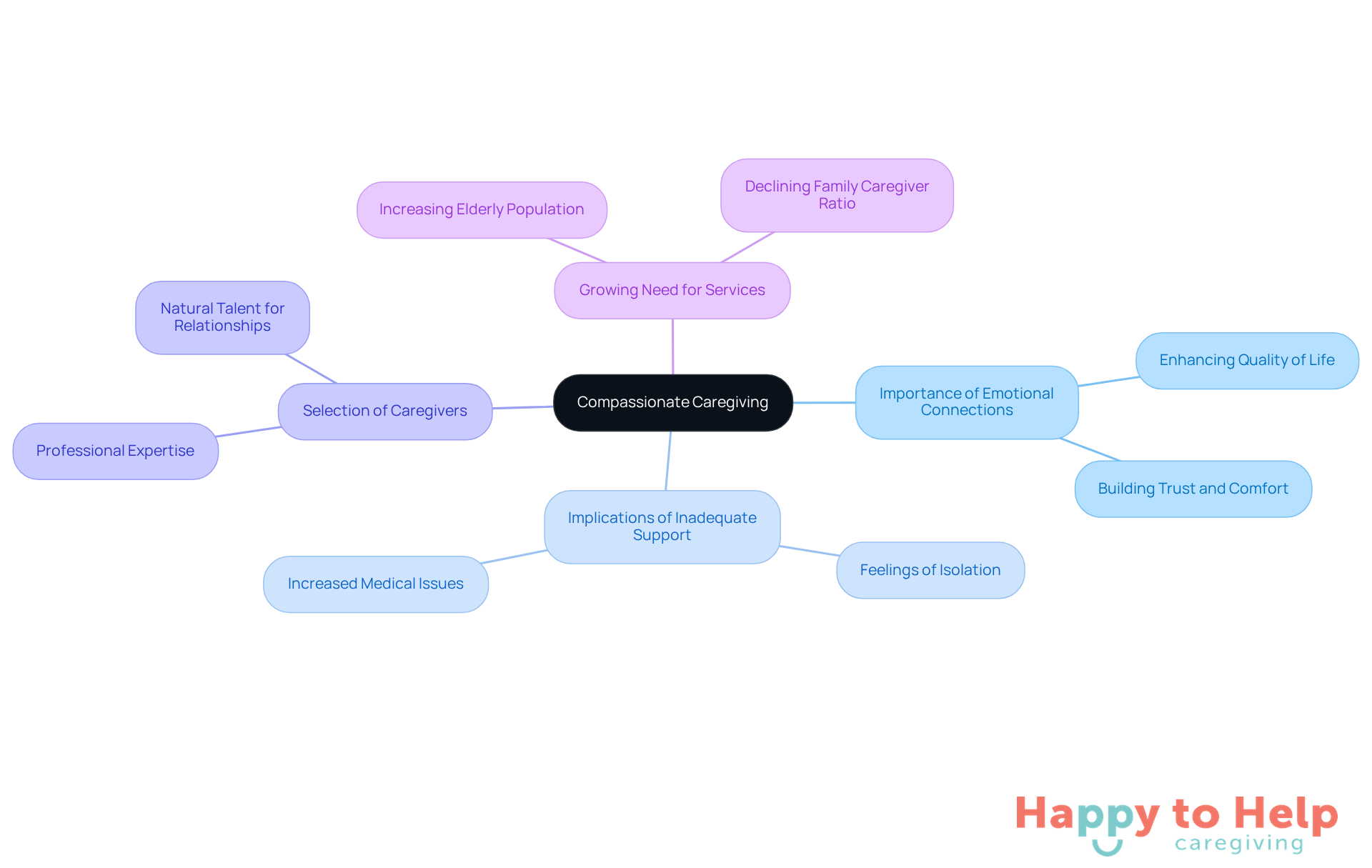
At Happy to Help Caregiving, the challenge of providing empathetic support is paramount. Caregivers often face the problem of not just delivering essential assistance but also needing to foster emotional connections with those they support. This lack of personal engagement can lead to feelings of isolation for clients, undermining their overall well-being.
The implications of inadequate emotional support are significant. Research shows that caregivers who exhibit empathy can significantly enhance their clients' quality of life, leading to better health outcomes and fewer medical issues. For instance, studies indicate that patients whose supporters demonstrate compassion report a higher quality of life and experience fewer medical symptoms. This highlights the critical need for caregivers to build meaningful relationships with their clients.
So, how can caregivers address this issue? Happy to Help Caregiving prioritizes the selection of a home care provider Victoria who not only possesses professional expertise but also has a natural talent for building personal relationships. By fostering trust and comfort, these providers ensure that individuals feel valued and understood - an essential component for effective caregiving. As Jason Lee, CEO of HCAOA, states, "These providers are not only delivering essential day-to-day assistance but also offering emotional support and making a difference in the lives of so many."
Furthermore, with the increasing elderly population and the declining family caregiver ratio, the need for a home care provider in Victoria offering compassionate caregiving services has never been more critical. By focusing on these connections, Happy to Help Caregiving guarantees that clients receive not just assistance but a genuine partnership that promotes their independence and well-being.
Moving Forward with Choose a Home Care Provider in Victoria
Choosing a home care provider in Victoria presents a significant challenge that can deeply affect the quality of life for clients and their families. The problem lies in finding a service that offers personalized, compassionate care tailored to individual needs. Without the right support, families may struggle to ensure their loved ones receive the care they deserve, impacting emotional well-being and independence.
The implications of this choice are profound. Families often face feelings of uncertainty and stress when navigating care options, which can lead to feelings of isolation for their loved ones. This is where the solution comes into play. By selecting a provider like Happy to Help Caregiving, families can secure tailored support that fosters both independence and emotional health.
In-home care services offer several key benefits that address these challenges:
- Personalized care plans cater to individual preferences and routines.
- Companionship care helps alleviate loneliness.
- Post-hospital recovery assistance ensures safe transitions, allowing clients to regain their strength in a familiar environment.
- Flexible scheduling and 24/7 availability further enhance communication and care management, reinforcing the importance of individualized support.
Ultimately, the choice of a home care provider is not just a logistical decision; it’s a vital step toward improving the overall quality of life for seniors and individuals with special needs. Families should prioritize compassionate caregiving, recognizing its significant impact on emotional health and well-being. By making informed choices about home care, they can create a nurturing environment that promotes safety and happiness for their loved ones.
https://iframe.tely.ai/cta/eyJhcnRpY2xlX2lkIjogIjY5MjNiNTc3N2NkODM2YzYyYTYzNzllZCIsICJjb21wYW55X2lkIjogIjY4ZWU1ZGNhNzMxNzYyNTU3ZjNjOTVjMSIsICJpbmRleCI6IG51bGwsICJ0eXBlIjogImFydGljbGUifQ==Frequently Asked Questions
What challenges do caregivers face when providing support to seniors and individuals with special needs?
Caregivers often struggle to provide personalized support, as traditional caregiving methods may not address the unique needs of each client, leading to a decline in quality of life and emotional well-being.
How does Happy to Help Caregiving address the needs of clients?
Happy to Help Caregiving offers personalized in-home support that focuses on improving quality of life by creating tailored support plans that reflect individual preferences and routines, fostering independence and enhancing emotional wellness.
Why is companionship important for seniors?
Companionship is crucial for seniors as it helps alleviate feelings of loneliness, which can lead to increased symptoms of depression and anxiety. Regular companionship has been linked to improved mood and overall quality of life.
What activities can caregivers engage in to combat loneliness among seniors?
Caregivers can foster meaningful interactions through engaging conversations and enjoyable activities such as games and puzzles, which help maintain social connections and support cognitive abilities.
What role does post-hospital recovery assistance play in caregiving?
Post-hospital recovery assistance is vital for ensuring a smooth transition from hospital to home, reducing the risk of readmission and complications during recovery. Caregivers provide essential support, including medication management and mobility assistance.
What are some strategies caregivers can implement for effective post-hospital recovery?
Caregivers can implement strategies such as maintaining a detailed medication schedule, encouraging gentle exercises for mobility, and assisting with daily activities like meal preparation and personal care.
How does Happy to Help Caregiving's approach differ from traditional caregiving methods?
Happy to Help Caregiving utilizes a contemporary, customized strategy that prioritizes personalized care, as opposed to the conventional techniques that have been in use for decades, promoting better long-term health outcomes for clients.
List of Sources
- Happy to Help Caregiving: Personalized In-Home Support for Your Loved Ones
- News from In Home Personal Services (https://ihps.com/news-publications)
- News & Media | Home Instead | New York, NY (https://homeinstead.com/home-care/usa/ny/new-york/368/news-and-media)
- HumanCare Helps Families Thrive With Personalized and Compassionate Home Care (https://digitaljournal.com/pr/news/vehement-media/humancare-helps-families-thrive-personalized-1703048575.html)
- How Personalized Health Care Is Changing The Role Of Home Care Providers (https://homehealthcarenews.com/2024/03/how-personalized-health-care-is-changing-the-role-of-home-care-providers)
- Companionship Care: Alleviating Loneliness and Enhancing Quality of Life
- The Amazing Benefits of Companion Care for Seniors (https://homeinstead.com/home-care/usa/az/phoenix/808/news-and-media/the-amazing-benefits-of-companion-care-for-seniors)
- The Impact of Companion Homecare Services on Well-Being (https://americareinfo.com/impact-of-companion-homecare-services)
- Why Home Care Providers Are Increasingly Offering Companion Care Services for Seniors | Aaniie, formerly Smartcare Software (https://aaniie.com/news/why-home-care-providers-are-increasingly-offering-companion-care-services-for-seniors)
- Comfort Keepers® mentioned in recent AARP Bulletin highlighting the benefits of companion care for seniors | Comfort Keepers (https://comfortkeepers.com/articles/media-center/in-the-news/comfort-keepers-mentioned-in-recent-aarp-bulletin-highlighting-the-benefits-of-companion-care-for-seniors)
- Post-Hospital Recovery Assistance: Ensuring Safe Transitions and Continued Care
- Hospital to Home: The Importance of Transitional Care - Aegis (https://myaegis.com/blog/hospital-to-home-the-importance-of-transitional-care)
- Post-Hospital Home Care: The Key to a Smoother, Safer Recovery (https://heavenathomecare.com/how-post-hospital-home-care-helps-seniors-recover)
- Sent Home To Heal, Patients Avoid Wait for Rehab Home Beds - KFF Health News (https://kffhealthnews.org/news/article/patients-rehab-at-home-unclog-hospital-bed-nursing-home-waiting-list)
- Take-home methadone provides a lifesaving bridge to recovery after hospitalization (https://news-medical.net/news/20251122/Take-home-methadone-provides-a-lifesaving-bridge-to-recovery-after-hospitalization.aspx)
- Post-Hospital Discharge: Why In-Home Care Improves Recovery for Florida Seniors (https://visitingangels.com/tampafl/news-info/post-hospital-discharge-why-in-home-care-improves-recovery-for-florida-seniors/26196)
- Respite Care: Supporting Family Caregivers and Preventing Burnout
- Improving Support for Family Caregivers (https://nationalacademies.org/news/2025/07/improving-support-for-family-caregivers)
- AARP New York Applauds Mayor Malik Evans for Recognizing Family Caregivers Month (https://states.aarp.org/new-york/aarp-new-york-applauds-mayor-malik-evans-for-recognizing-family-caregivers-month)
- A bill in Congress would return $5,000 to millions of family caregivers every year, but will it pass? (https://cbsnews.com/newyork/news/credit-for-caring-act-family-caregiver-tax-credit)
- Demand for Pediatric Hospice Respite Accelerating (https://hospicenews.com/2025/11/14/demand-for-pediatric-hospice-respite-accelerating)
- It’s Time to Care for Caregivers: Senator Markey Announces Comprehensive Family Caregiving Legislative Agenda | U.S. Senator Ed Markey of Massachusetts (https://markey.senate.gov/news/press-releases/11/20/2025/its-time-to-care-for-caregivers-senator-markey-announces-comprehensive-family-caregiving-legislative-agenda)
- Flexible Scheduling: Tailoring Care to Fit Family Needs
- Flexible scheduling, enhanced communication, technology can help address workforce challenges (https://mcknightsseniorliving.com/news/flexible-scheduling-enhanced-communication-technology-can-help-address-workforce-challenges)
- Flexible Care Models Give Home Care Clients ‘What They Want When They Want It’ (https://homehealthcarenews.com/2025/10/flexible-care-models-give-home-care-clients-what-they-want-when-they-want-it)
- The Benefits of Flexible Scheduling in Home Care Plans (https://regencyhcs.com/blog/the-benefits-of-flexible-scheduling-in-home-care-plans)
- Embracing Flexible Scheduling Models in Aging Services: A Path Toward Workforce Stability (https://leadingage.org/embracing-flexible-scheduling-models-in-aging-services-a-path-toward-workforce-stability)
- Return-to-Office Trends are Reshaping Caregiving at Home - Family & Nursing Care (https://familynursingcare.com/return-to-office-trends-are-reshaping-caregiving-at-home)
- 24/7 Availability: Ensuring Continuous Support for Your Loved Ones
- North Carolina's aging population drives demand for in-home caregivers - Triangle Business Journal (https://bizjournals.com/triangle/news/2025/11/07/north-carolina-inhome-healthcare-aging-population.html)
- 2025 Home Care Statistics: Trends & Insights To Know (https://premierhcinc.com/blog/home-care-statistics)
- 52 Eye-Opening Home Health Statistics: Insights for 2025 (https://boosthomehealth.com/home-health-statistics)
- Health workers in North Carolina demand better pay, safer conditions (https://cbs17.com/news/north-carolina-news/health-workers-in-north-carolina-demand-better-pay-safer-conditions)
- Home (https://homehealthcarenews.com)
- Technology Integration: Enhancing Communication and Care Management
- AI must optimize home care, continuity, and early detection for older adults (https://news-medical.net/news/20251007/AI-must-optimize-home-care-continuity-and-early-detection-for-older-adults.aspx)
- Would you really trust a robot to care for you in old age? (https://bbc.com/news/articles/c9wdzyyglq5o)
- Home care caregivers more at ease with technology, industry survey finds (https://mcknightshomecare.com/news/home-care-caregivers-more-at-ease-with-technology-industry-survey-finds)
- How Technology is Reshaping Home-Based Care - THL (https://thl.com/articles/how-technology-is-reshaping-home-based-care)
- Study finds home healthcare agencies discontinuing telehealth post-pandemic (https://news.uci.edu/2025/05/28/study-finds-home-healthcare-agencies-discontinuing-telehealth-post-pandemic)
- Personalized Care Plans: Tailoring Support to Individual Needs
- Importance of Personalized Senior Home Care in Burlington NC (https://wisdomseniorcare.com/the-importance-of-personalized-care-plans-for-seniors)
- The Importance of Personalized Care Plans in Home Care (https://anodyne-services.com/2025/01/14/the-importance-of-personalized-care-plans-in-home-care)
- How Personalized Health Care Is Changing The Role Of Home Care Providers (https://homehealthcarenews.com/2024/03/how-personalized-health-care-is-changing-the-role-of-home-care-providers)
- The Importance of Personalized Care Plans in Home Health Services (https://regencyhcs.com/blog/the-importance-of-personalized-care-plans-in-home-health-services)
- The Importance of Personalized Care Plans (https://homecareadvisory.org/importance-personalized-care-plans)
- Compassionate Caregivers: The Heart of Quality Home Care Services
- The importance of Compassionate Caregivers for Alzheimer’s Patients (https://southerncaliforniacaregiving.com/the-importance-of-compassionate-caregivers-for-alzheimers-patients)
- The Beating Heart of Home Care: HCAOA Celebrates National Caregivers Day (https://ktla.com/business/press-releases/ein-presswire/788052960/the-beating-heart-of-home-care-hcaoa-celebrates-national-caregivers-day)
- Compassion in Home Care (https://homeinstead.com/home-care/usa/la/carencro/347/news-and-media/compassion-in-home-care)
- Caregiver Statistics: Demographics (https://caregiver.org/resource/caregiver-statistics-demographics)
- The Heart of Homecare is Built on the Unshakeable Compassion and Dedication of Caregivers | Healthcare IT Today (https://healthcareittoday.com/2024/09/25/the-heart-of-homecare-is-built-on-the-unshakeable-compassion-and-dedication-of-caregivers)