Why Choose a Home Health Aide Agency in Matters
Caregiving can be a daunting journey, especially for families facing the complexities of in-home support for their loved ones. This challenge is particularly pronounced in Manhattan, where the demand for personalized assistance from home health aide agencies has surged. Families often find themselves overwhelmed, highlighting the critical need for compassionate and tailored care solutions.
As families navigate these challenges, they may feel a sense of uncertainty and stress. The implications of inadequate support can be significant, affecting not only the quality of care but also the emotional well-being of both caregivers and clients. However, choosing the right home health aide agency can transform this experience, providing not just enhanced quality of life for clients but also peace of mind for families.
In this article, we will explore ten compelling reasons to choose a home health aide agency in Manhattan. We will delve into how these services can alleviate the burdens of caregiving and improve overall satisfaction. What challenges arise when seeking the right support, and how can selecting the right agency make a difference? Let's find out.
Happy to Help Caregiving: Personalized In-Home Support for Your Family
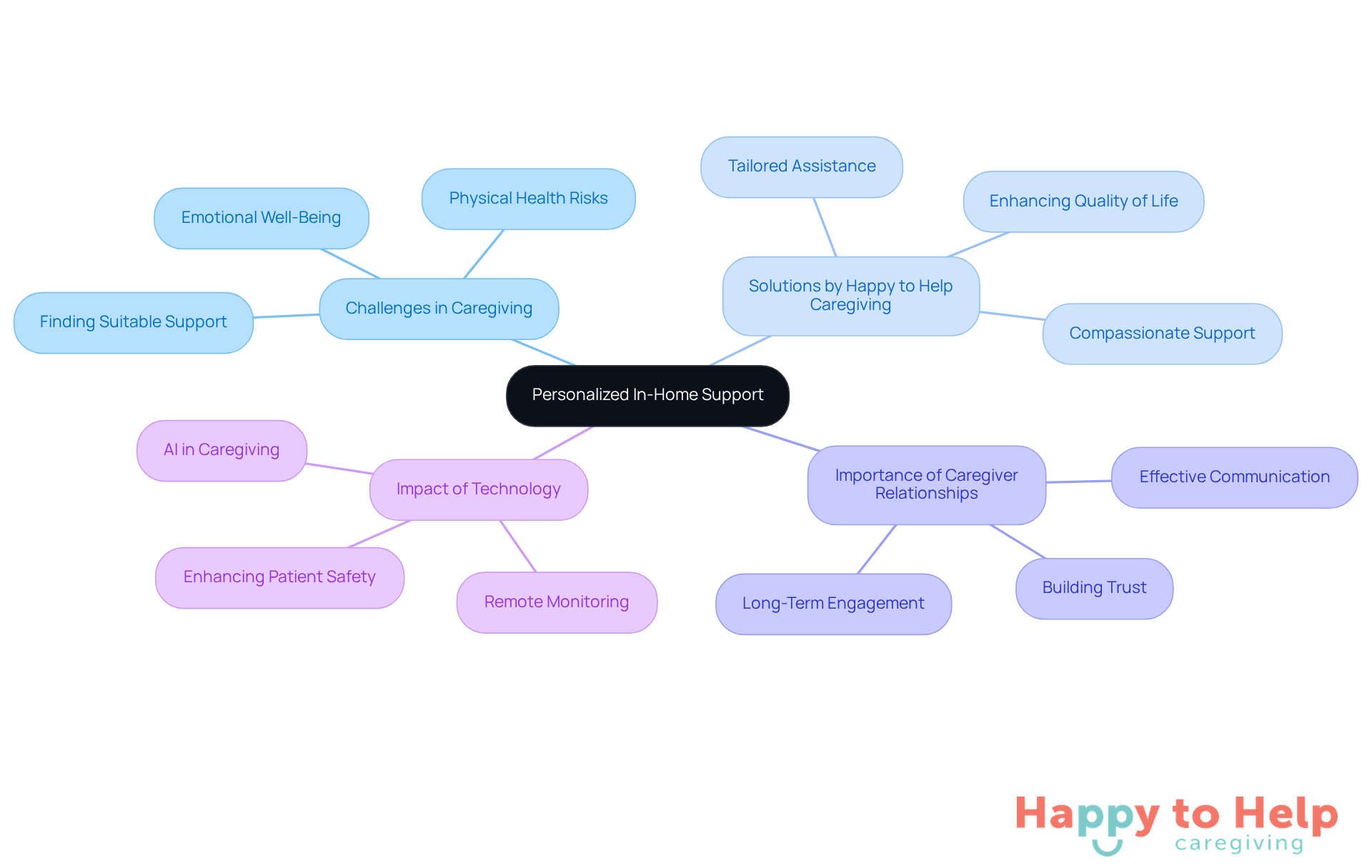
Caregiving presents significant challenges, particularly for seniors and individuals with special needs who require in-home assistance from a home health aide agency in Manhattan. Many families struggle to find the right support from a home health aide agency in Manhattan that meets the unique needs of their loved ones, leading to feelings of insecurity and discomfort in their own homes. This situation can negatively impact both physical health and emotional well-being.
Happy to Help Caregiving, a home health aide agency in Manhattan, addresses these challenges by providing tailored in-home assistance that enhances the quality of life for its clients. By prioritizing personal preferences and lifestyles, the organization ensures that every individual receives compassionate support. This approach not only fulfills physical needs but also nurtures emotional health, fostering stronger relationships and overall contentment.
As Chris Gerardi, Retired President & Owner of Home Helpers Home Care, states, "Recruiting and retaining core valued individuals who can not only be excellent caregivers but also understand how to cultivate relationships and serve customers at a higher level" is essential in caregiving. Currently, around 12 million individuals in the U.S. receive in-home assistance, highlighting the growing demand for tailored support services.
Organizations like Happy to Help Caregiving, a home health aide agency in Manhattan, are leading the way in adapting to the evolving needs of those they serve. They set a benchmark for quality support in the home health field. Furthermore, the integration of technology in caregiving is revolutionizing how individualized assistance is provided, enhancing both patient safety and emotional support.
Companionship Care: Alleviating Loneliness for Seniors
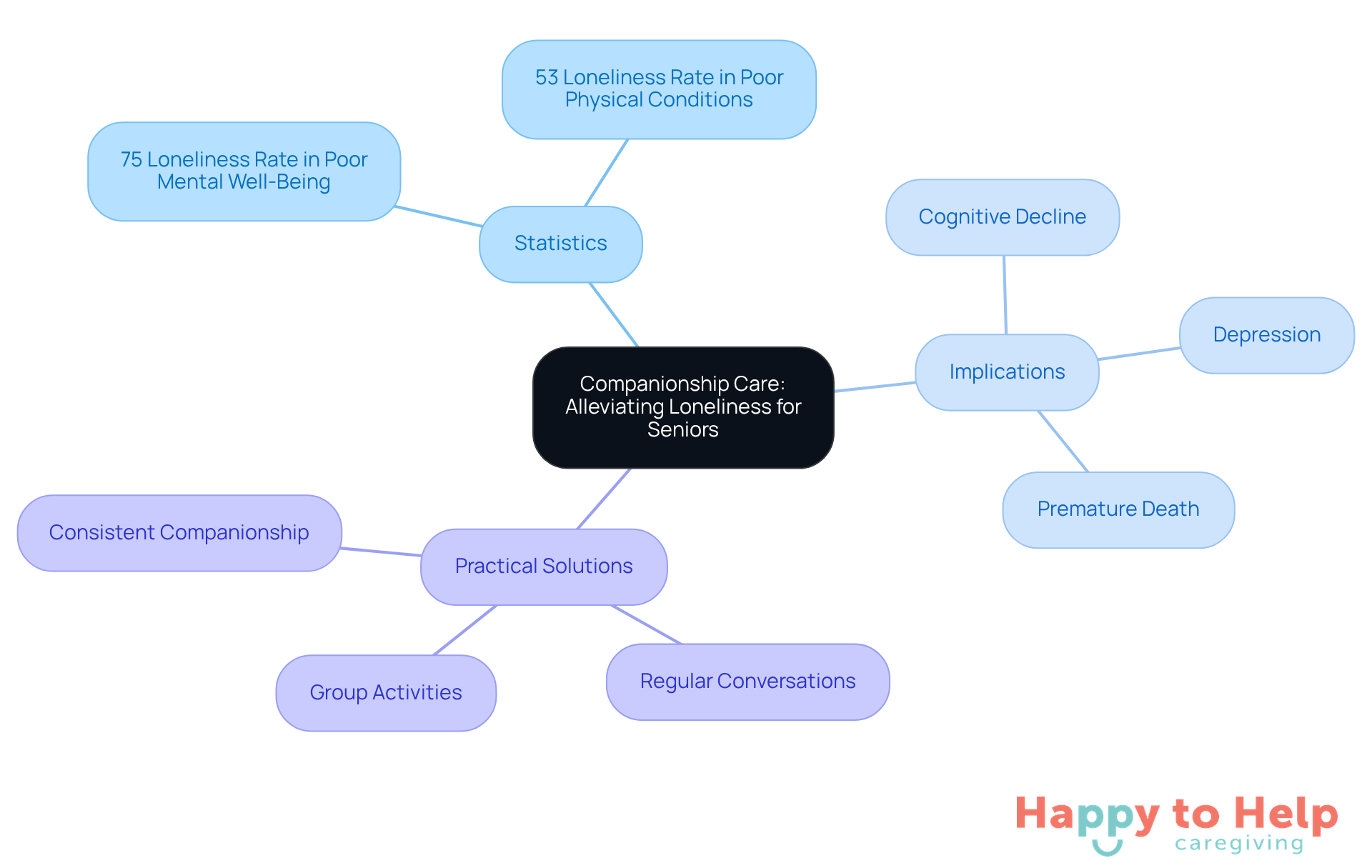
Companionship care is crucial in addressing the problem of loneliness and isolation among seniors. Research shows that older adults with fair or poor mental well-being reported a staggering loneliness rate of 75% in 2024. This alarming statistic highlights the urgent need for supportive companionship, as those with fair or poor physical conditions reported a loneliness rate of 53%.
The implications of loneliness are serious. It can lead to depression, cognitive decline, and even premature death, with loneliness associated with an estimated 100 fatalities every hour. This emphasizes the vital role caregivers play - not just in providing basic assistance, but in enhancing the emotional well-being of those they assist. By actively involving individuals in meaningful discussions, activities, and pastimes, caregivers promote social interaction and help seniors maintain a sense of purpose and connection to their surroundings.
To combat loneliness, caregivers can implement several practical solutions:
- Engage in regular conversations to foster connections.
- Encourage participation in group activities to enhance social interaction.
- Provide consistent companionship to improve emotional health.
By focusing on these strategies, caregivers can significantly improve the quality of life for elderly individuals, ensuring they feel valued and connected.
Post-Hospital Recovery Assistance: Ensuring Safe Transitions Home
Transitioning from a hospital to home can be a challenging process for many individuals. Without proper support, patients may face difficulties in managing their recovery, leading to potential complications or even readmissions. Caregivers play a crucial role in this phase, providing essential assistance that can significantly impact recovery outcomes.
To address these challenges, caregivers must focus on several key areas:
- Medication Management: Ensuring that patients take their medications correctly is vital for recovery. This includes understanding dosages and timing.
- Mobility Assistance: Helping individuals move safely around their homes can prevent falls and injuries, which are common during recovery.
- Daily Living Activities: Support with tasks such as bathing, dressing, and meal preparation is essential for maintaining independence.
Happy to Help Caregiving, a home health aide agency in Manhattan, specializes in creating a safe and supportive environment that empowers clients to regain their independence. By offering tailored assistance in these areas, caregivers can minimize the risk of complications and enhance the overall recovery experience.
Respite Care: Supporting Family Caregivers with Temporary Relief
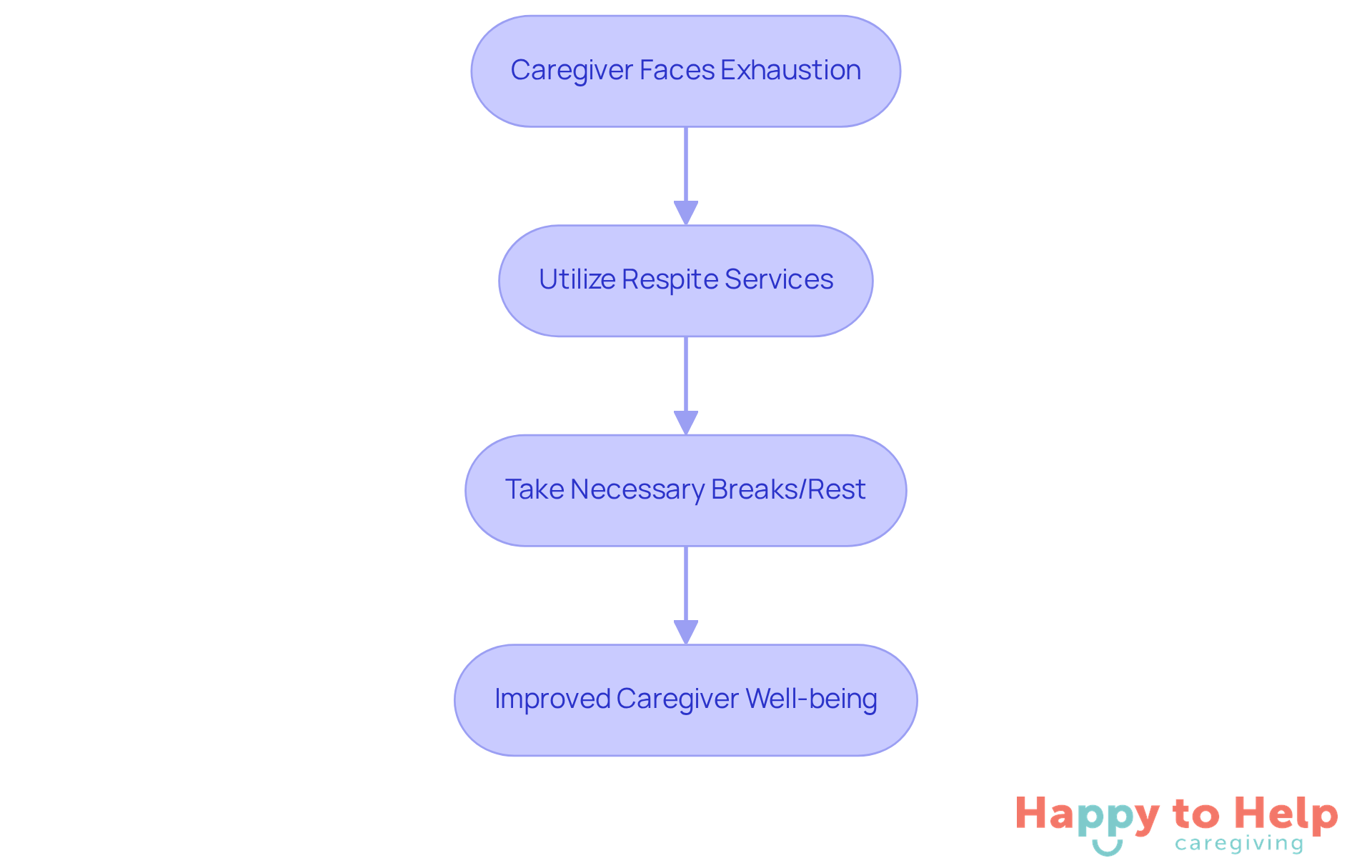
Caregivers often face significant challenges, including exhaustion and burnout. This can lead to a decline in their own well-being, which ultimately affects the quality of care they provide.
Respite services are designed to address this issue by offering caregivers the temporary relief they need. Happy to Help Caregiving steps in to support family members, allowing them to take necessary breaks, attend to personal matters, or simply rest.
By utilizing respite services, caregivers can avoid the pitfalls of exhaustion while ensuring that their clients continue to receive high-quality support in a nurturing environment. This solution not only rejuvenates caregivers but also enhances the overall caregiving experience.
Palliative Support Care: Enhancing Quality of Life for Patients
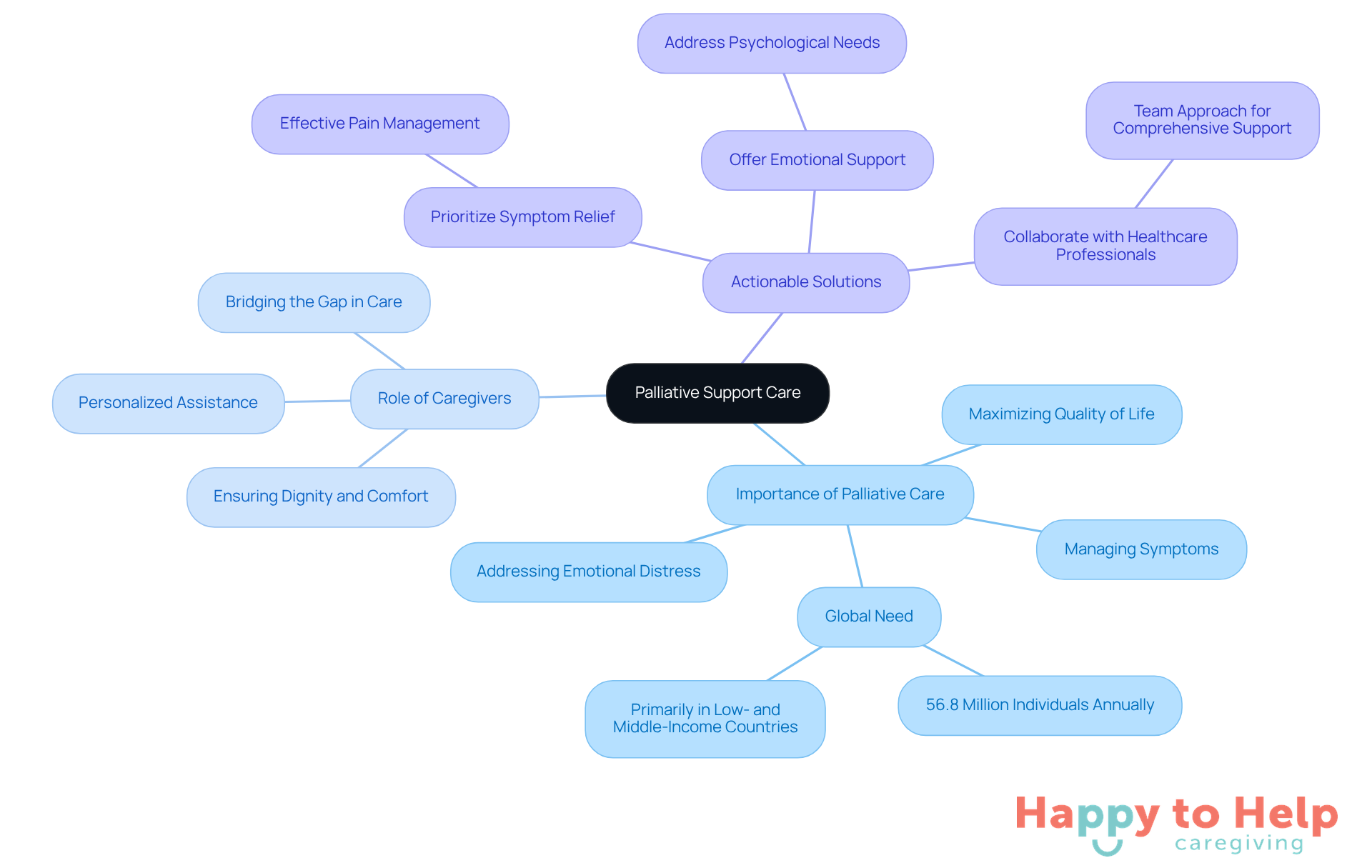
Palliative support is crucial for patients facing serious illnesses, yet many struggle to access it. Without adequate palliative care, individuals may experience unmanaged symptoms and emotional distress, impacting their quality of life and that of their families. According to estimates, 56.8 million individuals require palliative support each year, underscoring the urgency of addressing this issue.
Caregivers play a vital role in bridging this gap. At Happy to Help Caregiving, dedicated professionals work closely with clients to provide personalized assistance, ensuring dignity and comfort during challenging times. As Shelli Feder, an expert in palliative support, states, "Palliative support is a type of assistance that is focused on maximizing quality of life for any person with a serious illness." By focusing on individual needs, caregivers can alleviate discomfort and foster a sense of security and well-being.
To enhance the quality of palliative support, consider these actionable solutions:
- Prioritize symptom relief: Effective pain management is essential for improving patient comfort.
- Offer emotional support: Address the psychological needs of both patients and their families.
- Collaborate with healthcare professionals: A team approach ensures comprehensive support tailored to each client's unique situation.
By implementing these strategies, caregivers can significantly enhance the overall experience for patients and their loved ones, making a meaningful difference in their lives.
Flexible Scheduling: Tailoring Care to Fit Family Needs
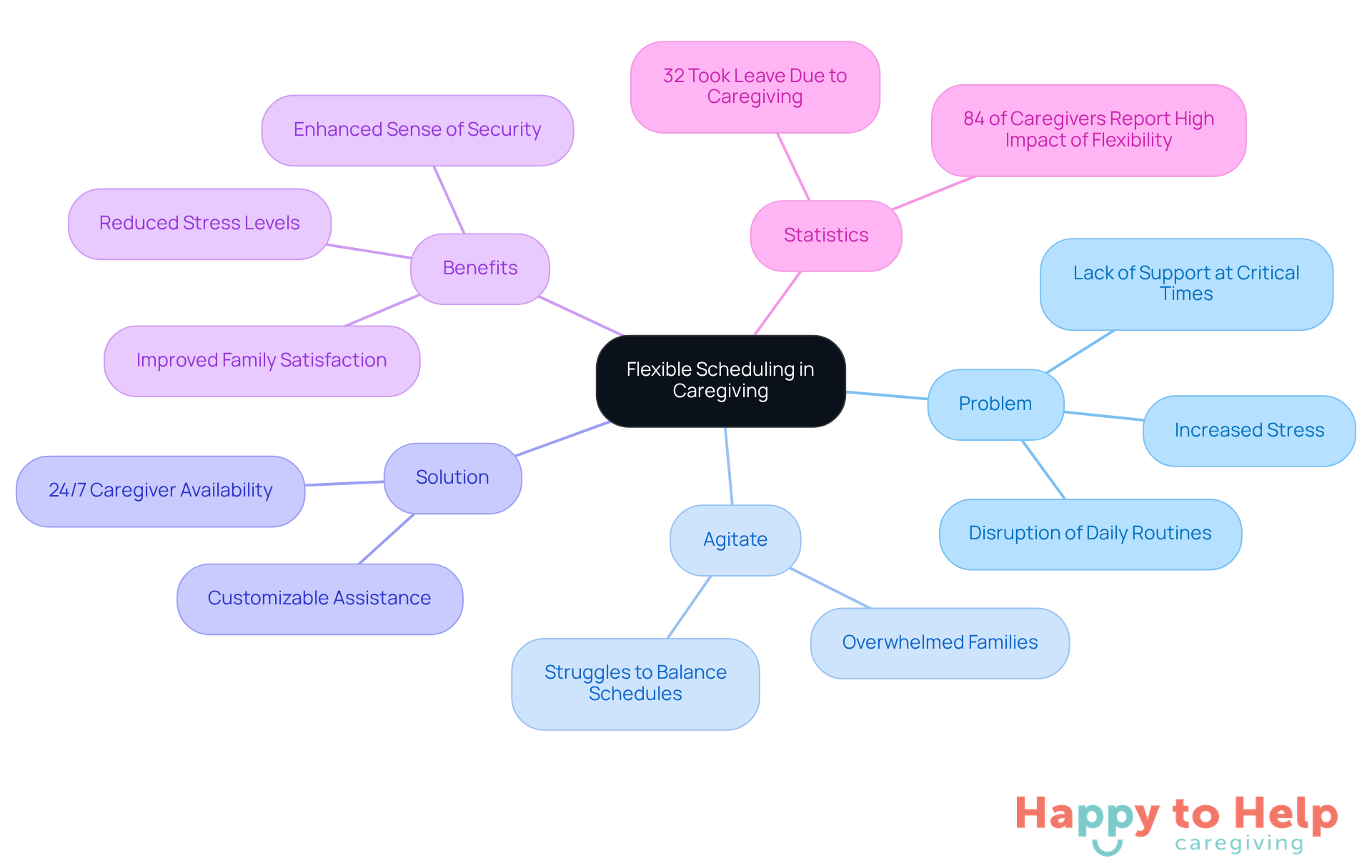
Problem: Many families face challenges with rigid scheduling in caregiving, which can lead to increased stress and a lack of support when it’s needed most.
Agitate: This inflexibility often disrupts daily routines and can leave loved ones without the necessary assistance at critical times. Families report feeling overwhelmed, as they struggle to balance their own schedules with the needs of their caregivers.
Flexible scheduling is a cornerstone of Happy to Help Caregiving, a home health aide agency in Manhattan, which allows households to customize assistance according to their unique requirements and daily routines. Caregivers are available around the clock, whether assistance is needed during the day, evenings, or overnight. This adaptability not only helps families maintain their regular activities but also ensures that loved ones receive support exactly when it’s most required.
Families have conveyed that this level of customization greatly improves their satisfaction with support services, reducing stress and promoting a sense of security. One caregiver remarked, "Having the capability to modify service hours according to our household's timetable has been a game changer for us."
This flexibility is essential, especially as family dynamics and needs evolve, allowing for a seamless integration of support into daily life. Additionally, studies indicate that nearly 84% of caregivers report that flexible scheduling has a moderate to high impact on their overall stress levels, underscoring the importance of adaptable care solutions in today’s caregiving landscape.
24/7 Availability: Constant Support for Peace of Mind
Caregiving can be a challenging responsibility, especially when families worry about their loved ones being alone. This concern can lead to increased stress and anxiety for both caregivers and families. Without reliable support, the risk of emergencies rises, which can have serious implications for the well-being of seniors.
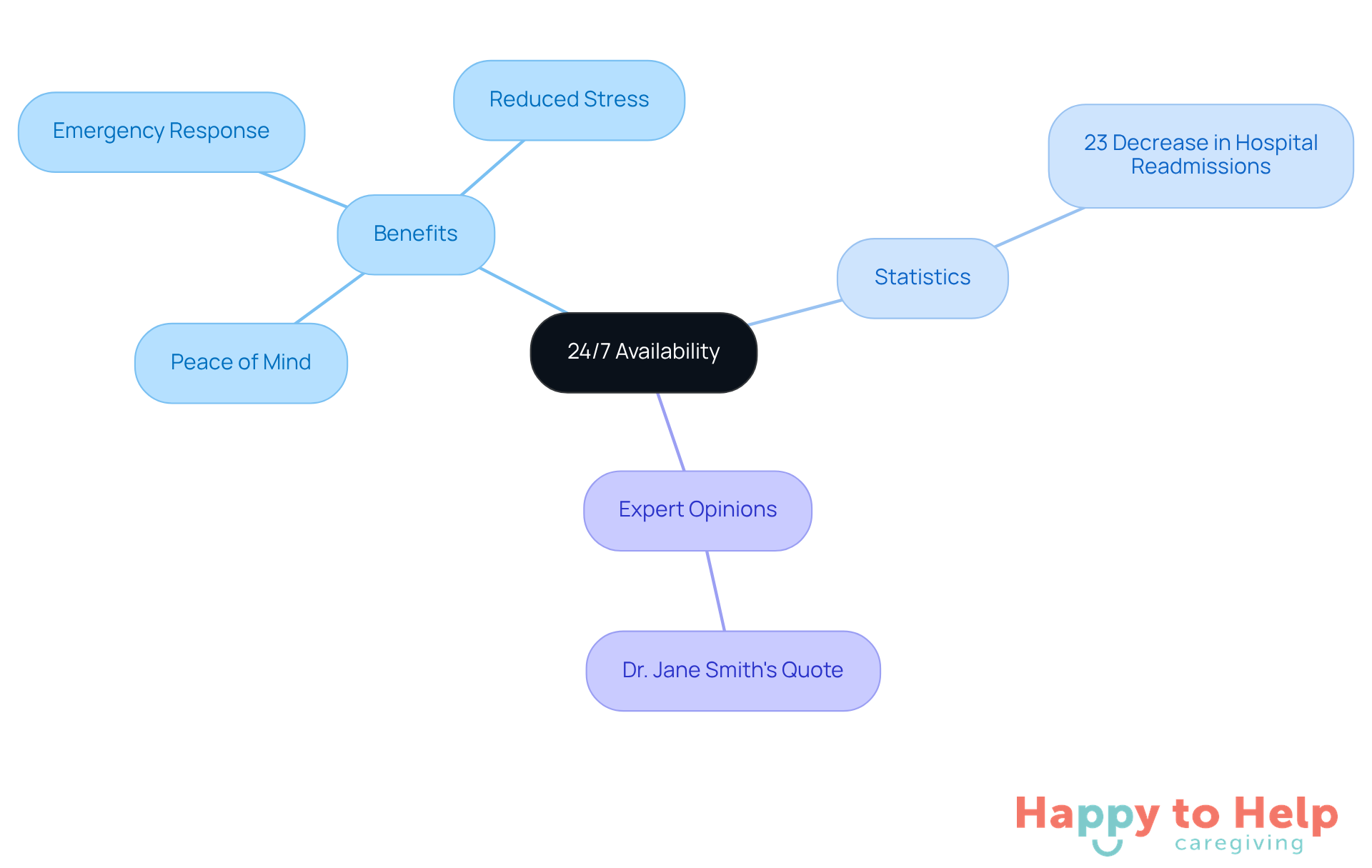
Happy to Help Caregiving, a home health aide agency Manhattan, addresses this issue by providing 24/7 availability, ensuring that individuals receive continuous support whenever they need it. This home health aide agency Manhattan offers round-the-clock service, providing families peace of mind by ensuring that their loved ones are never alone and that help is just a call away. Caregivers are trained to respond to emergencies and provide immediate assistance, enhancing the safety and comfort of clients in their homes.
Research shows that reliable caregiver availability can result in a 23% decrease in hospital readmissions. This statistic emphasizes the essential role of prompt support from a home health aide agency Manhattan in preserving well-being and safety at home. By mitigating risks, constant support from a home health aide agency Manhattan significantly reduces household stress and anxiety, allowing families to focus on their daily lives without the ongoing worry of their loved ones' well-being.
As Dr. Jane Smith, a healthcare expert, notes, "Having a caregiver present at all times guarantees that emergencies are addressed promptly, which is crucial for the well-being and safety of seniors." This highlights the importance of having a dedicated caregiver to ensure that seniors receive the care they need, when they need it.
Technology Integration: Enhancing Communication and Care Monitoring
Effective communication is a significant challenge for caregivers, clients, and their families. This lack of clarity can lead to misunderstandings and hinder the support process. Fortunately, technology offers a solution that can bridge these gaps.
Happy to Help Caregiving recognizes the importance of incorporating technology into its approach. Tools like digital notes and wellness tracking systems empower families to stay actively involved in their loved ones' care. This transparency fosters trust and enhances collaboration, ensuring everyone is on the same page regarding support plans and specific needs.
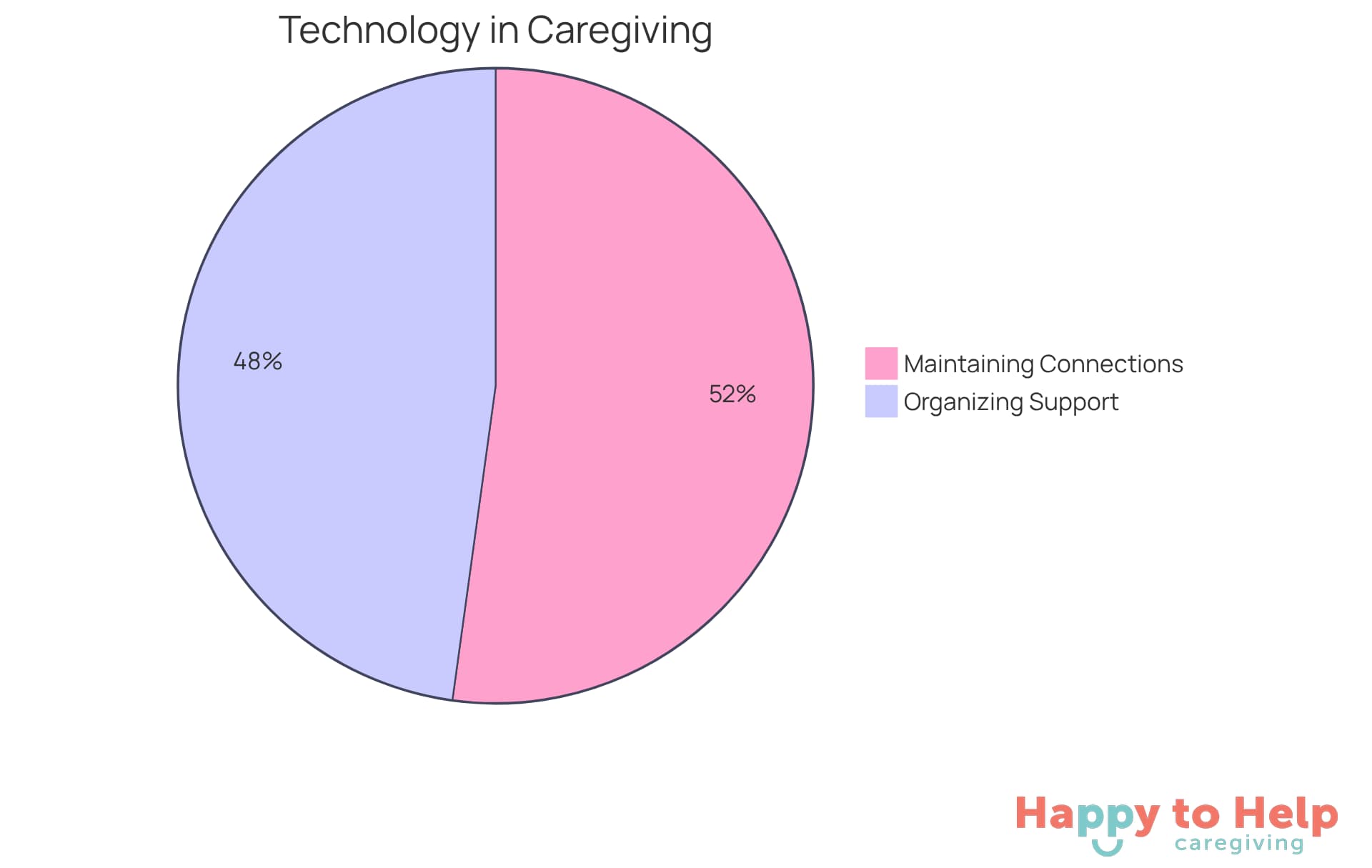
Statistics reveal that:
- 82.5% of caregivers utilize technology to organize support, including digital notes for sharing updates and monitoring systems for tracking progress.
- 90% of caregivers use technology to maintain connections with friends and family.
This highlights the critical role these tools play in modern caregiving. Moreover, Happy to Help Caregiving actively supports this emotional network, alleviating some of the burdens associated with caregiving.
As technology continues to evolve, innovations such as AI-driven health monitoring and mobile communication applications are expected to further enhance interaction and wellness tracking. Embracing these advancements is vital for effective support provided by a home health aide agency Manhattan.
Personalized Care Plans: Tailoring Support to Individual Needs
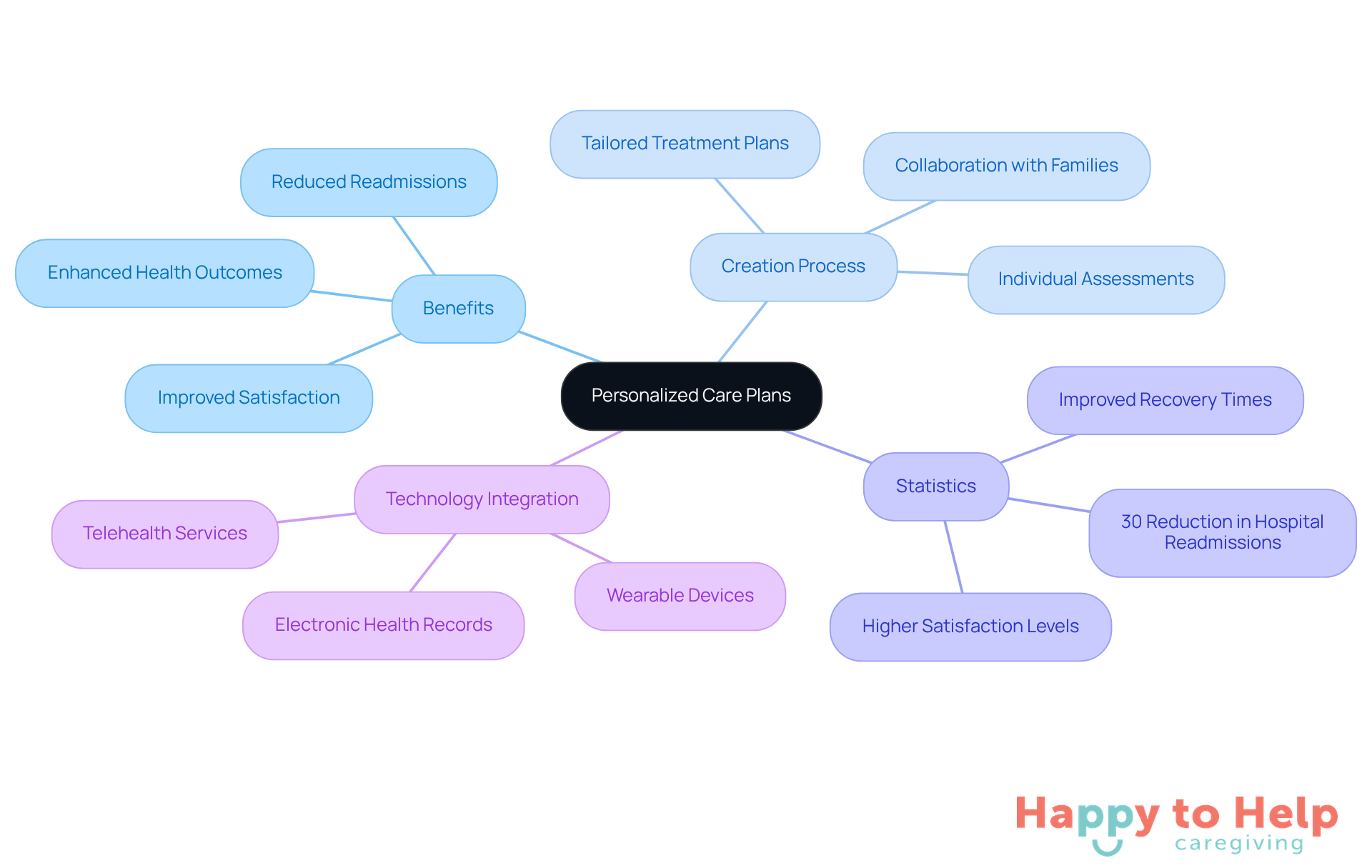
At the core of caregiving challenges lies the issue of inadequate personalized support. Many caregivers struggle to provide assistance that truly meets the unique needs of each individual, leading to lower patient satisfaction and poorer health outcomes. Research shows that personalized support strategies can significantly enhance these outcomes, making it crucial for caregivers to adopt a more tailored approach.
To address this problem, Happy to Help Caregiving offers individualized service plans. These plans are meticulously designed to ensure that each person receives assistance customized to their distinct requirements and preferences. Caregivers work closely with families to develop these plans, taking into account medical history, daily routines, and personal aspirations. This personalized method not only enhances the efficacy of support but also enables clients to maintain their independence and dignity.
Statistics reveal that a systematic approach to planning treatment can lead to improved recovery times and reduced hospital readmissions. For instance, tailored treatment plans can result in a 30% reduction in hospital readmissions. Clients who are involved in their planning report higher satisfaction levels, feeling that their voices are acknowledged and their specific needs prioritized.
Endorsements from families highlight the transformative impact of these customized plans. One family shared, "Understanding that my mother’s support is customized to her requirements provides us comfort and assurance in her well-being." By fostering a sense of ownership over their wellness journey, individuals are more likely to adhere to treatment suggestions, leading to better overall health management.
Moreover, the integration of technology, such as telehealth services and electronic health records, enhances the customization of treatment plans. This ensures prompt adjustments and better communication among caregivers and families, ultimately providing emotional comfort to relatives who want to ensure their loved ones receive compassionate and effective assistance.
Compassionate Caregivers: Treating Clients Like Family
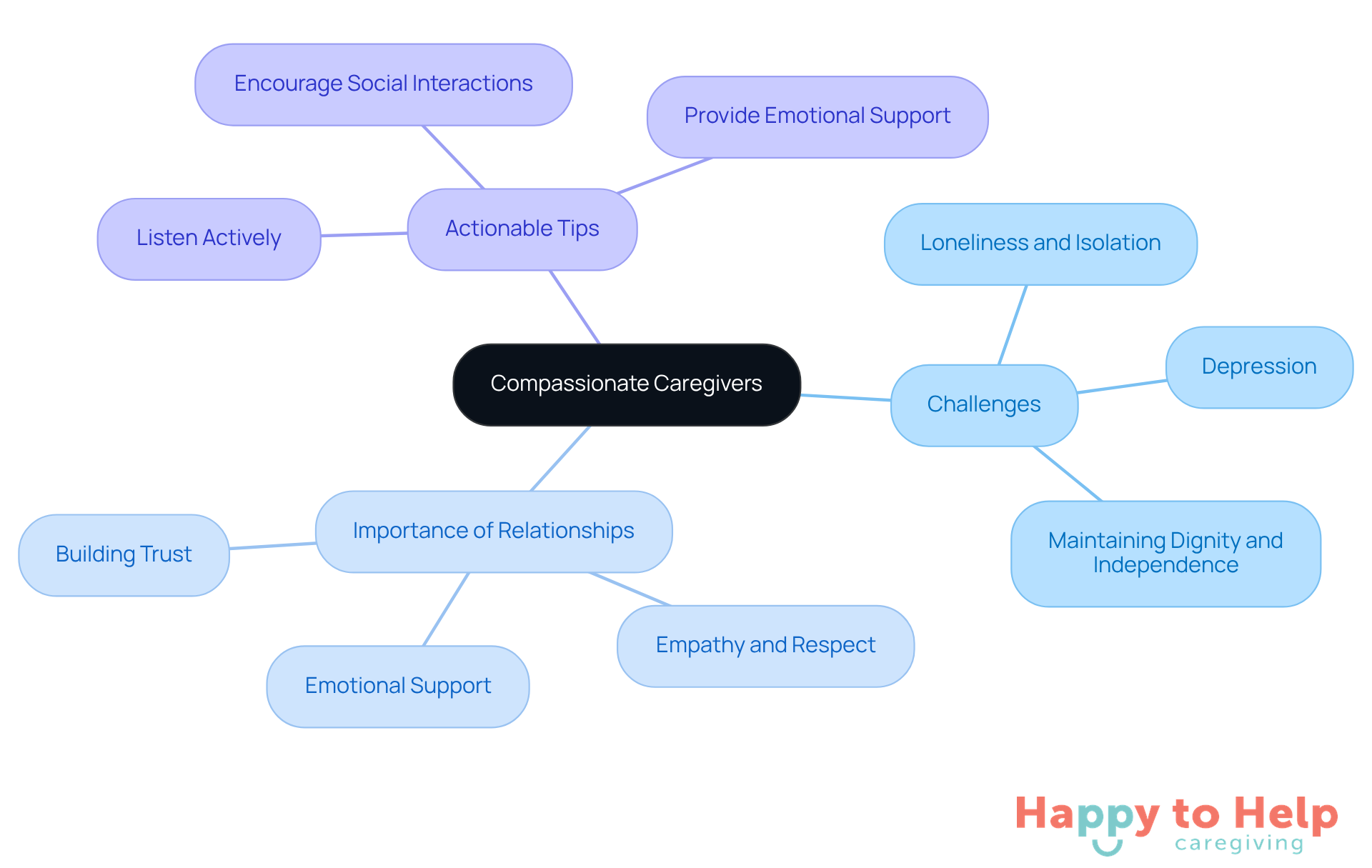
Compassionate caregivers face a significant challenge: many seniors experience feelings of loneliness, isolation, and depression. These emotional struggles can severely impact their overall health and well-being. Without proper support, seniors may find it difficult to maintain their dignity and independence, leading to a diminished quality of life.
To address this issue, caregivers must prioritize building strong relationships grounded in trust and empathy. By treating clients with the same attention and respect as family members, caregivers can create a nurturing environment that fosters emotional support. Research shows that compassionate care not only alleviates feelings of loneliness but also enhances health outcomes for seniors.
Here are some actionable tips for caregivers:
- Listen actively: Show genuine interest in your clients' feelings and experiences.
- Encourage social interactions: Facilitate connections with family and friends to combat isolation.
- Provide emotional support: Be present and offer reassurance to help clients feel secure.
By implementing these strategies, caregivers can significantly enhance the quality of life for those they serve, empowering clients to maintain their independence and enriching their lives.
Moving Forward with Choose a Home Health Aide Agency in
Choosing a home health aide agency in Manhattan presents a significant challenge for families seeking quality care for their loved ones. The implications of this choice can profoundly affect the physical and emotional well-being of clients. Without personalized, compassionate support, individuals may experience increased loneliness and a lack of proper assistance during critical recovery periods.
Families often face the problem of finding an agency that not only meets basic needs but also fosters an environment where individuals feel valued. Companionship care is essential in alleviating loneliness among seniors, while post-hospital recovery assistance is crucial for a smooth transition back home. Additionally, flexible scheduling can greatly enhance the caregiving experience, allowing families to adapt to their unique situations.
Happy to Help Caregiving stands out as a solution, offering tailored assistance that meets the specific needs and preferences of clients. Their integration of technology and provision of 24/7 support highlight how modern caregiving can adapt to the evolving demands of families. By prioritizing personalized care plans, families can significantly improve the quality of life for their loved ones, ensuring they receive the dignified, loving care they deserve.
In conclusion, selecting a home health aide agency is not just about fulfilling basic requirements; it’s about creating a supportive environment. Families are encouraged to consider the myriad benefits of compassionate care, as agencies like Happy to Help Caregiving provide the necessary support to enhance both health and happiness.
https://iframe.tely.ai/cta/eyJhcnRpY2xlX2lkIjogIjY5MjI0ZjU4ZmViYTIxODdjZTM2NWI3ZCIsICJjb21wYW55X2lkIjogIjY4ZWU1ZGNhNzMxNzYyNTU3ZjNjOTVjMSIsICJpbmRleCI6IG51bGwsICJ0eXBlIjogImFydGljbGUifQ==Frequently Asked Questions
What challenges do families face when seeking in-home assistance for seniors and individuals with special needs?
Families often struggle to find appropriate support that meets the unique needs of their loved ones, which can lead to feelings of insecurity and discomfort at home, negatively impacting physical health and emotional well-being.
How does Happy to Help Caregiving address these challenges?
Happy to Help Caregiving provides tailored in-home assistance that prioritizes personal preferences and lifestyles, ensuring clients receive compassionate support that enhances their quality of life and nurtures emotional health.
What is the significance of companionship care for seniors?
Companionship care is crucial for alleviating loneliness and isolation among seniors, with research indicating high rates of loneliness among older adults, which can lead to serious health implications like depression and cognitive decline.
What strategies can caregivers implement to combat loneliness in seniors?
Caregivers can engage in regular conversations, encourage participation in group activities, and provide consistent companionship to improve emotional health and enhance social interaction.
Why is post-hospital recovery assistance important?
Proper support during the transition from hospital to home is essential to manage recovery effectively, as it can prevent complications and reduce the risk of readmissions.
What key areas do caregivers focus on during post-hospital recovery?
Caregivers focus on medication management, mobility assistance, and support with daily living activities to help clients regain independence and ensure a safe recovery environment.
How does Happy to Help Caregiving ensure a safe and supportive environment for recovery?
Happy to Help Caregiving specializes in providing tailored assistance that empowers clients to manage their recovery effectively, minimizing risks and enhancing overall recovery experiences.
List of Sources
- Happy to Help Caregiving: Personalized In-Home Support for Your Family
- News - Happy To Help (https://happytohelpcaregiving.com/news)
- 13 Home Care Trends To Watch For in 2024 (And Thoughts From 11 Experts) | CareAcademy (https://careacademy.com/blog/home-care-trends)
- 2025 Home Care Statistics: Trends & Insights To Know (https://premierhcinc.com/blog/home-care-statistics)
- home care | Latest News | New York Post (https://nypost.com/tag/home-care)
- Top key trends shaping the future of caregiving (https://learn2care.us/blog/caregiving-future-trends)
- Companionship Care: Alleviating Loneliness for Seniors
- Social isolation, loneliness in older people pose health risks | Alzheimers.gov (https://alzheimers.gov/news/social-isolation-loneliness-older-people-pose-health-risks)
- Social connection linked to improved health and reduced risk of early death (https://who.int/news/item/30-06-2025-social-connection-linked-to-improved-heath-and-reduced-risk-of-early-death)
- Middle-aged Americans and loneliness: New study shows an alarming trend | Emory University | Atlanta GA (https://news.emory.edu/stories/2025/04/hs-middle-aged-adults-and-loneliness-22-04-2023/story.html)
- Loneliness and isolation: Back to pre-pandemic levels, but still high, for older adults (https://ihpi.umich.edu/news-events/news/loneliness-and-isolation-back-pre-pandemic-levels-still-high-older-adults)
- 1 in 3 older adults still experience loneliness and isolation (https://michiganmedicine.org/health-lab/1-3-older-adults-still-experience-loneliness-and-isolation)
- Post-Hospital Recovery Assistance: Ensuring Safe Transitions Home
- Improving Care Transitions from Hospital to Home | NYP (https://nyp.org/newsletters/prof-adv/geriatrics/improving-care-transitions-from-hospital-to-home)
- Home Care Impact on Recovery of Patient (A Statistics Report) (https://lovinghomecareinc.com/home-care-recovery-statistics)
- Hospital to Home: The Importance of Transitional Care - Aegis (https://myaegis.com/blog/hospital-to-home-the-importance-of-transitional-care)
- How Healing at Home Helps Unclog the Hospital Bed Logjam (https://usnews.com/news/health-news/articles/2025-03-03/how-healing-at-home-helps-unclog-the-hospital-bed-logjam)
- After the Hospital: How Home Health Care Supports Recovery at Home - Advanced Nursing & Home Care (https://advancednursing.care/blog/after-the-hospital-how-home-health-care-supports-recovery-at-home)
- Respite Care: Supporting Family Caregivers with Temporary Relief
- News & Success Stories | Live Well San Diego (https://livewellsd.org/Home/Components/News/News/513/153)
- The Caregiving Landscape: Data & Insights on the Caregiver Experience in the U.S. (https://caregiveraction.org/caregiver-statistics)
- Caregiver Statistics: Health, Technology, and Caregiving Resources (https://caregiver.org/resource/caregiver-statistics-health-technology-and-caregiving-resources)
- Federal budget committee greenlights millions in spending for family caregivers, respite services (https://mcknightshomecare.com/news/federal-budget-committee-greenlights-millions-in-spending-for-family-caregivers-respite-services)
- Palliative Support Care: Enhancing Quality of Life for Patients
- ‘A good death’: How compassionate care helps people navigate the end of life (https://news.yale.edu/2025/10/13/good-death-how-compassionate-care-helps-people-navigate-end-life)
- Hospice, Palliative Care Services Yield High Quality, Cost Savings (https://hospicenews.com/2025/09/22/hospice-palliative-care-services-yield-high-quality-cost-savings)
- Palliative Care Statistics (https://rosewood-nursing.com/post/palliative-care-statistics)
- Palliative care (https://who.int/news-room/fact-sheets/detail/palliative-care)
- Flexible Scheduling: Tailoring Care to Fit Family Needs
- The Critical Role of Flexibility in Home Care Scheduling for Family Peace of Mind (https://relevar.com/the-critical-role-of-flexibility-in-home-care-scheduling-for-family-peace-of-mind)
- New Report Reveals Crisis Point for America’s 63 million Family Caregivers (https://press.aarp.org/2025-07-24-New-Report-Reveals-Crisis-Point-for-Americas-63-million-Family-Caregivers)
- Flexible Care Models Give Home Care Clients ‘What They Want When They Want It’ (https://homehealthcarenews.com/2025/10/flexible-care-models-give-home-care-clients-what-they-want-when-they-want-it)
- Working while caregiving: It’s complicated | S&P Global (https://spglobal.com/en/research-insights/special-reports/working-while-caregiving)
- Return-to-Office Trends are Reshaping Caregiving at Home - Family & Nursing Care (https://familynursingcare.com/return-to-office-trends-are-reshaping-caregiving-at-home)
- 24/7 Availability: Constant Support for Peace of Mind
- 10 Must-Know U.S. Home Care Industry Stats for 2025 - North American Community Hub (https://nchstats.com/us-home-care-industry-stats)
- 24/7 Home Care: Ensuring Safety and Comfort for Your Loved Ones (https://h2hhc.com/blog/24-7-home-care)
- Choosing 24-Hour vs. Part-Time Home Care (https://humancareny.com/blog/choosing-24-hour-vs-part-time-home-care-fd5aa)
- 20 Caregiver Quotes That Will Inspire You - MD Home Health (https://mdhomehealth.com/2018/06/10/20-caregiver-quotes-that-will-inspire-you)
- Technology Integration: Enhancing Communication and Care Monitoring
- How technology is transforming caregiver training and upskilling (https://learn2care.us/blog/technology-in-caregiver-training)
- HHS Launches $2M AI Initiative To ‘Transform’ Caregiving, Address Staffing Challenges (https://homehealthcarenews.com/2025/11/hhs-launches-2m-ai-initiative-to-transform-caregiving-address-staffing-challenges)
- Building a lifeline for family caregivers across the US (https://news.mit.edu/2025/ianacare-builds-lifeline-for-family-caregivers-across-us-0811)
- HHS Launches New Caregiving AI Initiative to 'Spark Innovative Support' (https://hospicenews.com/2025/11/18/hhs-launches-new-caregiving-ai-initiative-to-spark-innovative-support)
- Personalized Care Plans: Tailoring Support to Individual Needs
- The Importance of Personalized Care Plans in Home Care (https://anodyne-services.com/2025/01/14/the-importance-of-personalized-care-plans-in-home-care)
- The Role of Personalized Care Plans in Home Health Care (https://homehealthcompanions.com/blog/personalized-care-plans-are-essential)
- How Personalized Care Plans Improve the Resident Experience | Eden Senior Care (https://edenseniorhc.com/how-personalized-care-plans-improve-the-resident-experience)
- The Importance of Personalized Care Plans in Home Health Services (https://regencyhcs.com/blog/the-importance-of-personalized-care-plans-in-home-health-services)
- How Personalized Health Care Is Changing The Role Of Home Care Providers (https://homehealthcarenews.com/2024/03/how-personalized-health-care-is-changing-the-role-of-home-care-providers)
- Compassionate Caregivers: Treating Clients Like Family
- The Heart of Homecare is Built on the Unshakeable Compassion and Dedication of Caregivers | Healthcare IT Today (https://healthcareittoday.com/2024/09/25/the-heart-of-homecare-is-built-on-the-unshakeable-compassion-and-dedication-of-caregivers)
- The importance of Compassionate Caregivers for Alzheimer’s Patients (https://southerncaliforniacaregiving.com/the-importance-of-compassionate-caregivers-for-alzheimers-patients)
- Compassion in Home Care (https://homeinstead.com/home-care/usa/la/carencro/347/news-and-media/compassion-in-home-care)
- Home Care Is About Love: Why Compassion Is More Important Now | Home Care agency in New York (https://angelcareny.com/home-care-is-about-love-why-compassion-is-more-important-now)
- The Importance of Compassionate Care: Enhancing Quality of Life for Seniors (https://bryanskilledhomecare.com/2024/07/31/the-importance-of-compassionate-care-for-seniors-i-bryan-skilled-home-care)