
Understanding Your Options
Choosing a private sitting agency for care needs offers personalized support that truly enhances the quality of life for individuals. It also alleviates the stress experienced by family caregivers. Many caregivers face overwhelming feelings of stress and burnout, and this is where tailored care comes into play. These agencies provide:
- Customized care plans
- Companionship
- Specialized services such as post-hospital recovery assistance
Together, these services foster dignity, independence, and emotional well-being among clients. This compassionate approach not only addresses practical needs but also nurtures the emotional aspects of care, ensuring that both clients and caregivers feel supported. It’s a reassuring reminder that help is available, allowing families to focus on what truly matters—the well-being of their loved ones.
The Importance of Choose a Private Sitting Agency for
Choosing the right care for loved ones can feel overwhelming. The emotional and physical challenges involved often weigh heavily on families. Private sitting agencies provide a compassionate solution that not only meets immediate needs but also enriches the overall quality of life for those requiring assistance.
By exploring the numerous benefits of personalized in-home care, families can discover how these services offer essential support while fostering companionship, security, and independence.
What makes private caregiving the ideal choice for families navigating this complex journey?
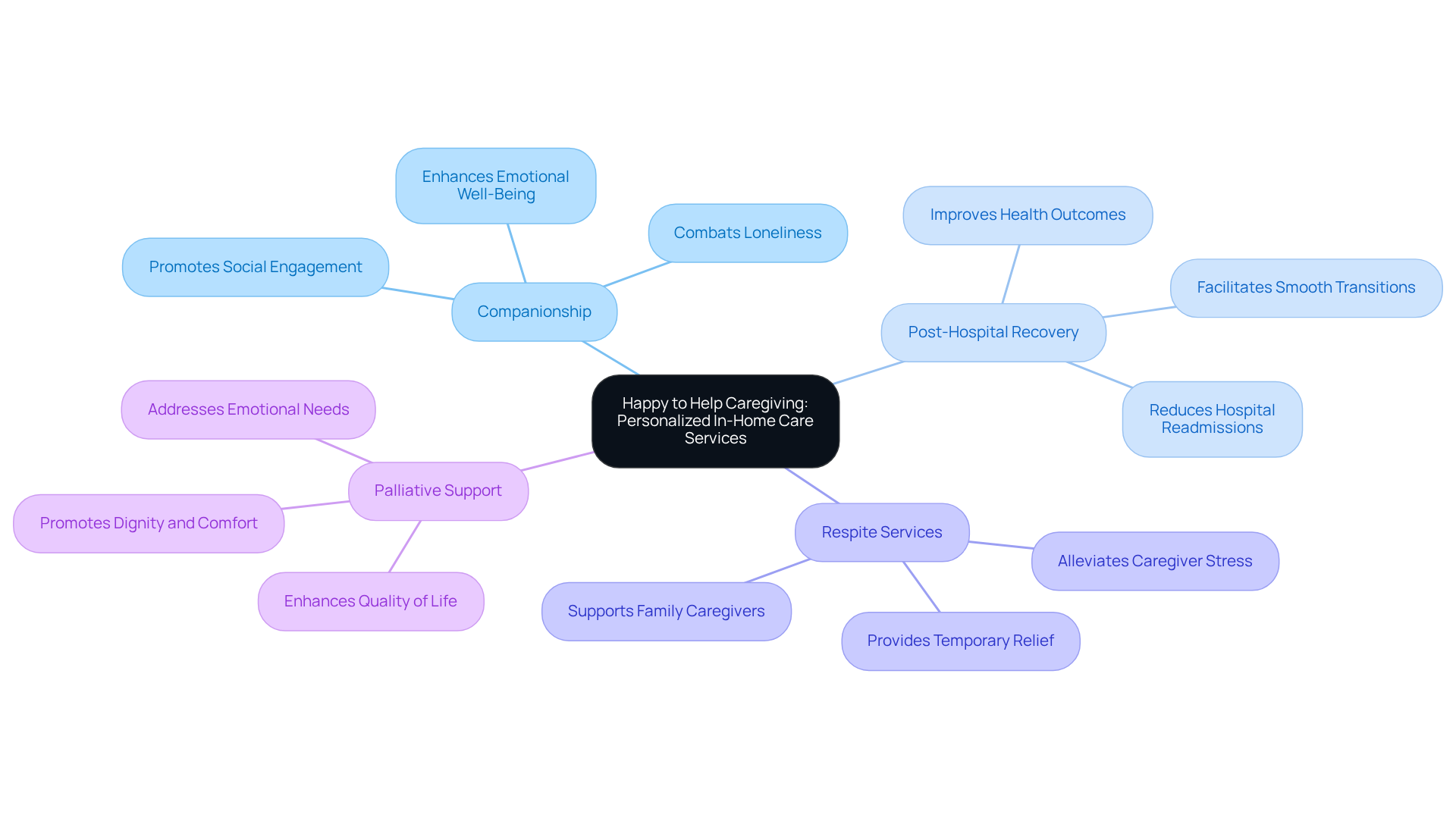
Happy to Help Caregiving: Personalized In-Home Care Services
At Happy to Help Caregiving, we understand the emotional challenges faced by caregivers and the stress that often accompanies their responsibilities. Our customized in-home assistance services are designed with compassion to meet the specific needs of every client. By emphasizing companionship, post-hospital recovery, respite services, and palliative support, we ensure that individuals receive the suitable assistance they deserve in the comfort of their own homes.
This personalized approach not only enhances the quality of life for seniors and individuals with special needs but also fosters a sense of security and independence. Research shows that tailored assistance can significantly enhance emotional well-being by lowering anxiety and nurturing supportive caregiver connections.
Moreover, successful case studies, like 'The Impact of Home Support on Reducing Healthcare Costs,' illustrate that personalized treatment plans address not only medical needs but also social engagement. This holistic approach results in improved health outcomes and a higher quality of life.
Our dedication to personalized support at Happy to Help Caregiving reflects a broader movement in the sector, recognizing that tailored methods are vital for fostering dignity and independence among seniors. We are here to provide the compassionate care you need, ensuring that you and your loved ones feel supported every step of the way.
Companionship Care: Alleviating Loneliness and Isolation
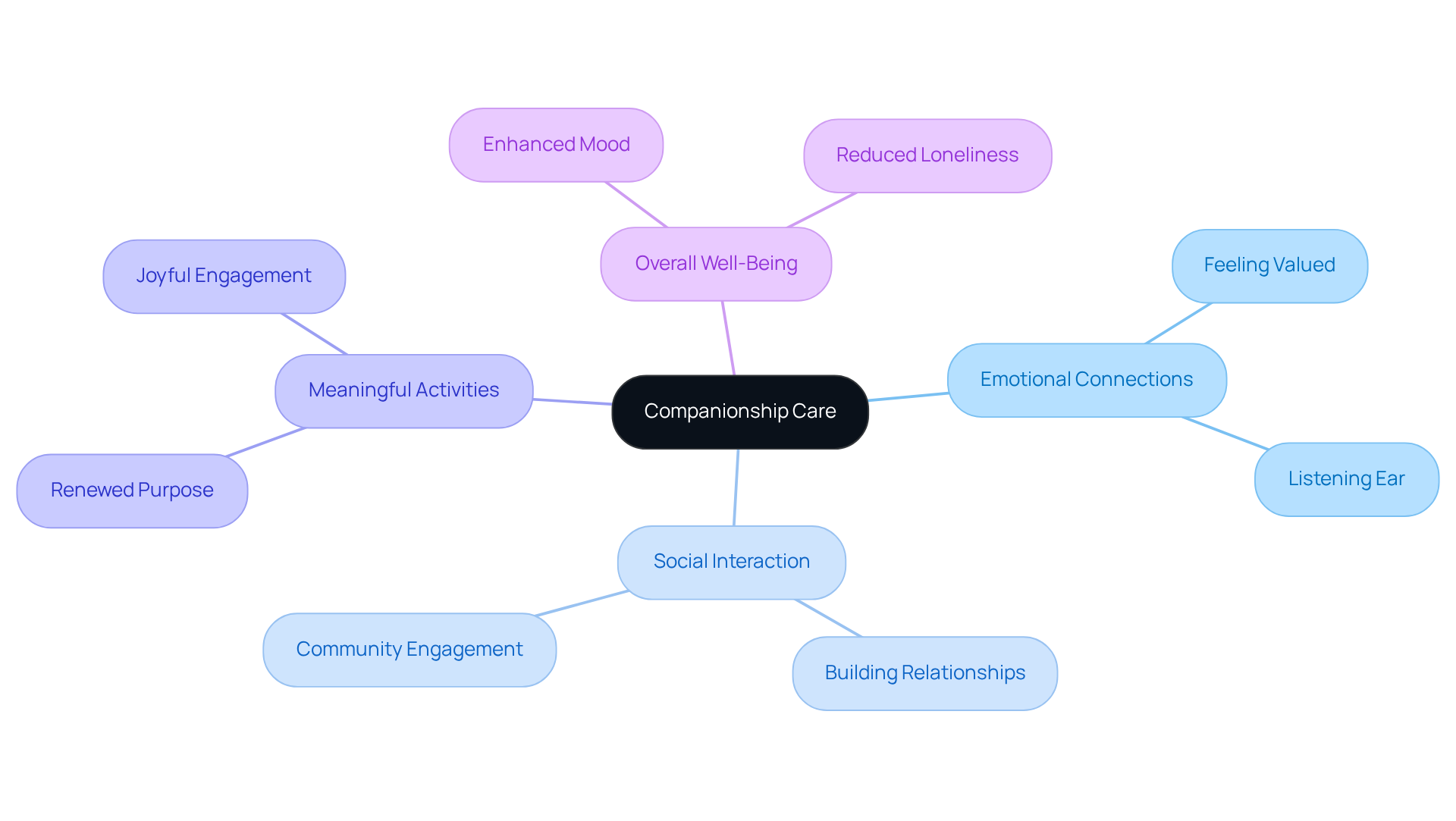
Companionship support offered by a private sitting agency plays a vital role in easing feelings of loneliness and isolation among seniors. Caregivers engage individuals in meaningful activities, fostering social interaction and emotional connections. This support not only lifts the client's spirits but also contributes significantly to their overall well-being. It is an essential aspect of in-home care, offering comfort and companionship that enriches their lives.
By being involved in these activities, seniors experience a renewed sense of purpose and joy. The emotional connections formed through companionship can transform their daily lives, making each moment more fulfilling. Caregivers provide not just assistance, but also a listening ear and a warm presence, creating an environment where seniors feel valued and understood.
In this nurturing space, the challenges of loneliness can be met with compassion and understanding. The positive impact of companionship support is profound, as it enhances mood and promotes a sense of belonging. Knowing that someone cares can make all the difference, reassuring seniors that they are not alone in their journey.
Post-Hospital Recovery Assistance: Ensuring Safe Transitions Home
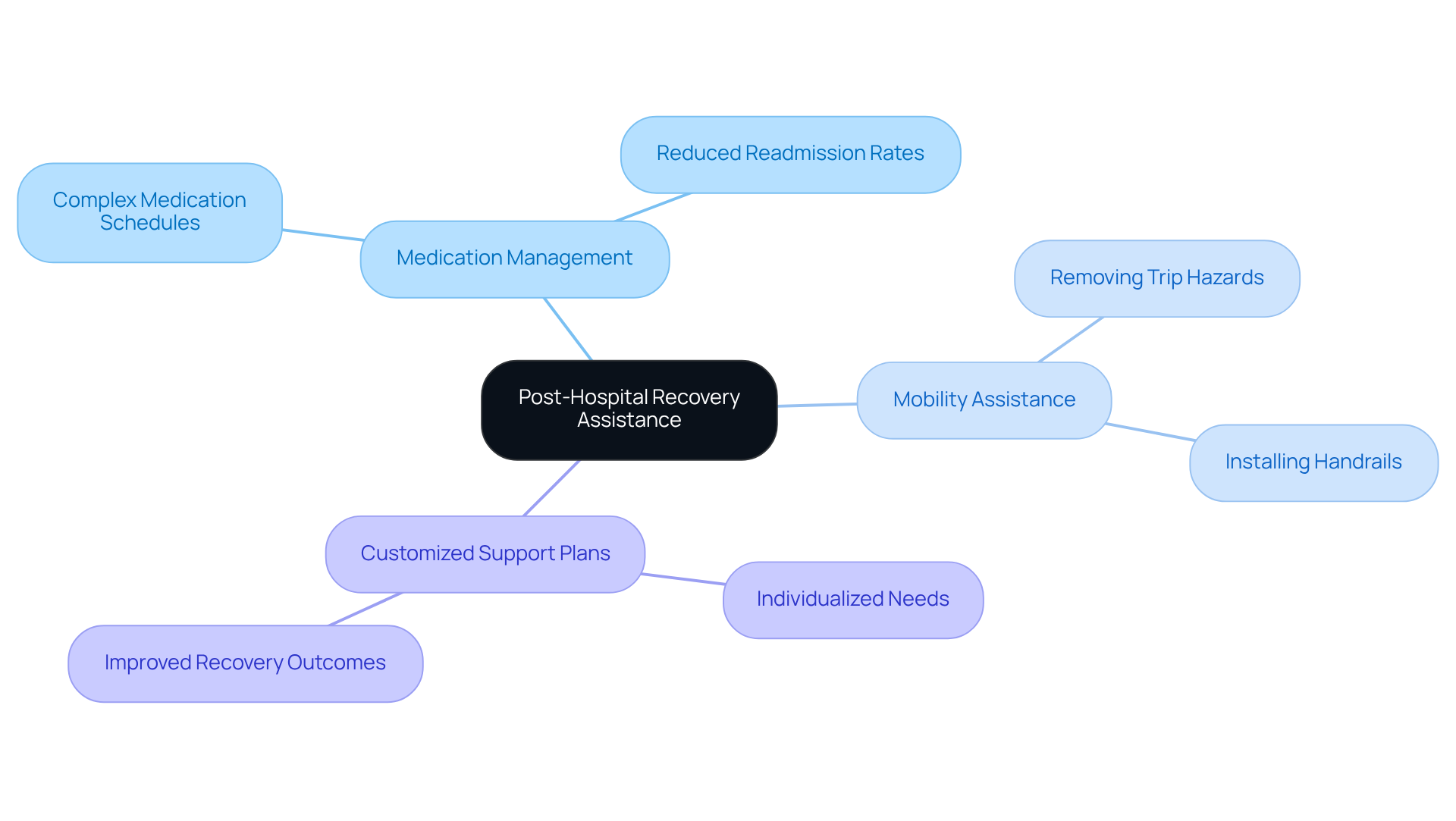
Post-hospital recovery assistance is essential for ensuring safe transitions from medical facilities to home environments. Caregivers are at the heart of this process, providing comprehensive support that encompasses:
- Medication management
- Mobility assistance
- Vigilant monitoring for potential complications
Effective medication management is particularly vital, as seniors often struggle with complex medication schedules after discharge. Research indicates that proper medication oversight can significantly reduce the likelihood of readmissions, with some reports showing a decrease in readmission rates by as much as 30%. This highlights the critical nature of this role.
Moreover, addressing mobility challenges is crucial for preventing falls and creating a safe living space. Caregivers can implement strategies such as:
- Removing trip hazards
- Installing handrails
These measures foster a secure environment that promotes recovery. The case study titled "Mobility Considerations for Seniors" underscores that these measures are essential in preventing falls, which can result in serious complications.
Successful transitions are further enhanced by customized support plans tailored to individual needs. These personalized approaches can lead to improved recovery outcomes and reduced readmission rates. As healthcare professionals like Marwa Moussa, MD, emphasize, a well-coordinated transition from hospital to home not only instills a sense of security but also significantly contributes to the overall well-being of seniors. This makes post-hospital recovery assistance an invaluable resource, offering both practical and emotional support during a vulnerable time.
Respite Care: Supporting Family Caregivers with Temporary Relief
Respite assistance provides family caregivers with essential temporary relief, allowing them to rejuvenate while ensuring their loved ones continue to receive quality support. This service is vital in preventing caregiver burnout and maintaining a healthy balance in family dynamics. Caregivers often face overwhelming stress and emotional fatigue, and it’s crucial to acknowledge these feelings.
By offering respite, we not only support caregivers but also foster a nurturing environment for their loved ones. Remember, seeking help is a sign of strength, and taking time for oneself is essential for sustaining the care provided. Embrace the support available, and know that you are not alone on this journey.
https://iframe.tely.ai/cta/eyJhcnRpY2xlX2lkIjogIjY4ZjgxZWQzY2Q5YTk3ZTY3N2NkMjg1OSIsICJjb21wYW55X2lkIjogIjY4ZWU1ZGNhNzMxNzYyNTU3ZjNjOTVjMSIsICJpbmRleCI6IDMsICJ0eXBlIjogImFydGljbGUifQ==Palliative Support Care: Compassionate End-of-Life Assistance
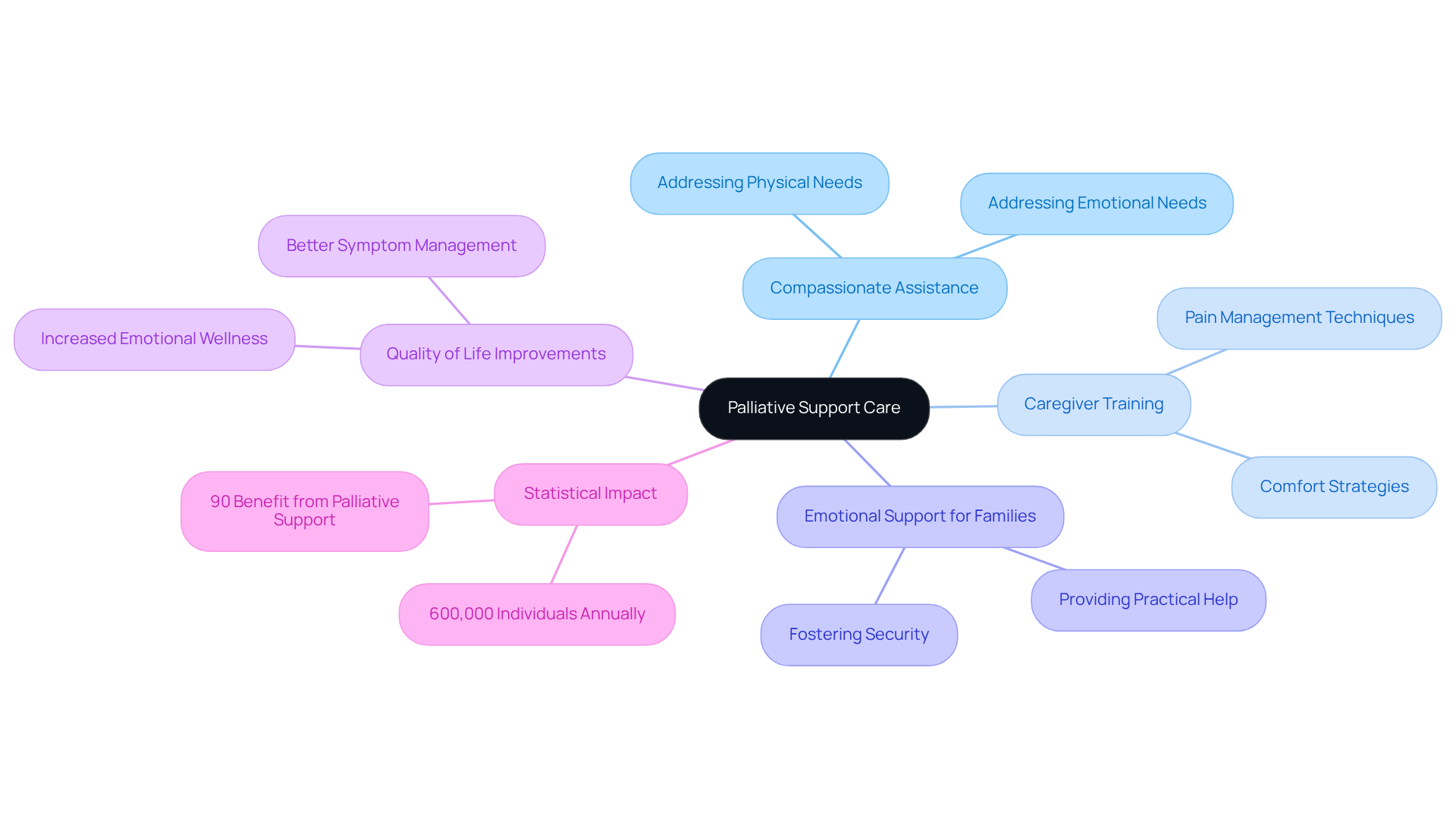
Palliative care is essential for individuals facing life-limiting illnesses, as it prioritizes compassionate assistance that addresses both physical and emotional needs. Caregivers are specifically trained to manage pain and discomfort effectively, ensuring that clients experience dignity and comfort throughout their end-of-life journey. This approach not only alleviates suffering but also provides vital emotional support to families, fostering a sense of security during challenging times.
Effective palliative support initiatives have shown considerable beneficial effects on the quality of life for terminally ill individuals. Research suggests that thorough assistance can result in better symptom management and increased emotional wellness. Significantly, around 90% of individuals who pass away would gain from palliative support, amounting to over 600,000 individuals annually. Specialists in the area stress that compassionate end-of-life assistance is essential, as it enables individuals to traverse their final days with dignity and aid, ultimately changing the experience for both patients and their families.
As Professor Cara Bailey mentions, "Palliative assistance alleviates symptoms and offers emotional and practical help to individuals and their families, yet at present, not everyone can access that resource." Moreover, the rise in hospice and palliative support consultations in emergency departments by over 170% since COVID-19 emphasizes the increasing acknowledgment of the significance of these services.
24/7 Availability: Flexible Care Options for Every Situation
At Happy to Help Caregiving, we understand the emotional challenges caregivers face. Our round-the-clock availability ensures that individuals receive assistance whenever they need it, whether it’s an emergency, a late-night request, or an unexpected situation. This flexibility is not just a service; it’s a lifeline that addresses the stress and burnout caregivers often experience. Knowing that help is just a call away brings peace of mind to families.
We’re here to support you, providing the compassionate care you deserve. Our commitment to being there for you, day or night, means you can focus on what truly matters. You’re not alone in this journey; we’re dedicated to being your partner in care, helping to ease the burdens you carry. Together, we can navigate the challenges and celebrate the moments of joy that come with caregiving.
https://iframe.tely.ai/cta/eyJhcnRpY2xlX2lkIjogIjY4ZjgxZWQzY2Q5YTk3ZTY3N2NkMjg1OSIsICJjb21wYW55X2lkIjogIjY4ZWU1ZGNhNzMxNzYyNTU3ZjNjOTVjMSIsICJpbmRleCI6IDUsICJ0eXBlIjogImFydGljbGUifQ==Tailored Care Plans: Customized Support for Individual Needs
Customized support plans lie at the heart of Happy to Help Caregiving's approach. We understand that each individual and their family face unique challenges. By working closely with them, we ensure that our assistance aligns with their personal preferences and lifestyles. This thoughtful customization not only enhances the effectiveness of care but also fosters a deep sense of satisfaction among our clients. We are here to support you, every step of the way.
https://iframe.tely.ai/cta/eyJhcnRpY2xlX2lkIjogIjY4ZjgxZWQzY2Q5YTk3ZTY3N2NkMjg1OSIsICJjb21wYW55X2lkIjogIjY4ZWU1ZGNhNzMxNzYyNTU3ZjNjOTVjMSIsICJpbmRleCI6IDYsICJ0eXBlIjogImFydGljbGUifQ==Trained Caregivers: Expertise in Providing Quality Support
At Happy to Help Caregiving, we understand the emotional challenges that caregivers face. That’s why all our caregivers undergo extensive training, designed to equip them with the skills necessary for delivering exceptional support. This training includes practical caregiving methods with a strong focus on emotional intelligence. This focus is essential for establishing meaningful connections with individuals.
As highlighted in the piece on 'Understanding Emotional Intelligence,' nurturing emotional awareness and social skills allows caregivers to connect with individuals on a personal level. By meeting distinct needs, caregivers can significantly improve overall well-being. This dual focus not only enhances the quality of support offered but also reinforces the vital role of emotional intelligence in effective assistance. It ensures that clients feel acknowledged and appreciated in their home environment.
Furthermore, by addressing emotional needs, caregivers play a significant role in preventing depression and alleviating social isolation among seniors. This aspect of their training makes it even more impactful, as they foster a sense of belonging and care. We are here to support both caregivers and clients, creating an environment where everyone feels valued and understood.
https://iframe.tely.ai/cta/eyJhcnRpY2xlX2lkIjogIjY4ZjgxZWQzY2Q5YTk3ZTY3N2NkMjg1OSIsICJjb21wYW55X2lkIjogIjY4ZWU1ZGNhNzMxNzYyNTU3ZjNjOTVjMSIsICJpbmRleCI6IDcsICJ0eXBlIjogImFydGljbGUifQ==Technology Integration: Enhancing Communication and Care Management
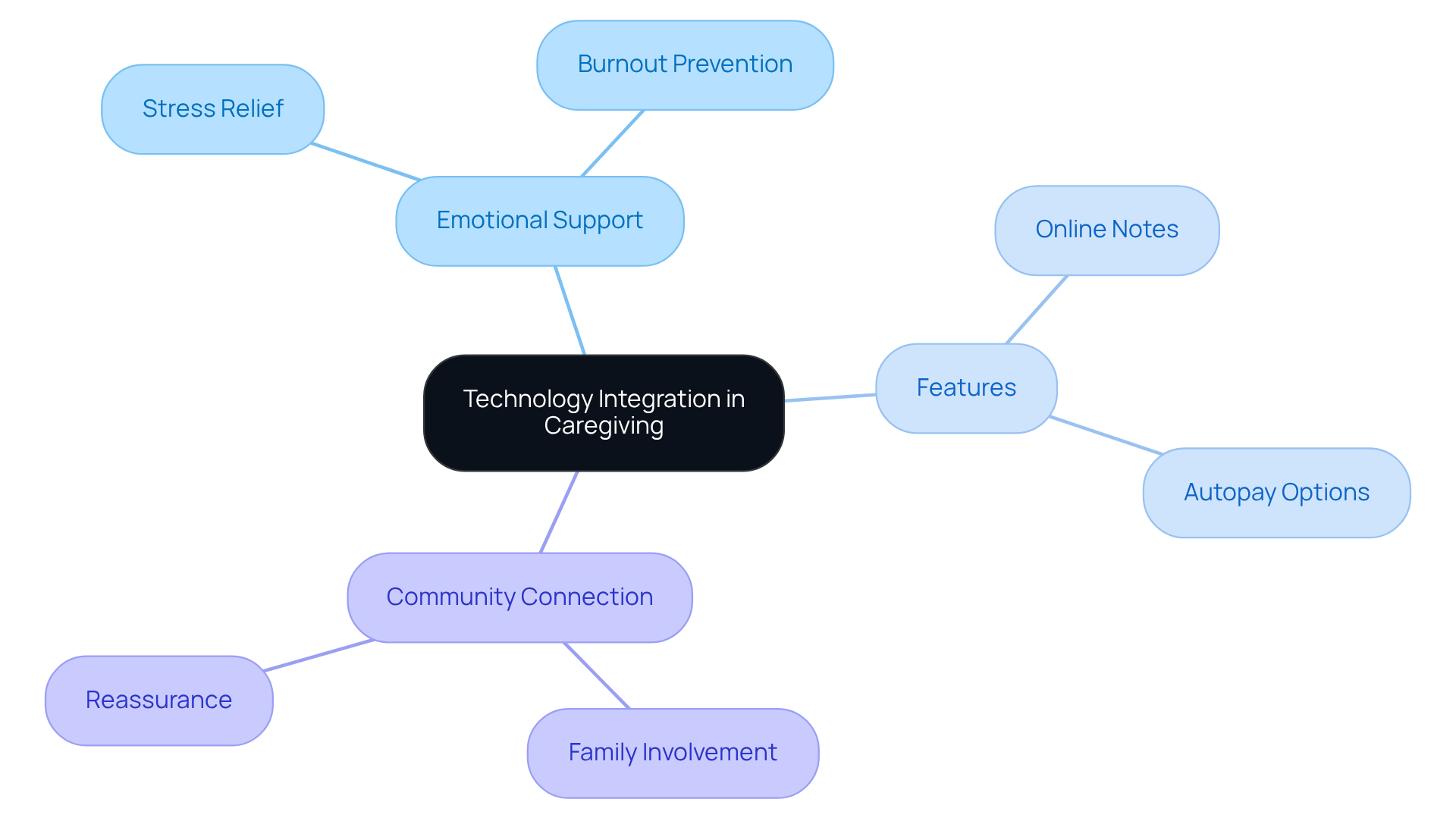
At Happy to Help Caregiving, we understand the emotional challenges that caregivers face daily. The stress and burnout can feel overwhelming, and that’s why we incorporate technology into our offerings to provide essential support. Our features, such as online notes for family members and autopay options, simplify procedures. This ensures that families stay informed and involved in the care of their loved ones, fostering a sense of connection and reassurance. We are here to help, offering not just services but a compassionate approach to caregiving.
Family Testimonials: Real-Life Impact of Private Sitting Services
Family testimonials are invaluable endorsements of the services offered by Happy to Help Caregiving. Positive responses from families highlight the agency's commitment to developing customized support strategies tailored to individual needs. This demonstrates the compassionate nature of its staff. These testimonials not only emphasize the dedication of the private sitting agency to quality assistance but also reflect the considerable positive transformations in individuals' lives due to in-home support.
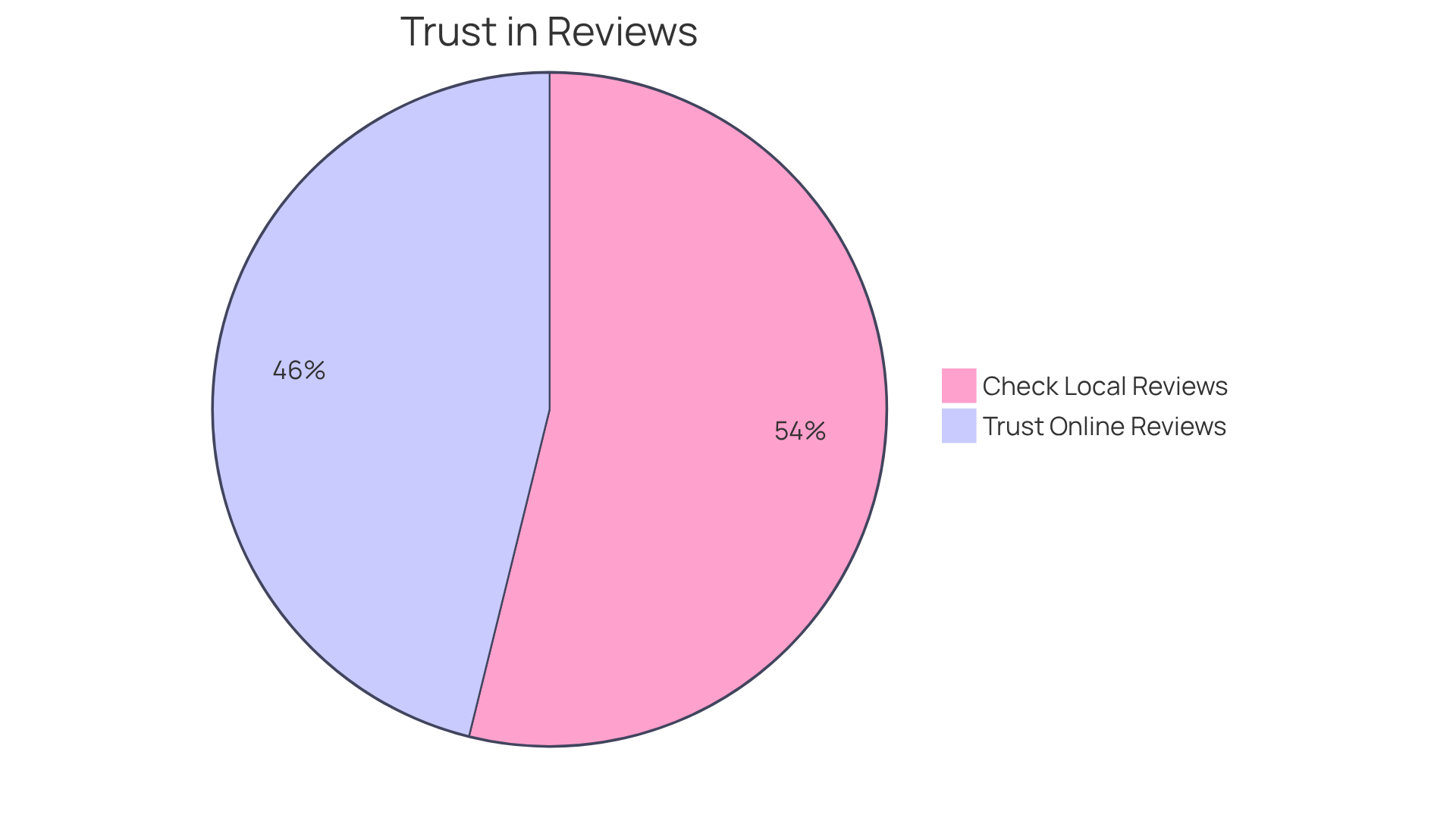
In fact, 84% of individuals trust online reviews as much as personal recommendations, and 98% of consumers check reviews for local providers. This makes these testimonials crucial in influencing the decisions of families seeking assistance from a private sitting agency for their loved ones. Caregiving experts highlight that client feedback is essential for enhancing quality and building trust within the caregiver-client relationship. As families share their experiences, they reflect the high standards of care provided by the private sitting agency, which reinforces its reputation and assists others in navigating their choices for in-home care services.
It is important to note that ethical considerations, such as obtaining explicit written consent for using testimonials, are vital in maintaining credibility. Ultimately, these testimonials serve as a testament to the life-changing impact of compassionate caregiving, guiding families toward the support they need.
Taking the Next Steps
Choosing a private sitting agency for care needs brings a wealth of benefits tailored to the unique requirements of individuals and families. This approach places a strong emphasis on personalized care, ensuring clients receive support that truly enhances their quality of life. The focus on companionship, post-hospital recovery, and respite care underscores the agency’s dedication to not only addressing physical needs but also nurturing emotional well-being.
Throughout this discussion, we’ve explored key insights that illustrate the profound impact of private caregiving services. From alleviating loneliness through companionship to offering vital post-hospital recovery assistance, these services are thoughtfully designed to foster independence and dignity. The significance of trained caregivers, customized care plans, and the integration of technology further highlights how these agencies deliver compassionate and comprehensive support.
Ultimately, choosing to engage a private sitting agency can significantly transform the caregiving experience for families and their loved ones. By opting for personalized in-home care, individuals can find comfort in knowing they are receiving the highest quality of support tailored to their specific needs. Embracing these services not only enhances the lives of seniors and those with special needs but also empowers families to navigate the complexities of caregiving with confidence and compassion.
https://iframe.tely.ai/cta/eyJhcnRpY2xlX2lkIjogIjY4ZjgxZWQzY2Q5YTk3ZTY3N2NkMjg1OSIsICJjb21wYW55X2lkIjogIjY4ZWU1ZGNhNzMxNzYyNTU3ZjNjOTVjMSIsICJpbmRleCI6IG51bGwsICJ0eXBlIjogImFydGljbGUifQ==Frequently Asked Questions
What services does Happy to Help Caregiving provide?
Happy to Help Caregiving offers personalized in-home assistance services, including companionship, post-hospital recovery support, respite services, and palliative care, all designed to meet the specific needs of clients.
How does personalized in-home care benefit clients?
Personalized in-home care enhances the quality of life for seniors and individuals with special needs by fostering a sense of security and independence, reducing anxiety, and nurturing supportive caregiver connections.
What role does companionship care play in senior well-being?
Companionship care alleviates feelings of loneliness and isolation among seniors by engaging them in meaningful activities, fostering social interaction, and providing emotional support, which significantly contributes to their overall well-being.
Why is post-hospital recovery assistance important?
Post-hospital recovery assistance is crucial for ensuring safe transitions from medical facilities to home, providing support with medication management, mobility assistance, and monitoring for potential complications, which helps reduce readmission rates.
How does medication management impact recovery after hospitalization?
Effective medication management is vital for seniors, as it can significantly reduce the likelihood of readmissions, with studies indicating decreases in readmission rates by as much as 30% when proper oversight is provided.
What strategies do caregivers use to assist with mobility challenges?
Caregivers implement strategies such as removing trip hazards and installing handrails to create a safe living environment that promotes recovery and prevents falls.
How does Happy to Help Caregiving ensure personalized support for clients?
Happy to Help Caregiving develops customized support plans tailored to individual needs, enhancing recovery outcomes and providing both practical and emotional support during vulnerable times.