
The Importance of Choose Nurses on Call Near You for
The growing demand for personalized in-home care services highlights a significant problem: seniors and individuals with special needs often experience feelings of isolation and inadequate support. This situation can lead to emotional distress and a decline in overall well-being. Happy to Help Caregiving addresses this issue by providing tailored assistance that not only meets physical needs but also fosters emotional well-being through companionship and professional care.
However, families face a challenge: how can they choose the right caregiving service that balances quality, availability, and personalized attention? This article explores ten compelling reasons to select Nurses on Call near you, shedding light on the profound benefits of professional caregiving in creating a nurturing and supportive environment at home.
Happy to Help Caregiving: Personalized In-Home Care Services
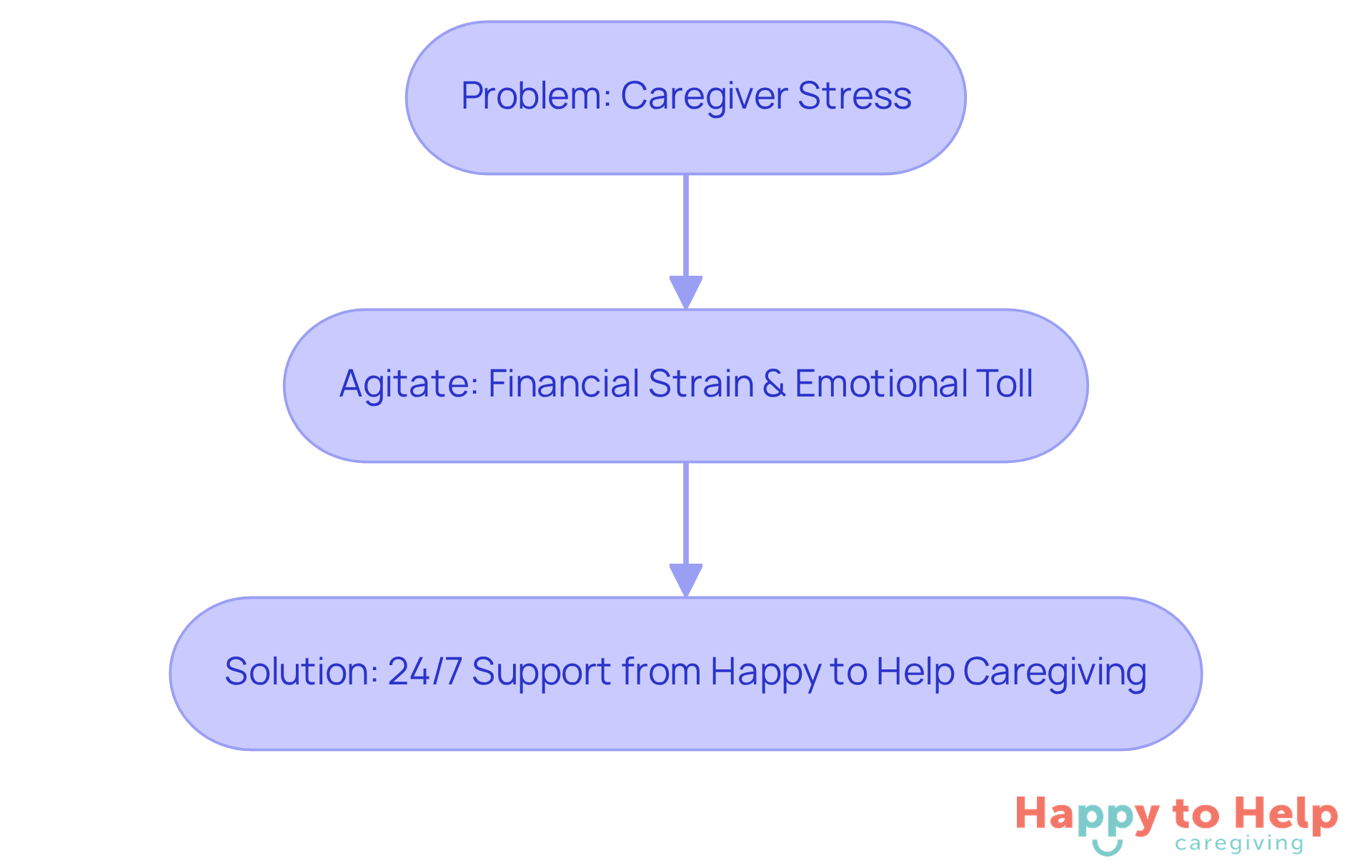
Problem: Many seniors and individuals with special needs face challenges in receiving adequate personalized care, which can lead to feelings of loneliness and isolation.
Agitate: Without tailored support, these individuals may struggle with their physical, emotional, and social needs, significantly impacting their overall well-being. For instance, a lack of companionship or assistance during recovery can hinder their ability to thrive at home.
Solution: Happy to Help Caregiving excels in providing personalized in-home assistance services tailored to the unique needs of each client. Their primary services include:
- Companionship
- Post-hospital recovery assistance
- Respite
- Palliative assistance
Each service is meticulously designed to enhance the quality of life for seniors and individuals with special needs, ensuring they receive the necessary support to thrive in the comfort of their own homes. This tailored approach promotes a feeling of safety and ease, enabling clients to maintain their independence while receiving professional support.
The benefits of personalized caregiving are profound. Customized support plans address specific needs, significantly enhancing overall well-being. For example, a case study from Happy to Help Caregiving shows how a tailored care plan for an elderly individual recovering from surgery resulted in a faster recovery and improved emotional support, highlighting the effectiveness of individualized attention.
Caregivers emphasize the significance of this customized approach, noting that it allows them to connect with individuals on a deeper level. Understanding each customer's preferences and routines is crucial for providing meaningful support. This dedication to personalized care not only enhances clients' lives but also fosters a nurturing atmosphere that encourages mental and emotional well-being.
As the demand for home healthcare services is expected to rise in 2025, the emphasis on tailored support plans becomes even more essential. Incorporating technology in domestic support services can further improve the caregiving experience, enabling better monitoring and communication.
In conclusion, Happy to Help Caregiving's focus on customized in-home care addresses the varied requirements of those they serve, greatly improving their quality of life. This makes it an essential option for households seeking compassionate assistance for their loved ones.
24/7 Availability: Immediate Support When You Need It
Problem: Caregivers often face the challenge of being available around the clock, which can lead to significant stress and burnout. Many caregivers struggle with the demands of providing care while managing their own personal lives.
Agitate: This constant pressure can have serious implications. Research indicates that 24% of caregivers have depleted their personal short-term savings due to the financial strain of caregiving. Additionally, the lack of consistent support can lead to feelings of isolation and anxiety for both caregivers and their loved ones. Families worry about the safety and well-being of their elderly relatives when they are alone, which can exacerbate stress levels.
Happy to Help Caregiving addresses these concerns with its steadfast 24/7 availability of nurses on call near me. This ensures that individuals receive prompt assistance whenever needed, whether for regular tasks or emergencies. With trained caregivers and nurses on call near me, families can enjoy peace of mind, knowing that help is just a call away at any hour. This constant access not only enhances client safety by preventing accidents and reducing disorientation but also provides consistent emotional support.
Moreover, around-the-clock support significantly improves elderly care outcomes. Seniors who receive ongoing assistance report higher satisfaction and enhanced well-being. For families, this level of support allows them to relax and rejuvenate emotionally, making it an essential resource in caregiving.
Reduce Caregiver Burnout: Professional Support for Family Caregivers
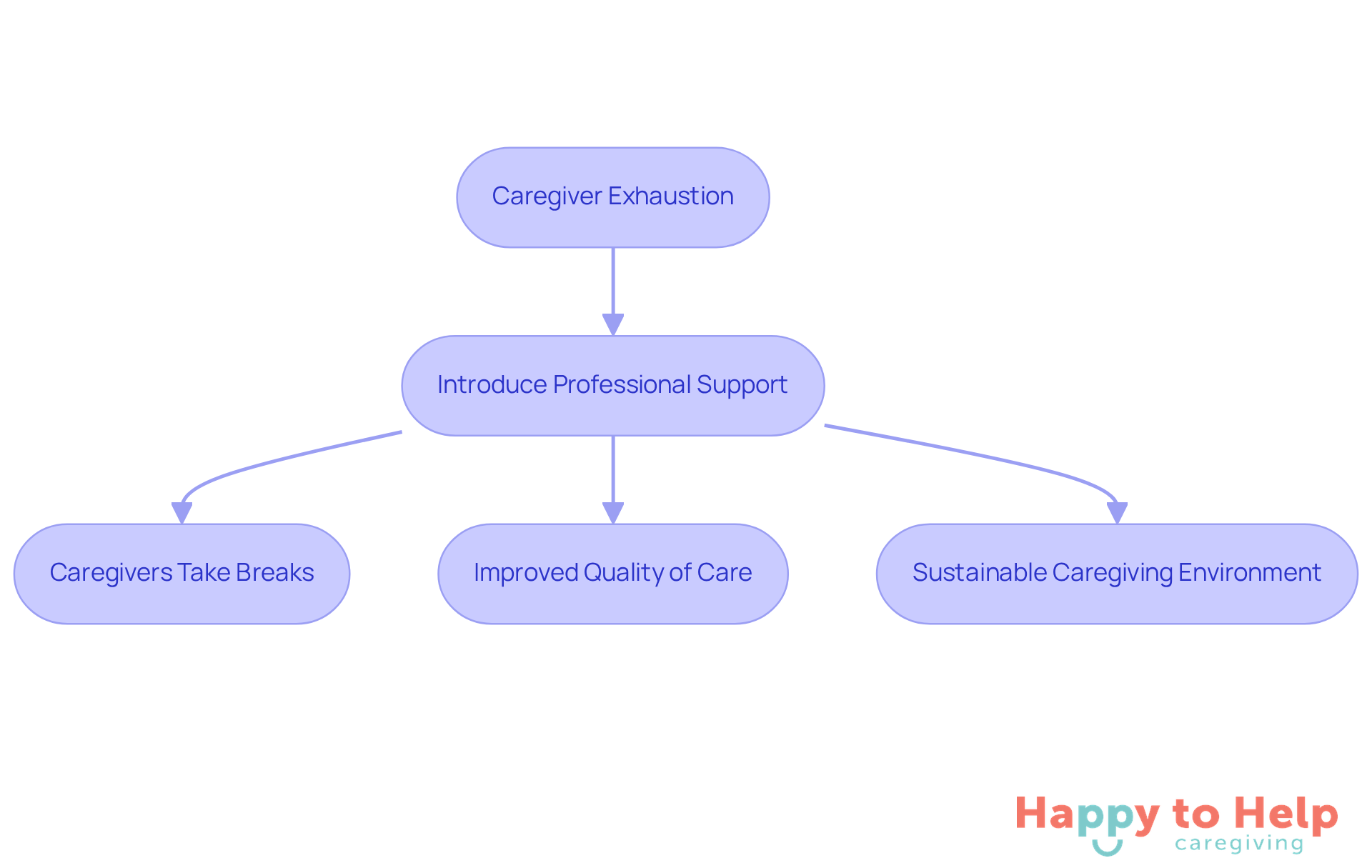
Caregiver exhaustion is a significant issue for many households supporting loved ones. This burden can lead to stress and burnout, impacting both the caregiver's health and the quality of care provided.
Happy to Help Caregiving offers professional assistance that can alleviate this strain. By assigning caregiving duties to skilled professionals, family members can take essential breaks, rejuvenate, and focus on their own well-being.
This professional support not only enhances the quality of services offered to individuals but also helps family caregivers maintain their health and emotional stability. Ultimately, this results in a more sustainable caregiving environment.
Companionship Care: Combat Loneliness with Professional Nurses
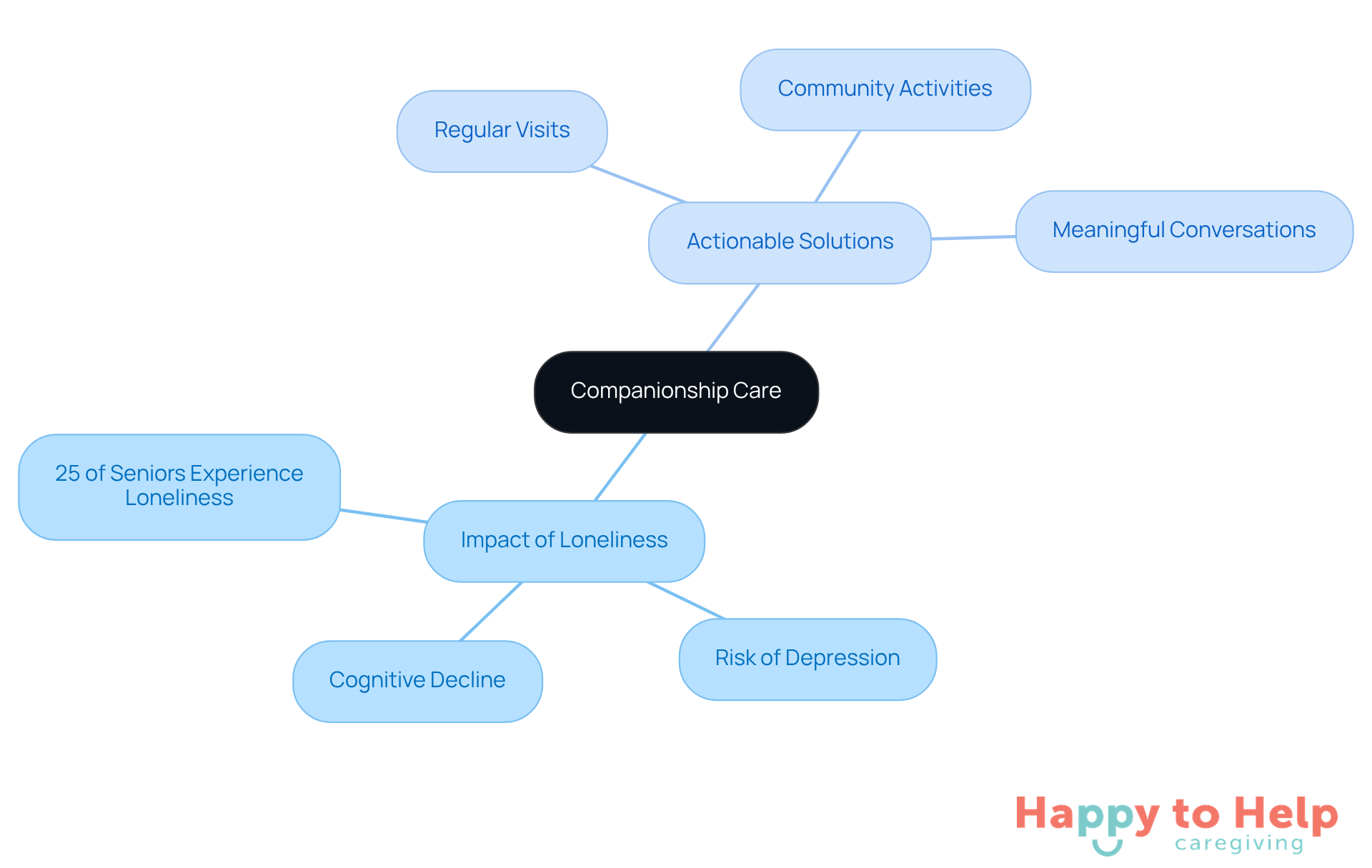
Loneliness among elderly individuals is a significant issue that can severely impact their emotional well-being. Research shows that about 25% of Americans aged 65 or older experience feelings of loneliness and social isolation. This lack of social interaction can lead to serious consequences, including an increased risk of depression and cognitive decline.
To combat this problem, Happy to Help Caregiving offers companionship support, which is essential for fostering social connections. Professional caregivers engage clients in meaningful conversations and activities, promoting social interactions that are crucial for mental health. Studies indicate that seniors who maintain regular social interactions experience improved mental sharpness and overall health.
Caregivers can take practical steps to enhance the emotional well-being of their loved ones. Here are some actionable solutions:
- Facilitate regular visits or phone calls to maintain connections.
- Encourage participation in community activities to foster social engagement.
- Create opportunities for meaningful conversations that can uplift spirits.
By addressing the emotional needs of clients, companionship care plays a pivotal role in enhancing their quality of life. It ensures that seniors feel valued and engaged in their daily lives, cultivating a sense of connection and belonging. Ultimately, companionship support not only alleviates loneliness but also enriches the lives of elderly individuals, making it a vital service for their well-being.
Flexible Scheduling: Tailored Care That Fits Your Lifestyle
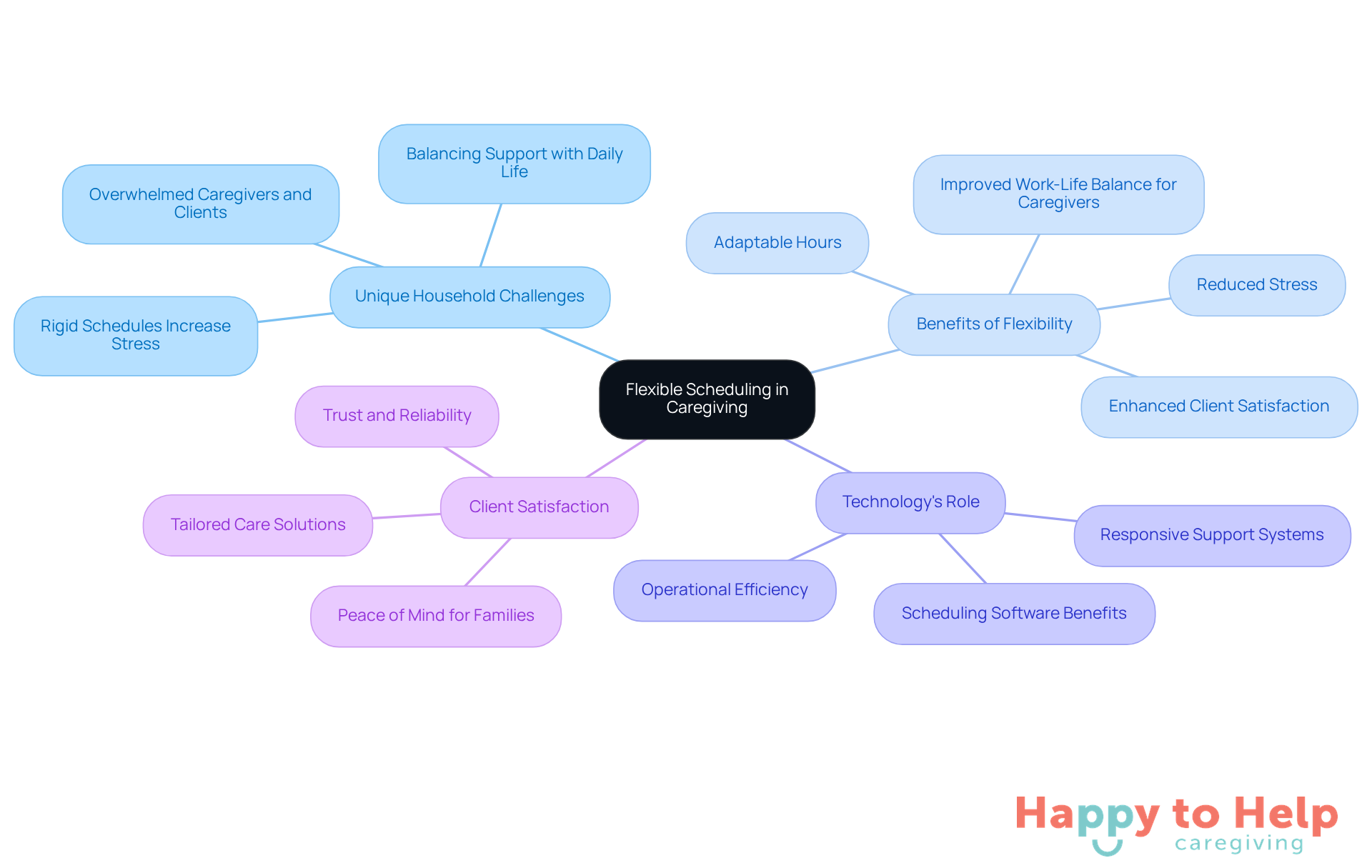
Every household faces unique challenges when it comes to caregiving, particularly regarding scheduling. Rigid schedules can lead to increased stress for families trying to balance support with daily life. This situation often leaves caregivers and clients feeling overwhelmed and unsupported.
Happy to Help Caregiving addresses this issue by offering adaptable scheduling options. Clients can receive assistance at times that work best for them, whether it’s just a few hours a week or full-time support. Caregivers adjust their availability to fit the lifestyles of clients and their families, ensuring that assistance is both effective and convenient.
As Misty Delegato states, "Flexible home assistance scheduling isn’t just a convenience - it’s a lifeline for households balancing support with daily life." This flexibility not only helps families manage work and personal commitments but also reduces stress and enhances client satisfaction.
Moreover, technology-driven adaptability boosts operational efficiency, allowing households to rely on responsive support that meets their evolving needs. By prioritizing flexible scheduling, Happy to Help Caregiving empowers families to maintain their routines while ensuring their loved ones receive the necessary support.
Technology Integration: Streamlined Communication for Families
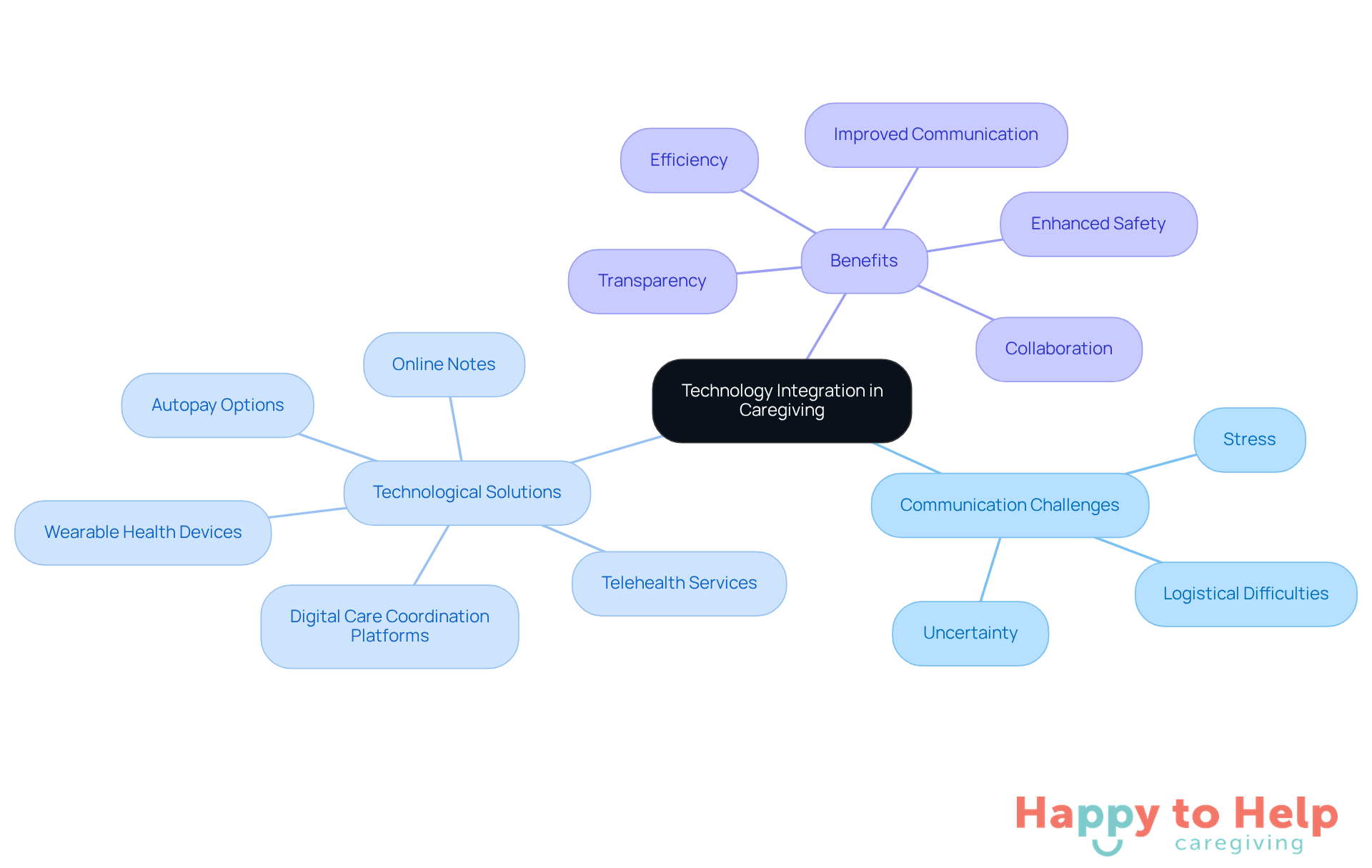
Caregivers often face significant challenges in communication and coordination with relatives, leading to stress and logistical difficulties. This lack of effective communication can create uncertainty and anxiety for both caregivers and families, making it harder to provide the best care possible.
Happy to Help Caregiving addresses these issues by utilizing technology to enhance communication. Through online notes, relatives can stay informed about their loved one's care, ensuring transparency and peace of mind. This not only keeps everyone in the loop but also fosters a sense of collaboration between caregivers and families.
Additionally, features like autopay options streamline the administrative aspects of caregiving. By simplifying these logistics, relatives can focus more on their loved ones rather than getting bogged down by paperwork. This integration of technology not only makes processes more efficient but also promotes a supportive atmosphere, allowing caregivers and relatives to work together more effectively.
Trained Caregivers: Expertise You Can Trust
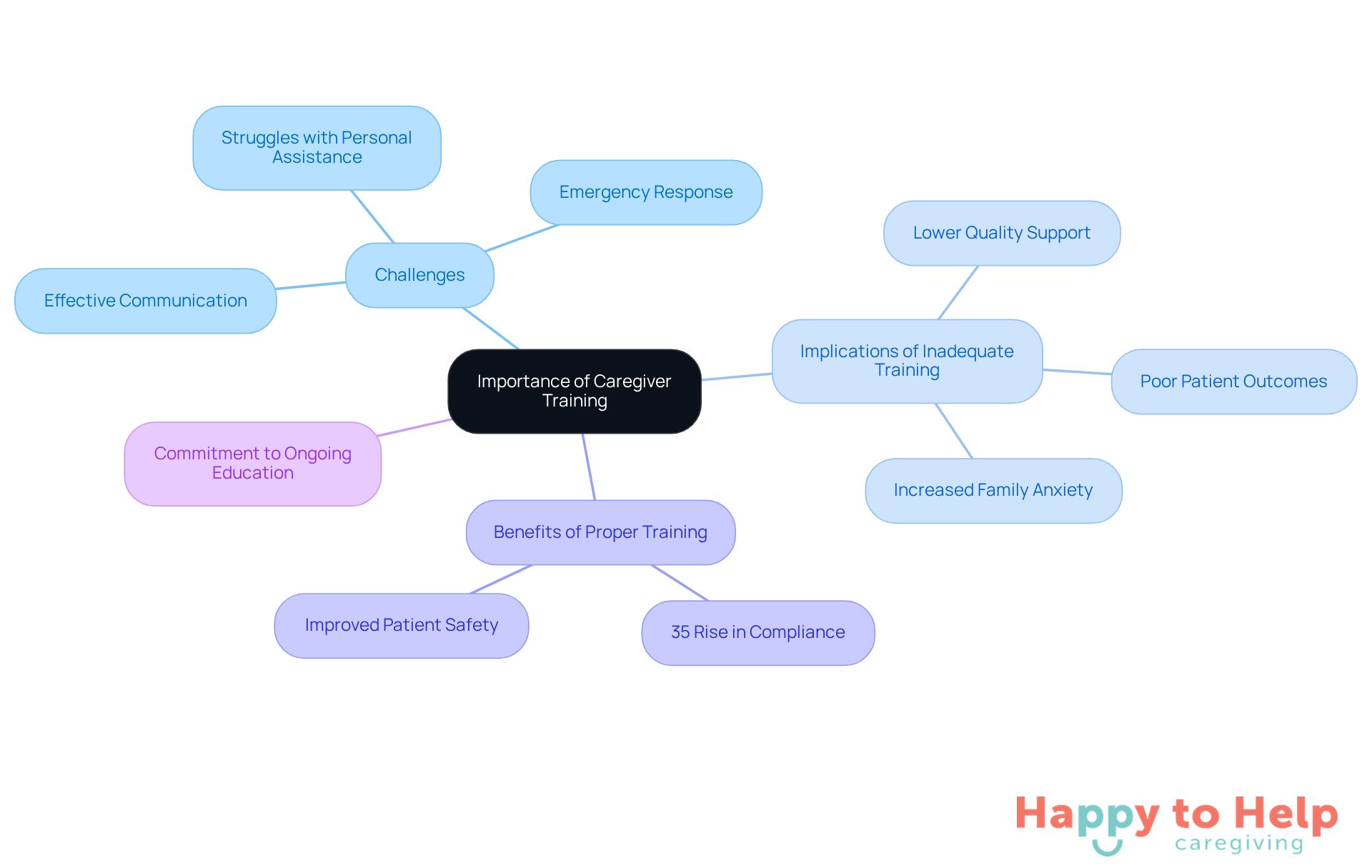
At Happy to Help Caregiving, the challenge many caregivers face is the need for comprehensive training to deliver quality support. Without this training, caregivers may struggle with personal assistance, emergency response, and effective communication, which are crucial for building trust with families.
The implications of inadequate training can be significant. Studies indicate that caregivers lacking thorough training often provide lower quality support, leading to poorer patient outcomes and increased family anxiety. For instance, CCA-trained caregivers show a remarkable 35% rise in compliance with treatment plans, underscoring the tangible benefits of proper training.
The solution lies in the commitment to ongoing education and skill enhancement at Happy to Help Caregiving. Families can feel confident knowing their loved ones are in capable hands, benefiting from the expertise of trained professionals dedicated to safety and well-being. As one caregiver aptly stated, "Proper training equips us with the skills needed to provide high-quality and safe care."
By prioritizing thorough training, Happy to Help Caregiving ensures that caregivers are well-prepared to meet the unique needs of each client, ultimately reducing medical errors and improving patient safety.
Post-Hospital Recovery: Smooth Transition with Nursing Support
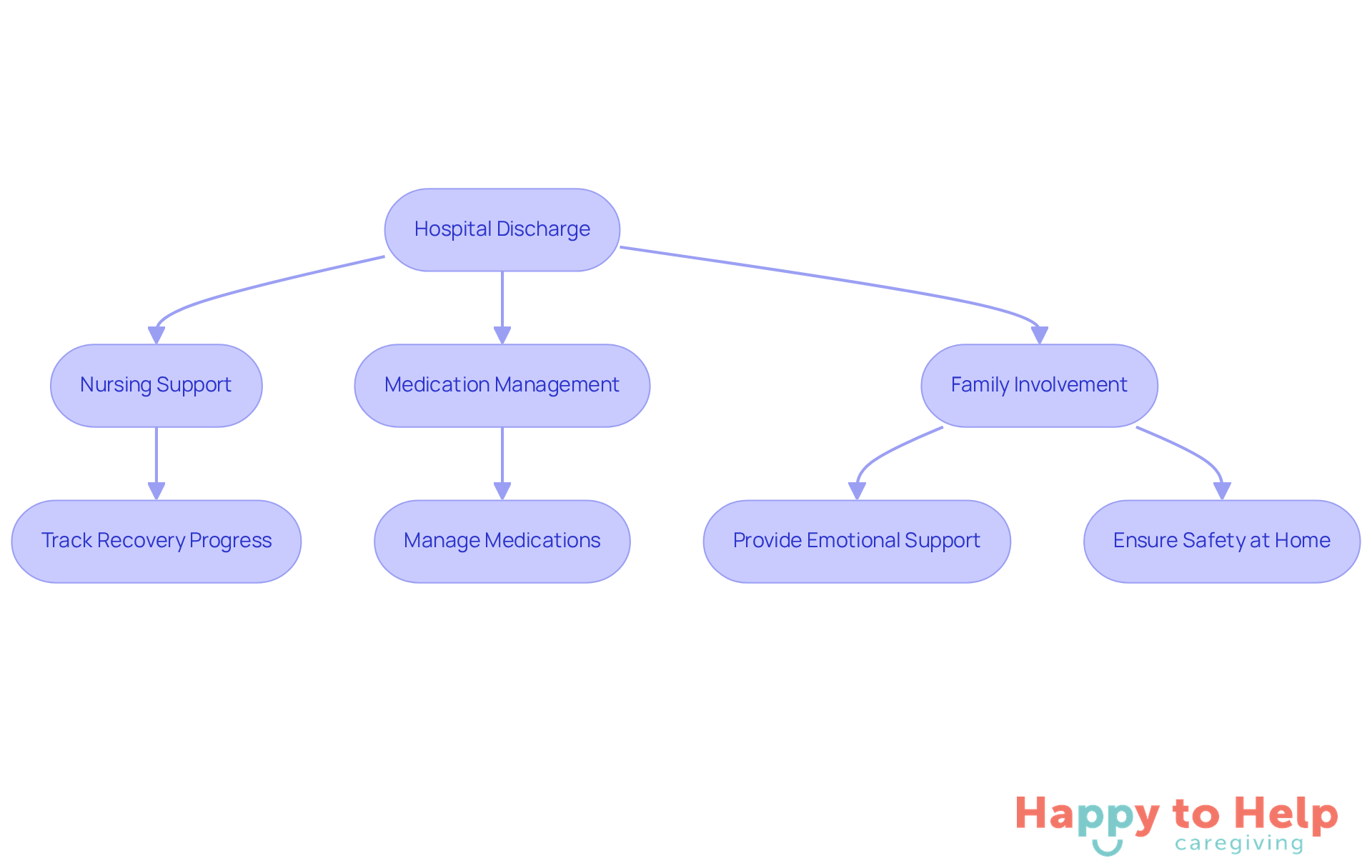
Transitioning from hospital to home can be a daunting experience for patients and their families. This challenge often leads to significant stress and anxiety, making the return home feel overwhelming. Research shows that about one in five Medicare patients are readmitted to the hospital within 30 days, underscoring the critical need for effective support during this vulnerable time.
Happy to Help Caregiving offers specialized post-hospital recovery assistance with nurses on call near me, designed to ease this transition. The skilled nurses on call near me provide essential support by managing medications, tracking recovery progress, and assisting with daily activities. This level of care not only aids in physical recovery but also alleviates the emotional strain associated with returning home after a hospital stay.
Effective communication of a patient's medical history is vital for minimizing confusion and anxiety. It ensures that patients feel secure and cared for in their own homes. Additionally, involving family members in the support process creates a nurturing environment that fosters healing and independence.
Incorporating compassionate nursing support from nurses on call near me is essential for a successful transition. It addresses both the clinical and emotional needs of patients, ultimately promoting a smoother recovery journey.
Palliative Support: Compassionate Care for Serious Illnesses
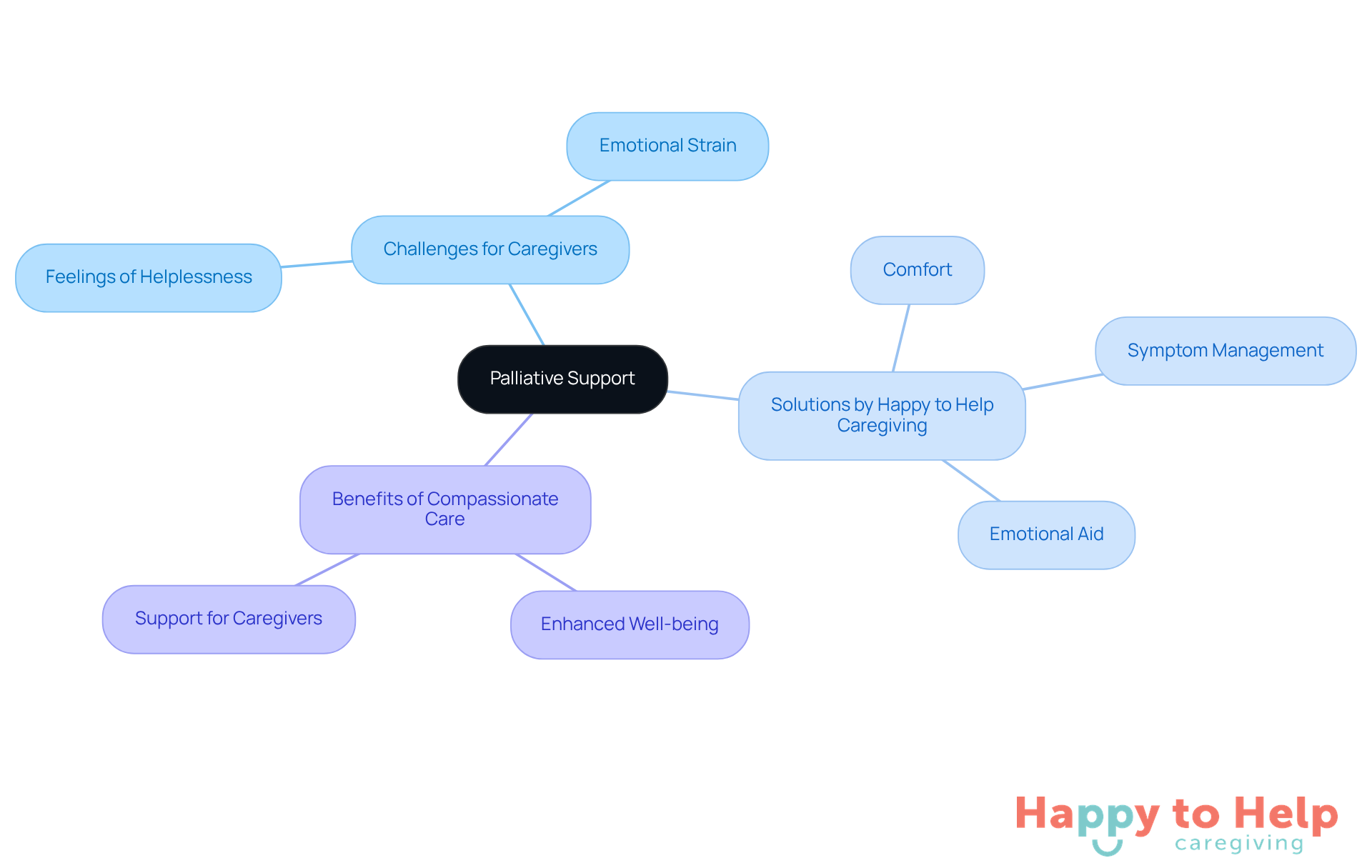
Palliative assistance addresses a critical problem faced by caregivers: the challenge of providing compassionate support to individuals confronting serious illnesses. This situation can lead to feelings of helplessness and emotional strain for both caregivers and patients. Without proper support, the quality of life for those affected can significantly diminish.
Happy to Help Caregiving offers a solution through its dedicated palliative assistance services. This support focuses on comfort, symptom management, and emotional aid, ensuring individuals receive the highest quality of life possible. Caregivers are trained to meet both the physical and emotional needs of patients, providing a comprehensive approach that honors each person's dignity and preferences.
By prioritizing compassionate care, caregivers can alleviate some of the burdens associated with serious illnesses. This not only enhances the well-being of those they care for but also supports caregivers in their vital roles.
Comprehensive Care Solutions: Why Choose Nurses on Call
Caregiving can be a daunting task, often leaving families feeling overwhelmed and unsupported. Many caregivers struggle with the challenge of providing adequate care while managing their own lives, leading to stress and burnout. This is where Happy to Help Caregiving steps in to address these critical issues.
By choosing Happy to Help Caregiving, families gain access to comprehensive support solutions tailored to meet the unique needs of each client. With a focus on individualized care and 24/7 availability, families can rest assured that their loved ones will receive the highest standard of care from nurses on call near me.
The integration of technology, such as remote monitoring and telehealth tools, enhances the caregiving experience. Flexible scheduling and specialized services, including post-hospital recovery and palliative support, further ensure that families have the resources they need.
In essence, selecting Happy to Help Caregiving means choosing a partner dedicated to the well-being and happiness of loved ones at home. This partnership not only alleviates the burden on caregivers but also fosters a supportive environment for those in need.
Key Takeaways for Caregivers
Choosing Happy to Help Caregiving for in-home support addresses a significant problem: the stress and burnout that family caregivers often face. This challenge not only affects the well-being of caregivers but also impacts the quality of life for their loved ones. Without adequate support, families can feel overwhelmed, leading to a decline in both physical and emotional health.
Happy to Help Caregiving offers a comprehensive range of services designed to alleviate these pressures. With personalized care plans and 24/7 availability, individuals receive the tailored assistance they need to thrive at home. This approach enhances the quality of life for clients while providing much-needed relief for family caregivers.
The importance of personalized care cannot be overstated. Companionship and the involvement of trained professionals play a critical role in delivering effective support. Moreover, the integration of technology streamlines communication and coordination among families, ensuring everyone stays informed and engaged in the caregiving process.
Ultimately, selecting a caregiving partner like Happy to Help Caregiving is an investment in a compassionate, supportive environment. This choice fosters independence and dignity for those in need. Families are encouraged to explore these comprehensive care solutions, recognizing that the right support can significantly improve both patient outcomes and caregiver wellness. Prioritizing professional assistance not only enhances the lives of loved ones but also strengthens family bonds during challenging times.
https://iframe.tely.ai/cta/eyJhcnRpY2xlX2lkIjogIjY5MjRmMWQ5ZWM0Y2FiOGU3NGVjMDBjZCIsICJjb21wYW55X2lkIjogIjY4ZWU1ZGNhNzMxNzYyNTU3ZjNjOTVjMSIsICJpbmRleCI6IG51bGwsICJ0eXBlIjogImFydGljbGUifQ==Frequently Asked Questions
What challenges do seniors and individuals with special needs face in receiving care?
Many seniors and individuals with special needs struggle with feelings of loneliness and isolation due to inadequate personalized care, which can affect their physical, emotional, and social needs.
How does Happy to Help Caregiving address these challenges?
Happy to Help Caregiving provides personalized in-home assistance services tailored to the unique needs of each client, including companionship, post-hospital recovery assistance, respite, and palliative assistance.
What are the benefits of personalized caregiving?
Personalized caregiving enhances overall well-being by addressing specific needs through customized support plans. This approach has been shown to lead to faster recovery and improved emotional support for clients.
Why is a customized approach important in caregiving?
A customized approach allows caregivers to connect with individuals on a deeper level by understanding their preferences and routines, which fosters a nurturing atmosphere and encourages mental and emotional well-being.
What is the significance of 24/7 availability in caregiving?
24/7 availability ensures that individuals receive prompt assistance whenever needed, which enhances client safety, provides consistent emotional support, and significantly improves elderly care outcomes.
How does Happy to Help Caregiving help reduce caregiver burnout?
Happy to Help Caregiving offers professional assistance that allows family caregivers to take essential breaks, rejuvenate, and focus on their well-being, ultimately leading to a more sustainable caregiving environment.
What impact does ongoing assistance have on seniors?
Seniors who receive ongoing assistance report higher satisfaction and enhanced well-being, which allows families to relax and rejuvenate emotionally.
List of Sources
- Happy to Help Caregiving: Personalized In-Home Care Services
- Senior Care in Philadelphia, PA: Key Trends for 2025 and Beyond - AmeriBest Home Care (https://ameribesthomecare.com/recent-news/senior-care-in-philadelphia-pa-key-trends-for-2025-and-beyond)
- Caring Senior Service Banks Growth Goals On New House-Made Technology (https://homehealthcarenews.com/2025/10/caring-senior-service-banks-growth-goals-on-new-house-made-technology)
- Trends in Senior Care: What to Expect in 2025 (https://agingconnections.org/blog/trends-in-senior-care-what-to-expect-in-2025)
- Trends and Innovations in Senior Care | Amada Blog (https://amadaseniorcare.com/2025/01/trends-and-innovations-in-senior-care)
- The Future of Home Health Care: Trends to Watch in 2025 (https://synchronyfl.com/the-future-of-home-health-care-trends-to-watch-in-2025)
- 24/7 Availability: Immediate Support When You Need It
- News & Information (https://wellnessalliance.org/resources-and-tools/news-and-information/2025/11/10/national-family-caregivers-month--preventing-caregiver-burnout)
- Next Avenue Special Report: Caregiving in America - The 24/7 Caregiver (https://johnahartford.org/resources/view/next-avenue-special-report-caregiving-in-america-the-24-7-caregiver-1)
- Caregiving Crisis: 45% Increase in Americans Providing Care (https://aarp.org/caregiving/basics/caregiving-in-us-survey-2025)
- Why 24/7 Senior Care Works: Safety, Comfort, and Constant Support - With A Little Help (https://withalittlehelp.com/24-7-senior-care-works)
- Senior Care Gets An Upgrade: How LogicMark's Patented Token & Privacy Technology Helps It Better Manage Customer Data Security (https://newmediawire.com/news/senior-care-gets-an-upgrade-how-logicmark-s-patented-token-privacy-technology-helps-it-better-manage-customer-data-security-7083756)
- Reduce Caregiver Burnout: Professional Support for Family Caregivers
- New Report Reveals Crisis Point for America’s 63 million Family Caregivers (https://press.aarp.org/2025-07-24-New-Report-Reveals-Crisis-Point-for-Americas-63-million-Family-Caregivers)
- Family Caregivers Deserve Recognition — Medicare Is Starting to Listen (https://commonwealthfund.org/blog/2025/family-caregivers-deserve-recognition-medicare-starting-to-listen)
- Reimagining Support for Family Caregivers and Their Loved Ones (https://medschool.duke.edu/news/reimagining-support-family-caregivers-and-their-loved-ones)
- The Caregiving Landscape: Data & Insights on the Caregiver Experience in the U.S. (https://caregiveraction.org/caregiver-statistics)
- As Family Caregiving Grows, So Does the Need for Reform - Medicare Rights Center (https://medicarerights.org/medicare-watch/2025/08/14/as-family-caregiving-grows-so-does-the-need-for-reform)
- Companionship Care: Combat Loneliness with Professional Nurses
- Older adults find support through health care companions (https://news-medical.net/news/20250924/Older-adults-find-support-through-health-care-companions.aspx)
- Creating Safe Living Environment for Seniors: Tips & Practices (https://peacevillage.org/news/why-companionship-is-key-to-happy-aging-elderly-well-being)
- The Role of Companion Care in Preventing Senior Isolation (https://promedcareinc.com/the-role-of-companion-care-in-preventing-senior-isolation)
- How Companion Drivers Help Fight Senior Loneliness and Isolation | NorthPennNow (https://northpennnow.com/news/2025/nov/14/how-companion-drivers-help-fight-senior-loneliness-and-isolation)
- Combat Loneliness: The Benefits of Companion Care for Seniors (https://allheartcare.com/more-than-just-company-the-vital-role-of-companion-care-for-seniors)
- Flexible Scheduling: Tailored Care That Fits Your Lifestyle
- The changing face of home health care: Trends bringing compassion and innovation together (https://thebostonpilot.com/article.php?ID=201002)
- The need for caregiving benefits may have reached a fever pitch (https://hrdive.com/news/sandwich-generation-needs-caregiving-benefits/802864)
- The Benefits of Flexible Scheduling in Home Care Plans (https://regencyhcs.com/blog/the-benefits-of-flexible-scheduling-in-home-care-plans)
- Go beyond flexible hours and daycare partnerships to help caregivers (https://benefitnews.com/news/how-more-expansive-benefits-could-make-a-difference-in-the-caregiving-crisis)
- The Critical Role of Flexibility in Home Care Scheduling for Family Peace of Mind (https://relevar.com/the-critical-role-of-flexibility-in-home-care-scheduling-for-family-peace-of-mind)
- Technology Integration: Streamlined Communication for Families
- How Technology Improves Communication Between Families And Care Staff (https://thehighpointresidence.com/blog/how-technology-improves-communication-between-families-and-care-staff)
- CAN Tech (https://caregiveraction.org/can-tech)
- Tech-enabled caregiving can help dementia patients stay at home — perhaps for too long (https://statnews.com/2025/11/24/dementia-caregiving-technology-assistance)
- Modern Tools That Improve Safety and Accountability in Elder Care Settings (https://dcreport.org/2025/11/24/modern-tech-tools-improving-safety-in-elder-care-facilities)
- How AI Could Change Family Caregiving (https://aarp.org/caregiving/basics/how-ai-can-help-caregivers)
- Trained Caregivers: Expertise You Can Trust
- CCA Celebrates 25 Years of Caregiver Training (https://advancecaregivers.org/cca-celebrates-25-years-of-caregiver-training)
- New Research Highlights Critical Role of Training in Caregiver Retention (https://careacademy.com/blog/role-of-training-in-caregiver-retention)
- The Importance of Caregiver Training in Patient Care Management (https://regencyhcs.com/blog/the-importance-of-caregiver-training-in-patient-care-management?4393cdce\_page=25)
- Enhancing Caregiver Skills Through Specialized Training (https://ltcnews.com/articles/enhancing-caregiver-skills-specialized-training)
- Sophisticated Caregiver Training Remains An Underutilized Retention, ROI Tool (https://homehealthcarenews.com/2024/08/sophisticated-caregiver-training-remains-an-underutilized-retention-roi-tool)
- Post-Hospital Recovery: Smooth Transition with Nursing Support
- The Importance of a Smooth Transition of Care in the Patient Journey | Relias (https://relias.com/blog/the-importance-of-a-smooth-transition-of-care-in-the-patient-journey)
- Combination of outreach methods can improve follow-up care for hard-to-reach patients (https://news-medical.net/news/20251120/Combination-of-outreach-methods-can-improve-follow-up-care-for-hard-to-reach-patients.aspx)
- After the Hospital: How Home Health Care Supports Recovery at Home - Advanced Nursing & Home Care (https://advancednursing.care/blog/after-the-hospital-how-home-health-care-supports-recovery-at-home)
- Bridging Equity in Post-Hospital Care Transitions (https://bioengineer.org/bridging-equity-in-post-hospital-care-transitions)
- Nurse-Led Transitions of Care: Handoff to Home Without the Gaps | IWU (https://indwes.edu/articles/2025/11/nurse-led-transitions-care)
- Palliative Support: Compassionate Care for Serious Illnesses
- Palliative Care For Chronic Illness | Carolina Caring (https://carolinacaring.org/news/palliative-care-for-chronic-illnesses-improving-quality-of-life)
- ‘A good death’: How compassionate care helps people navigate the end of life (https://news.yale.edu/2025/10/13/good-death-how-compassionate-care-helps-people-navigate-end-life)
- Support for Serious Illness (https://newsinhealth.nih.gov/2025/07/support-serious-illness)
- Palliative Care: An Extra Layer of Support Can Make All the Difference for a Patient (https://washingtonhealth.com/news/2023/november/palliative-care-an-extra-layer-of-support-can-ma)
- Comprehensive Care Solutions: Why Choose Nurses on Call
- State of home care in 2025 (https://mcknightshomecare.com/state-of-home-care-in-2025)
- In Home Caregiver News • At Home Caregivers (https://athomecaregivers.com/news)
- Looking Ahead: The Future of Home Care and What It Means for Your Family – Inspire (https://blogs.scu.edu/inspire/2025/11/08/looking-ahead-the-future-of-home-care-and-what-it-means-for-your-family)
- Tech-enabled caregiving can help dementia patients stay at home — perhaps for too long (https://statnews.com/2025/11/24/dementia-caregiving-technology-assistance)
- The Growing Demand for Home Healthcare | Why Families Choose In-Home Care (https://lhghealth.com/blog/the-growing-demand-for-home-healthcare-why-more-families-are-choosing-in-home-care)