
Why Choose Private Carers Near Me for Matters
Choosing the right support for family members can feel overwhelming. Caregivers often face significant emotional and physical demands, and it’s essential to recognize these challenges. Hiring private carers offers more than just assistance; it provides a holistic approach that prioritizes individual needs, emotional well-being, and companionship.
Many families find themselves asking: how can they ensure their loved ones receive the best care possible while also taking care of themselves? This article explores ten compelling reasons to choose private carers nearby. It highlights the invaluable support they provide, fostering a nurturing and empowering environment for both caregivers and their loved ones.
By understanding the emotional weight of caregiving, we can appreciate the profound impact that compassionate care can have. It’s not just about meeting physical needs; it’s about creating a space where everyone feels valued and supported.
Happy to Help Caregiving: Personalized In-Home Support for Family Caregivers
At Happy to Help Caregiving, we understand the emotional challenges that caregivers face. It can be overwhelming, filled with stress and burnout, as they strive to provide the best for their loved ones. That’s why we focus on delivering customized in-home assistance tailored to the unique needs of each household.
Our approach goes beyond just helping with daily activities. We believe in fostering emotional connections that enhance the overall quality of life for our clients. By prioritizing individual preferences and routines, we empower families to maintain their loved ones' independence while ensuring they receive the necessary support in a familiar environment.
Imagine the peace of mind that comes from knowing your loved one is cared for in a nurturing setting. Our compassionate caregivers are here to provide not just assistance, but also companionship, creating a warm atmosphere that feels like home. We’re dedicated to making a difference in the lives of families, offering both emotional and practical support.
With Happy to Help Caregiving, you’re not alone. We’re here to walk alongside you, providing reassurance and encouragement every step of the way. Together, we can create a supportive environment that allows your loved ones to thrive.
Companionship Care: Combat Loneliness and Enhance Emotional Well-Being
Companionship support plays a crucial role in combating loneliness among seniors. Caregivers engage clients through meaningful conversations, enjoyable activities, and shared hobbies, enriching their daily lives and significantly boosting emotional well-being. This support nurtures a vital sense of belonging and connection, essential for maintaining mental health and happiness in older adults.
Recent studies reveal that social isolation can heighten the risk of dementia, depression, and even early mortality. This underscores the importance of regular interaction and assistance. By providing companionship, caregivers not only ease feelings of loneliness but also foster cognitive stimulation and emotional resilience, ultimately enhancing the overall quality of life for seniors.
Successful companionship support programs demonstrate that nurturing these connections leads to happier, healthier aging, making it a vital aspect of in-home assistance services provided by private carers near me. Families can encourage companionship activities by scheduling regular visits or engaging in shared hobbies, ensuring their loved ones feel connected and supported.
As one caregiver shared, "Seeing the joy on my client's face during our time together reminds me of the difference we can make. It's not just about care; it's about companionship and connection." This sentiment reflects the heart of companionship support, where every interaction counts.
Post-Hospital Recovery Assistance: Smooth Transitions for Better Care
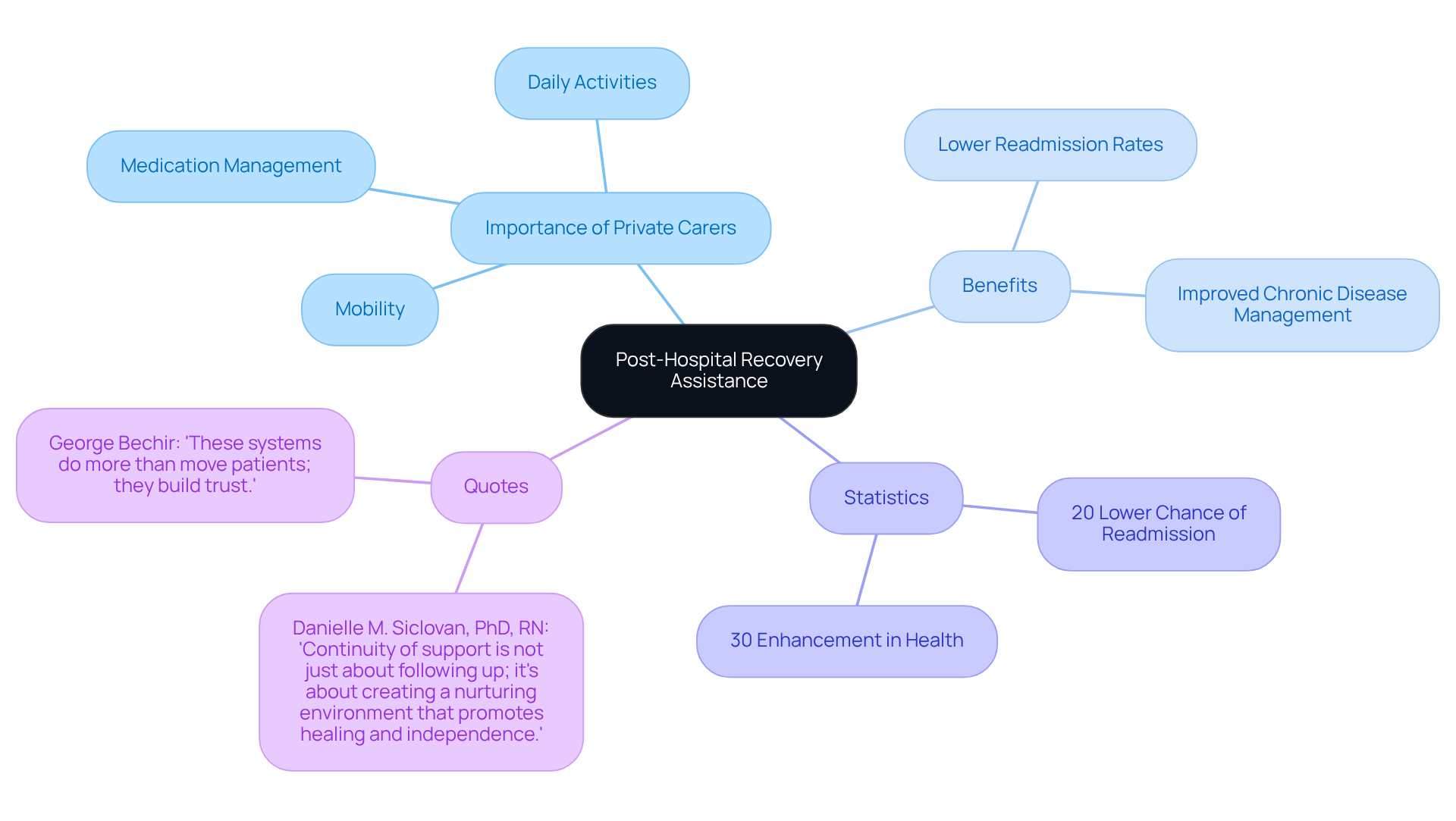
Recovering at home after a hospital stay can be a daunting journey, and having private carers near me can make all the difference. Private carers near me are truly the backbone of this transition, providing essential help with medication management, mobility, and daily activities. This kind of support isn’t just helpful; it’s crucial. Studies show that patients who receive home assistance have a 20% lower chance of being readmitted to the hospital compared to those who don’t.
Moreover, effective home support can lead to significant improvements in managing chronic diseases, with patients reporting a 30% enhancement in their health over just six months. When patients stick to their recovery plans and receive personalized care, they’re less likely to encounter complications, paving the way for better health outcomes.
As Danielle M. Siclovan, PhD, RN, beautifully puts it, "Continuity of support is not just about following up; it's about creating a nurturing environment that promotes healing and independence." This nurturing environment is vital, especially since recovering at home with private carers near me can also lower the risk of hospital-acquired infections.
In essence, post-hospital recovery assistance is not just a service; it’s a lifeline that fosters healing and independence, making it an indispensable part of effective healthcare.
Respite Care: Essential Breaks for Family Caregivers' Well-Being
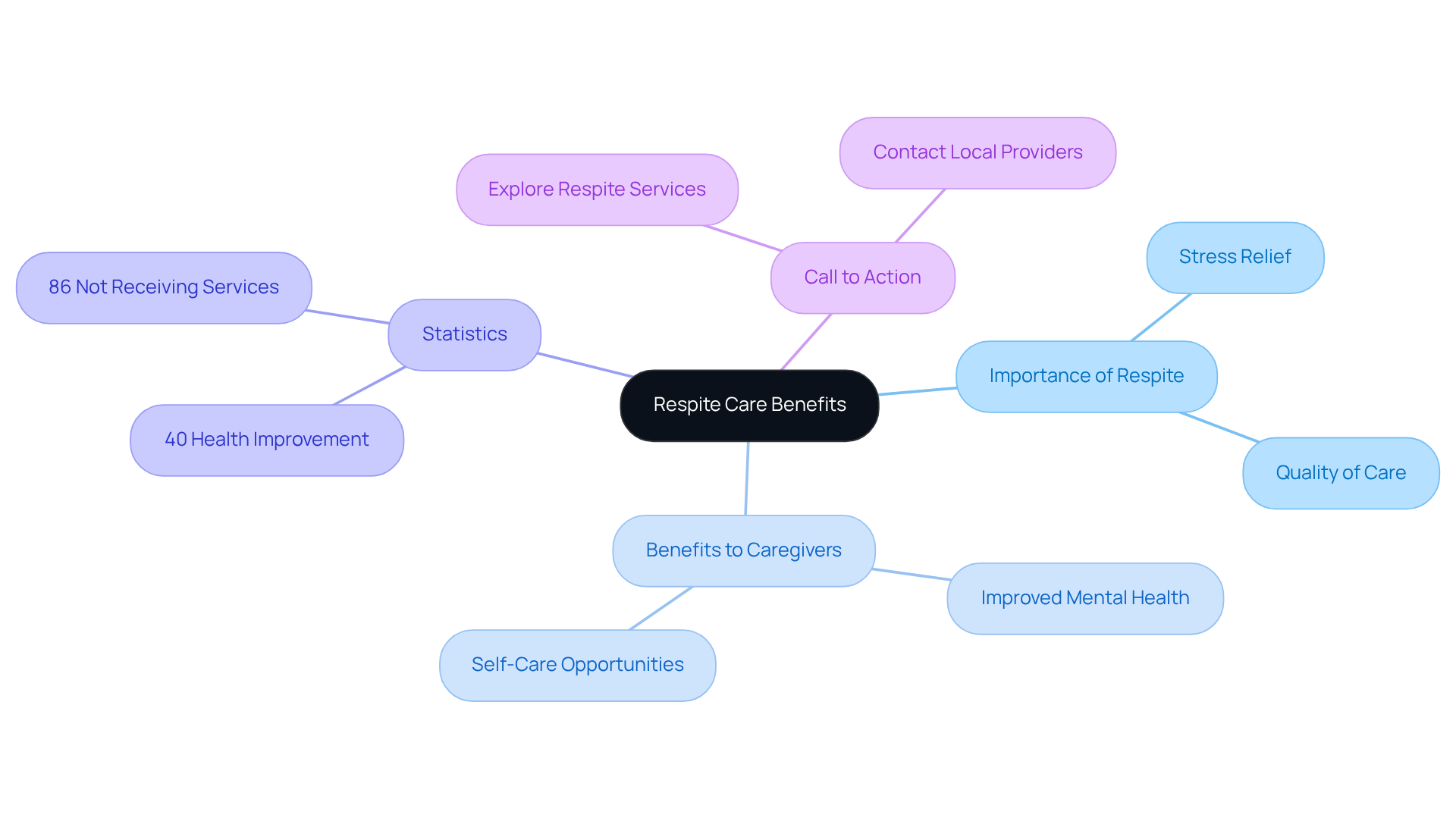
Respite support is essential for family caregivers. It offers the necessary breaks they need to rest and rejuvenate. By temporarily entrusting caregiving duties to trained professionals, caregivers can focus on their own health and well-being. This support not only alleviates stress but also significantly enhances the quality of care provided to their loved ones.
Many providers who utilize respite services return revitalized, feeling better equipped to meet the needs of those they support. Research from the Administration for Community Living reveals that caregivers receiving four or more hours of respite support weekly report a decrease in self-reported burden over time. This highlights the profound impact these services can have.
Moreover, caregivers who engage in self-care through respite options often experience improved mental health and overall well-being. Studies show that 40% of caregivers who rated their health as fair or poor before receiving respite assistance later reported their health as good.
However, it's concerning that 86% of individuals caring for an adult are not receiving respite services. This underscores the necessity of these provisions as a fundamental aspect of caregiver support. Caregivers are encouraged to explore nearby respite services or contact private carers near me for assistance. By doing so, they can ensure they maintain their caregiving roles effectively.
Palliative Support Care: Managing Complex Health Needs with Compassion
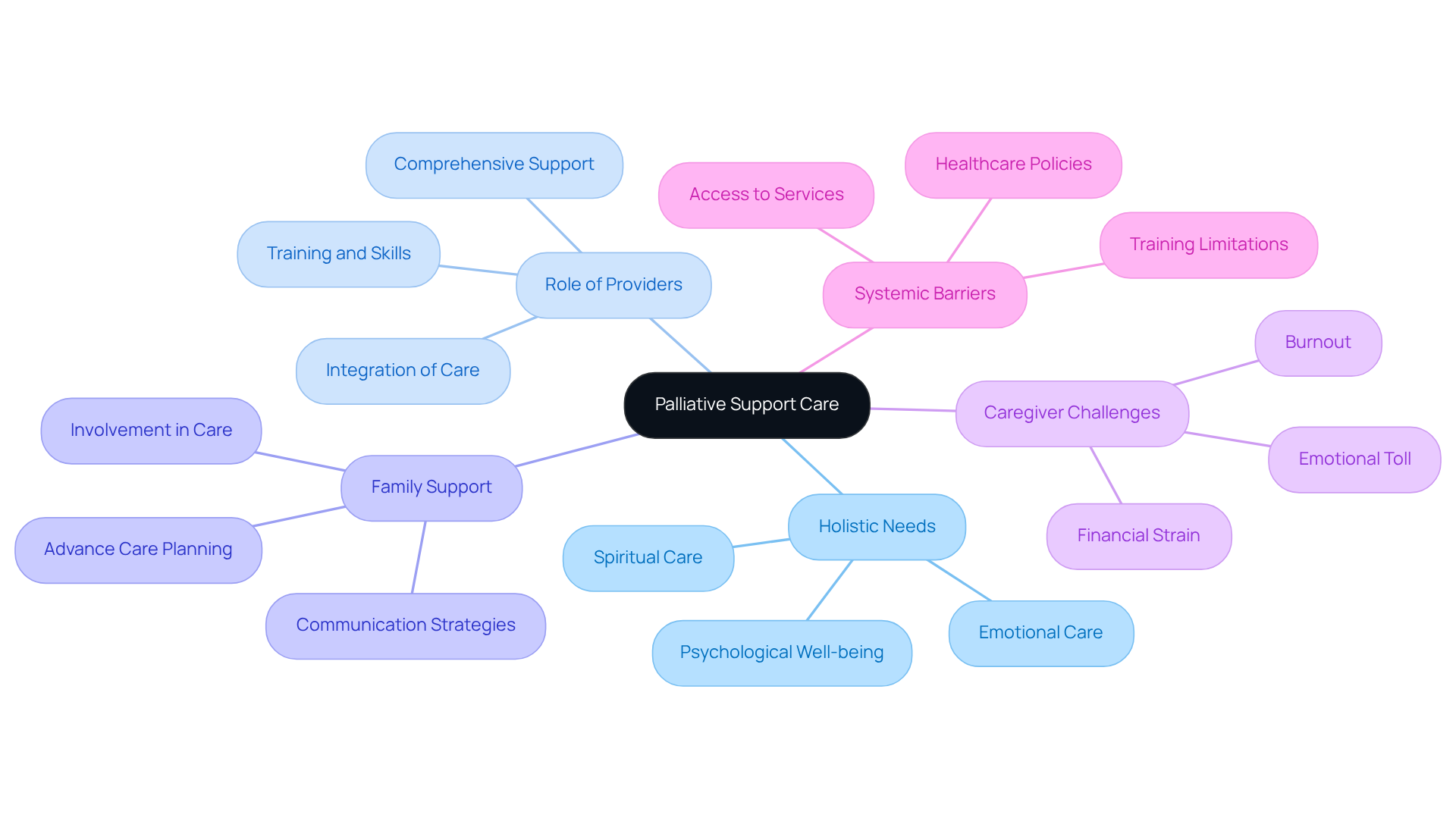
Palliative support plays a vital role in addressing the complex wellness needs of individuals, while also providing essential emotional and spiritual care. Providers trained in this specialized field work closely with families, offering comprehensive support that goes beyond just physical symptoms to include emotional and psychological well-being. This compassionate approach can significantly enhance the quality of life for those facing serious medical challenges.
As Dr. Lori Wiener, a specialist in palliative support, notes, the goal is to alleviate symptoms and improve quality of life. This highlights the importance of addressing emotional needs alongside physical health. Effective palliative initiatives demonstrate that integrating emotional support into treatment strategies leads to better patient outcomes and greater satisfaction.
Moreover, introducing palliative support early on can improve quality of life and reduce unnecessary hospitalizations, making it a crucial resource for families. Caregivers, too, must recognize the emotional toll and potential burnout that can come with their role, underscoring the need for support systems.
By focusing on the holistic needs of patients and acknowledging the barriers to accessing palliative care - such as inadequate national healthcare policies and limited training for providers - palliative services navigate the complexities of serious illnesses. This ensures that individuals and their families receive the support they need during these challenging times.
24/7 Availability: Continuous Support for Family Caregivers
At Happy to Help Caregiving, we understand the emotional challenges caregivers face. With our 24/7 availability, we ensure that your loved ones receive continuous support, no matter the hour. This unwavering assistance is especially beneficial for those with varying health needs or those who require prompt help.
Imagine the peace of mind that comes from knowing that help is always just a call away. Families can rest easy, feeling secure in the knowledge that compassionate care is readily available. We’re here to lighten the load, providing not just practical support, but also emotional reassurance.
Our commitment to care means that you’re never alone in this journey. We’re dedicated to being there for you and your family, enhancing your overall sense of security and well-being.
Flexible Scheduling: Tailored Care That Fits Family Caregivers' Lives
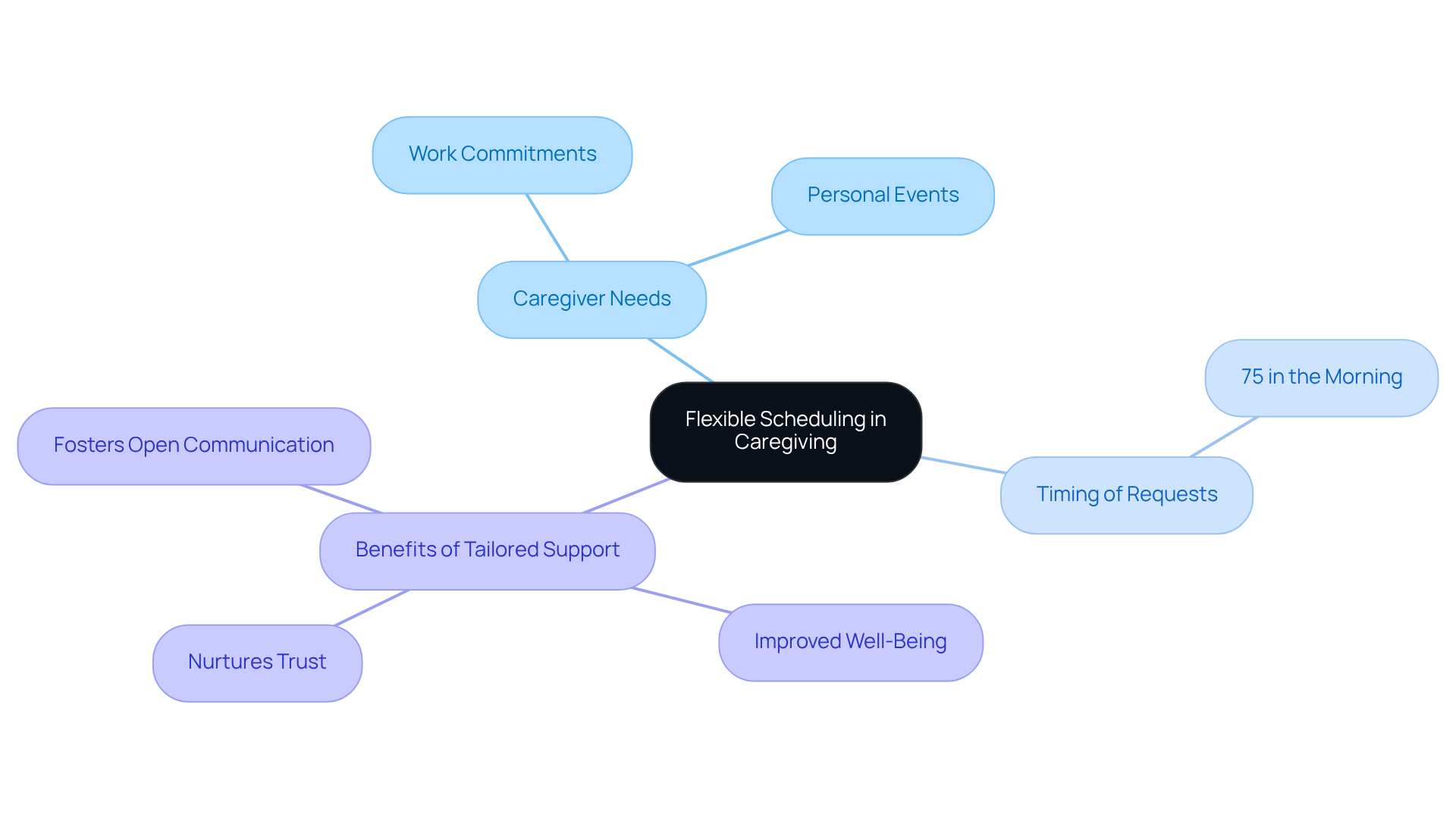
At Happy to Help Caregiving, we understand that flexible scheduling is essential for caregivers. It allows households to customize support based on their unique lifestyles. This adaptability means adjusting hours to fit work commitments or to provide assistance during significant personal events. We want to ensure that help is available exactly when it’s needed most.
Statistics show that 75% of assistance requests come in the morning, highlighting the importance of this flexibility. Our support specialists, like John Larson, emphasize that tailoring assistance schedules to meet household needs can significantly improve overall well-being. It nurtures trust and fosters open communication.
By prioritizing flexibility, Happy to Help Caregiving empowers caregivers to navigate their journeys with confidence. They can rest assured knowing they have the right support at the right time, allowing them to focus on what truly matters.
Technology Integration: Enhancing Communication and Care Monitoring
Caring for a loved one can be an emotional journey filled with challenges. Many caregivers experience stress and burnout, feeling overwhelmed by the demands of their role. At Happy to Help Caregiving, we understand these feelings and are here to support you.
Technology integration plays a crucial role in modern caregiving. We employ digital tools to enhance communication between caregivers and relatives, ensuring that everyone stays informed about the support process. Features like:
- Online notes
- Medication reminders
- Health monitoring systems
help families remain connected and involved in their loved one's well-being. This fosters transparency and trust, allowing caregivers to focus on what truly matters - providing compassionate care.
Imagine being able to share updates with family members instantly, knowing they are part of the journey. Our tools not only streamline communication but also create a sense of community among caregivers and families. We believe that when everyone is involved, it leads to better outcomes for your loved ones.
We’re here to reassure you that you’re not alone in this journey. With our support, you can navigate the complexities of caregiving with confidence and compassion. Together, we can create a nurturing environment that prioritizes the well-being of your loved one.
Personalized Care Plans: Tailoring Support to Individual Needs
At Happy to Help Caregiving, we truly understand the emotional challenges that come with caregiving. Customized support plans are at the heart of our approach, designed to meet the unique needs of each client. We take the time to thoroughly assess their preferences and goals, ensuring that every plan is tailored just for them.
This personalized support not only helps caregivers provide the most effective assistance but also enhances the client's quality of life. We believe in promoting independence, allowing clients to feel empowered in their daily lives.
We know that needs can change, which is why we conduct frequent evaluations and modifications to the support plan. This ongoing attention ensures that our services remain aligned with the evolving needs of our clients, providing them with the care and support they deserve.
Compassionate Caregivers: Building Trust and Ensuring Positive Experiences
Compassionate caregivers truly are the heart of Happy to Help Caregiving's services. They don’t just provide physical assistance; they also nurture meaningful relationships with clients. This emotional connection fosters trust, making clients feel safe and valued.
When caregivers show genuine compassion, it leads to positive experiences that resonate deeply. Clients are more likely to adhere to care plans, and families experience greater satisfaction. It’s not just about the tasks at hand; it’s about the bonds formed along the way.
Imagine a caregiver who listens, understands, and truly cares. This kind of support can alleviate the stress and burnout that often accompany caregiving. With Happy to Help, clients find not only assistance but also a comforting presence that reassures them they are not alone.
Every interaction is an opportunity to build trust and connection. Our caregivers are trained to recognize the emotional needs of clients, ensuring they feel respected and cherished. This compassionate approach transforms the caregiving experience into something profoundly positive.
In the words of one of our caregivers, "Every day, I strive to make a difference in my clients' lives. It’s about more than just care; it’s about connection." This sentiment echoes throughout our services, reminding us that at the core of caregiving is a commitment to compassion.
Making the Right Choice
Choosing private carers near you for family support brings a wealth of benefits that can truly enhance the quality of care and the emotional well-being of your loved ones. It’s essential to recognize how personalized, compassionate support tailored to individual needs can significantly improve the caregiving experience for both clients and their families.
Imagine the comfort of companionship care that not only combats loneliness but also uplifts emotional well-being. Think about the peace of mind that comes with post-hospital recovery assistance, ensuring smoother transitions for your loved ones. Each of these points highlights the vital role private caregiving services play in fostering independence and improving health outcomes. And let’s not forget about respite care, an invaluable resource for family caregivers. It allows you to recharge and maintain your own well-being, while the 24/7 availability and flexible scheduling ensure continuous support that adapts to your unique family dynamics.
Ultimately, private caregiving is about so much more than just assistance; it’s a holistic approach that nurtures emotional connections and fosters a sense of community. Families are encouraged to explore the myriad benefits of hiring private carers, understanding that this support not only alleviates stress but also enriches the lives of those they care for. By embracing these services, caregivers can navigate their responsibilities with greater confidence, ensuring that their loved ones receive the compassionate care they truly deserve.
https://iframe.tely.ai/cta/eyJhcnRpY2xlX2lkIjogIjY5MWJiN2E5ZWRiY2QyNGRiYjk4NjMxOSIsICJjb21wYW55X2lkIjogIjY4ZWU1ZGNhNzMxNzYyNTU3ZjNjOTVjMSIsICJpbmRleCI6IG51bGwsICJ0eXBlIjogImFydGljbGUifQ==Frequently Asked Questions
What services does Happy to Help Caregiving provide?
Happy to Help Caregiving offers personalized in-home support for family caregivers, focusing on customized assistance tailored to the unique needs of each household, including daily activities and companionship.
How does Happy to Help Caregiving address the emotional challenges faced by caregivers?
They prioritize fostering emotional connections and provide reassurance and encouragement to caregivers, helping them manage stress and burnout while ensuring their loved ones receive necessary support.
What is the importance of companionship care for seniors?
Companionship care combats loneliness, enriches daily life through meaningful conversations and activities, and significantly boosts emotional well-being, which is essential for maintaining mental health in older adults.
How does companionship support affect mental health in seniors?
Regular interaction and assistance through companionship support help reduce feelings of loneliness, foster cognitive stimulation, and enhance emotional resilience, ultimately improving overall quality of life for seniors.
What role do private carers play in post-hospital recovery?
Private carers provide essential support with medication management, mobility, and daily activities, which is crucial for a smooth recovery at home and can significantly lower the risk of hospital readmission.
What are the benefits of receiving home assistance after a hospital stay?
Patients receiving home assistance have a 20% lower chance of being readmitted to the hospital and report a 30% improvement in managing chronic diseases over six months, leading to better health outcomes.
Why is a nurturing environment important for recovery at home?
A nurturing environment promotes healing and independence, reduces the risk of hospital-acquired infections, and supports patients in adhering to their recovery plans, ultimately enhancing their overall well-being.