
The Importance of 10 Signs of Sundowning Every Caregiver
As the sun sets, caregivers of individuals with dementia often face a significant challenge known as sundowning. This phenomenon can lead to increased confusion, agitation, and heightened anxiety in those they care for. Recognizing these symptoms is crucial, as they can greatly impact both the caregiver and the individual.
Understanding the signs of sundowning is essential for caregivers. By exploring ten key indicators, they can better equip themselves with the knowledge and strategies needed to create a calming environment. This proactive approach not only improves the quality of life for those they support but also helps caregivers manage their own stress.
But how can caregivers differentiate between typical behavior changes and the more distressing signs of sundowning that require immediate attention? Identifying these signs early can make a significant difference in the care provided.
Happy to Help Caregiving: Personalized Support for Sundowning Symptoms
Evening confusion, often seen as signs of sundowning, is a significant challenge for caregivers of dementia patients. This condition can lead to distress for both the individual and their loved ones, making it essential for caregivers to recognize and effectively address the signs of sundowning.
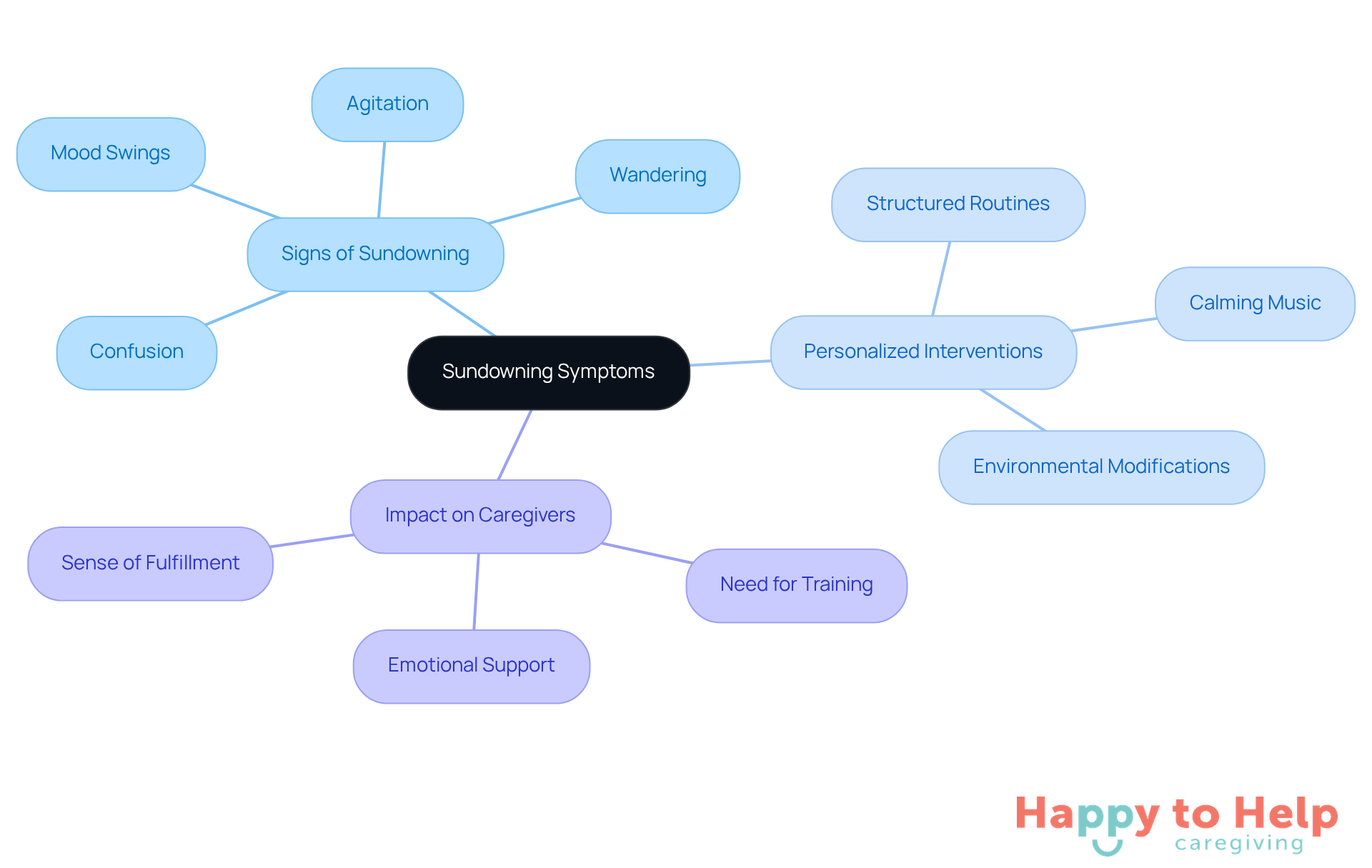
Caregivers are trained to identify the signs of sundowning and implement tailored interventions that enhance comfort and security. This personalized approach not only alleviates immediate symptoms but also fosters a sense of familiarity and trust, which is vital during these challenging episodes.
By focusing on the unique needs of each client, caregivers can significantly impact how evening confusion is managed. This ensures that individuals feel safe and supported in their own homes. Recent studies underscore the effectiveness of personalized care strategies, showing that interventions like:
- Structured routines
- Calming music
- Environmental modifications
can help mitigate the severity of signs of sundowning.
Moreover, caregivers often report that these personalized methods not only enhance their clients' quality of life but also provide them with a deeper sense of fulfillment in their caregiving roles. It’s also crucial for caregivers to review medication lists for anticholinergic risks, as certain medications may exacerbate evening confusion symptoms. This thorough approach to care is essential for improving outcomes for those affected.
Increased Confusion: Recognizing Cognitive Decline in the Evening
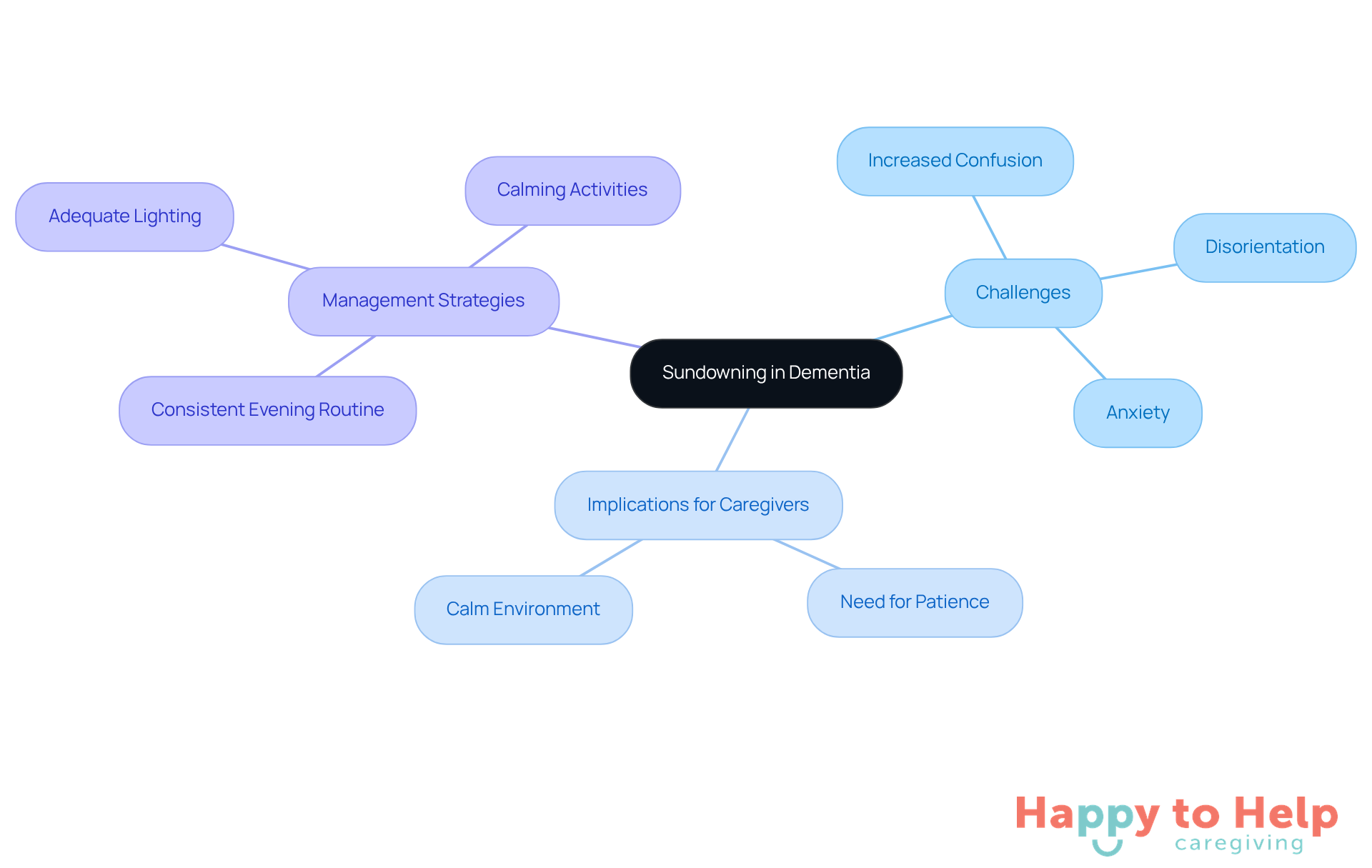
As evening approaches, many people with dementia face a significant challenge characterized by signs of sundowning. This phenomenon often leads to increased confusion, manifesting as disorientation, difficulty recognizing familiar surroundings, or forgetting recent conversations. Research indicates that this confusion is prevalent among dementia sufferers, particularly those with substantial cognitive impairment, affecting nearly all individuals experiencing some level of cognitive decline.
Caregivers must recognize the implications of sundowning. It can create anxiety not only for the individual but also for those providing care. Geriatric experts emphasize the importance of remaining calm and patient during these episodes. Gentle reminders and familiar objects can help anchor the person in their surroundings, providing a sense of stability.
To effectively manage these challenging moments, caregivers can implement several practical strategies:
- Maintain a consistent evening routine.
- Ensure adequate lighting to reduce shadows.
- Engage in calming activities to alleviate anxiety.
Early recognition of the signs of sundowning allows for timely interventions, fostering a sense of security and comfort for those affected. By concentrating on these strategies, caregivers can create a supportive environment that enhances the well-being of individuals with dementia during difficult evening hours.
Heightened Anxiety: Identifying Emotional Distress During Late Hours
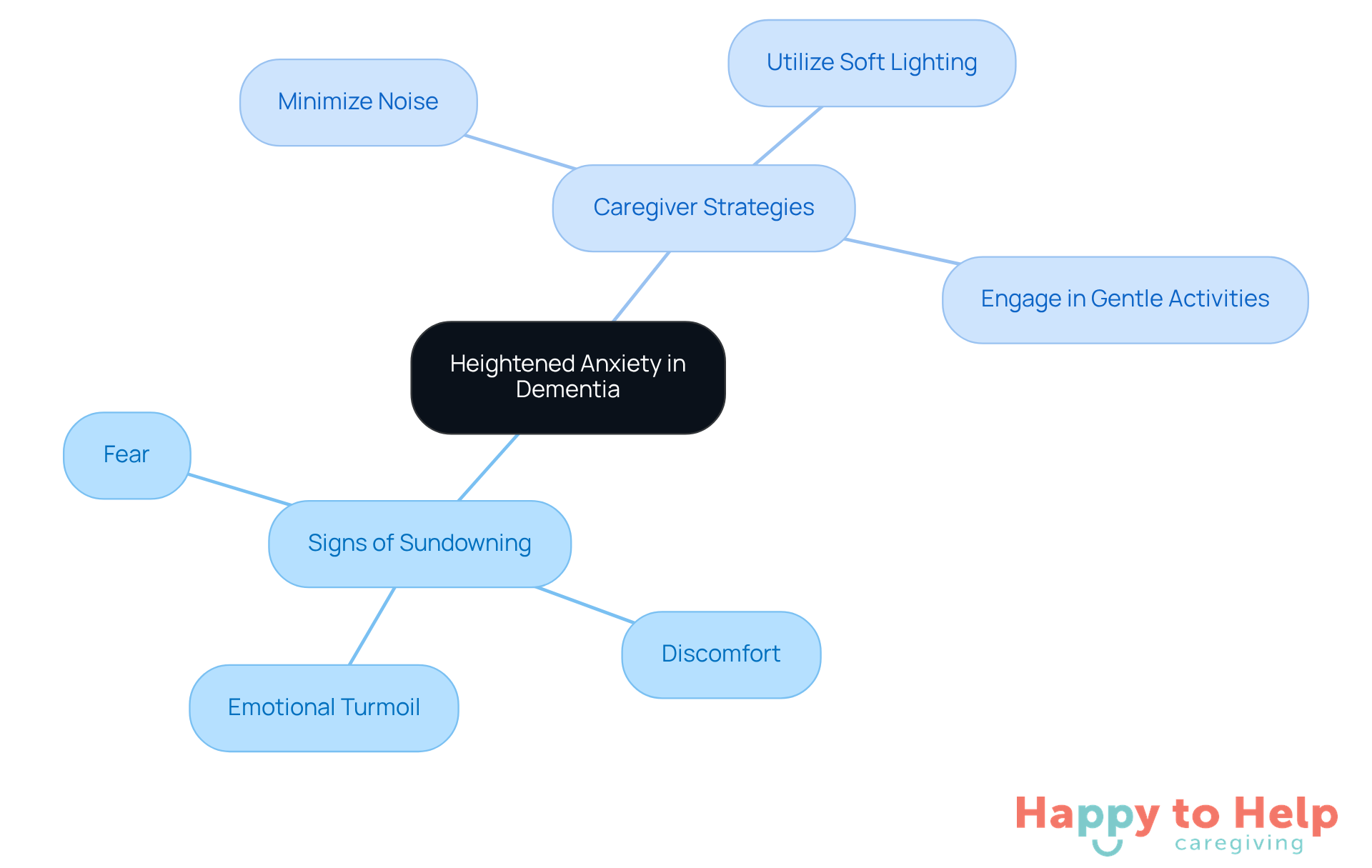
Increased anxiety often affects individuals with dementia during late hours, which can be seen as signs of sundowning, leading to feelings of fear and discomfort. This situation can be distressing not only for those experiencing it but also for their caregivers, who may feel overwhelmed by the emotional turmoil.
To address this issue, caregivers can take proactive steps to create a calming environment. Here are some effective strategies:
- Minimize noise: Reducing background sounds can help create a peaceful atmosphere.
- Utilize soft, warm lighting: This can significantly enhance the soothing ambiance.
- Engage in gentle activities: Listening to calming music or having soft conversations can further alleviate anxiety.
It's crucial for caregivers to quickly identify and respond to signs of sundowning and emotional distress. By doing so, they can maintain a peaceful environment, which ultimately benefits both the caregiver and the person in their care. Additionally, implementing structured routines and sensory engagement techniques can play a vital role in reducing late-night anxiety, ensuring a more restful experience for everyone involved.
Agitation and Restlessness: Observing Behavioral Changes at Dusk
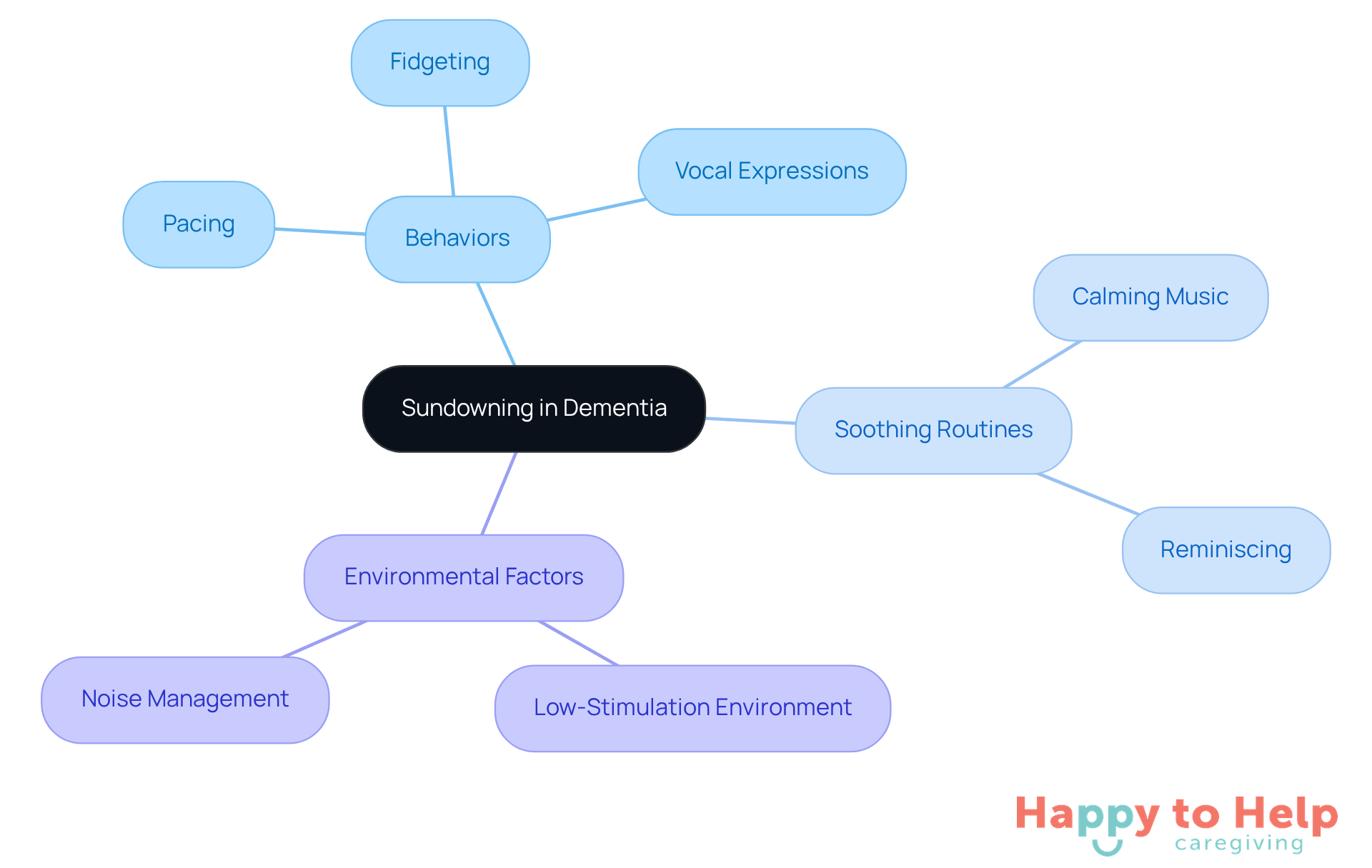
As dusk approaches, caregivers face a significant challenge, as individuals with dementia often exhibit signs of sundowning, leading to heightened agitation and restlessness. This can manifest as pacing, fidgeting, or vocal expressions of frustration, making it crucial for caregivers to remain vigilant in observing these behaviors.
To address this issue, establishing a soothing routine during the evening is essential. Engaging in familiar activities, such as listening to calming music or reminiscing over photographs, can significantly alleviate feelings of distress. Experts emphasize the importance of creating a low-stimulation environment in the evening; excessive noise can overwhelm individuals, leading to increased confusion and agitation.
Implementing a regular evening routine that incorporates soothing practices can help stabilize individuals and reduce the likelihood of late-day confusion. Caregivers should also monitor for signs of sundowning, including discomfort such as pain or anxiety, which can exacerbate agitation. By fostering a sense of security and familiarity, caregivers can effectively manage behavioral changes and enhance the overall well-being of those who exhibit signs of sundowning.
Sleep Disruptions: Noticing Changes in Sleep Patterns
The signs of sundowning present a significant challenge for caregivers, as they can disrupt sleep patterns, leading to difficulties such as trouble falling asleep and frequent awakenings throughout the night. This disruption not only affects the individual experiencing it but also places a strain on caregivers who seek to provide comfort and support.
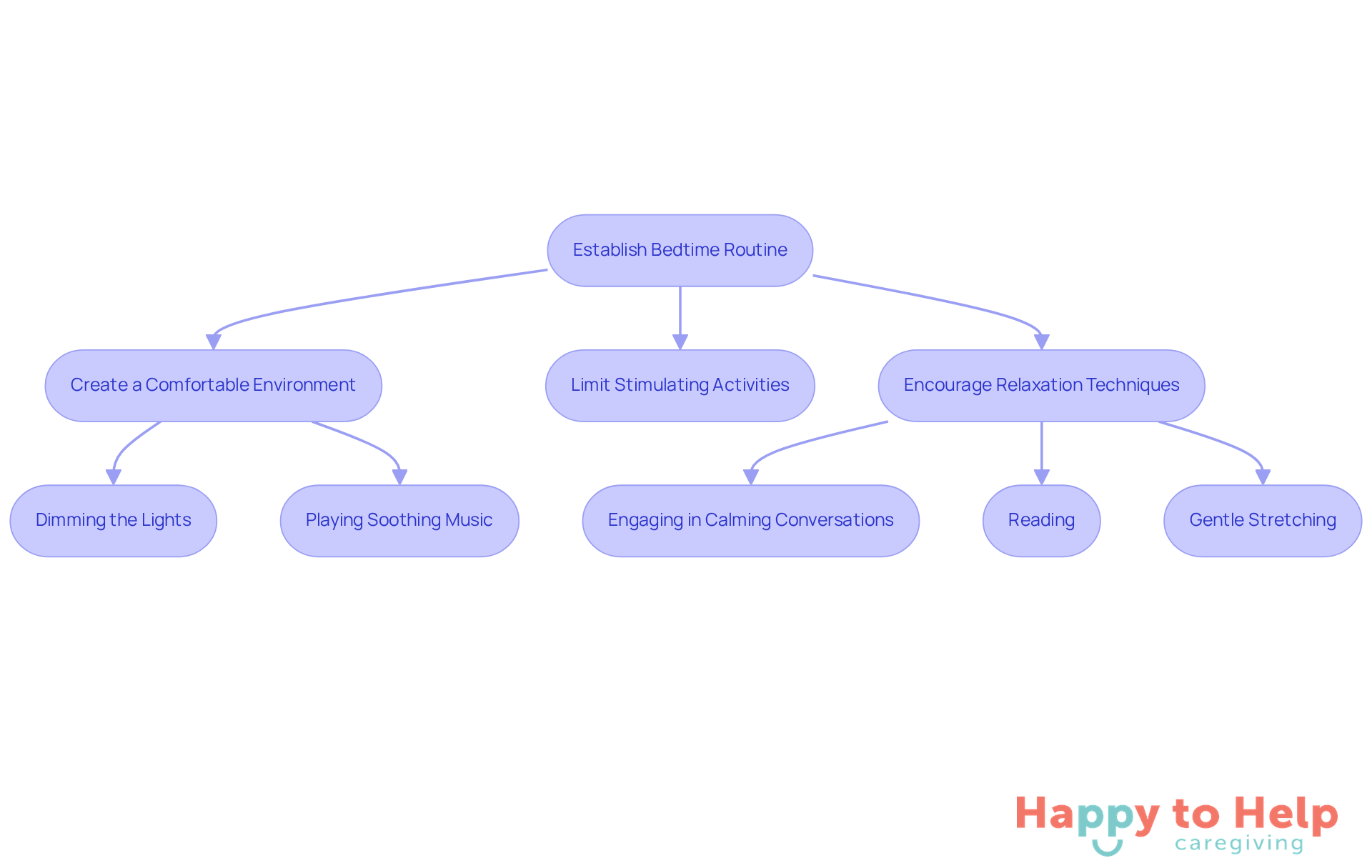
To address these issues, establishing a consistent bedtime routine is essential. Caregivers should focus on creating a quiet and comfortable sleeping environment, free from distractions. Ensuring adequate lighting and keeping familiar items nearby can help manage evening confusion symptoms effectively. Additionally, limiting stimulating activities in the hour before bedtime is crucial. Encouraging relaxation techniques, such as gentle stretching or reading, can further ease the transition into rest.
These practices not only promote better sleep quality but also contribute to a smoother bedtime experience. Sleep experts emphasize that a soothing pre-sleep ritual can significantly enhance the overall health of older adults, particularly those exhibiting signs of sundowning. As noted by Dr. Cleveland Clinic, some of the signs of sundowning are behaviors linked to evening confusion that are specific to the time of day, while other behaviors can be typical at any moment for an individual with dementia.
Successful bedtime routines may include:
- Dimming the lights
- Playing soothing music
- Engaging in calming conversations
These strategies collectively contribute to a more restful night. Caregivers are encouraged to implement these techniques consistently to improve sleep quality for their loved ones.
Environmental Triggers: Identifying Factors That Aggravate Sundowning
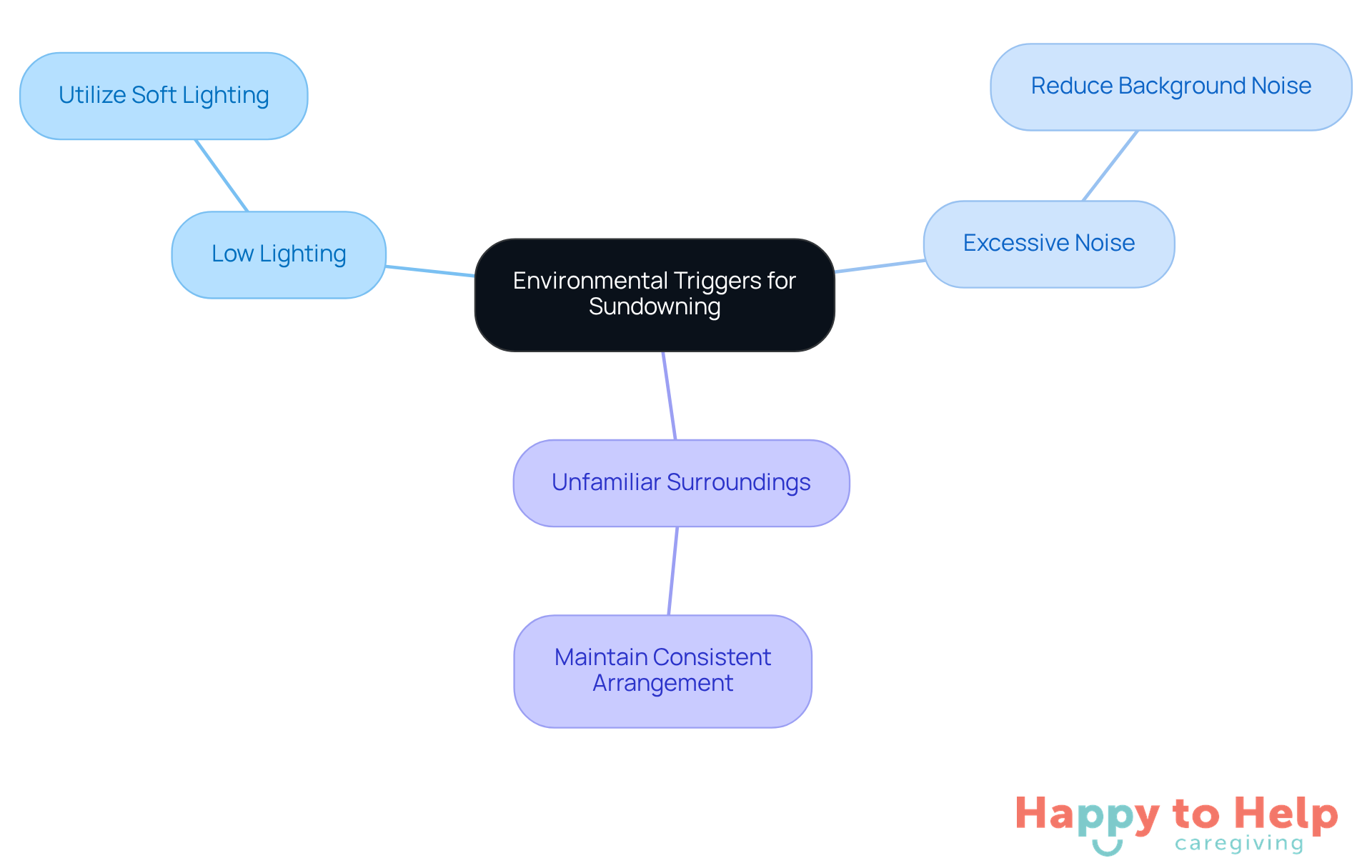
Environmental factors can significantly exacerbate sundowning symptoms. Low lighting, excessive noise, and unfamiliar surroundings can trigger signs of sundowning, resulting in increased agitation and confusion for those affected. Caregivers face the challenge of creating a calming environment that minimizes these triggers.
To address this issue, caregivers should strive to establish a peaceful and recognizable setting. Here are some actionable tips:
- Utilize soft lighting to create a warm atmosphere.
- Reduce background noise to minimize distractions.
- Maintain a consistent arrangement in the home to provide familiarity.
By observing how changes in the environment influence behavior, caregivers can make essential adjustments that promote comfort and stability.
Communication Challenges: Understanding How to Talk to Someone Who is Sundowning
Individuals experiencing signs of sundowning often struggle with processing information and responding appropriately. This can lead to significant communication challenges for caregivers, making effective interaction crucial. When caregivers face these difficulties, it can create frustration and anxiety for both parties.
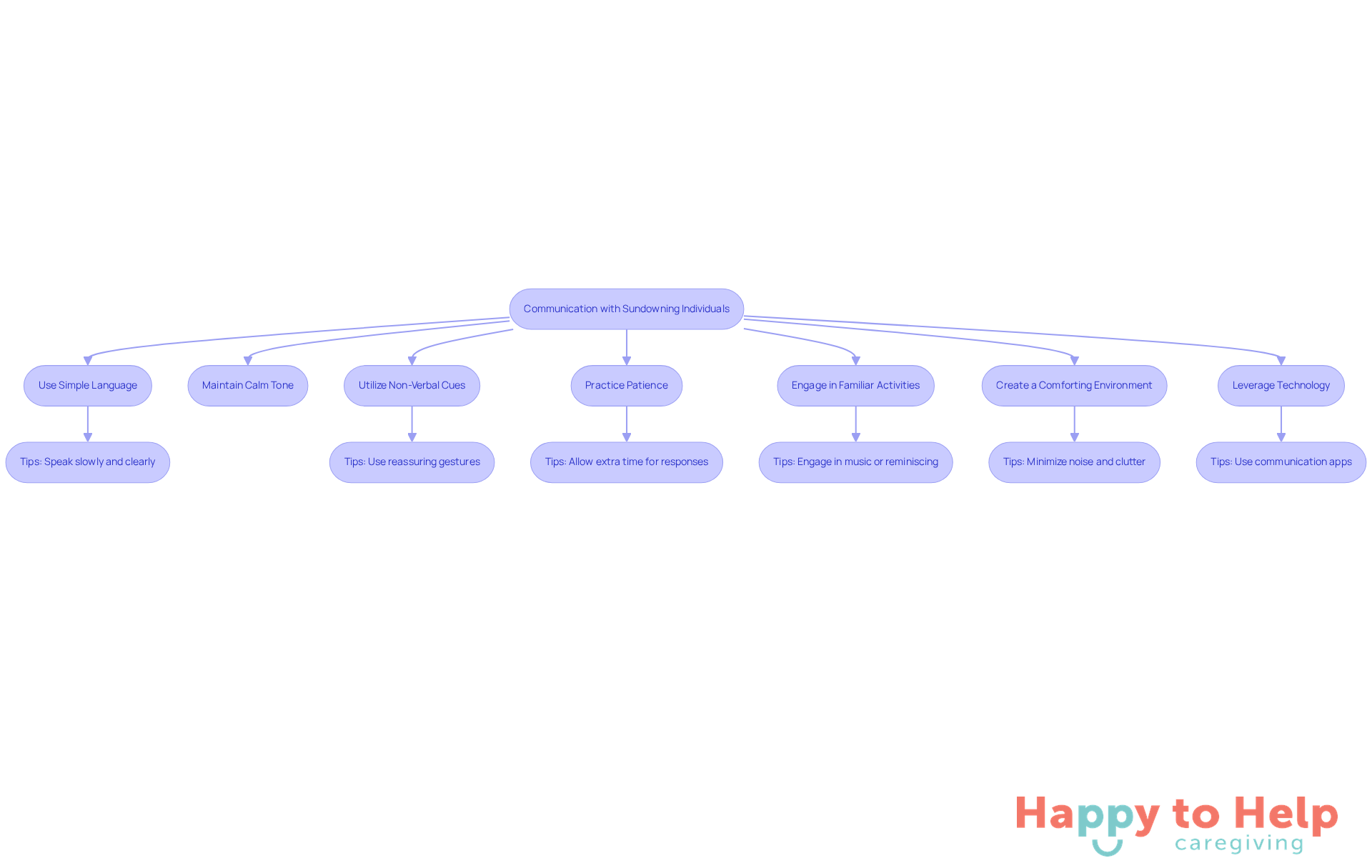
To address these issues, caregivers should prioritize using simple, clear language and maintaining a calm tone. This approach facilitates understanding and reduces confusion. Non-verbal cues, such as gentle touch or maintaining eye contact, can also provide reassurance and comfort, further enhancing communication.
Patience is vital in these situations. Allowing additional time for replies fosters a more encouraging atmosphere, making individuals feel valued and understood. Engaging in familiar activities, like listening to music or reminiscing, can help ease agitation and strengthen connections.
Creating a comforting home environment is another effective strategy. A soothing atmosphere can minimize agitation and enhance emotional well-being. Caregivers are also encouraged to leverage technology, such as communication apps, to improve interactions and support emotional health.
By employing these strategies, caregivers can significantly improve their interactions and support the emotional well-being of those exhibiting signs of sundowning.
Physical Symptoms: Recognizing Signs Like Pacing or Wandering
Caregivers often face challenges when dealing with sundowning, a condition that can manifest through physical symptoms like pacing, wandering, or other signs of sundowning. It's crucial to recognize that the signs of sundowning can occur at various times, including the morning, highlighting the variability of symptoms.
This unpredictability can lead to increased anxiety for both caregivers and individuals experiencing signs of sundowning. Ensuring a safe environment is paramount to prevent accidents, as wandering can pose significant risks. Without proper management, caregivers may feel overwhelmed and uncertain about how to identify the signs of sundowning and provide effective support.
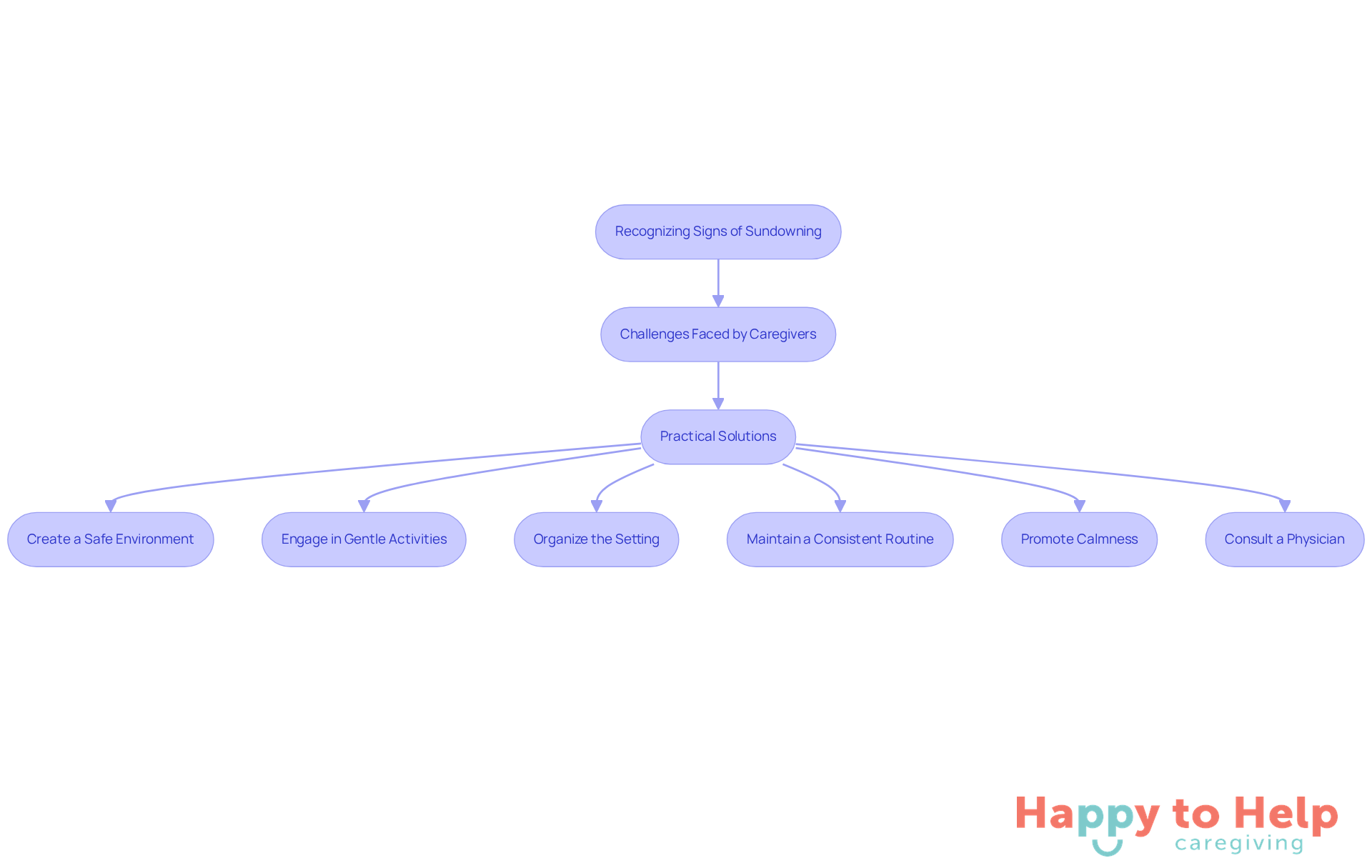
Solution: To mitigate these challenges, caregivers can take several practical steps:
- Create a Safe Environment: Ensure surroundings are free of hazards. Secure staircases and remove sharp objects to prevent accidents.
- Engage in Gentle Activities: Encourage walking or stretching to help channel restlessness positively.
- Organize the Setting: A well-organized environment can significantly reduce the likelihood of wandering. Occupational therapists recommend adopting safety precautions.
- Maintain a Consistent Routine: Establishing a daily routine can help minimize confusion and anxiety, which can further reduce the signs of sundowning and wandering behaviors.
- Promote Calmness: After 5 PM, create a low-noise environment to prevent overstimulation.
- Consult a Physician: Discuss potential interventions, such as melatonin supplements, to manage sleep difficulties related to evening agitation.
Additionally, it’s vital to avoid isolating individuals who exhibit signs of sundowning, as this can heighten feelings of fear and anxiety. By fostering a nurturing environment and supporting safe physical activities, caregivers can significantly improve the well-being of those facing evening confusion.
Routine Changes: Observing How Alterations Affect Behavior
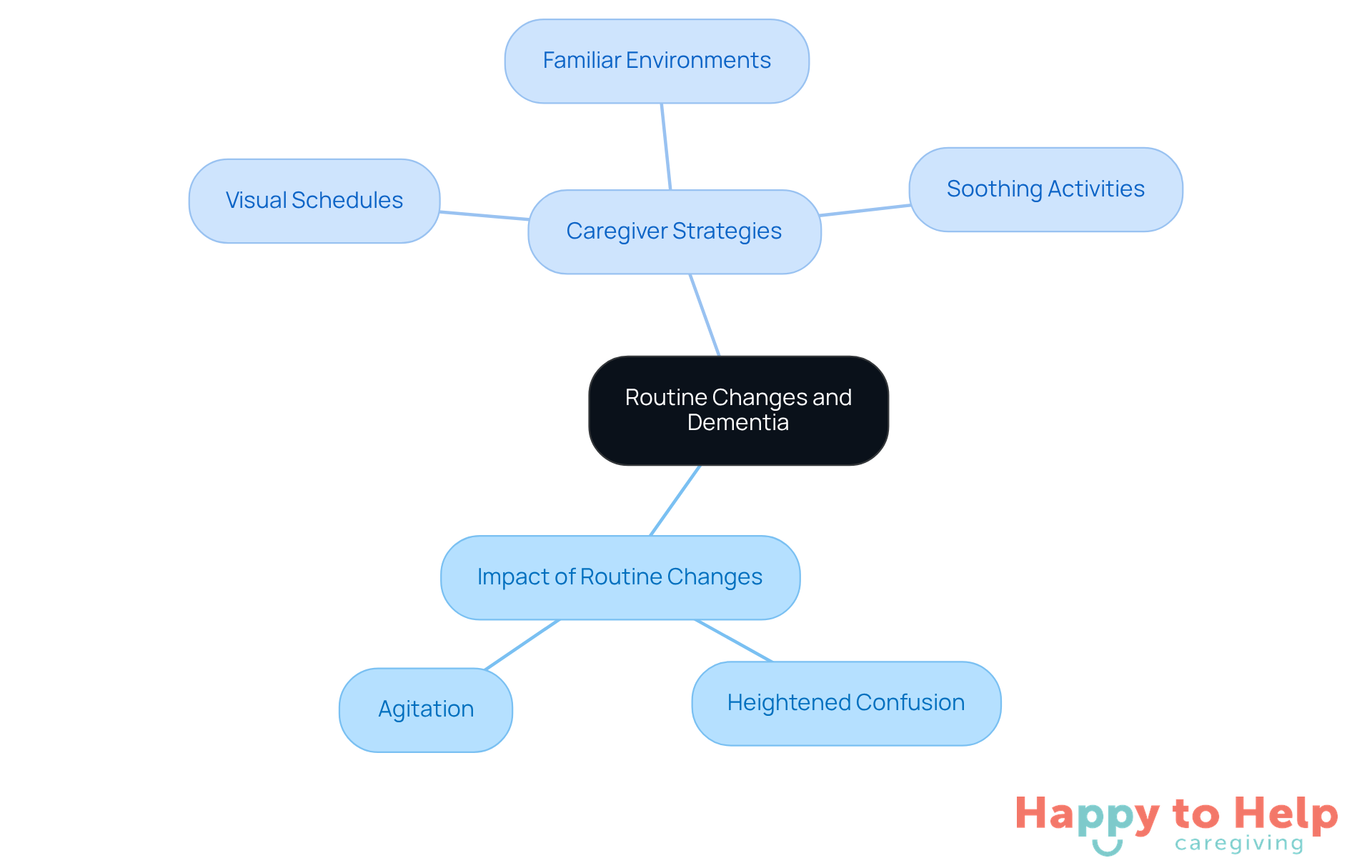
Alterations in daily habits can significantly impact individuals with dementia, often resulting in heightened confusion and agitation. Research indicates that regular changes can exacerbate symptoms, making it crucial for caregivers to uphold a consistent schedule for meals, activities, and bedtime. Disruptions in routine can lead to a notable increase in confusion levels among dementia patients, highlighting the importance of stability in their daily lives.
When changes are unavoidable, caregivers should prepare the individual in advance. Offering clear explanations can facilitate smoother transitions. Successful strategies include:
- Using visual schedules
- Maintaining familiar environments
- Incorporating soothing activities to alleviate anxiety
As geriatric care specialists emphasize, "Remember, the dementia patient is not giving you a difficult time; they are having a hard time." Consistency in care not only fosters a sense of security but also significantly enhances the quality of life for those affected by dementia.
Documentation and Sharing: Keeping Track of Signs for Better Care
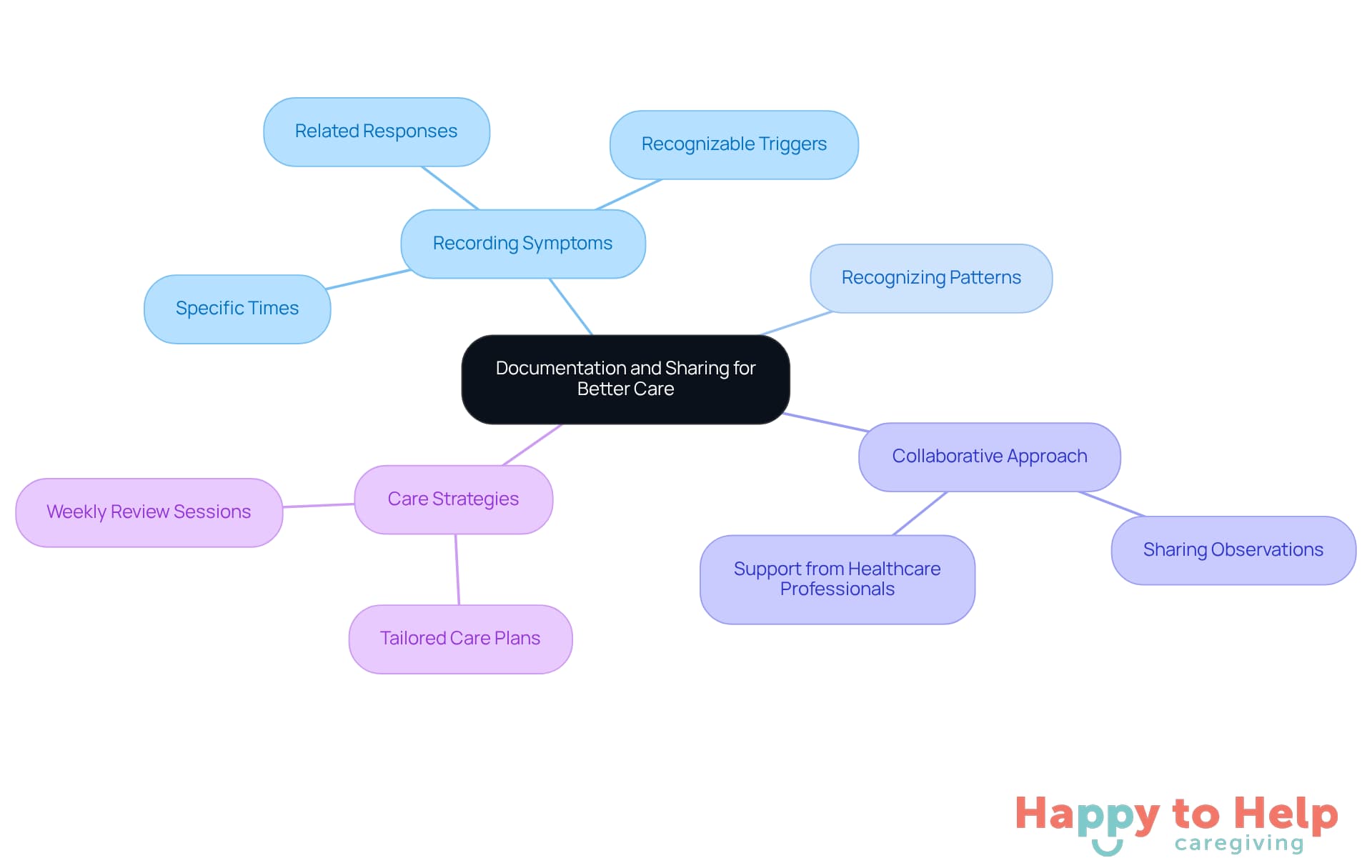
Caregivers often face the challenge of managing signs of sundowning in those they care for during the evening. Keeping a detailed record of these symptoms - including specific times, recognizable triggers, and related responses - can provide essential insights for caregivers. This meticulous documentation not only aids in recognizing patterns but also informs tailored care strategies.
Statistics reveal that there are currently 43.5 million individuals providing care in the United States. This highlights a vast community that can benefit from shared experiences. By sharing observations with fellow support providers and healthcare professionals, caregivers can establish a collaborative approach to managing the signs of sundowning, ultimately enhancing the overall quality of care.
As Rosalyn Carter wisely noted, "I understand that a supporter needs to take care of themselves to look after their loved one." This underscores the importance of sharing care strategies. To foster a supportive environment, consider setting aside time each week to review and discuss your logs with other caregivers or healthcare professionals. This practice not only benefits caregivers but also improves the care provided to those they support.
Making the Right Choice
Recognizing the signs of sundowning is crucial for caregivers supporting individuals with dementia. This condition presents unique challenges during the evening hours, characterized by increased confusion, anxiety, and agitation. By understanding and identifying these signs, caregivers can implement effective strategies to create a calming and supportive environment, ultimately enhancing the quality of life for those affected.
The problem of sundowning can lead to significant distress for both caregivers and individuals with dementia. Increased confusion and agitation during the evening can disrupt routines and create a sense of unease. Therefore, it’s essential to address these challenges head-on.
To mitigate the distress associated with evening confusion, caregivers can adopt several practical strategies:
- Maintaining structured routines
- Adjusting the environment to reduce overstimulation
- Fostering effective communication
These key approaches can significantly help. Additionally, documenting symptoms and sharing insights with other caregivers can lead to improved care and support, reinforcing the collaborative nature of caregiving.
In conclusion, addressing sundowning is not just about managing symptoms; it’s about fostering a sense of security and comfort for individuals with dementia. Caregivers are encouraged to remain vigilant and proactive, implementing the strategies discussed to create a nurturing environment. By prioritizing the emotional and physical well-being of those experiencing sundowning, caregivers can make a profound difference in their loved ones' lives, ensuring they feel safe and valued during challenging times.
https://iframe.tely.ai/cta/eyJhcnRpY2xlX2lkIjogIjY5MjEwYTlmNjEwMTg2OWMxYzA1NTBhMCIsICJjb21wYW55X2lkIjogIjY4ZWU1ZGNhNzMxNzYyNTU3ZjNjOTVjMSIsICJpbmRleCI6IG51bGwsICJ0eXBlIjogImFydGljbGUifQ==Frequently Asked Questions
What is sundowning, and how does it affect individuals with dementia?
Sundowning refers to the increased confusion and disorientation that many individuals with dementia experience during the evening hours. It can manifest as difficulty recognizing familiar surroundings or forgetting recent conversations, leading to distress for both the individual and their caregivers.
What are some signs of sundowning that caregivers should recognize?
Signs of sundowning include evening confusion, disorientation, difficulty recognizing familiar environments, and increased anxiety. Caregivers must remain calm and patient during these episodes to provide support.
How can caregivers effectively manage sundowning symptoms?
Caregivers can manage sundowning symptoms by maintaining a consistent evening routine, ensuring adequate lighting to reduce shadows, engaging in calming activities, and using gentle reminders and familiar objects to provide stability.
What personalized interventions can help alleviate sundowning symptoms?
Personalized interventions that can help include structured routines, calming music, and environmental modifications. These strategies can enhance comfort and security for individuals experiencing sundowning.
Why is it important for caregivers to review medication lists for anticholinergic risks?
Certain medications may exacerbate evening confusion symptoms in individuals with dementia. Reviewing medication lists helps caregivers identify potential risks and improve care outcomes.
What role does creating a calming environment play in managing sundowning?
Creating a calming environment can help alleviate anxiety and emotional distress during late hours. Strategies include minimizing noise, using soft lighting, and engaging in gentle activities like listening to calming music.
How can caregivers foster a sense of security for individuals experiencing sundowning?
Caregivers can foster a sense of security by recognizing early signs of sundowning, implementing timely interventions, and concentrating on creating a supportive environment that enhances the well-being of those affected.
List of Sources
- Happy to Help Caregiving: Personalized Support for Sundowning Symptoms
- New NIA grant advances tools for dementia caregiving (https://news-medical.net/news/20251015/New-NIA-grant-advances-tools-for-dementia-caregiving.aspx)
- (https://belleviecare.co.uk/support-advice/dementia-quotes-to-lift-your-spirits)
- CaringBridge (https://caringbridge.org/resources/inspirational-quotes-on-caregiving)
- Wandering & Sundowning in Dementia (https://practicalneurology.com/diseases-diagnoses/alzheimer-disease-dementias/wandering-sundowning-in-dementia/31912)
- Sundown Syndrome in Persons with Dementia: An Update - PMC (https://pmc.ncbi.nlm.nih.gov/articles/PMC3246134)
- Increased Confusion: Recognizing Cognitive Decline in the Evening
- (https://belleviecare.co.uk/support-advice/dementia-quotes-to-lift-your-spirits)
- Inspirational Quotes about Dementia | CareYaya (https://careyaya.org/resources/blog/inspirational-quotes-about-dementia)
- Caregiver Dementia Quotes (Encouragement For Dementia Caregivers) (https://optoceutics.com/caregiver-dementia-quotes-encouragement-dementia-caregivers?srsltid=AfmBOookscX2264kYzFUyZejPxsD3Q1bIxurjFxmMb3nVRFh9kYHC2Ic)
- Top List of Inspirational Dementia Quotes for Caregivers (https://rochesterlawcenter.com/dementia-resources/dementia-quotes)
- Sundown Syndrome in Persons with Dementia: An Update - PMC (https://pmc.ncbi.nlm.nih.gov/articles/PMC3246134)
- Heightened Anxiety: Identifying Emotional Distress During Late Hours
- Top List of Inspirational Dementia Quotes for Caregivers (https://rochesterlawcenter.com/dementia-resources/dementia-quotes)
- (https://belleviecare.co.uk/support-advice/dementia-quotes-to-lift-your-spirits)
- Sundowning Syndrome in Dementia: Mechanisms, Diagnosis, and Treatment - PMC (https://pmc.ncbi.nlm.nih.gov/articles/PMC11856004)
- Clock changes and dementia: Tips for managing the challenge (https://deseret.com/family/2025/10/29/time-change-alzheimers-dementia-patients-caregivers-struggle-sundowning)
- Agitation and Restlessness: Observing Behavioral Changes at Dusk
- Sundowning: What to know if your loved one with dementia experiences late-day symptoms - Harvard Health (https://health.harvard.edu/mind-and-mood/sundowning-what-to-know-if-your-loved-one-with-dementia-experiences-late-day-symptoms)
- 'Sundowning' Is The Dementia Symptom We Don't Talk About Enough (https://uk.news.yahoo.com/sundowning-dementia-symptom-dont-talk-023103524.html)
- Sundown Syndrome: Causes, Treatment & Symptoms (https://my.clevelandclinic.org/health/articles/22840-sundown-syndrome)
- What is Sundowning? Causes & Coping Strategies | alz.org (https://alz.org/help-support/caregiving/stages-behaviors/sleep-issues-sundowning)
- What is dementia sundowning? Signs, symptoms and tips (https://dementiauk.org/information-and-support/health-advice/sundowning)
- Sleep Disruptions: Noticing Changes in Sleep Patterns
- Sundown Syndrome: Causes, Treatment & Symptoms (https://my.clevelandclinic.org/health/articles/22840-sundown-syndrome)
- Understanding Alzheimer's Disease | Medicine | University of Southampton (https://southampton.ac.uk/medicine/research/case\_studies/understanding\_alzhemiers\_disease.page)
- Human Factors for Dementia: Evidence-Based Design: Volume IX: Aging, Gender and Work, Anthropometry, Ergonomics for Children and Educational Environments | Request PDF (https://researchgate.net/publication/326850524\_Human\_Factors\_for\_Dementia\_Evidence-Based\_Design\_Volume\_IX\_Aging\_Gender\_and\_Work\_Anthropometry\_Ergonomics\_for\_Children\_and\_Educational\_Environments)
- (PDF) Effects of Tracking Technology on Daily Life of Persons With Dementia: Three Experimental Single-Case Studies (https://researchgate.net/publication/261923008\_Effects\_of\_Tracking\_Technology\_on\_Daily\_Life\_of\_Persons\_With\_Dementia\_Three\_Experimental\_Single-Case\_Studies)
- Environmental Triggers: Identifying Factors That Aggravate Sundowning
- 4 Inspiring Quotes for Caring for a Loved One With Alzheimer’s | myALZteam (https://myalzteam.com/resources/inspiring-quotes-for-caring-for-a-loved-one-with-alzheimers)
- Understanding Sundowning: Symptoms, Causes and Coping Strategies (https://health.usnews.com/senior-care/articles/signs-and-symptoms-of-sundowning-syndrome)
- Top List of Inspirational Dementia Quotes for Caregivers (https://rochesterlawcenter.com/dementia-resources/dementia-quotes)
- Sundowning: the condition with symptoms that appear at sunset (https://dementiasplatform.uk/news-and-media/blog/sundowning-the-condition-with-symptoms-that-appear-at-sunset)
- A Case of Sundowning: Examining the Underlying Cause (https://neurologyadvisor.com/features/case-of-sundowning)
- Communication Challenges: Understanding How to Talk to Someone Who is Sundowning
- Do communication interventions affect the quality-of-life of people with dementia and their families? A systematic review (https://tandfonline.com/doi/full/10.1080/13607863.2023.2202635)
- Coping With Agitation, Aggression, and Sundowning in Alzheimer's Disease (https://nia.nih.gov/health/alzheimers-changes-behavior-and-communication/coping-agitation-aggression-and-sundowning)
- Care managers say ED program improves communication for assisted living residents with dementia (https://mcknights.com/news/care-managers-say-ed-program-improves-communication-for-assisted-living-residents-with-dementia)
- Physical Symptoms: Recognizing Signs Like Pacing or Wandering
- Sundown Syndrome: Causes, Treatment & Symptoms (https://my.clevelandclinic.org/health/articles/22840-sundown-syndrome)
- Sundowning: What to know if your loved one with dementia experiences late-day symptoms - Harvard Health (https://health.harvard.edu/mind-and-mood/sundowning-what-to-know-if-your-loved-one-with-dementia-experiences-late-day-symptoms)
- 'Sundowning' Is The Dementia Symptom We Don't Talk About Enough (https://uk.news.yahoo.com/sundowning-dementia-symptom-dont-talk-023103524.html)
- Coping With Agitation, Aggression, and Sundowning in Alzheimer's Disease (https://nia.nih.gov/health/alzheimers-changes-behavior-and-communication/coping-agitation-aggression-and-sundowning)
- Sundowning: the condition with symptoms that appear at sunset (https://dementiasplatform.uk/news-and-media/blog/sundowning-the-condition-with-symptoms-that-appear-at-sunset)
- Routine Changes: Observing How Alterations Affect Behavior
- Tips for Managing Sundowning (https://brightfocus.org/resource/tips-for-managing-sundowning)
- (https://belleviecare.co.uk/support-advice/60-elderly-care-quotes-to-lift-your-spirits)
- Caregiver Dementia Quotes (Encouragement For Dementia Caregivers) (https://optoceutics.com/caregiver-dementia-quotes-encouragement-dementia-caregivers?srsltid=AfmBOooX-dYCad9QvQgMyEmCSFXuhK3bfFisjgSesjJPvlwIMzovdU1g)
- Sundowning: Tips for dealing with late-day confusion (https://mayoclinic.org/diseases-conditions/alzheimers-disease/expert-answers/sundowning/faq-20058511)
- Coping With Agitation, Aggression, and Sundowning in Alzheimer's Disease (https://nia.nih.gov/health/alzheimers-changes-behavior-and-communication/coping-agitation-aggression-and-sundowning)
- Documentation and Sharing: Keeping Track of Signs for Better Care
- Top List of Inspirational Dementia Quotes for Caregivers (https://rochesterlawcenter.com/dementia-resources/dementia-quotes)
- 4 Inspiring Quotes for Caring for a Loved One With Alzheimer’s | myALZteam (https://myalzteam.com/resources/inspiring-quotes-for-caring-for-a-loved-one-with-alzheimers)
- CaringBridge (https://caringbridge.org/resources/inspirational-quotes-on-caregiving)
- Care managers say ED program improves communication for assisted living residents with dementia (https://mcknights.com/news/care-managers-say-ed-program-improves-communication-for-assisted-living-residents-with-dementia)
- Dementia care programs help, if caregivers can find them (https://cbsnews.com/news/alzheimers-dementia-care-programs-help-if-caregivers-can-find-them)