

For families in our service areas
For families in our service areas, this guide explains caregiving and how non-medical in-home caregiving can support care planning in East Idaho, Treasure Valley & Magic Valley, Northern Wasatch, North Central West Virginia, and Northeast Ohio.
Understanding 10 Solutions to Senior Care Staffing
The landscape of senior care is increasingly fraught with challenges. Families are grappling with staffing shortages that threaten the quality of assistance available to their loved ones. With nearly 90% of seniors expressing a desire to age at home, the implications of inadequate support are profound. This situation can lead to feelings of isolation and increased health risks for the elderly.
This article explores ten actionable solutions that families can implement to navigate these staffing challenges. By doing so, they can ensure their elderly relatives receive the personalized care they deserve. What innovative strategies can be employed to bridge the gap in senior care staffing and enhance the well-being of aging individuals?
Happy to Help Caregiving: Personalized In-Home Support for Seniors
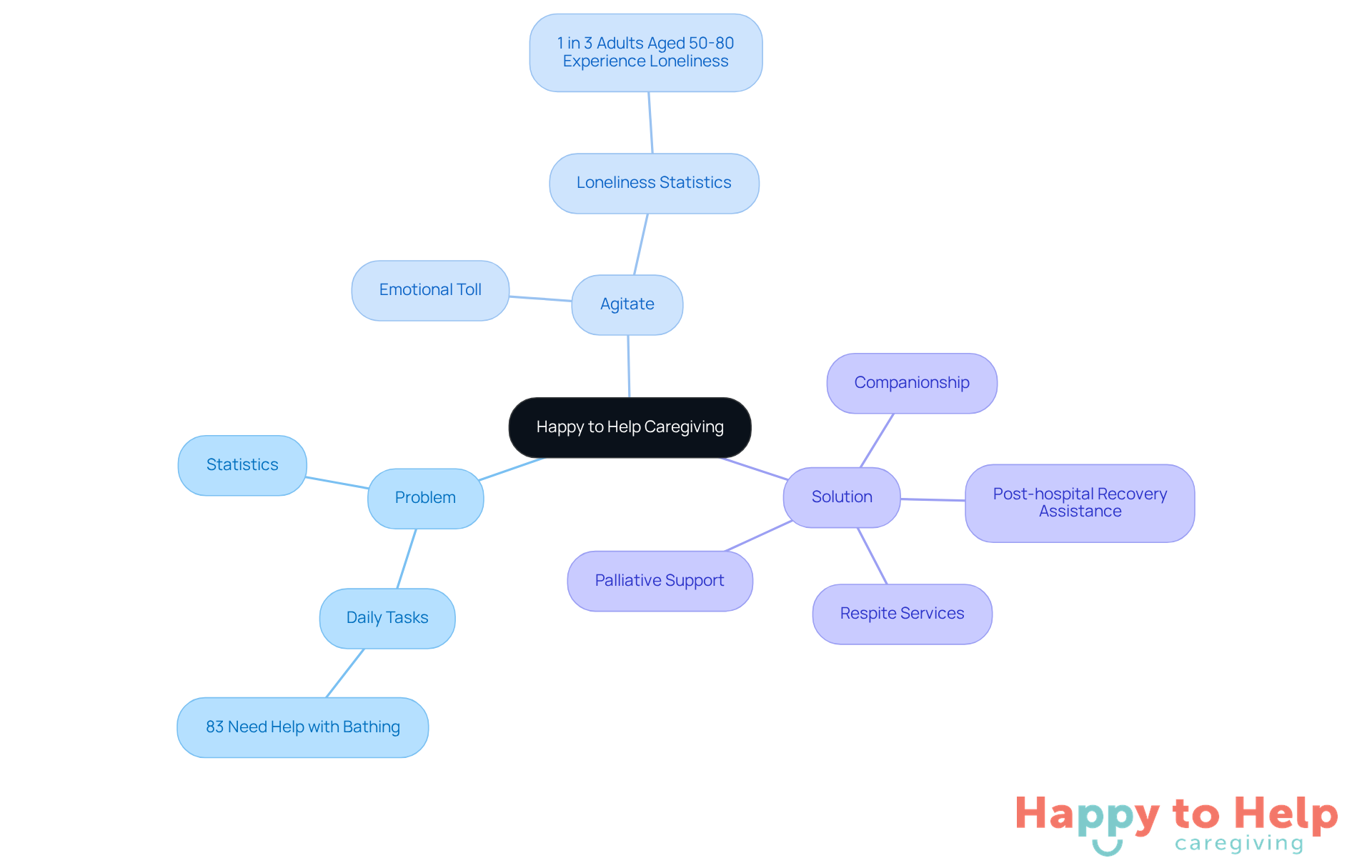
Problem: Many seniors struggle with daily tasks, impacting their quality of life. Research shows that 83% of individuals receiving support require help with bathing and showering, underscoring the challenges seniors face in maintaining independence.
Agitate: This lack of assistance can lead to feelings of loneliness and isolation. Nearly one in three adults aged 50-80 experience loneliness, with 5% feeling lonely often. The emotional toll of these challenges can be significant, affecting overall well-being.
Solution: Happy to Help Caregiving excels in delivering personalized in-home support tailored to the unique needs of seniors. Services include:
- Companionship
- Post-hospital recovery assistance
- Respite services
- Palliative support
All designed to promote independence while addressing emotional and physical challenges. By regularly updating support plans to adapt to changing needs, caregivers can ensure that seniors receive the best possible care.
This proactive approach not only alleviates staffing shortages in senior care staffing but also enhances the quality of life for seniors, allowing them to thrive in their own homes. Additionally, with the average monthly expense for full-time home assistance at $6,481, families can find a more economical alternative to institutional care, making personalized in-home help a sensible choice.
Impact of Staffing Shortages on Home Care Services
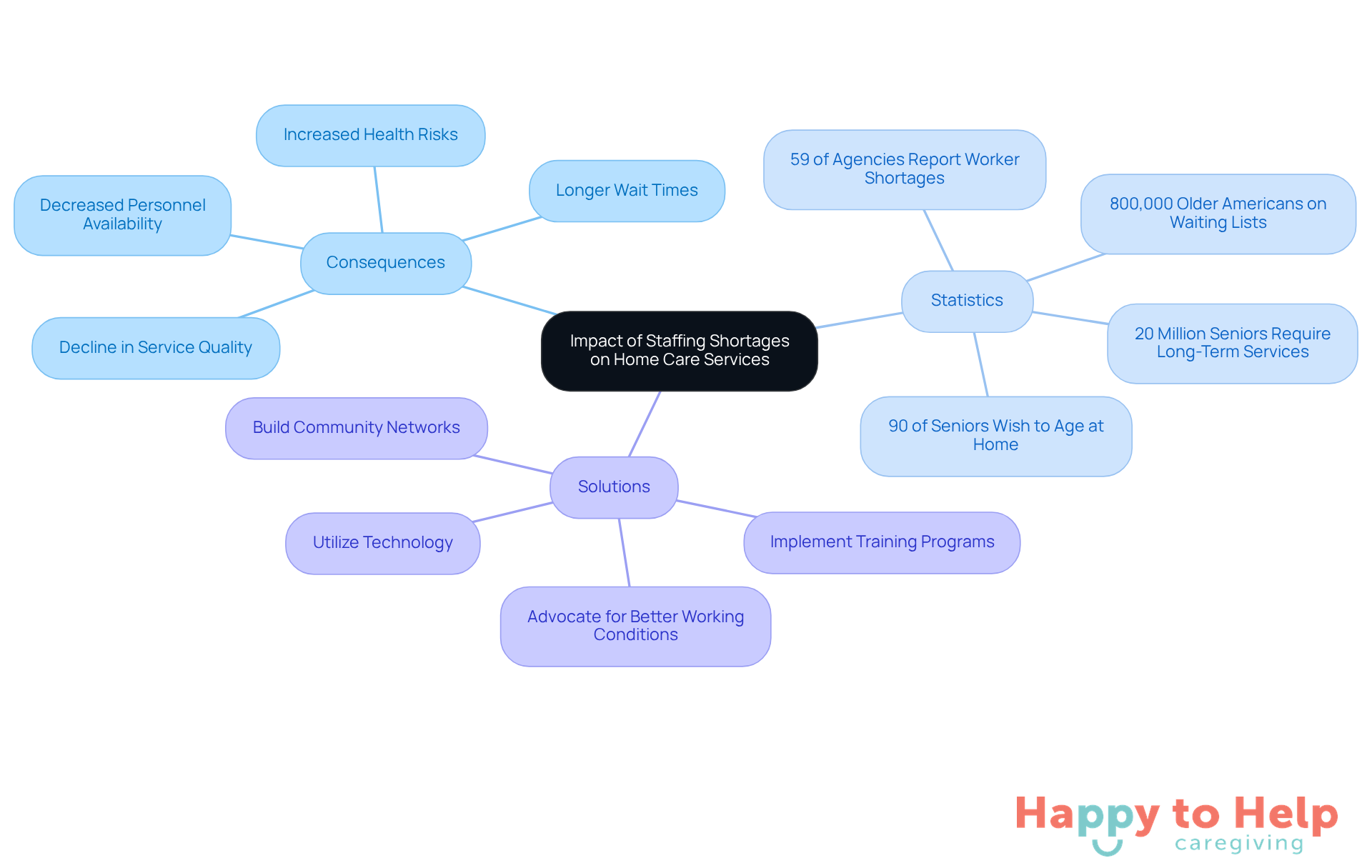
Staffing shortages in home support services highlight a significant issue in senior care staffing, resulting in decreased personnel availability, longer wait times for assistance, and a decline in service quality. Families often experience delays in receiving essential support, which can worsen health issues and increase stress levels. This inconsistency in care disrupts the development of trusting relationships between clients and their caregivers, leaving patients feeling isolated and unsupported.
These staffing shortages in senior care staffing are not isolated incidents; they reflect broader systemic issues within the healthcare sector. A recent report highlighted that nearly 90% of seniors wish to age at home, yet the lack of reliable support complicates this aspiration. Families find themselves navigating a challenging landscape where dependable assistance is increasingly hard to come by. Furthermore, statistics show that 59% of domestic support agencies report ongoing worker shortages in senior care staffing, underscoring the prevalence of this issue.
The consequences of these staffing challenges are profound. Patients face a higher risk of medication errors and mismanagement when caregivers are unavailable. As the demand for residential support continues to rise, addressing the senior care staffing deficits is crucial to ensuring that families receive the quality assistance their loved ones deserve.
To tackle these challenges, caregivers can consider the following actionable solutions:
- Advocate for better working conditions: Engage with local agencies to discuss the importance of improving staff retention and recruitment.
- Utilize technology: Explore telehealth options to supplement in-person care, making support more accessible.
- Build community networks: Connect with other families to share resources and support each other in navigating care options.
By implementing these strategies, families can work towards overcoming the obstacles posed by shortages in senior care staffing in home support services.
Key Drivers of Home Care Staffing Shortages
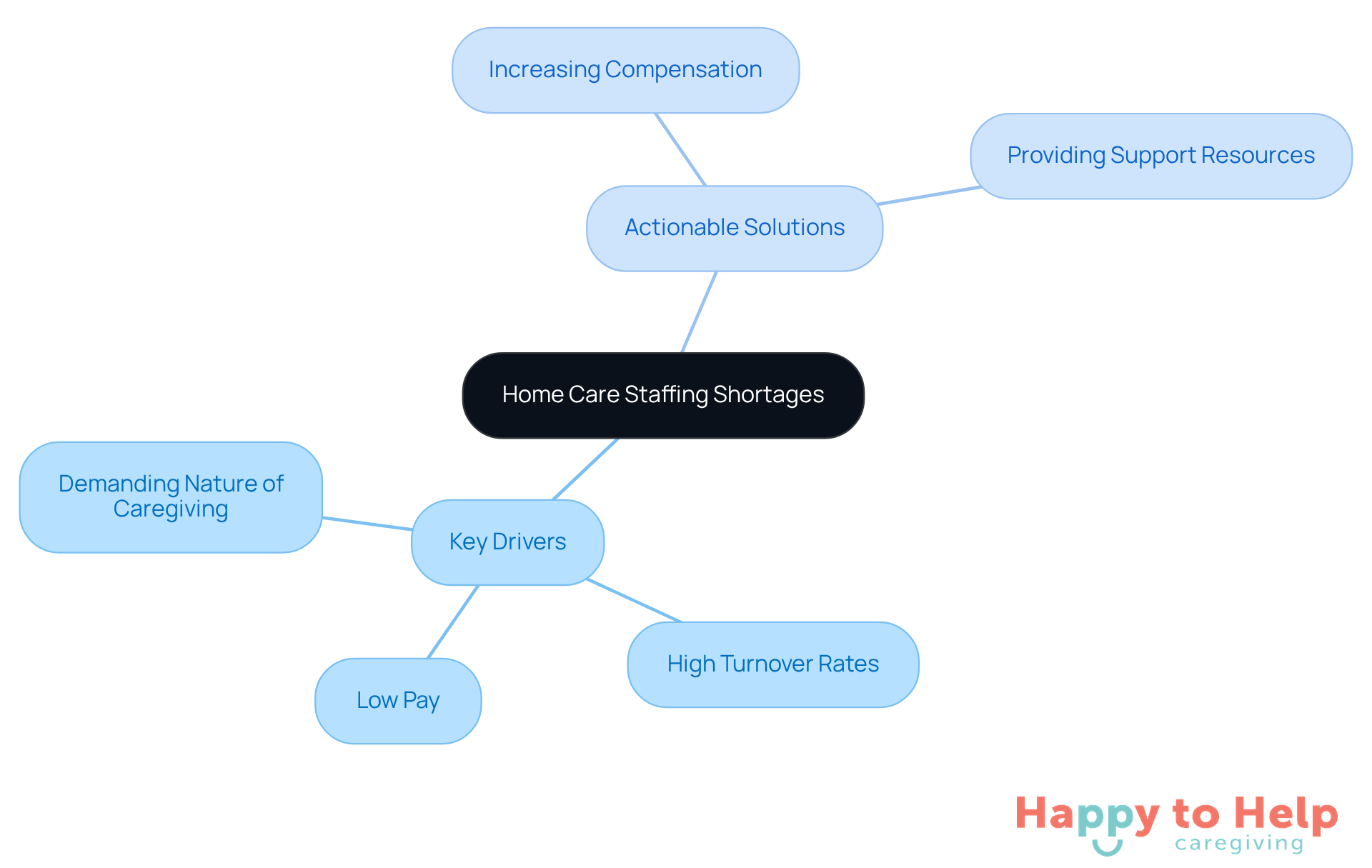
Staffing shortages in home assistance pose a significant problem for senior care staffing, driven by several factors. Low pay, high turnover rates, and the demanding nature of caregiving roles contribute to this crisis. Economic pressures have led to inadequate compensation for caregivers, making it difficult to attract and retain qualified staff.
The implications of these issues are profound. The emotional and physical demands of caregiving can lead to burnout, further exacerbating turnover rates. This cycle not only affects the quality of care provided but also places additional strain on existing staff. Moreover, the COVID-19 pandemic has intensified these challenges, underscoring the urgent need for systemic changes within the industry.
To address the senior care staffing shortages, several actionable solutions can be implemented:
- Increasing compensation for caregivers can help attract and retain talent.
- Providing support resources, such as mental health services and professional development opportunities, can mitigate burnout and improve job satisfaction.
By prioritizing these changes, the home assistance sector can work towards a more sustainable and effective workforce.
Reduced Access to In-Home Support for Seniors
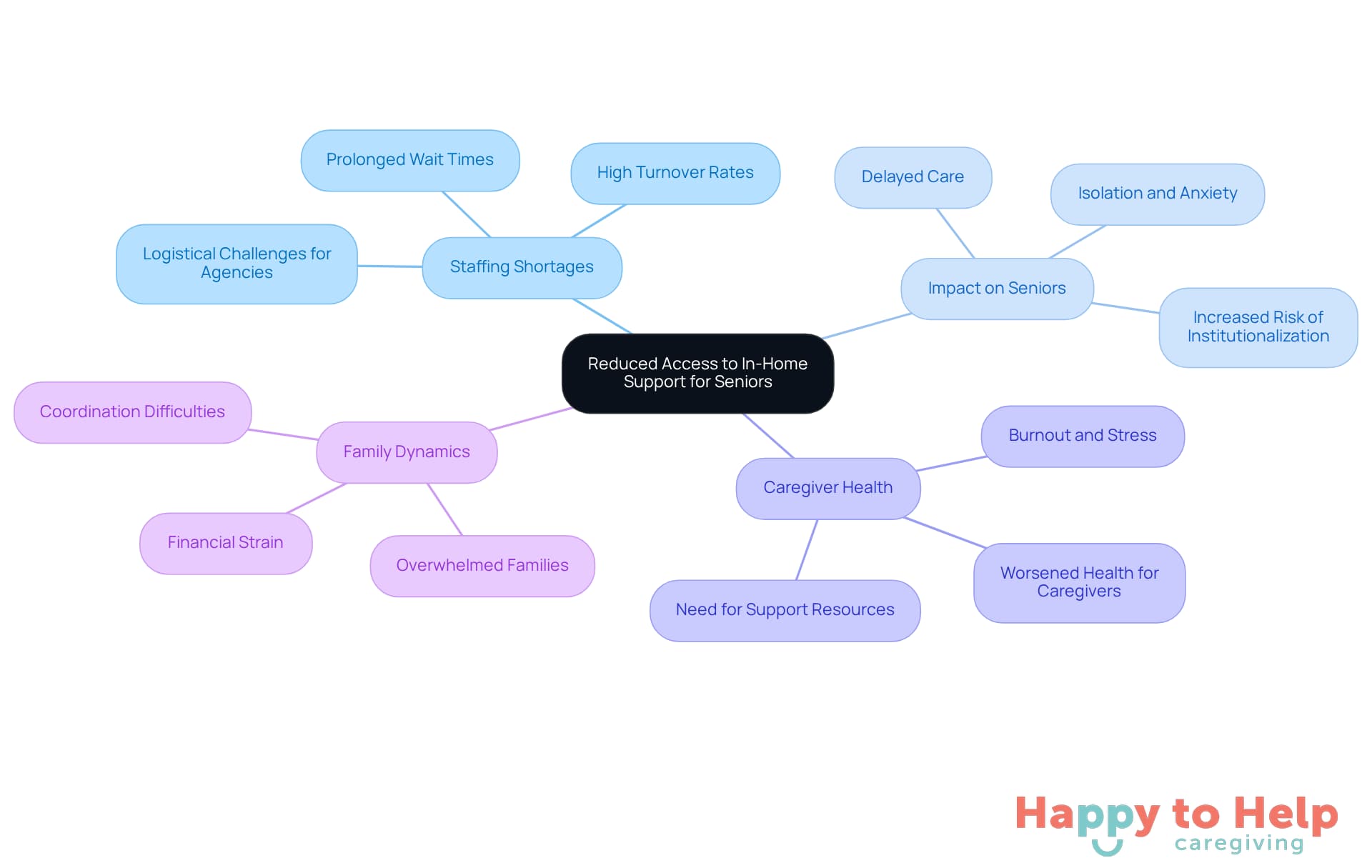
Ongoing senior care staffing shortages in the caregiving sector pose a significant problem, severely limiting seniors' access to essential in-home support services. Many seniors face prolonged wait times for assistance with daily activities like bathing, meal preparation, and medication management. This shortage not only disrupts regular assistance but also exacerbates feelings of isolation and anxiety among seniors, negatively impacting their mental and emotional health.
Statistics reveal that one in three adults aged 50 to 80 report feeling isolated at least some of the time, underscoring the urgent need for consistent support. Additionally, 26% of caregivers indicate that providing care has worsened their own health, highlighting the mutual impact of caregiving on both seniors and their relatives. Families often find themselves overwhelmed, trying to fill the gaps in support, which can further strain their own health and well-being.
Geriatric support specialists stress that the lack of reliable senior care staffing can lead to increased stress for both seniors and their families. To address these staffing challenges effectively, Paul Osterman, a professor at MIT Sloan School of Management, emphasizes the necessity for changes in caregiver roles. Addressing these senior care staffing issues is vital to ensure quality assistance and emotional support for aging individuals.
Challenges for Families Amid Staffing Shortages
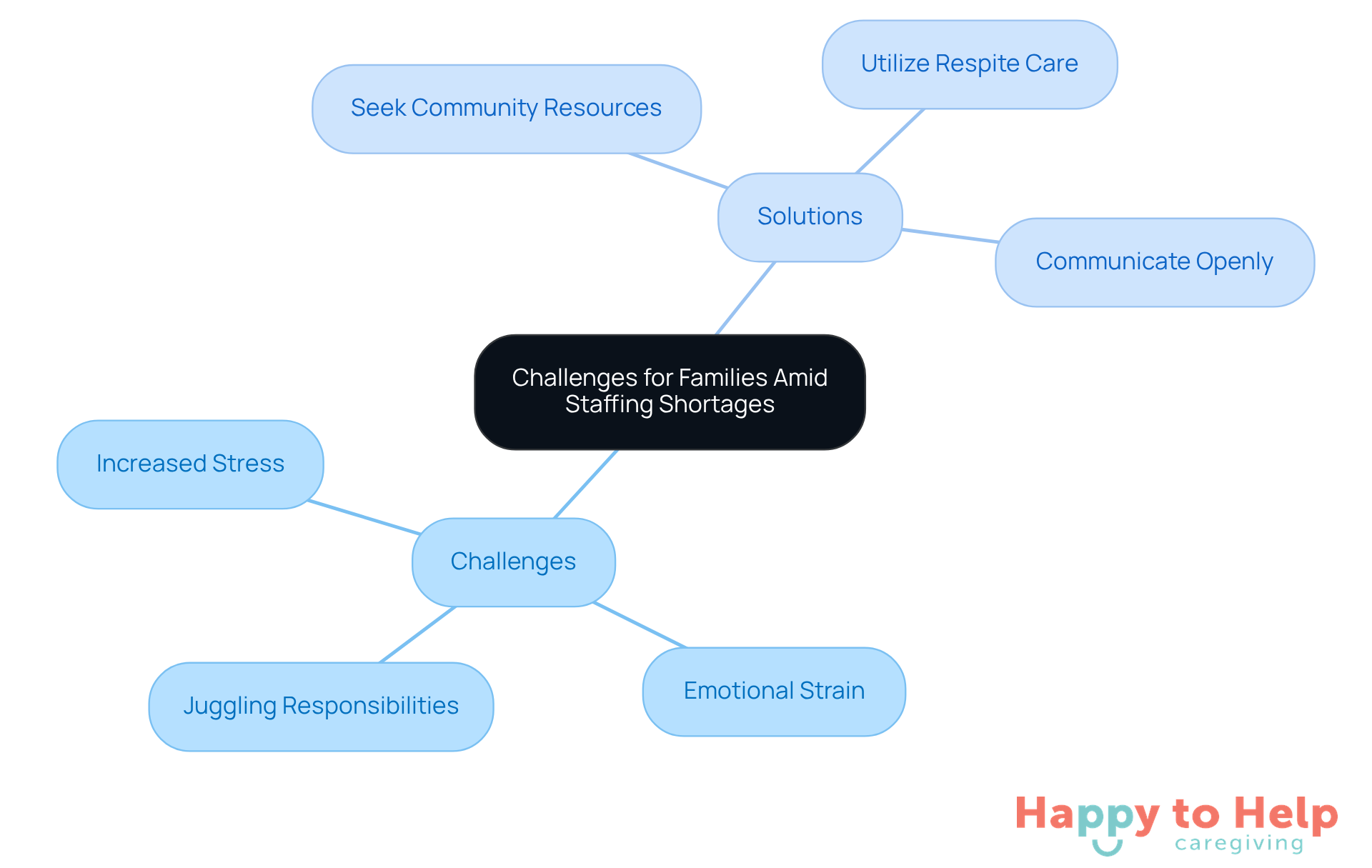
Families often face significant challenges in caregiving because of shortages in senior care staffing. This situation not only increases stress but also creates emotional strain for those involved. When dependable in-home support is unavailable, relatives may feel compelled to take on caregiving roles that do not match their capabilities or availability.
This imbalance can lead to feelings of guilt, frustration, and exhaustion. Relatives find themselves juggling their own responsibilities while trying to provide adequate support for their loved ones.
To alleviate this burden, families can explore several practical solutions:
- Seek community resources: Local organizations often provide support services that can ease the caregiving load.
- Utilize respite care: Temporary relief from caregiving duties can help maintain the caregiver's well-being.
- Communicate openly: Discussing needs and expectations with family members can foster a supportive environment.
By implementing these strategies, caregivers can better manage their responsibilities and reduce emotional strain.
Rising Labor Costs and Financial Strain in Home Care
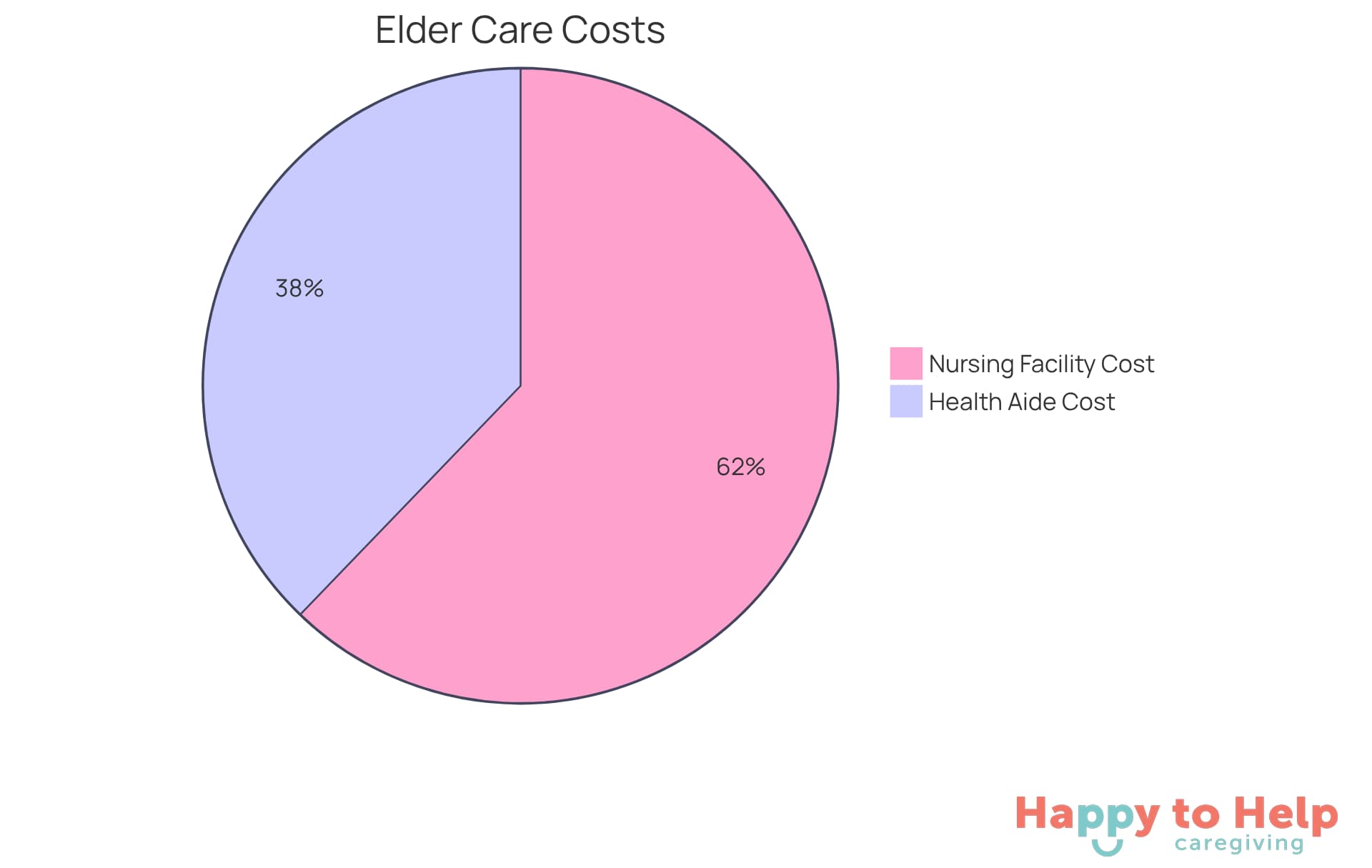
The care sector is facing a significant problem: rising labor expenses. These costs are directly impacting families, leading to higher service charges that strain budgets. As agencies strive for effective senior care staffing to attract and retain qualified caregivers, competitive wages become essential, which often results in increased costs passed on to clients. For instance, the median yearly expense for a health aide has surged to around $77,792, while the cost of a private room in a nursing facility has jumped to $127,750. This situation forces households to make tough financial decisions, frequently limiting their options for adequate assistance.
The implications of these rising costs are profound. Financial analysts point out that the persistent increase in labor expenses is a major driver behind escalating charges, with many families feeling the pressure as they seek quality support through senior care staffing for their loved ones. This strain is particularly severe for those relying on senior care staffing for in-home assistance services, as nearly 90% of home health service users prefer to remain in their own homes. This preference underscores the emotional and practical challenges families face amid rising expenses. Notably, nearly half of older adults will require long-term services and supports (LTSS) at some point, which underscores the importance of senior care staffing to address this widespread issue.
Real-life examples illustrate the pressure on families. Take Feylyn Lewis, who returned to Nashville to care for her mother after a stroke, accumulating $15,000 in debt due to related expenses. Such stories are becoming increasingly common as families navigate the complexities of elder support and senior care staffing, often leading to financial hardship and difficult choices about available options. With the typical hourly rate for health aides now around $30, translating to over $60,000 annually for full-time assistance, families must carefully assess their financial situations to ensure they can provide essential support without jeopardizing their economic stability.
Innovative Solutions for Workforce Training and Retention
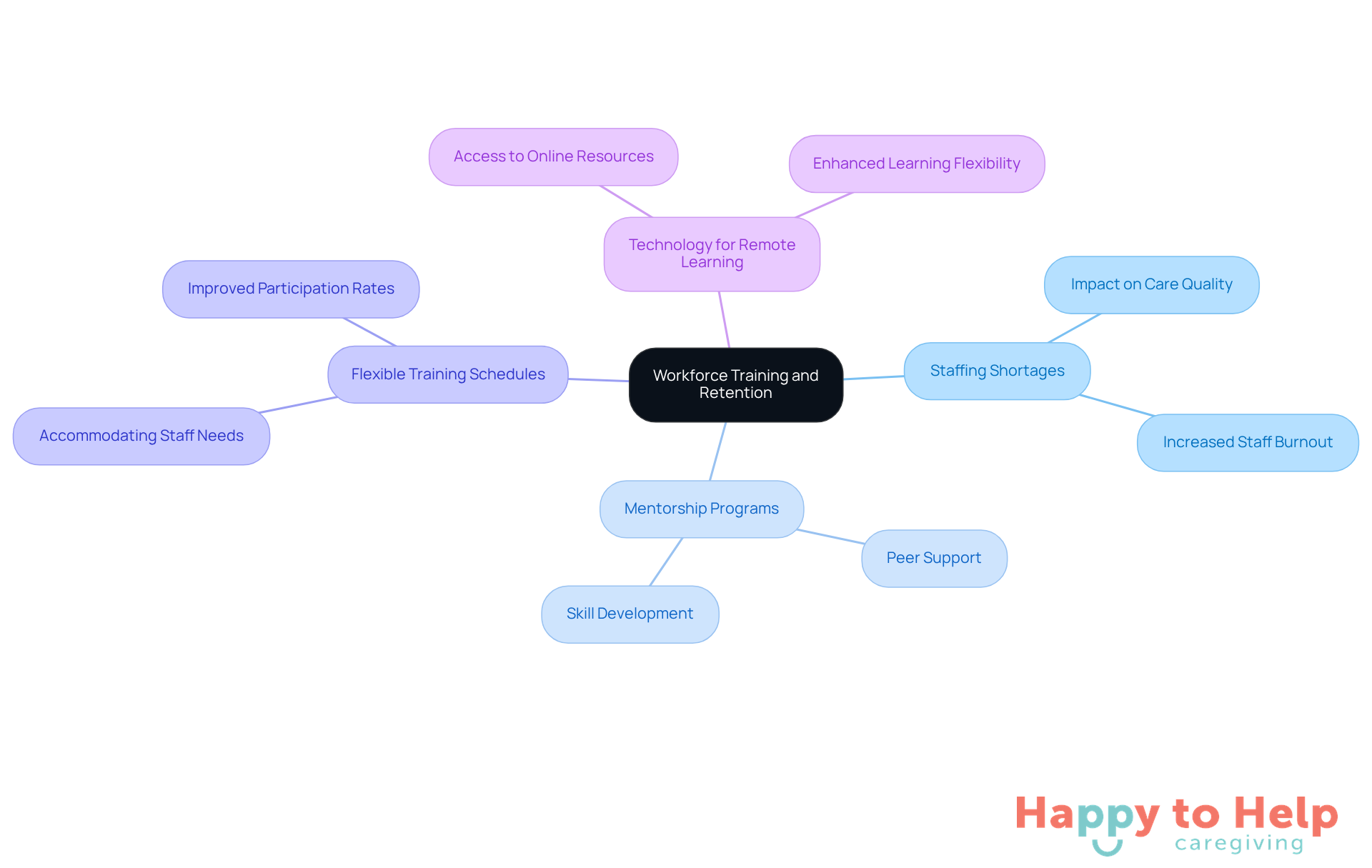
Staffing shortages pose a significant challenge for residential support agencies, impacting their ability to provide consistent care. This issue not only affects the quality of assistance offered to clients but also leads to increased stress and burnout among existing staff.
To combat these challenges, agencies are turning to innovative solutions for workforce training and retention. The following strategies are effective:
- Implementing mentorship programs
- Offering flexible training schedules
- Utilizing technology for remote learning
By investing in these initiatives, agencies can improve job satisfaction and decrease turnover rates. This ultimately results in a more stable workforce, capable of delivering reliable assistance to clients.
Leveraging Technology to Address Staffing Challenges
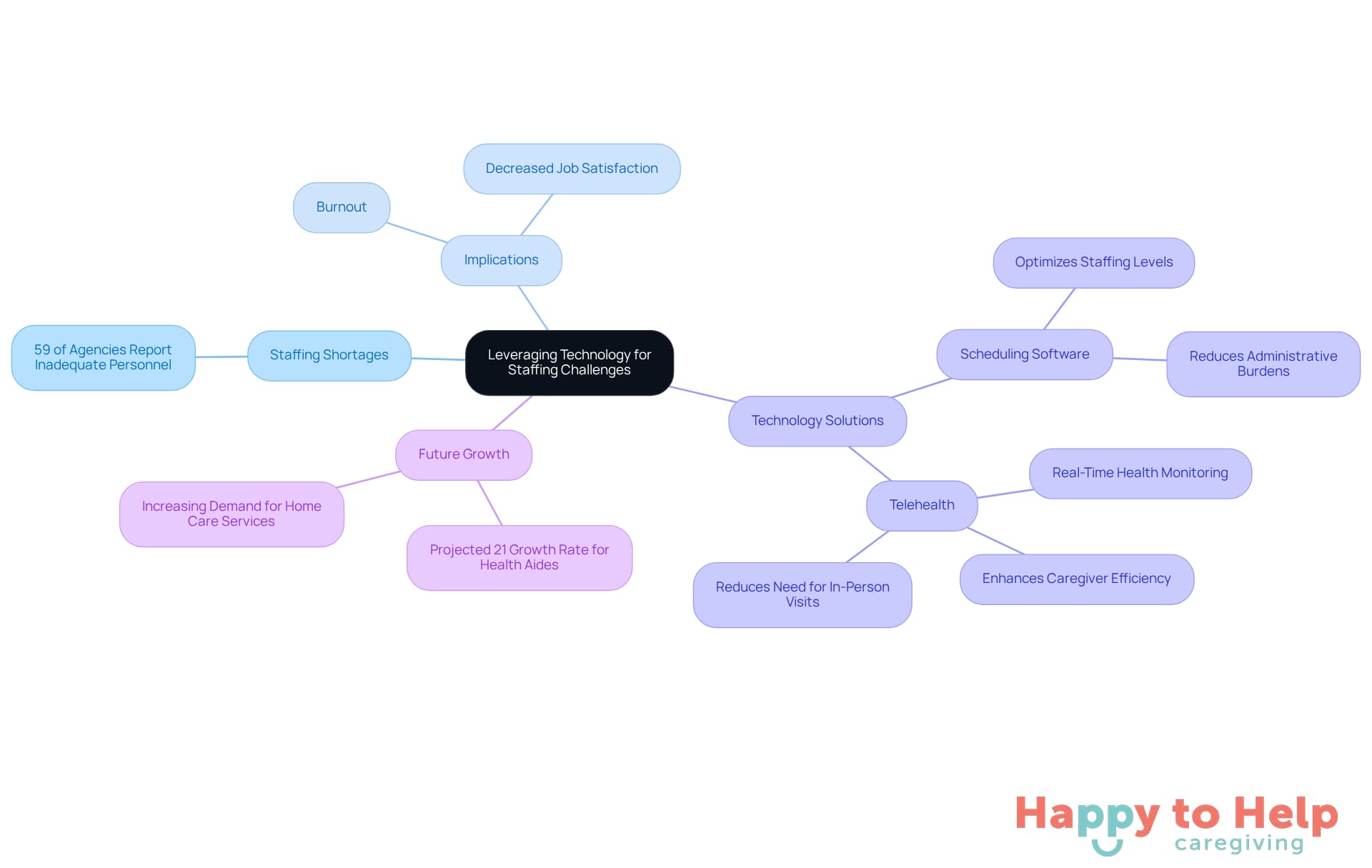
Technology is transforming how home care agencies approach senior care staffing challenges. The problem is clear: 59% of support agencies reported operating with inadequate personnel in 2025. The shortage in senior care staffing not only strains operations but also affects the quality of care provided to clients.
The implications are significant. Caregivers face increased pressure, leading to burnout and decreased job satisfaction. However, advanced tools like scheduling software and telehealth platforms offer a solution. Telehealth, for instance, enhances caregiver efficiency by enabling real-time health monitoring and reducing the need for frequent in-person visits. This allows caregivers to focus on critical tasks, ultimately improving the overall experience for clients.
Moreover, senior care staffing management systems streamline scheduling, helping agencies optimize staffing levels and reduce administrative burdens. By automating these processes, agencies can quickly adapt to changing needs, which in turn boosts caregiver retention and job satisfaction. As the demand for domestic support rises, with a projected growth rate of 21% for health aides through 2033, leveraging these technologies becomes essential for maintaining high-quality assistance.
As Lea Muir states, "The U.S. residential support sector isn’t just expanding; it’s becoming a cornerstone of contemporary healthcare delivery." This highlights the importance of integrating technology in home care settings to meet the evolving needs of families and their loved ones.
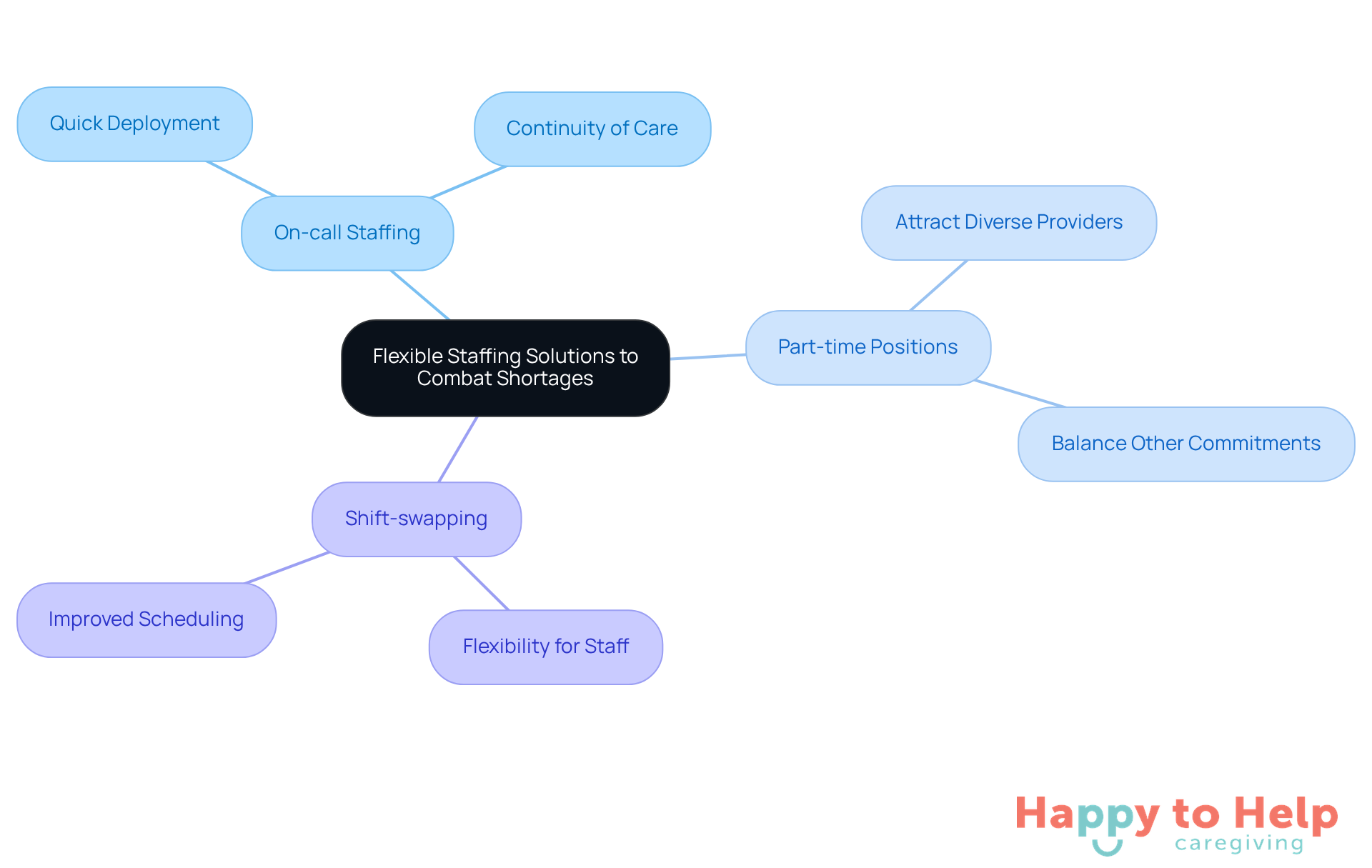
Flexible Staffing Solutions to Combat Shortages
Staffing shortages in residential assistance present a significant challenge for agencies and caregivers involved in senior care staffing. The increasing demand for senior care staffing is evident, with job listings for support workers rising by 48% since 2019, according to the 2025 U.S. Healthcare Staffing Report. The shortage of senior care staffing not only affects the quality of care provided but also places an emotional and physical burden on the existing staff.
To address these issues, agencies can implement adaptable senior care staffing solutions. Strategies such as:
- On-call staffing
- Part-time positions
- Shift-swapping in senior care staffing
can help ensure that clients receive timely and consistent support. For instance, part-time roles can attract a diverse range of providers, including those balancing other commitments, effectively alleviating staffing shortages.
Moreover, senior care staffing through on-call staffing allows agencies to quickly deploy personnel during peak times or unexpected absences, ensuring continuity of care. As one industry expert noted, 'The emotional and physical burden of caregiving positions can be overwhelming, making senior care staffing crucial for both provider well-being and client satisfaction.'
By fostering a more adaptable workforce in senior care staffing, agencies can significantly enhance client satisfaction and caregiver retention. Families can play a vital role in advocating for improved staffing practices by supporting agencies that embrace these flexible solutions, ensuring their loved ones receive the assistance they need.
Urgent Action Needed to Resolve Staffing Shortages
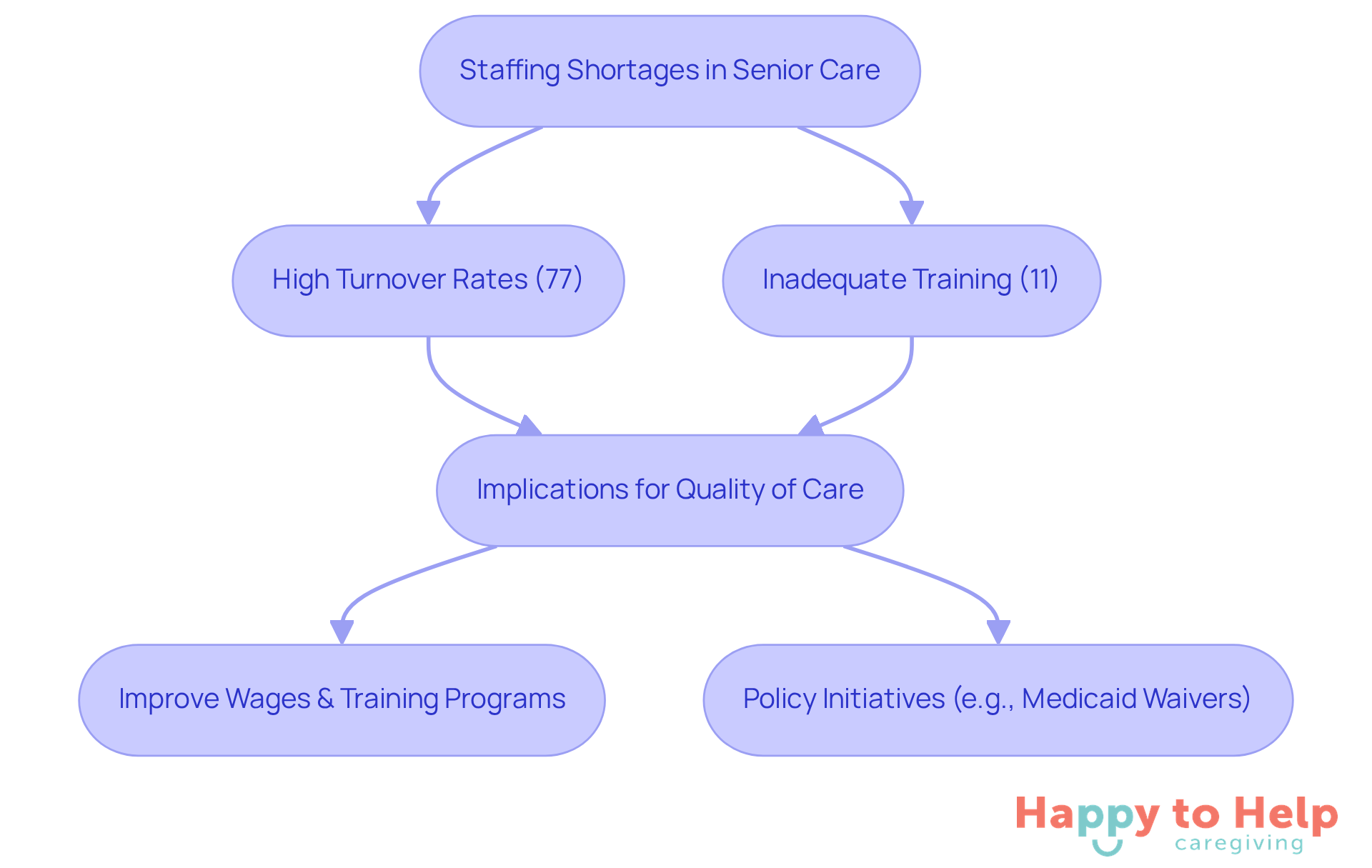
The ongoing staffing shortages in home support highlight the urgent need for effective senior care staffing, which demands immediate attention from all stakeholders, including policymakers, agencies, and families.
Agitate: These shortages have serious implications, as evidenced by the alarming turnover rates that reached 77% nationally in 2024. This instability not only affects the quality of care provided to seniors but also places additional strain on senior care staffing. Furthermore, only 11% of caregivers have received adequate training for daily living tasks, highlighting a critical gap in support and preparation for those in the field.
Solution: To address these challenges, collaborative strategies are essential. Improving worker wages and enhancing training programs are vital for attracting and retaining qualified personnel. For example, recent initiatives have demonstrated that increasing wages and offering sign-on bonuses can significantly reduce turnover rates. Additionally, effective policy initiatives, such as Medicaid waiver programs in over 30 states, have provided crucial funding for home-based support options, showcasing the potential for systemic transformation. By prioritizing investments in caregiver training and support, senior care staffing can cultivate a more sustainable workforce, ensuring that seniors receive the high-quality support they deserve.
As the demand for home care services continues to rise, with projections indicating that the population aged 65 and older will surpass 77 million by 2034, fostering a caregiving environment that values and supports its workforce is more important than ever.
Making the Right Choice
The challenges surrounding senior care staffing are complex, affecting not just the quality of care but also the emotional and physical well-being of seniors and their families. Staffing shortages pose a significant problem, making it essential to address these issues to ensure seniors receive the personalized in-home support necessary for maintaining their independence and quality of life.
To tackle this problem, we must focus on several key solutions:
- Improving working conditions and offering competitive wages are crucial for attracting and retaining qualified caregivers.
- Innovative training solutions can help equip caregivers with the skills they need.
- Families can also contribute by advocating for better staffing practices and utilizing community resources to ease some of the burdens associated with caregiving.
Moreover, integrating technology into care management can enhance the consistency and efficiency of support provided to seniors. As the demand for senior care continues to grow, it is vital for stakeholders - including policymakers, agencies, and families - to collaborate on effective solutions. By prioritizing the well-being of both caregivers and seniors, we can cultivate a sustainable and supportive caregiving environment, ensuring that aging individuals receive the compassionate care they deserve.
https://iframe.tely.ai/cta/eyJhcnRpY2xlX2lkIjogIjY5Mjc5NTAwMWE3YzlhYWNlNmI1NGZjMiIsICJjb21wYW55X2lkIjogIjY4ZWU1ZGNhNzMxNzYyNTU3ZjNjOTVjMSIsICJpbmRleCI6IG51bGwsICJ0eXBlIjogImFydGljbGUifQ==Frequently Asked Questions
What challenges do seniors face in daily living?
Many seniors struggle with daily tasks, with 83% requiring help with bathing and showering, which impacts their independence and quality of life.
How does lack of assistance affect seniors emotionally?
The absence of support can lead to feelings of loneliness and isolation, with nearly one in three adults aged 50-80 experiencing loneliness, and 5% feeling lonely often.
What services does Happy to Help Caregiving provide?
Happy to Help Caregiving offers personalized in-home support services including companionship, post-hospital recovery assistance, respite services, and palliative support, all aimed at promoting independence and addressing emotional and physical challenges.
How does Happy to Help Caregiving ensure quality care?
Caregivers regularly update support plans to adapt to the changing needs of seniors, ensuring they receive the best possible care.
What is the average cost of full-time home assistance?
The average monthly expense for full-time home assistance is approximately $6,481, which can be a more economical alternative to institutional care for families.
What are the consequences of staffing shortages in home care services?
Staffing shortages can lead to decreased personnel availability, longer wait times for assistance, and a decline in service quality, which can worsen health issues and increase stress levels for families.
What percentage of seniors wish to age at home?
Nearly 90% of seniors wish to age at home, but the lack of reliable support complicates this aspiration.
What factors contribute to staffing shortages in senior care?
Key drivers of staffing shortages include low pay, high turnover rates, and the demanding nature of caregiving roles, compounded by economic pressures and the COVID-19 pandemic.
What solutions can be implemented to address senior care staffing shortages?
Solutions include advocating for better working conditions, increasing compensation for caregivers, providing support resources, utilizing technology like telehealth, and building community networks for shared resources.
How can families navigate the challenges posed by staffing shortages?
Families can work towards overcoming these obstacles by engaging with local agencies, exploring telehealth options, and connecting with other families for support in navigating care options.
List of Sources
- Happy to Help Caregiving: Personalized In-Home Support for Seniors
- 2025 Home Care Statistics: Trends & Insights To Know (https://premierhcinc.com/blog/home-care-statistics)
- The Future of Aging: Is In-Home Care the New Standard? - WorldHealth.net (https://worldhealth.net/news/future-of-aging-is-in-home-care-new-standard)
- How Personalized In-Home Care can Improve Seniors Quality of Life - Freedom Home Care (https://freedomhomecare.net/2024/11/21/how-personalized-in-home-care-can-improve-seniors-quality-of-life)
- Compassion in Action: How Personalized Senior Care Enhances Quality of Life - Miss Bell (https://missbellcares.com/compassion-in-action-personalized-senior-care)
- 28 Senior Care Statistics: In-Home & Assisted Living | Shortlister (https://myshortlister.com/insights/senior-care-statistics)
- Impact of Staffing Shortages on Home Care Services
- Nursing Homes Limit Admissions Due to Labor Shortages, Ziegler CFO Survey States (https://skillednursingnews.com/2025/07/nursing-homes-limit-admissions-due-to-labor-shortages-ziegler-cfo-survey-states)
- Historic Staffing Shortages Continue To Force Nursing Homes To Limit New Admissions, Creating Bottlenecks at Hospitals and Reducing Access To Care For Seniors (https://ahcancal.org/News-and-Communications/Press-Releases/Pages/Historic-Staffing-Shortages-Continue-To-Force-Nursing-Homes-To-Limit-New-Admissions,-Creating-Bottlenecks-at-Hospitals-and-.aspx)
- A Better Solution Home Care (https://abs.care/Home-Care-Staffing-Shortages-How-They-Impact-Home-Care-Services)
- 10 Must-Know U.S. Home Care Industry Stats for 2025 - North American Community Hub (https://nchstats.com/us-home-care-industry-stats)
- Nationwide Caregiver Shortage | Best & Worst States Ranked (https://asbestos.com/support/caregivers/shortage-by-state)
- Key Drivers of Home Care Staffing Shortages
- The senior population is booming. Caregiving is struggling to keep up (https://cnbc.com/2025/11/21/senior-caregiving-labor.html)
- A Better Solution Home Care (https://abs.care/Home-Care-Staffing-Shortages-How-They-Impact-Home-Care-Services)
- Home Care Turnover Rate Jumps to 80%...HCAOA is Here to Help Members! (https://hcaoa.org/newsletters/home-care-turnover-rate-jumps-to-80hcaoa-is-here-to-help-members)
- Understanding the Direct Care Workforce (https://phinational.org/policy-research/key-facts-faq)
- Home Health and Personal Care Aides (https://bls.gov/oes/2023/may/oes311120.htm)
- Reduced Access to In-Home Support for Seniors
- Nationwide Caregiver Shortage | Best & Worst States Ranked (https://asbestos.com/support/caregivers/shortage-by-state)
- A Better Solution Home Care (https://abs.care/Home-Care-Staffing-Shortages-How-They-Impact-Home-Care-Services)
- 2025 Home Care Statistics: Trends & Insights To Know (https://premierhcinc.com/blog/home-care-statistics)
- Elderly Care Statistics (https://rosewood-nursing.com/post/elderly-care-statistics)
- 28 Senior Care Statistics: In-Home & Assisted Living | Shortlister (https://myshortlister.com/insights/senior-care-statistics)
- Challenges for Families Amid Staffing Shortages
- New Report Reveals Crisis Point for America’s 63 million Family Caregivers (https://press.aarp.org/2025-07-24-New-Report-Reveals-Crisis-Point-for-Americas-63-million-Family-Caregivers)
- Caregiving Crisis: Nearly 1 in 4 US adults serve as caregivers for relatives with complex needs (https://whsv.com/2025/11/04/caregiving-crisis-nearly-1-4-us-adults-serve-caregivers-relatives-with-complex-needs)
- Caregiving Crisis: 45% Increase in Americans Providing Care (https://aarp.org/caregiving/basics/caregiving-in-us-survey-2025)
- Opinion | America’s Caregivers Are in Crisis (https://nytimes.com/2025/11/24/opinion/caregiving-crisis.html)
- Rising Labor Costs and Financial Strain in Home Care
- Inflation Hits Home Care, Increasing Pressure on Older Adults and Family Caregivers (https://blog.aarp.org/thinking-policy/inflation-hits-home-care-increasing-pressure-older-adults-family-caregivers)
- Facing Financial Ruin as Costs Soar for Elder Care (Published 2023) (https://nytimes.com/2023/11/14/health/long-term-care-facilities-costs.html)
- Genworth and CareScout Release Cost of Care Survey Results for 2024 (https://investor.genworth.com/news-events/press-releases/detail/982/genworth-and-carescout-release-cost-of-care-survey-results)
- Payment Rates for Medicaid Home Care: States’ Responses to Workforce Challenges | KFF (https://kff.org/medicaid/payment-rates-for-medicaid-home-care-states-responses-to-workforce-challenges)
- 52 Eye-Opening Home Health Statistics: Insights for 2025 (https://boosthomehealth.com/home-health-statistics)
- Innovative Solutions for Workforce Training and Retention
- CareAcademy, CareConnect partner for home care training (https://mobihealthnews.com/news/careacademy-careconnect-partner-home-care-training)
- The Direct Care Workforce - NASHP (https://nashp.org/the-direct-care-workforce)
- New Universal Workforce Model Aims To Transform Direct Care Training And Credentialing (https://homehealthcarenews.com/2025/07/new-universal-workforce-model-aims-to-transform-direct-care-training-and-credentialing)
- To Solve Staffing Shortages, Home-Based Care Must Rethink Recruitment From The Ground Up (https://homehealthcarenews.com/2025/10/to-solve-staffing-shortages-home-based-care-must-rethink-recruitment-from-the-ground-up)
- Home Care Giant Right At Home Pursues Growth, Innovation, Workforce Development in 2025 (https://homehealthcarenews.com/2025/02/home-care-giant-right-at-home-pursues-growth-innovation-workforce-development-in-2025)
- Leveraging Technology to Address Staffing Challenges
- The Potential of Home Care Technology (https://h2hhc.com/blog/home-care-technology)
- 10 Must-Know U.S. Home Care Industry Stats for 2025 - North American Community Hub (https://nchstats.com/us-home-care-industry-stats)
- The Impact of Technology on Healthcare Staffing: Opportunities and Challenges | Shiftmed Blog (https://shiftmed.com/insights/knowledge-center/the-impact-of-technology-on-healthcare-staffing-opportunities-and-challenges)
- Home Healthcare Statistics and Facts (2025) (https://media.market.us/home-healthcare-statistics)
- Address Healthcare Staffing Challenges with Digital Health Tenovi Remote patient Monitoring Blog & Newsletter (https://tenovi.com/healthcare-staffing-challenges)
- Flexible Staffing Solutions to Combat Shortages
- A Better Solution Home Care (https://abs.care/Home-Care-Staffing-Shortages-How-They-Impact-Home-Care-Services)
- AAG Health - The 81 Most Shocking Healthcare Staffing Statistics of 2025 (https://aag.health/post/healthcare-staffing-statistics)
- The Crisis and Opportunity of Caregiver Shortages: Innovative Staffing Solutions for Home Health Agencies | Senate Healthcare (https://senatehealthcare.com/the-crisis-and-opportunity-of-caregiver-shortages-innovative-staffing-solutions-for-home-health-agencies)
- To Solve Staffing Shortages, Home-Based Care Must Rethink Recruitment From The Ground Up (https://homehealthcarenews.com/2025/10/to-solve-staffing-shortages-home-based-care-must-rethink-recruitment-from-the-ground-up)
- Urgent Action Needed to Resolve Staffing Shortages
- Growing Demand for Direct Care Workers Underscores Pressing Need to Invest in Job Quality, New PHI Report Reveals (https://phinational.org/news/growing-demand-for-direct-care-workers-underscores-pressing-need-to-invest-in-job-quality-new-phi-report-reveals)
- Caregiving Statistics US 2025: Insights for Family Caregivers (https://zencaregiving.org/caregiving-statistics-us-2025)
- A Better Solution Home Care (https://abs.care/Home-Care-Staffing-Shortages-How-They-Impact-Home-Care-Services)
- 10 Must-Know U.S. Home Care Industry Stats for 2025 - North American Community Hub (https://nchstats.com/us-home-care-industry-stats)