10 Steps to Find Dementia Specialist Care Homes Near You
For families in our service areas
For families in our service areas, this guide explains dementia care and how non-medical in-home caregiving can support care planning in East Idaho, Treasure Valley & Magic Valley, Northern Wasatch, North Central West Virginia, and Northeast Ohio.
The Importance of Find Dementia Specialist Care Homes
Choosing the right care home for a loved one with dementia can be a daunting task. Families often face emotional and logistical challenges that can feel overwhelming. As they navigate this complex journey, the need for reliable information and supportive resources becomes crucial.
This article outlines ten essential steps to help caregivers locate dementia specialist care homes nearby. These steps provide valuable insights and practical strategies to ensure that loved ones receive the compassionate care they deserve. How can families effectively sift through the myriad of options to find a facility that truly meets their needs? Let's explore this together.
Happy to Help Caregiving: Personalized In-Home Dementia Care Services
Caring for individuals with dementia presents significant challenges, particularly in addressing feelings of loneliness and emotional distress. These issues can severely impact their quality of life, making it essential for caregivers to find effective support solutions.
Happy to Help Caregiving offers compassionate in-home dementia support services designed to improve the quality of life for those affected. Their services include:
- Companionship
- Post-hospital recovery assistance
- Respite support
- Palliative care
All tailored to meet the unique needs of each client. This personalized approach ensures that individuals receive the necessary support to thrive in their familiar surroundings.
The caregivers at Happy to Help are trained to engage clients in meaningful activities, which not only alleviates feelings of loneliness but also promotes emotional well-being. By providing these essential services, caregivers can significantly enhance the lives of individuals with dementia, ensuring they feel valued and supported.
Research Local Dementia Care Homes: Gather Essential Information
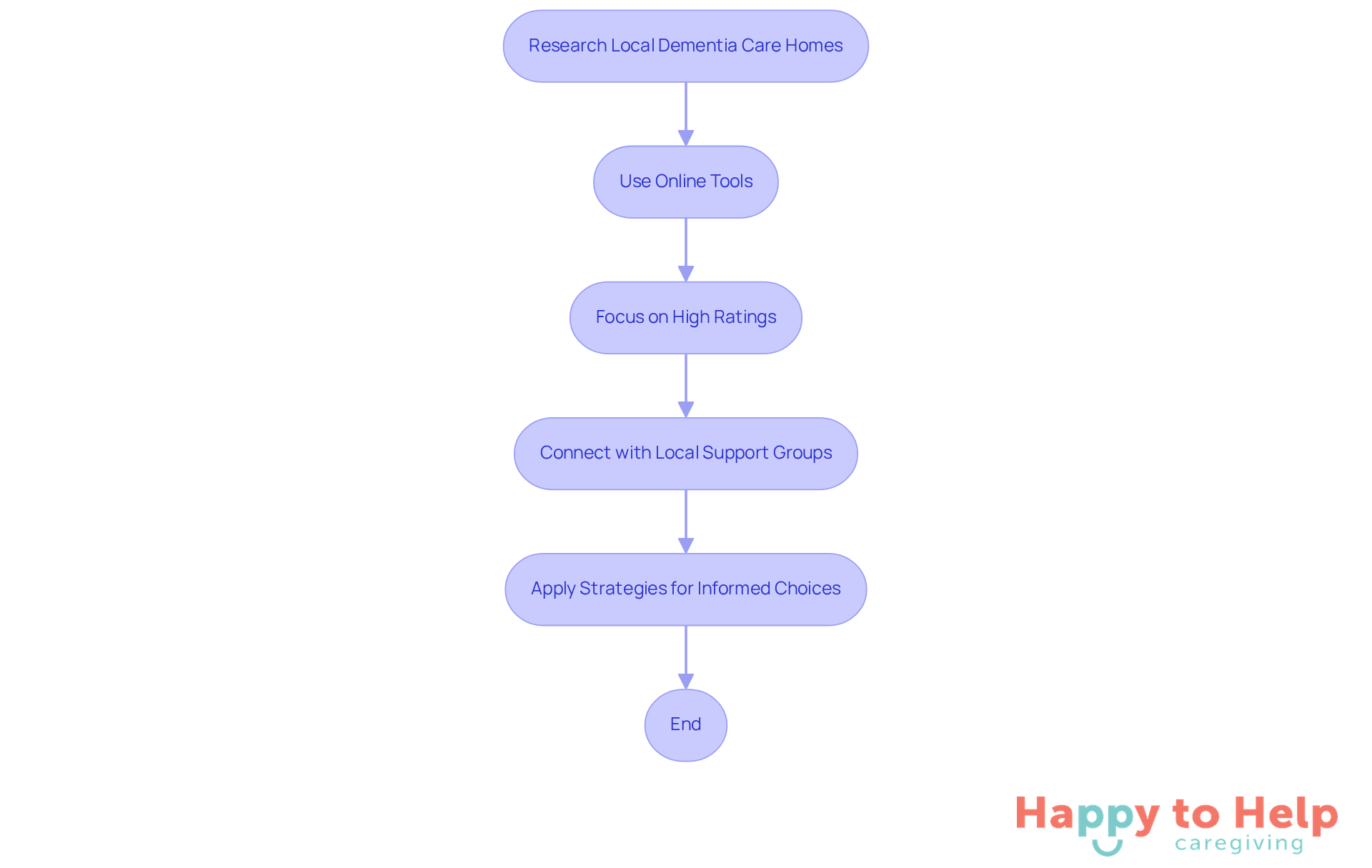
For caregivers, finding the right dementia specialist care homes near me can be a daunting task. With so many options available, it’s crucial to have reliable information at your fingertips. Online tools like the Alzheimer’s Association and local health department websites can be invaluable resources. They provide detailed insights into dementia specialist care homes near me, enabling you to compile a comprehensive list tailored to your needs.
When researching, focus on residences with high ratings. Feedback from relatives is vital in assessing the quality of care. For instance, U.S. News ratings highlight facilities like Vitality Living Elizabethtown, which has a commendable rating of 4.4 based on 87 survey participants, and Inspirations of Mount Washington, known for its positive scores. These ratings suggest favorable experiences for residents and their families.
Beyond online research, connecting with local support groups or community organizations can be beneficial. Local chapters of the Alzheimer’s Association often have firsthand knowledge of trustworthy dementia specialist care homes near me and can provide personal recommendations based on their experiences. Engaging with these resources not only helps narrow down your options but also provides insights into the services offered and the overall reputation of each facility.
By applying these strategies, you can make informed choices, ensuring that your loved one receives the compassionate and specialized support they deserve. With the recent increase in federal funding for Alzheimer’s research, there are more resources available than ever to assist families in finding the right care.
Visit Potential Care Homes: Assess Environment and Care Quality
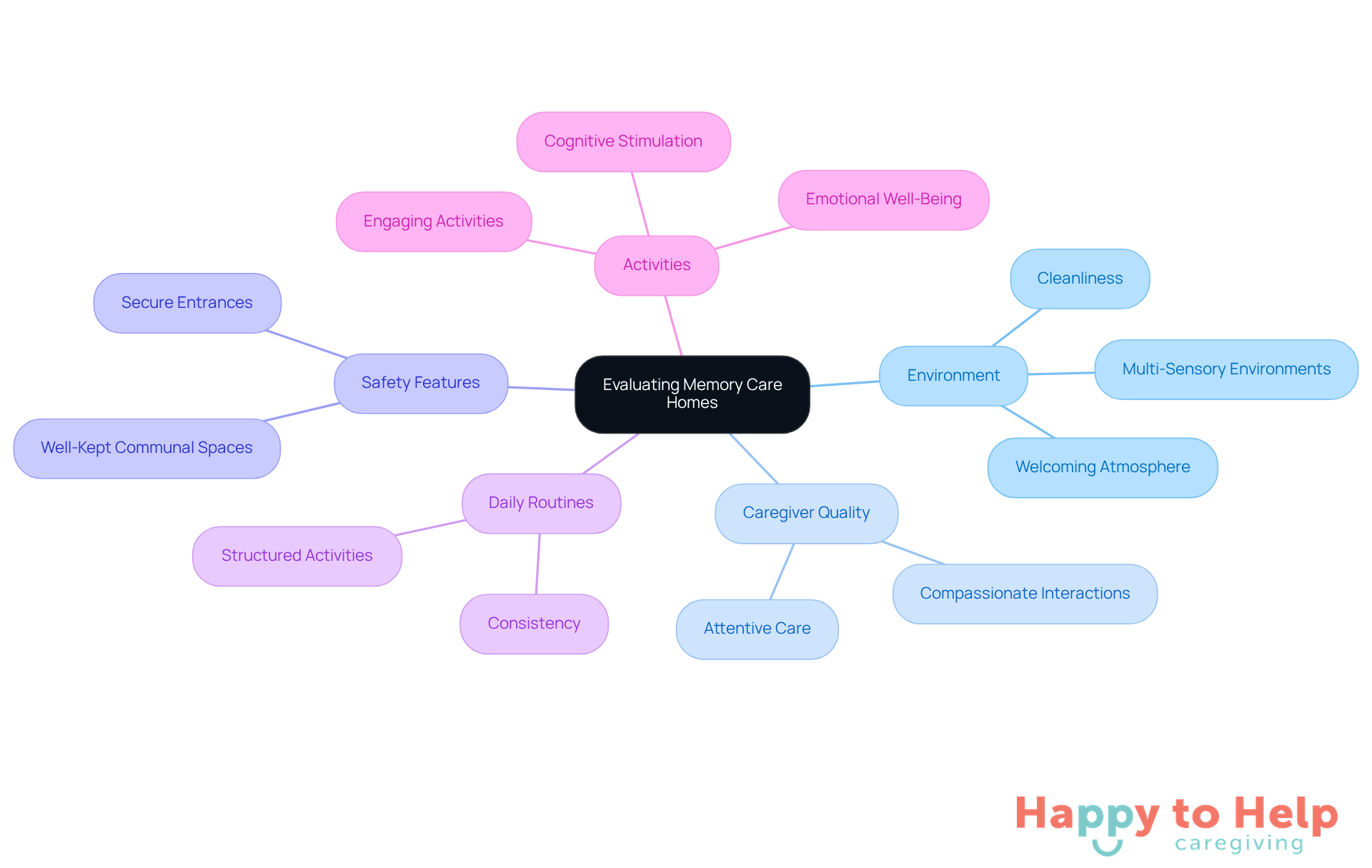
When evaluating potential memory care homes, the atmosphere presents a significant challenge. A welcoming and clean environment is essential for ensuring comfort and safety for residents. Caregivers should observe staff interactions; compassionate and attentive caregivers are vital for fostering a nurturing atmosphere.
Safety features, such as secure entrances and well-kept communal spaces, must be prioritized to guarantee the well-being of individuals. Additionally, caregivers should inquire about daily routines and activities, as these significantly influence residents' quality of life. Engaging activities not only boost cognitive function but also enhance emotional well-being, contributing to a more inviting atmosphere.
As noted by geriatric specialists, a supportive and stimulating environment is crucial for individuals living in dementia specialist care homes near me. It can lead to better outcomes and an increased sense of security. Families visiting residential facilities often find that a positive environment, combined with attentive personnel and meaningful activities, greatly impacts their loved ones' joy and comfort.
Furthermore, a well-planned environment, as discussed in the case study 'Promoting Independence Through Thoughtful Design,' supports independence for dementia patients. Integrating multi-sensory environments can also enhance cognitive involvement and emotional well-being. Therefore, when selecting a residence, especially dementia specialist care homes near me, evaluating these aspects is essential.
Understand Costs: Budgeting for Dementia Care Home Expenses
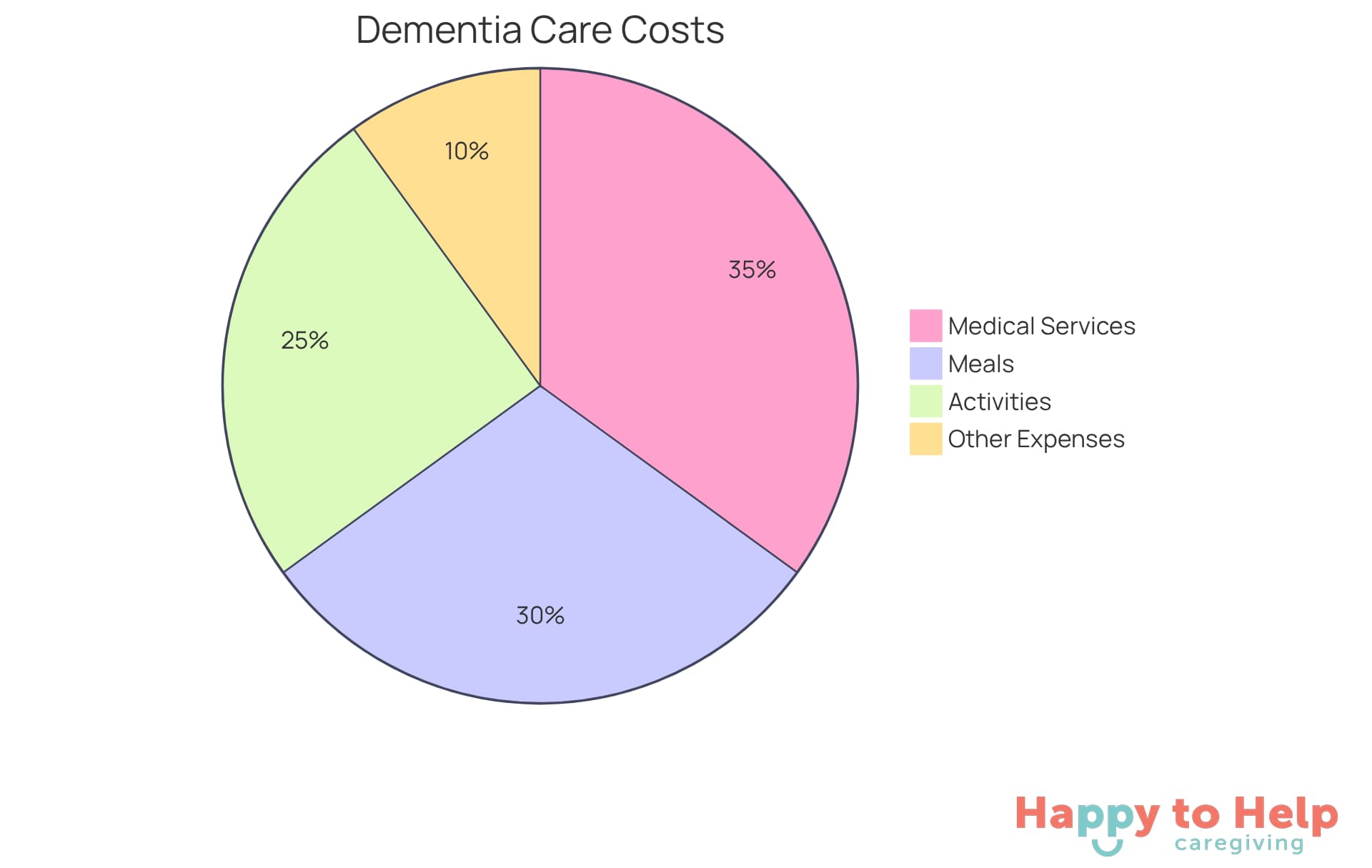
Dementia residential home expenses can be a significant burden for families, often ranging from $4,000 to $11,000 each month for memory support. The national median stands at approximately $6,450, according to the 2025 long-term assistance cost report by A Place for Mom. Understanding what is included in these monthly charges - such as meals, activities, and medical services - is crucial for families navigating these costs.
The financial implications of dementia care are staggering. With costs expected to reach $781 billion in the U.S. by 2025, which includes both direct medical expenses and the value of unpaid support, families must be proactive in seeking financial assistance. Medicaid plays a vital role, covering about $58 billion of dementia-related costs, alongside other public programs like Social Security Disability Income (SSDI) and Supplemental Security Income (SSI).
To alleviate the economic strain, families should explore various financial resources. Collaborating with financial advisors can provide insights into budgeting strategies and potential savings. By understanding and utilizing these financial options, families can better prepare for the expenses associated with dementia care.
Check Staff Qualifications: Ensure Trained Professionals for Care
When considering residential facilities, one major concern is the qualifications and training of the staff. Without properly trained personnel, the quality of care for individuals with dementia can suffer significantly. This lack of expertise can lead to inadequate support, which can negatively impact the well-being of residents.
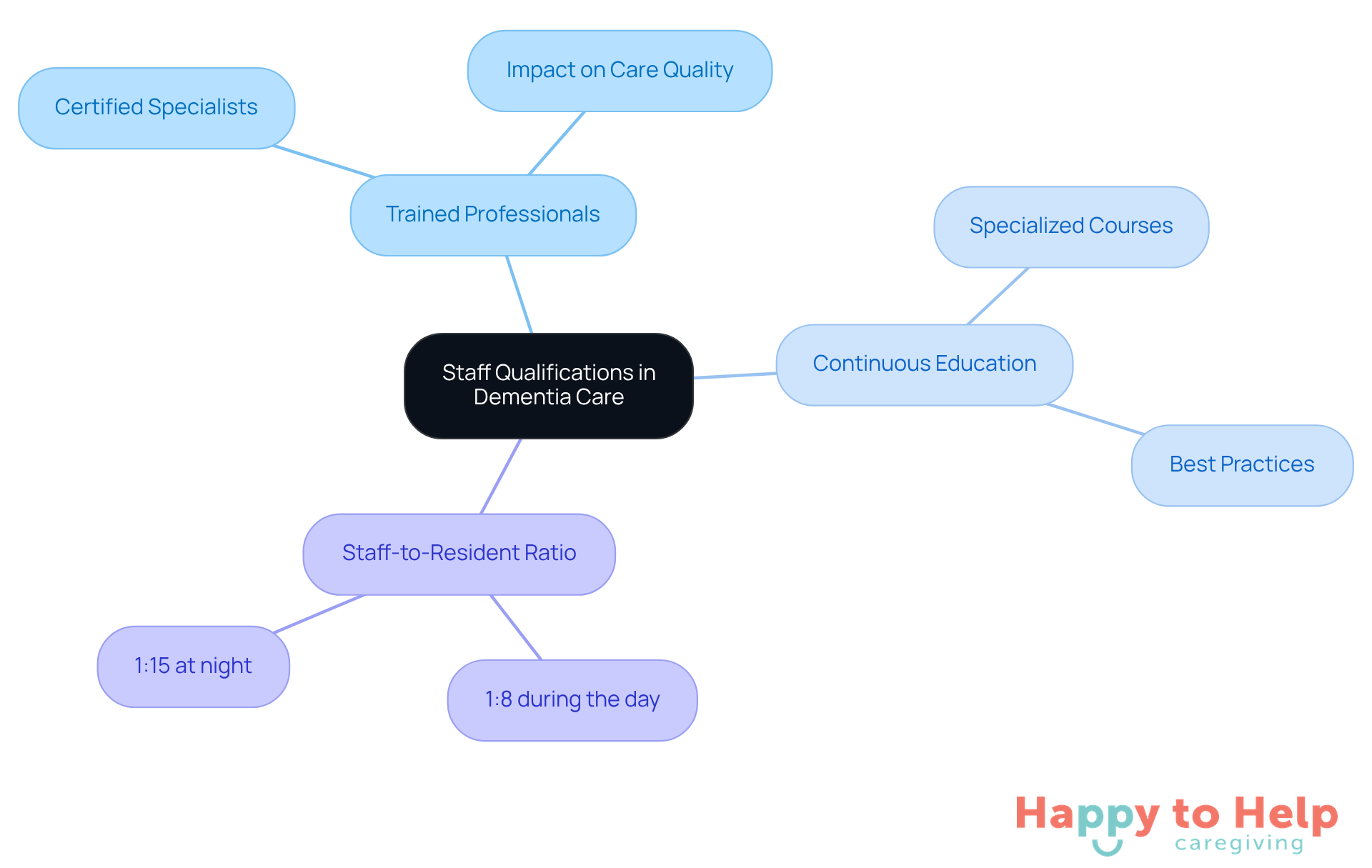
To address this issue, it’s essential to seek out dementia specialist care homes near me that employ certified dementia support specialists. Their expertise is crucial for providing appropriate assistance. Additionally, continuous education for caregivers is vital. This ensures they stay updated on best practices and recent advancements in dementia care. For example, Community Training Connection offers specialized courses that equip staff with the necessary skills to manage behaviors associated with dementia.
Another important factor to consider is the staff-to-resident ratio. A lower ratio, typically around 1:8 during the day and potentially 1:15 at night, indicates that residents receive more personalized attention. This level of care is vital for their overall well-being. Understanding the qualifications and training of the staff in dementia specialist care homes near me will instill confidence in the support your loved one receives, ultimately enhancing their quality of life.
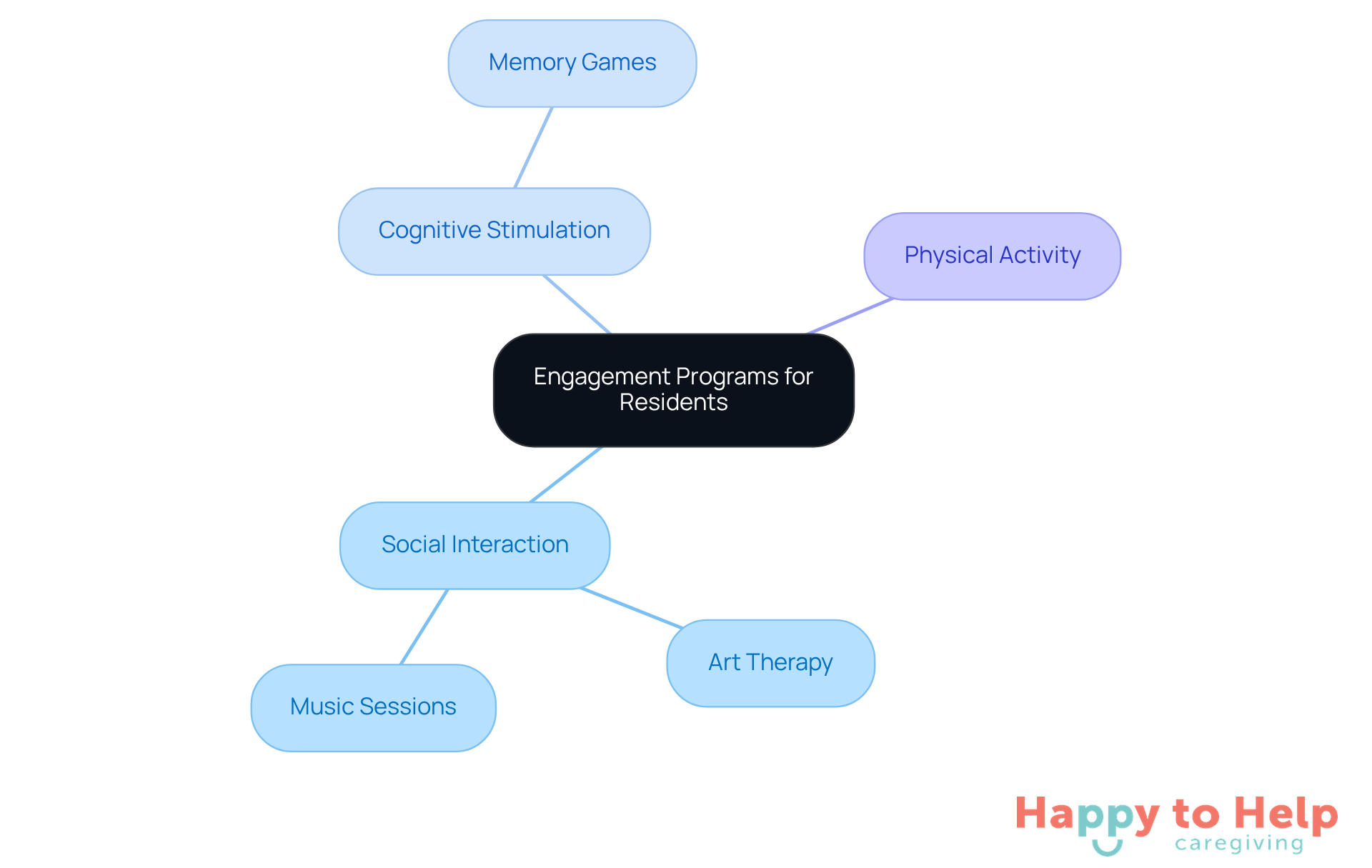
Evaluate Activities: Ensure Engagement Programs for Residents
Assessing the types of activities offered at care homes reveals a significant problem: many facilities lack programs that truly promote social interaction, cognitive stimulation, and physical activity. This deficiency can lead to a diminished quality of life for residents, who may feel isolated and disengaged.
To address this issue, caregivers should look for activities such as:
- Art therapy
- Music sessions
- Memory games
These programs not only foster a sense of community but also significantly enhance residents' well-being. It's crucial that facilities tailor these activities to the interests and abilities of their residents, ensuring that everyone feels a sense of purpose and belonging.
Read Reviews: Gather Insights from Other Families
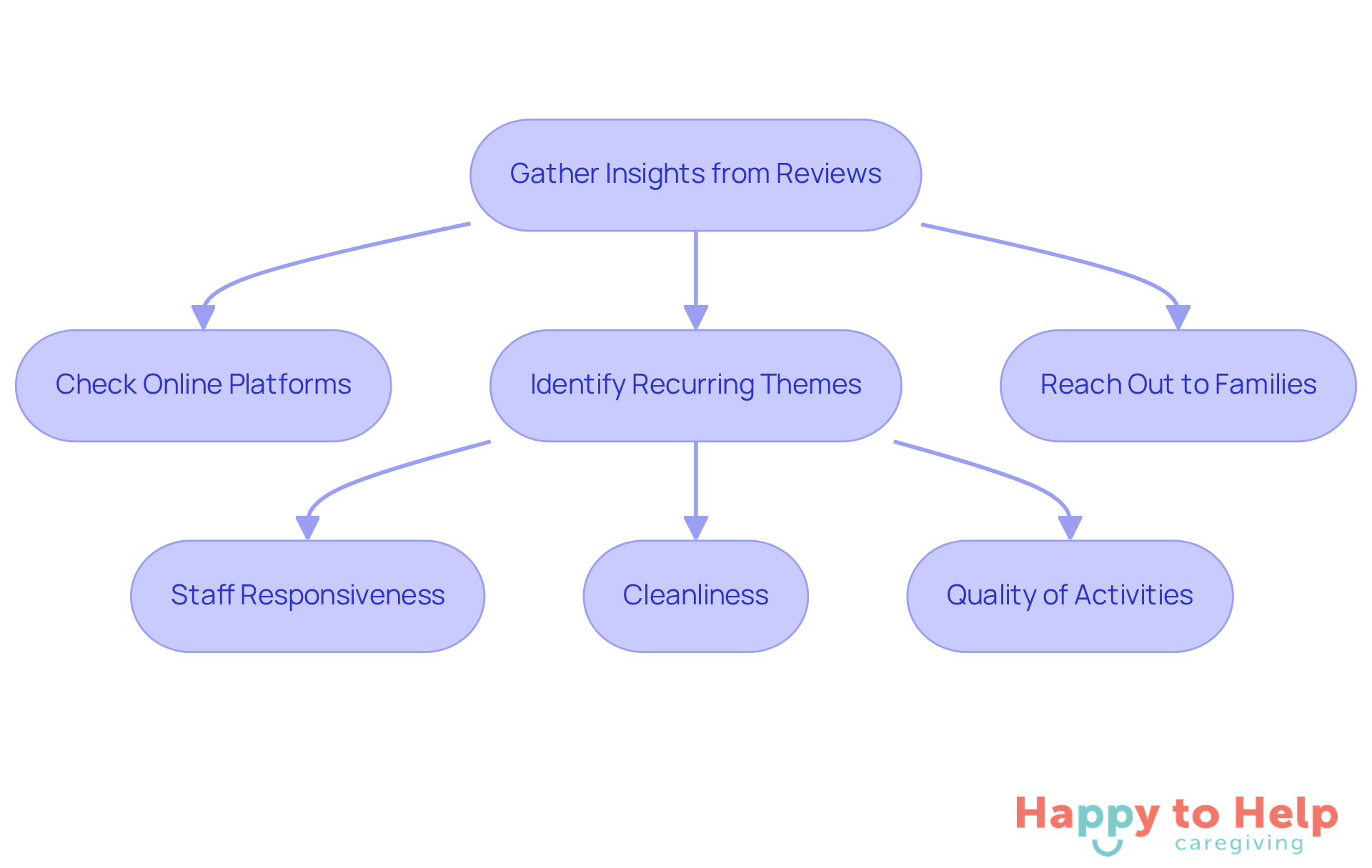
Finding the right senior care facility can be a daunting task for caregivers. With so many options available, it’s crucial to ensure that the chosen facility meets the needs of your loved one. One effective way to navigate this challenge is by utilizing online platforms like Yelp, Google Reviews, and specialized senior assistance websites. These resources provide valuable evaluations of potential facilities, helping you make informed decisions.
When reading reviews, pay attention to recurring themes in the feedback. Look for insights on:
- Staff responsiveness
- Cleanliness
- The quality of activities offered
These factors can significantly impact the overall experience for residents. Additionally, consider reaching out to families who have firsthand experience with the facility. Their insights can provide a deeper understanding of what to expect, helping you feel more confident in your choice.
Understand Family Involvement Policies: Enhance Emotional Well-Being
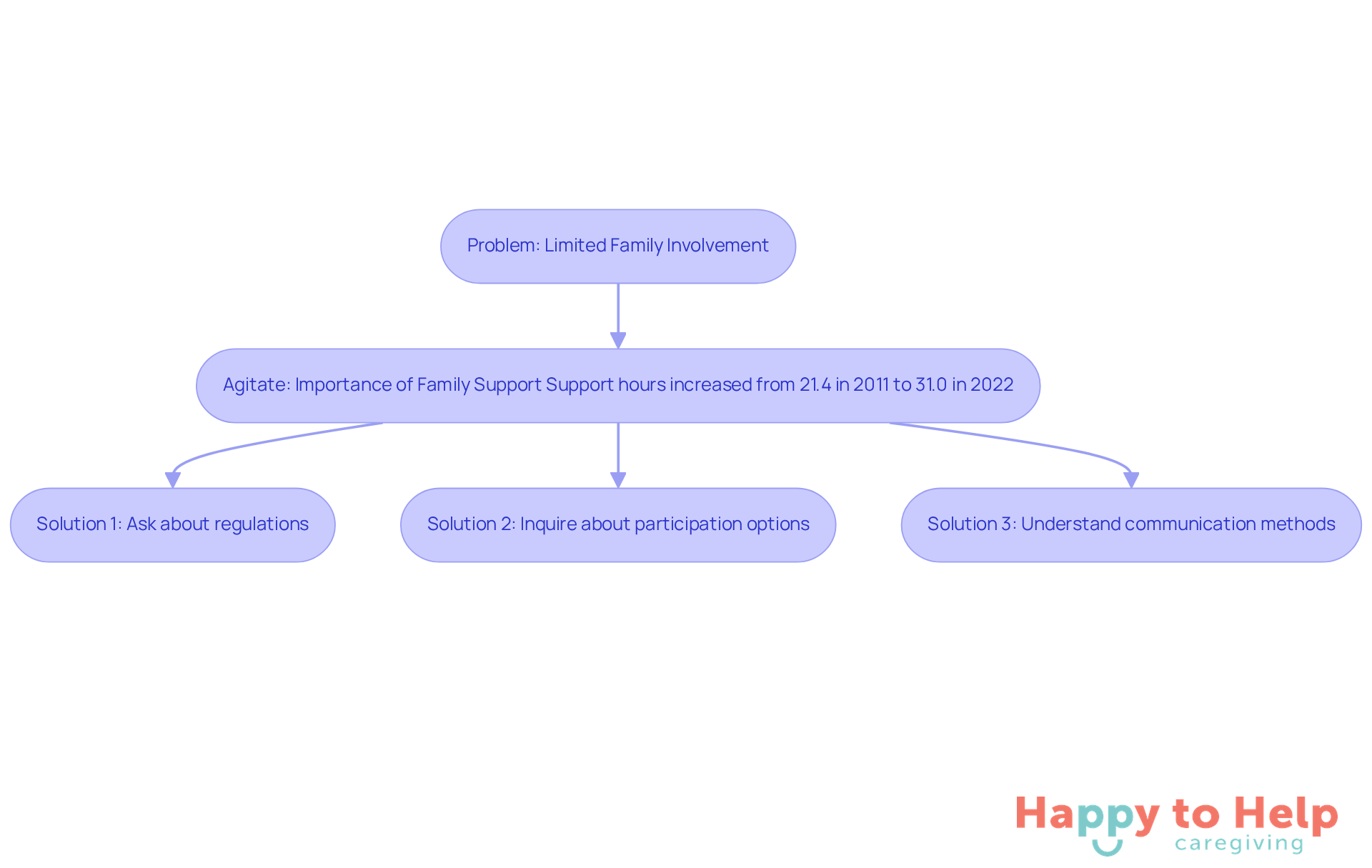
Problem: Many caregivers face challenges when it comes to ensuring their loved ones receive emotional support in care facilities. Limited involvement of relatives can negatively impact the emotional well-being of residents.
Agitate: Research shows that consistent family involvement is crucial. For instance, the hours of support provided by relatives of older adults with dementia increased from 21.4 hours in 2011 to 31.0 hours in 2022, underscoring the growing importance of family participation. Without these interactions, residents may experience feelings of isolation and frustration, which can hinder their overall quality of life.
Solution: To address these challenges, caregivers should:
- Ask about the home's regulations regarding relatives' involvement.
- Inquire about options for family members to participate in activities with their loved ones, as these interactions can significantly enhance emotional well-being.
- Understand how the facility communicates updates and changes in treatment.
Effective communication fosters a supportive atmosphere that benefits both residents and their families. Psychologists emphasize that emotional support from family members is fundamental for improving life quality in treatment environments. Therefore, selecting a facility that prioritizes family participation is crucial.
Ask Key Questions: Gather Critical Information for Decision-Making
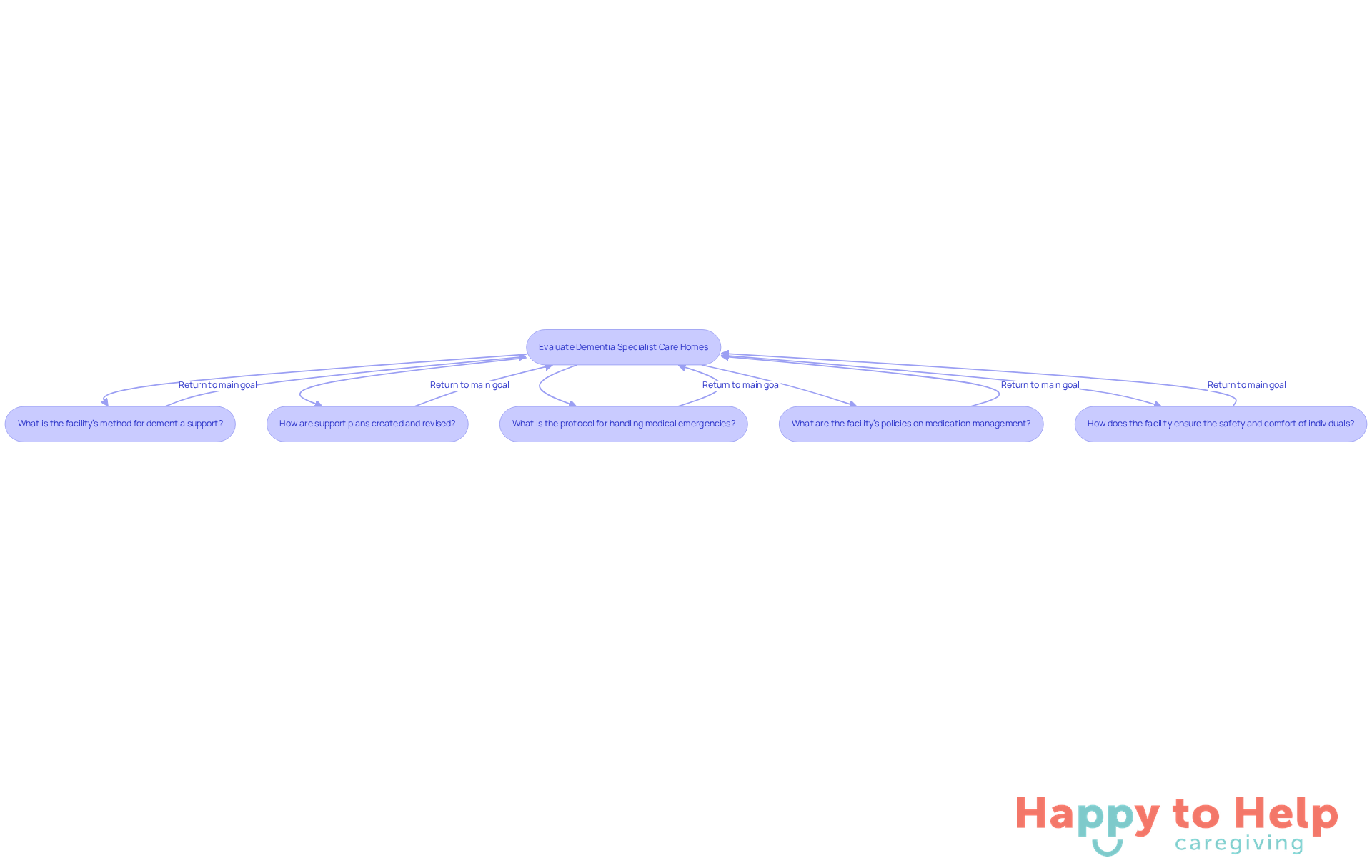
When considering potential dementia specialist care homes near me for loved ones with dementia, caregivers encounter significant challenges. It’s crucial to ensure that the dementia specialist care homes near me provide adequate support tailored to individual needs. To navigate this process effectively, here are key questions to ask during your visits:
- What is the facility's method for dementia support?
- How are support plans created and revised?
- What is the protocol for handling medical emergencies?
- What are the facility's policies on medication management?
- How does the facility ensure the safety and comfort of individuals?
By asking these questions, caregivers can gain valuable insights into the quality of care provided, helping them make informed decisions.
Consider Location: Ensure Accessibility for Family Visits
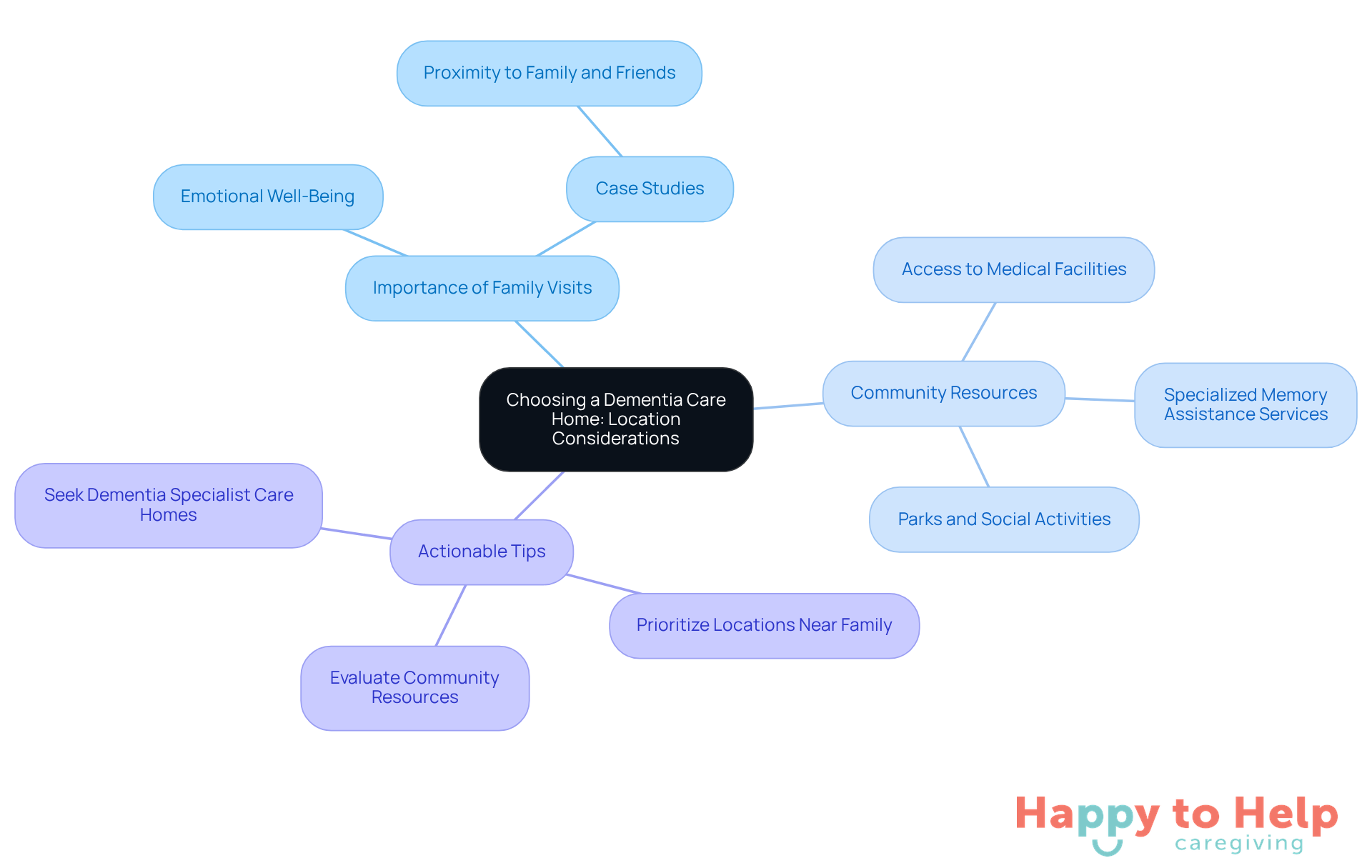
For families, choosing a dementia care home can be challenging, especially when looking for dementia specialist care homes near me to ensure proximity to loved ones. This factor is crucial, as it directly impacts the emotional well-being of residents. Regular visits from family members uplift spirits and enhance quality of life, as highlighted in a case study on 'Proximity to Family and Friends.'
Moreover, assessing the surrounding community for access to essential resources - such as medical facilities, parks, and social activities - can significantly improve the lives of individuals. Communities with a higher concentration of seniors often provide better access to specialized memory assistance services, ensuring that residents receive informed support tailored to their needs.
Families frequently express that having dementia specialist care homes near me not only eases the transition for their loved ones but also fosters a sense of connection and continuity in their lives. Dr. Tarun Dua emphasizes the importance of community proximity in enhancing the quality of life for residents.
In summary, when selecting a dementia care home, consider the following actionable tips:
- Prioritize locations near family members to facilitate regular visits.
- Evaluate the community for essential resources that support residents' needs.
- Seek out dementia specialist care homes near me that provide specialized memory assistance services.
Moving Forward with Find Dementia Specialist Care Homes
Finding the right dementia specialist care home is a significant challenge that requires careful thought and thorough research. Caregivers often face the daunting task of navigating a complex landscape, which can lead to stress and uncertainty. Understanding the unique challenges faced by individuals with dementia and their families is crucial in making informed decisions that can greatly enhance the quality of life for loved ones.
Key strategies to address this issue include:
- Researching local care homes to find those that specialize in dementia care.
- Assessing the qualifications of staff to ensure they have the necessary training and experience.
- Evaluating activities offered to promote engagement and well-being.
- Understanding the financial implications of care to avoid unexpected burdens.
Gathering insights from reviews and connecting with local support groups can empower caregivers to make choices that align with their loved ones' needs. Additionally, considering the facility's location is essential for maintaining family connections, which play a vital role in emotional well-being.
Ultimately, the journey to finding a suitable dementia care home is about prioritizing compassionate, specialized support that fosters a nurturing environment. By employing these best practices, caregivers can ensure their loved ones receive the care and attention they deserve, creating a positive impact on their overall well-being and quality of life.
https://iframe.tely.ai/cta/eyJhcnRpY2xlX2lkIjogIjY5Mjc5NGRkMDFkMWUzYmY0NmRiMjQ4ZiIsICJjb21wYW55X2lkIjogIjY4ZWU1ZGNhNzMxNzYyNTU3ZjNjOTVjMSIsICJpbmRleCI6IG51bGwsICJ0eXBlIjogImFydGljbGUifQ==Frequently Asked Questions
What services does Happy to Help Caregiving offer for individuals with dementia?
Happy to Help Caregiving offers personalized in-home dementia support services, including companionship, post-hospital recovery assistance, respite support, and palliative care, all tailored to meet the unique needs of each client.
How do caregivers at Happy to Help Caregiving enhance the quality of life for individuals with dementia?
Caregivers at Happy to Help engage clients in meaningful activities, which help alleviate feelings of loneliness and promote emotional well-being, significantly enhancing the lives of individuals with dementia.
What resources can caregivers use to find dementia specialist care homes?
Caregivers can use online tools like the Alzheimer’s Association and local health department websites to gather reliable information about dementia specialist care homes. Feedback from relatives and U.S. News ratings can also provide insights into the quality of care.
What factors should caregivers consider when visiting potential memory care homes?
Caregivers should assess the atmosphere of the home, including cleanliness and safety features, observe staff interactions, inquire about daily routines and activities, and evaluate the overall environment to ensure it supports residents' comfort and well-being.
Why is a supportive and stimulating environment important for individuals in dementia care homes?
A supportive and stimulating environment is crucial as it can lead to better outcomes and an increased sense of security for individuals living in dementia care homes. Engaging activities boost cognitive function and enhance emotional well-being.
How can local support groups assist caregivers in finding dementia care homes?
Local support groups, such as chapters of the Alzheimer’s Association, can provide personal recommendations and insights based on their experiences, helping caregivers narrow down options and find trustworthy dementia specialist care homes.
List of Sources
- Happy to Help Caregiving: Personalized In-Home Dementia Care Services
- Home Care News | Senior Care News | Right at Home (https://rightathome.net/news)
- Caregivers: the invisible backbone of dementia care (https://publichealth.gmu.edu/news/2025-11/caregivers-invisible-backbone-dementia-care)
- New NIA grant advances tools for dementia caregiving (https://news-medical.net/news/20251015/New-NIA-grant-advances-tools-for-dementia-caregiving.aspx)
- New Medicare program offers much-needed relief for caregivers of dementia patients (https://finance.yahoo.com/news/new-medicare-program-offers-much-needed-relief-for-caregivers-of-dementia-patients-203450020.html)
- ADI - Dementia statistics (https://alzint.org/about/dementia-facts-figures/dementia-statistics)
- Research Local Dementia Care Homes: Gather Essential Information
- Alzheimer's Association | Alzheimer's Disease & Dementia Help (https://alz.org)
- Finding Dementia Care and Local Services | Alzheimers.gov (https://alzheimers.gov/life-with-dementia/find-local-services)
- Memory & Dementia Care in Kentucky | Memory Care Ratings & Reviews | US News (https://health.usnews.com/best-senior-living/memory-care/kentucky)
- Memory Care Facility Statistics (https://rosewood-nursing.com/post/memory-care-facility-statistics)
- Dementia care programs help, if caregivers can find them (https://cbsnews.com/news/alzheimers-dementia-care-programs-help-if-caregivers-can-find-them)
- Visit Potential Care Homes: Assess Environment and Care Quality
- Memory Care Facility Statistics (https://rosewood-nursing.com/post/memory-care-facility-statistics)
- How a Dementia Friendly Environment Can Enhance Well-Being (https://thefleetdartmouth.co.uk/news-events/how-a-dementia-friendly-environment-can-enhance-well-being)
- Specialized dementia care in nursing homes linked to better outcomes for residents (https://nia.nih.gov/news/specialized-dementia-care-nursing-homes-linked-better-outcomes-residents)
- (https://belleviecare.co.uk/support-advice/60-elderly-care-quotes-to-lift-your-spirits)
- Just The Facts: Assisted Living Is A Safe, High-Quality Long Term Care Option For America’s Seniors (https://ahcancal.org/News-and-Communications/Press-Releases/Pages/Just-The-Facts-Assisted-Living-Is-A-Safe,-High-Quality-Long-Term-Care-Option-For-America’s-Seniors.aspx)
- Understand Costs: Budgeting for Dementia Care Home Expenses
- The Cost of Dementia in 2025 - April 23, 2025 - USC Schaeffer (https://schaeffer.usc.edu/research/the-cost-of-dementia-in-2025)
- Dementia costs in the United States reach record high in 2025 (https://news-medical.net/news/20250423/Dementia-costs-in-the-United-States-reach-record-high-in-2025.aspx)
- How Much Does Memory Care Cost in 2025? (https://aplaceformom.com/caregiver-resources/articles/cost-of-memory-care)
- Paying for Dementia Care | Alzheimer's Association (https://alz.org/help-support/caregiving/financial-legal-planning/paying-for-care)
- U.S. dementia costs to reach $781 billion in 2025 — who’s really paying for it? | Medical Economics (https://medicaleconomics.com/view/u-s-dementia-costs-to-reach-781-billion-in-2025-who-s-really-paying-for-it)
- Check Staff Qualifications: Ensure Trained Professionals for Care
- A Simple Guide To Staff Training In Care Homes (https://communitytrainingonline.com/a-simple-guide-to-staff-training-in-care-homes?srsltid=AfmBOopeJPAJSGAKXI2IUvMDWe2YKnpvTXWxiyCGyEI4jL0uNI-DzJzQ)
- Senior living groups challenge staffing, training requirements in first-ever dementia care standards (https://mcknightsseniorliving.com/news/senior-living-groups-challenge-staffing-training-requirements-in-first-ever-dementia-care-standards)
- Staff-to-Resident Ratios in Assisted Living (https://aplaceformom.com/caregiver-resources/articles/staff-ratio-assisted-living)
- Memory Care Staff Ratio: How Many Caregivers Per Resident? | TerraBella (https://terrabellaseniorliving.com/senior-living-blog/memory-care-staff-ratio-how-many-caregivers-per-resident)
- The Benefits of Smaller Staff-to-Resident Ratios in Senior Care (https://thehighpointresidence.com/blog/the-benefits-of-smaller-staff-to-resident-ratios-in-senior-care)
- Evaluate Activities: Ensure Engagement Programs for Residents
- Research to study how to increase engagement in activities among assisted living residents with dementia (https://mcknightsseniorliving.com/news/research-to-study-how-to-increase-engagement-in-activities-among-assisted-living-residents-with-dementia)
- Frontier, SRG and EverTrue Reimagine Dementia Care with Purpose-Driven Models (https://seniorhousingnews.com/2025/09/16/frontier-srg-and-evertrue-reimagine-dementia-care-with-purpose-driven-models)
- Nursing Home Activities Participation Statistics (https://rosewood-nursing.com/post/nursing-home-activities-participation-statistics)
- A Systematic Review of Strategies to Foster Activity Engagement in Persons With Dementia - PMC (https://pmc.ncbi.nlm.nih.gov/articles/PMC4454346)
- (https://belleviecare.co.uk/support-advice/dementia-quotes-to-lift-your-spirits)
- Read Reviews: Gather Insights from Other Families
- U.S. News Reveals 2023-2024 Best Senior Living Ratings (https://prnewswire.com/news-releases/us-news-reveals-2023-2024-best-senior-living-ratings-301815366.html)
- 27 Eye-Opening Quotes from Home Care Clients (https://activatedinsights.com/articles/eye-opening-quotes-from-home-care-clients)
- Evaluation of the ‘Ladder to the Moon, Culture Change Studio Engagement Programme’ staff training: Two quasi-experimental case studies | Request PDF (https://researchgate.net/publication/313538369\_Evaluation\_of\_the\_'Ladder\_to\_the\_Moon\_Culture\_Change\_Studio\_Engagement\_Programme'\_staff\_training\_Two\_quasi-experimental\_case\_studies)
- Understand Family Involvement Policies: Enhance Emotional Well-Being
- Caregivers: the invisible backbone of dementia care (https://publichealth.gmu.edu/news/2025-11/caregivers-invisible-backbone-dementia-care)
- The Number Of Family Caregivers Helping Older US Adults Increased From 18 Million To 24 Million, 2011–22 | Health Affairs Journal (https://healthaffairs.org/doi/10.1377/hlthaff.2024.00978)
- Caregiver Statistics: Demographics (https://caregiver.org/resource/caregiver-statistics-demographics)
- The Role of Family Support in Dementia Care - Supportive Care (https://thesupportivecare.com/blog/role-of-family-support-in-dementia-care)
- The Importance of Family Involvement in Long Term Care - (https://shakerplace.org/news/the-importance-of-family-involvement-in-long-term-care)
- Consider Location: Ensure Accessibility for Family Visits
- The Positive Impact of a Care Home Location on Quality of Life - Morris Care (https://morriscare.co.uk/news/the-positive-impact-of-a-care-home-location-on-quality-of-life)
- The Role of Location in Choosing the Right Memory Care Community | Senior Blog (https://elisonpinecrest.com/blog/does-finding-the-right-city-matter-when-looking-for-memory-care-communities)
- As Cases Soar, ‘Dementia Villages’ Look Like the Future of Home Care (Published 2023) (https://nytimes.com/2023/07/03/realestate/dementia-villages-senior-living.html)
- Facts & Figures (https://ahcancal.org/Assisted-Living/Facts-and-Figures/Pages/default.aspx)
- Memory Care Facility Statistics (https://rosewood-nursing.com/post/memory-care-facility-statistics)