
Why Finding Nursing Care Near Me Matters
Finding the right nursing care for loved ones can feel overwhelming, especially when considering the emotional and physical well-being of seniors. The increasing prevalence of loneliness among the elderly highlights a pressing need for compassionate and personalized care.
Caregivers face the challenge of balancing the complexities of finding quality care while addressing the unique needs of each individual. This article explores ten essential tips that empower families to make informed decisions about nursing care options, ensuring that their loved ones receive the support they truly deserve.
How can caregivers navigate this labyrinth of choices? By understanding the problem, recognizing its implications, and implementing practical solutions, families can enhance the quality of care for their loved ones.
Happy to Help Caregiving: Personalized In-Home Care Services
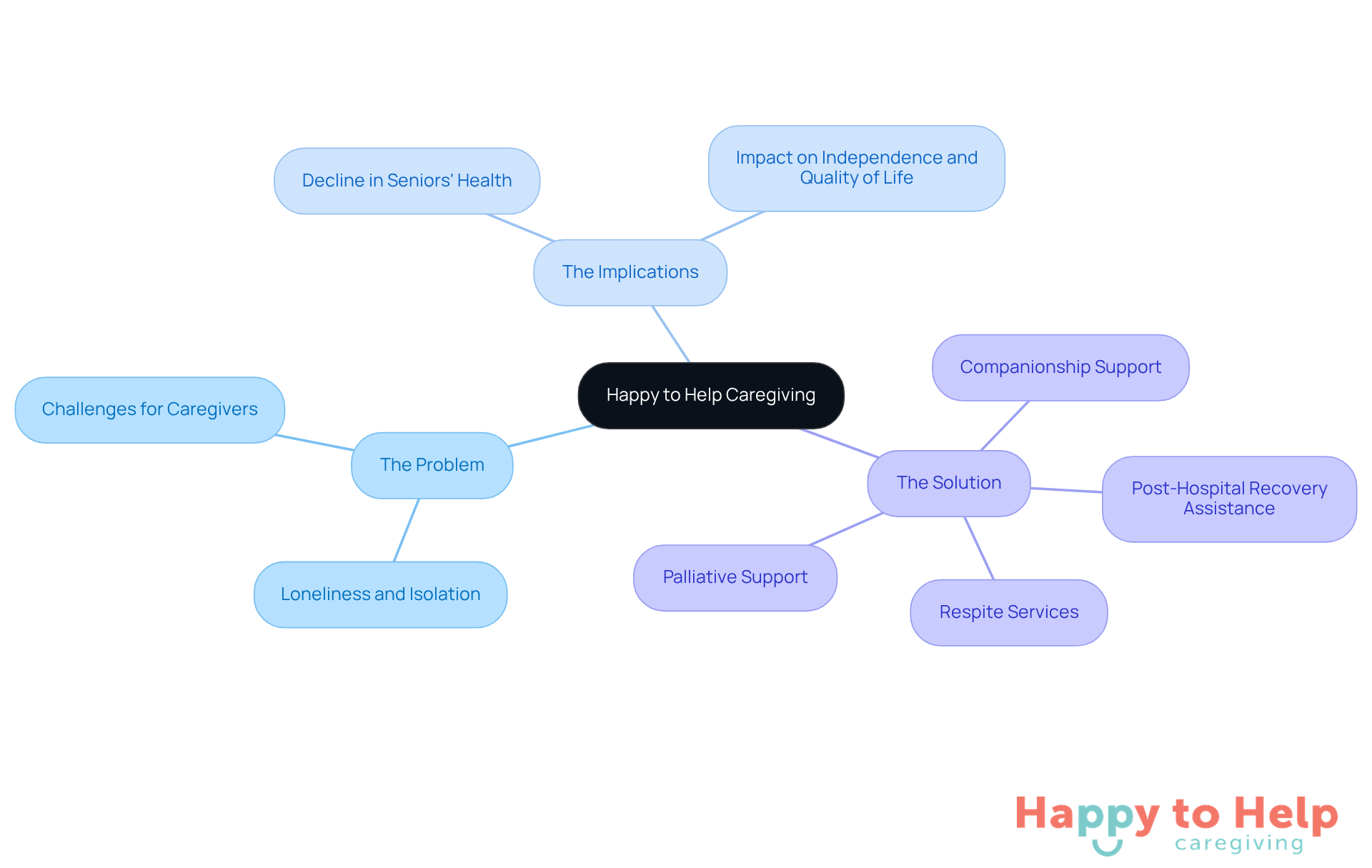
The Problem: Many seniors experience feelings of loneliness and isolation, which can significantly impact their emotional well-being. Caregivers often find it challenging to provide the necessary emotional support while managing other responsibilities.
The Implications: This lack of support can lead to a decline in the overall health of seniors, making it crucial for caregivers to address these emotional needs. Without proper companionship, seniors may struggle with their independence and quality of life.
The Solution: Happy to Help Caregiving excels in providing compassionate in-home assistance, including nursing care near me, that is meticulously customized to meet the unique needs of each client. Their comprehensive services include:
- Companionship support
- Post-hospital recovery assistance
- Respite services
- Palliative support
This personalized approach to nursing care near me not only enhances independence but also significantly improves the overall well-being of seniors.
Caregivers are specifically trained to engage clients in activities they enjoy, effectively alleviating feelings of loneliness and fostering a safe and nurturing home environment. Such dedicated companionship is crucial, as many caregivers express that emotional support is a vital component of their role. This emphasis on individualized support fosters a deep sense of safety and comfort for both clients and their families, making Happy to Help Caregiving a preferred option for those seeking effective and compassionate assistance solutions.
Research Local Nursing Care Options: Understand Your Choices
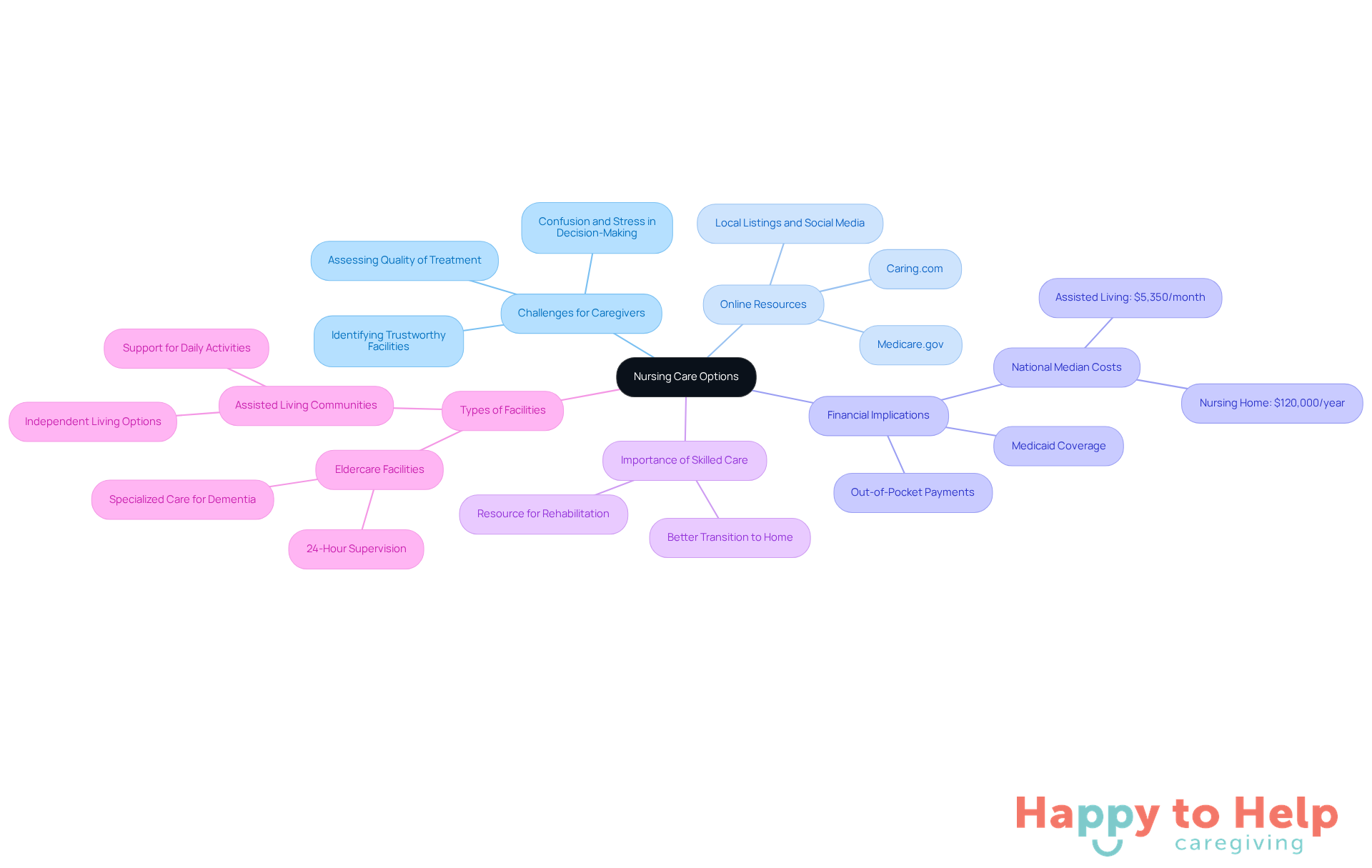
Finding options for nursing care near me can be challenging for caregivers. With over 1 million Americans in assisted living facilities, understanding the landscape of available options is crucial. Families often struggle to assess the quality of treatment and identify trustworthy eldercare facilities. This can lead to confusion and stress when making decisions for their loved ones.
To navigate this complex situation, caregivers can utilize a variety of online resources. Websites like Medicare.gov and Caring.com offer vital information about facility ratings, available options, and patient feedback. Additionally, local listings and social media platforms can help identify reliable eldercare facilities and nursing care near me for in-home assistance. By leveraging these resources, families can make informed choices that align with their loved ones' specific needs.
It's also important to consider the financial implications of long-term facility assistance. Many individuals pay out of pocket until they qualify for Medicaid, which is the primary payer for most residents in such facilities. Understanding these financial aspects can help families prepare for the costs associated with care.
Dr. Michael Tehrani emphasizes the value of skilled care facilities, stating, "These establishments are a resource they can use so that when they return to their residences, they are better equipped to confront what they encounter there." This highlights the importance of choosing the right care option to ensure a smoother transition back home.
Finally, grasping the distinctions between eldercare facilities and assisted living communities is essential. Long-term care homes provide 24-hour supervision, while assisted living centers cater to individuals needing help with just a few daily tasks. By understanding these differences, families can better navigate their options and find the right fit for their loved ones.
Check Credentials and Reviews: Ensure Quality Care
Choosing the right healthcare provider can be a daunting task for families. The problem lies in the overwhelming number of options and the potential risks of selecting an unqualified provider. Without proper verification of qualifications, families may inadvertently compromise the care their loved ones receive.
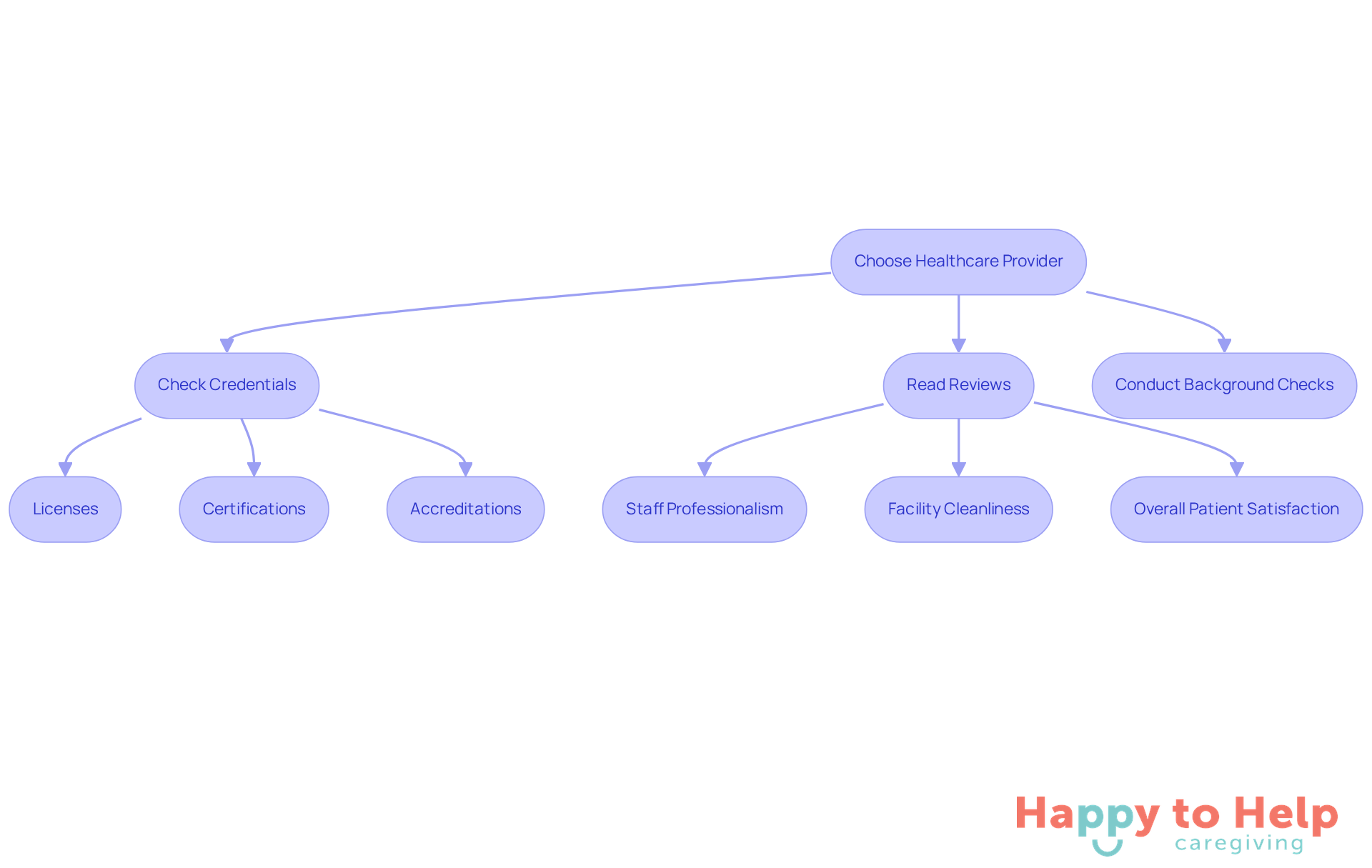
To address this issue, it’s crucial to verify the qualifications of potential providers. Check for:
- Licenses
- Certifications
- Accreditations
Websites like the National Council of State Boards of Nursing can assist in verifying nursing licenses. Additionally, reading reviews on platforms like Yelp and Google can provide insights into the experiences of other families. Look for consistent feedback regarding:
- Staff professionalism
- Facility cleanliness
- Overall patient satisfaction
Statistics reveal that 71% of patients utilize online reviews to evaluate healthcare providers, and consumers read an average of 10 reviews before feeling able to trust a local business. This research can significantly influence the standard of support your loved one receives.
Moreover, conducting thorough background checks ensures that all recruits meet credentialing and conduct standards before engaging with patients. This step is vital for protecting patient well-being. By prioritizing this due diligence, families can confidently select a provider that effectively meets their loved ones' needs.
Assess Services Offered: Match Care to Needs
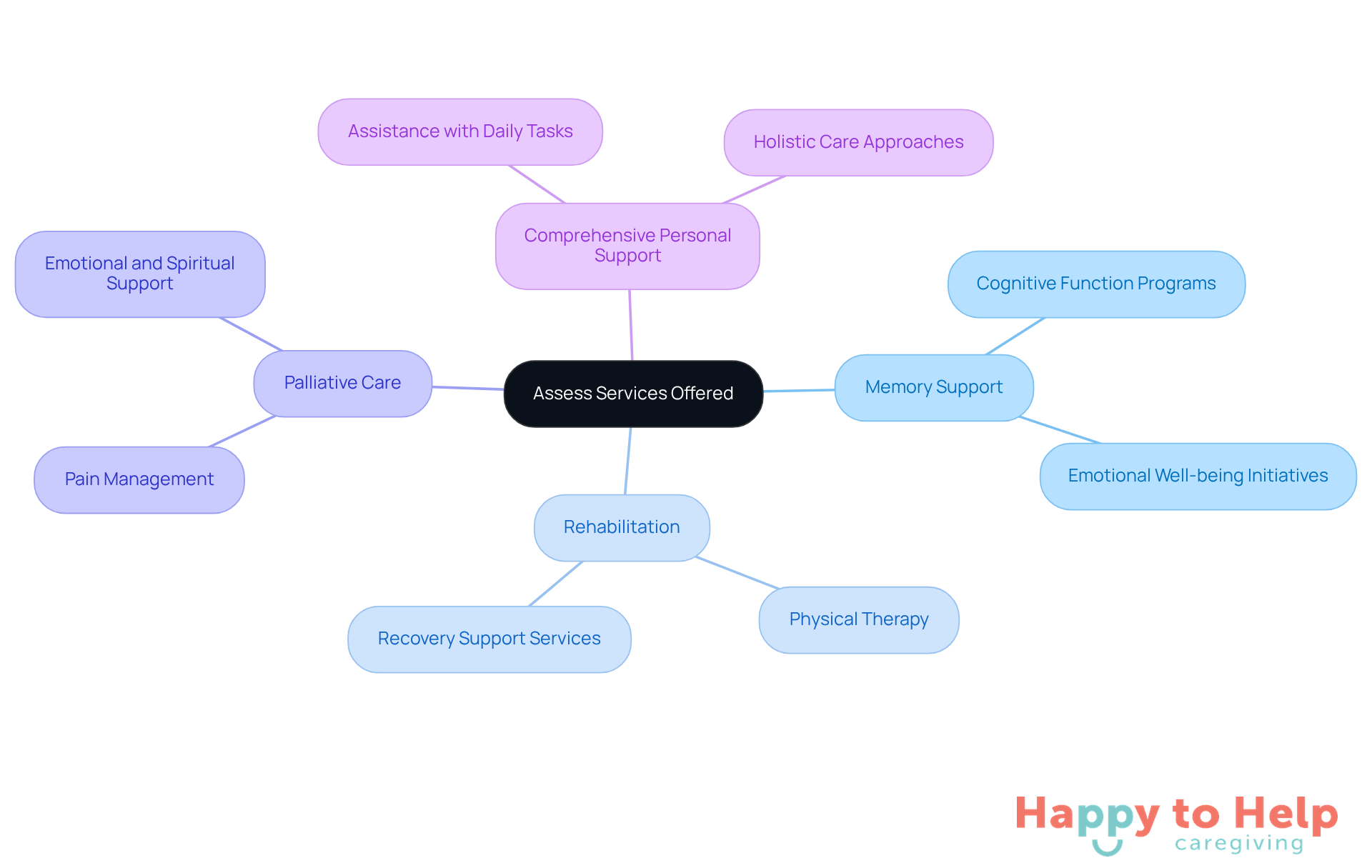
When evaluating nursing support options, caregivers face a significant challenge: the variety of services offered by different facilities. This diversity can greatly impact the quality of care that loved ones receive. For example, facilities may specialize in areas such as:
- Memory support
- Rehabilitation
- Palliative care
If your loved one has memory-related conditions, it’s essential to find facilities that provide tailored memory support programs designed to enhance cognitive function and emotional well-being. On the other hand, if rehabilitation is the priority, seek out providers that emphasize physical therapy and recovery support.
Additionally, consider the availability of comprehensive personal support options, especially if assistance with daily tasks is necessary. Facilities that adopt a holistic approach to care-addressing both medical and personal needs-can significantly enhance the effectiveness of the support provided. By aligning medical services with specific health conditions and personal preferences, families can ensure their loved ones receive the most appropriate and effective assistance, fostering a sense of safety and comfort in their living environment.
Understand Costs and Payment Options: Budget for Care
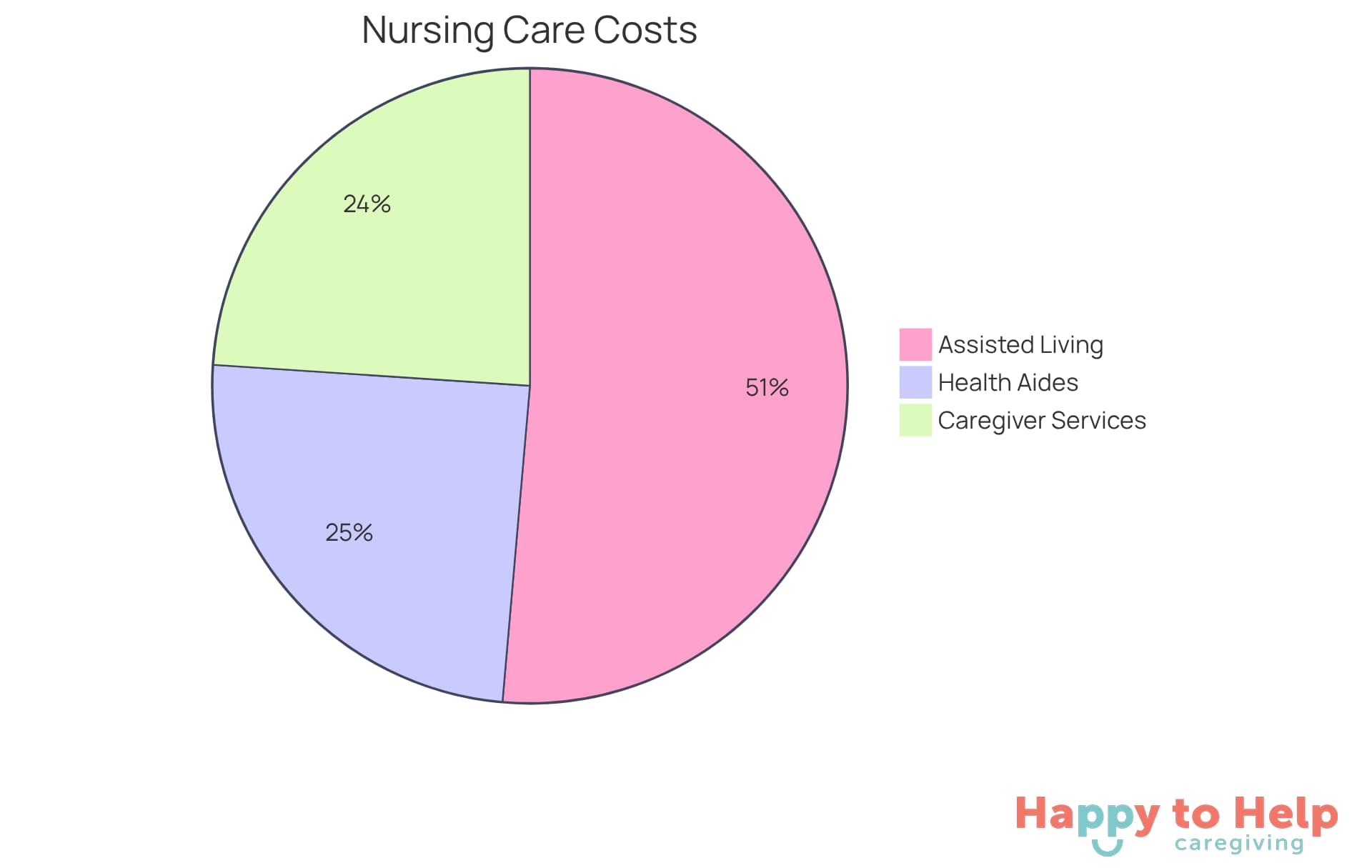
The expenses related to nursing care near me can vary greatly based on factors like location, the specific services provided, and the necessary level of care. Families face the challenge of understanding these costs, which can lead to financial strain if not properly managed. For instance, in 2024, the national median expense for health aides is roughly $34 per hour, while caregiver services average about $33 per hour. Additionally, the annual median cost for assisted living communities has risen to $70,800, underscoring the importance of careful financial planning.
To effectively budget for these expenses, exploring various payment options is crucial. Medicare may cover skilled assistance under specific conditions, such as after a three-day hospital stay. Medicaid often covers 100% of facility costs for eligible beneficiaries, although some may incur copayments. Long-term health insurance can also provide financial assistance, offering more flexibility compared to public programs. Families should consider private pay options, which allow for greater choice but may limit access to publicly funded programs.
Understanding these financial elements enables families to budget efficiently for nursing care near me, ensuring they are prepared for the costs associated with elder support and preventing unforeseen expenses. As the aging population continues to grow, with forecasts suggesting that 7 out of 10 individuals will need long-term support in their lifetime, proactive financial planning becomes increasingly vital.
Visit Facilities or Meet Caregivers: Get a Personal Feel
Finding the right care facility for your loved ones can be a daunting task. With approximately 1.2 million people residing in over 15,000 certified nursing homes in the U.S. as of July 2022, making informed decisions is crucial. The challenge lies in ensuring that the environment is clean, the staff is attentive, and the interactions between caregivers and residents are positive.
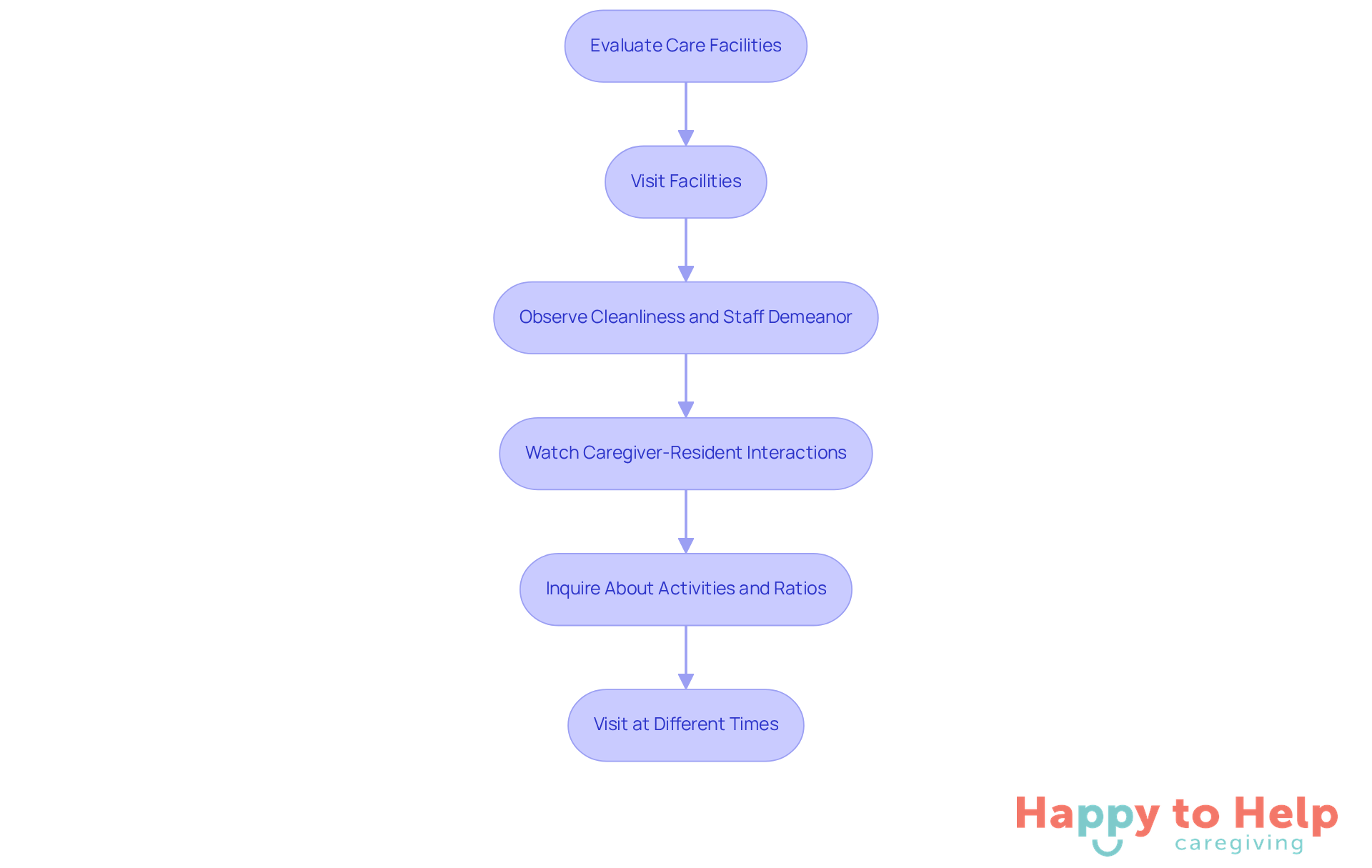
To address these concerns, consider:
- Visiting care facilities or arranging meetings with potential caregivers.
- During your visit, pay attention to the cleanliness of the environment and the demeanor of the staff.
- Observe how caregivers interact with residents, as these personal connections can significantly influence the overall well-being of your loved ones.
- Inquire about daily activities, staff-to-resident ratios, and how support plans are created.
- Visiting at various times of the day can provide a thorough perspective on daily routines and staffing levels.
As Tia Walker noted, "Caregiving often calls us to lean into love we didn’t know was possible," highlighting the emotional depth of caregiving. Personal interactions during your visits can offer invaluable insights into the standard of support, helping families feel more confident in their choices. By taking these steps, you can ensure that your loved ones receive the quality care they deserve.
Communicate Clearly with Caregivers: Establish Expectations
Effective communication with caregivers presents a significant challenge that can impact the quality of care your loved one receives. When expectations regarding support routines, preferences, and specific medical requirements are unclear, it can lead to misunderstandings and unmet needs.
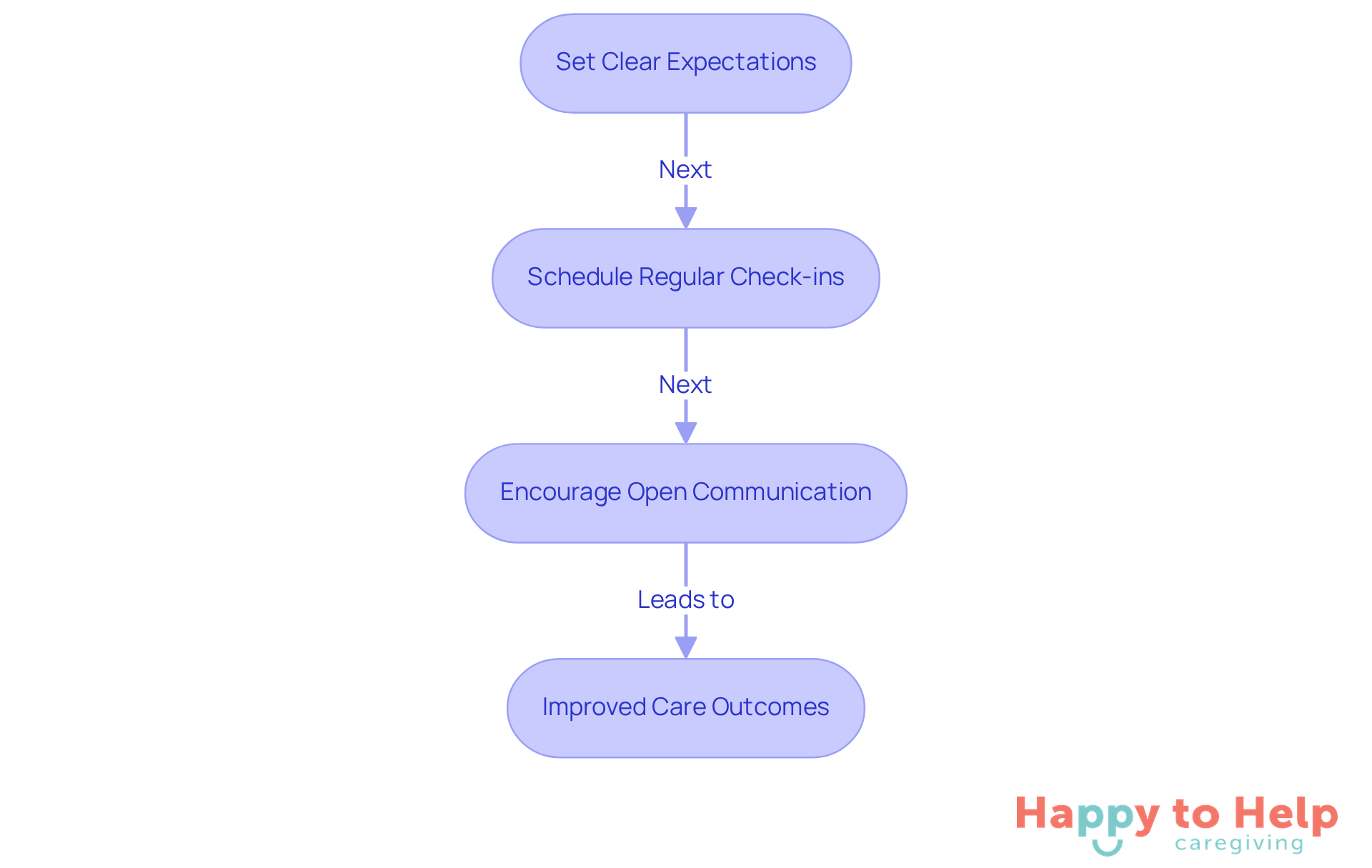
To address this issue, it’s essential to establish clear expectations from the outset. Regularly checking in with caregivers allows for discussions about any changes in your loved one's condition or needs. This ongoing dialogue fosters trust and collaboration, ultimately leading to improved outcomes.
Here are some actionable tips to enhance communication:
- Set clear expectations: Outline support routines and preferences clearly.
- Schedule regular check-ins: Discuss any changes in condition or needs.
- Encourage open communication: Create an environment where caregivers feel comfortable sharing concerns.
By implementing these strategies, you can ensure that your loved one's needs are met effectively.
Ensure Flexibility in Care Plans: Adapt to Changing Needs
Support requirements can change over time, presenting a challenge for caregivers. If support plans aren't adaptable, they may become ineffective, leaving loved ones without the necessary assistance. This situation can lead to increased stress for both caregivers and those receiving care.
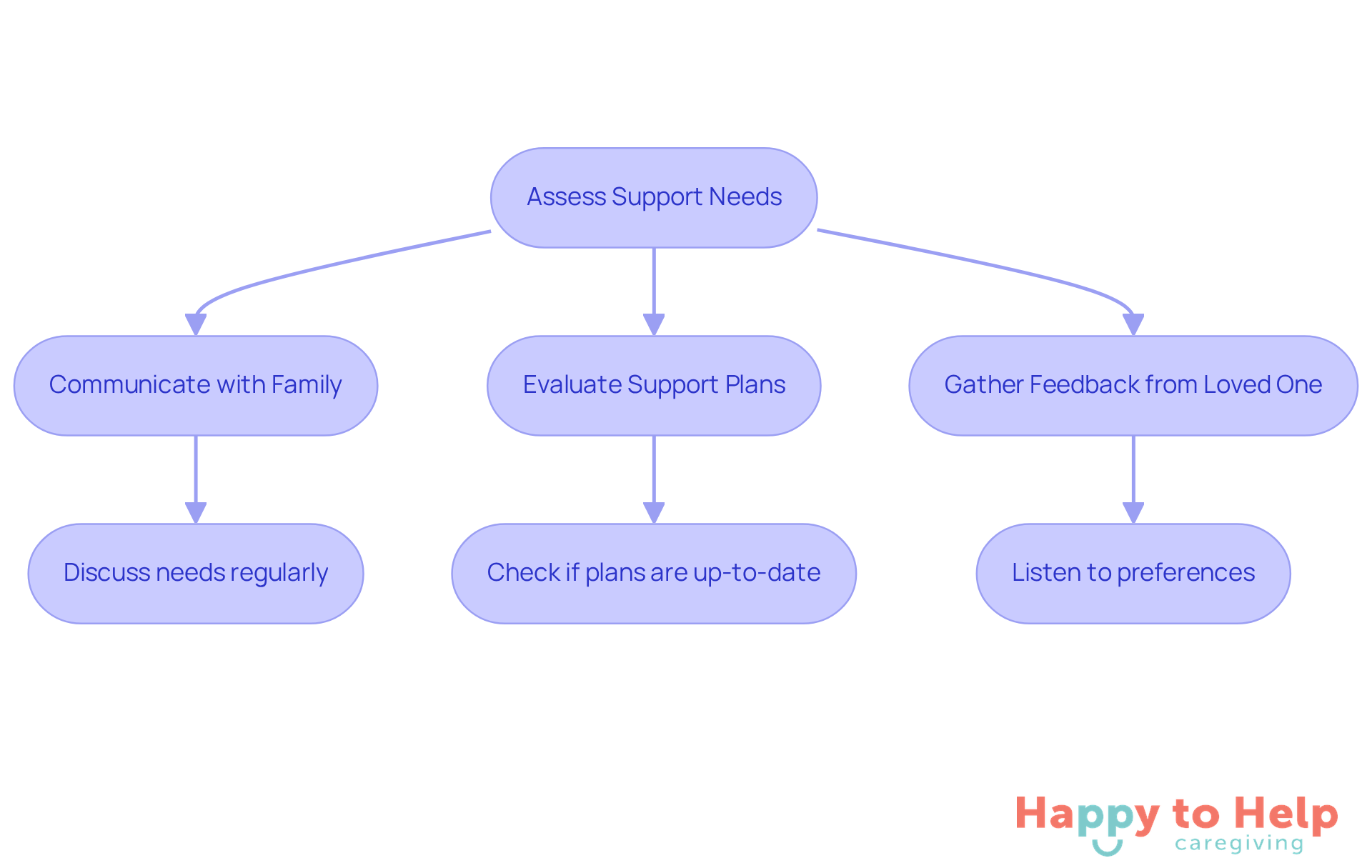
To address this issue, it's essential to engage in open discussions with caregivers about how they can adjust services based on your loved one's evolving health status or preferences. Regular evaluations and transparent communication are vital in recognizing when modifications are needed. By staying proactive, caregivers can ensure that support remains relevant and effective.
Here are some actionable tips for caregivers:
- Communicate regularly with family members to understand their needs better.
- Evaluate support plans periodically to ensure they align with current health conditions.
- Be open to feedback from your loved one about their preferences and comfort.
By implementing these strategies, caregivers can create a more responsive and supportive environment for their loved ones.
Consider Caregiver Experience and Training: Quality Matters
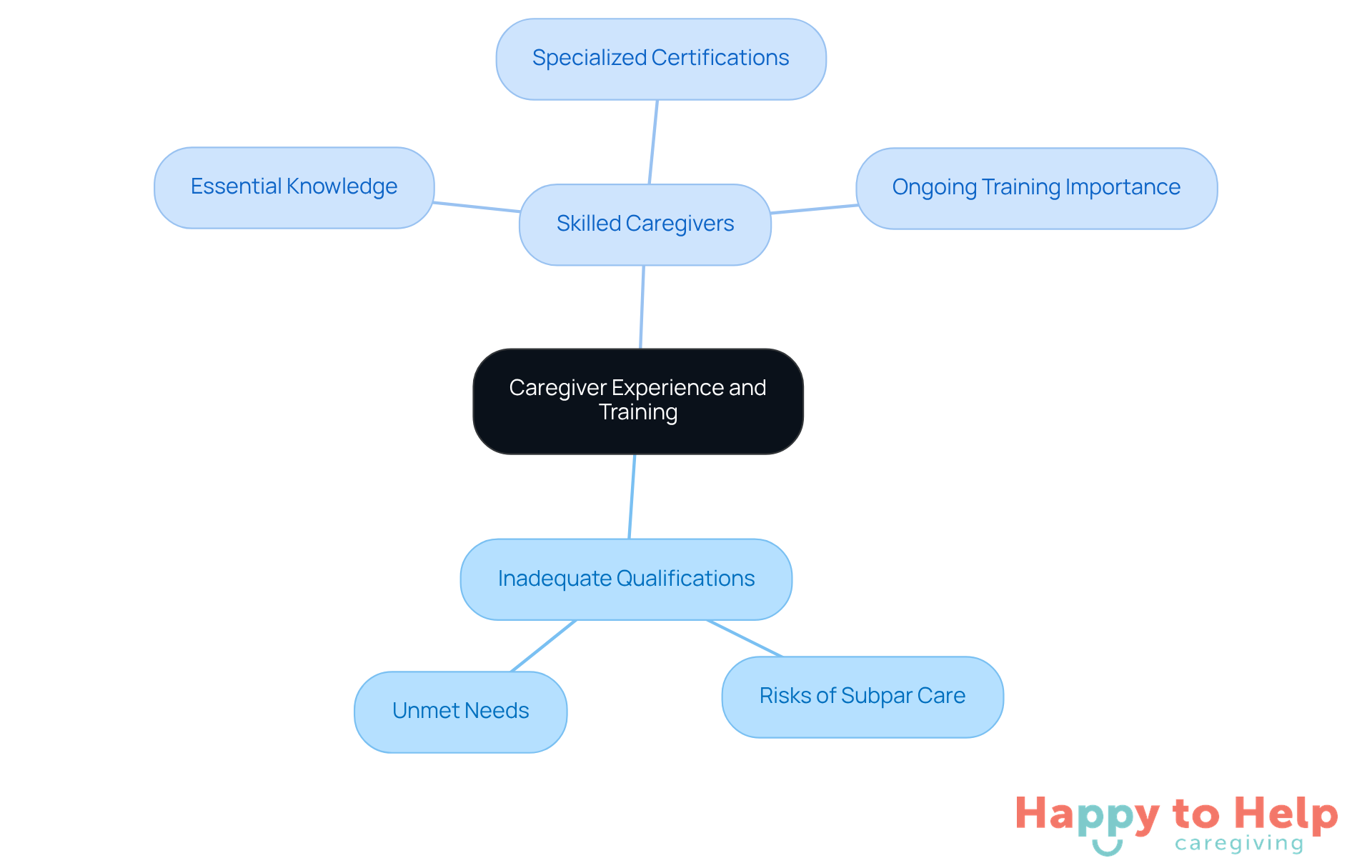
When selecting a provider for nursing care near me, it's crucial to consider the experience and training of the attendants. Inadequate qualifications can lead to subpar care, leaving patients vulnerable to unmet needs. This is a significant concern, as skilled caregivers are often better equipped to handle complex support requirements.
To ensure quality nursing care near me, inquire about the caregivers' qualifications and any ongoing training programs they are involved in. Ask about specialized certifications they may hold. Skilled caregivers not only possess essential knowledge but also bring a higher level of assistance to those in need. By prioritizing these factors, you can make informed decisions that uphold the quality of care.
Build Trust and Comfort: Foster a Positive Care Relationship
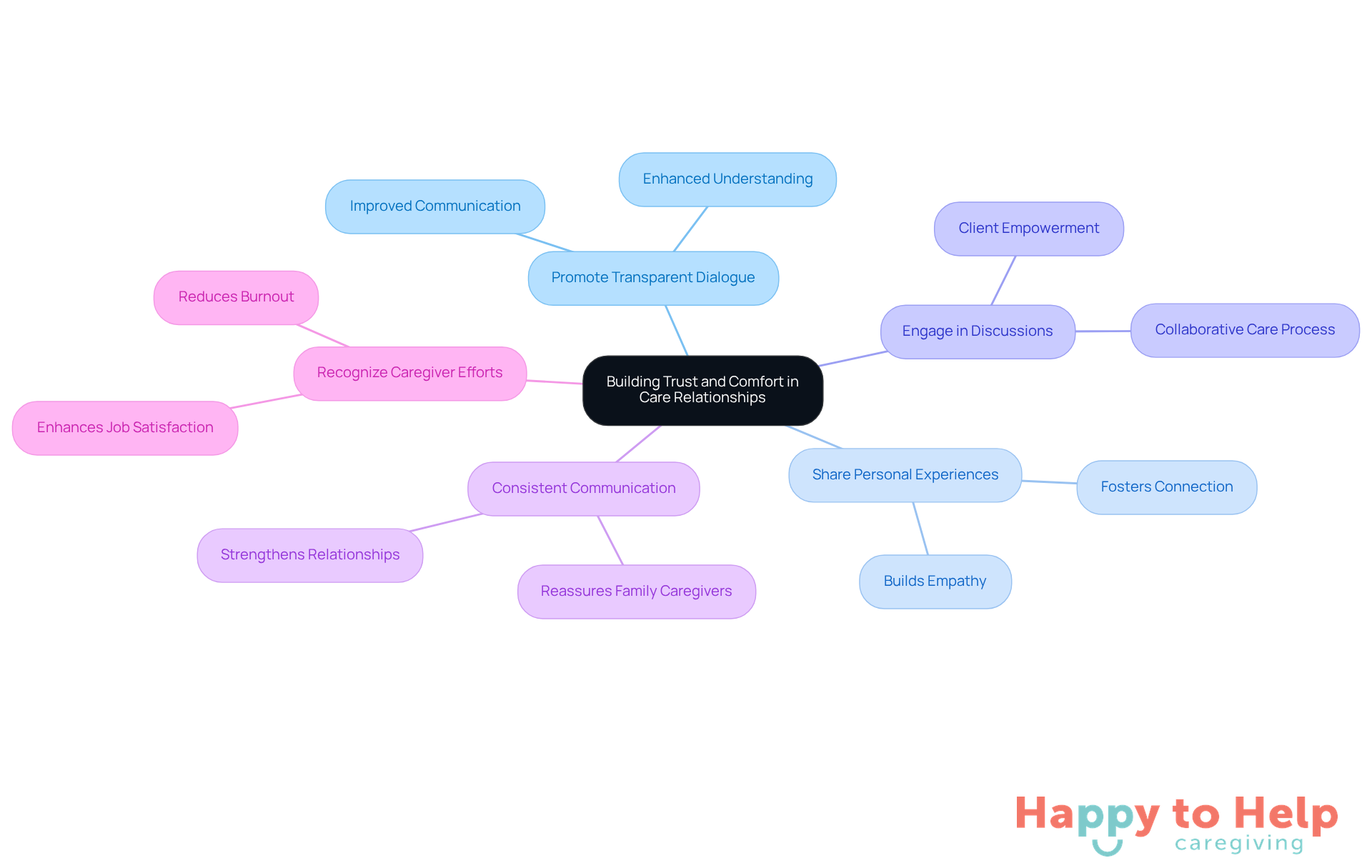
Establishing a trusting relationship with caregivers is a significant challenge that can impact the well-being of your loved one. Without this trust, clients may feel uncomfortable and insecure, which can hinder their overall care experience.
To address this issue, it's essential to promote transparent dialogue. Share personal experiences and engage caregivers in discussions about treatment preferences. This approach not only fosters a supportive environment but also ensures that clients feel valued and understood.
By building a positive relationship with caregivers, you create a foundation for better care experiences. Implementing these strategies can lead to improved communication and a more collaborative care process.
Making the Right Choice
Finding the right nursing care for loved ones can be a daunting challenge. Caregivers often face the emotional weight of ensuring their family members receive not just medical attention, but also the emotional support they need to combat loneliness and isolation. This is especially true for seniors, who may feel disconnected from their communities.
To address these challenges, it’s crucial to prioritize personalized in-home care services. Researching local options, verifying credentials, and assessing the specific services offered can help caregivers make informed decisions. Understanding the financial implications and exploring payment options can also alleviate stress for families, ensuring they can focus on what truly matters: the well-being of their loved ones.
Open communication with caregivers is essential. Establishing trust lays the groundwork for a positive care relationship, which can lead to better outcomes. As the demand for nursing care continues to rise, families are encouraged to take proactive steps in their search.
By leveraging available resources, asking the right questions, and prioritizing quality and compassion, caregivers can ensure their loved ones receive the support they deserve. This thoughtful approach not only enhances the well-being of seniors but also fosters a nurturing environment that respects their dignity and independence.
https://iframe.tely.ai/cta/eyJhcnRpY2xlX2lkIjogIjY5MmY5MTk1ZGM0MTVjZWNlZTQ2NmM3NCIsICJjb21wYW55X2lkIjogIjY4ZWU1ZGNhNzMxNzYyNTU3ZjNjOTVjMSIsICJpbmRleCI6IG51bGwsICJ0eXBlIjogImFydGljbGUifQ==Frequently Asked Questions
What emotional challenges do seniors face, and why is support important?
Many seniors experience feelings of loneliness and isolation, which can negatively impact their emotional well-being. Without proper companionship, seniors may struggle with their independence and overall quality of life, making emotional support crucial for their health.
What services does Happy to Help Caregiving provide?
Happy to Help Caregiving offers personalized in-home assistance, including companionship support, post-hospital recovery assistance, respite services, and palliative support, all tailored to meet the unique needs of each client.
How does Happy to Help Caregiving improve the well-being of seniors?
Their compassionate approach not only enhances seniors' independence but also significantly improves their overall well-being by engaging them in enjoyable activities and alleviating feelings of loneliness.
What resources can caregivers use to find nursing care options?
Caregivers can utilize online resources such as Medicare.gov and Caring.com to access information about facility ratings, available options, and patient feedback. Local listings and social media platforms can also help identify reliable eldercare facilities.
What financial considerations should families keep in mind regarding long-term care?
Many individuals pay out of pocket for care until they qualify for Medicaid, which is the primary payer for most residents in assisted living facilities. Understanding these financial aspects is important for families to prepare for the costs associated with care.
What is the difference between eldercare facilities and assisted living communities?
Long-term care homes provide 24-hour supervision, while assisted living centers cater to individuals who need help with only a few daily tasks. Understanding these distinctions helps families navigate their options more effectively.
How can families ensure they choose a qualified healthcare provider?
Families should verify the qualifications of potential providers by checking for licenses, certifications, and accreditations. Websites like the National Council of State Boards of Nursing can assist in verifying nursing licenses.
What role do online reviews play in selecting a healthcare provider?
Online reviews are crucial as 71% of patients use them to evaluate healthcare providers. Families typically read about 10 reviews to feel confident in their choice, as consistent feedback on staff professionalism, facility cleanliness, and overall patient satisfaction can influence care quality.
Why is conducting background checks on healthcare providers important?
Conducting thorough background checks ensures that all recruits meet credentialing and conduct standards, protecting patient well-being and helping families select a provider that effectively meets their loved ones' needs.
List of Sources
- Happy to Help Caregiving: Personalized In-Home Care Services
- Home-Based Care Companies Improve Outcomes By Training Family Caregivers (https://homehealthcarenews.com/2025/10/home-based-care-companies-improve-outcomes-by-training-family-caregivers)
- Demand for Home Care Expected to Surge 22% by 2034 (https://respiratory-therapy.com/public-health/healthcare-policy/home-care/demand-home-care-expected-surge-22-2034)
- Family caregivers prefer in-home care over senior living, new industry report finds (https://mcknightshomecare.com/news/family-caregivers-prefer-in-home-care-over-senior-living-new-industry-report-finds)
- Caregiver Statistics: Demographics (https://caregiver.org/resource/caregiver-statistics-demographics)
- News | Help at Home (https://helpathome.com/news)
- Research Local Nursing Care Options: Understand Your Choices
- Facts & Figures (https://ahcancal.org/Assisted-Living/Facts-and-Figures/Pages/default.aspx)
- FastStats (https://cdc.gov/nchs/fastats/nursing-home-care.htm)
- Nursing Homes: A Guide for 2026 (https://health.usnews.com/best-nursing-homes/articles/nursing-homes-guide)
- Senior Care Facility Statistics (https://rosewood-nursing.com/post/senior-care-facility-statistics)
- Check Credentials and Reviews: Ensure Quality Care
- DISA | Healthcare Hiring Solutions: Screening and Credentialing (https://disa.com/news/streamlining-healthcare-hiring-how-integrated-background-screening-and-credentialing-improves-patient-safety)
- 10 Inspiring Patient Experience Quotes | Relias (https://relias.com/blog/patient-experience-quotes)
- Nursing Workforce Fact Sheet (https://aacnnursing.org/news-data/fact-sheets/nursing-workforce-fact-sheet)
- 4 Key Comparisons of Home Care Providers in Burlington, NC - Happy To Help (https://happytohelpcaregiving.com/4-key-comparisons-of-home-care-providers-in-burlington-nc)
- Assess Services Offered: Match Care to Needs
- CMS Issues Rule Repealing Minimum Staffing Mandate (https://ahcancal.org/News-and-Communications/Blog/Pages/CMS-Issues-Rule-Repealing-Minimum-Staffing-Mandate.aspx)
- FastStats (https://cdc.gov/nchs/fastats/nursing-home-care.htm)
- CMS repeals minimum staffing requirements for skilled nursing, long-term care facilities | AHA News (https://aha.org/news/headline/2025-12-02-cms-repeals-minimum-staffing-requirements-skilled-nursing-long-term-care-facilities)
- A Look at Nursing Facility Characteristics Between 2015 and 2024 | KFF (https://kff.org/medicaid/a-look-at-nursing-facility-characteristics)
- Understand Costs and Payment Options: Budget for Care
- Cost of Long Term Care by State | Cost of Care Report | Carescout (https://carescout.com/cost-of-care)
- Costs of Long Term Care | FLTCIP (https://ltcfeds.gov/long-term-care/costs)
- Nursing Home Costs in 2025 by State and Type of Care (https://seniorliving.org/nursing-homes/costs)
- New Survey Highlights Devastating Impact of Medicaid Reductions on Nursing Homes (https://ahcancal.org/News-and-Communications/Press-Releases/Pages/New-Survey-Highlights-Devastating-Impact-of-Medicaid-Reductions-on-Nursing-Homes.aspx)
- Long-term care costs can be a 'huge problem,' experts say. Here's why (https://cnbc.com/2025/05/17/why-long-term-care-costs-can-be-a-huge-problem.html)
- Visit Facilities or Meet Caregivers: Get a Personal Feel
- 20 Caregiver Quotes That Will Inspire You - MD Home Health (https://mdhomehealth.com/2018/06/10/20-caregiver-quotes-that-will-inspire-you)
- Caregiver Quotes: 50+ Inspiring Encouragement Quotes for Strength (https://h2hhc.com/blog/inspiring-caregiver-quotes)
- 25+ Inspirational Quotes for Caregivers (https://caringseniorservice.com/blog/quotes-for-caregiver-inspiration)
- Nursing Homes: Visiting Multiple Facilities Eases Decisions (https://theseniorsource.org/visit-multiple-nursing-homes-for-decision-making)
- As closures kill community nursing homes, a new study confirms distance drives down needed visits (https://mcknights.com/news/a-new-study-confirms-distance-drives-down-needed-visits-for-residents)
- Communicate Clearly with Caregivers: Establish Expectations
- Effective Communication Strategies in Senior Care: Empowering Residents, Families, and Caregivers - MedCity News (https://medcitynews.com/2023/12/effective-communication-strategies-in-senior-care-empowering-residents-families-and-caregivers)
- Effective Communication as a Caregiver | Always Caring of CT (https://alwayscaringct.com/news/effective-communication-as-a-caregiver)
- IGNITE the Communication with Caregivers (https://gotrkc.org/news/details/ignite-the-communication-with-caregivers)
- Effective Caregiver Communication: Tips, Barriers, and Benefits (https://scphealth.com/blog/effective-caregiver-communication-tips-barriers-and-benefits)
- Effective communication with caregivers to prevent unintentional injuries in children under seven years. A systematic review (https://sciencedirect.com/science/article/pii/S0738399122001896)
- Ensure Flexibility in Care Plans: Adapt to Changing Needs
- Elderly Care Statistics (https://rosewood-nursing.com/post/elderly-care-statistics)
- Fact Sheet: Trends in Family Care for Older Americans (https://prb.org/resources/fact-sheet-trends-in-family-care-for-older-americans)
- Number of Family Caregivers Supporting Older Adults Increased Nearly One-Third Between 2011 and 2022 | Johns Hopkins Bloomberg School of Public Health (https://publichealth.jhu.edu/2025/number-of-family-caregivers-supporting-older-adults-increased-nearly-one-third-between-2011-and-2022)
- Care planning model allows for more flexibility in the event of serious illness (https://mcknights.com/news/care-planning-model-allows-for-more-flexibility-in-the-event-of-serious-illness)
- Consider Caregiver Experience and Training: Quality Matters
- Caregiver Statistics: Work and Caregiving (https://caregiver.org/resource/caregiver-statistics-work-and-caregiving)
- AHCA/NCAL Launches New Workforce Campaign, ‘Caregivers For Tomorrow’ (https://ahcancal.org/News-and-Communications/Press-Releases/Pages/AHCA-NCAL-Launches-New-Workforce-Campaign-Caregivers-For-Tomorrow.aspx)
- Home-Based Care Companies Improve Outcomes By Training Family Caregivers (https://homehealthcarenews.com/2025/10/home-based-care-companies-improve-outcomes-by-training-family-caregivers)
- D-CARE study finds caregiver satisfaction higher with dementia care programs than usual care (https://uclahealth.org/news/release/d-care-study-finds-caregiver-satisfaction-higher-with)
- New Report Reveals Crisis Point for America’s 63 million Family Caregivers (https://press.aarp.org/2025-07-24-New-Report-Reveals-Crisis-Point-for-Americas-63-million-Family-Caregivers)
- Build Trust and Comfort: Foster a Positive Care Relationship
- The Importance of Caregiver-Client Relationships in Senior Well-Being (https://homeinstead.com/home-care/usa/in/goshen/588/news-and-media/the-importance-of-caregiver-client-relationships-in-senior-well-being)
- The Importance of Trust Building with Family Care Partners (https://blog.ageucate.com/the-importance-of-trust-building-with-family-care-partners)
- Building Trust with Family Caregivers in Home Care (https://carevoyant.com/home-health-blog/build-trust-with-family-caregivers-home-care)
- Building Trust Between Families and Companion Caregivers (https://humancareny.com/blog/building-trust-between-families-and-companion-caregivers)
- Building Trust in Senior Care: It Starts With One Moment (https://care-one.com/blog/building-trust-in-senior-care)