
The Importance of 10 VA Benefits for Home Health Care
Navigating VA benefits for home health care presents a significant challenge for caregivers of former military personnel. Many veterans struggle to secure adequate support as they transition to civilian life, making it essential for caregivers to understand the available resources. This article explores ten crucial VA benefits that can greatly improve the quality of life for veterans, equipping caregivers with the knowledge they need to advocate effectively.
How can families ensure their loved ones receive the personalized in-home care they deserve amidst the complexities of eligibility and application processes? By understanding these benefits, caregivers can better navigate the system and provide the support their loved ones need.
Happy to Help Caregiving: Personalized In-Home Care for Veterans
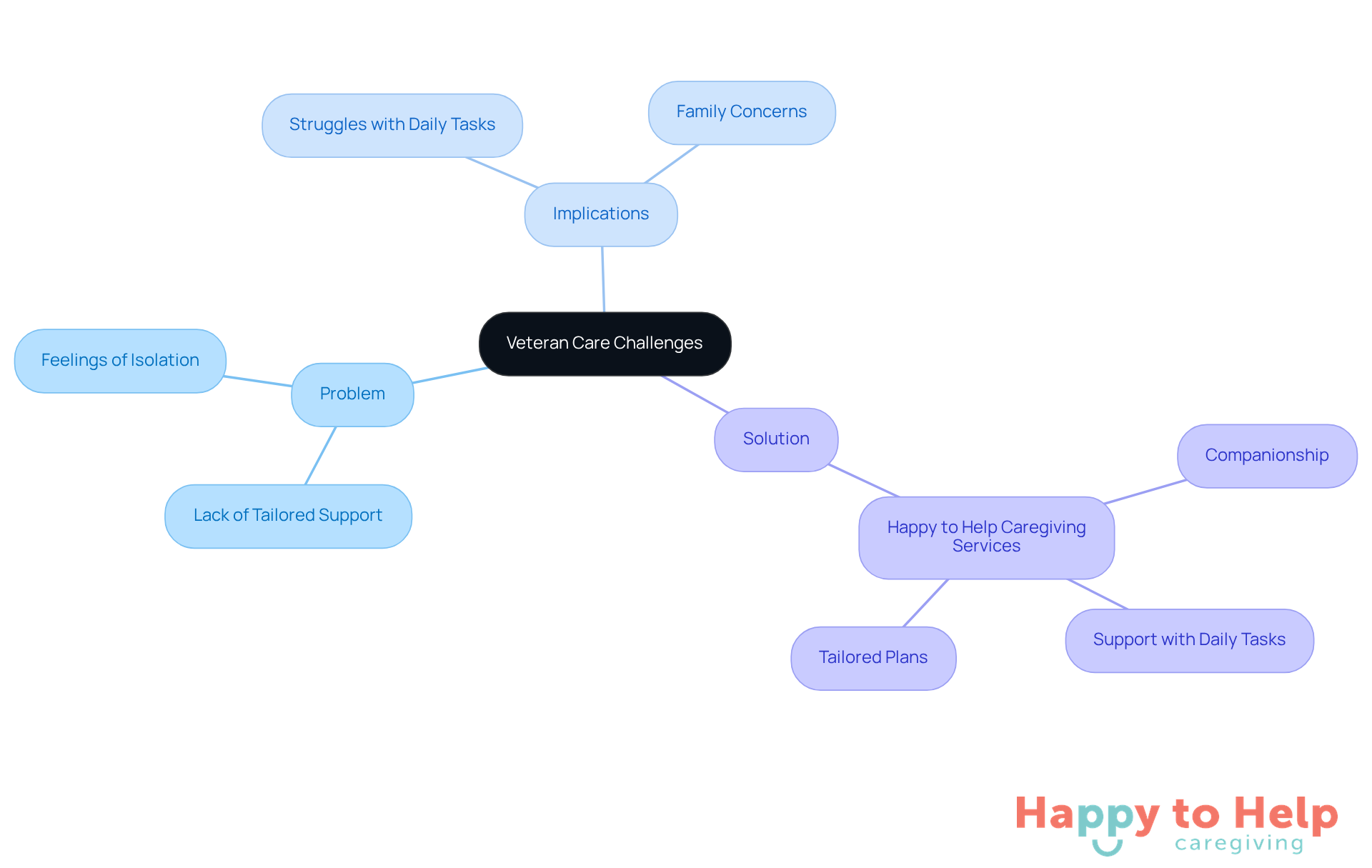
Problem: Many former service members face challenges in receiving adequate support as they transition to civilian life. This lack of tailored assistance can lead to feelings of isolation and hinder their overall well-being.
Agitate: The implications are significant. Without proper care, these individuals may struggle with daily tasks, impacting their independence and quality of life. Families often worry about their loved ones, feeling helpless as they navigate these challenges alone. With the demand for VA benefits home health care for former military personnel expected to increase by over 50% by 2040, it’s crucial for families to act now.
Solution: Happy to Help Caregiving provides customized in-home assistance, including VA benefits home health care, specifically designed for former service members. Their services include:
- Companionship
- Support with daily tasks
- Tailored plans that promote independence and well-being
This approach not only enhances the quality of life for these individuals but also provides peace of mind for their families, knowing their loved ones are in capable hands. Additionally, the Elizabeth Dole Act supports caregivers by improving training and education programs, addressing the unique challenges they face. Care providers emphasize the importance of personalized assistance, noting that individualized support significantly impacts the well-being and quality of life of former service members.
Veterans Independence Program: Home Care Benefits and Services
The Veterans Independence Program (VIP) addresses a significant problem: many service members struggle to live independently due to a lack of adequate VA benefits home health care. This challenge can lead to increased financial strain on families and caregivers, who often find it difficult to provide the necessary support for daily activities.
The implications of this issue are profound. Many former service members may not be aware that they qualify for VA benefits home health care, which can provide financial support for essential services like personal assistance, meal preparation, and housekeeping. For instance, individuals receiving a VA pension might also be eligible for additional Aid and Attendance benefits if they require help with daily tasks. This support can greatly enhance their quality of life, yet many remain unaware of their options.
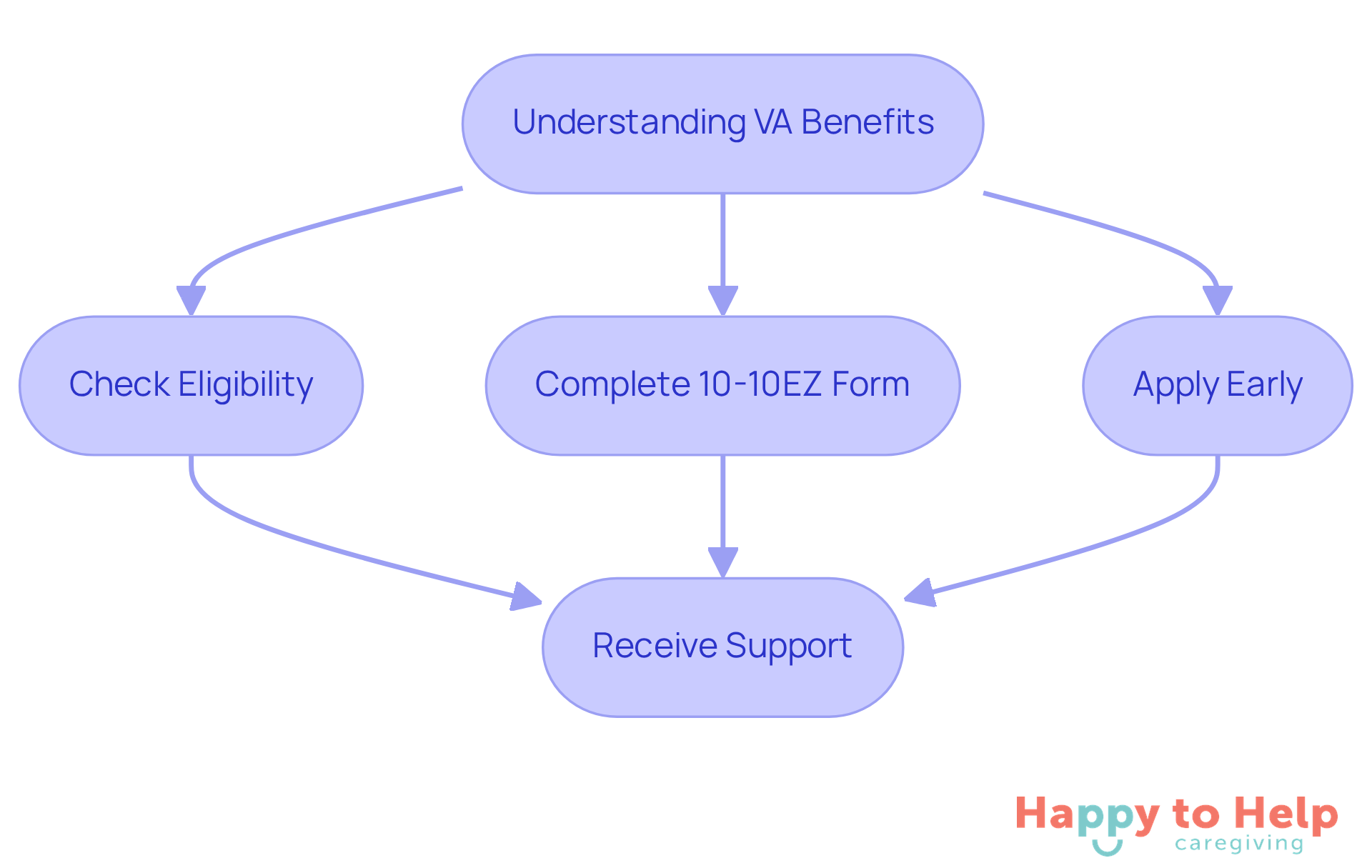
To tackle this problem, caregivers must understand the eligibility criteria and application processes for these benefits. Completing the 10-10EZ form is a crucial step for families seeking VA benefits home health care. By applying early, families can avoid out-of-pocket expenses while waiting for approval, ensuring timely access to necessary care.
Real-world examples highlight the impact of VIP on former service members' lives. Take James Carey, a former Marine, who faced a reduction in his support hours. This prompted him to engage with his Primary Health team to explore options under the VIP. After persistent efforts, his assistance hours were increased to 50 hours each week, showcasing the challenges many face in securing adequate support.
Experts stress the importance of proactive involvement in navigating these benefits. Understanding the available resources and advocating for necessary support can empower caregivers to maximize the assistance their loved ones receive. The recent bipartisan Dole Act, enacted on January 2, 2025, further aims to enhance access to home and community-based assistance for former military personnel, including VA benefits home health care, thereby improving the support available through programs like VIP.
In summary, the VIP not only fosters the autonomy of former service members but also equips caregivers with the resources needed to assist their loved ones effectively. By staying informed and proactive, families can ensure a sense of security and well-being at home.
Eligibility for VA Home Care Programs: Who Qualifies?
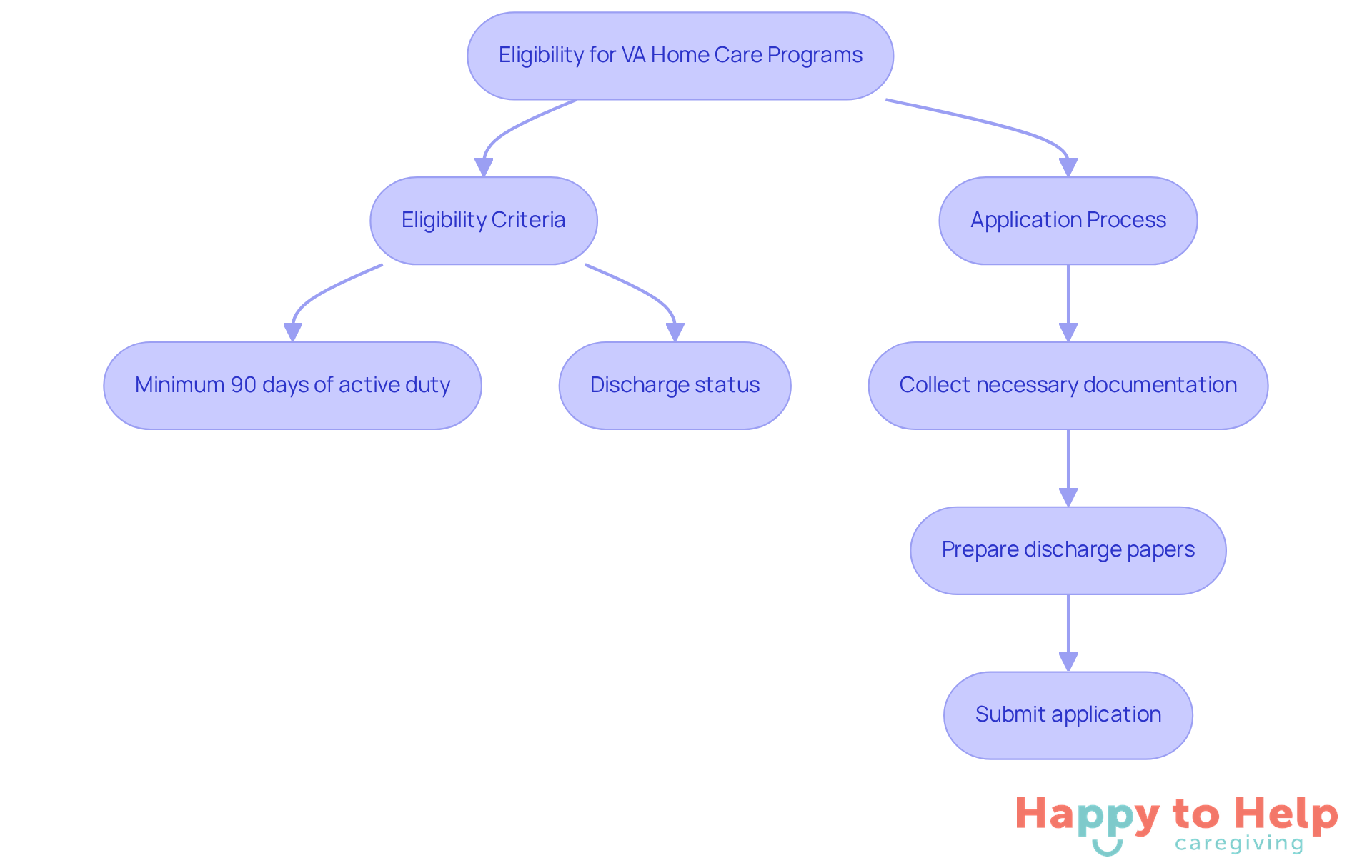
Qualifying for VA benefits home health care programs can be a challenge for former military personnel. They must meet specific criteria, including service duration and discharge status. Generally, individuals who served a minimum of 90 days of active duty, including at least one day during a wartime period, are eligible. However, the complexity of applying for VA benefits home health care can be daunting, as noted by Jenn Kerfoot, chief strategy and growth officer at DUOS: 'The complexity of applying for benefits is daunting.' This complexity can discourage many from seeking the assistance they deserve.
To address this issue, caregivers can take actionable steps to ease the application process. First, it’s crucial to collect necessary documentation, such as discharge papers and medical records. This preparation can significantly streamline the process and ensure that former service members receive the benefits they are entitled to. Additionally, the new law enacted on January 2, 2025, aims to enhance access to VA benefits home health care for former service members, broadening aid to almost 15,000 legacy participants. By understanding the requirements and gathering the right documents, caregivers can help navigate the system more effectively.
VA Home Care Funding: Understanding Payment Structures
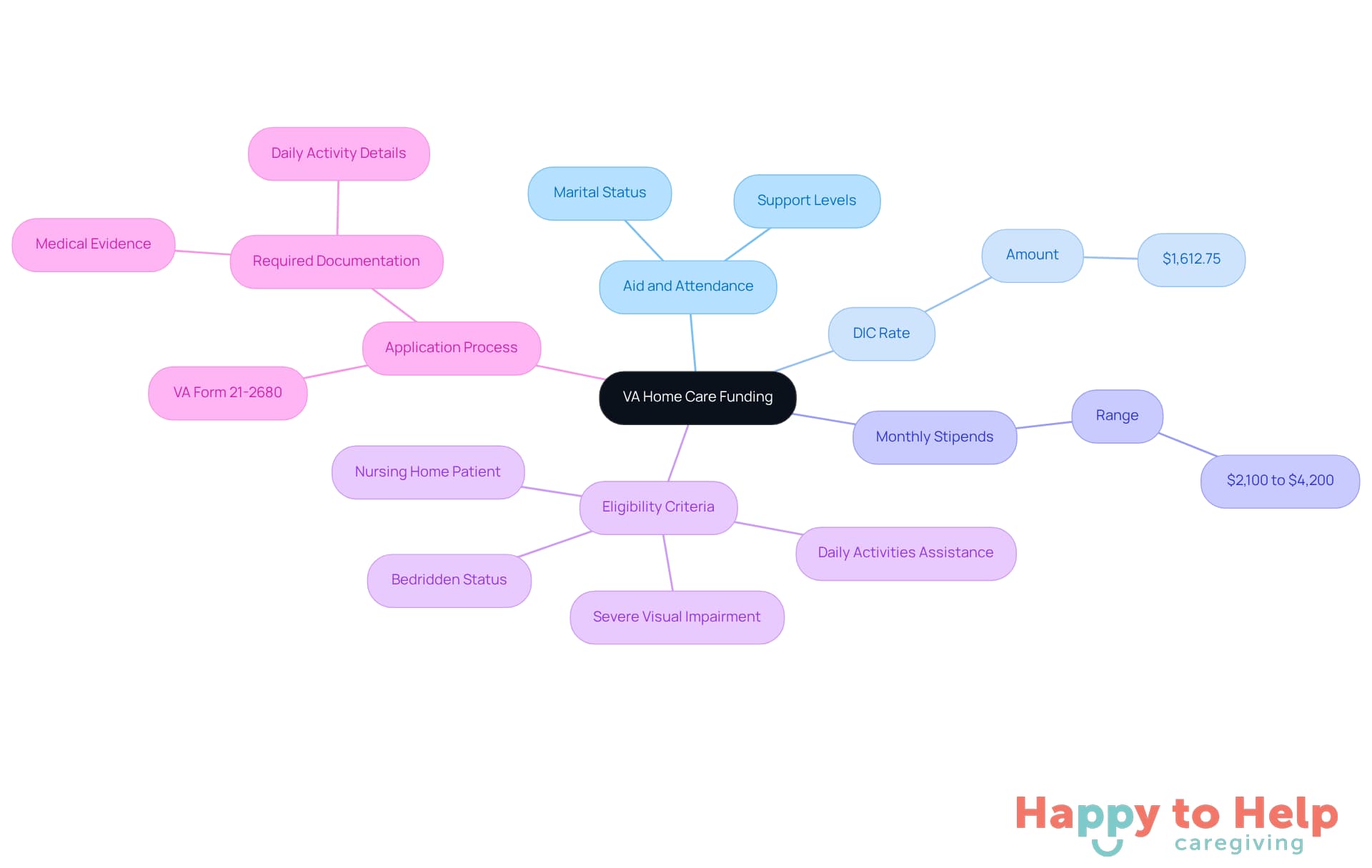
VA home assistance services present a significant challenge for caregivers, primarily due to the complexities surrounding financial support. Many caregivers struggle to navigate the Aid and Attendance benefit, which offers monthly payments based on marital status and the level of support needed. This can lead to confusion and financial strain, especially as the standard monthly Dependency and Indemnity Compensation (DIC) rate is set to rise to $1,612.75 starting January 1, 2025.
Understanding the VA benefits home health care is crucial, as they can significantly alleviate the financial burden of home care. Monthly stipends range from $2,100 to $4,200, depending on individual care needs. For instance, individuals requiring assistance with daily tasks or those who spend much of their day in bed may qualify for VA benefits home health care, which aim to enhance their quality of life at home. However, it's essential to note that former service members cannot receive both Aid and Attendance and Housebound benefits simultaneously, making it vital to grasp the eligibility criteria.
To address these challenges, the VA has streamlined the application process in 2025. Former service members can now fill out VA Form 21-2680 to apply for these benefits. Caregivers are encouraged to maximize these benefits by ensuring all necessary documentation is submitted, including:
- Medical evidence
- Details about daily activities
This proactive approach not only leads to a smoother application process but also ensures that veterans receive the support they need to thrive in their home environment.
Types of Home Care Services for Veterans: What’s Available?
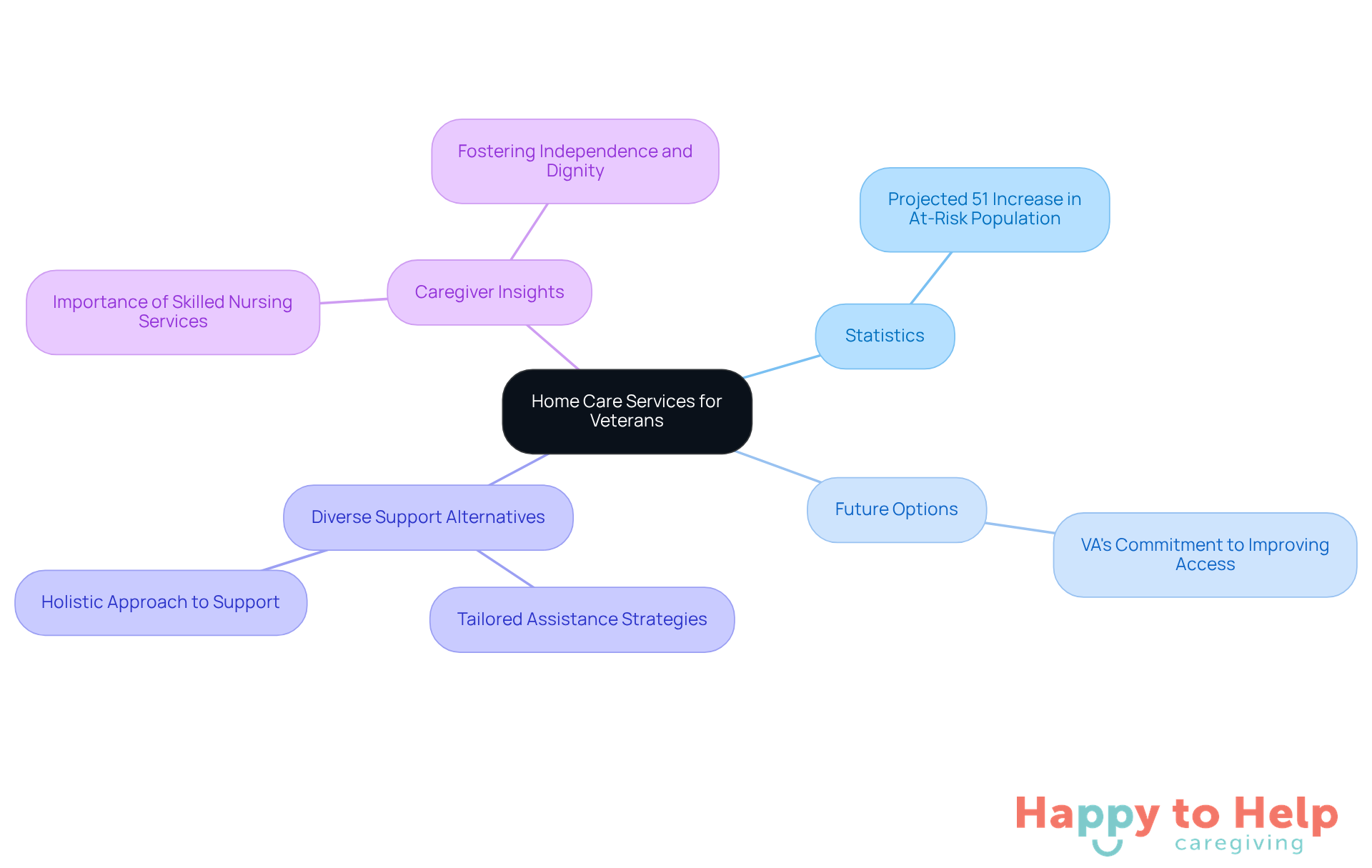
Veterans face a growing challenge: the increasing need for home support services. Statistics reveal a significant rise in dependence on skilled home health support among former military personnel, with a projected 51% increase in the at-risk population from 2020 to 2038. This trend underscores the critical role that home support plays in enhancing the quality of life for these individuals.
As we look ahead to 2025, the options for home assistance are expanding to meet the evolving needs of veterans. The VA's commitment to improving access to VA benefits home health care ensures that veterans can receive care in the comfort of their own homes, which often proves more beneficial for their well-being than institutional settings.
Caregivers must recognize the importance of diverse home support alternatives. Tailored assistance strategies can significantly improve the overall experience for former service members. As one caregiver noted, "Skilled nursing services not only address medical needs but also foster a sense of independence and dignity among veterans." This holistic approach to support is vital for addressing both physical and emotional health, ultimately leading to better outcomes for those who have served.
Navigating VA Benefits: The Role of Case Managers
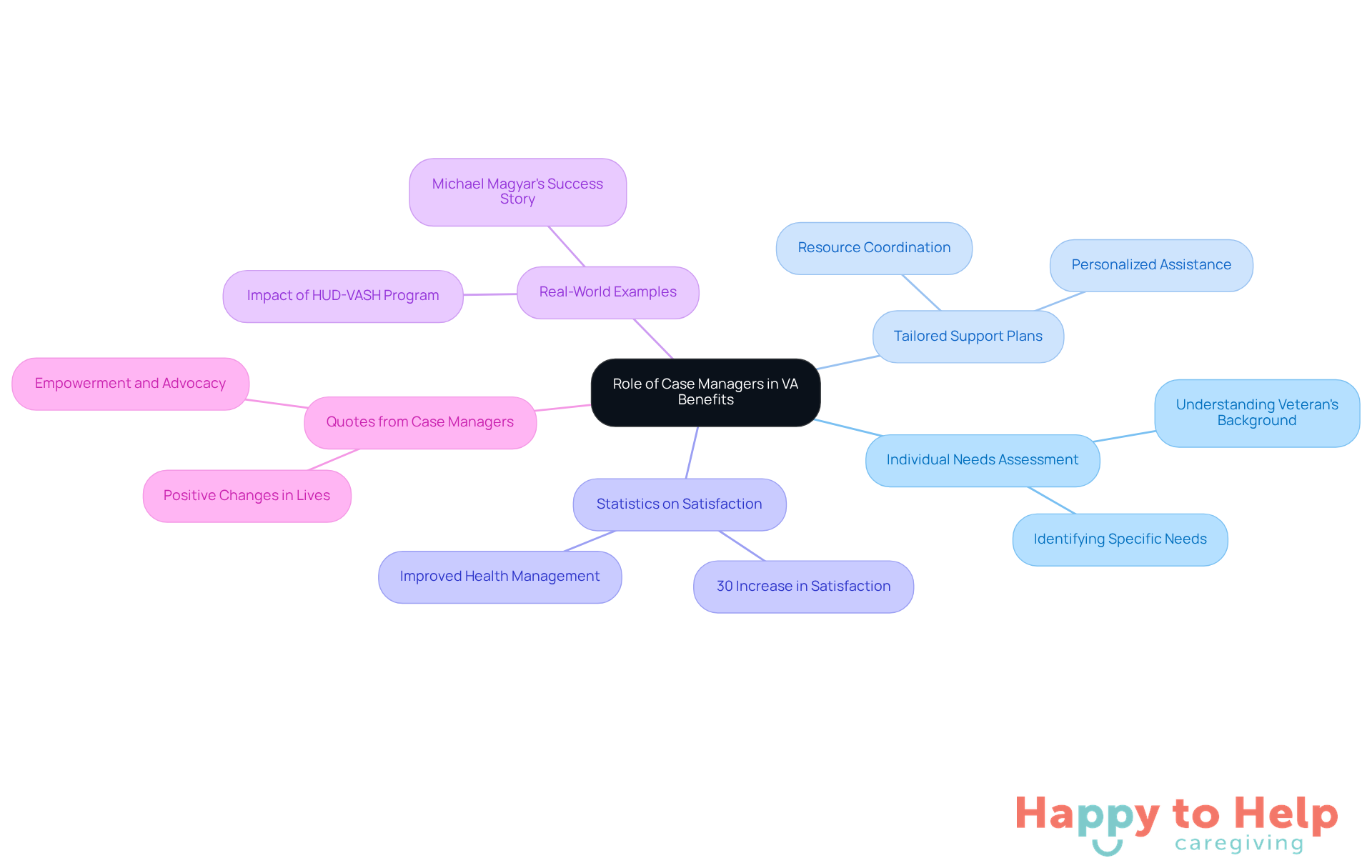
Case managers play a crucial role in helping former military personnel navigate the complexities of VA benefits. They assess individual needs, develop tailored support plans, and coordinate various services to ensure that service members receive the necessary assistance. This collaborative approach not only simplifies the process of accessing benefits but also improves the overall care experience.
Navigating VA benefits can be daunting, especially given the ongoing challenges posed by government shutdowns. Statistics indicate that effective case management significantly enhances outcomes for former service members. For instance, individuals with military backgrounds who engage with case managers report a 30% increase in satisfaction levels and better health management. A study found that former military personnel receiving case management services were 30% more likely to access essential healthcare resources compared to those who did not.
Real-world examples illustrate the impact of case management on the lives of former service members. Take Michael Magyar, for example. He transitioned from homelessness to stable housing through the HUD-VASH program, largely thanks to the dedicated support of his case manager. This personalized assistance enabled him to navigate the VA system and secure the resources he needed to reclaim his life.
Quotes from case managers further highlight their influence on care for former military personnel:
- One case manager noted, "Our role is to empower former military personnel by linking them with the appropriate resources and advocating for their needs." It’s rewarding to see the positive changes in their lives as they receive the assistance they deserve.
- Another individual shared, "Thanks to my case manager, I finally received the help I needed to manage my health and housing situation. I couldn't have done it without their guidance."
With the support of skilled case managers, former service members and their caregivers can access the VA benefits home health care available to them, ensuring a smoother transition to in-home support and an improved quality of life.
Dementia Care for Veterans: VA Support and Resources
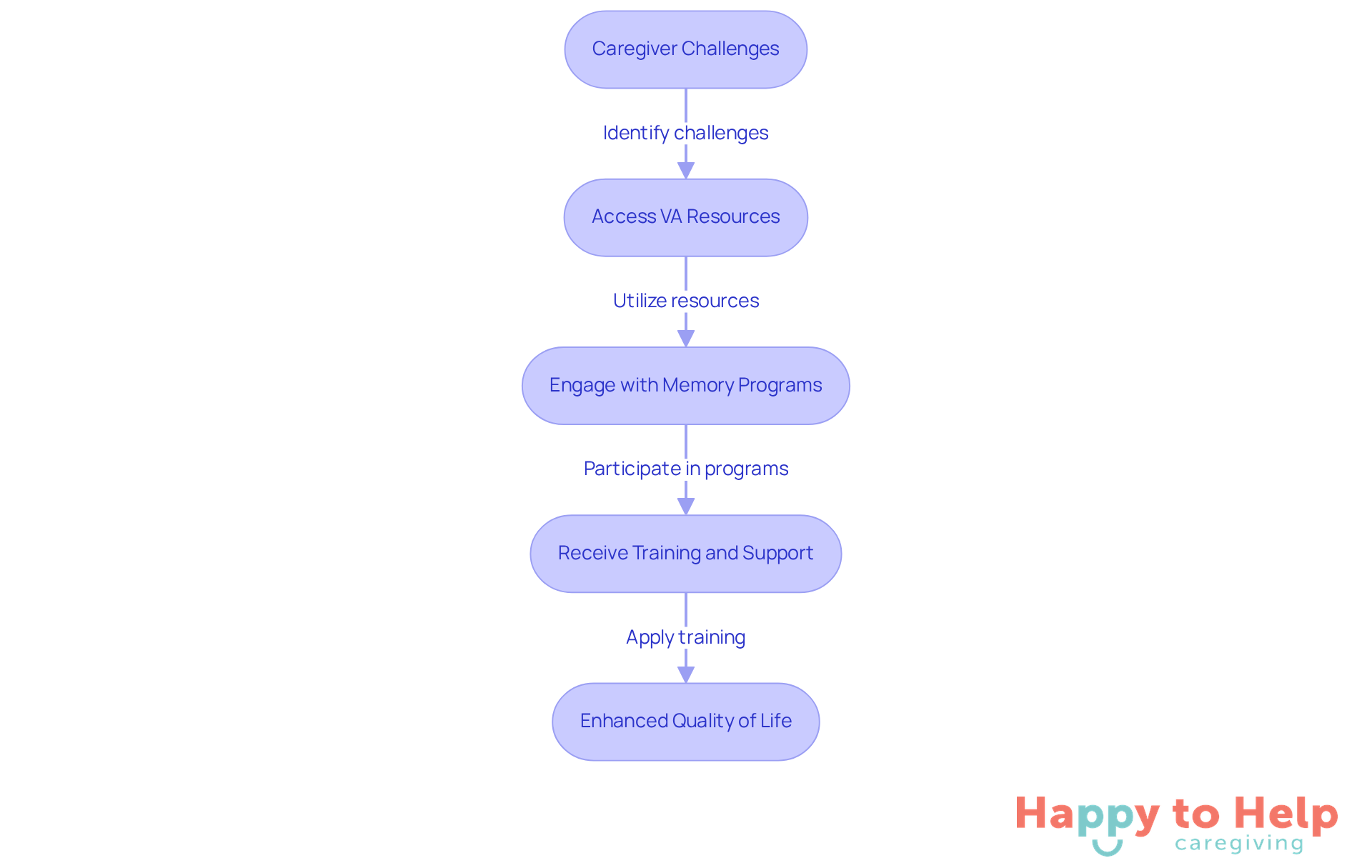
Caregivers of former military personnel with dementia face significant challenges. The complexities of managing dementia can lead to stress and uncertainty, impacting both the caregiver and the individual receiving care. Without proper support, caregivers may struggle to provide the necessary assistance, which can diminish the quality of life for everyone involved.
Fortunately, the VA benefits home health care by providing specialized assistance tailored to the needs of these veterans. They provide access to memory programs and resources designed specifically for individuals with dementia. Additionally, care providers can benefit from training and support services aimed at helping them navigate the difficulties associated with dementia management.
By utilizing these resources, caregivers can significantly enhance the quality of life for both former service members and themselves. Engaging with the VA's programs not only equips caregivers with essential skills for VA benefits home health care but also fosters a supportive community that understands their unique challenges. This proactive approach can lead to improved outcomes for all parties involved.
Respite Care Options for Veterans: Finding Temporary Relief
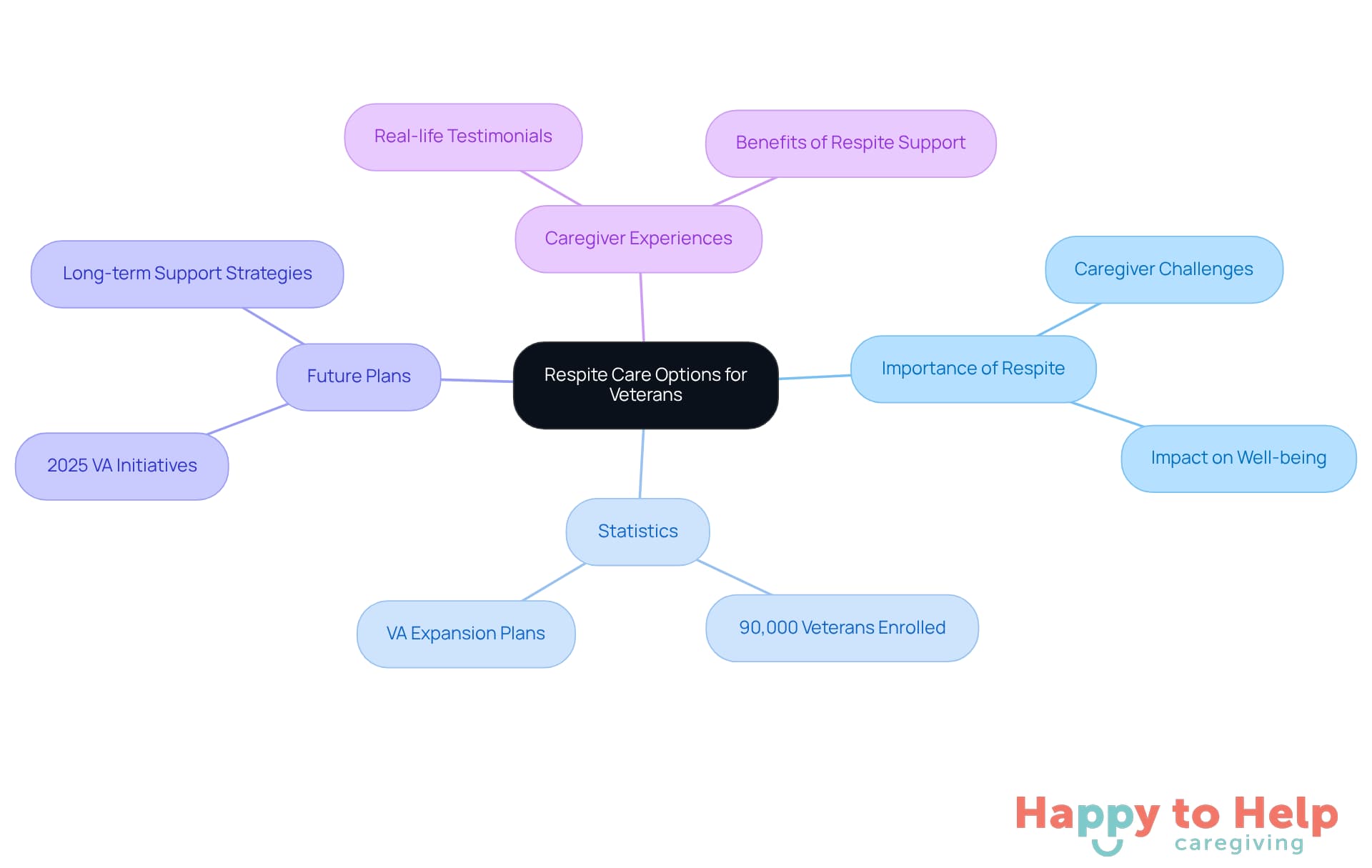
Respite support is essential for caregivers of former service members, as it provides crucial temporary relief that helps maintain their well-being and effectiveness. Caregivers face significant challenges, often feeling overwhelmed by their responsibilities. Without adequate support, their ability to provide quality care can diminish, impacting both their health and the well-being of those they assist.
Statistics reveal that nearly 90,000 former military members are enrolled in programs that support caregiver services, underscoring the growing recognition of the need for respite assistance among military caregivers. In 2025, the VA plans to expand temporary relief options, ensuring that veteran caregivers can access necessary support without sacrificing their caregiving duties. As VA Secretary Doug Collins noted, "The extension will ensure that legacy participants and applicants can maintain their benefits and stability during this time."
Real-life examples illustrate the importance of respite support. Caregivers have reported that these services enable them to focus on their health, pursue personal interests, or spend quality time with family, ultimately leading to improved mental health and reduced stress. One caregiver shared, "Taking a break through respite support has permitted me to refresh and return to my loved one with renewed energy and focus." These breaks are vital, allowing caregivers to recharge and return to their roles revitalized and better equipped to provide compassionate support.
As the VA enhances its caregiver assistance programs, the expansion of respite service options for VA benefits home health care represents a positive development. This commitment to providing short-term support not only acknowledges the challenges faced by dedicated caregivers but also highlights the importance of their well-being in delivering effective assistance.
Home Telehealth Services: Enhancing Care for Veterans
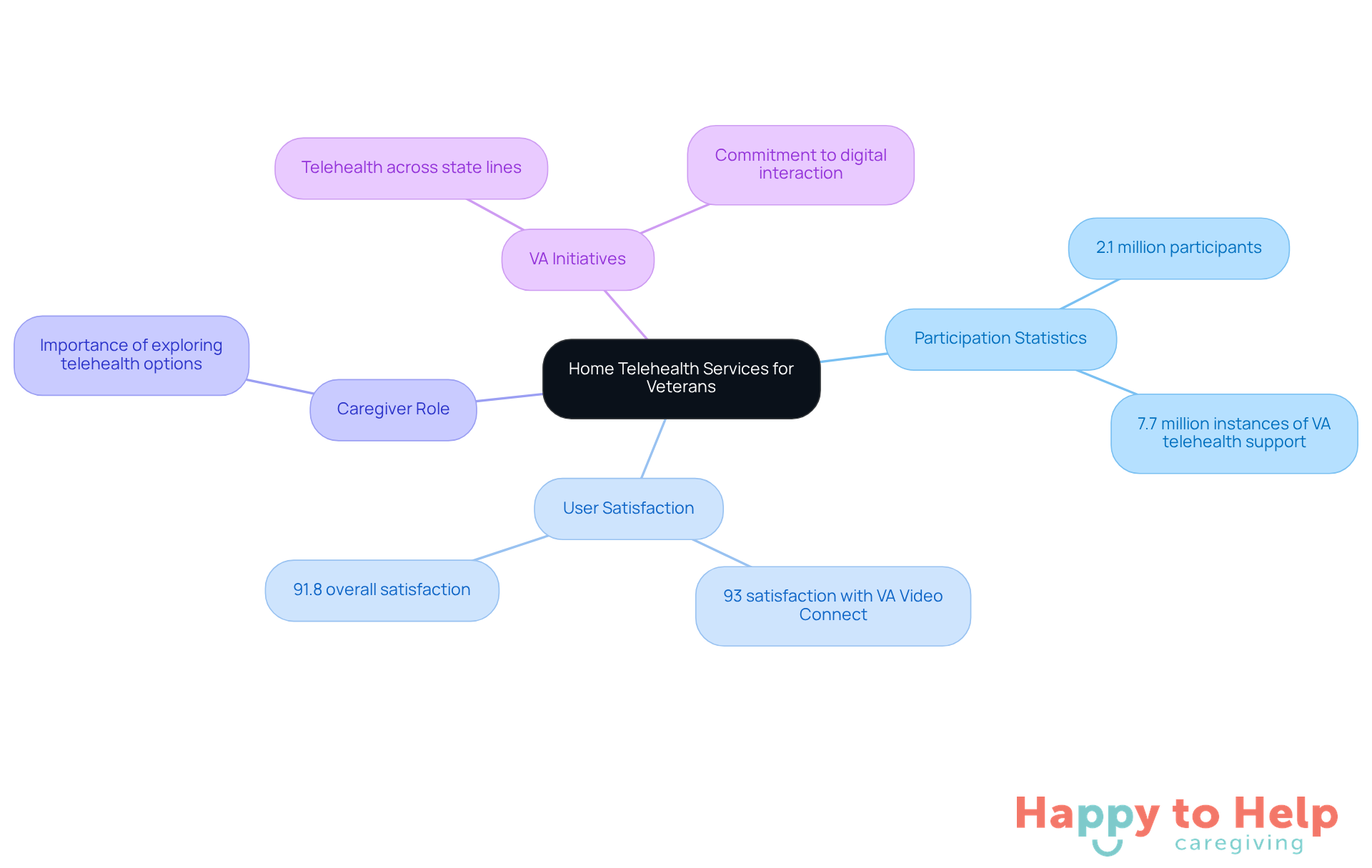
Home telehealth services have become essential for former military personnel, enabling them to receive medical consultations and follow-up support from the comfort of their homes. However, many face challenges accessing healthcare, especially those with mobility issues or living in rural areas. In fiscal year 2025, over 2.1 million former service members participated in more than 7.7 million instances of VA telehealth support, marking a 12% increase from the previous year. This trend highlights the growing reliance on telehealth as a convenient and effective means of care delivery.
Caregivers play a crucial role in this transition to telehealth, ensuring that former service members receive timely medical attention and support. The VA Video Connect app, for instance, boasts a 93% satisfaction rate among users, while overall satisfaction among former military personnel utilizing telehealth options stands at 91.8%. Veterans like Victoria Backus have shared their positive experiences, noting that telehealth has significantly improved their health management by allowing them to keep regular appointments despite transportation challenges.
To address these challenges, caregivers should actively explore the telehealth options that are part of VA benefits home health care. The VA's commitment to enhancing digital interaction and expanding access to specialized services is vital. Additionally, the VA's authority to provide telehealth services across state lines further improves access for former military personnel. This multi-faceted approach not only enhances healthcare delivery but also fosters a sense of security and independence for former service members. By leveraging these valuable resources, caregivers can ensure that their loved ones receive the care they need.
Calculating Home Care Hours: What Veterans Need to Know
Determining home support hours for former service members can be a complex challenge. Caregivers often struggle to assess the specific needs of veterans, which can lead to inadequate support. Factors such as medical conditions, daily living activities, and personal preferences must be carefully evaluated to ensure that veterans receive the assistance they require.
To address this issue, caregivers should collaborate with case managers to develop a comprehensive care plan. This plan should accurately reflect the necessary hours of support tailored to the veteran's unique situation. By working together, caregivers can ensure that the care provided meets the veteran's needs effectively.
Here are some actionable tips for caregivers:
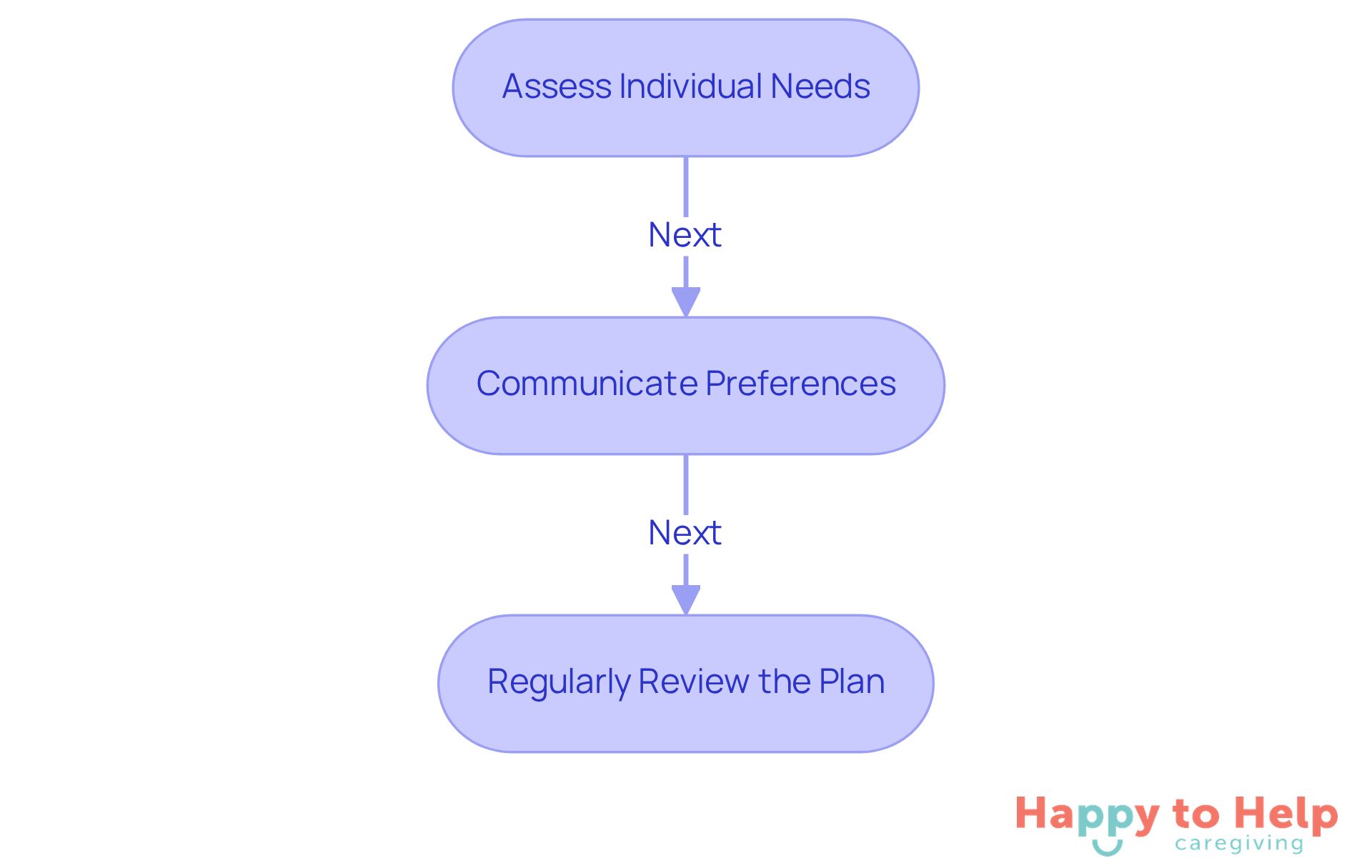
- Assess individual needs: Take time to evaluate the veteran's medical conditions and daily activities.
- Communicate preferences: Discuss personal preferences with the veteran to ensure their comfort and satisfaction with the care plan.
- Regularly review the plan: Adjust the care plan as needed to reflect any changes in the veteran's condition or preferences.
By following these steps, caregivers can create a supportive environment that enhances the well-being of former service members.
Key Takeaways for Caregivers
Navigating the landscape of VA benefits for home health care presents a significant challenge for caregivers of former service members. Understanding the available resources and eligibility criteria is crucial for ensuring that veterans receive the support they need. Without this knowledge, caregivers may struggle to access the programs designed to enhance the quality of life for their loved ones.
The implications of this challenge are profound. Caregivers often face overwhelming responsibilities, and a lack of clarity regarding VA benefits can lead to missed opportunities for support. This not only affects the care experience but can also contribute to caregiver burnout and stress.
Fortunately, there are actionable solutions. Caregivers can benefit from:
- Personalized in-home care options
- Assistance of case managers who simplify the application process
- Exploring various funding options available through the VA to alleviate financial burdens
- Services like telehealth and respite care that demonstrate the commitment to providing comprehensive support tailored to veterans' unique needs
As the demand for home health care services continues to rise, it is vital for caregivers and families to stay informed about the evolving landscape of VA benefits. By taking proactive steps now and utilizing available resources, they can ensure that veterans receive the care they deserve. Advocacy and engagement are key; these efforts can lead to transformative outcomes for those who have served.
https://iframe.tely.ai/cta/eyJhcnRpY2xlX2lkIjogIjY5MjRmMWMxZWM0Y2FiOGU3NGVjMDBhMyIsICJjb21wYW55X2lkIjogIjY4ZWU1ZGNhNzMxNzYyNTU3ZjNjOTVjMSIsICJpbmRleCI6IG51bGwsICJ0eXBlIjogImFydGljbGUifQ==Frequently Asked Questions
What challenges do former service members face when transitioning to civilian life?
Many former service members struggle to receive adequate support, leading to feelings of isolation and hindering their overall well-being.
How does the lack of support affect former service members?
Without proper care, these individuals may struggle with daily tasks, impacting their independence and quality of life, while their families may feel helpless in navigating these challenges.
What is the expected demand for VA benefits home health care for veterans?
The demand for VA benefits home health care for former military personnel is expected to increase by over 50% by 2040.
What services does Happy to Help Caregiving provide for veterans?
Happy to Help Caregiving offers customized in-home assistance that includes companionship, support with daily tasks, and tailored plans that promote independence and well-being.
How does the Elizabeth Dole Act support caregivers?
The Elizabeth Dole Act improves training and education programs for caregivers, addressing the unique challenges they face in supporting former service members.
What is the Veterans Independence Program (VIP)?
The Veterans Independence Program (VIP) addresses the challenges many service members face in living independently due to insufficient VA benefits home health care.
What financial support can VA benefits home health care provide?
VA benefits home health care can provide financial support for essential services such as personal assistance, meal preparation, and housekeeping.
How can families ensure they receive VA benefits home health care?
Families must understand the eligibility criteria and application processes, including completing the 10-10EZ form, to access VA benefits home health care effectively.
What example illustrates the importance of the VIP for veterans?
James Carey, a former Marine, increased his assistance hours from a reduction by engaging with his Primary Health team and exploring options under the VIP.
What steps can caregivers take to navigate the application process for VA benefits?
Caregivers should collect necessary documentation, such as discharge papers and medical records, to streamline the application process for VA benefits home health care.
What recent changes have been made to enhance access to VA benefits home health care?
The new law enacted on January 2, 2025, aims to enhance access to VA benefits home health care for former service members, broadening aid to almost 15,000 legacy participants.
List of Sources
- Happy to Help Caregiving: Personalized In-Home Care for Veterans
- New Law Supports Home Care, Caregivers for Military Veterans (https://elderlawrillc.com/new-law-supports-home-care-caregivers-for-military-veterans)
- VA Tries to Keep Up With Drastic Veteran In-Home Care Increase (https://military.com/feature/2025/10/08/va-tries-keep-drastic-veteran-home-care-increase.html)
- Salute to Service: How Veterans Can Access In-Home Care - Cornerstone Caregiving (https://cornerstonecaregiving.com/blog/salute-to-service-how-veterans-can-access-in-home-care)
- VA’s tests new homecare system for older Veterans (https://research.va.gov/news\_briefs/news\_brief.cfm?RecordID=258248)
- Cornerstone Caregiving and Disabled American Veterans join forces to strengthen support of veterans and caregivers (https://dav.org/learn-more/news/2025/cornerstone-caregiving-and-disabled-american-veterans-join-forces-to-strengthen-support-of-veterans-and-caregivers)
- Veterans Independence Program: Home Care Benefits and Services
- North Texas military veterans face sharp cuts to VA-funded in-home care (https://cbsnews.com/texas/news/disabled-veterans-home-health-care-va)
- Veterans Benefits for Home Care | Visiting Angels (https://visitingangels.com/veterans-benefits)
- New Law Supports Home Care, Caregivers for Military Veterans (https://elderlawrillc.com/new-law-supports-home-care-caregivers-for-military-veterans)
- Veterans Affairs Canada Statistics – Facts and Figures | Veterans Affairs Canada (https://veterans.gc.ca/en/news-and-media/facts-and-figures)
- House Republicans Pass Flagship Veterans’ Package with Overwhelming Bipartisan Support (https://veterans.house.gov/news/documentsingle.aspx?DocumentID=6585)
- Eligibility for VA Home Care Programs: Who Qualifies?
- New Law Supports Home Care, Caregivers for Military Veterans (https://elderlawrillc.com/new-law-supports-home-care-caregivers-for-military-veterans)
- VA extends caregiver support program eligibility for “legacy” Veterans, caregivers (https://news.va.gov/press-room/va-extends-caregiver-support-program-eligibility-for-legacy-veterans-caregivers)
- Unseen battles: The harsh realities of veterans' access to health care (https://statnews.com/2024/04/29/veterans-difficulties-accessing-health-care)
- VA to extend caregiver support program eligibility for “legacy” Veterans, caregivers | VA Wilmington health care | Veterans Affairs (https://va.gov/wilmington-health-care/news-releases/va-to-extend-caregiver-support-program-eligibility-for-legacy-veterans-caregivers)
- VA Home Care Funding: Understanding Payment Structures
- VA Aid and Attendance benefits and Housebound allowance | Veterans Affairs (https://va.gov/pension/aid-attendance-housebound)
- VA Benefits 2025: What Every Veteran Family Should Know | Operation Family Fund (https://operationfamilyfund.org/va-benefits-2025-update-what-every-veteran-family-should-know)
- VA Tries to Keep Up With Drastic Veteran In-Home Care Increase (https://military.com/feature/2025/10/08/va-tries-keep-drastic-veteran-home-care-increase.html)
- Upcoming Changes to Veterans Aid and Attendance Pension | KWGD (https://kwgd.com/news/upcoming-changes-to-veterans-aid-and-attendance-pension)
- Biden Signs Dole Act, Expanding Access And Funding For Vets’ At-Home Care (https://homehealthcarenews.com/2025/01/biden-signs-dole-act-expanding-access-and-funding-for-vets-at-home-care)
- Types of Home Care Services for Veterans: What’s Available?
- VA Tries to Keep Up With Drastic Veteran In-Home Care Increase (https://military.com/feature/2025/10/08/va-tries-keep-drastic-veteran-home-care-increase.html)
- New Law Supports Home Care, Caregivers for Military Veterans (https://elderlawrillc.com/new-law-supports-home-care-caregivers-for-military-veterans)
- Dole Act Becomes Law: What It Means to Veterans and Caregivers (https://moaa.org/content/publications-and-media/news-articles/2025-news-articles/advocacy/dole-act-becomes-law-what-it-means-to-veterans-and-caregivers)
- VA improves access for veterans using community care (https://dav.org/learn-more/news/2025/va-improves-access-for-veterans-using-community-care)
- Understand VA’s three skilled home health care benefits (https://legion.org/information-center/news/veterans-healthcare/2024/november/understand-vas-three-skilled-home-health-care-benefits)
- Navigating VA Benefits: The Role of Case Managers
- Veterans go without critical VA services, 37,000 VA employees missing pay due to Democrats’ government shutdown - VA News (https://news.va.gov/press-room/veterans-go-without-critical-va-services-37000-va-employees-missing-pay-due-to-democrats-government-shutdown)
- Nearly half of VA benefits employees working without pay during government shutdown (https://federalnewsnetwork.com/government-shutdown/2025/10/nearly-half-of-va-benefits-employees-working-without-pay-during-government-shutdown)
- Some Veterans Express Worry About Services Amid Federal Staffing Cuts, Government Shutdown (https://news.wttw.com/2025/11/11/veterans-benefits-face-uncertain-future-federal-cuts-take-effect)
- VA opens doors for unhoused Veterans - VA News (https://news.va.gov/141637/va-opens-doors-for-unhoused-veterans)
- Shutdown is ‘holding my veterans hostage,’ VA chief says (https://govexec.com/management/2025/10/shutdown-holding-my-veterans-hostage-va-chief-says/408992)
- Dementia Care for Veterans: VA Support and Resources
- Care and research for Alzheimer's and related dementias - VA News (https://news.va.gov/135708/care-research-for-alzheimers-related-dementias)
- San Francisco VA offers new therapies for early-stage Alzheimer’s - VA News (https://news.va.gov/142914/va-offers-new-therapies-early-stage-alzheimers)
- Make a difference for Veterans with Alzheimer’s disease at VA - VA News (https://news.va.gov/124041/make-difference-alzheimers-disease-va)
- VA Research Wrap Up: New findings on caregivers, Alzheimer's disease, and toxic exposure - VA News (https://news.va.gov/140532/va-research-wrap-up-caregivers-alzheimers-toxic)
- Family gets nearly $20K in benefits for veteran's widow with dementia with help from I-Team (https://abc7chicago.com/post/family-gets-20k-delayed-benefits-veterans-widow-dementia-help-team/15712313)
- Respite Care Options for Veterans: Finding Temporary Relief
- Caregivers for veterans, take care of yourself as well ⋆ Texas Veterans Commission (https://tvc.texas.gov/news/caregivers-for-veterans-take-care-of-yourself-as-well)
- VA extends ‘legacy’ caregiver benefits through 2028 (https://militarytimes.com/news/your-military/2025/11/20/va-extends-legacy-caregiver-benefits-through-2028)
- VA Benefits 2025: What Every Veteran Family Should Know | Operation Family Fund (https://operationfamilyfund.org/va-benefits-2025-update-what-every-veteran-family-should-know)
- VA to extend Veteran Assistance Program through 2028 (https://newsweek.com/va-extend-veteran-assistance-program-through-2028-2101344)
- Home Telehealth Services: Enhancing Care for Veterans
- Veteran satisfaction and trust in VA telehealth continues to rise - VA News (https://news.va.gov/139580/veteran-satisfaction-trust-in-telehealth-rise)
- Telehealth Improves Veterans' Access To Care, But May Strain Providers - Applied Policy (https://appliedpolicy.com/telehealth-improves-veterans-access-to-care-but-may-strain-providers)
- VA Telehealth Services: Transforming Veteran Care - Caregility (https://caregility.com/blog/va-telehealth-services-transforming-veteran-care)
- VA Telehealth brings care directly to Veterans - VA News (https://news.va.gov/142606/va-telehealth-brings-care-directly-to-veterans)
- Calculating Home Care Hours: What Veterans Need to Know
- North Texas veterans speak out as VA reduces their in-home care hours (https://cbsnews.com/texas/news/north-texas-veterans-speak-out-as-va-reduces-their-in-home-care-hours)
- North Texas military veterans face sharp cuts to VA-funded in-home care (https://cbsnews.com/texas/news/disabled-veterans-home-health-care-va)
- VA Tries to Keep Up With Drastic Veteran In-Home Care Increase (https://military.com/feature/2025/10/08/va-tries-keep-drastic-veteran-home-care-increase.html)
- North Texas veterans say VA cuts threaten home healthcare (https://nbcdfw.com/news/local/north-texas-vets-say-va-cuts-threaten-home-healthcare/3848356)
- Mast Introduces Veterans Homecare Choice Act (https://mast.house.gov/2025/3/mast-introduces-veterans-homecare-choice-act)