
What You Need to Know About A Carer Companion Enhances Well-Being
Loneliness among seniors is a growing concern that poses serious risks to their mental and emotional well-being. Studies reveal that socially isolated individuals are more likely to experience depression and cognitive decline. This alarming trend highlights the urgent need for effective companionship.
This article explores ten impactful ways a carer companion can significantly enhance the quality of life for elderly loved ones. From providing emotional support to ensuring safety and fostering independence, personalized companionship can transform the daily lives of seniors. How can these solutions alleviate the burdens faced by their families?
Happy to Help Caregiving: Personalized Companionship for Enhanced Well-Being
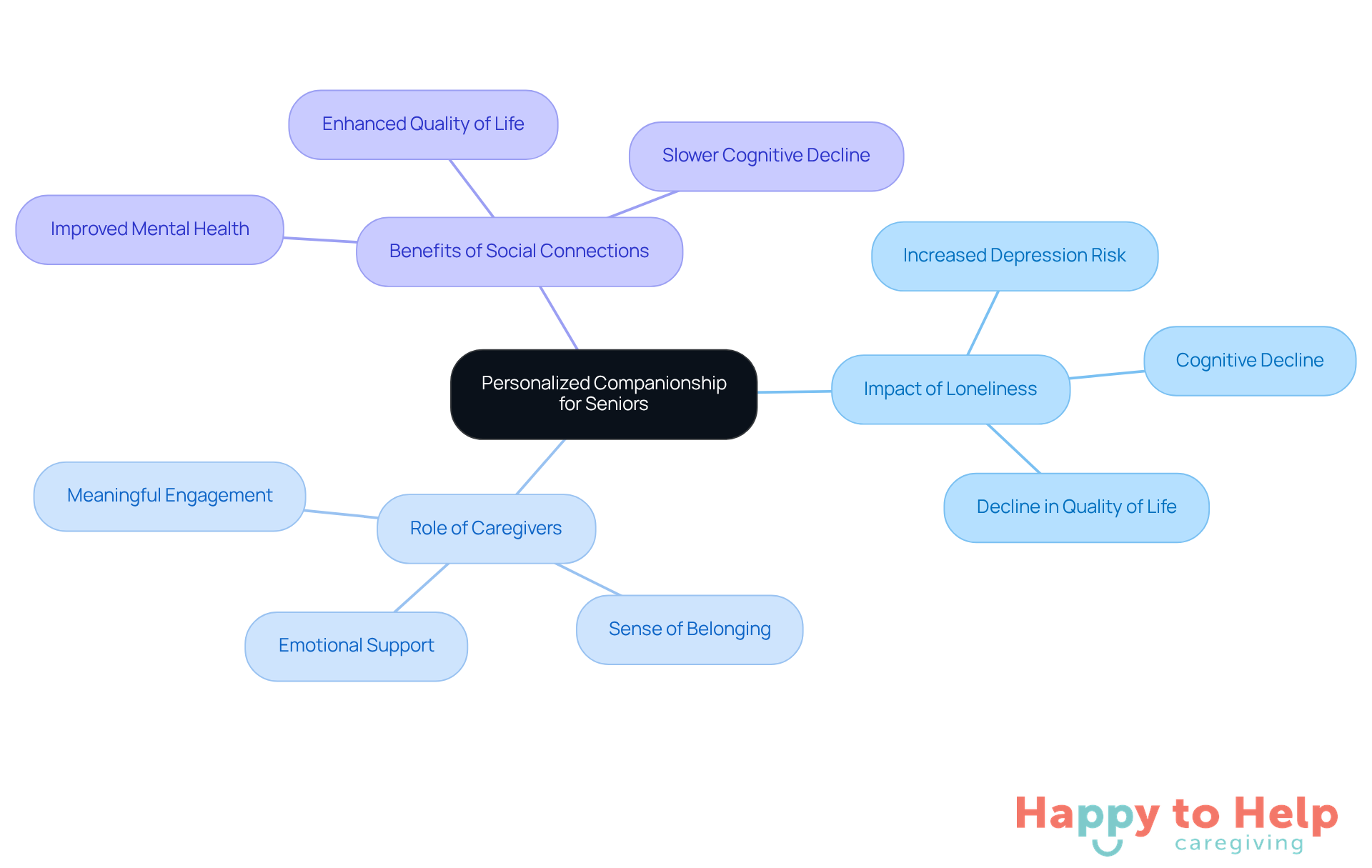
Loneliness among seniors is a pressing issue that can significantly impact their mental well-being. Research indicates that lonely seniors are twice as likely to experience depression, and a staggering 25% of individuals aged 50 and older report not having enough close friends. This lack of companionship can lead to a decline in both cognitive function and overall quality of life.
Happy to Help Caregiving addresses this critical problem by providing personalized support through a carer companion tailored to the unique needs of each individual. This service goes beyond mere assistance; it fosters a profound sense of belonging and security, which is crucial for enhancing overall well-being. Caregivers actively engage clients in meaningful conversations and enjoyable activities, ensuring they feel valued and connected in their daily lives.
As Sharon Morrisette states, 'The main advantage that carer companions can provide seniors is enhanced physical, mental, and psychological well-being - leading to a better quality of life - as a direct result of regular interactions with a carer companion.' By prioritizing psychological support, Happy to Help Caregiving not only enhances the quality of life for seniors but also empowers them to thrive in their familiar surroundings.
In fact, seniors with strong social connections experience a slower rate of cognitive decline, underscoring the importance of fostering these relationships. By offering companionship, a carer companion can play a vital role in improving the mental health of older adults, ultimately leading to a happier, healthier life.
Emotional Support: Alleviating Loneliness and Isolation
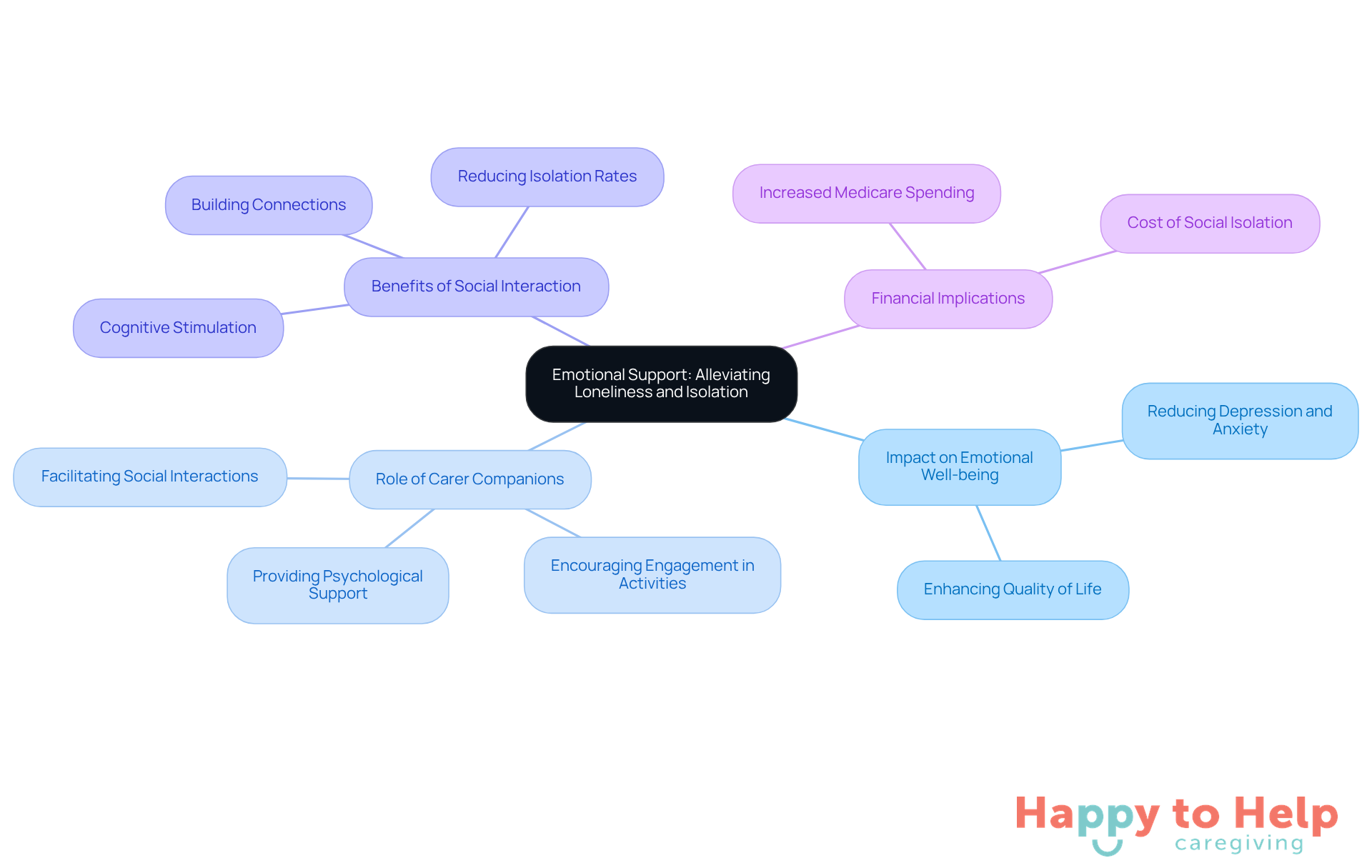
Loneliness and isolation among seniors is a pressing issue that significantly impacts their emotional well-being. Carer companions play a crucial role in addressing this problem by providing psychological support that helps reduce these feelings. Regular conversations, shared stories, and enjoyable activities foster a comforting presence, nurturing a sense of connection and belonging for seniors with limited social interactions.
The implications of social isolation are profound. Research indicates that regular social interaction can lower the risk of depression and anxiety. Studies show a statistically significant decrease in these rates among seniors who frequently engage with support providers. For example, a pilot program utilizing AI companions has demonstrated positive outcomes in reducing loneliness, highlighting the importance of companionship in enhancing mental health.
Carer companions provide not only practical assistance, such as meal preparation and medication reminders, but also encourage seniors to engage in hobbies and activities they love. This approach promotes cognitive stimulation and joy, ultimately improving their overall quality of life. Furthermore, the financial implications of loneliness are staggering, with social isolation driving $6.7 billion in additional Medicare spending annually. Notably, 24% of Americans aged 65 and older are socially isolated, underscoring the urgency of addressing this issue.
As Marvin Marcus, a resident engaged with an AI companion, expressed, "I think we have a connection." This statement illustrates the profound impact of companionship on emotional health, reinforcing the need for a carer companion to prioritize social interaction in their support strategies.
Daily Living Assistance: Supporting Independence and Daily Activities
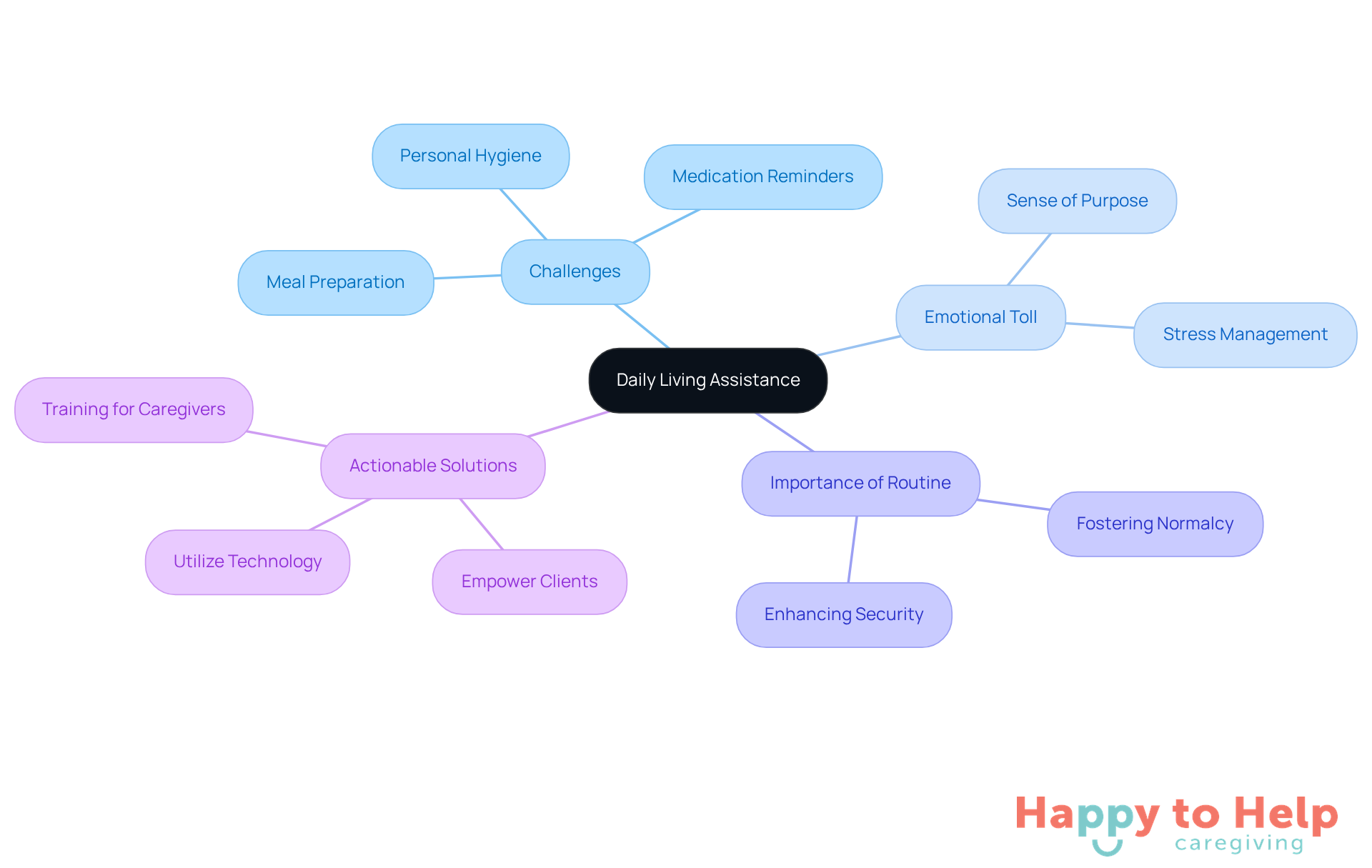
Carer companions encounter significant challenges when assisting individuals with daily living activities, such as meal preparation, medication reminders, and personal hygiene. This support is crucial for maintaining independence and allowing seniors to engage in their preferred routines with a carer companion. According to the Office for the Aging, over 81% of older adults live at home, highlighting the urgent need for services that promote autonomy and well-being.
The emotional toll on caregivers can be considerable. Many express a profound sense of purpose in their roles. AARP's 2025 survey reveals that over half of caregivers in the U.S. find meaning in their caregiving responsibilities. As we approach 2025, it’s essential to focus on supporting independence in elderly care with the assistance of a carer companion, recognizing the importance of routine in fostering a sense of normalcy and security for seniors.
To address these challenges, support providers can implement several actionable solutions:
- Empower clients by encouraging them to participate in daily activities, which fosters independence.
- Offer training for caregivers to enhance their skills in providing effective support.
- Utilize technology to assist with medication reminders and meal planning, making daily tasks easier.
By enabling these activities, a carer companion can help clients lead fulfilling lives while receiving the necessary assistance. This approach not only benefits seniors but also enriches the caregivers' experience, allowing them to find deeper meaning in their vital roles.
Peace of Mind: Ensuring Safety and Security for Families
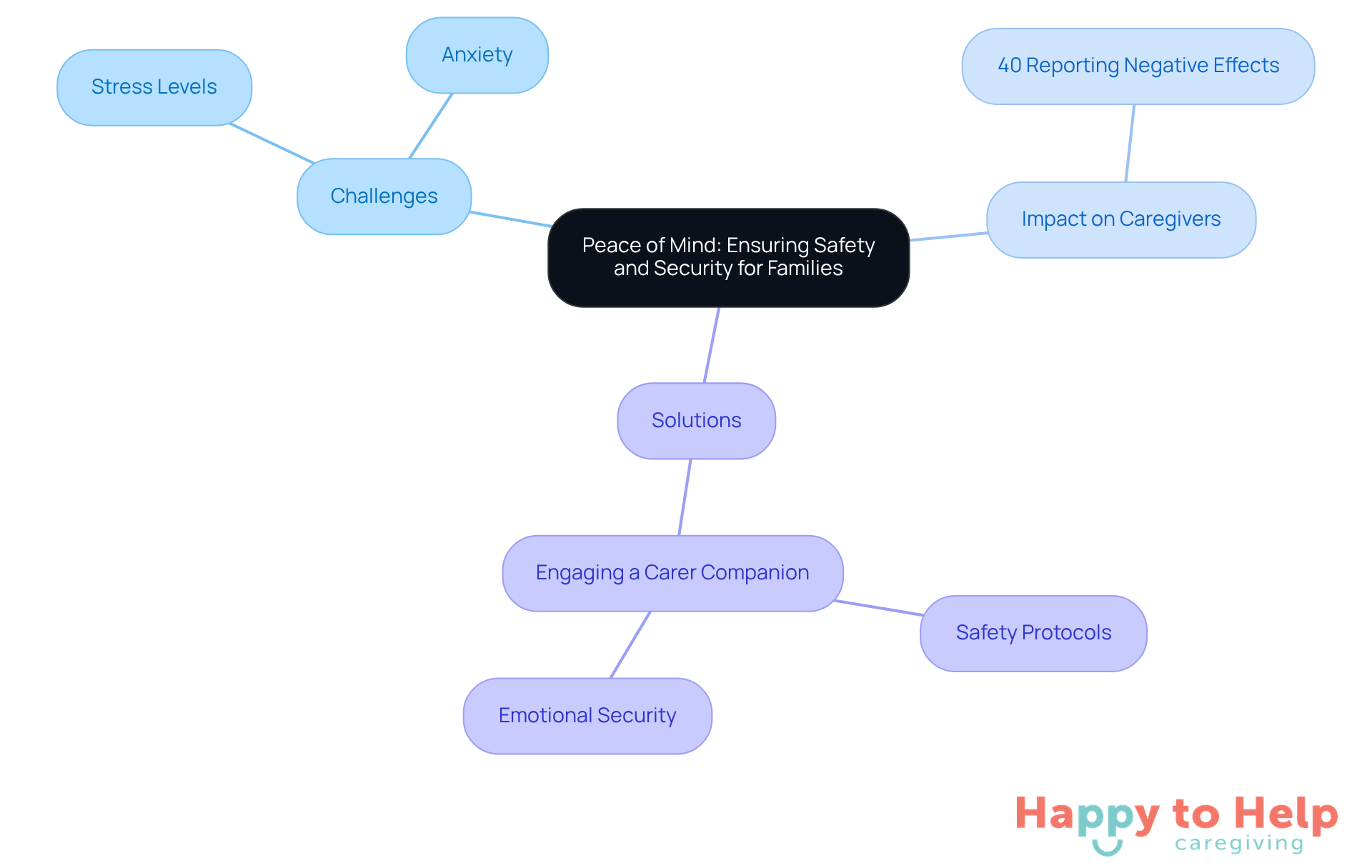
Caregiving presents a significant challenge for many families, particularly when it comes to managing stress levels. With 40% of caregivers reporting that their responsibilities negatively impact their stress, it's clear that this issue affects not just the caregivers but also their loved ones. Families often worry about the safety and well-being of those they care for, especially if they live far away or have demanding schedules.
This concern can lead to anxiety, as families may feel uncertain about whether their loved ones are receiving the care they need. The emotional toll of this worry can be overwhelming, making it essential to find effective solutions.
One practical solution is to engage a carer companion who can provide peace of mind. These professionals are equipped to recognize potential dangers and implement crucial safety protocols, ensuring that loved ones are safe and secure in the comfort of their own homes. This reassurance is invaluable, allowing families to focus on their daily lives without the constant worry about their loved ones' well-being.
By employing a carer companion, families can significantly alleviate their anxiety. Not only do these carer companions provide high-quality care, but they also foster a supportive environment where both recipients and their families can thrive. The emotional security offered by these services is a cornerstone of effective caregiving, fostering a sense of safety and comfort for everyone involved.
Customized Care Plans: Tailoring Support to Individual Needs
At Happy to Help Caregiving, many individuals face the challenge of receiving care that doesn’t fully address their unique needs and preferences. This lack of personalized attention can lead to feelings of frustration and a diminished quality of life.
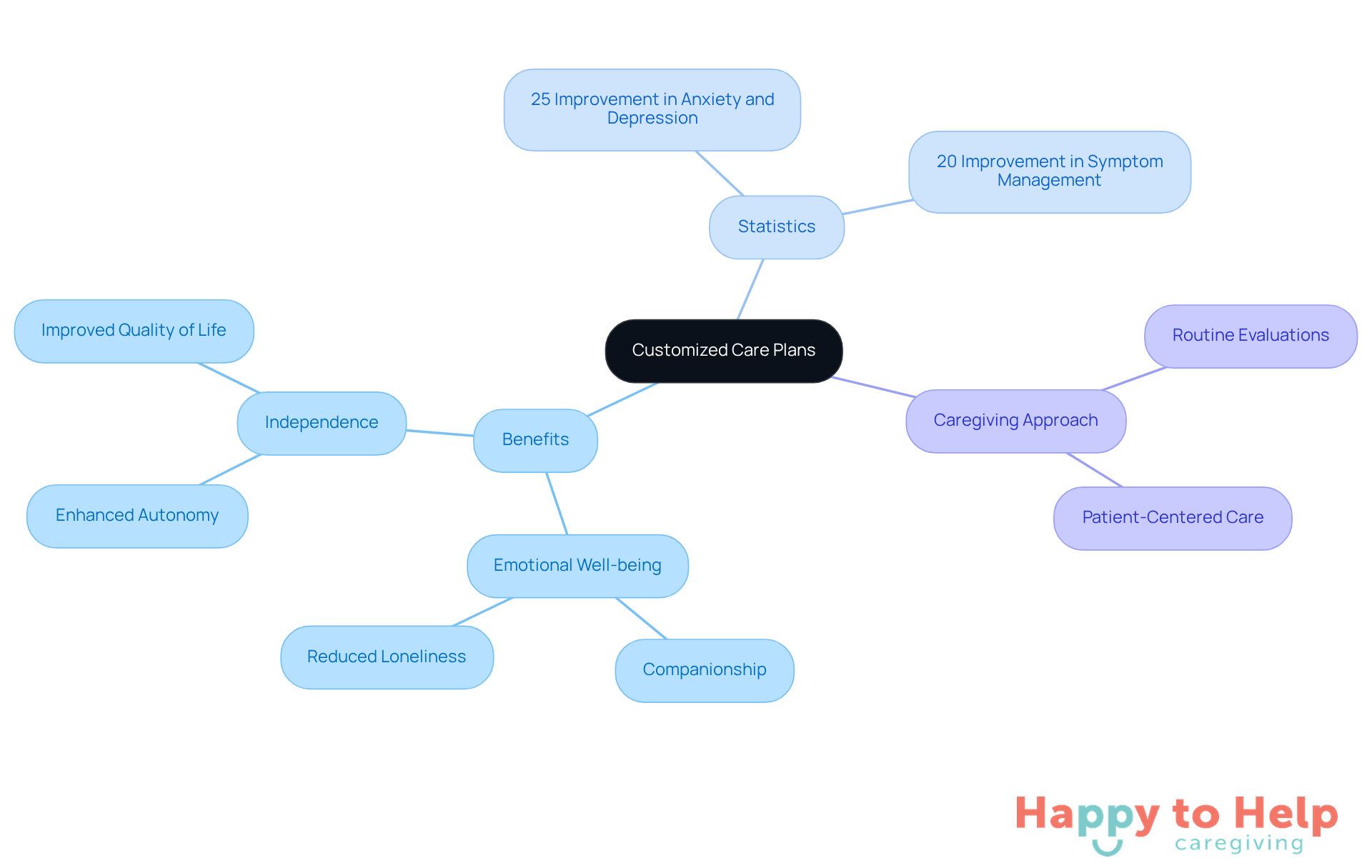
Research shows that personalized care plans significantly enhance emotional well-being and foster a sense of independence, which is crucial for overall mental health. In fact, patients receiving tailored home care have reported a 25% improvement in anxiety and depression scores. This highlights the profound impact that customized support can have on individuals.
To combat these issues, Happy to Help Caregiving offers a customized care plan that serves as a carer companion, designed to reflect each person's lifestyle and goals. This personalized approach allows a carer companion to provide focused assistance, ensuring that clients feel valued and understood. Routine evaluations are conducted to keep these care plans flexible and adaptable to changing needs, preserving their relevance and effectiveness over time.
By prioritizing individualized care and adopting a compassionate, patient-centered approach, Happy to Help Caregiving not only improves satisfaction rates but also leads to a more fulfilling caregiving experience. This commitment to personalized care is essential for enhancing the overall quality of life for clients.
Flexible Scheduling: Adapting to Family Needs and Preferences
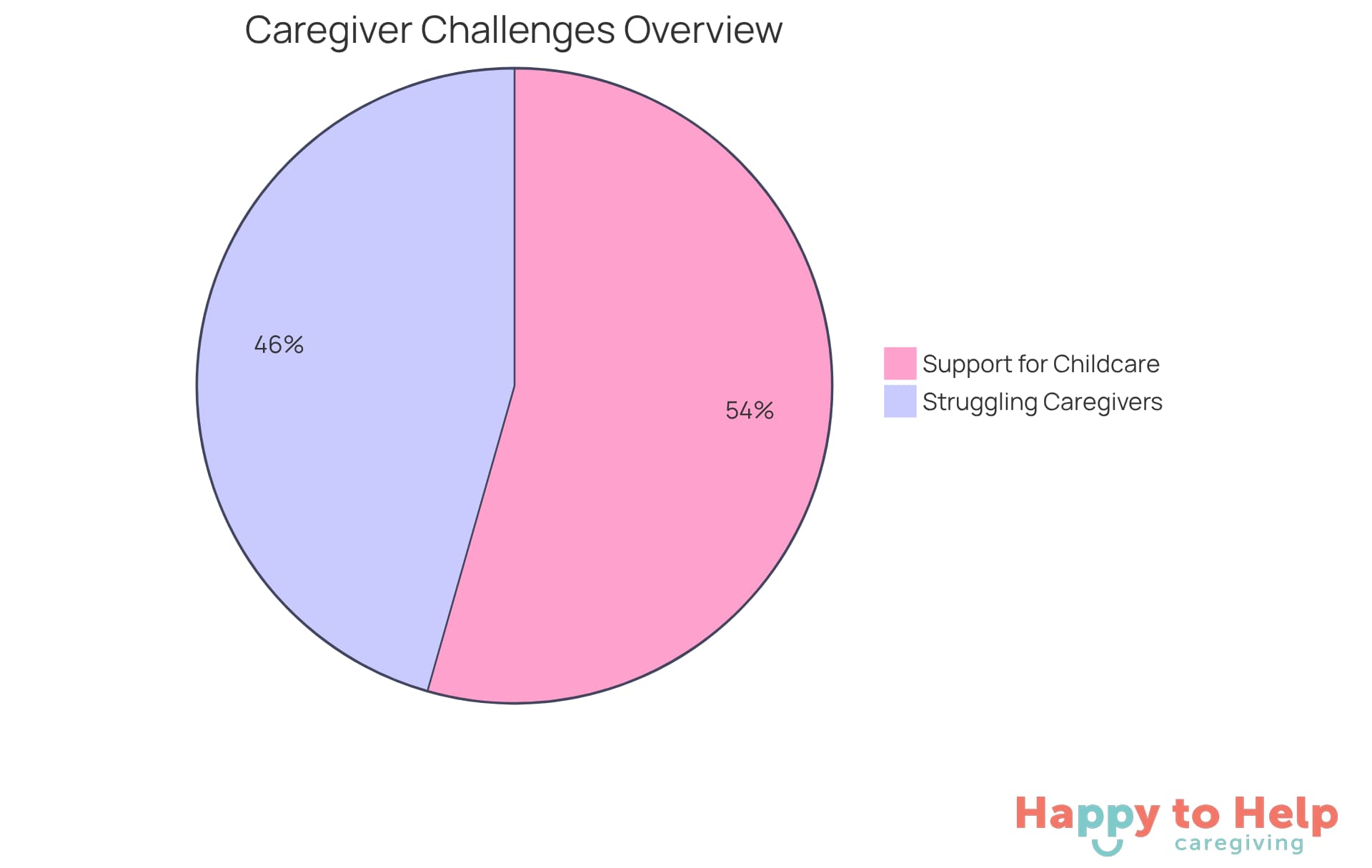
Caregiving presents significant challenges, particularly when it comes to balancing work and family responsibilities. Research indicates that 67% of relatives providing care struggle to manage these dual roles, highlighting a pressing issue that many face daily. Furthermore, societal perceptions often favor childcare over adult caregiving, with 80% of respondents noting that companies are more understanding of childcare issues. This disparity underscores the need for flexible support systems that can alleviate the burden on caregivers.
Adaptable scheduling choices are essential in addressing these challenges. Happy to Help Caregiving provides part-time or full-time assistance from a carer companion, enabling caregivers to adjust their availability to fit household routines and preferences. This flexibility not only enhances the caregiving experience but also enables families to maintain their daily activities seamlessly. By accommodating personal schedules, a carer companion can reduce stress and foster a more harmonious family atmosphere, allowing loved ones to thrive while receiving the necessary support.
As Amy Freshman, Senior Director for HR, aptly noted, "Employers that cultivate a workplace culture that assists caretakers may discover it easier to retain employees and elicit their best performance." By prioritizing adaptable scheduling and understanding the unique needs of caregivers, organizations can play a crucial role in supporting their workforce.
Quality of Life Improvement: Enriching Daily Experiences
Many individuals struggle with a diminished quality of life, often feeling isolated and unfulfilled. This lack of engagement can lead to emotional distress and even physical health issues, creating a cycle that is hard to break.
Carer companions offer a vital solution to this problem. By facilitating interactive activities and fostering social connections, a carer companion helps individuals rediscover joy and satisfaction in their daily lives. This holistic approach not only boosts emotional well-being but also enhances physical health and vitality.
Incorporating supportive encouragement, a carer companion empowers individuals to engage more fully with their surroundings. This can lead to improved mental health outcomes and a more vibrant lifestyle.
To maximize the benefits of companion care, consider these actionable tips:
- Schedule regular activities that align with the individual's interests.
- Foster social connections by introducing them to community groups or events.
- Provide consistent emotional support to encourage open communication.
By implementing these strategies, caregivers can significantly enhance the quality of life for those they support.
Continuity of Care: Building Trust Through Familiarity
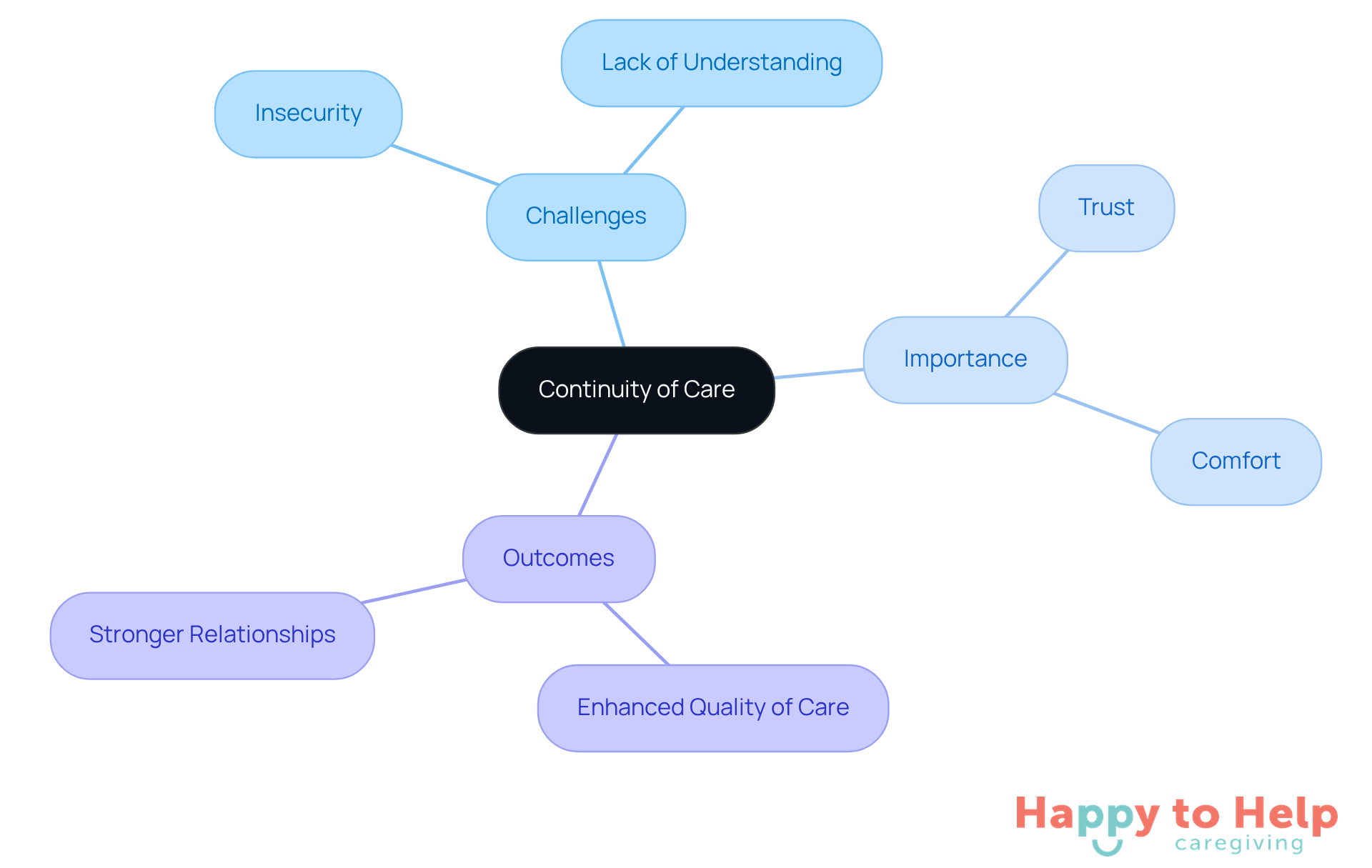
The role of a carer companion presents a significant challenge in ensuring continuity of care within the caregiving landscape. When individuals do not receive consistent support from familiar providers, it can lead to feelings of insecurity and discomfort. This inconsistency not only affects the emotional well-being of clients but also hinders a carer companion's ability to understand their preferences and needs.
To address this issue, Happy to Help Caregiving emphasizes the importance of continuity in care. By ensuring that clients receive support from their carer companion, the agency fosters trust and comfort. This familiarity allows the carer companion to better understand clients' unique needs, resulting in more compassionate and efficient support.
When clients have a carer companion who consistently understands them well, they feel more secure and appreciated. This approach not only enhances the quality of care but also strengthens the relationship between the carer companion and the client, ultimately leading to better outcomes for everyone involved.
Respite Care: Supporting Family Caregivers and Preventing Burnout
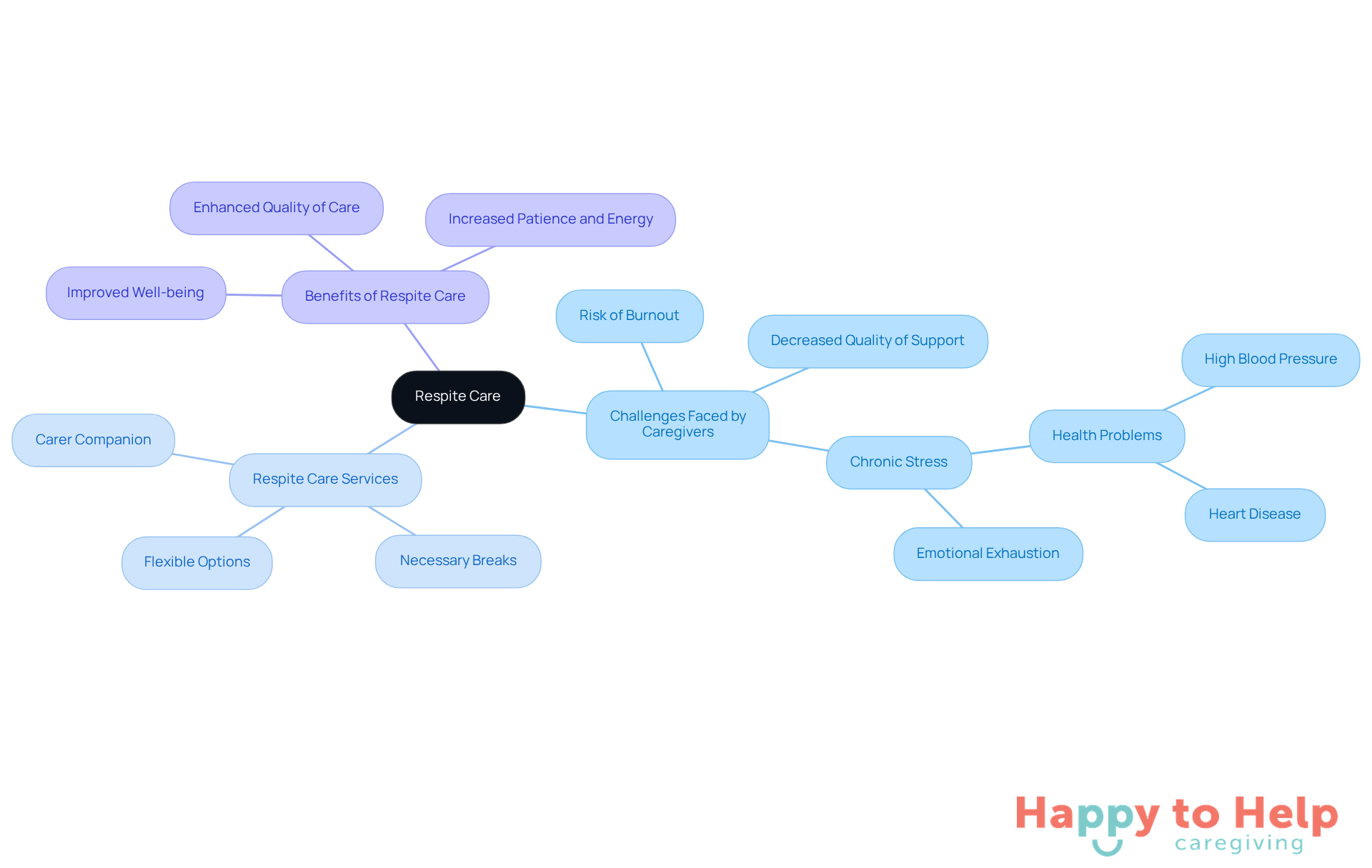
Caregivers often face significant challenges, including the risk of burnout from their demanding roles. This stress can lead to decreased quality of support for their loved ones, ultimately affecting everyone involved.
Happy to Help Caregiving offers respite care services that provide a vital solution as a carer companion. By allowing a carer companion to take necessary breaks, these services help rejuvenate their spirits and reduce stress. This short-term respite is essential for maintaining high-quality support and ensuring that carer companions can continue their important work.
By encouraging self-care, respite support not only improves the well-being of caregivers but also enhances the overall quality of care for their loved ones. It's a win-win situation that underscores the importance of taking time for oneself in the caregiving journey.
Holistic Benefits: Enhancing Well-Being for Clients and Families
Caregiving can be a challenging journey, often leading to stress and emotional strain for both caregivers and their families. This situation can create tension within family dynamics, making it difficult for everyone involved to navigate the complexities of care.
Carer companion services provide a solution by enhancing emotional well-being and promoting independence. By providing peace of mind, carer companions assist families in experiencing reduced stress and improved relationships. This supportive environment fosters healthier interactions, allowing families to tackle caregiving challenges together.
Incorporating a carer companion not only benefits individual clients but also enhances the bonds among loved ones, fostering a more harmonious family atmosphere.
Key Takeaways for Caregivers
The profound impact of a carer companion on the well-being of loved ones cannot be overstated. Loneliness among seniors is a critical issue that can severely affect their mental health and overall quality of life. Carer companions address this problem through personalized companionship, fostering emotional connections that significantly enhance well-being.
Key benefits of carer companionship include:
- Emotional support that alleviates feelings of isolation
- Assistance with daily living activities that promote independence
- The peace of mind that comes from knowing loved ones are safe and cared for
Customized care plans and flexible scheduling further highlight the importance of individualized attention in enhancing the overall caregiving experience.
Embracing the role of a carer companion transforms the lives of seniors and enriches family dynamics, creating a supportive environment for everyone involved. The need for companionship and emotional support in caregiving is paramount. By incorporating these services, families can lead happier, healthier lives for both clients and their families.
https://iframe.tely.ai/cta/eyJhcnRpY2xlX2lkIjogIjY5MjdhNWNjZmY0OGQzOGQyYmQzMTBiZCIsICJjb21wYW55X2lkIjogIjY4ZWU1ZGNhNzMxNzYyNTU3ZjNjOTVjMSIsICJpbmRleCI6IG51bGwsICJ0eXBlIjogImFydGljbGUifQ==Frequently Asked Questions
What issue does Happy to Help Caregiving address for seniors?
Happy to Help Caregiving addresses the issue of loneliness among seniors, which can significantly impact their mental well-being and lead to depression and cognitive decline.
How does Happy to Help Caregiving provide support to seniors?
The service provides personalized companionship through carer companions who engage clients in meaningful conversations and enjoyable activities, fostering a sense of belonging and security.
What are the benefits of having a carer companion for seniors?
Carer companions enhance physical, mental, and psychological well-being, leading to a better quality of life through regular interactions and support.
How does social connection impact seniors' cognitive health?
Seniors with strong social connections experience a slower rate of cognitive decline, highlighting the importance of companionship in maintaining mental health.
What role do carer companions play in alleviating loneliness and isolation?
Carer companions provide psychological support through regular conversations and shared activities, nurturing a sense of connection and belonging for seniors with limited social interactions.
What are the financial implications of loneliness among seniors?
Social isolation among seniors leads to significant financial costs, driving an estimated $6.7 billion in additional Medicare spending annually.
What types of daily living assistance do carer companions provide?
Carer companions assist with meal preparation, medication reminders, personal hygiene, and encourage seniors to engage in their preferred routines.
Why is supporting independence in elderly care important?
Supporting independence allows seniors to maintain their routines and fosters a sense of normalcy and security, which is crucial for their well-being.
What strategies can be implemented to enhance the support provided by carer companions?
Strategies include empowering clients to participate in daily activities, training caregivers to improve their skills, and utilizing technology for medication reminders and meal planning.
List of Sources
- Happy to Help Caregiving: Personalized Companionship for Enhanced Well-Being
- 10 Ways Companion Caregivers Enhance Seniors' Quality of Life - Happy To Help (https://happytohelpcaregiving.com/10-ways-companion-caregivers-enhance-seniors-quality-of-life)
- Embracing Companionship to Enhance Senior Well-Being | Amada (https://amadaseniorcare.com/2024/02/embracing-companionship-to-enhance-senior-well-being)
- The Role of Companionship in Senior Well-Being (https://anodyne-services.com/2025/01/07/the-role-of-companionship-in-senior-well-being)
- News - Happy To Help (https://happytohelpcaregiving.com/news)
- The Value of Friendships as We Age (https://ihpi.umich.edu/national-poll-healthy-aging/reports-and-resources/value-friendships-we-age)
- Emotional Support: Alleviating Loneliness and Isolation
- Combat Loneliness: The Benefits of Companion Care for Seniors (https://allheartcare.com/more-than-just-company-the-vital-role-of-companion-care-for-seniors)
- AI companion helps Bronx senior living facility residents combat loneliness (https://cbsnews.com/newyork/news/ai-companionship-for-seniors-bronx)
- NYSOFA Brings ElliQ Proactive Care Companion Technology to Older Adults, Reducing Social Isolation, Supporting Independence, Connection and Engagement (https://aging.ny.gov/news/nysofa-brings-elliq-proactive-care-companion-technology-older-adults-reducing-social-isolation)
- Summary - Social Isolation and Loneliness in Older Adults - NCBI Bookshelf (https://ncbi.nlm.nih.gov/books/NBK557972)
- Trends in Loneliness Among Older Adults from 2018-2023 (https://ihpi.umich.edu/national-poll-healthy-aging/reports-and-resources/trends-loneliness-among-older-adults-2018-2023)
- Daily Living Assistance: Supporting Independence and Daily Activities
- New Study Explores the Need for Expanded Long-Term Care Services to Support Aging-in-Place | Johns Hopkins Bloomberg School of Public Health (https://publichealth.jhu.edu/2025/new-study-explores-the-need-for-expanded-long-term-care-services-to-support-aging-in-place)
- Honoring America’s Family Caregivers, the Unseen Workforce Behind Our Health System - Medicare Rights Center (https://medicarerights.org/medicare-watch/2025/11/25/honoring-americas-family-caregivers-the-unseen-workforce-behind-our-health-system)
- Opinion | America’s Caregivers Are in Crisis (https://nytimes.com/2025/11/24/opinion/caregiving-crisis.html)
- Senior Living Statistics (https://rosewood-nursing.com/post/senior-living-statistics)
- Families caring for older adults at home say aging in place should not be taken lightly, but may be worth it (https://cbsnews.com/newyork/news/aging-in-place-home-remodeling-cost-of-caregiving)
- Peace of Mind: Ensuring Safety and Security for Families
- Support for Family Caregivers Brings Peace of Mind (https://hiredhandshomecare.com/support-for-family-caregivers-brings-peace-of-mind)
- The National Alliance for Caregiving and AARP Release Caregiving Report - CAPC - News Bites (https://capc.org/blog/new-data-on-family-caregivers-in-the-us)
- Caregiving Statistics US 2025: Insights for Family Caregivers (https://zencaregiving.org/caregiving-statistics-us-2025)
- Caregiver Statistics: Demographics (https://caregiver.org/resource/caregiver-statistics-demographics)
- The Caregiving Landscape: Data & Insights on the Caregiver Experience in the U.S. (https://caregiveraction.org/caregiver-statistics)
- Customized Care Plans: Tailoring Support to Individual Needs
- How Personalized Care Plans Enhance Medical Services in Long-Term Care (https://rosewood-nursing.com/post/how-personalized-care-plans-enhance-medical-services-in-long-term-care)
- Customized Care at Home: The Benefits of Personalized Care Plans - VNA Health Group (https://vnahg.org/customized-care-at-home-the-benefits-of-personalized-care-plans)
- Care.com Launches First-Ever Senior Care Advisor Tool, Helping Families Navigate Critical Decisions with Confidence (https://businesswire.com/news/home/20251009683215/en/Care.com-Launches-First-Ever-Senior-Care-Advisor-Tool-Helping-Families-Navigate-Critical-Decisions-with-Confidence)
- Home Care Impact on Recovery of Patient (A Statistics Report) (https://lovinghomecareinc.com/home-care-recovery-statistics)
- New Survey Reveals Americans Want More Personalized Care Insights from their Health Tech (https://prnewswire.com/news-releases/new-survey-reveals-americans-want-more-personalized-care-insights-from-their-health-tech-302578448.html)
- Flexible Scheduling: Adapting to Family Needs and Preferences
- New U.S. Workforce Report: Nearly 70% of Family Caregivers Report Difficulty Balancing Career and Caregiving Responsibilities, Spurring Long-Term Impacts to U.S. Economy (https://press.aarp.org/2024-5-16-US-Workforce-Report-70-Caregivers-Difficulty-Balancing-Career-Caregiving-Responsibilities)
- Helping Caregivers Thrive With Caregiver Leave, Flexible Work and More (https://adp.com/spark/articles/2025/03/helping-caregivers-thrive-with-caregiver-leave-flexible-work-and-more.aspx)
- The need for caregiving benefits may have reached a fever pitch (https://hrdive.com/news/sandwich-generation-needs-caregiving-benefits/802864)
- 9 Ways to Find Caregivers With Flexible Scheduling Options - MedCity News (https://medcitynews.com/2025/05/9-ways-to-find-caregivers-with-flexible-scheduling-options)
- Quality of Life Improvement: Enriching Daily Experiences
- Health Benefits of Recreation for Seniors | Improve Senior Wellness (https://benedictineliving.org/resources/news/more-than-just-fun-how-recreational-activities-enhance-well-being-for-seniors)
- 10 Benefits of Professional Companion Services for Family Caregivers - Happy To Help (https://happytohelpcaregiving.com/10-benefits-of-professional-companion-services-for-family-caregivers)
- Top 6 Activities in Assisted Living That Boost Seniors’ Quality of Life (https://ltcnews.com/articles/top-activities-assisted-living-seniors-quality-life)
- Denver researchers say robot companions can improve senior citizens' quality of life (https://npr.org/2025/06/04/nx-s1-5319315/denver-researchers-say-robot-companions-can-improve-senior-citizens-quality-of-life)
- Activities for Seniors That Boost Health, Happiness, and Independence — The Aspenwood Company (https://theaspenwoodcompany.com/news/activities-for-seniors-that-boost-health-happiness-and-independence)
- Continuity of Care: Building Trust Through Familiarity
- The Importance of Caregiver-Client Relationships in Senior Well-Being (https://homeinstead.com/home-care/usa/in/goshen/588/news-and-media/the-importance-of-caregiver-client-relationships-in-senior-well-being)
- AI must optimize home care, continuity, and early detection for older adults (https://news-medical.net/news/20251007/AI-must-optimize-home-care-continuity-and-early-detection-for-older-adults.aspx)
- Continuity of care in general practice and patient outcomes in Denmark: a population-based cohort study (https://sciencedirect.com/science/article/pii/S3050514325000160)
- Building Trust in Senior Care: It Starts With One Moment (https://care-one.com/blog/building-trust-in-senior-care)
- Respite Care: Supporting Family Caregivers and Preventing Burnout
- New Bill: Senator Edward J. Markey introduces S. 3231: Respite Care and Resources for Everyone Act | AMGN Stock News (https://quiverquant.com/news/New+Bill:+Senator+Edward+J.+Markey+introduces+S.+3231:+Respite+Care+and+Resources+for+Everyone+Act)
- Caring For the Caregiver: Preventing Burnout - AMHC (https://amhc.org/news/caregiver)
- Funding Opportunity: National Lifespan Respite Care Program State Program Enhancement Grants | ACL Administration for Community Living (https://acl.gov/news-and-events/announcements/national-lifespan-respite-care-program-state-program-enhancement)
- A bill in Congress would return $5,000 to millions of family caregivers every year, but will it pass? (https://cbsnews.com/newyork/news/credit-for-caring-act-family-caregiver-tax-credit)
- Family Caregivers Struggling In Some States More Than Others (https://disabilityscoop.com/2025/10/31/family-caregivers-struggling-in-some-states-more-than-others/31710)
- Holistic Benefits: Enhancing Well-Being for Clients and Families
- As Family Caregiving Grows, So Does the Need for Reform - Medicare Rights Center (https://medicarerights.org/medicare-watch/2025/08/14/as-family-caregiving-grows-so-does-the-need-for-reform)
- Older adults find support through health care companions (https://news-medical.net/news/20250924/Older-adults-find-support-through-health-care-companions.aspx)
- New Report Reveals Crisis Point for America’s 63 million Family Caregivers (https://press.aarp.org/2025-07-24-New-Report-Reveals-Crisis-Point-for-Americas-63-million-Family-Caregivers)
- More People Are Caring for Dying Loved Ones at Home. A New Orleans Nonprofit Is Showing Them How. - KFF Health News (https://kffhealthnews.org/news/article/end-of-life-home-hospice-care-dying-new-orleans-louisiana)
- Caregiving Crisis: 45% Increase in Americans Providing Care (https://aarp.org/caregiving/basics/caregiving-in-us-survey-2025)