For families in our service areas
For families in our service areas, this guide explains companion care and how non-medical in-home caregiving can support care planning in East Idaho, Treasure Valley & Magic Valley, Northern Wasatch, North Central West Virginia, and Northeast Ohio.
The Importance of A Home Care Companion Enhances Seniors
Loneliness and isolation pose significant threats to the well-being of seniors, often leading to severe health consequences that can be as detrimental as smoking. This issue is not just a personal struggle; it affects families and communities as well. As families seek ways to enhance the quality of life for their loved ones, the question arises: how can personalized companionship transform the daily experiences of seniors, fostering emotional resilience and independence?
Home care companions provide not just assistance, but meaningful companionship tailored to the unique needs of elderly individuals. By addressing the emotional and social aspects of care, these companions can significantly improve the quality of life for seniors. This approach not only alleviates feelings of loneliness but also promotes a sense of belonging and purpose.
Happy to Help Caregiving: Personalized Companionship for Seniors
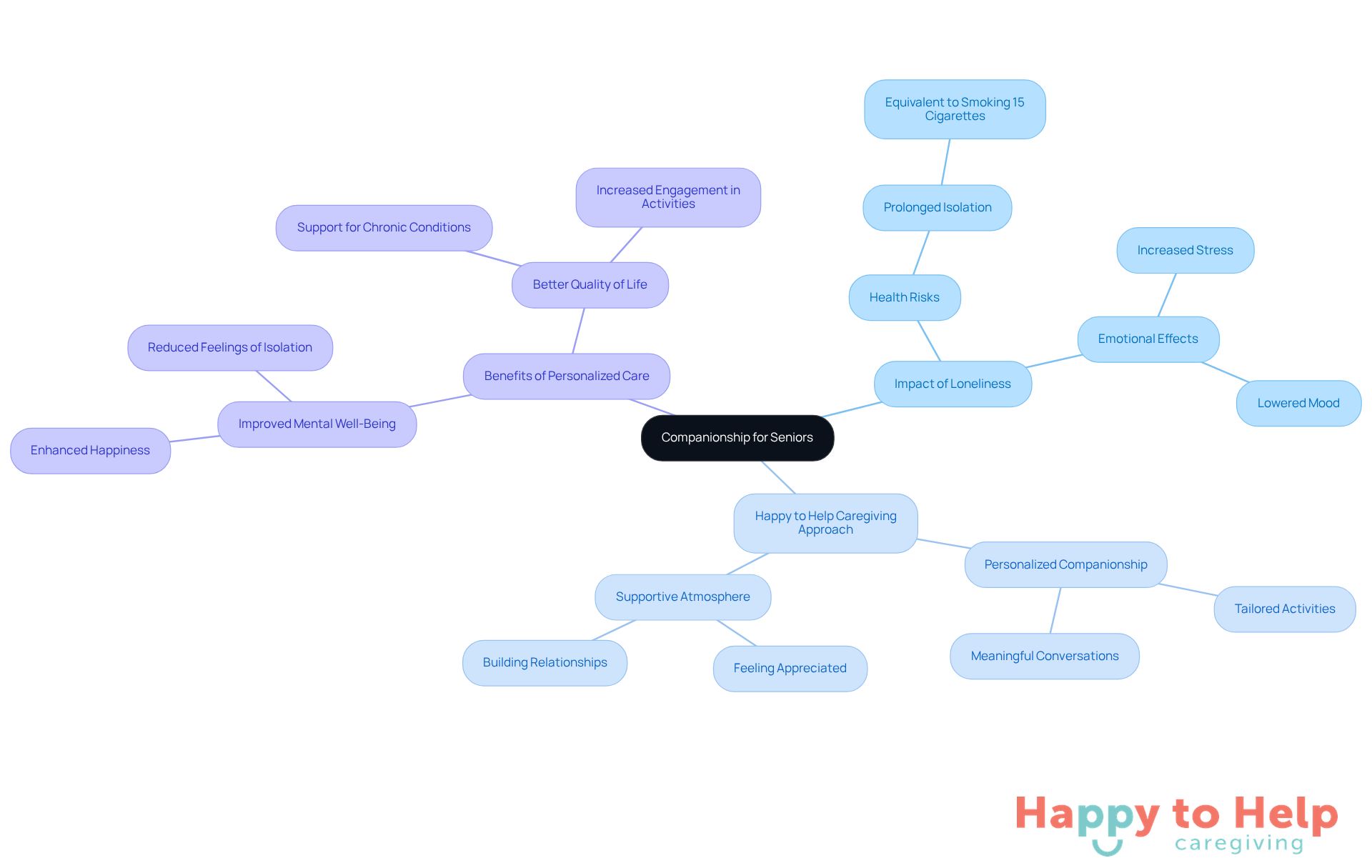
Loneliness and isolation are significant challenges faced by elderly individuals, impacting their mental and physical health. Research shows that these feelings are prevalent among older adults, leading to serious health risks. As noted by Life’s At Home Care, "Simply put, loneliness is not just an emotion - it changes the body’s chemistry." Furthermore, studies reveal that "prolonged isolation carries the same health risk as smoking fifteen cigarettes a day," highlighting the urgent need for companionship.
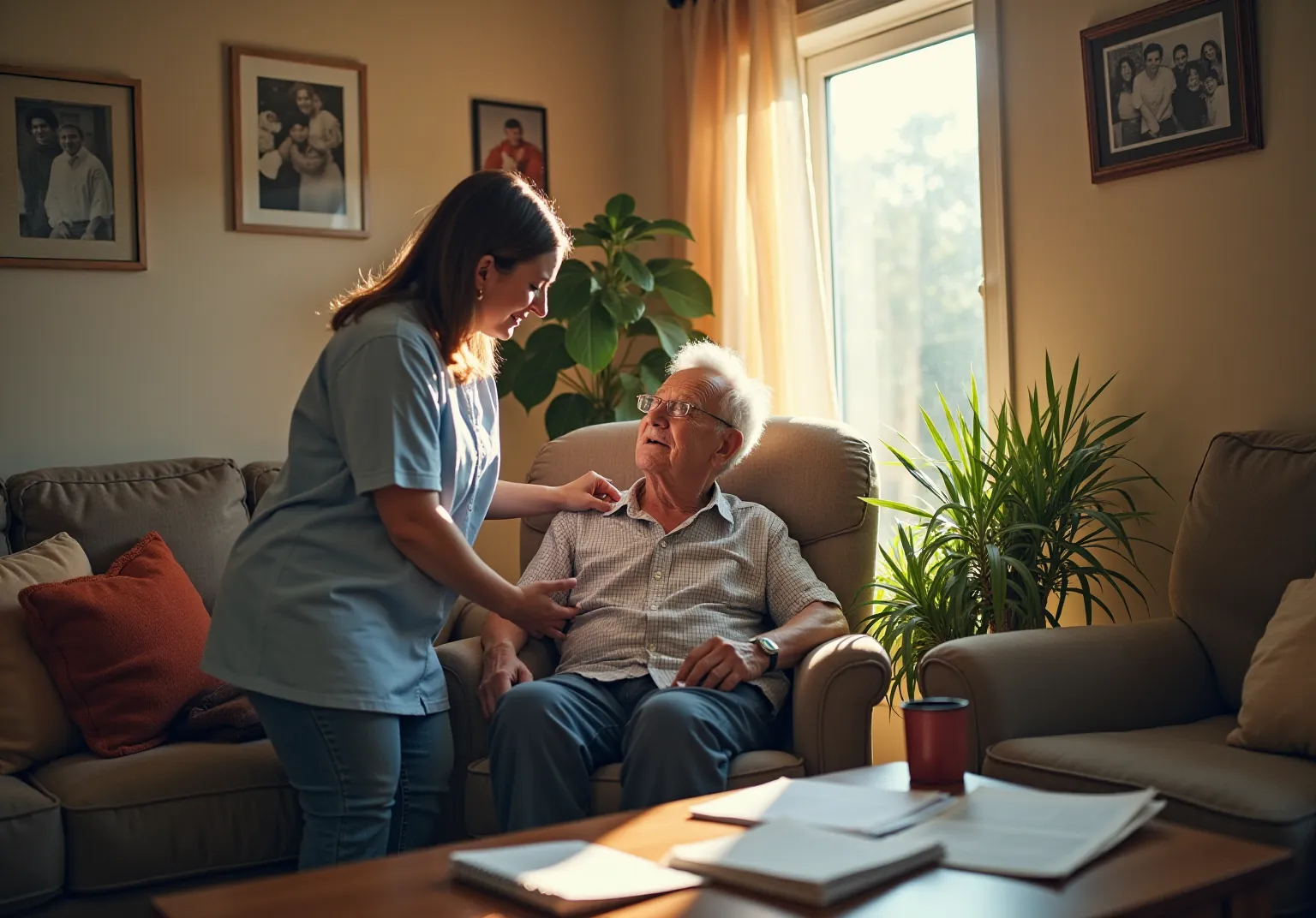
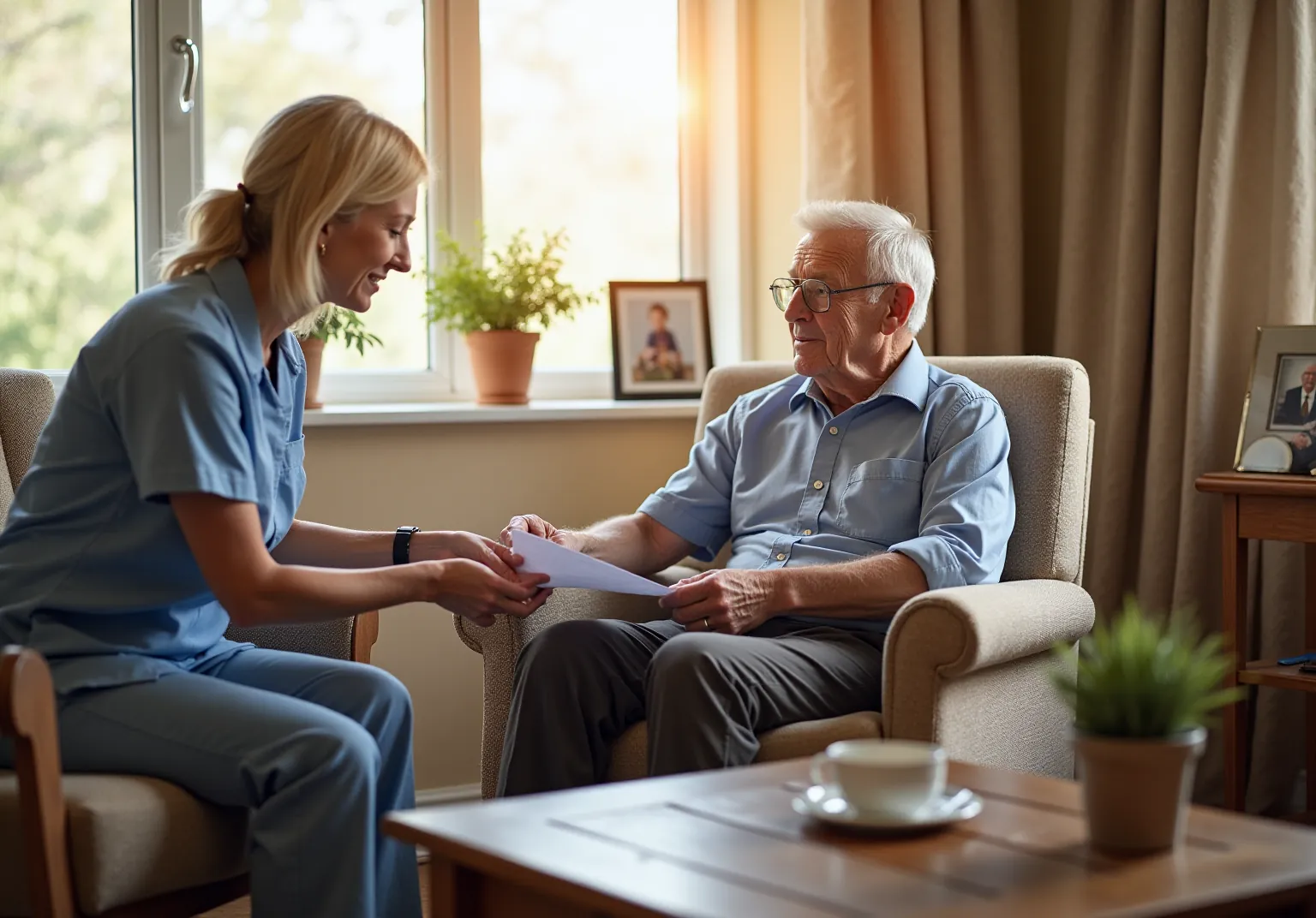
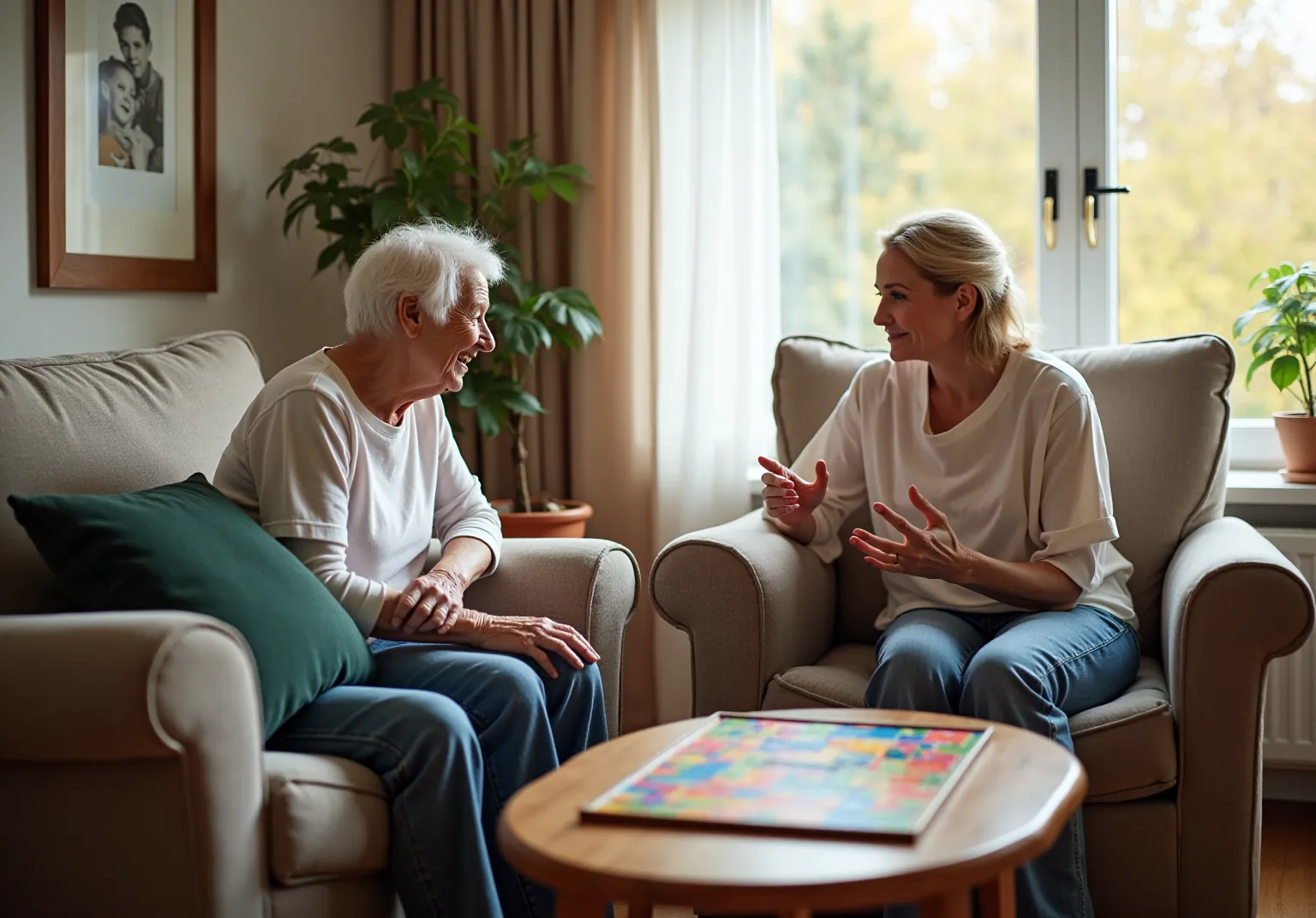
Happy to Help Caregiving addresses this issue by offering a home care companion that provides personalized companionship tailored to the unique needs and preferences of each client. This approach fosters a supportive atmosphere where older adults feel appreciated and understood, significantly improving their overall well-being. Caregivers engage in meaningful conversations and activities that nurture relationships beyond simple assistance, creating a sense of connection.
By emphasizing relational bonds, Happy to Help Caregiving serves as a home care companion that not only meets the physical needs of elderly clients but also enhances their mental well-being. This dedication to personalized care demonstrates a broader understanding of the importance of companionship in promoting psychological resilience and overall happiness in later life. In doing so, they contribute to a better quality of life for older adults.
Enhanced Emotional Well-Being: Combatting Loneliness and Isolation
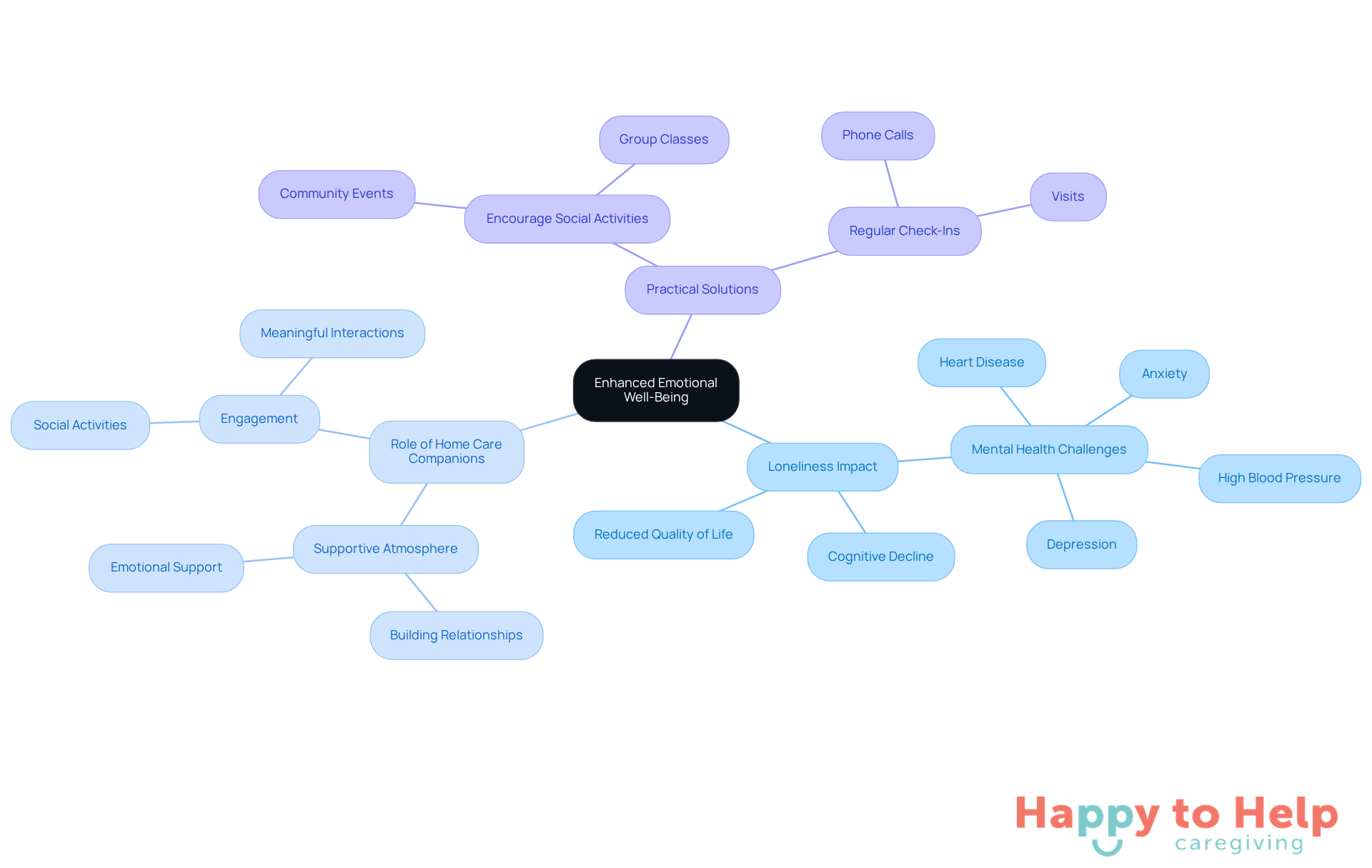
Companionship care, provided by a home care companion, addresses a significant problem: loneliness among seniors. This issue can lead to severe mental health challenges, including increased risks of depression, anxiety, heart disease, and high blood pressure. Studies involving over 22,000 socially isolated older adults highlight the critical need for regular social interaction to combat these feelings of isolation.
Home care companions from Happy to Help Caregiving play a crucial role in alleviating loneliness. By actively engaging with clients, they foster a supportive atmosphere where seniors feel appreciated and understood. This relational aspect of care is especially important during life changes, such as retirement or the loss of a spouse, which can intensify feelings of loneliness.
To enhance the emotional well-being of elderly loved ones, caregivers can implement practical solutions:
- Encourage involvement in social activities, such as community events or group classes, to promote regular interactions.
- Regular check-ins can provide essential support and connection.
Ultimately, a home care companion provides companionship care that is an investment in the happiness and well-being of seniors, ensuring they receive the necessary assistance to thrive in their golden years. By prioritizing social connections, caregivers can significantly improve the quality of life for older adults.
Customized Care Plans: Tailoring Support to Individual Needs
Caregivers often face the challenge of meeting the unique needs of each client. Without a personalized approach, clients may not receive the support they truly require, which can lead to feelings of isolation and dissatisfaction.
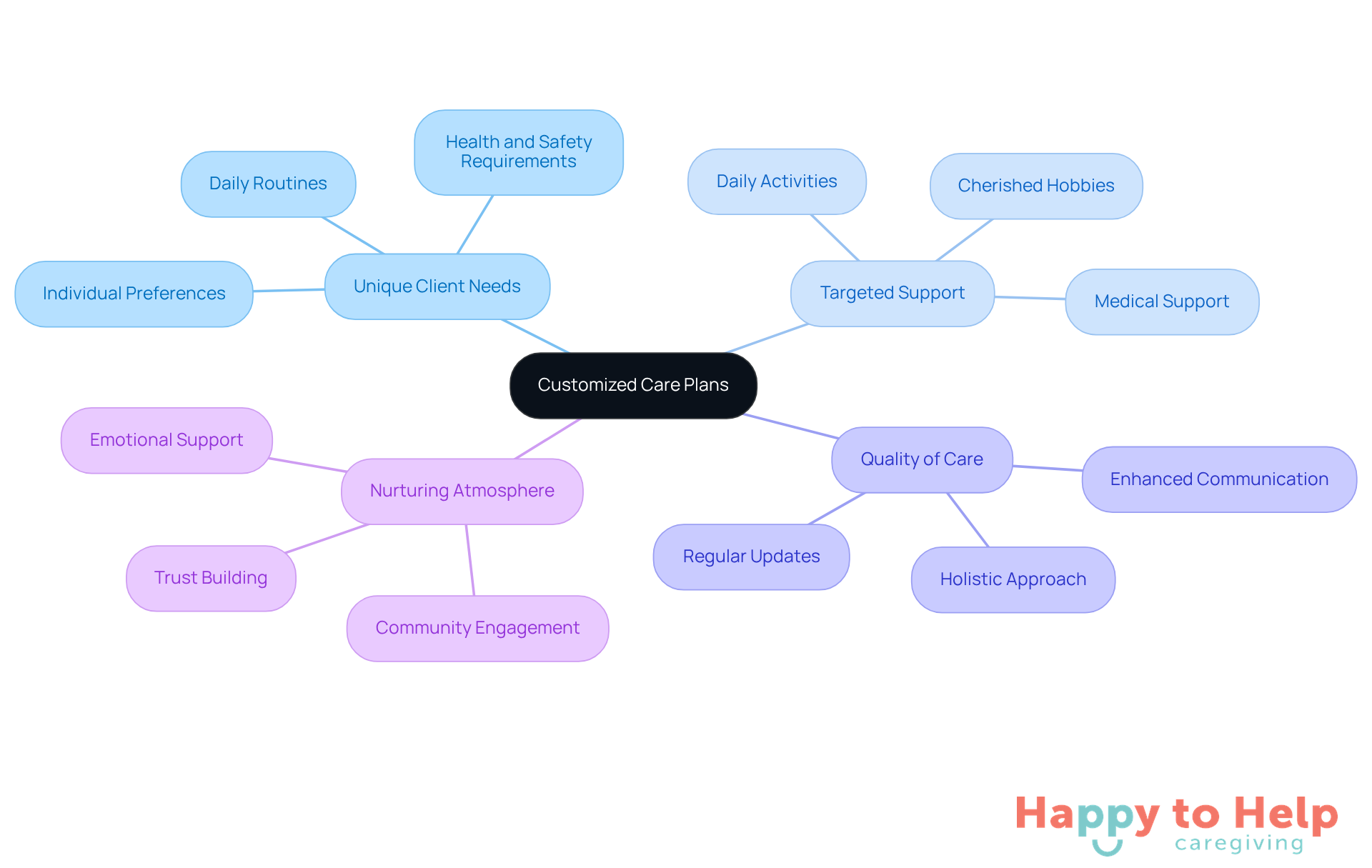
At Happy to Assist Caregiving, we recognize that every individual has distinct preferences and needs when it comes to their home care companion. This is why we implement personalized care plans tailored to each client. By focusing on what brings joy and comfort to the elderly, caregivers can provide targeted support, whether it’s assisting with daily activities or engaging in cherished hobbies.
This personalized approach not only enhances the quality of care provided by a home care companion but also fosters a nurturing atmosphere that significantly improves the overall experience of aging in place. By prioritizing individual preferences, caregivers can create a more fulfilling and supportive environment for their clients.
Safety Assurance: Peace of Mind for Families
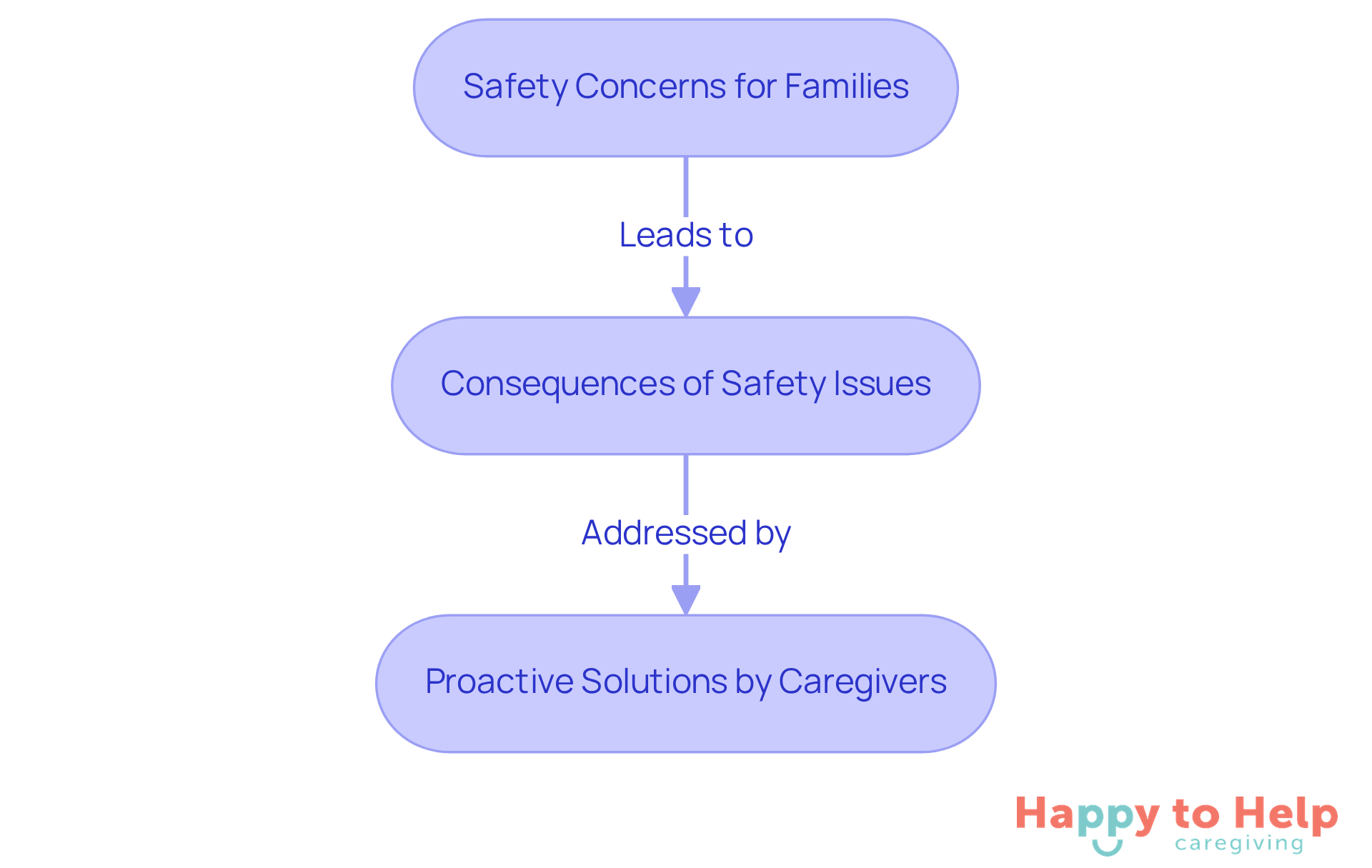
Problem: Safety is a significant concern for families with elderly loved ones. Many caregivers, acting as home care companions, face the challenge of ensuring that their clients are safe in their own homes.
Agitate: This concern is not unfounded; falls are the leading cause of injuries among older adults, resulting in approximately 1,800 deaths each year. Families often worry about potential hazards, which can lead to stress and anxiety about their loved ones' well-being.
Solution: Happy to Help Caregiving prioritizes safety, providing families with peace of mind. Caregivers undergo extensive training to identify potential hazards in the home and implement safety measures to prevent accidents. This proactive approach not only safeguards elderly individuals but also ensures that a home care companion eases the concerns of family members, allowing them to focus on their loved ones' well-being.
Experts in elder care, such as Amy Goyer, emphasize that addressing safety issues is crucial for promoting independence for as long as possible. By reducing risks such as falls, drownings, and carbon monoxide poisoning, caregivers significantly improve the quality of life for elderly individuals, ensuring they can thrive in the comfort of their own homes.
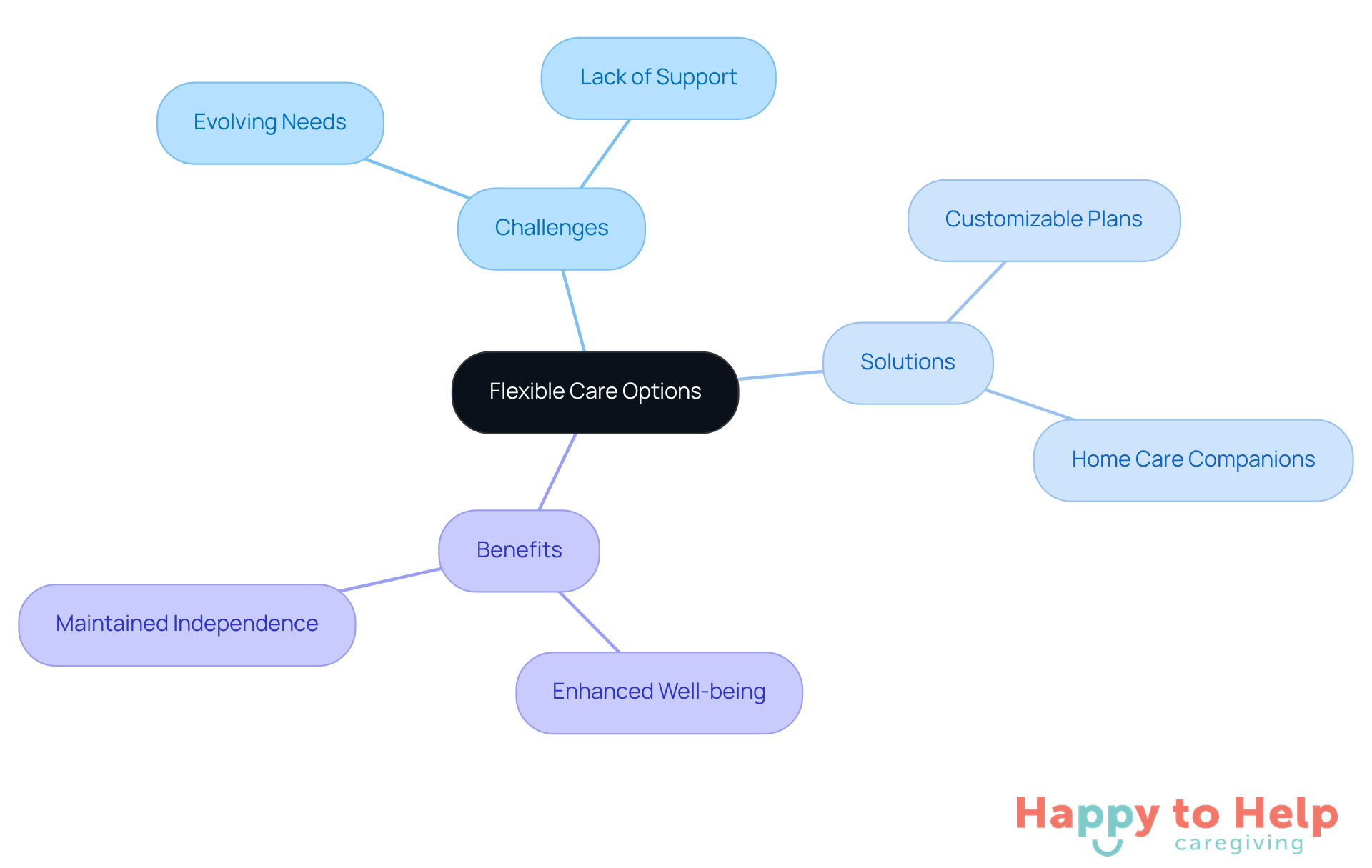
Flexible Care Options: Adapting to Changing Needs
Flexibility is a significant challenge in caregiving. As older adults' needs evolve-whether due to health changes or shifts in daily routines-care plans must adapt accordingly. Without this adaptability, older adults may not receive the right level of support, which can hinder their comfort and independence.
Happy to Help Caregiving addresses this issue by providing customizable plans for home care companions. This ensures that older adults receive the appropriate support at all times, enhancing their overall well-being. By modifying care plans as needed, caregivers can provide the right assistance, allowing older adults to maintain their independence and comfort.
Promoting Independence: Supporting Seniors' Autonomy
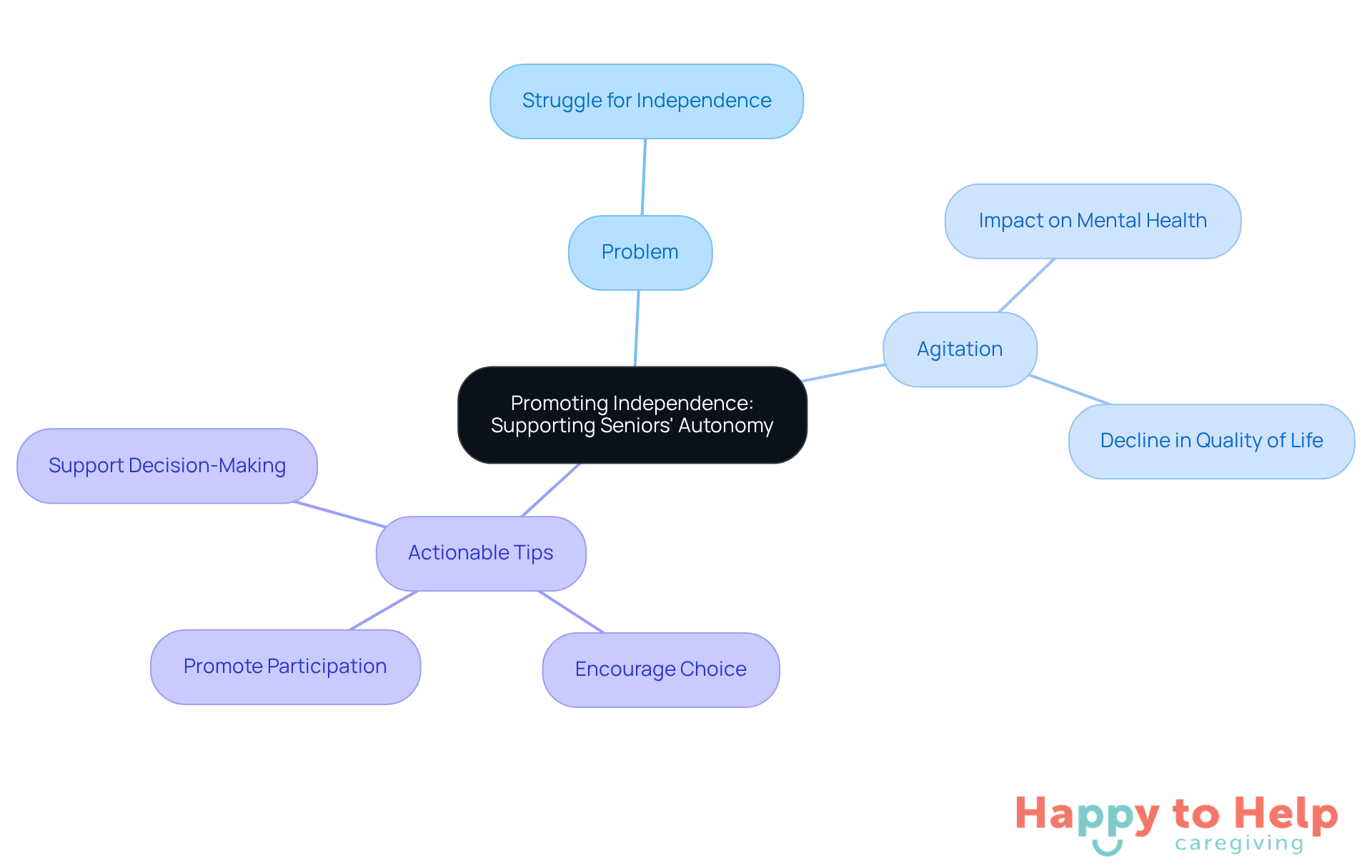
Problem: Many older adults struggle with maintaining their independence, which can lead to feelings of helplessness and diminished self-worth.
Agitation: This loss of autonomy not only affects their mental health but also impacts their overall quality of life. When elderly individuals feel they have no control over their daily activities, it can result in a decline in their dignity and self-esteem.
Home care companions play a crucial role in fostering independence among older adults. By encouraging clients to participate in daily activities, a home care companion helps them regain a sense of autonomy. Here are some actionable tips for caregivers:
- Encourage Choice: Allow clients to make decisions about their daily routines, from what to wear to what to eat.
- Promote Participation: Involve them in household tasks or hobbies they enjoy, reinforcing their self-worth.
- Support Decision-Making: Assist them in weighing options and making informed choices, preserving their dignity.
By implementing these strategies, a home care companion can significantly improve the quality of life for elderly individuals, helping them feel valued and respected.
Continuity of Care: Building Trust with Familiar Companions
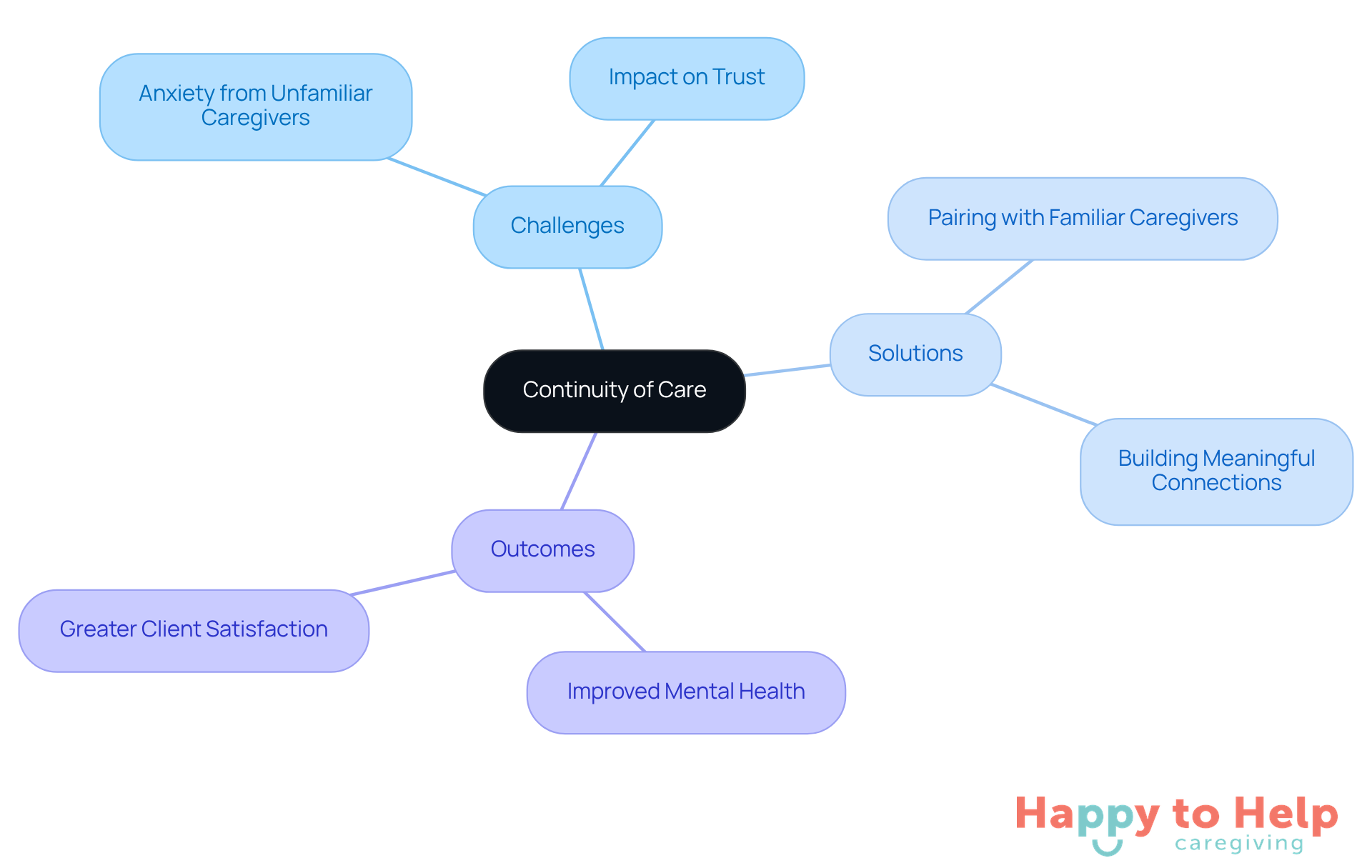
Continuity of care presents a significant challenge in the caregiving sector. When clients are paired with unfamiliar caregivers, it can lead to feelings of anxiety and discomfort. This inconsistency not only affects the trust between clients and caregivers but also impacts the mental health and overall satisfaction of older adults receiving care.
To address this issue, Happy to Assist Caregiving emphasizes the importance of pairing clients with a home care companion who is a familiar caregiver. This approach fosters trust and comfort, allowing older adults to build meaningful connections with their home care companion. As a result, clients experience improved mental health and greater contentment with the care they receive. By prioritizing continuity of care, agencies can enhance the overall quality of caregiving services.
Emotional Support: Engaging Seniors in Meaningful Activities
Elderly individuals often face emotional disconnection, which can significantly impact their overall well-being. This disconnection may lead to feelings of isolation and decreased mental health, making it crucial for caregivers to address these challenges effectively.
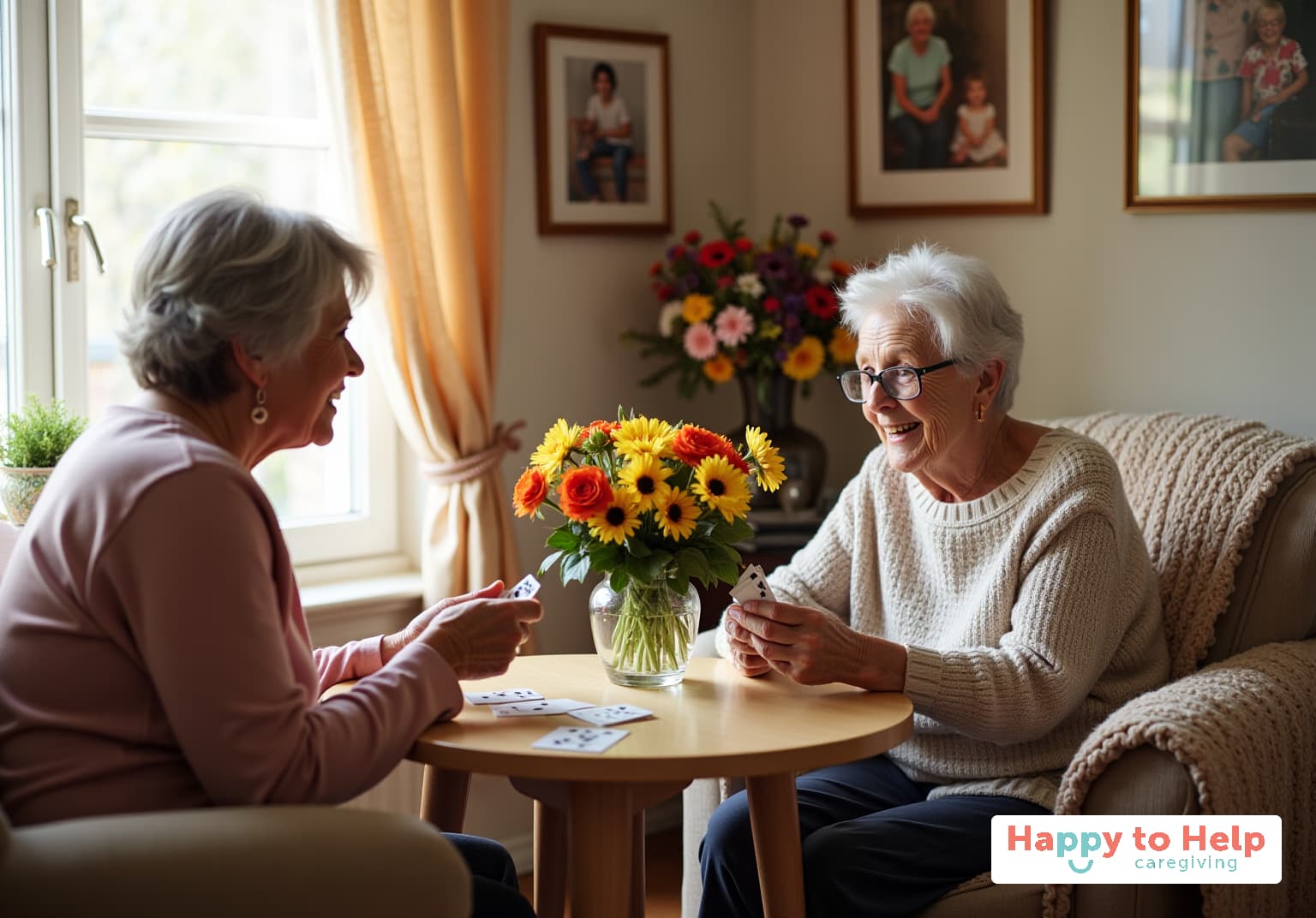
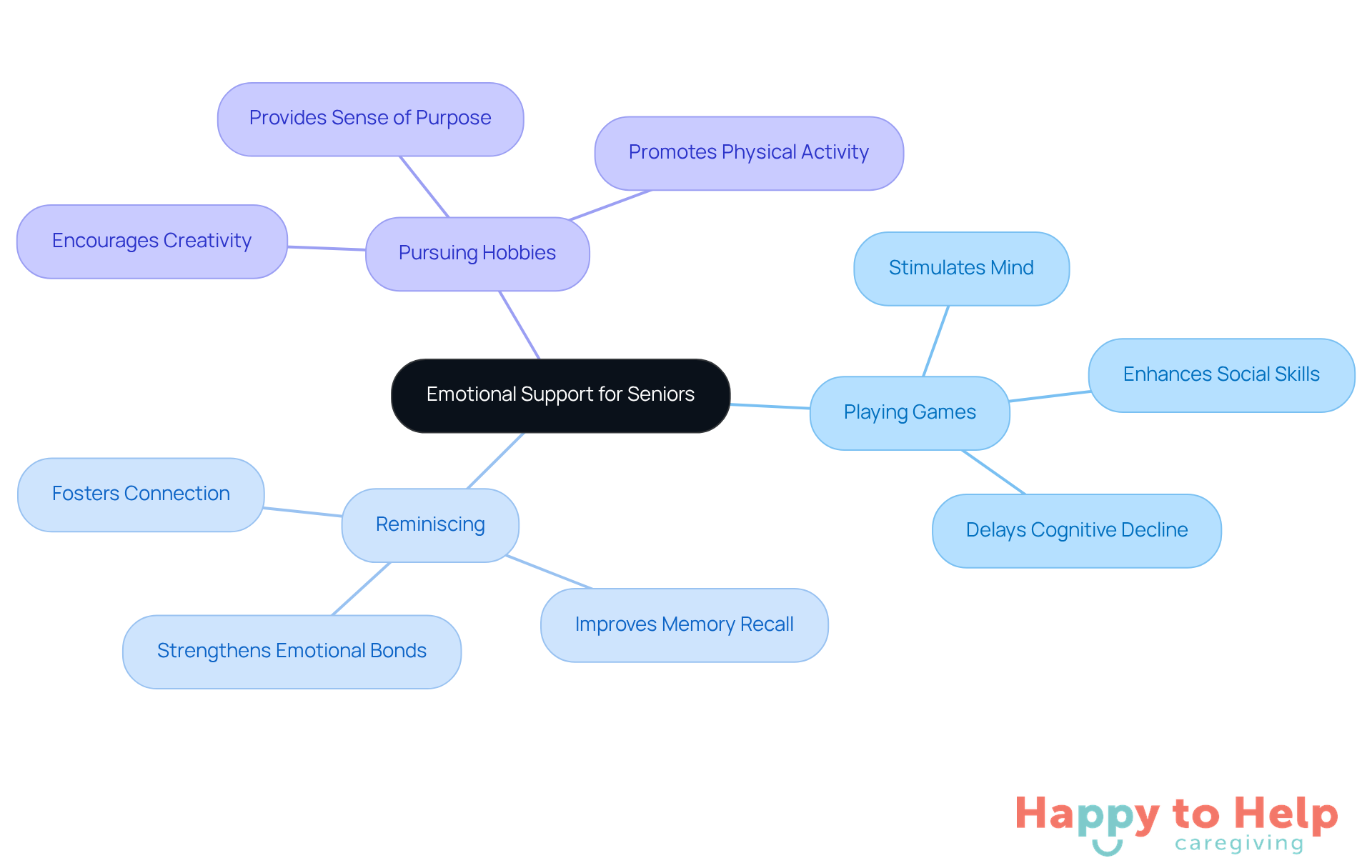
At Happy to Assist Caregiving, home care companions provide psychological support by engaging elderly individuals in meaningful activities. Whether it's:
- Playing games
- Reminiscing
- Pursuing hobbies
These interactions not only stimulate their minds but also uplift their spirits. Such activities help older adults feel valued and connected, significantly enhancing their emotional well-being.
By incorporating these engaging activities into their routines as a home care companion, caregivers can foster a supportive environment that promotes emotional health. This approach not only benefits the elderly but also enriches the caregiving experience, creating a more fulfilling connection between caregivers and those they assist.
Post-Hospital Recovery: Facilitating Smooth Transitions
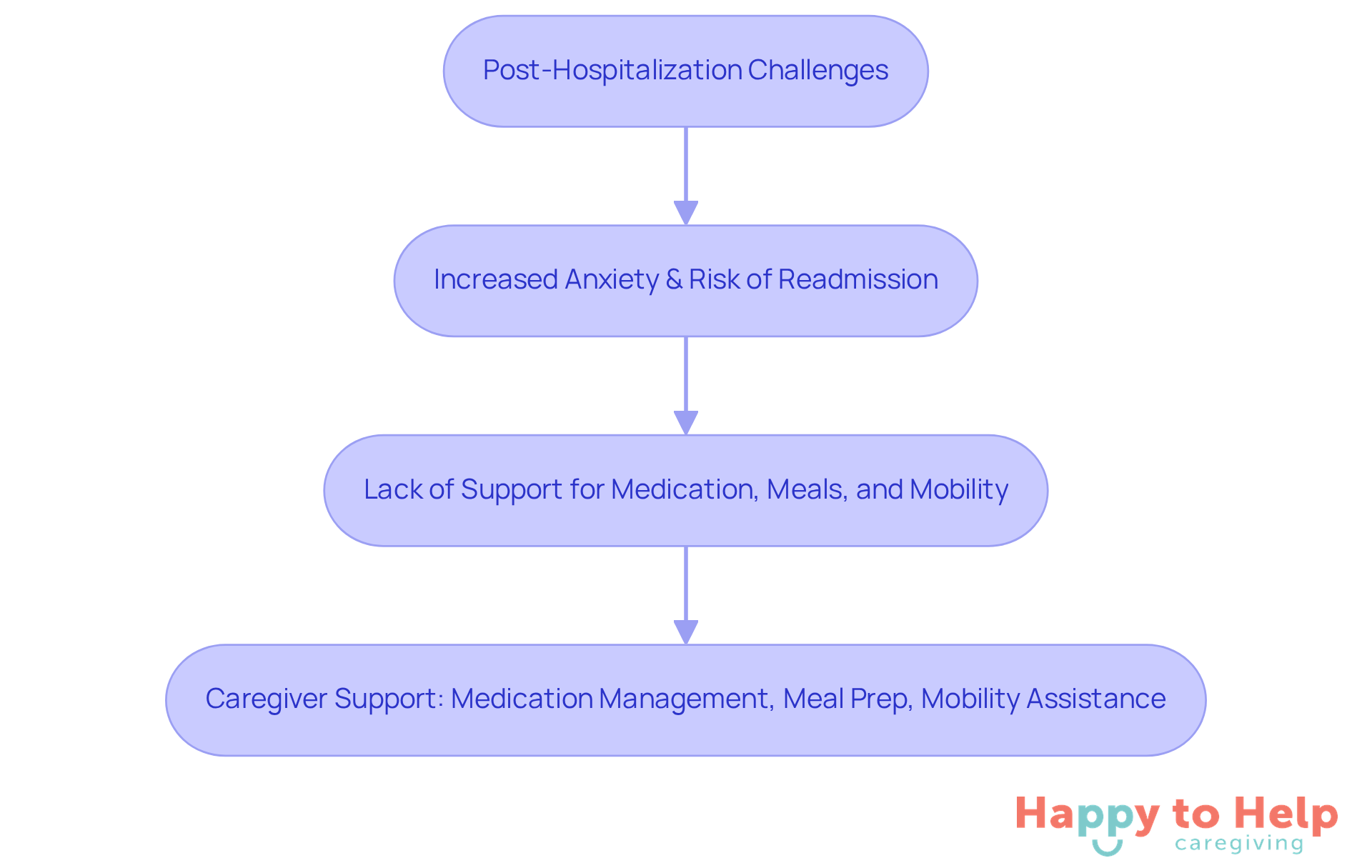
Problem: After hospitalization, elderly individuals often struggle with the transition back home, facing challenges that can hinder their recovery. Without proper support, they may experience increased anxiety and a higher risk of readmission to hospitals.
Agitate: This situation is concerning, as many older adults lack the necessary assistance to manage their medications, prepare meals, and maintain mobility. The absence of tailored care during this vulnerable period can lead to feelings of isolation and worry, ultimately affecting their overall well-being.
Solution: Caregivers play a crucial role in ensuring a smooth transition for these individuals. By providing essential aid in medication management, meal preparation, and mobility assistance, caregivers create a comfortable recovery environment. According to a study by the National Institutes of Health, older adults who utilize a home care companion have significantly lower hospital readmission rates, highlighting the importance of this support. As Partners In Care states, 'Having a home care companion allows for caring for patients in their home, creating a safer and more supportive environment for healing, especially for older adults managing chronic medical conditions.'
By fostering a nurturing atmosphere, caregivers help reduce anxiety and promote healing. Offering psychological reassurance and companionship can significantly diminish feelings of isolation, leading to a more favorable recovery journey. This support enables elderly individuals to reclaim their independence and confidence in their living environment.
Improved Quality of Life: The Comprehensive Benefits of Companion Care
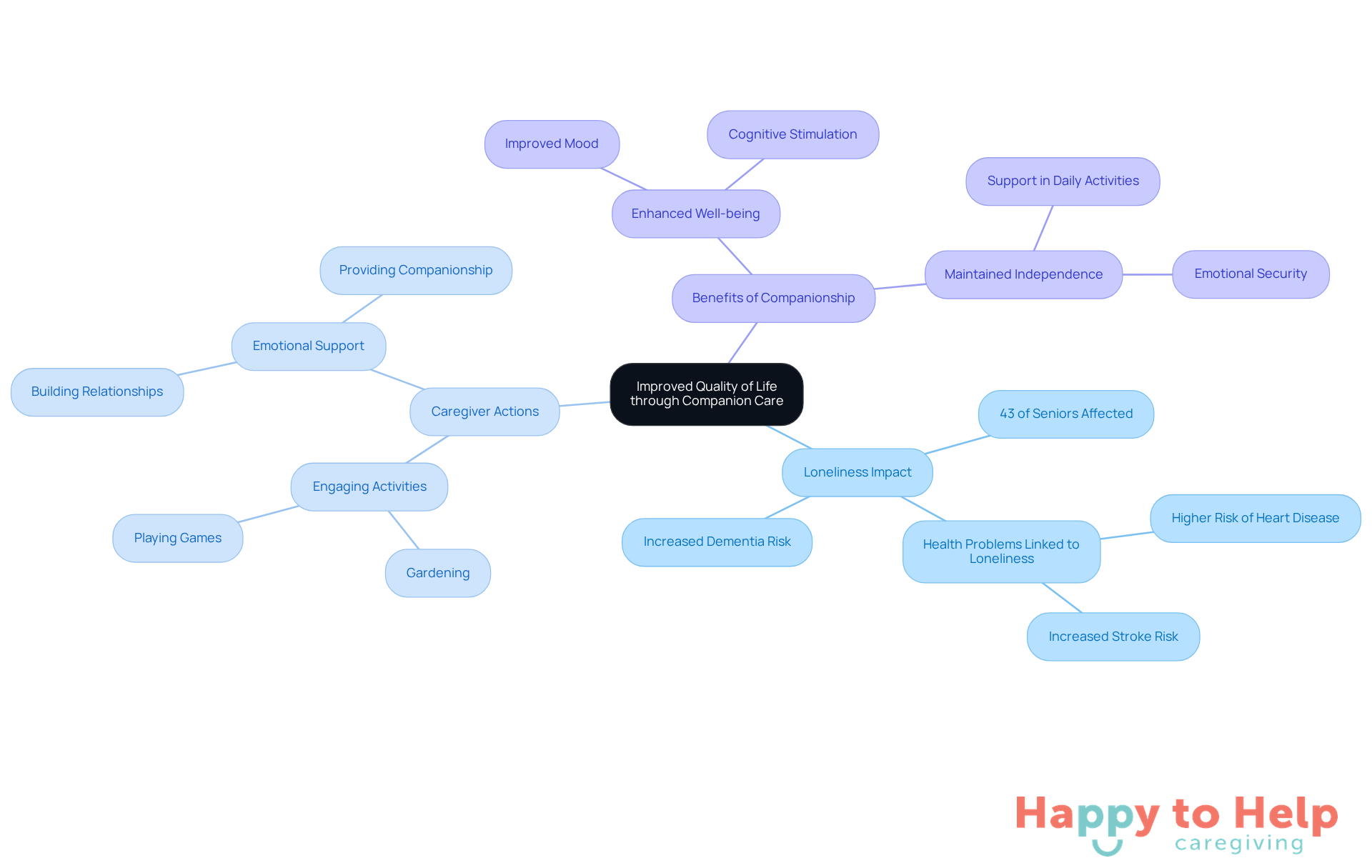
The home care companion services from Happy to Help Caregiving address a significant problem: loneliness among older adults. This issue affects nearly 43% of seniors and can lead to serious health problems. The lack of social interaction not only diminishes mood but can also impair cognitive function, increasing the risk of conditions like dementia by up to 50%.
The implications of loneliness are profound. Without regular companionship, older adults may struggle to feel appreciated and connected, which can hinder their overall well-being. Gerontologists emphasize that genuine companionship is crucial for fostering a sense of belonging and emotional security.
So, what can caregivers do? They can provide essential support that promotes independence and nurtures a comforting environment. Engaging in joint activities, such as gardening or playing games, offers cognitive stimulation and psychological uplift, which are vital for maintaining mental wellness. Caregivers not only ensure safety but also facilitate smooth transitions during challenging times, helping elderly individuals adjust to changes in their health or living conditions.
Moreover, having a home care companion can significantly reduce feelings of loneliness. By addressing these emotional needs, a home care companion enhances daily life and promotes a sense of security and happiness. This allows seniors to maintain their dignity and independence as they age, ultimately leading to transformative changes in their lives.
Moving Forward with A Home Care Companion Enhances Seniors
The role of home care companions in enhancing the lives of seniors is critical. Many elderly individuals face loneliness and emotional challenges, which can significantly impact their overall well-being. Without proper support, these issues can lead to feelings of isolation and decreased quality of life.
Home care companions address these challenges by providing not only essential physical assistance but also emotional and psychological support. By prioritizing companionship and personalized care, they foster a sense of belonging and connection. This nurturing environment allows older adults to thrive, combating loneliness and promoting emotional well-being.
Investing in home care companionship is essential for supporting the autonomy and dignity of elderly individuals. Families should consider the profound benefits of having a dedicated caregiver. This investment not only alleviates feelings of isolation but also enhances the overall happiness and health of their loved ones.
In conclusion, embracing companionship in elderly care is a vital step towards ensuring that seniors enjoy their golden years with joy, security, and a sense of purpose. By recognizing the importance of these caregivers, we can create a supportive environment that truly enhances the lives of our seniors.
https://iframe.tely.ai/cta/eyJhcnRpY2xlX2lkIjogIjY5MjY0MzgzNTA1M2U2YTE3NTJiNzdkNSIsICJjb21wYW55X2lkIjogIjY4ZWU1ZGNhNzMxNzYyNTU3ZjNjOTVjMSIsICJpbmRleCI6IG51bGwsICJ0eXBlIjogImFydGljbGUifQ==Frequently Asked Questions
What challenges do elderly individuals face regarding loneliness and isolation?
Elderly individuals often face significant challenges related to loneliness and isolation, which can negatively impact their mental and physical health. Research indicates that prolonged feelings of loneliness can lead to serious health risks, comparable to smoking fifteen cigarettes a day.
How does Happy to Help Caregiving address the issue of loneliness among seniors?
Happy to Help Caregiving offers personalized companionship through home care companions who engage with clients in meaningful conversations and activities. This approach fosters a supportive atmosphere, improving the overall well-being of elderly individuals by addressing both their physical and emotional needs.
What are the mental health risks associated with loneliness in seniors?
Loneliness in seniors can lead to severe mental health challenges, including increased risks of depression, anxiety, heart disease, and high blood pressure. Regular social interaction is critical to combat these feelings of isolation.
What role do home care companions play in alleviating loneliness?
Home care companions from Happy to Help Caregiving actively engage with clients, fostering a supportive environment where seniors feel appreciated and understood. This relational aspect of care is particularly vital during life changes that may intensify feelings of loneliness.
What practical solutions can caregivers implement to enhance the emotional well-being of seniors?
Caregivers can encourage seniors to participate in social activities, such as community events or group classes, and conduct regular check-ins to provide essential support and connection.
How does Happy to Help Caregiving create customized care plans for clients?
Happy to Help Caregiving develops personalized care plans tailored to each client's unique preferences and needs. This personalized approach ensures that clients receive the specific support they require, enhancing their quality of care and overall experience.
Why is a personalized approach important in caregiving for seniors?
A personalized approach is important because it addresses individual preferences and needs, preventing feelings of isolation and dissatisfaction. By focusing on what brings joy and comfort to clients, caregivers can create a more fulfilling and supportive environment for elderly individuals.
List of Sources
- Happy to Help Caregiving: Personalized Companionship for Seniors
- Revolutionizing Senior Wellness: A Vision for the Future (https://redmondseniors.org/blog/f/revolutionizing-senior-wellness-a-vision-for-the-future)
- AI personal companions offers low-tech way to combat loneliness in senior living residents (https://mcknightsseniorliving.com/news/ai-personal-companions-offers-low-tech-way-to-combat-loneliness-in-senior-living-residents)
- The Impact of Personalized Care on Senior Well-Being (https://humancareny.com/blog/the-impact-of-personalized-care-on-senior-well-being)
- Companion Care at Home Reduces Loneliness for Seniors During the Holidays (https://lifesathomecare.com/companion-care-at-home-reduces-loneliness-for-seniors-during-the-holidays)
- AI Care Companions for Seniors (https://health.usnews.com/senior-care/articles/ai-care-companions-for-seniors)
- Enhanced Emotional Well-Being: Combatting Loneliness and Isolation
- The Power of Companionship Care | Right at Home Palm Beach (https://rightathome.net/palm-beach/blog/benefits-of-companionship-care)
- The Emotional Benefits of Companion Care for Seniors (https://comfortkeepers.com/offices/texas/round-rock/resources/news/the-emotional-benefits-of-companion-care-for-seniors)
- Social isolation sends more older adults to the emergency room, study says (https://healthjournalism.org/blog/2025/11/social-isolation-sends-more-older-adults-to-the-emergency-room-study-says)
- Customized Care Plans: Tailoring Support to Individual Needs
- The Importance of Personalized Care Plans when Aging in Place (https://kendalathome.org/blog/the-importance-of-personalized-care-plans-when-aging-in-place)
- Home Care Statistics In 2025: Key Insights In Home Care (https://sagapixel.com/marketing/home-care-statistics)
- Importance of Personalized Senior Home Care in Burlington NC (https://wisdomseniorcare.com/the-importance-of-personalized-care-plans-for-seniors)
- Boosting Confidence Through Personal Care Plans for Seniors (https://seniorlifestyle.com/resources/blog/personalized-care-plans-for-seniors)
- 55% of Health Plan Members Want More Personalized Care (https://hitconsultant.net/2023/08/15/55-of-health-plan-members-want-more-personalized-care)
- Safety Assurance: Peace of Mind for Families
- Hidden Hazards in the Home: Help Protect Yourself and Your Loved Ones (https://ncoa.org/article/hidden-home-hazards-older-adults-more-likely-to-die-from-falls-and-fires)
- Facts About Falls (https://cdc.gov/falls/data-research/facts-stats)
- In-Home Care for Seniors - Caregiving News and Tips (https://aarp.org/caregiving/home-care)
- Home Safety for Seniors: Statistics & Proven Safety Solutions (https://agesafeamerica.com/home-safety-hub/articles/home-safety-seniors-statistics-solutions)
- Flexible Care Options: Adapting to Changing Needs
- The Incredible Benefits of Home Care, in 7 Amazing Stats - Companions For Seniors (https://companionsforseniors.com/2019/08/benefits-home-care-amazing-stats-trends-reports)
- Aging in Place Statistics: Why More Seniors Are Staying Home (https://breslowhomehealthcare.com/aging-in-place-statistics)
- The Future of Aging: Is In-Home Care the New Standard? - WorldHealth.net (https://worldhealth.net/news/future-of-aging-is-in-home-care-new-standard)
- Warning From Older Adults: Care for Aging in America Needs Urgent Rethinking (https://johnahartford.org/newsroom/view/warning-from-older-adults-care-for-aging-in-america-needs-urgent-rethinking)
- Promoting Independence: Supporting Seniors' Autonomy
- Independence and older adults: Importance and promoting it (https://medicalnewstoday.com/articles/independence-and-the-elderly)
- Families Prefer In-Home Care To Senior Living – Yet Struggle To Identify Needed Support (https://homehealthcarenews.com/2025/11/families-prefer-in-home-care-to-senior-living-yet-struggle-to-identify-needed-support)
- Promoting Independence through In-Home Care (https://visitingangels.com/npr/news-info/promoting-independence-through-in-home-care/24383)
- Warning From Older Adults: Care for Aging in America Needs Urgent Rethinking (https://johnahartford.org/newsroom/view/warning-from-older-adults-care-for-aging-in-america-needs-urgent-rethinking)
- Continuity of Care: Building Trust with Familiar Companions
- The Quiet Power of Continuity in Home Healthcare (https://afhcs.com/the-quiet-power-of-continuity-in-home-healthcare)
- Continuity of Care and Healthcare Utilization in Older Adults with Dementia in Fee-for-Service Medicare - PMC (https://pmc.ncbi.nlm.nih.gov/articles/PMC5061498)
- The Importance of Caregiver-Client Relationships in Senior Well-Being (https://homeinstead.com/home-care/usa/in/goshen/588/news-and-media/the-importance-of-caregiver-client-relationships-in-senior-well-being)
- Continuity of Care and Preventable Hospitalization (https://jamanetwork.com/journals/jamainternalmedicine/fullarticle/1738715)
- Continuity of Care: The Key to Safer, Happier Senior Living - Surework Solutions (https://sureworksolutions.com/2025/11/17/continuity-of-care-the-key-to-safer-happier-senior-living)
- Emotional Support: Engaging Seniors in Meaningful Activities
- Why Social Activities for Older Adults Matter: A Guide to Staying Connected (https://arhomecare.com/why-social-activities-for-older-adults-matter-a-guide-to-staying-connected)
- Mental health of older adults (https://who.int/news-room/fact-sheets/detail/mental-health-of-older-adults)
- Avoiding Isolation By Volunteering Offers Mental Health Benefits to Seniors (https://usnews.com/news/health-news/articles/2025-01-10/avoiding-isolation-by-volunteering-offers-mental-health-benefits-to-seniors)
- Medflyt at Home | Elderly Mental Health Statistics: What You Need To Know (https://medflyt.com/blog/posts/elderly-mental-health-statistics)
- Elderly Enrichment: How to Engage Residents in Meaningful Activities (https://providermagazine.com/Articles/Pages/Elderly-Enrichment-How-to-Engage-Residents-in-Meaningful-Activities.aspx)
- Post-Hospital Recovery: Facilitating Smooth Transitions
- After the hospital, support to help patients thrive at home | Penn Medicine (https://pennmedicine.org/news/after-the-hospital-support-to-help-patients-thrive-at-home)
- Reducing Hospital Readmissions with Home Health Care (https://partnersbend.org/how-home-health-care-reduces-hospital-readmission)
- Post-Hospital Home Care: The Key to a Smoother, Safer Recovery (https://heavenathomecare.com/how-post-hospital-home-care-helps-seniors-recover)
- Post-Hospital Care for Seniors Supports Healing (https://picseniorcare.com/how-post-hospital-care-for-seniors-makes-recovery-easier)
- Post-Hospital Discharge: Why In-Home Care Improves Recovery for Florida Seniors (https://visitingangels.com/pasco/news-info/post-hospital-discharge-why-in-home-care-improves-recovery/26199)
- Improved Quality of Life: The Comprehensive Benefits of Companion Care
- The Incredible Benefits of Home Care, in 7 Amazing Stats - Companions For Seniors (https://companionsforseniors.com/2019/08/benefits-home-care-amazing-stats-trends-reports)
- Older adults find support through health care companions (https://news-medical.net/news/20250924/Older-adults-find-support-through-health-care-companions.aspx)
- The Emotional Benefits of Companion Care for Seniors (https://comfortkeepers.com/offices/texas/round-rock/resources/news/the-emotional-benefits-of-companion-care-for-seniors)
- The Power of Companionship for Seniors: A Key Ingredient to Quality Aging (https://homecarepgh.com/blog-posts/companionship-in-old-age)
- Comfort Keepers® mentioned in recent AARP Bulletin highlighting the benefits of companion care for seniors | Comfort Keepers (https://comfortkeepers.com/articles/media-center/in-the-news/comfort-keepers-mentioned-in-recent-aarp-bulletin-highlighting-the-benefits-of-companion-care-for-seniors)