Why A Private Home Carer Enhances Family Matters
Caregiving often presents a unique set of challenges, especially for family members who balance the demands of supporting loved ones with their own well-being. Millions of family caregivers feel overwhelmed, highlighting a pressing need for personalized assistance. This article explores ten impactful ways that private home carers can enhance family caregiving. By offering tailored support, these professionals not only improve the quality of life for clients but also alleviate the stress experienced by caregivers.
How can these dedicated professionals transform the caregiving landscape? What specific benefits do they bring to families navigating this complex journey? Let's delve into the challenges faced by caregivers and discover actionable solutions that can make a significant difference.
Happy to Help Caregiving: Personalized In-Home Care for Enhanced Quality of Life
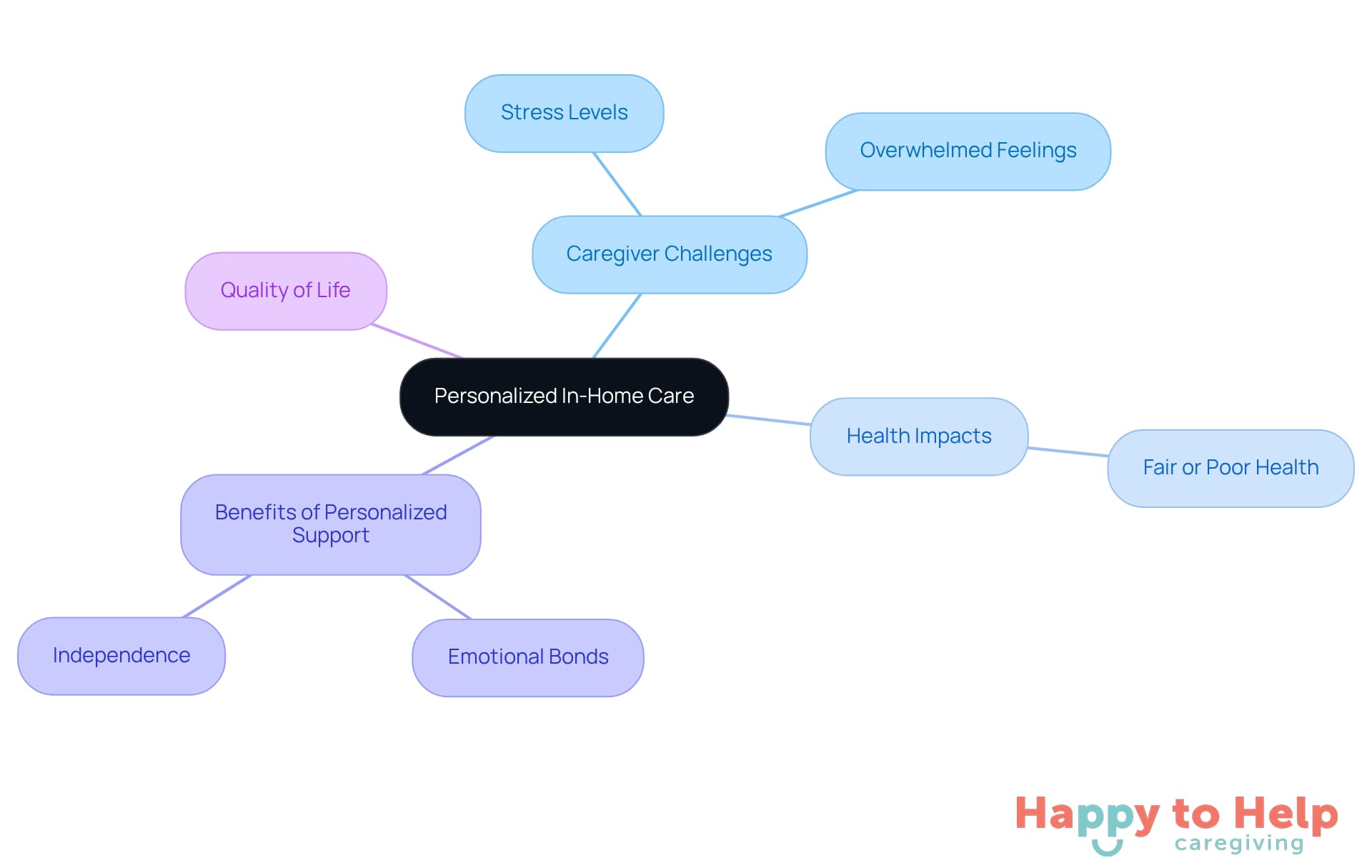
Caregiving can be a challenging endeavor, especially for family members who often face significant stress. With around 63 million family caregivers in the U.S., the need for personalized support has never been more critical. Many caregivers report fair or poor health due to their responsibilities, with nearly 20% feeling overwhelmed by their duties. This situation not only affects their well-being but also impacts the quality of care they provide.
To address these challenges, Happy to Help Caregiving offers customized in-home assistance provided by a private home carer, significantly enhancing the quality of life for seniors and individuals with special needs. By focusing on individual preferences and requirements, caregivers can create a supportive environment that promotes independence and well-being. This tailored approach nurtures emotional bonds, ensuring clients feel valued and understood in their own homes. As one expert noted, 'This support model promotes independence, allowing seniors to age comfortably in their own homes with the assistance of a private home carer.'
Implementing personalized support strategies can greatly improve the emotional and psychological well-being of clients while alleviating stress for caregivers. By prioritizing individual needs, family caregivers can enhance overall satisfaction and quality of life for their loved ones. This not only benefits the clients but also fosters a healthier environment for those providing care.
Emotional Support: Combat Loneliness with Private Home Care
Loneliness is a significant issue among seniors, often leading to detrimental effects on their mental health. This emotional isolation can make individuals feel insecure and disconnected in their own homes.
Private home carers address this problem by providing essential emotional support. Caregivers engage seniors in meaningful conversations and activities, fostering companionship that enriches their daily lives. This emotional connection not only combats loneliness but also enhances the overall quality of life, making clients feel more secure and less isolated in their familiar surroundings.
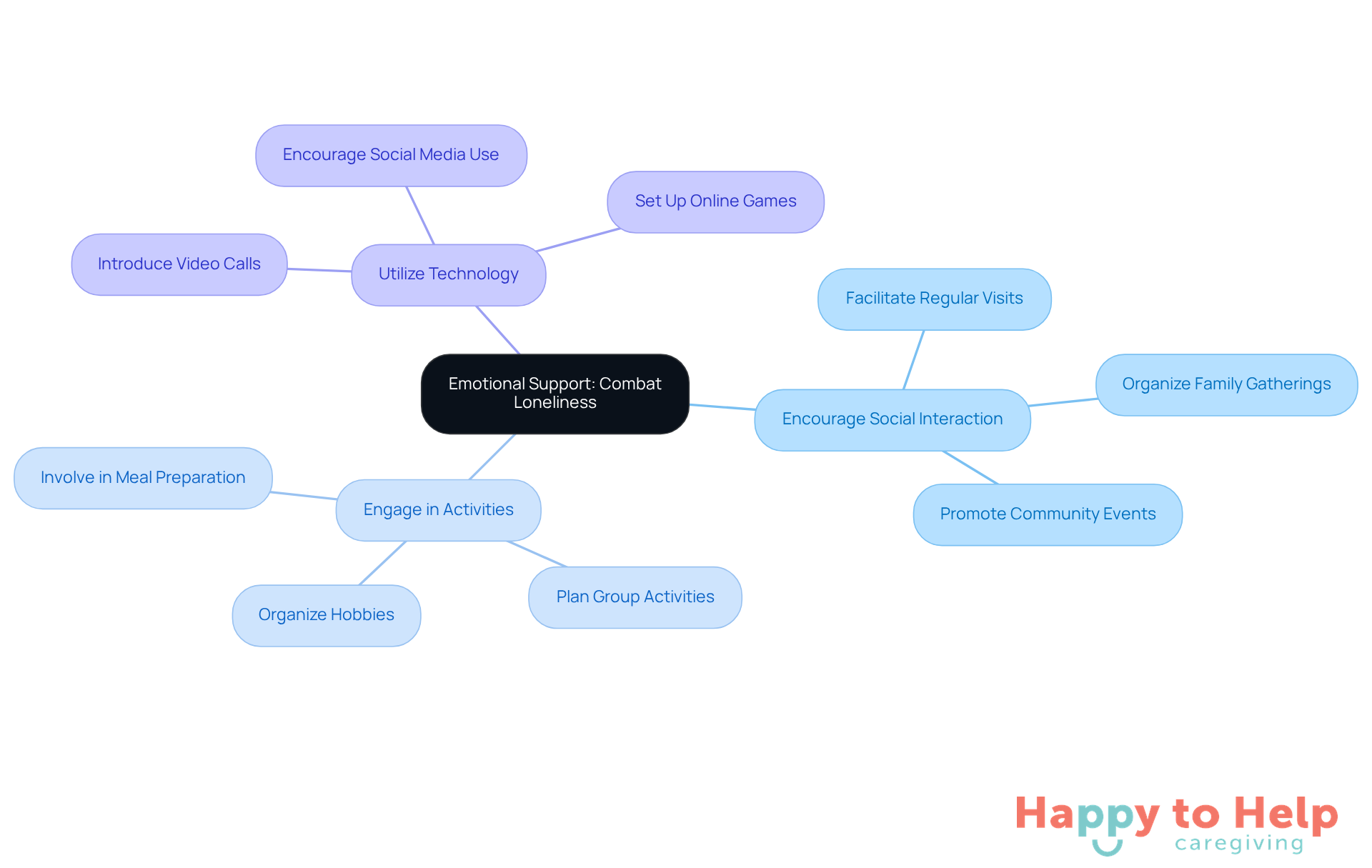
To effectively combat loneliness, caregivers can implement several strategies:
- Encourage social interaction: Facilitate regular visits from family and friends.
- Engage in activities: Organize hobbies or group activities that promote socialization.
- Utilize technology: Introduce video calls or social media to connect with loved ones.
By focusing on these actionable solutions, caregivers can significantly improve the emotional well-being of seniors, ensuring they feel valued and connected.
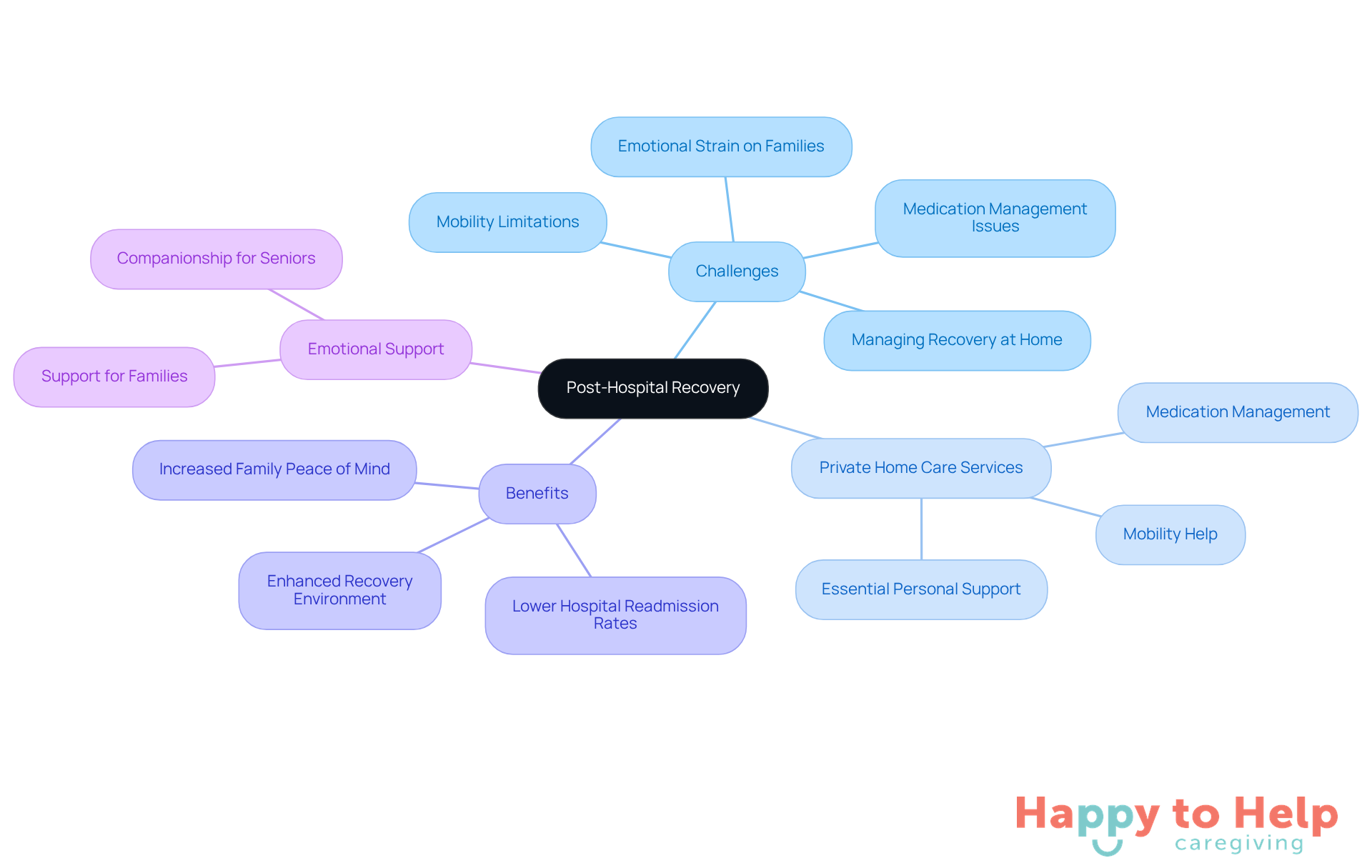
Post-Hospital Recovery: Smooth Transitions with Private Home Care
After a hospital stay, many individuals face significant challenges in managing their recovery at home. This transition can be overwhelming, not just for the patients but also for their families, who often feel the emotional strain of ensuring their loved ones are safe and comfortable.
Private home carer services provide a crucial solution by offering personalized assistance, which includes:
- Medication management
- Mobility help
- Essential personal support
Caregivers play an instrumental role in helping clients follow discharge instructions, monitor their health progress, and create a safe recovery environment.
Research highlights the effectiveness of home care services, showing that patients receiving such support experience significantly lower hospital readmission rates. For instance, findings from the Thrive program reveal that Medicaid-insured patients receiving Thrive plus home care had 50% fewer readmissions at 30, 60, and 90 days compared to those with home care only. This tailored support not only promotes physical healing but also eases the emotional burden on families during a particularly vulnerable time.
As a representative from Visiting Angels noted, "Professional in-home assistants provide essential support, helping seniors recover comfortably and safely in familiar surroundings." The presence of skilled professionals allows families to focus on providing emotional support, confident that their loved ones are in capable hands.
Effective home support provided by a private home carer is essential for a smooth recovery, bridging the gap between hospital discharge and full rehabilitation. By utilizing these services, families can ensure a safer, more comfortable recovery process for their loved ones.
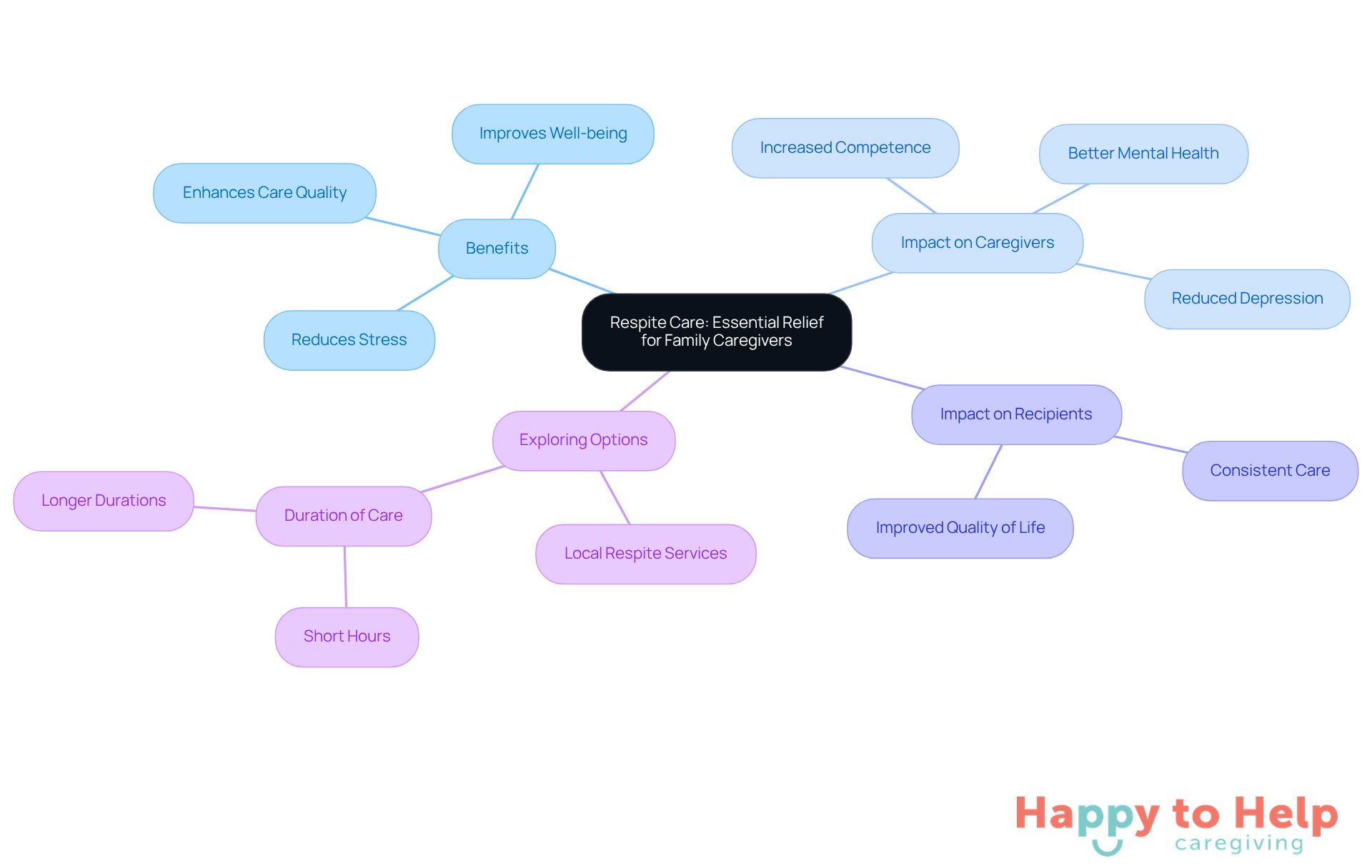
Respite Care: Essential Relief for Family Caregivers
Caregiving can be a demanding role, often leading to significant stress for those who provide support to loved ones. This stress can impact both the caregiver's well-being and the quality of care received by the recipient.
Respite services offer a practical solution to this problem. By providing essential breaks for caregivers, these services ensure that loved ones continue to receive quality assistance while caregivers can recharge, address personal matters, or simply rest.
Whether arranged for short hours or longer durations, respite services play a crucial role in reducing caregiver stress. This not only enhances the overall caregiving experience but also promotes better health and well-being for both caregivers and recipients.
Consider exploring local respite options to find the right fit for your needs. Taking this step can lead to a more balanced and fulfilling caregiving journey.
Palliative Support Care: Ensuring Comfort and Dignity for Serious Illnesses
Palliative support services address a critical issue: individuals facing serious illnesses often struggle with comfort and dignity. Caregivers encounter the challenge of providing not just physical assistance but also emotional and spiritual support. This dual role can be overwhelming, as caregivers must help individuals navigate their health challenges while ensuring they maintain a sense of grace and peace.
The implications of this challenge are significant. Without adequate support, individuals may feel isolated and anxious, focusing solely on their health concerns rather than enjoying quality of life. This is where comprehensive palliative care comes into play, promoting a sense of tranquility and safety.
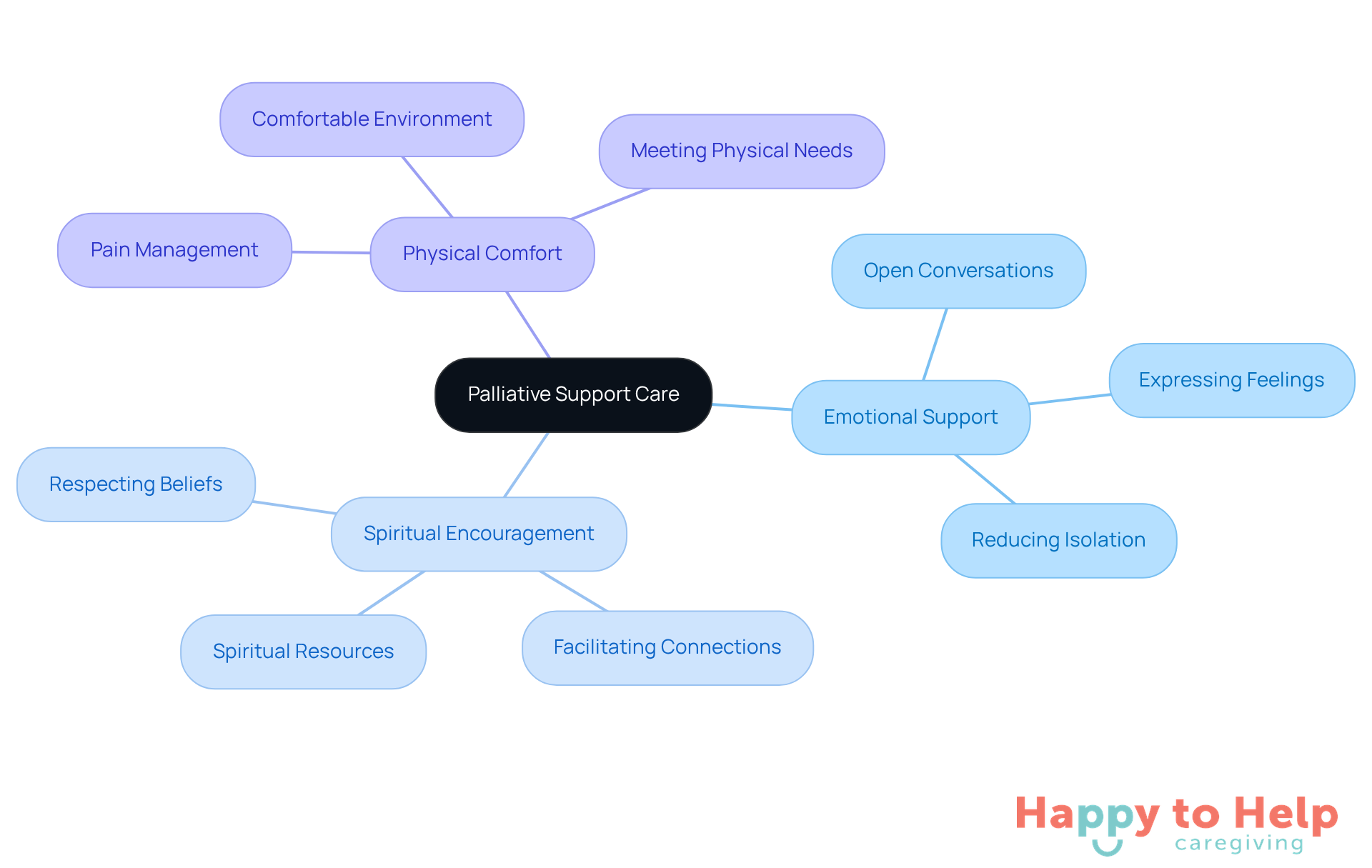
To effectively support those in need, caregivers can implement several actionable strategies:
- Emotional Support: Engage in open conversations, allowing individuals to express their feelings and fears.
- Spiritual Encouragement: Facilitate connections with spiritual resources or practices that resonate with the individual.
- Physical Comfort: Ensure that physical needs are met, from pain management to creating a comfortable environment.
By adopting these strategies, caregivers can enhance the quality of life for individuals facing serious illnesses, allowing them to focus on what truly matters.
Flexible Scheduling: Tailored Care That Fits Family Needs
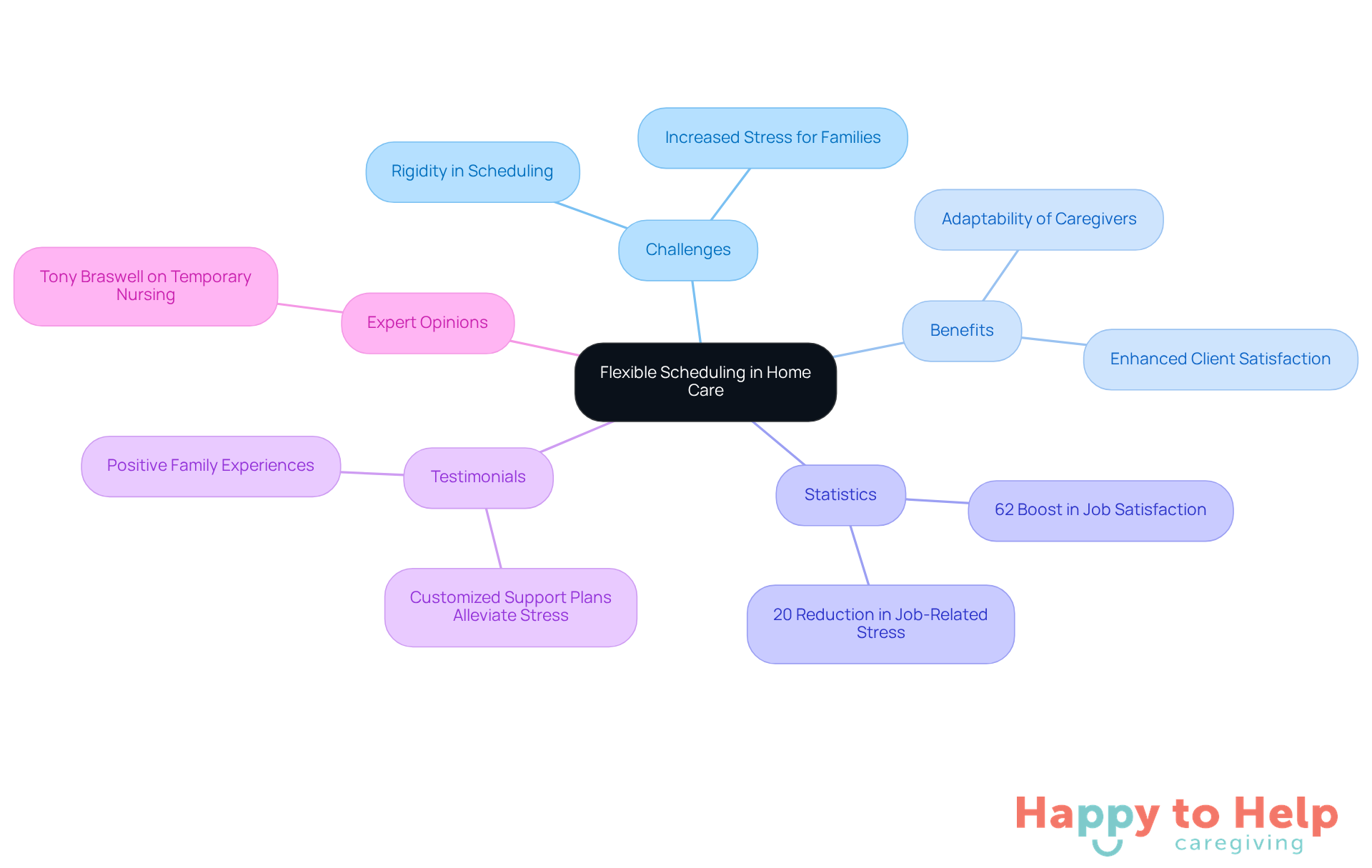
Flexible scheduling presents a significant challenge in private home carer support, often leaving families struggling to find care that meets their specific needs. This rigidity can lead to increased stress for both caregivers and families, as they may not receive the support they require at crucial times.
However, flexible scheduling offers a solution that can transform this experience. Caregivers can adjust their availability to provide part-time or full-time support, ensuring that individuals receive help exactly when they need it. This adaptability not only enhances client satisfaction but also instills confidence in families, knowing that their unique circumstances are taken into account.
Statistics reveal that flexible schedules can boost job satisfaction by 62 percent and reduce job-related stress by 20 percent. These figures underscore the importance of such arrangements in the caregiving landscape. Testimonials from families further highlight the significance of customized support plans, often noting how they alleviate stress and improve the overall caregiving experience.
As Tony Braswell, President and Founder of Gale Healthcare Solutions, emphasizes, "Temporary nursing professionals play a critical role in acute and post-acute support, and their valuable skills have never been more necessary." By prioritizing individual needs, a private home carer creates a supportive environment that significantly enhances family satisfaction.
24/7 Availability: Continuous Support for Peace of Mind
The problem of seniors being alone can lead to significant anxiety and increased risk of accidents. With one out of every three seniors experiencing a fall each year, the implications are serious. Seniors may feel disoriented or afraid, especially during vulnerable hours when they need assistance the most.
Having a private home carer available around the clock offers families invaluable peace of mind, ensuring that their loved ones are never alone. This continuous support is essential for individuals with complex health needs or those who may benefit from a private home carer during emergencies. Private home carers are specifically trained to respond swiftly to any situation, providing immediate assistance that significantly enhances both safety and comfort in the living environment.
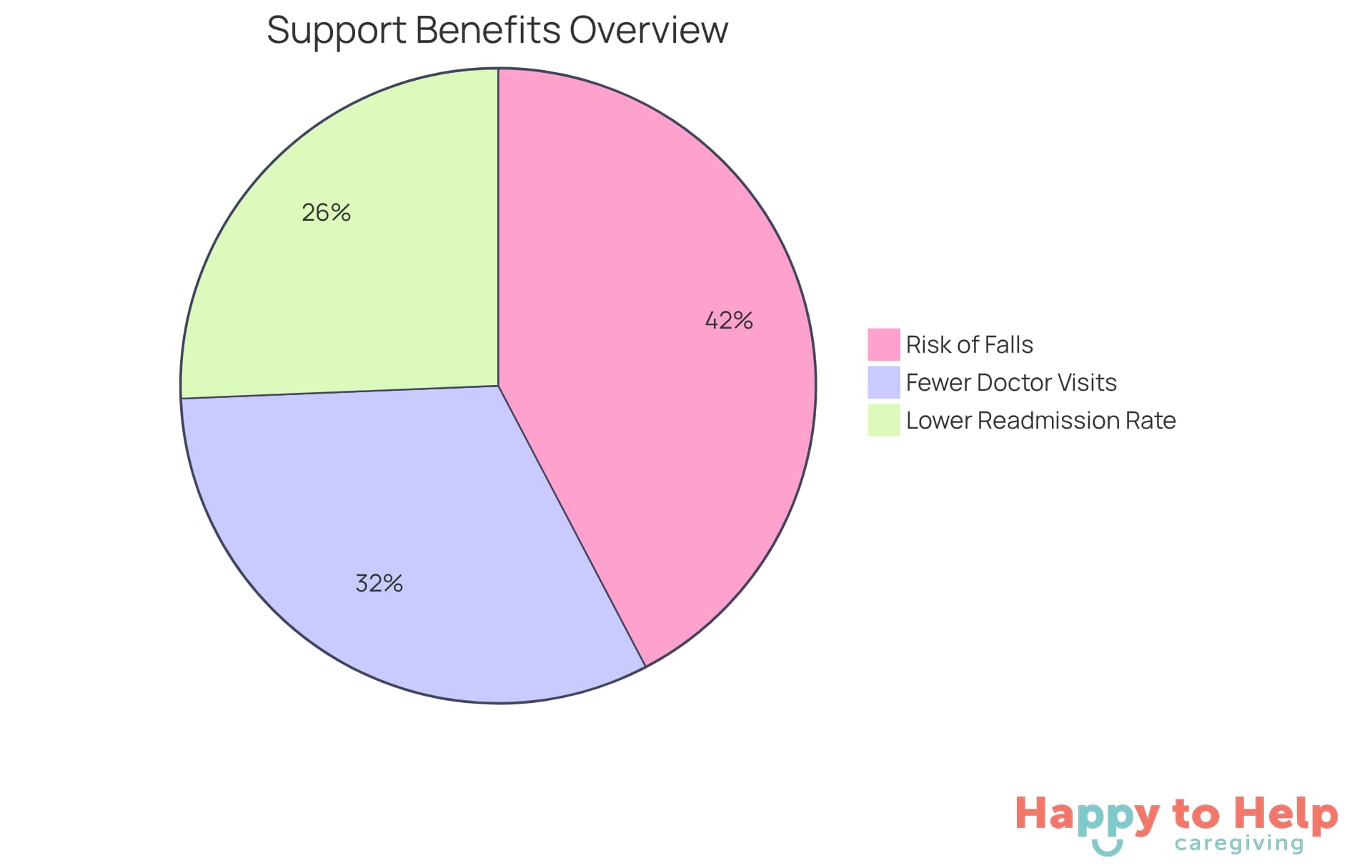
Research indicates that seniors receiving home care experience a 20% lower readmission rate compared to those relying solely on hospital services. They also report 25% fewer doctor visits each year, underscoring the effectiveness of continuous support. Families can rest assured knowing that trained professionals, such as a private home carer, are always available to address health or safety changes, fostering a secure environment that promotes independence and well-being.
As noted by healthcare professionals, "The constant presence of caregivers not only prevents accidents but also reduces anxiety for seniors who may feel disoriented or afraid in the dark." This highlights the importance of having caregivers present to ensure safety and comfort.
Personalized Care Plans: Tailored Support for Unique Needs
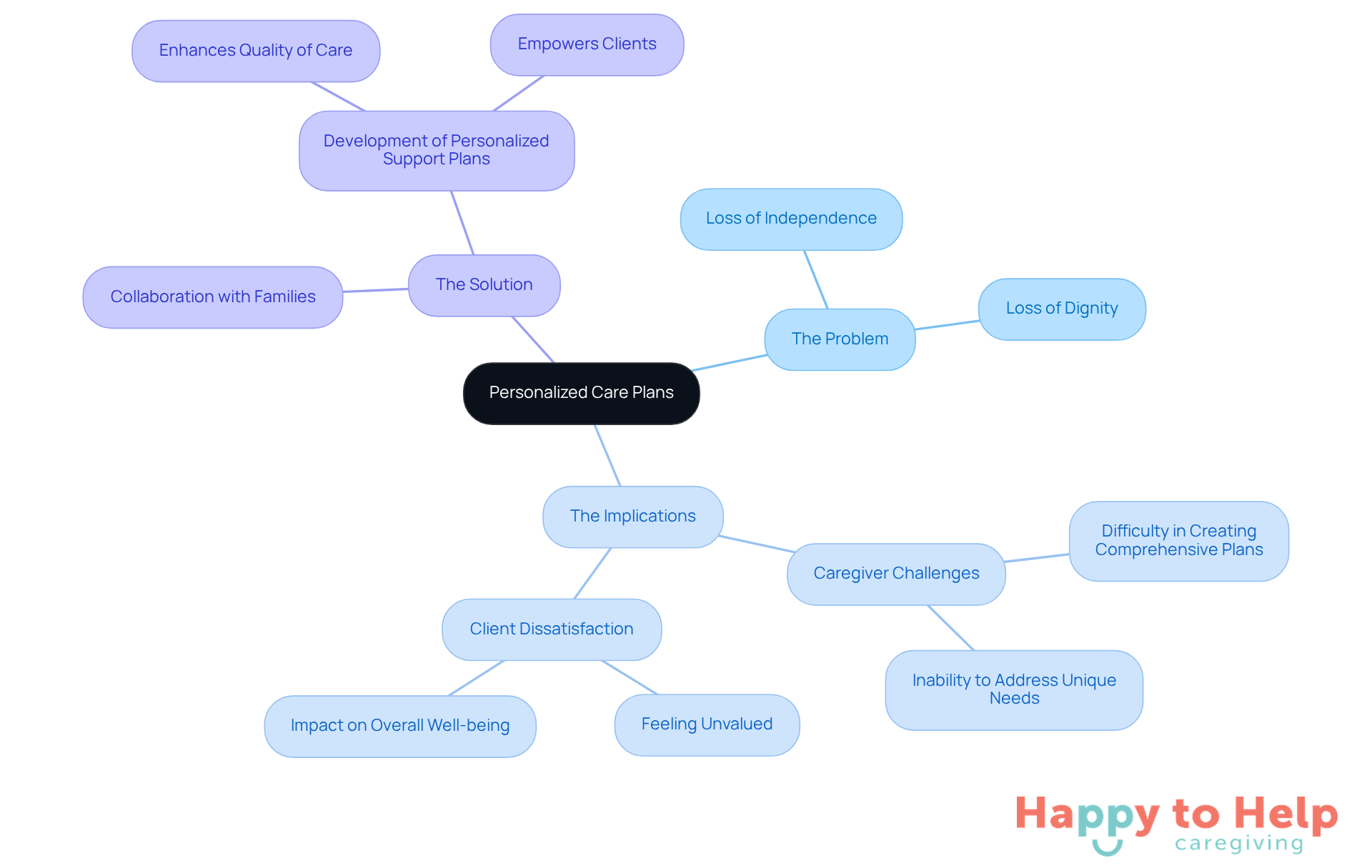
The Problem: Personalized support plans are crucial for effective home assistance, yet many caregivers struggle to address the unique needs of each individual. Without tailored support, clients may feel a loss of independence and dignity, impacting their overall well-being.
The Implications: Caregivers often find it challenging to create comprehensive plans that encompass medical, emotional, and social requirements. This lack of personalization can lead to dissatisfaction among clients and their families, as they may not feel valued or respected in their care.
The Solution: To combat these challenges, caregivers should collaborate closely with families to develop personalized support plans. This approach not only enhances the quality of care but also empowers clients, allowing them to maintain control over their lives. As one supporter noted, "All Heart Homecare not only helped us create a plan but also taught me how to reconnect with my mom again."
By focusing on individual needs, caregivers can significantly influence a senior's ability to live autonomously. With approximately 15 million Americans receiving in-home support services and 91% of clients expressing satisfaction with their caregivers, the commitment to personalized assistance is vital. This dedication fosters a nurturing environment where seniors feel valued and respected.
As the domestic assistance sector continues to grow at an average rate of 2.3% annually, the need for individualized support is more essential than ever.
Technology Integration: Enhancing Communication and Care Management
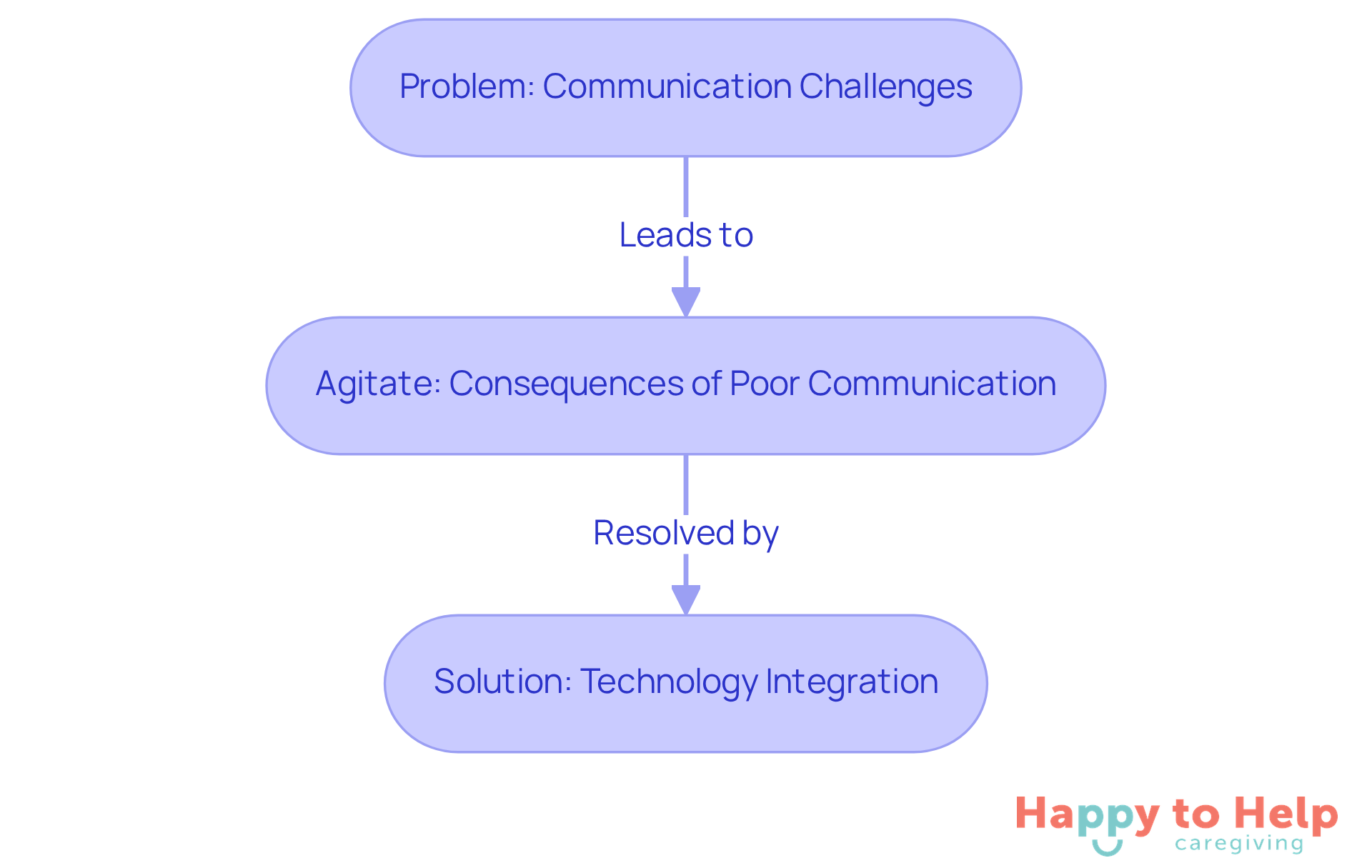
Problem: Caregivers often face significant challenges in communication and management when providing home support services. This can lead to misunderstandings and a lack of coordination among family members and support providers.
Agitate: Without effective communication, caregivers may struggle to keep families informed about client progress, which can hinder the overall support process. This lack of transparency can create frustration and anxiety for both caregivers and families, ultimately affecting the quality of care provided.
Solution: Fortunately, the incorporation of technology offers a practical solution. Tools like mobile applications and web platforms enable support providers to share updates with family members, monitor client progress, and adjust support plans as needed. This technological assistance not only simplifies operations but also fosters transparency and collaboration, ensuring that everyone involved is informed and engaged in the support process.
Compassionate Caregivers: The Heart of Private Home Care
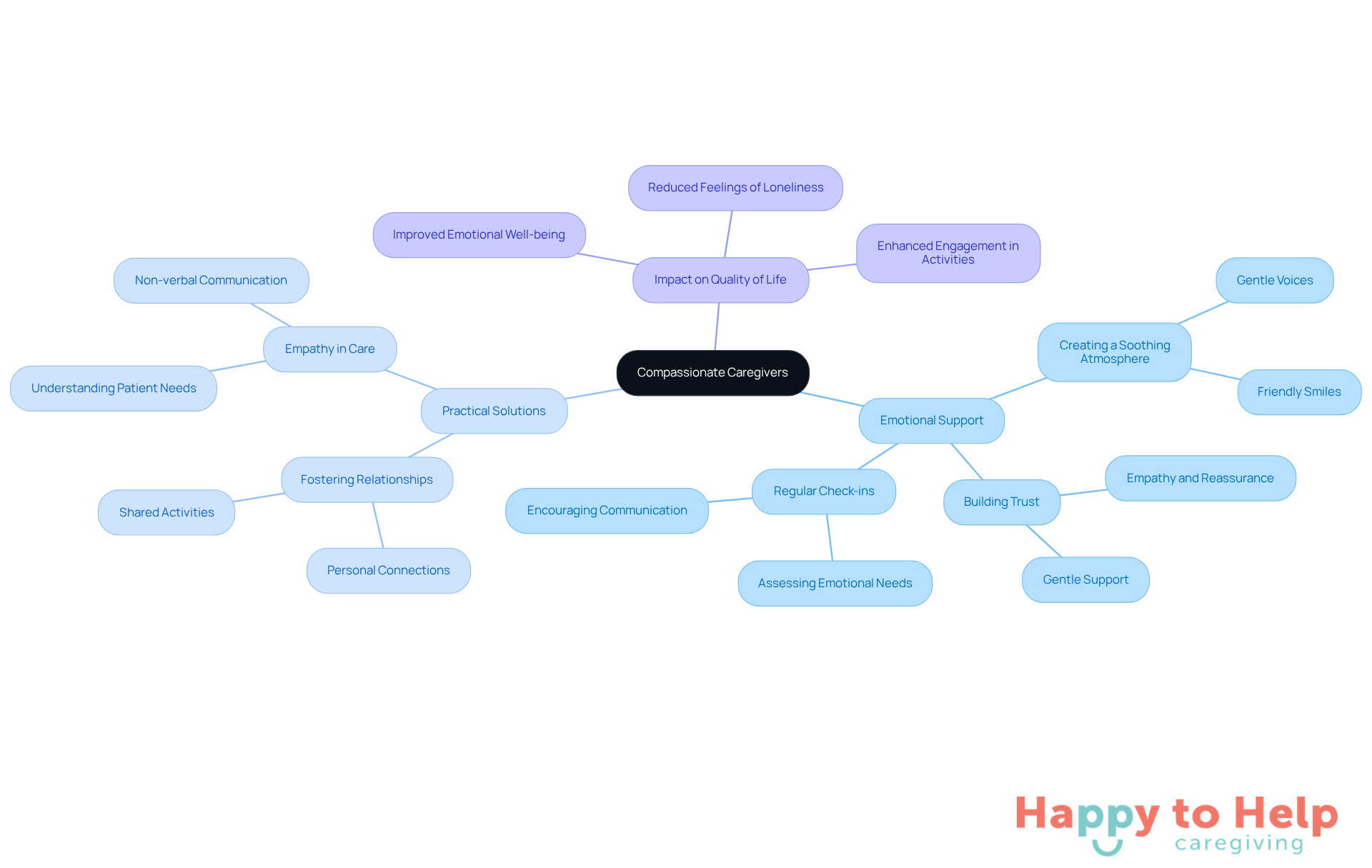
Compassionate private home carers face a significant challenge in providing not just physical assistance but also essential emotional support and companionship. This lack of emotional connection can lead to feelings of loneliness and anxiety among clients, particularly seniors dealing with conditions like Alzheimer's disease. Without this vital support, individuals may struggle to feel valued and understood, impacting their overall quality of life.
Research indicates that patients receiving home support from a private home carer who demonstrates compassion report a better quality of life and fewer medical symptoms. For instance, individuals receiving companionship care often express a greater sense of purpose and involvement in their daily lives. The case study 'Companionship Care and Sense of Purpose' highlights that seniors receiving such care experience more significant engagement in their activities, which is crucial for their mental well-being.
To address these challenges, a private home carer can implement several practical solutions. First, a private home carer should prioritize emotional support by fostering personal relationships with clients, which builds trust and comfort. Gentle voices and friendly smiles can create a soothing atmosphere, encouraging individuals to communicate their needs and preferences. This approach not only enhances their quality of life but also empowers them to maintain independence in their daily routines.
Moreover, caregivers should regularly check in with patients to ensure their emotional needs are met. The Alzheimer's Association emphasizes that empathy can alleviate anxiety just as effectively as physical assistance. By creating an environment where clients feel safe and valued, caregivers can significantly improve the caregiving experience for everyone involved.
Ultimately, by focusing on emotional support, providers help families preserve meaningful connections with their loved ones, enhancing the overall caregiving experience. This commitment to compassion is foundational for effective caregiving, allowing clients to engage more fully in their care plans.
Taking the Next Steps
The role of a private home carer is pivotal in enhancing family caregiving, addressing the unique needs of both clients and their families. Caregivers often face significant burdens, leading to stress and emotional fatigue. This situation not only affects their well-being but also impacts the quality of life for seniors and individuals with special needs.
By providing personalized assistance, emotional support, and flexible care options, private home carers alleviate these pressures. They create an environment where clients can thrive and feel valued in their own homes. The benefits of private home care are numerous. For instance, it combats loneliness through emotional connections and facilitates smoother transitions after hospital stays. Respite services offer necessary breaks for family caregivers, while 24/7 availability ensures peace of mind for families concerned about their loved ones' safety.
Moreover, the integration of technology enhances communication and care management, enabling families to stay informed and engaged in the caregiving process. The significance of private home care cannot be overstated. It fosters not only physical well-being but also emotional resilience, allowing clients to maintain dignity and independence.
As the demand for personalized caregiving services continues to grow, families are encouraged to explore these options to enhance their caregiving journey. Investing in a private home carer can transform the experience for both caregivers and recipients, ensuring that everyone involved enjoys a higher quality of life.
https://iframe.tely.ai/cta/eyJhcnRpY2xlX2lkIjogIjY5MjRmMjBlZWM0Y2FiOGU3NGVjMDExNCIsICJjb21wYW55X2lkIjogIjY4ZWU1ZGNhNzMxNzYyNTU3ZjNjOTVjMSIsICJpbmRleCI6IG51bGwsICJ0eXBlIjogImFydGljbGUifQ==Frequently Asked Questions
What is Happy to Help Caregiving?
Happy to Help Caregiving is a service that offers personalized in-home assistance provided by private home carers to enhance the quality of life for seniors and individuals with special needs.
Why is personalized support important for caregivers?
Personalized support is crucial as it helps alleviate stress for family caregivers, who often report fair or poor health due to their caregiving responsibilities. This support enhances the quality of care they provide and improves their overall well-being.
How does Happy to Help Caregiving improve the quality of life for clients?
The service focuses on individual preferences and requirements, creating a supportive environment that promotes independence and emotional bonds, making clients feel valued and understood in their own homes.
What role does emotional support play in private home care?
Emotional support is vital in combating loneliness among seniors. Private home carers engage clients in meaningful conversations and activities, fostering companionship and enhancing their overall quality of life.
What strategies can caregivers use to combat loneliness in seniors?
Caregivers can encourage social interaction, engage clients in activities, and utilize technology such as video calls or social media to help seniors connect with loved ones.
What challenges do individuals face after a hospital stay?
Individuals often struggle with managing their recovery at home, which can be overwhelming for both patients and their families.
How do private home carers assist with post-hospital recovery?
They provide personalized assistance including medication management, mobility help, and essential personal support, helping clients follow discharge instructions and create a safe recovery environment.
What benefits do home care services provide in terms of hospital readmission rates?
Research indicates that patients receiving home care support experience significantly lower hospital readmission rates. For example, Medicaid-insured patients receiving both Thrive and home care had 50% fewer readmissions compared to those with home care only.
What is the significance of having professional in-home assistants during recovery?
Professional in-home assistants provide essential support that allows seniors to recover comfortably and safely at home, enabling families to focus on providing emotional support with confidence that their loved ones are in capable hands.
Why is effective home support essential for recovery?
Effective home support helps bridge the gap between hospital discharge and full rehabilitation, ensuring a safer and more comfortable recovery process for individuals.
List of Sources
- Happy to Help Caregiving: Personalized In-Home Care for Enhanced Quality of Life
- New Report Reveals U.S. Family Caregivers Perform Equivalent of a Staggering $873.5 Billion Worth of Labor, Would Surpass Revenue of Top Global Companies | Otsuka US (https://otsuka-us.com/news/new-report-reveals-us-family-caregivers-perform-equivalent-staggering-8735-billion-worth-labor)
- Most Americans expect to experience a long-term care event, and nearly 3 in 4 want in-home care if it happens to them - according to Northwestern Mutual Planning & Progress Study (https://news.northwesternmutual.com/2025-10-07-Most-Americans-expect-to-experience-a-long-term-care-event,-and-nearly-3-in-4-want-in-home-care-if-it-happens-to-them-according-to-Northwestern-Mutual-Planning-Progress-Study)
- How Personalized In-Home Care can Improve Seniors Quality of Life - Freedom Home Care (https://freedomhomecare.net/2024/11/21/how-personalized-in-home-care-can-improve-seniors-quality-of-life)
- Executive Home Care Honors Family Caregivers During National Family Caregivers Month (https://wboy.com/business/press-releases/cision/20251117LA25356/executive-home-care-honors-family-caregivers-during-national-family-caregivers-month)
- Caregiving Crisis: 45% Increase in Americans Providing Care (https://aarp.org/caregiving/basics/caregiving-in-us-survey-2025)
- Emotional Support: Combat Loneliness with Private Home Care
- Elderly Isolation: Combating Loneliness Through Home Healthcare - VNA Health Group (https://vnahg.org/elderly-isolation-combating-loneliness-through-home-healthcare)
- For seniors dealing with social isolation, NYC programs provide intergenerational events (https://cbsnews.com/newyork/news/cost-of-caregiving-the-life-story-club-nyc-friendly-visiting-program)
- Summary - Social Isolation and Loneliness in Older Adults - NCBI Bookshelf (https://ncbi.nlm.nih.gov/books/NBK557972)
- 10 Ways Companion Caregivers Enhance Seniors' Quality of Life - Happy To Help (https://happytohelpcaregiving.com/10-ways-companion-caregivers-enhance-seniors-quality-of-life)
- Trends in Loneliness Among Older Adults from 2018-2023 (https://ihpi.umich.edu/national-poll-healthy-aging/reports-and-resources/trends-loneliness-among-older-adults-2018-2023)
- Post-Hospital Recovery: Smooth Transitions with Private Home Care
- Post-Hospital Discharge: Why In-Home Care Improves Recovery for Florida Seniors (https://visitingangels.com/pasco/news-info/post-hospital-discharge-why-in-home-care-improves-recovery/26199)
- After the hospital, support to help patients thrive at home | Penn Medicine (https://pennmedicine.org/news/after-the-hospital-support-to-help-patients-thrive-at-home)
- How Healing at Home Helps Unclog the Hospital Bed Logjam (https://usnews.com/news/health-news/articles/2025-03-03/how-healing-at-home-helps-unclog-the-hospital-bed-logjam)
- Amid a hospital discharge logjam, home-based care offers a path forward • New Hampshire Bulletin (https://newhampshirebulletin.com/2024/09/17/amid-a-hospital-discharge-logjam-home-based-care-offers-a-path-forward)
- Home (https://homehealthcarenews.com)
- Respite Care: Essential Relief for Family Caregivers
- A bill in Congress would return $5,000 to millions of family caregivers every year, but will it pass? (https://cbsnews.com/newyork/news/credit-for-caring-act-family-caregiver-tax-credit)
- News & Updates | ARCH National Respite Network & Resource Center (https://archrespite.org/news)
- News & Success Stories | Live Well San Diego (https://livewellsd.org/Home/Components/News/News/513/153)
- Federal budget committee greenlights millions in spending for family caregivers, respite services (https://mcknightshomecare.com/news/federal-budget-committee-greenlights-millions-in-spending-for-family-caregivers-respite-services)
- Palliative Support Care: Ensuring Comfort and Dignity for Serious Illnesses
- Why Palliative Care Should Be a Basic Human Right - Calvary Hospital (https://calvaryhospital.org/why-palliative-care-should-be-a-basic-human-right)
- Support for Serious Illness (https://newsinhealth.nih.gov/2025/07/support-serious-illness)
- ‘A good death’: How compassionate care helps people navigate the end of life (https://news.yale.edu/2025/10/13/good-death-how-compassionate-care-helps-people-navigate-end-life)
- November Is Palliative Care Month (https://hopkinsmedicine.org/news/newsroom/news-releases/2025/11/november-is-palliative-care-month)
- When Approaching Death, Hospice Offers Dignity, Peace (https://deathwithdignity.org/news/2024/04/hospice-offers-dignity-and-peace)
- Flexible Scheduling: Tailored Care That Fits Family Needs
- Exploring the Rising Demand for Flexible Work in Healthcare (https://healthecareers.com/career-resources/nurse-career/rising-demand-for-flexible-work-in-healthcare)
- New survey finds flexible schedule, quick access to wages key to addressing the national nursing shortage (https://galehealthcaresolutions.com/new-survey-finds-flexible-schedule-quick-access-to-wages-key-to-addressing-the-national-nursing-shortage)
- Flexible scheduling in healthcare: Top strategies from CNOs and HR leaders (https://go.beckershospitalreview.com/hr/flexible-scheduling-in-healthcare-top-strategies-from-cnos-and-hr-leaders)
- Industry leaders: Offering work flexibility is the secret to attracting, retaining home care talent (https://mcknightshomecare.com/news/industry-leaders-offering-work-flexibility-is-the-secret-to-attracting-retaining-home-care-talent)
- 24/7 Availability: Continuous Support for Peace of Mind
- Family Caregiver Support, Education Needs Growing (https://hospicenews.com/2025/11/11/family-caregiver-support-education-needs-growing)
- Nearly half of US states risk a caregiving crisis, study warns (https://newsnationnow.com/health/nearly-half-of-us-states-risk-caregiving-crisis-study)
- Beyond Sundowning: How 24-Hour Home Care Protects Seniors with Dementia During Their Most Vulnerable Hours (https://awhealthcare.com/beyond-sundowning-how-24-hour-home-care-protects-seniors-with-dementia-during-their-most-vulnerable-hours)
- 10 Benefits of Care Around the Clock for Your Loved Ones - Happy To Help (https://happytohelpcaregiving.com/10-benefits-of-care-around-the-clock-for-your-loved-ones)
- Staggering surge in number of Americans turned caregivers (https://cbsnews.com/video/staggering-surge-in-number-of-americans-turned-caregivers)
- Personalized Care Plans: Tailored Support for Unique Needs
- Customized Care at Home: The Benefits of Personalized Care Plans - VNA Health Group (https://vnahg.org/customized-care-at-home-the-benefits-of-personalized-care-plans)
- Home Care Statistics In 2025: Key Insights In Home Care (https://sagapixel.com/marketing/home-care-statistics)
- Novel Care Model May Improve Outcomes for Older Adults With Multiple Chronic Conditions (https://consultqd.clevelandclinic.org/novel-care-model-may-improve-outcomes-for-older-adults-with-multiple-chronic-conditions)
- Revolutionizing Behavioral Health Through Technology and AI: The Promise of Personalized Care (https://behavioralhealthnews.org/revolutionizing-behavioral-health-through-technology-and-ai-the-promise-of-personalized-care)
- Enhancing Dementia Care | The Power of Personalized Care Plans (https://allheartcare.com/the-importance-of-personalized-care-plans-in-dementia-support)
- Technology Integration: Enhancing Communication and Care Management
- CAN Tech (https://caregiveraction.org/can-tech)
- Innovative New Technology Helps Seniors Age in Place (https://ucdavis.edu/health/news/innovative-new-technology-helps-seniors-age-place)
- Technology Use Among Older Adults and Their Caregivers: Cross-Sectional Survey Study - PMC (https://pmc.ncbi.nlm.nih.gov/articles/PMC11084119)
- How Technology Improves Communication Between Families And Care Staff (https://thehighpointresidence.com/blog/how-technology-improves-communication-between-families-and-care-staff)
- How Technology Enhances Communication in Senior Care (https://business.seminolebusiness.org/news/details/how-technology-enhances-communication-in-senior-care)
- Compassionate Caregivers: The Heart of Private Home Care
- The Heart of Homecare is Built on the Unshakeable Compassion and Dedication of Caregivers | Healthcare IT Today (https://healthcareittoday.com/2024/09/25/the-heart-of-homecare-is-built-on-the-unshakeable-compassion-and-dedication-of-caregivers)
- The Importance of Compassionate Care: Enhancing Quality of Life for Seniors (https://bryanskilledhomecare.com/2024/07/31/the-importance-of-compassionate-care-for-seniors-i-bryan-skilled-home-care)
- The importance of Compassionate Caregivers for Alzheimer’s Patients (https://southerncaliforniacaregiving.com/the-importance-of-compassionate-caregivers-for-alzheimers-patients)
- Compassion in Home Care (https://homeinstead.com/home-care/usa/la/carencro/347/news-and-media/compassion-in-home-care)