
Why A Senior Care Navigator Supports Family Matters
Family caregivers face profound and multifaceted challenges, often leading to emotional strain and uncertainty in providing the best care for their loved ones. As the elderly population continues to grow, the need for effective support systems becomes increasingly critical. These systems must not only cater to the unique needs of seniors but also alleviate the burdens on their caregivers.
This article explores ten pivotal ways a senior care navigator can enhance the caregiving experience. From personalized care plans to emotional support, these navigators can transform the daunting journey of caregiving into a more manageable and fulfilling endeavor. How can caregivers effectively navigate the complexities of elder care while ensuring their own well-being? The answers lie within the invaluable support of a senior care navigator.
Happy to Help Caregiving: Personalized In-Home Support for Seniors
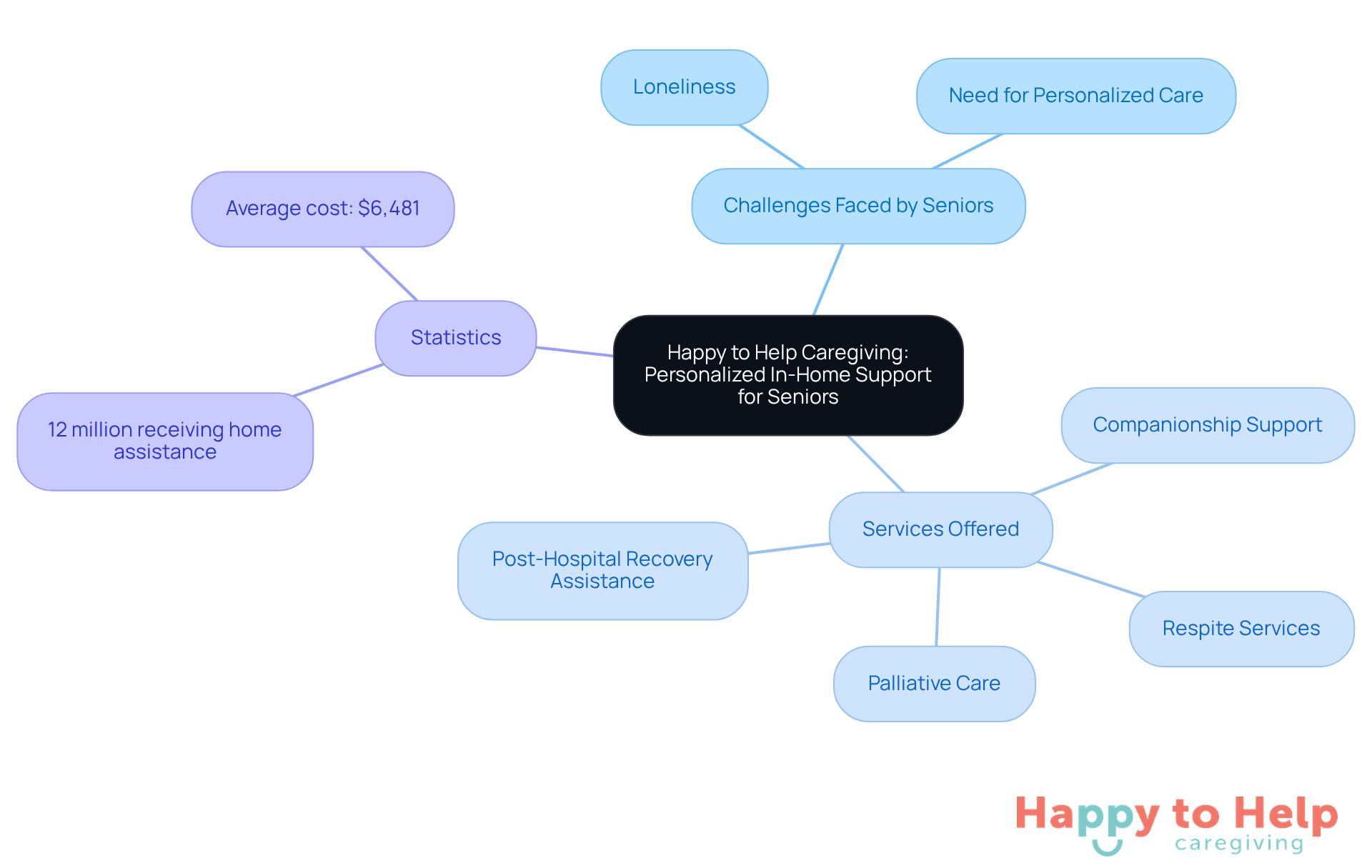
The elderly often face significant challenges, including feelings of loneliness and the need for personalized care. With one in three individuals aged 50-80 reporting loneliness at least occasionally, the emotional toll can be profound. Additionally, as the elderly population continues to grow, the demand for tailored in-home assistance is on the rise.
Happy to Help Caregiving addresses these issues by offering a senior care navigator and specialized services designed to meet the unique needs of seniors. Their offerings include:
- Companionship support
- Post-hospital recovery assistance
- Respite services
- Palliative care
This personalized approach not only enhances the quality of life for clients but also fosters a sense of security and comfort in their own homes.
Currently, around 12 million individuals in the U.S. receive home assistance, highlighting the increasing necessity for such services. Moreover, with the average monthly cost for full-time home assistance at $6,481, families can find a more economical alternative to nursing facilities, which often exceed $10,000 per month.
By focusing on individual preferences and routines, Happy to Help Caregiving utilizes a senior care navigator to help seniors maintain their independence while receiving the support they need. This commitment to personalized care ultimately leads to improved well-being and satisfaction in their daily lives.
Emotional Support: Alleviating Stress for Family Caregivers
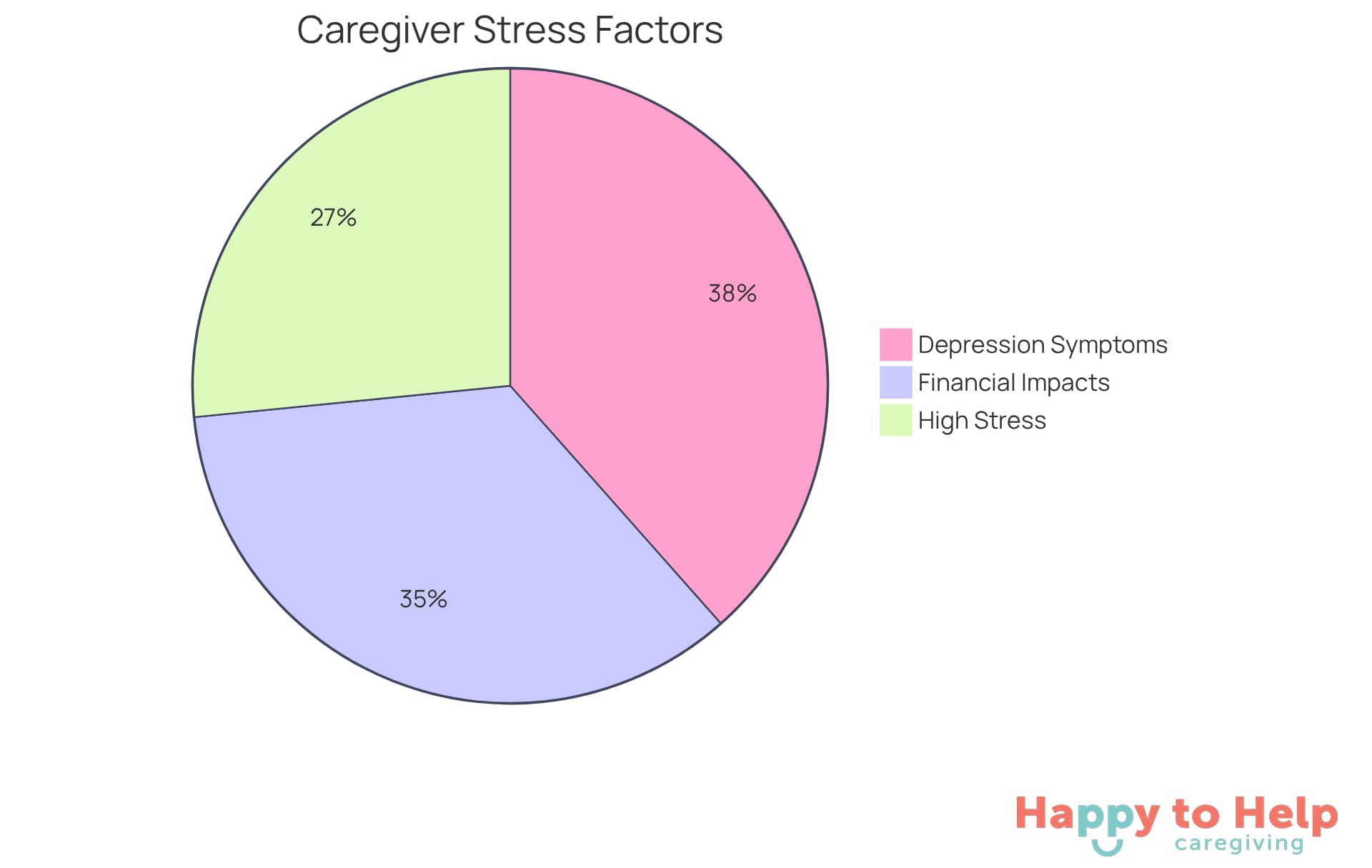
Family supporters often face significant stress, which adversely affects their health and the quality of care they provide. In 2025, nearly 38% of caregivers reported high stress levels, with almost 1 in 4 struggling to maintain their own health due to their caregiving responsibilities. This situation highlights a pressing problem that needs addressing.
The implications of this stress are profound. Caregivers not only experience physical strain but also emotional challenges, including feelings of isolation and burnout. Studies show that:
- 40% to 70% of family supporters exhibit clinically significant symptoms of depression.
- Nearly half of those providing care encounter at least one major negative financial impact due to their responsibilities, underscoring the multifaceted nature of stress associated with caregiving.
A senior care navigator can play a crucial role in alleviating this burden. The senior care navigator helps caregivers manage their stress effectively by offering emotional assistance, resources, and counseling. This support fosters a nurturing environment, enabling caregivers to provide high-quality care for their loved ones. Additionally, those who receive emotional support are less likely to suffer from the adverse health effects linked to prolonged caregiving.
To improve caregiver resilience and ensure the well-being of both caregivers and those receiving assistance, a combination of counseling and emotional resources is essential. By addressing the challenges caregivers face and providing actionable solutions, we can help them navigate their responsibilities more effectively.
Expert Guidance: Navigating Complex Care Decisions with Confidence
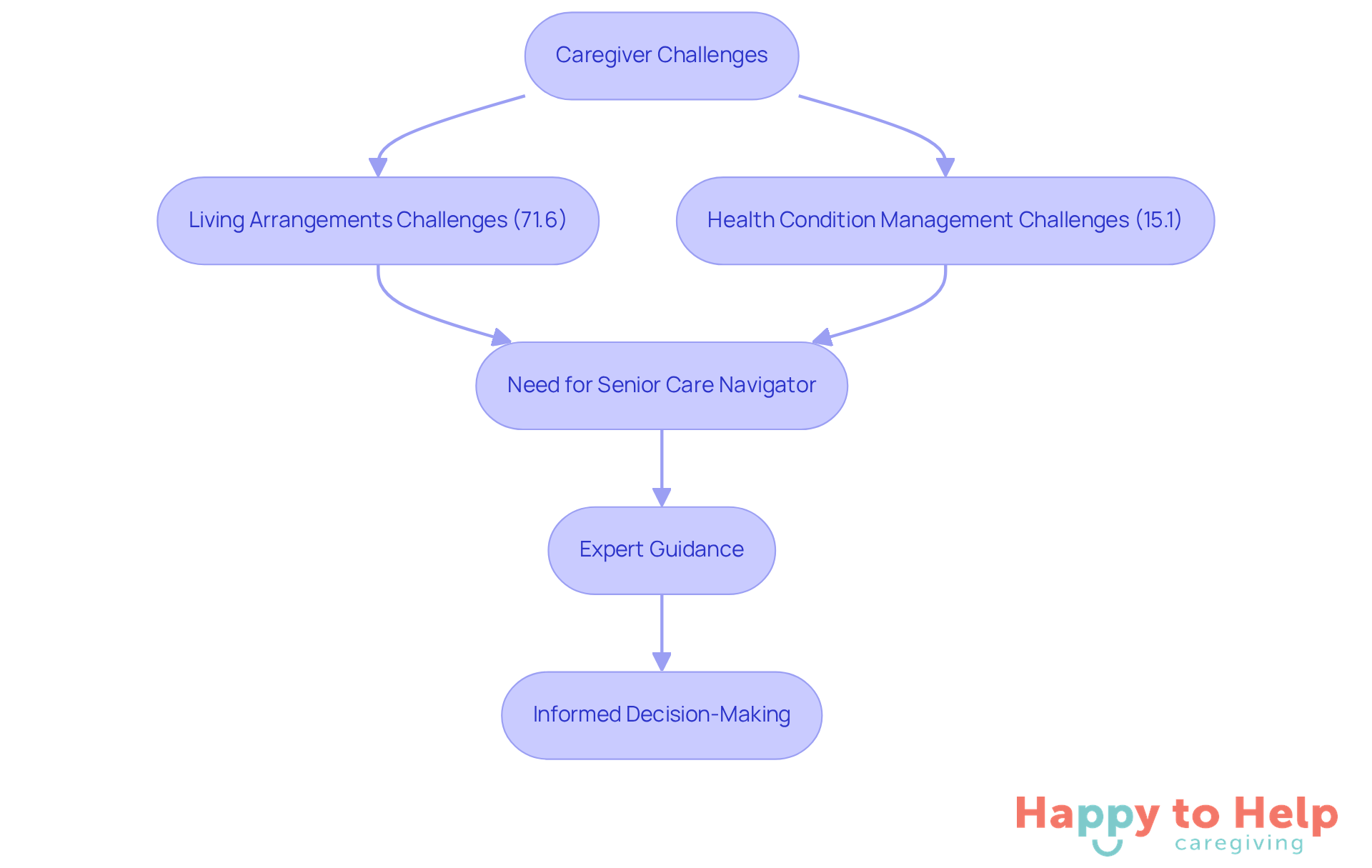
Navigating the complexities of elder support presents significant challenges for caregivers, particularly when it comes to medical treatments, living arrangements, and financial planning. Many caregivers struggle with these decisions, leading to increased stress and uncertainty. In fact, 71.6% of caregivers report difficulties related to living arrangements, while 15.1% face challenges in managing health conditions. This highlights the urgent need for informed decision-making in these critical areas.
Moreover, 56% of older adults find navigating the health system to be both challenging and stressful. This underscores the necessity of having a senior care navigator to assist families through the process. Senior care navigators play a crucial role in this regard, offering expert advice that enables relatives to fully comprehend their options. By providing customized assistance, these experienced guides help households feel more assured in their decisions, leading to significantly improved outcomes for older adults.
This expert assistance not only alleviates the stress associated with caregiving but also fosters a sense of security and well-being for both caregivers and their loved ones. As an experienced specialist notes, "Navigating the health service environment can be daunting, but with appropriate assistance, relatives can make educated choices that genuinely benefit their loved ones." By leveraging the support of a senior care navigator, caregivers can make informed decisions that enhance the quality of life for their elderly family members.
Tailored Care Plans: Customized Support for Unique Needs
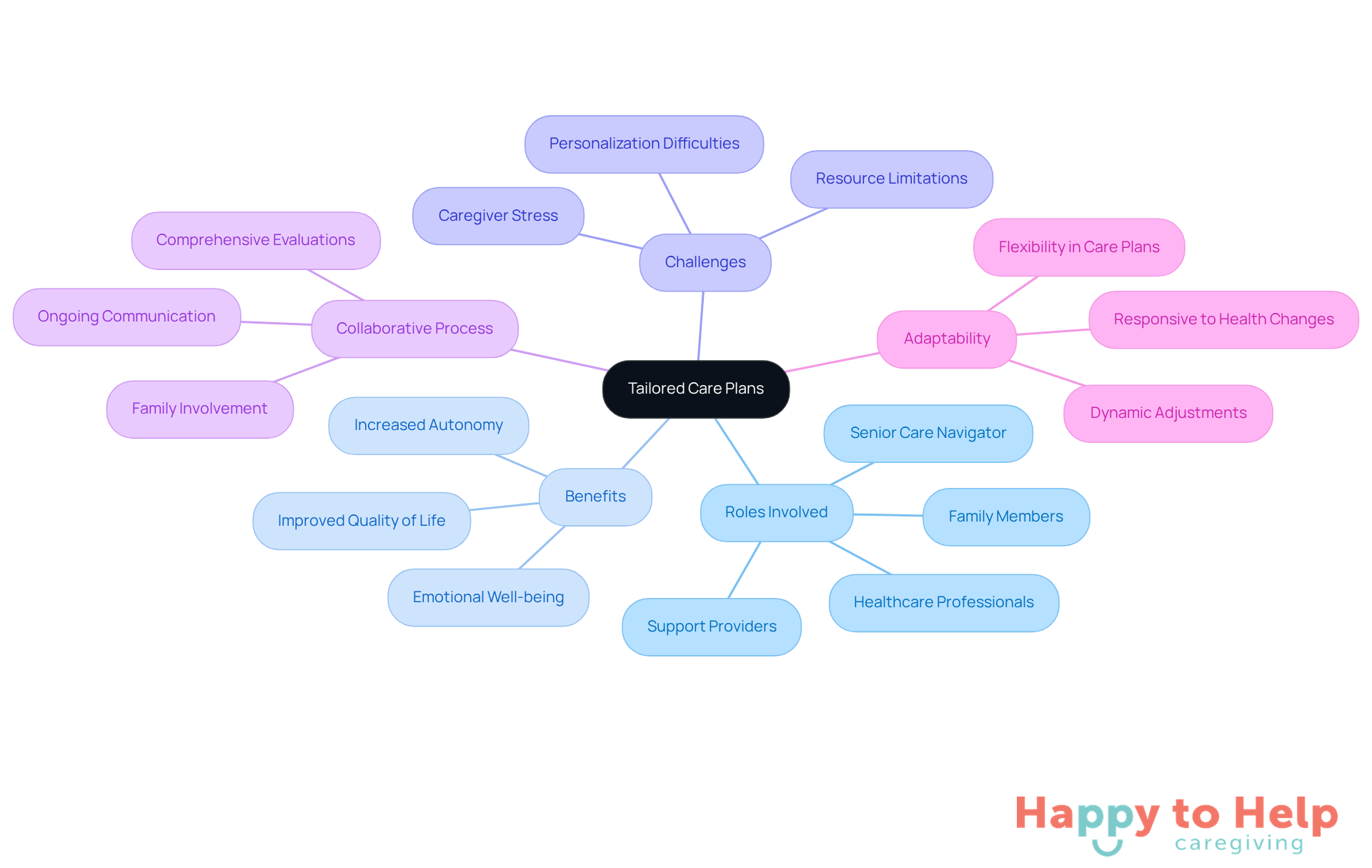
A senior care navigator plays a crucial role in supporting families by developing customized support plans tailored to the unique needs of each older adult. These plans encompass medical, emotional, and social aspects, ensuring that the support provided is effective and aligns with the individual's preferences and lifestyle. This personalized approach significantly enhances independence, allowing older adults to maintain their routines and engage in activities they love, which is vital for their emotional well-being.
However, many caregivers face challenges in providing this level of personalized care. Research indicates that personalized treatment plans lead to better health outcomes, with seniors experiencing an improved quality of life through increased autonomy and comfort in familiar surroundings. For example, customized support has been shown to alleviate feelings of isolation and loneliness, as caregivers offer companionship and cognitive stimulation - both essential for mental health. As one expert noted, "personalized assistance that respects and supports their independence empowers them to maintain control over their daily lives."
To develop effective personalized treatment plans, comprehensive evaluations are necessary. These assessments should consider each elderly individual's medical history, lifestyle, and personal preferences. Creating these plans in collaboration with a senior care navigator, healthcare professionals, support providers, and family members ensures a holistic approach. This collaborative process not only empowers older adults but also alleviates caregiver stress by distributing responsibilities and ensuring that family members receive optimal support.
By prioritizing individual needs, these plans contribute to a holistic approach that enhances overall well-being and promotes a dignified, independent life for older adults. Furthermore, personalized support plans are adaptable, allowing for adjustments as health conditions and individual preferences evolve over time, thus continually meeting the changing needs of older adults.
Coordinated Services: Streamlining Care for Better Outcomes
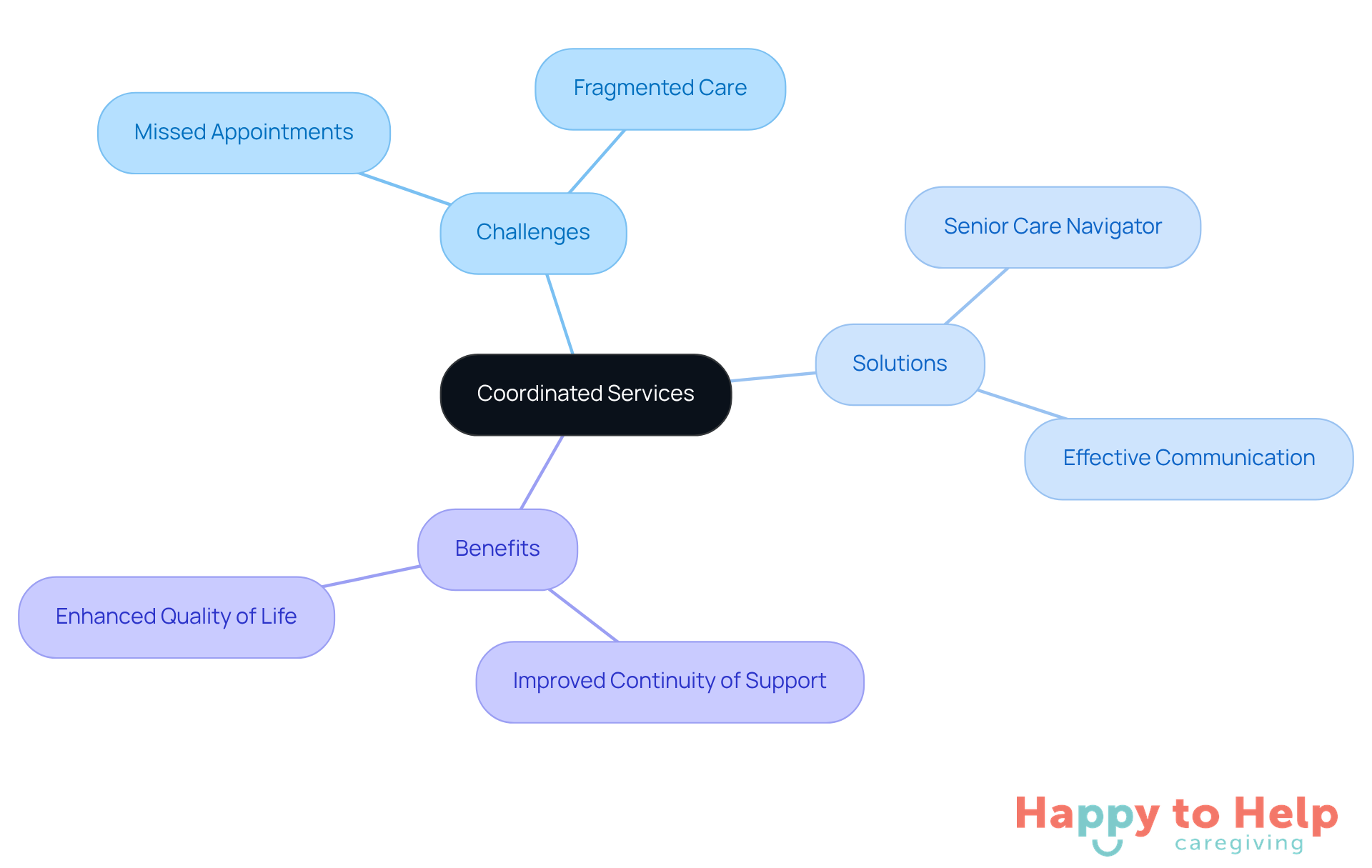
Efficient service coordination is a significant challenge for caregivers of older adults. When various services, such as medical appointments, therapy sessions, and home assistance, are not aligned, it can lead to missed appointments and fragmented care. This disorganization not only affects health outcomes but also increases stress for both caregivers and the individuals they support.
A senior care navigator can be a vital solution in this scenario. By ensuring that all providers communicate effectively, the senior care navigator helps to create a comprehensive support system tailored to the unique needs of older adults. This streamlined approach reduces the risk of missed appointments and enhances the overall quality of service, fostering a supportive atmosphere that encourages better health and well-being.
Moreover, by combining services, older adults can experience improved continuity of support. This is crucial for managing chronic conditions and aiding recovery after medical procedures. Ultimately, coordinated services not only enhance the effectiveness of service delivery but also empower older adults to maintain their independence and quality of life.
Cost Management: Maximizing Value in Senior Care Services
Managing the financial components of elder support can be daunting for relatives. The national median expense for assisted living services has reached $5,900 monthly and $70,800 yearly in 2024, leaving many families searching for effective cost management strategies. This financial burden can create significant stress for caregivers, making it essential to understand available resources.
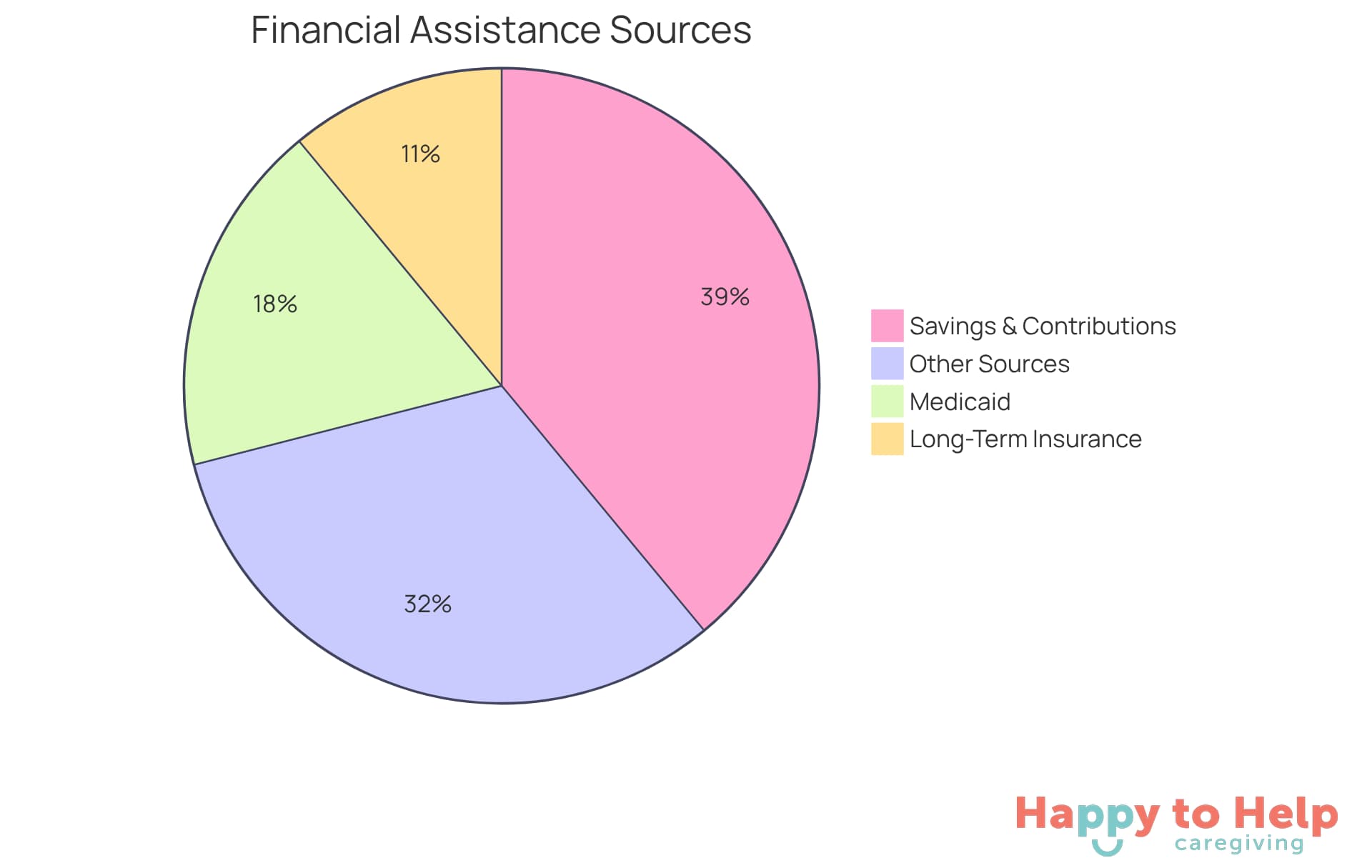
Fortunately, financial assistance options are available to ease this burden. Medicaid can cover home and community-based services, although it does not pay for room and board in assisted living facilities. Approximately 18% of assisted living residents rely on Medicaid for daily services, underscoring the importance of understanding eligibility and application processes.
Families should also consider long-term assistance insurance. Despite only 11% of adults possessing a policy, it can significantly reduce financial pressure. Additionally, many families utilize personal savings or contributions from family members to cover care costs. In fact, 39% of adults discuss how to finance care if they become seriously ill, highlighting the need for proactive planning.
To maximize the value of caregiving services, families should focus on personalized care plans that align with their loved ones' specific needs. This customized approach not only improves service quality but also ensures efficient resource distribution. Understanding today's average expenses is a crucial first step in preparing for long-term needs. By leveraging the expertise of an experienced navigator, families can make informed financial choices that enhance their caregiving journey, ultimately creating a more secure and comfortable environment for their loved ones.
Ongoing Support: Continuous Care for Peace of Mind
As support requirements evolve, the problem of ensuring adequate assistance for elderly individuals becomes increasingly pressing. Continuous support is essential, as it not only addresses the changing needs of older adults but also alleviates the concerns of their loved ones.
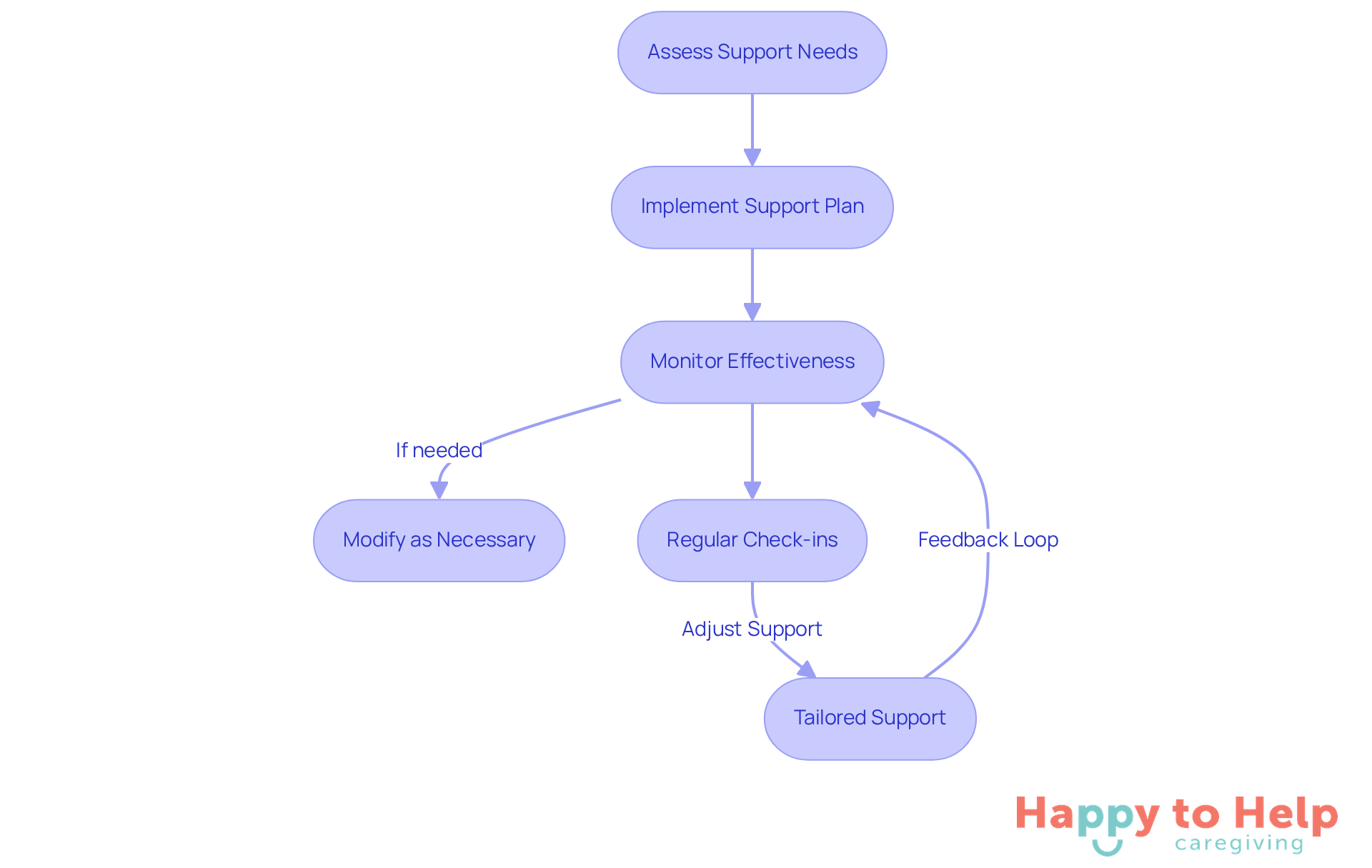
The implications of inadequate support can be significant. A senior care navigator plays a crucial role in delivering ongoing supervision, frequently assessing the efficiency of support plans and implementing necessary modifications. This proactive strategy guarantees that older adults receive tailored support, enhancing their overall well-being.
Research shows that seniors receiving regular assistance experience better management of chronic conditions and a reduction in hospital visits. For instance, the hours of support provided by family caregivers to older adults with dementia rose by almost 50% from 2011 to 2022, underscoring the growing demand for such help. As Dr. Anshu Banerjee states, "We all need assistance to look after ourselves at some point in our lives, but we are more likely to need support the longer we live."
To cultivate a supportive environment, relatives can take actionable steps to ensure their loved ones receive the attention and assistance they require to thrive at home. By prioritizing ongoing support, families can feel assured that their elderly relatives are well cared for.
Technology Integration: Enhancing Communication and Care Delivery
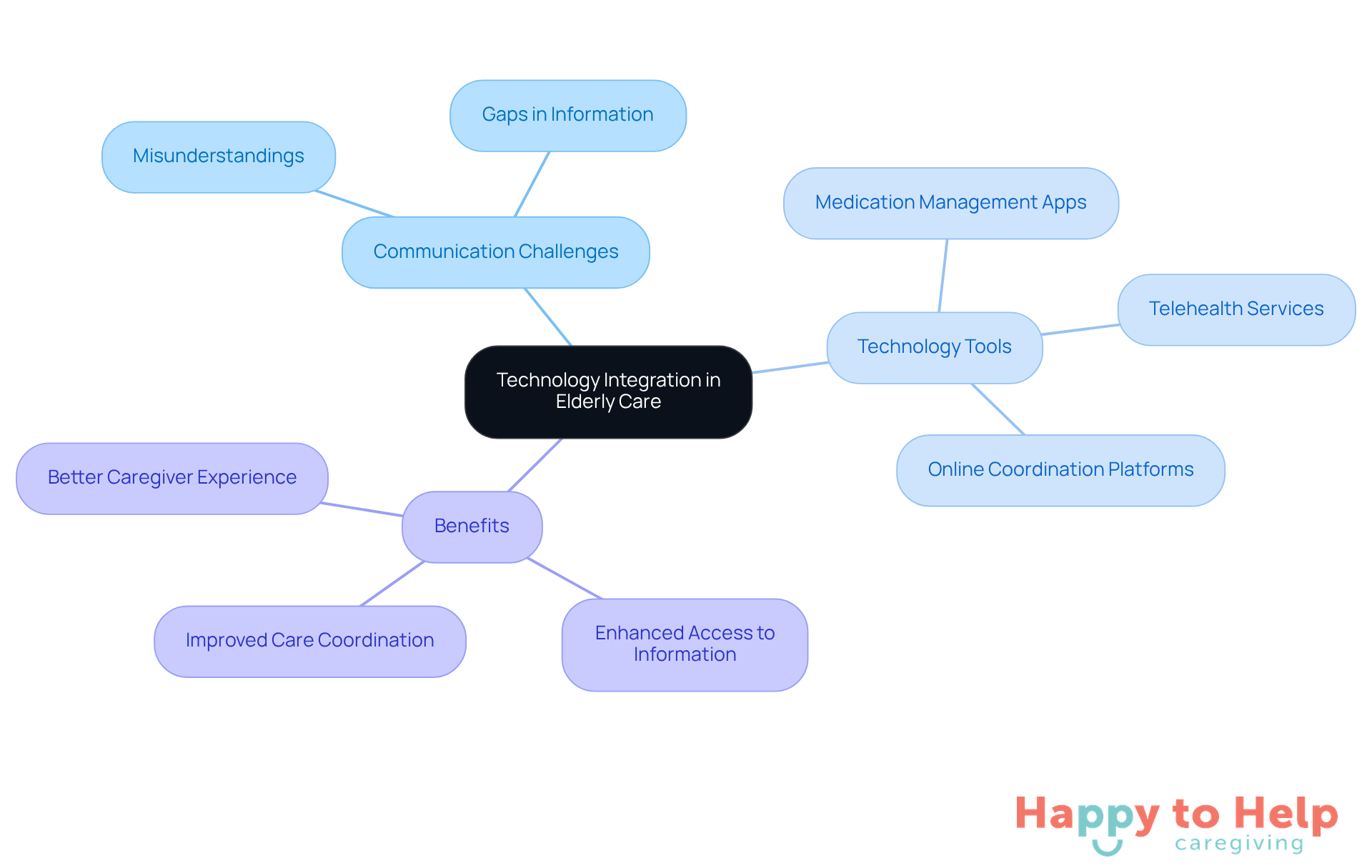
Caregivers often face significant communication challenges when coordinating care for the elderly. This can lead to misunderstandings and gaps in information, ultimately affecting the quality of care provided.
To address these issues, incorporating technology into elderly support can be a game changer. Tools like telehealth services, medication management applications, and online coordination platforms not only simplify processes but also enhance access to vital information.
A senior care navigator can assist households in effectively utilizing these technologies. By leveraging these tools, caregivers can improve the overall caregiving experience, ensuring that everyone involved - caregivers, relatives, and healthcare professionals - stays informed and connected.
Community Connections: Accessing Local Resources for Enhanced Care
Caregivers often face the challenge of connecting older adults with essential local resources, which can lead to feelings of isolation and stress. This lack of support can significantly impact the quality of life for older adults, making it crucial to address these gaps in care.
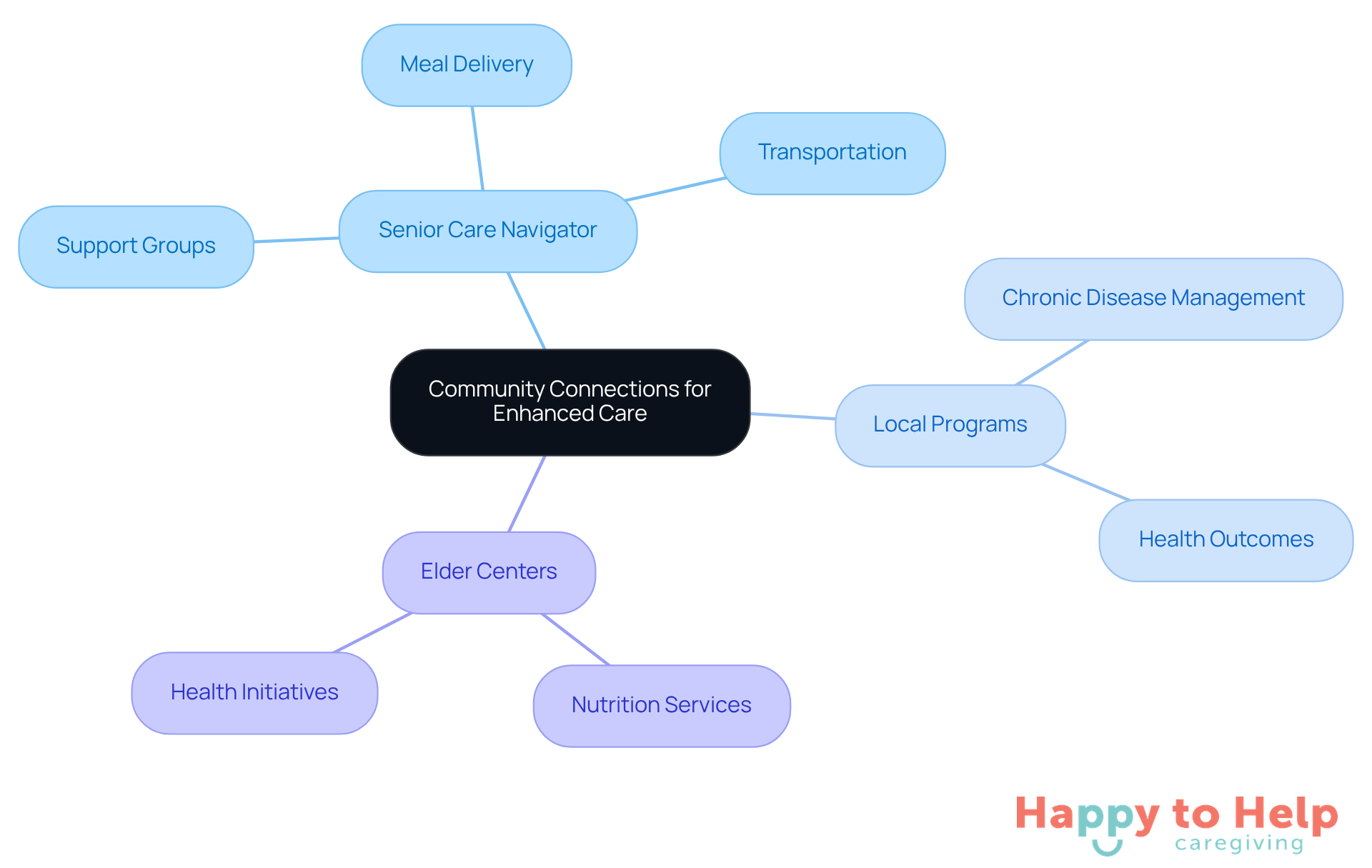
A senior care navigator plays a vital role in bridging this divide, linking families to support groups, meal delivery services, and transportation options. These community connections not only enhance the caregiving experience but also provide the extra support needed to improve health outcomes. Research shows that participation in local programs can help manage and delay chronic diseases, fostering better health for older adults.
Elder centers serve as essential hubs, connecting older adults to vital services that promote health and independence. With over 11,000 elderly centers across the U.S. serving more than a million older adults daily, these facilities offer a variety of programs, including meal and nutrition services, as well as health and wellness initiatives. Engaging with these local resources alleviates feelings of isolation and encourages social interaction, which is essential for psychological well-being.
According to the National Council on Aging, older adults who participate in community programs report higher levels of health and life satisfaction compared to those who do not. Therefore, nurturing community connections is not just beneficial; it is crucial for improving the overall caregiving experience and ensuring that older adults thrive in their familiar surroundings.
Building Trust: Establishing Strong Relationships for Effective Care
Building trust between caregivers and elderly individuals is a significant challenge that can hinder effective support. When trust is lacking, communication falters, leading to misunderstandings and missed health cues. This can result in inadequate care and diminished health outcomes for seniors.
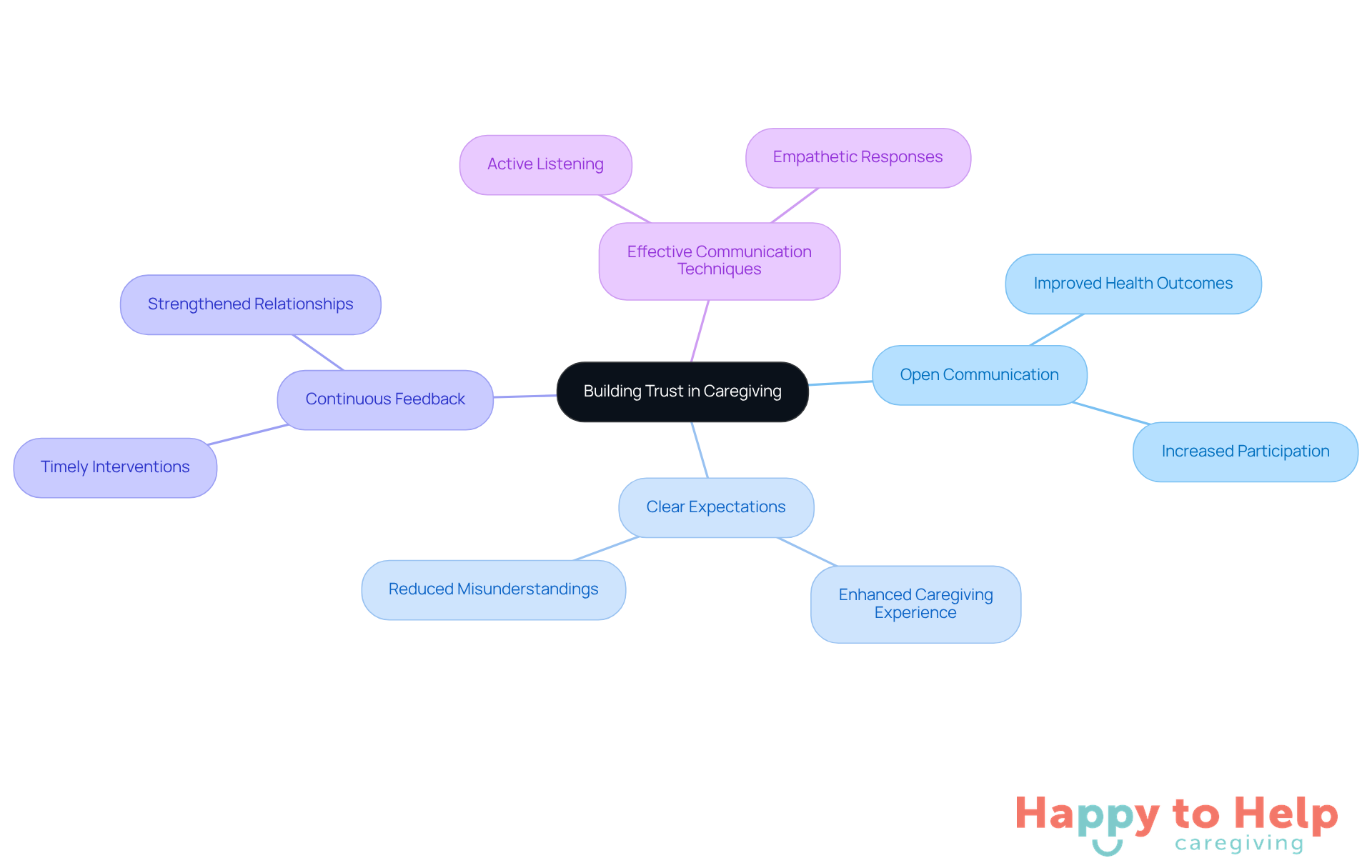
To address this issue, a senior care navigator can play a crucial role. By fostering open communication, establishing clear expectations, and promoting continuous feedback, caregivers can create a robust connection with elderly individuals. This proactive approach not only enhances the caregiving experience but also boosts compliance with treatment plans and health results.
For instance, caregivers who maintain consistent communication with elderly individuals are better equipped to detect subtle changes in their health, leading to timely interventions. When older adults feel acknowledged and understood, they are more inclined to actively participate in their support, reducing feelings of isolation and improving overall well-being.
Effective communication strategies, such as active listening and empathetic responses, further strengthen these bonds. These techniques ensure that support is personalized and respectful, creating an environment where seniors can thrive. Ultimately, emphasizing communication within caregiving enhances the quality of care and builds a supportive atmosphere for elderly individuals.
Key Takeaways for Caregivers
The role of a senior care navigator addresses a significant problem: the complexities of elder care that family caregivers face. These challenges can lead to overwhelming stress and uncertainty, making it difficult for caregivers to provide the best support for their elderly loved ones.
By offering personalized assistance, emotional support, and expert guidance, senior care navigators serve as a vital solution. They empower families to make informed decisions that enhance the well-being of seniors, creating a nurturing environment where they can thrive. This support alleviates caregiver stress and fosters a more positive caregiving experience.
Key benefits of utilizing a senior care navigator include:
- Tailored care plans that cater to individual needs
- Coordinated services that streamline care delivery
These navigators play an essential role in improving the quality of life for both seniors and their caregivers. Moreover, integrating technology and community resources further enhances the caregiving experience, ensuring families have access to the necessary support.
As the demand for personalized in-home support continues to grow, engaging a senior care navigator becomes increasingly important. Families are encouraged to explore these resources to maximize their caregiving efforts. By prioritizing communication, trust, and ongoing support, caregivers can significantly impact the lives of their elderly relatives, ensuring they receive the care and attention they deserve.
https://iframe.tely.ai/cta/eyJhcnRpY2xlX2lkIjogIjY5MjEwYTk2NjEwMTg2OWMxYzA1NTA5ZiIsICJjb21wYW55X2lkIjogIjY4ZWU1ZGNhNzMxNzYyNTU3ZjNjOTVjMSIsICJpbmRleCI6IG51bGwsICJ0eXBlIjogImFydGljbGUifQ==Frequently Asked Questions
What challenges do elderly individuals face that Happy to Help Caregiving addresses?
Elderly individuals often face challenges such as feelings of loneliness and the need for personalized care. One in three individuals aged 50-80 report experiencing loneliness, and there is a growing demand for tailored in-home assistance.
What services does Happy to Help Caregiving offer?
Happy to Help Caregiving offers a range of services including companionship support, post-hospital recovery assistance, respite services, and palliative care, all designed to meet the unique needs of seniors.
How does personalized in-home support benefit seniors?
Personalized in-home support enhances the quality of life for seniors by fostering a sense of security and comfort in their own homes while allowing them to maintain their independence.
What is the average cost of home assistance compared to nursing facilities?
The average monthly cost for full-time home assistance is approximately $6,481, which is more economical compared to nursing facilities that often exceed $10,000 per month.
What stress do family caregivers experience?
Family caregivers often face significant stress, with nearly 38% reporting high stress levels in 2025. This stress can adversely affect their health and the quality of care they provide, with many struggling to maintain their own well-being.
What are the emotional challenges faced by caregivers?
Caregivers experience physical strain and emotional challenges, including feelings of isolation, burnout, and clinically significant symptoms of depression affecting 40% to 70% of family supporters.
How can a senior care navigator help alleviate caregiver stress?
A senior care navigator can provide emotional assistance, resources, and counseling to help caregivers manage their stress effectively, fostering a nurturing environment for both caregivers and those they care for.
What are the difficulties caregivers face in decision-making?
Caregivers often struggle with complex decisions regarding medical treatments, living arrangements, and financial planning, with 71.6% reporting difficulties related to living arrangements.
Why is expert guidance important for caregivers?
Expert guidance from a senior care navigator helps caregivers navigate the complexities of elder support, alleviating stress and providing clarity in decision-making, which leads to improved outcomes for older adults.
What impact does support from a senior care navigator have on caregivers?
Support from a senior care navigator fosters a sense of security and well-being for caregivers, enabling them to make informed decisions that enhance the quality of life for their elderly family members.
List of Sources
- Happy to Help Caregiving: Personalized In-Home Support for Seniors
- The Future of Aging: Is In-Home Care the New Standard? - WorldHealth.net (https://worldhealth.net/news/future-of-aging-is-in-home-care-new-standard)
- 2025 Home Care Statistics: Trends & Insights To Know (https://premierhcinc.com/blog/home-care-statistics)
- Trends and Innovations in Senior Care | Amada Blog (https://amadaseniorcare.com/2025/01/trends-and-innovations-in-senior-care)
- Home Care Industry Trends to Watch in 2025 (https://firstlighthomecare.com/blog/home-care-industry-trends)
- How Personalized In-Home Care can Improve Seniors Quality of Life - Freedom Home Care (https://freedomhomecare.net/2024/11/21/how-personalized-in-home-care-can-improve-seniors-quality-of-life)
- Emotional Support: Alleviating Stress for Family Caregivers
- New Report Reveals Crisis Point for America’s 63 million Family Caregivers (https://press.aarp.org/2025-07-24-New-Report-Reveals-Crisis-Point-for-Americas-63-million-Family-Caregivers)
- As Family Caregiving Grows, So Does the Need for Reform - Medicare Rights Center (https://medicarerights.org/medicare-watch/2025/08/14/as-family-caregiving-grows-so-does-the-need-for-reform)
- Caregiver Statistics: Health, Technology, and Caregiving Resources (https://caregiver.org/resource/caregiver-statistics-health-technology-and-caregiving-resources)
- It’s Time to Care for Caregivers: Senator Markey Announces Comprehensive Family Caregiving Legislative Agenda | U.S. Senator Ed Markey of Massachusetts (https://markey.senate.gov/news/press-releases/11/20/2025/its-time-to-care-for-caregivers-senator-markey-announces-comprehensive-family-caregiving-legislative-agenda)
- Expert Guidance: Navigating Complex Care Decisions with Confidence
- Warning From Older Adults: Care for Aging in America Needs Urgent Rethinking (https://johnahartford.org/newsroom/view/warning-from-older-adults-care-for-aging-in-america-needs-urgent-rethinking)
- Decision Regret and Decision-Making Process among Caregivers of Older Adults Receiving Home Care: A Cross-Sectional Study (https://jamda.com/article/S1525-8610(24)00588-7/abstract)
- Elderly Care Statistics (https://rosewood-nursing.com/post/elderly-care-statistics)
- Social Determinants of Health and Older Adults | odphp.health.gov (https://odphp.health.gov/our-work/national-health-initiatives/healthy-aging/social-determinants-health-and-older-adults)
- Making Informed Senior Living Decisions with Professional Guidance (https://eldercarereview.com/news/making-informed-senior-living-decisions-with-professional-guidance-nwid-730.html)
- Tailored Care Plans: Customized Support for Unique Needs
- Healthcare For Seniors Statistics (https://rosewood-nursing.com/post/healthcare-for-seniors-statistics)
- Warning From Older Adults: Care for Aging in America Needs Urgent Rethinking (https://johnahartford.org/newsroom/view/warning-from-older-adults-care-for-aging-in-america-needs-urgent-rethinking)
- The Impact of Personalized Care on Senior Well-Being (https://humancareny.com/blog/the-impact-of-personalized-care-on-senior-well-being)
- Customized Care at Home: The Benefits of Personalized Care Plans - VNA Health Group (https://vnahg.org/customized-care-at-home-the-benefits-of-personalized-care-plans)
- The Benefits of Personalized Care:Take a Tailor-Made Approach (https://visiting-angels.co.uk/northwestkent/blog/the-benefits-of-personalized-care-why-visiting-angels-take-a-tailor-made-approach)
- Coordinated Services: Streamlining Care for Better Outcomes
- 20 Inspirational Senior Care Quotes (https://1plus1cares.com/20-inspirational-senior-care-quotes)
- Taking Care of Elderly Parents Quotes (https://ultimatecareny.com/resources/taking-care-of-elderly-parents-quotes)
- (https://belleviecare.co.uk/support-advice/60-elderly-care-quotes-to-lift-your-spirits)
- ‘Perfect storm’ hitting assisted living requires leveraging technology to improve outcomes (https://mcknightsseniorliving.com/news/perfect-storm-hitting-assisted-living-requires-leveraging-technology-to-improve-outcomes)
- Inspirational Quotes for Compassionate Caregivers (https://humancareny.com/blog/inspirational-quotes-for-caregivers)
- Cost Management: Maximizing Value in Senior Care Services
- Cost of Long Term Care by State | Cost of Care Report | Carescout (https://carescout.com/cost-of-care)
- The Affordability of Long-Term Care and Support Services: Findings from a KFF Survey | KFF (https://kff.org/health-costs/the-affordability-of-long-term-care-and-support-services)
- Facts & Figures (https://ahcancal.org/Assisted-Living/Facts-and-Figures/Pages/default.aspx)
- Genworth and CareScout Release Cost of Care Survey Results for 2024 (https://investor.genworth.com/news-events/press-releases/detail/982/genworth-and-carescout-release-cost-of-care-survey-results)
- Home Care Cost (https://ltsschoices.aarp.org/scorecard-report/2023/dimensions-and-indicators/home-care-cost)
- Ongoing Support: Continuous Care for Peace of Mind
- 2025 Home Care Statistics: Trends & Insights To Know (https://premierhcinc.com/blog/home-care-statistics)
- Adult children of senior living residents, other family caregivers, need support, information, study finds (https://mcknightsseniorliving.com/news/adult-children-of-senior-living-residents-other-family-caregivers-need-support-information-study-finds)
- Without support, seniors aging in place may elect facility-based care, study finds (https://mcknights.com/news/without-support-seniors-aging-in-place-may-elect-facility-based-care-study-finds)
- Number of Family Caregivers Supporting Older Adults Increased Nearly One-Third Between 2011 and 2022 | Johns Hopkins Bloomberg School of Public Health (https://publichealth.jhu.edu/2025/number-of-family-caregivers-supporting-older-adults-increased-nearly-one-third-between-2011-and-2022)
- WHO calls for urgent transformation of care and support systems for older people (https://who.int/news/item/01-10-2024-who-calls-for-urgent-transformation-of-care-and-support-systems-for-older-people)
- Technology Integration: Enhancing Communication and Care Delivery
- ‘Perfect storm’ hitting assisted living requires leveraging technology to improve outcomes (https://mcknightsseniorliving.com/news/perfect-storm-hitting-assisted-living-requires-leveraging-technology-to-improve-outcomes)
- Technology Use Among Older Adults and Their Caregivers: Cross-Sectional Survey Study - PMC (https://pmc.ncbi.nlm.nih.gov/articles/PMC11084119)
- Medicare Telehealth Waivers Expire With Potential ‘Big Impact’ for Senior Living Operators (https://seniorhousingnews.com/2025/10/01/medicare-telehealth-waivers-expire-with-potential-big-impact-for-senior-living-operators)
- Millions of seniors lose access to telehealth services in wake of shutdown (https://pbs.org/newshour/show/millions-of-seniors-lose-access-to-telehealth-services-in-wake-of-shutdown)
- Older Americans Are Leveraging More Technology (https://aarp.org/pri/topics/technology/internet-media-devices/2025-technology-trends-older-adults)
- Community Connections: Accessing Local Resources for Enhanced Care
- Caregiving connects us, community strengthens us - VA News (https://news.va.gov/143323/caregiving-connects-us-community-strengthens-us)
- Get the Facts on Senior Centers and How They Serve Older Adults (https://ncoa.org/article/get-the-facts-on-senior-centers)
- 28 Senior Care Statistics: In-Home & Assisted Living | Shortlister (https://myshortlister.com/insights/senior-care-statistics)
- FastStats (https://cdc.gov/nchs/fastats/residential-care-communities.htm)
- Facts & Figures (https://ahcancal.org/Assisted-Living/Facts-and-Figures/Pages/default.aspx)
- Building Trust: Establishing Strong Relationships for Effective Care
- Trust, Comfort, and Care in Assisted Living: How Senior Living Caregivers Bring Peace of Mind – Front Porch (https://frontporch.net/community/friends-house/blog/trust-comfort-and-care-in-assisted-living-how-senior-living-caregivers-bring-peace-of-mind)
- Why Trust Matters: Building Bonds Between Caregivers and Seniors (https://trustedlikefamilyhomecare.com/f/why-trust-matters-building-bonds-between-caregivers-and-seniors?blogcategory=Informational)
- The Caregiving Landscape: Data & Insights on the Caregiver Experience in the U.S. (https://caregiveraction.org/caregiver-statistics)
- The Importance of Caregiver-Client Relationships in Senior Well-Being (https://homeinstead.com/home-care/usa/in/goshen/588/news-and-media/the-importance-of-caregiver-client-relationships-in-senior-well-being)
- Caregiver Statistics: Demographics (https://caregiver.org/resource/caregiver-statistics-demographics)