

For families in our service areas
For families in our service areas, this guide explains caregiver support and how non-medical in-home caregiving can support care planning in East Idaho, Treasure Valley & Magic Valley, Northern Wasatch, North Central West Virginia, and Northeast Ohio.
Why AI Enhances Live-In Healthcare Matters
AI technology is reshaping live-in healthcare, presenting significant challenges for family caregivers who face the complexities of personalized care. Caregivers often struggle with:
- Monitoring health
- Managing administrative tasks
- Providing timely interventions
These challenges can lead to increased stress and a diminished quality of life for both caregivers and those they support.
As caregivers grapple with these issues, they must also consider the ethical implications of integrating AI into their care practices. Questions arise about how to ensure that these technologies are used effectively and ethically. What best practices can caregivers adopt to navigate this evolving landscape?
This article explores ten impactful ways AI enhances live-in healthcare, offering caregivers actionable insights to improve their caregiving experience. By leveraging AI tools, caregivers can streamline their responsibilities, ultimately enhancing the quality of life for those they care for.
Happy to Help Caregiving: Personalized AI-Enhanced In-Home Support
Caregivers often struggle with providing personalized care that meets the unique needs of each individual. This challenge can lead to inadequate support, which may compromise the well-being of those they care for. Without tailored solutions, caregivers may find it difficult to monitor changes in a patient’s condition effectively, resulting in missed opportunities for timely intervention.
To address these challenges, Happy to Help Caregiving leverages AI technology to enhance its in-home support services, helping clients to live in healthcare. By utilizing AI-driven tools, providers can create personalized support plans that live in healthcare and adapt to the distinct requirements of each individual. This integration enables real-time monitoring and adjustments, ensuring that patients can live in healthcare that delivers the most effective care possible.
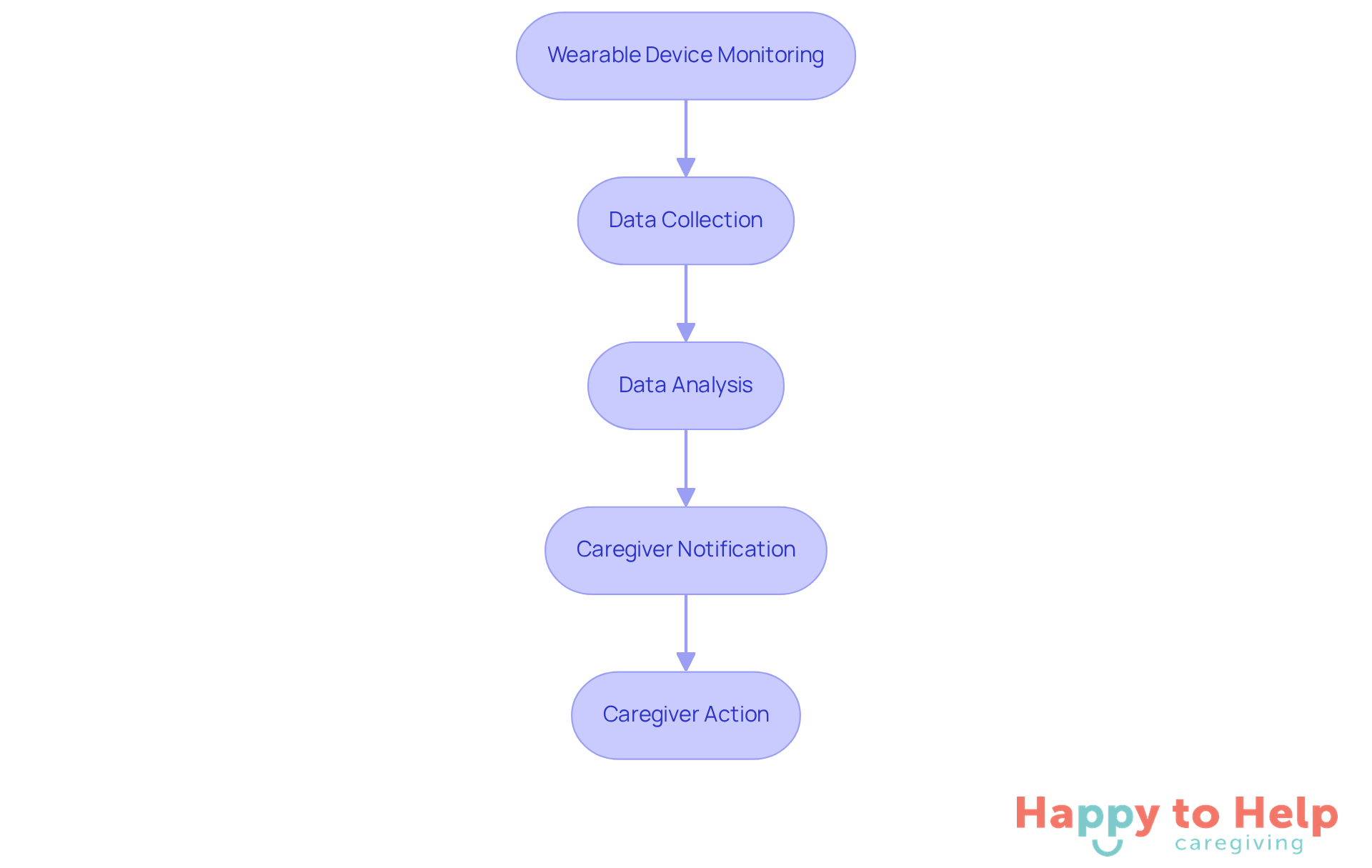
For instance, AI can analyze data from wearable devices to track wellness metrics. This allows caregivers to respond swiftly to any changes in a patient's condition, promoting a safer and more nurturing environment at home. By embracing these innovative solutions, caregivers can significantly improve the quality of care they provide.
AI Virtual Assistants: Streamlining Patient Interaction and Care
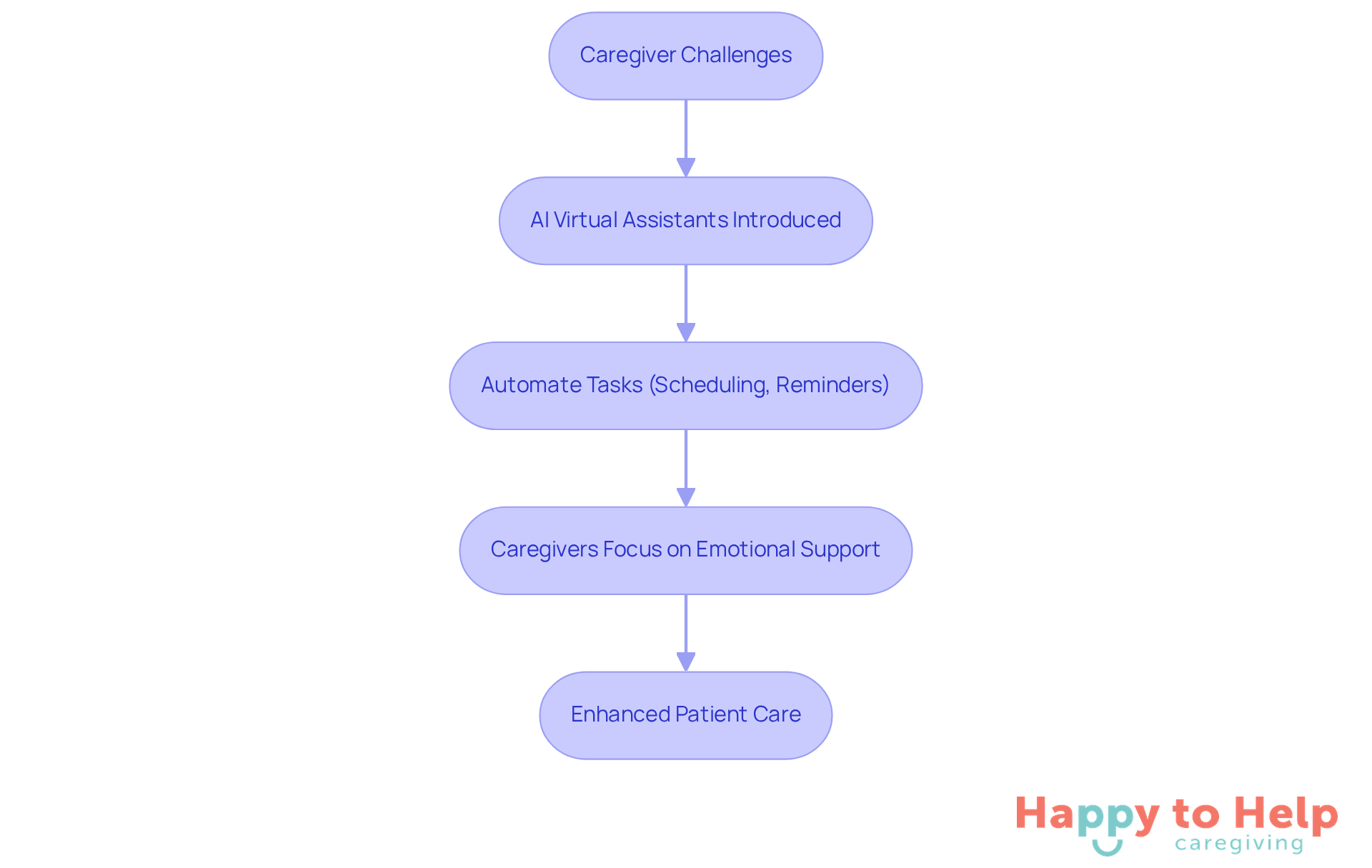
Caregivers often struggle with balancing administrative tasks and providing empathetic support. This challenge can lead to burnout and reduced quality of care, as they find themselves bogged down by scheduling, reminders, and health updates.
AI virtual assistants offer a practical solution to this problem. By automating routine tasks such as scheduling appointments and sending medication reminders, these tools allow caregivers to focus more on the emotional and psychological needs of those they assist. For example, a virtual assistant can alert a provider to check in on a client who has missed a medication dose, ensuring adherence to treatment plans and enhancing overall care.
Incorporating AI into caregiving not only streamlines operations but also fosters a more supportive environment for clients. Caregivers who live in healthcare can enhance their engagement and provide the compassionate care that is essential for effective support by leveraging technology.
AI in Precision Diagnostics: Enhancing Accuracy in Medical Assessments
AI technologies are transforming precision diagnostics, addressing a critical problem for caregivers: the need for timely and accurate medical information. Caregivers often struggle to make informed decisions regarding their loved ones' health, which can lead to delays in treatment and increased stress.
The implications of this issue are significant. Without accurate data, caregivers may miss early signs of conditions like diabetes or heart disease, impacting the well-being of those they support. Fortunately, AI algorithms are stepping in to help. By analyzing vast amounts of medical data, these technologies can identify patterns that human practitioners might overlook. For example, AI evaluates imaging results and lab tests with remarkable accuracy, leading to earlier detection of health issues.
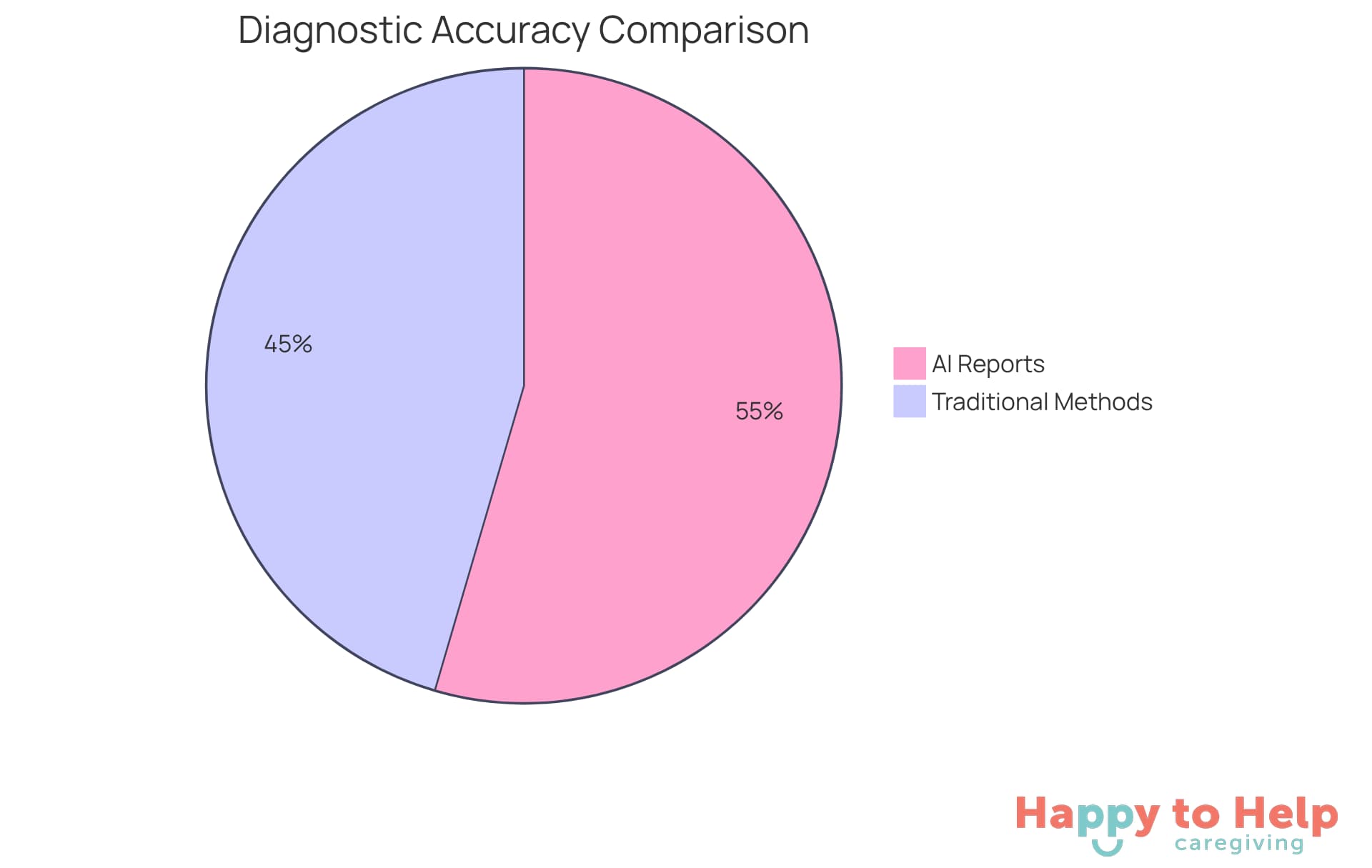
Studies show that AI-generated reports achieve up to 87.3% accuracy, compared to just 72.8% for traditional methods. This reflects a substantial improvement in diagnostic precision, empowering caregivers with the information they need to make informed choices. In fact, as of 2024, 66% of physicians are utilizing health AI, highlighting a growing trend towards integrating these technologies into caregiving.
However, it's essential to address ethical concerns, such as data privacy and algorithm bias, as these issues are critical in the context of AI's role in healthcare and how we live in healthcare. As providers increasingly rely on these technologies, they can focus more on delivering compassionate assistance, knowing they have the support of accurate and reliable medical evaluations.
As Andy Miller from AARP’s AgeTech Collaborative notes, "AI is rising as a strong ally for those providing support, alleviating daily challenges so families can concentrate more on assistance and connection." By embracing AI, caregivers can enhance their ability to provide care, ensuring their loved ones receive the best possible support.
AI-Driven Telehealth Solutions: Expanding Access to Care
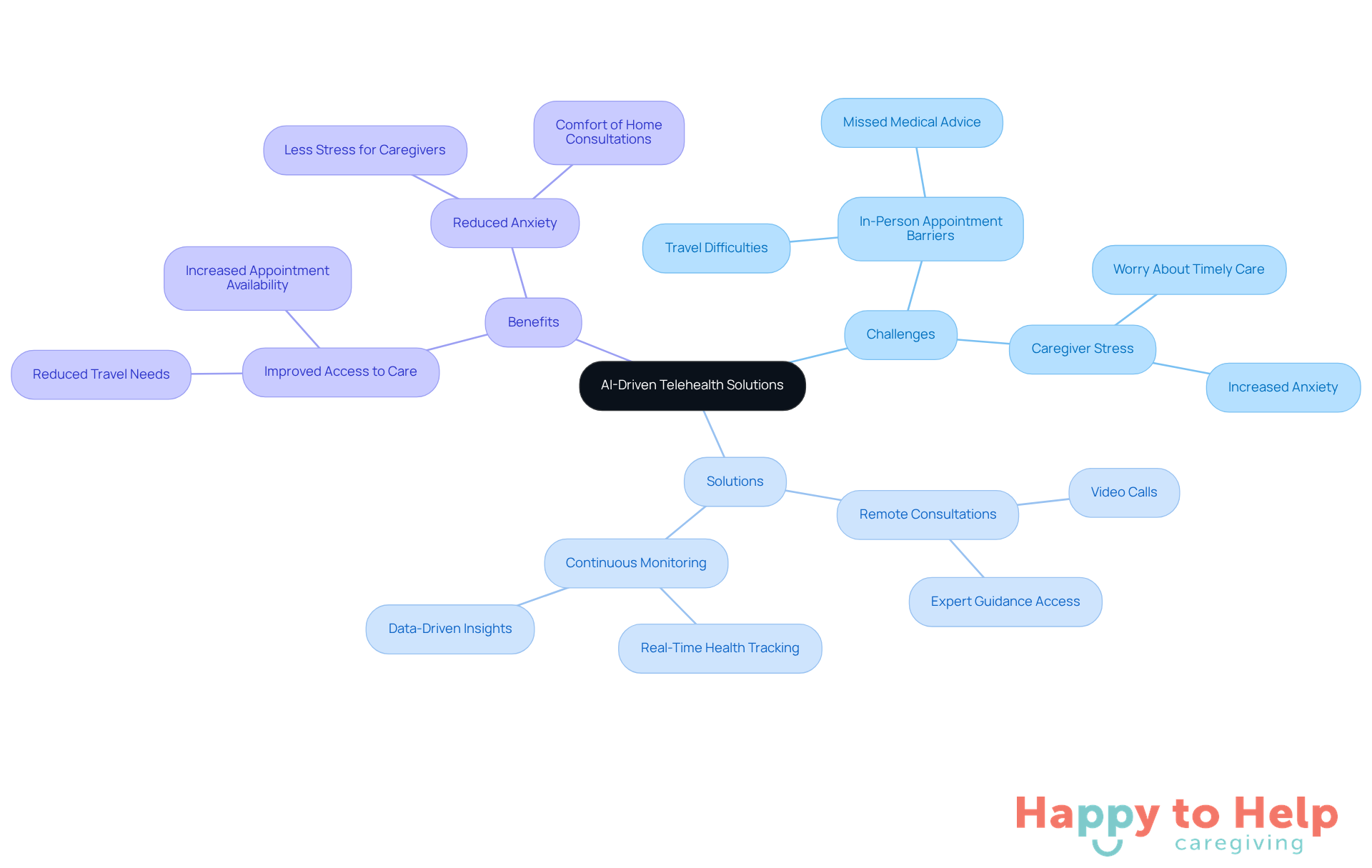
AI-driven telehealth solutions are addressing a significant problem for those who live in healthcare access, particularly for caregivers and their loved ones. Many seniors and individuals with disabilities face challenges in attending in-person appointments, which can lead to missed medical advice and increased anxiety. This situation not only affects their health but also places additional stress on caregivers who strive to provide the best support.
The implications of this issue are profound. Caregivers often worry about their loved ones receiving timely medical attention, and the necessity for travel can be a major barrier. However, AI technology offers a practical solution for those who live in healthcare. With remote consultations and continuous monitoring, these innovative platforms allow caregivers to effortlessly connect with professionals who live in healthcare.
For instance, virtual appointments enable healthcare providers to evaluate a patient's condition through video calls, ensuring that essential medical advice is readily available. This approach conserves time and alleviates the anxiety often associated with in-person visits. Moreover, the integration of AI enhances diagnostic accuracy and streamlines operations, allowing us to live in healthcare that is more efficient and accessible.
As a result, caregivers can provide better support to their loved ones, knowing that expert guidance is just a click away. By embracing these AI-driven telehealth solutions, caregivers can significantly improve the quality of care they offer, ensuring that their loved ones receive the attention they need without the added stress of travel.
Wearable Technology: AI-Powered Health Monitoring for Better Outcomes
Wearable technology integrated with AI features is transforming wellness monitoring for seniors and individuals with special needs. Caregivers often face the challenge of identifying health concerns early, which can be critical in preventing serious medical issues.
Devices like smartwatches and fitness trackers continuously monitor vital signs, activity levels, and sleep patterns. This data is invaluable for caregivers, as it allows them to spot potential wellness issues before they escalate. For instance, if a wearable device detects abnormal heart rates, caregivers can take immediate action, potentially averting serious health complications.
Caregivers who live in healthcare can enhance their ability to provide timely and effective support by leveraging these advanced technologies. The integration of AI in wearable devices not only streamlines monitoring but also empowers caregivers with actionable insights, ensuring that they can respond swiftly to any changes in health status.
Predictive Analytics: AI for Anticipating Patient Needs
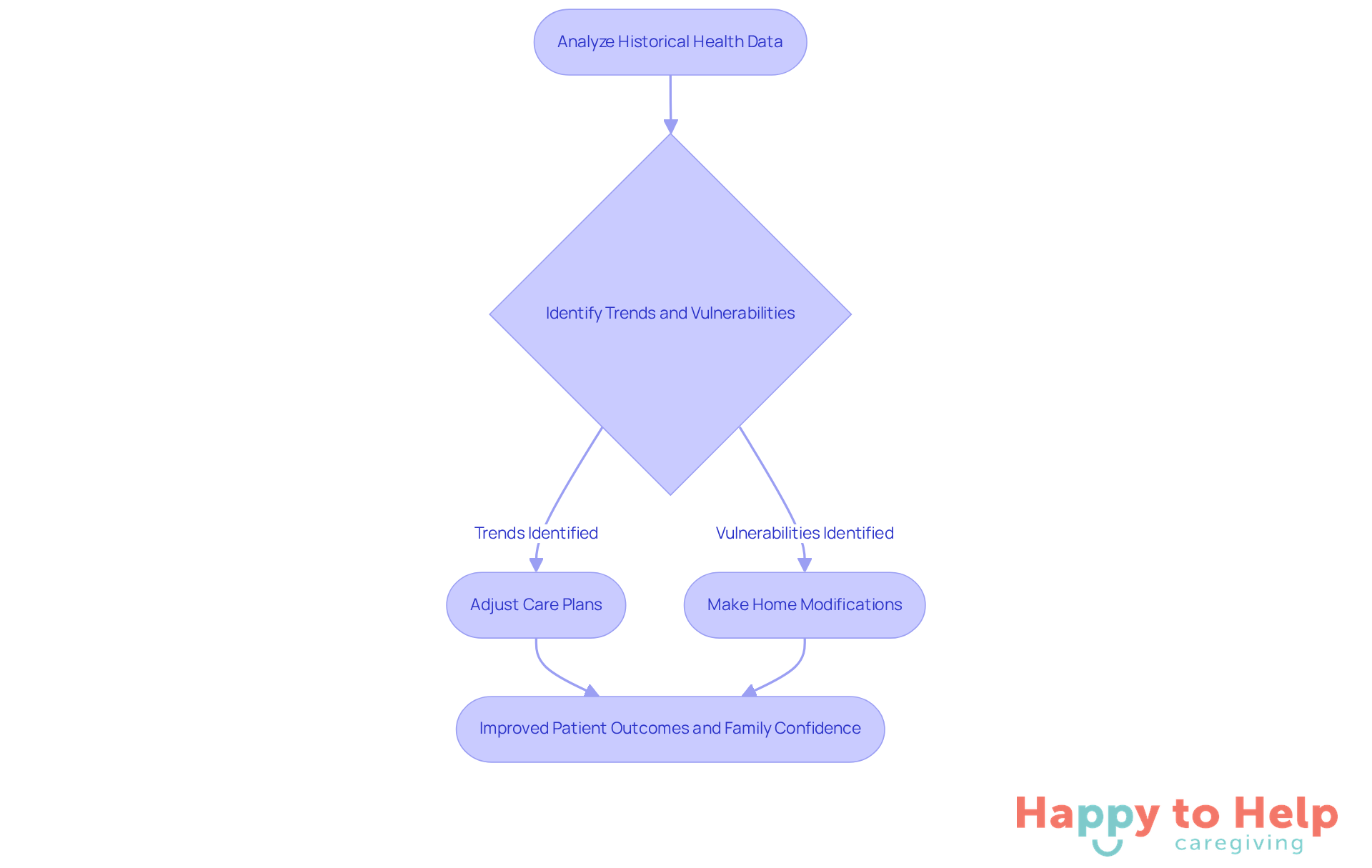
Predictive analytics powered by AI addresses a significant challenge in caregiving: anticipating patients' future health needs. Caregivers often face the daunting task of managing potential health risks, which can lead to increased anxiety for both patients and their families. By utilizing historical health data, AI can identify trends and specific vulnerabilities, such as an increased risk of falls based on activity patterns.
For instance, if a patient's data suggests they are prone to falls, caregivers can implement practical solutions. This might include:
- Adjusting care plans to incorporate more frequent check-ins
- Making necessary home modifications to enhance safety
Such proactive measures not only improve patient outcomes but also alleviate concerns for family supporters, fostering a greater sense of security and confidence in the care provided.
Moreover, a 2025 study from The Permanente Medical Group revealed that AI scribes saved over 15,700 hours of documentation time in just one year. This statistic underscores the efficiency gains that AI can bring to caregiving contexts. The global AI in healthcare market is set to live in healthcare and is projected to grow from USD 26.6 billion in 2024 to nearly USD 187 billion by 2030. This growth highlights how AI advancements are essential for those who live in healthcare.
Family supporters can effectively leverage AI tools by integrating predictive analytics into their care strategies. This ensures they are well-equipped to meet their loved ones' needs, ultimately enhancing the quality of care.
AI in Medication Management: Ensuring Safety and Compliance
Medication adherence is a significant challenge for many patients and their caregivers. Approximately 50% of Americans do not take their chronic medications as prescribed, which can lead to serious health complications. This issue places a heavy burden on family supporters who often manage complex medication schedules for their loved ones.
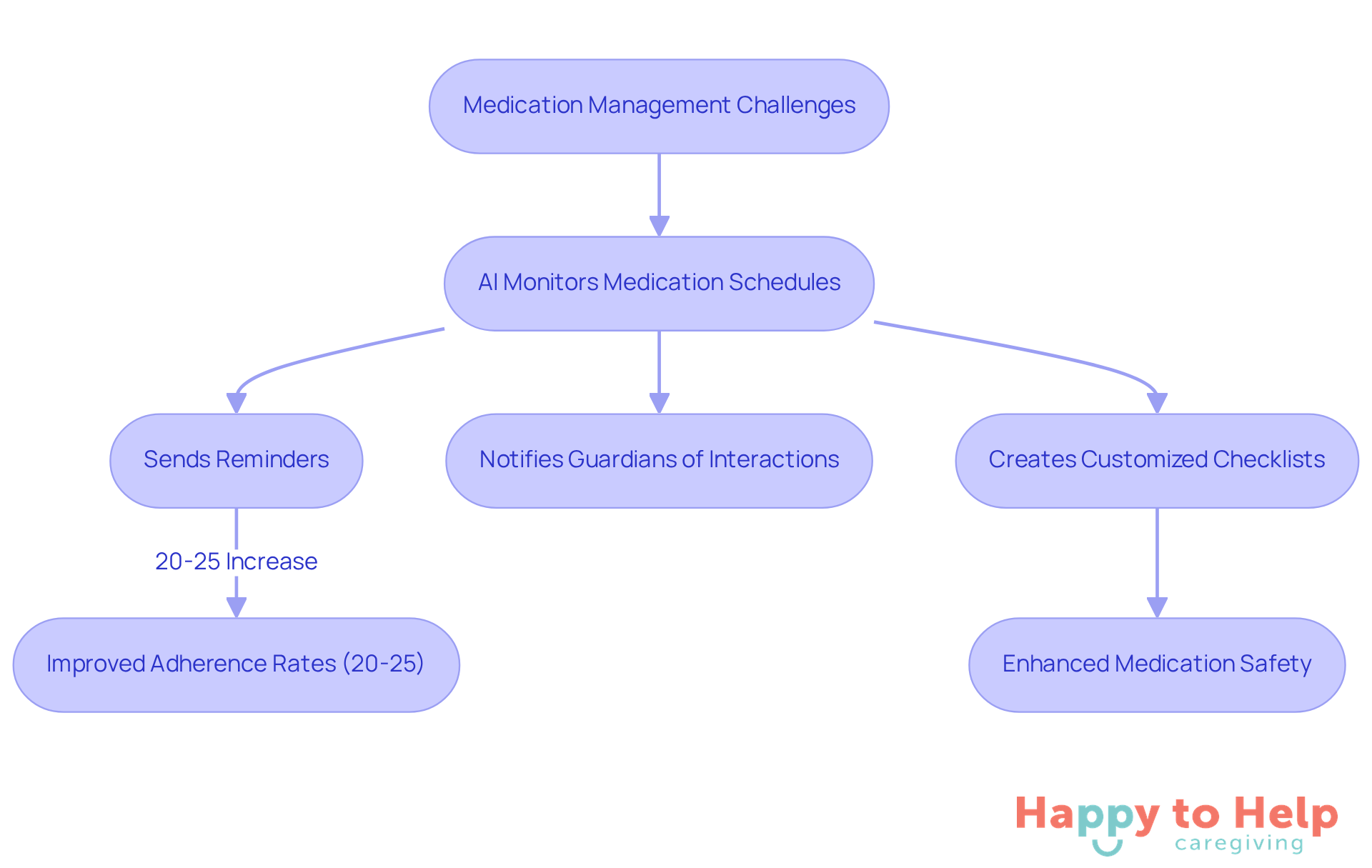
AI technologies are stepping in to help us live in healthcare and address these challenges. They provide effective solutions that monitor medication schedules, send prompt reminders, and notify guardians of possible drug interactions. For instance, AI systems can carefully examine a client's medication schedule, spotting inconsistencies and signaling them for those responsible. This proactive oversight is crucial for ensuring that medications are taken as prescribed.
Studies show that AI-driven reminders can increase adherence rates by 20-25%, significantly reducing the risk of adverse effects and hospitalizations. Furthermore, AI tools can create customized daily checklists and wellness plans, enhancing medication safety and adherence. By combining these technologies, caregivers can improve wellness outcomes for the individuals they support.
AI-driven interventions have demonstrated improvements in adherence rates ranging from 6.7% to 32.7% across diverse patient populations. This highlights the potential of these technologies to live in healthcare by transforming medication management and supporting caregivers in their vital roles.
AI Chatbots: Revolutionizing Mental Health Support
Caregivers often face significant emotional challenges while supporting others, leading to feelings of stress and anxiety. This can hinder their ability to provide effective care, impacting both their well-being and that of those they support.
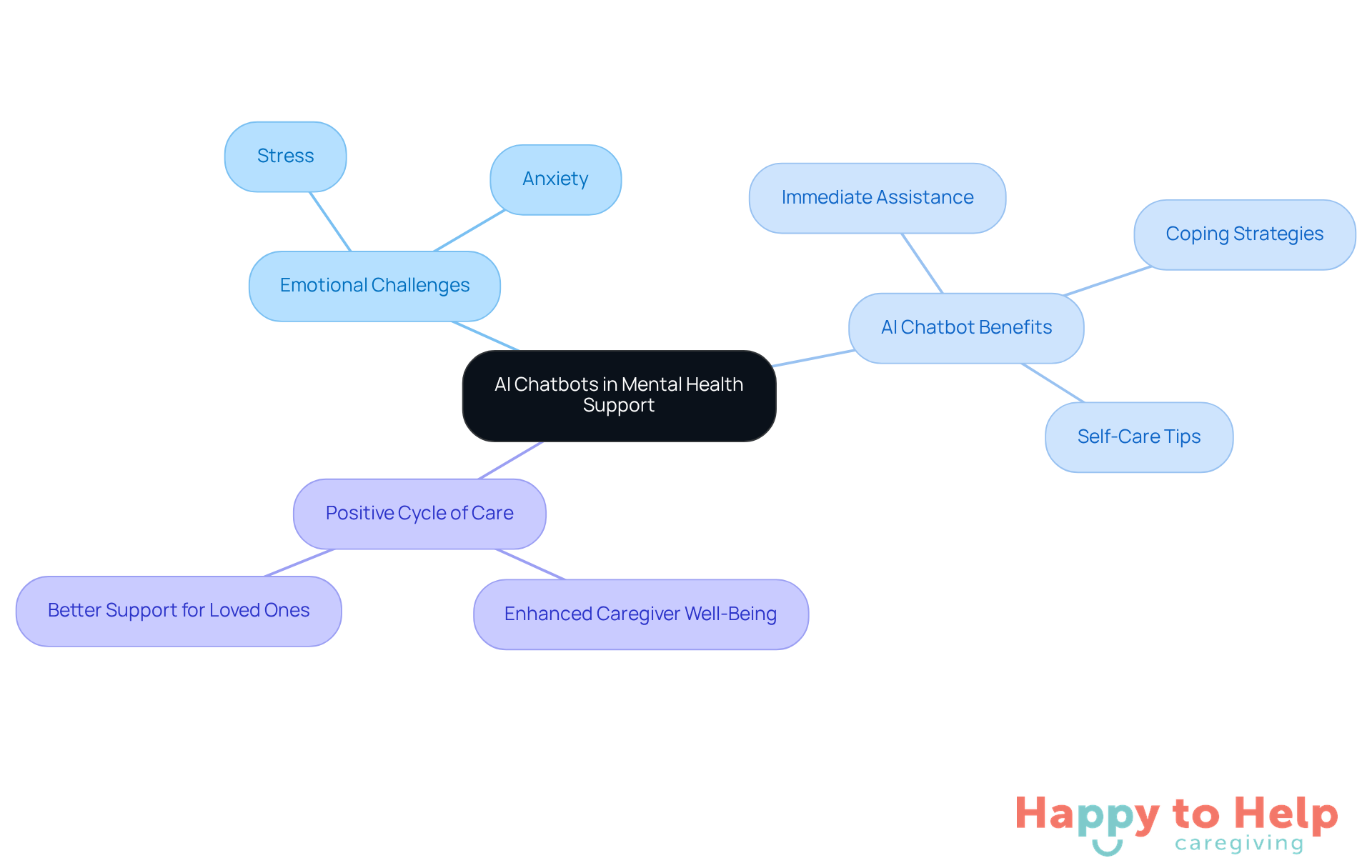
AI chatbots are emerging as valuable resources to address these challenges. They offer immediate assistance, coping strategies, and resources tailored for managing stress. For instance, when a caregiver feels overwhelmed, they can interact with a chatbot to receive practical tips on self-care or stress management techniques.
By integrating these AI tools into their routine, caregivers can enhance their emotional well-being. This not only benefits them but also allows them to provide better support to their loved ones, creating a positive cycle of care.
AI for Operational Efficiency: Streamlining Healthcare Processes
AI technologies are addressing significant challenges in caregiving agencies, where operational inefficiencies can hinder service delivery. Caregivers often find themselves bogged down by repetitive tasks like organizing staff shifts and managing patient records, which detracts from their ability to provide direct assistance. This not only affects the quality of care but can also lead to lower job satisfaction among support staff.
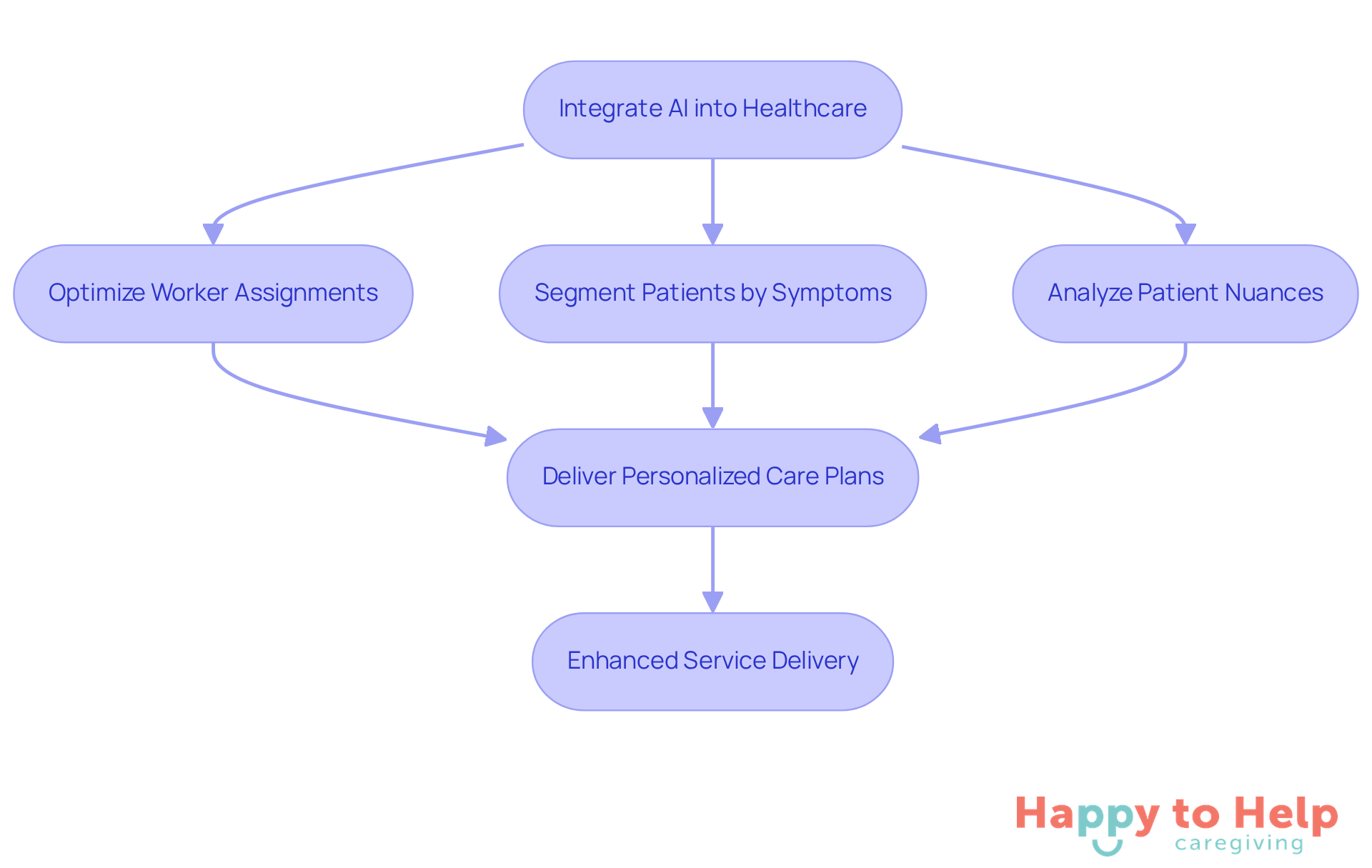
To illustrate, AI systems can optimize support worker assignments based on individual client needs and worker availability. This ensures that clients receive consistent and reliable assistance while allowing caregivers to focus on delivering quality care rather than administrative duties. As Valerie Reich, vice president of healthcare strategy at Hero Digital, points out, "AI will transform patient engagements by segmenting patients with similar symptoms, analyzing the nuances between each patient and delivering personalized care plans."
With over 11,000 Americans becoming eligible for Medicare daily, the healthcare industry is increasingly turning to AI to meet the demands of an aging population. Agencies that live in healthcare can improve operational efficiency and foster a more supportive environment for both providers and recipients by incorporating AI into caregiving. This shift towards automation is essential for enhancing service delivery and ensuring that caregivers can dedicate their time to what truly matters: the well-being of their clients.
Ethical Considerations: Navigating AI Implementation in Healthcare
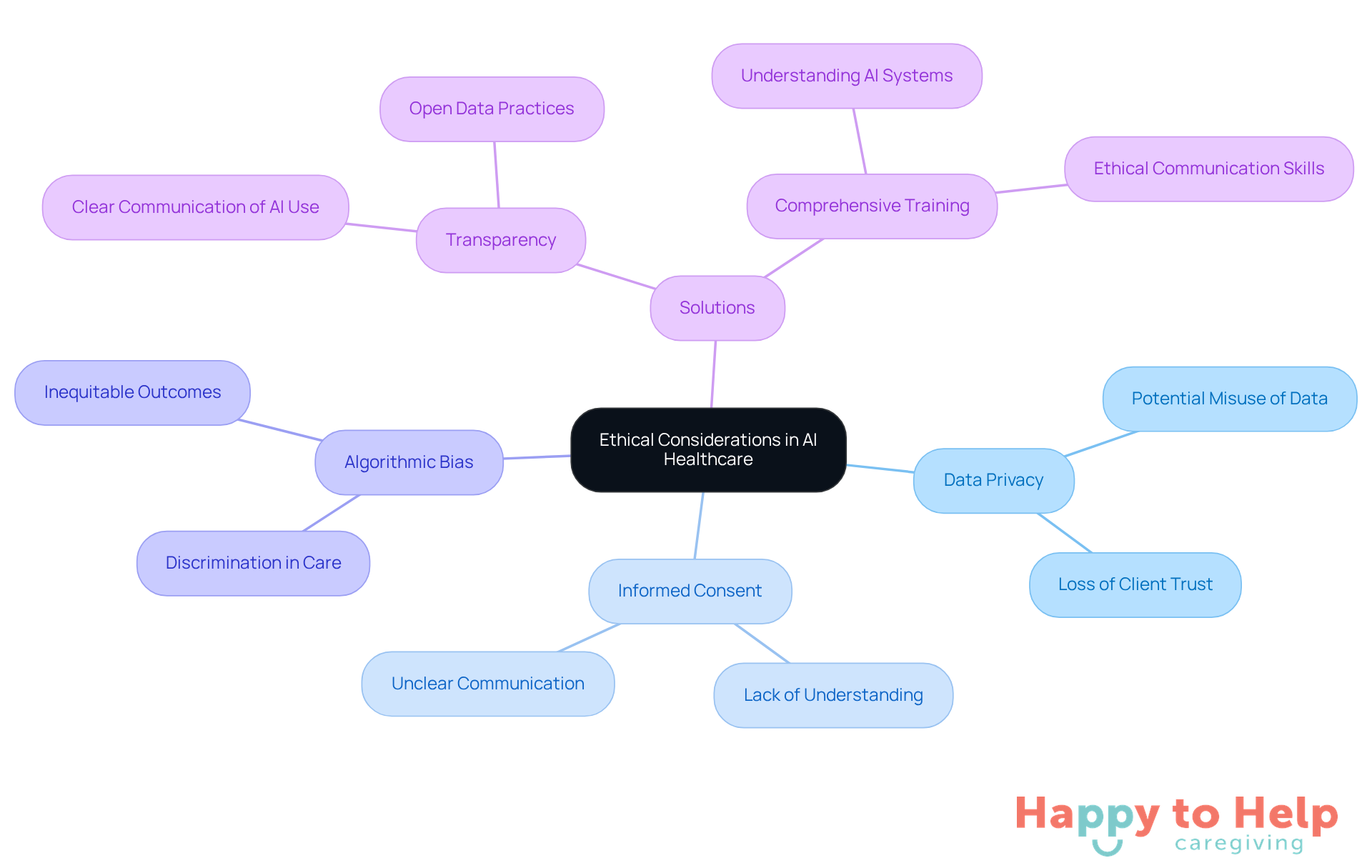
As AI technologies become more integrated into caregiving, ethical considerations present a significant problem. Issues like data privacy, informed consent, and algorithmic bias are critical challenges that must be addressed. If these concerns are overlooked, the rights of individuals may be compromised, leading to a breakdown of trust between caregivers and those they serve.
To agitate this issue, consider the implications: without proper safeguards, caregivers may inadvertently misuse AI tools, resulting in potential harm to clients. This not only affects the individuals receiving care but also undermines the credibility of caregiving agencies. Therefore, it is essential for caregivers and agencies to prioritize transparency in the use of AI technologies.
The solution lies in comprehensive training for caregivers. They should be equipped to understand how AI systems operate and how to communicate their use effectively to clients and families. This fosters trust and ensures ethical practices in care delivery. By implementing these strategies, caregivers can navigate the complexities of AI while safeguarding the rights of individuals.
Taking the Next Steps
AI technology is transforming live-in healthcare, addressing a significant challenge for family caregivers: the overwhelming burden of caregiving tasks. This burden can lead to stress and hinder the quality of care provided to loved ones. However, by integrating AI into caregiving, family caregivers can alleviate these pressures and enhance the care they deliver.
AI offers innovative tools such as personalized support plans, virtual assistants, and advanced diagnostics. These technologies empower caregivers to meet the unique needs of their loved ones more effectively. For instance, AI-driven telehealth solutions and wearable devices provide real-time data and predictive analytics, enabling caregivers to anticipate patient needs and respond swiftly to changes in health status. This not only improves operational efficiency but also ensures that patients receive timely and effective support in a nurturing environment.
Moreover, the ethical considerations surrounding AI implementation highlight the importance of transparency and training. Caregivers must be equipped with the knowledge to maintain trust and safeguard patient rights. As they embrace these AI tools, caregivers can shift their focus from administrative tasks to building meaningful connections with their loved ones.
In conclusion, the integration of AI into caregiving is not merely a technological advancement; it signifies a shift towards more compassionate and effective care. By leveraging AI, caregivers can enhance their capabilities, ensuring that those they support receive the best possible care while navigating the complexities of healthcare with confidence and compassion.
https://iframe.tely.ai/cta/eyJhcnRpY2xlX2lkIjogIjY5MjRmMWU4ZWM0Y2FiOGU3NGVjMDBmMCIsICJjb21wYW55X2lkIjogIjY4ZWU1ZGNhNzMxNzYyNTU3ZjNjOTVjMSIsICJpbmRleCI6IG51bGwsICJ0eXBlIjogImFydGljbGUifQ==Frequently Asked Questions
What challenges do caregivers face in providing personalized care?
Caregivers often struggle with offering personalized care that meets the unique needs of each individual, which can lead to inadequate support and missed opportunities for timely intervention.
How does Happy to Help Caregiving utilize AI technology?
Happy to Help Caregiving leverages AI technology to enhance in-home support services by creating personalized support plans that adapt to the distinct requirements of each individual, enabling real-time monitoring and adjustments.
What role do wearable devices play in AI-enhanced caregiving?
Wearable devices provide data that AI can analyze to track wellness metrics, allowing caregivers to respond swiftly to any changes in a patient's condition and promote a safer home environment.
How do AI virtual assistants benefit caregivers?
AI virtual assistants automate routine tasks such as scheduling appointments and sending medication reminders, enabling caregivers to focus more on the emotional and psychological needs of their clients.
What impact does AI have on precision diagnostics?
AI enhances precision diagnostics by analyzing vast amounts of medical data to identify patterns that human practitioners might overlook, leading to earlier detection of health issues and more informed decision-making for caregivers.
How accurate are AI-generated medical reports compared to traditional methods?
AI-generated reports achieve up to 87.3% accuracy, while traditional methods have an accuracy of only 72.8%, reflecting a significant improvement in diagnostic precision.
What ethical concerns are associated with the use of AI in healthcare?
Ethical concerns include data privacy and algorithm bias, which are critical issues as AI technologies become more integrated into caregiving.
How is the use of AI in caregiving expected to evolve?
As of 2024, 66% of physicians are utilizing health AI, indicating a growing trend towards integrating these technologies into caregiving, which can enhance the quality of support provided to clients.
List of Sources
- Happy to Help Caregiving: Personalized AI-Enhanced In-Home Support
- HHS Backs AI Innovation for America’s Caregivers | HHS.gov (https://hhs.gov/press-room/hhs-backs-ai-innovation-for-americas-caregivers.html)
- 2025: AI enhances personalized care; caregiver experience in the spotlight (https://healthcareitnews.com/news/2025-ai-enhances-personalized-care-caregiver-experience-spotlight)
- HHS Launches $2M AI Initiative To ‘Transform’ Caregiving, Address Staffing Challenges (https://homehealthcarenews.com/2025/11/hhs-launches-2m-ai-initiative-to-transform-caregiving-address-staffing-challenges)
- AI in Healthcare Statistics: ROI in Under 12 Months (https://masterofcode.com/blog/ai-in-healthcare-statistics)
- HHS Launches New Caregiving AI Initiative to 'Spark Innovative Support' (https://hospicenews.com/2025/11/18/hhs-launches-new-caregiving-ai-initiative-to-spark-innovative-support)
- AI Virtual Assistants: Streamlining Patient Interaction and Care
- TechTarget: How AI is changing telemedicine in 2025 | Baker Tilly (https://bakertilly.com/news/how-ai-is-changing-telemedicine-in-2025)
- Mayo Clinic nurses lead the way with AI-powered Nurse Virtual Assistant - Mayo Clinic News Network (https://newsnetwork.mayoclinic.org/discussion/mayo-clinic-nurses-lead-the-way-with-ai-powered-nurse-virtual-assistant)
- AI in Healthcare Statistics: ROI in Under 12 Months (https://masterofcode.com/blog/ai-in-healthcare-statistics)
- AI healthcare Statistics (2025) Market Size, Trends, & More (https://resourcera.com/data/artificial-intelligence/ai-healthcare-statistics)
- Powered by AI, VA is improving Veteran care experience - VA News (https://news.va.gov/143486/powered-by-ai-improving-veteran-care-experience)
- AI in Precision Diagnostics: Enhancing Accuracy in Medical Assessments
- New Method Advances Reliability of AI with Applications in Medical Diagnostics (https://hopkinsmedicine.org/news/newsroom/news-releases/2025/08/new-method-advances-reliability-of-ai-with-applications-in-medical-diagnostics)
- HHS Launches New Caregiving AI Initiative to 'Spark Innovative Support' (https://hospicenews.com/2025/11/18/hhs-launches-new-caregiving-ai-initiative-to-spark-innovative-support)
- AI In Healthcare Stats 2025: Adoption, Accuracy & Market (https://demandsage.com/ai-in-healthcare-stats)
- How AI Could Change Family Caregiving (https://aarp.org/caregiving/basics/how-ai-can-help-caregivers)
- AI Diagnostics: Revolutionizing Medical Diagnosis in 2026 | Trends (https://scispot.com/blog/ai-diagnostics-revolutionizing-medical-diagnosis-in-2025)
- AI-Driven Telehealth Solutions: Expanding Access to Care
- NRHA's Rural Health Voices Blog | National Rural Health Association - NRHA | NRHA (https://ruralhealth.us/blogs/2025/02/5-telemedicine-trends-for-hospital-leaders-in-2025)
- Telehealth Is Just as Effective as In-person Care, Study Finds (https://medicine.yale.edu/news-article/telehealth-is-just-as-effective-as-in-person-care-new-study-finds)
- The State of Telehealth Before and After the COVID-19 Pandemic - PMC (https://pmc.ncbi.nlm.nih.gov/articles/PMC9035352)
- Study: Telehealth services for the elderly should include caregivers – News Bureau (https://news.illinois.edu/study-telehealth-services-for-the-elderly-should-include-caregivers)
- Wearable Technology: AI-Powered Health Monitoring for Better Outcomes
- Advanced Wearable Technology Improves Support For People With Dementia And Their Caregivers (https://stories.tamu.edu/news/2025/02/18/advanced-wearable-technology-improves-support-for-people-with-dementia-and-their-caregivers)
- 30 Quotes About the Future of Healthcare: Expert Takes (https://deliberatedirections.com/quotes-future-of-healthcare)
- How Wearable Technology is Enhancing Safety for Seniors (https://assuredassistedliving.com/how-wearable-technology-is-enhancing-safety-for-seniors)
- 50% of Seniors May Use Wearables As Life-Saving Devices in 2030 (https://scnsoft.com/healthcare/wearable-technology-for-elderly)
- AI and Wearable Technology in Healthcare in 2025 (https://keragon.com/blog/ai-and-wearable-technology-in-healthcare)
- Predictive Analytics: AI for Anticipating Patient Needs
- AI in Healthcare: Applications and Impact (https://ep.jhu.edu/news/ai-in-healthcare-applications-and-impact)
- The Latest AI News + Breakthroughs in Healthcare and Medical | News (https://crescendo.ai/news/ai-in-healthcare-news)
- UC Davis Health uses AI models to leave no patient behind (https://health.ucdavis.edu/news/headlines/uc-davis-health-uses-ai-models-to-leave-no-patient-behind/2025/04)
- How AI Is Changing the Face of Healthcare (https://bstquarterly.com/article/how-ai-is-changing-the-face-of-healthcare)
- AI in Medication Management: Ensuring Safety and Compliance
- 2025: AI enhances personalized care; caregiver experience in the spotlight (https://healthcareitnews.com/news/2025-ai-enhances-personalized-care-caregiver-experience-spotlight)
- AI's Influence on Healthcare: Key Quotes from 2000 to 2025 (https://askfeather.com/resources/ai-impact-healthcare-quotes-2000-2025)
- How AI Could Change Family Caregiving (https://aarp.org/caregiving/basics/how-ai-can-help-caregivers)
- How AI Technology Transforms Medication Adherence in US Healthcare (https://linkedin.com/pulse/how-ai-technology-transforms-medication-adherence-us-healthcare-oorhf)
- AI in Healthcare Statistics: Latest Data & Facts (https://strategicmarketresearch.com/blogs/ai-in-healthcare-statistics)
- AI Chatbots: Revolutionizing Mental Health Support
- Effectiveness of Chatbot interventions for reducing caregiver burden: Protocol for a systematic review and meta-analysis (https://sciencedirect.com/science/article/pii/S2215016125001189)
- One in Eight Adolescents and Young Adults Use AI Chatbots for Mental Health Advice (https://rand.org/news/press/2025/11/one-in-eight-adolescents-and-young-adults-use-ai-chatbots.html)
- Survey: ChatGPT maybe the largest provider of mental health support in the United States — Sentio University — Sentio University (https://sentio.org/ai-research/ai-survey)
- Frontiers | Efficacy of digital technology-based interventions for reducing caregiver burden and stress: a systematic review and meta-analysis (https://frontiersin.org/journals/digital-health/articles/10.3389/fdgth.2025.1636084/full)
- High-Tech With A Human Touch: How AI Can Help Caregivers Reduce Stress (https://forbes.com/sites/tomchiodo/2024/06/11/high-tech-with-a-human-touch-how-ai-can-help-caregivers-reduce-stress)
- AI for Operational Efficiency: Streamlining Healthcare Processes
- HHS Backs AI Innovation for America’s Caregivers | HHS.gov (https://hhs.gov/press-room/hhs-backs-ai-innovation-for-americas-caregivers.html)
- 2025: AI enhances personalized care; caregiver experience in the spotlight (https://healthcareitnews.com/news/2025-ai-enhances-personalized-care-caregiver-experience-spotlight)
- How AI Is Changing the Face of Healthcare (https://bstquarterly.com/article/how-ai-is-changing-the-face-of-healthcare)
- HHS eyes AI to support caregivers in multimillion-dollar competition (https://fedscoop.com/hhs-ai-caregiver-competition-rfk-jr)
- HHS Launches New Caregiving AI Initiative to 'Spark Innovative Support' (https://hospicenews.com/2025/11/18/hhs-launches-new-caregiving-ai-initiative-to-spark-innovative-support)