10 Ways Home Help Companions Enhance Seniors' Quality of Life
For families in our service areas
For families in our service areas, this guide explains companion care and how non-medical in-home caregiving can support care planning in East Idaho, Treasure Valley & Magic Valley, Northern Wasatch, North Central West Virginia, and Northeast Ohio.
What You Need to Know About Home Help Companions Enhance Seniors
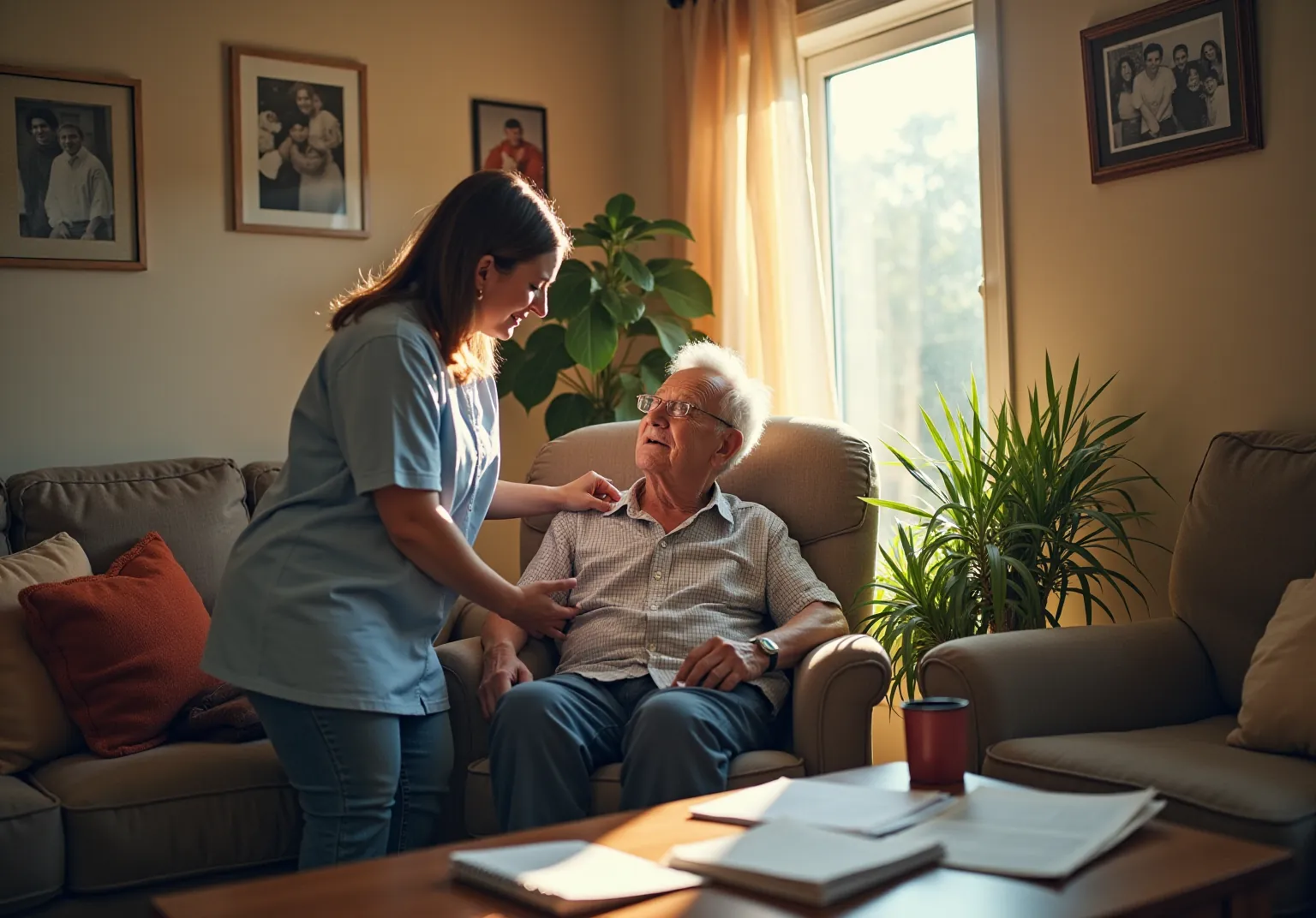
Elderly individuals often face the dual challenges of isolation and inadequate support, which can lead to significant emotional and mental health issues. These challenges are not just personal; they affect the overall well-being of our aging population. Home help companions emerge as a vital resource in this context, offering personalized companionship that addresses these concerns and enhances the overall quality of life for seniors.
But how do these companions effectively combat loneliness and foster a sense of belonging in an increasingly disconnected world? This article explores ten impactful ways home help companions can transform the lives of older adults, ensuring they feel valued, supported, and engaged in their daily activities.
Happy to Help Caregiving: Personalized Companionship for Seniors
Elderly individuals often face the challenge of isolation and lack of support, which can significantly impact their emotional well-being. This sense of loneliness not only affects their mental health but also makes daily tasks more daunting.
Happy to Assist Caregiving addresses this issue by providing home help companions that deliver customized companionship tailored to each client's unique needs and desires. This approach fosters a sense of belonging and enhances emotional well-being, allowing older adults to comfortably navigate daily challenges in their own homes with the assistance of home help companions.
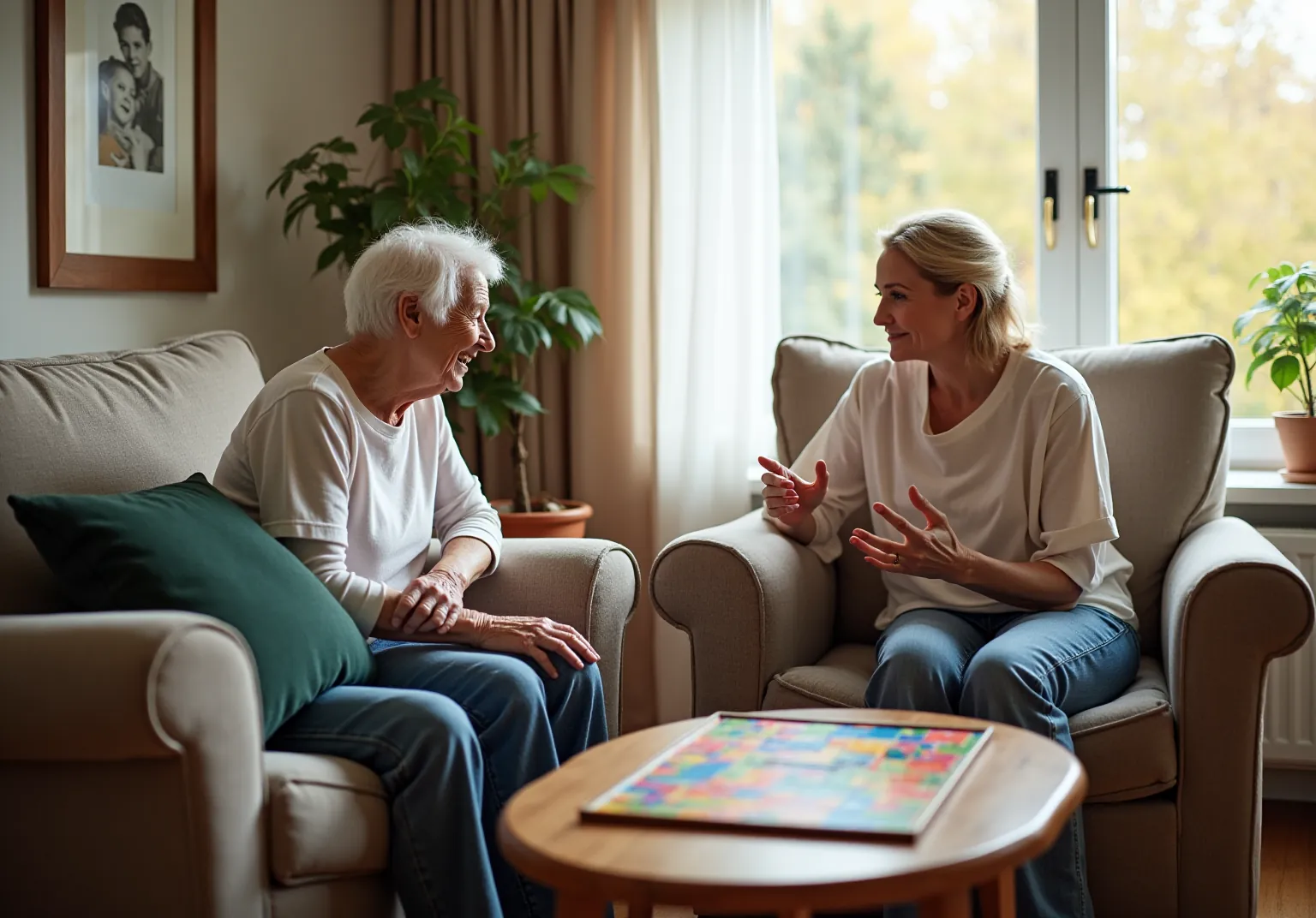
Caregivers are trained to engage clients in meaningful conversations and activities, creating a supportive environment that promotes independence and happiness. By focusing on the distinct requirements of each individual, Happy to Assist Caregiving ensures that older adults feel valued and understood, which is essential for their overall quality of life with the support of home help companions.
Enhanced Social Interaction: Combatting Loneliness and Isolation
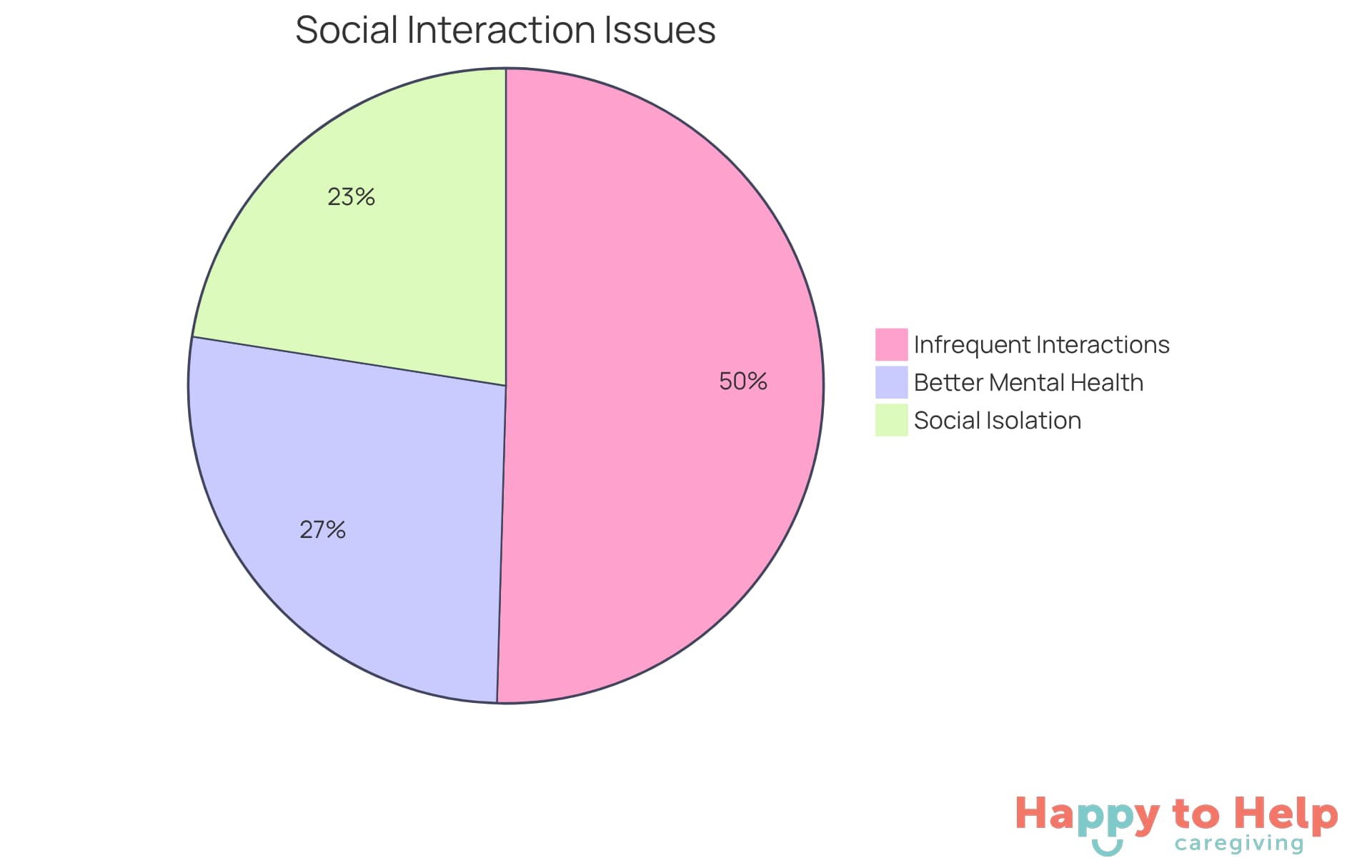
Home help companions provide companionship care to address a significant problem: loneliness and isolation among older adults. These issues can lead to serious mental health risks, including depression. Research shows that lonely seniors are twice as likely to experience depression, and about 25% of older individuals face social isolation. This lack of social contact is particularly concerning, as 56% of those with fair or poor mental well-being report infrequent interactions, compared to just 30% of those with better mental health.
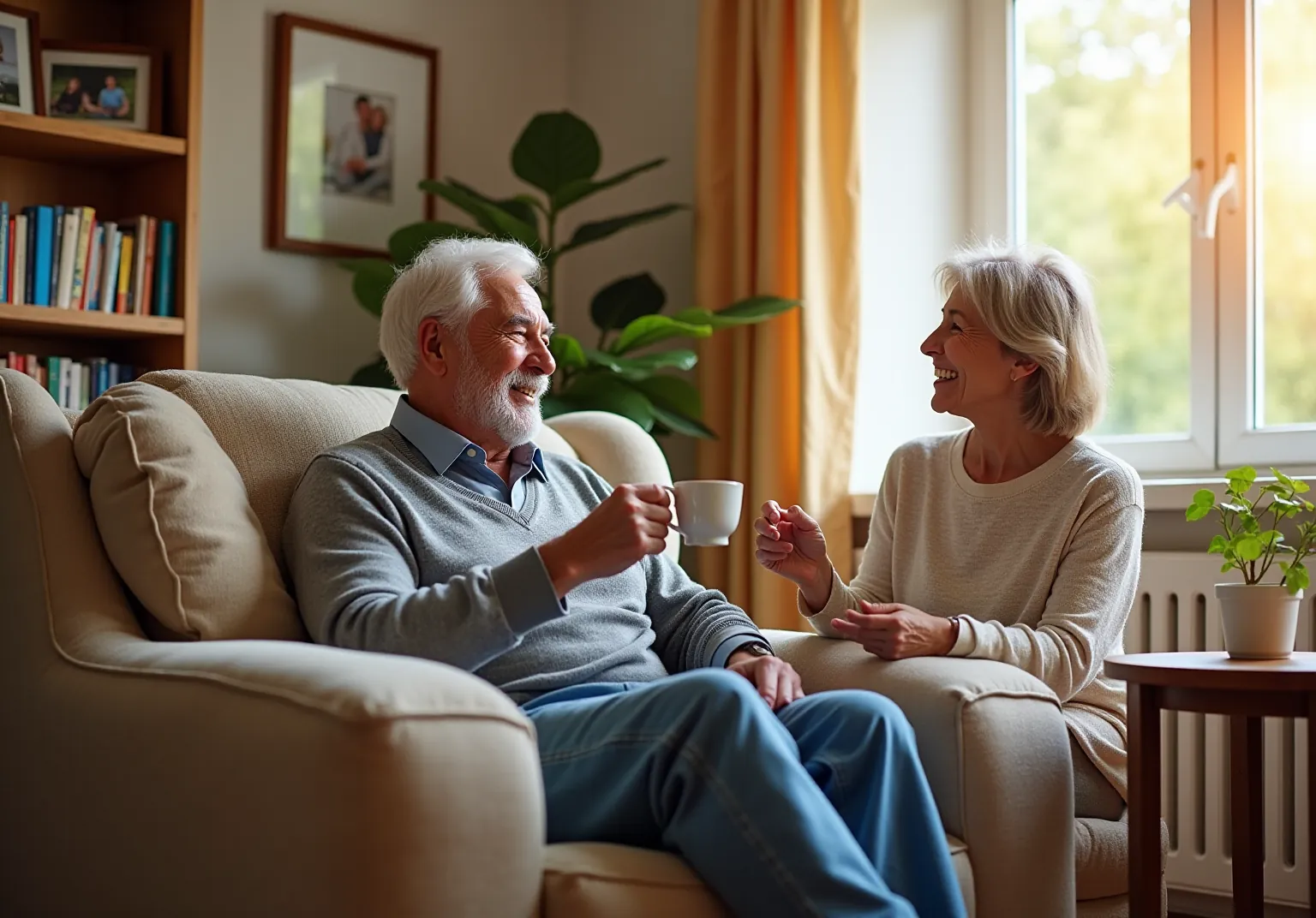
To combat these challenges, frequent visits from home help companions can offer older adults opportunities for meaningful conversations, storytelling, and enjoyable activities. This regular social engagement not only boosts mood but also significantly enhances mental well-being. By nurturing these relationships and offering emotional support, home help companions assist elderly individuals in maintaining a sense of belonging and purpose, ultimately improving their quality of life.
The U.S. Surgeon General has labeled loneliness as an 'epidemic,' highlighting the urgent need for companionship care. Caregivers can implement practical solutions by prioritizing social interactions and fostering connections that enrich the lives of older adults.
Customized Care Plans: Tailoring Support to Individual Needs
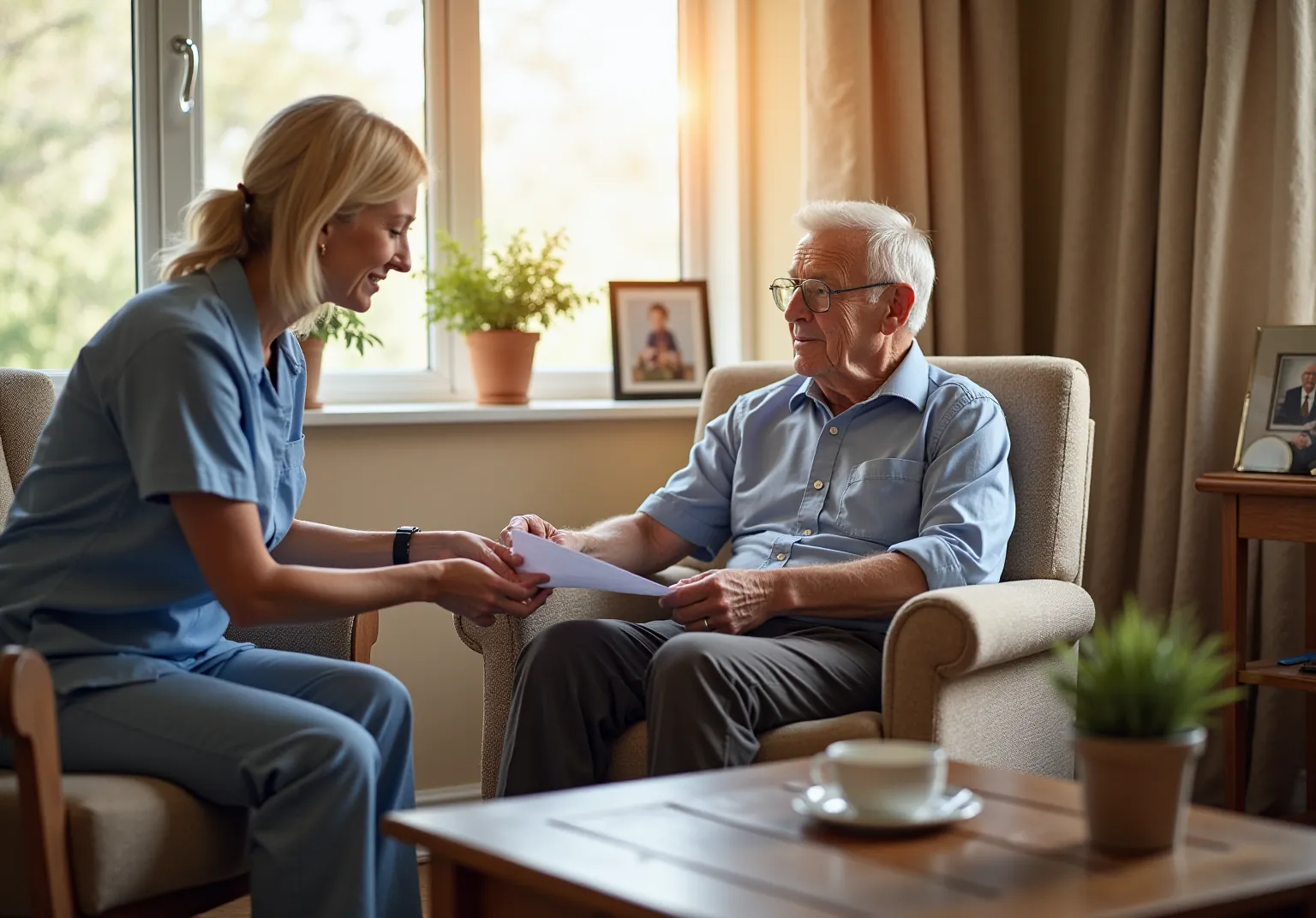
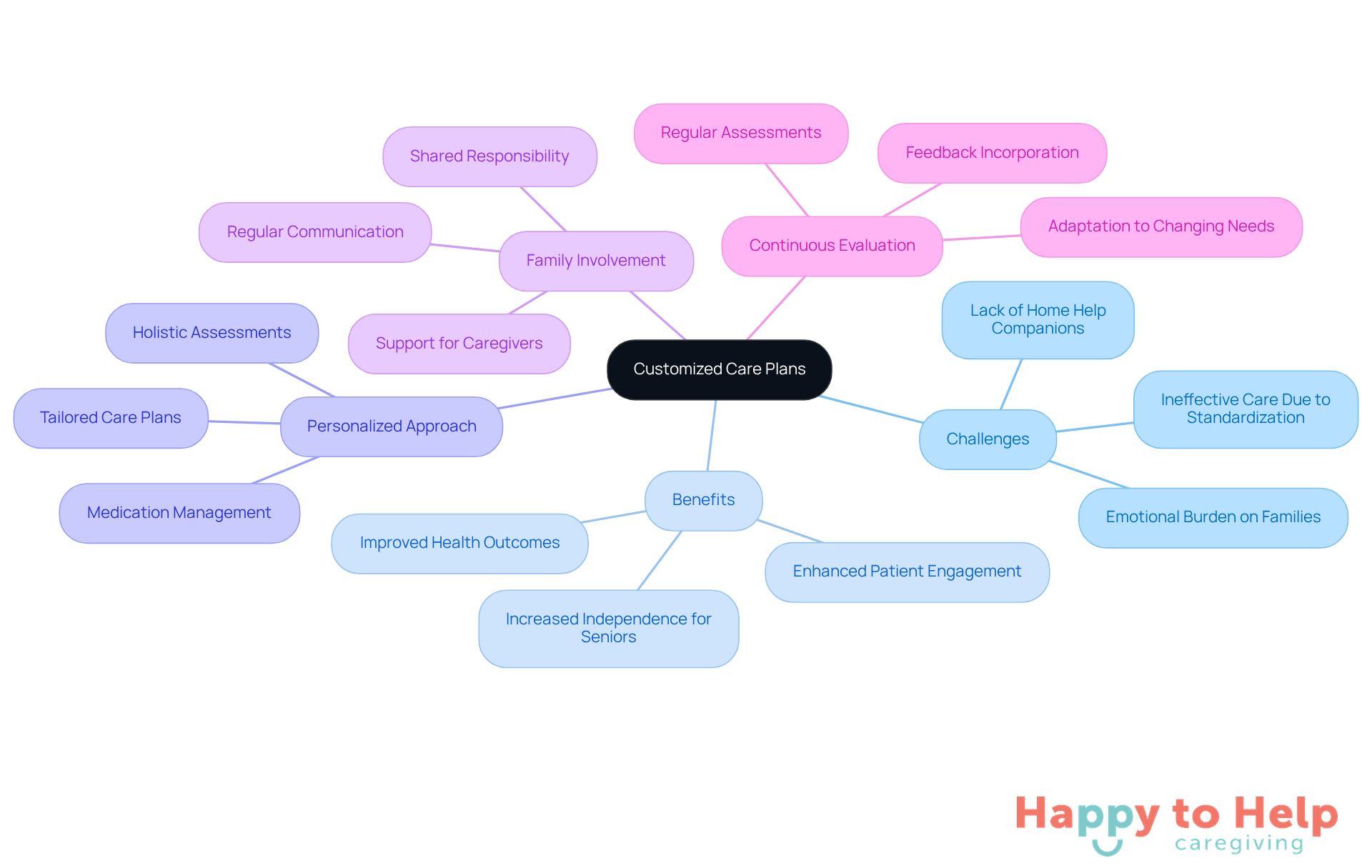
At Happy to Help Caregiving, the challenge of providing adequate care for elderly individuals often stems from a lack of home help companions who can provide personalized attention. Many caregivers struggle to meet the unique needs of each client, which can lead to ineffective care and diminished quality of life.
This issue is significant; without tailored care plans, elderly individuals may not receive the support they need to thrive. Research shows that older adults receiving personalized care experience better health outcomes. For instance, a 2019 clinical study led by Dr. Tinetti found that the Patient Priorities Care (PPC) model decreased treatment burden and improved patient engagement.
To address these challenges, personalized care plans are essential. At Happy to Help Caregiving, we meticulously craft these plans, considering each client's distinct preferences, health conditions, and lifestyle choices. This customized approach allows home help companions to provide targeted assistance that seamlessly integrates into the elder's daily activities. Regular evaluations and modifications to these plans ensure that the care delivered remains relevant and effective, greatly enhancing the elderly individual's quality of life and promoting their independence.
Moreover, involving families in the care process fosters shared responsibility, further enhancing the effectiveness of personalized care. As Wisdom Senior Care states, "Trust is definitely involved in it. Hence, we put a lot of emphasis on understanding and compassion as the basis of our services." Ultimately, home help companions provide personalized care that empowers older adults to maintain control over their lives while receiving the necessary assistance to thrive.
Safety Assurance: Peace of Mind for Families
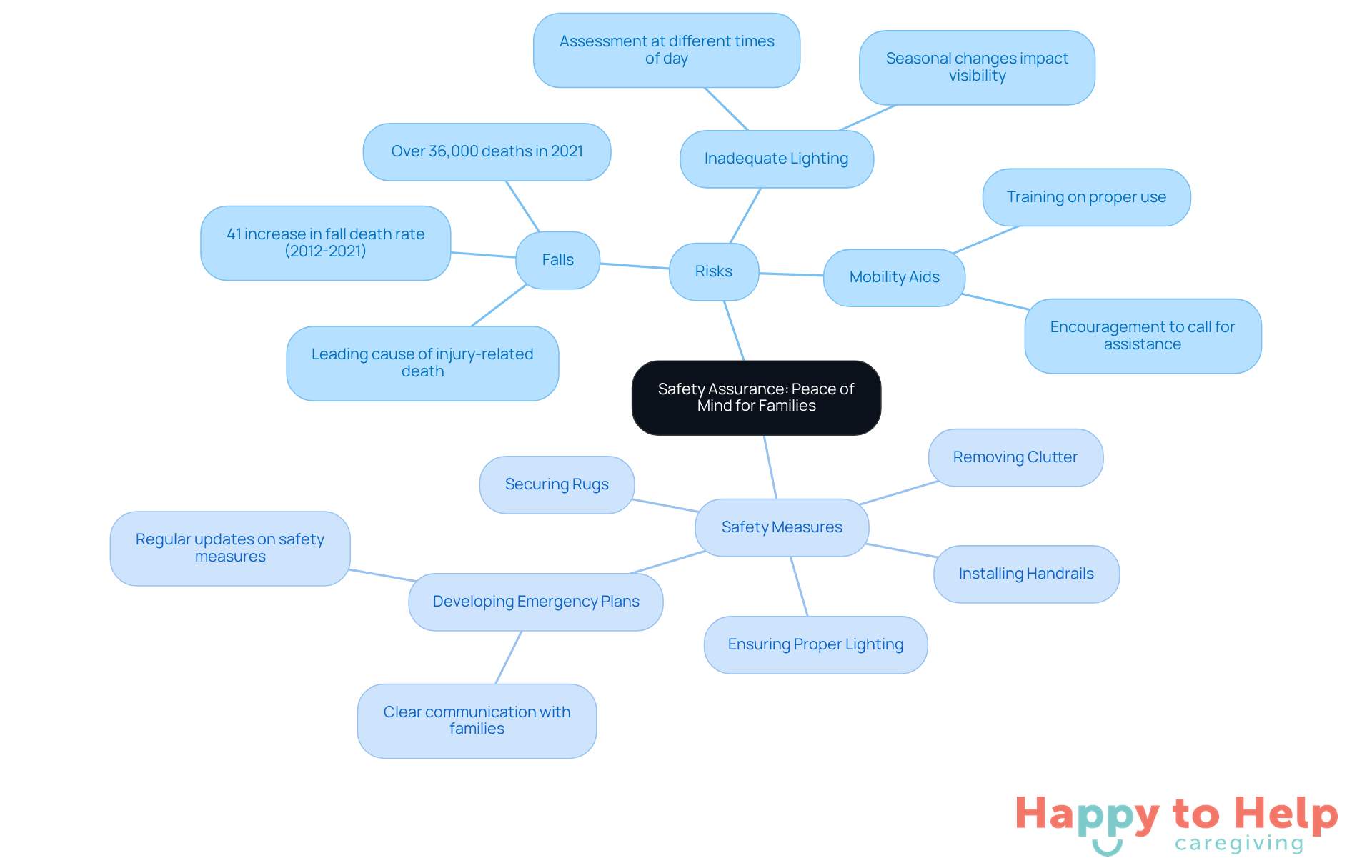
Safety is a significant concern for families regarding home help companions for elderly individuals. The risks associated with falls and injuries are alarming; in fact, falls are the leading cause of injury-related death among older adults, with over 36,000 deaths reported in 2021. Between 2012 and 2021, the fall death rate for older adults surged by 41%. These statistics highlight the urgent need for effective safety measures in caregiving.
To address these challenges, Happy to Help Caregiving prioritizes safety through thorough assessments of the home environment. Caregivers are trained to identify potential hazards such as:
- Clutter
- Inadequate lighting
- The necessity for mobility aids
This proactive approach includes practical strategies like:
- Removing clutter
- Securing rugs
- Installing handrails
- Ensuring proper lighting
By implementing these modifications, home help companions can create a secure living environment that significantly reduces the likelihood of accidents.
Moreover, caregivers develop clear emergency plans and maintain open communication with families about safety measures. This not only nurtures a safe atmosphere but also provides families with peace of mind, knowing their loved ones are in capable hands. With a commitment to ongoing oversight and adjustment of safety protocols, Happy to Help Caregiving offers home help companions to ensure that elderly individuals can thrive in their homes while minimizing risks associated with aging.
Promoting Independence: Supporting Seniors' Autonomy
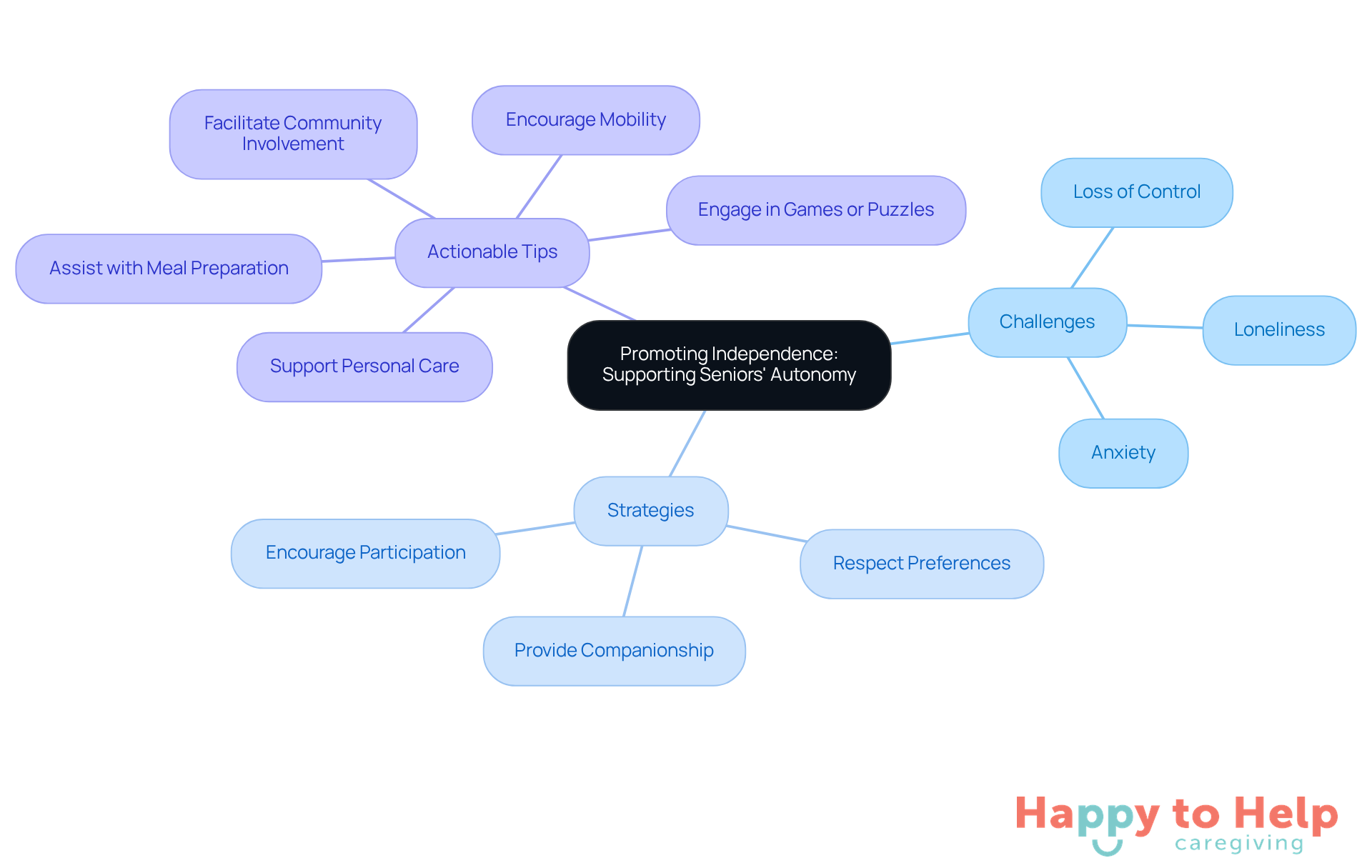
Promoting independence is a significant challenge faced by caregivers of older adults. Many elderly individuals struggle with feelings of loss of control over their daily lives, which can lead to loneliness and anxiety. This lack of independence can negatively impact their mental and emotional well-being.
To address this issue, caregivers can encourage older adults to participate in daily activities as much as possible. This support can include assistance with meal preparation, personal care, and mobility, all while respecting the individual's preferences and abilities. By fostering a sense of independence, caregivers help older adults feel empowered and appreciated.
Research shows that older adults who feel in control of their lives are often happier, more engaged, and mentally sharper. Consistent companionship from home help companions also plays a crucial role in promoting mental and emotional well-being, significantly reducing feelings of isolation.
Here are some actionable tips for caregivers:
- Encourage participation in daily tasks to enhance a sense of control.
- Respect individual preferences to foster empowerment.
- Provide companionship to combat loneliness.
Through customized support, home help companions not only assist with daily tasks but also foster a nurturing environment where older adults can thrive. This approach ultimately leads to an enhanced quality of life.
Emotional Support: Enhancing Quality of Life
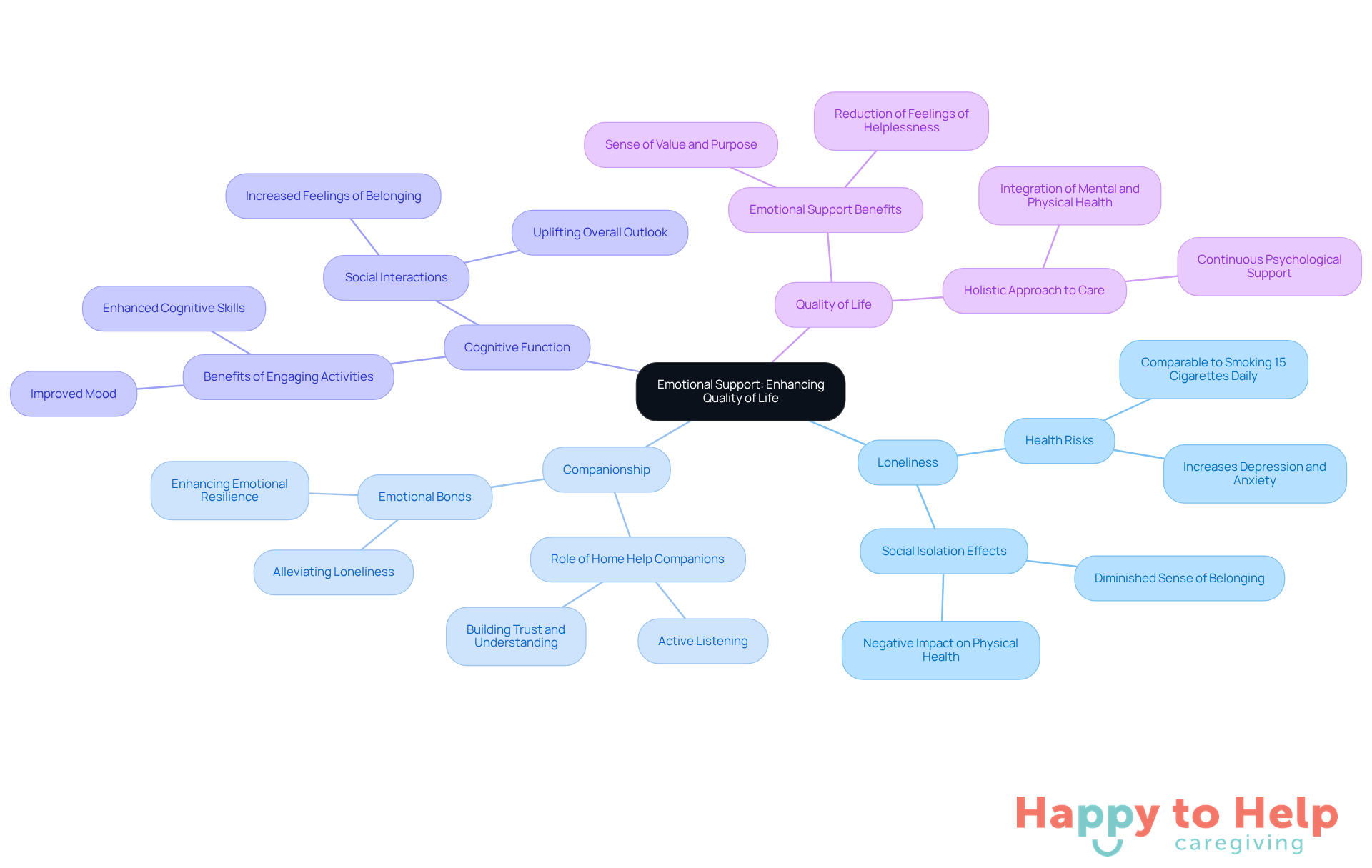
Loneliness and anxiety are significant challenges faced by the elderly, often exacerbated by social isolation. Research indicates that prolonged isolation can be as detrimental to well-being as smoking or obesity, with loneliness posing risks comparable to smoking 15 cigarettes daily. This highlights the urgent need for emotional support in caregiving.
To combat these issues, home help companions at Happy to Help Caregiving are trained to actively listen and provide companionship, which fosters trust and understanding. This emotional bond is crucial in alleviating feelings of loneliness and anxiety. Regular social interactions and engaging activities not only uplift mood but also enhance cognitive function, leading to a more positive outlook on life.
For instance, older adults who participate in group activities frequently report increased feelings of belonging and purpose, which are essential for their emotional well-being. As noted by Angel Care, "Emotional support gives older adults a sense of value, being heard and understood, and it may also diminish feelings of isolation and loneliness."
By nurturing these emotional connections, home help companions can significantly enhance the overall quality of life for elderly clients, ensuring they feel valued and understood.
Flexible Care Options: Adapting to Changing Needs
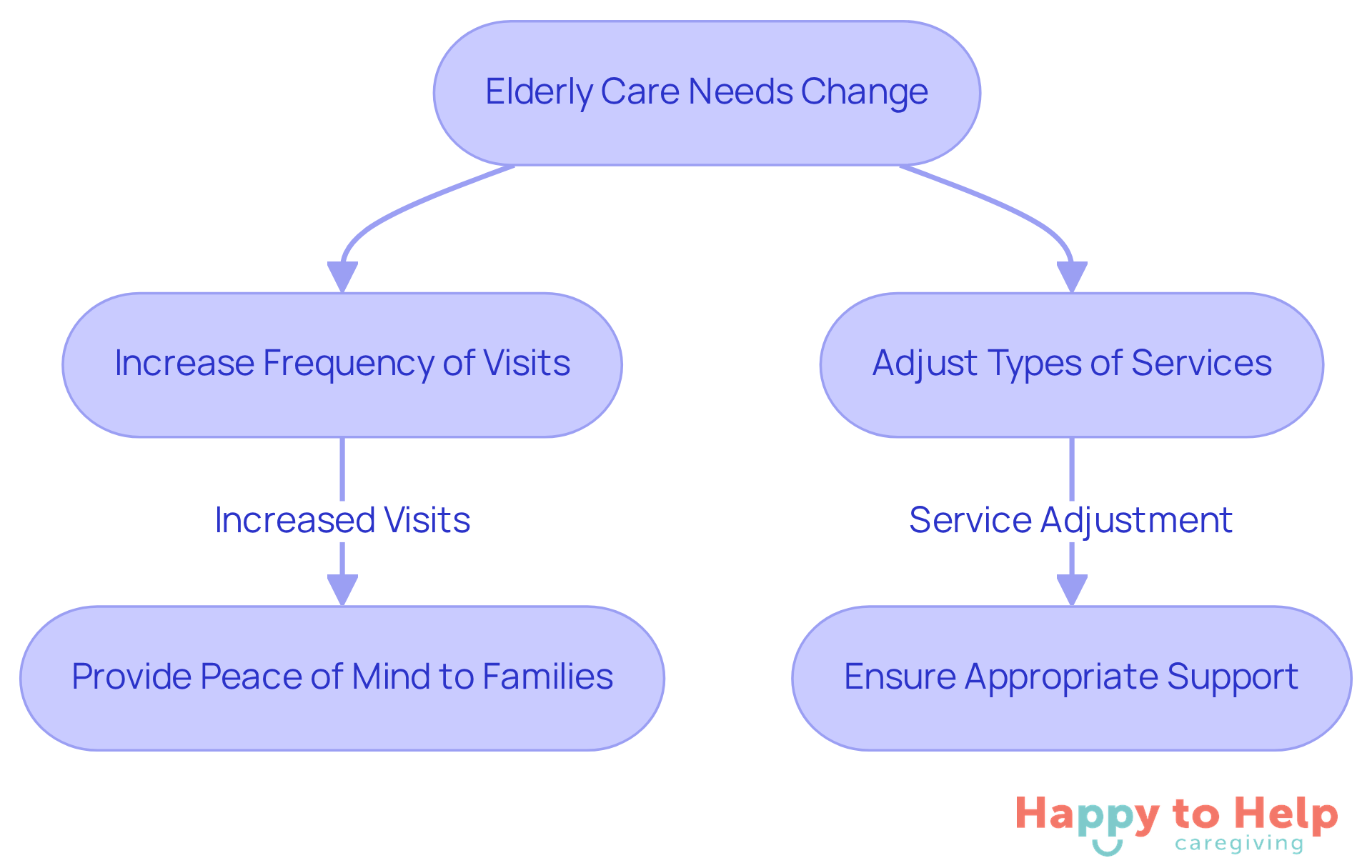
As elderly individuals age, their care needs can change significantly. This evolving situation poses a challenge for caregivers who must ensure that their clients receive the appropriate level of support. Without the ability to adapt, families may worry about whether their loved ones are getting the best care possible.
To address this issue, Happy to Help Caregiving offers adaptable care choices that can be modified as needs evolve. Caregivers are equipped to:
- Increase the frequency of visits
- Adjust the types of services provided
This flexibility not only ensures that older adults receive the right support from home help companions but also provides families with peace of mind, knowing their loved ones are in capable hands.
Continuity of Care: Reliable Support for Recovery
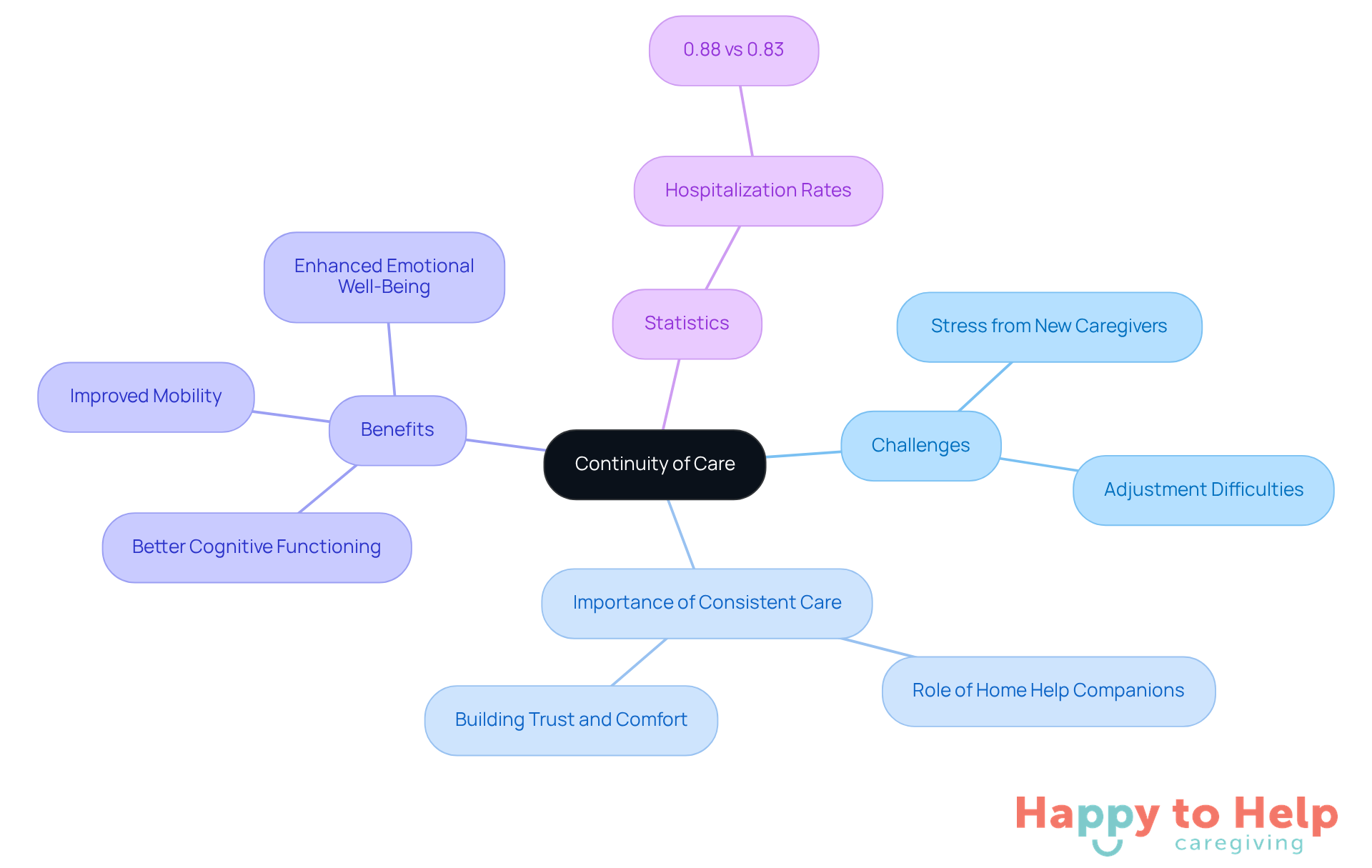
Continuity of care poses a significant challenge for seniors, especially those recovering from medical procedures or health setbacks. The lack of consistent support can lead to increased stress and hinder recovery. Seniors often face the daunting task of adjusting to new caregivers, which can disrupt their comfort and trust.
Happy to Help Caregiving addresses this issue by emphasizing the importance of consistent assistance from home help companions. When caregivers understand each client's unique needs and preferences, it fosters a sense of trust and comfort. This continuity not only alleviates the stress associated with new support providers but also empowers elderly individuals to regain their autonomy and confidence more effectively.
Research indicates that older adults receiving reliable, consistent care experience notable benefits. They often show improved mobility, better cognitive functioning, and enhanced emotional well-being. Familiar caregivers are adept at monitoring changes in mood and health, ensuring timely interventions that promote recovery. As one healthcare expert noted, "Lower continuity of care is linked to higher rates of hospitalization and increased healthcare spending." This underscores the critical role stable provider relationships play in minimizing unnecessary medical interventions.
Moreover, beneficiaries with lower continuity have higher annual hospitalization rates (0.88 vs 0.83), highlighting the significant impact of consistent support. Ultimately, having home help companions greatly enhances the recovery process, allowing older adults to focus on healing in a supportive and understanding environment.
Engagement Activities: Keeping Seniors Active and Involved
Engagement activities pose a significant challenge for caregivers of older adults. Many elderly individuals may struggle with feelings of isolation and disengagement, which can negatively impact their mental and physical health. Without regular stimulation, they risk losing a sense of purpose and joy in their daily lives.
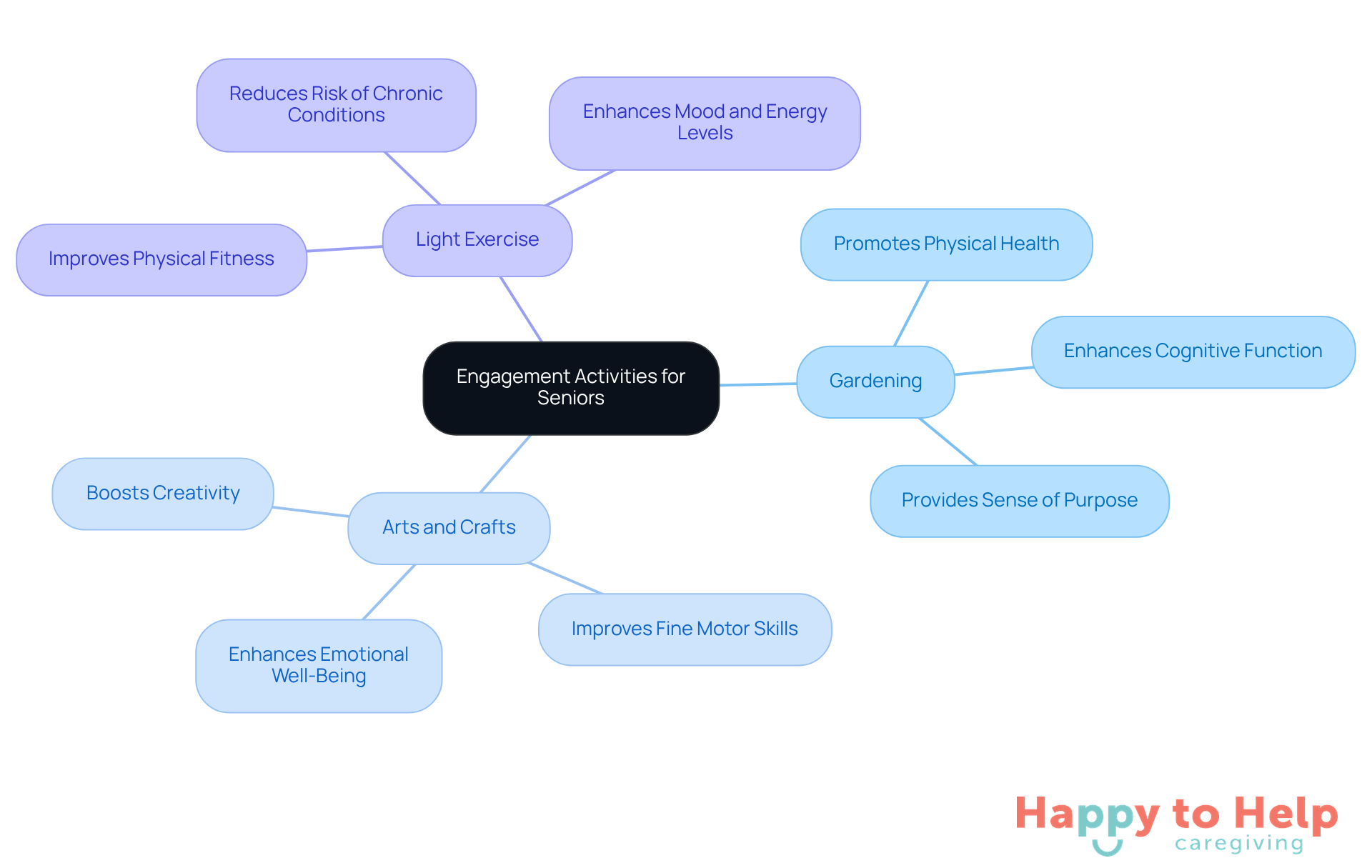
To combat this issue, caregivers can motivate older adults to participate in hobbies, games, and social events that stimulate both their minds and bodies. Activities such as:
- Gardening
- Arts and crafts
- Light exercise
not only promote physical health but also enhance cognitive function and emotional well-being. By keeping elderly individuals active and involved, caregivers play a crucial role in helping them maintain a fulfilling and engaged lifestyle.
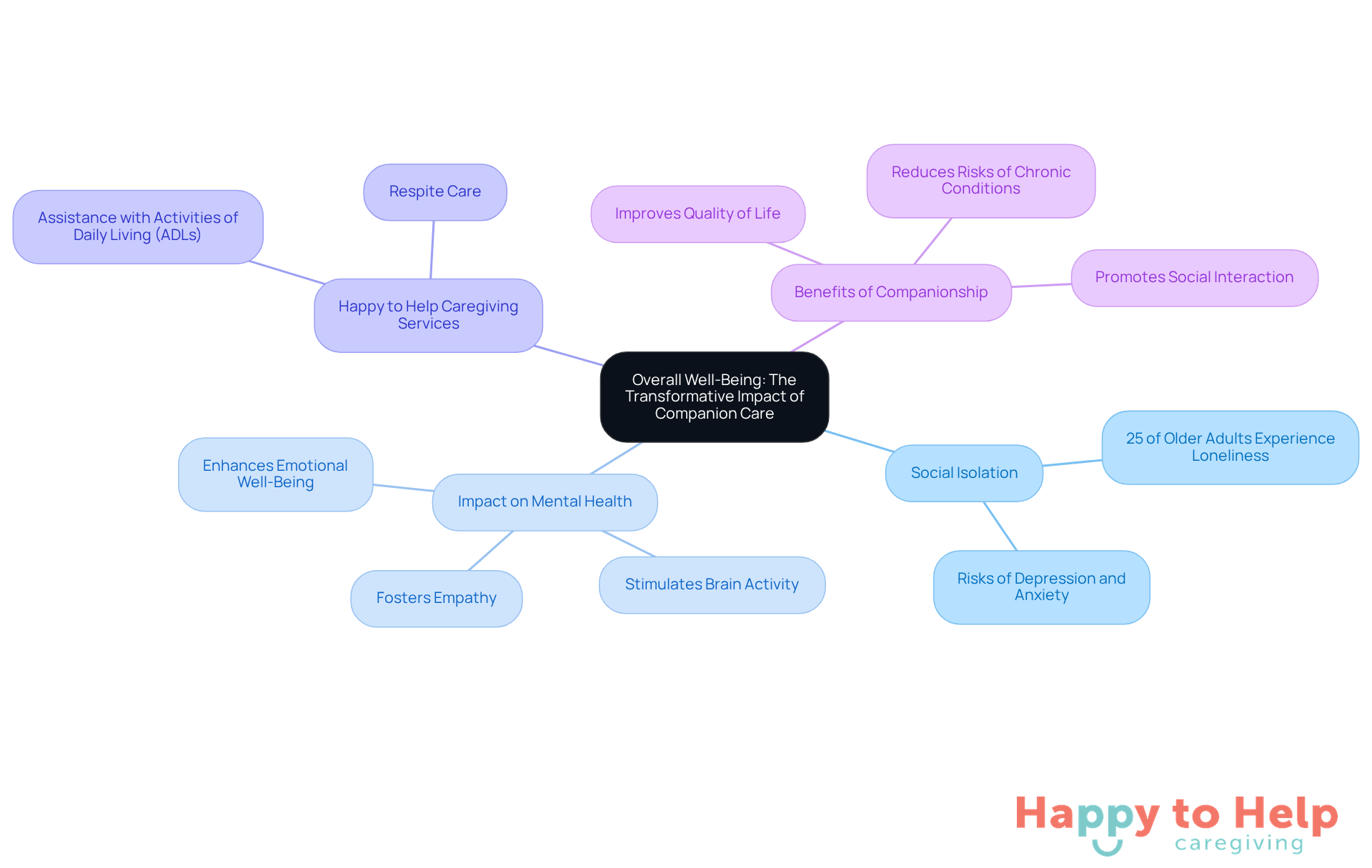
Overall Well-Being: The Transformative Impact of Companion Care
Social isolation is a significant issue for older adults, with nearly 25% experiencing feelings of loneliness and depression. This isolation can lead to serious mental health challenges, diminishing their overall quality of life. The implications are profound: without regular companionship, many elderly individuals may struggle with emotional well-being and social involvement.
Happy to Help Caregiving addresses this pressing problem through its services for home help companions. By fostering a supportive environment, caregivers promote independence and happiness, leading to transformative outcomes. Studies show that regular companionship can significantly enhance mental well-being, stimulate the brain, and foster empathy, all of which are crucial for maintaining health in later years.
Families can find peace of mind knowing their loved ones receive compassionate, personalized care that enriches their lives. Happy to Help Caregiving offers a range of services, including:
- Assistance with activities of daily living (ADLs)
- Respite care
This holistic approach emphasizes the vital role of home help companions in combating isolation and enhancing overall well-being.
Moving Forward with Home Help Companions Enhance Seniors
Home help companions address a significant problem: the loneliness and isolation faced by many seniors. This issue not only affects their emotional well-being but also impacts their overall quality of life. Without adequate support, older adults may struggle with feelings of abandonment and a lack of purpose.
The implications of this loneliness are profound. Seniors often experience a decline in mental health, which can lead to further isolation and a decrease in physical health. Families may feel helpless, worrying about their loved ones' emotional state and safety at home. This situation calls for immediate attention and action.
The solution lies in the transformative power of personalized caregiving services. Home help companions provide tailored care plans that focus on companionship, safety, and emotional support. By fostering regular social interactions and engaging activities, caregivers can significantly improve seniors' mental health and overall well-being.
To effectively implement these solutions, families should consider the following actionable tips:
- Prioritize companionship: Regular visits and conversations can make a world of difference.
- Engage in activities: Encourage participation in hobbies or social groups to promote a sense of belonging.
- Focus on safety: Ensure that the home environment is secure and conducive to independence.
Recognizing the importance of customized care that adapts to the evolving needs of seniors is essential. As society confronts the challenges of aging and isolation, investing in personalized caregiving services becomes imperative. By prioritizing companionship and tailored support, families can help their loved ones lead fulfilling, enriched lives while navigating the complexities of aging.
https://iframe.tely.ai/cta/eyJhcnRpY2xlX2lkIjogIjY5Mjc5NGVhMjI0NDc2YzA3YjhmODlhZiIsICJjb21wYW55X2lkIjogIjY4ZWU1ZGNhNzMxNzYyNTU3ZjNjOTVjMSIsICJpbmRleCI6IG51bGwsICJ0eXBlIjogImFydGljbGUifQ==Frequently Asked Questions
What is the main purpose of Happy to Help Caregiving?
Happy to Help Caregiving aims to provide personalized companionship for seniors, addressing the challenges of isolation and lack of support that can impact their emotional well-being.
How do home help companions assist elderly individuals?
Home help companions engage clients in meaningful conversations and activities, creating a supportive environment that promotes independence and happiness while addressing each client's unique needs.
What are the mental health risks associated with loneliness and isolation among older adults?
Loneliness and isolation can lead to serious mental health risks, including depression. Research indicates that lonely seniors are twice as likely to experience depression, and about 25% of older individuals face social isolation.
How do home help companions combat loneliness and isolation?
Home help companions provide regular visits that offer opportunities for meaningful conversations, storytelling, and enjoyable activities, which can boost mood and enhance mental well-being.
What is the significance of customized care plans at Happy to Help Caregiving?
Customized care plans are essential to meet the unique needs of elderly individuals, ensuring they receive targeted assistance that integrates seamlessly into their daily activities, ultimately improving their quality of life.
How are personalized care plans developed at Happy to Help Caregiving?
Personalized care plans are meticulously crafted by considering each client's distinct preferences, health conditions, and lifestyle choices, with regular evaluations and modifications to ensure effectiveness.
What role do families play in the care process at Happy to Help Caregiving?
Involving families in the care process fosters shared responsibility and enhances the effectiveness of personalized care, ensuring that the elderly individual receives comprehensive support.
What does the U.S. Surgeon General say about loneliness among seniors?
The U.S. Surgeon General has labeled loneliness as an 'epidemic,' highlighting the urgent need for companionship care to address this significant issue among older adults.
List of Sources
- Happy to Help Caregiving: Personalized Companionship for Seniors
- Meela launches and secures $3.5M to tackle loneliness in older adults (https://mobihealthnews.com/news/meela-launches-and-secures-35m-tackle-loneliness-older-adults)
- Companionship Services: Combatting Senior Loneliness in 2025 (https://bestsunshinehomecare.com/companionship-services-senior-loneliness-2025)
- The Incredible Benefits of Home Care, in 7 Amazing Stats - Companions For Seniors (https://companionsforseniors.com/2019/08/benefits-home-care-amazing-stats-trends-reports)
- AI personal companions offers low-tech way to combat loneliness in senior living residents (https://mcknightsseniorliving.com/news/ai-personal-companions-offers-low-tech-way-to-combat-loneliness-in-senior-living-residents)
- Some Important Statistics and In-Home Companion Care (https://americareinfo.com/beach-cities/articles/in-home-companion-care-some-important-facts-on-aging-to-consider)
- Enhanced Social Interaction: Combatting Loneliness and Isolation
- The Unbeatable Benefits of Companion Care for Seniors (https://comforcare.com/massachusetts/canton/resources/blog/the-unbeatable-benefits-of-companion-care-for-seniors)
- Trends in Loneliness Among Older Adults from 2018-2023 (https://ihpi.umich.edu/national-poll-healthy-aging/reports-and-resources/trends-loneliness-among-older-adults-2018-2023)
- 10 Ways Companion Caregivers Enhance Seniors' Quality of Life - Happy To Help (https://happytohelpcaregiving.com/10-ways-companion-caregivers-enhance-seniors-quality-of-life)
- Addressing Social Isolation and Loneliness in Older Adults (https://behavioralhealthnews.org/addressing-social-isolation-and-loneliness-in-older-adults)
- How Companion Care Can Help Combat Senior Isolation and Loneliness | HealthMax Home Health Care (https://healthmaxmn.com/blog/how-companion-care-can-help-combat-senior-isolation-and-loneliness)
- Customized Care Plans: Tailoring Support to Individual Needs
- Novel Care Model May Improve Outcomes for Older Adults With Multiple Chronic Conditions (https://consultqd.clevelandclinic.org/novel-care-model-may-improve-outcomes-for-older-adults-with-multiple-chronic-conditions)
- Personalizing Care Plans for Seniors: Why One Size Doesn't Fit All (https://promedcareinc.com/personalizing-care-plans-for-seniors-why-one-size-doesnt-fit-all)
- The Importance of Customized Care Plans and Personal Attention | Inspir (https://inspirseniorliving.com/senior-living-resources/the-importance-of-customized-care-plans-and-personal-attention)
- Importance of Personalized Senior Home Care in Burlington NC (https://wisdomseniorcare.com/the-importance-of-personalized-care-plans-for-seniors)
- The Importance of Personalized Care Plans when Aging in Place (https://kendalathome.org/blog/the-importance-of-personalized-care-plans-when-aging-in-place)
- Safety Assurance: Peace of Mind for Families
- As falling deaths rise for older adults, how home safety can make a difference (https://denver7.com/news/local-news/as-falling-deaths-rise-for-older-adults-how-home-safety-can-make-a-difference)
- Safety Measures at Assisted Living Communities (https://usnews.com/senior-living/articles/assisted-living-facility-safety-checklist)
- How to ensure patient safety at home - All Heart Homecare agency (https://allheartcare.com/how-to-ensure-patient-safety-at-home)
- In-Home Care Continuously Supports Senior Safety (https://homehelpershomecare.com/sc-valley/community-blog/2025/august/how-in-home-care-continuously-supports-senior-safety)
- Promoting Independence: Supporting Seniors' Autonomy
- Caregiver Tips to Promote Senior Independence (https://seniorhelpers.com/ky/louisville/resources/blogs/2025-11-08)
- Importance of maintaining independence for the elderly (https://elder.org/care-guides/elderly-mobility/maintaining-independence)
- Healthy Aging Month: Encouraging Independence and Wellness for Seniors (https://lifesathomecare.com/healthy-aging-month-encouraging-independence-and-wellness-for-seniors)
- Independence and older adults: Importance and promoting it (https://medicalnewstoday.com/articles/independence-and-the-elderly)
- Families Prefer In-Home Care To Senior Living – Yet Struggle To Identify Needed Support (https://homehealthcarenews.com/2025/11/families-prefer-in-home-care-to-senior-living-yet-struggle-to-identify-needed-support)
- Emotional Support: Enhancing Quality of Life
- Psychological Support for Seniors: Why Mental Wellness Matters in Later Life | Home Care agency in New York (https://angelcareny.com/psychological-support-for-seniors-why-mental-wellness-matters-in-later-life)
- Importance of Emotional Support (https://comforcare.com/massachusetts/canton/resources/blog/importance-of-emotional-support)
- Mental Health Support for Seniors: The Role of In-Home Caregivers (https://homeinstead.com/home-care/usa/in/kendallville/871/news-and-media/mental-health-support-for-seniors-the-role-of-in-home-caregivers)
- Emotional support key to protecting older adults against depression (https://unsw.edu.au/news/2025/09/neighbourhoods-may-hold-key-slowing-cognitive-decline)
- The Power of Connection: Social Engagement and Mental Health – In Home Senior Care Northeast Florida (https://agingtrue.org/the-power-of-connection-social-engagement-and-mental-health)
- Flexible Care Options: Adapting to Changing Needs
- The Incredible Benefits of Home Care, in 7 Amazing Stats - Companions For Seniors (https://companionsforseniors.com/2019/08/benefits-home-care-amazing-stats-trends-reports)
- 28 Senior Care Statistics: In-Home & Assisted Living | Shortlister (https://myshortlister.com/insights/senior-care-statistics)
- Medicare Telehealth Waivers Expire With Potential ‘Big Impact’ for Senior Living Operators (https://seniorhousingnews.com/2025/10/01/medicare-telehealth-waivers-expire-with-potential-big-impact-for-senior-living-operators)
- The Benefits of In-Home Care for Seniors: Why Aging at Home is the Best Option - At Home Care Inc (https://at-home-care.com/the-benefits-of-in-home-care-for-seniors-why-aging-at-home-is-the-best-option)
- Flexible Care Models Give Home Care Clients ‘What They Want When They Want It’ (https://homehealthcarenews.com/2025/10/flexible-care-models-give-home-care-clients-what-they-want-when-they-want-it)
- Continuity of Care: Reliable Support for Recovery
- Continuity of Care: The Key to Safer, Happier Senior Living - Surework Solutions (https://sureworksolutions.com/2025/11/17/continuity-of-care-the-key-to-safer-happier-senior-living)
- The Power of Caregiver Quotes: Nurturing the Soul (https://humancareny.com/blog/power-of-caregiver-quotes-nurturing-soul)
- Continuity of Care and Healthcare Utilization in Older Adults with Dementia in Fee-for-Service Medicare - PMC (https://pmc.ncbi.nlm.nih.gov/articles/PMC5061498)
- 20 Inspirational Senior Care Quotes (https://1plus1cares.com/20-inspirational-senior-care-quotes)
- Number of Family Caregivers Supporting Older Adults Increased Nearly One-Third Between 2011 and 2022 | Johns Hopkins Bloomberg School of Public Health (https://publichealth.jhu.edu/2025/number-of-family-caregivers-supporting-older-adults-increased-nearly-one-third-between-2011-and-2022)
- Engagement Activities: Keeping Seniors Active and Involved
- Engaging in hobbies boosts mental well-being for seniors, study finds (https://news-medical.net/news/20230913/Engaging-in-hobbies-boosts-mental-well-being-for-seniors-study-finds.aspx)
- Leisure engagement in older age is related to objective and subjective experiences of aging - PMC (https://pmc.ncbi.nlm.nih.gov/articles/PMC10876530)
- Hobbies protect older people from age-related decline in mental health and wellbeing - NAMI North Carolina (https://naminc.org/hobbies-protect-older-people-from-age-related-decline-in-mental-health-and-wellbeing-2)
- A Better Solution Home Care (https://abs.care/Importance-of-staying-informed-and-engaged-in-current-affairs-for-seniors)
- The Impact of Group Activities on Senior Well-Being (https://rosewood-nursing.com/post/the-impact-of-group-activities-on-senior-well-being)
- Overall Well-Being: The Transformative Impact of Companion Care
- The Impact of Elderly Companion Services (https://h2hhc.com/blog/elderly-companion-services)
- The Incredible Benefits of Home Care, in 7 Amazing Stats - Companions For Seniors (https://companionsforseniors.com/2019/08/benefits-home-care-amazing-stats-trends-reports)
- Older adults find support through health care companions (https://news-medical.net/news/20250924/Older-adults-find-support-through-health-care-companions.aspx)