For families in our service areas
For families in our service areas, this guide explains caregiving and how non-medical in-home caregiving can support care planning in East Idaho, Treasure Valley & Magic Valley, Northern Wasatch, North Central West Virginia, and Northeast Ohio.
Understanding Social Media
Loneliness is a pervasive issue among older adults, with many in this demographic reporting feelings of isolation that can adversely affect their mental health. This problem is significant, as prolonged loneliness can lead to serious mental health challenges, including depression and anxiety.
However, social media has emerged as a powerful tool for enhancing connections and improving well-being among seniors. By exploring various platforms tailored to their needs, older individuals can maintain relationships and engage in enriching activities that promote lifelong learning and community involvement.
So, how can caregivers effectively harness the potential of social media to combat loneliness and foster a sense of belonging for seniors? Here are some actionable solutions:
- Encourage Exploration: Help seniors navigate social media platforms that suit their interests, such as Facebook for connecting with family or Zoom for virtual gatherings.
- Promote Engagement: Suggest joining online groups or classes that align with their hobbies, fostering both social interaction and personal growth.
- Facilitate Communication: Teach seniors how to use messaging apps to stay in touch with friends and family, making communication easier and more frequent.
By implementing these strategies, caregivers can play a crucial role in reducing loneliness and enhancing the quality of life for older adults.
Happy to Help Caregiving: Enhancing Senior Connections Through Personalized Care
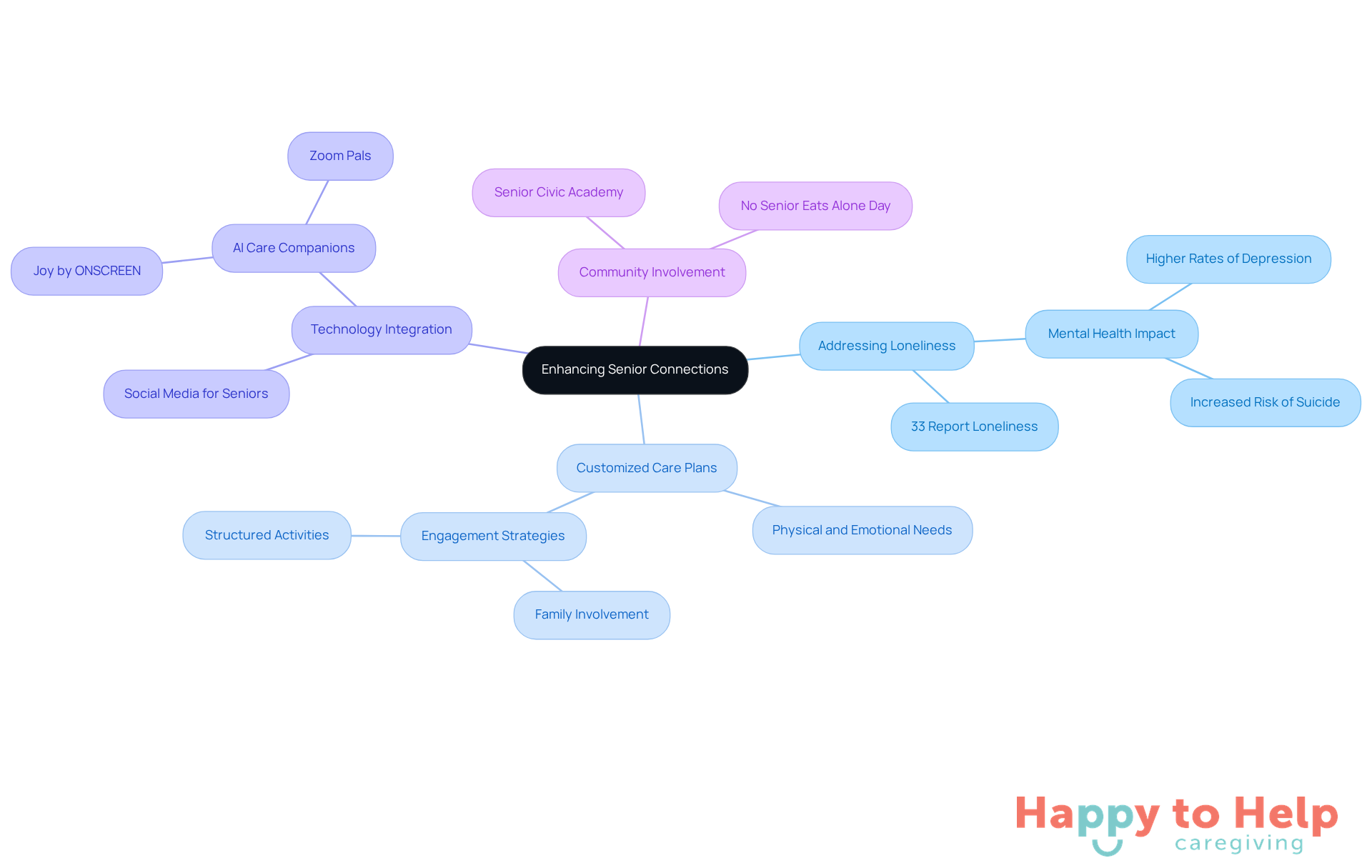
Loneliness among older adults is a pressing issue that caregivers must address. Research indicates that 33% of US adults aged 50 to 80 report experiencing loneliness some of the time or frequently. This emotional isolation can significantly impact mental well-being, making it crucial for caregivers to find effective ways to foster connections.
To combat this problem, caregivers can develop customized care plans that not only meet physical needs but also promote community involvement. By encouraging older adults to engage with family and friends through social media for seniors, caregivers help preserve vital relationships and alleviate feelings of loneliness. Incorporating technology into care practices, such as social media for seniors, enables virtual visits and interpersonal interactions, ultimately improving the overall quality of life for those in their care.
Experts like Costin Tuculescu highlight the role of AI care companions as a bridge for families, enhancing connections and providing peace of mind. Programs such as 'Zoom Pals,' under engAGED, specifically aim to enhance interactions among older adults through structured online activities.
Family caregivers are encouraged to explore various resources and tools for social media for seniors to enhance online interaction. By doing so, they can strengthen connections for older adults, ensuring they remain engaged and supported in their communities.
Facebook: The Leading Social Media Platform for Seniors in 2025
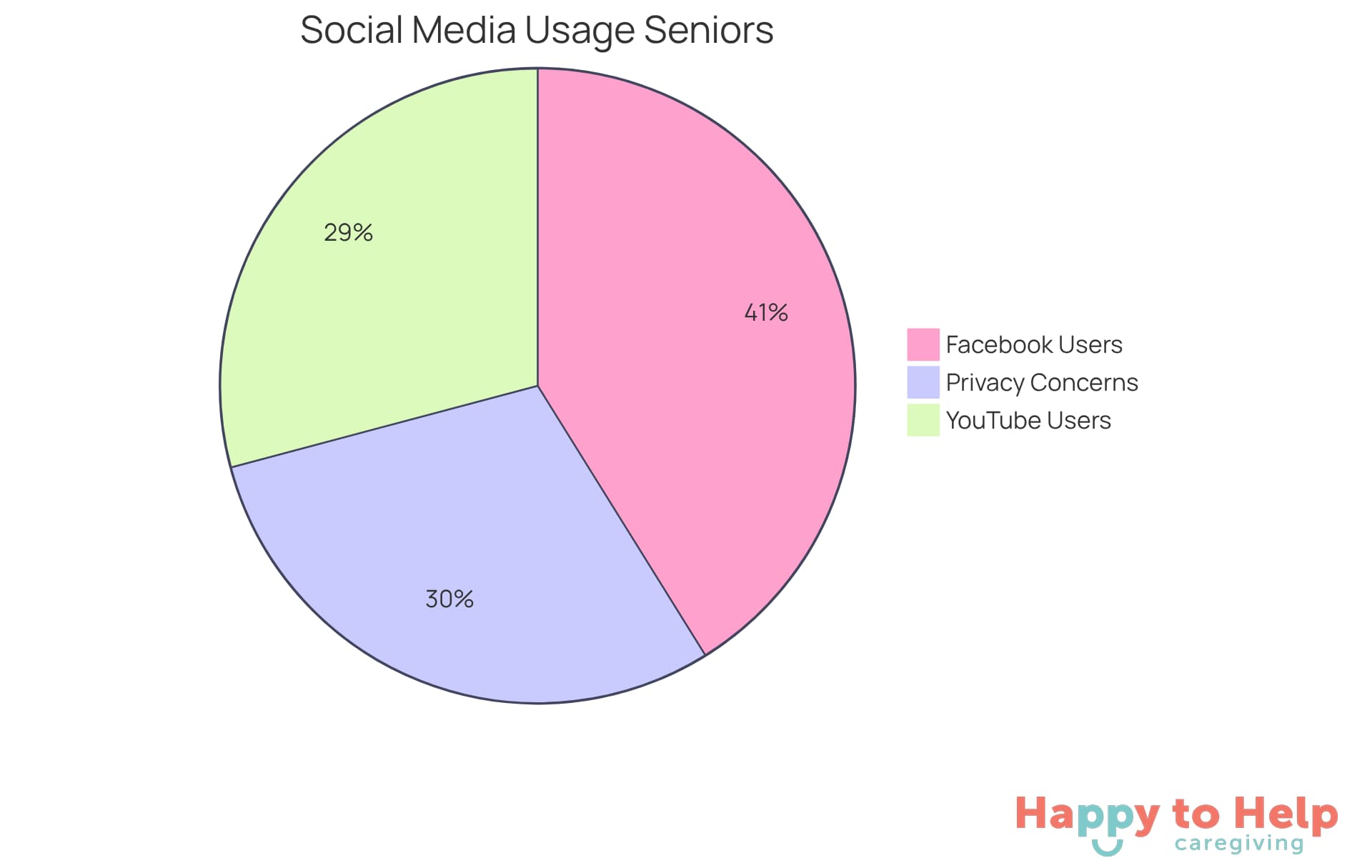
In 2025, Facebook remains the leading social media for seniors, with 72% of individuals aged 50 and above actively engaging with it. However, many older adults express concerns about privacy on the platform, with 52% of Facebook users in this age group being 'very concerned' about their privacy. This concern is crucial for understanding how older individuals interact with social media.
The implications of these privacy concerns are significant. While Facebook's user-friendly interface simplifies navigation for older users, the platform's popularity stems from features like community groups. These groups utilize social media for seniors to connect with others who share similar interests, whether it's gardening, book clubs, or health discussions. They nurture a sense of belonging and provide a space for meaningful interactions, significantly enhancing emotional well-being.
Seniors utilize Facebook to stay updated on family events, share cherished memories through photos and posts, and engage in lively discussions. Notably, 60% of adults aged 55 and older use Facebook daily, highlighting the site's engagement level among this demographic. The messaging capabilities enable real-time communication with family and friends, bridging distances and strengthening relationships. Moreover, Facebook's focus on interaction, entertainment, and current events aligns perfectly with the interests of older adults, making it an essential social media for seniors to maintain their connections.
Expert insights indicate that Facebook's features not only help lessen feelings of loneliness but also motivate older adults to actively engage in their communities, both online and offline. As a result, Facebook continues to play a vital role in the lives of older adults, offering them a digital space to thrive and connect. Additionally, the growing popularity of YouTube among older adults, with 51% utilizing the platform, indicates a broader trend in social media usage that complements Facebook's role in their lives.
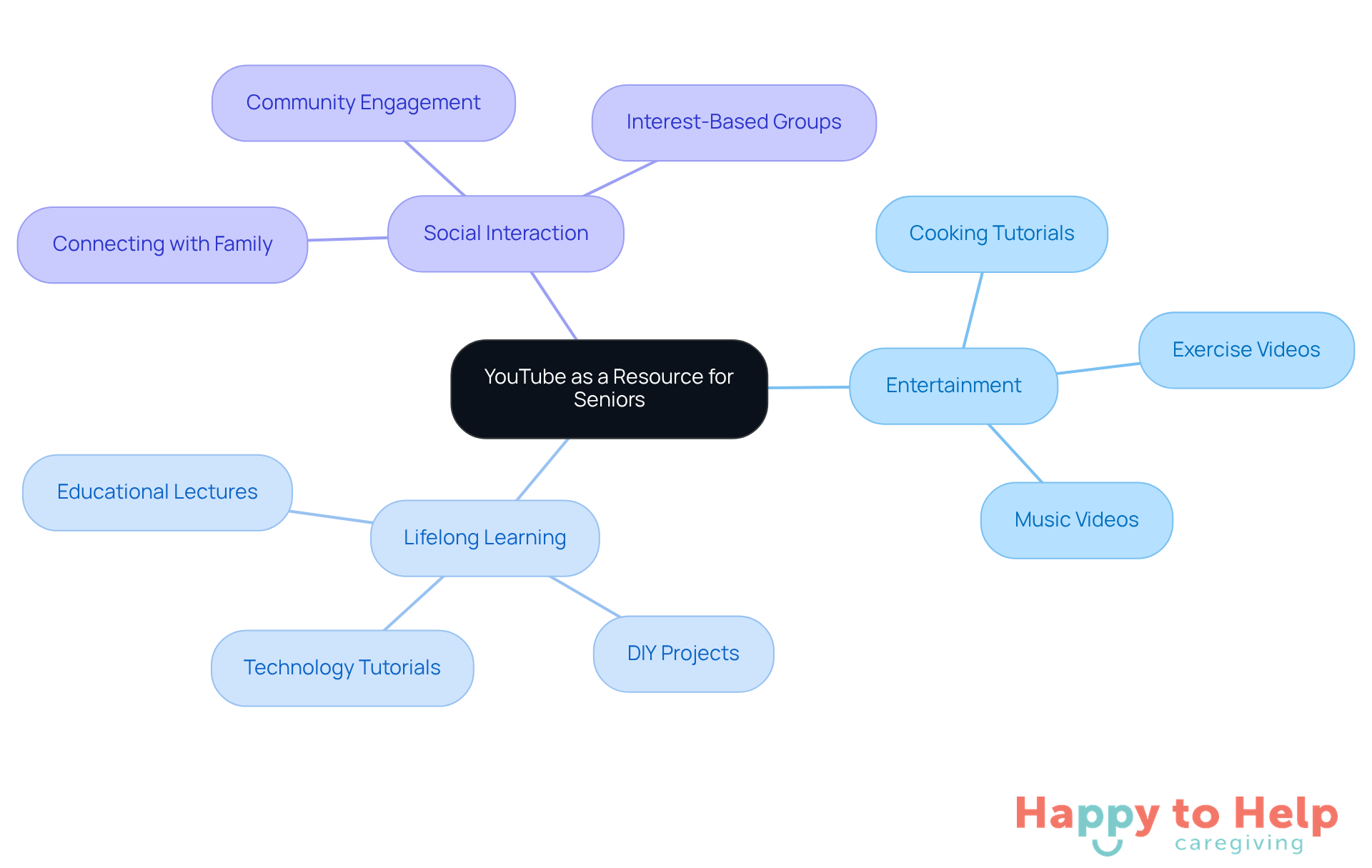
YouTube: A Key Resource for Entertainment and Learning Among Seniors
Older adults often face challenges in finding engaging entertainment and educational content. This can lead to feelings of isolation and a lack of mental stimulation.
YouTube has emerged as a vital resource, offering a wealth of information tailored to their interests, from cooking tutorials to exercise videos. Engaging with YouTube not only provides entertainment but also fosters lifelong learning, helping older adults stay mentally active and connected to the world around them.
By utilizing YouTube, caregivers can encourage older adults to explore diverse content that enriches their lives and promotes social interaction.
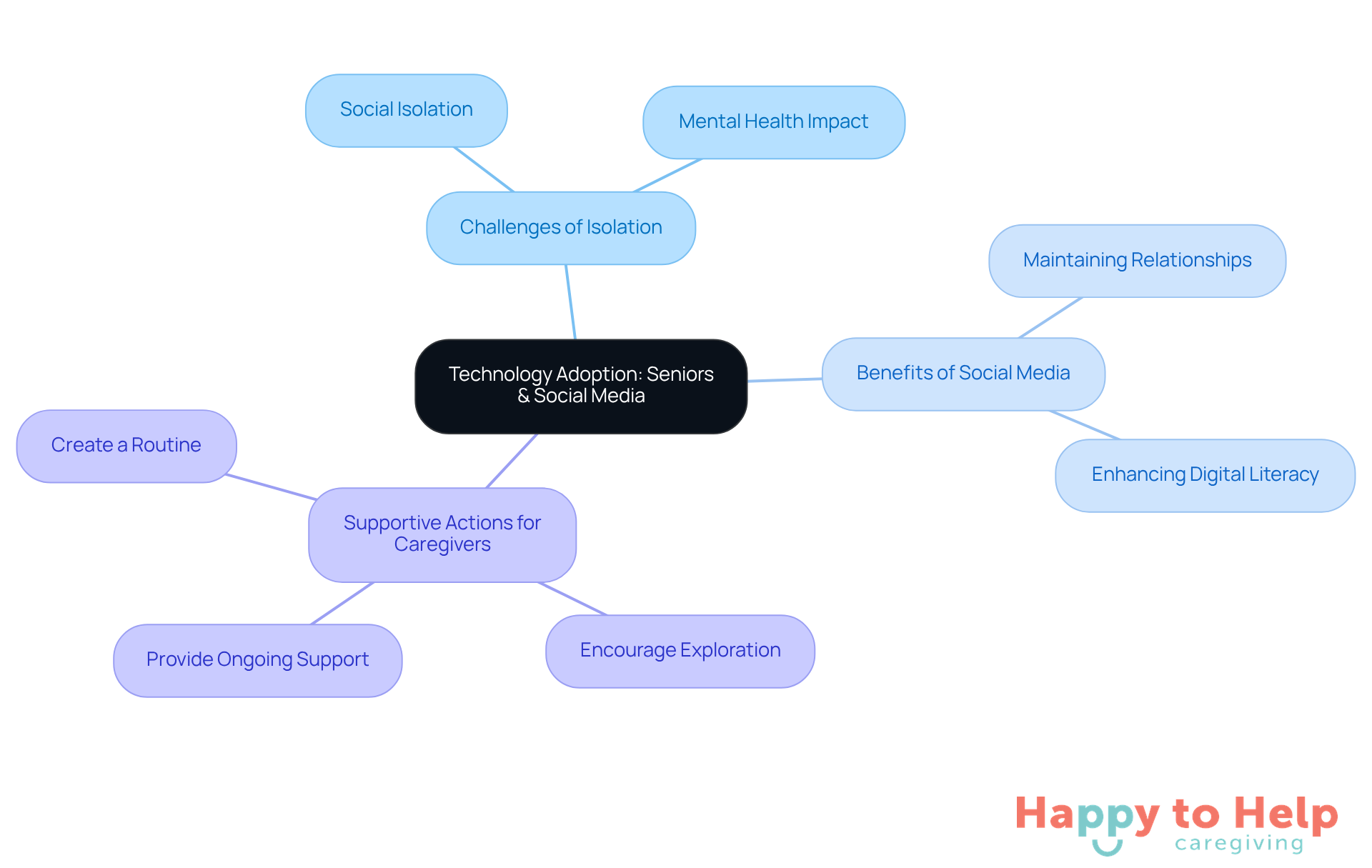
Technology Adoption: How Seniors Embrace Social Media Amid the Pandemic
The COVID-19 outbreak created a significant problem for older adults: social isolation. With physical distancing measures in place, many found it challenging to stay connected with loved ones. This isolation can lead to feelings of loneliness and anxiety, which can negatively impact mental health.
However, the pandemic also acted as a catalyst for change, particularly in the adoption of social media for seniors. Older adults turned to social media for seniors, including platforms like Facebook and Zoom, which became essential tools for social interaction. This shift not only helped them maintain relationships but also encouraged them to explore new technologies, enhancing their digital literacy and confidence.
To support older adults in this transition, caregivers can take actionable steps:
- Encourage exploration: Introduce them to various platforms and guide them through the setup process.
- Provide ongoing support: Be available to answer questions and troubleshoot issues as they arise.
- Create a routine: Help them schedule regular video calls with family and friends to foster connections.
By embracing social media for seniors, older adults can combat isolation and improve their overall well-being.
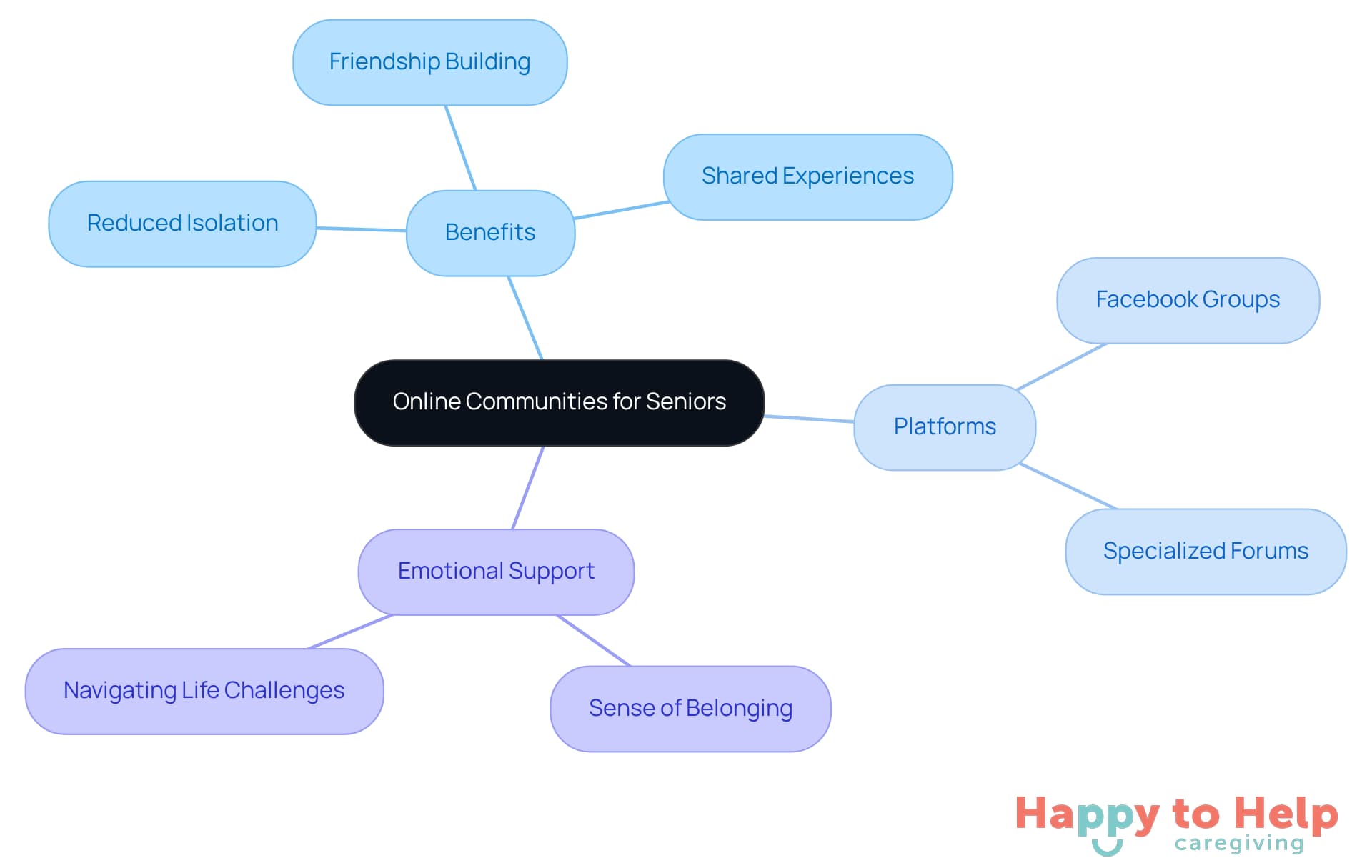
Online Communities: Building Support Networks for Seniors
Online communities have become essential for older adults seeking support and connection through social media for seniors. Many older adults face isolation, which can lead to feelings of loneliness and anxiety. This emotional burden is particularly heavy for those dealing with health issues or caregiving responsibilities.
Platforms such as Facebook Groups and specialized forums act as social media for seniors, allowing older adults to share experiences, seek advice, and build friendships. These communities foster a sense of belonging and understanding, helping individuals navigate similar life challenges together. By engaging in these online spaces, older adults can find the support they need to enhance their well-being.
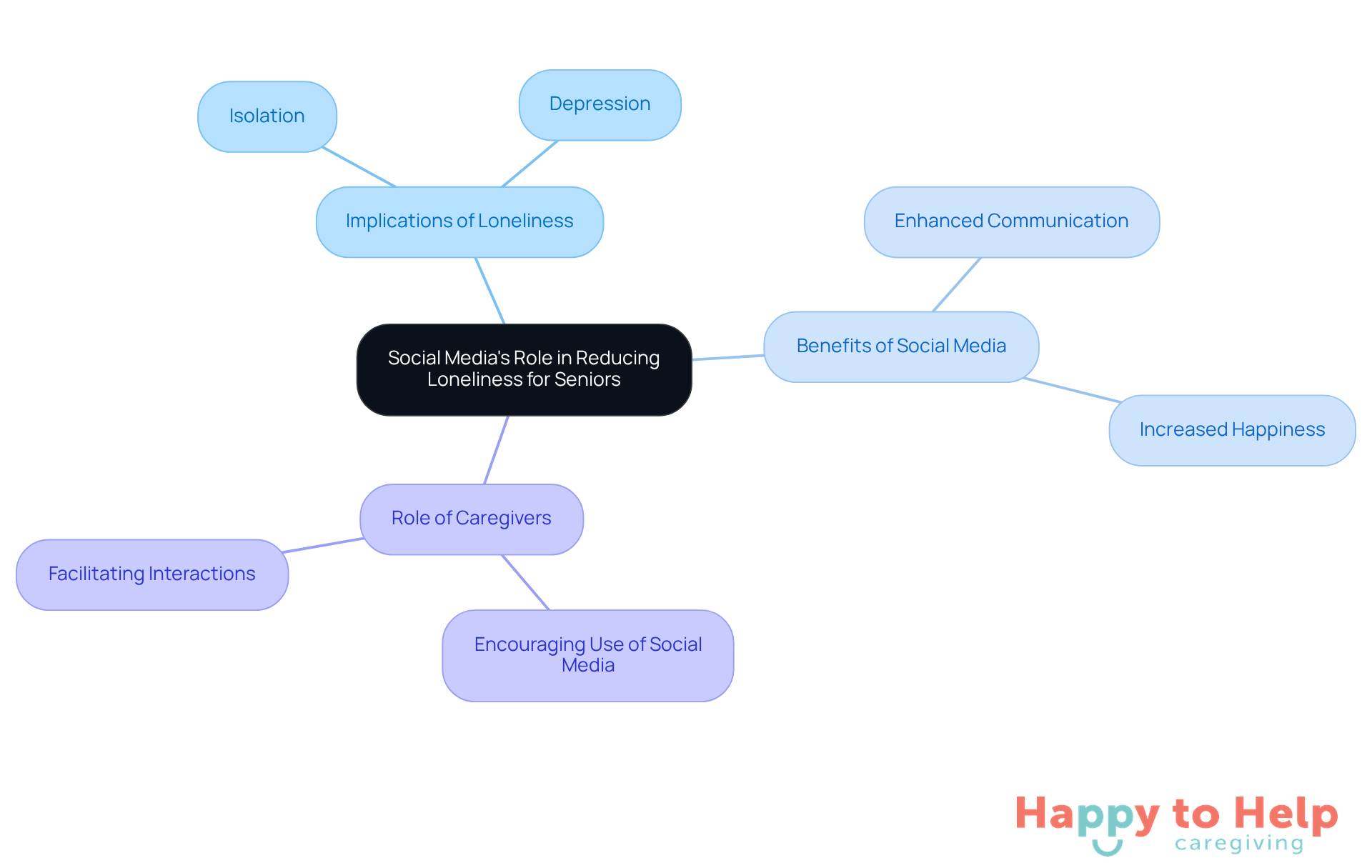
Mental Health Benefits: Social Media's Role in Reducing Loneliness for Seniors
Loneliness is a significant issue for older adults, often leading to feelings of isolation and depression. This problem can have serious implications for their mental health and overall well-being. However, social media for seniors offers a viable solution by providing opportunities for interaction and engagement.
Platforms like Facebook enable regular communication with family and friends, which can significantly alleviate feelings of loneliness. Research shows that older individuals who actively engage with these online platforms report higher levels of happiness and lower levels of depression. This highlights the mental health benefits of staying connected in today’s digital age.
To support older adults in combating loneliness, caregivers can encourage them to use social media as a tool for connection. By facilitating regular interactions and helping them navigate these platforms, caregivers can play a crucial role in enhancing their loved ones' quality of life.
Digital Literacy Programs: Empowering Seniors to Navigate Social Media
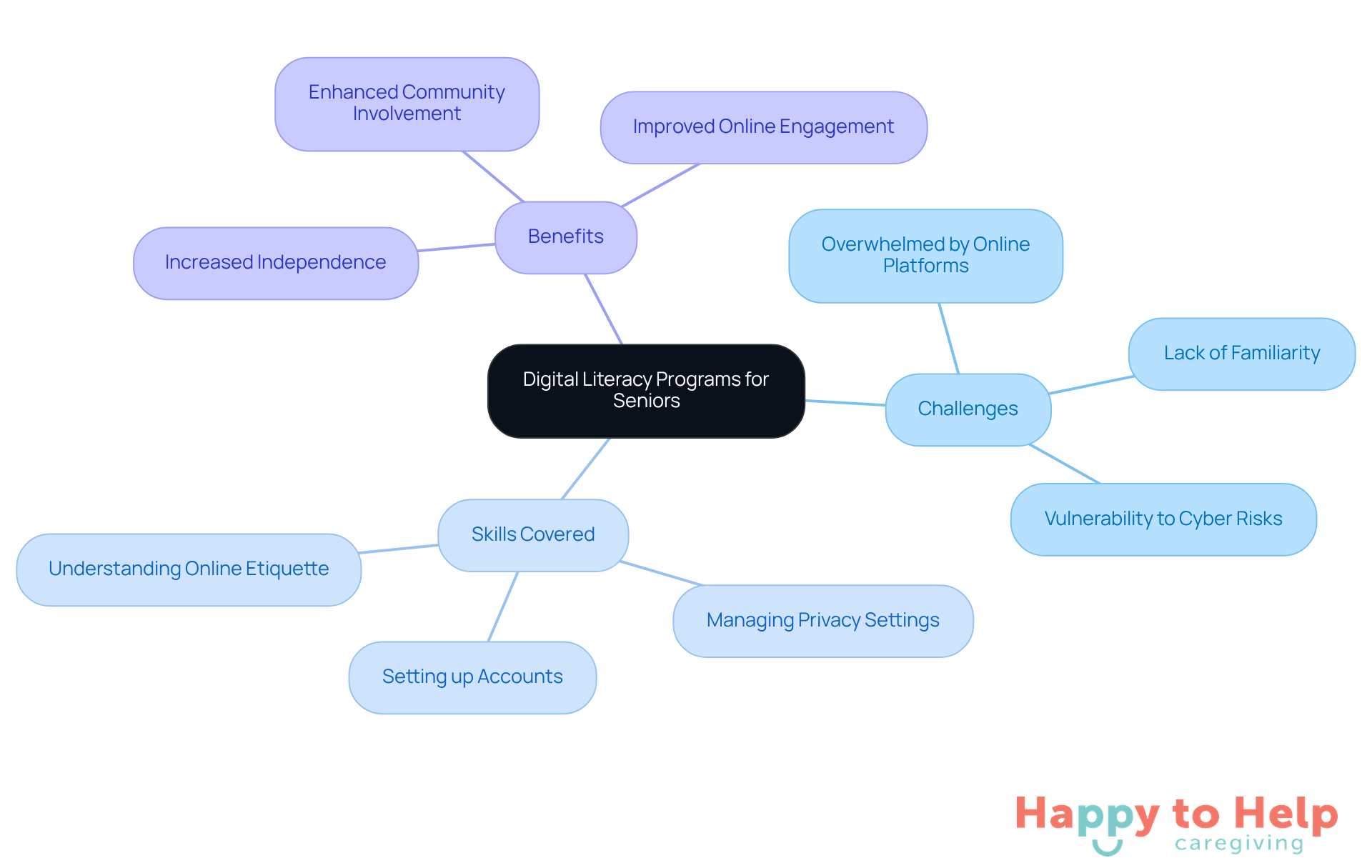
Digital literacy is a significant challenge for older adults, especially regarding social media for seniors, often leaving them feeling overwhelmed by online platforms. This lack of familiarity can hinder their ability to engage with essential services and connect with loved ones.
To address this issue, digital literacy initiatives are crucial. These programs equip older adults with the necessary skills to navigate online environments confidently. They cover essential topics such as:
- Setting up accounts
- Managing privacy settings
- Understanding online etiquette
By improving their digital abilities, older adults can engage more actively in social media for seniors, fostering a greater sense of independence and community involvement. With the right support, they can transform their online experiences from daunting to empowering.
Family Support: Encouraging Seniors to Engage with Social Media
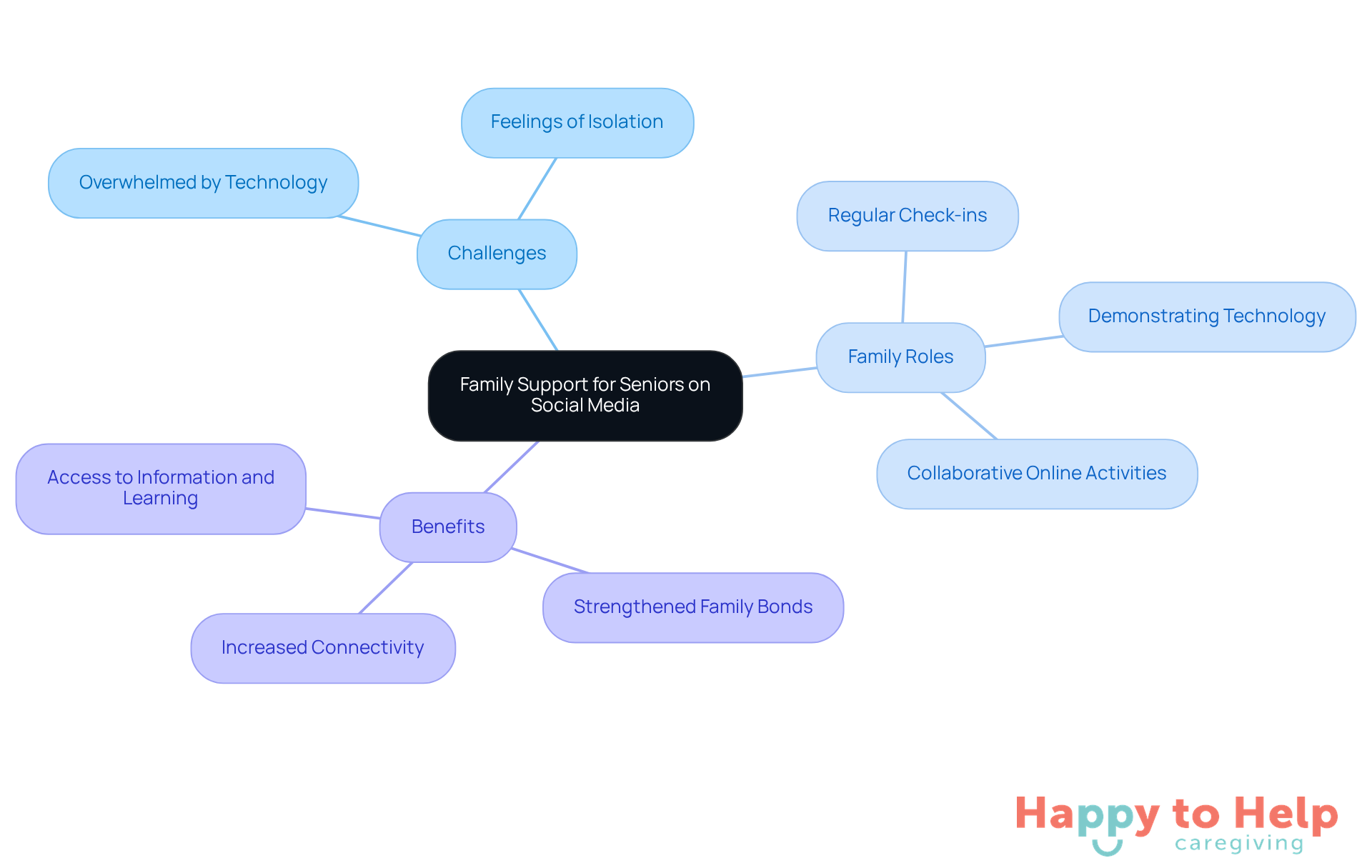
Family members often face the challenge of motivating older adults to engage with social media for seniors. Many older adults feel overwhelmed by technology, which can hinder their ability to connect with family and friends, making the use of social media for seniors essential. This situation not only affects their social interactions but can also lead to feelings of isolation, which could be alleviated through social media for seniors.
To address this issue, families can play a crucial role in easing these concerns. By demonstrating how to use various online systems, they can help older adults feel more comfortable and confident in navigating technology. Regular check-ins and collaborative online activities, such as video calls or shared posts, can significantly strengthen family bonds and encourage older adults to stay connected using social media for seniors.
Senior-Centric Platforms: New Social Media Innovations for Older Adults
Older adults often face feelings of isolation, especially in a rapidly evolving digital landscape. This challenge is compounded by the lack of user-friendly platforms that cater to their needs. However, recent innovations in social media have created spaces specifically designed for older adults, prioritizing user-friendly interfaces and relevant content that facilitate peer connections.
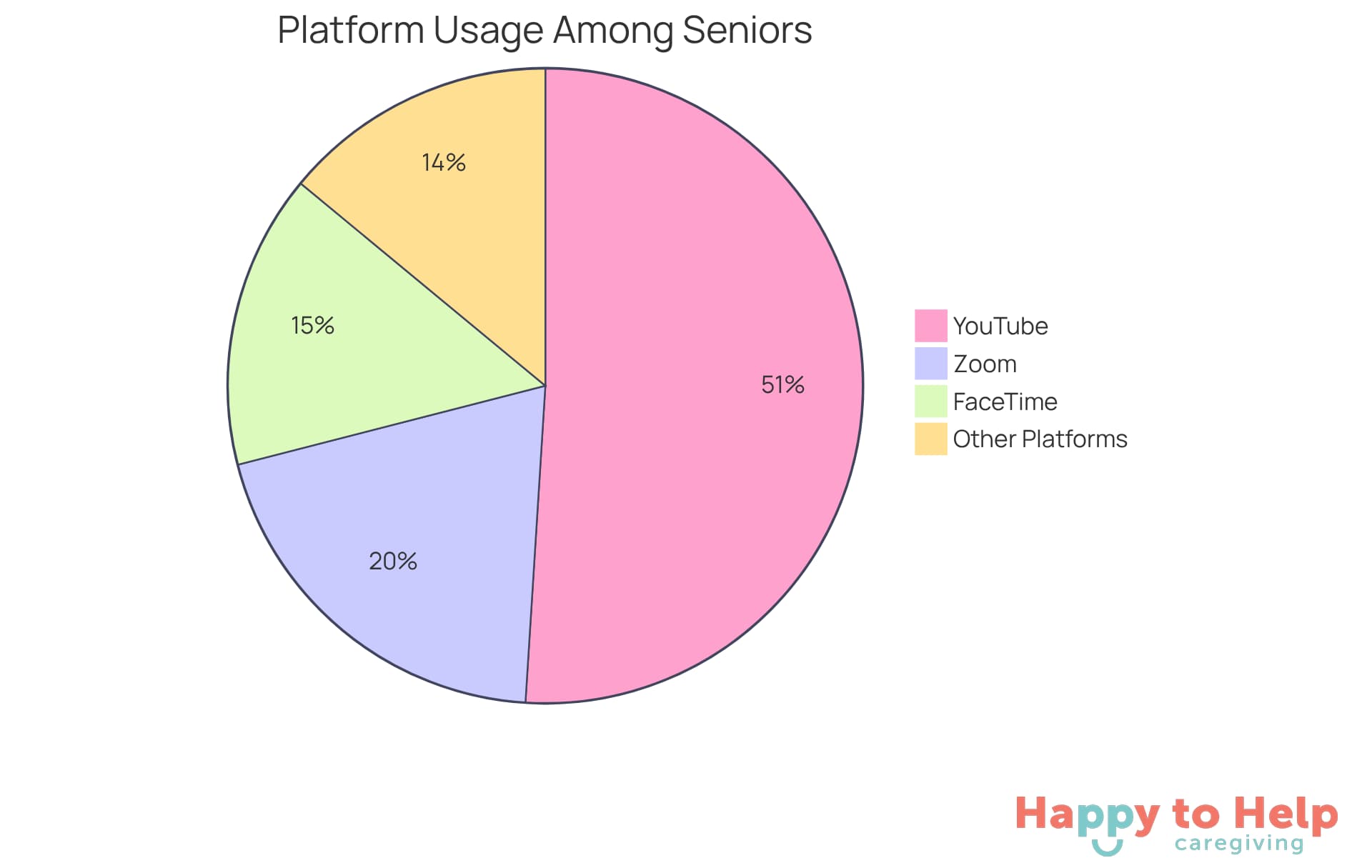
These applications frequently include features aimed at improving safety and privacy, such as strong privacy settings and user verification processes. This enables older individuals to interact online with assurance. For instance, platforms like YouTube have become essential resources, with 51% of older adults utilizing it for various content, including health tips, DIY projects, and educational videos. This establishes YouTube as a major learning hub for this demographic.
Furthermore, the growth of video conferencing platforms like Zoom and FaceTime has allowed older adults to sustain visual connections with cherished ones, greatly lessening feelings of isolation. Information shows that 74% of individuals aged 50 and above consistently utilize online platforms, highlighting the significance of these advancements in nurturing community and assistance among older adults.
As these systems develop, they continue to improve user satisfaction by meeting the specific needs of older adults, ensuring they stay connected and engaged in a digital environment.
Transformative Impact: How Social Media is Changing Seniors' Lives in 2025
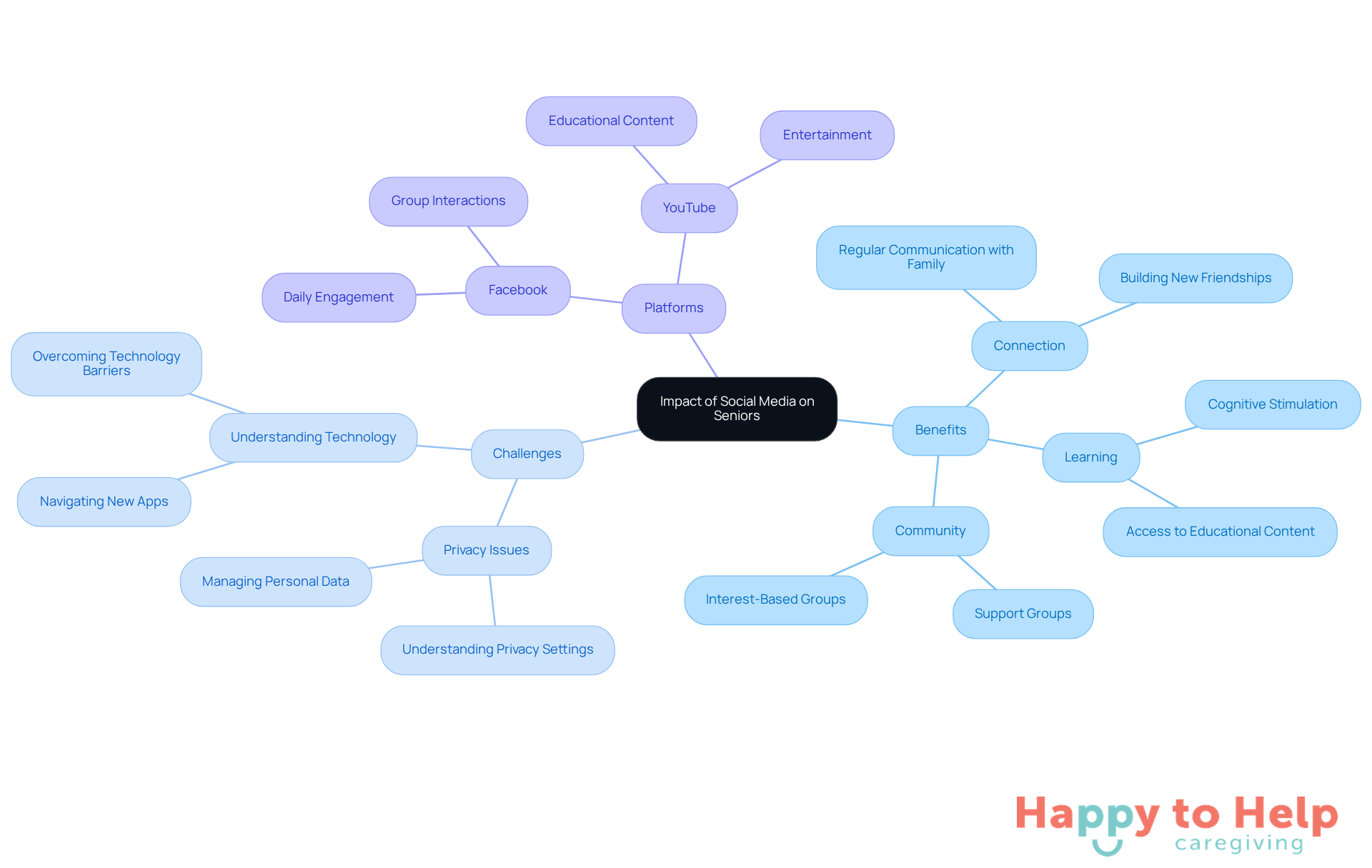
In 2025, many older adults face the challenge of isolation, which can significantly impact their quality of life. However, social media for seniors has emerged as a vital resource, providing opportunities to connect, learn, and engage with the world around them. With nearly 45% of individuals aged 65 and above actively using at least one online service, social media for seniors plays a crucial role in enhancing their lives by facilitating communication with family and friends and fostering a sense of community.
Platforms like Facebook and YouTube are forms of social media for seniors, helping older adults stay informed about current events and providing learning opportunities that can improve cognitive function through interactive content and discussions. Notably, 60% of adults aged 55 and older engage with social media for seniors, such as Facebook, daily, underscoring its importance in their daily lives. Yet, despite these benefits, older adults often struggle with understanding privacy settings and managing personal data on these platforms.
As technology continues to evolve, the potential for social media for seniors to further improve the emotional well-being of older adults is significant. By embracing social media for seniors, they can cultivate new friendships, reconnect with old ones, and maintain a vibrant social life. This ultimately leads to a more fulfilling and engaged existence, making online platforms an essential aspect of contemporary caregiving.
Taking the Next Steps
Social media has become a significant challenge for many seniors, often leading to feelings of isolation and loneliness. As they navigate this digital landscape, the implications can be profound, affecting their emotional health and overall well-being. However, by leveraging platforms like Facebook and YouTube, older adults can combat these feelings, engage with loved ones, and access a wealth of information tailored to their interests.
To address these challenges, caregivers can implement personalized care plans that focus on enhancing digital literacy among seniors. Ongoing assistance and family involvement are crucial in building their confidence and encouraging engagement with social media. Additionally, the rise of senior-centric social media innovations highlights a commitment to creating user-friendly environments that prioritize safety and connection.
As the landscape of social media continues to evolve, the potential for these platforms to enrich the lives of older adults is immense. Encouraging seniors to explore social media not only helps alleviate feelings of isolation but also empowers them to maintain vibrant social lives. By recognizing the vital role of social media in fostering relationships and enhancing mental health, caregivers and families can significantly improve the quality of life for older adults.
https://iframe.tely.ai/cta/eyJhcnRpY2xlX2lkIjogIjY5MjY0M2EzMTRjODUwNzI1NGI4N2FjMyIsICJjb21wYW55X2lkIjogIjY4ZWU1ZGNhNzMxNzYyNTU3ZjNjOTVjMSIsICJpbmRleCI6IG51bGwsICJ0eXBlIjogImFydGljbGUifQ==Frequently Asked Questions
What is the main issue addressed in the article regarding older adults?
The article addresses the pressing issue of loneliness among older adults, with research indicating that 33% of US adults aged 50 to 80 experience loneliness some of the time or frequently.
How can caregivers help combat loneliness in older adults?
Caregivers can develop customized care plans that meet physical needs and promote community involvement, encouraging older adults to engage with family and friends through social media.
What role does technology play in enhancing connections for seniors?
Incorporating technology, such as social media, enables virtual visits and interpersonal interactions, ultimately improving the quality of life for older adults.
What are AI care companions and how do they help?
AI care companions serve as a bridge for families, enhancing connections and providing peace of mind for caregivers and older adults.
What specific program is mentioned to enhance interactions among older adults?
The program 'Zoom Pals,' under engAGED, aims to enhance interactions among older adults through structured online activities.
What is the leading social media platform for seniors in 2025?
Facebook remains the leading social media platform for seniors in 2025, with 72% of individuals aged 50 and above actively engaging with it.
What privacy concerns do older adults have regarding Facebook?
Many older adults express concerns about privacy on Facebook, with 52% of users aged 50 and above being 'very concerned' about their privacy.
How does Facebook facilitate meaningful interactions for seniors?
Facebook's community groups allow older adults to connect with others who share similar interests, nurturing a sense of belonging and enhancing emotional well-being.
What activities do seniors engage in on Facebook?
Seniors use Facebook to stay updated on family events, share memories through photos and posts, and engage in discussions, with 60% of adults aged 55 and older using it daily.
What other social media platform is gaining popularity among older adults?
YouTube is gaining popularity, with 51% of older adults utilizing the platform for entertainment and educational content.
How can YouTube benefit older adults?
YouTube provides engaging entertainment and educational content, fostering lifelong learning and helping older adults stay mentally active and connected to the world.
List of Sources
- Happy to Help Caregiving: Enhancing Senior Connections Through Personalized Care
- (https://connectednation.org/blog/how-technology-is-enhancing-the-well-being-of-older-adults)
- Seniors who use technology more socially engaged, study finds (https://mcknights.com/news/seniors-who-use-technology-more-socially-engaged-study-finds)
- Promoting Social Engagement for Seniors Through Home Health Services (https://regencyhcs.com/blog/promoting-social-engagement-for-seniors-through-home-health-services)
- New York’s elderly can now get a ‘virtual companion’ for chats, medication reminders and memory games (https://nypost.com/2025/04/16/health/ai-companion-for-elderly-has-for-chats-medication-reminders-and-games)
- AI Care Companions for Seniors (https://health.usnews.com/senior-care/articles/ai-care-companions-for-seniors)
- Facebook: The Leading Social Media Platform for Seniors in 2025
- Explore The Benefits Of Social Media For Seniors In 2025 (https://theheritagelcs.com/blog/social-media-for-seniors)
- Older Adults’ Use of Facebook Continues to Grow (https://aarp.org/personal-technology/facebook-older-americans-privacy)
- What Social Media Do Seniors Use Most? | Creating Results (https://creatingresults.com/blog/2025/03/26/what-social-media-do-seniors-use-most-2025)
- why older people are among the biggest users of social media (https://capital.mu/article/why-older-people-are-among-the-biggest-users-of-social-media)
- YouTube: A Key Resource for Entertainment and Learning Among Seniors
- Learn about YouTube and Seniors | Creating Results (https://creatingresults.com/blog/2025/02/17/youtube-and-seniors-youtube-used-by-88-of-55-audience)
- Share of those 65 and older who are tech users has grown in the past decade (https://pewresearch.org/short-reads/2022/01/13/share-of-those-65-and-older-who-are-tech-users-has-grown-in-the-past-decade)
- What Social Media Do Seniors Use Most? | Creating Results (https://creatingresults.com/blog/2025/03/26/what-social-media-do-seniors-use-most-2025)
- Technology Adoption: How Seniors Embrace Social Media Amid the Pandemic
- What Social Media Do Seniors Use Most? | Creating Results (https://creatingresults.com/blog/2025/03/26/what-social-media-do-seniors-use-most-2025)
- Effects of Social Media Use on Connectivity and Emotions During Pandemic-Induced School Closures: Qualitative Interview Study Among Adolescents (https://mental.jmir.org/2023/1/e37711)
- Seniors Using Technology and Social Media More Amid Pandemic | myLifeSite (https://mylifesite.net/blog/post/seniors-using-technology-and-social-media-more-amid-pandemic)
- Share of those 65 and older who are tech users has grown in the past decade (https://pewresearch.org/short-reads/2022/01/13/share-of-those-65-and-older-who-are-tech-users-has-grown-in-the-past-decade)
- Older People’s Use of Digital Technology During the COVID-19 Pandemic - PMC (https://pmc.ncbi.nlm.nih.gov/articles/PMC9038938)
- Online Communities: Building Support Networks for Seniors
- Explore The Benefits Of Social Media For Seniors In 2025 (https://theheritagelcs.com/blog/social-media-for-seniors)
- Empowering Aging: How Technology Enhances Independence and Safety for Older Adults - Summit Professional Education (https://summit-education.com/blog/general/empowering-aging-how-technology-enhances-independence-and-safety-for-older-adults)
- Social Media Stats for Seniors (https://creativeage.ca/2022/12/17/social-media-stats-for-older-adults)
- TOP 20 SENIOR CITIZEN MARKETING STATISTICS 2025 | Amra And Elma LLC (https://amraandelma.com/senior-citizen-marketing-statistics)
- Older Adults and Technology Use (https://pewresearch.org/internet/2014/04/03/older-adults-and-technology-use)
- Mental Health Benefits: Social Media's Role in Reducing Loneliness for Seniors
- Social media use can be positive for mental health and well-being | Harvard T.H. Chan School of Public Health (https://hsph.harvard.edu/news/social-media-positive-mental-health)
- The relationships between social internet use, social contact, and loneliness in older adults - Scientific Reports (https://nature.com/articles/s41598-025-09861-8)
- Benefits of Social Media for Older Adults - The Knolls of Oxford (https://knollsofoxford.org/benefits-of-social-media-for-older-adults)
- Social connection linked to improved health and reduced risk of early death (https://who.int/news/item/30-06-2025-social-connection-linked-to-improved-heath-and-reduced-risk-of-early-death)
- Staying Connected: How Social Media Improves Seniors’ Mental Health (https://arborcompany.com/blog/staying-connected-how-social-media-improves-seniors-mental-health)
- Digital Literacy Programs: Empowering Seniors to Navigate Social Media
- MMA Case Study Hub | Google Provides Internet Safety Literacy for Seniors (https://mmaglobal.com/case-study-hub/case\_studies/view/91556)
- Digital literacy program for seniors reduces loneliness, boosts self-care (https://publichealth.berkeley.edu/articles/spotlight/research/digital-literacy-program-for-seniors-reduces-loneliness)
- 15 inspirational quotes about aging and lifelong learning | Blog | Tea & Toast (https://teaandtoast.ca/blog/15-quotes-aging-learning)
- Family Support: Encouraging Seniors to Engage with Social Media
- What Social Media Do Seniors Use Most? | Creating Results (https://creatingresults.com/blog/2025/03/26/what-social-media-do-seniors-use-most-2025)
- Viewpoints: Caregiving Has Gotten Harder For American Families; Technology Helps Elderly Stay Home - KFF Health News (https://kffhealthnews.org/morning-breakout/viewpoints-caregiving-has-gotten-harder-for-american-families-technology-helps-elderly-stay-home)
- Seniors Using Technology and Social Media More Amid Pandemic | myLifeSite (https://mylifesite.net/blog/post/seniors-using-technology-and-social-media-more-amid-pandemic)
- Seniors who use technology more socially engaged, study finds (https://mcknights.com/news/seniors-who-use-technology-more-socially-engaged-study-finds)
- Senior-Centric Platforms: New Social Media Innovations for Older Adults
- What Social Media Do Seniors Use Most? | Creating Results (https://creatingresults.com/blog/2025/03/26/what-social-media-do-seniors-use-most-2025)
- MMA Case Study Hub | Google Provides Internet Safety Literacy for Seniors (https://mmaglobal.com/case-study-hub/case\_studies/view/91556)
- Seniors Using Technology and Social Media More Amid Pandemic | myLifeSite (https://mylifesite.net/blog/post/seniors-using-technology-and-social-media-more-amid-pandemic)
- TOP 20 SENIOR CITIZEN MARKETING STATISTICS 2025 | Amra And Elma LLC (https://amraandelma.com/senior-citizen-marketing-statistics)
- Transformative Impact: How Social Media is Changing Seniors' Lives in 2025
- The Positive Impact of Social Media on Seniors - HomeCoice Home Care (https://homechoicehomecare.com/quality-of-life/the-positive-impact-of-social-media-on-seniors)
- Seniors who use technology more socially engaged, study finds (https://mcknights.com/news/seniors-who-use-technology-more-socially-engaged-study-finds)
- What Social Media Do Seniors Use Most? | Creating Results (https://creatingresults.com/blog/2025/03/26/what-social-media-do-seniors-use-most-2025)
- Advanced Care | Professional Home Health Care | Mequon, WI (https://advancedcare.health/the-impact-of-social-media-on-senior-wellbeing-staying-connected-in-the-digital-age)