24-Hour Care vs. Live-In Care: Which Is Right for Your Family?

For families in our service areas
For families in our service areas, this guide explains caregiving and how non-medical in-home caregiving can support care planning in East Idaho, Treasure Valley & Magic Valley, Northern Wasatch, North Central West Virginia & Southwestern Pennsylvania, and Northeast Ohio.
Understanding 24-Hour Care vs. Live-In Care: Which Is
Navigating the complexities of caregiving presents families with a significant problem: the choice between 24-hour care and live-in support. Each option comes with its own set of advantages and challenges, which can greatly impact the quality of life for loved ones. Families often find themselves grappling with rising costs and varying levels of supervision, making it crucial to understand how these care models cater to different needs and circumstances.
The implications of this decision can be daunting. Families must consider not only the financial aspects but also the emotional and physical well-being of their loved ones. With so many factors at play, determining which care solution aligns with a family’s values and requirements can feel overwhelming.
To navigate this landscape effectively, families should weigh their options carefully. Here are some actionable tips to consider:
- Assess the specific needs of your loved one, including medical requirements and personal preferences.
- Evaluate the financial implications of each care model to ensure sustainability.
- Consult with healthcare professionals to gain insights into the level of supervision required.
By taking these steps, families can make informed decisions that enhance the quality of care for their loved ones.
Define 24-Hour Care and Live-In Care
Problem: Caregivers often face challenges in providing adequate support for their loved ones, especially when considering the type of assistance needed.
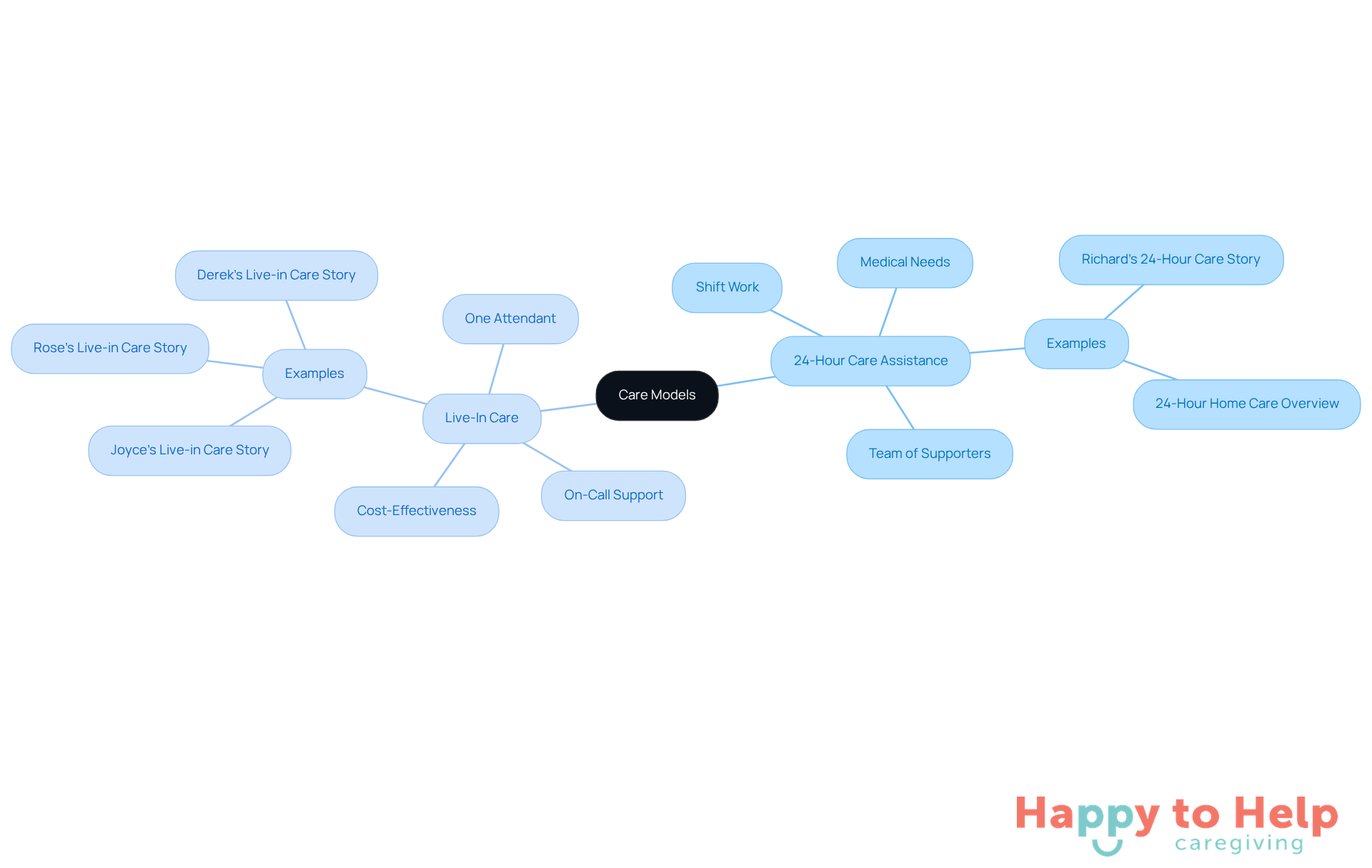
Agitate: 24 care assistance involves a dedicated team of supporters who provide ongoing help in individuals' homes. This model typically includes multiple providers working in shifts, ensuring that support is always available for daily activities, medical needs, and emergencies. In contrast, residential assistance features one attendant living in the client's residence, offering support around the clock while taking necessary breaks for rest. During these breaks, the provider remains on-call to address urgent needs, striking a balance between support and independence.
Solution: Statistics suggest that in-home assistance is often more economical than round-the-clock support, making it an appealing choice for families who want to maintain their loved ones' independence while ensuring they receive essential help. As one caregiving professional noted, "Live-in care is often more cost-effective because one carer provides most of the support."
Practical examples illustrate these distinctions:
- Richard, who required specialized assistance due to a long-term illness, thrived under in-home support, where a dedicated helper encouraged him to engage in activities he loved.
- Conversely, families with individuals facing complex health needs frequently opt for 24 care assistance, which is recommended for seniors with intricate medical requirements, ensuring continuous supervision and the comfort of knowing their relatives are never alone.
Understanding these care models is crucial for families, as it directly impacts the level of support and supervision their loved ones will receive, ultimately influencing their quality of life. Families should also consider the potential drawbacks of each model; for instance, residential assistance requires a designated bedroom for the support provider, which may not be feasible for every household.
Compare Key Differences Between 24-Hour Care and Live-In Care
When it comes to caregiver support, families often face a significant dilemma: choosing between 24 care and residential support. This decision hinges on three main factors: provider availability, cost, and the intensity of care required.
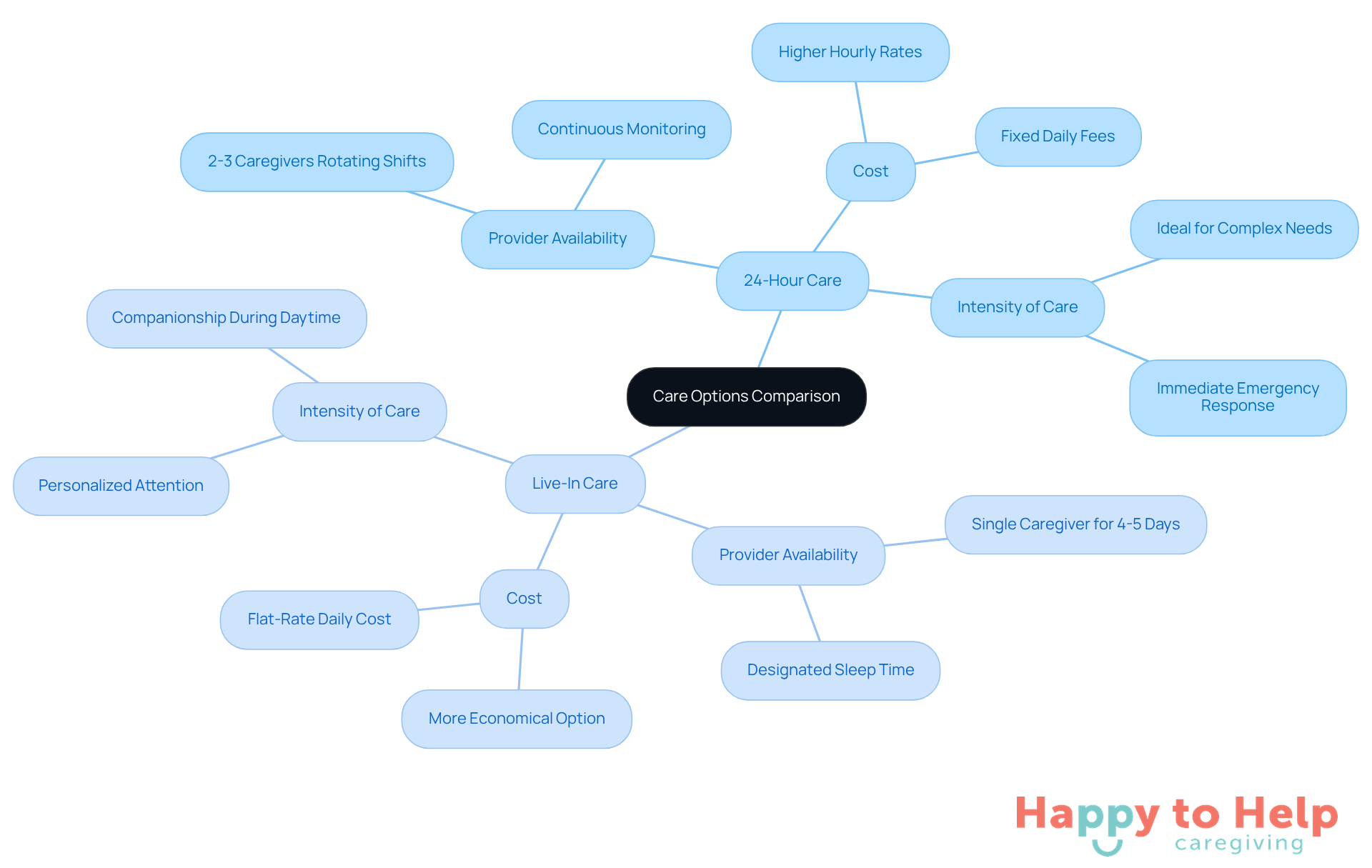
24 care assistance involves a team of 2-3 providers who alternate shifts, ensuring that someone is always available to help. This model is particularly beneficial for clients with complex medical needs or those requiring constant supervision. It guarantees immediate responses to emergencies and continuous monitoring, which can be crucial for their well-being, ensuring 24 care.
On the other hand, residential support typically features one attendant living in the home for four to five consecutive days. While this option provides companionship and daytime assistance, it may lack the prompt response needed during nighttime hours.
From a financial perspective, residential assistance often proves to be more economical. It usually operates on a fixed daily fee, which can be significantly lower than the hourly rates associated with round-the-clock care. For instance, while round-the-clock assistance tends to be more expensive due to the need for multiple providers, residential support allows families to maintain a budget-friendly approach while ensuring their loved ones receive necessary care.
Statistics reveal that nearly 20% of Medicare patients are readmitted within 30 days of discharge due to avoidable complications. This underscores the importance of reliable support availability. Families opting for 24 care assistance often find peace of mind knowing their loved ones are never alone. In contrast, those who choose residential support appreciate the personalized attention and companionship provided by a dedicated caregiver.
Understanding these differences is crucial for families. By weighing the specific needs of their loved ones against financial considerations, they can make informed decisions that best suit their circumstances.
Assess Suitability Based on Family Needs and Preferences
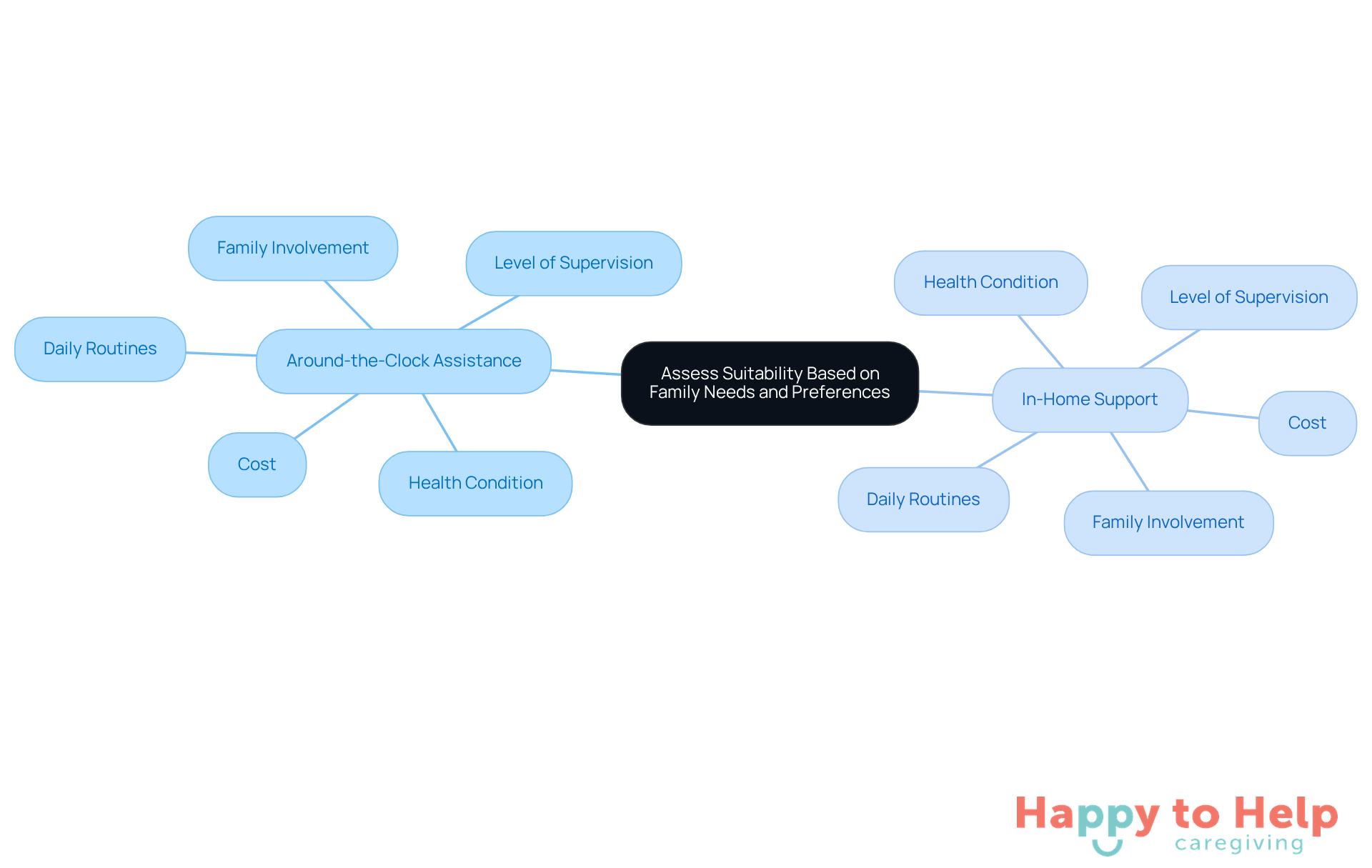
When families face the challenge of choosing between around-the-clock assistance and full-time support, several factors come into play. The health condition of their loved one, daily routines, and the level of supervision required are crucial considerations. For individuals with complex medical needs, frequent disorientation, or those prone to wandering, 24 care often emerges as the best solution. This option offers 24 care through continuous caregiver presence, typically involving two to three attendants working in shifts, significantly enhancing safety and well-being.
On the other hand, if companionship and help with daily tasks are the primary needs, in-home support may be a more comfortable and cost-effective choice. This arrangement allows individuals to maintain their independence in familiar surroundings while potentially lowering overall expenses through fixed daily fees that cover lodging and meals. It’s an appealing option for families striving to balance quality care with budgetary constraints.
Families must also consider their own capacity and willingness to engage in caregiving. This involvement can greatly influence the decision-making process. For example, those who can provide additional support may find that live-in services complement their efforts, while others might prefer the comprehensive coverage offered by around-the-clock assistance. Additionally, families can opt for unsupervised periods during support breaks, which can further impact their choice. Ultimately, the decision should reflect the unique needs and preferences of both the individual receiving care and their family, ensuring a supportive and nurturing environment.
Evaluate Pros and Cons of 24-Hour Care vs. Live-In Care
Both round-the-clock support and live-in assistance present unique challenges that families must consider carefully.
The Problem: Families often face difficult decisions when choosing between live-in assistance and 24-hour care. Each option has its own set of pros and cons that can significantly impact the well-being of their loved ones.
Agitation:
-
24-Hour Care:
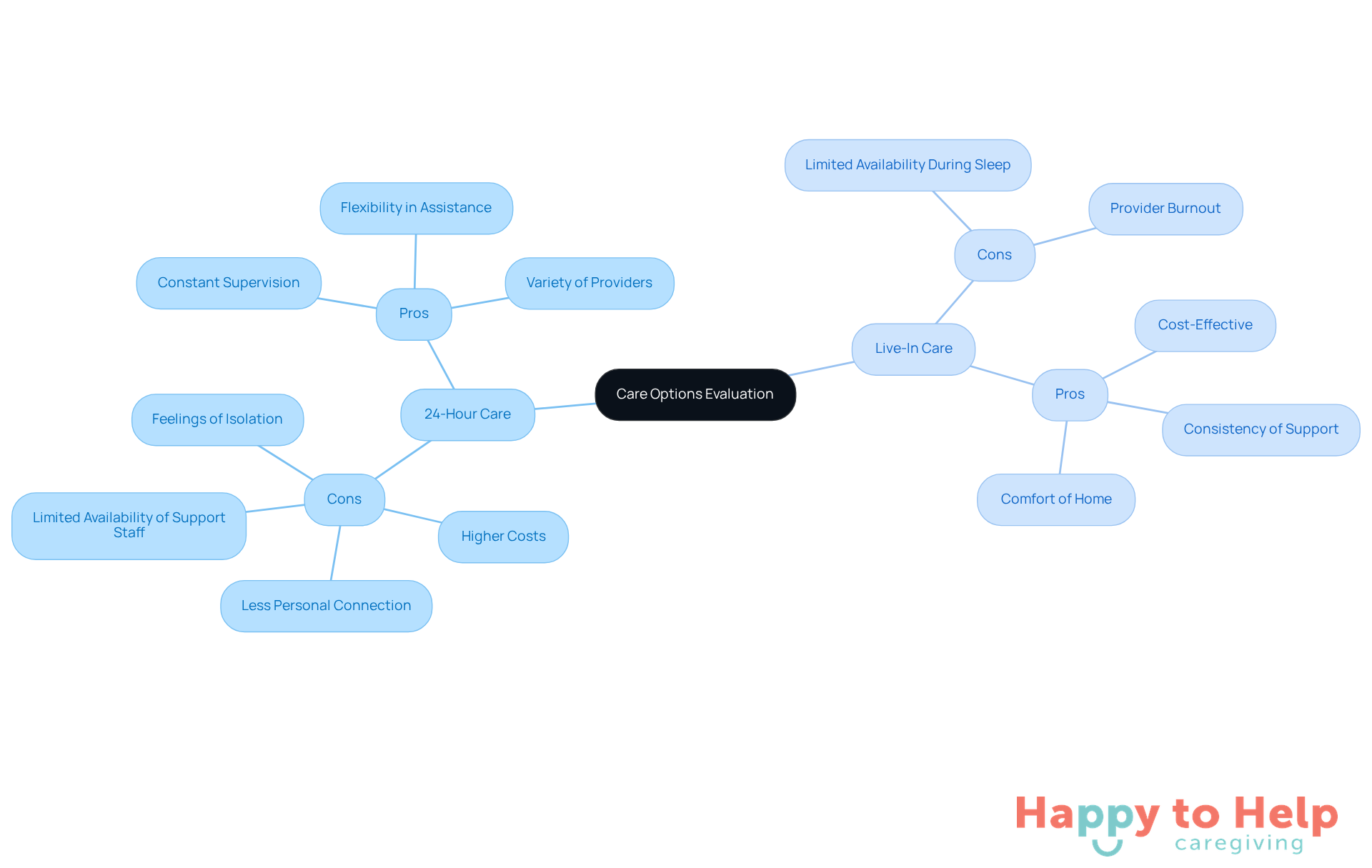
- Higher Costs: The need for multiple caregivers can lead to expenses ranging from $15 to $25 per hour, resulting in substantial monthly bills.
- Less Personal Connection: Frequent changes in caregivers may hinder the development of strong emotional bonds, which are vital for comfort and well-being.
- Limited Availability of Support Staff: Finding qualified personnel for night shifts can be challenging, leading to potential gaps in care.
- Feelings of Isolation: Seniors may experience loneliness, especially during nighttime when caregivers focus on tasks rather than social interaction.
-
Live-In Care:
- Limited Availability During Sleep: Caregivers may not respond immediately during their sleep hours, posing challenges for clients needing constant supervision.
- Provider Burnout: The demands of live-in assistance can lead to caregiver fatigue, affecting the quality of support provided.
The Solution: Families should evaluate these pros and cons in light of their loved one's unique needs and circumstances.
Pros of 24-Hour Care:
- Constant Supervision: Continuous monitoring ensures immediate assistance during emergencies, crucial for seniors with complex medical needs.
- Flexibility in Assistance: Families can tailor support worker schedules to meet specific needs, adapting to changing circumstances.
- Variety of Providers: Exposure to different caregivers can enhance the overall care experience.
Pros of Live-In Care:
- Cost-Effective: Typically more affordable than 24-hour care, as it involves paying a single caregiver.
- Consistency of Support: A dedicated assistant fosters stronger connections and a better understanding of the client's preferences.
- Comfort of Home: Clients often feel more secure and relaxed with a caregiver residing in their home, maintaining daily routines.
In summary, by weighing these factors, families can make informed decisions about the most suitable care option for their loved ones.
Key Takeaways for Caregivers
Choosing the right care model for a loved one is a significant decision that can greatly affect their quality of life. Families often face the challenge of selecting between 24-hour care and live-in care, each with its own advantages and challenges. This decision can be overwhelming, as it requires careful evaluation of specific needs and circumstances.
Understanding the nuances of each option is crucial.
- 24-hour care provides continuous supervision through a team of caregivers, ensuring safety but often at a higher cost and with less personal connection.
- Live-in care offers a more personalized approach with a dedicated caregiver, typically at a lower price, but it may not provide the same level of immediate response during nighttime hours.
Families must weigh these factors against their loved ones' health needs and their own capacity to engage in caregiving.
To make an informed decision, families should consider the specific needs for supervision, companionship, and overall care. Taking the time to assess these options not only enhances the well-being of loved ones but also fosters peace of mind for families navigating this important caregiving journey. By balancing the level of care required with financial considerations, families can ensure their loved ones receive the appropriate support.
https://iframe.tely.ai/cta/eyJhcnRpY2xlX2lkIjogIjY5NDBhMjIwNGFiMmI4OGM4M2NiZjVhMyIsICJjb21wYW55X2lkIjogIjY4ZWU1ZGNhNzMxNzYyNTU3ZjNjOTVjMSIsICJpbmRleCI6IG51bGwsICJ0eXBlIjogImFydGljbGUifQ==Frequently Asked Questions
What is 24-hour care?
24-hour care involves a dedicated team of caregivers who provide ongoing support in an individual's home. This model typically includes multiple providers working in shifts to ensure that assistance is available at all times for daily activities, medical needs, and emergencies.
What is live-in care?
Live-in care features one caregiver living in the client's residence, offering support around the clock. The caregiver takes necessary breaks for rest but remains on-call to address urgent needs, balancing support with the individual's independence.
How does the cost of in-home assistance compare to 24-hour care?
In-home assistance is often more economical than round-the-clock support, making it an appealing choice for families who want to maintain their loved ones' independence while ensuring they receive essential help.
What are some examples of when to choose live-in care versus 24-hour care?
Live-in care is beneficial for individuals who require specialized assistance but can engage in activities they love, like Richard, who thrived under this model. In contrast, families with individuals facing complex health needs typically opt for 24-hour care to ensure continuous supervision and comfort.
Why is it important for families to understand these care models?
Understanding the distinctions between 24-hour care and live-in care is crucial for families as it directly impacts the level of support and supervision their loved ones will receive, ultimately influencing their quality of life.
What are the potential drawbacks of residential assistance?
One drawback of residential assistance is that it requires a designated bedroom for the support provider, which may not be feasible for every household.
List of Sources
- Define 24-Hour Care and Live-In Care
- Live-In or 24-Hour Care: Which Is Right for a Loved One? (https://traditionshhs.com/choosing-the-right-care-factors-to-consider-between-live-in-and-24-hour-care)
- The Difference Between 24-Hour Care & Live-In Care (https://corewoodcare.com/news/24-hour-vs-live-in-care)
- What Is the Difference Between 24-Hour Home Care and Live-In Care? (https://ip-live-in-care.co.uk/news/what-is-the-difference-between-24-hour-home-care-vs-live-in-care)
- Understanding the Difference: 24-Hour Care Vs. Live-in Care in Home Health Care - Legacy Home Care (https://legacyhc.net/understanding-the-difference-24-hour-care-vs-live-in-care-in-home-health-care)
- Compare Key Differences Between 24-Hour Care and Live-In Care
- The Difference Between 24-Hour Care and Live-In Care | What’s Best for Your Loved One? (https://carehomecare.com/24-hour-care-vs-live-in-care)
- Difference Between Live-In Care and 24-Hour Care (https://assistinghands.com/70/illinois/lombard/blog/live-in-care-vs-24-hour-home-care)
- Live-In Care vs. 24-Hour Care | Key Differences (https://comfortkeepers.com/offices/arizona/gold-canyon/resources/news/the-difference-between-livein-care-and-24hour-care)
- The Difference Between 24-Hour Care & Live-In Care (https://corewoodcare.com/news/24-hour-vs-live-in-care)
- What Is the Difference Between 24-Hour Home Care and Live-In Care? (https://ip-live-in-care.co.uk/news/what-is-the-difference-between-24-hour-home-care-vs-live-in-care)
- Assess Suitability Based on Family Needs and Preferences
- Live-In or 24-Hour Care: Which Is Right for a Loved One? (https://traditionshhs.com/choosing-the-right-care-factors-to-consider-between-live-in-and-24-hour-care)
- The Difference Between 24-Hour Care & Live-In Care (https://corewoodcare.com/news/24-hour-vs-live-in-care)
- Care to Stay Home Highlights the Difference Between Assisted Living and In-Home Care for Spokane Valley Families (https://wgntv.com/business/press-releases/ein-presswire/852075104/care-to-stay-home-highlights-the-difference-between-assisted-living-and-in-home-care-for-spokane-valley-families)
- Evaluate Pros and Cons of 24-Hour Care vs. Live-In Care
- Pros and Cons of 24-Hour Elder Care in Lake Worth | Right at Home Palm Beach (https://rightathome.net/palm-beach/blog/advantages-of-24-hour-care)
- Live-In Senior Care: Is It a Good Idea? (https://health.usnews.com/senior-care/articles/live-in-senior-care-is-it-a-good-idea)
- 24-Hour Home Care vs Assisted Living: Which Is Right for You (https://findinghomecare.net/24-hour-home-care-vs-assisted-living)
- The Pros and Cons of 24/7 Home Care Versus Daytime Care Only (https://homecareproviders.com/blog/the-pros-and-cons-of-24-7-home-care-versus-daytime-care-only)