
Why Practices for Helping Seniors with Matters
In the fast-paced world of technology, many seniors are feeling an overwhelming sense of fatigue as they try to keep up with new devices and platforms. This struggle often brings about anxiety and frustration, highlighting a crucial need for effective support strategies designed specifically for older adults.
By exploring best practices to ease technology fatigue, caregivers can truly empower seniors, helping them engage more confidently with the digital landscape. Imagine transforming this daunting challenge into a meaningful opportunity for connection and independence for older adults.
How can we, as caregivers, create an environment that nurtures their confidence and fosters a sense of belonging in this ever-evolving digital world? Together, we can find ways to bridge the gap, ensuring that our loved ones feel supported and understood.
Understand Technology Fatigue in Seniors
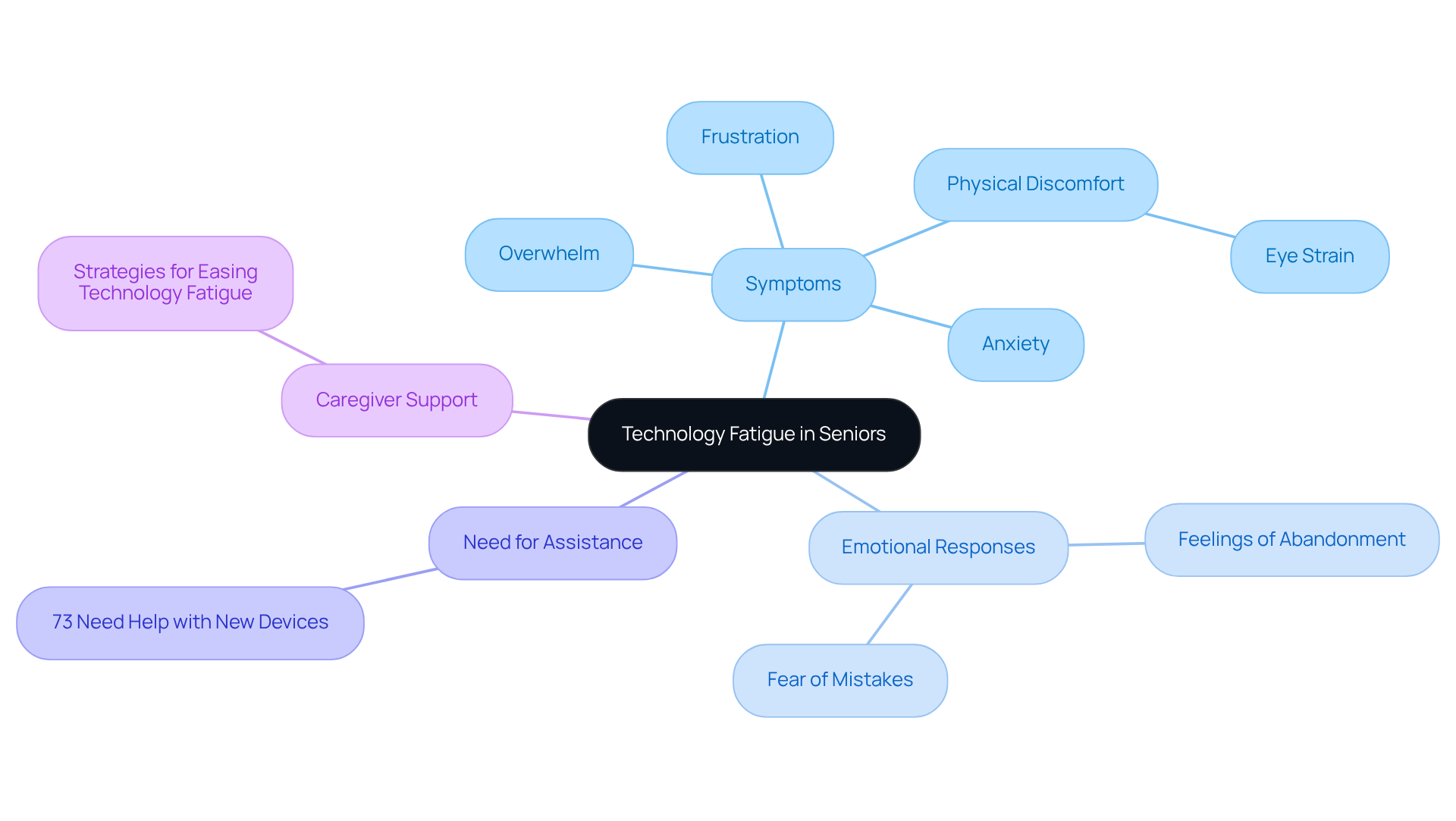
Technology fatigue in seniors often manifests as feelings of overwhelm, frustration, and anxiety when using electronic devices. It’s understandable, given the rapid pace of technological advancements and the complexity of many interfaces. The pressure to stay connected in our digital world can be daunting. Symptoms may include irritability, a lack of motivation to engage with devices, and even physical discomfort like eye strain. Recognizing these signs is essential for caregivers, as it allows them to provide the right support and interventions that can help ease these emotions and foster a more positive relationship with technology, especially in the context of helping seniors with technology.
Many older adults express feelings of abandonment as technology evolves, leading to a sense of inadequacy and fear of making mistakes. In fact, a significant 73% of individuals aged 65 and above report needing assistance with new devices, which emphasizes the need for helping seniors with technology. This statistic highlights the widespread nature of device-related anxiety among seniors. Understanding these emotional responses is vital for developing effective strategies to combat technology fatigue and boost older adults' confidence in using electronic tools. Encouragingly, 66% of older adults believe that innovations can enhance their lives. With the right support, caregivers can aid in helping seniors with technology to navigate their digital landscapes more comfortably and confidently.
Implement Effective Strategies to Combat Tech Overload
To combat technology overload, caregivers can implement several effective strategies:
-
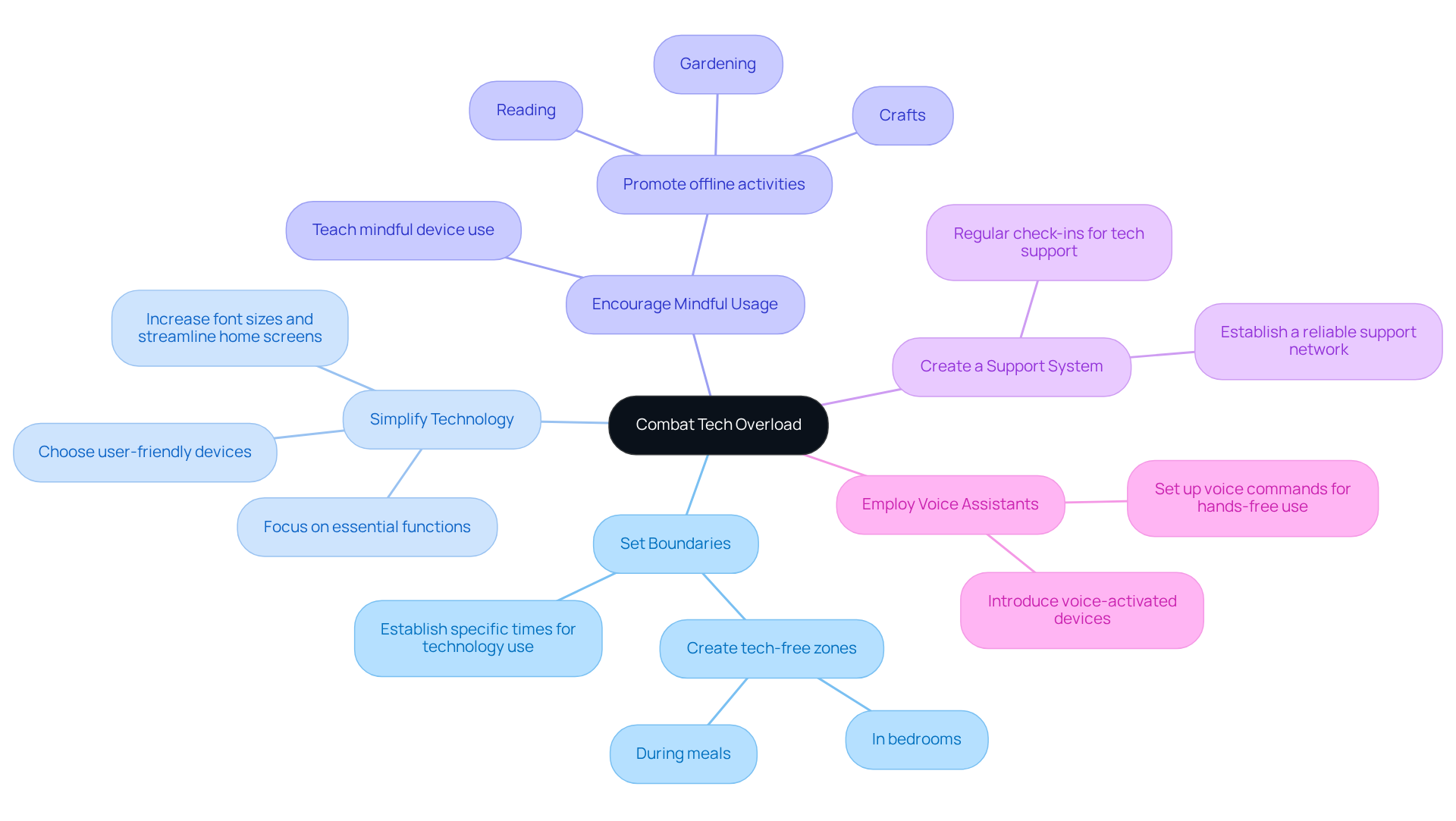
Set Boundaries: It’s important to encourage older adults to establish specific times for technology use. This allows for breaks that can help prevent fatigue. Consider creating tech-free zones, like during meals or in bedrooms. These small changes can foster a more balanced environment and promote healthier habits. After all, when users feel overwhelmed, they might stop engaging with technology altogether, missing out on its many benefits.
-
Simplify Technology: Choosing user-friendly devices and applications tailored to the needs of older adults can make a world of difference. Avoid overwhelming them with unnecessary features; instead, focus on essential functions. Simple adjustments, like increasing font sizes and streamlining home screens, can significantly enhance usability. It’s worth noting that over 70% of older adults now own smartphones, so making technology accessible is crucial.
-
Encourage Mindful Usage: Teaching older adults to be mindful of their device use can lead to a healthier relationship with technology. Promote activities that require less screen time, such as reading, gardening, or engaging in crafts. This not only helps reduce screen fatigue but also nurtures a more fulfilling lifestyle. Research shows that 90% of older adults who use devices message at least once a month, indicating a reliance on digital interaction that can be balanced with offline pursuits.
-
Create a Support System: Establishing a reliable support network is essential. Whether through family members or community resources, having someone helping seniors with technology can alleviate the pressure they feel. Regular check-ins for tech support can enhance their confidence, making them feel less alone in navigating digital tools. As one specialist observed, "Tech fatigue doesn’t refer to a dislike of devices. In many cases, it stems from dealing with too many interfaces, numerous passwords, confusing updates, and not enough time to manage them all."
-
Employ Voice Assistants: Introducing voice-activated devices can simplify tasks for elderly individuals, allowing them to perform actions without using their hands. This can lessen frustration and boost their confidence in utilizing technology, making daily tasks more manageable and enjoyable. By integrating these strategies, caregivers can aid older adults in navigating the digital world more effectively, which is essential for helping seniors with technology.
Provide Tailored Technology Education and Support
Offering personalized educational support means truly understanding each elder's unique needs, preferences, and existing knowledge. Here are some best practices for effective training:
-
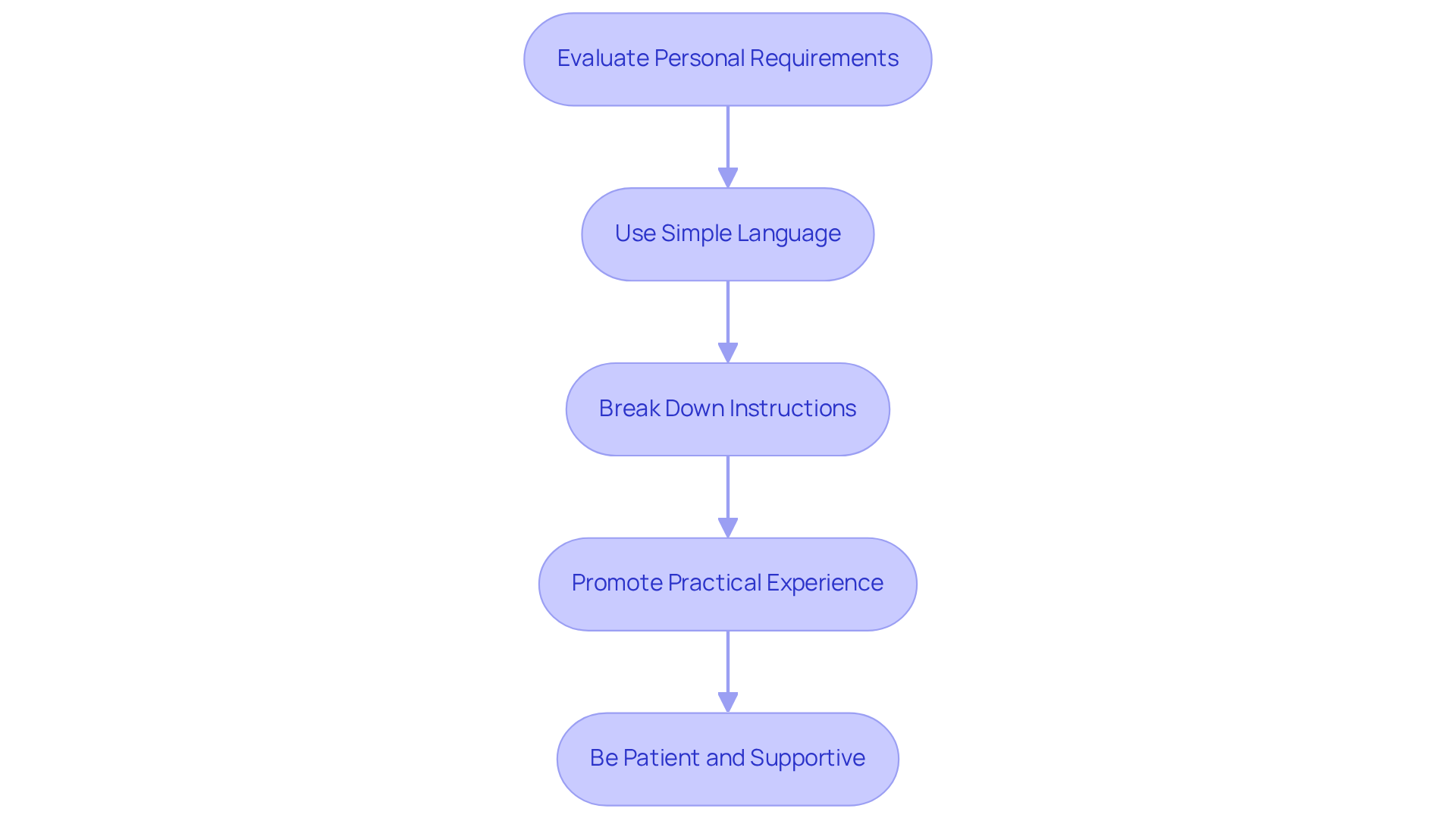
Evaluate Personal Requirements: Begin by assessing the elderly person's current digital skills and identifying specific areas where they may need support. This personalized approach ensures that training is not only relevant but also effective. It's important to note that 73% of individuals aged 65 and older report needing assistance with setting up and learning to use new devices, underscoring the significance of this step.
-
Use Simple Language: Steer clear of technical jargon. Instead, use clear, straightforward language when explaining concepts. Relate new information to familiar experiences to enhance understanding and make learning feel more approachable.
-
Break Down Instructions: Present information in small, manageable steps. Visual aids, written instructions, or video tutorials can reinforce learning and provide reference materials for later use, making the process less overwhelming.
-
Promote Practical Experience: Encourage older adults to practice using tools during training sessions. Hands-on experience not only reinforces learning but also builds confidence in their abilities, making them feel more empowered.
-
Be Patient and Supportive: Recognize that acquiring new skills can be challenging for older adults. Offer encouragement and be patient, allowing them to progress at their own pace. Celebrate small victories to boost their confidence and motivation. As Dianne Stone, associate director at the National Council on Aging, wisely noted, "There’s a myth out there that older adults don’t utilize digital tools." We know that’s simply not true.
By applying these strategies, caregivers can effectively focus on helping seniors with technology, ultimately enhancing their independence and connection with loved ones. Additionally, programs like UR Community Cares' partnership with the Senior Planet licensing program illustrate how helping seniors with technology can empower older adults by providing them with essential digital skills.
Making the Right Choice
Technology fatigue among seniors is a significant concern that deserves our thoughtful attention. It’s essential to recognize the emotional toll that rapid technological advancements can impose on older adults. By understanding these challenges, caregivers can create a nurturing environment that fosters confidence and encourages engagement with digital tools.
Setting boundaries for technology use, simplifying devices, and promoting mindful usage are key practices that can help alleviate the feelings of overwhelm many seniors face. Additionally, providing personalized education that is clear, patient, and practical empowers older adults, transforming technology into a bridge for connection and independence rather than a barrier.
Ultimately, addressing technology fatigue goes beyond merely reducing stress; it’s about enhancing the quality of life for seniors. By implementing these compassionate strategies, caregivers can play a vital role in helping older adults navigate the digital landscape with ease and confidence. This ensures they remain connected to loved ones and the world around them.
Embracing these approaches is crucial for fostering a more inclusive and supportive environment for seniors in our ever-evolving technological landscape. Together, we can make a difference, ensuring that technology serves as a source of connection and joy.
https://iframe.tely.ai/cta/eyJhcnRpY2xlX2lkIjogIjY5MWQwODg2MGNhYjQxNDQ1YTVmOGU3NSIsICJjb21wYW55X2lkIjogIjY4ZWU1ZGNhNzMxNzYyNTU3ZjNjOTVjMSIsICJpbmRleCI6IG51bGwsICJ0eXBlIjogImFydGljbGUifQ==Frequently Asked Questions
What is technology fatigue in seniors?
Technology fatigue in seniors is characterized by feelings of overwhelm, frustration, and anxiety when using electronic devices, often due to the rapid pace of technological advancements and complex interfaces.
What are some symptoms of technology fatigue in older adults?
Symptoms may include irritability, a lack of motivation to engage with devices, feelings of abandonment, and physical discomfort such as eye strain.
Why do many older adults feel overwhelmed by technology?
Many older adults feel overwhelmed due to the pressure to stay connected in a digital world, leading to feelings of inadequacy and fear of making mistakes as technology evolves.
How prevalent is the need for assistance with technology among seniors?
A significant 73% of individuals aged 65 and above report needing assistance with new devices, highlighting the widespread nature of device-related anxiety among seniors.
What can caregivers do to support seniors with technology?
Caregivers can recognize signs of technology fatigue and provide the right support and interventions to help seniors develop a more positive relationship with technology.
Do older adults believe technology can improve their lives?
Yes, encouragingly, 66% of older adults believe that innovations can enhance their lives, indicating a willingness to embrace technology with the right support.