
For families in our service areas
For families in our service areas, this guide explains caregiver support and how non-medical in-home caregiving can support care planning in East Idaho, Treasure Valley & Magic Valley, Northern Wasatch, North Central West Virginia, and Northeast Ohio.
What You Need to Know About Help Pay Medical Bills
Navigating the labyrinth of medical bills can be an overwhelming experience for caregivers juggling numerous responsibilities. With nearly 80% of healthcare invoices containing errors, the challenge is not just understanding these bills but also managing them effectively to alleviate financial stress.
This situation can lead to significant anxiety, as caregivers may find themselves paying more than necessary. The implications of these errors can be far-reaching, affecting not only the caregiver's finances but also their overall well-being.
So, how can caregivers turn the tide in their favor amidst the complexities of medical billing? Here are essential steps to help you comprehend your medical expenses, reduce them, and identify valuable financial assistance resources:
- Review Bills Carefully: Always check for discrepancies in charges.
- Ask Questions: Don’t hesitate to contact your healthcare provider for clarification.
- Explore Financial Assistance: Research programs that can help cover costs.
By taking these proactive measures, caregivers can ensure they are not paying more than necessary and can navigate the complexities of medical billing with greater confidence.
Understand Your Medical Bills
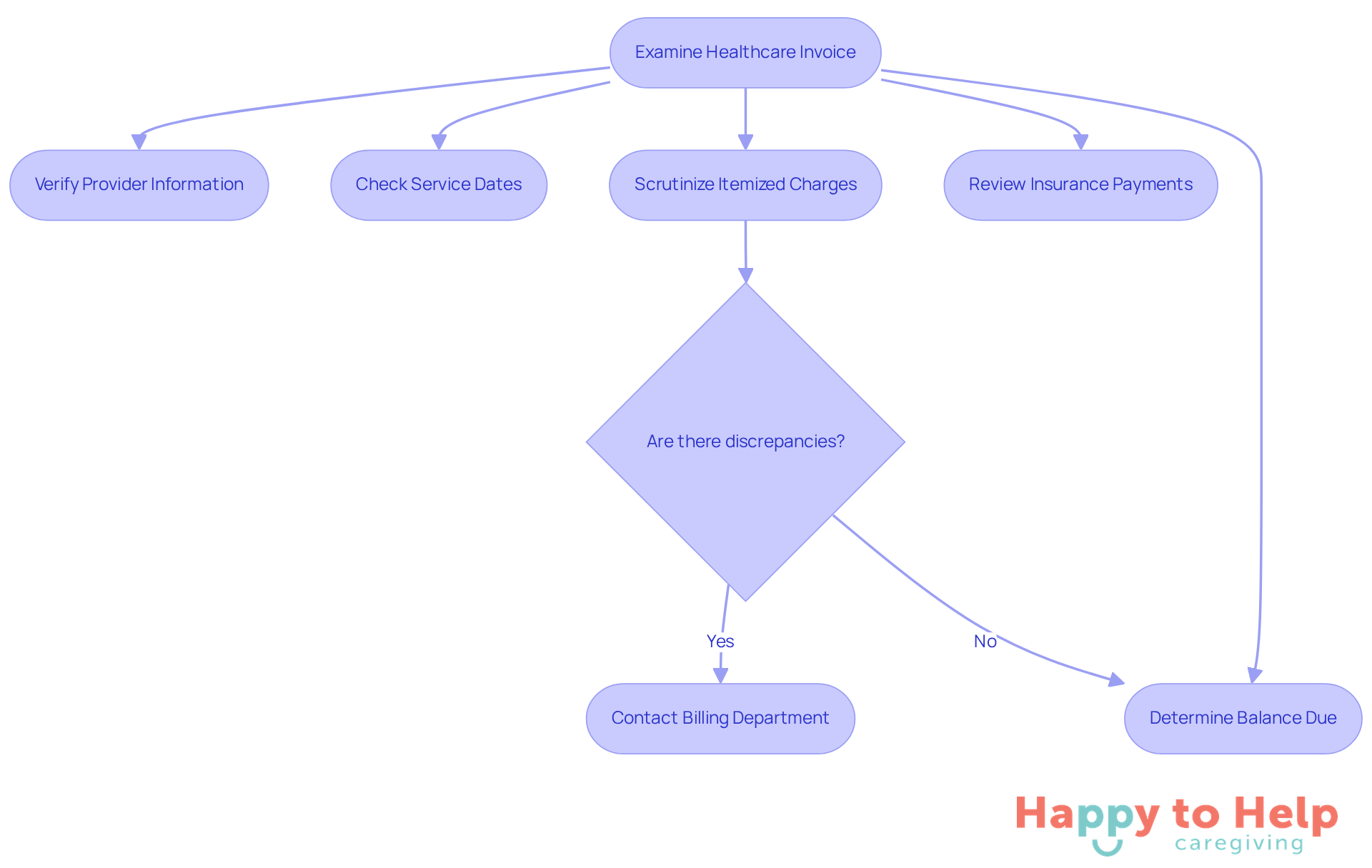
Start by carefully examining every healthcare invoice you receive. The problem is that many invoices contain discrepancies that can lead to unexpected charges. Roughly 80% of healthcare invoices include mistakes, and about 14 million Americans have healthcare charges recorded on their credit reports due to these billing errors. This highlights the importance of thorough examination.
Key components to check include:
- Provider Information: Verify that the name and address of the healthcare provider are accurate.
- Service Dates: Ensure that the dates of service align with your records.
- Itemized Charges: Scrutinize the list of services rendered and their associated costs, ensuring you understand what each charge entails.
- Insurance Payments: Check the amount your insurance has covered and any adjustments made.
- Balance Due: Determine the total amount owed after insurance payments.
If you encounter discrepancies, promptly contact the billing department for clarification. The solution lies in familiarizing yourself with terms such as 'Explanation of Benefits (EOB)' and 'deductibles,' which will enhance your understanding of your financial responsibilities. Financial advisors, like Tye Lucas, recommend keeping detailed records of your communications with billing offices, as this can aid in resolving issues effectively.
Furthermore, recent modifications in healthcare billing practices in 2025 emphasize transparency, making it essential for patients to fully comprehend their statements. Resources such as the CMS guide on understanding healthcare invoices can offer additional clarity and assistance in navigating this intricate landscape.
Explore Strategies to Reduce Medical Bills
To effectively reduce your medical bills, caregivers face a significant challenge. High medical costs can lead to financial strain and stress, making it crucial to find ways that help pay medical bills.
Strategies to Consider:
-
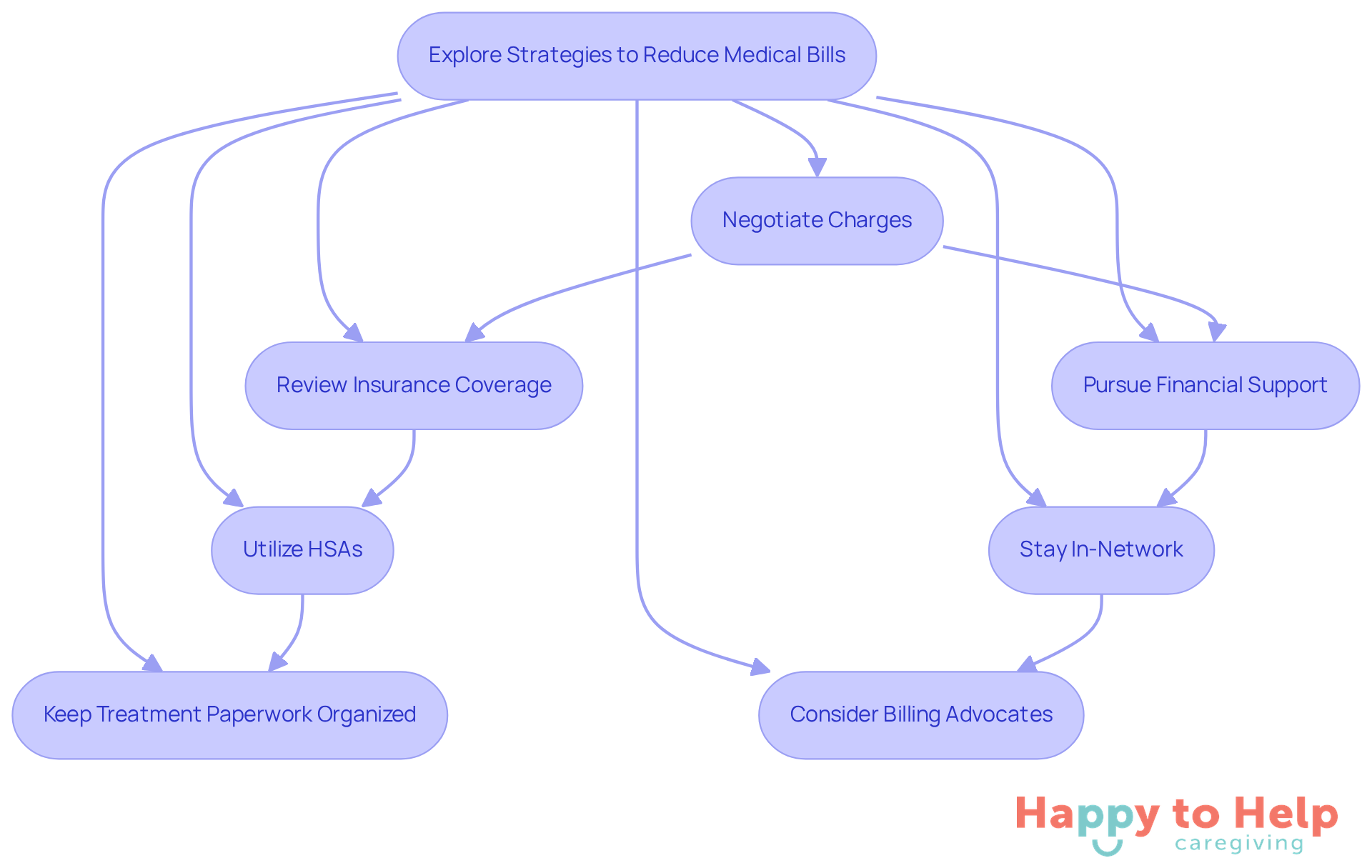
Negotiate Charges: Contact your healthcare provider's billing department to discuss your statement. Many providers are open to negotiation, especially if you can offer a lump-sum payment. In fact, 62% of patients who asked to pay less saw their medical bills reduced. Additionally, inquire about discounts available for uninsured patients or those experiencing economic difficulties.
-
Review Insurance Coverage: Ensure you are fully utilizing all benefits available under your insurance plan. This includes preventive services that might be covered at no charge, helping you avoid unforeseen costs.
-
Pursue financial support: Investigate initiatives that can help pay medical bills for healthcare costs. Many non-profit organizations provide free or affordable support to help pay medical bills, assisting individuals in navigating the process of handling healthcare bills.
-
Utilize Health Savings Accounts (HSAs): If you have access to HSAs, use them to cover qualified healthcare costs with pre-tax dollars. This can significantly reduce your overall costs and provide a financial cushion for unexpected medical charges.
-
Stay In-Network: Whenever possible, choose in-network providers to minimize out-of-pocket costs. Using out-of-network services can lead to increased expenses, so opting for in-network choices is a smart way to keep costs manageable.
-
Keep Treatment Paperwork Organized: Maintain organized records of your treatment and request a detailed statement to check for errors. This can help you identify discrepancies and ensure you are only paying for services rendered.
-
Consider Billing Advocates: If you feel overwhelmed, think about hiring a billing advocate. They can assist with reviewing your bills for errors, negotiating with healthcare providers, and helping you understand your rights.
By applying these strategies, caregivers can navigate the complexities of medical billing more effectively and alleviate their financial burden.
Identify Financial Assistance Resources
Caregivers often face significant challenges when trying to find resources that help pay medical bills. The financial burden can be overwhelming, leading to stress and anxiety. Fortunately, there are several resources available that help pay medical bills and alleviate these costs.
-
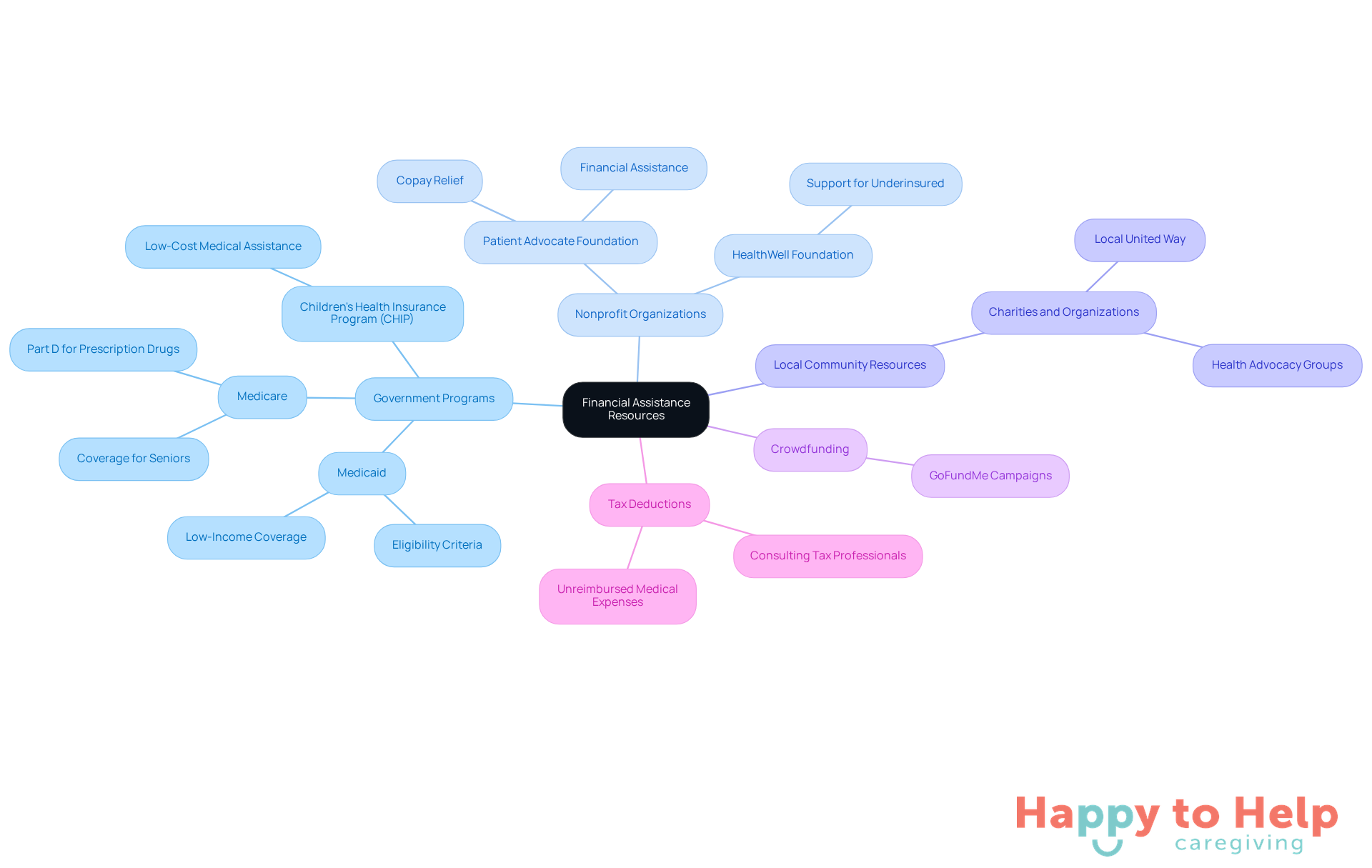
Government Programs: Programs like Medicare and Medicaid offer monetary aid for eligible individuals. For more information on coverage options, check the Medicare.gov site.
-
Nonprofit organizations, such as the Patient Advocate Foundation, offer financial assistance to help pay medical bills for patients grappling with healthcare expenses.
-
Local Community Resources: Many local charities and community organizations offer support for healthcare costs. Reach out to your local United Way or search for health advocacy groups in your area.
-
Crowdfunding: Consider starting a crowdfunding campaign on platforms like GoFundMe to help pay medical bills. This can be a viable option for families facing significant financial challenges.
-
Tax Deductions: Caregivers may qualify to deduct unreimbursed medical expenses on their taxes. It's advisable to consult with a tax professional to understand what qualifies and how to claim these deductions.
Making the Right Choice
Navigating the complexities of medical bills presents a significant challenge for caregivers, who often juggle multiple responsibilities. This issue can lead to financial instability, making it crucial for caregivers to manage and reduce these expenses effectively.
By taking proactive steps - such as reviewing bills, negotiating charges, and exploring financial assistance resources - caregivers can alleviate the burden of medical costs. It's essential to meticulously examine medical invoices for discrepancies and employ negotiation strategies with healthcare providers. Statistics reveal a staggering rate of billing errors, highlighting the potential for negotiating lower charges. Additionally, various forms of assistance from government programs and nonprofit organizations can provide much-needed support.
Maintaining organized records and being aware of insurance benefits empowers caregivers to take control of their financial health. The responsibility of managing medical expenses shouldn't rest solely on caregivers. By implementing the strategies outlined in this guide, individuals can navigate the intricacies of medical billing and foster a sense of agency in their financial journey.
Engaging with available resources and advocating for oneself can lead to substantial savings and reduced stress. Taking action and seeking support is essential for thriving amidst the challenges of caregiving.
https://iframe.tely.ai/cta/eyJhcnRpY2xlX2lkIjogIjY5MjNiOWFlZjA2NjI2NmZhOWRjOTE3YiIsICJjb21wYW55X2lkIjogIjY4ZWU1ZGNhNzMxNzYyNTU3ZjNjOTVjMSIsICJpbmRleCI6IG51bGwsICJ0eXBlIjogImFydGljbGUifQ==Frequently Asked Questions
Why is it important to examine healthcare invoices?
It is important to examine healthcare invoices because roughly 80% of them contain mistakes, which can lead to unexpected charges. Many Americans have healthcare charges recorded on their credit reports due to these billing errors.
What key components should I check on my medical bills?
You should check the following key components on your medical bills:
- Provider Information: Verify the accuracy of the healthcare provider's name and address.
- Service Dates: Ensure the dates of service match your records.
- Itemized Charges: Scrutinize the list of services rendered and their associated costs.
- Insurance Payments: Check the amount your insurance has covered and any adjustments made.
- Balance Due: Determine the total amount owed after insurance payments.
What should I do if I find discrepancies in my medical bills?
If you find discrepancies in your medical bills, you should promptly contact the billing department for clarification.
What terms should I familiarize myself with to understand my medical bills better?
You should familiarize yourself with terms such as 'Explanation of Benefits (EOB)' and 'deductibles' to better understand your financial responsibilities.
What advice do financial advisors give regarding medical billing issues?
Financial advisors, like Tye Lucas, recommend keeping detailed records of your communications with billing offices to aid in effectively resolving issues.
What changes in healthcare billing practices are expected in 2025?
Recent modifications in healthcare billing practices in 2025 emphasize transparency, making it essential for patients to fully comprehend their statements.
Where can I find additional resources to help understand healthcare invoices?
Resources such as the CMS guide on understanding healthcare invoices can offer additional clarity and assistance in navigating the complexities of medical billing.
List of Sources
- Understand Your Medical Bills
- Out of Work? 9 Tips For Managing Your Medical Bills (https://kidney.org/news-stories/out-work-9-tips-managing-your-medical-bills)
- Navigating medical bills: Take these 12 steps to manage costs and minimize debt (https://cnbc.com/2023/09/19/navigating-medical-bills-12-steps-for-managing-costs-minimizing-debt.html)
- No Surprises: Understand your rights against surprise medical bills | CMS (https://cms.gov/newsroom/fact-sheets/no-surprises-understand-your-rights-against-surprise-medical-bills)
- 40+ Medical Billing Stats Every Healthcare Organization Should Know in 2025 (https://aptarro.com/insights/medical-billing-stats)
- Medical Billing Statistics: Trends in Billing and Payments | BillFlash (https://billflash.com/healthcare-industry-insights/medical-billing-statistics-in-the-healthcare-industry)
- Explore Strategies to Reduce Medical Bills
- Money Matters |How to negotiate medical bills and reduce your debt (https://wsls.com/news/2025/10/02/money-matters-how-to-negotiate-medical-bills-and-reduce-your-debt)
- Managing Medical Bills: How to Negotiate and Reduce Costs (https://consolidatedcredit.org/financial-news/managing-medical-bills-how-to-negotiate-and-reduce-costs)
- Over 25% Of Americans Struggle With Medical Bills—Here’s What to Do (https://investopedia.com/over-25-of-americans-struggle-with-medical-bills-here-s-what-to-do-11731263)
- New Study - More Americans Struggling to Afford Healthcare (https://westhealth.org/news/new-study-reveals-more-struggling-to-afford-healthcare)
- Here's how to eliminate, reduce or negotiate a medical bill (https://wwno.org/2025-10-16/heres-how-to-eliminate-reduce-or-negotiate-a-medical-bill)
- Identify Financial Assistance Resources
- 9 Government Programs and Nonprofits That Can Help with Medical Bills (https://asbestos.com/treatment/expenses/government-nonprofit-financial-assistance)
- North Dakota lays out $1 billion plan in application for federal health care funds (https://bismarcktribune.com/news/state-regional/government-politics/article\_0714a7a5-635b-4ca1-badc-11672481496f.html)
- Final House Vote on Devastating Health and Food Assistance Cuts - Medicare Rights Center (https://medicarerights.org/medicare-watch/2025/07/03/final-house-vote-looms-on-devastating-health-and-food-assistance-cuts)
- Medicaid Enrollment and Unwinding Tracker | KFF (https://kff.org/medicaid/medicaid-enrollment-and-unwinding-tracker)