

For families in our service areas
For families in our service areas, this guide explains in-home care and how non-medical in-home caregiving can support care planning in East Idaho, Treasure Valley & Magic Valley, Northern Wasatch, North Central West Virginia, and Northeast Ohio.
Understanding Practices for Affordable In Home Care
Navigating in-home care services can be overwhelming for families. The distinction between home health and home care often leads to confusion, especially as a significant portion of the elderly population is expected to require assistance. Understanding these nuances is crucial for ensuring that loved ones receive the appropriate support tailored to their needs.
Families frequently encounter challenges when assessing individual requirements, evaluating care provider qualifications, and managing financial constraints. These hurdles can complicate the process of finding suitable care. So, how can families effectively navigate this complex landscape?
To secure affordable and personalized in-home care that enhances their loved ones' quality of life, families should consider the following actionable steps:
- Assess Individual Needs: Start by evaluating the specific needs of your loved one. This includes understanding their medical requirements, daily living activities, and personal preferences.
- Research Care Providers: Look for qualified care providers with good reputations. Check their credentials, read reviews, and ask for recommendations from trusted sources.
- Understand Financial Options: Explore various financial options, including insurance coverage, government assistance programs, and payment plans offered by care providers.
By taking these steps, families can navigate the in-home care landscape more effectively, ensuring their loved ones receive the support they need.
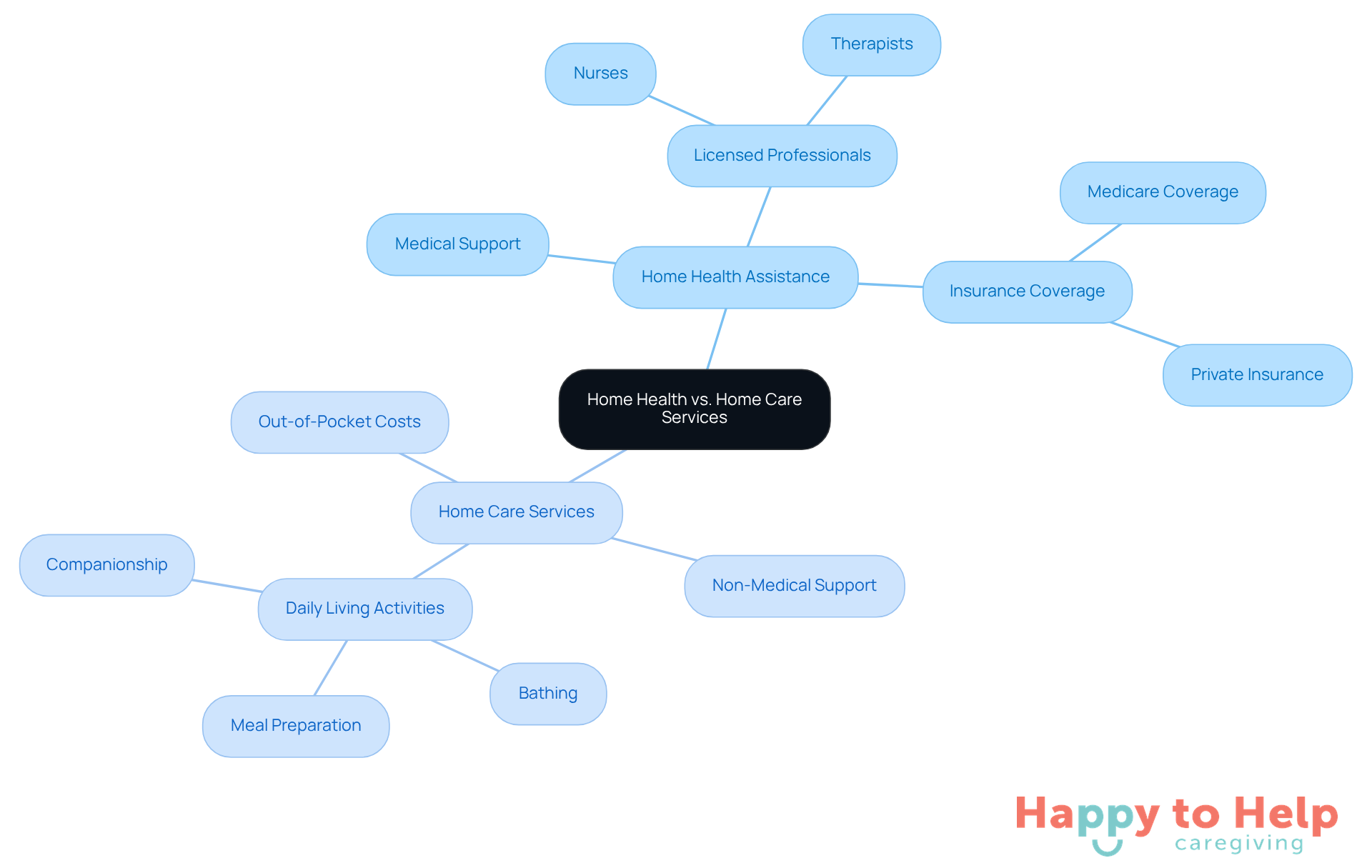
Differentiate Between Home Health and Home Care Services
Home health assistance presents a significant challenge for families trying to navigate care options. It typically includes medical support from licensed professionals, such as nurses or therapists, often recommended after hospitalization or for ongoing medical conditions. In contrast, domestic support focuses on non-medical assistance, like help with daily tasks such as bathing, meal preparation, and companionship.
Understanding this distinction is crucial for families to ensure they select the right type of support that meets their loved one's specific needs. For instance, if an elder requires assistance with medication management and physical therapy, in-home care is essential. However, if they need help with daily living activities and companionship, in-home support options would suffice. This differentiation can also impact costs; while residential health options may be covered by insurance, affordable in-home care services often require out-of-pocket payments.
As the demand for domestic care rises - especially among the elderly, where about 70% of individuals aged 65 and above are expected to need assistance during their lives - grasping these differences becomes increasingly important. According to industry forecasts, spending on residential healthcare is projected to grow at an annual rate of 7.1% between 2025 and 2026, highlighting the growing importance of these services.
As Bud Langham, a former home health executive, notes, "The desire for these tools comes down to the need to automate data entry, which is the wave of the future." This insight underscores the importance of families being aware of the types of support available to them.
Assess Individual Needs and Preferences for Care
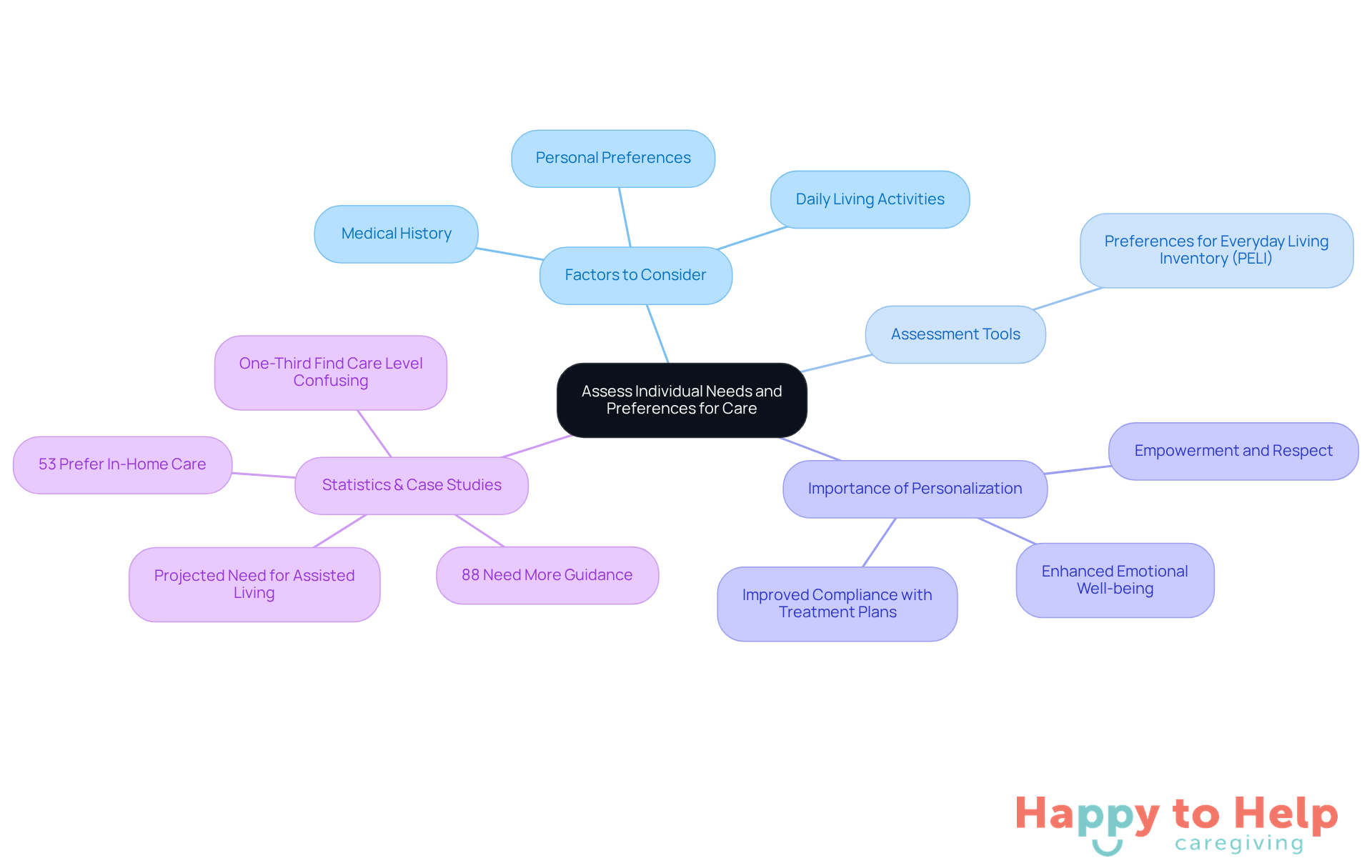
Assessing individual needs in caregiving can be challenging. Families often struggle to consider various factors such as medical history, daily living activities, and personal preferences. This oversight can lead to inadequate support, affecting the emotional and physical well-being of seniors.
To address this issue, a comprehensive assessment is essential. Discussing the client's physical, emotional, and social needs is crucial. Tools like the Preferences for Everyday Living Inventory (PELI) can help identify specific routines and preferences that are vital to the individual. For instance, if a senior enjoys gardening, incorporating this activity into their support plan can significantly enhance their emotional well-being.
Engaging clients in conversations about their preferences fosters empowerment and respect in the decision-making process. This tailored approach not only boosts satisfaction but also encourages better compliance with treatment plans, ultimately leading to improved outcomes for seniors.
Statistics reveal that 53% of households prefer affordable in-home care services over senior living, highlighting the importance of customizing assistance to individual needs. As Morgan Gonzales points out, many households find navigating senior support options difficult, highlighting the necessity for tailored evaluations that can assist them effectively.
Case studies demonstrate that when households prioritize individualized treatment plans, they observe significant improvements in client satisfaction and overall well-being. By focusing on personalized care, families can ensure that their loved ones receive the support they truly need.
Evaluate Care Providers for Qualifications and Services
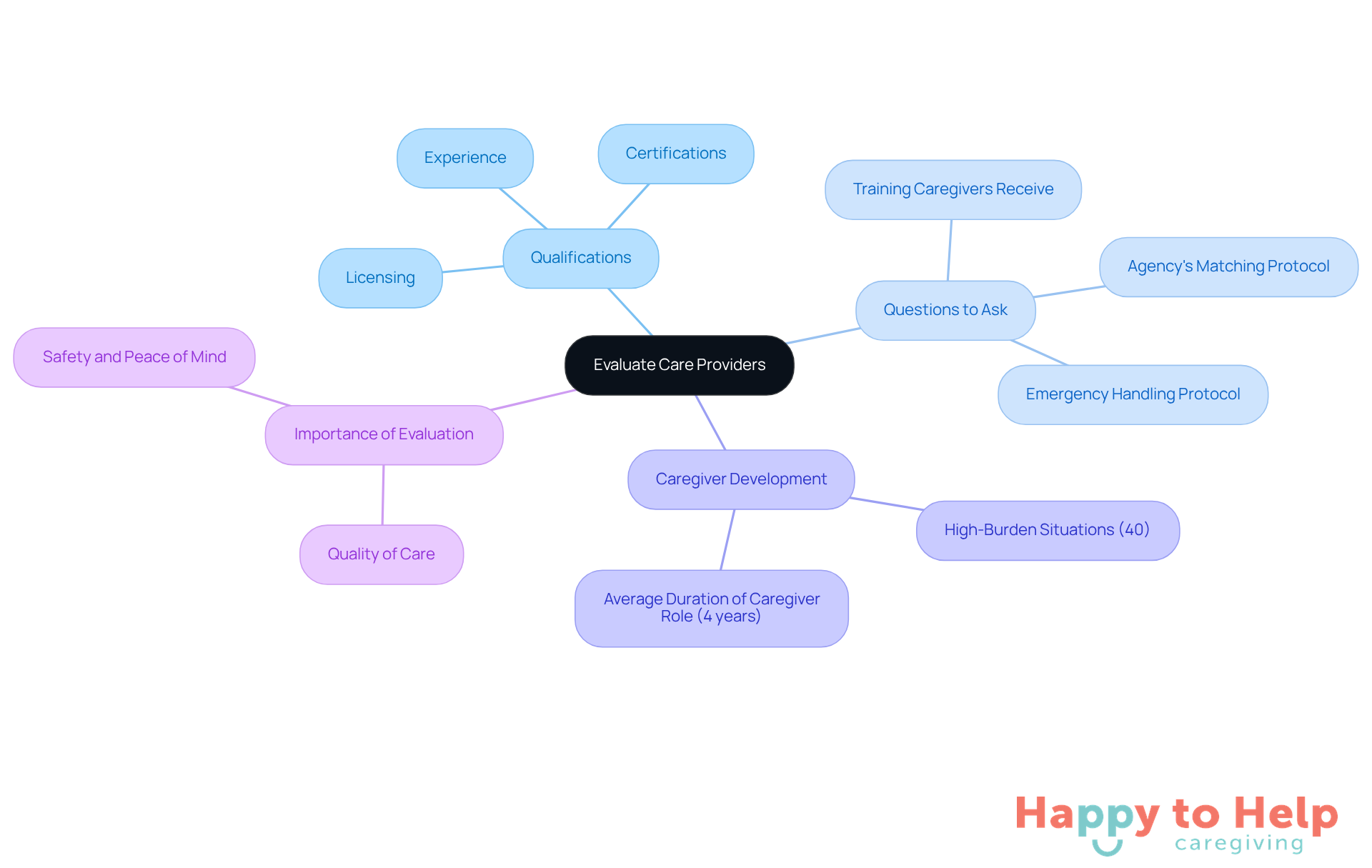
When assessing service providers, families face a significant challenge: ensuring their loved ones receive the best care possible. This task can be daunting, especially when considering the various aspects of a provider's qualifications, such as licensing, certifications, and experience. Without careful evaluation, families risk compromising the quality of care their loved ones receive.
To navigate this complex landscape, it's crucial to ask specific questions. For instance, inquire about:
- The training caregivers receive
- How the agency matches caregivers with clients
- The agency's protocol for handling emergencies
Additionally, seeking references and reading feedback from other clients can provide valuable insights into the quality of services offered. A reputable agency will typically have a transparent process for caregiver selection and ongoing training.
Understanding the agency's approach to caregiver development is essential, especially given that the average duration of a caregiver's role is about four years. Moreover, with 40% of caregivers categorized as experiencing high-burden situations, evaluating potential providers becomes even more critical. This assessment ensures that loved ones receive the utmost standard of assistance, which is vital for both safety and peace of mind.
As Stephen Vaccaro, President of HHAeXchange, notes, effective compliance management systems empower providers to align personnel, resources, and operations to meet regulatory standards while enhancing service delivery. By prioritizing these factors, families can secure the best possible support for their loved ones.
Explore Financial Options and Budgeting for Care Services
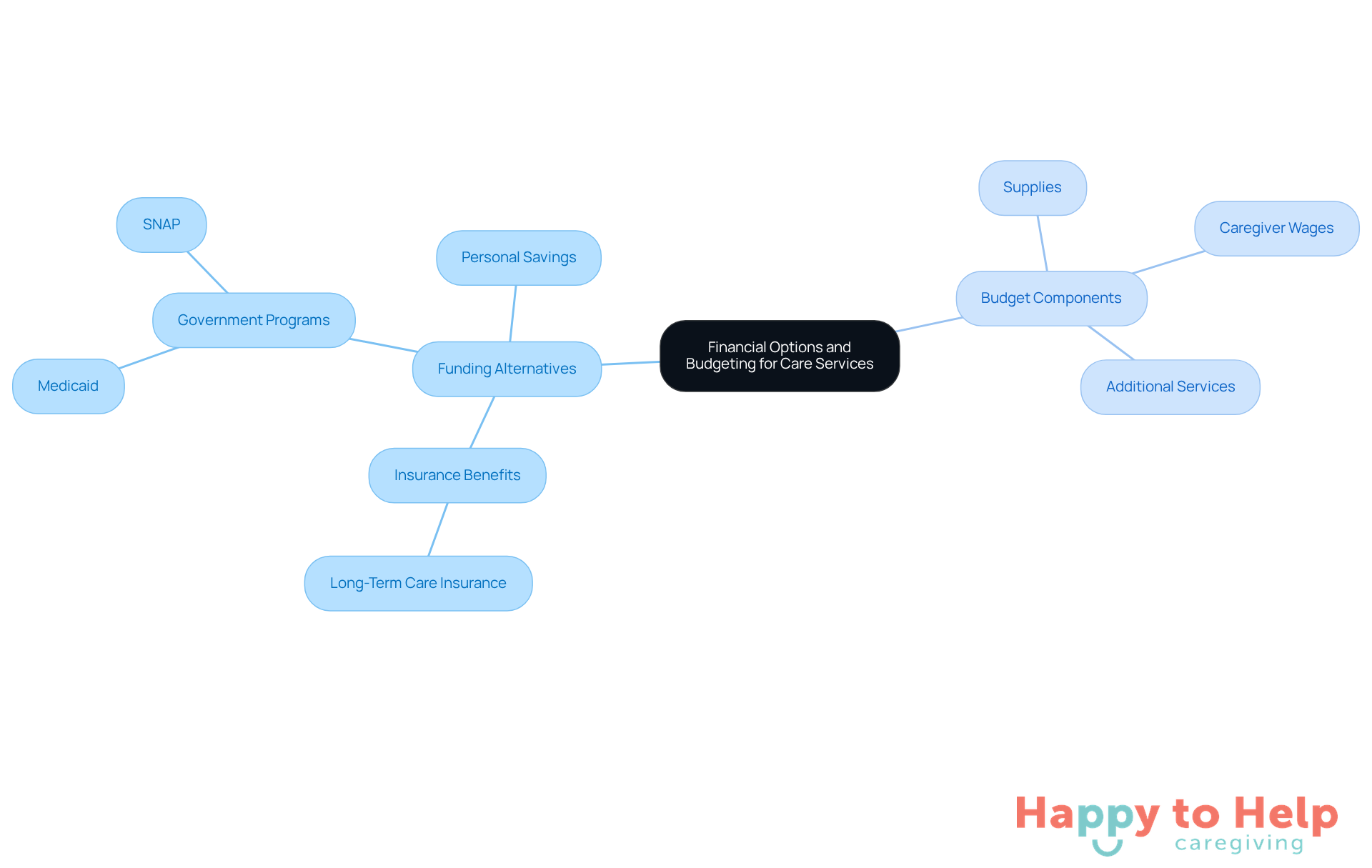
Families often face the challenge of evaluating their financial condition when seeking in-home assistance for loved ones. This situation can be daunting, as many caregivers worry about their financial preparedness. With over 7 million low-income seniors relying on Medicaid for health coverage, understanding various funding alternatives is crucial. Options may include:
- Utilizing insurance benefits
- Government programs
- Personal savings
For instance, long-term care insurance can help cover some in-home care costs, providing a safety net for families.
To navigate this financial landscape effectively, households should establish a comprehensive budget that outlines anticipated costs. This budget should include:
- Caregiver wages
- Supplies
- Any additional services needed
Tools like budgeting apps can assist in tracking expenses and managing finances efficiently. As Scott Thomas pointed out, proactive planning is essential for alleviating concerns about financial readiness for caregiving.
By exploring financial options and consulting with financial advisors, families can ensure they can access affordable in-home care services without compromising their loved one's quality of life. Taking these steps not only provides peace of mind but also enhances the overall caregiving experience.
Making the Right Choice
Navigating the landscape of in-home care services presents a significant challenge for families seeking affordable and effective support for their loved ones. Without a clear understanding of the differences between home health and home care services, families may struggle to make informed decisions that truly meet their specific needs.
This lack of clarity can lead to inadequate care, increased stress, and financial strain. Families may find themselves overwhelmed by choices, unsure of which services align with the level of care required. To address these challenges, it’s essential to assess individual needs, evaluate care providers, and explore financial options thoroughly.
Here are some actionable steps families can take:
- Assess Individual Needs: Understand the specific requirements of your loved one to determine the appropriate level of care.
- Evaluate Care Providers: Research qualifications and reviews of potential providers to ensure they meet your standards.
- Explore Financial Options: Investigate various funding sources and budgeting strategies to alleviate financial concerns.
Ultimately, the importance of these best practices cannot be overstated. Families are encouraged to educate themselves on available resources and options, ensuring their loved ones receive the quality care they deserve. By prioritizing these considerations, families can create a supportive environment that promotes both physical health and emotional well-being, paving the way for a more fulfilling life for seniors in their care.
https://iframe.tely.ai/cta/eyJhcnRpY2xlX2lkIjogIjY5M2Y1MDhiNjk1NDdlMzRlNWE0ZWU2NyIsICJjb21wYW55X2lkIjogIjY4ZWU1ZGNhNzMxNzYyNTU3ZjNjOTVjMSIsICJpbmRleCI6IG51bGwsICJ0eXBlIjogImFydGljbGUifQ==Frequently Asked Questions
What is the main difference between home health and home care services?
Home health services include medical support from licensed professionals, such as nurses or therapists, while home care services focus on non-medical assistance, like help with daily tasks such as bathing, meal preparation, and companionship.
When should families consider home health assistance?
Families should consider home health assistance when an elder requires medical support, such as medication management or physical therapy, often recommended after hospitalization or for ongoing medical conditions.
What types of support are included in home care services?
Home care services include non-medical support like assistance with daily living activities, companionship, and help with tasks such as meal preparation and bathing.
How do costs differ between home health and home care services?
Home health services may be covered by insurance, while affordable home care services often require out-of-pocket payments.
Why is it important for families to understand the distinction between these services?
Understanding the distinction is crucial for families to select the right type of support that meets their loved one's specific needs, ensuring they receive appropriate care.
What is the projected growth rate for spending on residential healthcare?
Spending on residential healthcare is projected to grow at an annual rate of 7.1% between 2025 and 2026.
What percentage of individuals aged 65 and above are expected to need assistance during their lives?
Approximately 70% of individuals aged 65 and above are expected to need assistance during their lives.
What insight does Bud Langham provide about the future of home health services?
Bud Langham notes that the desire for tools to automate data entry is essential, highlighting the growing importance of being aware of the types of support available to families.
List of Sources
- Differentiate Between Home Health and Home Care Services
- Disruption Redefines Home-Based Care: Providers Confront Challenges, Seize New Opportunities (https://homehealthcarenews.com/2025/10/disruption-redefines-home-based-care-providers-confront-challenges-seize-new-opportunities)
- Home Care Industry Overview and Statistics (https://ankota.com/home-care-industry-overview-and-statistics)
- State of home care in 2025 (https://mcknightshomecare.com/state-of-home-care-in-2025)
- The Home Healthcare Outlook for 2025 - Alora Health (https://alorahealth.com/blog-the-home-healthcare-outlook-for-2025)
- Assess Individual Needs and Preferences for Care
- Families Prefer In-Home Care To Senior Living – Yet Struggle To Identify Needed Support (https://homehealthcarenews.com/2025/11/families-prefer-in-home-care-to-senior-living-yet-struggle-to-identify-needed-support)
- 40 Inspirational Quotes for Caregivers - Care Options for Kids (https://careoptionsforkids.com/blog/inspirational-quotes-for-caregivers)
- 30 Inspirational Quotes for Caregivers (https://agingcare.com/articles/caregivers-quotes-inspiration-141133.htm)
- 2025 Home Care Statistics: Trends & Insights To Know (https://premierhcinc.com/blog/home-care-statistics)
- Evaluate Care Providers for Qualifications and Services
- Regulatory Compliance Tops 2025 Priorities For Home- And Community-Based Service Providers (https://homehealthcarenews.com/2025/06/regulatory-compliance-tops-2025-priorities-for-home-and-community-based-service-providers)
- Caregiver Statistics: Demographics (https://caregiver.org/resource/caregiver-statistics-demographics)
- U.S. News to Debut Best Home Health Ratings in 2026 (https://usnews.com/info/blogs/press-room/articles/2025-11-03/u-s-news-to-debut-best-home-health-ratings-in-2026)
- Explore Financial Options and Budgeting for Care Services
- Medicaid Home Care Cuts Could Cost States $1 Billion Over 5 Years (https://homehealthcarenews.com/2025/10/medicaid-home-care-cuts-could-cost-states-1-billion-over-5-years)
- Most Americans expect to experience a long-term care event, and nearly 3 in 4 want in-home care if it happens to them - according to Northwestern Mutual Planning & Progress Study (https://news.northwesternmutual.com/2025-10-07-Most-Americans-expect-to-experience-a-long-term-care-event,-and-nearly-3-in-4-want-in-home-care-if-it-happens-to-them-according-to-Northwestern-Mutual-Planning-Progress-Study)
- Rising elder care costs trigger financial strain across generations (https://scrippsnews.com/us-news/rising-elder-care-costs-trigger-financial-strain-across-generations)
- 2025 Budget Impacts: House Bill Would Cut Assistance and Raise Costs for Seniors (https://cbpp.org/research/federal-budget/2025-budget-impacts-house-bill-would-cut-assistance-and-raise-costs-for)
- Home Care Costs in 2025: A State-by-State Guide (https://aplaceformom.com/caregiver-resources/articles/in-home-care-costs)