4 Best Practices for Choosing Elderly Home Care Agencies

For families in our service areas
For families in our service areas, this guide explains home care and how non-medical in-home caregiving can support care planning in East Idaho, Treasure Valley & Magic Valley, Northern Wasatch, North Central West Virginia, and Northeast Ohio.
Quick Guide to Practices for Choosing Elderly Home
Choosing the right elderly home care agency can be an emotional journey. It’s essential to start by assessing the unique needs and preferences of your loved one. This step is not just about logistics; it’s about understanding what will bring comfort and security to their daily life.
Next, evaluating agency credentials and experience is crucial. You want to ensure that the caregivers are not only qualified but also compassionate. Prioritizing communication and caregiver compatibility can make a world of difference, creating a bond that fosters trust and understanding.
Moreover, it’s important to understand the service offerings and flexibility of the agency. Families deserve the peace of mind that comes from knowing their loved ones are in a supportive and adaptable environment.
By following these best practices, families can select agencies that truly meet the specific care requirements of their loved ones. This thoughtful approach enhances the quality of care and satisfaction for both clients and caregivers, creating a nurturing atmosphere where everyone can thrive.
Why Practices for Choosing Elderly Home Matters
Choosing the right elderly home care agency can indeed feel overwhelming. Families often grapple with the emotional weight of ensuring their loved ones receive the best possible support. With a growing number of options available, it becomes crucial to understand what to look for in order to navigate this important decision.
This article aims to shed light on best practices for selecting an agency that not only addresses individual care needs but also nurtures emotional well-being and companionship.
How can families find reassurance in a landscape filled with diverse services and providers? Together, we will explore the steps to making a choice that feels right for everyone involved.
Assess Individual Needs and Preferences
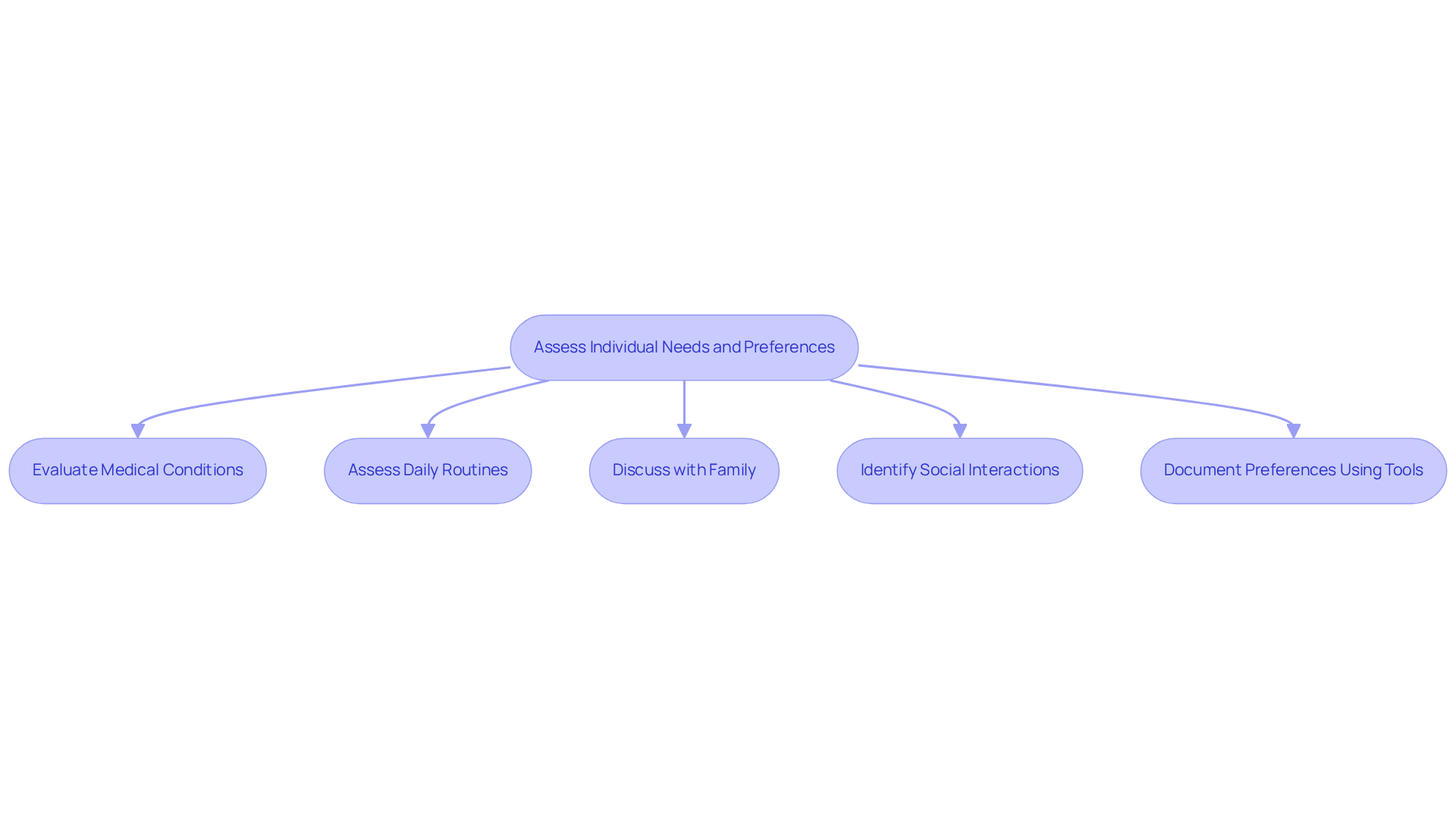
Begin by conducting a thorough assessment of the elderly individual's needs and preferences. This includes evaluating their medical conditions, daily routines, and social interactions. Engage in heartfelt discussions with the person and their family to truly understand their wishes regarding support. What activities do they enjoy? Are there dietary restrictions to consider? Do they have specific health issues? Utilize assessment tools or checklists to document these preferences, as they can serve as a .
For instance, if companionship is valued, seek agencies that prioritize social interaction in their support plans. This personalized approach not only fosters a sense of independence but also enhances overall satisfaction with the support received. Personalized support plans have been shown to improve quality of life by promoting emotional well-being and alleviating feelings of loneliness, which affect around 5% of adults aged 50-80. Moreover, one in three adults aged 50-80 reported feeling isolated at least some of the time, underscoring the vital need for emotional support and social interaction.
Case studies reveal that individuals who receive personalized support experience greater comfort and social involvement. The 'Personalized Health Support Solutions' case study illustrates the significance of customized plans in enhancing the quality of assistance received at home. Additionally, it is crucial to select elderly home care agencies that have trained and experienced caregivers. This ensures that the specific needs of elderly individuals are met effectively, providing peace of mind for both them and their families.
Evaluate Agency Credentials and Experience
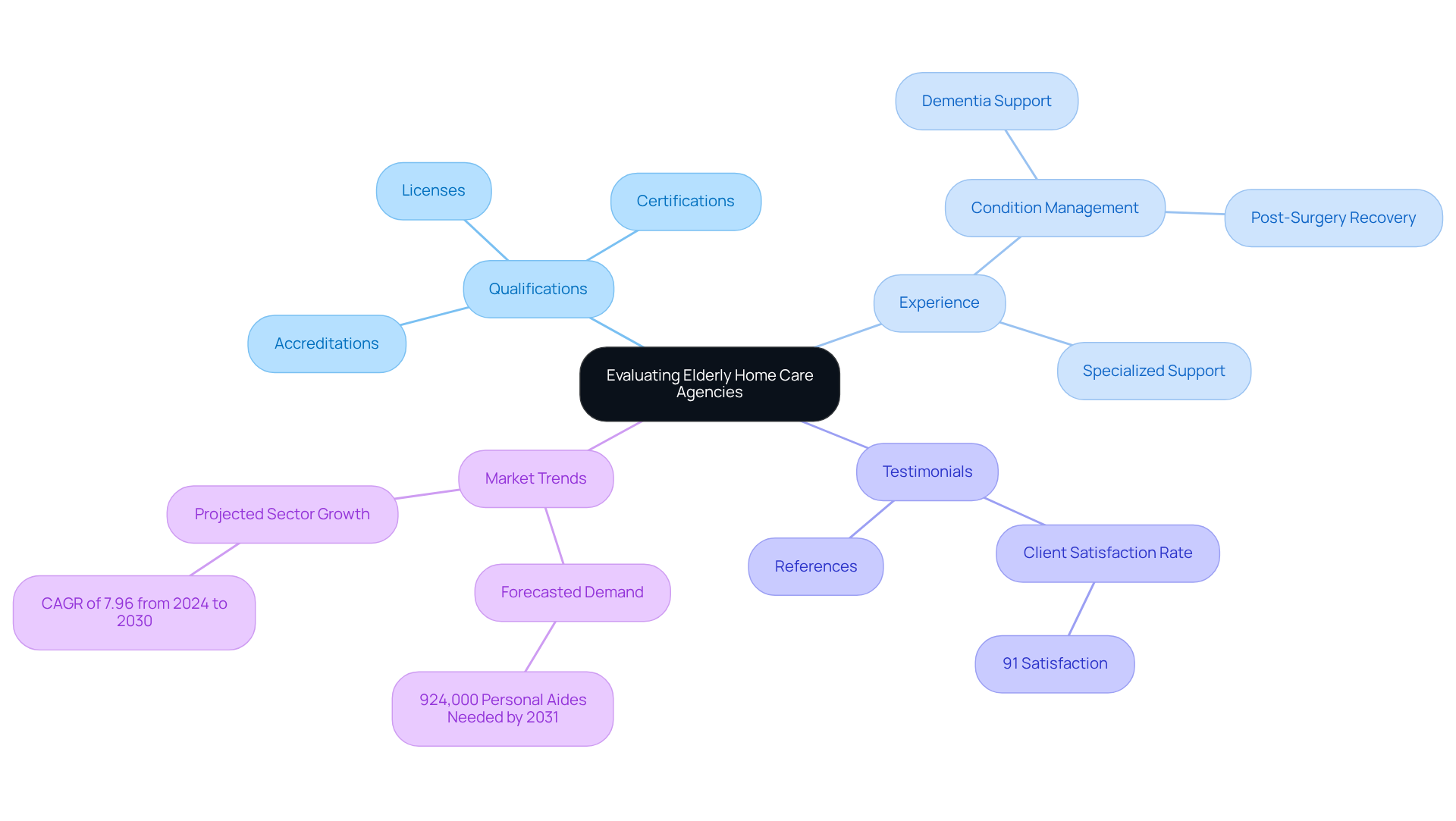
When evaluating elderly home care agencies, it's crucial to confirm their , including licenses, certifications, and accreditations from respected organizations. Organizations connected to professional associations often demonstrate a commitment to upholding high standards of service, which can provide peace of mind.
Consider the organization's experience in managing specific conditions relevant to your loved one, such as dementia or recovery from surgery. For instance, organizations that specialize in dementia support can significantly enhance the quality of life for seniors by offering tailored assistance that addresses cognitive decline and fosters engagement.
Asking for references or testimonials from other families can further clarify the organization's reputation. In fact, 91% of clients in personal support express satisfaction with their caregivers, underscoring the importance of pursuing testimonials. A provider with a proven track record of positive feedback and successful health outcomes is likely to be a reliable choice.
This thorough vetting process is essential to ensure that elderly home care agencies can deliver the level of support your loved one deserves, especially as the demand for specialized domestic support services continues to grow. Forecasts suggest a need for 924,000 personal aides and health aides by 2031. Moreover, with 70% of individuals reaching 65 expected to experience significant long-term support needs, the importance of specialized assistance and thoughtful planning cannot be overstated.
The residential healthcare sector is projected to expand at a CAGR of 7.96% from 2024 to 2030, highlighting the increasing demand for quality assistance services. Neglecting to thoroughly assess support service providers can lead to issues like worker reliability concerns or mismatches in skills. Thus, it's vital to conduct a detailed evaluation, ensuring that your loved one receives the compassionate care they truly deserve.
Prioritize Communication and Caregiver Compatibility
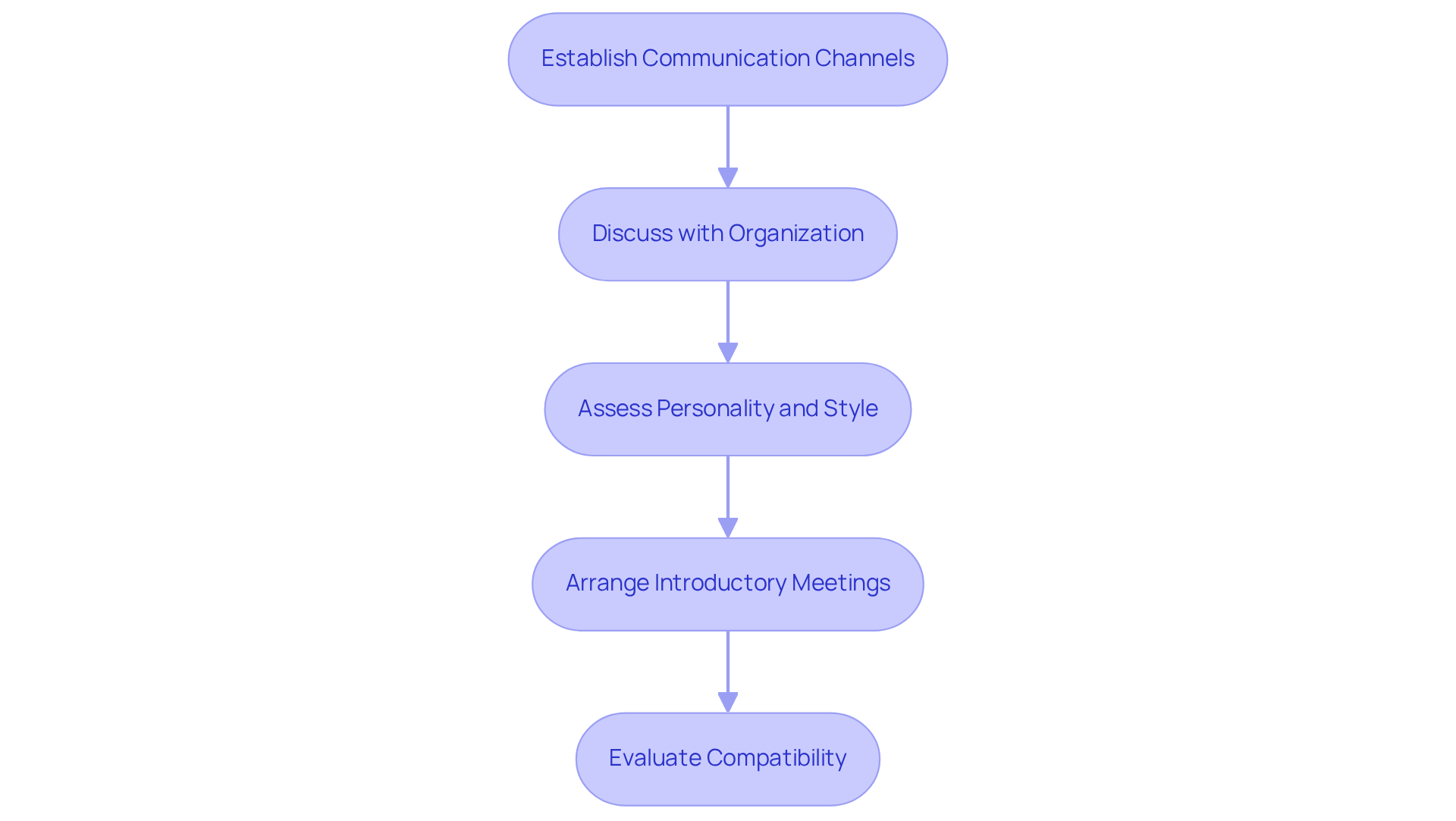
Establishing clear communication channels is essential for effective home assistance. It’s important to discuss with the organization how they facilitate communication between support providers and families, as well as how they keep families informed about their loved one's care.
Consider the personality and communication style of potential support providers, too. Arrange introductory meetings or trial visits to see if there’s a good fit. For instance, if the elderly individual values a support person who is patient and engaging, it’s crucial to ensure that the agency can provide someone who embodies those qualities.
This proactive approach not only nurtures trust but also enhances the overall caregiving experience, making it more enjoyable for both the provider and the client. Research indicates that leads to stronger relationships, greater satisfaction, and improved health outcomes, underscoring the importance of thoughtful pairing in elder support.
Understand Service Offerings and Flexibility
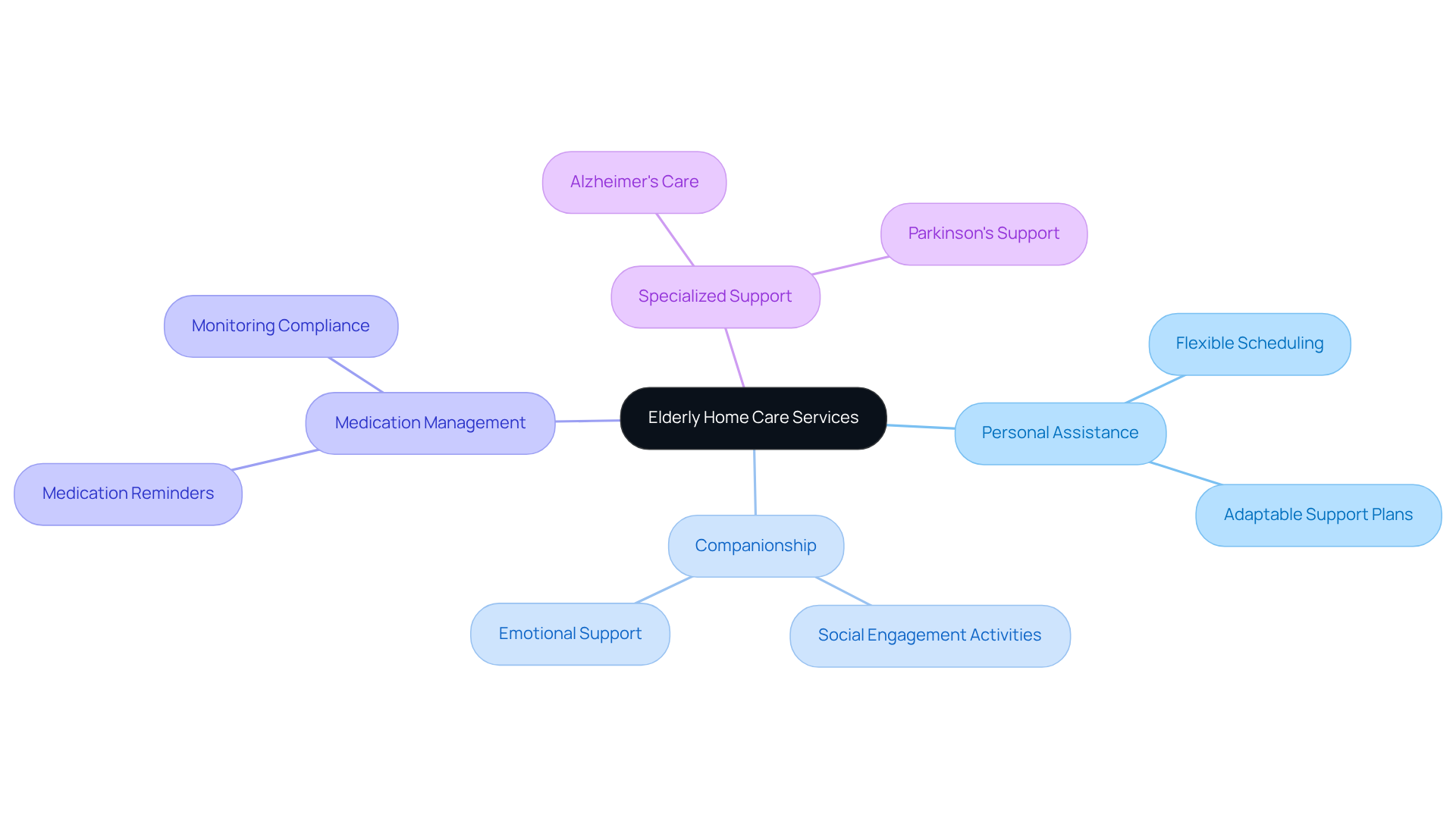
When choosing as a home support provider, it’s essential to carefully consider the services they offer. Many families face the emotional challenge of ensuring their loved ones receive the best care possible. Common services offered by elderly home care agencies include:
- Personal assistance
- Companionship
- Medication management
- Specialized support for conditions like Alzheimer's or Parkinson's disease
It’s also important to inquire about how flexible the organization is with scheduling and their ability to adapt support plans as needs change. For example, if your loved one requires additional support after a hospital stay, the provider should be ready to adjust the hours of assistance or offer extra services.
Understanding these factors not only helps families select elderly home care agencies that meet their current needs but also ensures they can adapt to future requirements. This adaptability provides peace of mind and continuity of care, allowing families to focus on what truly matters—the well-being of their loved ones.
Key Takeaways for Caregivers
Choosing the right elderly home care agency is a deeply personal decision, one that can profoundly affect the quality of life for seniors and their families. By thoughtfully assessing individual needs and preferences, families can craft a personalized care plan. This plan not only addresses medical requirements but also nurtures emotional well-being and fosters social interaction. Such a tailored approach ensures that the elderly individual receives support that truly aligns with their lifestyle and values.
Throughout this journey, several key practices stand out as essential for selecting a suitable agency:
- Evaluating agency credentials and experience is crucial; it guarantees that caregivers are not only qualified but also equipped to handle specific health conditions.
- Prioritizing communication and caregiver compatibility builds a trusting relationship, enhancing the overall caregiving experience.
- Understanding service offerings and flexibility allows families to adapt to changing needs, ensuring continuity of care.
In closing, the process of selecting an elderly home care agency deserves to be approached with diligence and care. Families are encouraged to engage in thorough evaluations and open discussions, ensuring that their loved ones receive the compassionate and competent support they truly deserve. By following these best practices, families can cultivate a nurturing environment that prioritizes the well-being and happiness of their elderly relatives, ultimately leading to an improved quality of life.
https://iframe.tely.ai/cta/eyJhcnRpY2xlX2lkIjogIjY4ZjE4N2FhZDU1NGQ2M2Q0YTYxNTcxZSIsICJjb21wYW55X2lkIjogIjY4ZWU1ZGNhNzMxNzYyNTU3ZjNjOTVjMSIsICJpbmRleCI6IG51bGwsICJ0eXBlIjogImFydGljbGUifQ==Frequently Asked Questions
What is the first step in selecting elderly home care?
The first step is to conduct a thorough assessment of the elderly individual's needs and preferences, which includes evaluating their medical conditions, daily routines, and social interactions.
How can families understand the wishes of the elderly individual regarding support?
Families can engage in heartfelt discussions with the elderly individual to understand their wishes, including what activities they enjoy, any dietary restrictions, and specific health issues.
Why is it important to document preferences during the assessment?
Documenting preferences using assessment tools or checklists serves as a solid foundation for selecting suitable elderly home care agencies that can cater to the individual's specific needs.
How does personalized support impact the quality of life for the elderly?
Personalized support plans improve quality of life by promoting emotional well-being, alleviating feelings of loneliness, and enhancing overall satisfaction with the support received.
What statistics highlight the need for emotional support among older adults?
Around 5% of adults aged 50-80 experience feelings of loneliness, and one in three adults in the same age group reported feeling isolated at least some of the time, indicating a vital need for emotional support and social interaction.
What do case studies indicate about personalized support?
Case studies reveal that individuals who receive personalized support experience greater comfort and social involvement, demonstrating the significance of customized plans in enhancing the quality of assistance received at home.
What should be considered when choosing an elderly home care agency?
It is crucial to select agencies that have trained and experienced caregivers to ensure that the specific needs of elderly individuals are met effectively, providing peace of mind for them and their families.