
What You Need to Know About Practices for Choosing Reliable Home
Choosing a reliable home care provider can feel overwhelming. Families today face a myriad of options, from personal assistance aides to skilled nursing professionals. Each type of caregiver plays a unique role in supporting individuals with varying needs.
This complexity can lead to confusion, making it difficult for families to ensure their loved ones receive the appropriate care. Understanding these distinctions is essential. Without this knowledge, families may struggle to make informed decisions that truly benefit their loved ones.
So, how can families navigate this complex landscape? Start by educating yourself about the different types of caregivers and their specific roles. This understanding will empower you to choose the right support for your loved ones.
Understand Home Care Providers and Their Roles
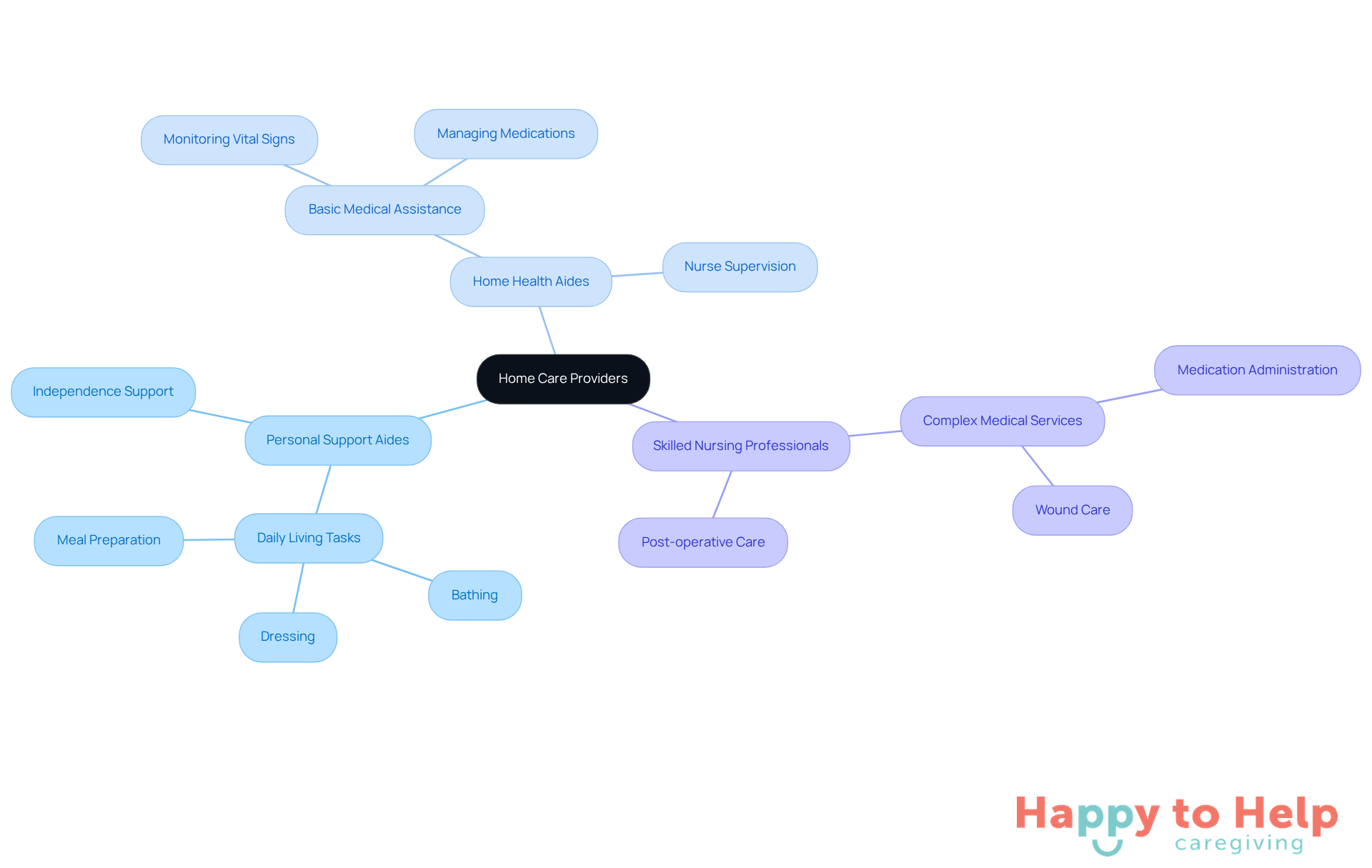
For families, choosing the right provider for reliable home care can be a daunting task. With various types of caregivers available, including personal assistance aides, home health aides, and skilled nursing professionals, understanding their distinct functions is crucial. Personal support aides focus on daily living tasks like bathing, dressing, and meal preparation, helping clients maintain their independence and comfort at home. On the other hand, home health aides provide basic medical assistance under a nurse's supervision, which may involve monitoring vital signs and managing medications. Skilled nursing professionals offer more complex medical services, such as medication administration and wound care, catering to individuals with significant health needs.
Families must grasp these roles to make informed decisions about the support their loved ones require. For example, a senior recovering from surgery may need skilled nursing support to effectively manage post-operative care. Conversely, someone who simply needs companionship and assistance with daily tasks might benefit more from personal care aides. This understanding helps families make choices that ensure reliable home care for their loved ones' specific needs and health conditions.
According to the U.S. Bureau of Labor Statistics, the demand for reliable home care professionals is projected to increase by 34% by 2029, driven by the needs of an aging population. As Charlie Young, CEO of Synergy Home Care, emphasizes, "Support providers themselves are the ones who shape a company's reputation," highlighting the importance of quality care in building trust. Additionally, the emotional and psychological well-being of clients is vital, as industry experts point out, underscoring the need for a holistic approach to caregiving. By understanding the unique roles of caregivers and the broader context of home assistance, families can navigate their options more effectively and ensure their loved ones receive the appropriate support.
Select a Reliable Home Care Provider: Key Strategies
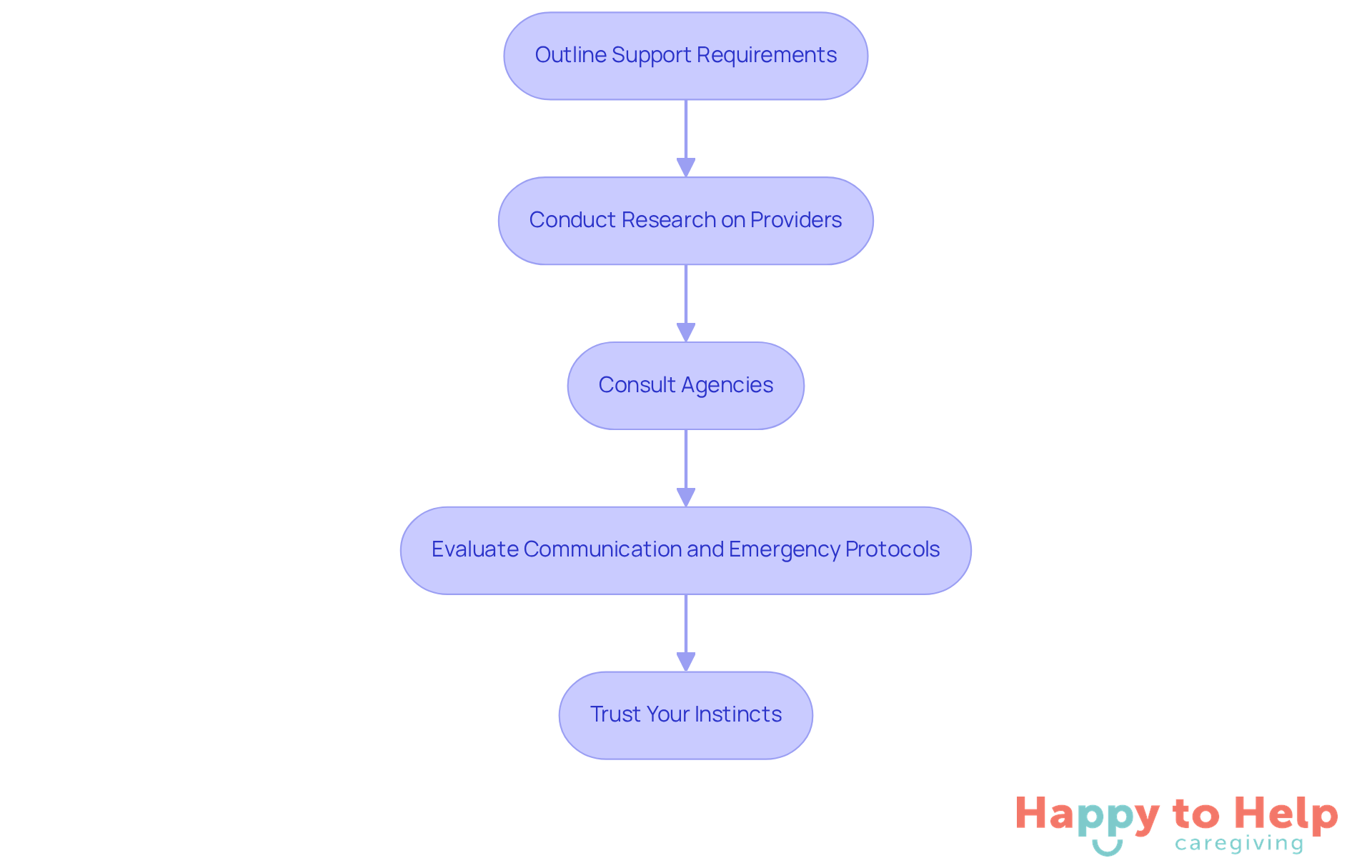
Choosing a service for reliable home care can be a daunting task for families. The problem lies in the overwhelming number of options available, which can lead to confusion and uncertainty. Families must first outline their specific support requirements, such as:
- Companionship
- Personal support
- Skilled nursing
This initial step is crucial in narrowing down potential providers.
Once the needs are identified, families should conduct thorough research on potential providers. Check their licensing, accreditation, and reviews from other families to gauge their reliability. Consulting several agencies is advisable; inquire about caregiver training, experience, and their approach to assistance. Additionally, consider the agency's communication practices and emergency protocols. For instance, a provider that offers 24/7 support and has a clear protocol for urgent situations can provide peace of mind.
Finally, trust your instincts during the interview process. If something feels off, it’s worth exploring other options. By following these steps, families can make informed decisions and find a provider for reliable home care that meets their needs.
Develop Personalized Care Plans for Individual Needs
Developing a customized support strategy can be challenging for caregivers. Without a comprehensive evaluation of a person's physical, emotional, and social needs, the support provided may not align with their preferences. This oversight can lead to frustration for both caregivers and their loved ones.
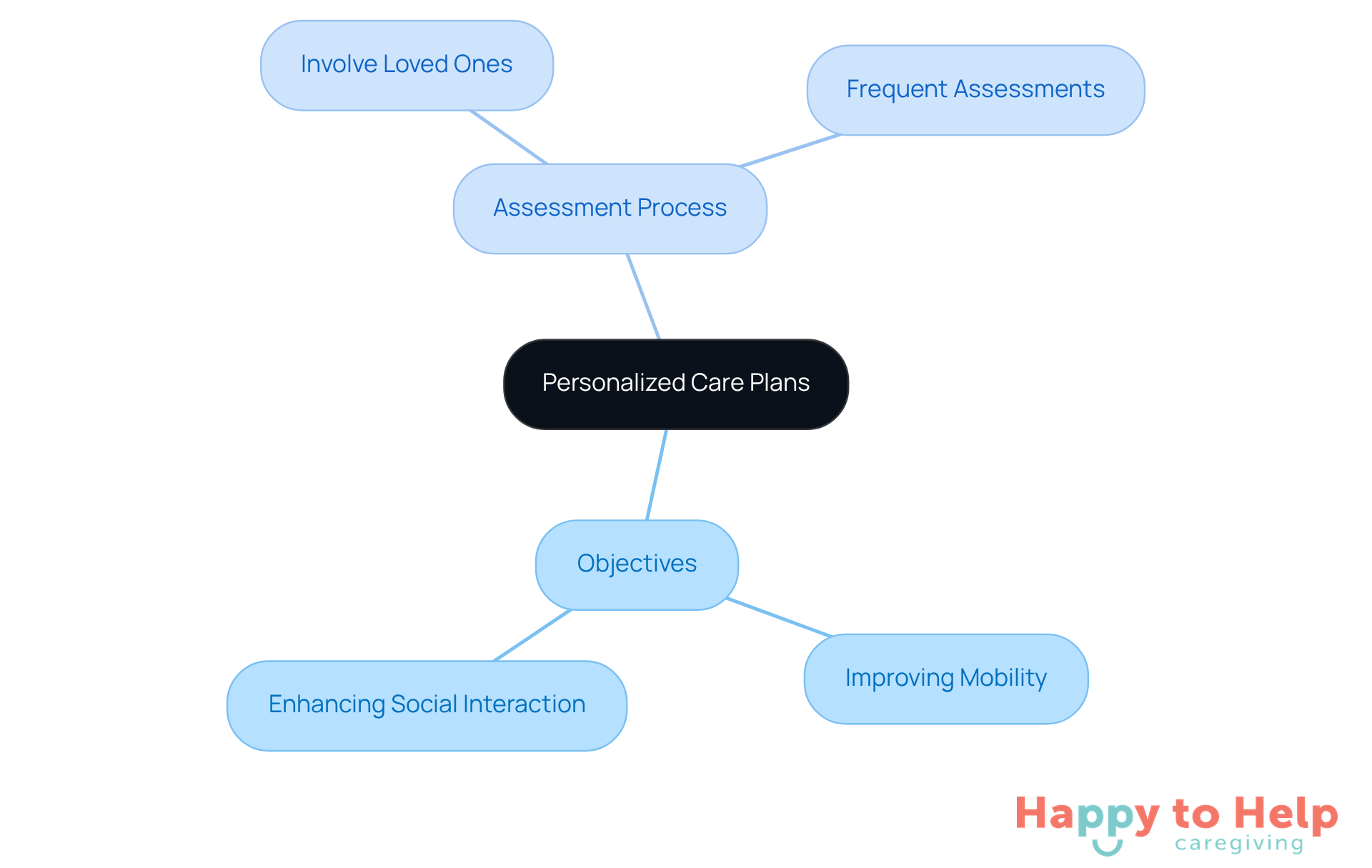
To address this issue, families should actively involve their loved ones in the evaluation process. This ensures that their preferences are considered, leading to a more effective support plan. The plan should clearly outline specific objectives, such as:
- Improving mobility
- Enhancing social interaction
It should also detail the necessary services to achieve these goals.
Frequent assessments of the support strategy are crucial. As a client's health condition evolves, the plan may need to shift from intensive support to more independent living assistance. Involving caregivers in this process guarantees they understand the client's unique requirements and can provide tailored assistance.
Ensure Caregiver Training and Support for Quality Care
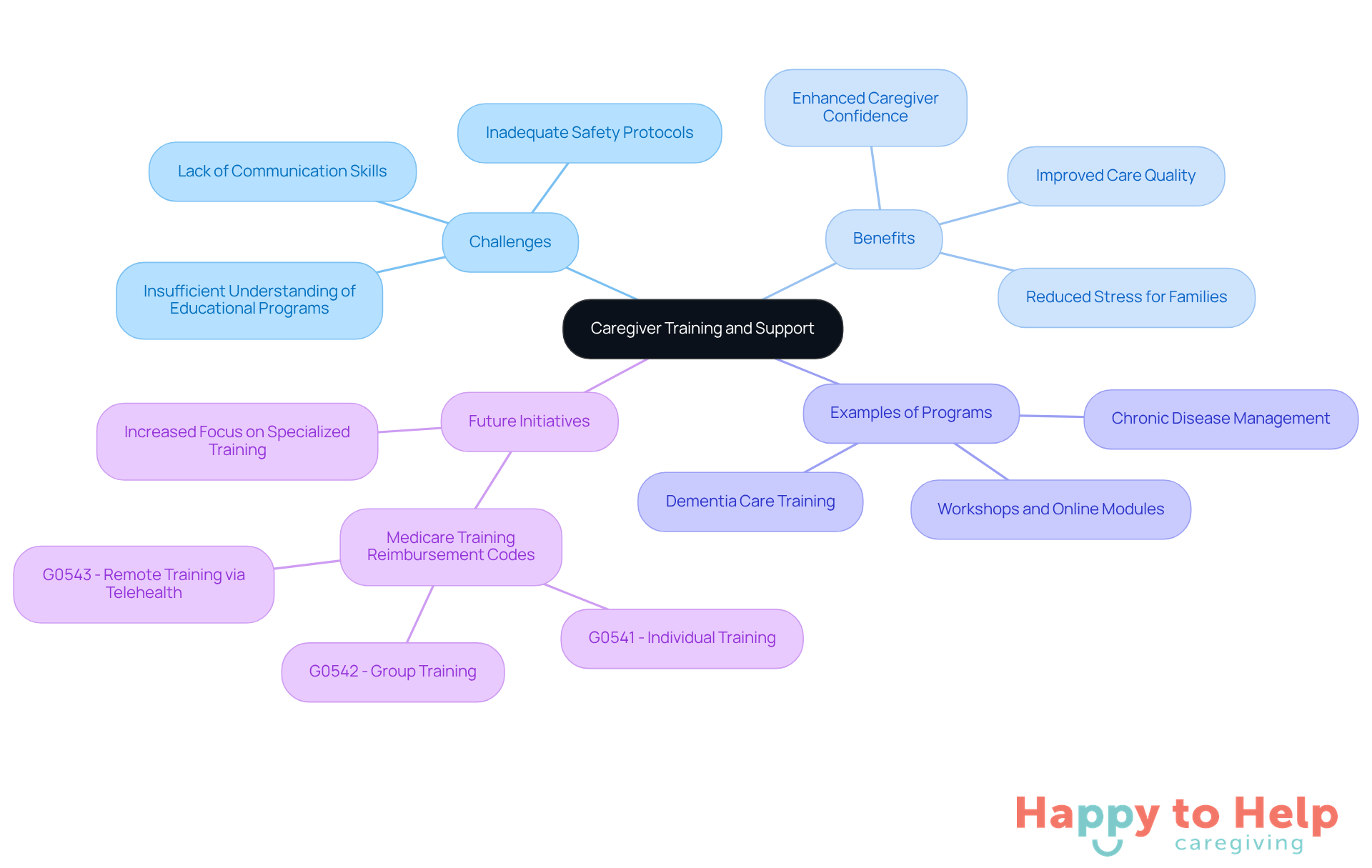
To ensure quality assistance, families often face the challenge of understanding the educational programs that caregivers participate in. Without effective education, caregivers may lack vital skills such as communication, safety protocols, and specific assistance methods tailored to their clients' needs. This gap in training can lead to inadequate care and increased stress for both caregivers and families.
To address this issue, families should actively inquire about the support staff's development policies and the resources available for enhancing assistance. Organizations that provide regular workshops or access to online educational modules significantly boost the skills and confidence of caregivers. This not only benefits the caregivers but also improves the overall care provided to clients.
For example, organizations that focus on specialized development programs - like those for dementia care or chronic disease management - have shown improved care quality and reduced hospitalizations. Furthermore, with Medicare's introduction of training reimbursement codes in 2025 (G0541 for individual training, G0542 for group training, and G0543 for remote training via telehealth), agencies are encouraged to elevate their training initiatives. This ensures that support providers are well-equipped to meet the complex needs of their clients.
Ultimately, this commitment to ongoing education empowers caregivers and fosters a supportive environment, enhancing the overall caregiving experience.
Taking the Next Steps
Choosing the right home care provider is a significant challenge that can greatly affect the quality of life for loved ones needing assistance. Families often face the daunting task of understanding the various roles of caregivers - from personal support aides to skilled nursing professionals. This understanding is crucial for matching specific needs with appropriate services, ensuring that their loved ones receive the best possible care.
To navigate this complex decision, families should consider several essential strategies for selecting reliable home care providers:
- Assess individual care needs to identify what type of support is necessary.
- Conduct thorough research on potential providers, looking for reviews and credentials.
- Trust one’s instincts during the selection process.
- Develop personalized care plans that reflect the unique preferences and requirements of clients.
- Ensure ongoing caregiver training to maintain high standards of care.
Ultimately, finding the right home care provider goes beyond just meeting physical needs; it also encompasses emotional and psychological well-being. By prioritizing informed choices, families can create a supportive environment that enhances the quality of care and enriches the lives of their loved ones. Taking these steps not only ensures reliable assistance but also cultivates a sense of trust and comfort for everyone involved, underscoring the profound significance of quality care in the home setting.
https://iframe.tely.ai/cta/eyJhcnRpY2xlX2lkIjogIjY5MjNhMDk5YzVlZWQyYmRiNTU3YmVmYiIsICJjb21wYW55X2lkIjogIjY4ZWU1ZGNhNzMxNzYyNTU3ZjNjOTVjMSIsICJpbmRleCI6IG51bGwsICJ0eXBlIjogImFydGljbGUifQ==Frequently Asked Questions
What are the different types of home care providers?
The main types of home care providers include personal assistance aides, home health aides, and skilled nursing professionals. Each type has distinct functions tailored to the needs of clients.
What do personal support aides do?
Personal support aides focus on daily living tasks such as bathing, dressing, and meal preparation, helping clients maintain their independence and comfort at home.
What services do home health aides provide?
Home health aides provide basic medical assistance under the supervision of a nurse, which may include monitoring vital signs and managing medications.
What is the role of skilled nursing professionals?
Skilled nursing professionals offer more complex medical services, such as medication administration and wound care, catering to individuals with significant health needs.
How can families choose the right type of caregiver for their loved ones?
Families should assess the specific needs and health conditions of their loved ones. For instance, a senior recovering from surgery may require skilled nursing support, while someone needing companionship may benefit more from personal care aides.
What is the projected demand for home care professionals?
The demand for reliable home care professionals is projected to increase by 34% by 2029, largely due to the needs of an aging population.
Why is the quality of care important in home care services?
Quality care is crucial for building trust and shaping a company's reputation, as emphasized by industry leaders. Additionally, the emotional and psychological well-being of clients is vital, highlighting the need for a holistic approach to caregiving.
How can understanding caregiver roles help families?
By understanding the unique roles of caregivers, families can make informed decisions about the support their loved ones require, ensuring they receive appropriate care tailored to their specific needs.
List of Sources
- Understand Home Care Providers and Their Roles
- Home Care On The Cusp: Providers Transform To Value-Based, Higher-Acuity Future (https://homehealthcarenews.com/2025/09/home-care-on-the-cusp-providers-transform-to-value-based-higher-acuity-future)
- Disruption Redefines Home-Based Care: Providers Confront Challenges, Seize New Opportunities (https://homehealthcarenews.com/2025/10/disruption-redefines-home-based-care-providers-confront-challenges-seize-new-opportunities)
- The Future of Private Home Care: What to Expect in 2025 (https://anodyne-services.com/2024/08/14/the-future-of-private-home-care-what-to-expect-in-2025)
- Home Care Industry Trends to Look Out for in 2025 (https://axiscare.com/blog/home-care-industry-trends)
- Home Health Care Trends for 2025 (https://carevoyant.com/home-health-blog/home-health-care-trends-2025)
- Select a Reliable Home Care Provider: Key Strategies
- U.S. News to Debut Best Home Health Ratings in 2026 (https://usnews.com/info/blogs/press-room/articles/2025-11-03/u-s-news-to-debut-best-home-health-ratings-in-2026)
- Caregiving Crisis: 45% Increase in Americans Providing Care (https://aarp.org/caregiving/basics/caregiving-in-us-survey-2025)
- National Alliance for Caregiving: Caregiving in the US 2025 Report (https://johnahartford.org/resources/view/national-alliance-for-caregiving-caregiving-in-the-us-2025-report)
- What Makes a Trusted Senior Home Care Agency Stand Out in 2025? - Home Care Assistance oF Jefferson County (https://homecareassistanceofjefferson.com/what-makes-a-trusted-senior-home-care-agency-stand-out-in-2025)
- Caregiver Statistics: Demographics (https://caregiver.org/resource/caregiver-statistics-demographics)
- Develop Personalized Care Plans for Individual Needs
- Empowering aging: How AI and value-based care are making senior living more personalized and affordable (https://mcknights.com/marketplace/marketplace-experts/empowering-aging-how-ai-and-value-based-care-are-making-senior-living-more-personalized-and-affordable)
- AI must optimize home care, continuity, and early detection for older adults (https://news-medical.net/news/20251007/AI-must-optimize-home-care-continuity-and-early-detection-for-older-adults.aspx)
- The Importance of Personalized Care Plans in Home Care (https://anodyne-services.com/2025/01/14/the-importance-of-personalized-care-plans-in-home-care)
- State of home care in 2025 (https://mcknightshomecare.com/state-of-home-care-in-2025)
- 2025: AI enhances personalized care; caregiver experience in the spotlight (https://healthcareitnews.com/news/2025-ai-enhances-personalized-care-caregiver-experience-spotlight)
- Ensure Caregiver Training and Support for Quality Care
- Medicare 2025 Initiatives Driving Change in Caregiver Training (https://learn2care.us/blog/how-medicare-2025-initiatives-will-shape-caregiver-training)
- Why Ongoing Caregiver Training Matters More Than Ever in 2025 – Professional Association of Caregivers (https://professionalassociationofcaregivers.org/2025/07/21/why-ongoing-caregiver-training-matters-more-than-ever-in-2025)
- Home-Based Care Companies Improve Outcomes By Training Family Caregivers (https://homehealthcarenews.com/2025/10/home-based-care-companies-improve-outcomes-by-training-family-caregivers)
- 2025 home care trends include tightened EVV oversight, investments in caregiver training (https://mcknightshomecare.com/2025-home-care-trends-include-tightened-evv-oversight-investments-in-caregiver-training)
- Family Caregivers Deserve Recognition — Medicare Is Starting to Listen (https://commonwealthfund.org/blog/2025/family-caregivers-deserve-recognition-medicare-starting-to-listen)