4 Best Practices for Dementia Elderly Care You Need to Know
For families in our service areas
For families in our service areas, this guide explains dementia care and how non-medical in-home caregiving can support care planning in East Idaho, Treasure Valley & Magic Valley, Northern Wasatch, North Central West Virginia, and Northeast Ohio.
Why Practices for Dementia Elderly Care Matters
Dementia poses a significant challenge for caregivers, intertwining emotional strain with the complexities of managing cognitive decline. Millions of families face this difficult journey, making it crucial to understand effective strategies for elderly dementia care. This understanding is essential not only for the well-being of those affected but also for the caregivers themselves.
Caregivers often grapple with the demands of providing compassionate care while trying to maintain their own mental and physical health. This dual burden can lead to burnout and stress, impacting both the caregiver and the individual with dementia. So, how can caregivers find a balance?
This article explores best practices that empower caregivers, fostering a supportive environment that enhances the quality of life for both caregivers and their loved ones. By implementing practical solutions, caregivers can navigate this challenging landscape more effectively.
Understand Dementia and Its Impact on Caregiving
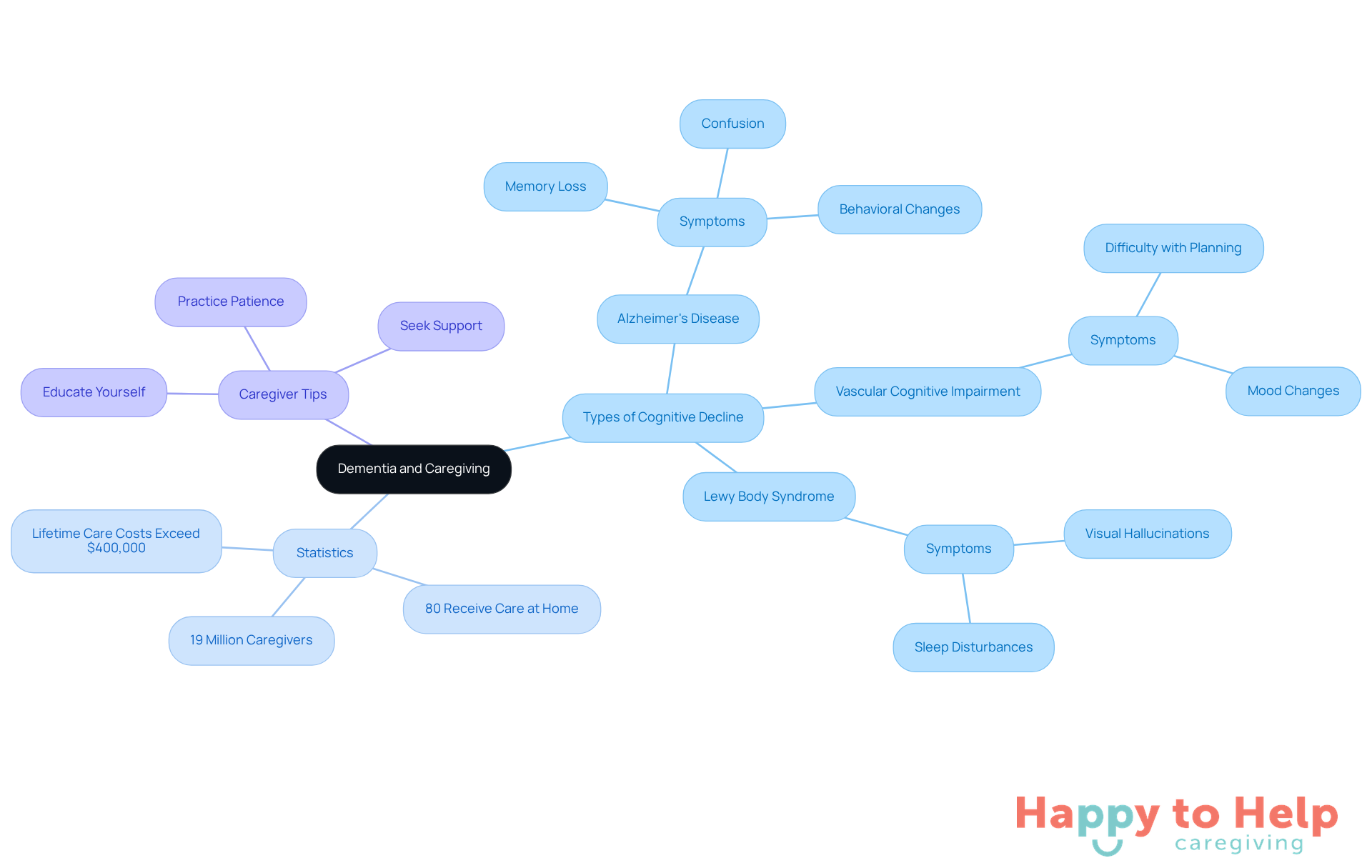
Dementia elderly care presents a significant problem for caregivers, as it encompasses a range of brain disorders that impair memory, thinking, and social abilities. This decline profoundly affects daily functioning, leading to challenges for both those with cognitive impairment and their caregivers. Key forms of cognitive decline include Alzheimer's disease, vascular cognitive impairment, and Lewy body syndrome, each with distinct symptoms such as memory loss, confusion, and behavioral changes. These manifestations can lead to frustration and anxiety, making it crucial for caregivers to recognize them.
The implications of these challenges in dementia elderly care are far-reaching. Statistics reveal that over 19 million people in the U.S. serve as caregivers for family members with Alzheimer's and similar disorders. Additionally, more than 11 million adults provide unpaid assistance to those with cognitive impairment. This highlights the vital need for tailored support. Nearly 80% of adults with cognitive decline receive dementia elderly care at home, highlighting the importance of effective caregiving strategies in familiar settings. The financial burden is also significant, with lifetime care costs for an individual with cognitive impairment projected to exceed $400,000.
To address these challenges, caregivers can enhance their support in dementia elderly care by gaining knowledge about cognitive decline. Understanding the symptoms of dementia elderly care allows them to respond with empathy and tolerance, fostering a nurturing atmosphere that improves the quality of care. Here are some actionable tips for caregivers:
- Educate yourself about the specific cognitive disorders affecting your loved one.
- Practice patience and empathy, recognizing the emotional toll on both the caregiver and the individual.
- Seek support from local resources or online communities to share experiences and strategies.
By promoting awareness and understanding of memory disorders, caregivers can significantly improve the support experience for themselves and their family members.
Create a Safe and Supportive Home Environment
Creating a home that accommodates dementia elderly care presents a significant challenge for caregivers. In dementia elderly care, safety and comfort are paramount, as individuals with dementia often face difficulties navigating their environment. Tripping hazards, poor lighting, and lack of visual cues can exacerbate these challenges, leading to increased anxiety and confusion.
To address these issues, caregivers can implement several practical solutions:
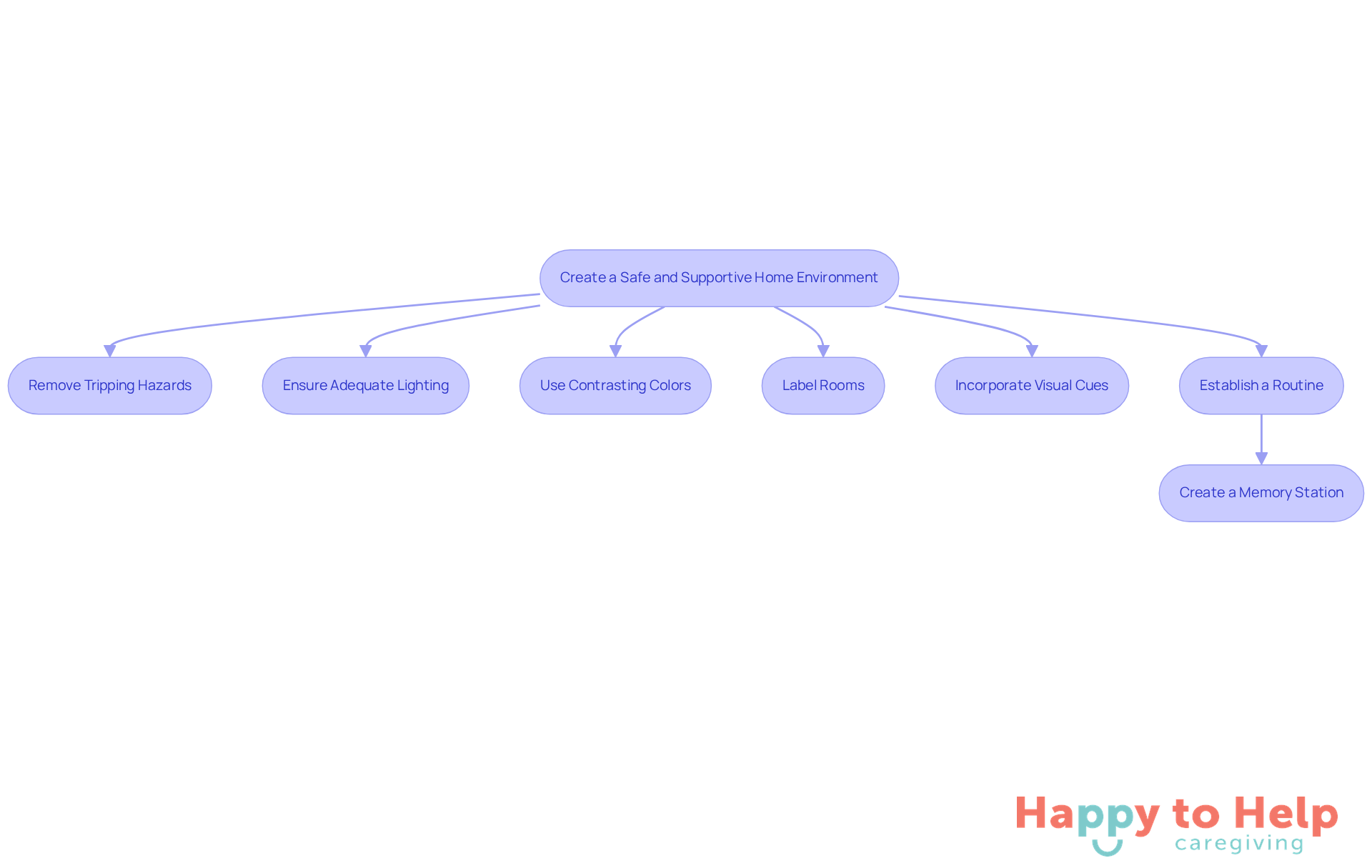
- Start by removing tripping hazards and ensuring adequate lighting throughout the home.
- Use contrasting colors to enhance visibility, making it easier for individuals to identify different areas.
- Make simple modifications, such as labeling rooms and incorporating visual cues, to significantly aid navigation.
Establishing a routine is another effective strategy. A predictable schedule fosters a sense of stability, which is crucial for those with dementia. Caregivers can create a 'memory station' filled with familiar items that evoke positive memories, stimulating cognitive function and emotional well-being.
By implementing these changes, caregivers not only enhance safety but also promote a sense of autonomy and comfort for individuals receiving dementia elderly care. These actionable steps can make a meaningful difference in the daily lives of both caregivers and those they care for.
Prioritize Caregiver Well-Being and Support
Caregiving is a demanding role that often leads to significant stress and burnout. This situation poses a serious problem for caregivers, who may neglect their own well-being while focusing on the needs of others. The implications of this neglect can be severe, affecting both mental and physical health.
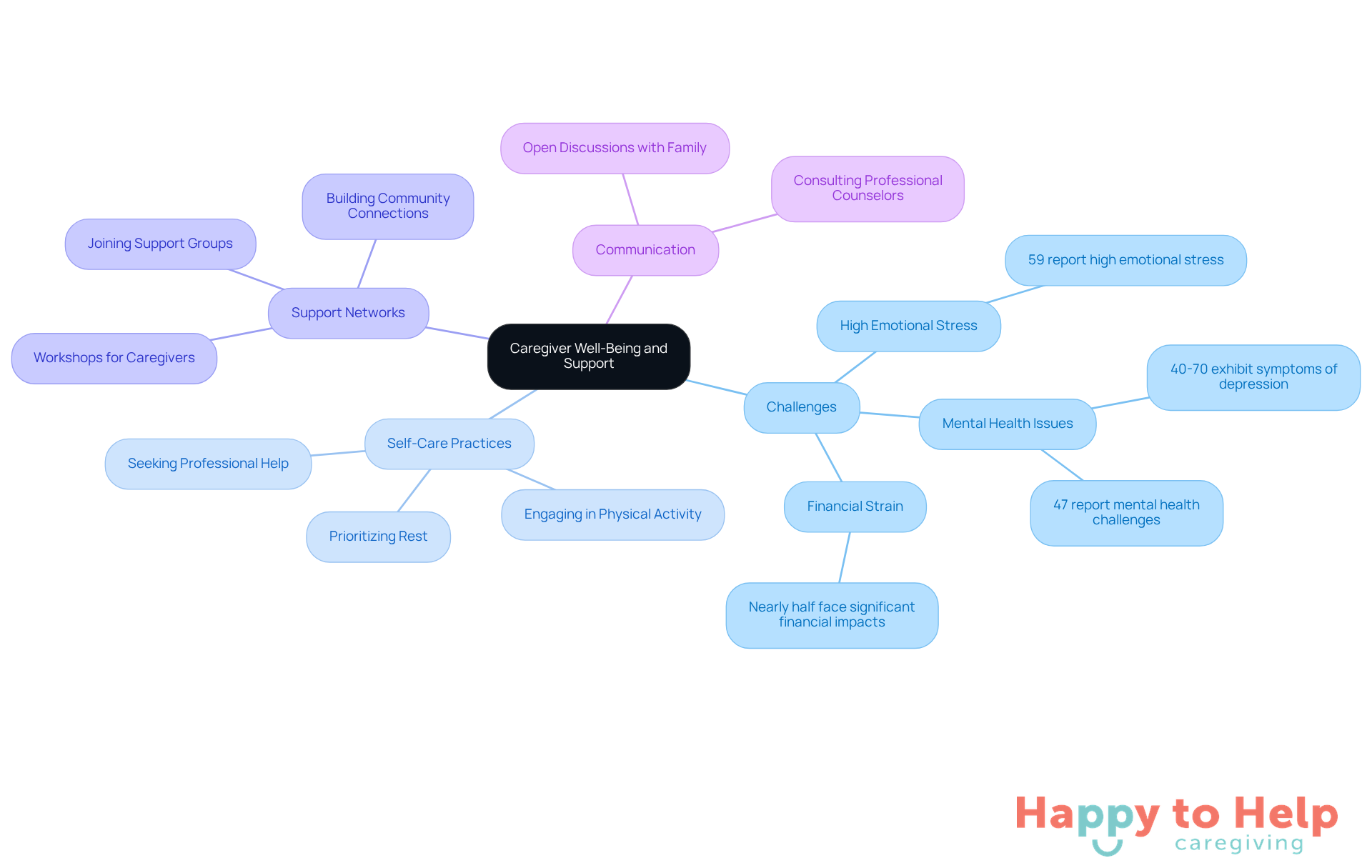
To address these challenges, caregivers must prioritize their personal well-being. Actively seeking assistance and engaging in self-care practices are essential steps. Joining support groups can create a vital network for sharing experiences and coping strategies. Regular physical activity and adequate rest are also crucial for maintaining health.
Open communication about feelings and challenges is another important solution. Whether discussing concerns with family members or professional counselors, expressing these feelings can relieve psychological burdens. For instance, support provider workshops offer valuable resources that empower individuals with effective coping mechanisms.
Studies indicate that caregivers who focus on their own well-being are more successful in their roles. They sustain the energy and mental strength required to provide high-quality support to their loved ones. Alarmingly, nearly 59% of individuals involved in dementia elderly care report high emotional stress, and 40 to 70 percent exhibit symptoms of depression compared to non-caring individuals. This highlights the critical importance of self-care.
As Debra Barrett, Head of Corporate Affairs at Otsuka, emphasizes, "Ensuring that family members providing care have the appropriate assistance is essential for enabling them to look after their loved ones while preserving their own mental well-being." By fostering a supportive environment and encouraging self-care, caregivers can significantly enhance both their well-being and their caregiving effectiveness.
Utilize Community Resources and Professional Support
Caregivers often face overwhelming challenges that can lead to increased stress and health issues. With over 11 million individuals in the U.S. supporting someone with cognitive impairment, the burden can be significant, contributing to more than 18 billion hours of unpaid assistance valued at nearly $347 billion. This situation highlights the need for caregivers to seek support and resources to manage their responsibilities effectively.
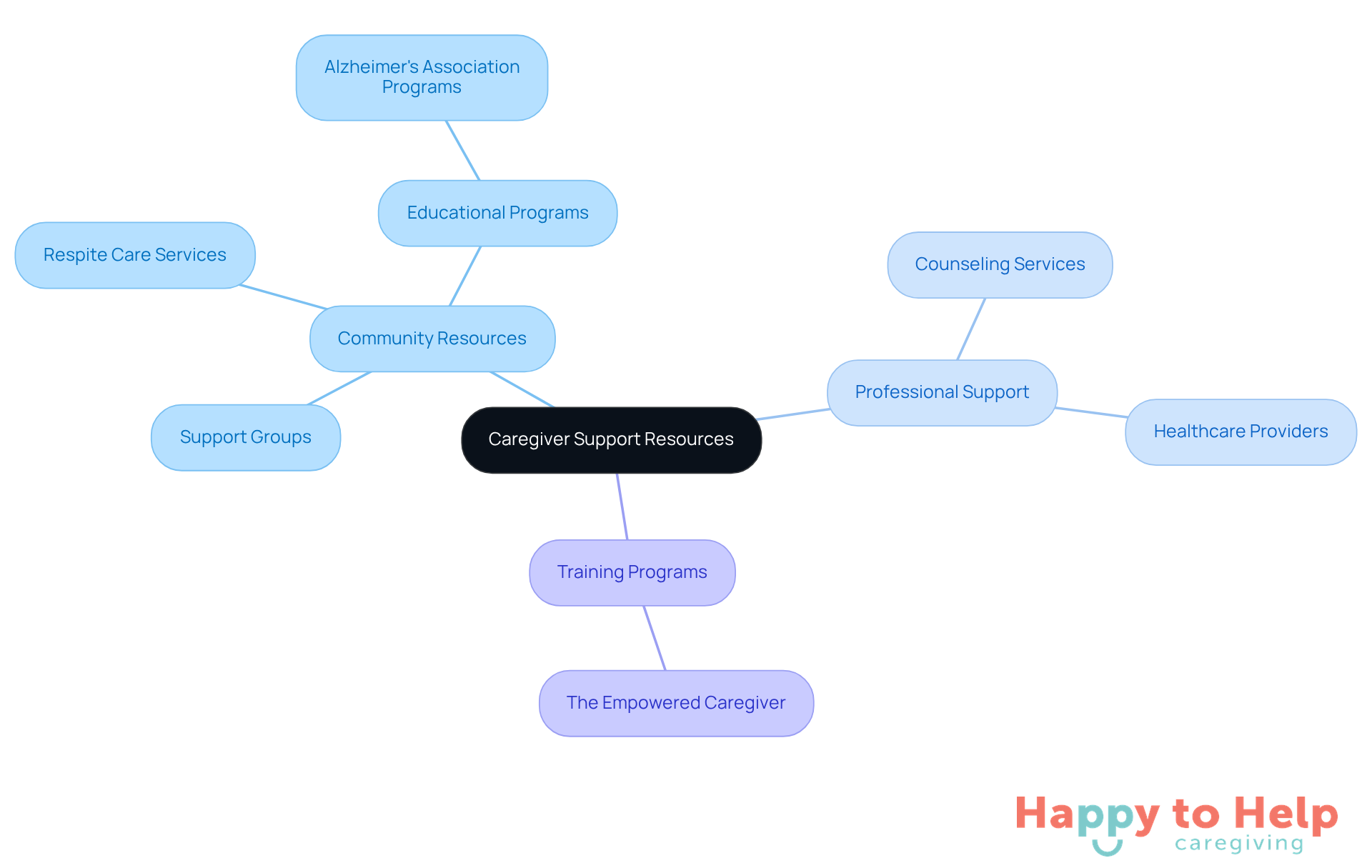
To alleviate these pressures, caregivers should engage with community resources and professional assistance. Local support groups, respite care services, and educational programs, such as those offered by the Alzheimer's Association, are invaluable. For instance, respite services provide essential breaks for caregivers while ensuring their loved ones receive high-quality assistance. Research shows that those who utilize respite services experience lower levels of distress and improved well-being.
Additionally, training programs like 'The Empowered Caregiver' equip caregivers with the skills needed for dementia elderly care, specifically to manage challenging behaviors associated with the condition. By leveraging these resources, caregivers can enhance their own well-being and improve the quality of care they provide. Taking proactive steps to connect with available support can make a significant difference in the caregiving experience.
Your Path Forward
Dementia elderly care presents significant challenges that demand a compassionate and informed approach. Caregivers often face the complexities of cognitive decline, which can lead to feelings of isolation and stress. This situation not only affects the individuals they care for but also impacts the caregivers' well-being.
To address these challenges, understanding specific dementia conditions is crucial. Education empowers caregivers to navigate the intricacies of cognitive decline effectively. Additionally, creating a safe and accessible living space is essential. This environment can help reduce anxiety for both caregivers and those they support.
Self-care for caregivers is another vital aspect. Prioritizing their health and well-being enables caregivers to provide better support. Engaging with local resources and professional support systems can alleviate stress and enhance their effectiveness. By utilizing these community resources, caregivers can foster a nurturing atmosphere that improves the quality of life for everyone involved.
Ultimately, caregiving for individuals with dementia is about more than just managing symptoms; it’s about fostering connection and understanding. By embracing these best practices, caregivers can ensure they meet their loved ones' needs while also taking care of themselves. Seeking support and sharing experiences within the community can profoundly impact their journey, highlighting the interconnectedness of caregiving and personal well-being.
https://iframe.tely.ai/cta/eyJhcnRpY2xlX2lkIjogIjY5NDBhMjIxMjI1ZjA3N2M1ZmMwYmY0MCIsICJjb21wYW55X2lkIjogIjY4ZWU1ZGNhNzMxNzYyNTU3ZjNjOTVjMSIsICJpbmRleCI6IG51bGwsICJ0eXBlIjogImFydGljbGUifQ==Frequently Asked Questions
What is dementia and how does it affect caregiving?
Dementia encompasses a range of brain disorders that impair memory, thinking, and social abilities, significantly impacting daily functioning for both individuals with cognitive impairment and their caregivers.
What are the key forms of cognitive decline associated with dementia?
Key forms of cognitive decline include Alzheimer's disease, vascular cognitive impairment, and Lewy body syndrome, each presenting distinct symptoms such as memory loss, confusion, and behavioral changes.
How many people serve as caregivers for individuals with dementia in the U.S.?
Over 19 million people in the U.S. serve as caregivers for family members with Alzheimer's and similar disorders, with more than 11 million providing unpaid assistance to those with cognitive impairment.
Where do most adults with cognitive decline receive care?
Nearly 80% of adults with cognitive decline receive dementia elderly care at home, emphasizing the importance of effective caregiving strategies in familiar settings.
What is the financial impact of dementia on caregiving?
The lifetime care costs for an individual with cognitive impairment are projected to exceed $400,000, indicating a significant financial burden on families and caregivers.
How can caregivers enhance their support for individuals with dementia?
Caregivers can enhance their support by educating themselves about the specific cognitive disorders, practicing patience and empathy, and seeking support from local resources or online communities.
Why is understanding dementia symptoms important for caregivers?
Understanding the symptoms of dementia allows caregivers to respond with empathy and tolerance, fostering a nurturing atmosphere that improves the quality of care for individuals with cognitive decline.
List of Sources
- Understand Dementia and Its Impact on Caregiving
- Dementia impacts the caregiver as well as the patient, social workers say. Here's what's being done to help both. (https://cbsnews.com/newyork/news/dementia-alzheimers-disease-cost-of-caregiving)
- New program reduces burnout in dementia caregivers, novel research evaluation proves (https://gmu.edu/news/2025-10/new-program-reduces-burnout-dementia-caregivers-novel-research-evaluation-proves)
- Caregivers: the invisible backbone of dementia care (https://publichealth.gmu.edu/news/2025-11/caregivers-invisible-backbone-dementia-care)
- Benjamin Rose seeks Alzheimer’s caregivers for research study (https://cleveland.com/healthfit/2025/12/benjamin-rose-seeks-alzheimers-caregivers-for-research-study.html)
- Prioritize Caregiver Well-Being and Support
- Caregiving’s Mental Health Crisis (https://forbes.com/sites/otsuka/2025/10/02/caregivings-mental-health-crisis)
- New Report Reveals Crisis Point for America’s 63 million Family Caregivers (https://press.aarp.org/2025-07-24-New-Report-Reveals-Crisis-Point-for-Americas-63-million-Family-Caregivers)
- Alzheimer’s Association Encourages Dementia Caregivers to Make Their Health and Well-Being an Equal Priority (https://alz.org/news/2024/november-national-family-caregivers-month)
- What Is the Caregiver Crisis? | Johns Hopkins Bloomberg School of Public Health (https://publichealth.jhu.edu/2025/what-is-the-caregiver-crisis)
- Utilize Community Resources and Professional Support
- Comprehensive Dementia Care Programs for Patients and Caregivers - Center for Health Care Strategies (https://chcs.org/resource/comprehensive-dementia-care-programs-for-patients-and-caregivers)
- Alzheimer’s Association Honors the Nearly 12 Million Americans Who Serve as Dementia Caregivers and Shares New Resources to Help Them Thrive (https://alz.org/news/2025/november-national-family-caregivers-alzheimers-disease-awareness-month)
- Respite Services: A Critical Support for Family Caregivers (https://ltsschoices.aarp.org/resources-and-practices/respite-services-critical-support-for-family-caregivers)
- Caregivers and the Importance of Respite Care (https://benedictineliving.org/resources/news/caregivers-and-the-importance-of-respite-care)
- Alzheimer’s Association Center for Dementia Respite Innovation Awards More Than $4 Million in New Round of Grants to Improve Respite Care for People Living With Dementia and Their Caregivers (https://alz.org/news/2025/alzheimers-association-center-for-dementia-respite-innovation-grants-4-million-in-second-year)