

For families in our service areas
For families in our service areas, this guide explains dementia care and how non-medical in-home caregiving can support care planning in East Idaho, Treasure Valley & Magic Valley, Northern Wasatch, North Central West Virginia, and Northeast Ohio.
The Importance of Practices for GPS Tracking for Dementia
Wandering among dementia patients poses a significant challenge for caregivers. Studies indicate that about 60% of these individuals may wander at some point during their journey. This statistic highlights the urgent need for effective monitoring solutions that can provide safety and peace of mind for both patients and caregivers.
The implications of wandering are serious, as it can lead to dangerous situations and increased anxiety for families. Caregivers must navigate the complexities of ensuring safety while respecting the autonomy of those they care for. This is where GPS tracking technology comes into play, offering a practical solution to enhance security.
By implementing GPS tracking, caregivers can not only safeguard their loved ones but also address the ethical concerns surrounding consent and privacy. How can caregivers effectively balance these needs? By leveraging the latest advancements in GPS technology, they can create a safer environment while maintaining the dignity of the individuals they support.
Understand GPS Technology and Its Applications in Dementia Care
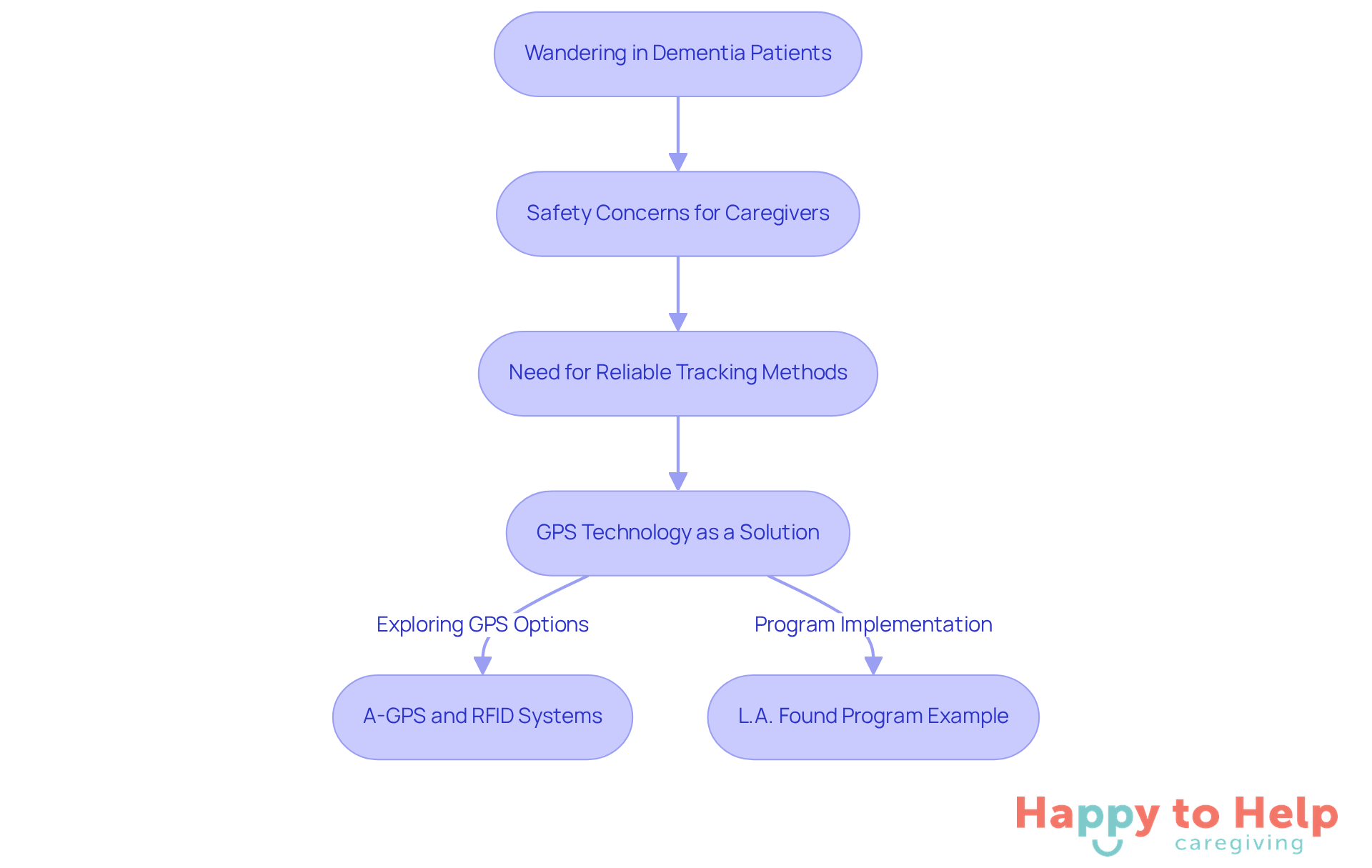
Problem: Wandering is a significant concern for caregivers of individuals with dementia. Research indicates that up to 60% of those with dementia may wander at some point, with projections suggesting that as many as 74% of Alzheimer's patients could roam. This behavior poses serious risks, making effective monitoring solutions essential.
Agitate: The implications of wandering can be dire, leading to safety concerns for vulnerable individuals. Caregivers often experience heightened stress and anxiety, knowing that their loved ones may stray into dangerous situations, particularly near water or busy roads. The need for reliable tracking methods is more pressing than ever.
Solution: GPS technology offers a practical solution. By integrating GPS tracking for dementia patients into wearable devices or mobile applications, caregivers can monitor the locations of individuals who may wander. Understanding different GPS systems, such as A-GPS (Assisted GPS) and RFID (Radio-Frequency Identification), is crucial. A-GPS, for instance, provides more accurate indoor positioning, which is beneficial in environments where traditional GPS may struggle.
The L.A. Found program exemplifies successful implementation of GPS tracking for dementia patients, aiding in the location of numerous individuals with cognitive impairments. Their GPS smartwatch provides gps tracking for dementia patients, featuring real-time location tracking, geofencing alerts, and an SOS button for guardians, significantly reducing the risks associated with wandering.
Personal stories, like that of supporter Janet Rivera, illustrate the program's positive impact on reducing caregiver stress and enhancing the safety of vulnerable individuals. By utilizing these technologies, caregivers can create a safer environment, effectively addressing the risks linked to wandering.
Implement GPS Tracking Systems for Effective Monitoring
Caregivers face the challenge of ensuring the safety of individuals with dementia while effectively implementing GPS tracking for dementia patients. Without proper monitoring, there’s a risk of wandering, which can lead to dangerous situations, making GPS tracking for dementia patients essential.
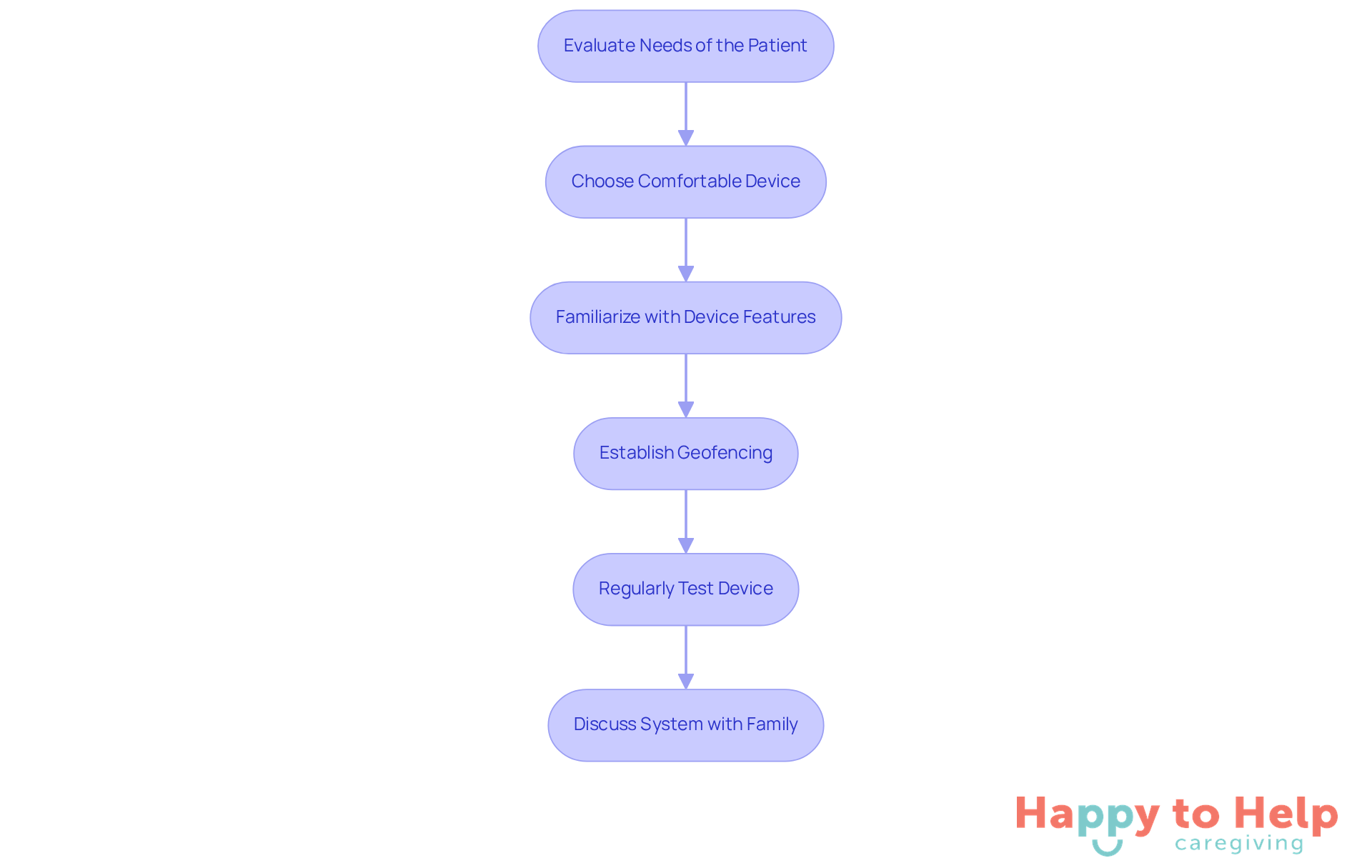
To address this issue, providers should first evaluate the specific needs of the person with dementia. Choosing a gadget that is comfortable and easy to wear is essential. Once a gadget is selected, supporters should become acquainted with its features, such as:
- Real-time monitoring
- Geofencing
- Alert notifications
Establishing geofencing for GPS tracking for dementia patients allows guardians to specify safe zones and receive notifications if the individual strays beyond these locations. Regularly testing the device and ensuring it is charged and functioning properly is crucial for maintaining safety.
Furthermore, caregivers ought to discuss the monitoring system with family members to ensure everyone is aligned regarding its use. By taking these steps, caregivers can enhance safety and peace of mind for both themselves and their loved ones.
Address Ethical Considerations in GPS Tracking for Dementia Patients
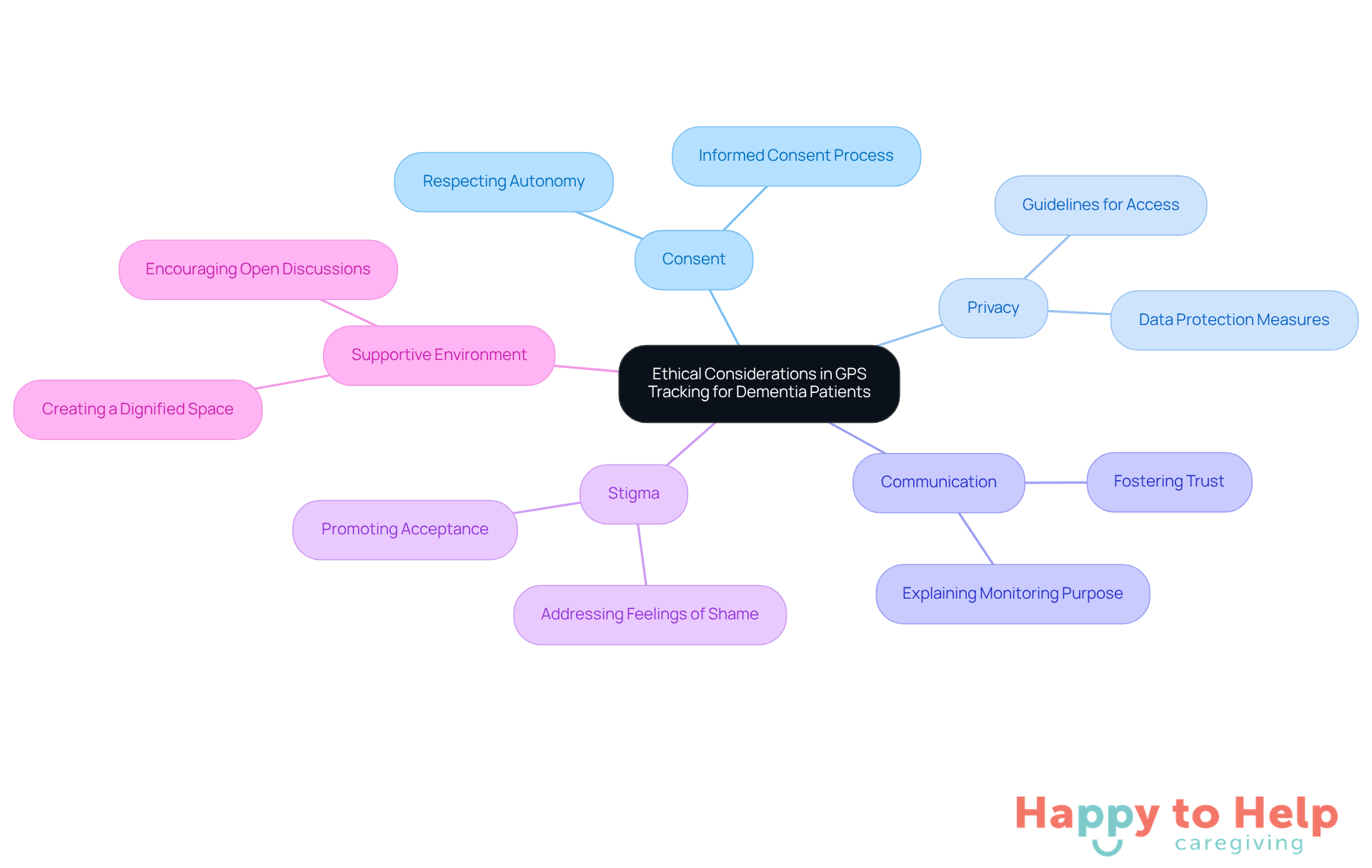
Implementing GPS tracking for dementia patients presents significant ethical challenges, particularly concerning consent and privacy. Caregivers face the problem of ensuring that patients' autonomy is respected while also prioritizing their safety.
To address these concerns, it’s crucial to include individuals in conversations about monitoring whenever possible. Caregivers should clearly explain the purpose of the monitoring tool, emphasizing how it enhances safety and independence. This approach not only respects the patient's autonomy but also fosters trust.
Moreover, establishing clear guidelines on who can access monitoring information is essential for protecting the patient's privacy. Caregivers must be proactive in tackling the potential stigma associated with monitoring tools, addressing any feelings of shame or loss of autonomy that patients may experience.
By creating a supportive environment that respects the dignity and preferences of individuals with dementia, caregivers can effectively navigate the ethical landscape of GPS monitoring.
Explore the Benefits of GPS Tracking for Enhanced Safety and Care
Problem: Caregivers of dementia patients often face significant challenges, particularly concerning safety and stress. The risk of patients wandering can lead to accidents, creating anxiety for those responsible for their care.
Agitate: This anxiety is compounded by the fear of not being able to locate a loved one quickly. Caregivers need to be able to respond swiftly to ensure the safety of dementia patients, who may not always be aware of their surroundings or the potential dangers they face.
GPS tracking for dementia patients provides a practical solution to these challenges. With advanced GPS tools, caregivers can swiftly locate individuals who may wander, significantly lowering the risk of accidents and ensuring timely intervention. For instance, devices equipped with motion sensors and fall detection technology can alert guardians if a patient remains inactive after a fall, enabling prompt assistance.
The peace of mind provided by real-time monitoring is invaluable for families. They can track their loved ones' movements and receive instant alerts if they stray from designated safe zones. This capability not only reduces anxiety for caregivers but also promotes a sense of security for patients, allowing them to engage in outdoor activities with the assurance that help is readily available if needed.
Moreover, many GPS devices come with emergency alerts and health monitoring features, enriching the caregiving experience. Some trackers even allow for two-way communication, enabling patients to connect with emergency operators during distress. This integration of technology enhances safety while promoting independence, allowing dementia patients to maintain a degree of autonomy while ensuring their well-being.
However, caregivers must consider ethical issues related to autonomy and privacy when implementing GPS monitoring. It's essential to obtain consent from legal guardians and ensure compliance with HIPAA or local data protection laws when storing patient location data. By incorporating GPS tracking for dementia patients into care plans, families can significantly enhance the quality of life for their loved ones, balancing safety with the desire for independence. Establishing protocols for responding to alerts and patient location updates is vital for effectively utilizing this technology. With various styles and types of GPS devices available, caregivers can choose the most suitable option for their loved ones.

Moving Forward with Practices for GPS Tracking for Dementia
Implementing GPS tracking for dementia patients addresses critical challenges faced by caregivers. Caregivers often struggle with the safety and well-being of individuals with dementia, particularly concerning the risks associated with wandering. This situation can lead to significant stress for families, highlighting the urgent need for effective solutions.
By leveraging advanced technology, caregivers can enhance safety and provide peace of mind. Key practices for effective GPS tracking include:
- Understanding the technology
- Selecting appropriate devices
- Addressing ethical concerns
- Recognizing the benefits of real-time monitoring
Evaluating individual needs and establishing clear guidelines for use fosters a supportive environment that respects autonomy while prioritizing safety.
Personal stories and successful programs, like L.A. Found, demonstrate the real-world impact of these practices. They showcase how technology can alleviate caregiver stress and empower individuals with dementia to maintain a degree of independence. As technology continues to evolve, embracing these best practices is essential for enhancing the quality of life for those affected by dementia.
Caregivers are encouraged to explore available options and engage in open conversations about monitoring. By doing so, they can provide the highest level of care while respecting the dignity of their loved ones. Ultimately, the integration of GPS tracking not only safeguards vulnerable individuals but also supports caregivers in their vital role.
https://iframe.tely.ai/cta/eyJhcnRpY2xlX2lkIjogIjY5M2Y1MDg5MmI4ODNiM2YwNWZiOTk3OCIsICJjb21wYW55X2lkIjogIjY4ZWU1ZGNhNzMxNzYyNTU3ZjNjOTVjMSIsICJpbmRleCI6IG51bGwsICJ0eXBlIjogImFydGljbGUifQ==Frequently Asked Questions
Why is wandering a significant concern for caregivers of individuals with dementia?
Wandering is a major concern because research indicates that up to 60% of individuals with dementia may wander at some point, with projections suggesting that as many as 74% of Alzheimer's patients could roam. This behavior poses serious safety risks for vulnerable individuals.
What are the implications of wandering for individuals with dementia?
The implications of wandering can be dire, leading to serious safety concerns, especially if individuals stray into dangerous situations such as near water or busy roads. This situation often results in heightened stress and anxiety for caregivers.
How can GPS technology help in monitoring individuals with dementia?
GPS technology offers a practical solution by enabling caregivers to monitor the locations of individuals who may wander through wearable devices or mobile applications. This helps ensure their safety and provides peace of mind for caregivers.
What are some types of GPS systems relevant to dementia care?
Important GPS systems include A-GPS (Assisted GPS) and RFID (Radio-Frequency Identification). A-GPS provides more accurate indoor positioning, which is beneficial in environments where traditional GPS may struggle.
Can you provide an example of a successful GPS tracking program for dementia patients?
The L.A. Found program exemplifies successful implementation of GPS tracking for dementia patients. It features a GPS smartwatch that includes real-time location tracking, geofencing alerts, and an SOS button for guardians, significantly reducing the risks associated with wandering.
How do personal stories reflect the impact of GPS technology in dementia care?
Personal stories, such as that of supporter Janet Rivera, illustrate the positive impact of GPS technology on reducing caregiver stress and enhancing the safety of vulnerable individuals. These technologies help create a safer environment for those at risk of wandering.
List of Sources
- Understand GPS Technology and Its Applications in Dementia Care
- L.A. County gets a new tool to find and save vulnerable people with cognitive disabilities (https://latimes.com/science/story/2025-10-16/la-county-gets-a-new-tool-to-find-and-save-vulnerable-people-with-cognitive-disabilities)
- L.A. County Expands Tracking Program for Residents With Cognitive Disabilities (https://governing.com/resilience/l-a-county-expands-tracking-program-for-residents-with-cognitive-disabilities)
- L.A. County Launches New GPS Smartwatch to Protect Alzheimer’s and Autism Communities – COUNTY OF LOS ANGELES (https://lacounty.gov/2025/10/15/l-a-county-launches-new-gps-smartwatch-to-protect-alzheimers-and-autism-communities)
- LA Found program launches new GPS technology to help locate people who wander (https://cbsnews.com/losangeles/video/la-found-program-launches-new-gps-technology-to-help-locate-people-who-wander)
- Implement GPS Tracking Systems for Effective Monitoring
- Implementing global positioning system trackers for people with dementia who are at risk of wandering - PMC (https://pmc.ncbi.nlm.nih.gov/articles/PMC11290024)
- Dementia GPS Tracker Market Report | Global Forecast From 2025 To 2033 (https://dataintelo.com/report/global-dementia-gps-tracker-market)
- People affected by dementia try out GPS safer walking devices (https://alzheimers.org.uk/get-support/publications-and-factsheets/dementia-together/people-affected-dementia-try-gps-safer-walking-device)
- GPS Technology for Caregiver Elopement Support with Dementia Patients (https://boundarycare.com/gps-technology-for-elopement-support-with-dementia-patients)
- Location-tracking Technology in Dementia Caregiving - DementiaHub.SG (https://dementiahub.sg/living-well-with-dementia/location-tracking-technology-in-dementia-caregiving)
- Address Ethical Considerations in GPS Tracking for Dementia Patients
- Electronic Tracking Devices for People With Dementia: Content Analysis of Company Websites (https://aging.jmir.org/2022/4/e38865)
- Alzheimer’s GPS Devices: Safety Measures or Privacy Invasions? (https://pameladwilson.com/care-planning-for-alzheimers-professional)
- Examining Ethical, Legal, And Policy Considerations of Using GPS Shoes For People With Alzheimer’s Disease (https://publichealth.gmu.edu/news/2016-07/examining-ethical-legal-and-policy-considerations-using-gps-shoes-people-alzheimers)
- The Ethics of Electronic Tracking Devices in Dementia Care: An Interview Study with Developers - Science and Engineering Ethics (https://link.springer.com/article/10.1007/s11948-024-00478-0)
- Is GPS Tracking For Seniors Worth It? The Pros & Cons (https://trualta.com/resources/blog/is-gps-tracking-for-seniors-worth-it-the-pros-cons)
- Explore the Benefits of GPS Tracking for Enhanced Safety and Care
- Transforming healthcare with GPS technology for improved patient care and safety | TrackingFox (https://trackingfox.com/2024/02/22/transforming-healthcare-with-gps-technology-for-improved-patient-care-and-safety)
- Why a GPS Tracker is Essential for Ensuring the Safety of Dementia Pat (https://smartmedalert.com/blogs/news/why-a-gps-tracker-is-essential-for-ensuring-the-safety-of-dementia-patients?srsltid=AfmBOopBYt5RwvyRZgKHzRDXcRy-NTG2ilf3cQsvw735WWC0gWNPBw-2)
- GPS for Healthcare: Enhancing Patient Safety and Quality of Life (https://openmedscience.com/gps-for-healthcare-enhancing-patient-safety-and-quality-of-life)
- Is GPS Tracking For Seniors Worth It? The Pros & Cons (https://trualta.com/resources/blog/is-gps-tracking-for-seniors-worth-it-the-pros-cons)
- How GPS Trackers Help Alzheimer Patients | Family1st (https://family1st.io/how-gps-trackers-help-alzheimers-patients)