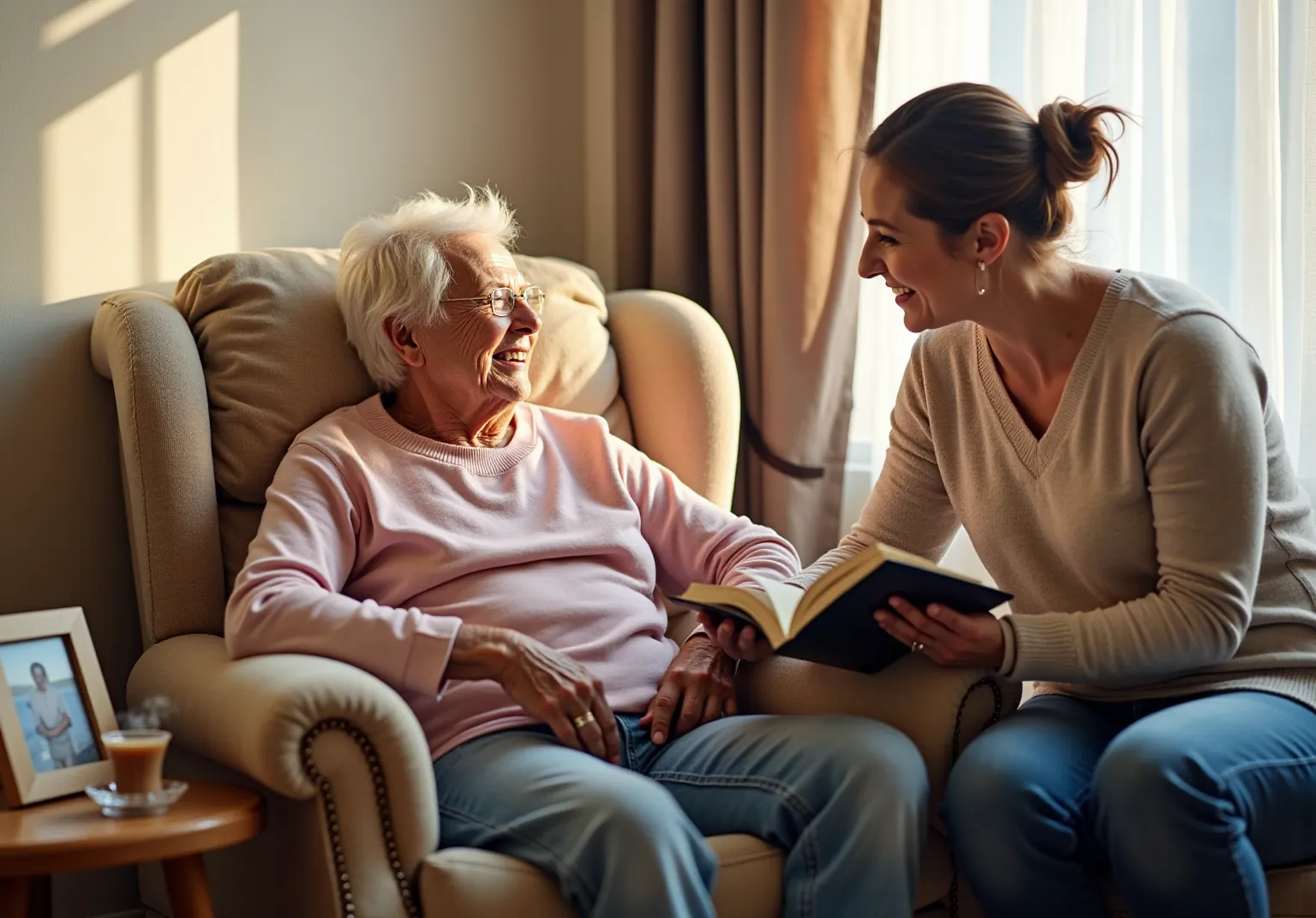
What You Need to Know About Practices for Home Care for the Blind
Understanding the unique challenges faced by individuals with blindness and visual impairments is essential for caregivers striving to provide effective home care. Millions of older adults experience vision loss, creating a pressing need for tailored support. This situation not only affects the individuals but also places significant demands on caregivers, who must navigate these complexities to enhance the quality of life for those they assist.
How can caregivers bridge the gap between mere assistance and fostering a fulfilling, supportive environment for the visually impaired? By implementing best practices, caregivers can enhance safety, independence, and emotional well-being. This article explores actionable solutions that empower caregivers to meet these challenges head-on.
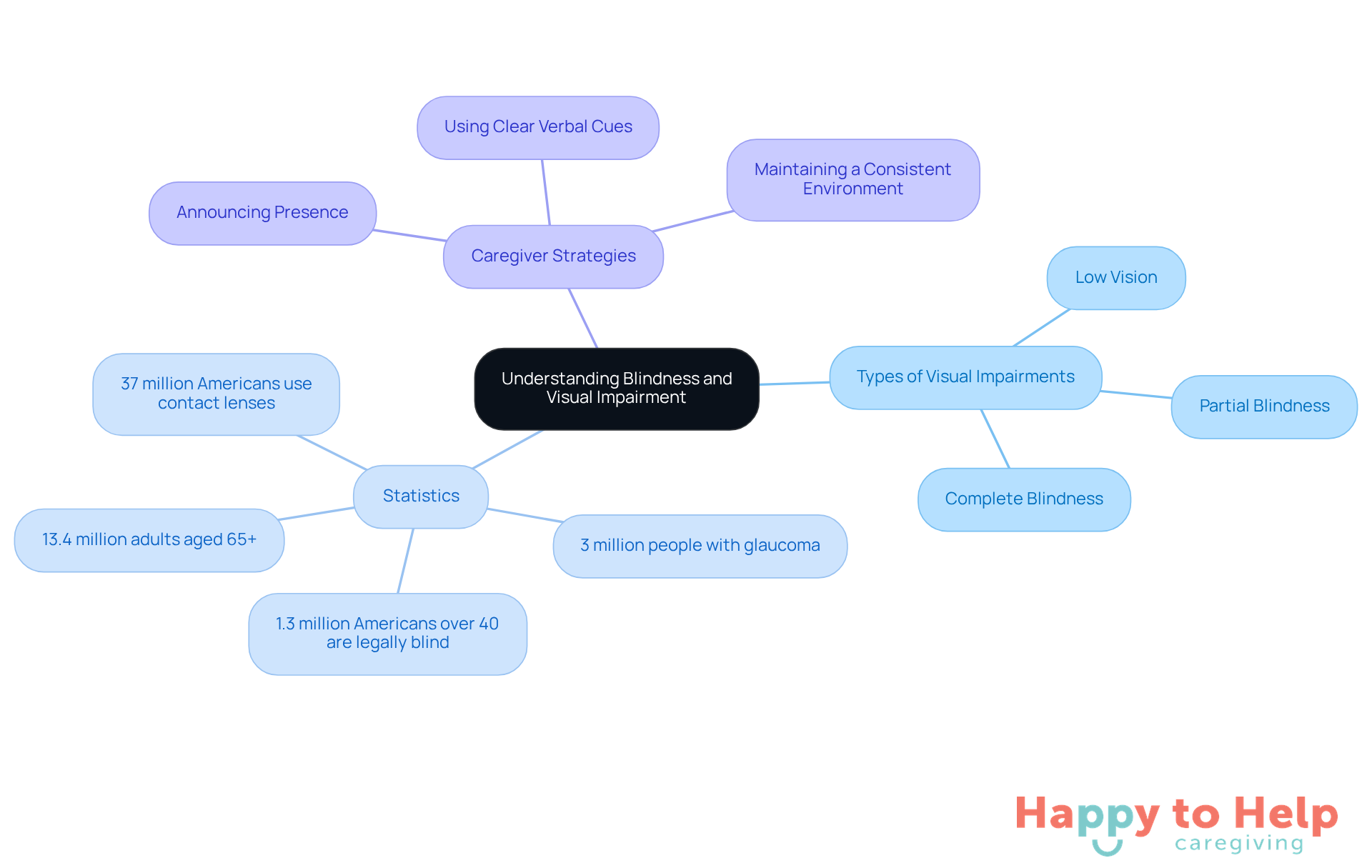
Understand the Basics of Blindness and Visual Impairment
Blindness and visual difficulties present significant challenges for caregivers involved in home care for the blind, impacting daily life in various ways. Understanding the different types of visual impairments, such as low vision, partial blindness, and complete blindness, is crucial for effective home care for the blind. This knowledge allows caregivers in home care for the blind to tailor their communication and assistance strategies to meet individual needs.
For example, individuals with low vision may benefit from enhanced lighting and contrast, while those who are completely blind might require more tactile and auditory cues. Statistics reveal that approximately 13.4 million American adults aged 65 and older experience vision loss. This underscores the importance of caregivers being well-informed about these conditions to provide effective assistance.
Engaging with resources from organizations like the World Health Organization can deepen caregivers' understanding of the prevalence and characteristics of vision difficulties. This knowledge aids in developing suitable care approaches. Effective communication is vital in providing home care for the blind. Caregivers should adopt techniques such as:
- Announcing their presence
- Using clear verbal cues
- Maintaining a consistent environment
These strategies foster a sense of security for those they assist. By adapting their approach to the specific visual challenges faced, caregivers providing home care for the blind can significantly enhance the quality of life for individuals with visual impairments, ensuring that each person feels valued and recognized.
Create a Safe Home Environment for Visually Impaired Individuals
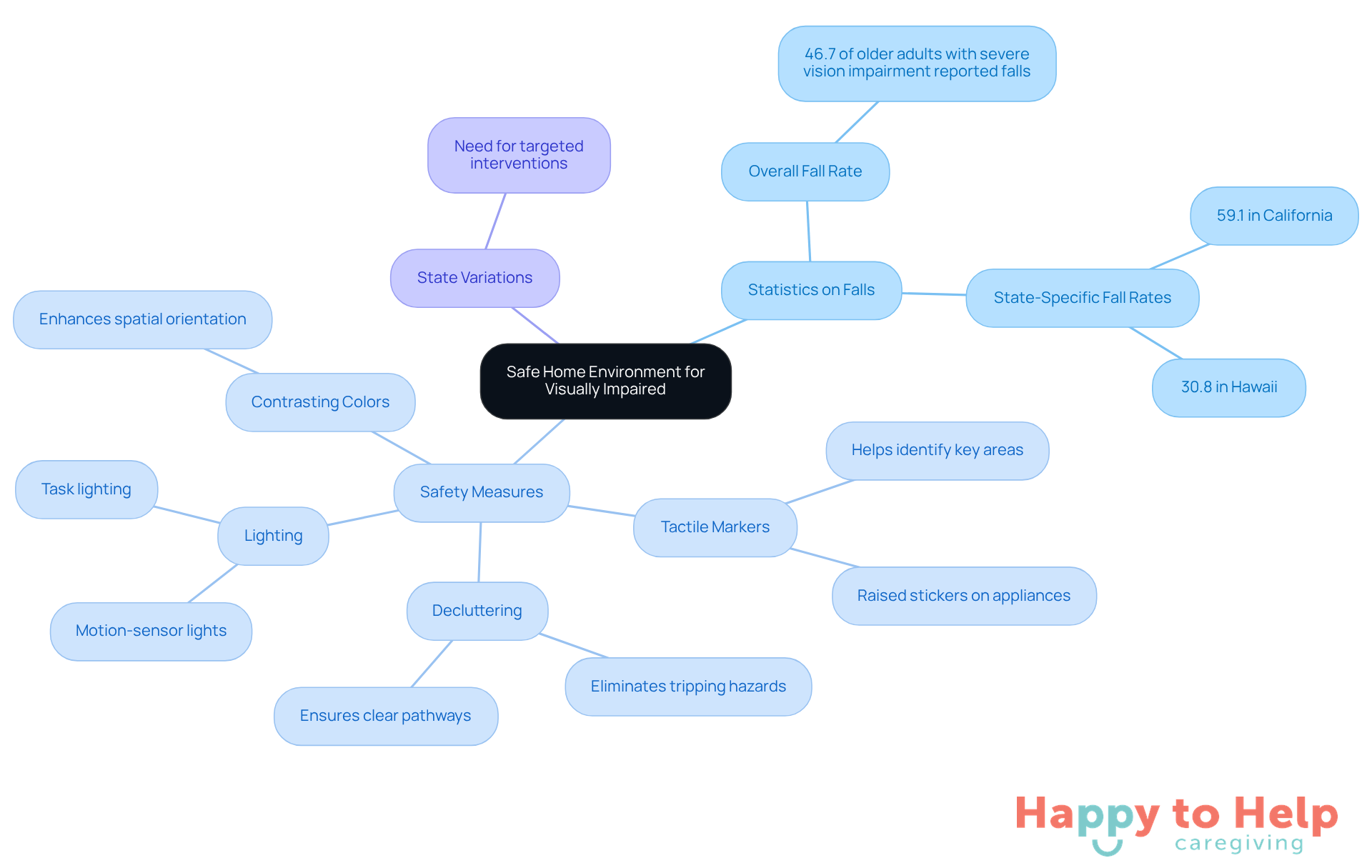
To foster a safe environment in home care for the blind, caregivers face a significant challenge: the risk of falls. Statistics reveal that among older adults with significant vision challenges, 46.7% reported experiencing falls in the previous year. This alarming figure underscores the essential need for effective safety measures.
As John E. Crews, a home safety specialist, emphasizes, effective fall prevention measures are crucial in the context of home care for the blind, especially for individuals with significant vision challenges. A clutter-free environment plays a vital role in reducing risks. In home care for the blind, caregivers can take actionable steps to enhance safety by prioritizing decluttering to eliminate tripping hazards and ensure clear pathways.
- Installing adequate lighting, such as motion-sensor lights and task lighting, significantly aids navigation.
- Additionally, using contrasting colors for walls and furniture can enhance spatial orientation.
- Tactile markers, like raised stickers on appliances, help identify key areas, further supporting independence.
Regular assessments of the home for potential hazards and timely adjustments are essential for maintaining a secure living space in the context of home care for the blind. Eleanor Brown aptly notes, "Clutter is not just physical stuff; it’s old ideas, toxic relationships, and bad habits," reinforcing the broader implications of decluttering.
It's also important to recognize that the prevalence of falls among older adults with severe vision impairment varies significantly by state. Rates range from 30.8% in Hawaii to 59.1% in California, indicating a need for targeted interventions.
Implement Personalized Care Strategies for Daily Living
Caregivers often face challenges when providing home care for the blind, especially in developing effective care strategies that cater to their unique needs. This can lead to feelings of frustration for both caregivers and those they care for, as the lack of tailored support may hinder independence and daily functioning.
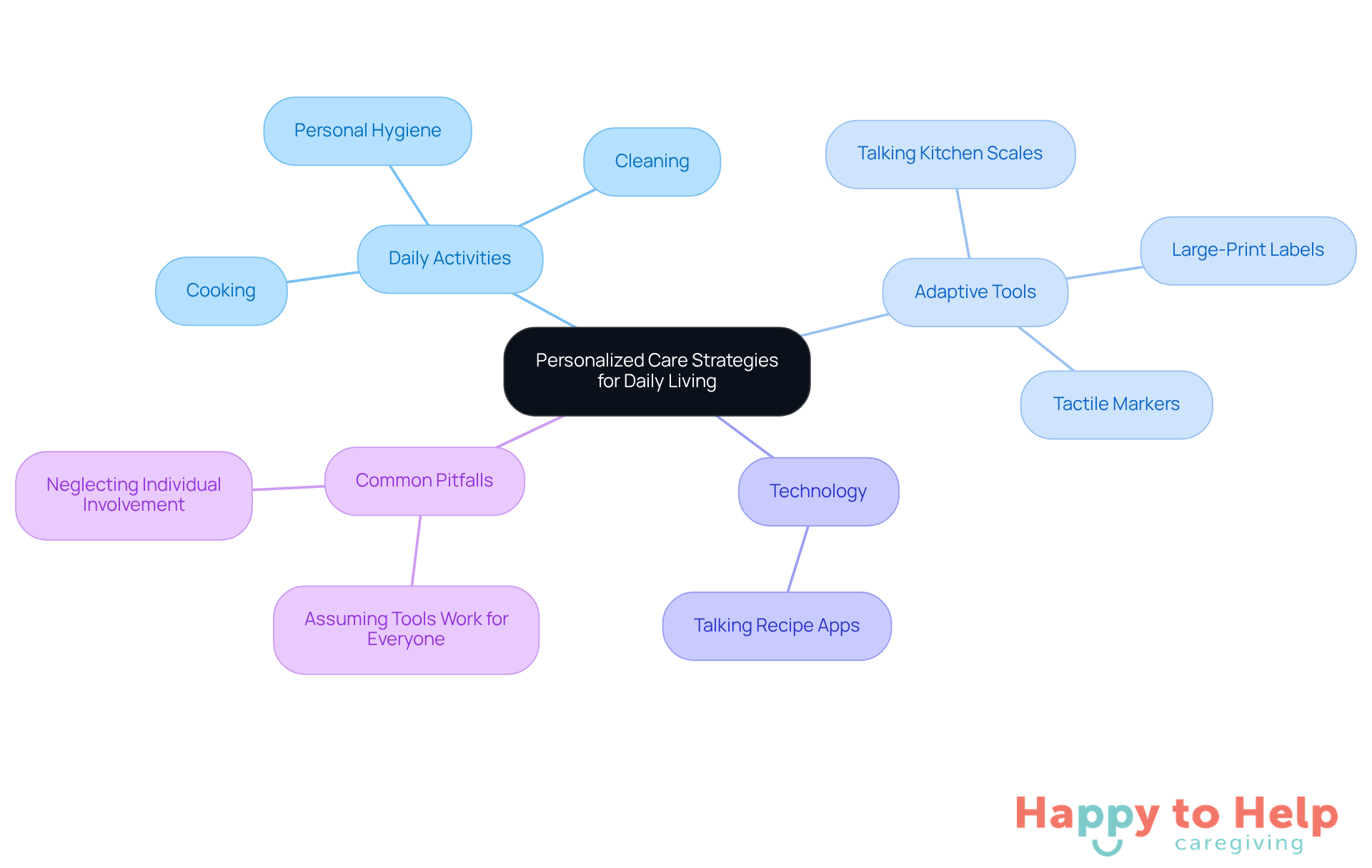
To address these challenges, caregivers should collaborate closely with visually impaired persons to create customized home care for the blind plans. This collaboration may involve:
- Assisting with essential daily activities such as cooking
- Cleaning
- Personal hygiene
Utilizing adaptive tools like talking kitchen scales, large-print labels, and tactile markers can significantly enhance independence in home care for the blind.
As Ora Ruggles noted, "It’s not enough to give a patient something to do with their hands. You must reach for the heart as well as the hands. It’s the heart that really does the healing." Encouraging the use of technology, such as smartphone applications specifically designed for home care for the blind, can further improve daily living skills. For instance, a person with visual impairment might use a talking recipe app to independently prepare meals, fostering both confidence and autonomy.
Regularly assessing and modifying care plans in home care for the blind based on a person's progress and feedback is crucial to ensure that the assistance offered remains effective and relevant. Caregivers should also be aware of common pitfalls, such as:
- Assuming all adaptive tools will work for each person
- Neglecting to involve the individual in the decision-making process
This proactive approach not only encourages independence but also enables individuals to participate more fully in their daily lives.
Provide Emotional Support and Companionship
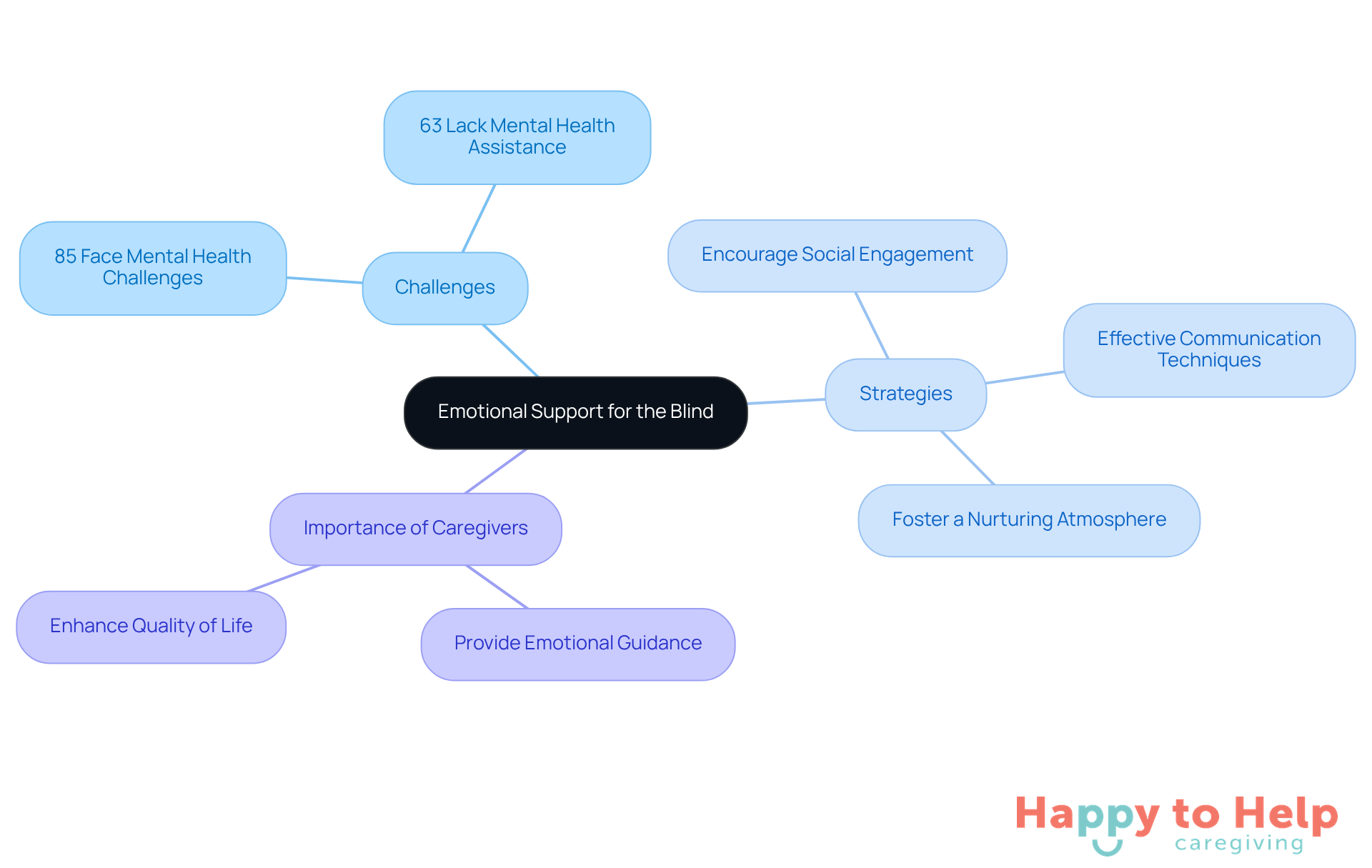
Caregivers face a significant challenge in providing emotional support in home care for the blind. Many of these individuals experience feelings of loneliness and anxiety, with research showing that approximately 85% of those with sight loss encounter mental health challenges, emphasizing the need for home care for the blind. Alarmingly, 63% of participants in a study reported not receiving mental health assistance, such as social prescribing or counseling. This highlights the critical role caregivers can play in delivering emotional guidance and support within the context of home care for the blind.
To address these issues, caregivers in home care for the blind can encourage participation in social activities, like support groups or community events, which help foster connections among individuals facing similar challenges. This sense of belonging is vital for emotional well-being.
Effective communication techniques tailored for the visually impaired are essential for optimizing interactions. Caregivers should use descriptive language and maintain a calm, reassuring tone. When appropriate, maintaining eye contact can also help build trust and rapport. As Brené Brown states, "Vulnerability is the birthplace of love, belonging, joy, courage, empathy, and creativity." Creating a supportive environment in home care for the blind, where individuals feel valued and understood, is crucial for their emotional health.
In summary, caregivers can enhance their support by:
- Encouraging social engagement through activities and support groups.
- Utilizing effective communication techniques, including descriptive language and a calm tone.
- Fostering a nurturing atmosphere that promotes trust and connection.
By implementing these strategies in home care for the blind, caregivers can significantly improve the emotional well-being of visually impaired individuals, ultimately enhancing their overall quality of life.
Your Path Forward
Understanding the challenges of home care for individuals who are blind or visually impaired is crucial for enhancing their quality of life. Caregivers face unique difficulties due to various types of visual impairments, which can significantly impact daily experiences. By recognizing these challenges, caregivers can implement tailored strategies that improve the care provided.
Key practices include:
- Ensuring a clutter-free space
- Using appropriate lighting
- Employing adaptive tools
These measures help mitigate risks and promote independence. Additionally, fostering emotional connections through effective communication and social engagement is vital in addressing the mental health challenges often faced by visually impaired individuals. Actively involving those in care in decision-making processes creates a more empowering atmosphere that respects their autonomy.
Ultimately, providing comprehensive home care for the blind and visually impaired is about more than just meeting physical needs; it enriches lives through understanding, support, and companionship. Caregivers are encouraged to embrace these best practices, transforming homes into safe havens that promote both independence and emotional well-being.
https://iframe.tely.ai/cta/eyJhcnRpY2xlX2lkIjogIjY5Mjc5NTE2MTE3NGVkN2UzNDc1ZmU2NCIsICJjb21wYW55X2lkIjogIjY4ZWU1ZGNhNzMxNzYyNTU3ZjNjOTVjMSIsICJpbmRleCI6IG51bGwsICJ0eXBlIjogImFydGljbGUifQ==Frequently Asked Questions
What are the main types of visual impairments?
The main types of visual impairments include low vision, partial blindness, and complete blindness.
Why is it important for caregivers to understand visual impairments?
Understanding visual impairments allows caregivers to tailor their communication and assistance strategies to meet the individual needs of those they care for, improving the effectiveness of home care.
How can caregivers assist individuals with low vision?
Individuals with low vision may benefit from enhanced lighting and contrast to help them navigate their environment more effectively.
What strategies can caregivers use to support individuals who are completely blind?
Caregivers can support individuals who are completely blind by providing more tactile and auditory cues to help them understand their surroundings.
What is the significance of the statistic regarding American adults aged 65 and older experiencing vision loss?
The statistic that approximately 13.4 million American adults aged 65 and older experience vision loss highlights the importance of caregivers being well-informed about visual impairments to provide effective assistance.
What resources can caregivers utilize to enhance their understanding of visual impairments?
Caregivers can engage with resources from organizations like the World Health Organization to deepen their understanding of the prevalence and characteristics of vision difficulties.
What are some effective communication techniques for caregivers providing home care for the blind?
Effective communication techniques include announcing their presence, using clear verbal cues, and maintaining a consistent environment to foster a sense of security for those they assist.
How can adapting care approaches improve the quality of life for individuals with visual impairments?
By adapting their approach to the specific visual challenges faced, caregivers can significantly enhance the quality of life for individuals with visual impairments, ensuring that each person feels valued and recognized.
List of Sources
- Understand the Basics of Blindness and Visual Impairment
- The Statistics on Eye Disease in America (2022) – NVISION (https://nvisioncenters.com/education/eye-disease-statistics)
- Eye care in 2025: vision loss, glaucoma and AI diagnostics (https://perivision.com/post/eye-care-vision-2025)
- Adults (https://afb.org/research-and-initiatives/statistics/adults-vision-loss-nhis)
- Supporting Seniors with Vision Impairments at Home (https://allaboutyouhha.com/news/supporting-seniors-with-vision-impairments-at-home)
- Blindness Statistics | National Federation of the Blind (https://nfb.org/resources/blindness-statistics)
- Create a Safe Home Environment for Visually Impaired Individuals
- Inspiring Quotes to Motivate You to Start Cleaning and Decluttering (https://veranda.com/home-decorators/g32031382/decluttering-cleaning-quotes)
- Falls Among Persons Aged ≥65 Years With and Without Severe Vision Impairment — United States, 2014 | MMWR (https://cdc.gov/mmwr/volumes/65/wr/mm6517a2.htm)
- Forty-Two Inspiring Decluttering, Housekeeping, & Organization Quotes (https://debrasmouse.com/42-inspiring-decluttering-organization-quotes)
- Implement Personalized Care Strategies for Daily Living
- 25 Inspirational Occupational Therapy Quotes That Highlight The Power OTs (https://careoptionsforkids.com/blog/occupational-therapy-quotes)
- 29 Occupational Therapy Quotes! • OT Potential (https://otpotential.com/blog/occupational-therapy-quotes)
- Occupational Therapy Inspirational Quotes: 50 Motivational Sayings - LifeHack Quotes (https://quotes.lifehack.org/collections/occupational-therapy-inspirational-quotes)
- Empowering the Visually Impaired - TFS HealthScience | Contract Research Organization | Global Resourcing Provider | CRO (https://tfscro.com/resources/empowering-the-visually-impaired)
- The Best Occupational Therapy Quotes - The OT Toolbox (https://theottoolbox.com/occupational-therapy-quotes)
- Provide Emotional Support and Companionship
- New study finds people left to cope alone with emotional impact of sight loss | Sight Scotland (https://sightscotland.org.uk/articles/news/new-study-finds-people-left-cope-alone-emotional-impact-sight-loss)
- Therapist Quotes: Healing Words to Uplift and Inspire | Brighter Vision (https://brightervision.com/blog/therapist-quotes)
- Improving Healthcare Communication for Caregivers: A Pilot Study - PMC (https://pmc.ncbi.nlm.nih.gov/articles/PMC6113114)
- 28 Inspiring Mental Health Quotes That Will Empower You (https://positivepsychology.com/mental-health-quotes)
- 19 Powerful Brene Brown Quotes on Embracing Vulnerability, Love, and Belonging — Hope+Wellness (https://hope-wellness.com/blog/19-inspiring-brene-brown-quotes-on-embracing-vulnerability-love-and-belonging)