4 Best Practices for In Home Dementia Care You Need to Know

For families in our service areas
For families in our service areas, this guide explains dementia care and how non-medical in-home caregiving can support care planning in East Idaho, Treasure Valley & Magic Valley, Northern Wasatch, North Central West Virginia & Southwestern Pennsylvania, and Northeast Ohio.
Practices for In Home Dementia Care at a Glance
Caring for someone with dementia can be incredibly challenging. Caregivers often face emotional hurdles, feeling overwhelmed and stressed. It’s essential to recognize these feelings and understand that you’re not alone in this journey.
In-home dementia care can be made easier with some thoughtful practices:
- Providing companionship support is crucial; it helps create a sense of connection and reduces feelings of isolation for both the patient and the caregiver.
- Implementing home safety modifications ensures a secure environment, allowing everyone to feel more at ease.
Don’t forget about self-care for yourself as a caregiver. Prioritizing your well-being is not just important; it’s necessary. When you take care of yourself, you’re better equipped to provide the compassionate care your loved one deserves.
Effective communication techniques can also make a significant difference. They help bridge the gap between you and the person you’re caring for, fostering understanding and connection.
These practices are not just about managing tasks; they address the emotional and physical needs of both patients and caregivers. By creating a supportive and safe environment, you enhance the quality of care and overall well-being for everyone involved. Remember, it’s okay to seek help and lean on others for support. You’re doing an incredible job, and every step you take is a step toward a more compassionate and nurturing experience.
Understanding Practices for In Home Dementia Care
Navigating the complexities of in-home dementia care can feel like an overwhelming journey for families and caregivers. The emotional weight of this experience is heavy, and as the demand for personalized support grows, it’s essential to understand the services and strategies available. These resources can significantly enhance the quality of life for both patients and their families. But with so many options and challenges, how can caregivers ensure they’re making the best choices to support their loved ones effectively?
This article explores four best practices that not only address the unique needs of dementia patients but also empower caregivers. By fostering a nurturing and safe home environment, caregivers can find solace in knowing they’re providing compassionate care. Together, we can navigate this journey with understanding and support.
Identify Essential In-Home Care Services for Dementia
Choosing in home dementia care services for patients is a deeply personal decision that should be made with care to meet their unique needs. Many caregivers face emotional challenges, feeling overwhelmed and isolated. It’s essential to recognize these feelings and provide the right support.
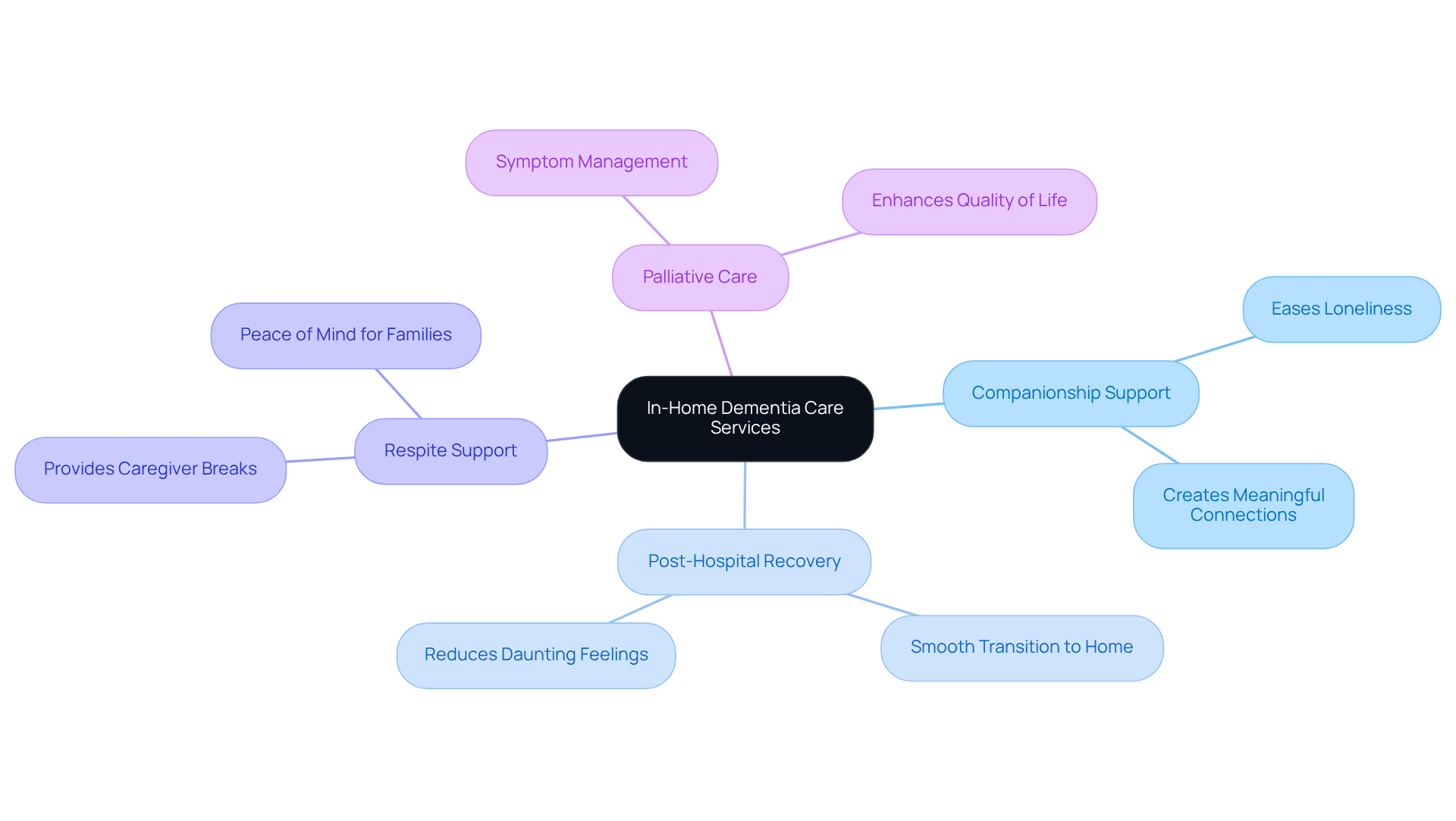
Companionship support can be a lifeline, helping to ease those feelings of loneliness. It’s about creating connections that matter. Additionally, post-hospital recovery assistance ensures a smooth transition from medical facilities to home, making the process less daunting for both patients and their families.
Respite support is crucial, too. Family caregivers often need breaks to recharge, and knowing that their loved ones are receiving in home dementia care from qualified professionals can bring immense peace of mind. Palliative care plays a vital role as well, helping to manage symptoms and enhance quality of life.
Each service should be tailored to the individual’s preferences and daily routines. This personalization fosters a sense of normalcy and comfort in their environment, allowing them to feel at home. Remember, you’re not alone in this journey. There are compassionate services available to support both you and your loved one.
Implement Home Safety Modifications for Dementia Patients
Ensuring home safety modifications is vital for the well-being of individuals who are receiving in home dementia care. It’s important to start by removing tripping hazards like loose rugs and clutter. These simple changes can significantly lower the risk of falls, which is a common concern.
Next, think about installing grab bars in bathrooms and ensuring that there’s adequate lighting throughout the home. These steps are crucial in creating a safer environment. Night lights can also be a great addition, helping to improve safety during the night. Additionally, consider door alarms or locks to prevent wandering, a behavior often seen in those with dementia.
Labeling rooms and important items can make a world of difference, helping individuals navigate their surroundings with confidence. It’s also essential to keep an eye out for small cuts or burns, as these may indicate that assistance is needed with personal care tasks. Securing hazardous items in locked cabinets is another critical safety measure.
Moreover, consulting with licensed Occupational and Physical Therapists for professional home safety assessments can provide tailored recommendations for modifications. These thoughtful changes not only enhance safety but also foster a sense of independence, allowing patients to feel more secure and comfortable in their homes, which is essential in home dementia care. Remember, every small step you take can lead to a more nurturing and supportive environment.

Prioritize Self-Care Strategies for Family Caregivers
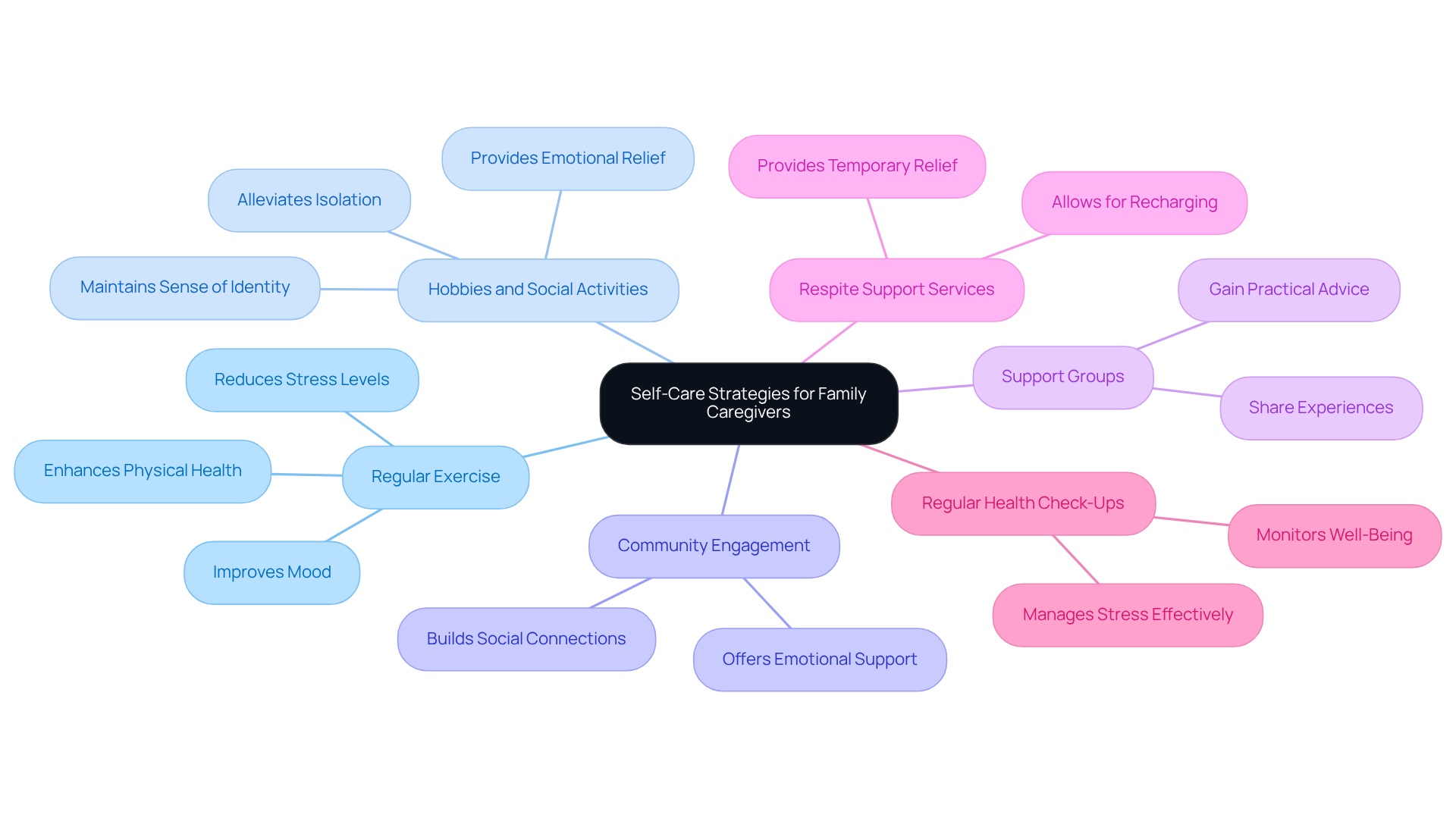
Family supporters need to prioritize self-care to maintain their ability to provide effective assistance in home dementia care, especially when caring for individuals with dementia. Regular exercise is essential; it not only boosts physical health but also significantly enhances mental well-being. Caregivers often face physical challenges, with statistics showing they are 1.5 times more likely to experience fatigue and stress-related health issues. Taking time for hobbies or social activities can offer much-needed breaks from caregiving duties, helping to ease feelings of isolation and burnout. Engaging in community events and nurturing social relationships is vital for emotional support and connection.
Moreover, caregivers should actively seek support from local or online groups where they can share experiences and gain valuable insights. These communities provide emotional relief and practical advice, fostering a sense of belonging. Utilizing respite support services is another effective strategy, giving caregivers essential time off to recharge. This temporary relief allows them to return to their responsibilities with renewed energy and focus, ultimately improving the quality of in home dementia care they provide. Regular health check-ups are crucial for caregivers to monitor their well-being and manage stress effectively.
Utilize Effective Communication Techniques with Dementia Patients
Engaging with individuals with dementia can be challenging, and effective communication methods are essential. It’s important to:
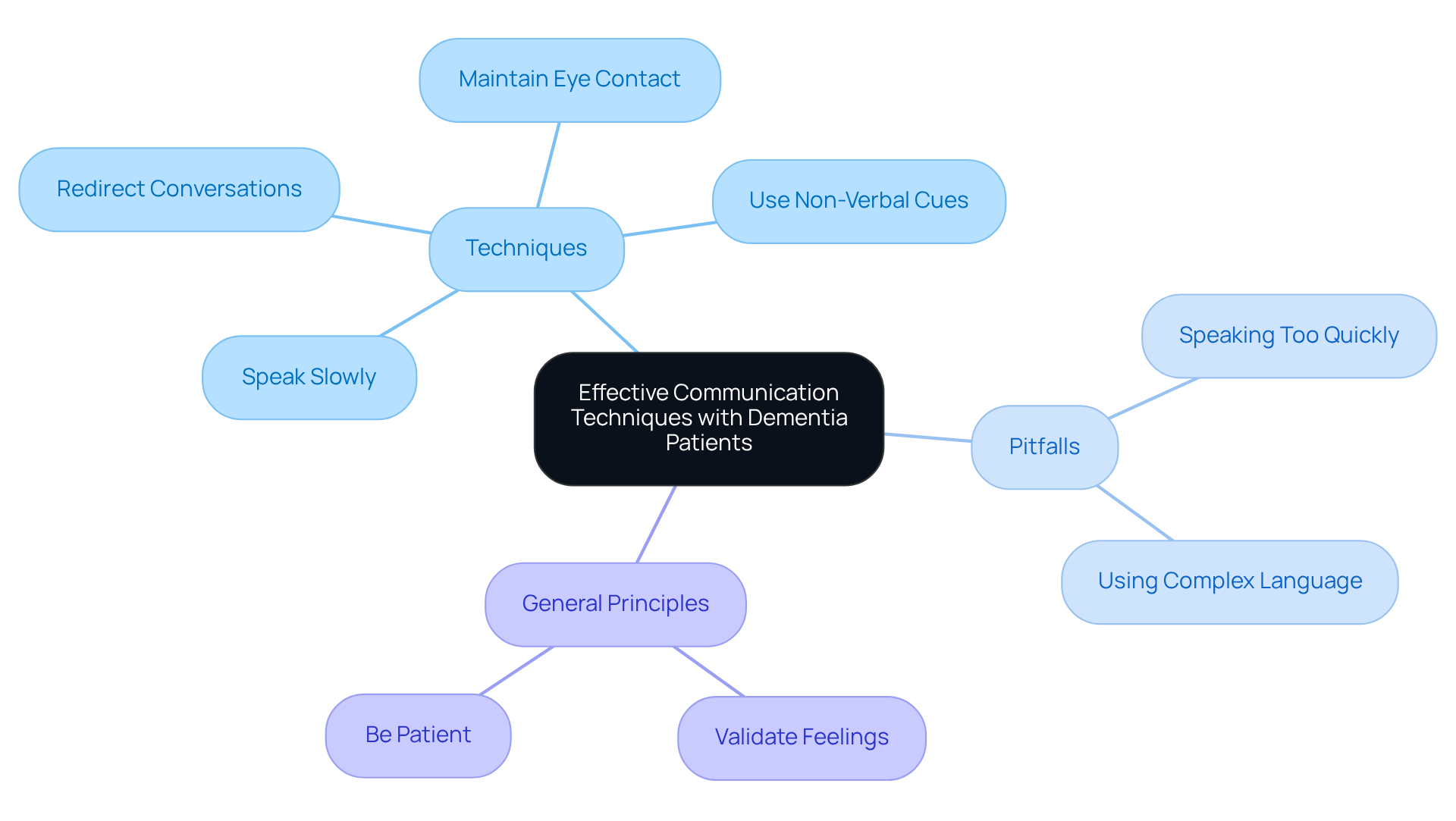
- Speak slowly and clearly, using simple language and short sentences.
- Use non-verbal cues, like facial expressions and gestures, to help with understanding.
- Maintain eye contact and be patient, allowing the individual time to absorb information.
- Redirect conversations to familiar topics to engage the person and ease frustration.
Validating their feelings and experiences creates a supportive environment, enhancing emotional well-being and trust in caregivers. As dementia care specialists note, effective communication can significantly reduce anxiety and improve the quality of interactions. One expert emphasizes, "Patience is essential; it enables the individual to feel heard and understood."
Moreover, studies show that using non-verbal communication effectively can lead to better comprehension and connection with dementia patients. Caregivers should be mindful of common pitfalls, such as:
- Speaking too quickly.
- Using complex language, which can hinder understanding.
By incorporating these strategies, caregivers not only enhance their caregiving experience but also promote a more compassionate approach to dementia care.
Moving Forward with Practices for In Home Dementia Care
In-home dementia care is a journey filled with challenges that can weigh heavily on caregivers and families. It’s essential to recognize the emotional toll this experience can take. By focusing on tailored approaches, we can create a supportive environment that truly enhances the quality of life for those affected by dementia.
- Companionship, respite support, and palliative care are not just services; they are lifelines.
- Personalized care that aligns with daily routines can make all the difference.
- Simple home safety modifications—like removing hazards and installing assistive devices—can prevent accidents and foster a sense of independence.
- And let’s not forget about the caregivers themselves; prioritizing their self-care is crucial.
- When caregivers are healthy and supported, they can provide the best care possible.
- Effective communication strategies can also transform interactions, making them more meaningful and compassionate.
Ultimately, in-home dementia care is about compassion, understanding, and unwavering support. By embracing these practices, caregivers can enhance the well-being of their loved ones while creating a nurturing environment that promotes dignity and comfort. Engaging with local resources and communities can further strengthen this support system, ensuring that no one has to navigate this path alone. Remember, you are not alone in this journey; together, we can foster a caring and supportive environment for everyone involved.
https://iframe.tely.ai/cta/eyJhcnRpY2xlX2lkIjogIjY5MGQzNmFkNmY3YWZkOTA3YjBlZTE2ZSIsICJjb21wYW55X2lkIjogIjY4ZWU1ZGNhNzMxNzYyNTU3ZjNjOTVjMSIsICJpbmRleCI6IG51bGwsICJ0eXBlIjogImFydGljbGUifQ==Frequently Asked Questions
What should be considered when choosing in-home dementia care services?
Choosing in-home dementia care services is a deeply personal decision that should be made with care to meet the unique needs of the patient.
What emotional challenges do caregivers face?
Caregivers often experience emotional challenges such as feeling overwhelmed and isolated.
How can companionship support benefit dementia patients?
Companionship support can help ease feelings of loneliness by creating meaningful connections for dementia patients.
What is the role of post-hospital recovery assistance in dementia care?
Post-hospital recovery assistance ensures a smooth transition from medical facilities to home, making the process less daunting for both patients and their families.
Why is respite support important for family caregivers?
Respite support is crucial as it allows family caregivers to take breaks to recharge, knowing their loved ones are receiving care from qualified professionals.
What is the purpose of palliative care in dementia care?
Palliative care helps manage symptoms and enhance the quality of life for dementia patients.
How should in-home care services be tailored for dementia patients?
Each service should be personalized to the individual’s preferences and daily routines to foster a sense of normalcy and comfort in their environment.
What resources are available for caregivers of dementia patients?
There are compassionate services available to support both caregivers and their loved ones throughout the caregiving journey.