
For families in our service areas
For families in our service areas, this guide explains caregiving and how non-medical in-home caregiving can support care planning in East Idaho, Treasure Valley & Magic Valley, Northern Wasatch, North Central West Virginia, and Northeast Ohio.
What You Need to Know About Practices for Keeping Mom at Home
Caring for aging loved ones at home presents a unique set of challenges that can feel both rewarding and overwhelming. Caregivers often grapple with the complexities of ensuring their family members' comfort, safety, and independence. This situation can lead to stress and burnout, making it crucial for caregivers to find effective strategies that support both their loved ones and themselves.
To address these challenges, families must balance the demands of caregiving with the need for emotional support and safety. By implementing best practices, caregivers can create an environment that fosters well-being for everyone involved. This article explores essential strategies that not only meet the unique needs of seniors but also empower caregivers to maintain their own health and happiness.
How can families achieve this balance? By focusing on practical solutions that promote safety and emotional support, caregivers can navigate the complexities of their roles with greater ease.
Assess Individual Needs for Personalized Care
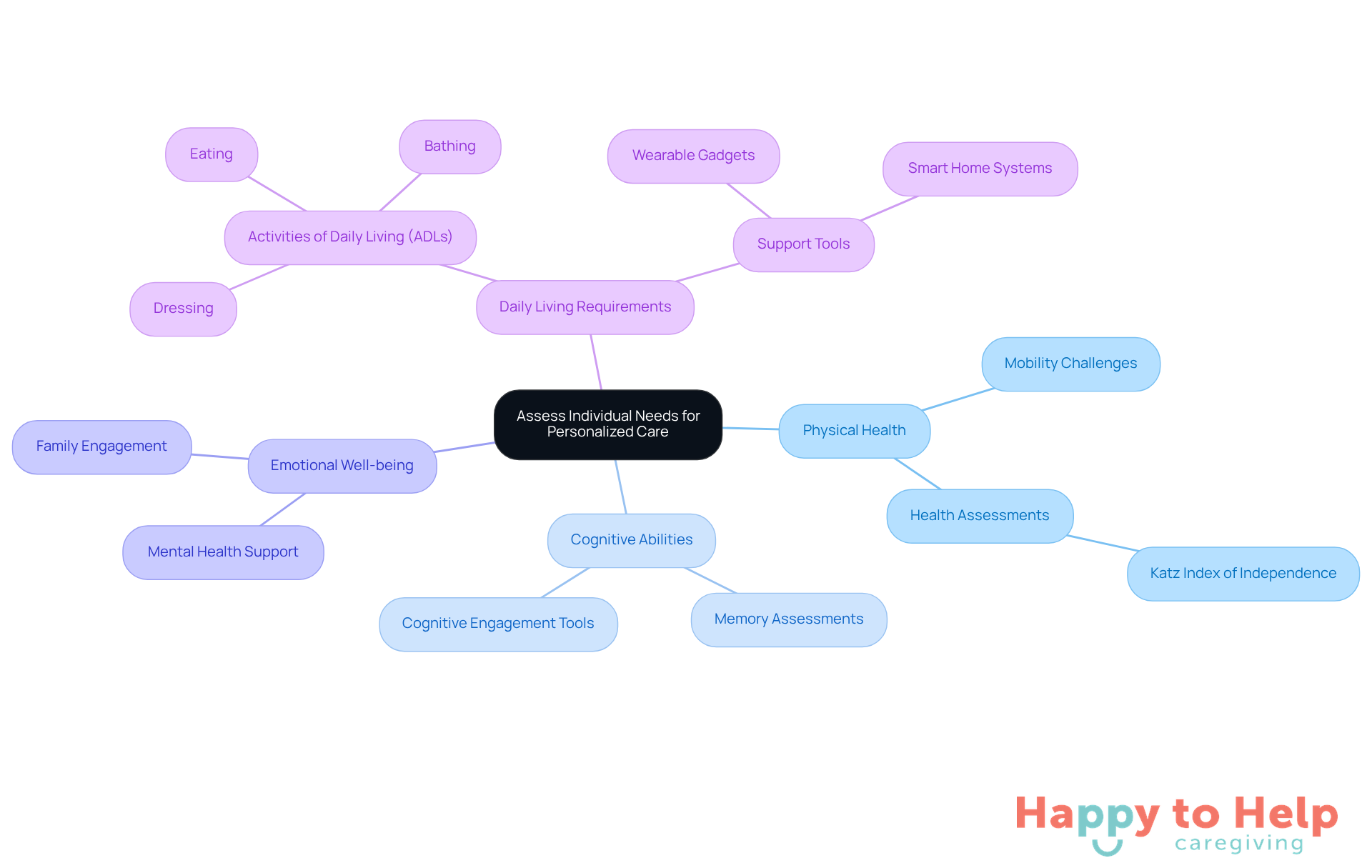
To ensure your cherished person remains comfortably in their residence, caregivers face a significant challenge: understanding their specific needs. This challenge encompasses evaluations of:
- Physical health
- Cognitive abilities
- Emotional well-being
- Daily living requirements
Without a comprehensive assessment, caregivers may struggle to provide the necessary support, leading to potential declines in their loved one's quality of life.
The implications of not addressing these needs can be profound. For instance, mobility challenges can severely restrict an individual's ability to navigate their home safely. Engaging family members in discussions about these challenges can yield diverse perspectives, enhancing the understanding of the individual's needs. According to recent studies, caregivers who utilize the Katz Index of Independence in Activities of Daily Living (ADLs) report a significant improvement in care outcomes. In fact, 80% of caregivers noted enhanced independence for their loved ones when using this tool.
So, what can caregivers do? Utilizing the Katz Index can provide valuable insights into capabilities in critical areas such as:
- Bathing
- Dressing
- Eating
Dr. Jane Smith, a geriatric care specialist, emphasizes that "personalized care plans based on comprehensive assessments lead to better emotional and physical well-being for seniors." By tailoring care plans based on these assessments, caregivers can significantly enhance their loved ones' comfort and independence in a familiar environment.
Create a Safe and Comfortable Home Environment
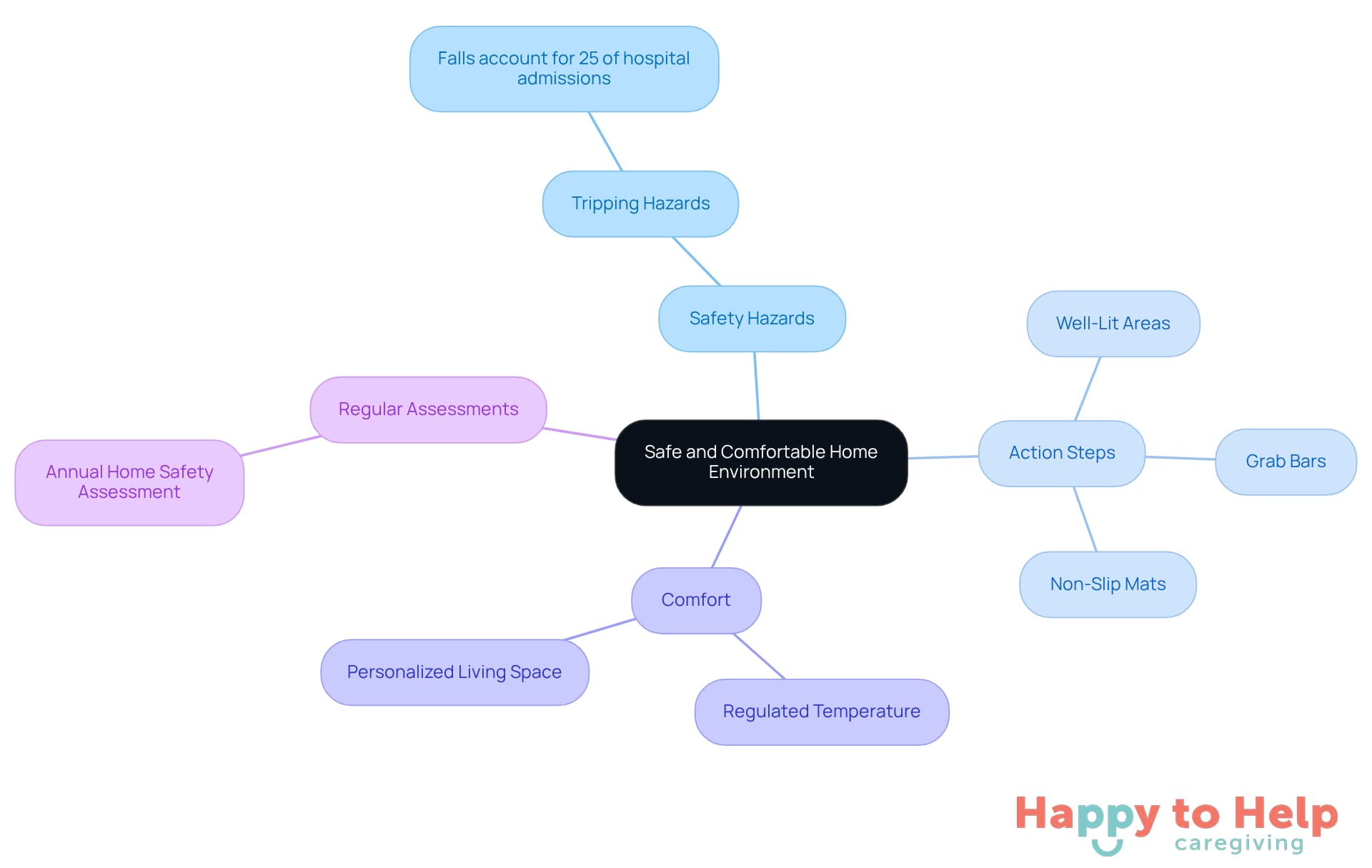
Transforming a residence into a safe haven for seniors presents a significant challenge: safety hazards. Tripping hazards, such as loose rugs and clutter, can lead to falls, which account for 25% of all hospital admissions. This alarming statistic highlights the need for immediate action to protect our loved ones.
To address these concerns, start by eliminating tripping hazards:
- Ensure that all areas are well-lit.
- Install grab bars in bathrooms.
- Use non-slip mats in the kitchen and bathroom.
These measures further enhance safety, especially since 55 percent of fall injuries among older individuals occur indoors. Additionally, evaluate the furniture arrangement to create clear pathways for mobility aids like walkers or wheelchairs, facilitating easier movement throughout the home.
Comfort is equally important. Maintain a regulated temperature and personalize the living space with familiar items that evoke positive memories. These thoughtful changes not only enhance safety but also foster a more inviting atmosphere, promoting emotional well-being and a sense of security for seniors.
Regularly reviewing these adjustments is crucial, as safety needs evolve with changes in mobility and cognitive abilities. Continuous assessment ensures that the living space remains supportive for aging in place. As noted by Age Safe America, 100% of ER doctors agree that an annual Home Safety Assessment is vital for keeping seniors safe at home.
Implement Self-Care Strategies for Family Caregivers
Family supporters face a significant challenge: prioritizing their own health while delivering the best care possible. With over 53 million unpaid supporters in the U.S. providing more than 36 billion hours of unpaid assistance, the need for self-care strategies becomes critical. Neglecting personal well-being can lead to burnout, impacting both caregivers and those they care for.
To combat this issue, caregivers should implement self-care practices:
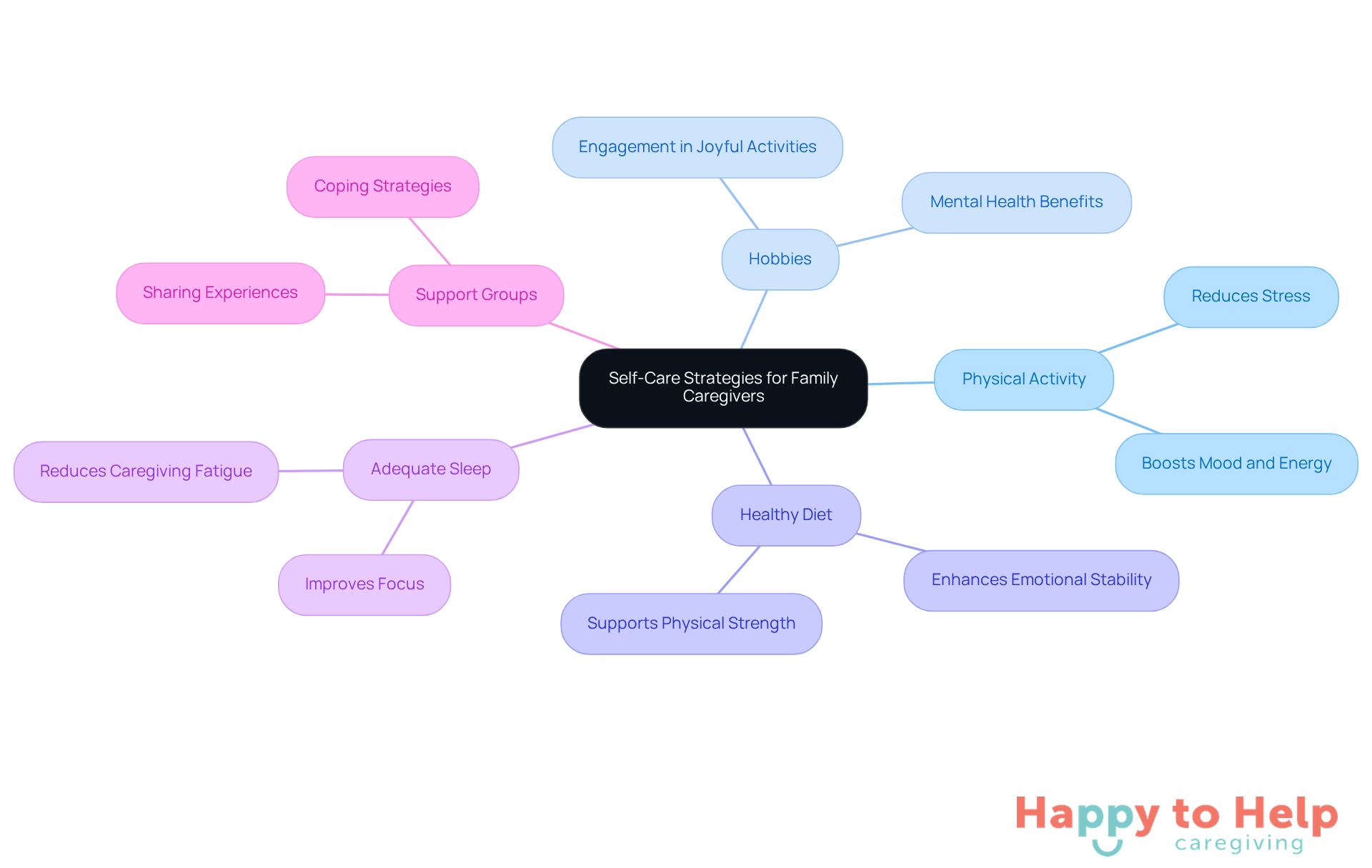
- Setting aside time for physical activity can boost mood and energy levels.
- Engaging in hobbies or activities that bring joy is essential for mental health.
- Maintaining a healthy diet and ensuring adequate sleep are also vital components of self-care.
Dr. Taylor Rush emphasizes, "Self-care is not optional - it is essential," underscoring the necessity for caregivers to take care of themselves.
Additionally, consider joining a support group, such as those offered by organizations like Bryan Skilled Home Care. These groups provide a platform for individuals to share experiences and coping strategies. Scheduling regular breaks or utilizing respite care can help recharge emotional batteries, allowing caregivers to return to their roles with renewed energy and focus.
November serves as a reminder during National Family Caregivers Month, encouraging those who provide care to seek support and prioritize their health.
Foster Open Communication with Family and Caregivers
Creating transparent channels of communication between family members and support providers is vital for effective assistance. Caregivers often face significant emotional strain, with 53% reporting feelings of depression and being overwhelmed. This strain can be exacerbated by misunderstandings and lack of coordination in care.
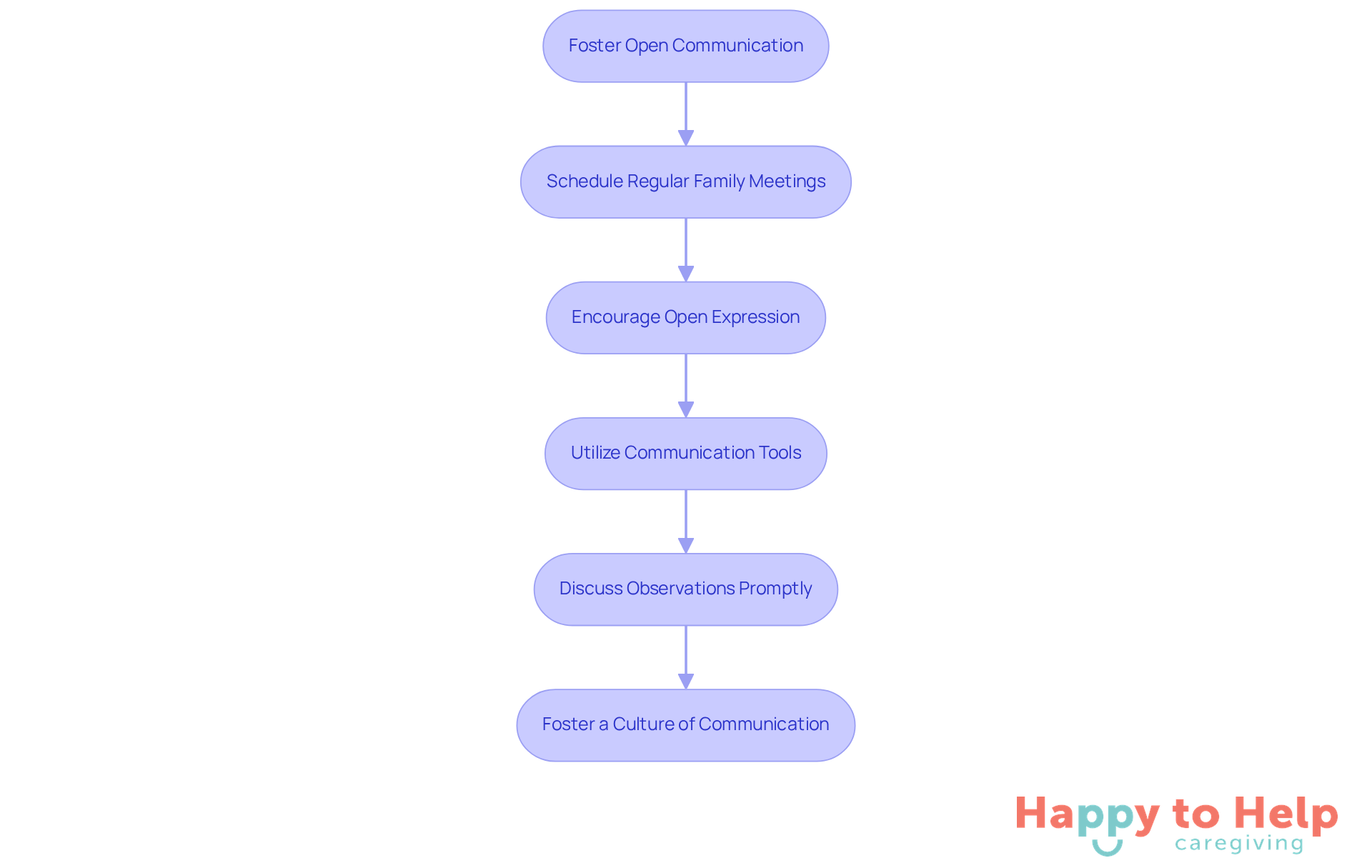
To address these challenges, consider the following steps:
- Schedule regular family meetings to discuss your family member's needs, preferences, and any changes in their condition.
- Encourage all parties to express their concerns and suggestions openly.
- Utilize tools like shared care plans or communication apps to keep everyone informed about daily activities and health updates.
- For instance, if a guardian observes a change in your mother's behavior, discussing this quickly can lead to timely interventions.
By fostering a culture of communication, you can ensure that your loved one receives consistent and coordinated care. Effective communication not only alleviates stress but also allows caregivers to share their experiences and seek support. Remember, effective communication is crucial in all aspects of life, but it takes on even greater significance in the context of caregiving. By addressing potential misunderstandings and fostering open dialogue, families can navigate the complexities of caregiving more effectively.
Making the Right Choice
Caring for elderly loved ones at home presents a significant challenge that requires a multifaceted approach. The unique needs of seniors, their safety, and the well-being of caregivers must all be prioritized. When caregivers understand and address these individual requirements, they can foster an environment that promotes independence and emotional stability. This commitment to personalized care not only enhances seniors' quality of life but also alleviates the burden on family members.
Key strategies include:
- Conducting thorough assessments to tailor care plans
- Ensuring a safe and comfortable home environment
- Implementing self-care practices for caregivers
Regular safety evaluations and open communication among family members are essential components that contribute to a holistic caregiving experience. These practices mitigate risks and create a nurturing atmosphere where both seniors and caregivers can thrive.
Ultimately, caregiving is a shared responsibility that requires attention to the needs of the elderly and the health of their caregivers. By prioritizing communication, safety, and self-care, families can navigate the challenges of aging with compassion and efficiency. Embracing these best practices enriches the lives of seniors and strengthens family bonds, ensuring that everyone involved feels supported and valued.
https://iframe.tely.ai/cta/eyJhcnRpY2xlX2lkIjogIjY5MjY0MzY3MDBmNGUzMjBmNzc3ZTdjYyIsICJjb21wYW55X2lkIjogIjY4ZWU1ZGNhNzMxNzYyNTU3ZjNjOTVjMSIsICJpbmRleCI6IG51bGwsICJ0eXBlIjogImFydGljbGUifQ==Frequently Asked Questions
What is the main challenge caregivers face in providing personalized care?
Caregivers face the challenge of understanding the specific needs of the individual they are caring for, which includes evaluating their physical health, cognitive abilities, emotional well-being, and daily living requirements.
Why is a comprehensive assessment important for caregivers?
A comprehensive assessment is important because it helps caregivers provide the necessary support, preventing potential declines in the loved one's quality of life.
What are the implications of not addressing an individual's needs?
Not addressing an individual's needs can lead to profound implications, such as mobility challenges that restrict their ability to navigate their home safely.
How can family members contribute to understanding an individual's needs?
Engaging family members in discussions about the individual's challenges can provide diverse perspectives, enhancing the overall understanding of their needs.
What tool can caregivers use to improve care outcomes?
Caregivers can utilize the Katz Index of Independence in Activities of Daily Living (ADLs) to gain valuable insights into the individual's capabilities in critical areas such as bathing, dressing, and eating.
What impact does using the Katz Index have on caregivers and their loved ones?
Studies show that caregivers who use the Katz Index report a significant improvement in care outcomes, with 80% noting enhanced independence for their loved ones.
What does Dr. Jane Smith say about personalized care plans?
Dr. Jane Smith emphasizes that personalized care plans based on comprehensive assessments lead to better emotional and physical well-being for seniors.
How can tailored care plans benefit individuals?
Tailored care plans can significantly enhance an individual's comfort and independence in their familiar environment.
List of Sources
- Assess Individual Needs for Personalized Care
- Trends in Senior Care: What to Expect in 2025 (https://agingconnections.org/blog/trends-in-senior-care-what-to-expect-in-2025)
- Home Care Predictions Shaping 2025 and Beyond (https://caresmartz360.com/blog/home-care/home-care-predictions-shaping-2025-and-beyond)
- Caregiving in the US 2025 (https://aarp.org/pri/topics/ltss/family-caregiving/caregiving-in-the-us-2025)
- 52 Eye-Opening Home Health Statistics: Insights for 2025 (https://boosthomehealth.com/home-health-statistics)
- Elderly Care Statistics (https://rosewood-nursing.com/post/elderly-care-statistics)
- Create a Safe and Comfortable Home Environment
- Aging in Place: Statistics + How to Prepare in 2025 (https://choicemutual.com/blog/aging-in-place-statistics)
- Home Safety for Seniors: Statistics & Proven Safety Solutions (https://agesafeamerica.com/home-safety-hub/articles/home-safety-seniors-statistics-solutions)
- Home Safety Month, Garbage Cans, and Aging in Place (https://lifework.arizona.edu/news/2025/home-safety-month-garbage-cans-and-aging-place)
- Case Studies (https://homeinnovation.com/insights/case\_studies)
- Get the Facts on Falls Prevention (https://ncoa.org/article/get-the-facts-on-falls-prevention)
- Implement Self-Care Strategies for Family Caregivers
- Why is self-care so important for family caregivers? – Senior Transitions of Central Ohio (https://seniortransitionsohio.com/2025/10/22/why-is-self-care-so-important-for-family-caregivers)
- The Caregiver Compass: Self-care Strategies for Family Caregivers (https://livingto100.club/the-caregiver-compass-self-care-strategies-to-sustain-well-being-when-supporting-others?utm\_source=rss&utm\_medium=rss&utm\_campaign=the-caregiver-compass-self-care-strategies-to-sustain-well-being-when-supporting-others)
- Tips for Family Caregivers: Balancing Care and Self-Care - Bryan Skilled Home Care (https://bryanskilledhomecare.com/2025/11/20/tips-for-family-caregivers-balancing-care-and-self-care)
- Facebook (https://newsroom.clevelandclinic.org/2025/11/19/importance-of-self-care-for-family-caregivers)
- 5 Self-Care Tips for Caregivers | United Way Worldwide (https://unitedway.org/news/5-self-care-tips-for-caregivers)
- Foster Open Communication with Family and Caregivers
- Building a lifeline for family caregivers across the US (https://news.mit.edu/2025/ianacare-builds-lifeline-for-family-caregivers-across-us-0811)
- Communication Breakdowns Take Toll on Family Caregivers, Especially for Older Adults with Chronic Illness (https://ltcnews.com/articles/communication-breakdowns-toll-family-caregivers-older-adults-chronic-illness)
- National Alliance for Caregiving: Caregiving in the US 2025 Report (https://johnahartford.org/resources/view/national-alliance-for-caregiving-caregiving-in-the-us-2025-report)
- The Importance of Effective Communication in Caregiving (https://familycaregiversonline.net/the-importance-of-effective-communication-in-caregiving)