

For families in our service areas
For families in our service areas, this guide explains caregiver support and how non-medical in-home caregiving can support care planning in East Idaho, Treasure Valley & Magic Valley, Northern Wasatch, North Central West Virginia, and Northeast Ohio.
Practices at a Glance
Caring for a loved one at home can be both rewarding and overwhelming. Family caregivers often face emotional challenges, including stress and burnout, as they navigate the complexities of senior home care. It’s essential to recognize these feelings and provide the support that caregivers truly need.
Personalized support is crucial. By understanding in-home services, caregivers can develop tailored care plans that meet the unique needs of their loved ones. This not only enhances the quality of care for seniors but also alleviates some of the burdens that caregivers carry. Training for caregivers is another vital aspect, equipping them with the skills and confidence to manage daily challenges effectively.
Moreover, technology can play a significant role in easing the caregiving journey. By leveraging innovative tools, caregivers can streamline tasks and stay connected with healthcare professionals, ensuring that they’re never alone in this journey.
As we explore these key areas—understanding in-home services, developing personalized care plans, prioritizing caregiver support, and integrating technology—we can foster a nurturing environment that uplifts both caregivers and seniors alike. Remember, you’re not just providing care; you’re making a profound difference in someone’s life. Together, we can create a supportive community that values and empowers family caregivers.
Understanding Practices
Caring for an aging loved one at home can be both fulfilling and challenging. Family caregivers often find themselves feeling overwhelmed and isolated, grappling with the emotional weight of their responsibilities. It’s a journey filled with love, yet it can also lead to stress and burnout.
Fortunately, there are various in-home senior care services available that can provide tailored support. These services not only enhance the quality of life for your loved ones but also help alleviate some of the pressures that caregivers face. But how can families effectively navigate these options? What best practices can ensure that both the elderly and their caregivers thrive in this journey together?
Finding the right support can make all the difference. It’s about creating a balance that allows caregivers to feel supported while ensuring that their loved ones receive the compassionate care they deserve. Remember, you’re not alone in this; there are resources and communities ready to help you every step of the way.
Understand In-Home Senior Care Services
Caring for a loved one can be a deeply rewarding yet challenging journey. Many caregivers experience feelings of stress and burnout as they strive to provide the best support possible. Senior care in home services offer a range of compassionate support options designed to help individuals maintain their independence while receiving the care they need.
-
Companionship Care is one such service that focuses on providing emotional support and social interaction. It helps alleviate feelings of loneliness and isolation, reminding your loved one that they are not alone in this journey.
-
For those recovering from surgery or illness, Post-Hospital Recovery Assistance provides tailored support. This service ensures that individuals have the help they need during their recovery period, allowing them to heal with dignity and comfort.
-
Respite Support offers short-term relief for family members who provide assistance. This service enables caregivers to take much-needed breaks, knowing their loved ones continue to receive quality support in their absence.
-
Lastly, Palliative Support Services deliver specialized assistance aimed at improving the quality of life for individuals with serious illnesses. This service focuses on comfort and emotional support, ensuring that your loved one feels cared for during difficult times.
Understanding these services empowers family caregivers to choose the right level of support that aligns with their loved one's unique needs. By doing so, they can enhance their loved one's quality of life while also taking care of their own well-being. Remember, you are not alone in this journey; support is available to help you every step of the way.
https://iframe.tely.ai/cta/eyJhcnRpY2xlX2lkIjogIjY5MGU4ODYzZDg0YTA5OThiNjRlNTMyMCIsICJjb21wYW55X2lkIjogIjY4ZWU1ZGNhNzMxNzYyNTU3ZjNjOTVjMSIsICJpbmRleCI6IDAsICJ0eXBlIjogImFydGljbGUifQ==Develop Personalized Care Plans
Customized support plans are essential for offering individualized assistance that truly meets the unique needs of older adults in senior care in home. Let’s explore how to create an effective care plan that resonates with both caregivers and their loved ones:
-
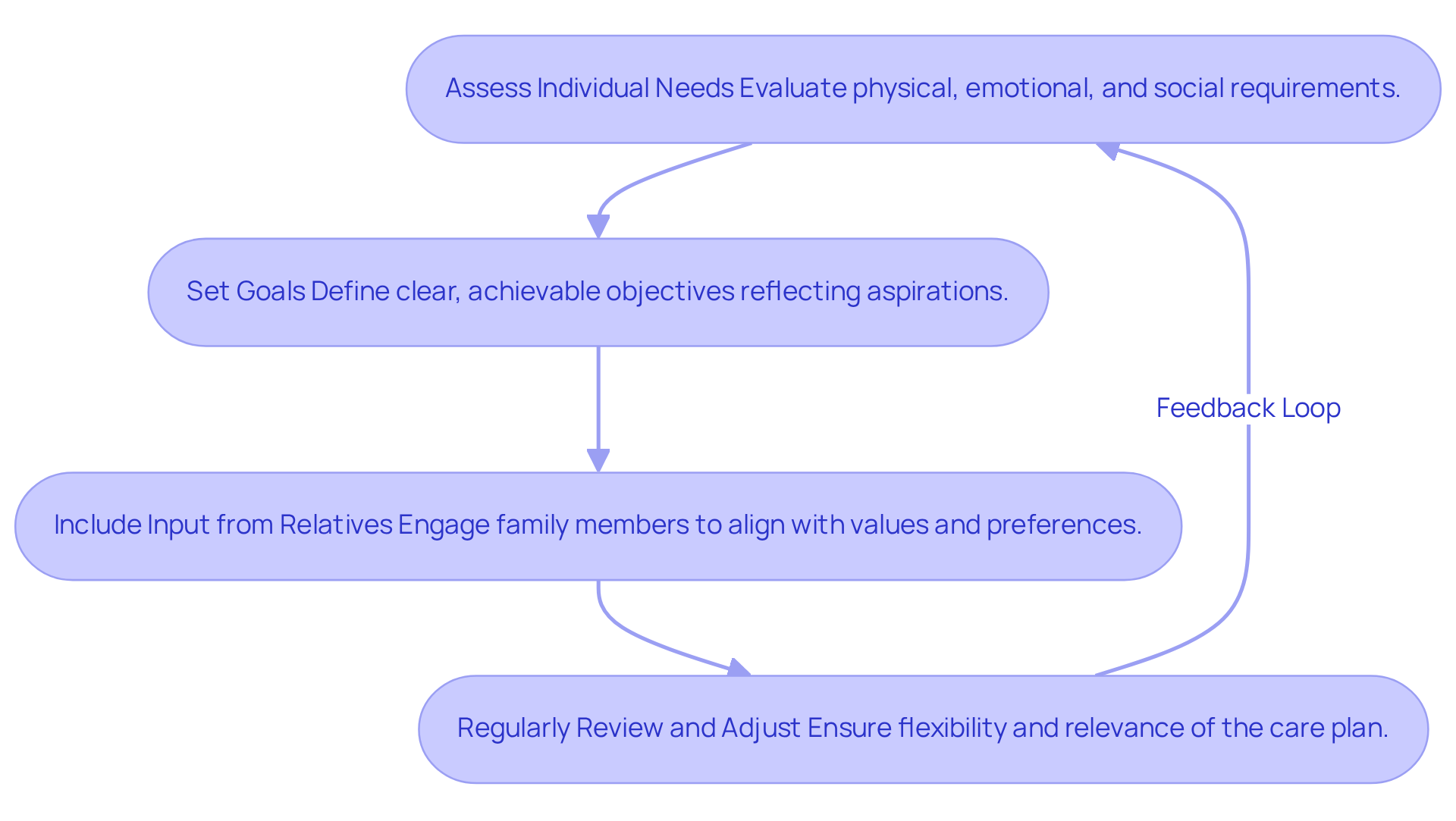
Assess Individual Needs: Begin with a heartfelt evaluation of the elderly person's physical, emotional, and social requirements. This process should involve open conversations with healthcare providers, family members, and the elderly themselves, gathering diverse insights that honor their experiences.
-
Set Goals: Define clear, achievable objectives that reflect the individual’s dreams and capabilities. These goals might include improving mobility, enhancing social interactions, or managing chronic conditions effectively. It’s about what they aspire to achieve.
-
Include Input from Relatives: Actively engage family members in the planning process. Their involvement ensures that the support plan aligns with the values and preferences of everyone involved. Research shows that family participation can significantly enhance outcomes and satisfaction for both seniors and their families. In fact, AARP highlights that two-thirds (67%) of caregivers struggle to balance work with caregiving responsibilities, underscoring the need for open communication and adaptability in support planning.
-
Regularly Review and Adjust: Care plans should be flexible and regularly reviewed to adapt to changing needs or circumstances. This ongoing assessment ensures that the support remains relevant and effective, fostering a nurturing environment that encourages independence.
By prioritizing individualized support in senior care in home, families can cultivate a caring atmosphere that enhances their loved ones' overall well-being, leading to improved health outcomes and quality of life. Moreover, case studies focusing on personalized mental health management for seniors reveal the profound impact of customized plans on emotional well-being.
In this journey, remember that you’re not alone. Many caregivers share similar experiences, and together, we can create a supportive community that uplifts everyone involved.
Prioritize Caregiver Training and Support
Caring for a loved one through senior care in home can be incredibly rewarding, but it also comes with its own set of emotional challenges. Caregivers often face stress and burnout, and it’s essential to address these feelings with compassion and support. Here are some best practices to help create a nurturing environment for both caregivers and those they care for:
-
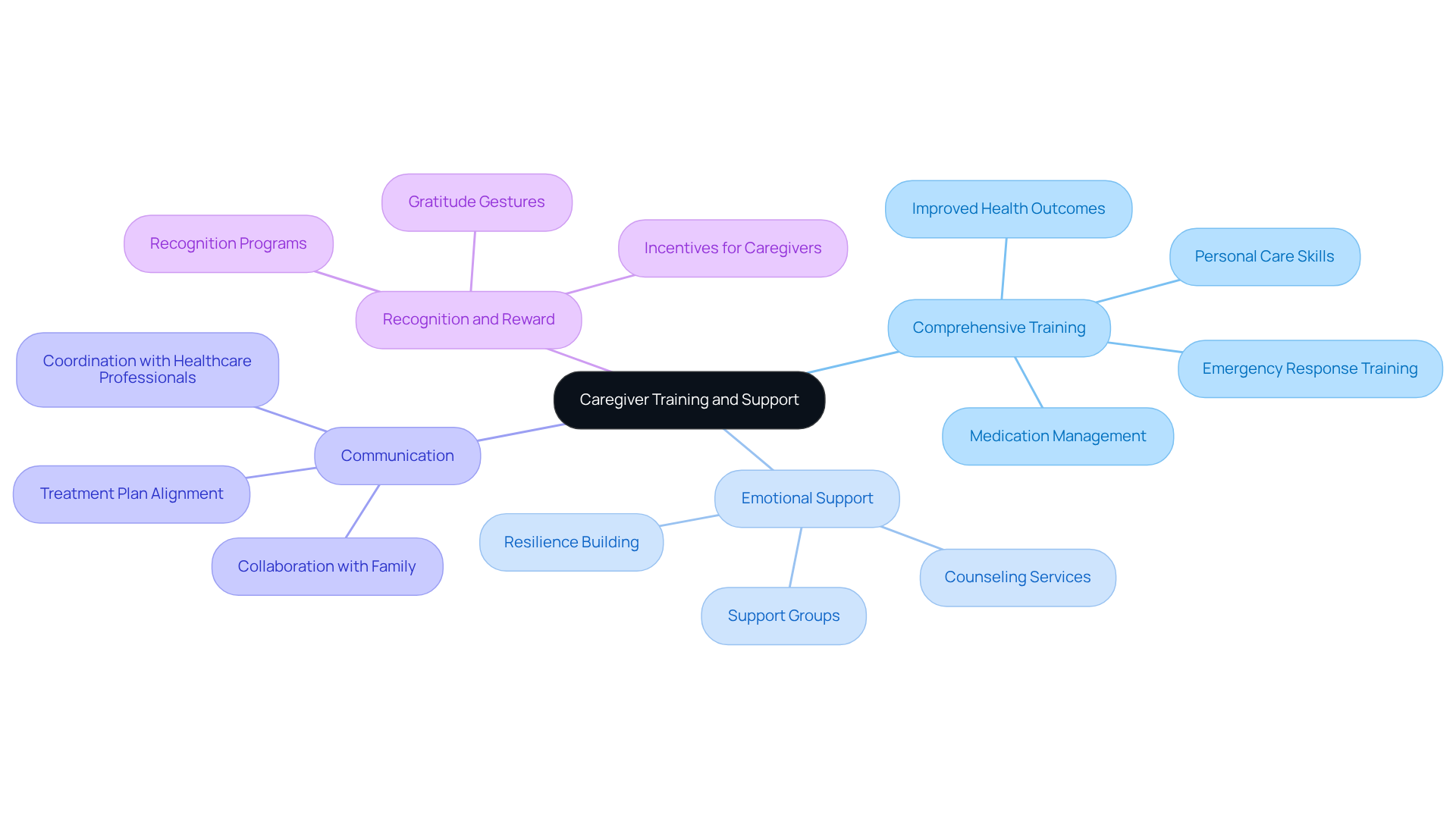
Provide Comprehensive Training: It’s vital to equip caregivers with the essential skills they need in personal care, medication management, and emergency response. This foundational training not only prepares them to handle various challenges but also enhances the quality of care they provide. Research shows that better-trained caregivers lead to improved health outcomes for patients and greater satisfaction for families.
-
Encourage Emotional Support: Acknowledging the emotional toll of caregiving is crucial. Establishing support groups or counseling services allows caregivers to share their experiences and gain valuable insights. This exchange promotes resilience and helps minimize feelings of burnout. As Corinne Eldridge, President & CEO of the Center for Caregiver Advancement, emphasizes, emotional support is vital for caregivers to maintain their well-being.
-
Foster Communication: Open lines of communication among caregivers, family members, and healthcare professionals are essential. This collaborative approach ensures everyone is aligned on the treatment plan and can quickly respond to any changes in the senior’s condition.
-
Recognize and Reward: Taking the time to acknowledge the hard work of caregivers through recognition programs or incentives can significantly uplift their spirits. Such gestures of gratitude not only inspire caregivers but also reinforce their commitment to providing high-quality support.
By prioritizing these practices, families can enhance the senior care in home experience, ensuring that their loved ones receive exceptional care while also supporting the well-being of those who provide it. Remember, you’re not alone in this journey; there’s a community ready to support you every step of the way.
Leverage Technology for Enhanced Care
Technology plays a pivotal role in enhancing senior care in home, making it important to recognize how it can ease the burdens faced by caregivers. Here are some thoughtful ways to leverage technology effectively:
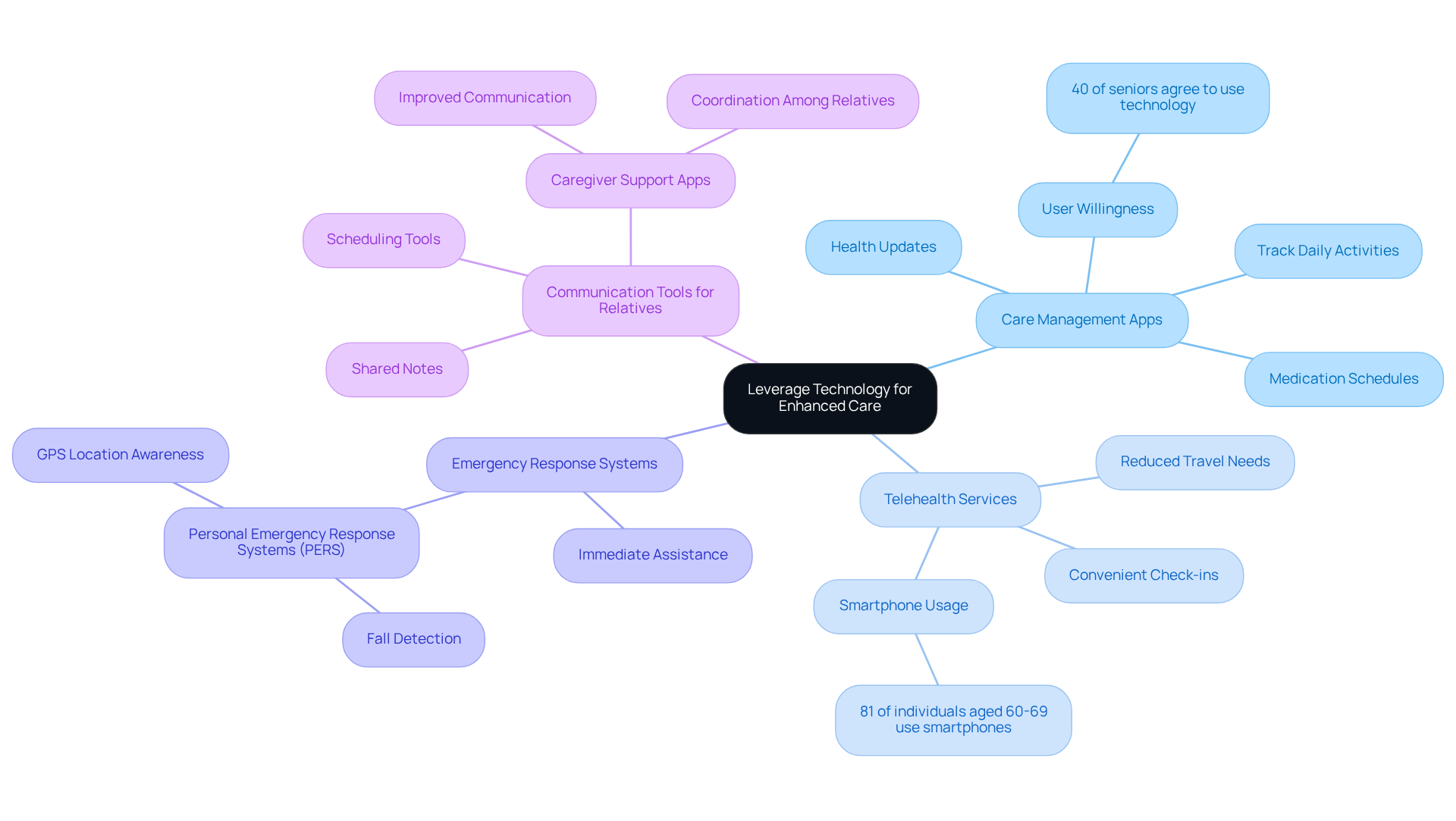
- Use Care Management Apps: Imagine having an app that allows caregivers to track daily activities, medication schedules, and health updates. This not only keeps everyone informed but also ensures prompt responses to any changes. AARP highlights that "40% of older adults would agree to use technology to track their health," showing a willingness to embrace these helpful tools.
- Telehealth Services: Consider the convenience of telehealth options for regular check-ins with healthcare providers. This can significantly reduce the need for travel and ensure timely medical advice. With 81% of individuals aged 60 to 69 using smartphones, telehealth becomes a practical and accessible solution for many.
- Emergency Response Systems: Providing older adults with emergency response systems can be a game-changer. These systems allow them to request assistance at the push of a button, offering reassurance for both seniors and their loved ones. Personal Emergency Response Systems (PERS) enhance safety by ensuring immediate access to help when it’s needed most.
- Communication Tools for Relatives: It’s vital to keep relatives informed about their loved one’s support. Platforms that offer shared notes and scheduling can enhance collaboration and transparency. Caregiver support apps have shown to improve communication and coordination among relatives, as explored in the case study on 'Caregiver Support Apps.'
By integrating technology into senior care in home practices, families can significantly improve the quality of care while fostering a more connected and informed caregiving environment. However, it’s essential to be mindful of common pitfalls, such as the digital divide affecting elderly patients and the need for patient education and tech support services. Addressing these challenges will empower caregivers to maximize the benefits of technology in their caregiving efforts.
Key Takeaways for Caregivers
Caring for an aging loved one at home is a journey filled with love, yet it often comes with its own set of challenges. It’s important to acknowledge that in-home senior care services can significantly lighten the load for family caregivers, while also improving the quality of life for seniors. By exploring the various support options available and adopting effective practices, families can cultivate a nurturing environment that benefits everyone involved.
This article highlights several key practices for effective senior care at home:
- Understanding the different types of in-home services
- Developing personalized care plans
- Prioritizing caregiver training and support
- Leveraging technology to streamline care
Each of these elements plays a vital role in empowering caregivers, ensuring they feel supported while providing the best care for their loved ones. Open communication and collaboration among family members and healthcare professionals can help caregivers navigate this complex journey with greater ease and confidence.
Ultimately, the importance of these best practices goes beyond individual families. They help build a supportive community for both caregivers and seniors. By embracing available resources, participating in training programs, and using technology effectively, caregivers can enhance their loved ones' well-being while also prioritizing their own health and happiness. It’s a collective effort that highlights the significance of compassion, understanding, and connection in the realm of senior care.
https://iframe.tely.ai/cta/eyJhcnRpY2xlX2lkIjogIjY5MGU4ODYzZDg0YTA5OThiNjRlNTMyMCIsICJjb21wYW55X2lkIjogIjY4ZWU1ZGNhNzMxNzYyNTU3ZjNjOTVjMSIsICJpbmRleCI6IG51bGwsICJ0eXBlIjogImFydGljbGUifQ==Frequently Asked Questions
What are in-home senior care services?
In-home senior care services provide compassionate support options designed to help individuals maintain their independence while receiving the necessary care.
What is Companionship Care?
Companionship Care focuses on providing emotional support and social interaction to alleviate feelings of loneliness and isolation for seniors.
What does Post-Hospital Recovery Assistance entail?
Post-Hospital Recovery Assistance offers tailored support for individuals recovering from surgery or illness, ensuring they have the help needed during their recovery period.
What is the purpose of Respite Support?
Respite Support provides short-term relief for family caregivers, allowing them to take breaks while ensuring their loved ones continue to receive quality care.
What are Palliative Support Services?
Palliative Support Services deliver specialized assistance aimed at improving the quality of life for individuals with serious illnesses, focusing on comfort and emotional support.
How can understanding these services benefit family caregivers?
Understanding these services empowers family caregivers to choose the right level of support for their loved ones, enhancing their quality of life while also taking care of their own well-being.