4 Best Practices for Stroke Patient Home Care You Need to Know
For families in our service areas
For families in our service areas, this guide explains home care and how non-medical in-home caregiving can support care planning in East Idaho, Treasure Valley & Magic Valley, Northern Wasatch, North Central West Virginia, and Northeast Ohio.
What You Need to Know About Practices for Stroke Patient Home Care
The journey of recovery for stroke patients often begins at home, where the environment can significantly influence their healing process. Caregivers face a unique set of challenges in creating a supportive atmosphere that promotes recovery. Effective home care practices not only ensure safety and dignity but also empower individuals to regain their independence.
However, navigating the complexities of stroke patient care can be daunting. Caregivers must address both the emotional and physical needs of those they support. This dual responsibility can lead to feelings of overwhelm and uncertainty. How can caregivers create a nurturing environment that fosters recovery?
To tackle these challenges, caregivers can implement several practical strategies:
- Establishing a safe and accessible home environment is crucial. This includes removing hazards and ensuring that essential items are within reach.
- Fostering open communication with the patient can help address their emotional needs, making them feel valued and understood.
By focusing on these actionable solutions, caregivers can significantly enhance the recovery experience for stroke patients, ultimately leading to improved outcomes and greater independence.
Core Principles of Home Care for Stroke Patients
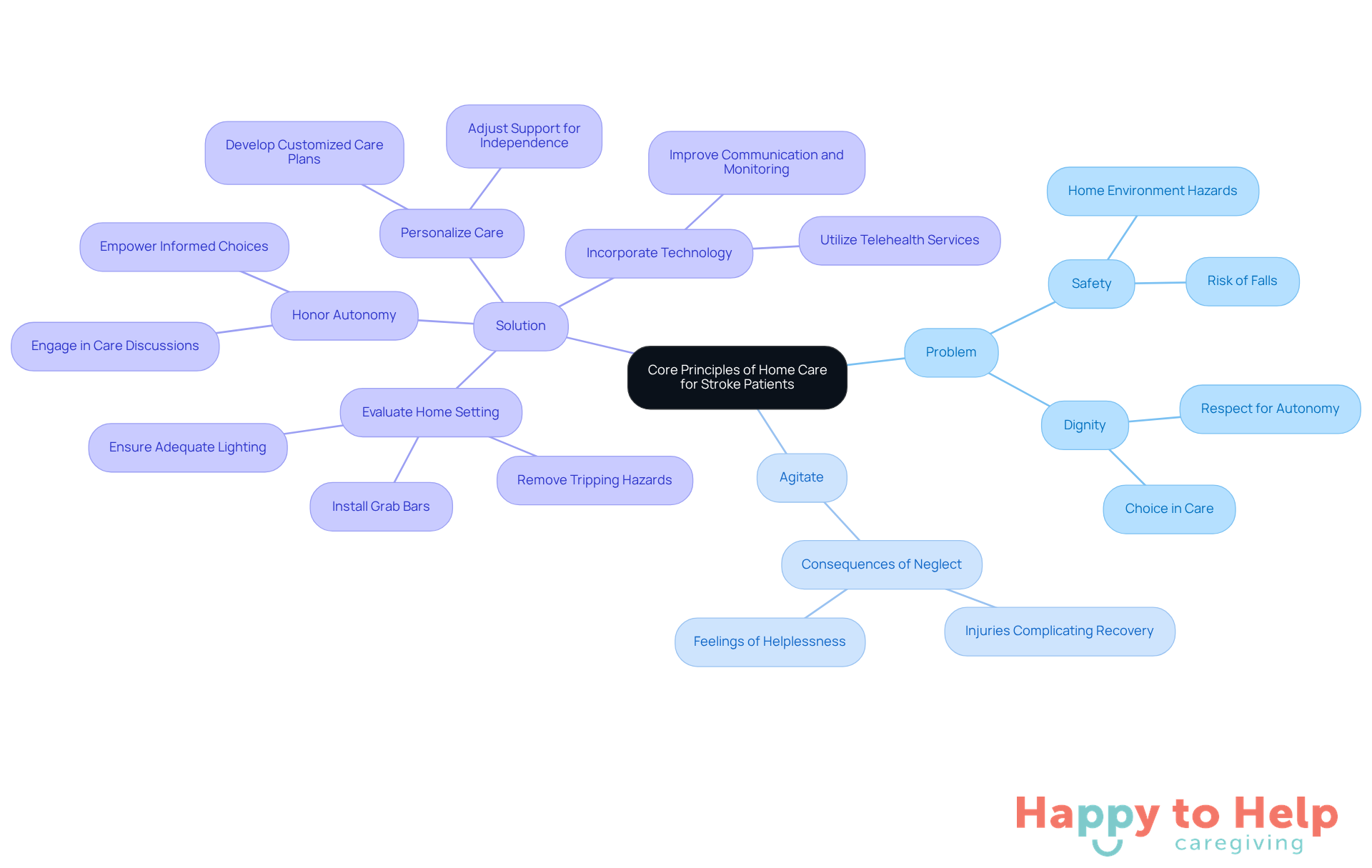
Stroke patient home care for individuals recovering from a stroke presents significant challenges, particularly concerning safety, dignity, and personalized care.
Agitate: Safety is paramount; caregivers must assess the home environment for potential hazards that could lead to falls or accidents. Neglecting this can result in serious injuries, complicating recovery and diminishing the individual's quality of life. Dignity is equally important; caregivers should respect the individual's autonomy and preferences, allowing them to make choices about their care. Failing to do so can lead to feelings of helplessness and frustration.
Solution: To address these issues, caregivers can implement several practical strategies:
- Evaluate the home setting: Remove tripping hazards, install grab bars, and ensure adequate lighting to create a safer environment.
- Honor autonomy: Engage individuals in discussions about their care preferences, empowering them to make informed choices.
- Personalize care: Develop customized care plans that reflect the individual's unique needs, abilities, and recovery goals, adjusting support to enhance independence and overall quality of life.
- Incorporate technology: Utilize telehealth services to improve communication and monitoring, providing additional support for both caregivers and those receiving care.
Transitioning from Hospital to Home: Key Considerations
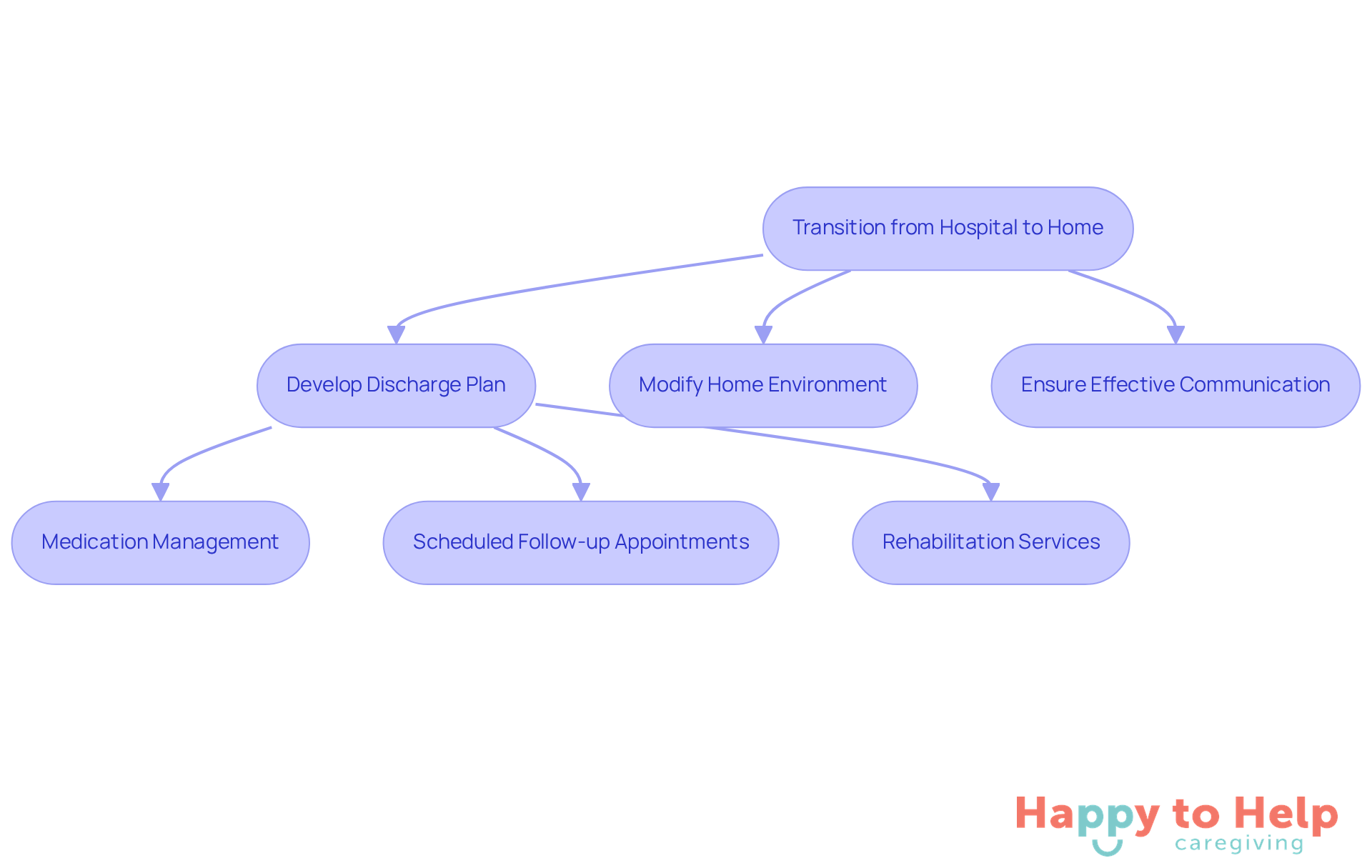
Transitioning from hospital to home can be a challenging process for caregivers, especially regarding stroke patient home care, often fraught with complications. Without a comprehensive discharge plan, individuals may face difficulties managing medications, attending follow-up appointments, and accessing rehabilitation services. This lack of preparation can lead to increased stress for both the caregiver and the individual, potentially hindering recovery.
To address these challenges, it’s crucial to develop a detailed discharge plan for stroke patient home care in collaboration with healthcare providers. This plan should encompass:
- Medication management
- Scheduled follow-up appointments
- Necessary rehabilitation services
Caregivers must be well-informed about the individual’s specific needs and any potential complications that may arise.
Additionally, modifying the home environment is essential for accommodating mobility and safety requirements. Simple adjustments, such as:
- Rearranging furniture
- Installing assistive devices
- Ensuring easy access to resources
can significantly enhance the individual’s comfort and safety.
Effective communication between the hospital team and caregivers involved in stroke patient home care is vital. Regular discussions can help address concerns and adapt stroke patient home care as needed. Follow-up appointments are also important for monitoring progress and adjusting care strategies accordingly.
The economic burden of stroke care is projected to rise dramatically, from $67 billion in 2020 to $423 billion by 2050. This statistic underscores the urgency for effective rehabilitation strategies. Moreover, overcoming barriers to accessing rehabilitation services, particularly for individuals in rural areas, is essential to ensure equitable treatment outcomes.
Designing Personalized Care Plans for Stroke Recovery
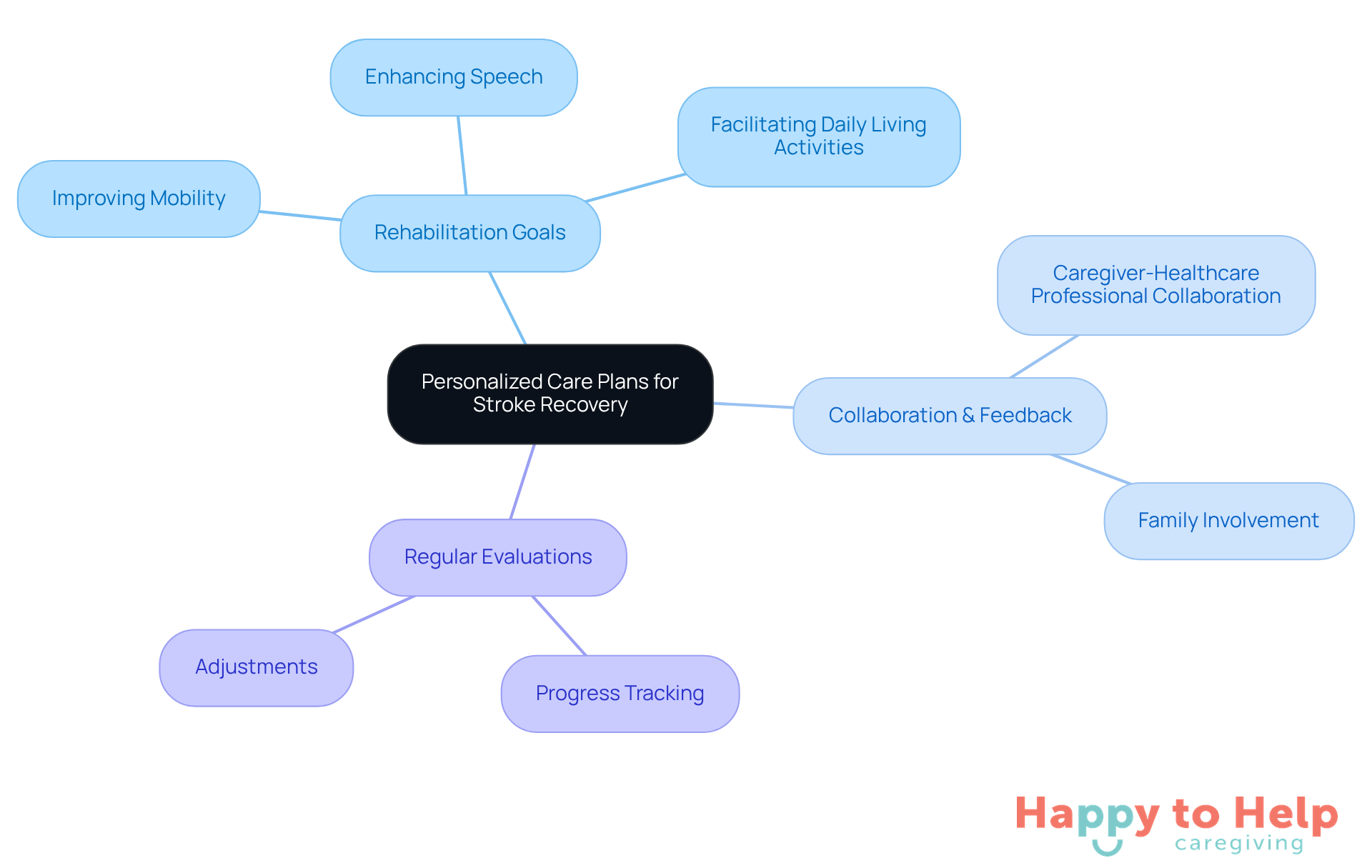
Creating tailored care strategies for stroke patient home care presents a significant challenge for caregivers. Without a comprehensive evaluation of an individual's physical, emotional, and social needs, recovery can be hindered. This lack of personalization can lead to frustration for both caregivers and patients, as rehabilitation goals may not align with the individual's true needs.
To address these challenges, caregivers should collaborate closely with healthcare professionals to identify specific rehabilitation goals for stroke patient home care. These may include:
- Improving mobility
- Enhancing speech
- Facilitating daily living activities
It's essential to include feedback from the individual and their family to ensure that the stroke patient home care strategy aligns with their preferences and lifestyle.
Regular evaluations of the care plan are crucial. These assessments help track progress and allow for necessary adjustments, ensuring that the strategy remains effective. Utilizing tools such as goal-setting worksheets and progress tracking can assist caregivers in staying organized and focused on the patient's recovery journey.
Additionally, integrating community resources - like support groups and rehabilitation services - can significantly enhance the overall care experience. By leveraging these resources, caregivers can provide a more holistic approach to recovery in stroke patient home care, ultimately leading to better outcomes for those who have survived a stroke.
Supporting Family Caregivers: Best Practices and Strategies
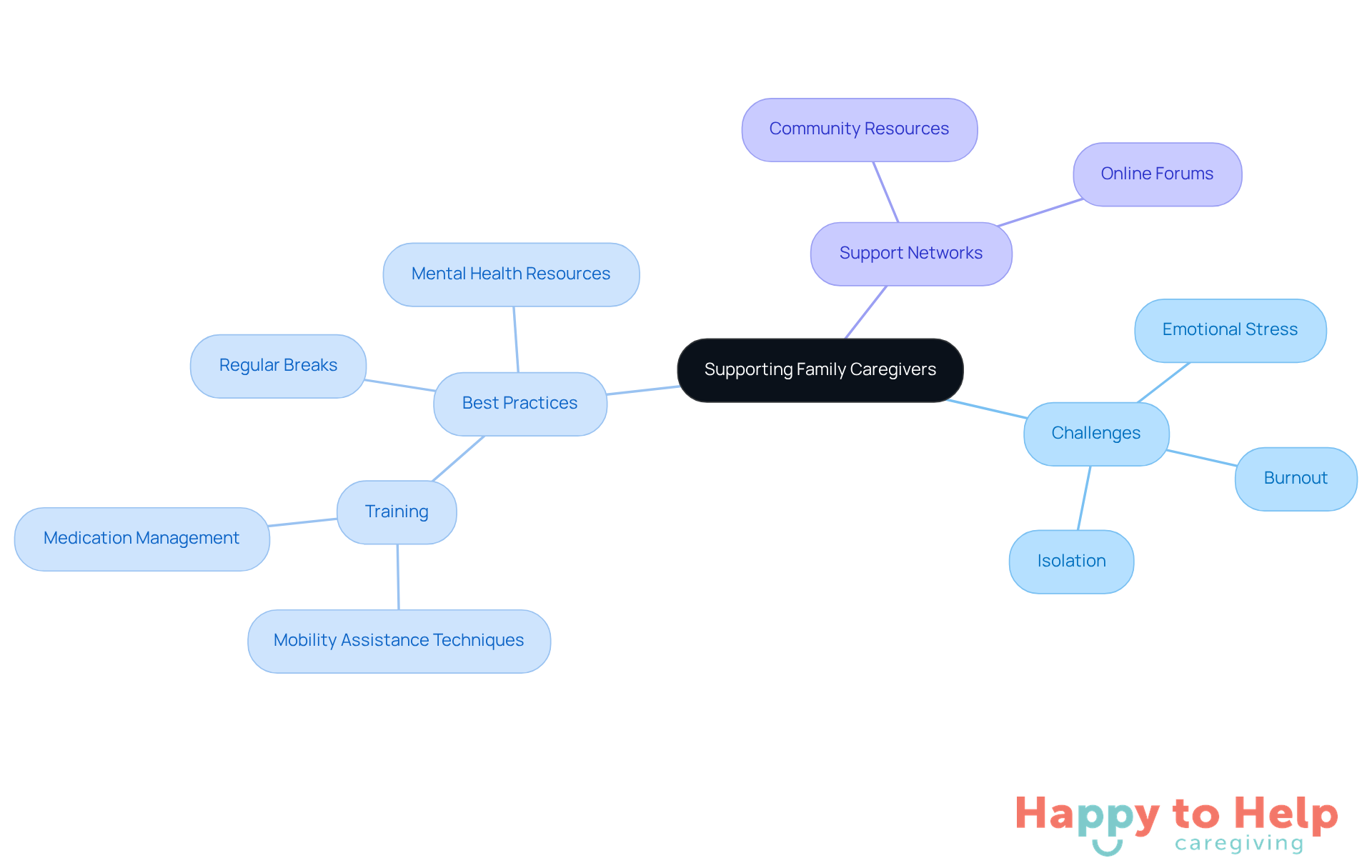
Assisting family supporters involves addressing the challenges they face in caregiving. Caregivers often struggle with emotional stress, burnout, and the complexities of managing care. These difficulties can lead to feelings of isolation and overwhelm, making it essential to provide them with the right resources and support.
To combat these issues, it's crucial to supply caregivers with essential resources, education, and emotional backing. Best practices include:
- Offering training on specific care techniques, such as mobility assistance and medication management.
- Encouraging caregivers to take regular breaks and seek respite services to help prevent burnout and maintain their well-being.
Creating a support network is another effective solution. Whether through local community resources or online forums, these networks enable caregivers to exchange experiences and gain insights from others in similar situations. Furthermore, fostering open dialogue between caregivers and healthcare professionals is vital. This communication helps address any concerns and ensures that caregivers feel confident in their responsibilities.
Lastly, providing access to mental health resources can be beneficial. Caregivers often face emotional stress during the recovery process, and having support in this area can make a significant difference.
Making the Right Choice
Effective home care for stroke patients presents a significant challenge. Caregivers often struggle to balance safety, dignity, and personalized support, which are crucial for recovery. The complexity of this journey can lead to stress and burnout, making it essential to address these issues head-on.
To navigate these challenges, caregivers must prioritize creating a safe environment and honoring the autonomy of stroke survivors. This involves:
- Conducting thorough assessments of the home to identify and mitigate hazards.
- Clear communication and collaboration with healthcare providers during the transition from hospital to home.
- Developing personalized care plans that adapt to each patient's unique needs.
Moreover, supporting family caregivers is crucial. Providing education, resources, and mental health support can alleviate stress and prevent burnout, ensuring that caregivers are equipped to offer the best care possible.
As the demand for effective stroke care continues to rise, embracing these best practices is essential. By implementing these strategies, caregivers can facilitate recovery and empower individuals to regain their independence, ultimately leading to a more fulfilling life post-stroke. Prioritizing these approaches not only improves outcomes but also ensures that stroke survivors receive the compassionate, individualized care they deserve.
https://iframe.tely.ai/cta/eyJhcnRpY2xlX2lkIjogIjY5MjY0Mzk3ZDdhYTIxYWI5OTE3NmUyNiIsICJjb21wYW55X2lkIjogIjY4ZWU1ZGNhNzMxNzYyNTU3ZjNjOTVjMSIsICJpbmRleCI6IG51bGwsICJ0eXBlIjogImFydGljbGUifQ==Frequently Asked Questions
What are the main challenges in home care for stroke patients?
The main challenges include ensuring safety, maintaining dignity, and providing personalized care for individuals recovering from a stroke.
Why is safety a critical concern in home care for stroke patients?
Safety is critical because caregivers must assess the home environment for potential hazards that could lead to falls or accidents, which can complicate recovery and diminish the individual's quality of life.
How can caregivers ensure the dignity of stroke patients during home care?
Caregivers can ensure dignity by respecting the individual's autonomy and preferences, allowing them to make choices about their care to avoid feelings of helplessness and frustration.
What practical strategies can caregivers implement for stroke patient home care?
Caregivers can evaluate the home setting for hazards, honor the patient's autonomy, personalize care plans, and incorporate technology like telehealth services for better communication and monitoring.
What steps can be taken to create a safer home environment for stroke patients?
Steps include removing tripping hazards, installing grab bars, and ensuring adequate lighting throughout the home.
How can caregivers empower stroke patients in their care?
Caregivers can empower stroke patients by engaging them in discussions about their care preferences, allowing them to make informed choices regarding their recovery.
What is the importance of personalized care for stroke patients?
Personalized care is important as it reflects the individual's unique needs, abilities, and recovery goals, helping to enhance independence and overall quality of life.
How can technology be utilized in the home care of stroke patients?
Technology, such as telehealth services, can be utilized to improve communication and monitoring, providing additional support for both caregivers and those receiving care.
List of Sources
- Core Principles of Home Care for Stroke Patients
- This underused type of care can help in stroke recovery, report says (https://heart.org/en/news/2024/12/16/this-underused-type-of-care-can-help-in-stroke-recovery-report-says)
- CaringBridge (https://caringbridge.org/resources/inspirational-quotes-on-caregiving)
- How Home Care Supports Post-Stroke Recovery (https://humancareny.com/blog/how-home-care-supports-post-stroke-recovery)
- 70+ Inspirational Caregiver Quotes (https://h2hhc.com/blog/inspirational-caregiver-quotes)
- Transitioning from Hospital to Home: Key Considerations
- New policy statement highlights major gaps in U.S stroke rehabilitation and urges better care (https://news-medical.net/news/20250805/New-policy-statement-highlights-major-gaps-in-US-stroke-rehabilitation-and-urges-better-care.aspx)
- Designing Personalized Care Plans for Stroke Recovery
- New policy statement highlights major gaps in U.S stroke rehabilitation and urges better care (https://news-medical.net/news/20250805/New-policy-statement-highlights-major-gaps-in-US-stroke-rehabilitation-and-urges-better-care.aspx)
- Improving Access to Stroke Rehabilitation and Recovery: A Policy Statement From the American Heart Association/American Stroke Association | Stroke (https://ahajournals.org/doi/10.1161/STR.0000000000000493)
- Primary Care of Adult Patients After Stroke: A Scientific Statement From the American Heart Association/American Stroke Association | Stroke (https://ahajournals.org/doi/10.1161/STR.0000000000000382)
- When care teams unite, stroke outcomes improve (https://ama-assn.org/public-health/prevention-wellness/when-care-teams-unite-stroke-outcomes-improve)
- Prediction Tools for Stroke Rehabilitation | Stroke (https://ahajournals.org/doi/10.1161/STROKEAHA.119.025696)
- Supporting Family Caregivers: Best Practices and Strategies
- 2022 National Strategy to Support Family Caregivers (https://johnahartford.org/resources/view/2022-national-strategy-to-support-family-caregivers)
- Caregiver Statistics: Health, Technology, and Caregiving Resources (https://caregiver.org/resource/caregiver-statistics-health-technology-and-caregiving-resources)
- Improving Practice: New Training to Support Diverse Family Caregivers (https://caregiver.org/news/improving-practice-new-training-to-support-diverse-family-caregivers)
- The Caregiving Landscape: Data & Insights on the Caregiver Experience in the U.S. (https://caregiveraction.org/caregiver-statistics)
- A Place for Mom Releases Dual Reports on the Future of Family Caregiving, Including a New Talkspace Collaboration Highlighting Caregiver Mental Health (https://businesswire.com/news/home/20251124760580/en/A-Place-for-Mom-Releases-Dual-Reports-on-the-Future-of-Family-Caregiving-Including-a-New-Talkspace-Collaboration-Highlighting-Caregiver-Mental-Health)