

For families in our service areas
For families in our service areas, this guide explains caregiver support and how non-medical in-home caregiving can support care planning in East Idaho, Treasure Valley & Magic Valley, Northern Wasatch, North Central West Virginia, and Northeast Ohio.
Why 4 Caring Compassionate Strategies Matters
Compassionate care is the cornerstone of effective caregiving, yet many family caregivers grapple with the complexities of providing this essential support. This struggle can lead to feelings of overwhelm for both caregivers and their loved ones, impacting the quality of care provided.
By embracing strategies rooted in empathy, respect, and personalization, caregivers can significantly enhance the quality of life for those they assist. However, navigating the challenges of caregiving requires practical solutions. Here are some actionable tips:
- Practice active listening to understand the needs of your loved ones better.
- Set realistic expectations to avoid burnout and frustration.
- Seek support from community resources or caregiver groups to share experiences and strategies.
By implementing these strategies, caregivers can ensure their loved ones receive the compassionate support they deserve.
Define Compassionate Care in Home Settings
Compassionate care in home environments often faces significant challenges. Caregivers may struggle to fully understand the psychological and physical needs of those they assist, which can lead to feelings of neglect or misunderstanding among clients. This lack of awareness can exacerbate fears and diminish the quality of life for individuals receiving care.
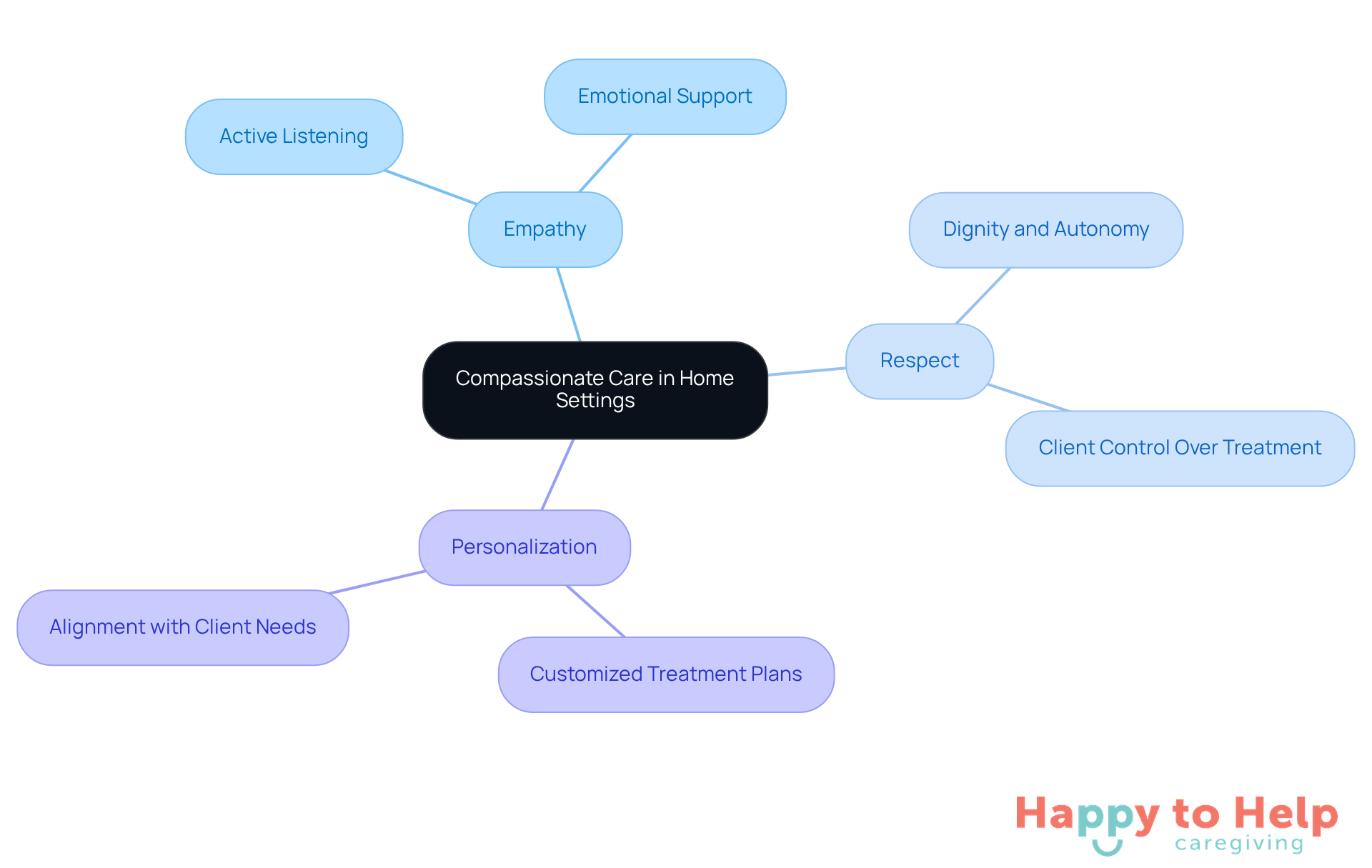
To address these issues, caregivers must focus on three key elements:
- Empathy: Actively listen and respond to the emotional needs of clients. This fosters a deeper connection and understanding.
- Respect: Honor the dignity and autonomy of each individual. Allowing clients to maintain control over their treatment is crucial for their sense of security.
- Personalization: Customize treatment plans to align with the specific needs and desires of clients. This ensures they feel valued and understood.
By nurturing a caring compassionate atmosphere, caregivers can significantly enhance the quality of life for those they assist. Implementing these strategies not only helps clients feel secure and supported in their own homes but also empowers caregivers to provide more effective and meaningful care.
Implement Effective Compassionate Care Strategies
Family caregivers often face significant challenges in providing caring compassionate care. These challenges can lead to feelings of frustration and helplessness, both for the caregiver and the individual receiving care. To address these issues, caregivers can adopt effective strategies that enhance the quality of support and strengthen the caregiver-client relationship.
-
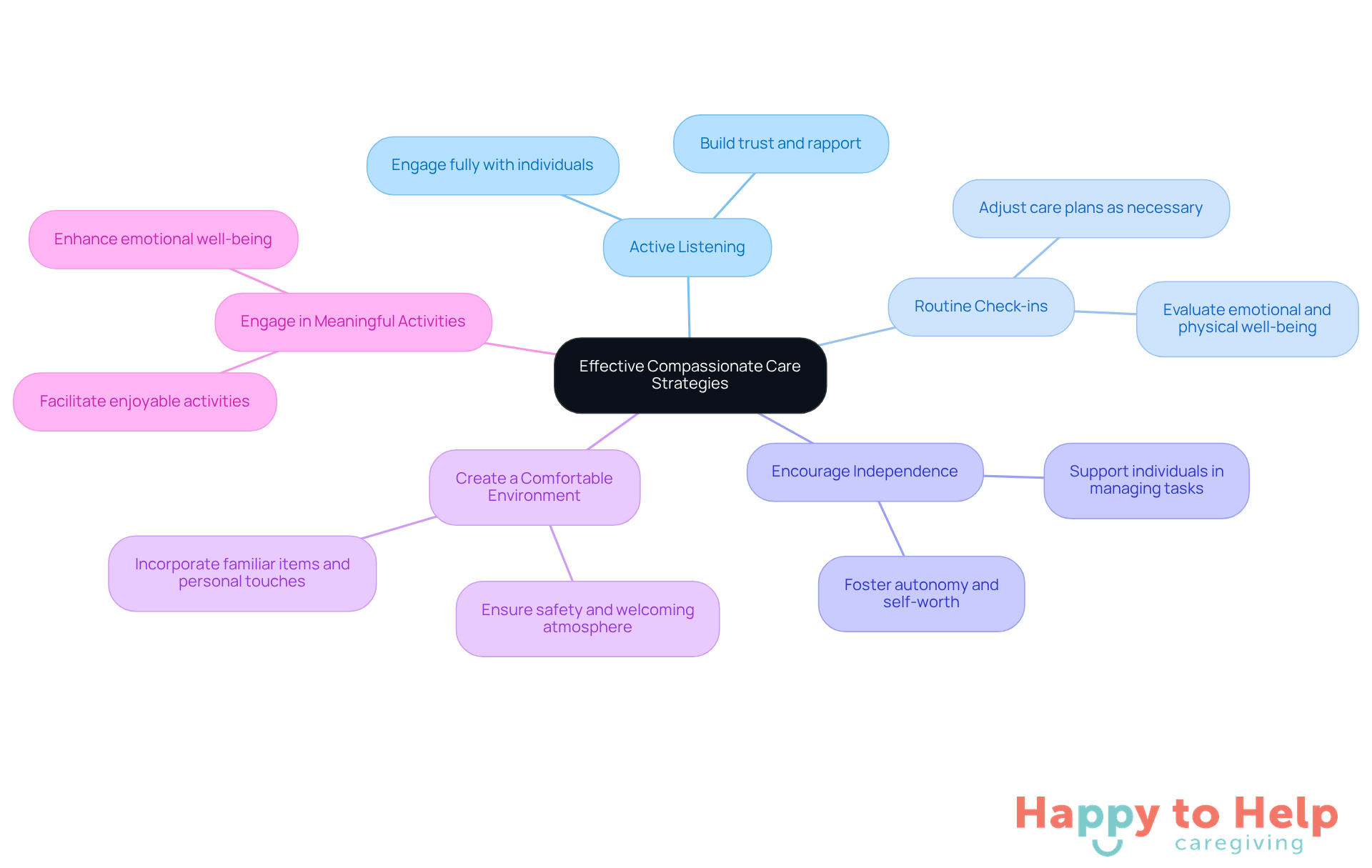
Active Listening: Engage fully with individuals by listening to their concerns and emotions without interruption. This builds trust and rapport.
-
Routine Check-ins: Regularly evaluate the emotional and physical well-being of the individual, adjusting care plans as necessary to meet evolving needs.
-
Encourage Independence: Support individuals in performing tasks they can manage independently, fostering a sense of autonomy and self-worth.
-
Create a Comfortable Environment: Ensure that the home setting is safe, welcoming, and conducive to the individual's preferences, which can include familiar items and personal touches.
-
Engage in Meaningful Activities: Facilitate activities that the client enjoys, whether it’s reading, gardening, or playing games, to enhance their emotional well-being.
By implementing these caring compassionate strategies, caregivers enhance the quality of support and strengthen their connection with those they care for.
Support Caregiver Well-Being to Enhance Care Quality
Promoting the well-being of caregivers is essential for sustaining high-quality support. The number of individuals in this role has increased by 20 million from 2015 to 2025, highlighting a growing concern. Caregivers often face significant challenges, including feelings of social isolation, with nearly 1 in 4 reporting this issue. Addressing these challenges is crucial for their health and the quality of care they provide.
-
Prioritize Self-Care: Engaging in regular self-care activities-like exercise, hobbies, and relaxation techniques-allows caregivers to recharge physically and emotionally. This practice is vital for maintaining their support duties.
-
Seek Support: Connecting with others in similar roles through support groups can offer emotional relief and practical advice. These networks foster a sense of community, enabling caregivers to share experiences and coping methods. Jessica C. Guthrie emphasizes that support from others can enhance immune function and overall well-being.
-
Set Boundaries: Establishing clear limits is crucial to prevent caregiver burnout. Caregivers must ensure their personal time is respected, allowing them to maintain a healthy balance between caregiving and self-care. Many providers struggle to prioritize their health due to their responsibilities, making this balance even more essential.
-
Utilize Respite Services: Taking advantage of respite services provides caregivers with essential breaks, allowing them to return to their duties refreshed and more effective. This not only benefits the provider but also improves the quality of support given to their loved ones.
-
Educate Yourself: Ongoing learning about caregiving methods and available resources empowers caregivers, enhancing their confidence and competence. Knowledge of medical tasks and emotional support strategies can significantly improve the caregiving experience. With only 11% of caregivers having received medical training, this education is particularly important.
By prioritizing their own needs, caregivers can deliver more caring, compassionate, and effective support to their loved ones, ultimately enhancing the overall quality of care.

Utilize Communication and Technology for Better Care
Caregivers face significant challenges in managing their responsibilities, often feeling overwhelmed by the demands of their role. This can lead to missed appointments, medication errors, and a lack of communication with family and healthcare providers. Addressing these issues is crucial for improving the caregiving experience.
To tackle these challenges, here are some practical solutions:
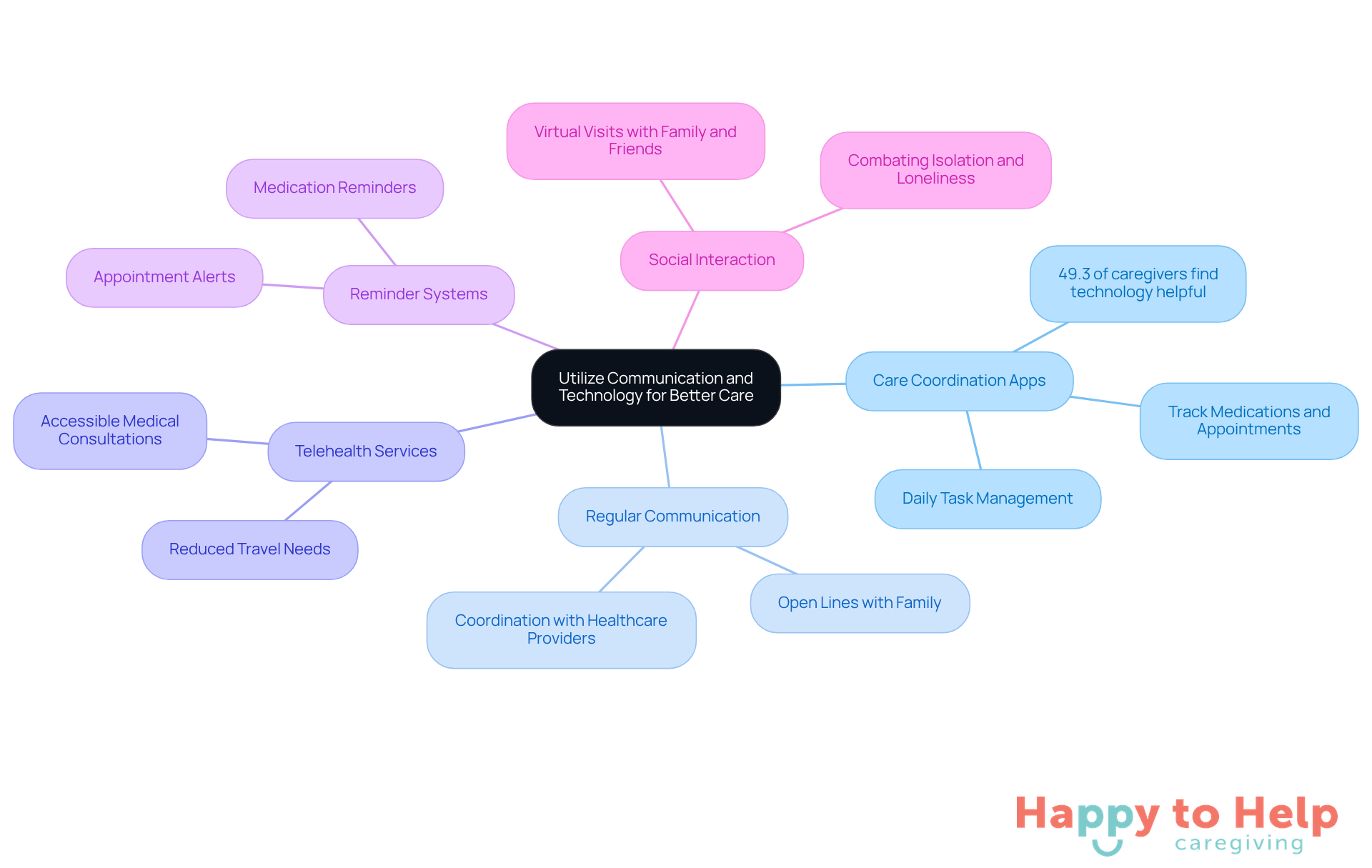
- Use Care Coordination Apps: Implement apps that allow caregivers to track medications, appointments, and daily tasks, ensuring nothing is overlooked. Notably, 49.3% of caregivers reported that technology helps most with scheduling and shift management, highlighting its importance in daily caregiving.
- Establish Regular Communication: Maintain open lines of communication with family members and healthcare providers to keep everyone informed about the client's status and needs. This collaborative approach is essential for efficient coordination of support.
- Leverage Telehealth Services: Utilize telehealth options for medical consultations, reducing the need for travel and making healthcare more accessible. This is especially advantageous for regular examinations and subsequent visits, enabling caregivers to oversee assistance more efficiently.
- Incorporate Reminder Systems: Set up reminders for medication and appointments using smartphones or digital assistants to help clients stay on track with their treatment plans. This proactive strategy can significantly reduce missed doses and appointments.
- Encourage Social Interaction: Use technology to facilitate virtual visits with family and friends, helping to combat feelings of isolation and loneliness. Platforms like Zoom or Skype can help maintain social connections, which are crucial for emotional well-being.
By adopting these tools, caregivers can enhance their efficiency and the quality of support they provide. Moreover, initiatives such as the Caregiver AI Challenge seek to create innovative technologies to assist those providing care, underscoring the increasing acknowledgment of their vital role in the healthcare system. According to the 2025 Homecare Insights: Caregiver Voices Survey, over 8,200 caregivers were polled, emphasizing the growing demand for caregiver support and technology integration.
Your Path Forward
Compassionate care in home settings presents a significant challenge for caregivers, impacting the quality of life for those receiving support. When caregivers fail to address the unique psychological and physical needs of their clients, it can lead to feelings of neglect and frustration. This not only diminishes the empowerment of individuals receiving care but also detracts from the overall caregiving experience.
To tackle this issue, family caregivers can implement several effective strategies:
- Active listening and regular check-ins are crucial for understanding client needs.
- Encouraging independence and creating a comfortable environment can significantly enhance the quality of care.
- Prioritizing caregiver well-being through self-care, community connections, and education is vital for sustaining high-quality support.
- Utilizing technology and communication tools can further improve caregiving efficiency.
These resources help ensure that both caregivers and clients feel supported and connected, fostering a nurturing environment.
Ultimately, the journey of caregiving requires compassion, resilience, and a commitment to continuous improvement. By adopting these caring strategies and prioritizing the needs of both caregivers and clients, a more compassionate and effective caregiving landscape can be achieved. Embracing these practices not only transforms individual experiences but also elevates the overall standard of care within families and communities.
https://iframe.tely.ai/cta/eyJhcnRpY2xlX2lkIjogIjY5MjNhMDk2MjcyNDliYTNkMmMzZTVlZCIsICJjb21wYW55X2lkIjogIjY4ZWU1ZGNhNzMxNzYyNTU3ZjNjOTVjMSIsICJpbmRleCI6IG51bGwsICJ0eXBlIjogImFydGljbGUifQ==Frequently Asked Questions
What is compassionate care in home settings?
Compassionate care in home settings refers to the approach caregivers take to understand and meet the psychological and physical needs of their clients, aiming to enhance their quality of life.
What challenges do caregivers face in providing compassionate care?
Caregivers often struggle to fully understand the needs of those they assist, which can lead to feelings of neglect or misunderstanding among clients, exacerbating fears and diminishing their quality of life.
What are the three key elements of compassionate care?
The three key elements of compassionate care are empathy, respect, and personalization.
How can empathy improve compassionate care?
Empathy involves actively listening and responding to the emotional needs of clients, fostering a deeper connection and understanding between caregivers and those they assist.
Why is respect important in compassionate care?
Respect is crucial as it honors the dignity and autonomy of each individual, allowing clients to maintain control over their treatment, which contributes to their sense of security.
What does personalization mean in the context of compassionate care?
Personalization refers to customizing treatment plans to align with the specific needs and desires of clients, ensuring they feel valued and understood.
How does nurturing a compassionate atmosphere benefit caregivers and clients?
Nurturing a compassionate atmosphere enhances the quality of life for clients and empowers caregivers to provide more effective and meaningful care.
List of Sources
- Define Compassionate Care in Home Settings
- 40 and 30 Years of Serving Compassionate Care | Brookings Health System | High Quality Healthcare (https://brookingshealth.org/news-events/news/40-and-30-years-serving-compassionate-care)
- The changing face of home health care: Trends bringing compassion and innovation together (https://thebostonpilot.com/article.php?ID=201002)
- 2025 Home Care Statistics: Trends & Insights To Know (https://premierhcinc.com/blog/home-care-statistics)
- 52 Eye-Opening Home Health Statistics: Insights for 2025 (https://boosthomehealth.com/home-health-statistics)
- Home Care Impact on Recovery of Patient (A Statistics Report) (https://lovinghomecareinc.com/home-care-recovery-statistics)
- Implement Effective Compassionate Care Strategies
- LSPM UK Fully accredited UK Degrees and Diploma starting from Level 2, Level 3, Level 4, Level 5, Level 6, Level 7, Level 8, OfQual Accredited (https://lspm.org.uk/2022/news.aspx?id=12421518&CourseTitle=The+role+of+active+listening+in+effective+communication+in+health+and+social+care)
- HHS Backs AI Innovation for America’s Caregivers | HHS.gov (https://hhs.gov/press-room/hhs-backs-ai-innovation-for-americas-caregivers.html)
- The Power of Active Listening in Care (https://caremark.co.uk/news/the-power-of-active-listening-in-care)
- Improve Caregiving with Active Listening: Build Trust and Connection (https://telecarebc.com/the-power-of-active-listening-in-caregiving-transforming-connections-and-improving-care)
- CaringBridge (https://caringbridge.org/resources/inspirational-quotes-on-caregiving)
- Support Caregiver Well-Being to Enhance Care Quality
- New Report Reveals Crisis Point for America’s 63 million Family Caregivers - Massachusetts Healthy Aging Collaborative (https://mahealthyagingcollaborative.org/new-report-reveals-crisis-point-for-americas-63-million-family-caregivers)
- Caregiver Statistics: Demographics (https://caregiver.org/resource/caregiver-statistics-demographics)
- Caregiver Support: A Guide to Self-Care for Caregivers | Pfizer (https://pfizer.com/news/articles/caregiver\_support\_a\_guide\_to\_self\_care\_for\_caregivers)
- HHS Backs AI Innovation for America’s Caregivers | HHS.gov (https://hhs.gov/press-room/hhs-backs-ai-innovation-for-americas-caregivers.html)
- 5 Self-Care Tips for Caregivers | United Way Worldwide (https://unitedway.org/news/5-self-care-tips-for-caregivers)
- Utilize Communication and Technology for Better Care
- How enabling technology is transforming home-based care | UnitedHealthcare Community & State (https://uhccommunityandstate.com/content/blog-post/blogs/how-enabling-technology-is-transforming-home-based-care)
- 6 Tech Tools Transforming Caregiving for Aging Loved Ones (https://ltcnews.com/articles/tech-tools-transforming-caregiving-aging-loved-ones)
- HHS Launches New Caregiving AI Initiative to 'Spark Innovative Support' (https://hospicenews.com/2025/11/18/hhs-launches-new-caregiving-ai-initiative-to-spark-innovative-support)
- HHS Backs AI Innovation for America’s Caregivers | HHS.gov (https://hhs.gov/press-room/hhs-backs-ai-innovation-for-americas-caregivers.html)
- 2025 HHAeXchange Survey Finds Caregivers Growing Increasingly Comfortable with Technology, But Support Remains Key to Retention | HHAeXchange (https://hhaexchange.com/press-releases/2025-hhaexchange-survey-technology-caregiver-retention)