4 Effective Activities for Elderly at Home to Boost Engagement
For families in our service areas
For families in our service areas, this guide explains caregiving and how non-medical in-home caregiving can support care planning in East Idaho, Treasure Valley & Magic Valley, Northern Wasatch, North Central West Virginia & Southwestern Pennsylvania, and Northeast Ohio.
Why 4 Effective Activities for Elderly at Matters
Engagement is crucial for older adults, significantly impacting their mental and emotional well-being. Many seniors face feelings of isolation, highlighting the urgent need for meaningful activities at home. This article explores practical strategies caregivers can implement to enhance engagement among the elderly, ultimately improving their quality of life.
However, when traditional methods fall short, caregivers must adapt activities to suit the unique needs and preferences of each individual. By understanding these challenges, caregivers can better support seniors in leading fulfilling lives.
Recognize the Importance of Engagement for Seniors
Involvement is crucial for older adults, as it significantly impacts their mental and emotional well-being. Many older adults face feelings of isolation and sadness, which can lead to serious health issues. Research indicates that engaged participation in community events can help alleviate these feelings, promoting a healthier, happier life.
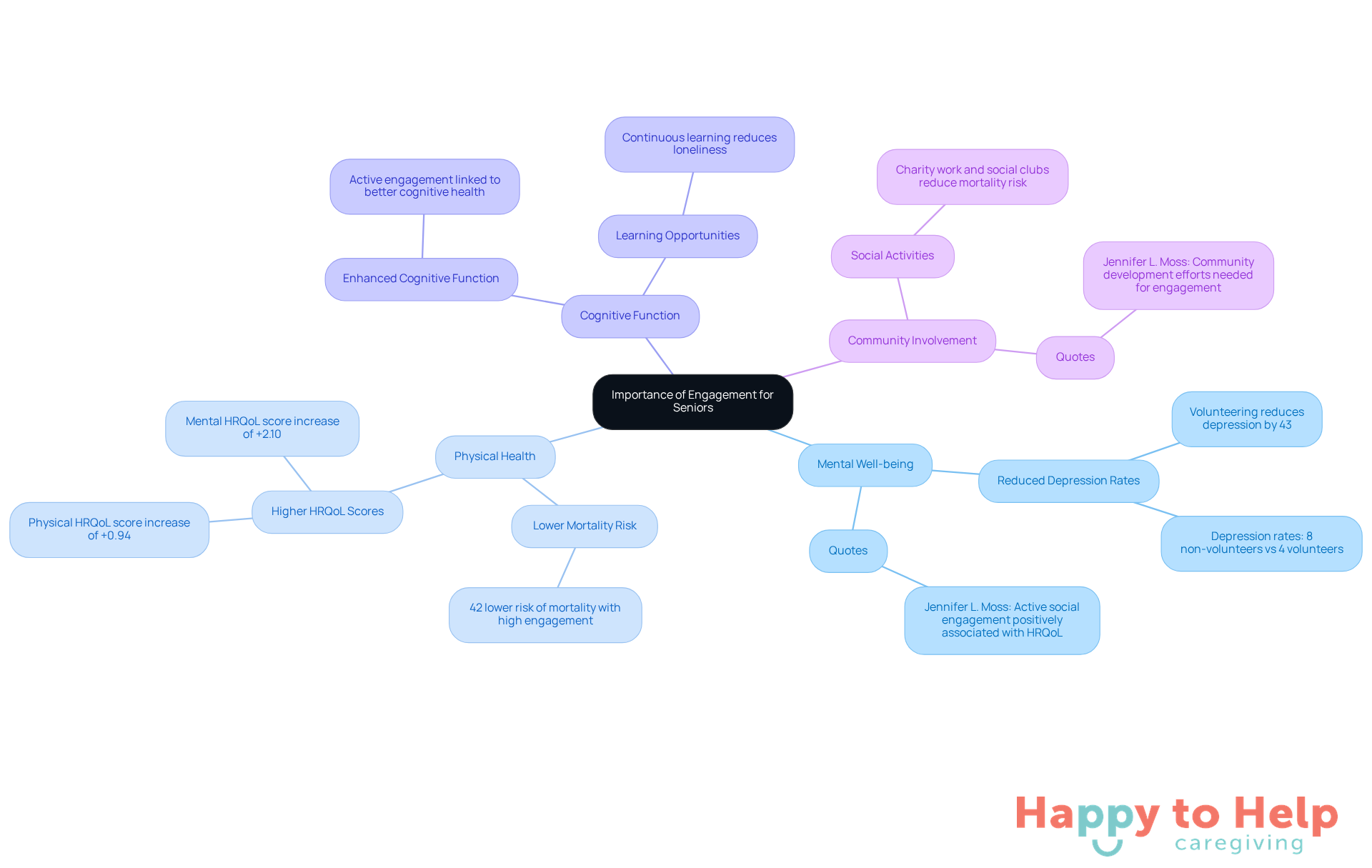
Engaged older adults often experience enhanced cognitive function, improved physical health, and a stronger sense of purpose. For example, a comprehensive study involving 2,914 participants aged 50 and above revealed that those who frequently participated in communal activities had a 42% lower risk of mortality compared to their less active peers. Additionally, volunteering and engaging in community activities have been shown to reduce depression rates by up to 43% among older adults.
As Jennifer L. Moss notes, "Active social engagement was positively associated with physical and mental health-related quality of life among older adults." These findings underscore the importance of promoting involvement as a fundamental component in creating effective activities for elderly at home.
To ensure that engagement practices are beneficial and suitable, it is essential to customize tasks according to personal preferences and limitations. By doing so, caregivers can foster a more inclusive environment that encourages older adults to participate actively in their communities.
Explore Diverse Activities to Foster Engagement
Involving older adults in activities for elderly at home is crucial for addressing the challenges of cognitive decline and social isolation. Many caregivers face the problem of keeping seniors engaged, which can significantly impact their mental well-being and cognitive abilities.
The implications of neglecting these pursuits can be severe. Without stimulation, older adults may experience increased feelings of loneliness and a decline in cognitive functions. This is particularly concerning as approximately 10 percent of individuals with mild cognitive impairment develop Alzheimer's disease or other forms of dementia annually.
Fortunately, caregivers can implement effective activities for elderly at home to foster engagement and improve quality of life. Here are some beneficial activities:
-
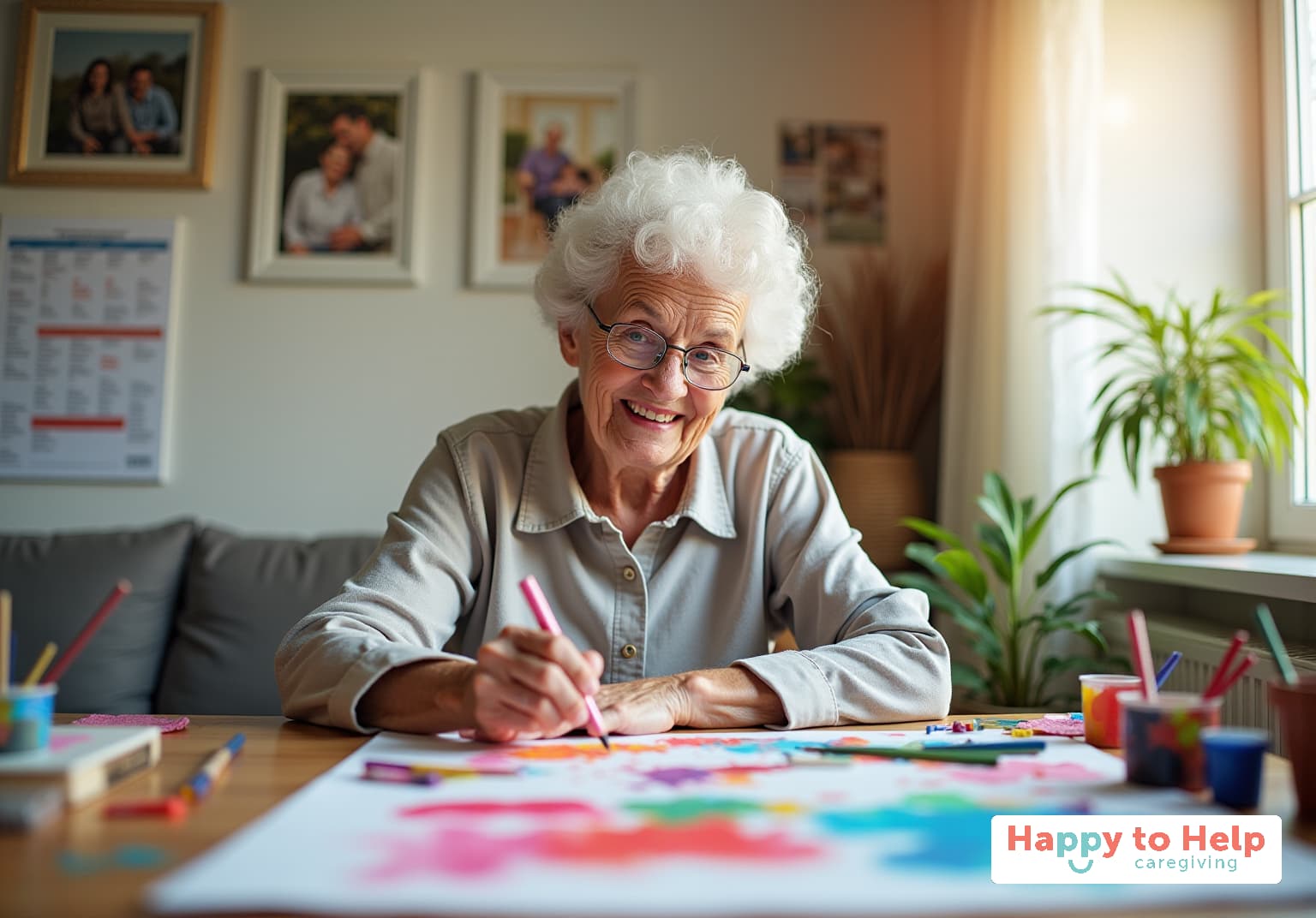
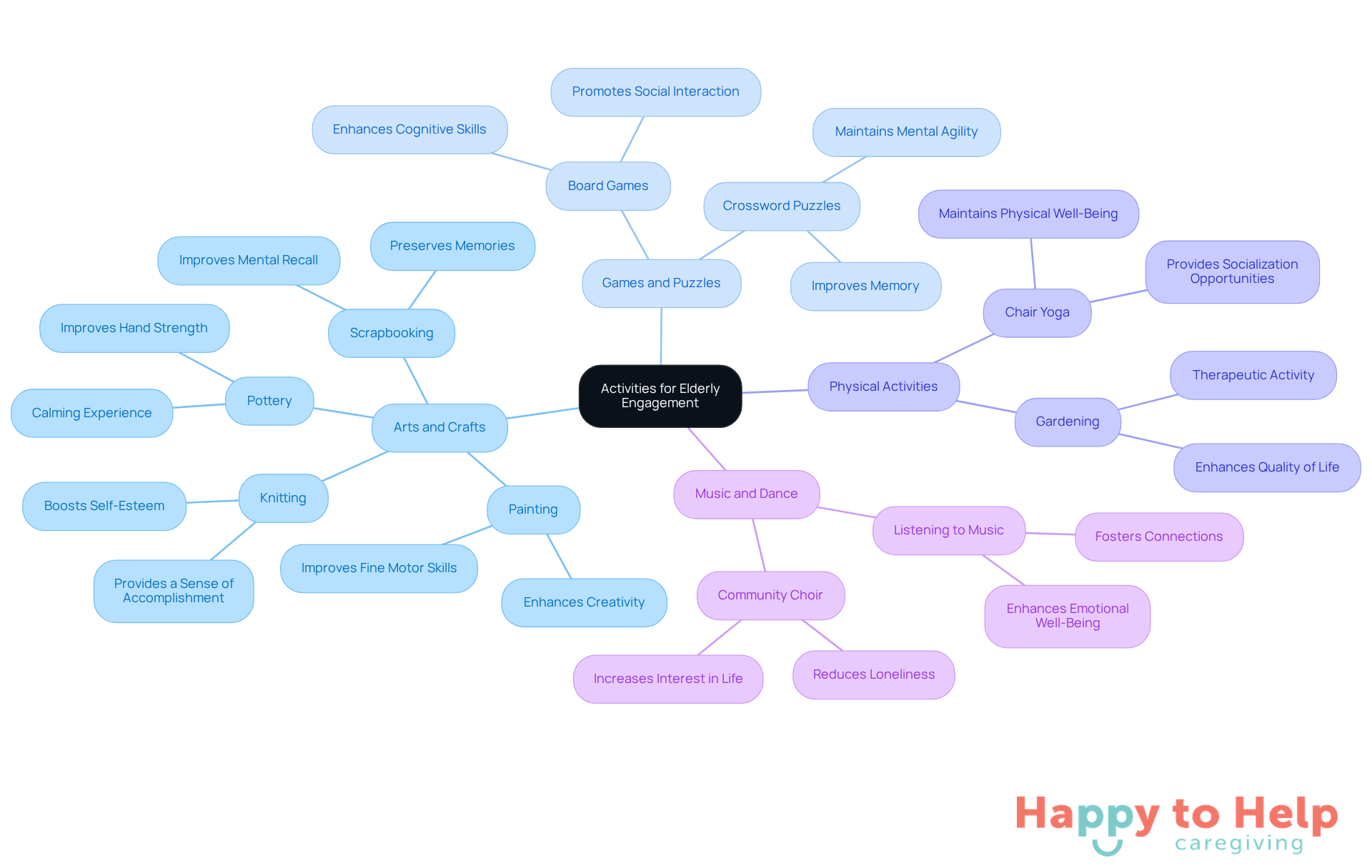
Arts and Crafts: Activities like painting, knitting, and scrapbooking stimulate creativity and foster a sense of accomplishment. Engaging in these crafts can improve emotional well-being, reduce loneliness, and enhance fine motor skills. For example, creating collages or mosaic art boosts self-esteem and provides a non-intimidating way for seniors to express themselves. Pottery, in particular, offers a calming experience and improves hand strength.
-
Games and Puzzles: Board games, card games, and puzzles enhance cognitive skills. Regular participation can improve memory, attention, and processing speed. Games like crossword puzzles or Sudoku maintain mental agility, while social interactions during gameplay help combat isolation.
-
Physical Activities: Gentle exercises, including chair yoga, walking, or gardening, maintain physical well-being and provide socialization opportunities. These activities can be tailored to individual abilities, ensuring seniors remain active and engaged.
-
Music and Dance: Listening to music or participating in dance sessions uplifts spirits and encourages movement. Music offers therapeutic advantages, enhancing emotional well-being and fostering connections among participants. The Community of Voices trial demonstrated that participation in a community choir reduced feelings of loneliness and increased interest in life.
By incorporating a variety of activities for elderly at home, caregivers can create an engaging environment that keeps older adults involved, lively, and connected, ultimately improving their quality of life.
Tailor Activities to Individual Preferences and Needs
Engaging older adults in activities for elderly at home is a significant challenge for caregivers. Many seniors struggle to find tasks that resonate with their personal interests and physical capabilities, leading to feelings of isolation and dissatisfaction.
To address this issue, caregivers can take several practical steps:
-
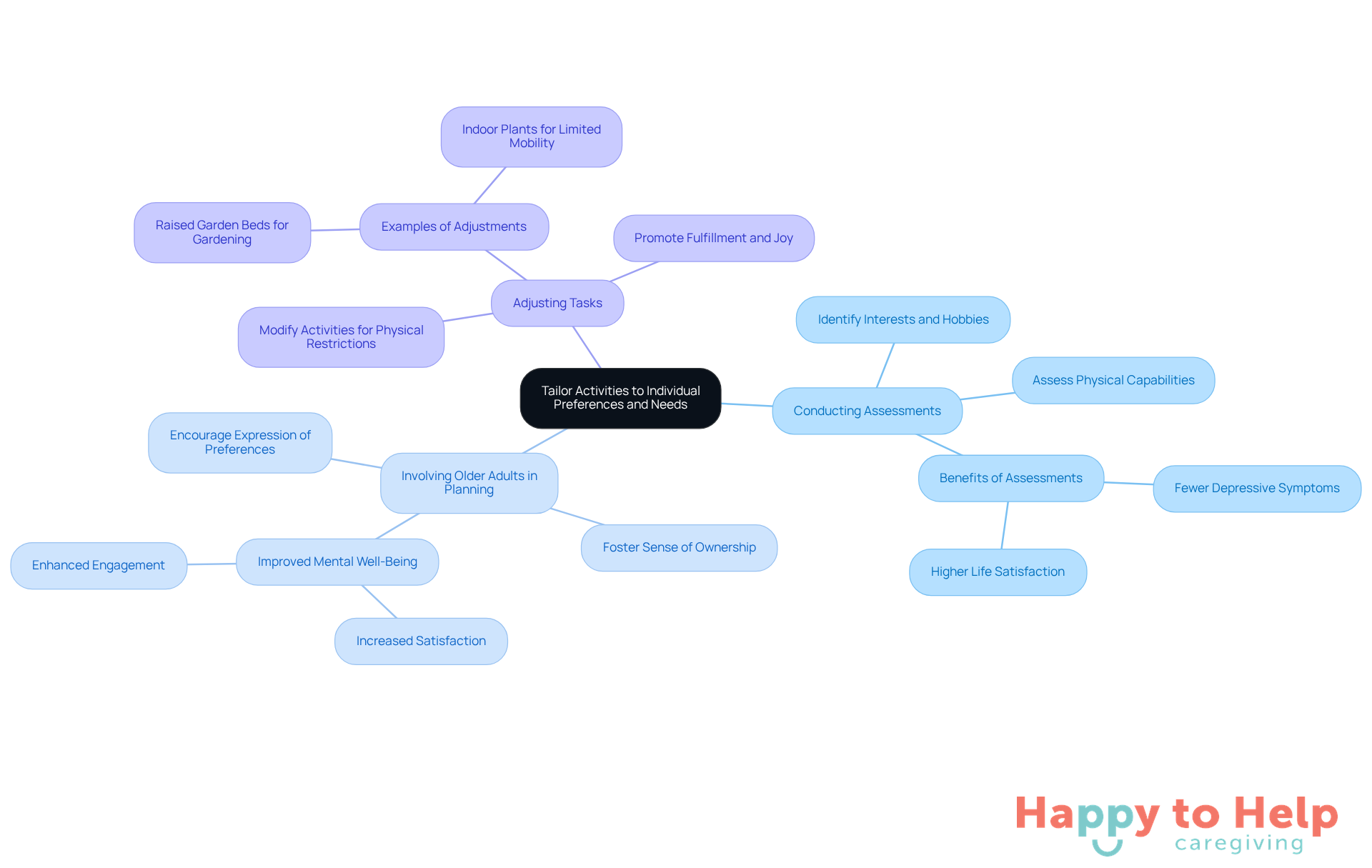
Conducting Assessments: Regularly assess the interests, hobbies, and physical capabilities of seniors to identify suitable activities. Research indicates that hobby engagement is associated with fewer depressive symptoms and higher levels of self-reported health, happiness, and life satisfaction.
-
Involving Older Adults in Planning: Encourage older individuals to express their preferences and include them in the planning process. This fosters a sense of ownership and excitement. Studies show that when older adults are engaged in decision-making, their overall satisfaction and mental well-being improve significantly.
-
Adjusting Tasks: Alter tasks to suit physical restrictions or cognitive difficulties, ensuring that all elderly individuals can engage comfortably. For example, if an elderly person enjoys gardening but has limited mobility, consider raised garden beds or indoor plants that require minimal bending. This personalized approach not only enhances engagement in activities for elderly at home but also promotes a sense of fulfillment and joy.
Statistics indicate that older adults who engage in customized pursuits report greater levels of happiness and life satisfaction. By concentrating on personal interests and abilities, caregivers can establish a more enriching atmosphere that supports the mental and emotional health of older adults through various activities for elderly at home.
Utilize Technology and Resources to Enhance Care
Technology plays a pivotal role in enhancing engagement for older adults, yet many face the challenge of social isolation. This issue can lead to feelings of loneliness and depression, with nearly one in four adults aged 65 and older reporting such feelings. Caregivers need effective strategies to combat this problem and promote activities for elderly at home to foster connection and engagement among seniors.
-
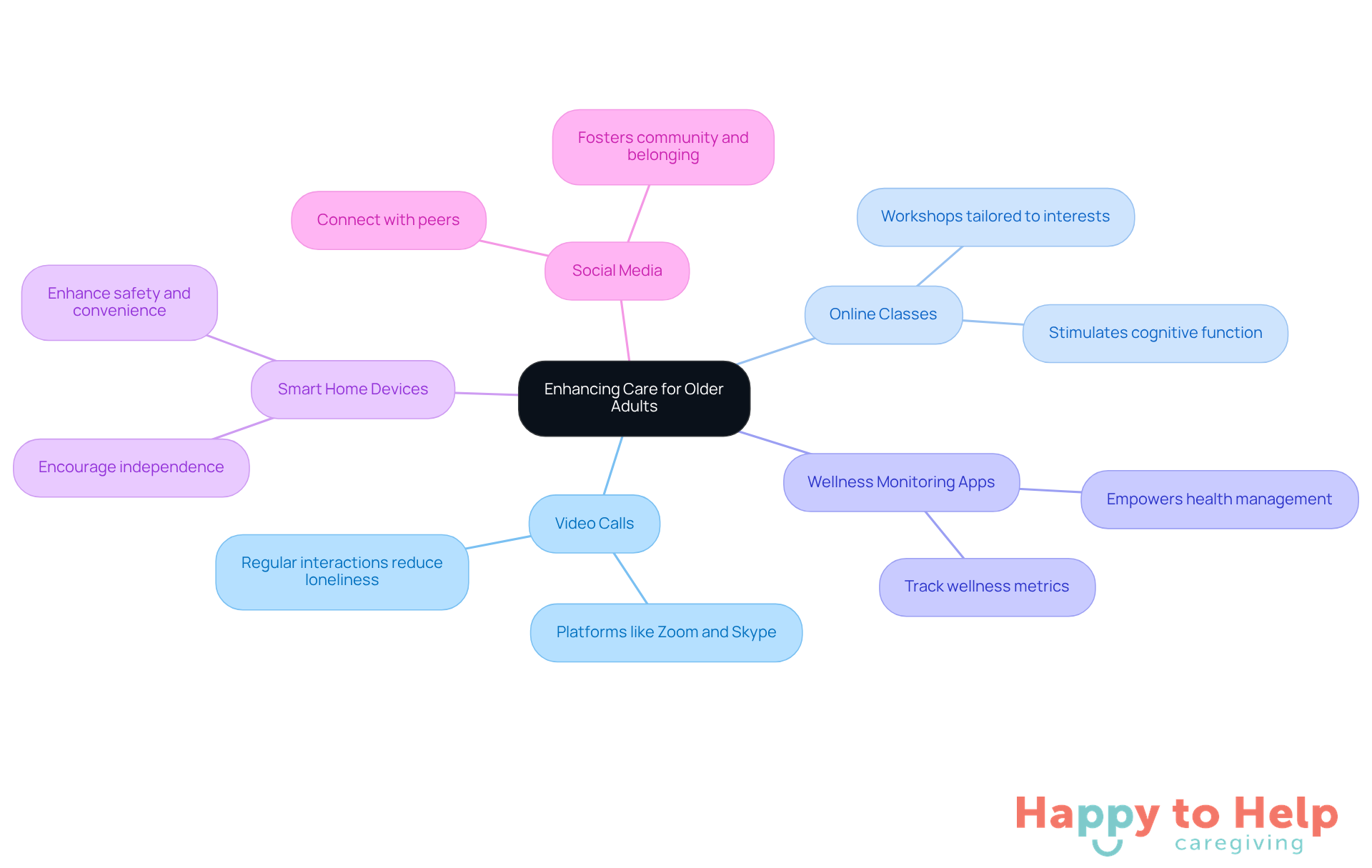
Video Calls: Platforms like Zoom and Skype enable virtual visits with family and friends, crucial for maintaining social connections. Regular video interactions can significantly reduce feelings of loneliness. Engaging in activities for elderly at home, such as video calls with family, not only enhances emotional well-being but is also associated with lower rates of depression and anxiety.
-
Online Classes: Encourage older adults to participate in online workshops tailored to their interests, such as art, cooking, or fitness. These activities for elderly at home stimulate cognitive function and promote social interaction among peers. Community classes and online tutorials can help older adults learn to use technology effectively, bridging the knowledge gap.
-
Wellness Monitoring Apps: Utilize apps that track wellness metrics, providing reminders for physical activity and medication management. This proactive approach empowers older adults to take charge of their health, enhancing their overall well-being. Health management devices can alert caregivers in emergencies, ensuring timely support.
-
Smart Home Devices: Introduce smart home technologies that enhance safety and convenience, such as smart lighting systems that reduce fall risks and voice-activated assistants that help manage daily tasks. These devices encourage independence and enhance community connectivity through features like video calling.
-
Social Media: Introduce older adults to platforms like Facebook and Instagram, allowing them to connect with peers and share experiences. Engaging with social media fosters a sense of community and belonging, vital for emotional health. Caregivers should also be aware of potential challenges, such as online fraud and disinformation, guiding older adults in navigating these risks.
By integrating these technological resources, caregivers can cultivate a more engaging and supportive environment for seniors, ultimately enhancing their quality of life and emotional well-being through activities for elderly at home.
Key Takeaways for Caregivers
Engagement is a significant challenge for older adults, as feelings of isolation can severely impact their mental and emotional well-being. This isolation not only diminishes their quality of life but can also lead to cognitive decline and a lack of purpose. Caregivers must recognize the importance of addressing this issue to foster a healthier, happier environment for seniors.
To combat these challenges, tailored engagement practices are essential. By participating in various activities, seniors can enhance cognitive function, stimulate creativity, and build social connections. Activities such as arts and crafts or technology-based solutions can be adapted to meet individual preferences and abilities. Caregivers should focus on customizing tasks and involving older adults in planning to significantly improve their quality of life.
Ultimately, fostering engagement through diverse, personalized activities is crucial for the well-being of older adults. Caregivers are encouraged to explore creative engagement ideas and utilize technology to bridge the gap of isolation. By prioritizing involvement and connection, caregivers can help seniors achieve a fulfilling and enriched life.
https://iframe.tely.ai/cta/eyJhcnRpY2xlX2lkIjogIjY5MjY0MzVkMDFkMWUzYmY0NmRiMjJjYyIsICJjb21wYW55X2lkIjogIjY4ZWU1ZGNhNzMxNzYyNTU3ZjNjOTVjMSIsICJpbmRleCI6IG51bGwsICJ0eXBlIjogImFydGljbGUifQ==Frequently Asked Questions
Why is engagement important for seniors?
Engagement is crucial for older adults as it significantly impacts their mental and emotional well-being, helping to alleviate feelings of isolation and sadness that can lead to serious health issues.
What are the benefits of community involvement for older adults?
Engaged older adults often experience enhanced cognitive function, improved physical health, and a stronger sense of purpose. Participation in community activities can lead to a 42% lower risk of mortality and reduce depression rates by up to 43%.
How does social engagement affect the quality of life for older adults?
Active social engagement is positively associated with improved physical and mental health-related quality of life among older adults, as noted by Jennifer L. Moss.
How can caregivers promote effective engagement for seniors?
Caregivers can promote effective engagement by customizing tasks according to the personal preferences and limitations of older adults, fostering a more inclusive environment that encourages active participation in their communities.
List of Sources
- Recognize the Importance of Engagement for Seniors
- For seniors: the mental health payoff of staying curious (https://news.ucr.edu/articles/2025/08/06/seniors-mental-health-payoff-staying-curious)
- Active social engagement and health among older adults: assessing differences by cancer survivorship status - Health and Quality of Life Outcomes (https://hqlo.biomedcentral.com/articles/10.1186/s12955-024-02281-8)
- Avoiding Isolation By Volunteering Offers Mental Health Benefits to Seniors (https://usnews.com/news/health-news/articles/2025-01-10/avoiding-isolation-by-volunteering-offers-mental-health-benefits-to-seniors)
- Social engagement helps older adults feel younger, live longer: study (https://mcknightsseniorliving.com/news/social-engagement-helps-older-adults-feel-younger-live-longer-study)
- Social engagement linked to longer lifespan in older adults (https://news-medical.net/news/20250522/Social-engagement-linked-to-longer-lifespan-in-older-adults.aspx)
- Explore Diverse Activities to Foster Engagement
- The Surprising Benefits of Craft Activities for Seniors: - Advanced Entry (https://advancedentry.com/blog/the-surprising-benefits-of-craft-activities-for-seniors)
- Crafting Joy: The Benefits of Arts and Crafts for Seniors (https://hebrewseniorlife.org/blog/crafting-joy-benefits-arts-and-crafts-seniors)
- Participating in the arts creates paths to healthy aging (https://nia.nih.gov/news/participating-arts-creates-paths-healthy-aging)
- Games, puzzles and reading can slow cognitive decline in the elderly—even in those with mild cognitive impairment - Vital Record (https://vitalrecord.tamu.edu/games-puzzles-and-reading-can-slow-cognitive-decline-in-the-elderly-even-in-those-with-mild-cognitive-impairment)
- Word and number puzzles improve adult cognitive function (https://alzheimers.org.uk/news/2025-10-08/word-and-number-puzzles-improve-adult-cognitive-function)
- Tailor Activities to Individual Preferences and Needs
- Senior Fitness: Exercise Programs Tailored for Older Adults (https://bucknerparkwayplace.org/news-blog/senior-fitness-exercise-programs-tailored-for-older-adults)
- Older adults prioritize social activities, inclusiveness in massive survey assessing what matters most to them (https://mcknights.com/news/older-adults-prioritize-social-activities-inclusiveness-in-massive-survey-assessing-what-matters-most-to-them)
- Hobby engagement and mental wellbeing among people aged 65 years and older in 16 countries - PMC (https://pmc.ncbi.nlm.nih.gov/articles/PMC10504079)
- Leisure engagement in older age is related to objective and subjective experiences of aging - PMC (https://pmc.ncbi.nlm.nih.gov/articles/PMC10876530)
- Nursing Home Activities Participation Statistics (https://rosewood-nursing.com/post/nursing-home-activities-participation-statistics)
- Utilize Technology and Resources to Enhance Care
- Senior Living Operators Take Aim at Resident Loneliness With New Tech, Tools (https://seniorhousingnews.com/2025/07/09/senior-living-operators-take-aim-at-resident-loneliness-with-new-tech-tools)
- Embracing Technology: How Smart Home Devices Enhance Senior Living in 2025 (https://carepatrol.com/lorain-medina-wooster-mansfield/embracing-technology-how-smart-home-devices-enhance-senior-living-in-2025)
- How Older People Are Reaping Brain Benefits From New Tech - KFF Health News (https://kffhealthnews.org/news/article/tech-apps-ai-older-adults-health-benefits)
- How Technology Helps Older Adults Stay Connected (https://christianhealthnj.org/news/2024/september/how-technology-helps-older-adults-stay-connected)