4 Effective Ways to Encourage Hobbies for Seniors at Home
For families in our service areas
For families in our service areas, this guide explains caregiving and how non-medical in-home caregiving can support care planning in East Idaho, Treasure Valley & Magic Valley, Northern Wasatch, North Central West Virginia, and Northeast Ohio.
Why 4 Effective Ways to Encourage Hobbies Matters
Engaging in hobbies is a vital aspect of life for seniors, offering enjoyment and significant health benefits. However, many caregivers face a challenge: how can they effectively encourage seniors to embrace new hobbies while catering to their individual preferences and abilities?
Research highlights that participation in leisure activities can enhance cognitive function, reduce feelings of isolation, and promote overall well-being among older adults. The implications of not addressing this challenge can lead to missed opportunities for personal growth and social connection.
To tackle this issue, caregivers can implement practical strategies that foster engagement. Here are some actionable tips:
- Assess Interests: Start by discussing hobbies that the senior has enjoyed in the past or has expressed interest in trying.
- Create a Routine: Establish a regular schedule for hobby time, making it a part of their daily or weekly routine.
- Encourage Social Interaction: Look for group activities or classes that align with their interests, promoting social connections.
By focusing on these strategies, caregivers can enrich the lives of seniors at home, ultimately enhancing their quality of life.
Recognize the Importance of Hobbies for Seniors
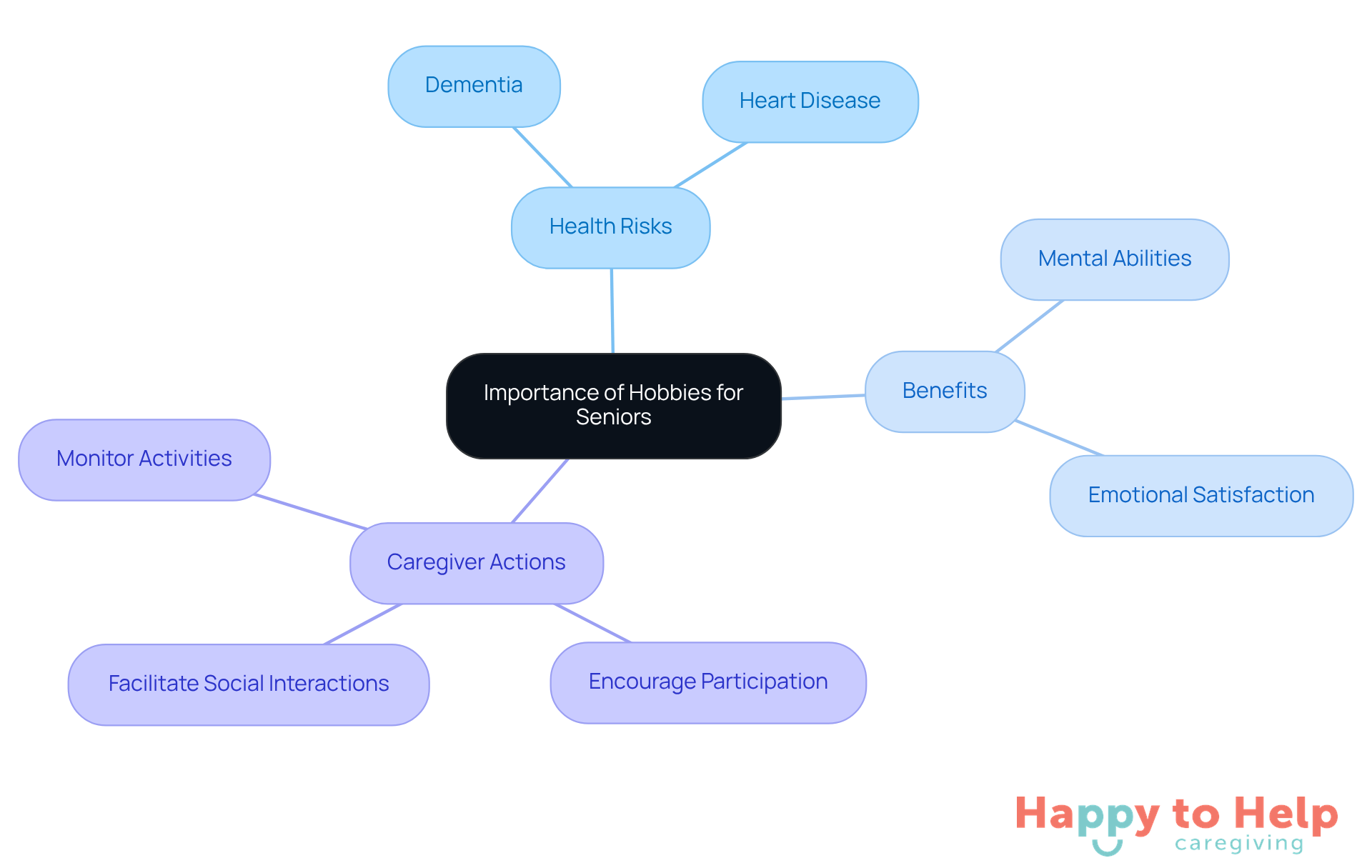
Hobbies for seniors are essential because they help combat significant health risks. Inactivity can lead to serious issues like dementia and heart disease, which is a concern highlighted by the National Institute on Aging. Engaging in enjoyable hobbies for seniors not only lowers these risks but also enhances their mental abilities and emotional satisfaction.
Research from UCLA Health shows that older adults who participate in hobbies for seniors report higher levels of happiness and life satisfaction. Furthermore, longitudinal studies indicate that regular mental activities, such as reading or playing games, are linked to a slower decline in cognitive function. This underscores the importance of integrating hobbies for seniors into the daily lives of older adults.
As noted by the 2024 Lancet Commission on Dementia Prevention and Care, "leisure pursuits were the protective factor for the mental capacity of older adults." Caregivers should recognize these benefits and actively incorporate hobbies for seniors into their clients' routines to promote a more fulfilling lifestyle.
To effectively support seniors, caregivers can:
- Encourage participation in various hobbies that stimulate the mind.
- Facilitate social interactions through group activities.
- Monitor and adapt activities to suit individual preferences and abilities.
Additionally, further research is needed to explore the relationship between different leisure activities and cognitive function, ensuring caregivers can provide the best support possible.
Implement Strategies to Introduce New Hobbies
Engaging elderly individuals in new activities can be challenging for caregivers. Many older adults may feel hesitant or overwhelmed when faced with unfamiliar pursuits. This reluctance can lead to missed opportunities for social interaction and personal growth.
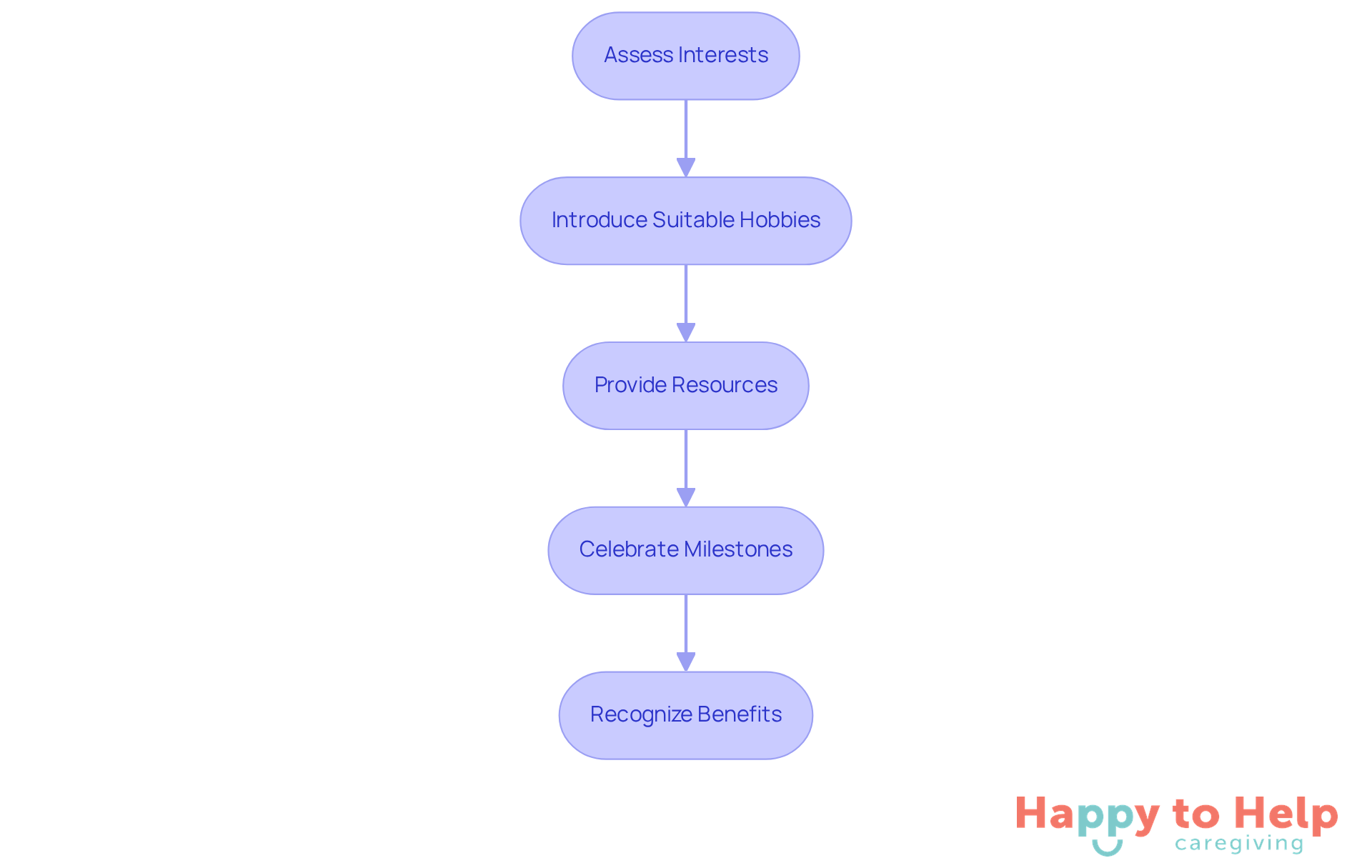
To address this issue, caregivers should start by assessing the hobbies for seniors and the interests of the elderly individuals they support. For example, if someone has a history of enjoying gardening, introducing indoor plants or container gardening can be a gentle way to reignite that passion without causing physical strain. By providing resources such as classes or workshops tailored to the elderly, caregivers can facilitate a smoother transition into these new activities.
Celebrating small milestones in these pursuits is crucial. Not only does it boost confidence, but it also fosters a sense of achievement, encouraging continued participation. Research shows that gradual exposure to new experiences enhances brain plasticity, making it easier for older adults to adapt and find joy in these activities. Engaging in hobbies not only enriches their lives but also positively impacts their mental health, highlighting the importance of mindful involvement in leisure activities.
Tailor Hobbies to Individual Preferences and Abilities
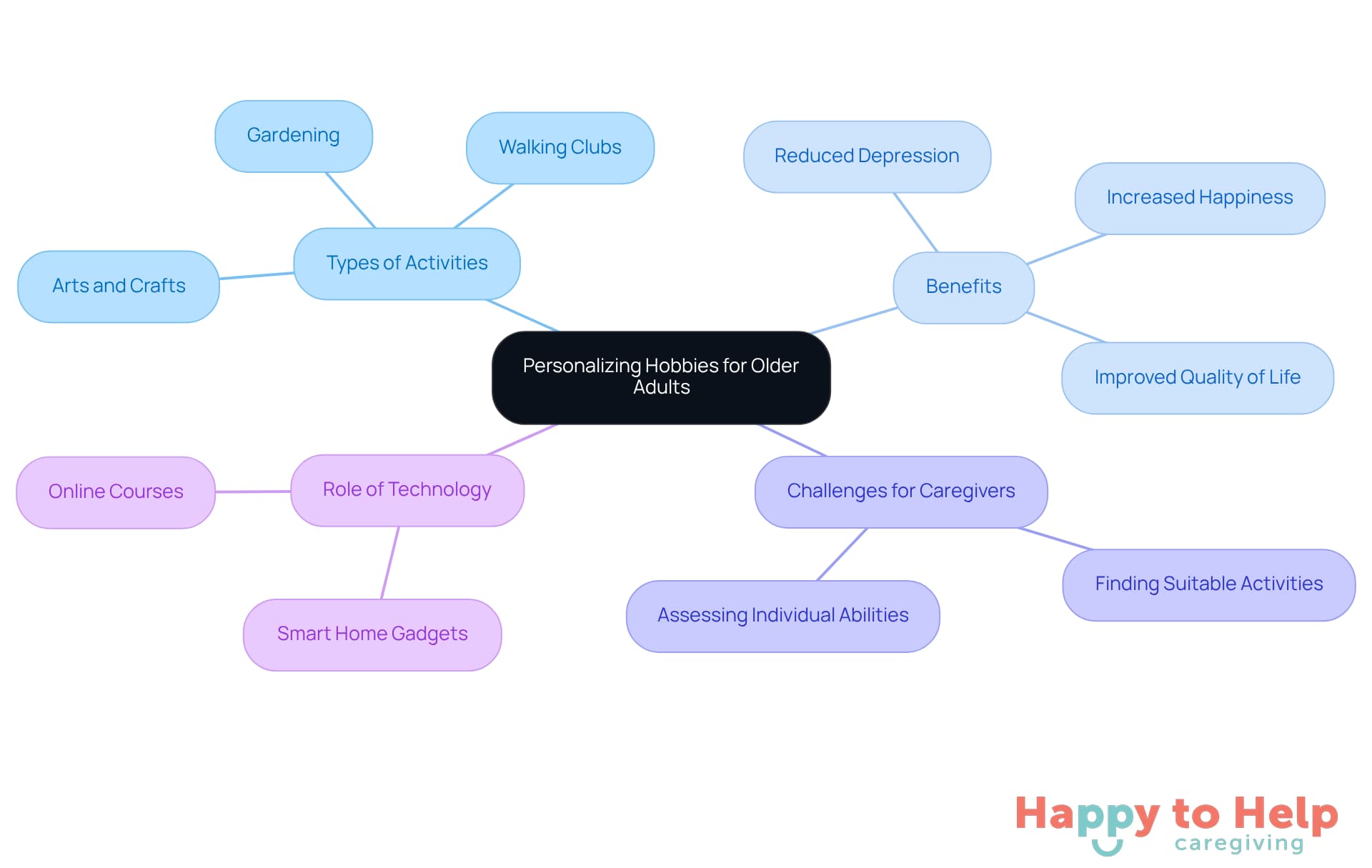
Personalizing hobbies is crucial for keeping older adults engaged and fulfilled. Caregivers face the challenge of assessing the physical and cognitive abilities of each individual when recommending activities. This is essential because seniors with limited mobility may find joy in arts and crafts, while those who are more physically active might thrive in walking clubs or gardening.
Research shows that engaging in leisure activities is linked to fewer depressive symptoms, higher self-reported health, increased happiness, and greater life satisfaction. However, many caregivers struggle to find suitable activities that cater to the diverse interests of older adults. The incorporation of technology can broaden leisure options, offering online courses in painting or music that appeal to various preferences.
In-home caregivers can assist elderly individuals in utilizing smart home gadgets for reminders and automated lighting, further enhancing their involvement in interests. Aligning activities with personal preferences not only fosters a sense of achievement but also significantly boosts emotional well-being. Studies indicate that personalized activities can lead to an improved quality of life for the elderly, underscoring the importance of this tailored approach.
As Daisy Fancourt observes, pastimes involve imagination, creativity, and cognitive stimulation, all of which are positively associated with mental health and well-being. By focusing on personalized hobbies, caregivers can effectively support older adults in leading more fulfilling lives.
Facilitate Social Connections Through Shared Hobbies
Loneliness among older adults is a significant issue that can adversely affect their mental health and overall well-being. Many seniors struggle with feelings of isolation, which can lead to depression and decreased life satisfaction. For instance, a study involving 8,181 older adults in China revealed that those engaged in social activities reported lower levels of depression (β = −0.352, 95% CI: −0.547 to −0.158) and higher life satisfaction.
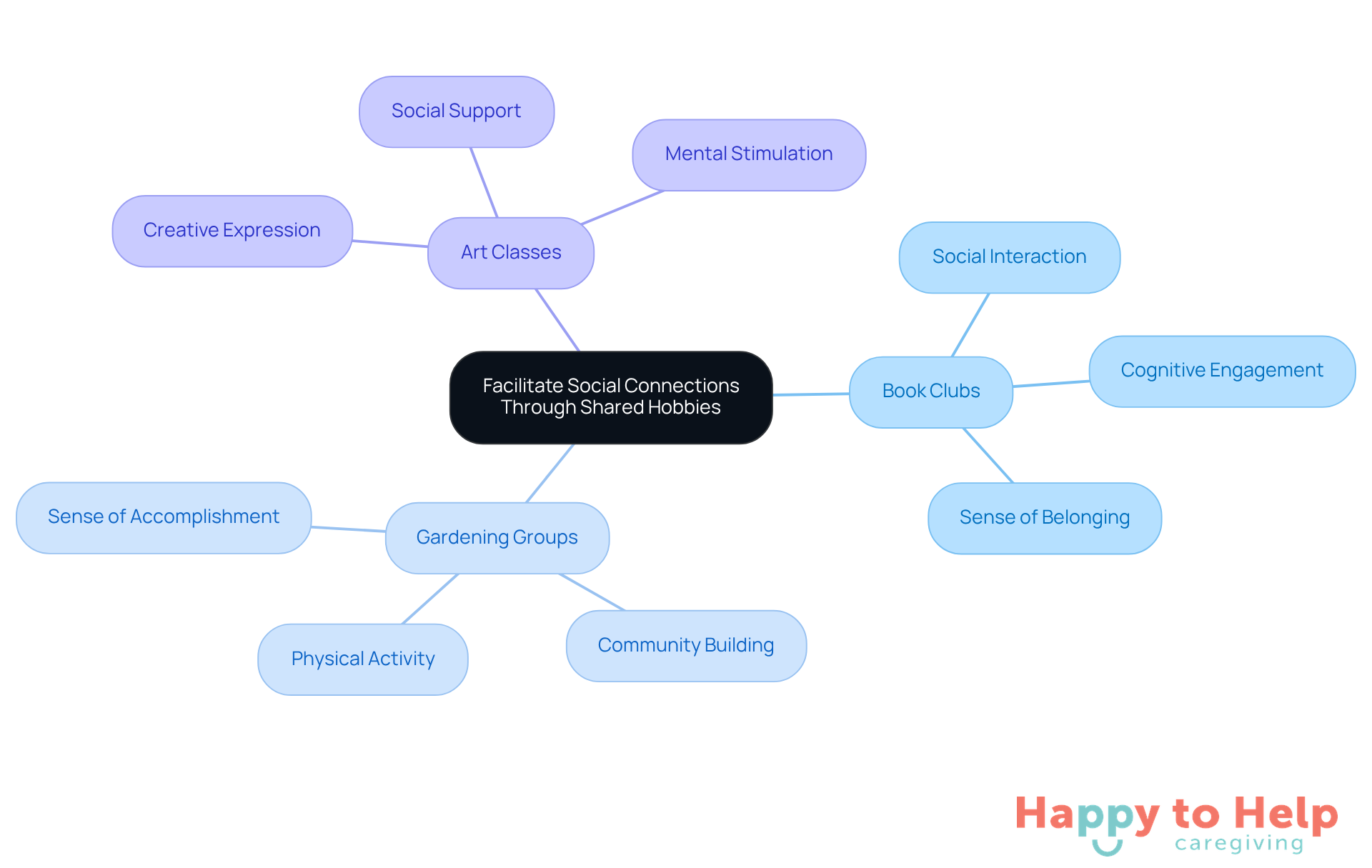
To combat this problem, caregivers can facilitate social connections through hobbies for seniors. Group activities like:
- Book clubs
- Gardening groups
- Art classes
not only provide opportunities for social interaction but also foster a sense of belonging. By organizing outings or classes that align with the interests of multiple seniors, caregivers can encourage participation and help build meaningful relationships.
Adam Kelton emphasizes that staying socially connected after 70 requires intention, underscoring the importance of nurturing these connections. Promoting hobbies for seniors can significantly enhance the quality of life for older adults, making it a practical solution for caregivers aiming to improve their clients' mental health and social engagement.
Making the Right Choice
Engaging seniors in hobbies is not just a way to fill time; it’s essential for promoting their overall health and happiness. Inactivity poses significant risks to older adults, leading to isolation and declining mental health. Caregivers must recognize the importance of hobbies as a means to combat these challenges and enhance the quality of life for seniors.
To effectively encourage hobbies among seniors, caregivers can implement several strategies:
- Tailor activities to individual preferences and abilities.
- Introduce new pursuits gradually to avoid overwhelming them.
- Foster social connections through shared interests, which can combat feelings of loneliness.
These approaches not only address the risks associated with inactivity but also nurture emotional well-being and cognitive function, leading to a more fulfilling life for older adults.
Ultimately, the significance of hobbies for seniors cannot be overstated. Caregivers are encouraged to proactively incorporate these activities into the daily routines of older adults. Each hobby represents an opportunity for growth, connection, and joy. By committing to this initiative, caregivers can significantly enhance the mental health and overall well-being of the elderly, paving the way for a vibrant and engaged lifestyle.
https://iframe.tely.ai/cta/eyJhcnRpY2xlX2lkIjogIjY5MjBmZDQwY2E3OGI5ZDliYTJkYTRkZSIsICJjb21wYW55X2lkIjogIjY4ZWU1ZGNhNzMxNzYyNTU3ZjNjOTVjMSIsICJpbmRleCI6IG51bGwsICJ0eXBlIjogImFydGljbGUifQ==Frequently Asked Questions
Why are hobbies important for seniors?
Hobbies are essential for seniors because they help combat health risks associated with inactivity, such as dementia and heart disease, while also enhancing mental abilities and emotional satisfaction.
What benefits do seniors gain from participating in hobbies?
Seniors who engage in hobbies report higher levels of happiness and life satisfaction. Regular mental activities like reading or playing games are linked to a slower decline in cognitive function.
What does research from the UCLA Health indicate about seniors and hobbies?
Research from UCLA Health indicates that older adults who participate in hobbies experience increased happiness and life satisfaction.
How do leisure pursuits affect the mental capacity of older adults?
According to the 2024 Lancet Commission on Dementia Prevention and Care, leisure pursuits are considered a protective factor for the mental capacity of older adults.
What can caregivers do to support seniors in engaging with hobbies?
Caregivers can encourage participation in various hobbies that stimulate the mind, facilitate social interactions through group activities, and monitor and adapt activities to suit individual preferences and abilities.
Is there a need for further research on hobbies and cognitive function?
Yes, further research is needed to explore the relationship between different leisure activities and cognitive function to ensure caregivers can provide the best support for seniors.
List of Sources
- Recognize the Importance of Hobbies for Seniors
- Positive association between hobby participation and objective and subjective cognition among adults aged 50 years and over in 24 countries (https://sciencedirect.com/science/article/abs/pii/S0277953625008184)
- 3 proven health benefits of having a hobby (https://uclahealth.org/news/article/3-proven-health-benefits-having-hobby)
- Effects of Leisure Activities on the Cognitive Ability of Older Adults: A Latent Variable Growth Model Analysis - PMC (https://pmc.ncbi.nlm.nih.gov/articles/PMC9045058)
- Hobbies protect older people from age-related decline in mental health and wellbeing - NAMI North Carolina (https://naminc.org/hobbies-protect-older-people-from-age-related-decline-in-mental-health-and-wellbeing-2)
- Energize Your Golden Years: 34 Senior Fitness Quotes for Inspiration - Cozy Chris (https://cozychris.com/senior-fitness-quotes)
- Implement Strategies to Introduce New Hobbies
- 15 Good Quotes for Seniors That Will Brighten Your Day in 2025 (https://arhomecare.com/15-good-quotes-for-seniors-that-will-brighten-your-day-in-2025)
- Engaging in hobbies boosts mental well-being for seniors, study finds (https://news-medical.net/news/20230913/Engaging-in-hobbies-boosts-mental-well-being-for-seniors-study-finds.aspx)
- Frontiers | Effects of Leisure Activities on the Cognitive Ability of Older Adults: A Latent Variable Growth Model Analysis (https://frontiersin.org/journals/psychology/articles/10.3389/fpsyg.2022.838878/full)
- Effects of Leisure Activities on the Cognitive Ability of Older Adults: A Latent Variable Growth Model Analysis - PMC (https://pmc.ncbi.nlm.nih.gov/articles/PMC9045058)
- What Are Inspiring Quotes For Seniors Aging Gracefully at Home? (https://visitingangels.com/articles/inspiring-quotes-and-tips-for-seniors-aging-gracefully-at-home/26168)
- Tailor Hobbies to Individual Preferences and Abilities
- Pursuing Interests & Hobbies as Older Adults - SRG Senior Living (https://srgseniorliving.com/blog/pursuing-interests-hobbies-as-older-adults-srg-senior-living)
- AgeTech trends designed to enhance senior care and well-being (https://mcknightsseniorliving.com/home/columns/marketplace-columns/agetech-trends-designed-to-enhance-senior-care-and-well-being)
- Trends and Innovations in Senior Care | Amada Blog (https://amadaseniorcare.com/2025/01/trends-and-innovations-in-senior-care)
- Hobby engagement and mental wellbeing among people aged 65 years and older in 16 countries - PMC (https://pmc.ncbi.nlm.nih.gov/articles/PMC10504079)
- Older adults prioritize social activities, inclusiveness in massive survey assessing what matters most to them (https://mcknights.com/news/older-adults-prioritize-social-activities-inclusiveness-in-massive-survey-assessing-what-matters-most-to-them)
- Facilitate Social Connections Through Shared Hobbies
- 15 Good Quotes for Seniors That Will Brighten Your Day in 2025 (https://arhomecare.com/15-good-quotes-for-seniors-that-will-brighten-your-day-in-2025)
- Social Connection Quotes | Our 33 Favorite Quotes - Visible Network Labs (https://visiblenetworklabs.com/2020/10/16/thirty-three-best-social-connection-quotes)
- 7 activities that keep people over 70 socially connected and mentally engaged (https://vegoutmag.com/things-to-do/k-7-activities-that-keep-people-over-70-socially-connected-and-mentally-engaged)
- The impact of social activities on mental health among older adults in China - PMC (https://pmc.ncbi.nlm.nih.gov/articles/PMC11371613)
- Famous Quotes on Socializing and Well-Being - Center for the Advancement of Well-Being (https://wellbeing.gmu.edu/famous-quotes-on-socializing-and-well-being)