4 Essential D3 Dosage Tips for Seniors' Health and Safety

For families in our service areas
For families in our service areas, this guide explains caregiving and how non-medical in-home caregiving can support care planning in East Idaho, Treasure Valley & Magic Valley, Northern Wasatch, North Central West Virginia & Southwestern Pennsylvania, and Northeast Ohio.
Understanding D3 Dosage Tips
Understanding the complexities of vitamin D3 intake is crucial for seniors, who often face unique health challenges that can affect their well-being. Many caregivers struggle with the varying recommendations for vitamin D3, leading to confusion about proper dosage. This article highlights four essential tips for managing D3 intake, equipping both caregivers and seniors with the knowledge needed to improve health outcomes.
However, the risks associated with both deficiency and excess can be concerning. How can caregivers navigate the complexities of vitamin D3 supplementation to ensure safety and effectiveness? By addressing these challenges head-on, we can provide practical solutions that enhance the health of seniors.
Verify Recommended Daily Intake of Vitamin D3
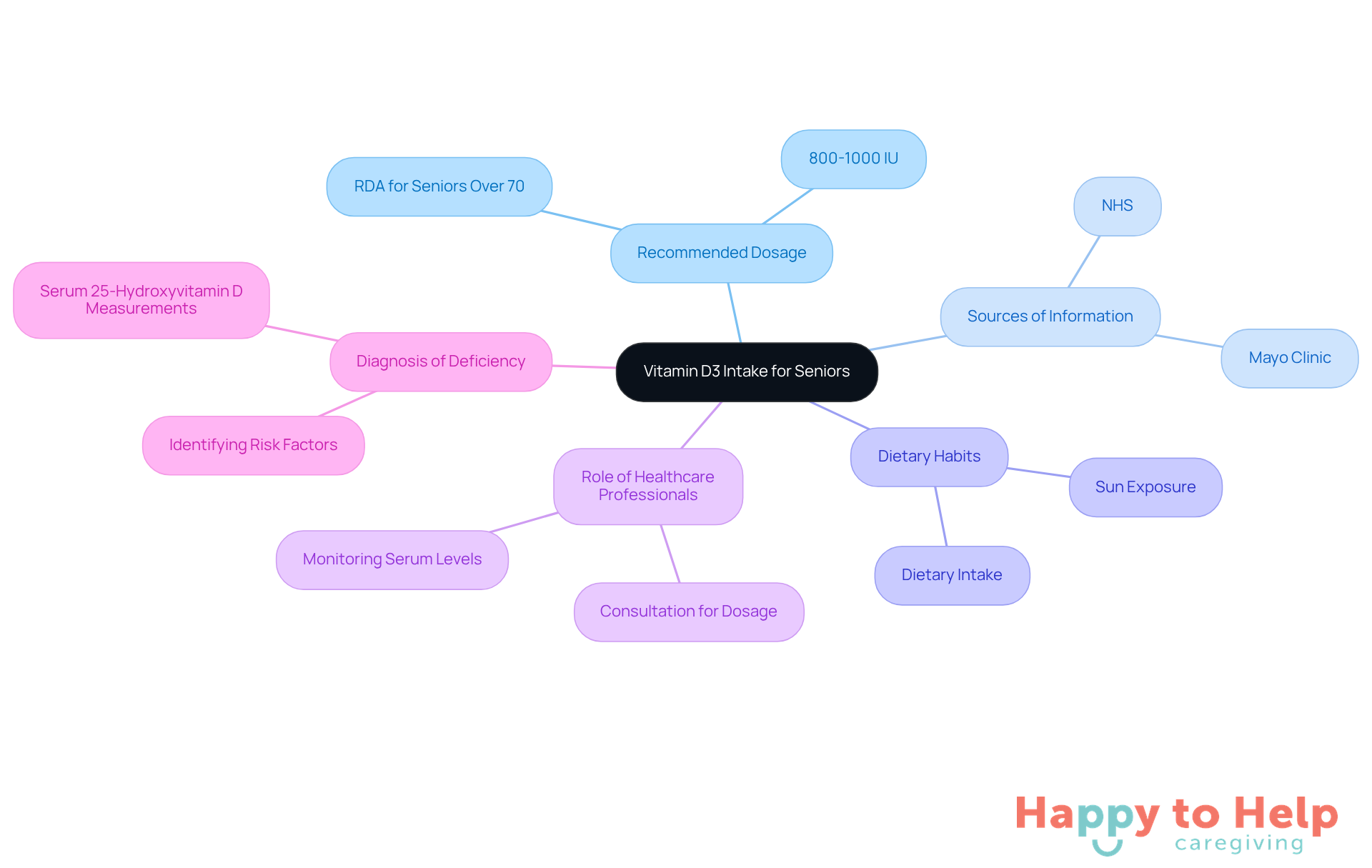
Vitamin D deficiency is a significant concern for seniors, particularly in relation to the d3 dosage for seniors over 70 years old. This age group should aim for a daily d3 dosage for seniors of 800 to 1000 IU of vitamin D3 to support bone health and overall well-being. With an increased risk of deficiency, addressing this issue is crucial for public health in North America.
To tackle this problem, caregivers should consult reputable sources like the Mayo Clinic and the NHS for the latest guidelines on vitamin D3 intake. Staying informed ensures that the information is current and evidence-based, which is vital for effective care.
Additionally, personal dietary habits and sun exposure play a significant role in determining vitamin D levels. Caregivers should consider these factors when assessing individual needs. It's also essential to think about calcium supplementation alongside vitamin D, as it can help protect against fractures.
Engaging in discussions with a medical professional can help establish suitable consumption levels tailored to individual wellness circumstances. This collaborative approach ensures a comprehensive strategy for vitamin D supplementation. Furthermore, diagnosing vitamin D insufficiency or deficiency can be achieved through serum 25-hydroxyvitamin D (25OHD) measurements, providing a clear path to addressing this health issue.
Assess Individual Health Needs for Higher Dosage
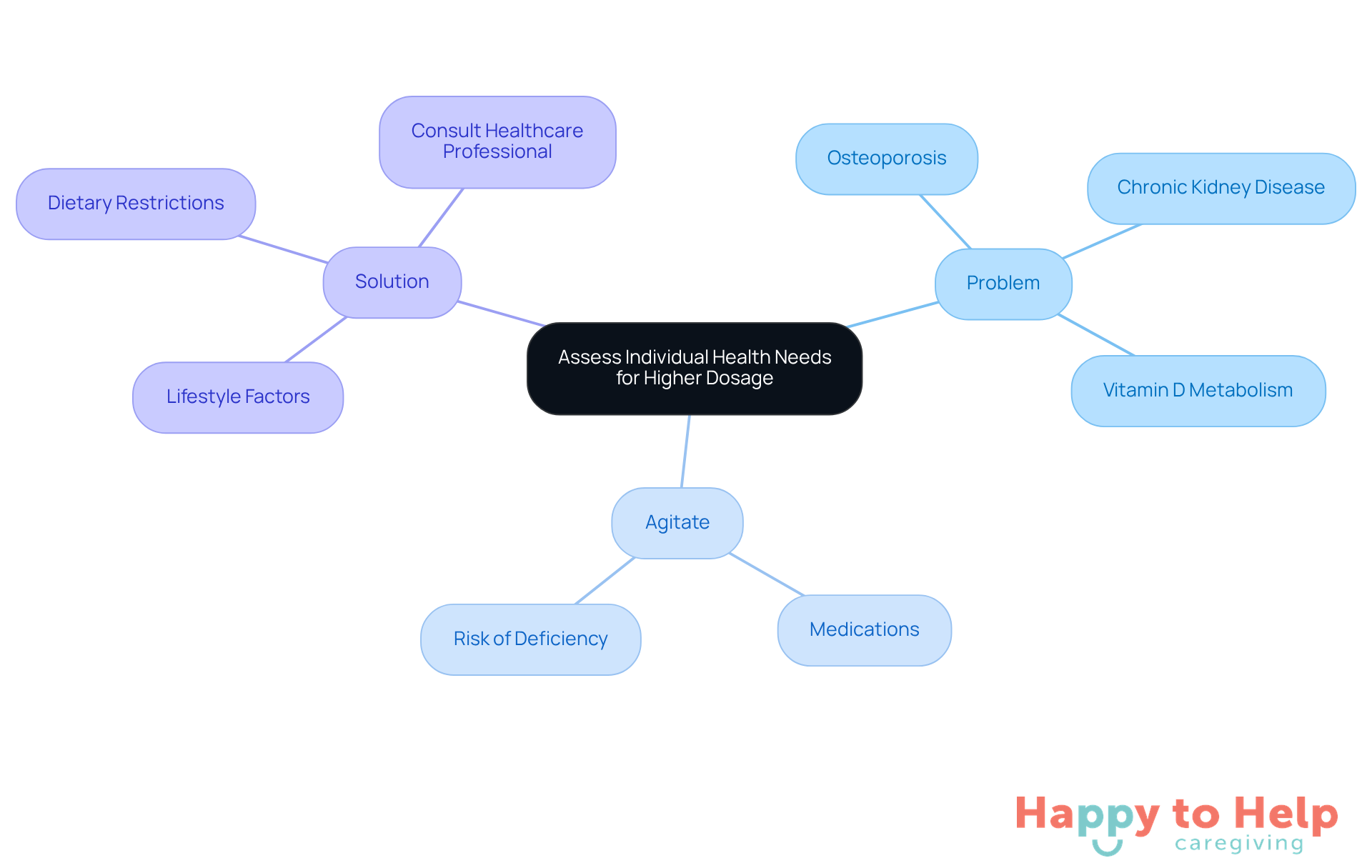
Problem: Many individuals face health issues that may require increased vitamin D3 intake, particularly those with osteoporosis and chronic kidney disease. These conditions can significantly affect vitamin D metabolism. Research indicates that people with chronic kidney disease often struggle to convert vitamin D into its active form, necessitating careful monitoring and potential supplementation. For adults over 50 at high risk of vitamin D deficiency, a daily D3 dosage for seniors of at least 800 IU is recommended.
Agitate: Certain medications can further complicate vitamin D metabolism. Corticosteroids and specific weight-loss drugs may hinder the absorption and utilization of vitamin D, raising the risk of deficiency, especially among older adults who are already vulnerable. Moreover, excessive vitamin D supplementation-over 4,000 IU daily-can lead to toxicity, making it essential to monitor intake closely.
Solution: Lifestyle factors also play a crucial role in vitamin D levels. Limited sun exposure due to geographic location or personal habits, along with dietary restrictions, can restrict the intake of vitamin D-rich foods. For instance, strict vegans might struggle to meet their vitamin D needs through diet alone. Therefore, consulting with a healthcare professional is vital to assess whether a higher D3 dosage for seniors is warranted based on individual evaluations and lifestyle factors. Tailored recommendations can help achieve optimal health outcomes and prevent complications related to vitamin D deficiency.
Monitor Serum Vitamin D Levels Regularly
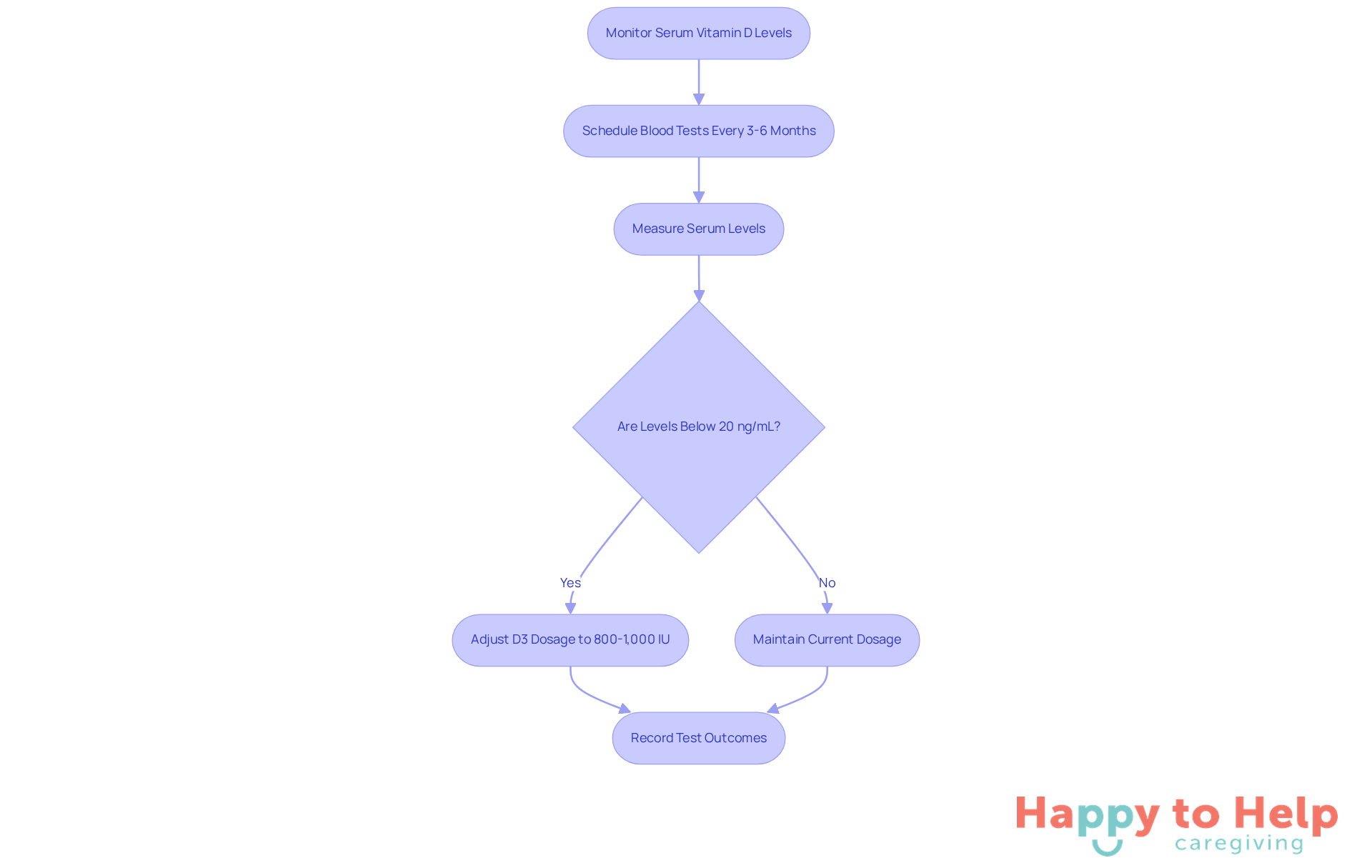
Low levels of vitamin D can significantly impact health, especially when considering the appropriate d3 dosage for seniors. Insufficient vitamin D is linked to increased fracture risk and skeletal issues, making it crucial to monitor serum levels regularly.
Agitate: Health authorities recommend maintaining serum 25-hydroxyvitamin D levels between 20-50 ng/mL. Levels below 12 ng/mL are particularly concerning, as they are essential for skeletal benefits. This highlights the importance of careful monitoring of d3 dosage for seniors, particularly for individuals aged 65 and above, who are at a higher risk of deficiency.
To combat this issue, schedule regular blood tests every 3-6 months to measure serum vitamin D levels, especially to determine the appropriate d3 dosage for seniors. Aim for a daily intake of 800 to 1,000 IU of vitamin D3, adjusting based on test results and healthcare provider recommendations. High-risk groups, including nursing home residents and women with osteoporosis, should be particularly vigilant.
Maintain a record of test outcomes to track changes over time and identify potential issues related to vitamin D deficiency. This proactive approach can guide future wellness choices and help ensure optimal health.
Understand Safety Guidelines and Risks
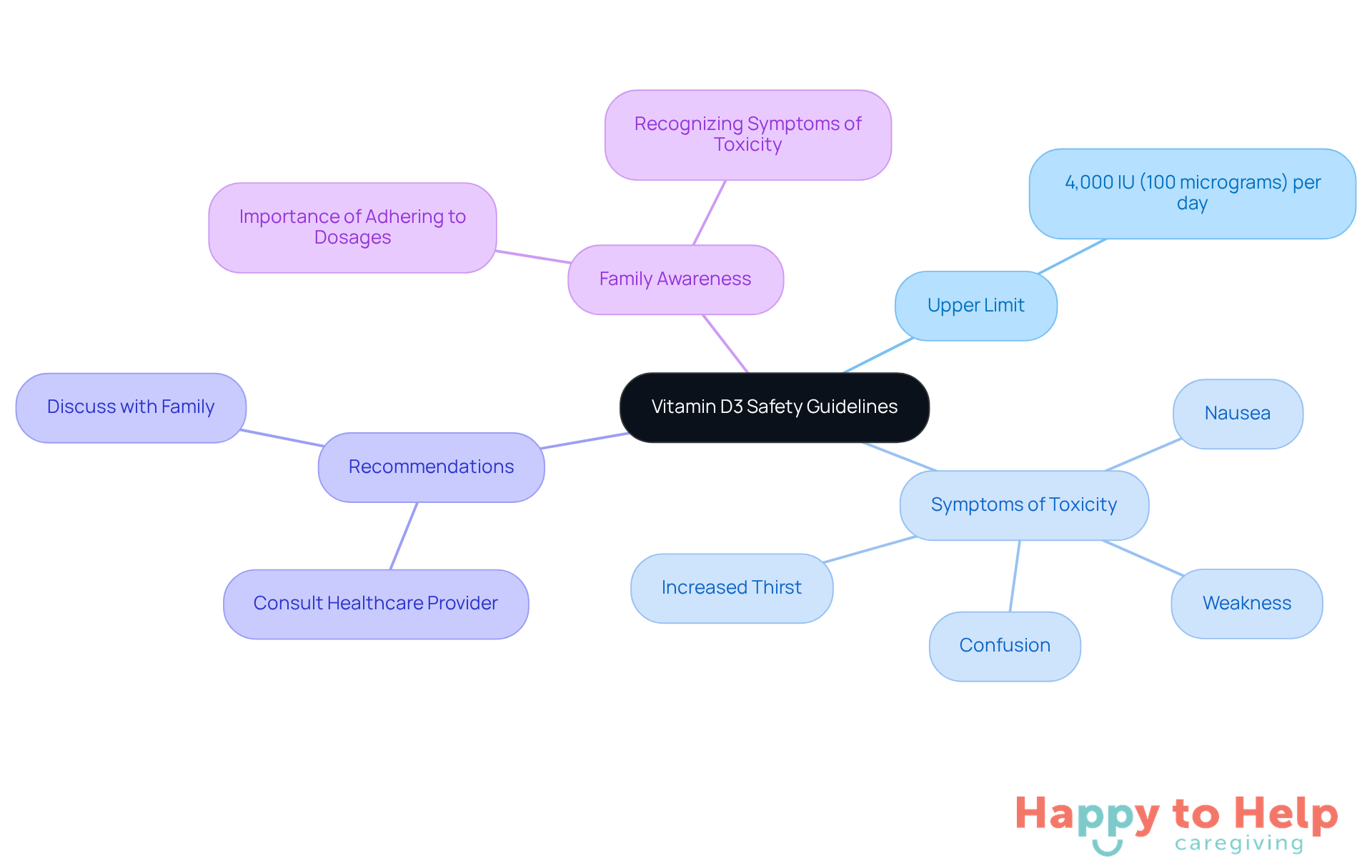
Familiarizing yourself with the upper limit for Vitamin D3 intake is crucial. For adults, this limit is generally considered to be 4,000 IU (100 micrograms) per day. Exceeding this limit can lead to serious medical issues, including hypercalcemia, which may weaken bones and harm organs.
To sustain optimal well-being, both adults and children over 4, including seniors, require a daily D3 dosage for seniors of 10 micrograms (400 IU). It's important to be vigilant for symptoms of Vitamin D toxicity, such as:
- Nausea
- Weakness
- Confusion
- Increased thirst
These symptoms can be particularly concerning for seniors, who may already be managing multiple medical conditions.
To mitigate these risks, ensure that any supplementation, including D3 dosage for seniors, is discussed with a healthcare provider, especially if other medications are being taken. This step is vital to prevent negative interactions and to customize the dosage to individual wellness needs.
Additionally, inform family members about the significance of adhering to suggested dosages to reduce potential health risks. Awareness of the signs of toxicity and the importance of proper dosing can empower families to make informed decisions regarding their loved ones' health. As the Department of Health and Social Care states, "Do not take more than 100 micrograms (4,000 IU) of vitamin D a day as it could be harmful.
Moving Forward with D3 Dosage Tips
Ensuring adequate Vitamin D3 intake is vital for the health and safety of seniors. Many caregivers face the challenge of understanding the specific needs of older adults, particularly when it comes to Vitamin D3. This deficiency can lead to serious health risks, making tailored dosage recommendations essential. For seniors over 70, a daily intake of 800 to 1,000 IU is recommended.
To address this issue, caregivers should:
- Verify the recommended daily intake.
- Assess individual health conditions that may necessitate higher dosages.
- Regularly monitor serum Vitamin D levels.
Awareness of safety guidelines and potential risks associated with excessive supplementation can help mitigate these concerns. This comprehensive approach not only promotes optimal health outcomes but also empowers caregivers and families to make informed decisions regarding Vitamin D3 supplementation.
Ultimately, prioritizing Vitamin D3 intake and monitoring can lead to an enhanced quality of life for seniors. By taking proactive steps-such as consulting healthcare providers, adjusting dosages based on individual needs, and staying informed about safety guidelines-seniors can safeguard their health and enjoy the benefits of adequate Vitamin D levels. Embrace these practices to foster a healthier future and ensure that the well-being of seniors remains a top priority.
https://iframe.tely.ai/cta/eyJhcnRpY2xlX2lkIjogIjY5M2Y1MDdlMTQ3ZTIwZjE1ODJjOWRkNSIsICJjb21wYW55X2lkIjogIjY4ZWU1ZGNhNzMxNzYyNTU3ZjNjOTVjMSIsICJpbmRleCI6IG51bGwsICJ0eXBlIjogImFydGljbGUifQ==Frequently Asked Questions
Why is vitamin D deficiency a concern for seniors?
Vitamin D deficiency is a significant concern for seniors, especially those over 70 years old, as it is linked to bone health and overall well-being.
What is the recommended daily dosage of vitamin D3 for seniors over 70?
Seniors over 70 should aim for a daily dosage of 800 to 1000 IU of vitamin D3.
How can caregivers stay informed about vitamin D3 intake guidelines?
Caregivers should consult reputable sources like the Mayo Clinic and the NHS for the latest guidelines on vitamin D3 intake.
What factors influence an individual's vitamin D levels?
Personal dietary habits and sun exposure play a significant role in determining an individual's vitamin D levels.
Should calcium supplementation be considered alongside vitamin D?
Yes, it is essential to consider calcium supplementation alongside vitamin D, as it can help protect against fractures.
How can seniors determine their suitable vitamin D3 consumption levels?
Engaging in discussions with a medical professional can help establish suitable consumption levels tailored to individual wellness circumstances.
How is vitamin D insufficiency or deficiency diagnosed?
Vitamin D insufficiency or deficiency can be diagnosed through serum 25-hydroxyvitamin D (25OHD) measurements.
List of Sources
- Verify Recommended Daily Intake of Vitamin D3
- Vitamins and minerals (https://nhs.uk/conditions/vitamins-and-minerals)
- Dietary vitamin D Intake for the elderly population: update on the Recommended Dietary Allowance (RDA) for vitamin D - PMC (https://pmc.ncbi.nlm.nih.gov/articles/PMC5821124)
- Endocrine Society Guideline recommends healthy adults under the age of 75 take the recommended daily allowance of vitamin D (https://endocrine.org/news-and-advocacy/news-room/2024/endocrine-society-recommends-healthy-adults-take-the-recommended-daily-allowance-of-vitamin-d)
- What to Know About Vitamin D Dosage for Older Adults (https://webmd.com/healthy-aging/what-to-know-about-vitamin-d-dosage-for-older-adults)
- Assess Individual Health Needs for Higher Dosage
- Expert consensus on vitamin D in osteoporosis - PMC (https://pmc.ncbi.nlm.nih.gov/articles/PMC11836767)
- 5.1: Appendix A - Case Studies (https://med.libretexts.org/Bookshelves/Nutrition/Culinary_Medicine_2025e_(Antonopoulos_et_al.)/05:_Appendices/5.01:_Appendix_A_-_Case_Studies)
- Defining Optimal Levels and Doses of Vitamin D for Every Individual - GrassrootsHealth (https://grassrootshealth.net/blog/defining-optimal-levels-doses-vitamin-d-every-individual)
- Could the Medications You Are Taking be Affecting Your Vitamin D? - GrassrootsHealth (https://grassrootshealth.net/blog/medications-may-affect-vitamin-d)
- Osteoporosis: Vitamin D for bones (https://theros.org.uk/information-and-support/bone-health/vitamin-d-for-bones)
- Monitor Serum Vitamin D Levels Regularly
- Vitamin D Deficiency - StatPearls - NCBI Bookshelf (https://ncbi.nlm.nih.gov/books/NBK532266)
- New guidelines released for vitamin D testing and supplementation - Harvard Health (https://health.harvard.edu/staying-healthy/new-guidelines-released-for-vitamin-d-testing-and-supplementation)
- 5.1: Appendix A - Case Studies (https://med.libretexts.org/Bookshelves/Nutrition/Culinary_Medicine_2025e_(Antonopoulos_et_al.)/05:_Appendices/5.01:_Appendix_A_-_Case_Studies)
- Endocrine Society Guideline recommends healthy adults under the age of 75 take the recommended daily allowance of vitamin D (https://endocrine.org/news-and-advocacy/news-room/2024/endocrine-society-recommends-healthy-adults-take-the-recommended-daily-allowance-of-vitamin-d)
- TOP 13 VITAMIN D QUOTES | A-Z Quotes (https://azquotes.com/quotes/topics/vitamin-d.html)
- Understand Safety Guidelines and Risks
- Vitamin D toxicity: What if you get too much? (https://mayoclinic.org/healthy-lifestyle/nutrition-and-healthy-eating/expert-answers/vitamin-d-toxicity/faq-20058108)
- Vitamin D (https://nhs.uk/conditions/vitamins-and-minerals/vitamin-d)
- New guidelines released for vitamin D testing and supplementation - Harvard Health (https://health.harvard.edu/staying-healthy/new-guidelines-released-for-vitamin-d-testing-and-supplementation)
- Vitamin D supplementation: upper limit for safety revisited? - PMC (https://pmc.ncbi.nlm.nih.gov/articles/PMC7897606)