
Understanding Your Options
Supporting caregivers of family members is a heartfelt journey that requires attention to their emotional and practical needs. Caregivers often face immense stress and burnout, which can take a toll on their well-being. It’s essential to prioritize self-care, build a supportive network, understand the needs of the care recipient, and communicate effectively with healthcare providers.
These practices are not just recommendations; they are lifelines. By prioritizing self-care, caregivers can recharge and find strength in their roles. Building a support network allows them to share experiences and feelings, creating a sense of community. Understanding the needs of the care recipient fosters compassion and enhances the quality of care provided. Lastly, effective communication with healthcare providers ensures that caregivers feel heard and supported.
Evidence shows that caregiving can be emotionally and physically taxing. It’s crucial to recognize these challenges and seek solutions. Remember, you are not alone on this journey. There are resources and support available to help you navigate the complexities of caregiving. Embrace these practices, and know that taking care of yourself is just as important as caring for your loved one.
The Importance of Practices
The demands of caregiving can often overshadow the needs of those providing care, leading to physical and emotional exhaustion. It’s important to recognize the significance of caregiver support for family members. This support not only enhances the well-being of caregivers but also improves the quality of care they deliver.
How can caregivers effectively navigate their responsibilities while ensuring they prioritize their own health and seek the support they need? This article explores four essential practices that empower caregivers:
- Self-care strategies
- Building a robust support network
- Fostering a healthier environment
- Seeking professional help
These practices foster a healthier environment for both caregivers and their loved ones.
Prioritize Self-Care for Caregivers
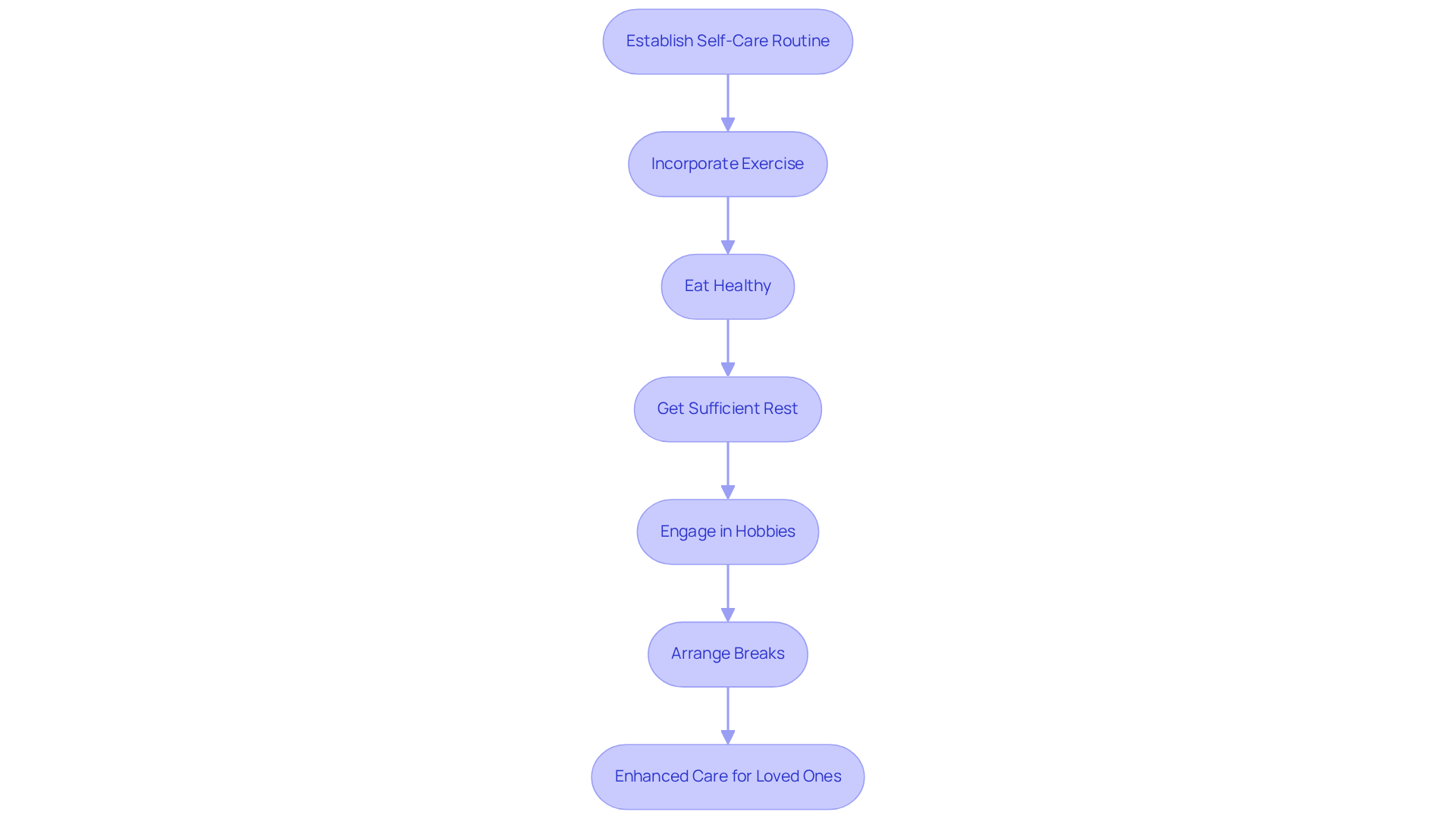
The physical and emotional exhaustion that caregivers experience often arises because they prioritize the needs of their loved ones, highlighting the importance of caregiver support for family members. It’s essential to recognize this struggle. Establishing a self-care routine can be a vital step towards healing. Incorporating regular exercise, healthy eating, and sufficient rest into daily life can make a significant difference. Engaging in hobbies, social activities, or relaxation techniques such as meditation can also help rejuvenate spirits. For instance, dedicating just 30 minutes a day to a favorite activity, like gardening or reading, can significantly improve mood and energy levels.
Moreover, arranging consistent breaks and seeking respite assistance when needed can provide caregivers with essential time to recharge. This self-care not only benefits them but also enhances the quality of care they provide. Research indicates that 40% to 70% of family support providers experience clinically significant symptoms of depression, which highlights the need for caregiver support for family members to address the emotional toll of neglecting self-care. Caregivers who prioritize their own well-being are better equipped to provide caregiver support for family members, as this allows them to maintain higher emotional resilience and overall health.
As stated by Hospice of the Western Reserve, "Taking time for yourself is not a luxury; it’s a necessity." Despite this, only 15% of support providers utilize respite services. Increasing this number could significantly enhance their well-being. Engaging in outdoor activities, such as walking in the park or simply sitting in the garden, can provide calming benefits and improve overall mental health.
By incorporating self-care into their daily routines, caregivers can enhance their quality of life and reduce the risk of burnout. Remember, taking care of yourself is not just important; it’s essential for both you and those you care for.
Build a Support Network
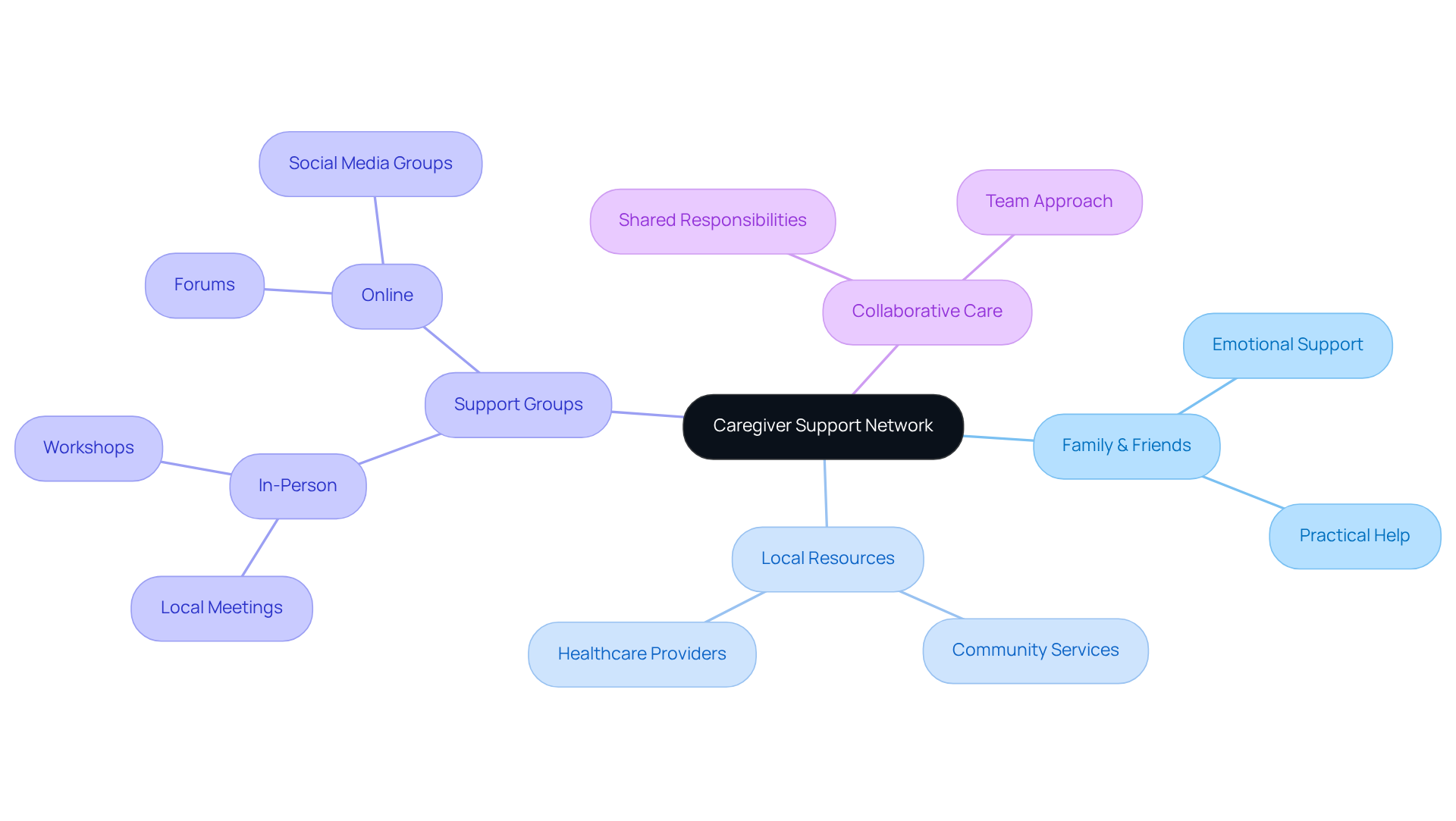
Establishing caregiver support for family members is crucial, as it allows them to share their experiences and seek help when needed. It’s important for caregivers to reach out to family members, friends, and local community resources to create caregiver support for family members and build a reliable support system. Joining support groups, whether in-person or online, can provide caregiver support for family members by offering a valuable platform for exchanging advice and coping strategies. Connecting with others facing similar challenges can be incredibly beneficial; it allows caregivers to learn about effective caregiver support for family members and emotional assistance.
Support groups offer caregiver support for family members by creating a safe space for individuals to share their stories, forge friendships, and feel less isolated in their journey. Involving other family members in caregiving tasks can enhance caregiver support for family members, lightening the load on one person and fostering a collaborative approach to support. Research indicates that nearly 40% of caregivers experience high levels of burden, and a staggering 92% of those providing 21 or more hours of care per week fall into this category. Caregivers typically spend an average of 13 days each month on responsibilities like shopping, meal preparation, and housekeeping, underscoring the significant demands they face.
By nurturing these connections, caregivers can not only enhance their own well-being but also improve the caregiver support for family members they provide to their loved ones. Remember, you are not alone in this journey. There are compassionate communities ready to offer caregiver support for family members, helping to lighten your burden and enrich your caregiving experience.
Understand the Needs of the Care Recipient
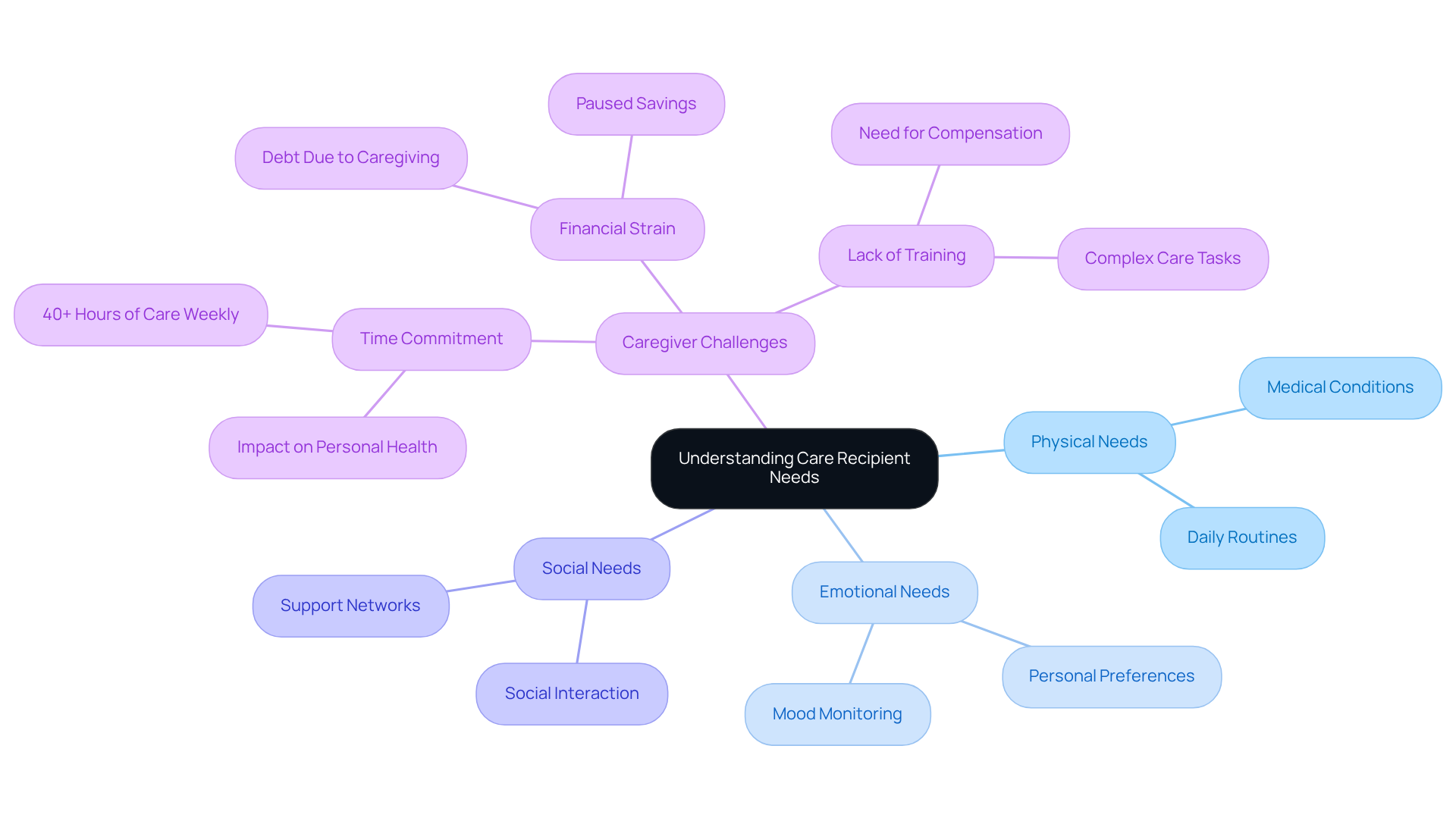
To offer the best assistance, providers must deeply understand the physical, emotional, and social needs of those they support. This means recognizing medical conditions, personal preferences, and daily routines. Frequent evaluations and open conversations with the recipient are vital for identifying areas where additional help may be needed. For instance, when a supporter learns that their loved one enjoys specific activities, they can easily incorporate these into daily routines, greatly enhancing overall well-being.
Being aware of any changes in the recipient's health or mood allows for timely interventions, ensuring that appropriate assistance and support are consistently provided. This proactive approach nurtures a sense of safety for the recipient and enhances satisfaction for those providing support, creating a more rewarding experience in caregiving.
According to a report, nearly 1 in 4 individuals who assist others provide more than 40 hours of support each week, highlighting the demanding nature of this role. As Jason Resendez, President and CEO of the National Alliance for Caregiving, poignantly states, "When nearly 1 in 4 adults are providing complex support with virtually no training, we cannot continue to treat family assistance as invisible labor."
Moreover, caregivers often face financial strain, with many reporting paused savings or debt due to caregiving expenses. Understanding the needs of those receiving assistance is crucial—not only for their well-being but also for ensuring effective caregiver support for family members.
Communicate Effectively with Healthcare Providers
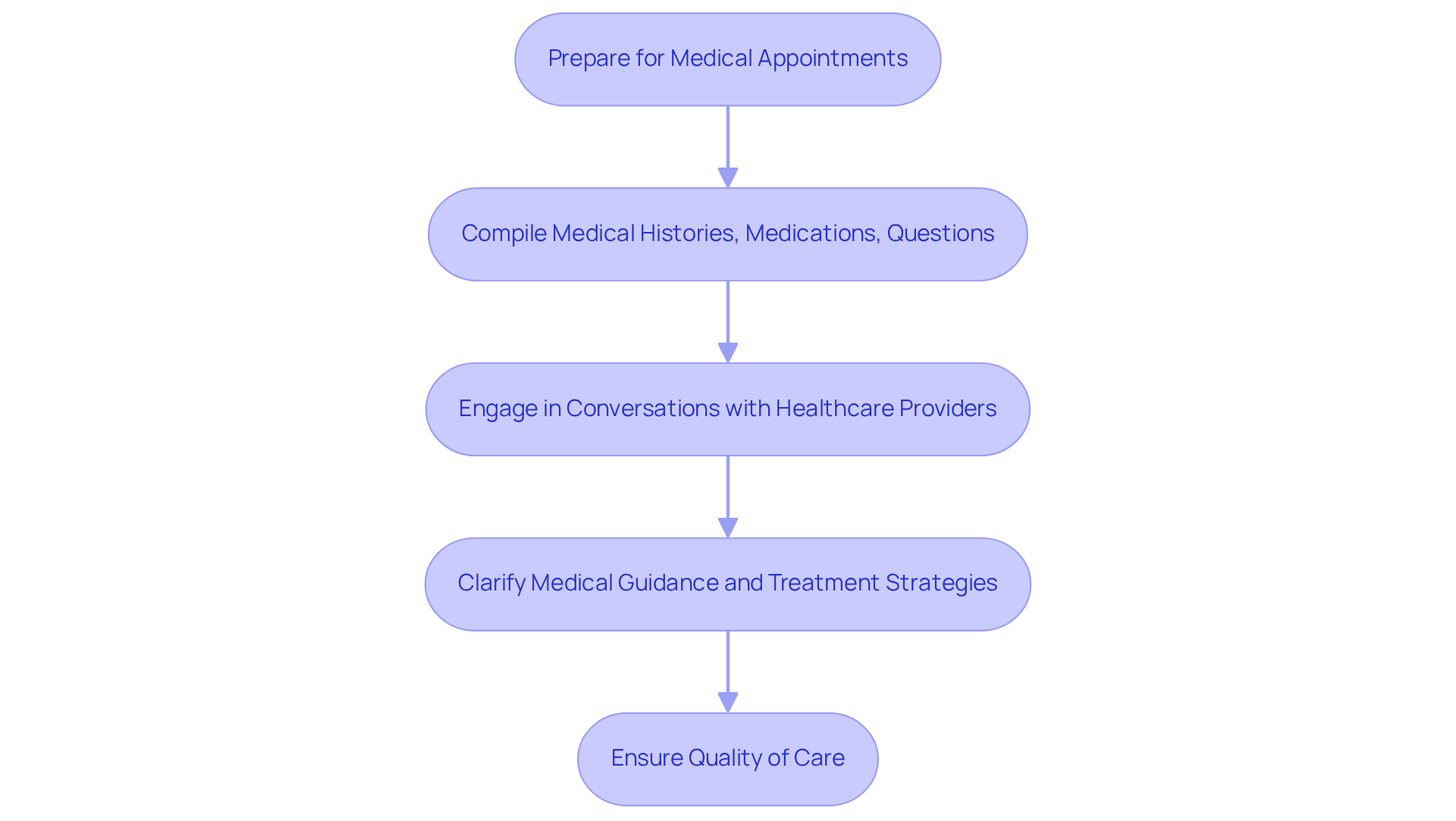
Establishing open channels of communication with healthcare providers is so important for family members advocating for their loved ones' needs. It all begins with thorough preparation for medical appointments. This preparation involves compiling relevant medical histories, current medications, and specific questions or concerns. Supporters should feel empowered to seek clarification on medical guidance or treatment strategies, ensuring they fully understand the assistance being offered.
For instance, a supporter who actively engages in conversations with a doctor can oversee their family member's health issues more effectively and make informed choices about their treatment. Additionally, maintaining consistent communication with healthcare professionals allows for timely interventions and necessary adjustments to treatment plans, ultimately enhancing the quality of care provided.
Research shows that effective interaction with healthcare professionals is essential for family supporters to ensure the best treatment for their loved ones. However, caregiver support for family members is often necessary, as caregivers frequently face challenges such as emotional strain and time constraints, which can hinder their ability to communicate effectively.
By recognizing these barriers and implementing strategies to overcome them, caregivers can provide caregiver support for family members and advocate more successfully for their loved ones. Remember, you are not alone in this journey; support is available, and every step you take makes a difference.
Your Path Forward
Prioritizing caregiver support for family members is essential for fostering a healthy balance between caring for loved ones and maintaining personal well-being. Recognizing the importance of self-care, building a strong support network, understanding the needs of care recipients, and communicating effectively with healthcare providers allows caregivers to enhance both their own quality of life and the care they provide.
This article emphasizes four crucial practices that significantly impact caregivers' experiences:
- Establishing a self-care routine rejuvenates caregivers and improves the quality of care they provide.
- Building a support network enables caregivers to share their experiences and access valuable resources.
- Understanding the needs of care recipients ensures that support is tailored and effective.
- Effective communication with healthcare providers empowers caregivers to advocate for their loved ones, ensuring their needs are met.
Ultimately, embracing these essential practices can transform the caregiving journey. Caregivers are encouraged to prioritize their well-being, seek out supportive communities, and engage in open dialogue with healthcare professionals. By taking these steps, caregivers can enhance their own resilience and create a more nurturing environment for those they care for. Recognizing that caregiver support is a shared responsibility paves the way for a healthier, more fulfilling caregiving experience for everyone involved.
https://iframe.tely.ai/cta/eyJhcnRpY2xlX2lkIjogIjY5MDAwN2MyZTg3NzljY2YwOWNlYjc5OSIsICJjb21wYW55X2lkIjogIjY4ZWU1ZGNhNzMxNzYyNTU3ZjNjOTVjMSIsICJpbmRleCI6IG51bGwsICJ0eXBlIjogImFydGljbGUifQ==Frequently Asked Questions
Why is self-care important for caregivers?
Self-care is crucial for caregivers because it helps combat physical and emotional exhaustion that arises from prioritizing the needs of their loved ones. Prioritizing their own well-being enables caregivers to maintain higher emotional resilience and overall health, which enhances the quality of care they provide.
What are some effective self-care practices for caregivers?
Effective self-care practices for caregivers include establishing a routine that incorporates regular exercise, healthy eating, sufficient rest, engaging in hobbies, participating in social activities, and practicing relaxation techniques such as meditation.
How much time should caregivers dedicate to self-care activities?
Caregivers should aim to dedicate at least 30 minutes a day to a favorite activity, such as gardening or reading, to significantly improve their mood and energy levels.
What is the role of respite assistance for caregivers?
Respite assistance provides caregivers with essential breaks to recharge, which is vital for their well-being. It allows them to take time for themselves, ultimately benefiting both the caregivers and the quality of care they provide.
What percentage of family support providers experience symptoms of depression?
Research indicates that 40% to 70% of family support providers experience clinically significant symptoms of depression, highlighting the emotional toll of neglecting self-care.
How can outdoor activities benefit caregivers?
Engaging in outdoor activities, such as walking in the park or sitting in the garden, can provide calming benefits and improve overall mental health for caregivers.
What is the misconception about taking time for self-care?
The misconception is that taking time for oneself is a luxury; however, it is actually a necessity for caregivers to maintain their well-being and effectiveness in providing care.
What percentage of support providers utilize respite services?
Only 15% of support providers utilize respite services, indicating a significant opportunity for improvement in caregiver well-being through increased use of these services.