
Understanding Your Options
Caring for someone with dementia can be incredibly challenging. Caregivers often face emotional hurdles, feeling overwhelmed and stressed. It’s essential to recognize these feelings and understand that you’re not alone in this journey.
To support you, there are four essential practices for effective dementia care at home:
-
Implementing daily care strategies can create a sense of stability for both you and your loved one. Structured routines help enhance the quality of life, making each day a little easier to navigate.
-
Utilizing effective communication techniques is vital. This fosters connection and understanding, allowing you to engage meaningfully with your loved one. Remember, it’s not just about what you say, but how you say it. A gentle tone and patient demeanor can make all the difference.
-
Prioritizing your well-being as a caregiver is equally important. When you take care of yourself, you’re better equipped to provide compassionate care. Preventing burnout is crucial, and it’s okay to seek help when you need it. You deserve support, too.
-
Planning for future care needs can alleviate some of the anxiety that comes with caregiving. Knowing what to expect can provide peace of mind, allowing you to focus on the present moments that matter.
These practices are backed by evidence showing that they truly enhance the quality of life for individuals with dementia. By embracing these strategies, you’re not just caring for your loved one; you’re also nurturing yourself. Remember, it’s a journey, and every step you take is a testament to your love and dedication.
The Importance of Practices for Effective Dementia Care
Caring for someone with dementia at home can be incredibly challenging. It requires a delicate balance of compassion, structure, and thoughtful planning. Caregivers often find themselves navigating a maze of daily routines, effective communication, and their own well-being. It’s a lot to handle, and it’s completely understandable to feel overwhelmed.
How can caregivers meet their own needs while providing the best support for their loved ones? What strategies can ensure comfort and dignity for individuals living with dementia? These are critical questions that many caregivers grapple with.
In this article, we’ll explore four essential practices that not only address these concerns but also empower caregivers to create a nurturing environment. By implementing these strategies, caregivers can significantly enhance the quality of life for those with cognitive impairment, all while taking care of themselves. Together, we can navigate this journey with compassion and understanding.
Implement Daily Care Strategies for Individuals with Dementia
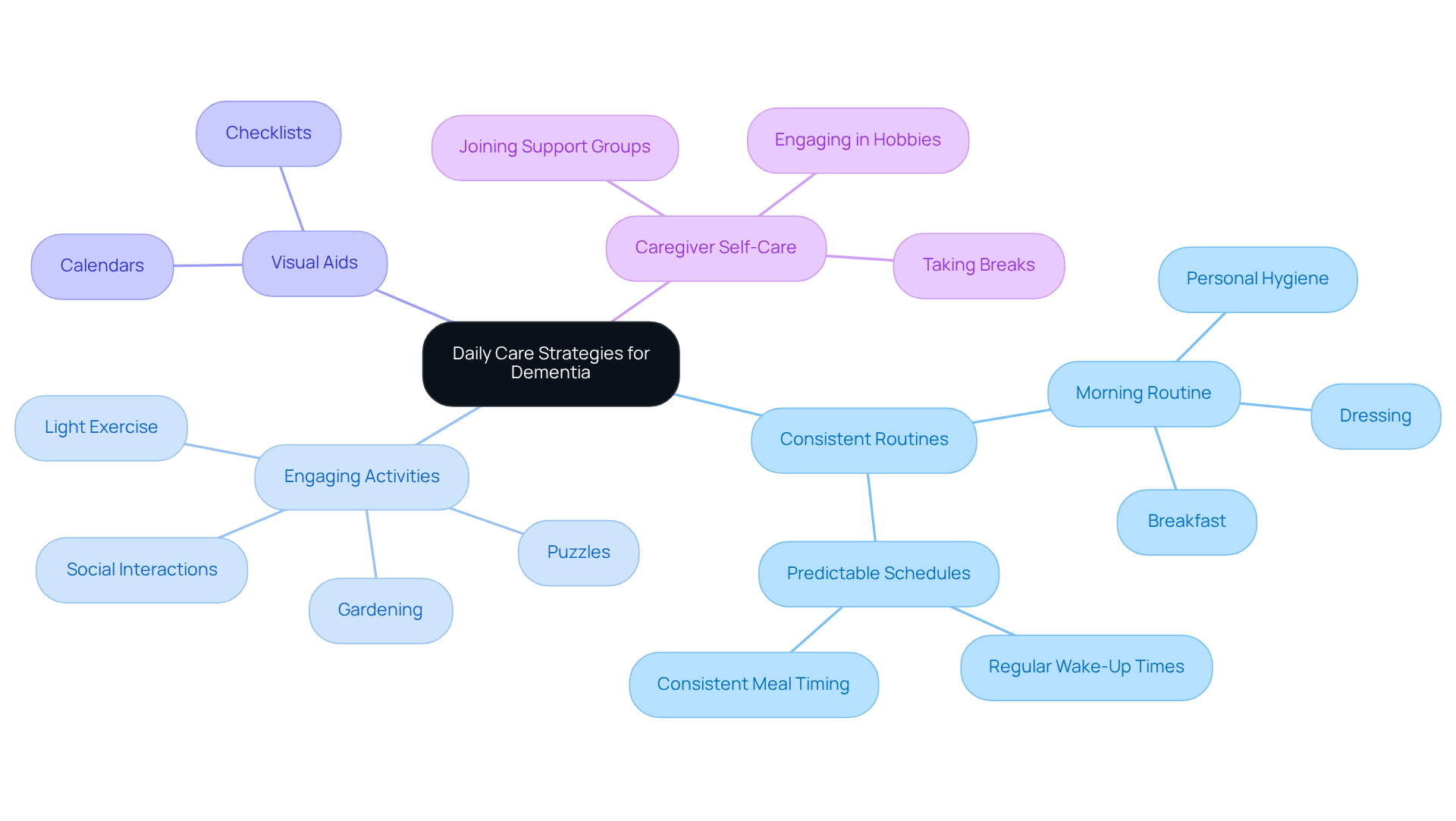
Creating a daily strategy for dementia care for those with cognitive impairment requires a thoughtful approach that respects their preferences and abilities. Start by establishing a consistent morning routine. Think about personal hygiene, dressing, and breakfast at the same time each day. This predictability in dementia care can help reduce confusion and anxiety, providing a comforting sense of safety. Consistent routines foster security for elderly individuals in dementia care who are facing cognitive challenges.
Engaging activities are also vital. Consider:
- Light exercise
- Puzzles
- Gardening
These not only stimulate cognitive function but also promote physical health. For instance, a daily stroll in the park allows individuals to enjoy nature while getting some light exercise, which can uplift their mood and enhance well-being. Research shows that organized activities can reduce agitation and improve mood for those with cognitive impairment, making them an essential part of dementia care.
Visual aids like calendars or checklists can be invaluable. They help individuals understand and anticipate daily tasks, fostering a sense of independence and accomplishment—key elements in maintaining dignity. By thoughtfully organizing daily tasks, caregivers can create a nurturing environment that significantly improves the quality of life for those receiving dementia care due to cognitive decline.
As the National Institute on Aging wisely states, "Routine serves as an anchor in the storm of memory loss." This reminder highlights the importance of structure and care in navigating the challenges of cognitive impairment.
Utilize Effective Communication Techniques
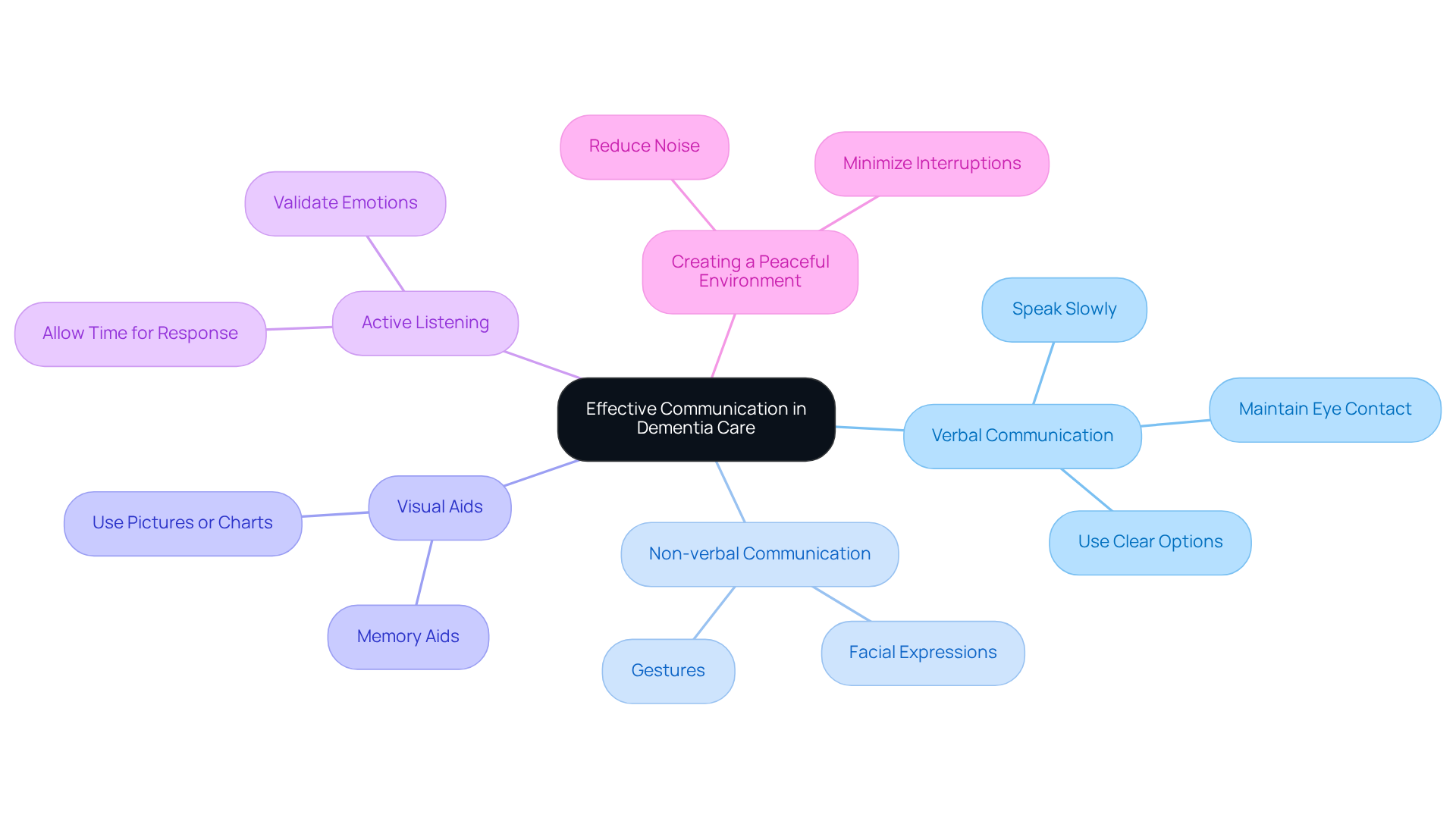
Effective communication is vital in dementia care when engaging with individuals who are living with dementia. It’s important to use clear and simple language; caregivers should speak slowly and maintain eye contact to foster connection and convey empathy. For example, instead of asking, 'What do you want to eat for lunch?' a more effective approach would be to present clear options: 'Would you like a sandwich or soup?' This method helps reduce confusion and supports the person in making a choice.
In addition to verbal communication, using visual aids like pictures or charts can greatly enhance understanding. Non-verbal communication also plays a crucial role; gestures and facial expressions can reinforce verbal messages, making them easier to grasp. Creating a peaceful atmosphere by minimizing interruptions and noise is essential, as it helps those affected by memory impairment focus on conversations and eases anxiety.
Active listening is key; caregivers should allow time for the person to respond and acknowledge their feelings. For instance, if someone expresses frustration, validating their emotions by saying, 'I understand this is difficult for you,' can foster a supportive environment. Research shows that maintaining eye contact and using non-verbal cues can significantly improve communication effectiveness. A study highlights that clear and patient communication in dementia care can help reduce confusion and promote a sense of security for those with dementia. It’s also important to avoid arguing or correcting individuals, as this can lead to frustration and agitation.
By implementing these strategies, caregivers can enhance interactions and provide compassionate support in dementia care that respects the dignity of those they assist. As Amanda Cooper, an expert in interpersonal communication, wisely states, 'Supporting personhood requires adjusting your communication to the person's current capabilities.' Integrating these techniques not only aids in effective communication but also elevates the overall quality of dementia care provided.
Prioritize Caregiver Well-Being and Self-Care
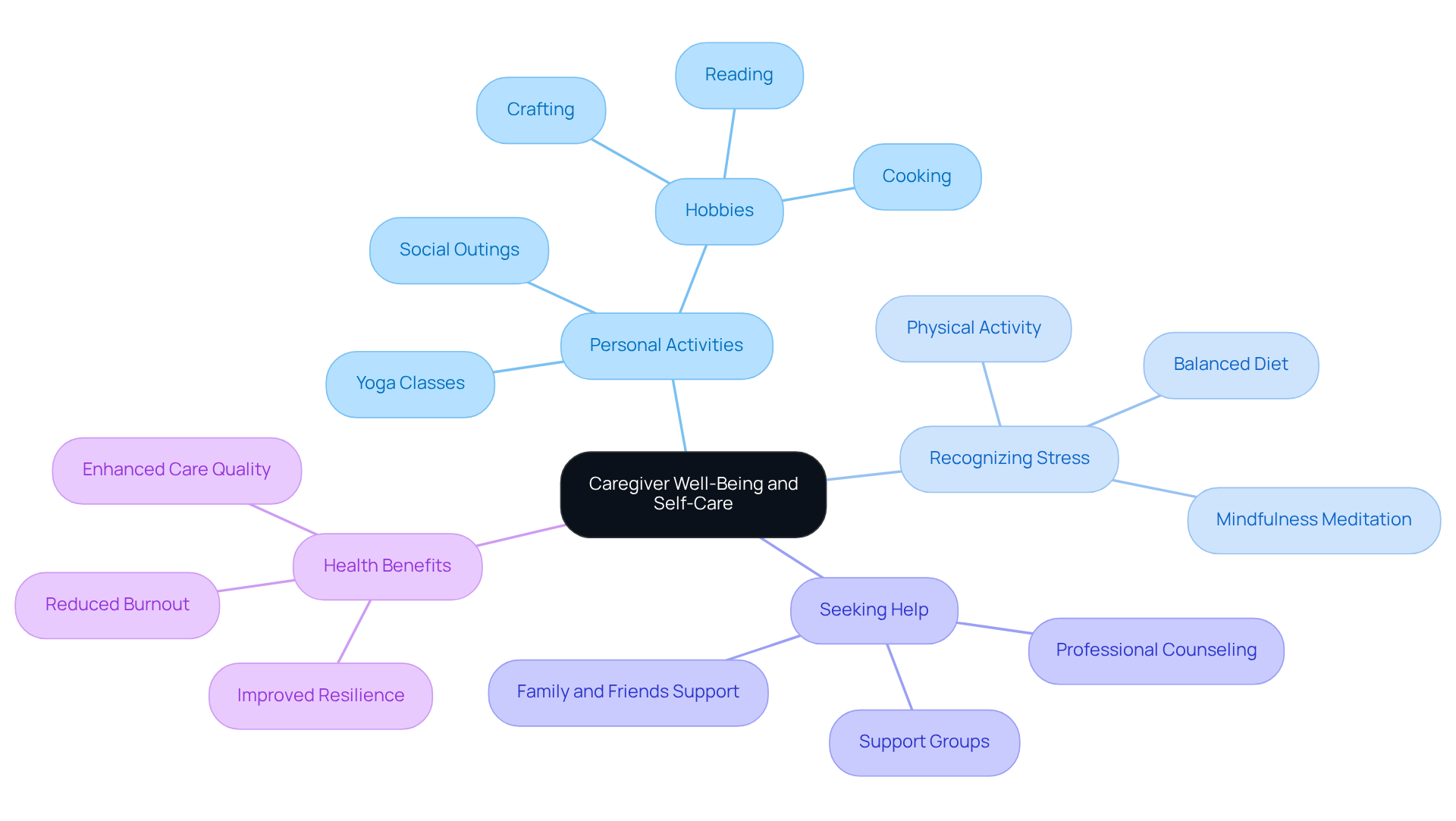
To truly support others, it’s vital for those providing assistance to prioritize their own well-being. This means carving out time for personal activities—whether it’s exercise, hobbies, or simply enjoying time with friends. For example, scheduling a weekly yoga class or planning monthly outings with friends can be a wonderful way to recharge. Joining a support group can also provide emotional relief and practical advice from peers who understand the challenges faced.
Recognizing signs of stress is crucial; caregivers should feel empowered to seek help when needed. Engaging in mindfulness meditation, eating a balanced diet, or staying active can significantly boost resilience and overall health. It’s worth noting that nearly one-third of individuals who provide dementia care dedicate at least 20 hours a week to this role, highlighting the importance of self-care to prevent burnout and maintain the quality of dementia care for those receiving it.
As Elizabeth Edgerly, senior director of community programs and services, wisely states, "As challenging as it may be, those providing care need to make their health and well-being an equal priority." By focusing on their own health, caregivers not only nurture themselves but also enhance their ability to provide compassionate and effective support.
Plan for Future Care Needs and Transitions
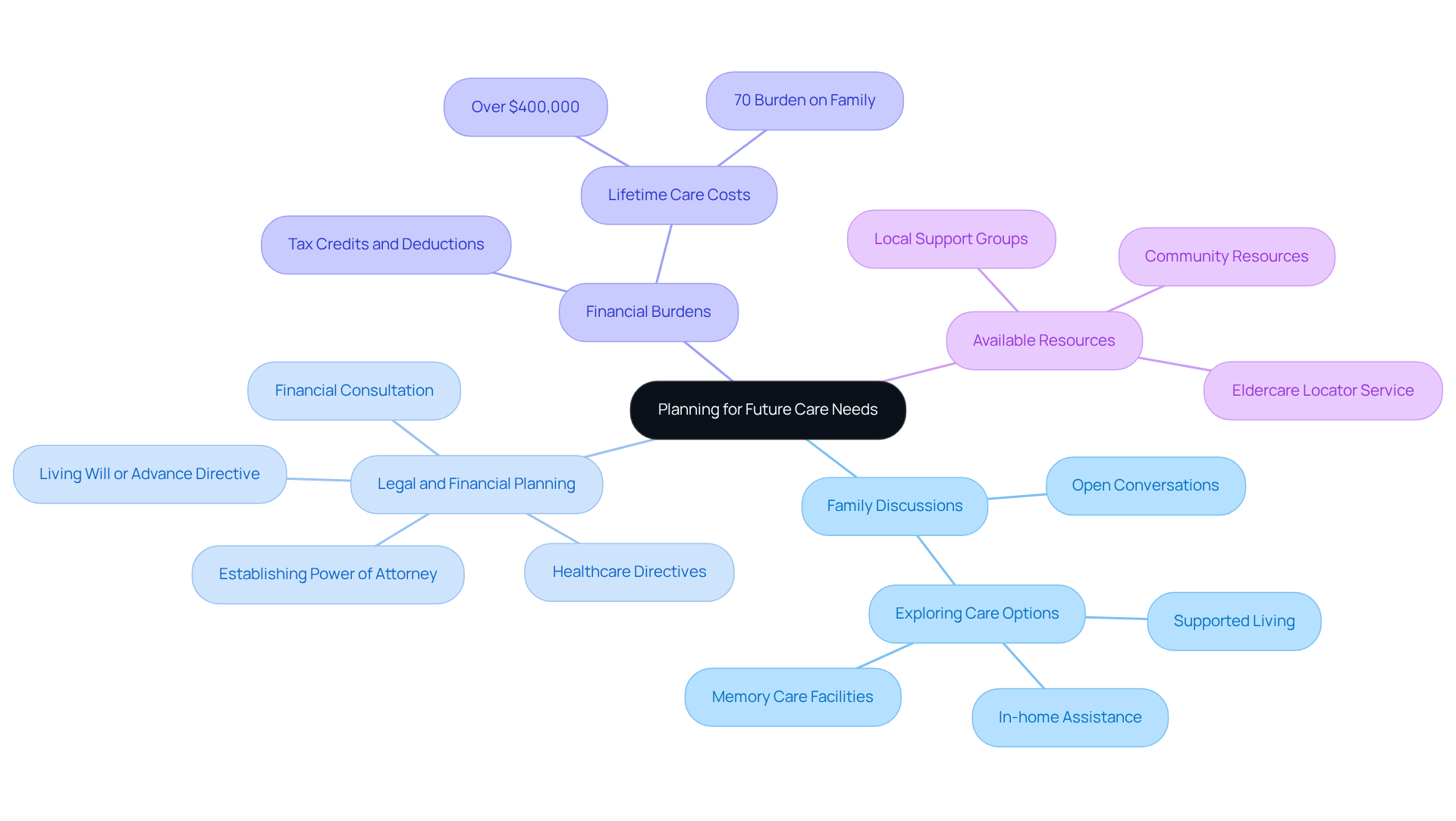
Preparing for future support needs can feel overwhelming, especially as cognitive decline progresses. It’s crucial for family members to have open and honest conversations about their preferences and expectations. Engaging in these discussions early allows families to explore various options, like in-home assistance, supported living, or memory care facilities. With 42% of Americans over 55 likely to experience cognitive decline, these conversations become even more urgent.
It’s also essential for families to focus on legal and financial planning. Establishing power of attorney, discussing healthcare directives, and creating a living will or advance directive can ensure that decisions reflect your loved one’s wishes. For example, meeting with a financial consultant can help families navigate long-term insurance options. This is particularly important since the lifetime cost of supporting someone with cognitive impairment can exceed $400,000, with 70% of that burden falling on family members.
Keeping accurate records of expenses can be beneficial, as families may qualify for tax credits and deductions related to caregiving. Staying informed about available resources, like local support groups or the Administration for Community Living's Eldercare Locator service, can provide invaluable assistance during these transitions.
Regularly revisiting and updating care plans is vital to ensure they meet the evolving needs of the individual. This not only fosters a supportive environment for the person with dementia but also enhances dementia care by helping caregivers feel more equipped and less isolated. Remember, you’re not alone in this journey; there are resources and support systems available to help you every step of the way.
Key Takeaways for Caregivers
Implementing effective dementia care at home is crucial for enhancing the quality of life for individuals facing cognitive challenges. These practices not only provide structure and support but also promote dignity and independence for those affected. By focusing on daily routines, effective communication, caregiver well-being, and future planning, caregivers can create a nurturing environment that significantly improves the overall experience for both the individual with dementia and their support network.
Key strategies include:
- Establishing consistent daily routines to ease anxiety.
- Utilizing clear communication techniques to foster understanding.
- Prioritizing self-care for caregivers.
- Planning for future care needs.
Together, these elements create a holistic approach to dementia care, ensuring that both the caregiver and the individual receiving care feel supported and valued. Engaging activities and open discussions about future needs are vital, as they help maintain a sense of normalcy and connection.
As the journey of dementia care unfolds, it’s important to remember that support systems and resources are available to help navigate the complexities involved. Embracing these essential practices not only enhances the well-being of individuals with dementia but also empowers caregivers to provide compassionate and effective support. By committing to understanding and implementing these strategies, we can foster a more compassionate and supportive environment, ultimately leading to a better quality of life for everyone involved.
https://iframe.tely.ai/cta/eyJhcnRpY2xlX2lkIjogIjY5MGJmNDc0MDBkNjI0ZGVmNjdjMzUwMiIsICJjb21wYW55X2lkIjogIjY4ZWU1ZGNhNzMxNzYyNTU3ZjNjOTVjMSIsICJpbmRleCI6IG51bGwsICJ0eXBlIjogImFydGljbGUifQ==Frequently Asked Questions
What is the importance of establishing a daily routine for individuals with dementia?
Establishing a daily routine helps reduce confusion and anxiety, providing a comforting sense of safety and security for individuals with cognitive impairment.
What activities are recommended for individuals with dementia?
Recommended activities include light exercise, puzzles, and gardening, which stimulate cognitive function and promote physical health.
How can organized activities benefit individuals with cognitive impairment?
Organized activities can reduce agitation and improve mood, making them an essential part of dementia care.
What role do visual aids play in dementia care?
Visual aids like calendars or checklists help individuals understand and anticipate daily tasks, fostering a sense of independence and accomplishment.
How can caregivers create a nurturing environment for individuals with dementia?
By thoughtfully organizing daily tasks and establishing consistent routines, caregivers can significantly improve the quality of life for those with cognitive decline.
What does the National Institute on Aging say about routine in dementia care?
The National Institute on Aging states that 'Routine serves as an anchor in the storm of memory loss,' highlighting the importance of structure in navigating cognitive impairment challenges.