
What to Expect
Caring for a family member can be incredibly rewarding, yet it often comes with its own set of emotional challenges. Caregivers frequently experience stress and burnout, feeling overwhelmed by their responsibilities. It’s essential to recognize these feelings and understand that you’re not alone in this journey.
To support you, there are four essential practices that can make a significant difference in your caregiving experience:
-
Self-care is crucial. Taking time for yourself isn’t selfish; it’s necessary for your well-being. When you prioritize your own health, you’re better equipped to provide the care your loved one needs.
-
Managing stress is vital. Finding effective ways to cope with the pressures of caregiving can help foster your emotional health. Whether it’s through mindfulness, exercise, or simply taking a moment to breathe, these practices can alleviate some of the burdens you carry.
-
Building a support network is another key practice. Connecting with others who understand your situation can provide comfort and encouragement. Sharing experiences and advice can lighten your emotional load and remind you that you’re not alone.
-
Creating personalized care plans ensures that the support you provide is tailored to the unique needs of your loved one. This not only enhances their experience but also gives you a sense of direction and purpose in your caregiving role.
Remember, it’s okay to seek help and lean on others. By embracing these practices, you can nurture your own well-being while providing compassionate care to those you love. You’re doing an incredible job, and it’s important to acknowledge the strength it takes to be a caregiver.
What You Need to Know About Practices for Every Caregiver of Family
Caring for a family member is a noble yet demanding role. It often leaves caregivers feeling overwhelmed and underappreciated. While the focus typically centers on the needs of the loved one, it’s crucial for caregivers to prioritize their own well-being. This is essential not just for their health but also for the quality of care they provide.
This article explores four essential practices that can empower caregivers:
- Establishing self-care routines
- Building supportive networks
- Finding balance
- Ensuring emotional and physical health aren’t neglected
How can caregivers effectively juggle their responsibilities while ensuring their own emotional and physical health aren’t neglected?
Let’s delve into these practices together, fostering a sense of community and support.
Prioritize Self-Care for Caregivers
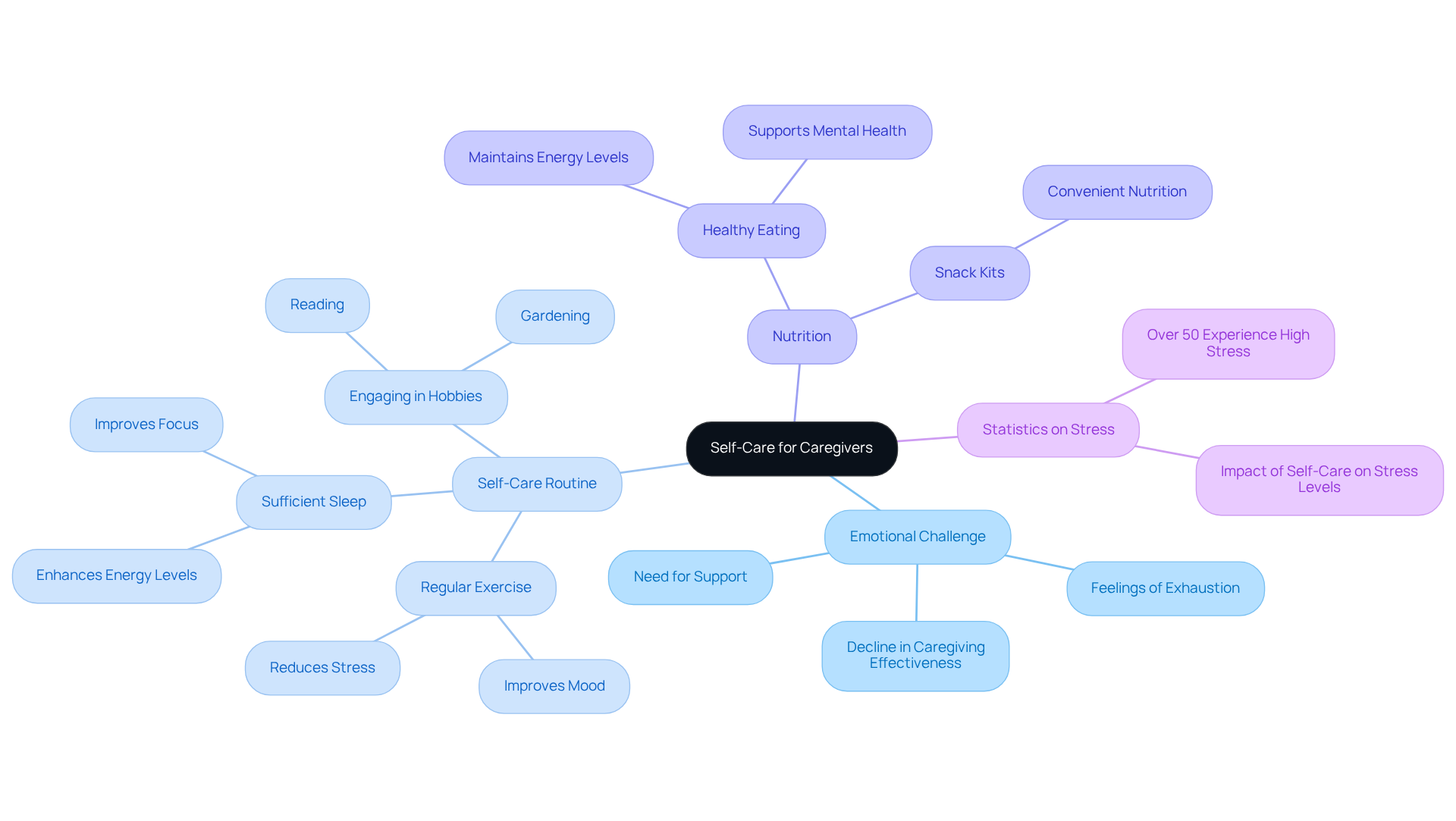
As a caregiver of a family member, individuals often find themselves prioritizing the needs of their loved ones over their own, which can lead to feelings of exhaustion and a decline in their caregiving effectiveness. It’s important to recognize this emotional challenge. Creating a self-care routine can be a vital step toward rejuvenation. Incorporating regular exercise, nutritious meals, and sufficient sleep can make a world of difference.
Engaging in hobbies, attending social events, or simply allowing oneself some quiet time can truly revitalize those who provide support. For example, dedicating just 30 minutes a day to a favorite activity—like reading or gardening—can significantly uplift one’s mood and energy levels. This, in turn, enhances the quality of care they can offer.
Moreover, it’s worth noting that over 50% of family member caregivers experience high levels of stress. This statistic underscores the importance of personal wellness routines. A case study titled 'The Value of Asking for Help' reveals that individuals who incorporate personal wellness practices often report lower stress levels and greater resilience. This highlights how prioritizing one’s well-being can profoundly impact the effectiveness of a caregiver of family member.
Nutrition also plays a crucial role. Neglecting healthy eating can drain energy and affect overall well-being. Keeping a snack kit filled with nutritious options can help maintain energy levels during those busy days. As Charter Research wisely states, "You can’t do it all on your own, and it’s OK to take a break." This sentiment reinforces the importance of self-care for the caregiver of a family member in managing the emotional burdens that come with caregiving.
Manage Stress and Prevent Burnout
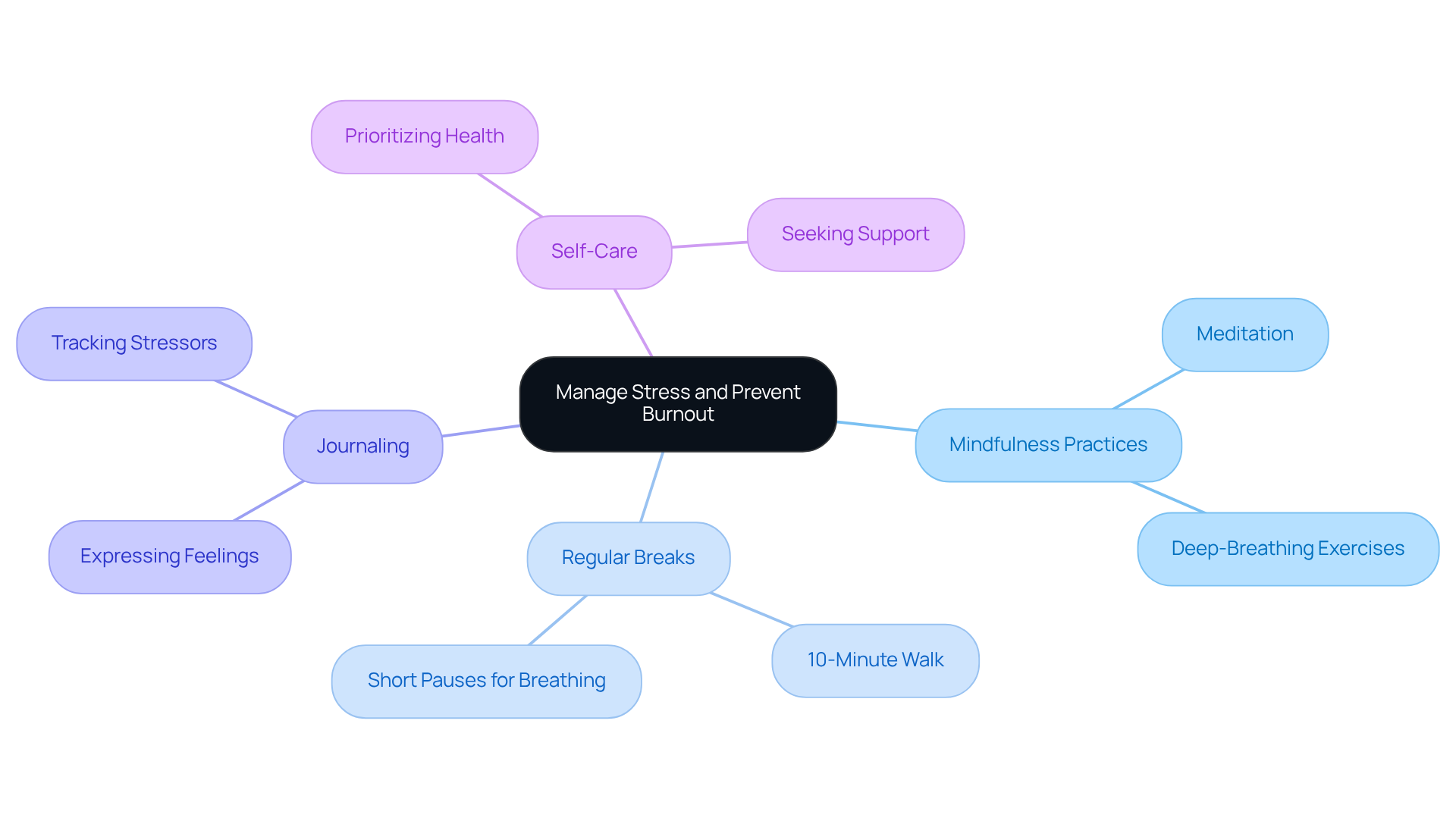
Caring for others can be both emotionally and physically taxing, often leading to heightened stress levels and burnout among caregivers of family members who assist. It’s not uncommon for a caregiver of a family member to experience feelings of isolation, anxiety, and being overwhelmed. That’s why it’s so important to embrace effective stress management strategies.
- Mindfulness practices, meditation, and deep-breathing exercises can work wonders in alleviating stress.
- Regular breaks are equally essential; even short, frequent pauses can help caregivers recharge. For example, a quick 10-minute walk outdoors or some deep breathing during hectic moments can offer a much-needed respite.
Keeping a journal to express feelings and track stressors can also provide valuable insights into patterns and triggers, empowering caregivers to address challenges proactively. As Mother Teresa wisely said, "The greatest disease in the West today is not TB or leprosy; it is being unwanted, unloved, and uncared for." This highlights the importance of personal well-being in caregiving roles.
David Lee from Nautilus Home Care emphasizes that 'practicing self-care is crucial for those providing care to maintain their physical and mental well-being.' By prioritizing their own health, a caregiver of a family member can sustain their ability to offer compassionate support to their loved ones.
Build a Support Network and Communicate Effectively
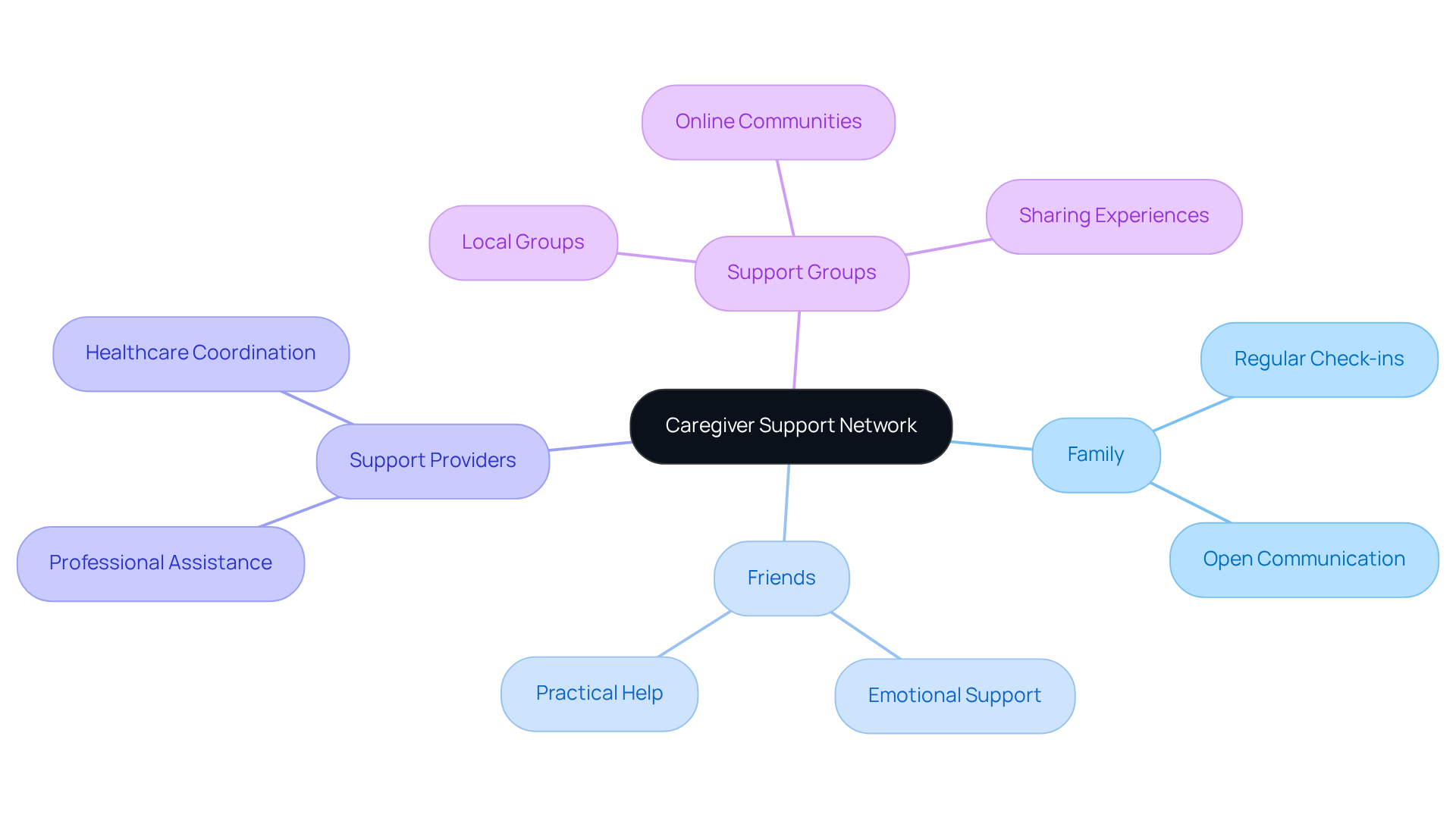
Creating a strong support network is essential for a caregiver of a family member. It’s important to include family, friends, and other support providers in this network. Engaging in local or online support groups can be a wonderful way to share experiences and advice.
Effective communication plays a crucial role here. Support providers should feel comfortable expressing their needs and emotions openly within their network. For example, a supporter might share their struggles with a friend who can offer practical help or emotional support. Regular check-ins with family members are also vital. They help ensure that everyone is on the same page regarding the care plan and responsibilities.
This proactive approach not only fosters teamwork but also alleviates feelings of isolation. It significantly enhances the well-being of both the caregiver of family member and the loved ones they care for. Studies show that caregivers who maintain open lines of communication often report better emotional health and lower stress levels. This highlights just how important these strategies are in providing effective caregiver support.
Remember, you’re not alone in this journey. By reaching out and building a supportive community, you can find the strength and encouragement you need.
Develop Personalized Care Plans for Individual Needs
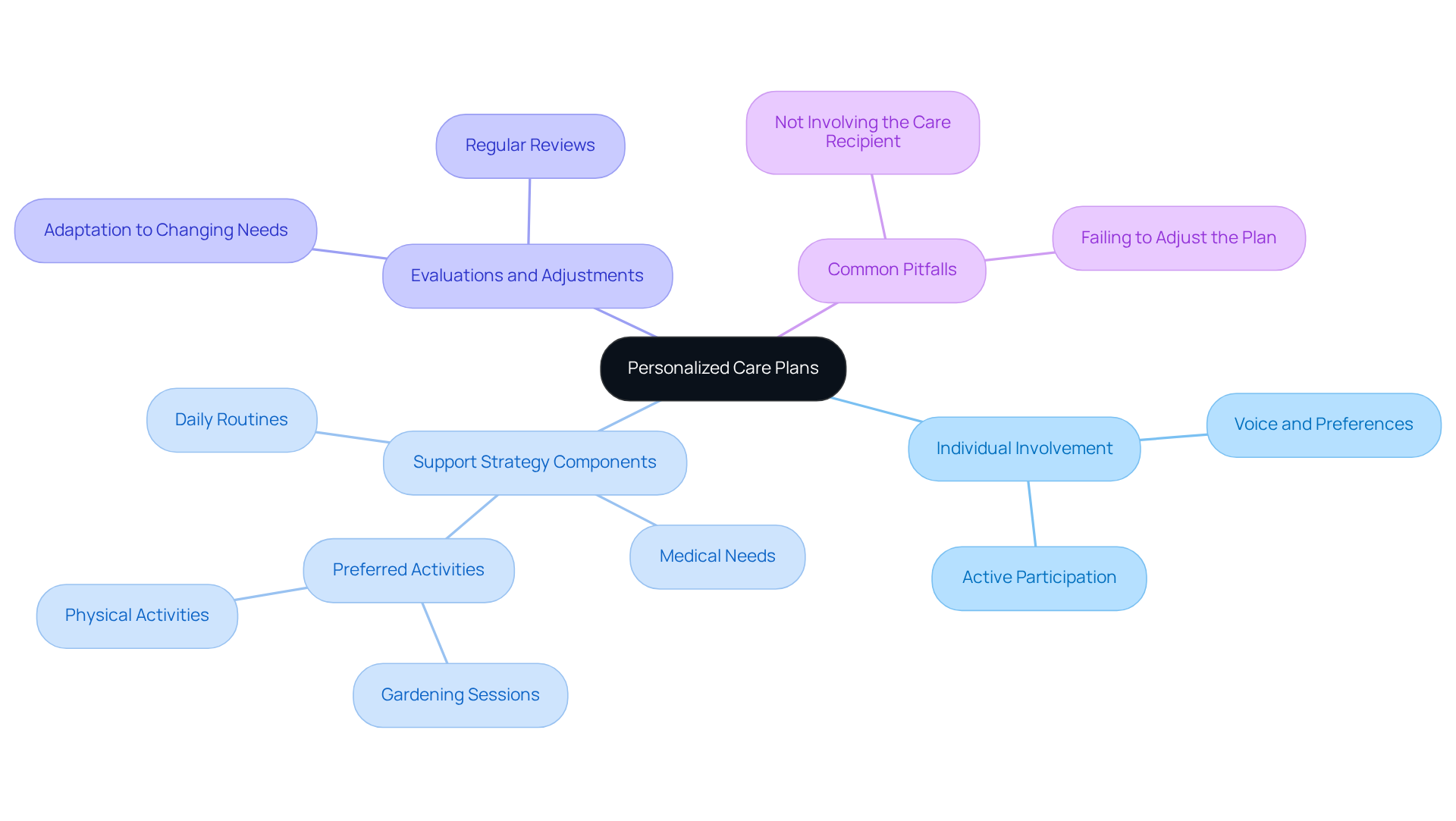
Creating a customized support plan is crucial for meeting the unique needs, preferences, and routines of the person receiving assistance. It’s so important to involve the individual in this process; doing so ensures their voice is heard and valued. Research shows that tailored planning can lead to significant improvements in health outcomes, like increased self-efficacy and reduced symptoms of depression.
The support strategy should clearly outline daily routines, medical needs, and preferred activities, fostering a sense of autonomy and engagement. For example, if the individual loves gardening, the plan might include scheduled gardening sessions. This not only promotes physical activity but also enhances emotional well-being.
Regular evaluations and adjustments to the support plan are essential to adapt to changing needs, ensuring it remains effective and relevant. This personalized approach not only improves the quality of support but also strengthens the effectiveness of caregivers by building trust and collaboration between providers and recipients. As specialists often say, "Personalized planning is increasingly recognized as a vital component in managing chronic conditions."
Caregivers should also be mindful of common pitfalls in implementing these plans, such as:
- Not fully involving the care recipient
- Failing to adjust the plan as needs evolve
By addressing these challenges, we can create more successful caregiving experiences, filled with understanding and compassion.
Making the Right Choice
Caring for loved ones is a profound journey, but it can also be incredibly challenging. Prioritizing the well-being of caregivers is essential for ensuring they can provide effective support. This article highlights the importance of:
- Self-care
- Stress management
- Building a support network
- Developing personalized care plans
By focusing on these areas, caregivers can enhance their emotional resilience and improve the quality of care they offer.
Establishing a self-care routine is a key strategy. It should incorporate physical health, mental wellness, and social interactions. Techniques like mindfulness and journaling can help alleviate feelings of overwhelm. Open communication within a support network and tailored care plans can lead to improved emotional health for both caregivers and those they care for.
The journey of caregiving can feel isolating, but it’s vital to remember that caregivers are not alone. By adopting these essential practices, caregivers can cultivate a healthier, more balanced approach to their responsibilities. Embracing self-care and seeking support not only benefits caregivers but also enriches the lives of the family members they serve.
Now is the time to take proactive steps toward a more sustainable caregiving experience. Together, we can ensure that both caregivers and their loved ones thrive.
https://iframe.tely.ai/cta/eyJhcnRpY2xlX2lkIjogIjY5MGE5NDA0NTMyY2Q1N2YyODgyNDU4YiIsICJjb21wYW55X2lkIjogIjY4ZWU1ZGNhNzMxNzYyNTU3ZjNjOTVjMSIsICJpbmRleCI6IG51bGwsICJ0eXBlIjogImFydGljbGUifQ==Frequently Asked Questions
Why is self-care important for caregivers?
Self-care is crucial for caregivers because it helps prevent exhaustion and maintains their caregiving effectiveness. Prioritizing personal wellness can rejuvenate caregivers, allowing them to provide better support to their loved ones.
What are some recommended self-care activities for caregivers?
Recommended self-care activities include regular exercise, nutritious meals, sufficient sleep, engaging in hobbies, attending social events, and allowing quiet time. Dedicating just 30 minutes a day to a favorite activity can significantly uplift mood and energy levels.
What percentage of family member caregivers experience high levels of stress?
Over 50% of family member caregivers experience high levels of stress, highlighting the need for personal wellness routines.
How can nutrition impact a caregiver's well-being?
Nutrition plays a critical role in a caregiver's well-being. Neglecting healthy eating can drain energy and affect overall health. Keeping a snack kit filled with nutritious options can help maintain energy levels during busy days.
What does the case study "The Value of Asking for Help" suggest about personal wellness practices?
The case study suggests that individuals who incorporate personal wellness practices report lower stress levels and greater resilience, indicating that prioritizing well-being can enhance a caregiver's effectiveness.
What is a key takeaway regarding the emotional burdens of caregiving?
A key takeaway is that caregivers should recognize that they cannot do everything on their own and that it is okay to take breaks. This acknowledgment is essential for managing the emotional challenges associated with caregiving.